Archives for category: Equity

Charter “co-location” has become a flash point for conflict in urban districts. In New York City, charter schools were given the right to take space in public schools, and thanks to former Governor Andrew Cuomo, the city is required to pay the charter’s rent if it hires private space. Charter co-locations take up every available empty space in a school, typically disadvantaging the host school, which becomes overcrowded. The charter rooms are newly refurbished even in public schools that have waited years for upgrades.

Recently the New York City Board of Education (known as the “Panel for Educational Policy”) voted to co-locate two Success Academy charters in public schools in Queens and Brooklyn. The co-location conflicts with a class-size reduction law passed by the State Lefislature. Parents, educators and the United Federation of Teachers have gone to court to block the co-location.

For Immediate Release – Tuesday, March 28, 2023

Parents, educators, UFT launch court action to block co-location of two Success Academy charters with Queens and Brooklyn public schools

Lawsuit claims DOE failed to account for state law class size caps, needs of disabled students and more

Parents, a teacher, and the United Federation of Teachers (UFT) today filed a lawsuit in Manhattan State Supreme Court charging that the New York City Department of Education violated state education law and its own regulations when it sought to co-locate two Success Academy charter schools into Queens and Brooklyn public schools without providing an in-depth analysis of how these co-locations would affect the students already in those public schools.

The city’s Panel for Education Policy voted in November and December in favor of the co-locations, but as the lawsuit says, “The DOE has misled parents, the public, and the PEP itself regarding the actual impacts of its proposed co-locations, including both schools’ ability to comply with impending requirements of the new Class Size Law.”

Attorneys for the United Federation of Teachers were joined in the legal action by Advocates for Justice Legal Foundation, along with a teacher and parents of children from the affected schools.

The schools involved include the Waterside School for Leadership in Far Rockaway, Queens, and the Sheepshead Bay Educational Campus that is home to Origins High School, Professional Pathways High School, and New Visions Charter High School for Advanced Math and Science III.

According to the lawsuit, the DOE underestimated the effects of the co-locations by assuming that current class sizes in these schools would continue into the foreseeable future, ignoring the requirements of the new state class size law.

Under that law, all schools will have to cap class sizes in kindergarten through grade three at twenty students; grades four through eight at twenty-three students; and grades nine through twelve at twenty-five students, to be phased in over five years, starting next fall.

According to the lawsuit, many classes in two of the existing schools are already far above those limits and will require additional space to lower class sizes to mandated levels. Yet this need is never mentioned in the legally-required Educational Impact Statements (EIS) for these co-locations, nor is there sufficient space allocated to these schools to be able to reduce class size to mandated levels in the future.

Absent from the EIS is any mention that students at Waterside will lose their science lab, and that all four schools may lose many other dedicated rooms needed to deliver intervention and special education services.


Estherll Dorancy, the PTA President of Waterside School for Leadership said, “Parents weren’t even aware of what was going on when these decisions were being made. Our students will lose classrooms needed to lower their class sizes and their science lab, which is critical if they are going to be able to pass their 8th-grade state science exams.”


As the lawsuit makes clear, the DOE is legally required to produce in-depth EIS reviews. According to the lawsuit, “the DOE is going through the motions of what the law requires instead of actually complying with it.”

Irina Pistsov, another parent at the Waterside School for Leadership said, “The science lab is a critical resource for students at Waterside and it is already a challenge to provide adequate lab time to meet state standards.”

As the lawsuit maintains, there is nothing in any of the EISs produced for these proposed co-locations, or in the Instructional Footprints upon which they are based, “that ensure or even analyze whether there would be sufficient dedicated spaces for students with disabilities to receive their mandated services after the co-locations occur.”

The parties seek an injunction to prevent the co-locations from occurring until and unless the DOE complies with the requirements of the Education law — “to provide the impacted students, parents, community, and members of the Panel for Educational Policy with adequate specific information about major changes to their school’s space and how these changes will impact the education of the existing and prospective students.”


Carol Burris, executive director of the Network for Public Education, recently joined parents, students, and teachers at a rally in Austin, Texas, to protest the state’s decision to take control of the Houston Independent School District. The district is no longer “independent,” since the state asserted its control. And Republicans showed that they don’t really believe in “local control,” any more than they believe in “parents rights.”

As a graduate of HISD, I feel especially outraged by the state takeover on flimsy grounds. Governor Abbott and Commissioner Mike Morath are playing politics. These kids are the future of Texas. Why are they being used as pawns?

Burris wrote the following explanation of the state takeover. It appeared on Valerie Strauss’s “Answer Sheet” blog at the Washington Post website.

Strauss begins:

The administration of Texas Gov. Greg Abbott (R) announced this month that the state was taking over the public school district in Houston even though the Texas Education Agency last year gave the district a “B” rating. The district, the eighth-largest in the country, has nearly 200,000 students, the overwhelming majority of them Black or Hispanic, and opposition to the move in the city, which votes Democratic, has been strong.


Texas Education Agency Commissioner Mike Morath said the takeover was necessary because of the poor performance of some schools in the district — even though most of the troubled schools have made significant progress recently.


Here is the real story of the takeover, written by Carol Burris, an award-winning former New York school principal who is executive director of the Network for Public Education. The nonprofit alliance of organizations advocates the improvement of public education and sees charter schools — which are publicly funded but privately operated — as part of a movement to privatize public education.


By Carol Burris


Houston parents, teachers, and community leaders are protesting the decision by Texas Education Agency Commissioner Mike Morath to take over the Houston Independent School District. Some see the takeover as grounded in racism and retribution; others as big-government intrusion.


For Houston mom Kourtney Revels, the decision represents a hypocritical dismissal of parents by Gov. Greg Abbott (R). “How can Governor Abbott pretend to support parent empowerment and rights when he has just taken away the rights of over 200,000 parents in Houston ISD against their will and has not listened to our concerns or our voice?” she asked.

The takeover is the latest move in a long list of actions by Abbott’s administration to attack public school districts and expand privatized alternatives, including poorly regulated charter schools and now a proposed voucher program that would use public money for private and religious education. And critics see them all as connected.


State Rep. Ron Reynolds, a Houston Democrat, told the Houston Chronicle, that the takeover of the Houston district is part of Abbott’s attempt “to push” vouchers and charter schools, and to “promote and perpetuate the things that Governor Abbott believes and hears about, and that obviously isn’t diversity, equity and inclusion.”

The first takeover forum sponsored by the Texas Education Agency, which Morath leads, was described in the Houston Chronicle as “emotional and chaotic.” This week, the Greater Houston Coalition for Justice is leading a protest march before another TEA hearing. U.S. Rep. Sheila Jackson Lee (D), who represents the city, has asked the Biden administration to open a civil rights investigation into the takeover.

Background

The Houston Independent School District is Texas’s largest school district, with 284 schools and almost 200,000 students. It is also the eighth-largest district in the nation. Eight in 10 students come from economically disadvantaged families, and more than 1 in 3 students are not proficient in English. Fewer than 10 percent of the students are White.

The first attempted takeover of HISD by Morath was in 2019. The rationale for the takeover was school board misconduct and the seven negative ratings of Phillis Wheatley High School, one of the district’s 284 schools. Wheatley had been rated “academically acceptable” almost every other year until the YES Prep charter school opened nearby in 2011. During the 2021-2022 school year, Wheatley served 10 times as many Black students and more than twice as many students with disabilities as YES Prep, located just a five-minute drive away.

The district went to court to stop the takeover, and the debate wove through the courts until the Texas Supreme Court gave the green light for the takeover in January.

Almost four years have passed since the first takeover attempt, and the district has made impressive strides. The electorate replaced the 2019 school board, and a highly respected superintendent, Millard House, was appointed.

By every objective measure, the district is on a positive trajectory. The district is B-rated, and in less than two years, 40 of 50 Houston schools that had previously received a grade of D or F received a grade of C or better. Wheatley High School’s grade, the school that triggered that 2019 takeover attempt, moved from an F to a C, just two points from a B rating.

While there is a law that triggers a TEA response when a school repeatedly fails, the state Supreme Court did not mandate the takeover of the district. Under Texas law, Morath had two options — close the school or take over the district by appointing a new Board of Managers and a superintendent. He chose to strip local control. For those who have followed the decisions of Morath, his choice, the harsher of the two, comes as no surprise.

Mike Morath and charter schools

Mike Morath, a former software developer, was appointed education commissioner by Abbott in 2015. Morath had served a short stint on the Dallas school board, proposing that the public school district become a home-rule charter system, thus eliminating the school board and replacing it will a board appointed by then-Mayor Mike Rawlings, the former chief executive of Pizza Hut. Transformation into a charter system would also eliminate the rights and protections of Dallas teachers, making it easier to fire staff at will.

Morath and the mayor were supported in their quest to privatize the Dallas school system by a group ironically called Support Our Public Schools. While many of its donors remained anonymous, one did not — Houston billionaire John Arnold. Morath admitted encouraging the development of Support Our Public Schools and soliciting Arnold’s help in founding the organization.

Arnold, a former Enron executive and Houston resident, is a major donor and board member of the City Fund, a national nonprofit that believes in disruptive change and “nonprofit governing structures” for schools rather than traditional school boards. The City Fund touts New Orleans as the greatest school reform success. Arnold is joined on the board of the City Fund by billionaire and former Netflix CEO Reed Hastings, who has blamed public school woes on elected school boards and said 90 percent of all students should be in charter schools.

The plot to turn the Dallas school system into a charter system fizzled by January 2015. In December of that year, Abbott plucked Morath from the school board to become Texas education commissioner based on his record as a “change-agent.”

As commissioner, Morath has unilaterally approved charter schools at what many consider to be an alarming rate. Patti Everitt is a Texas education policy consultant who closely follows the decisions of the Texas Education Agency. Everitt noted that Morath “has the sole authority to approve an unlimited number of new charter campuses in Texas — without general public notice, no community meeting, and no vote by any democratic entity.” According to Everitt, he has used this power more frequently than his predecessors. “Since Mike Morath became Commissioner, data from TEA shows that he has approved 75 percent of all requests from existing charter operators to open new campuses, a total of 547 new campuses across the state,” she said.

In 2021, according to Everitt, Morath approved 11 new campuses for International Leadership of Texas Charter Schools, even though 28 percent of the chain’s schools had received D or F grades in prior ratings.


Georgina Cecilia Pérez served two terms on the Texas State Board of Education, from 2017 to 2022. During that time, she observed the Texas Education Agency up close. A 2017 state law provides financial incentives for districts to partner with open-enrollment charter schools, institutions of higher education, nonprofit organizations or government entities. She said that several charter partnerships with the Houston school district have been in the works waiting for the state takeover. She predicts Morath will approve them, “with no public vote.”


Abbott, Morath, and vouchers

Few were surprised this year when Abbott declared that establishing an Education Savings Account (ESA) voucher program would be one of his highest priorities this legislative session. ESA vouchers, the most controversial of all voucher programs, provide substantial taxpayer dollars, through an account or via a debit card, to private school and home-school parents to spend on educational services. Eight states presently have ESA vouchers, with three new programs in Arkansas, Iowa and Utah approved to begin in coming academic years. Other legislatures in red states, notably New Hampshire and Florida, are pushing for ESA program expansion.

Abbott had been reluctant to embrace vouchers — possibly because of a lot of opposition in Texas, especially in rural areas — causing some to speculate that his newly expressed support for them is linked to presidential ambitions. School choice is a pet cause of one potential rival for the Republican presidential nomination, Florida Gov. Ron DeSantis (R).

Two voucher bills are now weaving their way through the Texas Senate. S.B. 8 would give families a voucher of $8,000 per child a year and institute a parents’ “bill of rights” that allows parents to review public school curriculums through parent portals. A second bill, S.B. 176, would give private school and home-school families a $10,000-per-child annual voucher. Although Abbott has not endorsed either bill, he has made it clear that he supports a universal voucher program, promoting universal vouchers in speeches at some of the state’s most expensive private Christian schools.

Last year, Morath gave tacit support for vouchers, claiming that “there is no evidence” that vouchers would reduce public school funding. In February 2023, however, when questioned during a state Senate hearing, the commissioner admitted that voucher programs could have a negative fiscal impact on public schools.

That same month, his second-in-command, Deputy Commissioner Steve Lecholop, encouraged an unhappy parent from the Joshua Independent School District to work with the governor’s speechwriter to promote vouchers, saying it would be a great way to “stick it to” the school district.

The lack of success of district takeovers

Regardless of Abbott’s and Morath’s ultimate objective — whether it be flipping some or all of Houston’s public schools to charters — research on state takeovers has consistently shown that state takeovers nearly always occur in majority-minority districts and rarely improve student achievement. Student results in takeover districts, with only a few exceptions, have remained the same or decreased. That was the conclusion of a comprehensive cross-state study published in 2021. The study’s authors, Beth Schueler of the University of Virginia and Joshua Bleiberg of Brown University found “no evidence that takeover generates academic benefits.”

This intervention does not help students, and it mutes community voices, undermines democracy in Black and Hispanic communities, and pushes charter schools and other privatized alternatives to democratically governed schools.

An example is the takeover of Philadelphia’s public schools in 2001. Then-Gov. Tom Ridge (R) hired Edison Learning, a for-profit management company led by Chris Whittle, to study the district at the cost of $2 million. Edison Learning made a recommendation that it play a significant role in the reform and proposed running up to 70 schools. After community outrage, the number was reduced to 20. A few years later, the number of managed schools increased to 22. It was not long, however, before Edison Learning and the district were embroiled in a lawsuit concerning liability damages after a student was sexually assaulted in an Edison-operated school. By 2008, all for-profit management companies, including Edison, were gone. By 2017, the state takeover experiment ended.

Retired teacher Karel Kilimnik of Philadelphia had a first-row seat. She taught at a school taken over by the for-profit management company called Victory Co., which ran six schools under the School Reform Commission. The Reform Commission “promised academic and financial improvements that failed to materialize over their 16 years of control,” Kilimnik said. “Instead of improving the district, they opened the door to privatization and charter expansion and laid out the welcome mat for graduates of the uncertified Broad Superintendents Academy. They paved the way for the doomsday budget resulting in massive layoffs, larger class sizes, and the elimination of art and music.”

In his 2017 book, “Takeover,” New York University professor Domingo Morel concluded that, based on his extensive research, state takeovers are driven more by the desire of state actors to take political control away from Black and Hispanic communities than about school improvement. Recently in the Conversation, Morel described the seizure of the Houston school district as motivated by a need by the Republican establishment to thwart the growing empowerment of Black and Latinos as their numbers increase in Texas.

“The Houston public school system is not failing,” Morel said. “Rather, Republican Gov. Greg Abbott, Education Commissioner Mike Morath, and the Republican state legislature are manufacturing an education crisis to prevent people of color in Houston from exercising their citizenship rights and seizing political power.”

Allison Newport, a Houston mother of two Houston public school elementary students, agrees. “The commissioner should be congratulating Houston ISD and Wheatley High School for such incredible improvement in performance instead of punishing the students, parents, and teachers who worked so hard to make it happen.”

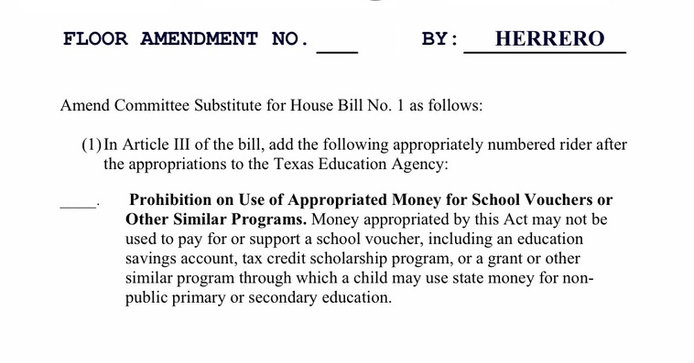
NPR interviewed Princeton sociologist Matthew Desmond about his new book, Poverty, by America. Desmond says that we can afford to eliminate poverty, if we want to. Income inequality is a driving force behind disinvestment in public services, he says.

Over 11% of the U.S. population — about one in nine people — lived below the federal poverty line in 2021. But Princeton sociologist Matthew Desmond says neither that statistic, nor the federal poverty line itself, encapsulate the full picture of economic insecurity in America.

“There’s plenty of poverty above the poverty line as a lived experience,” Desmond says. “About one in three Americans live in a household that’s making $55,000 or less, and many of those folks aren’t officially considered poor. But what else do you call trying to raise three kids in Portland on $55,000?”

Growing up in a small town in Arizona, Desmond learned firsthand how economic insecurity could impact a family’s stress level. He remembers the gas being shut off and his family home being foreclosed on. Those hardships would later drive his research — specifically the question of how so much poverty could exist within a country as wealthy as the U.S….

His new book, Poverty, by America, studies various factors that contribute to economic inequality in the U.S., including housing segregation, predatory lending, the decline of unions and tax policies that favor the wealthy. Desmond says that affluent Americans, including many with progressive political views, benefit from corporate and government policies that keep people poor.

“Most government aid goes to families that need it the least,” Desmond says. “If you add up the amount that the government is dedicating to tax breaks — mortgage interest deduction, wealth transfer tax breaks, tax breaks we get on our retirement accounts, our health insurance, our college savings accounts — you learn that we are doing so much more to subsidize affluence than to alleviate poverty.”

Desmond says that the growing affluence of those at the top drives it’s unwillingness to invest in public services:

If you are a family of means, you have the incentive to rely less and less on the public sector. So we used to want to be free of bosses, but now we want to be free of bus drivers. We don’t want to take the bus. We don’t want to often enroll our kids in the public school system. We don’t need to play in the public park or swim in the public pool. We have our own clubs, our own schools. We have our own cars. And as we withdraw into the private opulence, we have less and less incentive to invest in public services…

This one statistic that I calculated just blew me away. So a recent study was published and it showed that if the top 1% of Americans just paid the taxes they owed, not paid more taxes, … we as a nation could raise an additional $175 billion every year. That is just about enough to pull everyone out of poverty, every parent, every child, every grandparent. So we clearly have the resources to do this. It is not hard.

Matthew Desmond is a MacArthur Fellow and a principal investigator of the Eviction Lab, a research project focusing on poverty, city life, housing insecurity, public policy, racial inequality and ethnography. (Barron Bixler/Penguin Random House)

This is a rough estimate. I arrive at this number by looking at everyone under the poverty line, calculating the average it would take to just bring them over the poverty line and adding that all up. It’s pretty equivalent to what we could earn by just enforcing fair taxes at the very top of the market. What else could we do with $175 billion? We could more than double our investment in affordable housing. We could reestablish the extended child tax credit that we rolled out during COVID. … [That]was basically a check for middle and low-income families with kids. That’s all it was. And that simple intervention cut child poverty almost in half in six months. We could bring that back again with $175 billion and still have money left over.

John Merrow updates a famous saying from the Second World War. There was a time when every educated person knew it, often by heart. It is about indifference to the sorrow and tragedy of others.

He begins:

First they came for the transgender kids, and I did not speak out—because I am not transgender.  

Then they came for the bisexuals, the gays, and the lesbians, and I did not speak out—because I am none of those.  

Then they came for the same sex couples, and I did not speak out—because I am married to a woman.  

Then they came for me—but by that time the puritans, the fascists, and the power-hungry were in complete control, and speaking out was not allowed. 

Of course, that is not what German Lutheran pastor Martin Niemoller wrote back in the 1930’s, of course.  What he said was this:

First they came for the socialists, and I did not speak out—because I was not a socialist.  

Then they came for the trade unionists, and I did not speak out—because I was not a trade unionist.  

Then they came for the Jews, and I did not speak out—because I was not a Jew.  

Then they came for me—and there was no one left to speak for me.

Hitler’s supporters responded to Pastor Niemoller’s warning by sending him to a concentration camp, where he stayed for eight years, until World War II ended in 1945.

His warning is regularly revised to reflect the threats of the times.  I was in college when I first encountered it, and, as I recall, that version began “First they came for the Jews, and I did not speak out–because I was not a Jew.” 

I’ve rewritten the lines because of what is going on now, here in the United States and elsewhere.  Do you think I am kidding?  Read this:

Robert Foster, a former Mississippi House lawmaker who lost a 2019 bid for governor, is using his social-media platform to call for the execution of political foes who support the rights of transgender people.  “Some of y’all still want to try and find political compromise with those that want to groom our school aged children and pretend men are women, etc,” the former Republican representative from Hernando, Miss., wrote in a Thursday night tweet. “I think they need to be lined up against (a) wall before a firing squad to be sent to an early judgment.”  Here’s the full story:

And this: 

Michael Knowles—right-wing political commentator associated with the Daily Wire—said “for the good of society… transgenderism must be eradicated from public life entirely” at the Conservative Political Action Conference Saturday afternoon.

As you are reading this, dozens of states are considering draconian legislation–more than 120 bills were introduced before the end of January–that threatens the lives of young people struggling with their sexual identity. Other states have already passed legislation, which their Republican governors have signed. The ACLU has a good list here. Another organization, GLSEN, is also keeping watch here.

Please open the link and read the rest of this fine piece.

Steven Singer, a teacher in Pennsylvania, cannot understand why the word “WOKE” has become a term of derision, when it means being aware of racial and social injustice. Who wants to erase our sense of right and wrong?

He explains:

“I advise everybody, be a little careful when they go along through there – best stay woke, keep their eyes open.”–Lead Belly“Scottsboro Boys”

How can you understand a problem if you are not allowed to name it?

How can you fight injustice if you are forbidden from learning its history and connection to the present moment?

These questions are at the heart of a well-financed war against a simple term – woke-ness.


Since the summer of 2020, oligarchs and their tools in the United States have been waging a disinformation campaign against that term – especially as it pertains to our schools.

Chiding, nagging, insinuating – you hear it constantly, usually with a sneer and wagging finger, but what does it really mean?

To hear certain governors, state legislators and TV pundits talk, you’d think it was the worst thing in the world. But it’s not that at all.

In its simplest form, being woke is just being alert to racial prejudice and discrimination.

That’s all – just knowing that these things exist and trying to recognize them when present.

I’m not sure what’s so controversial about that. If we all agree racism is bad, why is it undesirable to acknowledge it exists when it’s demonstrably there?

More specifically, being woke means focusing on intersectionality – how issues of race, class and gender overlap and interrelate with each other. It means practicing critical race theory – not the made up dog whistle conservatives use to describe anything they don’t like being taught in school, but the study of how racial bias is inherent in many Western social and legal systems. It means using the lens of Black feminism, queer theory and others to address structural inequality.

Again, why is that a bad thing? If we agree that prejudice is bad, we should want to avoid it in every way possible, and these are the primary tools that enable us to do so.

Our society is not new. We have history to show us how we got here and how these issues have most successfully been addressed in the past.

But these Regressives demand we ignore it all.

Shouldn’t we protect hard-fought advances in human rights? Shouldn’t we continue to strive for social justice and the ability of every citizen to freely participate in our democracy – especially in our public schools?…

As public school teachers, being woke is not a choice. It is a responsibility.

For we are the keepers of history, science and culture.

Who will teach the true history that for more than 400 years in excess of 15 million men, women and children were the victims of the transatlantic slave trade? Who will teach the true history of the fight against human bondage and the struggle for equal rights? Who will teach about women’s fight for suffrage, equal pay, and reproductive freedom? Who will teach about the struggle of the individual to affirm their own gender identity and sexual expression?

We, teachers, must help students understand what happened, what’s happening and why. And to do so we must protect concepts that emerged from decades of struggle against all forms of domination.

It must be us.

Please open the link and read the rest.

And stay WOKE.

A friend in South Carolina sent me this public statement by a fearless district superintendent. He asked questions that most state legislators cannot answer. He knows that vouchers will subsidize the tuition of students already in private schools, and that private schools retain the right to refuse any student they don’t want.

J.R. Green, Ph.D, superintendent of the Fairfield County district sent out this letter:

Do the Advocates of “School choice” really believe in “School choice?”

Recently the South Carolina Senate passed S.39, a controversial voucher legislation that proposes to provide parents up to $6,000/year of state money to attend a private school. At full implementation by year three, the voucher program will cost approximately $90 million/year. Proponents of the legislation suggest that school vouchers empower parents to select the school that best fits the needs of their children. But does this legislation actually empower parents, or private schools that will ultimately benefit from the infusion of state revenue? The undisputed fact is that S.39 will provide private schools with state revenue, yet allow those same private schools to pick and choose the students they elect to serve. In essence, we are providing private schools with public money, without a commitment to serving the public student.

I respect any parent’s right to choose the educational option they see is best for their child. However, receiving public funding should obligate these institutions to serve all public school students, just as public schools are required to do. Private schools who receive this funding should not be allowed to deny students because they are Exceptional Education students, failed to meet qualifying scores on entrance exams, level of parent participation, etc. All students who request admission should be accepted. Amendments were offered during the debate of S.39 that would ban discrimination based on religion or disability. Those amendments were rejected and as a result would allow a private school receiving state revenue to deny a student because of an intellectual disability or physical handicap. This is the current reality for private schools in South Carolina, and I respect their right to restrict enrollment, as long as the school is being funded with private money. However, the acceptance of state money must require a different standard. During the senate subcommittee hearing debating the voucher legislation last year I shared the published admission criteria for a local private school. The school clearly outlined the following:

• Does not provide a program of study and support for students with learning disability, an IEP, or 504 plan.

• Married students, pregnant students, and or biological parents will not be allowed to attend.

• Reserves the right to reject any application for admission or employment and further reserves the right to terminate any association with students if it determines that such association is incompatible with the aims and purpose of the school

This clearly represents private school “choice” not parental “choice.”

Finally, since the Education Accountability Act of 1998, the general assembly has touted the benefits and necessity to administer yearly assessments to public school students. These assessments have been advertised as the key to improving education outcomes in South Carolina, and essential to ensuring the public can readily measure the return on the education investment. I’m perplexed as to why the private schools that would receive public funding would not participate in the same system of accountability? Why would these schools not be required to administer the same state assessments, and publish their data just as public schools are required to do? If this system of accountability is necessary and appropriate for public schools, it should be necessary and appropriate for private schools accepting public funding.

Although I think the legislation is unconstitutional, and represents little value to improving student outcomes, if the South Carolina General Assembly is committed to making school vouchers a reality, these schools must be accessible to all students, and accountable to the public just as public schools. Let participating schools open up their doors to all students, administer and publish the same assessments as public schools, and let the chips fall as they may.

J.R. Green, Ph.D.

Superintendent

Fairfield County Schools

Bravo, Dr. Green!

Josh Cowen is a Professor of Educational Policy at Michigan State University. He has spent many years as a voucher researcher and recently concluded that vouchers are a failed experiment, based on a multitude of research studies.

As soon as anyone becomes a critic of charter schools or vouchers, the choice lobby attacks them and claims they are paid by the teachers’ unions. I know this from personal experience. A few years ago, a choice lobbyist accused me of taking union money to buy the house I lived in; I assured her that I paid for my home all by myself.

Funny that the shrill well-paid lobbyists act as though unions are criminal enterprises, when in reality they have historically enabled poor and working class people to gain a foothold in the middle class, to have job security, health benefits, and a pension. They also give public schools a voice at the table when governors propose larger classes, lower standards for new teachers, or decreased funding for schools. I believe we need unions now, more than ever. Whenever I hear of a charter school unionizing or of workers in Starbucks or some other big chain forming a union, it makes my day.

Josh Cowen has undoubtedly been subject to the same baseless criticism from the same union-haters whose salaries are paid by plutocrats. He shares his thoughts here about teachers’ unions.

Here in Michigan, the Democratic legislature just re-affirmed our state’s longstanding commitment to working families by removing anti-labor provisions from state law. The move doesn’t apply to teachers and other public employees, because the conservative U.S. Supreme Court sided a few years back with Right-wing activists in their efforts to hinder contributions to public sector unions, but it’s still good news for the labor movement overall.

And I wanted to use their effort—alongside Republican efforts in other states to threaten teachers for what they say in classrooms—to make a simple point.

We need teachers unions. Other folks more prominent than me, like AFT’s Randi Weingarten, have made this point recently too. But I wanted to add my own voice as someone who has not been a union member, and someone who—although I’ve appeared with Randi on her podcast and count many union members as friends—has never been an employee or even a consultant.

If you want to talk dollars, The Walton Family Foundation once supported my research on charter schools to the tune of more than $300,000. Arnold Ventures supported my fundraising for a research center at Michigan State–$1.9 million from them. And the US Department of Education awarded my team more than $2 million to study school choice—while Betsy DeVos was secretary.

Think about that when I say school vouchers are horrific. And understand, I’m getting no support from teachers’ unions.

Instead it is I who supports them.

I’ve been studying teacher labor markets almost as long as school vouchers. Mostly my research has looked at teacher recruitment and retention. But I’ve also written about teachers’unions specifically. There’s a debate among scholars on what unions do and whether their emphasis on spending translates into test score differences. In the “rent seeking” framework economists use, the concern is that dollars spent on salaries don’t have direct academic payoffs.

There is no question that spending more money on public schools has sustained and generational impacts on kids. Research has “essentially settled” that debate, according to today’s leading expert on the topic.

But I want to branch out from dollars and cents and test scores to talk about teacher voice.

And I want to do that by raising a few questions that I’ve asked myself over the last couple years:

Why should the voice of a billionaire heiress from Michigan with no experience in public schools count for more than the voices of 100,000 teachers in my state’s classrooms every day?

Why should the simple fact that they work with children made by other people mean that teachers surrender their own autonomy and judgment not just as professionals but as human beings?

Why should educators have to work under what amounts to gag orders, afraid to broach certain topics or issues in the classroom? Some states are setting up hotlines to report on teachers as if they’re parolees, and a bill in New Hampshire would essentially give the fringe-Right Secretary of Education subpoena power to haul teachers in front of a special tribunal for teaching “divisive concepts.” This, after a Moms for Liberty chapter put out a bounty on New Hampshire teachers who were likewise divisive on an issue. Read: an issue of race or gender.

It’s not just threats to teacher employment. We know this. There are threats to teachers’ lives. How many teachers have died alongside their students—other people’s children—over the years in school shootings?

Why does the Right claim to trust teachers enough to arm them with guns in response to those shootings, but not enough to let them talk about race, gender, or any other “divisive concept?” Even some conservative commentators have worried publicly that we’re asking teachers to do too much. Why are we asking them to be an armed security force too?

‘In her recent history of “The Teacher Wars”, The New York Times’ Dana Goldstein noted that teachers formed unions, and fought for teacher tenure, to protect themselves not just professionally but personally. For free speech. To prevent harassment from supervisors—then as now, teachers were mostly professional women—and to keep from being fired for pregnancy or marital status.

So really, attacks on teachers are nothing new. Instead, teachers seem to be one of the few professions that it’s still acceptable in political conversation—even a mark of supposed intellectual sophistication in some circles—to ponder the shortcomings of the educators who work with our kids every day.

There’s nothing sophisticated about attacking hardworking, thoughtful, and dedicated people. And the only result of doing so will be the further erosion of our public, community schools. And that’s really the point. Just a few days ago, we learned that the big data that I and many others have gotten used to working with finally caught up to the on-the-frontlines warnings of educators everywhere: teachers are exiting the profession at unprecedented rates.

I’ve taken no money from teachers’ unions for any of the work I do. I’ve never been a member of a union—teachers’ or otherwise. Until now. Because after writing this today, I made a donation to my state’s primary teachers’ union and became a general member: a person “interested in advancing the cause of education…not eligible for other categories of membership.”

There’s a word for that in the labor movement. You hear it a lot here in Michigan, where I grew up and now teach future teachers in a college of education. That word is Solidarity.

Sign me up.

Steve teaches in Polk County, Florida. He left a comment about where to find a wealth of choices: in public school. Choice advocates claim that public schools are one-size-fits-all. Nothing could be further from the truth. Charter schools and voucher schools are one-size-fits-all. They may exclude students they don’t want, for any reason. They may have a religious core that appeals to one-size. Home-schooling? You can’t get any more one-size-fits-all than learning at home. If you want indoctrination, go to a religious school; if you want education, go to a public school.

Do you want choices? Go to a public school!

Steve writes:

You want choice? Here, in the seventh largest school district in the state, you can choose AP, college-dual enrollment, Cambridge, ACCEL or International Baccalaureate for academics.

You can enter a career academy for aeronautics, health fields, architecture, criminal justice, education, culinary, graphics, CAD/CAM, engineering, legal studies, design, veterinary science, finance, biotechnology, construction. and others.

There are outstanding fine arts programs, with graduates going on to Broadway, television, and the tourism entertainment industry.

Play sports? The state lets you transfer to any school you want. You could join the state champion football team or state champion girls basketball team.

Want something hands on, such as, diesel mechanic, HVAC, auto repair, IT, or welding? Two public vo-tech high schools offer those programs.

All this choice is available in the public system.

So, the issue isn’t choice at all. This is about what vouchers have always been about since the days of massive resistance in Virginia.

Segregation?

The first charter school opened in 1991. Since then, charters have expanded exponentially. There are now more than 7,000 of them. Originally, charters had bipartisan support.

Bill Clinton loved the charter idea and created the federal Charter Schools Program to fund new charter schools, a modest expenditure of $6 million a year (that has since ballooned into $440 million a year, most of which has gone to grow big, wealthy charter chains).

President Barack Obama also loved charter schools , as did his Secretary of Education Arne Duncan. When Congress pumped hundreds of billions of dollars into the economy to stave off an economic collapse in 2009, it allocated $100 for schools. $95 billion went to public schools. $5 billion was set aside for the U.S. Department of Education to use as it wished for “education reform.”

Secretary Duncan, aided by helpers from the Gates Foundation and the Broad Foundation, launched a competition among the states to win a share of $4.35 billion. But the states’ eligibility to participate in Race to the Top depended on their complying with certain demands: the states had to agree to open more charter schools, to evaluate their teachers by the test scores of their students, to restructure or close schools with low test scores, to adopt national standards (I.e., the Common Core, not yet finished, never tested).

Race to the Top gave a huge boost to charter schools.

But reality intruded. Large numbers of new charters opened. Large numbers of charters closed, replaced soon by others. Charter scandals proliferated. Get-rich-quick entrepreneurs opened charter schools; grifters opened charter schools. Some charter leaders paid themselves more than big-city superintendents. Highly successful (I.e. high test scores) charters carefully curated their students, rejecting or removing those who had low scores, excluding students with disabilities.

The charter sector began to act like an industry, with its own lobbyists in D.C. and in state capitols. Sometimes the charter lobbyists wrote state legislation to assure that there was little or no accountability or oversight or transparency Fort the public funds they received.

Of course, the charter lobby maintained a strong public relations presence, booking appearances for their paid spokespeople on national TV and in the press. When state legislatures met to vote in the budget, the charters hired buses to bring thousands of students and parents to demand more money and more charters. They were coached to use the right words about the success of charters.

Since charters have been around for more than 30 years, the research on them is consistent. Their test scores, on average, are about the same as regular schools, even though they have much more flexibility. Some get high scores (typically the ones with high attrition rates who got rid of the students they didn’t want), some got very low scores. Most were in the middle. The Cybercharters were the worst by every measure: low graduation rates, poor academics, high teacher turnover, expensive for the low quality but very profitable.

Were they innovative? No. Those considered “successful” operated with 19th century modes of strict discipline. Some substituted computers for teachers.

Charters fell under a cloud when Donald Trump became President and sooointed choice zealot Betsy DeVos to be Secretary of Education. She plugged vouchers and charters and choice. Most Democrats in Congress began to open their eyes and understand that charters were a prelude to vouchers. DeVos’s strident advocacy for charters made most Democrats remember their party’s historic legacy as a champion of public schools, real public schools , not privately managed schools that were Public in Name Only.

So, where stands the charter idea now? Charters are admired and thriving (at least financially, if not academically) in red states. Most Democrats understand that the preservation and improvement of public schools is central to the party’s identity.

A reader of the blog came up with a sensible redefinition of the mission of charter schools. Since they have the freedom to try out new ideas, they should serve the neediest children. They should do whatever it takes—not to raise their test scores—but to educate the children who have struggled in regular schools. Let the charters innovate—their original mission—free of the burden of being labeled “failing” or “low performing.” Let them work their magic for the children who need it most, not for the high achievers who would succeed in any school.

Greg R. Flick, a reader of the blog and himself a blogger (“What’s Gneiss for Education”)) sent this perceptive comment about what charters should do to be truly useful to American education and to provide an exemplary service:

It seems that if we believe the narrative the charters push, we should flip the system on its ear. Let the charters be the default schools for the kids who can’t function in the public schools. Let’s have the public schools be able to cream their student populations, select only the students they want to have…the “easier” students, and have the charters be required to take those kids kicked out of the public schools.

Charters with their smaller classes and “freedom” to innovate will finally be able to help those kinds of kids. And since they are public schools (as they keep on telling us repeatedly) they can’t gripe about taking in the hard nuts, the Special ed kids, the ones with behavioral issues, etc.

I received the following notice from Dr. Angela Valenzuela of the University of Texas. She has written extensively about diversity, exclusion, inclusion, equity, and history. Her original letter was sent to executives at the American Educational Research Association. She shared it with me, and I am sharing it with you.

As I am sure everybody knows, we are in the throes of a major fight here in Texas over DEI, academic freedom, CRT in higher education, tenure, and so much more and these folks are loaded with hubris—like they can just roll right over us. That’s what DeSantis is demonstrating. So I and others have been working for close to a year now in trying to unite our communities. We are doing this through an organization we’ve named, Black Brown Dialogues on Policy and now, so that we don’t become Florida by uniting as black and brown humanity. Intersectional. Intergenerational. Civil rights, Gen Z inclusive, white allies—and all people of good conscience. This is the Beloved Community, El Pueblo Amado.I just love how it sounds in Spanish.

There’s more that unites than divides us. We’ll have the program up soon, as well, on our website.

Next Saturday, March 11, BBDP is organizing a Virtual Town Hall on DEI and Ethnic Studies and all are welcome to attend:

MEDIA ADVISORY: Black Brown Dialogues on Policy hosts Virtual Town Hall—Sat. March 11, 2023 from 10:00 AM—4:30PM CST

We get going at 10AM CST and you can view it and post questions from our Facebook page:https://www.facebook.com/TeamBlackBrown

We hope to have the Virtual Town Hall program up on our website soon.

AERA luminaries Drs. Francesca Lopez, Christine Sleeter, Kevin Kumashiro and Stella Flores are part of the program. Texas legislators and two Gen Z panels, too.

Media industry professionals are producing it and we are using this Virtual Town Hall as an informational opportunity and organizing tool through which to, on the one hand, pass Ethnic Studies legislation (HB 45), and on the other, defeat terrible bills like those listed below.

HB 45 is about Ethnic Studies. It doesn’t make ES a requirement. Rather, it creates a pathway to a high school diploma through the taking of either Mexican American or African American Studies, courses that are currently electives in state policy at the high school level. Native American Studies and Asian American Studies were “passed,” along with the other two courses in 2018. I and so many others were involved in its passage. And the SBOE has waited for a more conservative board to get in to decide whether and when to align Native American Studies and Asian American Studies to state standards. They’re foot dragging. What we need is a law, or HB 45.

Check out these horrible bills.

The specific bills represent an attack on DEI in higher education: House Bill 1006, House Bill 1607, and House Bill 1046. I heard there was one more, too. We can’t keep up. But these are sufficiently draconian to be concerned.

House Bill 1006 seeks to “prohibit: (A) the funding, promotion, sponsorship, or support of: (i) any office of diversity, equity, and inclusion; and (ii) any office that funds, promotes, sponsors, or supports an initiative or formulation of diversity, equity, and inclusion beyond what is necessary to uphold the equal protection of the lawsunder the Fourteenth Amendment to the United States Constitution.”

House Bill 1607 is the higher education analogue to Senate Bill 3 last legislative session that some have dubbed the “Texas anti-CRT” bill, House Bill 1006.

HB 1046 seeks to prohibit what they’re calling “political tests” in higher education utilized in hiring decisions or in student admissions as a condition of employment, promotion, or admission, to identify a commitment to or make a statement of personal belief supporting any specific partisan, political, or ideological set of beliefs, including an ideology or movement that promotes the differential treatment of any individual or group based on race or ethnicity.

It will really make a difference if folks from all over the country attend to convey solidarity with our cause. Public statements, letters to Governor Greg Abbott and the Lt. Governor Dan Patrick in defense of Ethnic Studies, CRT, and DEI are also much appreciated.

I’m sure I missed some folks, so apologies if I left you out. We have a lot on our plates at the moment.

Hasta pronto! Buenas noches. May all have a blessed week.

Peace / paz,

Angela Valenzuela, Ph.D.

Co-founder and convener

Black Brown Dialogues on Policy