Archives for category: Texas

A group of parents sued Texas to stop a law requiring the display of the Ten Commandments in every public school classroom in the state. They said that the state endorsement of one religion violated their freedom of religion. In a narrow 9-8 vote, the Fifth Circuit Court of Appeals sided with the state, against the parents.

Whose religious freedom will the Supreme Court uphold?

Governor Greg Abbott is determined to tear down the wall of separation between church and state, while doing his best to undermine public schools.

Reminder: the vile Governor Abbott faces an election this November. He has a strong opponent, Gina Rodriguez, who is a legislator, a public school mom, and a passionate advocate for public schools.

Pooja Solhatra wrote in The New York Times:

A federal appeals court on Tuesday narrowly upheld a Texas law that requires public schools to display posters of the Ten Commandments in classrooms.

By 9-to-8, the U.S. Court of Appeals for the Fifth Circuit ruled that the law does not violate the separation of church and state, reversing two lower courtdecisions. The court also ruled the measure does not restrict parents’ right to direct their children’s religious upbringing. 

“Students are neither catechized on the Commandments nor taught to adopt them,” the ruling said. “Nor are teachers commanded to proselytize students who ask about the displays or contradict students who disagree with them.”

Since Gov. Greg Abbott, a Republican, signed a law in 2025 mandating the religious displays, families of various faith backgrounds have challenged it, arguing that the law amounted to state endorsement of religion. The law was passed amid a broader conservative push to infuse Christianity into public schools, and several other Republican-led states have passed similar laws.

The organizations representing the 15 Texas families who filed the lawsuit said in a statement that they were disappointed in the decision and planned to ask the Supreme Court to reverse it.

The Texas law mandates the displays in a “conspicuous” location in each classroom on a typeface visible from anywhere in the room. The posters must be at least 16 inches wide and 20 inches tall and must include the text of a particular version of the Ten Commandments. Schools are not required to purchase the posters, but they must accept donations of them.

In separate rulings last year, two federal judges in the state sided with the challengers, saying the law likely violated the First Amendment. Those rulings effectively blocked the law’s enforcement across 24 Texas school districts, including in Houston and Austin.

But the attorney general, Ken Paxton, had encouraged school districts that had not been blocked to hang the Ten Commandments posters, threatening legal action against those that did not comply.

Open the link to finish reading the article.

Texas Governor Greg Abbott waged a multimillion dollar campaign to defeat moderate Republicans in the Hogse of Representatives so he could finally get the legislature to pass his voucher bill. He wanted to subsidize private Christian schools and was shocked when Islamic schools wanted their students to get vouchers.

Abbott falsely claimed that public schools were “indoctrinating” students, and he wanted the state to pay for students to go to religious schools, whose explicit purpose is indoctrination.

As usual, the overwhelming majority of voucher applicants had never attended a public school. Most were already enrolled in a religious or private school or were none-schooled.

Justin Miller of The Texas Observer writes:

What would’ve been school-choice proponents’ triumphant publicity tour after the application period closed on Texas’ shiny new voucher program, in mid-March, was instead consumed by catty finger-pointing between two top state officials over who’s to blame for the state seemingly botching its attempt to religiously discriminate against some program participants.

It’s the sort of comedic tragedy that has become all too common in the red empire of Texas: Pass a harmful new policy while prevaricating as to its actual intent, create a pretext to carry out the policy in a clearly discriminatory fashion, invite a costly lawsuit that will ultimately end with the state being forced to comply, muddy the waters over who’s to blame. 

While pushing the private-school voucher bill through the state House and Senate last year, Republican legislative hands repeatedly insisted, when presented with various theoretical scenarios, that this near-universal “Texas Education Freedom Accounts” program would be open to any and all types of private schools—of all creeds and persuasions. Religious freedom was to reign supreme. How dare thee even question the universality of this venerable program, Republican legislators inveighed. 

In predictable fashion, the Texas GOP—lately in the throes of another virulent anti-Muslim bender—hasn’t quite lived up to that promise. In the lead-up to the official voucher rollout, acting Texas Comptroller Kelly Hancock—who is currently in charge of administering the program and was, at the time, trying to win a primary election to hold onto his appointed post—used the administrative process to effectively block certain Islamic schools from participating by alleging such potential applicants were affiliated with the Council on American-Islamic Relations (CAIR), a national civil rights group akin to the NAACP or LULAC, and the Egypt-based transnational organization the Muslim Brotherhood, each of which the state has deemed a “foreign terrorist organization.” (The rule also sought to block schools affiliated with the darned Chinese Communist Party.) The conflation of CAIR with the Muslim Brotherhood and Palestine’s Hamas is a theory that’s long brewedin the right’s more feverish swamps. (CAIR is suing the State of Texas over this designation.) 

In response, a group of Islamic schools and Muslim families went to court over the discriminatory exclusion from the program: “The exclusion is not based on individualized findings of unlawful conduct by any specific school, but rather on categorical presumptions that Islamic schools are suspect and potentially linked to terrorism by virtue of their religious identity and community associations,” the lawsuit read. A federal judge ordered the state to extend its application deadline to allow for these schools to go through the process. 

The comptroller’s office has since said that it has accepted all eligible Islamic schools that applied to participate in the program—including Houston’s Quran Academy—but not before Hancock sent a letter critiquing Attorney General Ken Paxton’s handling of the court case and urging Paxton to strip Quran Academy, which the state unsubstantially claims has links to the Muslim Brotherhood, of its ability to operate in the state. In the letter, Hancock—fresh off being blown out in his primary bid to be the duly elected comptroller by ex-state Senator Don Huffines—effectively accused Paxton of being soft on terrorism. “Texas cannot be asleep at the wheel as radical Islam spreads,” Hancock wrote. 

Paxton, in the midst of a heated runoff battle with John Cornyn after coming in second in his own primary bid to ascend to the U.S. Senate, took exception to being scolded by the likes of a RINO such as Hancock (i.e., one of the two GOP senators who voted to convict Paxton in his impeachment proceedings in 2023). The still-AG issued a scorched-earth retort, calling the interim comptroller an incompetent never-Trump hack nursing a deep political grudge—and demanding Hancock be fired. (It’s not clear who, if anyone, would have the authority to fire him.) 

Paxton then said his office, whose duties include serving as legal counsel for state agencies, would no longer be defending the comptroller in the federal vouchers lawsuit, claiming Hancock’s letter undermined the state’s case and introduced “incendiary” accusations against Quran Academy that had not been entered into evidence in court. 

“Never before have I witnessed such a fundamentally unserious person be both an unbelievable embarrassment to the State and put his own interests above Texans,” Paxton wrote. “It would be easy to disregard Kelly Hancock’s letter as nothing more than hotheaded, politically-motivated behavior from someone desperately clinging to relevancy, but it’s far worse than that: His actions hurt my office’s ability to defend the Comptroller’s office in these critical cases.”

For vouchers, there have been some other PR snags as well. For instance, one religious school—Cypress Christian in the Houston area—that hosted a pro-voucher event during Governor Greg Abbott’s promotional tour last year, has itself opted not to participate in the program. 

Per the Houston Chronicle, the school’s leader told parents that the institution is “governed exclusively by biblical doctrine and scripture” and that enrolling in the voucher program would inherently result in “ongoing government entanglement.” Many other high-end private schools—where the annual tuition typically far exceeds the standard $10,000 voucher allotment—in the Houston area have also optedagainst participation. 

All the while, Abbott—who claims political ownership of both the school voucher program, having succeeded in ramming it through a humbled Texas House, and Kelly Hancock’s comptrollership, an ally whom he plucked from the state Senate to take over the statewide office and launch of the program—was radio silent. The governor, in late March, spent his allotted time at CPAC in Dallas, while Paxton and Hancock traded potshots, droning on about the urgent need to stop the “Talarico takeover of Texas,” referencing the Democrats’ Senate candidate. 

Meanwhile, how does the voucher program—which was sold as a tool to allow low-income families to get their kids out of the state’s failing woke indoctrination facilities, known as public schools, and into predominantly Christian private schools—appear to be sizing up with its mission? 

It’s certainly succeeded in getting more applications than the $1 billion that the state has initially appropriated can cover, which is about 90,000 spots. Applications had been submitted for about 275,000 students as of late March. But just 25 percent of those—about 60,000—were for students currently enrolled in public schools, according to state comptroller data. (That, per the Texas Center for Voucher Transparency, amounts to about 1 percent of the state’s 5.5 million public school students.)

To be clear, that means the vast majority of the students who are applying for vouchers are already enrolled in private schools, being homeschooled, or entering school for the first time. There were roughly 2,300 schools enrolled in the program so far—though those schools have full discretion in whether or not to accept a voucher recipient. Many of the enrolled schools are parochial Catholic schools or Christian academies. As the Texas Observer has previously reported, dozens of these enrolled schools have policies that restrict admission based on religion and even sexual identity. 

The application period closed on March 31, then the process moved on to the next phase in which the state—through its privately contracted voucher vendor—will determine who receives the limited number of vouchers, based on a convoluted, multistep process accounting for family income and other variables. 

By that point, it seems assured, some new brouhaha will be consuming the program. 

You probably never heard of a U.S. Supreme Court decision called Plyler v. Doe (1977). But you should learn about it, because immigrant-haters are doing their best to overturn it right now.

In this post, Peter Greene explains what Plyler v. Doe said and why it’s now in the red-hot center of American politics right now.

Greene writes:

You’re going to see the Supreme Court case Plyler v. Doe coming up a bunch these days, and if you are not up on your SCOTUS cases, let me provide you with the basic info about what the case was, why its decision matters, and why some folks are looking to get it overturned. This is about immigrants and education and, as is often the case these, a whole lot more.

Why did the case happen in the first place?

Texas. In 1975, they passed a law prohibiting “the use of state funds for the education of children who had not been legally admitted to the U.S.” In 1977, Tyler Independent School District adopted a policy requiring students who were not “legally admitted” to pay tuition (”legally admitted” included having documents saying they were legally present or in the process of getting such documents).

A group of students who couldn’t produce such documents sued the district. The district court ruled the policy (and therefor the state law on which it rested) was unconstitutional. The federal appeals court agreed, and the district pursued appeals all the way to the Supremes, who handed down a decision in June of 1982.

What did SCOTUS say?

SCOTUS was 5-4 against the policy.

The majority opinion, written by Justice William J. Brenan. found that the law was aimed squarely at children and discriminated against them for a characteristic that they could not control. The ruling also asserted that there is a state and national interest in educating these children, regardless of immigration status, because denying them an education would lead to “the creation and perpetuation of a subclass of illiterates within our boundaries, surely adding to the problems and costs of unemployment, welfare, and crime.”

The majority argument also rested heavily on the Fourteenth Amendment, which should ring a bell because that is also the amendment that establishes birthright citizenship, which Donald Trump would very much like to get rid of. The arguments in Plyler rested on the Equal Protection Clause. Justice Lewis Powell (a Nixon appointee) argued in his concurring opinion that the children were being kept from schools because their parents broke the law. “A legislative classification that threatens the creation of an underclass of future citizens and residents cannot be reconciled with one of the fundamental purposes of the Fourteenth Amendment.”

Even the dissent, written by Chief Justice Warren Berger, actually agreed with the majority that it would be a bad idea to “tolerate creation of a segment of society made up of illiterate persons.” But they asserted that this was an issue to be settled by lawmakers and not the court.

One notable argument raised by Texas officials was that the phrase “within the jurisdiction” in the Equal Protection Clause did not cover illegal aliens. Both the majority opinion and the dissent disagreed, arguing that illegal aliens are, in fact, persons, and they are here.

Why do we care?

Many pieces of this case have re-emerged in recent years, in part because conservatives have a bone to pick with the Fourteenth Amendment. The Equal Protection Clause was, for instance, instrumental in Obergefell v. Hodgesthe decision that established same-gender marriage as Constitutional.

Texas Governor Greg Abbott has been itching to revive that 1975 anti-child law since SCOTUS struck down Roe, arguing that the Dobbs decision draft opinion from Justice Samuel Alito (the one that was leaked) was based on the idea that abortion rights are not specifically protected by the Constitution and neither does it mention education rights for undocumented immigrants.

And if SCOTUS can be convinced to take another look at that “within the jurisdiction” language, so that the court no longer recognizes being a person and being here as enough, we could be looking the wholesale creation of all sorts of second-class tiers in America, people who are not protected by the Equal Protection Clause.

The Trump administration has been pushing back against Plyler for a while, But in just the last week, hateful homunculus Steven Miller has pushed Texas to kick those undocumented immigrant kids out of school. Earlier this month the House held a whole hearing on “the adverse effects of Plyler v. Doe.“ The underlying argument is part bullshit, part chilling prediction of where these guys are headed, the argument being basically “Why spend money on anyone who is not One Of Us,” an argument that is sociopathic baloney, but also alarming in how easily it can extended to anybody We Don’t Like. Witness also this tweet from the official White House twitter account:

Get that? Not the worst of the worst. Not illegal or undocumented immigration. The promise made and kept is to chase all immigrants away. And if scaring them away from schools with ICE, or chasing them out of schools entirely– well, if that gets a few more of those immigrants out of the country, then the administration thinks that’s just fine.

The GOP in Tennessee has obligingly advanced a bill that would allow schools to deny, or charge tuition for, education to any children without legal immigration status. They did amend the bill so that children thrown out of school for immigrant status will not be in trouble under the state truancy laws. What big hearts! The bill exists to allow legal challenges to carry it all the way to the Supremes so they can, if so inclined, undo Plyler.

Just imagine if SCOTUS also undoes the Fourteenth Amendment’s birthright citizen language. America gets a large, uneducated generation of young humans who can either be deported or put to work as good old fashioned hard laborers (thank all the states that have rolled back child labor laws).

There’s an extra layer of irony here. As we learn from Adam Laats in his book Mr. Lancaster’s System, one of the forces behind the invention of the U.S. public school system was a concern about the number of illiterate and unschooled youths who were out on the street causing trouble and worrying their elders.

So pay attention to what happens to Plyler next under the regime. It could spell trouble not just for undocumented immigrants, but for all of us. If leaders agree that only Certain People are entitled to an education, we’d better pay attention to who qualifies as Certain People, and who does not.

The Republican majority in the Texas legislature, funded by white Christian nationalists, persists in trying to turn the state’s public schools into Christian indoctrination centers. They have passed laws to post the Ten Commandments in every classroom, to teach lessons from the Bible as part of literacy instruction, and to demolish any line between church and state.

Meanwhile the 5.5 million children in the public schools of Texas come from every imaginable religion, as well as none at all. Public school is not the place to teach religion. That’s the job of parents and religious institutions.

A diverse coalition of faith leaders and defenders of civil liberty joined to support separation of church and state.

The joint statement reads:

March 10, 2026, Austin, TX – A statewide coalition of diverse organizations and Texans across the state successfully empowered Texas families to defend the religious freedom of millions of Texas public school students from Senate Bill 11, the state-organized prayer in school law. Passed in the 2025 legislative session, S.B. 11 required school districts to vote on whether to adopt periods of state-organized prayer and religious study during the school day. The deadline to vote was March 1.

The coalition, comprising both religious and secular voices, empowered community leaders and school boards to reaffirm the value of religious diversity and the essential separation of religion and government in our democracy. Parents, students, teachers, clergy, and more spoke up in districts across the state. As the Texas Tribune reports, nearly all of Texas’s 1,200 school districts rejected S.B. 11. This includes many who adopted a coalition-supported alternative resolution emphasizing religious freedoms already present in public schools. As a result, millions of students in Texas are protected from coercive, divisive, and overbroad state-sponsored expressions of religion in schools.

This effort was organized in partnership between RAC-TXBaptist Joint Committee for Religious Liberty (BJC)Christians Against Christian NationalismAmerican Civil Liberties Union of TexasAmerican Federation of Teachers-TexasAmericans United for Separation of Church and StateStudents Engaged in Advancing Texas (SEAT)National Council of Jewish Women DallasTexas Freedom NetworkTexas ImpactPastors for Texas ChildrenFaith Commons, and Freedom From Religion Foundation.

“S.B. 11 is part of an ongoing effort to undermine public institutions, especially our schools, in favor of Christian nationalist policies that govern based on a distorted version of one religion’s teachings,” said RAC Texas Field Organizer Blake Ziegler (he/him). “Reform Jews in Texas proudly stood alongside our interfaith and secular friends against this violation of religious freedom. S.B. 11 would hurt our Jewish students, excluding them from their peers instead of promoting the religious pluralism essential to our democracy.”

“The people of Texas aren’t buying what SB11 was selling,” said Rabbi David Segal, Policy Counsel at Baptist Joint Committee for Religious Liberty (BJC). “This massive rejection of state-organized prayer proves that Texans value the separation of church and state. Student led prayer is already allowed in our public schools, it just shouldn’t be a government-run program. We are proud to see districts across the state stand up for the religious freedom of every student, regardless of their faith tradition.”

“This is what democracy looks like,” said Carisa Lopez, deputy executive director of the Texas Freedom Network. “Across Texas, people of every faith – and no faith – came together to protect our shared right to practice religion freely, without the government telling our children when, how, and what to believe. SB 11 handed the state the power to organize prayer in public schools and put teachers in the impossible position of refereeing religious participation. Worst of all, it asked families to sign away their constitutional rights just to opt out. We are grateful to every school board member, parent, and coalition partner who showed up to protect our public school students and their religious freedom. Together we’ll continue fighting for the Texas we all deserve.”

From Texas Impact: “Texas Impact has always fought for religious freedom, and in the case of Senate Bill 11, that meant preventing Christianity from being pushed into public schools. Every student in Texas has the right to pray on their own time in any public school. Senate Bill 11 attempts to overstep by inserting prayer into our schools, per the advice of our Attorney General Paxton. We should let Texan families and faith communities lead religious education, not our elected officials.”

“Texas public schools serve all children from every conceivable faith tradition, and no faith tradition. They are public institutions that must not favor, advance, or establish any religion. Religion is for the congregation, home, and individual. When it becomes a tool of the state, both get corrupted. Every single time,” said Rev. Charles Foster Johnson, Executive Director at Pastors for Texas Children.

“School districts across the state overwhelmingly rejected S.B. 11 because inviting state-organized prayer into public schools would cause division, pressure students to conform, and distract schools from their core educational mission,” said Caro Achar (she/her), engagement coordinator for free speech and pluralism at the ACLU of Texas. “Texas students already have robust rights to pray and read religious texts on their own during the school day. This law didn’t address a real problem. Instead, it threatened to create new problems by blurring the line between church and state – putting students’ and families’ constitutional rights at risk.”

“SB 11 is just another in a long line of culture war bills meant to drive a wedge between us to keep people distracted from the bigger picture,” said Texas AFT President Zeph Capo. “School districts are just affirming what we know to be true: our students already enjoy religious freedom and SB 11’s prayer period imposes a specific agenda that would alienate students and educators alike. The brave organizers and students on the ground that advocated against SB 11 at school boards across the state deserve special recognition and Texas AFT is in this fight with them.”

“The resistance to implementing S.B. 11’s state-organized prayer periods in Texas public schools should send a message to state legislators that Texans don’t support the Christian Nationalist agenda of imposing one set of religious views on all public school children,” said Rachel Laser (she/her), president and CEO of Americans United for Separation of Church and State. “Our Constitution’s promise of church-state separation means that students and their families – not politicians – get to decide if, when and how public school children engage with religion.”

“SB 11 is a transparent attempt to erode the constitutional separation between church and state by promoting religious activity in public schools,” said Freedom From Religion Foundation Co-President Annie Laurie Gaylor (she/her). “Our classrooms must remain secular spaces that respect students of all beliefs and none.”

“I want my granddaughter to be able to go to school and be herself. I want her to not feel left out, or ‘othered,’ when she doesn’t participate in a state-organized prayer time, ” said Robyn C., NCJW Dallas Advocacy Committee member. “I want every child to feel included, regardless of their faith or lack thereof.”

“Students across Texas showed up to speak for themselves and their classmates. In places like El Paso, Bastrop, Katy, and many others, we saw students testify and share how important it is that public schools remain welcoming to people of every faith and those not observing a particular religion. The decisions by these districts to reject state-organized prayer periods reaffirm that religious freedom means everyone has a seat at the table. Our schools should be spaces where diversity is respected and no student feels pressured to participate in someone else’s religious practice,” said SEAT Senior Policy Associate Azeemah Sadiq, a high school student in Alief ISD.

###

About the Religious Action Center of Reform Judaism

For more than six decades, the Religious Action Center of Reform Judaism (the RAC) has worked to educate, inspire, and mobilize the Reform Jewish community to advocate for social justice. We mobilize around federal, state, provincial, and local legislation on more than 70 pressing socioeconomic issues, including gun violence prevention, immigration, reproductive rights, and criminal justice reform.

As a joint instrumentality of the Union for Reform Judaism and the Central Conference of American Rabbis, we represent the values of the largest and most diverse Jewish Movement in North America to governments at all levels.

About Baptist Joint Committee (BJC) & Christians Against Christian Nationalism

BJC (Baptist Joint Committee for Religious Liberty) is an 90-year-old religiously based organization working to defend faith freedom for all and protect the institutional separation of church and state in the historic Baptist tradition. BJC is the home of the Christians Against Christian Nationalism campaign.

About Texas Freedom Network

The Texas Freedom Network is a grassroots organization of religious and community leaders and young Texans building an informed and effective movement for equality and social justice.

About Texas Impact

Texas Impact equips faith leaders and their congregations with the information, opportunities, and outreach tools to educate their communities and engage with lawmakers on pressing public policy issues. They help people live out their faith in the public square, moving the faith community from charity to justice.

About Pastors for Texas Children

Pastors For Texas Children mobilizes the faith community for public education support and advocacy.

About the American Civil Liberties Union of Texas

The ACLU of Texas works with communities, at the State Capitol, and in the courts to protect and advance civil rights and civil liberties for every Texan, no exceptions. Established in 1938, the ACLU of Texas is an independent affiliate of the national ACLU.

About American Federation of Teachers-Texas

Texas AFT is a statewide union with 66,000 members, including K-12 educators and support staff, community college and university faculty, and retirees. We believe that education is the path to a just and democratic society. We also believe the only way to give students a quality education is through the dedicated work of empowered public educators.

About Americans United for Separation of Church and State

Americans United for Separation of Church and State is a religious freedom advocacy organization based in Washington, D.C. Founded in 1947, AU educates Americans about the importance of church-state separation in safeguarding religious freedom.

Faith Commons

Faith Commons mission is to lift up faith voices in the public square for the common good. They do that by cultivating unexpected relationships through educational programs that inspire more people to participate in public life with mutual respect, hospitality, and generosity.

About the Freedom From Religion Foundation

The Freedom From Religion Foundation is a U.S.-based nonprofit dedicated to defending the constitutional principle of separation between state and church and educating the public on matters relating to nontheism.

About National Council of Jewish Women Dallas

National Council of Jewish Women (NCJW) Dallas is a grassroots organization of volunteers and advocates who turn progressive ideals into action. Inspired by Jewish values, NCJW strives for social justice by improving the quality of life for women, children, and families and by safeguarding individual rights and freedoms.

About Students Engaged in Advancing Texas

SEAT is a movement of young people developing transferable skills and demonstrating youth visibility in policymaking. Advocating for a seat at the table, SEAT is normalizing the presence of students in educational policymaking - nothing about us, without us.

Media Contact

Steve Feldman

Director of Strategic Communications

(732) 915-9676

smfeldman@urj.org

Additional Media Contacts

Karlee Marshall
BJC & Christians Against Christian Nationalism
kmarshall@bjconline.org
(580) 224-1817

Imelda Mejia
Texas Freedom Network
media@tfn.org 

Bee Moorhead
Texas Impact
bee@texasimpact.org 

Rev. Charles Foster Johnson
Pastors for Texas Children
johnson.cfj@gmail.com
(210) 379-1066

Kristi Gross
ACLU of Texas
media@aclutx.org 

Marco Guajardo
American Federations of Teachers-Texas
mguajardo@texasaft.org 

Moisés Serrano
Americans United
media@au.org

Amit Pal
Freedom From Religion Foundation
apal@ffrf.org 

Shannon Morse
National Council of Jewish Women (NCJW) Dallas
execdirector@ncjwdallas.org 

Cameron Samuels
Students Engaged in Advancing Texas (SEAT)
press@studentsengaged.org 

As many of you know, I was born and raised in Texas. I grew up in Houston, third of eight children. I went to public schools, then to college in Massachusetts. I have never stopped being a Texan. I live in Brooklyn now but a part of my heart will always be in Texas. So I keep a close watch over developments in my home state.

The victories of James Talarico for Senate and Gina Hinojosa for Governor put Texas Democrats in a good position to turn Texas blue.

Gina Hinojosa coasted to victory in the Democratic primary over seven opponents. Soon after the polls closed, she had 61% of the vote. She will face incumbent Greg Abbot in November.

Talarico won the primary by 52.8% to Crockett’s 45.9%.

(Full disclosure: I contributed to all three campaigns.)

Talarico was a member of the state legislature. He has studied theology and is working towards a Master of Divinity at the Austin Presbyterian Seminary. He hopes to win independents and Trump voters with his deep religious faith and his rhetoric of love and reconciliation.

Under Governor Greg Abbot–now seeking his fourth term–Texas became an extreme MAGA state. Abbot echoes whatever Trump says , or says it first. Abbot is mean and has a stone heart.

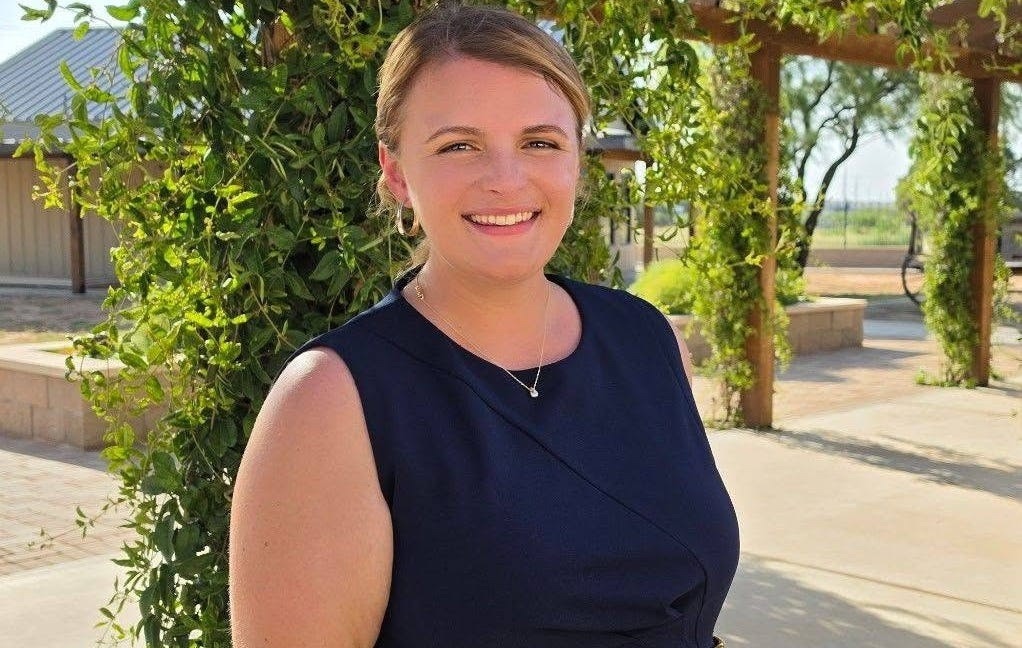
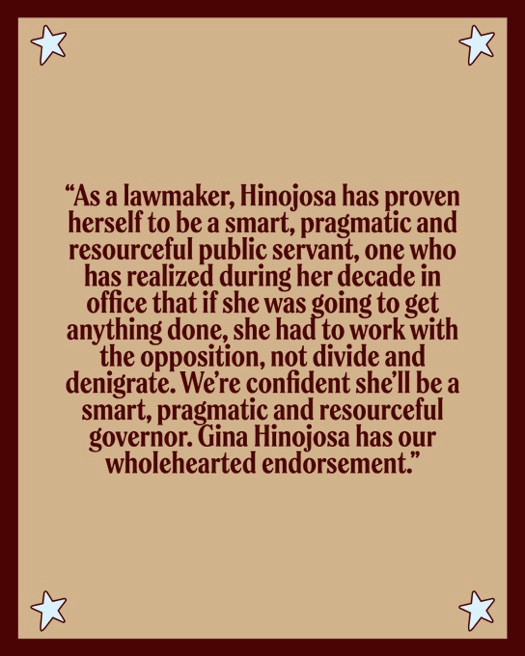
Gina Hinojosa swept the Democratic primary for Governor. She is smart, articulate, beautiful, and Hispanic. One of the reasons that Democrats have not won a statewide office since 1994 is low turnout and growing Hispanic support for Trump. Gina was a featured speaker at the last conference of the Network for Public Education in Columbus, Ohio, and she was wonderful! As she explains in her PBS interview, strengthening neighborhood public schools is her top priority.

The Republicans running for Senate will compete in a May run-off. Jon Cornyn, the incumbent, is a reliable vote for Trump but not really MAGA. He seems like a moderate Republican who votes with Trump to protect his hide. Cornyn is running for his fifth term.

His opponent Ken Paxton is Attorney General of Texas, and it’s fair to say that he’s been scarred by scandals. His wife is a state senator. He cheated on her. Some of his staff blew the whistle on him and said he took payoffs from men he was investigating. The Republican House impeached him; the Republican Senate cleared him, thanks to generous donations by hard-right MAGA billionaires.

Paxton and Cornyn will have a runoff in May.

Talarico will be a strong candidate for the Senate. Hinojosa will be a strong candidate against Abbot, if Texans are sufficiently sick of pay-to-play politics.

The outcome will depend on turnout. Right now, Texas is run by a handful of oil billionaires. They want low taxes and minimal public services. They are Christian nationalists who love money and power.

If Talarico can attract the support of non-MAGA Republicans and if Gina can bring Hispanic voters to the polls, Texas will flip blue.

To learn why Gina Hinojosa ran for governor and what she wants to do, watch this excellent interview.

Watch Gina Hinojosa explain why “we don’t want handouts,” we want the services we paid for.

See Gina Hinojosa speaking at the Network for Public Education conference in April 2025, before the Republican-dominated Texas legislature passed vouchers. The passage of vouchers happened only after Governor Abbot primaried anti-voucher Republicans with the millions given him by billionaire Jeff Yass, the richest man in Pennsylvania.

To see Talarico in action, watch him talk on the power of love.

See Talarico on how the worst people quote Dr. Martin Luther King Jr. on MLK Day and then violate his teachings every other day of the year.

Talarico on Christian nationalists, who–he says–are “more committed to the love of power than to the power of love.”

I love these two and will support them both. There will be a tidal wave of money pouring into Texas Republican coffers from other states to try to stop these two exciting Democrats!

The Houston Chronicle exposed a scandal involving Houston’s state-appointed Superintendent Mike Miles.

The Chronicle reported:

State-appointed Houston ISD Superintendent Mike Miles played a central role early in negotiations for a nearly $1 million contract between a Texas charter school network and a for-profit Colorado consulting firm, according to records obtained by the Houston Chronicle.

Miles used his private Gmail during those talks, emails show, sending a proposal with the consulting firm’s cost breakdowns; flagging a major price increase; and directing where contract documents should be sent.

The firm’s services — plus the free use of HISD’s curriculum and training by Miles himself — were intended to help the charter system replicate HISD’s controversial reforms and turn around several of its struggling campuses.

The mystery behind the scandal is why anyone would want to adopt Mike Miles’ top-down scripted curriculum. Its main effect is to drive away students and teachers. Test scores are up, to be sure. Miles’ greatest accomplishment seems to be raising a cohort of trained seals with higher scores who have never experienced love of learning.

It’s typical in American politics that the party that wins the Presidency usually loses the mid-term elections two years later. The other party picks up seats, sometimes enough seats to dominate one or both Houses, enough to stymie the President’s agenda and enough to hold investigations that embarrass the President.

With Trump’s low standing in the polls, the rising cost of living, the backlash against tariffs, and the evident cruelty of ICE, Republicans have worried about an electoral wipeout in November 2026.

Some clever Republican strategist devised a plan to protect the Republican dominance in the House of Representatives. Simple. Persuade red states to redistrict (gerrymander) their Congressional maps, creating more Republican seats while eliminating Democratic seats. This was out of the ordinary, because states usually redistrict every ten years, after the latest census.

Texas Governor Greg Abbott, a loyal MAGAT, was first to act. He pushed through a new map that split up Democratic districts and created five new Republican seats. The U.S. Supreme Court supported the Trump goal, as usual, and approved the Texas gerrymander.

Governor Gavin Newsom of California was quick to respond. He called a referendum that would redistrict the state and produce five new Democratic seats. Newsom’s new map is being changed in the Supreme Court, but it’s difficult to see the Court approving the Texas gerrymander while rejecting California’s.

The administration began pressuring other red state governors to follow the lead of Texas. Some Democratic states set about redrawing their maps.

And then there was Indiana. NBC News tells the fascinating inside story of how the Trump team alienated key Republicans in that state.

Indiana is a deep-red state with a Republican supermajority in both houses of the legislature. Republicans hold seven Congressional districts, Democrats only two. Trump wanted those two seats.

The Trump operatives thought the state leaders would quickly fall in line. When they didn’t, the Trump operatives decided to unleash their usual tools: bullying, pressure, threats, intimidation, even death threats. At least 14 Republican state senators received death threats.

Jane C. Timm of NBC News wrote the story:

INDIANAPOLIS — As the redistricting battle began to pick up steam in Indiana last month, state Sen. Jean Leising’s grandchildren were receiving odd text messages.

Ads from little-known outside groups had spliced the longtime Republican lawmaker’s image next to prominent Democrats like New York Rep. Alexandria Ocasio-Cortez, Illinois Gov. JB Pritzker and California Gov. Gavin Newsom. Some of the messaging was sloppy, referring to Leising as “him.”

A conservative and supporter of President Donald Trump, Leising, 76, was furious. Following months of conversations with her constituents, she felt they were generally opposed to redrawing Indiana’s congressional map ahead of the 2026 midterm elections — even though such an effort would favor her party and was backed by her president. So in mid-November, she fired off a statement making it official: She wouldn’t support it.

“The negative campaigning just put me over the top,” she said in an interview with 13WTHR in Indianapolis, an NBC News affiliate, at the time. “He may wonder why Indiana is struggling to get on board. Well, it’s probably the antics they used.”

It was a sign of things to come. Ultimately, the months of pressure applied by Trump and his supporters from outside of Indiana to pass a redrawn map that would split up the state’s two Democratic districts backfired. On Thursday, Leising joined a majority of Republicans in the state Senate in voting to sink the map in the face of potential future primary challenges, a flurry of online attacks — and in some cases, violent threats. 

The result was one of the biggest rejections that Trump, who has otherwise largely ruled over the GOP with an iron fist, has faced since returning to office, and it could cost the party in its bid to preserve its narrow House majority….

“You have to know Hoosiers. We can’t be bullied, we don’t like it,” GOP state Sen. Sue Glick said after voting against the map.

Despite intense lobbying by Trump, JD Vance, and Mike Johnston, Republican leaders in the state were not enthusiastic. They resented the pressure.

When Rodric Bray, the leading Republican in the State Senate, warned that there were not enough votes to pass the new map, Trump lashed out at him. He threatened to run an opponent to Bray, but Bray didn’t tremble because he’s not up for re-election until 2028.

Trump wrote on Truth Social:

“In the entire United States of America, Republican or Democrat, only Indiana ‘Republican’ State Senator Rod Bray, a Complete and Total RINO, is opposed to redistricting for purposes of gaining additional Seats in Congress,” Trump wrote in one Truth Social post of the well-liked Republican leader in the Senate. “The Rod Brays of Politics are WEAK and PATHETIC.”

The map passed the Indiana House by The map passed the state House last Friday by a 57-41 vote, with 12 Republicans voting against it.

When the vote shifted to the State Senate, the map was resoundingly defeated, 19-31, with 21 Republicans voting against it.

Trump lost the vote of one State Senator when he called Tim Walz “retards.” The State Senator has a child with Down Syndrome. Others said they would not be bullied.

John Thompson, historian and retired teacher in Oklahoma, wrote this thoughtful review of my memoirs, An Education: How I Changed My Mind About Schools and Almost Everything Else.

He writes:

Diane Ravitch’s An Education: How I Changed My Mind About Schools and Almost Everything Else is dedicated to her wife Mary; her sons, Joe, Michael, and Steven; her grandsons Nico, Aidan, Elijah, and Asher; and her ex-husband Richard. An Education intertwines deeply emotional personal and family experiences with the history of how she became such a transformative education leader. Although Diane denies it, I believe she’s the most influential education advocate of the last century.

I’ve been reading Diane Ravitch’s work for decades, but An Education is my favorite book. And my favorite passage started with Diane’s citation of Robert Hutchins who said, “We have to learn to live with those whose opinions differ from our own. After all, they may turn out to be right.”

Then she wrote about Hutchins statement, “for three decades I didn’t realize that it was intended for me.”

Being from Oklahoma, I was captured by the first part of her book, about growing up in Texas. I especially loved her story about meeting Roy Rogers at the Rodeo when she was 9 years old. After Rogers slapped her hand, Diane said, “I determined on the spot that I would never wash that hand again!”

Diane was a tomboy who loved horses and dogs. But she experienced sexism and trauma. She said she “did not have an idyllic adolescence. No one ever does.”  But her teenage years were “destroyed by my father abusing me.” 

During the middle of her book, she recalled her complicated marriage to Richard Ravitch and, then, her wonderful wife, Mary. Mary worked with the progressive educator Deborah Meier and opened a progressive small school in New York City. 

I was especially impressed by Diane’s communication with Al Shanker. He sought to allow teachers to start schools within schools to turnaround kids “in the back of the classroom with their heads on their desks.” Back in the late 1980s, it seemed like he might be able to bring diverse factions together. But, by 1994, charters had been high-jacked by corporate reformers and their winners and losers ideology.

In the middle of An Education. Diane revealed in so much detail the inside stories of her years as a conservative.  Back then, when I was an academic historian, I learned the most about Diane when reading her 1983 book, “The Troubled Crusade: American Education, 1945 – 1980.” Although I couldn’t yet read her work through the eyes of a teacher, I was exceptionally taken by her calls for teaching background knowledge so students could develop reading comprehension skills so they could “read to learn,” and her placing education pedagogies in a broad historical context.

Diane recalls her support for meritocratic, standardized testing, and color-blind policies, when she questioned bilingual education, and even the benefit of the Equal Rights Amendment. This was the time when she made friends with Bill Bennett, President Reagan’s Secretary of Education, and Chester Finn, and Tennessee Governor Lamar Alexander. I knew she had ties to Daniel Patrick Moynihan, but I too thought that progressives’ criticism of him was too politically correct. And, until I read An Education, I knew little about the two sides of James Coleman’s research, whose earlier research had seemed persuasive to me.

Neither would I have thought that Chester Finn was like a “sibling” to Diane.

When explaining her then-conservative beliefs, I sometimes felt that Diane was too hard on herself. For instance, she was far, far from alone in failing to understand the wisdom of Gov. Ann Richards, who said, “If there ever is school choice in Texas, the hard-right Christians will get the money to indoctrinate children.”

Moreover, as An Education schooled me on the propaganda behind the so-called “Texas Miracle” it did more than foreshadow the “New York City Miracle,” the “Harlem Miracle,” and the “Mississippi Miracle.”  It brought me back to the decades-long Oklahoma reality when our curriculum and policies were based on Texas’ accountability systems.  During most of my career, our policies were informed by one Texas trick after another to jack up accountability metrics.

Diane served as member of the National Assessment Governing Board from 1997 to 2004, and she would dig deeply into the numbers and the methodologies behind NAEP. But, as she explained, few journalists read the fine print of the research and they wrote “breathlessly” about supposedly dismal results in traditional public schools. They certainly didn’t report properly about the way that students’ outcomes were linked to family income.

When serving in the Education Department, Diane took a lead in establishing national standards for every school subject. Drawing upon excellent historians, multicultural History standards were set. She hoped standards like those would remain voluntary and “unify their respective fields and establish a common ground for a curriculum without telling teachers how to teach.” 

But the conservative Lynne Cheney “published a scathing denunciation of them.” Cheney said the History standards focused too much on people like Joe McCarthy and the Ku Klux Klan, and not enough on Ulysses S. Grant, and Robert E. Lee. This launched the modern wars over curriculum that have become especially destructive under President Trump. 

Even so, in 2002, Diane hoped that Mayor Mike Bloomberg and Joel Klein (who knew nothing about education) would succeed in improving New York City Schools. Klein reorganized schools from top to bottom, with multiple schools per building drawing on funding by the Gates Foundation. (By the way, I saw the chaos Klein created when visiting dozens of hurriedly opened school, especially in Bedford–Stuyvesant. Usually, leaders of the new schools didn’t even know how many new schools were being opened in their building.)

And, even worse, Jack Welch CEO of General Electric pushed 20-70-10 “stack ranking,” meaning 70% of teachers would be in the middle in terms of effectiveness, and 10% should be “removed,” even if it took the use of invalid and unreliable metrics to evaluate all teachers.

Especially after Diane engaged in a seven-year debate with Deborah Meier, which further “broadened her perspectives,” she became an invaluable leader of the grass-roots opposition to corporate school reforms. She objected to top-down mandates on teaching reading. Diane was among the first to explicitly link in a detailed manner the reforms to the wider privatization movement. And she nailed it when identifying them as the “Billionaires Boys Club.”

Diane analyzed the public relations campaigns which sold “reforms” as the “New York City Miracle.” Drawing upon her insights from serving on the National Assessment Governing Board, she clearly explained why NYC schools flipped back and forth between A and F grades.  Then, she linked President Obama’s flawed $5 billion RTTT experiment with the problems with Common Core curriculum and tests that were years above students’ reading levels.

Diane then quotes John Maynard Keynes who said, “When the facts change, I change my mind. What do you do, sir?”

Today, Diane changes minds by clearly explaining the interconnections between Free Market ideology, and profits, and the mindsets of elites that push privatization. She also reports daily on the interconnected attacks on schools throughout the nation. And now she’s sharing the same wisdom when spreading the word about Trumpism and today’s attacks on democracy.

I always read Diane’s daily blog posts. And I so very much appreciate An Education, even if it briefly pulled me away from reading everything in the Diane Ravitch Blog.

Jeff Yass is one of the richest people in the world. He is the richest person in Pennsylvania. He is #25 or #27 on Bloomberg’s Billionaires’ Index, depending on which day you check. His net worth is about $65 billion. He co-founded the Susquehanna International Group, which is based in Pennsylvania. He is also a major investor in TikTok and is widely believed to have persuaded Trump not to ban it. In the last decade, he has given hundreds of millions to political campaigns, including the 2024 Trump campaign.

Yass was recently interviewed by The Washington Post, where he talked about his passion: Vouchers. The writers of the article were Laura Meckler, Beth Reinhard, and Clara Ence Morse.

Yass thinks the public should pay for students to go wherever their parents want them to go: to private schools, religious schools, charter schools, any kind of school, including public schools. He thinks all students should get vouchers, regardless of family income.

He believes the public schools are failing and that universal vouchers will turn American education into a great success.

Yass provided $6 million to Texas Governor Greg Abbott to run pro-voucher Republicans against moderate Republicans who supported public schools. Abbott ran a campaign of lies against the moderate Republicans, asserting that they opposed more funding for public schools and that they supported open borders.

With Yass’s money and Abbott’s lies, they managed to knock off enough moderate Republicans to finally pass a voucher bill. The voucher program is currently costing nearly $1 billion, and most of the voucher money pays the tuition of students previously enrolled in private and religious schools.

The strange part of Yass’s devotion to charter schools and vouchers for religious and private schools is that Jeff is a graduate of the New York City public schools. He graduated from Bayside High School in Queens. He then attended Binghamton University in New York, where he spent most of his time playing poker, betting on horse races, and honing a keen ability to calculate the odds and winning.

As a young man, he read Milton Friedan’s Capitalism and Freedom and became a Friedman devotee. He met Friedman several times; when he asked the great conservative economist which philanthropy he should support, Friedman said “school vouchers.”

Yass jumped in to support school choice. His ideological commitment to them is so strong that he ignores that show that most vouchers are taken by kids already enrolled in non-public schools. He thinks all students should get vouchers, including those whose families are wealthy.

Yass confidently told The Post that studies of voucher programs show “overwhelmingly” positive results. Several early studies of targeted voucher programs have indeed shown positive results on standardized tests, and some research shows positive impacts on other metrics such as college enrollment.

But most research over the past decade or so shows either no effect or a negative impact on test scores for larger-scale programs. Some charter schools struggle with low test scores just like traditional public schools do. That’s at least partly because educating children with many needs and few advantages is a challenging task

Yass maintains that these programs help children. But he also says he doesn’t really care what the studies say or how children perform on tests. He takes the libertarian point of view that all parents should be empowered to choose the school — public or private — that they want for their children, no matter what.

“If the mother or the parent wants the kid to go from one school to another, who the hell is anyone to tell them not to?” he told The Post. “I don’t care what the studies say.”

Yass has spent many millions in his home state of Pennsylvania, but thus far has failed to get sweeping voucher legislation passed.

He has a a starry-eyed and warped view of the U.S. economy.

In a 2021 conversation sponsored by the Adam Smith Society, part of a free-market think tank, he said that the U.S. is almost to the point where “no one” is hungry, cold or lacks basic health insurance.

“What’s the difference between a billionaire and a guy who’s making $100,000 a year? They’re both at home watching Netflix. And they’re both on their iPhones,” he said then. “The disparity between how rich people live and how poor people live in America has never been smaller.”

Government data shows that in 2024, there were 27 million uninsured Americans and in 2023, 18 million households were uncertain if they would have enough food. Wealth inequality has been rising for decades, with the richest families increasing their wealth at a faster rate than everyone else.

Despite Yass’s multi-million dollar contributions to candidates in Pennsylvania, his candidates have frequently lost. Yass has been singled out by protest groups who resent his efforts to buy elections and determine the future of the state.

Critics say his giving represents an absurd amount of influence for one person, who can press his political agenda simply because he is rich….

“Hey hey! Ho ho! Billionaires have got to go!” chanted about 50 protesters marching to Susquehanna’s front door. The group outside Yass’s office in late September wasn’t an unusual sight. All Eyes on Yass, a coalition of education, labor and civil rights groups, has worked to turn Yass into the state’s prime villain, creating an online “Yass tracker” that allows voters to look up whether their state elected officials have received money from Yass-funded PACs.

The protestors organized in response to Yass’s efforts to change the composition of the State Supreme Court.

In the last election, he supported three Republican candidates trying to defeat three Democratic judges on the State Supreme Court. All three of his candidates lost.

It was the 12th demonstration since 2022 organized by All Eyes on Yass. In a year when Musk’s role at the White House prompted intense criticism of billionaires in politics, this group stands out in its singular and persistent focus on Pennsylvania’s richest man.


“We’re here with a simple message: Billionaires like Jeff Yass can’t steal our elections,” said Raquel Jackson-Stone, 32, who works for a civil rights group called One Pennsylvania. “They don’t care about the same things we care about, like housing affordability and making our public schools better…”

Yass rarely if ever interacts with people he disagrees with on this subject. He volunteered to The Post that in business, he advises his employees to seek out alternative points of view. “I always say, ‘Go find the smartest person who disagrees with you,’” he said.

But he said he has never had a personal conversation with a public education advocate to try to understand their point of view. “I would love to do that,” he said….

In the interview with The Post, Yass stood by his comments. He said the divide in America is not about money but about how much satisfaction people get from their work. “That’s the inequality. Wealthy, educated people enjoy their jobs. Lower-income people don’t enjoy their jobs.”

His confidence feeds his opponents but also his conviction to keep spending. If the criticism bothers him, he doesn’t let it show. He sees no problem with one man using money made on Wall Street to press a personal agenda. And he compares his influence not against that of other individuals but to teachers unions and other large interest groups that represent thousands of people each.

As Yass sees it, he’s the one fighting for the underdog — a billionaire speaking up for those who don’t have billions.

“It’s David versus Goliath,” he said. “I represent David.”

So Jeff Yass has never talked to a public education advocate to test his views. I volunteer.

Yesterday was a bad news, good news day.

On the bad side, the U.S. Supreme Court overruled a lower court, which had paused Texas’s disgusting gerrymander of the state’s Congressional districts. The party that wins the Presidency usually loses seats in the midterm election. To avoid that happening, Trump asked red state governors to redraw their districts, something that usually happens every ten years, after the latest census.

Texas Governor Greg Abbott was quick to respond to Trump’s request. The MAGA legislature drew a racially gerrymandered map intended to produce five new Republican seats by sacrificing districts that are currently represented by Black or Hispanic members of Congress.

A lawsuit to block the gerrymander lost in the District Court, won in the Appeals Court, which saw the ploy for what it was: a racial gerrymander. Yesterday the U.S. Supreme Court overruled the Appeals Court, finding nothing wrong with a racially gerrymandered redistricting, produced only five years after the last census.

The high court proved once again that it is an extension of Trump-MAGA, lacking in any principles or in fidelity to the Constitution or prior decisions.

We wait to see what they do to California’s gerrymander–not racially motivated–but produced to nullify Texas’ gerrymander.

There is also good news.

As is well known, Trump directed his Attorney General Pam Bondi to prosecute his political enemies–starting with James Comey, Letitia James (Attorney General of New York), and Senator Adam Schiff.

The first indictment of Comey and James was thrown out because the U.S. Attorney, Lindsey Halligan, was unqualified.

Charges were promptly refiled against James, claiming that she committed mortgage fraud, by saying that a home she purchased in Virginia was her first home, when it was really a second home, enabling her to pocket $18,000 because of a lower borrowing rate. Coming from an administration whose leaders have pocketed billions, this is funny.

The first prosecutor thought the case was so flimsy that he refused to bring charges. Trump installed Lindsey Halligan, one of his many personal attorneys, as U.S. Attorney. Galligan got a grand jury to indict James, but a judge threw out the indictment because Halligan was unqualified and made many errors.

When the charges against Tish James were brought to another grand jury, they refused yesterday to indict James.

Trump will no doubt continue to harass his enemies, but he’s running low on personal attorneys.