Archives for category: Scandal

Trump is obsessed with stopping mail-in Voting, although he votes by mail. He has spent his time in office sowing doubt in our elections, which are the basis of our democracy. The very fact that this crooked con man was returned to the Presidency makes me doubt the security of our elections.

Nonetheless, a whistleblower at the United States Postal Service leaked a complaint claiming that the USPS is planning to take measures that will throw the midterms into chaos, thus giving Trump a reason to discredit the expected Blue Wave, which will sweep away Republican majorities in the House and possibly the Senate. In brief, Trump intends to use the USPS to determine which votes count. Bear in mind that the Cinstututuin explicitly assigns responsibility to the states, not the federal government.

The actions Trump is taking to discredit the midterm elections are unprecedented. But then so was his demolition of the East Wing of the White House, so are his efforts to control the media, universities, and law firms. So are his efforts to overturn civil rights laws. So is his defunding of medical and scientific research. So are his attacks on freedom of the press. So are his efforts to control the curriculum of the nation’s schools.

Heather Cox Richardson explains:

Yesterday, by a vote of 5–4, the United States Supreme Court allowed Trump to continue to build his ballroom. The five right-wing justices concluded that the National Trust for Historic Preservation, which had sued to stop the construction of the ballroom, did not have legal standing to sue and that national security considerations came down on the side of construction.

The majority said it was not resolving the issue of whether the project is legal.

It was Chief Justice John Roberts who covered that aspect of the controversy. He wrote in dissent that the project is “likely unlawful.” “The White House is an iconic American building whose symbolism and history are wrapped up in its architecture,” Roberts wrote. He wrote that it is critical to “ensure that those responsible follow the rules in deciding what to tear down and what to build up at the People’s House.”

Nonetheless, as Josh Gerstein of Politico reported, the project will likely be completed before the question of its legality is resolved.

Trump’s behavior in his second term is a logical outcome of the theory of the “unitary executive.” Under President Ronald Reagan in the 1980s, those eager to stop Congress from passing legislation that benefited the American people at the expense of businessmen began to argue for the idea that because the president was the head of one of the three branches of the U.S. government, he could not be checked by either of the other two branches: the legislative branch (Congress) or the judicial branch (the courts).

On July 1, 2024, the United States Supreme Court, stacked with Trump’s appointees, took this theory to a conclusion that overturned the central premise of American democracy: that no one is above the law.

It decided that the president of the United States has “absolute immunity” from criminal prosecution for crimes committed as part of the official acts at the core of presidential powers. The court also said it should be presumed that the president also has immunity for other official acts as well, unless that prosecution would not intrude on the authority of the executive branch.

Writing for the majority, Chief Justice Roberts said that a president needs such immunity to make sure the president is willing to take “bold and unhesitating action” and make unpopular decisions, although no previous president ever asserted that he was above the law or that he needed such immunity to fulfill his role. Roberts’s decision didn’t focus at all on the interest of the American people in guaranteeing that presidents carry out their duties within the guardrails of the law.

This permission structure appears to have convinced Trump he can do whatever he wishes, including rigging elections so he cannot lose.

Yesterday Senator Richard Blumenthal (D-CT) of the Senate Committee on Homeland Security and Governmental Affairs, who is the top-ranking Democrat on the Permanent Subcommittee on Investigations, exposed what appears to be a plot to steal the 2026 midterm elections.

Blumenthal released a letter he had written to Postmaster General David Steiner calling attention to an official whistleblower report, which he attached to the letter.

It’s eye-popping.

The whistleblower warns that there are “potentially catastrophic problems in the development of the United States Postal Service’s…new system for handling federal election ballot mail.” According to the whistleblower, the “process for the creation and implementation of an entirely new and untested set of IT systems” for delivering ballots to voters for the midterm election has been “secretive, rushed, chaotic, and fundamentally flawed.”

The whistleblower says “the administration has hidden the high likelihood that the new ballot mail verification processes will result in major disruptions in mail ballots ever getting delivered to voters. As presently designed, if even one bar code on one single ballot in a bulk-mailing of 10,000 ballots fails to properly scan during the verification process, the entire batch is rejected and sent back to the state—effectively stopping the ballots from being mailed to voters.”

The complaint continues: “Even under ordinary circumstances this would be problematic because of predictable errors in any barcode scanning process.” But the rushed IT development of the new system means it “will almost certainly have significant operating problems when released to the public.” The whistleblower notes that multiple officials from the USPS have described the development process for the system as “a sh*t show.”

The whistleblower said that work on the “USPS election ballot mail IT project” began in June 2026 and has continued despite an injunction from a federal court ordering work on it to stop. Normally, it would take “nine months to a year or more” to roll out a project “of this complexity, magnitude, and importance.” Considering the rush and the consequences, the whistleblower wondered “whether catastrophic failure would be a feature rather than a bug.”

The complaint says: “The apparently sloppy and rushed manner in which the Federal Ballot Mail Portal and supporting IT systems are being built poses significant risk. Potentially millions of American voters may not receive their mail-in ballot this election cycle in a timely manner, or at all.”

Blumenthal noted that the USPS has a restrained role as a mail carrier. It has never before played a gatekeeping function and yet is now building an entirely new system to put itself “in a position to refuse to mail ballots that state election officials have determined should be sent out.” He called for Postmaster General Steiner to “to abandon this ill-conceived, unconscionable plan and ensure that all Americans can exercise their constitutional right to vote, including by mail, without interference by USPS.”

Blumenthal demanded Steiner answer no later than Friday whether the USPS has stopped work on the project as ordered by the courts, as well as provide the names of those who worked on the project and the dates they were active. By September 8, he wants to see all records about the project.

Blumenthal told reporters: “The main takeaway for me is that the Postal Service has designed a system to disenfranchise millions of Americans. One third of all Americans cast their ballots by mail, and the USPS puts all of their votes at risk.”

The administration’s attack on elections is especially concerning considering the recent suggestions that Trump is spending most of his time on his legacy projects like the ballroom, leaving him largely unaware of what is going on in the administration. Nancy A. Youssef, Missy Ryan, and Michael Scherer of The Atlantic reported yesterday that when Army Secretary Dan Driscoll went directly to Trump with his concerns about what Hegseth is doing to the Army, Trump was surprised to learn “how many generals and other top officers had been fired, pushed out, or passed over for promotion under Hegseth” and “expressed concern about the deep cuts to the Army’s senior leadership.”

Driscoll resigned yesterday.

As for the plan to sabotage mail-in voting? Representative Joe Morelle (D-NY), the top-ranking Democrat on the House Committee on House Administration, which oversees the administration of federal elections, posted: “These whistleblower allegations are extraordinary. If Trump Administration officials knowingly built a system designed to prevent Americans from receiving their ballots, that is not election security. It is a betrayal of our Constitution and the American people.”

Notes:

https://www.politico.com/news/2026/08/31/supreme-court-white-house-ballroom-john-roberts-dissent-01057685

https://www.theatlantic.com/national-security/2026/08/driscoll-hegseth-military-resignation/688479/

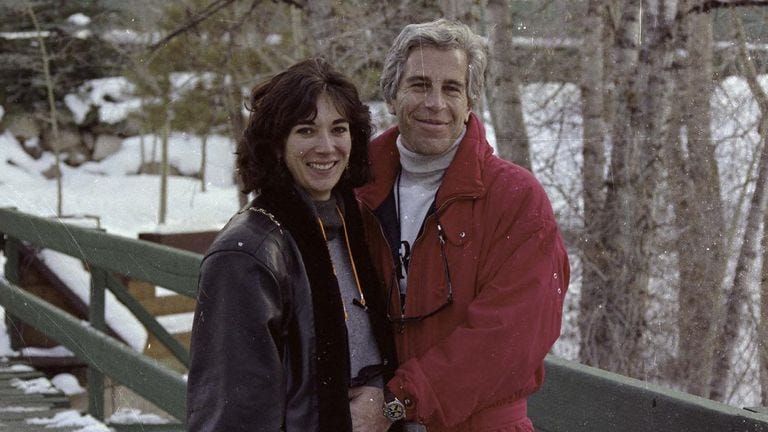
Julie K. Brown is the reporter at the Miami Herald who broke the Jeffrey Epstein case wide open. She wrote a series in the newspaper revealing the cover-up of Epstein’s criminal activities called “Perversion of Justice.”

The newspaper says this about her series:

In her year-long investigation of Palm Beach multimillionaire Jeffrey Epstein, Miami Herald reporter Julie Brown tracked down more than 60 women who said they were victims of abuse and revealed the full story behind the sweetheart deal cut by Epstein’s powerhouse legal team. Since the Herald published ‘Perversion of Justice’ in November 2018, a federal judge ruled the non-prosecution agreement brokered by then Florida U.S. Attorney Alexander Acosta was illegal, and on July 6 Epstein was arrested on sex trafficking charges in New York state. On July 12, Acosta resigned as U.S. Secretary of Labor. And on Aug. 10, Epstein died by suicide in his Manhattan jail cell. Investigative journalism makes a difference.

Julie K. Brown wrote today on her Substack blog:

Success, finally. 

Last week, a federal court in Manhattan ordered the release of the voluminous case files from Virginia’s Giuffre’s 2015 civil lawsuit against Ghislaine Maxwell. 

The release of these files was in part the result of eight years of litigation by the Miami Herald and its parent company, McClatchy, which have been fighting for the material since I published my series “Perversion of Justice,” in 2018. 

Last week, U.S. District Court Judge Judge Loretta Preska rejected Maxwell’s final arguments 

to keep the files sealed, noting that the passage last year of the Epstein Files Transparency Act superseded any earlier grand jury arguments that Maxwell was using to keep the records from the public. 

What does this mean, and what new information will we learn? 

First some history. Virginia brought this defamation lawsuit against Maxwell back in 2015, after Maxwell publicly proclaimed that Virginia was a liar who had made up her allegations of being sexually abused by Jeffrey Epstein, Maxwell and other powerful men (including Epstein lawyer Alan Dershowitz and the former Prince Andrew.) 

Giuffre, represented by the Boies-Schiller firm, sued Maxwell for defamation, asserting that she faced “public ridicule, contempt, and disgrace” when Maxwell went public with her statements. As part of the lawsuit, the lawyers gathered tens of thousands of pages of discovery, including depositions by Giuffre, Maxwell and dozens of other people. Part of the effort also involved Dershowitz, who together with social media influencer Michael Chernovich, tried unsuccessfully to unseal portions of the Giuffre-Maxwell case while it was still being litigated. 

The lawsuit was settled in early 2017. I had been told the discovery contained damning evidence against Epstein, Maxwell and other men, and that it was worth trying to get the courts to unseal the documents on the grounds that they were never properly sealed in the first place. 

Judicial records by law are supposed to be open to the public. In this case, the former judge (Robert Sweet, now deceased) issued a blanket sealing on all the documents because they contained “sensitive” and “private” information. Sweet placed a protective order on massive amounts of material, including hearings and judicial decisions made in the case — and voluminous evidence that Virginia presented to show that Epstein and Maxwell were operating an underage sex trafficking operation. 

This is not the way sealing is supposed to happen, however. Each document that the lawyers want sealed has to be examined, and those requesting it be sealed must provide legal justification to the judge for doing so. This wasn’t done in this case. 

Nearly all the evidence that Virginia’s lawyers uncovered about Epstein and Maxwell’s sex trafficking that came out during this civil case was kept secret.

Maxwell settled the case before it could go to trial, however — and paid Virginia somewhere in the neighborhood of $3-5 million. By settling it, she thought that all the evidence about her involvement would remain under seal. 

But I convinced my editors to ask our lawyers to file a motion to intervene in the case in order to unseal the files. 

An appeals court eventually ruled in our favor, and on August 9, 2019, thousands of pages were made public, including sworn statements by Virginia in which she alleged she was trafficked to Dershowitz, who represented Epstein; former Prince Andrew; former Maine Sen. George Mitchell; former New Mexico Gov. Bill Richardson; hedge fund manager Glenn Dubin; hotel magnate Tom Pritzker; the late MIT scientist Marvin Minsky. All of the men denied that they were involved with Giuffre. 

Epstein was found dead in his Manhattan jail cell the following morning. …

This is only the opening of her post. The rest is behind a paywall. But the bottom line is that the release of the Maxwell files will add lots of fuel to the Epstein fire.

Melania Trump held a highly unusual news conference to deny rumors about her relationship with Jeffrey Epstein and Ghislaine Maxwell.

Then the rumors began to fly.

Snopes, the nonpartisan fact-checking organization, reviewed the authenticity of an email exchange Melania had with Ghislaine Maxwell in 2002, before she married Trump.

Melania inquired about meeting again. Ghislaine replied, opening her response with “Sweet Pea,” a rather intimate reply from someone you barely know.

Snopes rated the email exchange true.

Then there is the story of Amanda Ungaro. She was a victim of Epstein. She was recently deported to Brazil. She has threatened to get even with Melania by telling everything she knows.

Trump can’t escape his long association with pedophile Epstein, even though their friendship ended 20 years ago.

It’s not funny but this video is.

Donald Trump has done many things that are unprecedented. He is the first President to be impeached twice. He is the first convicted felon to be elected President. He is the first President to encourage a violent insurrection to overturn the election that he lost.

So many firsts.

But this one takes the cake. It’s the biggest grift of all. It’s the definition of chutzpah.

Trump and his sons are suing the U.S. Treasury and the Internal Revenue Service for $10 billion because a rogue contractor leaked his tax returns.

In the 250 years of this nation’s history, no President has ever sued the government for damages to his reputation.

NBC News reported:

The lawsuit, filed Thursday at a federal courthouse in Miami, says Trump is suing in his personal capacity, not as president. The other plaintiffs include two of Trump’s sons — Donald Trump Jr. and Eric Trump — and the Trump Organization.

“Defendants have caused Plaintiffs reputational and financial harm, public embarrassment, unfairly tarnished their business reputations, portrayed them in a false light, and negatively affected President Trump, and the other Plaintiffs’ public standing,” the complaint says.

The Treasury and IRS did not immediately respond to requests for comment Thursday night.

A former IRS contractor, Charles Littlejohn, was sentenced to five years in prison in 2024 after he pleaded guilty the year before to leaking Trump’s tax records to The New York Times. The Times published exclusive reporting in 2020 that showed Trump had paid only $750 in federal income taxes in 2016 and 2017.

Trump is also suing the Justice Department for $230 million its investigations of his role in the January 6 insurrection and his withholding of documents.

How vigorously do you think Treasury Secretary Scott Bessent and Attorney General Pam Bondi will fight their boss in court?

Would taxpayers have standing to sue to oppose any settlement?

The Houston Chronicle exposed a scandal involving Houston’s state-appointed Superintendent Mike Miles.

The Chronicle reported:

State-appointed Houston ISD Superintendent Mike Miles played a central role early in negotiations for a nearly $1 million contract between a Texas charter school network and a for-profit Colorado consulting firm, according to records obtained by the Houston Chronicle.

Miles used his private Gmail during those talks, emails show, sending a proposal with the consulting firm’s cost breakdowns; flagging a major price increase; and directing where contract documents should be sent.

The firm’s services — plus the free use of HISD’s curriculum and training by Miles himself — were intended to help the charter system replicate HISD’s controversial reforms and turn around several of its struggling campuses.

The mystery behind the scandal is why anyone would want to adopt Mike Miles’ top-down scripted curriculum. Its main effect is to drive away students and teachers. Test scores are up, to be sure. Miles’ greatest accomplishment seems to be raising a cohort of trained seals with higher scores who have never experienced love of learning.

Many powerful people have a vested interest in making sure that the public never sees what and who is in the Epstein files. Democrats, Republicans, powerful corporate leaders. They prefer to keep the files under lock and key.

But didn’t Congress just pass a law requiring the release of those files? Didn’t Trump sign the legislation? Even though no legislation was needed, because Trump always had the power to release the files.

Ethan Faulkner, who blogs at Substack as the “Common Sense Rebels,” says that the files that are released will be carefully redacted and curated. Most, he writes, will never be released. Who used Epstein’s services? The names the public wants to know will be blacked out.

He writes:

Everyone imagines a government cover-up as a team of men in suits throwing files into a furnace.

That’s fiction.
The real cover-up is boring. It’s procedural. It’s legal.
And it works.
The United States doesn’t destroy evidence. It manufactures delays.
It fabricates uncertainty.
It deploys exemptions instead of fire.
The truth isn’t burned.
It’s redacted.
And the machinery that performs this ritual — the system that is right now digesting the Epstein files — is something I’m calling:
The Redaction Engine.
Once you understand this machine, the Transparency Act stops looking like a win and starts looking like a transmission belt feeding secrets into a shredder that no one touches by hand.

  1. The Architecture of Obscurity
    FOIA was sold as a “Right to Know” law.
    What Congress actually built is a filtration system — and one that agencies quickly learned how to weaponize.
    Inside the FOIA framework sits a set of exemptions that function like hardware components in an industrial shredder. The Redaction Engine uses them as gears.
    According to the technical audit in The Redaction Engine: National Security Information Control Architectures , the most powerful of these gears are:
    Exemption 1 — The National Security Black Hole
    Everything “classified” stays sealed.
    But classification isn’t an objective fact — it’s a prediction.
    The law only requires a “reasonable expectation” of harm.
    Speculation becomes legal justification.
    Courts almost never challenge it. They review whether the stamp was applied correctly — not whether the classification itself is absurd. That is not oversight. That is choreography.
    Exemption 3 — The Files That Don’t Exist
    This one is an entire legal universe.
    Statutes like the CIA Information Act let agencies designate “Operational Files” that don’t even have to be searched. They can legally pretend an entire category of documents has left the physical plane.
    The public can’t request what the government asserts is not real.
    Exemption 5 — The “Embarrassment Privilege”
    The “Deliberative Process” clause was meant to protect drafts and brainstorming.
    Instead, agencies use it to hide:

*evidence of wrongdoing

*internal dissent

*contradictory analysis

-*early warnings that were ignored

It’s the single most abused exemption in the system.
And then there’s the Mosaic Theory.
This is the government’s favorite intellectual cheat code.
It says:
Even harmless information must be hidden, because it might complete a larger secret picture.
Meaning they can withhold anything, because everything is theoretically meaningful.
This is the neural network of the Redaction Engine.
A legal philosophy that transforms silence into law.

2. The “Active Investigation” Loophole

If the national-security exemptions are the shield, Exemption 7(A) is the sword.
This single exemption — explained in The Active Investigation Shield in Federal Information Law — is the most devastating transparency-killer in the entire system.
It says the government can withhold any record if releasing it could reasonably be expected to interfere with an enforcement proceeding.
Notice that phrase again:
Could. Reasonably. Be expected.
Before 1986, the government had to prove disclosure would interfere.
Then Congress changed one word —
and agencies gained the power to hide anything under the logic of “maybe.”

This birthed the most sinister creature in federal information law:


3. The Zombie Investigation.

An investigation that:

*is technically open

*is not being actively worked

*has no timeline

*and can remain “pending” for decades

Jimmy Hoffa’s file?

Withheld for twenty years because “new leads could theoretically emerge.”

This is not oversight.

This is a loophole weaponized into a vault.

Once an investigation is declared “active,” the Redaction Engine locks the file indefinitely.

At this point, open the link and read the rest for yourselves!

During his campaign, Trump was outspoken about his determination to eliminate the U.S. Department of Education. He blamed the Department for imposing DEI ideology on the nation’s schools, for teaching students “to hate America,” to indoctrinate students to believe whatever he opposes. He even blamed the Department for low test scores.

Never once did he acknowledge that federal law prohibits any federal official from influencing curriculum or instructional materials.

The vast majority of employees of the Department are career civil servants who manage grants, process applications, oversee procurements, and perform necessary tasks to maintain the flow of federal funds to states, school districts, and schools. They have nothing whatever to do with curriculum or test scores.

Trump’s ultimate goal is to withdraw federal funding from public schools. The purpose of federal funding, when the Elementary and Secondary Act was first passed in 1965, was equity, specifically, raising education spending in the poorest states.

Matt Ford of The New Republic describes how the Supreme Court ignored the Constitution and the law to let Trump do what he wants.

He writes:

To cover the Supreme Court these days is to catalogue its lawlessness. The conservative justices’ latest decision in McMahon v. New York allows the president to effectively demolish the Department of Education—a Cabinet-level department that was created by Congress, given duties and responsibilities by Congress, and funded by Congress to carry them out.

Secretary of Education Linda McMahon, a pro-wrestling promoter and sexual-abuse lawsuit defendant, made no secret of her goals after taking up her current job. In a speech in March, she declared that the department was to carry out its “final mission”: executing a mandate from President Donald Trump to shutter the department and transfer some of its functions to other agencies. Project 2025, the administration’s de facto policy blueprint, also said the department “should be eliminated.”

A week after taking up her post, McMahon put that plan into action by ordering a “reduction in force,” or RIF, of roughly half of the agency’s employees. The state of New York and other plaintiffs sued McMahon to stop the RIF by arguing that it was a back-door means to end the department’s statutory responsibilities by eliminating the staff responsible for carrying them out.

This was not particularly difficult for the plaintiffs to prove: Trump administration officials publicly described the RIF as part of the “final mission” in alignment with an executive order that directed McMahon to “take all necessary steps to facilitate the closure of the Department of Education” while also “ensuring the effective and uninterrupted delivery of services, programs, and benefits on which Americans rely”—two obviously contradictory goals.

Unsurprisingly, a federal district-court judge granted the plaintiffs a temporary restraining order shortly thereafter. The lower court concluded from the record that the RIF’s actual goal was to “effectively dismantle the Department without an authorizing statute.” When the Trump administration appealed that restraining order to the Supreme Court, it pled ignorance. The district court, the Trump Justice Department argued, “[lacked] jurisdiction to second-guess the executive [branch]’s internal management decisions” and that the order was about “streamlining” the department.

“The government has been crystal clear in acknowledging that only Congress can eliminate the Department of Education,” Solicitor General D. John Sauer told the justices in his filing. “And the government has acknowledged the need to retain sufficient staff to continue fulfilling statutorily mandated functions and has kept the personnel that, in its judgment, are necessary for those tasks. The challenged RIF is fully consistent with that approach.”

The Supreme Court’s conservative majority was gullible enough to believe that. As with almost any other shadow-docket ruling, the court did not bother to explain itself. It fell to Justice Sonia Sotomayor, writing in dissent alongside Justices Elena Kagan and Ketanji Brown Jackson, to explain the gravity of the court’s error. For one thing, Sotomayor noted that black-letter federal law prohibits the Trump administration from doing exactly what it says it is doing.

Congress has prohibited the Secretary of Education from “aboli[shing] organizational entities established” in the Department’s organic statute. 20 U. S. C. §3473(a)(2). As for statutory entities “transferred to the Department,” the Secretary may only “consolidate, alter, or discontinue” a subset of entities specifically identified, after providing Congress with 90 days’ advance notice and a “statement of the action proposed . . . and the facts and circumstances relied upon in support of such proposed action.”

She also emphasized the damage that would result from the court’s decision. “Lifting the district court’s injunction will unleash untold harm, delaying or denying educational opportunities and leaving students to suffer from discrimination, sexual assault, and other civil rights violations without the federal resources Congress intended,” she explained. “The majority apparently deems it more important to free the Government from paying employees it had no right to fire than to avert these very real harms while the litigation continues….”

Ford contrasts this decision with SCOTUS refusal to allow Biden to forgive student debt during a national emergency–the COVID pandemic.

To sum up: In Robertsworld, a Democratic president can’t use a federal law that lets the Department of Education “waive and modify” student loans during a national emergency—in this particular case, the COVID-19 pandemic—because Congress was too vague about it for the chief justice’s liking. (The trick here is to selectively treat broad statutes as vague ones.) But when Congress says, “Hey, we’re going to create a bunch of programs for the executive branch to carry out, we’re going to house them in the Department of Education, and we’re also going to create strict limits on how you can reorganize them,” those laws are…merely advisory for Republican presidents, I guess?

The theme of this Supreme Court, he concludes, is lawlessness. Trump can break laws with impunity, anticipating that this Court will approve.

What about the rule of law? A casualty of the Trump regime.

Blogger Dean Obeidallah raises a very important question: why didn’t Pam Bondi prosecute her state’s most notorious child sex predator when she was Attorney General of Florida? Who was she protecting?

He wrote on his Substack blog:

Donald Trump is so panicked by what is contained in the Trump-Epstein files that he’s now slamming his own followers demanding its release, calling them “stupid” and “weaklings.” Whine as he may, Trump has lost control of the narrative given a new poll released Wednesday which found nearly 70% of Americans believe the Trump regime has engaged in a cover up of the Epstein files–including 59% of Trump supporters. At the very least it appears that Trump knew Jeffrey Epstein was involved in sex ring where children were raped yet did nothing to stop that evil. But Trump’s actions could be worse than that.

However, lost in the discussion is that Trump’s current Attorney General Pam Bondi was Florida’s Attorney General from 2011 to 2019 in the very state that was ground zero for Epstein raping and trafficking children. Why didn’t she investigate and prosecute Epstein for these heinous crimes committed in Florida?!

Taking a quick step back, Epstein received in 2008 the “deal of a lifetime” from local Florida prosecutors and George W. Bush’s Department of Justice. At the time, Bush’s DOJ had identified 36 underage girls who were victims of Epstein. But they offered the well-connected Epstein a deal to plead guilty to just two prostitution charges in state court. He was then sentenced to 18 months in jail–which he served in a private wing of the Palm Beach County jail where he was allowed daily work release. In addition, Bush’s DOJ agreed not to prosecute him for federal crimes. Worse, Epstein’s victims were not even told of the deal in advance so they could object.

After Epstein’s release from jail in 2009, Epstein returned to his lavish lifestyle and was able to “continue his abuse of minors”—a point made in a 2020 report by Trump’s own DOJ after Epstein died in the custody of the Trump administration. So again, why didn’t Bondi investigate Epstein for his crimes while she was AG from 2011 to 2019?!

Open the link to finish reading.

Ellie Leonard’s blog is called “The Panicked, Unpaid Writer.” This post is remarkable because it includes the drawing that, according to the Wall Street Journal, was sent by Trump to his friend Jeffrey Epstein on the occasion of his 50th birthday.

Trump denies that he wrote the note. He is suing Rupert Murdoch and The Wall Street Journal for $10 billion for publishing the story, which he says is fake. This open break between Trump and Murdoch may have interesting consequences, since Murdoch s FOX News is Trump’s biggest cheering section.

Ellie Leonard writes:

Long before we knew the story of Jeffrey Epstein, a young Ghislaine Maxwell was coming of age in the 53-bedroom home of her father, Robert Maxwell, a British media proprietor and politician. He named his luxury yacht after the little girl, the “Lady Ghislaine,” but spent most of his time buying and selling businesses like MacMillan and Pergamon Press, and flying back and forth to Headington Hill in Oxford on his helicopter. Ghislaine would later say that she had a “difficult, traumatic childhood with an overbearing, narcissistic, and demanding father…(that) made [her] vulnerable to Epstein.” But despite being a billionaire, Robert Maxwell had a lot of debt, (having “plundered hundreds of millions of pounds from his companies’ pension funds) and in 1991 his body was discovered floating in the Atlantic Ocean. The newspapers said he had apparently fallen overboard from the “Lady Ghislaine,” but Ghislaine never believed the stories.

“One thing I am sure about is that he did not commit suicide. I think he was murdered.” – Ghislaine Maxwell, Hello! Magazine1997

She would meet Jeffrey Epstein for the first time just a few months later. And despite the bad taste her father left, she found common ground with the young millionaire financier.

Final arguments at Maxwell trial | US News | Sky News

It is unclear how long Maxwell dated Epstein, though there is evidence to indicate it was from about 1992 to 1997. However, due to the nature of Epstein’s “extracurricular” activities and business dealings, those lines may be blurred. In a 2003 Vanity Fair article Epstein claimed that Maxwell was his “best friend,” indicating that, at least on paper, they were no longer together. But he stated that although she wasn’t on his payroll, she “organized much of [his] life,” and that when a relationship is over, the girlfriend “moves up, not down,” to friendship status.

Open the link to keep reading and to view the drawing at the center of Trump’s $20 billion lawsuit against Murdoch.

Last night, I read the story in the Wall Street Journal that was breaking news. The WSJ, owned by Rupert Murdoch, had somehow obtained a leather-bound book presented to Jeffrey Epstein for his 50th birthday. In it was a “bawdy” note from Donald Trump that hinted at their common interests.

Brian Stelter, CNN’s media expert, wrote about the reaction in the media. Most commentators jumped on the story. FOX News hosts were silent.

Stelter wrote:

At a time when other media outlets are hesitating and capitulating, Rupert Murdoch and the Wall Street Journal just stood up to President Trumpand scooped one of the biggest political stories of the summer. The print headline on Page One today reads “Trump’s Bawdy Letter to Epstein Was in 50th Birthday Album.” It is, of course, the most-read article on the Journal’s website.

And yet… Murdoch’s Fox News has not mentioned the story once. So let me take a stab at answering all the questions I’m getting about the media mogul and his role. 

Murdoch, age 94, wants to have it both ways. He wants to be a newsman (that’s how he sees himself) but also needs to be a businessman. He wants a muscular Journal breaking big stories but he also needs Fox News to keep printing money for his family and other shareholders.

It’s been readily apparent for years that Fox succeeds when it is The Trump Show. So Fox does what it does, ignores what it ignores. But Murdoch, who has always cared most of all about old-fashioned newspapers, derives satisfaction and a sense of power from the Journal.

We wrote all about the operatic relationship between Murdoch and Trump in this CNN.com story overnight. I think this quote is quite telling: “Rupert loves to poke the president in the eye once in a while,” an executive who has worked with him closely told me.

Trump: I’m going to ‘sue his ass off’

Trump is, of course, taking this very personally. “I told Rupert Murdoch it was a Scam, that he shouldn’t print this Fake Story. But he did, and now I’m going to sue his ass off, and that of his third rate newspaper,” he wrote on Truth Social.

Trump’s post confirmed rumors that had been swirling in political and media circles for two days: namely, that the White House was trying to kill a damaging WSJ story. Trump said he personally spoke with both Murdoch and WSJ editor Emma Tucker.

As for a lawsuit, well… we’ll see, but no suit will take this story off the internet. The timeline is worth revisiting here. The WSJ approached Trump for comment on Tuesday. Trump derided the Epstein scandal as a “hoax” on Wednesday. 

As I said on “The Source with Kaitlan Collins” last night, his well-trodden “hoax” talking point was a direct response to his concern about the looming WSJ report. Trump uses the word “hoax” to shut down conversation and discourage critical thinking; to tell his supporters to just ignore something altogether. TBD on whether it’ll work this time.

 >> Inside Dow Jones HQ: After the story landed, Journal staffers expressed pride in their colleagues and in the publication for running the report despite the president’s attempt to squash it. There’s a real sense that publishing was an act of bravery…

 >> BTW, WSJ has no comment on the lawsuit threat. Trump seems empowered by his settlements with Paramount and other media companies…

****************************************

Not part of Stelter’s commentary:

The note from Donald to Jeffrey:

The typewritten note was an imaginary conversation between Donald and Jeffrey, inside the outline of a naked woman.

“Voice Over: There must be more to life than having everything,” the note began.

Donald: Yes, there is, but I won’t tell you what it is.

Jeffrey: Nor will I, since I also know what it is. 

Donald: We have certain things in common, Jeffrey. 

Jeffrey: Yes, we do, come to think of it. 

Donald: Enigmas never age, have you noticed that? 

Jeffrey: As a matter of fact, it was clear to me the last time I saw you. 

Donald: A pal is a wonderful thing. Happy Birthday — and may every day be another wonderful secret.