Jeff Bryant, prolific education journalist, writes in The Progressive about the efforts by educators to fight back against the failed and punitive policies of No Child Left Behind and Race to the Top. It’s a valuable summary of the past 15 years. Teachers rallied. Teachers sounded alarms about the bipartisan attack is on teachers, teaching and public schools.
Did it make a difference?
Now, 15 years later, there are thousands of charters, and they are no better than the public schools, contrary to their promises. Now, most states have vouchers, and the public is funding religious schools, which was unthinkable in 2011.
But we can’t give up! At last, there are candidates running to fight for public schools. Gina Hinojosa is the most prominent of them. If she defeats Greg Abbott in Texas, expect major changes.
It was a sunny July day in Washington, D.C., the temperature was forecasted to hit 97 degrees Fahrenheit, and when I arrived at the Ellipse on the National Mall for the Save Our Schools march I realized I would need a hat. Among the vendors that lined Constitution Avenue, the least expensive hat I could find was a gaudy, red-white-and-blue affair with an embossed rendering of fireworks going off over the Lincoln Memorial and Washington Monument. “Some hat,” Anne Thompson, my videographer for the day, said when she arrived…
At the time, I was working on a project, partnered with the National Education Association, called “Starving America’s Schools: How Budget Cuts and Policy Mandates Are Hurting Our Nation’s Students.” The project documented how state governments, following the Great Recession, cut funding for schools and rolled out efforts to privatize them with charter schools and voucher programs.
I had read multiple analyses by the Center on Budget and Policy Priorities (CBPP) that found at least thirty-seven states responded to the economic downturn that started in 2007 and extended into 2009 by slashing their education budgets back to pre-recession levels. My Starving America’s Schools project would examine how the cuts caused districts to fire teachers, cancel art and music programs, close libraries and science labs, and cut extracurriculars like athletic programs, field trips, and drama performances.
Teachers turned out to denounce high-stakes testing, NCLB, Race to the Top, budget cuts, privatization, and the attacks on their profession, funded by Bill Gates, Eli Broad, and other billionaires.
….The estimated crowd of 3,000 to 5,000 roared in approval at an array of speakers that included the actor Matt Damon (whose mother is a professor of education), Ravitch, best-selling author Jonathan Kozol, renowned educator Deborah Meier, and policy experts Linda Darling-Hammond and Pedro Noguera. When the speeches were over and we marched to the White House, the line of people stretched for blocks and blocks…
The range of themes the speakers addressed included lack of pay and respect for teachers; the harms caused by poverty and privatization; the continuing racial discrimination and segregation in schools and glaring inequities in their funding; the unbearable class sizes teachers endure, and the injustices that result from using test scores to sanction schools and evaluate teachers.
What also animated the crowd, Anthony Cody tells The Progressive in a text message, was a sense of betrayal on education by the Democratic Party’s leadership. Cody, a fulltime classroom teacher at the time—he’s now retired—was one of the principal organizers of the march. “The great majority of teachers supported the election of Barack Obama in 2008,” he says. “[But] RTTT reinforced the worst elements of NCLB by encouraging states to link teacher pay and evaluations to standardized test scores.”
“A theme that ran through the rally was ‘how could a Democratic administration be so hostile to public schools?’ ” says Ravitch in an email to The Progressive.
“The speakers, me included, hated RTTT and saw it for what it was: encouragement for charters, high-stakes standardized testing, teacher evaluation based on student test scores, and other dreadful policies,” Ravitch continues. “We predicted [the policies] would fail, and they did.”
A particular target for invective at the rally was Obama’s Secretary of Education, Arne Duncan, Ravitch recalls. “He regularly assailed public schools as failing. He attacked public school teachers. He constantly praised charter schools, and whenever national test scores came out, he gleefully pointed to results and made them sound worse than they were.”
“Duncan could have fit in a Republican cabinet,” Ravitch adds.
Fifteen years later, did that outpouring in July 2011 matter?…
The sad truth is that the grievances that motivated people to board buses and gather on the Mall on a hot July day in 2011 continue to dominate the K-12 school landscape today.
For instance, one of NPE’s reports that Cody references, published in 2026, found that states that have been the most aggressive about redirecting public funds for schools to private education operators have been the most neglectful of funding and supporting their public schools.
Although No Child Left Behind was repealed in 2015, it was replaced that year by the Every Student Succeeds Act that still enforces standardized testing. And the legacy of the funding cuts enacted during the Great Recession continues to harm schools.
“In the decade following the Great Recession, students across the United States lost nearly $600 billion from the states’ disinvestment in their public schools,” an analysis by the Education Law Center reported in 2021. Calling the time, from 2008 to 2018, a “lost decade,” the organization noted that while states’ economic activity as measured by gross domestic product increased by 17 percent, state and local revenues for public schools lagged, increasing by only 6 percent.
A 2025 Education Law Center report, “Making the Grade,” assessed states on how they fund public schools and found that not a single state earned an A grade on three crucial measures of funding: whether state and local revenues are adequate, whether funding is fairly distributed, and whether funding lags a state’s economic capacity.
In the meantime, the charter school industry continues to expand, with thirty-nine out of forty-three states experiencing growth in charters in 2025, according to charter industry data. And voucher programs also continue to grow, as fifteen states now operate twenty-three programs, and the Trump Administration is set to roll out a nationwide federal voucher program in 2027. As the right wing’s “long game” to end public education continues apace, prominent centrist Democrats call for a return to the education policies of the Bush and Obama years.
“Democrats [have] walked away from standards and accountability [for schools], and our kids are falling through the cracks,” former Chicago mayor and Obama’s Chief of Staff Rahm Emanuel is telling anyone who will listen. And Arne Duncan is back in the media spotlight, encouraging Democratic governors to embrace the Trump Administration’s voucher program. That the politics of education in 2026 seem so similar to those of 2011 is evidence that a left-right binary over education policy doesn’t really exist.
As I observed all those years ago on the cusp of the march in D.C., there was no middle ground in education debates. Factions on the right wanted to get rid of public schools. Business interests represented by testing companies, charter schools, and tech firms wanted to make money off schools. And a “reform” community led by wealthy foundations and technocrats wanted to mold public schools to their ideological, and often political, agendas.
As I wrote at the time, “Faced with this array of antagonists toward public education, where does the ‘middle ground’ lie? When people openly admit they want to get rid of you, where should the bargaining start? When people have shown you they are more apt to use you for their own profit, and then walk away when the ‘market changes,’ why should you trust them? And when people say they are willing to align with your cause but only when you say and do things how they want you to do them—even when your ideals inform you to do otherwise—why should you simply bend to their will?”
Those questions are still relevant today. They will remain so until a progressive left faction adopts a robust message on education and articulates it repeatedly in advocacy documents and political stump speeches.
“Our battle for public schools is steeper now than it was when the Save Our Schools rally was held,” Ravitch says. “It will be a battle for many years to come.”
But in 2011, for at least a day, it seemed that public school advocates had the power to, as Ravitch put it in her email, “push back and give people a modicum of hope.”
The battle continues, and it’s not over. America needs a strong public school system, not a hodge-podge of pop-up schools.
We need well-prepared teachers who can knowledgeably teach history, science, mathematics, literature, and foreign languages. We need well-funded schools and respected, well-paid professionals. We need equality of opportunity for all children, and we need excellence.
We need the strong public schools that built the Aunited States into a great nation. We need education for democracy, where children are judged by the content of their character, not the color of their skin.
We need an education system that produces engineers, scientists, artists, musicians, athletes, mechanics, lawyers, doctors, pharmacists, teachers, social workers, idealists, scholars, young people eager to use their hands, their brains, and their hearts to make our society better for everyone.
We are now in a period of disruption and dissolution. That way lies disaster. It is the road to elitism, segregation, indoctrination, and decay.
We need to raise our sights and build better public schools that offer a goood education for all children.
Kelly Edgar taught music in Clark County, Nevada (Las Vegas) for 25 years. She recently wrote this article in The Nevada Independent about the dangers of charter schools.
Charter schools have been touted as the solution to our “failing public schools.” To be fair, the original intention was good. Those who founded the charter school movement envisioned it as a way to collaborate with public schools by finding creative solutions for students who weren’t thriving in traditional educational settings.
But that’s not what’s happening today. Since retiring from the Clark County School District in 2024, I’ve developed my own theory: Between the dismantling of the Department of Education and free market ideologues wanting in on public school tax dollars, it’s now clear that the goal of privatizing education has been decades in the making. And charter schools are the stepping stones to get the job done.
Most people assume that charter schools are public schools because they’re free to attend and publicly funded. However, unlike traditional public schools, many are managed by private, for-profit companies — such as Academica in Nevada — and they filter enrollment via applications and lotteries.
Public education certainly has its challenges. I devoted decades to working inside the system and spent my final years sounding the alarm about overcrowded classrooms, insufficient resources, district leaders with ulterior motives and a lack of teacher autonomy.
According to a July 2026 report by the Network for Public Education, there’s a direct correlation between academic achievement and per-pupil funding. States that support public schools outperform those that do not. So why is Nevada’s education system still ranked 48th in the nation despite “historic education funding” being passed in 2023?
Because you can’t pour water into a leaky bucket and expect it to hold. The funding was a start, but it wasn’t enough to compensate for the fact that Nevada also aggressively redirects public funds toward “private alternatives” such as charter schools. As the Network for Public Education puts it, “Privatization and disinvestment go hand in hand.”
The groundwork for all this was laid when the President Ronald Reagan’s administration, ahead of his 1984 re-election campaign, convinced Americans that we were A Nation at Risk, public schools were to blame and only Reagan could save us. This report simmered with “apocalyptic rhetoric” and the media seized on it like a dog with a bone because nothing grabs attention better than lines such as “the educational foundations of our society are presently being eroded by a rising tide of mediocrity.”
What A Nation at Risk and major news outlets failed to mention, however, was a statistical sleight of hand called Simpson’s paradox. Students weren’t actually doing worse; more students, not just the privileged few, were taking the Scholastic Aptitude Test. In fact, President George Bush’s own commissioned study concluded that on nearly every measure, scores held steady or improved. But those findings were suppressed, and politicians on both sides of the aisle doubled down on the same flawed premise that public schools were failing America.
And when public schools didn’t crumble under those “reforms” as anticipated, the Council for National Policy (CNP), a conservative network, manufactured a new crisis: convincing the American people that teachers are indoctrinating their children with radical, anti-American ideologies.
The impact of this conspiracy on teacher morale has been brutal. We went from being treated as professionals to villains overnight, pouring ourselves into our work just to be disparaged by the media and pundits who would never survive a day in our shoes.
But sadly, breaking us was the point so they could justify defunding public education, sell parents on charter schools and other private alternatives under the guise of “school choice,” and “save” Americans from the crisis they created.
In 2017, the council provided the Trump administration with a blueprint to return education to “free-market private schools, church schools, and home schools as the normative American practice.” This “Education Reform Report” became the foundation of Chapter 11 of Project 2025.
And while we haven’t seen every part of their mandate unfold in Nevada, there are red flags. Clark County schools are seeing their lowest enrollment numbers in decades, with many parents opting for alternatives, citing “lax classroom discipline” and “poorly performing public schools.” One would assume lower enrollment could have been an opportunity for the district to address parents’ concerns by decreasing class sizes and offering more individualized attention. But instead, the district was forced to declare a reduction in force that affects 60 licensed professionals because when students leave, the funding follows the child.
The Clark County School District is not alone. Data indicate that by 2031, public school enrollment is projected to decline nationwide.
This begs the question: If by 2031, more students are enrolled in charter schools, then aren’t charter schools just glorified public schools without the safeguard of public oversight?
That absence of oversight is key when profit is the goal. It’s in the best interests of management companies to keep costs down. This inevitably leads to shrinking school budgets and compromising standards through raising class sizes, lowering pay and hiring less experienced teachers. And our students? Commodities.
Which brings us back to square one. But this time, instead of pulling our children out of one free school to attend another free school, parents will be forced to either pay for private education or send their children to a potentially substandard charter school. As we face rising inflation and artificial intelligence replacing jobs, private school tuition is out of reach for most families.
The paradoxes of “school choice” can’t be ignored. Public schools educate every child who walks through the door, including those who need more trauma-informed care, more expensive interventions or who face severe learning challenges. These are often the same students that the “choice schools” didn’t have room for. Comparing the educational outcomes of a school that accepts every child to one that does not is, frankly, illogical, especially since the system is rigged against us: per-pupil funding follows the child while proposed federal budget cuts gut the very resources our students need most: Title I and Title II funding, Individuals with Disabilities Education Act protections and ample resources for arts education and mental health services.
Healthcare in this country is run for profit, yet we have the highest maternal mortality rate of any high-income nation. We don’t blame doctors or hospitals. We point to the economic disparities built into a broken system. Let’s not repeat the same mistake with our children’s education.
Kelly Edgar taught in the Clark County School District for 25 years, specializing in music education.
The biggest lie about American school kids is that most are “below grade level.” This lie is repeated so often by prominent figures that it is widely believed. But it’s not true. Those who believe it are wrong. Those who repeat it, knowing it’s not true, are liars.
The source of the lie and the confusion is clear: the achievement levels in which NAEP scores are reported. The levels are “advanced,” “proficient,” “basic,” and “below basic.” When the media write about the latest release of NAEP scores, they frequently treat “proficient” as “grade level.”
But “proficient” is NOT “grade level.” It represents solid achievement, a rigorous aspirational goal. “Proficient” is equivalent to a solid A.
Every NAEP report on test scores says clearly in a footnote that “proficiency” is not the same as grade level. For example: “NAEP Proficient does not signify meeting grade-level expectations.” Yet the media and prominent commentators who should know better repeat the lie that most students are below grade level. The fact is that most students will never reach the high bar of “proficient.”
In 2023, as Bruce Lesley points out, Biden’s Secretary of Education–Miguel Cardona–testified to a Congressional committee that only one-third of American students were reading “at grade level.” I was flabbergasted. I couldn’t believe he said something so outrageous. I called Dr. Peggy Carr, who at that time was the Commissioner of Education Statistics. She was as surprised as I was that Secretary Cardona repeated the erroneous statistic. I asked Dr. Carr whether she had ever briefed him on understanding NAEP results; she had not.
I gave her an idea. Propose a change in name for “proficiency.” Change the name to “mastery.” No one would claim that “mastery” was the same as “grade level.” She liked the idea and promised to take it to the board. Whether she did, I don’t know. But nothing changed.
Bruce Lesley wrote this open letter to the National Assessment Governing Board, which oversees NAEP testing. Lesley is president of First Focus on Children and its partner organization First Focus Campaign for Children, bipartisan advocacy organizations dedicated to making children a priority in federal, state, and international policy. He has led both organizations since 2006 and 2009, respectively, building them into recognized national voices on child health, education, early childhood, economic security, budget and tax policy, immigration, children’s rights, and more recently, international child policy.
He wrote:
To the National Assessment Governing Board, the National Center for Education Statistics, and the leadership of the National Assessment of Educational Progress:
Every institution whose work affects children should begin with one question: “Is this good for children?”
By that standard, the National Assessment of Educational Progress (NAEP) has some important issues that deserve to be resolved. First and foremost, your achievement-level labels — “Basic,” “Proficient,” and “Advanced” — are being weaponized against the very children NAEP exists to serve, and you know it, because your own staff has been saying so for twenty-five years.
To be clear, this open letter is not a claim that NAEP’s underlying data is necessarily wrong, and it is not an argument against NAEP. The argument and request is narrower: you have a real and critically important ethical responsibility to correct the public misuse of your own data. NAEP should defend its credibility against those currently diminishing it.
This Week’s House Mark-Up Provides Another Example
On July 15, 2026, the House Education and Workforce Committee marked up a ten-bill package to facilitate the dismantling of the U.S. Department of Education.
In his opening statement, Chairman Tim Walberg (R-MI) argued that “too many children can’t read or do math at grade level,” and used that claim as a central justification for several of the bills. That claim is false.
Chairman Walberg was drawing on NAEP data — the statistic that roughly two-thirds of American fourth-graders do not score “Proficient” in reading, which is wrongly cited as evidence of failing to meet grade-level reading levels. For some, this is done out of confusion and, for others, to promote a political agenda to undermine public schools. In reality, NAEP proficient is aspirational and reflects a standard that is well above grade level.
Unfortunately, during the markup, multiple members of Congress repeated the same error. But again, NAEP Proficient is not grade level. It has never been grade level.
When the public, the press, the administration, and Congress repeatedly miscite this fact, the National Assessment Governing Board (NAGB) must do much more to clarify and correct misstatements about what it means.
The problem is two fold. One part of the problem is that “proficient” is used on many state and local assessments to mean “at grade level,” or what once upon a time would have been called a gentleman’s C; this leads to some honest confusion for some folks. The other part of the problem is folks who are invested in the narrative that public schools are failing and who benefit from the confusion surrounding the term.
Greene adds:
And every time NAEP scores are released, education journalists write piece after piece explaining “proficient” all over again, usually in the wake of some prominent person decrying the large number of students not “at grade level.”
That confusion is NAGB’s responsibility to address, and it has deserved attention for years, but all the more NOW.
This Is Not a Partisan Problem
Chairman Walberg and his colleagues’ misstatements are only the most recent officials to make this mistake (whether unintentionally out of confusion or internationally), and the pattern runs through both political parties.
Secretary Miguel Cardona, testifying before Congress in April 2023 under the Biden Administration, told lawmakers directly that only one-third of students were reading “on Grade level,” treating a NAEP proficiency figure as if it were a grade-level statistic, in nearly identical language.
And Secretary Linda McMahon, in the current Trump Administration, has used more careful wording — noting that nearly 70% of eighth graders are “not proficient” in reading — but has paired that technically accurate phrase with language implying total system failure. A Snopes piece by Rae Deng described this claim as lacking its own level of reading comprehension because, again, it completely mischaracterizes what NAEP’s “proficient” standard means.
Outside advocacy groups have been considerably less careful than any of them.
Corey DeAngelis, a leading advocate for school privatization, vouchers, and against public education, has cited NAEP proficiency figures directly, without qualification, as evidence that public schools are a system-wide “disgrace.”
Greene captures these types of political misuse of NAEP data in this Substack post.
This confusion is intentional by people arguing for both the dismantling of public education and federal investments in children.
Unfortunately, NAGB’s silence has allowed that rhetorical usefulness to go unchecked under Republican and Democratic administrations alike, and it is being used right now, this week, on Capitol Hill to justify eliminating the very agency that funds and safeguards the data NAGB produces.
NAGB’s Own Experts Have Been Saying This for Years
In 2001, Mary Lynne Bourque and Susan Loomis — a staff member and a board member of the National Assessment Governing Board itself — wrote plainly that the Proficient achievement level “does not refer to ‘at grade’ performance,” and that performance at Proficient is not the same as being “proficient” in a subject as any ordinary person would use that word.
Chester “Checker” Finn, Jr., who chaired the panel that adopted the achievement levels in 1992, has been candid that the levels were designed to be aspirational — a description of where students should ideally arrive, not a diagnosis of where most currently stand.
NCES itself has attached a caution to NAEP score reports for years: the Proficient level “does not represent grade level proficiency as determined by other assessment standards.”
If NAEP’s own architects and NAGB’s own website already say this, it is past time to be diligent in correcting the record when people misuse and misstate what it means. It is also on NAGB to stop publishing results in a format that predictably, foreseeably, and repeatedly gets misread as a verdict on grade-level performance, especially when you can see exactly how that misreading gets used again and again.
The clearest confirmation of all of this comes from NCES’s own data. Researchers Gina Cervetti and Kathleen Hinchman mapped every state’s definition of fourth-grade “grade-level” reading proficiency directly onto the NAEP scale and found that, as of the most recent analysis, nearly every state’s own standard for grade-level reading lines up with NAEP’s Basic level, not NAEP’s Proficient level. That means the honest translation of the data runs the opposite direction from how Chairman Walberg and others use it: by the states’ own definitions of grade level, roughly two-thirds of American fourth graders are reading at or above grade level, not below it.
Cervetti and Hinchman are also blunt about what actually is a crisis in the data: not a reading crisis, but an equity crisis. In 2022, only 48% of students eligible for free or reduced-price lunch scored at or above NAEP Basic, compared with 76% of students who were not eligible — a 28-point gap that has persisted, largely unchanged, for decades.
That is a story about generational wealth and unequal access to housing, healthcare, and school resources, not a story about failing classrooms, and NAEP’s own framing continues to let people tell the wrong story with your numbers.
What Education Writers and Researchers Have Been Saying
Diane Ravitch, who served seven years on the National Assessment Governing Board under President Clinton, has called out the confusion between NAEP Proficient and grade level as one of the most damaging and persistent falsehoods in American education discourse, noting that NAEP itself explicitly warns against the equivalence you continue to permit others to make.
Greene has argued that cut scores like “Proficient” function as scaled, curved judgments dressed up as fixed standards — noting that if every child scored above a cut, the establishment reaction would be to declare the cut too easy, not to celebrate the achievement. That is not how a genuine, fixed criterion is supposed to behave, and it is worth NAGB’s honest reckoning.
Mark Weber, a New Jersey teacher and education researcher, has done careful public work mapping state proficiency standards onto the NAEP scale, and his conclusion undercuts a favorite talking point of your critics-turned-allies in this fight: there is no empirical evidence that closing the so-called “honesty gap” between state and NAEP proficiency rates does anything to improve student achievement. If setting state cut scores to match yours were actually the lever for better outcomes, we would expect to see it in the data. We do not. That matters because it means the standard is being imported into state accountability systems on faith, not evidence — exactly the kind of unsupported claim NAGB should be correcting rather than allowing to spread.
The Brookings Institution’s Brown Center on Education Policy has been making this same case for nearly two decades. Tom Loveless, the Brown Center’s longtime director, authored a 2007 report concluding bluntly that NAEP’s cut scores were set too high.
His 2016 Brookings piece, “The NAEP Proficiency Myth,” went further, noting that the achievement levels came under critical review from the U.S. Government Accountability Office, the National Academy of Sciences, and the National Academy of Education shortly after they were adopted — with the National Academy of Sciences review concluding the achievement levels were fundamentally flawed.
Loveless adds:
Advocates of the NAEP proficient standard want it to be for all students. That is ridiculous. Another way to think about it: proficient for today’s eighth graders reflects approximately what the average twelfth grader knew in mathematics in 1990. Someday the average eighth grader may be able to do that level of mathematics. But it won’t be soon, and it won’t be every student.
That is not a stray outside critique. That is respectable experts in the field, writing for decades, about the very categories NASB is still using today without correction.
One Point Should Not Separate “Failing” from “Successful”
NAGB also owes the public an honest accounting of what a cut score actually is. A cut score is a single point on a continuous scale, chosen somewhat arbitrarily by a panel, above which a child is declared “Proficient” and below which the same child, one point lower, is declared “Basic,” which is actually grade level.
Two children who are functionally indistinguishable in what they know and can do are sorted into entirely different public categories — one used as evidence that a school, a state, or a federal agency is failing, the other treated as evidence of success — because of a single point set by a committee, not because of any meaningful difference in the children themselves.
That is not a rounding error. It is the mechanism by which your data gets converted into political ammunition.
If NAGB cannot explain, in terms parents can understand, why the child who scores one point below the line is a different kind of learner than the child one point above it, then the line is doing rhetorical work the data was never built to support.
As the psychiatrist and educator William Glasser warned schools decades ago, chasing a point or two of movement on a test score is precisely the wrong institutional goal — and yet that is the goal NAEP’s cut scores hand every state, district, and school in the country by default.
Researcher Andrew Ho makes a similar point. He has identified proficiency cut scores as arbitrary markers, set through what he calls an “overwrought, judgmental, and ultimately political process,” not derived from any fixed line in human learning.
Ho has also documented a specific illusion that follows from that arbitrariness: because a large cluster of students always sits near the middle of the score distribution, a cut score placed close to that cluster will make small, ordinary shifts in performance look like dramatic gains or losses, purely as an artifact of how many students happen to sit right at the line — not because anything real changed in how much they learned. A researcher with no stake in the politics of this issue is describing the identical mechanism that turns your data into a rhetorical weapon: the closer the line sits to where children actually cluster, the more your data will appear to swing wildly for reasons that have nothing to do with children’s learning.
Criterion-Referenced in Name, Arbitrary in Practice
NAEP describes itself as a criterion-referenced assessment, distinct from norm-referenced tests like the SAT that simply rank students against one another. That distinction matters, and I want to represent it accurately rather than overstate it — NAEP does not “grade on a curve” in the way the SAT’s percentile scoring does.
However, the practical effect on families is not so different as the label suggests. NAEP’s cut scores were set by hand-picked panels making judgment calls about what students “should” know, not derived from an external, agreed-upon standard of competence, and independent evaluators — including a National Academies review in 2017 — have called for stronger evidence connecting NAEP performance levels to any real-world outcome at all.
A test that is criterion-referenced in name but whose criteria were set arbitrarily, and whose results still track family income and race as tightly as any norm-referenced test on the market, produces the same practical harm as the norming bias critics have long raised: it tells us more about a child’s zip code than about a fixed, meaningful standard of what that child knows.
Notably, NAGB has conceded the point this year. The 2026 NAEP reading framework — administered to students for the first time this spring — now explicitly disaggregates racial and ethnic subgroup results by socioeconomic status, on the premise, well documented for decades, that apparent racial differences in test scores largely track socioeconomic differences. That is a welcome and overdue acknowledgment.
But it is also, in effect, NAGB admitting in 2026 what critics have argued for years: that the results have been measuring wealth and family circumstance as much as they measure “proficiency,” all along. If that acknowledgment is real, it should extend backward, to how NAGB talks about every score ever published, not just forward, to a single new breakdown in the data tables.
The Test Itself Is Not Neutral
Even setting the cut scores aside, the content of the test carries its own bias, and NAEP’s own commissioned reviewers have said so. The NAEP Validity Studies Panel — a technical review body NCES itself created and funds — published an analysis by Gerunda Hughes in 2023 documenting that the statistical methods used to build NAEP-style test items can systematically disadvantage the very students the test is supposed to serve fairly.
When an item is answered correctly by nearly every student, it gets treated as a poor “discriminator” between high and low performers and is typically cut from the test in favor of harder items, even though that easy item may represent exactly the content that should be mastered.
In his book, Au cites researchers Kidder and Rosner, who examined more than 300,000 SAT test-takers and the pool of trial questions used to build future exams and found that some trial questions were answered correctly by Black students, or by Latino students, more often than by White students. Those questions were then discarded — not because they were poor measures of the content, but because they failed to reproduce the racial score gap the rest of the test already produced. A question only “counted” as valid if high-scoring test-takers, who are disproportionately White, tended to get it right in pretesting.
My mother has verified the same process when she was asked to be on a panel to evaluate whether the item questions were “fair”. The publishers of the Texas State assessment at the time ran through the questions and kept throwing out questions as biased toward Black or Hispanic children if they scored the same or close to the scores of White children.
In contrast, questions in which there was a substantial gap in favor of White students were not flagged – thus, “norming” the disparity in test score outcomes into subsequent tests. Although my mother repeatedly objected, she was overruled throughout the day and, not surprisingly, never asked back to be a reviewer.
The result, as Au describes it, is a self-reinforcing loop: item selection is calibrated to match existing racial score gaps, which locks those same gaps into every future version of the test, all without anyone ever explicitly considering race in the selection criteria.
NAEP is a different test administered by a different organization, and I am not asserting that NAEP’s item-selection process has been documented to work in the same way. But NAEP uses the same category of item statistics that made this outcome possible on the SAT, and NAGB’s own validity panel has already flagged the risk. Given what is now documented on a test as consequential as the SAT, NAGB owes the public a direct, public answer to a direct question: has anyone checked whether NAEP’s item-selection process does the same thing?
There is also cultural and geographic bias. As the son of an English teacher and a math teacher, it should be no surprise that I did fairly well on standardized tests throughout my life. But I vividly recall a reading passage from the PSAT that focused on nautical issues and the definition of a “flotilla.”
Having grown up in El Paso, Texas, a city located hundreds of miles from any coastline, the passage and vocabulary word were unfamiliar to any of us taking the test in the desert borderlands. On the other hand, we would crush a passage referring to “tortillas.” NAEP’s own reviewers have a name for this: cultural validity, the idea that a test cannot cleanly separate what a child knows from what a child has been exposed to.
Research that NAEP’s own validity panel cites has found that when students are allowed to choose among reading passages on different topics, rather than being assigned a single passage that may be unfamiliar or uninteresting to them, some groups of students — including Black eighth graders and Hispanic twelfth graders in the panel’s own cited study — score much higher. That is evidence that some of what NAEP currently measures is exposure and familiarity, not just reading ability, and it argues for reform in how passages and vocabulary are chosen, not just in how results are labeled.
Again, the validity panel’s report contains proof that this is a design choice, not a fact of nature. In 1972, the psychologist Robert Williams built a test called the Black Intelligence Test of Cultural Hegemony, using vocabulary and content drawn from Black American culture instead of the dominant culture’s frame of reference. When Black and White teenagers took it, Black students substantially outscored White students by substantial margins.
Nothing about the underlying children changed between that test and the SAT. What changed was whose knowledge and cultural fluency the test happened to be built around.
That single fact should end, permanently, any claim that a test’s outcomes reveal some fixed truth about which children “can” or “cannot” read, think, or reason. What these tests reliably measure is often which cultural and economic frame of reference a child was raised in, and how well that frame matches the one test-makers chose to build around — which is another way of describing accumulated wealth, school funding, and generational inequity, not a verdict on a child’s mind.
That is real, and policies that address school finance inequity, child poverty, childhood hunger, and adverse childhood experiences (ACEs) deserve real policy attention. These issues would undoubtedly do more to improve educational outcomes in this country rather than privatization of public schools or the elimination of the Department of Education.
Claims that two-thirds of American children cannot read at grade level are simply false, and their interpretation by policymakers and advocates is harming children. There is an old warning that was popularized by author Mark Twain but attributable to British Prime Minister Benjamin Disraeli about three kinds of falsehood — “lies, damned lies, and statistics.”
In this case, even a true number, presented without its context, can mislead more effectively than an outright fabrication. NAEP’s “proficiency” level is an aspirational one, but the grade-level story built on top of it is doing real harm. NAGB is a position to explain the difference, and the public is not, until you tell them.
The Damage Is Not Abstract: What Gets Tested Is What Gets Taught
This is not a technical quibble.
Every time “below Proficient” gets reported to the public as “can’t read” or “can’t do math,” it becomes ammunition for defunding public schools and for portraying millions of children — disproportionately low-income children and children of color — as failures because of a label your board itself has said should not be read that way.
It also reshapes what happens inside the classroom. When reading and math scores on tests built around NAEP cut points become the metric by which schools, teachers, and even state superintendents are judged, instructional time follows the incentive:
Short, decontextualized passages crowd out real books — my children were taught how to write a brief constructive response (BCR) before they were even taught what a paragraph was.
Science, government, history, the arts, and physical education are pushed to the margins of the elementary school day because they are not tested and therefore not rewarded.
Children end up narrower, not better educated, in the very subjects that make them informed citizens — and NAEP’s own cut-score architecture is a direct contributor to that narrowing, whether or not that was your intent.
NAGB tried a partial fix in 2018, adding the word “NAEP” before each level — “NAEP Proficient” rather than “Proficient” — so people would stop equating your terms with generic ones.
James Harvey, executive director of the National Superintendents Roundtable, was right to call that gesture insufficient at the time. Harvey said:
…the American people should understand that the misleading term “proficient” sets a performance benchmark beyond the reach of most students in the world.
Harvey argued “proficient” should be changed to something like “high” to avoid being “fooled.”
His point has been proven many times, including this week when a sitting congressional committee chairman, citing NAEP-adjacent data to justify eliminating a federal agency, still used the word “grade level” as if it meant what NAEP’s Proficient level does not mean.
The Perverse Incentive NAEP Has Inspired: Grade Retention As Score Manipulation
The clearest evidence that NAEP’s cut scores create perverse incentives and “manufactured” crises, rather than honest information, is what states have started doing in response to them: holding back third-graders who miss an early-literacy cut score, in order to produce a fourth-grade NAEP cohort that looks better on paper.
Education professor and researcher Paul Thomas has documented this closely in states such as Mississippi, where fourth-grade reading gains celebrated as a “Mississippi miracle” tracked closely with a mandatory third-grade retention policy.
A child who is nine years old competing against classmates who are eight will predictably score higher on a test built around the same content; that is a fact about test administration, not about literacy. Furthermore, those same “gains” have been shown to fade by eighth grade, once the retained cohort catches up in age to its peers without having genuinely caught up in learning.
This is worth NAGB’s own honest reckoning, not because the research on retention is unanimous — reasonable analysts, including some closely tied to NAEP’s own governing board, dispute how much of Mississippi’s gain is genuine instructional improvement versus retention’s effect on cohort composition — but because NAEP’s achievement levels are the mechanism creating the incentive either way.
States are not retaining eight-year-olds because it is good for those children. They are retaining them because a single cut score on a single test has been elevated to a measure of whether a state’s education policy is working. The cost of that incentive falls on children: retained students who show a short-term score bump can, over time, experience the opposite of what was intended — greater disengagement, higher rates of dropping out before graduation, and the well-documented psychological toll of being told, at eight or nine years old, that they failed.
William Glasser spent much of his career, in Schools Without Failure, and later in The Quality School, explaining exactly why this backfires. He argued that standardized testing reduces learning to disconnected, memorized facts at the expense of critical thinking and real application — and that the “right answer, wrong answer” format of a multiple-choice test teaches children that education is a hunt for a single predetermined answer rather than a process of genuine understanding.
In the schools Glasser held up as models, closed-book tests were replaced with open-book, collaborative assessments that actually resembled the problems students would face outside school. His deeper claim, grounded in what he called Choice Theory, is that people — including children — are driven by needs for freedom, power, and simple enjoyment in their work, and that using test scores to rank, shame, or coerce students destroys the very motivation that produces quality work in the first place.
Labels matter. When children repeatedly hear that two-thirds of them “cannot read at grade level,” many internalize failure that is not supported by the evidence. Parents lose confidence in neighborhood schools. Teachers become demoralized. Policymakers propose increasingly radical structural changes to fix a crisis that has been inaccurately described.
Glasser also warned explicitly against making small, arbitrary numerical gains — his example was raising a test score by a point or two — the primary institutional goal of a school, insisting instead on building a genuine culture of quality. That is precisely the trap a single-point NAEP cut score sets for states, and it is the trap third-grade retention policies walk students directly into.
That is the opposite of what an assessment meant to serve children should produce, and it deserves your acknowledgment, not your silence.
What We Are Asking You To Do, Now
Issue a direct, public correction each time a federal official misstates NAEP Proficient as “grade level,” the way you would correct any other material misuse of your data. Silence is not neutrality; it is acquiescence in the misuse.
Publish, prominently and alongside every score release, the state-by-state mapping showing that “grade level” as states themselves define it corresponds to NAEP Basic, not NAEP Proficient — the analysis your own data already supports and that outside researchers have had to do on your behalf.
Publish a plain-language document — “What NAEP Proficient Does, and Does Not, Mean” — and require it alongside every score release, every webpage, every press briefing, and every congressional testimony that cites NAEP data. Most of this letter’s argument could be prevented by a single page NAGB.
Stop using “Basic,” “Proficient,” and “Advanced” as headline labels without their NAEP qualifier in every release, chart, and public statement — not as a footnote, but as a mandatory part of the label itself, displayed with the same prominence as the number.
Retire “Basic,” “Proficient,” and “Advanced” altogether in favor of terms that do not already carry a plain-English meaning your data does not support. If the words themselves are the problem, changing a modifier in front of them has not been enough.
Extend the honesty of the 2026 reading framework’s socioeconomic disaggregation backward, not just forward. If you now accept that racial gaps in your data are substantially explained by family socioeconomic status, say so plainly every time a racial achievement gap is reported, and stop letting that gap be cited as evidence of school failure without that context.
Commission and publish the external validity evidence the National Academies asked for in 2017 — a transparent accounting of what your cut scores do and do not predict, so the public can evaluate the standard rather than take your word for its meaning.
Publicly acknowledge the perverse incentive your cut scores have created for third-grade retention policies, and commission independent, longitudinal research — tracking students well past eighth grade, through high school graduation — before any state is permitted to point to NAEP gains as proof that retaining eight-year-olds is good policy.
Act on your own validity panel’s 2023 findings, and answer the question the SAT evidence now raises. Publicly disclose whether NAEP’s item-selection process has ever been audited for the same self-reinforcing bias documented on the SAT — where trial questions that marginalized students answered correctly were discarded for failing to reproduce the existing score gap — and commit to an independent audit if it has not. Explain how tests are “normed” from one year to the next and made comparable in a manner that is understandable to the public.
Kids can’t wait for another year of this same correction being offered and ignored, or for another cohort of eight-year-olds to be held back so a state’s chart can look better. NAGB has the power to end the confusion your own board identified more than two decades ago. Please do so. Kids deserve it.
Mike DeGuire, retired Denver educator, warned Coloradans that the usual billionaires are lining up behind Mike Bennett for the Democratic nomination for Governor. Bennett is currently a Senator but previously was Superintendent of Schools in Denver, where he promoted the NCLB agenda of test-and-punish, charters schools, and corporate reform. He never was an educator so he swallowed corporate reform hook, line, and sinker.
Colorado’s Democratic primary for governor between Attorney General Phil Weiser and U.S. Sen. Michael Bennet is heating up. TV ads are everywhere, and social media is abuzz with supporters extolling their favorite candidate’s strengths or the opponent’s weaknesses. Colorado has elected only one Republican governor in 50 years, so many pundits believe whoever wins the Democratic primary will likely win the November election.
Money is becoming a big factor in this campaign. Bennet has a distinct advantage thus far, primarily due to one group of funders: billionaires. More than half of Bennet’s super PAC donations are from billionaires, individuals and groups affiliated with organizations run by billionaires, and from a “dark money” group. Research shows that billionaires “are swaying elections all across America.”
As of the May 18 filing deadline, Bennet had over $11.5 million in total donations compared to Weiser’s $7 million. Over $7 million of Bennet’s money is from his super PAC, Rocky Mountain Way, which includes over $1 million from an independent expenditure dark money organization called Brighter Future for Colorado. Weiser has $1.1 million from his super PAC, Fighting for Colorado, and just over $6 million from individual donations.
Michael Bloomberg is the 18th richest man in the world with a net worth of over $109 billion, and he is the largest individual donor to Bennet’s super PAC, giving $2.5 million thus far. But he is not the only billionaire donor in Bennet’s camp. These billionaires also contributed to Bennet’s super PAC: Steve Mandel and his wife ($175,000,); Tench Coxe and his wife ($100,000); Edythe Broad ($3,000); Marc Heising ($75,000); Eric Mindich ($25,000); Deborah Simon ($25,000); and Robert Fanch ($25,938).
In addition to the billionaires’ money, over a dozen hedge fund managers and venture capitalists contributed between $10,000 and $100,000 each to Bennet’s super PAC. The ultra-wealthy use their donations to gain loyalty from candidates who will enact policies that align with their values and protect their wealth through tax breaks, financial incentives and limited regulations on their corporations. They also use nonprofit foundations to fund organizations they support philosophically.
Tax filings published by ProPublica for the years 2022-24 show that billionaires Reed Hastings and John Arnold used their nonprofit, City Fund, to give money to Denver Families for Public Schools, which contributed $45,000 to Bennet. The former CEO of City Fund, Neerav Kingsland, donated $2,000. The Bloomberg Family Foundation donated millions to the Charter School Growth Fund. That nonprofit also funds the Colorado League of Charter Schools which, along with 50Can and Stand for Children, gave $470,000 to Bennet’s super PAC. Bloomberg’s dark money group, the American Opportunity Action, gave $45,000. The total investment from Bloomberg and other billionaire-funded nonprofits surpasses $3 million.
Bloomberg’s support for Bennet’s candidacy reflects a relationship and shared philosophy on education reform that stretches back nearly two decades. Before Bennet entered the U.S. Senate, he served as Denver’ school superintendent from 2005 to 2009, the same time that Bloomberg was serving as New York mayor, where he had control of the city’s schools. Like Bennet, Bloomberg promoted corporate education reforms, oversaw the expansion of charter schools, test-based accountability systems, and market-oriented policies.
Both Bennet and Bloomberg ran for president in 2020. Bloomberg spent over $37 million of his own money on his unsuccessful campaign. Bennet received money for his candidacy from over 32 billionaires who were hedging their bets on who would eventually win the party’s nomination. Several billionaires supporting Bennet for president included some of the richest people in Colorado: the Ergen family, Pat Stryker and Ken Tuchman.
While Bloomberg often wins when he donates money to candidates, there are exceptions. Last year, Bloomberg joined with 26 other billionaires to support former Gov. Andrew Cuomo in the New York mayoral race, donating $13 million to his campaign. New Yorkers resoundingly said no to the billionaire money and elected Zohran Mamdani.
The money involved so far in this year’s gubernatorial Democratic primary pales in comparison to the $34 million spent in the last contested Colorado Democratic primary, in 2018.Many observers believe that Gov. Jared Polis basically bought the governor’s seat by contributingmore than $22 million of his own money to defeat three other candidates. Bloomberg was also involved in the 2018 gubernatorial race, donating $2 million to Mike Johnston who came in third to Polis. Five years later, Bloomberg helped Johnston win his 2023 race for Denver mayor when he and another billionaire, Reid Hoffman, donated nearly $2 million to Johnston’s election.
Ballots drop June 8 for the June 30 Democratic primary. Will the independent and Democratic voters buck the trend of billionaires swaying elections and elect Weiser, or will this billionaire investment pay off for Bennet?
A group of activists in Colorado speaks out against standardized tests. Angela Engels’ article was printed in the Colorado Times Recorder.
A Message from Judy Solano, Chair, A4PEP (Advocates for Public Education Policy).
“It takes courage to speak out about the injustices in the world, especially when policy-makers funded by wealthy education reform organizations hold the power. May we all be warriors in the battle for truth.”
COLORADO TIMES RECORDER
Test-Based Accountability Is Failing Colorado’s Children
As the Colorado General Assembly wraps up the 2026 session, lawmakers once again failed to confront one of the most costly and disruptive features of public education: high-stakes standardized testing.
Key legislative proposals that would have addressed the burden of high-stakes testing were defeated again. SB26-068would have reduced CMAS standardized tests to the minimum extent possible, and HB26-1291 would have reduced teacher evaluations for non-probationary teachers from annually to every three years. Both had bipartisan sponsorship and were supported by teachers, parents, and community members, but opposed by billionaire-backed education reform lobbyists.
A memorial backed by the Advocates for Public Education Policy (A4PEP), urging Congress to return authority to locally elected school boards, as provided in the eww hearing.
These decisions deserve more than a procedural explanation.
The issue of high-stakes testing is neither marginal nor new. Since the passage of No Child Left Behind in 2002, policymakers have imposed lengthy and expensive criterion-referenced standardized tests on students, then incorrectly used that data to make high-stakes decisions about teacher pay and school closures. Because test scores are most closely correlated with income, policymakers have tolerated the practice of closing schools in low-income neighborhoods at the expense of our most vulnerable students.
A 2014 study showed that Colorado’s testing requirements cost up to $78 million annually in combined state and district expenditures. Adjusting for inflation, that would equal more than $100 million today. Approximately 450,000 students spend an average of 20 hours of classroom instruction each year on these assessments — more than 9 million hours diverted away from teaching and learning.
Meanwhile, the number of students identified as at-risk has increased by 118%, more than doubling since 2000. After more than two decades, the results of this approach are clear. Achievement gaps have not closed. Teacher attrition continues to rise. Families increasingly question a system that prioritizes testing over learning, with many choosing to opt out altogether.
This is not a policy in need of minor adjustment. It is an accountability structure that has failed to deliver on its core promises — and it deserves fundamental sreplacement. And yet, it remains firmly in place. Not because the evidence is unclear, but because the accountability system itself is protected.
Standardized testing is no longer just an educational tool. It is embedded in a network of contracts, compliance requirements, testing vendors, consulting firms, and political interests backed by well-funded lobbying efforts. There are real financial and political incentives to preserve it, regardless of outcomes.
Spending more than $100 million annually on a system that continues to produce the same disparities while costing students millions of hours of learning time reinforces a governance model that rewards compliance and discourages challenge.
This climate — where profits and political interests are prioritized before children — did not emerge on its own. It has been shaped over time by a campaign finance system that rewards candidates who support policies centered on test-based school accountability.
When you see something wrong, something inhumane, don’t just say something. Do something. It’s time policymakers stop protecting harmful practices and confront the consequences of policies that continue to waste taxpayer dollars, diminish learning opportunities, and drive many of our most talented and experienced teachers from the profession. After twenty-five years, the ramifications of inaction are impossible to ignore.
Public education should not revolve around protecting systems, contracts, corporate profits, or political interests. It should revolve around children. Colorado students deserve a well-rounded education that values critical thinking, creativity, and civic engagement over excessive testing and data collection. For too long, corporate education groups and privatizers have robbed students of a meaningful education and carefree childhood. This accountability model offers the illusion of control while costing Colorado a future of empowered, well-educated leaders.
Success Academy (originally called Harlem Success Academy) wil open five charter schools in Miami. The board had the paperwork for only one day, but were pressured to make a decision or have the decision made by a special magistrate.
SA is run by Eva Moskowitz, a former New York City Council member. She has nearly 60 charter schools in NYC. The chain is amply funded by billionaires, including several Wall Street titans.
Her debut in Miami is facilitated by a gift of $50 million by billionaire Ken Griffin.
Under a law passed recently, SA is authorized to move into any school with empty classrooms. In NYC, this is called co-location. It inevitably creates bad feelings between the public school and the charter school, because the charter school–especially SA–is better funded than the public school and has better everything.
Moskowitz hopes to enroll 8,000-10,000 in Miami and then expand into other parts of Florida.
Board member Luisa Santos, who represents the district Homestead Senior High is in, expressed concern for what the co-location would mean for students with disabilities.
“ On paper it may look like we have the seats, but in reality, once I started looking at how you implement this year one and year two, at the specific school in my district, the reality would be that you’re doubling and tripling up some of those highest need students into environments that frankly will become very chaotic,” Santos said.
SA is a “no-excuses” charter chain, which has strict rules about student behavior. It retains the power to oust students who don’t conform to its rules.
It has been controversial in NYC for multiple reasons. For high student attrition; for high teacher turnover; for accepting only students with the mildest disabilities; for ousting students who can’t comply or keep up; for bringing students to legislative meetings at the city or state levels to lobby for more funding for charter schools; for Moskowitz’s compensation (close to $1 million a year including bonuses); and for using a powerful, wealthy campaign PAC to support candidates who back charter expansion.
The students who survive 12-13 years of SA get very high test scores.
In addition to blogging at Curmudgucation, Peter Greene is a Senior Contributor to Forbes, where this review appeared.
He reviewed my book in Forbes. You may be tired of seeing the wonderful reviews of my book by fellow bloggers. I agree with you….but…the book has been overlooked by the mainstream media. It is the first book I have published that was not reviewed by the New York Times.
I am thrilled that well-informed bloggers have taken the time to read and review it.
Peter Greene writes:
Diane Ravitch is one of the biggest turncoats in education policy history, and American education is better for it.
She tells the story in her newest book, her memoir An Education. From humble beginnings in Houston, she moved on to Wellesley, where she rubbed elbows with the likes of future Madeline Albright and Nora Ephron. Upon graduation. she married into the prestigious Ravitch family. Casting around for a career, she gravitated toward education history, starting with researching and writing a massive history of New York City public schools, launching her career as an academic.
She was in those days considered a neoconservative. She believed in meritocracy, standards, standardized testing, and color blindness, and these beliefs combined with her academic credentials formed a foundation for a burgeoning career of advocacy for the rising tide of education reform. By the time the 1990s rolled around, she was tapped for a role as Assistant Secretary of Education under President George H. W. Bush. She appeared in television, met and socialized with top political leaders, enjoyed other odd in-crowd perks like a visit to George Lucas at Skywalker Ranch. She was brought onto an assortment of conservative think tanks, served in various commissions and agencies under Presidents Bill Clinton and George W. Bush, and wrote several books that brought rounds of interviews on major media. She was a committed supporter and promoter of No Child Left Behind, which included all the emphasis on standards and testing that she thought she wanted to see in education.
When she graduated from high school, her English teacher gifted her with two quotes. The second was from Alfred, Lord Tennyson: “To strive, to seek, to find, and not to yield.” Those turned out to be prescient words for a woman who was about to engage in a public re-evaluation of her entire body of professional beliefs.
Michael Bloomberg was elected mayor of New York City and brought in Joel Klein to run the schools, and for four years Ravitch watched the ideas she championed implemented, and she saw the down side. She was critical, though carefully so (it was still not common knowledge that she had years ago left her husband for a woman). But she could see that Bloomberg and Klein were “faithfully, if erratically, imposing the right-wing policies that I had once endorsed and demonstrating their ineffectiveness.”
In the following years, Ravitch “step by step” abandoned her long-held views about education. Those long-held views had been her bread and butter, the web that sustained personal and professional networks. And Ravitch was willing not just to break those ties, but determined to “expose the big money propelling the cause of what I called corporate education reform.”
I changed my mind when I realized that the ideas I had championed sounded good in theory but failed in practice. I thought that standards, tests and accountability would lead to higher achievement (test scores). They didn’t. Even if they had, the scores would not signify better education, just a fortunate upbringing and the mastery of test-taking skills. I originally thought, like other so-called reformers, that competition and merit pay would encourage teachers and principals to work harder and get better results. They didn’t. The teachers were already working as hard as they knew how.
Ravitch came to view the punitive attempt to use test scores to determine teacher careers as demoralizing, destined to discourage young people from choosing the profession. The “toxic policy” of high-stakes testing was ‘inflicting harm on students and teachers.”
Ravitch became a key figure in the movement to support public education in the US. She co-founded the Network for Public Education and spoke out repeatedly against the education reform movement. Her blog became a popular outlet that connected many of the far-flung supporters of public education.
Ravitch has written page upon page critiquing the education reform movement of the past few decades, and in the final chapters of this memoir, the reader can find a clear, crisp encapsulated version of her conclusions and beliefs about the top-down government mandates and big-money attempts to dismantle the public school system and replace it with a multi-tiered privatized system. This brisk, readable book provides a historical recap of the ed reform movement and the resistance to it, as well as the rich history of a woman who, more than any other observer, has examined the pieces of the movement from both sides.
Jennifer Berkshire, keen-eyed commentator on the nation’s schools and their detractors, writes that the doomsayers are up in arms again. After 25 (or 40) years of nonstop “reform,” their lamentations are once again in style. Note that the lamentors never blame the failure of the “reforms” they imposed. No. It’s the students, the teachers, the public schools, anyone else but not themselves.
Berkshire writes:
The kids are dumb and getting dumber. They can’t add or read the books they are no longer assigned, rousing themselves from their stupid stupors only to demand extra time on tests or another (now meaningless) A. The schools are collapsing, thanks to weakened standards and something called “cargo cult equity.” Just how bad is it out there? Today’s kids are the equivalent of the subprime mortgage-backed securities that blew up the economy in the lead up to the Great Recession. (Yes, somebody actually made this argument).
I could keep going, but you get where this is heading. Also, we are only a few days into the new year and I am already exhausted. The point, reader, is that we find ourselves in the throes of a full-blown public education panic. But why now? And why does this one feel different? I kick off 2026 with a look at a story that is all but guaranteed to keep telling itself in the months ahead.
America’s oldest pastime
If you’re new to the great American pastime of bemoaning the state of the nation’s schools then perhaps you’re unaware that we’ve been doing this since at least the ‘70’s. By which I mean the 1870’s. If the railroad collapse that triggered the Panic of 1873 feels startlingly familiar in our own bubbly AI economy, so too will feel the ensuing laments about the schools. They were too expensive. They used to teach reading well, but no longer. They had too many administrators. And if you’ve been following the ‘women ruin everything’ discourse, this was also the time when teaching became a female-documented occupation. Related? You tell me. Over the past 250 years, complaints “that the public schools of today are inferior to those of a generation or two ago” have resurfaced as reliably as measles or whooping cough.
Too many of the wrong kids are in college
Several years ago, education historian Jack Schneider and I wrote an op-ed in which we argued that the GOP was using education culture war to appeal to vastly different constituencies, including rural voters enflamed over CRT and litter boxes and affluent moderates obsessed with getting their kids into elite institutions. Alas, our bleak prediction about the realigning power of this emerging coalition turned out to be premature, but only in the K-12 world. Today, the powerful backlash movement that is upending higher education is based on just such an unlikely coalition, united in the belief that there are too many of the wrong kids in college. As one wry observer noted on X: “Half the education posts are like ‘my kid has a 5.3 GPA and invented $5 insulin and got rejected from DeVry’ and half are ‘60% of freshmen do not know enough math to read the numbers on their classroom doors.’”
Or how about this one? “The Atlantic is Fox News but for high SES liberals worried their kids spot at a UC will be taken by some Latino kid from the Central Valley.” Touché! As Trump et al continue to expand the definition of “wrong kids” [immigrants, non-white students, protestors, poor students, women], affluent parents with an eye on the Ivies, not to mention the pundit class, are proving all too willing to play footsie with them.
Billionaires gonna billionaire
Here’s a question for you, reader: what was your favorite example of a billionaire purchasing state-level education policy in 2025? Mayhaps it was hedge funder Ken Griffin’s purchase of the state legislature in Florida. Or hedge funder Jeff Yass’ purchase of Texas governor Greg Abbott. Or maybe you prefer a more bespoke intervention, like when billionaire Lauren Overdeck rented mobile billboards to warn New Jersey parents that their kids aren’t that smart.
Nobody knows anything
“I Don’t Know What to Think About America’s Declining Test Scores and Neither Should You” was the title of a great post last year by teacher and writer Michael Pershan. Digging into the surging remedial math program at University of California San Diego that fueled roughly one billion hot takes, Pershan patiently pointed out the contradictory nature of the data regarding student achievement in California. Even as student math skills were supposedly declining, state test scores were increasing. Or take Los Angeles, one of the few bright spots in the post-pandemic recovery landscape. During the last golden age of education reform, roughly 15 minutes ago, the progress of LA’s students would have merited its own fawning press treatment. No longer. Today, the story is decline and failure, and while this is a global phenomenon that includes adults, why let a little complexity get in the way of a hot take? The emergence of our ‘hot take’ economy, by the way, in which content entrepreneurs are handsomely rewarded for their “obtuse penchant for moral and ideological incuriousity” (and pay no price for 1) being wrong or 2) contradicting themselves) is a major driver of our current round of public education panic.
Neoliberalism is gone (but not forgotten)
Every year I ban myself from using the word “neoliberalism,” and, well, you can see how that’s going. The story of education decline and collapse that’s now sweeping the land typically goes something like this. Back when we had accountability, standards and choice, things were going great, but then [insert teachers, unions, progressives, lazy kids here] did [insert bad thing here] and the result is [insert calamity here.] But if you’ve been paying attention to education politics for more than 15 minutes then you know that that story is not just partial but wildly inaccurate.
For example, did you know that grassroots opposition to the Common Core standards on the right blew up, not just the era of bipartisan accountability, but helped deliver the current occupant into the White House? The result is that we’re now in an in-between-state, in which the vision of market-minded education reform that has held sway for the last THIRTY YEARS is exhausted while no clear alternative has emerged to take its place. For a compelling explanation of how the crack up of education policy relates to our larger political disintegration, check out this essay by Matt Wilka and Kent McGuire, “A Democratic Vision for Public Schools.”
The neoliberal paradigm has cracked, but it has not crumbled. And this instability marks our current transition period, which has brought much graver threats to American democracy. The confluence of economic pain, demographic change, and new media has proved fertile ground for authoritarian leaders to champion resistance to government.
Human capitalists vs. the chainsaw
Of all of the reading I’ve done in the last month, it was this piece that stopped me in my tracks. The author, a used-to-be copy writer now being replaced by AI, asks an AI chat bot for career advice, to which he is instructed to pick up a chainsaw. I’ll stop here as I want you to read it yourself, but suffice it to say that the author uses his experience to take aim at two sacred cows of the neoliberal era: 1) that more and better education is the answer to our economic woes and 2) that the remedy for worker dislocation is retraining. (For evidence of our muddled moment, consider that the New York Times ran, in addition to the chainsaw op-ed, a Sal Kahn ripped-from-the-time machine argument for worker re-training and a good old-fashioned education-as-boot-straps editorial, all in the same month.)
What does this have to do with our current round of public education panic? For the past three decades, bipartisan education reform has been pitched as an alternative to economic redistribution. Why impose higher taxes on the wealthy when going after the teachers unions is so much more satisfying? But as downward mobility comes for a larger and larger segment of the workforce, that sales pitch has officially run out of steam. The big question now is ‘whither the Democrats?,’ who, to paraphrase the great Tom Frank, have long seen every economic problem as an education problem. Will they seize the populist economic mantle, as even James Carville is prodding them to do? Or will the centrist zombie rise again, flogging the exhausted case that “[e]ducation reform is the seed corn of economic prosperity”? My money is on the chainsaw…
Race science is back
What single silver bullet would cause US test scores to soar like a SpaceX rocket? If you answered ‘kicking out all of the immigrants,’ you would be quoting Trump advisor Stephen Miller. While the claim is measurably preposterous, it’s indicative of the roaring return of race science during Trump 2.0. But Goebbels envy isn’t the only reason for the obsessive fixation on IQ these days. For a forthcoming essay on the Democrats’ populism bind, I’ve been revisiting education historian Michael Katz’s 1987 Reconstructing American Education. In his survey of 100 years of education reform promises and disappointment, Katz identified a familiar pattern. Once the hypes and hopes of addressing an astonishing array of societal ills through the schools inevitably fall short, “hereditarian theories of intelligence reemerge” like clockwork.
Here’s Katz:
As so often in American history, education had been deployed as the primary weapon to fight poverty, crime and social disorder, and, as before, schools were unable to alleviate these great problems whose structural origins lie in the distribution of power and resources.
Katz was surveying the wreckage of the War on Poverty era, its optimism curdling into mainstream social science claims that 1) because IQ was largely inherited and racially determined 2) efforts to boost achievement through the schools were doomed to failure. Today we’re in a similar moment, the exuberant claims of the last education reform era (see above) crashing into the chasm of economic inequality. Katz argued that the only way to challenge genetic arguments, by the way, was to acknowledge “the structural origins of social problems and the inherently ineffectual nature of the reforms that have been attempted.” Sound familiar?
Too many of the wrong kids are in college
Several years ago, education historian Jack Schneider and I wrote an op-ed in which we argued that the GOP was using education culture war to appeal to vastly different constituencies, including rural voters enflamed over CRT and litter boxes and affluent moderates obsessed with getting their kids into elite institutions. Alas, our bleak prediction about the realigning power of this emerging coalition turned out to be premature, but only in the K-12 world. Today, the powerful backlash movement that is upending higher education is based on just such an unlikely coalition, united in the belief that there are too many of the wrong kids in college. As one wry observer noted on X: “Half the education posts are like ‘my kid has a 5.3 GPA and invented $5 insulin and got rejected from DeVry’ and half are ‘60% of freshmen do not know enough math to read the numbers on their classroom doors.’”
Or how about this one? “The Atlantic is Fox News but for high SES liberals worried their kids spot at a UC will be taken by some Latino kid from the Central Valley.” Touché! As Trump et al continue to expand the definition of “wrong kids” [immigrants, non-white students, protestors, poor students, women], affluent parents with an eye on the Ivies, not to mention the pundit class, are proving all too willing to play footsie with them.
Billionaires gonna billionaire
Here’s a question for you, reader: what was your favorite example of a billionaire purchasing state-level education policy in 2025? Mayhaps it was hedge funder Ken Griffin’s purchase of the state legislature in Florida. Or hedge funder Jeff Yass’ purchase of Texas governor Greg Abbott. Or maybe you prefer a more bespoke intervention, like when billionaire Lauren Overdeck rented mobile billboards to warn New Jersey parents that their kids aren’t that smart.
THERE IS MORE! OPEN THE LINK TO FINISH THE ARTICLE. And open the link to see the links to sources.
On December 3, Kanawha Circuit Judge Jennifer Bailey issued a permanent injunction that prevents the West Virginia Professional Charter School Board from authorizing any new charter schools without the approval of the voters in the county where the charter wants to do business.
Carol Burris, executive director of the Network for Public Education, is an expert on charter schools and charter legislation. For the past decade, she has studied the charter school movement, state charter laws, and federal funding for charters and the consequences of those laws and funding more closely than anyone I know.
More than thirty years have passed since nineteen states first embraced charter schools as laboratories of innovation, and the evidence is clear: The model has broken down. Public trust has sharply eroded. School closures are routine, leaving students stranded and families frustrated. And nearly every day brings yet another charter school scandal.
The second installment of “Charter School Reckoning: Disillusionment,” a three-part report by the National Center for Charter School Accountability, reveals that the very structure of this sector—rather than merely isolated bad actors—is what enables mismanagement, profiteering, and instability at high cost to students and taxpayers. The need to rewrite charter laws is no longer a matter of debate; it is a matter of protecting students, taxpayers, and the public trust.
Roughly half of all charter schools by the 2018-19 school year were operated by management corporations, both for-profit and nonprofit. In Michigan, for-profit operators run 70 percent of the state’s charter schools. In Ohio and Florida, for-profits run half. Nevada’s, North Carolina’s, and South Carolina’s for-profit-run school sectors are quickly increasing. Charter schooling is now an industry, not a public school reform.
This growth in corporate chartering has been accompanied by the expansion of complex real estate and contracting structures. These arrangements are not incidental; they are built into the fabric of many charter school laws. In nearly every state, management companies can own school buildings, set their own lease terms, and collect “management fees” that reach 10 percent to 25 percent of a school’s total revenue. Through these related-party transactions, companies maximize profits, siphoning off funding that should be benefitting students.
In every state, authorizing entities that issue charters for schools are responsible for ensuring that the school is fiscally sound, well-managed, and that students are achieving. According to the new report, authorizers “decide who can start a new charter school, set academic and operational expectations, and oversee school performance. They also decide whether a charter should remain open or closed at the end of its contract.” Unfortunately, fee incentives, multiple authorizers, and political appointees to state authorizing boards often make the authorization process vulnerable to corruption and mismanagement.
In 25 percent of states with charter school laws, four or more types of organizations—including universities, nonprofits, struggling colleges, junior colleges, school districts, and state agencies—are permitted to authorize charters to collect at least 3 percent of a school’s funding. In some states, small and cash-strapped nonprofits and colleges have created charter portfolios that generate millions of dollars. The “Charter School Reckoning” report also documents examples of failing schools that “authorizer shopped” to avoid being shut down, as well as one case of an authorizer who took charter customers on junkets to London and Stockholm.
Charter school board governance also generally remains slap-dash and unaccountable. Only five states require charter school governance to be based on elections. Nearly all other appointments are created by charter school boards’ bylaws, with only a handful of states having any requirements around term limits or membership.
Too often, board members have been sought out by the school’s operator and serve without term limits or approval beyond the board. The Epic Charter Schools case in Oklahoma shows how boards stacked with associates of the school’s founders failed to oversee tens of millions of dollars in questionable spending, with one board member admitting that he was a childhood friend of co-founder David Chaney.
Drawing from news stories published between September 2023 and September 2025, the “Charter School Reckoning” report documented a staggering $858 million in taxpayer funds lost to fraud, theft, profiteering, or incompetence. In story after story, board members were asleep at the wheel, claiming ignorance of the theft, fraud, and incompetence occurring on their watch. Only three states—California, Minnesota, and Massachusetts—“expressly prohibit contracts between a charter school board member and a company with whom the school is doing business.”
The consequences of these system design flaws fall heavily on students and families, with more than one in four charter schools closing by their fifth year and nearly 40 percent shuttering by year ten. And the funds taken from the public school system and taxpayer pockets are irretrievably lost.
These documented patterns point to a clear conclusion: Charter laws in many states create predictable opportunities for profiteering, opacity, and instability. Reform must therefore address the systemic issues that enable these outcomes. The report concludes with ten concrete legislative changes that, if correctly implemented, will reduce fraud and abuse and bring charter schools back to their original mission to serve as laboratories of educational innovation, deserving of the word “public.” Among the specific changes supported by the evidence in this report are stronger financial transparency rules, clear prohibitions on related-party transactions, limits on authorizer fees, democratic governance requirements for charter school boards, and renewal terms capped at five years.
The report concludes, “We can still incubate good ideas, but we should do so where they belong: inside the public system, with the sunlight, stewardship, and community voice that public money requires. Recommitment to that principle—public dollars for public schools under public rules—is the surest way to move from reckoning to repair.”
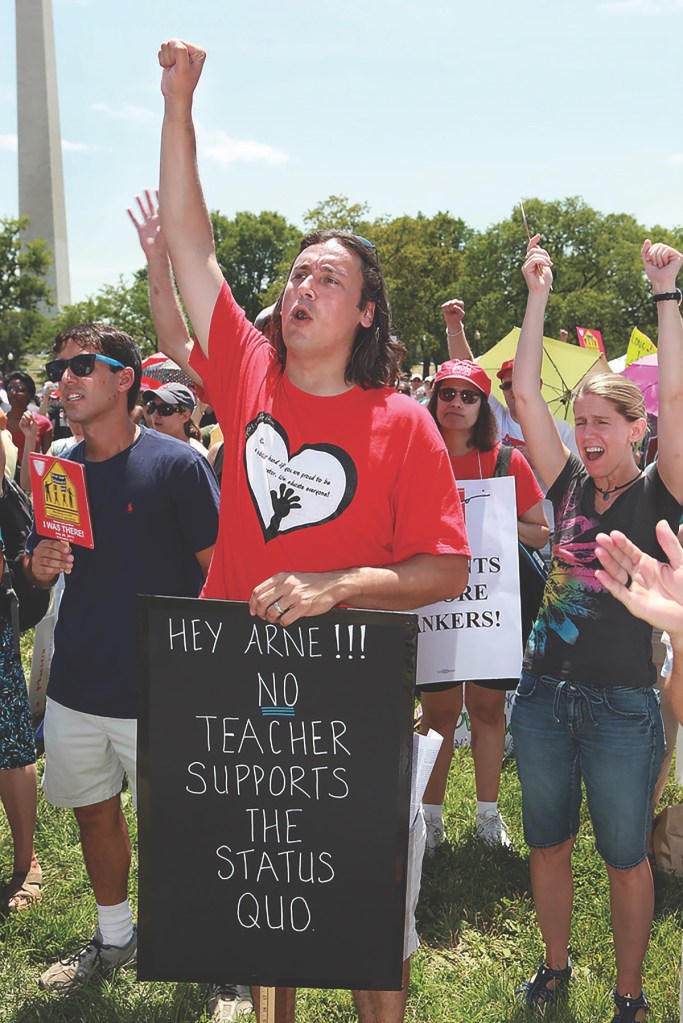
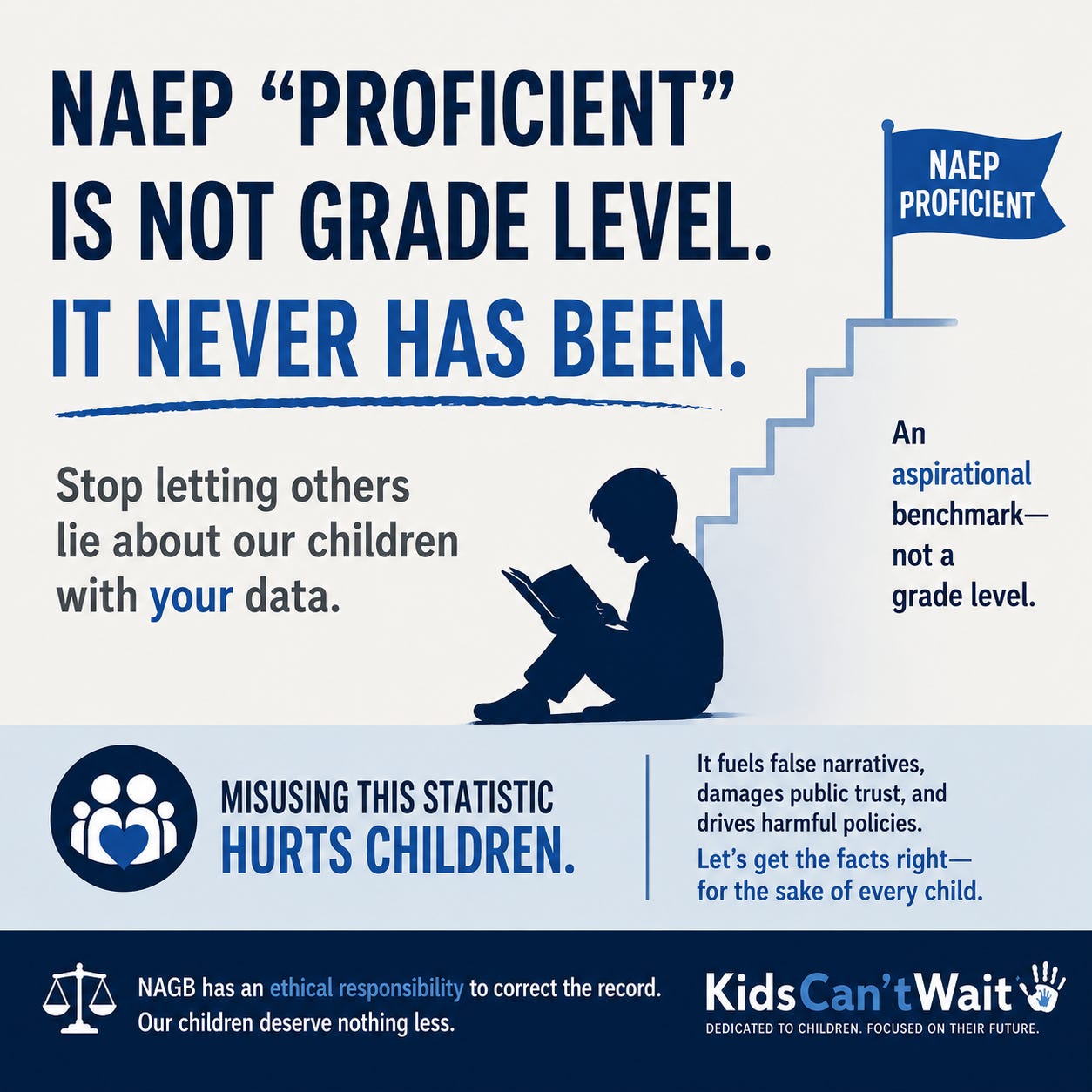
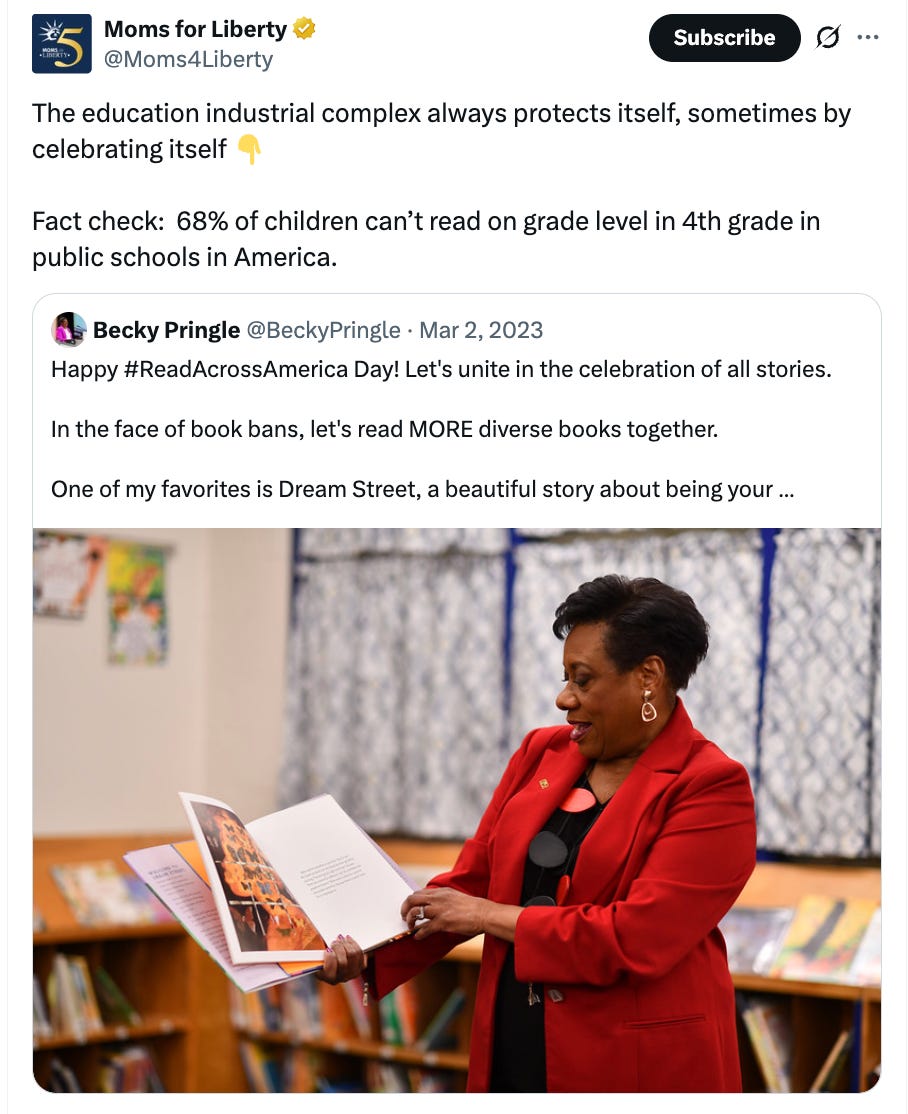
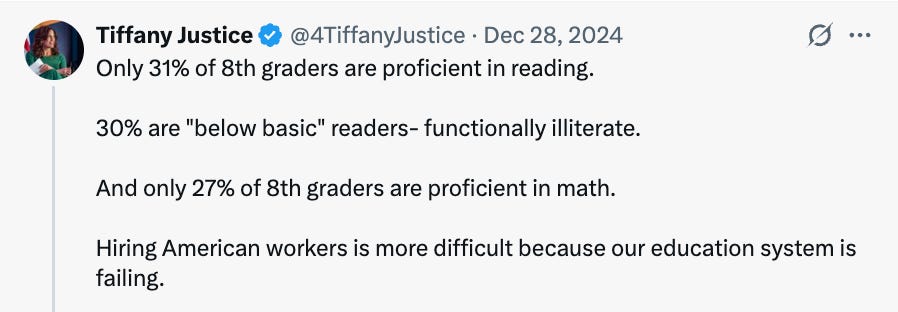
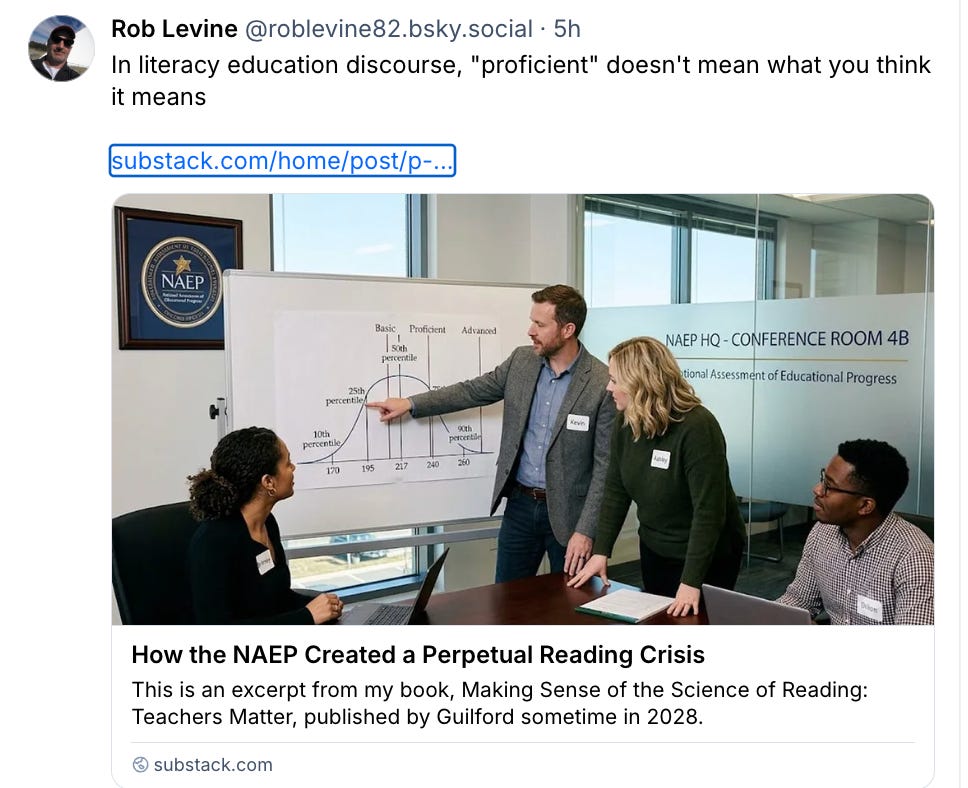


 Diane Ravitch's blog