Archives for category: Freedom to Read

Julian Vasquez Heilig is a professor of educational leadership at Western Michigan University. As a writer and scholar in Texas, California, Kentucky, and now Michigan, he has concentrated on issues of equity, inclusion, and diversity.

He writes here about the current drive to turn back the clock on civil rights in Texas. To put it mildly, he eviscerates the decision by the Provost at the University of Texas in Austin to close down

He writes:

Is the provost at UT-Austin a right wing political operative?

The University of Texas at Austin is eliminating majors in African and African Diaspora Studies, Mexican American and Latina/o Studies, Women’s and Gender Studies, and Race, Indigeneity, and Migration. These are not abstract academic labels. They represent the histories, intellectual traditions, and lived experiences of communities that built Texas and continue to shape the nation.

The manner in which this happened is almost as disturbing as the decision itself. Faculty members reportedly were asked to design proposals to preserve the existing majors inside the provost-initiatives consolidated Department of Social and Cultural Analysis, but the Daily Texan reported that Office of the Provost rejected that proposal. According to Professor Danielle Pilar Clealand, interim chair, faculty then discovered that the majors had already been removed from the admissions application while they were still working to redesign and save them.

That is not shared governance. It is administrative maneuvering designed to make consultation meaningless.

Vasquez Heilig explains that Provost William Inboden was imported in 2025, along with several professors from the University of Florida’s Alexander Hamilton School for Classical and Civic Education, which was part of a rightwing effort to increase the conservative movement in higher education. Inboden was director of the Institute.

Vasquez Heilig points out:

I have not seen evidence of a formal numerical quota for conservative professors. But when public resources build institutions expressly promoted as ideological counterweights, while programs studying marginalized communities are dismantled, the result resembles an ideological preference whether administrators call it an official quota or not. Political favoritism that overwhelms qualifications does not become academic freedom simply because its supporters describe themselves as restoring balance

He has faced the pressure from the right at his own university and paid the price personally:

I have discussed before that when I served as provost at Western Michigan University, I faced pressure to close Gender and Women’s Studies. The Faculty Senate recommended against closure, and I agreed with the faculty despite intense internal pressure to do otherwise. I paid a political price, and I would make the same decision again.

I also advocated for Black student success and community-centered initiatives while several deans complained about and opposed those efforts. Those complaints had consequences for me, but leadership without risk is merely management. If leaders support marginalized communities only when nobody powerful objects, they do not truly support those communities.

As provost, I said no to closing Gender and Women’s Studies because the university did not belong to me or to the loudest administrators around the cabinet table. It belonged to the students, faculty, staff, alumni, and communities whose labor, knowledge, and trust gave the institution meaning.

We must be of the people because the people are the institution. Buildings, endowments, rankings, and administrative titles are empty without them.

Please open the link and learn how pressure from wealthy alumni is reshaping higher education in states like Texas.

Carol Burris, executive director of the Network for Public Education, explains why this NPE conference will be stellar.

She writes:

A community governs its public schools. Neighbors elect a board, set a budget, and decide what their children learn. That is exactly what privatization threatens, and it is what NPE’s national conference is built to defend. Over two days, September 26–27, at the Hyatt Regency Conroe near Houston, more than 40 sessions take on the fight from every angle. Here’s a taste of what’s on the schedule.

Vouchers and charters. In “Beating Vouchers in Court,” Derek Black, Jessica Levin, Fred Jones Jr., and Sharon Krengel will walk through recent wins in Montana, Utah, and Ohio, where voucher programs were declared unconstitutional. They will also review the live challenges in Tennessee, Wyoming, Florida, and Missouri. In “A View from the Trenches,” two Florida school board members and an Arizona teacher offer a candid account of what universal ESA vouchers have already done to how public education is funded and governed. And a session on the federal tax-credit voucher scheme, set to launch in January 2027, lays out what advocates in opt-in and opt-out states can do right now. 

In “Taxation Without Representation — Using a Conservative Argument to Combat Charter Schools,” Gregory Walace, Alison Chaplar, Betsy Flanagan, Daniel Marcano Jr., and Jennifer Simões will show how that framing sparked a grassroots movement, moved public opinion, and helped drive proposed legislation. “What’s Next for Charter Schools? A Review of Charter Strategies Across State Lines,” Patti Everitt, Gregory Walace, Carol Burris, and Dave DeMatthews lead an interactive look at how charters keep expanding in key states with few guardrails and little public engagement, which national initiatives fund that growth, and the research and messaging advocates can share across state lines to push back.

Takeovers are where democracy gets stolen outright. Houston high schoolers will describe how they organized against the HISD takeover. Parents from Houston (CVPE) and Fort Worth (FORT) share how they are fighting to win their voice back. An Indianapolis panel will dissect the sharpest trick of all — an elected board left in place, but stripped of control over buildings, transportation, and property taxes. “The Struggle to Govern Ourselves” will confront the research showing takeovers overwhelmingly target majority-Black districts, while organizers from New Orleans share hard-won lessons from years on the front lines. And in “The People’s Board,” presenters will take on Student Outcomes Focused Governance, the corporate model quietly sidelining elected members in board after board.

Follow the money. Maurice Cunningham, Mercedes Schneider, Mike DeGuire and David Armiak teach their best techniques for tracing dark-money networks back to the billionaires and foundations bankrolling privatization in two sessions. Other sessions map the private firms profiteering off vouchers and spotlight Wisconsin’s campaign to get voucher and charter costs printed right on taxpayers’ bills. 

The money grabs keep getting more creative. Texas advocates expose SB 1882 “partnership” charters as a fast-track privatization grift. Another panel takes on corporate tax breaks — energy-hungry data centers now the worst offenders — draining billions from schools. And with 17 states cutting or capping property taxes in 2024–25, national and state experts lay out how to defend the local revenue public schools depend on.

Faith, nationalism, and the classroom. Sessions on building school–congregation partnerships and mobilizing faith leaders in hostile states sit alongside a hard look at Christian Nationalism and its playbook for defunding and reshaping public education.

The newest battlegrounds. Randi Weingarten joins experts to debate AI’s role in classrooms — cognition, privacy, mental health, and the environment. A separate panel takes on ed-tech overreach and the lawsuits challenging how it commercializes student data. And student organizers from SEAT share how they’ve carried the fight to school boards, the legislature, Congress, and the Supreme Court.

The skill builder sessions are the reason you will leave with more than notes. Charles Siler, a former Goldwater Institute lobbyist who helped build the privatization playbook before turning on it, joins Manny Garcia to teach what messaging actually moves people. Rachel Coyle and Susan Spicka show how to win over hostile legislators. Others cover new-media strategy, gathering community input at scale, and getting real press traction beyond the press release. 

The keynotes anchor it all: Diane Ravitch and Texas AFT’s Zeph Capo open Saturday; Southern Education Foundation CEO Raymond Pierce speaks at lunch; investigative journalist Katherine Stewart headlines Sunday brunch; and Howard University’s Dean Emerita Leslie Fenwick closes us out.

You’ll meet the students, parents, teachers, clergy, researchers, and organizers who are actually winning in courtrooms, at statehouses, and on ballots. Privatizers have the money. We have the people, the passion and the plan. Register now here, book your room here in the hotel block, and join us in Conroe, Texas, right outside Houston.

I can’t promise that hotel rooms are still open but Carol will help you if you made a terrible mistake and forgot to sign up.

Come to hear Yohuru Williams dissect and eviscerate the Trump administration’s absurd attack on “diversity, equity, and inclusion.”

Such policies are meant to broaden opportunity. They take us closer to our professed goals of liberty and justice for all.

Yohuru Williams is a leading scholar and public intellectual who has often appeared on public television to expound on African American history. He is Distinguished University Chair and Professor of History and Founding Director of the Racial Justice Initiative at the University of St. Thomas in St. Paul, Minnesota.

Join me on October 6 at Wellesley College.

The event will not be livestresmed but will be available later online.

Nick Covington writes: “The War on WOKE was always a war on American values.”

Nick taught social studies in Iowa. He interviewed me on his podcast about my memoir, An Education.

Library of Congress Thomas Jefferson Building, Washington, D.C (Wikimedia Commons)
Books on brown wooden shelf. (Photo by Susan Q Yin on Unsplash)


Nick Covington
 is an Iowa parent who taught high school social studies for ten years.

The culture war battles we fight over our public schools are fundamentally disagreements about American values: what does it mean to be an American, and in whose image do we build our public schools?

“When Americans start fighting over their schools, you can be fairly sure of one thing: it probably isn’t really about school.”

— Jennifer Berkshire & Jack Schneider,

The Education Wars: A Citizen’s Guide and Defense Manual

From working as Assistant Secretary of Education in the George H.W. Bush administration to laying the foundation of the modern conservative education reform movement, Diane Ravitch—a one-time champion of No Child Left Behind—spent most of her life as a Republican with conservative values. The story of her life, as told in her 2025 memoir, is the story of the American Century. As today’s culture war on “wokeness” and “leftist indoctrination” targets diversity, equity, and inclusion in schools, Ravitch’s memoir makes a powerful case study for teaching these core American values.

Born in Houston in 1938, Diane recounts celebrating VJ Day with her family as a young child, surrounded by returning sailors and the pop of firecrackers. She learned to write with a quill pen and attended a segregated high school when the Supreme Court declared that unconstitutional in Brown v. Board of Education. The descendant of Polish Jews who came to America in the 1850s, Diane experienced a level of antisemitism and misogyny in her personal and professional life that by today’s standards would be galling (and illegal). She learned as an adult that the entire Jewish community where her grandfather was born was murdered in the Holocaust.

Ravitch’s interest in education didn’t begin until she began attending community meetings as the only white person in the room with parents in Harlem, New York who had felt shut out of the school district’s planning process. As a member of the Silent Generation, she made explicit demands of American wealth and greatness:

“Why shouldn’t all people in our rich society—regardless of their wealth or class or race or personal attributes—have a decent life, meaning health care, decent housing, good schools, food security, and physical safety?…I think these are preconditions for a good society.”

If Diane’s values were informed by a life lived in the greatness of the American Century, what made America great was the steady—and always imperfect—realization of those values in action. The New Deal aligned our immense national resources toward popular economic recovery from the depths of the Great Depression, even as jobs and housing programs discriminated against Black Americans. The GI Bill helped create a thriving post-war middle class by providing housing to millions of veterans and their families and sending millions more to college, even as Black veterans were segregated out of the nation’s suburbs and universities. 

As we underwent a decades-long civil rights revolution at home, the postwar world we rebuilt in our image was of an idealized United States that overcame a violent and prejudicial past to renew itself as a more diverse, pluralistic, multicultural, democratic, and egalitarian nation. 

E Pluribus Unum. Out of Many, One.

Uneven and flawed as it was, American prosperity did grow in proportion to our inclusivity: by expanding citizenship and voting rights, integrating and publicly supporting schools and universities, asserting our obligations to the elderly and those in poverty, and protecting the rights of marginalized groups. The American Dream became a shorthand for people who came here to start their lives over, even from countries victimized by U.S. foreign policy, knowing their best days were ahead of them. And as Americans watched the Times Square ball drop on the eve of Y2K, they were standing in the most powerful, prosperous, innovative, and culturally dominant nation in the history of the world.

Now, at age 87, Ravitch reflects on how conservative politics abandoned these core values and caused her to leave the Republican Party in the early 2000s, as they became increasingly dominated by self-serving corporations, wealthy donors, and religious interests. “To use current parlance, I went from being a staunch conservative to being ‘woke,’” she writes, adding, “I wear the label with pride. To me, it means that I awakened to the inequity and injustice that deprives millions of people of a good life, the life that everyone wants and deserves.”

In other words, by taking seriously the charge of our founding documents to become “a more perfect union”, taking up “the unfinished work” of the American experiment, and bending the moral arc of the universe toward justice over the course of the 20th century, Diane Ravitch—like America itself—became woke.

Our fights about schools are really battles over American values and what it means to be an American, and the War on Woke has always been a war on American values.


At the start of this midterm election year, Moms For Liberty hosted Iowa Republican gubernatorial candidates in a debate that focused largely on education. Candidates spent their time hammering“leftist indoctrination” in teacher education and classroom teaching, with one complaining about “downright evil” ideology pushed on students in reference to a book about a boy wearing a dress to school. Another called for the installation of the Ten Commandments as a way to put the “concept of God” back in schools. Zach Lahn, founder of the unaccredited private Wonder School and current Republican nominee for governor, offered the closest thing to a positive vision with a partisan twist arguing, “Public school is to promote civic virtue, to understand the principles of faith in our country and our culture.”

The trouble comes in whose answer we enshrine in law, turn into policy, and live in the public sphere through our public education system:

  • What kind of nation are we?
  • What is the role of public education—that is, the system of tuition-free common schools mandated in our state constitution, accessible to all students, and maintained by taxpayer dollars—in a nation like ours?
  • What subjects and practices will inform such a system?
  • Whose values will we train in the adults who teach our children?

Today’s Republican Party demands that we forget the hard-fought lessons of history and remove challenging perspectives, making easier for children to believe in nationalist mythology than the imperfect lived reality of people like Diane Ravitch. A closer look at their changing values and legislative agenda tells us exactly what today’s Republican Party means when they appeal to “civic virtue” and “principles of faith in our country and our culture” in education: in the guise of a war on “woke” diversity, equity, and inclusion, Republican policies are at war with the very materials that made America great.

In Iowa, this has manifested as de-facto book bans and banning so-called “specific defined concepts” from public school curriculum. In response to Iowa’s vague and punitive “age appropriate” school materials law in 2023, schools immediately removed more than 3,000 books. The most removed literary classics included Pulitzer Prize and National Book Award winners written by Nobel Prize laureates: The Handmaid’s Tale, The Bluest Eye, Beloved, I Know Why The Caged Bird Sings, Brave New World, and Slaughterhouse-Five among them.

These are perspectives that speak honestly about racial, sexual, and gendered abuse and violence, sometimes all at once, and inform a shared past that tolerated and protected it. They’re also some of the most acclaimed and influential works in American and English literature. It’s no accident that most of them are either written by Black authors, by women, or center the experiences of Black people in America.

Iowa Republicans have also banned so-called “specific defined concepts” from mandatory staff or student training. House File 802, in effect since July 2021, makes it a violation to conduct training that the United States and Iowa “are fundamentally or systemically racist or sexist,” that anyone “bears responsibility for actions committed in the past by other members of the same race or sex,” or that “meritocracy or traits such as a hard work ethic are racist or sexist.” One banned concept forbids including in mandatory training that any student “should feel discomfort, guilt, anguish, or any other form of psychological distress on account of that individual’s race or sex.”

Although the law states that it does not “Prohibit the use of curriculum that teaches the topics of sexism, slavery, racial oppression, racial segregation, or racial discrimination,” and does not “Prohibit discussing specific defined concepts as part of a larger course of academic instruction,” it was widely misunderstood to prohibit classroom teaching about those topics.

The impact of House File 802 has been a documented chilling effect and over-compliance owing to the vagueness of the law as written and interpreted. In one interview-based study, Iowa educators described themselves as surveilled, isolated, and self-censoring. The researchers reported that “the perceived lack of clarity and guidance on this law fueled concerns about their ability to be effective justice-oriented administrators and classroom teachers,” and that teacher candidates are afraid of unintentional violations of the law. 

These explicit bans on books and the implicit self-censoring of difficult curriculum leave our kids less prepared for the world outside of school, and outside of Iowa, and create a gap in our children’s public education that is ready to be filled by social media influencers, misinformation, and propaganda.


Public schools are the institution where American values are practiced and lived, not just taught, and where we build shared American identity. All of our fights about books, curriculum, and school choice programs are really arguments over whose answers to these questions we write into law and into the lives of children where the stakes become very real. Through intention or its absence, built by us or built for us, the very real and shared world we inhabit is built bit by bit each day.

The question isn’t whether we teach values in public schools—we always have and we always will. The question is whether we teach the values that actually made this country great: pluralism, inclusion, democratic participation, honest history, and the belief that every child deserves a free and appropriate public education.

“I was a patriot who never questioned my country and its leaders. My complacency was a reflection of my comfort and affluence; radicalism had no appeal to me. If I were to meet that version of myself today, we would have a vigorous argument over everything related to education, race, and politics, although I still abhor violence. Today I want change, demonstrable change that narrows the gap between rich and poor; that provides equal opportunity to all; and that ensures health care and good education as a matter of right, not income. I am still not a radical. I don’t want to overthrow the government. I want it to work on behalf of its ideals to benefit everyone.”

— Diane Ravitch,

An Education: How I Changed My Mind About Schools and Almost Everything Else

Tags: 2026 elections, Commentary, diversity, Education, IA-Gov, IA-Gov 2026, Iowa GOP, Iowa Politics, Zach Lahn

About the Author(s)

Nick Covington

The death of Dolly Parton was a blow to millions of people who never met her but loved her for her spirit, her kindness, her humor, and of course, her music.

In a time of meanness, she was steadfastly kind.

She was born into dire poverty, one of 12 children in a one-room house. She was never bitter or angry about her meager beginnings. She marveled at where her talent took her.

Over the course of her long career, she amassed a huge fortune but she did not aspire to be a billionaire. She was a philanthropist. She gave her money away, unlike Jeff Bezos, Elon Musk, and the Trump family. Is there a hospital or library or public space named for them because of their generosity? None that I know of. People will remember Dolly for her generosity; the others and their ilk will be remembered for their avarice.

She was not political but she spoke up for Black Lives Matter and for LGBT people. When she was interviewed by Johnny Carson in 1977, she spoke up for LGBT people in her straightforward way. She loved drag queens; she knew that they liked to mimic her style, her hair, her dress. She said it was God’s role to judge, not ours. Hers was the voice of love and compassion.

Peter Greene wrote about Dolly here:

I wrote this four years ago when the twins aged out of her Imagination Library, one of the best things any wealthy person ever did. How cramped and meager some of our leaders look in comparison.

After five great years, the Board of Directors has aged out of Dolly Parton’s Imagination Library.
I have been plugging this program for years (my first post was in 2014, back before the Board of Directors was even a sparkle in our eyes). Parton has engineered putting a book a month into the hands of families all across the country–we’re talking (currently) 184 million books in millions of households meeting no requirement other than they have a child between the ages of born and five. It costs the family nothing.

The quality of the books is great. Over the years we have received classics, newer books, books featuring every sort of family, every sort of kid. They are filled with wonder, kindness, beauty, excitement. This is one of the best examples of thoughtful, useful, not-trying-to-take-over-a-government function philanthropy you’ll find.

The program launched in 1995 in Sevier County, and it grew quickly. By 2006, when the Washington Post wrote about it, the program had spread to 471 communities in 41 states. In 2011 it launched in Scotland, and it can now be found in the UK, Australia, and Canada. The site says that 706,468 US kids are currently signed up. It’s still fairly simple. Some combination of sponsors (some private, some government, depending on the locale) help with the financing (the cost is roughly $27 per child per year) and the Foundation delivers the books, each in its own poly bag with the child’s name on it (consider the power of a child, even a small one, receiving a book that is theirs, addressed to them, by name).

I am not, I’ll confess, a huge fan of Parton’s music, but she is the very best example of what good a person can do with their giant pile of money you can find. Not trying to shape the world to her own requirements, not trying to buy a good name, not trying to make herself the unelected boss of whatever. And the little PR that Imagination Library does is to get itself out into the hands of students, not to raise Parton’s profile. She doesn’t pay people to promote it, and it has spread largely through word of mouth or through the local organizations that co-sponsor it and help make the connections to local families.

Once a month, the boys received a book, addressed to them personally. We love books in this house, and the arrival of the monthly “book from Dolly” was an event. We will miss it.

The last book to arrive is Kindergarten, Here I Come, and the first page inside the front cover is a letter from Parton, that I’ll quote in part:

My, how time flies. It seems only yesterday when your family and friends read you your first story. You were just a baby. Now you’re five years old and about to go to school. How exciting!

This may be your last book from my Imagination Library but you have to promise me you will keep on reading…Every book is a treasure and every time you open one you will meet new friends and take wonderful journeys to magical places.

I hope you have a great time in school. I bet your school will even have a library where you can check out books. You and all your friends are very special. There is no limit to what you can do or how far you can go.

The board of directors examines a position paper

Her signature, a simple Dolly, is at the end. The first time we read the message together I was apparently having a bad allergy day.

None of the rich amateurs who want to change the face of education are doing anything of this value on this scale–both intensely personal and yet broadly across the globe. I mean, imagine if Bill Gates had said, “I want to give every child a book” instead of “I want to give every child a test.”

And if there is a tiny human in your life, and they aren’t signed up, go to the program website and see if it’s operating in your neighborhood, and if so, then sign up that child.

What a fabulous, generous, powerful program. God bless Dolly Parton. We are going to miss here at this house.

Jan Resseger keeps a steady focus o what matters most in a decent society: the well-being of children. Trump and his minions don’t care. Not about children. Not about the rule of law. Not about democracy. Trump cares about greed and self-enrichment. He seems to care about his children. He cuts them in on the grift. His youngest son Barron is said to be worth $150 million. But he doesn’t care about yours.

The fact that he just issued guidance on childhood vaccinations, which reduces mandated vaccines and puts America’s most vulnerable at risk of serious illness and death, tells you all you need to know about this scientifically ignorant man.

Jan writes:

Maggie Haberman and Jonathan Swan’s important new book, Regime Change, explores how the second Trump administration functions—the cast of characters, their relationships, and their operational style. A reader is also exposed, however, to the President’s and the administration’s big policy concerns—imposing tariffs, ridding the country of immigrants, ending nuclear weapons in Iran, proclaiming that everything is more affordable, and ending the public’s fixation on Jeffrey Epstein. These issues have also been widely covered broadly in the news.

Here are topics that do not appear at all in Regime Change‘s index: children, public education, CHIP, SNAP, Head Start, or Child Care.  There is not even a mention of Trump’s tuition tax credit private school vouchers launched in the “One Big Beautiful Bill.” The issue of birthright citizenship is mentioned in the index only as a subhead under immigration, and in the book itself birthright citizenship is covered only in one sentence describing its proposed elimination by an early Trump executive order. In the index, there is only one page citation to the U.S. Department of Education itself, but the reference is to brief coverage of the administration’s attempt to eradicate “diversity, equity, and inclusion” at Harvard University.

The lack of regular news coverage—particularly in the local newspapers—about Trump’s damaging public education policy and the administration’s failure to protect children’s well-being and children’s rights does not, however, mean that these issues have been untouched by Trump administration policy. For those of us who do not need CHIP or SNAP, who can afford quality child care and preschool, whose children attend well-funded public schools, whose families have been citizens for generations, however, there is minimal exposure to the Trump administration’s threats to the institutions on which vulnerable families and children depend.

Just this past week the Trump administration took two steps that, if they do come to pass, will seriously impact some of our society’s most vulnerable children—poor children benefiting today from Head Start, and the children of immigrants from whom the President is once again trying to steal the protection of birthright citizenship. First Focus on Children’s President Bruce Lesley has identified what he calls the Trump administration’s “organized abandonment” of the needs and rights of our society’s most vulnerable children.

The Trump administration attempted to destroy Head Start.     At the end of last week, the Trump administration formally proposed new federal administrative guidance to deregulate the quality of Head Start programs that currently serve 700,000 children across the United States.  The destruction of Head Start had been predicted early last week but on Thursday in a notice in the Federal Register, the administration formally proposed radically diminishing 133 pages of rules that have shaped Head Start since it was established in 1965 as a centerpiece of Lyndon Johnson’s War on Poverty.  The Center on Law and Social Policy explains that the proposed new rules are being disguised by the administration with language describing “an effort to ‘streamline,’ ‘enhance,’ and ‘modernize’” the program.  Politico‘s Mackenzie Wilkes reports: “The Heritage Foundation has long called for the elimination of Head Start, but the conservative group published a report last month saying the program should be deregulated in many of the ways the proposed rule suggests while ‘officials work to end the program.’ ”

The Associated Press‘s Moria Balingit outlines the changes the new rules would prescribe: “Head Start… is currently governed by more than 100 pages of regulations… (which) require centers to have low staff-to-student ratios and a research-backed curriculum, among other things, and they ensure centers are providing wraparound services that are critical to children in poverty, including medical and dental screenings and parent coaching. The proposal would toss out nearly all of that rule book. Education Week”s Elizabeth Heubeck adds: “The new proposal would require (that) all classroom instruction be conducted in English, except for immersion programs operated on Native American tribal lands. An estimated 30-35% of children enrolled in the Head Start program are dual language learners.”  The program would also exclude many non-citizen children and children in some immigrant families.

While Congress establishes federal departments and the specific offices within the departments, the legislative branch has no power over the executive branch’s right to establish formal administrative rules and guidance.  It is possible that the rules announced in last week’s Federal Register can be challenged in court, and it is also possible, of course, that public outrage might cause the Trump administration to modify the new rules during the 60 day period when the public is invited to submit public comments before the rule becomes final. A future President, of course, could replace the Trump administration’s new rules.

President Trump signed two new executive orders to undermine birthright citizenship.     Last Thursday, The Washington Post‘s Isaac Arnsdorf, Justin Jouvenal, and David Nakamura reported: “President Donald Trump took another stab at restricting automatic citizenship for people born in the United States after the Supreme Court rejected his earlier attempt. In two executive orders signed Thursday, Trump reached for different legal maneuvers to test the limits of the 14th Amendment’s guarantee of birthright citizenship. The first order said children would be ineligible if born to ‘alien enemies,’ members of foreign terrorist organizations, or foreign lobbyists. The second order said children of people who fraudulently request tourist visas for the purpose of giving birth in the U.S. would not become citizens… The new orders marked a fresh effort to… deliver on a campaign promise by expanding the categories of people who the administration argues fall outside the constitutional guarantee.”

The reporters quote legal experts who doubt that the first executive order could survive a legal challenge: “An estimated 15 million undocumented immigrants live in the U.S., while only a few thousand people are foreign lobbyists registered with the Justice Department. No significant populations of U.S. residents are designated as alien enemies or foreign terrorists, making that provision largely symbolic.”

The reporters attribute the second executive order to White House Deputy Chief of Staff, Stephen Miller, who has made stopping “birth tourism” a priority. They provide data to demonstrate that what is called “birth tourism” is relatively infrequent. “In 2024, fewer than 10,000 babies were born in the U.S. to people with foreign addresses, out of 3.6 million total live births.”

None of the legal experts the reporters quote believes that either of these executive orders would be upheld by the U.S. Supreme Court or would challenge in any way what Chief Justice John Roberts declared in his June 30, 2026 decision in Trump v. Barbara: “Children born in the United States to parents unlawfully or temporarily present are “subject to the jurisdiction” of the United States and are citizens at birth under the Fourteenth Amendment’s Citizenship Clause.”

First Focus on Children’s Bruce Lesley believes that both of  last week’s executive orders are seriously misguided: “The legal question isn’t simply what the government thinks about immigration. It’s whether an innocent child can lose fundamental rights grounded in the Constitution because of something government officials allege about a parent’s conduct and intent… The latest effort to gut a fundamental constitutional operating principle since our nation’s founding has been written clearly in the Constitution since 1868, is being sold to the public with pathetic history and legal arguments the Supreme Court itself rejected 128 years ago and early this year. Every administration has the authority to enforce immigration laws. However, none has the authority to rewrite the Constitution… by redefining which babies they deem are precious and which are pushed into the shadows of our society.”

Although there has obviously been some news coverage of the week’s public policy initiatives impacting our society’s children, the well-being of our children is neither the top policy concern for officials in the Trump administration nor the top story for the reporters who track the administration’s agenda. Because the needs of children are definitely not the primary lens through which the Trump administration views and conceptualizes our society’s important needs, it is especially important to watch for news about children’s welfare, their rights, and the enormous institution of public schools that serves the mass of our children

We live in strange and dangerous times. For the first time in memory, maybe ever, the rule of law itself is under attack. Our Dear Leader has threatened judges who rule against his wishes. He and his lawless administration ignore decisions they don’t like. He installed a Supreme Court majority who were vetted by the far-right Federalist Society. That majority proceeded to overturn Roe v. Wade, despite their repeated pledges not to do so, and to gut the Voting Rights Act, terminating guarantees of equal rights for Black Americans.

At this time when the rule of law itself is disregarded by the President, who is himself ruled only by whim and self-aggrandizement, two retired judges expressed their concern in The Guardian.

Judge Michael P. Connelly and Judge Robert F. Orr wrote:

Last October, US lawyers, judges and rule-of-law advocates traveled to Warsaw as guests of the Carter Center. Neither of us was among them. But when our colleagues returned, their stories inspired us.

They told us about judges and lawyers across central Europe who had been surveilled, smeared, prosecuted and sometimes jailed for standing between political power and courts meant to remain independent.

And they kept going.

Poland’s example was especially compelling. When its government sought greater control over the judiciary, Polish judges put on their robes and marched through Warsaw. Judges from across Europe joined them in what became the March of 1,000 Robes.

Then they left their courthouses and traveled through towns and villages, explaining what an independent judiciary means to a farmer, shopkeeper, parent or business owner. They talked about law not as an abstraction, but as protection against arbitrary power.

They understood a truth Americans can no longer overlook: judicial independence cannot survive merely because judges believe in it. The public must understand why it matters.

That lesson brought us on to a bus.

Last month, shortly after the United States celebrated its 250th birthday, the Justice in Motion tour traveled from western Pennsylvania through Ohio and into Michigan. Thirty sitting and retired judges, lawyers and advocates handed out pocket constitutions, met students and asked a question Americans do not consider often enough: what does the rule of law mean in everyday life, and what happens when we take it for granted?

In Columbus, we did something neither of us imagined during our years on the bench. We put on our robes and marched from the federal courthouse toward the supreme court of Ohio, carrying purple flowers, an international symbol of judicial independence.

American judges do not ordinarily march in the streets. Nor should they. The judiciary derives much of its legitimacy from restraint. Judges do not campaign for particular outcomes or answer criticism with press conferences. They speak through their decisions. But these are no ordinary times.

And our Polish colleagues taught us that silence can carry its own risk.

Our march was not about Democrats or Republicans, nor about defending particular judges or decisions. It was about defending the system that allows legal disagreements to be resolved according to law rather than political power.

One of us was elected to the supreme court of Ohio as a Democrat. The other was elected to the supreme court of North Carolina as a Republican and is now an independent. Through two long careers, we have disagreed about plenty.

That is precisely the point.

The rule of law is not a partisan possession.

Both sides enter a courtroom with the right to be heard. Judges must apply the law to the facts without regard to which party is more powerful, popular or politically useful.

Sometimes judges get it wrong. That is why we have appellate courts. Sometimes courts issue decisions that elected officials or citizens strongly dislike. That is unavoidable in a constitutional democracy.

The answer is appeal, legislation where constitutionally permissible, or constitutional amendment. It cannot be intimidation, retaliation for unpopular rulings or the suggestion that compliance with lawful court orders is optional.

Once adherence to judicial decisions depends upon whether the politically powerful agree with them, we have left the rule of law behind.

In Wooster, Ohio, about 150 people gathered across from the historic courthouse. The discussion was not about red America or blue America. It was about ordinary life.

The rule of law is why you can deposit money in a bank and expect it to be there tomorrow. It is why contracts mean something, property can be protected and an individual citizen can enter a courthouse and challenge the government.

These protections seem ordinary only because generations before us built institutions strong enough to make them ordinary. When the rule of law works, it is almost invisible.

Judges are trained – rightly – to exercise restraint. During our years on the bench, we spoke through our rulings. That tradition is essential to maintaining confidence in an impartial judiciary.

But restraint should not be confused with silence about the survival of the institution itself.

When judges are threatened because of their rulings; when an adverse decision is answered not with an appeal but with demands for retaliation; when courts are judged legitimate only when they produce politically desired outcomes, those who understand the system have an obligation to explain what is being lost.

Our Polish friends understood this before we did. Their circumstances differ from ours, and comparisons should be made carefully. But the lesson travels well.

The rule of law does not defend itself. Neither does an independent judiciary. Constitutions are pieces of paper unless citizens and public officials possess the courage and habits necessary to honor them.

Four days on a bus will not persuade a nation. The purpose was more modest: to begin conversations, one community and one citizen at a time, about institutions Americans have been fortunate enough to take for granted.

That work belongs not only to judges and lawyers, but to all of us.

The rule of law is not something judges possess. It is something citizens inherit.

And every generation must decide whether to preserve it.

What’s giving us hope now

Justice Robert F Orr (retired): What gives me hope is the scope of individuals and groups now focusing and talking about the rule of law and the independence of our judiciary. Our bus trip had a great mix of backgrounds and experience both in the judges participating and meeting us at stops as well as the young people who amplified the message across various media platforms. It’s genuinely a national movement.

Justice Michael P Donnelly (retired): What gives me hope is the genuine appreciation we encountered during the bus tour for the role of an independent judiciary in protecting individual rights and civil liberties. The people we met understood that these freedoms, defended at great sacrifice throughout our history, cannot be taken for granted – and that each generation must be willing to stand up for them.

  • Michael P Donnelly is a retired justice of the supreme court of Ohio
  • Robert F Orr is a retired justice of the supreme court of North Carolina. Both participated in the Justice in Motion tour organized by the Democracy Rising Collaborative and Keep Our Republic

This is one of Randi Weingarten’s best speeches. She delivered it at the 2026 Convention of the American federation of Teachers on July 26 in Washington, D.C.

Not only does she identify income inequality as a dire threat to our democracy, she speaks one of the greatest lines I have ever read:

Mr. President, you don’t own July Fourth. You own Jan. 6.

Randi points out that the dramatic income inequality of our times is destroying the middle class. Unions build a strong middle class. The large increase in the number of billionaires is it a sign of a healthy society; it is a sign of gross inequality.

As more people slip out of the middle class or hang on by their fingertips, our social problems get worse.

How do we restore a thriving middle class? Encourage the growth of strong unions.

She reminds us that today only 1 of every 10 workers belongs to a union. Union workers are paid more, significantly more, than non-union workers. In mid-century America, when 1 in 3 American workers were in a union, we had the largest middle class and the lowest income inequality. And she says, “That’s why, in the long term, growing the union movement is key to solving America’s affordability crisis.”

Rightwingers have done their best to eviscerate unions. And they have won significant victories in the courts.

But, despite the obstacles, the AFT is growing. It now has the largest number of members in its history: 1.875 million members. Al Shanker and Sandy Feldman would be proud of that accomplishment.

Unions are key to a better life.

Randi said in her address:

We plan our conventions years in advance. When we decided to hold this convention in our nation’s capital, to coincide with the celebration of America’s founding 250 years ago, who would have thought that the grievances that led to the American Revolution would be so relevant and relatable today? Or that America would have a new kind of aristocracy based on mind-blowing wealth? 

In the United States, there are now 1,000 billionaires—and the world’s first trillionaire—at a time when nearly half of American households—46 percent—don’t earn enough to make ends meet. 

This wealth imbalance—the top 1 percent having as much wealth as the entire bottom 90 percent of Americans combined—has led to a power imbalance that affects the lives of everyone in our country. These oligarchs influence policy. They have the power to undo social progress. To sway financial markets, monopolize the media, buy elections and undermine democracy.

In an earlier period of extreme wealth inequality, the country elected Franklin D. Roosevelt, and his New Deal programs lifted millions of Americans out of poverty.

This time, the country elected Donald Trump, and well … 

Remember that warning—about the barbarians at the gate? Well, the barbarians aren’t at the gate, they are inside, including at the highest levels of government. 

The president and his cronies are abusing government powers to punish political opponents. Every day they find new ways to attack voting, presumably to entrench themselves. Their war on working-class Americans includes stripping collective bargaining rights from 1 million federal workers, including members of our union, in the biggest act of union-busting in U.S. history. All while engaging in the most blatant corruption in modern American history to enrich themselves. 

The attacks—on unions, on working people, on public education, on higher education, on the public good, on democracy—didn’t start with Trump. They’ve been decades in the making, going back to the 1971 memo by future Supreme Court Justice Lewis Powell that successfully plotted corporate dominance in American politics. And the Supreme Court’s 2010 Citizens United decision that fueled the massive surge of “dark money” in elections—which has now been supercharged by the court’s ruling last month that blew up whatever campaign finance limits were left. And its 2018 Janus decision that anti-union forces hoped would drive a stake through the heart of public sector unions. Project 2025 became the playbook to enact this extremist agenda. This year’s Callais decision not only gutted what remained of the 1965 Voting Rights Act but did so in time to affect the 2026 elections. Then there’s the bare-knuckled crusade to destroy public education and higher education. Just look at Christopher Rufo’s tweets, or his unabashed declaration years ago that “To get to universal school choice, you really need to operate from a premise of universal public school distrust.”

And I haven’t even gotten to Big Tech and artificial intelligence.

Yes, the other side has enormous power. But this is what they don’t have: the power of the people. 

That’s not a mere slogan; it’s the potential to work together, to bargain together, to protest together, to vote together, to act together to bring about change—real, lasting, life-improving change. That is the power and potential of our movement and of the AFT.

Our union stands at the intersection of the ways that regular people gain and exercise power in our democracy—through public education, unions and voting. 

The skills and knowledge people secure through public and higher education expand opportunity—that’s power. Union contracts improve economic well-being—that’s power. Elections—voting for people who answer to their constituents, not wealthy donors—that’s power. 

It’s power not just for ourselves, but for our students, our patients and our communities. Power to build what Martin Luther King Jr. called the “beloved community”—an America where hate has no home. Where the trans nurse, the Palestinian teacher, the Jewish student, and every person regardless of race, religion, ethnicity, gender or place of origin, feels welcome, safe and valued.

We use our power for good—against chaos, cruelty and corruption. We care, we fight and we show up—for a better life for all. Oh, and one more thing: We get shit done! 

We are a fighting union. To quote the president of Texas AFT, Zeph Capo, “Our members will forgive us if we fight and lose, but they’ll never forgive us if we don’t even fight.” 

Look at what we have fought for, and won, in these last two years—despite constant challenges.

Through the AFT’s student debt clinics and our other activism, we have helped more than 1 million borrowers, many of them our members, get $78 billion in student debt forgiven! That is life-changing; people can start a family, buy a home, save for retirement. 

The AFT has filed more than 25 lawsuits against the illegal actions of the Trump administration. If I talked about all of them, I would blow everyone’s bets on the length of the speech. So here are just a few: The Trump administration tried to stop any school—pre-K through college—from doing anything that could be construed as advancing diversity, equity and inclusion, essentially erasing 60 years of civil rights law. And it sought to condition all federal funding for schools on compliance with its dictates. We sued, and we won. We challenged the administration’s policies to detain and deport noncitizen students and faculty for participating in protected political speech. Again, we won. We sued to stop the administration from stripping federal funding from universities and to stop its efforts to control curriculum, hiring and speech. You guessed it—we won.

And then there’s the collective bargaining victories. Like for better wages—from Boston to Kansas City, from Chicago to Los Angeles and so many more. That’s the union difference: Union workers’ wages are 11 percent higher than nonunion workers. Unionized teachers earn 24 percent more in states with collective bargaining, and education support professionals earn 13 percent more.

And as we speak, the city council in New York City is voting to provide every United Federation of Teachers-represented paraprofessional a $10,000 “Respect Check” that the union has relentlessly fought for. 

Life is better with a union.

It goes beyond wages. Take the United Educators of San Francisco, whose successful strike this year led to winning premium-free healthcare not only for members but for their families. 

And paid parental leave. Kudos to our affiliates in Boston, Chicago, Cleveland, Fairfax County (Va.), New York City and Oregon for making great strides to help families thrive. 

And safe staffing. The UFT has had some incredible wins through arbitration. And in New Jersey, our healthcare union, Health Professionals and Allied Employees, has negotiated 14 contracts in a row with enforceable safe-staffing provisions. And now one of our newest affiliates, Hawaii Nurses and Healthcare Professionals, has created a broad coalition to do the same. 

And we have a sacrosanct commitment to retirement security. After a generation-long battle, we won passage of the Social Security Fairness Act that gave millions of public workers the full benefits they had earned but been denied. Our New York unions made great progress this year to fix Tier 6; now younger workers who had inferior pensions can retire in their late 50s. And AFT Massachusetts, AFT Pennsylvania and our Alaska affiliates are making progress on retirement security as well. 

There’s also what we have fended off. The Philadelphia Federation of Teachers reached an agreement to stop the cuts of 340 school-based positions for the coming school year. In Utah, a labor coalition including AFT Utah gathered more than 250,000 signatures and got the Legislature to repeal a ban on public sector bargaining. AFT New Hampshire has a mean game of whack-a-mole—defeating right-to-work, school vouchers and campus carry legislation, and successfully challenging a law that restricted teachers’ rights to teach and students’ access to honest history. In New York, our unions—United University Professions and the Public Employees Federation—and a broad community coalition successfully fought to keep SUNY Downstate hospital open after years of threatened closure, and they secured $1.1 billion to upgrade and expand facilities and services. 

These are fights we’ll have to keep waging. The Republicans’ Big Ugly Bill cuts $1 trillion in Medicaid, makes the largest cuts to nutrition assistance in history, triples the cost of student debt for tens of millions of Americans, and threatens hundreds of rural hospitals with closure—all to give $1 trillion in new tax cuts to the richest 1 percent. State and local budgets are seeing the strain. We’ll keep fighting, school district by school district and hospital by hospital. 

Then there is artificial intelligence—the most seismic industrial revolution of our time. From UUP in New York to the University Professionals of Illinois, we’ve won strong contract language so AI won’t be used to take our jobs, replace our professional judgment, or evaluate or discipline us.

And density matters: Like New York State United Teachers in education, Oregon’s density in healthcare is making a difference. The Oregon Federation of Nurses and Health Professionals secured the largest raises in its history—nearly 35 percent over four years for registered nurses. And OFNHP and HNHP in Hawaii have aligned all their contract expiration dates for the next Kaiser battle. 

And then there is the protection of our students, our patients and our neighbors from brutal immigration tactics, like the recent fatal shootings by ICE agents in Texas and Maine of two men who should be alive today. Healthcare locals in Oregon won legislation to protect healthcare facilities from immigration enforcement. Educators across the country have fought for their students’ release from U.S. Immigration and Customs Enforcement detention centers. Our Twin Cities union family peacefully and courageously stood up to the occupation and harsh immigration enforcement that led to the killing of Renee Good and Alex Pretti and terrified thousands of immigrant families. We were there with mutual aid—food, diapers, rent money, books, toys and safe passage for children to and from school. 

The AFT is always at the ready to help—like with our program for states and locals in crisis. Right now, we are helping our members in Florida, who are in the bull’s-eye of anti-union attacks intended to wipe them out. Let me be clear: We are with you every step of the way. And we’re investing in our affiliates through our MOVE grants, which affiliates are using as fuel to engage members, connect with community and strengthen their power. 

This is what the power of the people looks like: caring, fighting, showing up and getting shit done. 

This administration is waging a war on knowledge, from school voucher schemes, to erasing rather than facing history, to selling the Department of Education off for parts, to its all-out assault on higher education. Here, too, we’re not just fighting back; we’re putting forward big ideas. 

The AFT and the American Association of University Professors have launched a national higher education campaign. We’re fighting to keep vital research funded and against attacks on academic freedom. We won collective bargaining rights for higher education employees in Maryland and made strides toward free college in Connecticut and Pennsylvania. In April, the AFT and AAUP released “A Blueprint for Strengthening and Transforming Higher Education”—and we launched it in Texas, because that is ground zero in the attacks on critical thinking. 

Through AFT Healthcare’s Code Red campaign, we’re working to secure safe staffing limits, enforceable workplace-violence standards, and contracts that help recruit and retain frontline caregivers. That’s good for patients and for healthcare workers.

And on AI, we have a multifaceted plan: from limiting screens and child-facing AI for young students, to a tech tax to hold tech companies accountable for the massive disruptions their products are creating, to contract language, to our National Academy for AI Instruction to help educators master AI so AI doesn’t master us. AI is not going away, so we’re going to fight for the protections that matter to our members, our families and our communities.

And of course, we give out books, 11 million and counting, to children and families through our Reading Opens the World program.

All this is why the AFT is bigger, badder and more big-hearted than ever.

The AFT is the fastest-growing union in the AFL-CIO. Since our last convention, we have organized 173 more units, with close to 60,000 new members in these new locals. New affiliations have deepened our work in states like Hawaii, Michigan, North Carolina and Pennsylvania. And many existing locals have grown as well. 

I am thrilled to announce that, despite everything that’s been thrown at us, we have hit a historic milestone: We proudly represent more members than ever before. Today the AFT is 1.875 million members strong! 

People see the value of belonging. They see that we’re a fighting union—and that we get shit done! It’s amazing. You are amazing. And we are not going to let up. Too few people have the benefit of a union. 

Half of all nonunion workers want to join a union, but only 1 in 10 workers in the U.S. belongs to a union. Americans are 14 times more likely to have an Amazon Prime membership than to be a member of a labor union.

In the mid-20th century, when 1 in 3 American workers were in a union, we had the largest middle class and the lowest income inequality. That’s why, in the long term, growing the union movement is key to solving America’s affordability crisis. 

But what do we do now? We’ve got to win elections. And here’s why. 

As I said, 46 percent of households—55 percent of households of color—did not earn enough to make ends meet in 2024. And inflation has soared since then. That means there’s not enough to put food on the table, gas in the tank and still cover rent. It means constant stress and struggle. 

Our members see it every day in the people they teach, heal and protect. 

And our members feel it.

This winter we surveyed AFT members about the financial issues that keep them up at night, and 7,500 responded. Nearly three-quarters report living paycheck to paycheck, and more than a third say they are unable to cover all of their monthly bills.

There are few things worse than the fear of not being able to provide for your family. Reading our members’ responses took me back to my teenage years when my father was laid off. I remember my parents whispering about which bills they had to pay now and which they could hold off on until he found work. They tried to protect my sister and me from knowing, but there’s no hiding anxiety that deep. 

Millions of Americans believed Trump’s promises to end inflation and make America affordable again on “day one.” It’s “day 542” since he took office. Is anybody paying under $2 a gallon for gas like he promised? What happened to the “DOGE dividend checks”? Or your tariff rebate check? After they got rid of the Obamacare tax credits, have they fixed healthcare? 

Trump isn’t worried about being able to afford healthcare, housing or anything else. Since returning to the White House, he has raked in more than $2.2 billion, through what government watchdogs call unprecedented corruption and self-dealing. 

The president has called the affordability crisis “bullshit.” And he has said, “I don’t think about Americans’ financial situation.” But he has made it worse.

Trump’s tariffs sent the strong economy he inherited into a slump, even with an AI bubble. His trade wars are costing American families $1,000 more every year. He started a costly war against Iran that has left us worse off than when it started. Trump said taxpayers wouldn’t pay “one dime” for his ballroom, but it turns out we’re on the hook for hundreds of millions of dollars. 

We’re not holding our breath for the president to deliver on his promises to lower costs. We’re fighting for economic security and to put more money in our members’ pockets—like the 1 million borrowers we’ve helped get Public Service Loan Forgiveness relief. Our Fight for Affordability builds on that work, with resources to help navigate medical and credit card debt and on other support people are legally entitled to but may not know about. 

And we are working with allies in Congress on bold solutions, like increasing the minimum wage to $25 and passing the Working Americans’ Tax Cut Act, which would exempt 104 million lower-income adults from federal taxes—paid for by millionaires paying a fairer share. We’re pushing for increased funding for public schools and colleges. We’re fighting back against the draconian cuts to Medicaid and to rural hospitals. Millions of children risk going hungry because of the heartless changes to the Supplemental Nutrition Assistance Program in the Big Ugly Bill; we are fighting for every single one of them. 

But we need majorities in statehouses and in Congress this year, and ultimately the White House, to secure the foundational changes we seek.

Threats to Democracy

We face another grave danger: dire threats to democracy. I know, some of you are thinking, here she goes. But really, when is the erosion so much that we can’t get our freedoms back? 

I remember the scoffing when terms like “authoritarian” were first used. And I have been asked repeatedly about why I used the term “fascist” in the book I wrote, Why Fascists Fear Teachers. 

Unfortunately, the answer is clearer every day. 

I don’t actually care what you call it, but I care very much about what Trump is doing. He is weaponizing the justice system to target political opponents, journalists and dissenters. He is sending armed forces trained for war to police American cities, especially to Democrat- and Black-led cities. He is using the presidency for his own benefit and to enrich himself and his family. He is trying to obstruct free and fair elections to maintain power. 

Donald Trump keeps trying to overturn the results of the 2020 election. He urged on the Jan. 6 rioters and pardoned even those who brutally attacked officers bravely protecting the Capitol. 

He is aggressively testing the legal and constitutional limits of presidential power. 

Then there are the lies. It started with crowd size but now he lies about everything—about election results, the economy, his critics, the war in Iran. Even the botched paint job on the Reflecting Pool. 

And sadly, instead of uniting the country to celebrate the great American experiment of democracy, what did Trump do for the 250th? He held what he described as “the most spectacular TRUMP RALLY of them all.” 

Mr. President, you don’t own July Fourth. You own Jan. 6.

I speak and write about democracy a lot because education is vital to understanding, and understanding is vital to acting. If we don’t heed the warnings from the generals who worked for Trump in his first term; if we don’t recognize the hallmarks of authoritarianism—fear, division, isolation and apathy; if we don’t learn the lessons of tyrants, how do we the people have the shared understanding and the urgency to organize and mobilize for democracy to work for working people. 

As I wrote last year, fascists fear teachers because they fear a well-educated citizenry. They fear what educators do—the teaching of critical thinking, of honest history, of pluralism—because their brand of greed, power and privilege cannot survive in a democracy of diverse, educated citizens. We see it in the book bans. In the attacks on DEI. In the efforts to control what schools and universities can and cannot teach. And in the attempts to rewrite and whitewash history. 

To be clear: Fascists don’t just fear teachers—they fear, loath and try to silence all of us who stand up for democracy, dignity, fairness and opportunity for all. 

And stand up we must. 

Americans are losing faith in democracy. Seven in 10 U.S. adults say they are dissatisfied with the way democracy is working in the country. Young Americans in particular feel the country is on the wrong track. 

I understand the disappointment. But we cannot give up on democracy. Winston Churchill was right when he said in 1947, “Democracy is the worst form of government except for all those other forms that have been tried.”

But we must improve it. As John Dewey said, “Democracy has to be born anew every generation, and education is its midwife.”

Look at where democracy is being born anew: In Hungary, where this spring 80 percent of voters turned out to reject Viktor Orbán’s far-right agenda, ending his 16-year grip on power. In South Korea, where labor unions spearheaded mass protests and nationwide “strikes to defend democracy” after the president declared martial law. And here at home, at May Day and “No Kings” protests in small towns, suburbs and cities across America, where millions of people turned out to say we will not stand by while democracy is dismantled. 

We are not helpless to change what is wrong. We can build a better future and a stronger democracy. But that requires winning in November. 

Elections

As big and bad and big-hearted as we are, neither bargaining nor bullhorns alone will get us out of these treacherous times. 

To get a working-class tax cut, to pass living-wage legislation, to get limitless money out of politics, to fix the healthcare system, to strengthen education, and to restore vital safety net and climate programs, we have to win majorities in 2026 and the White House in 2028. We have to elect people who support working people, leaders with real plans to make life better. 

Strengthening public schools and stopping the reckless runaway train that private school vouchers are becoming should not be a partisan issue. Ensuring everyone who works can earn a living wage should not be a political issue. Fighting so everyone has access to high-quality, affordable healthcare should be a human priority, not one party’s priority. Shoring up Social Security to keep seniors out of destitution should have universal support. Addressing the climate crisis that threatens all humanity should unify all humanity.

Perhaps one day these issues will be bipartisan. 

But sadly, the reality is that since Trump’s first term, Republican officeholders’ support for our priority issues averaged just 8 percent, while Democrats averaged 95 percent. Do I wish that was different? Of course. And do I wish Democrats were bolder? I do. But Republican leaders don’t even seem to want to try. 

This election will decide whether we are a country governed by the people or ruled by the powerful. A country of opportunity or oligarchy. A country whose people live in freedom or in fear. 

Do we want a future where billionaires and a trillionaire continue to grow their wealth at the expense of working people? Or one where working people earn a decent wage, support their families and take a vacation once in a while? 

Do we want a future in which classrooms lack resources and life-changing research is abandoned? Or one in which we can nurture the potential of every student and continue to lead the world in bold discoveries? 

Do we want a future where big healthcare corporations put profits over people? Or one in which every person—every person—has access to healthcare, and healthcare professionals have the resources, staffing and power to help their patients? 

Do we want a future ruled by tech bros and robots? Or a future grounded in dignity and humanity? 

Do we want a future in which elections are rigged to maintain one-party control and government is for sale to the highest bidder? Or one in which every person’s vote matters and government serves the people? 

That’s what’s at stake in November 2026. And the future we want is within reach. We can win majorities in the House and in the Senate and in state capitals. Majorities who will act on our priorities. 

But only if we vote, get others out to vote, and protect the vote. That’s why we are committing to our most ambitious election program ever.

Here’s the math: 1.3 million AFT members and their families live in a place where there is a competitive race in November. 600,000 of us are in battleground gubernatorial states. 464,000 live in the states with the seven top U.S. Senate battleground races. We need to flip four seats to win a Senate majority that works for working folks. And we have more than 1,000 members and voting family members in 86 critical, competitive congressional districts. We only need a net gain of three seats to win a working folks’ majority in the U.S. House. Can we do it?

With the AFL-CIO, we have a goal of reaching 2 million new voters. That means the AFT has to turn out about 200,000 more householders than in the last election. That means we need 28,000 volunteers to make calls, knock on doors and get out the vote—28,000 out of 1.875 million. Can we do it?

And it’s not just about getting out the vote in this election but also about protecting the vote. That’s why we are launching a new Democracy Defenders election protection program. We are recruiting 5,000 members to make sure that people can exercise their right to vote free from intimidation. Our Democracy Defenders will be part of the 50,000 people the AFL-CIO is recruiting for this critical work. Can we do it? 

People power can win, but we need to be all in, and that means we need you to be all in. No one can do everything, but each of us can do something to win in November and achieve the better future we fight for. 

So are we going to vote? Are we going to get out the vote? Are we going to protect the vote? 

Conclusion

That’s the energy and commitment we need to achieve the America we dream of: An America where everyone has opportunity and economic security. An America where everyone’s dignity and freedoms are respected. An America whose democracy not only endures but finally lives up to its noble ideals. 

I’ve spoken often this year about Martin Luther King Jr.’s final book, Where Do We Go from Here: Chaos or Community? Since January 2025, we have experienced a lot of chaos, fear and division. 

Lately, I find myself drawn to another piece of King’s wisdom—that the “arc of the moral universe is long, but it bends toward justice.” I still believe that, and I hope you do too. 

But the arc doesn’t bend on its own. It bends toward freedom and opportunity through the work you do every day making a difference in people’s lives—in classrooms, at the bedside, in our communities. You bend the arc. Unions bend the arc. Voting bends the arc. The power of the people bends the arc toward justice.

On this 250th anniversary of our nation, that is our responsibility. That is what I am asking you to do, what I am asking us to do—this bigger, badder, big-hearted union and our 1.875 million members. 

And when we do, when we bend that arc, we will change the trajectory of our nation and secure a better future for all, from sea to shining sea. Thank you. 

Watch the full speech

https://www.aft.org/media/oembed?url=https%3A//youtu.be/oIASmJ3ZO70&max_width=0&max_height=0&hash=Sadl1eN7tbOr37C7SenWNH-Hx34YmVOAuIc7CHYyQyQ
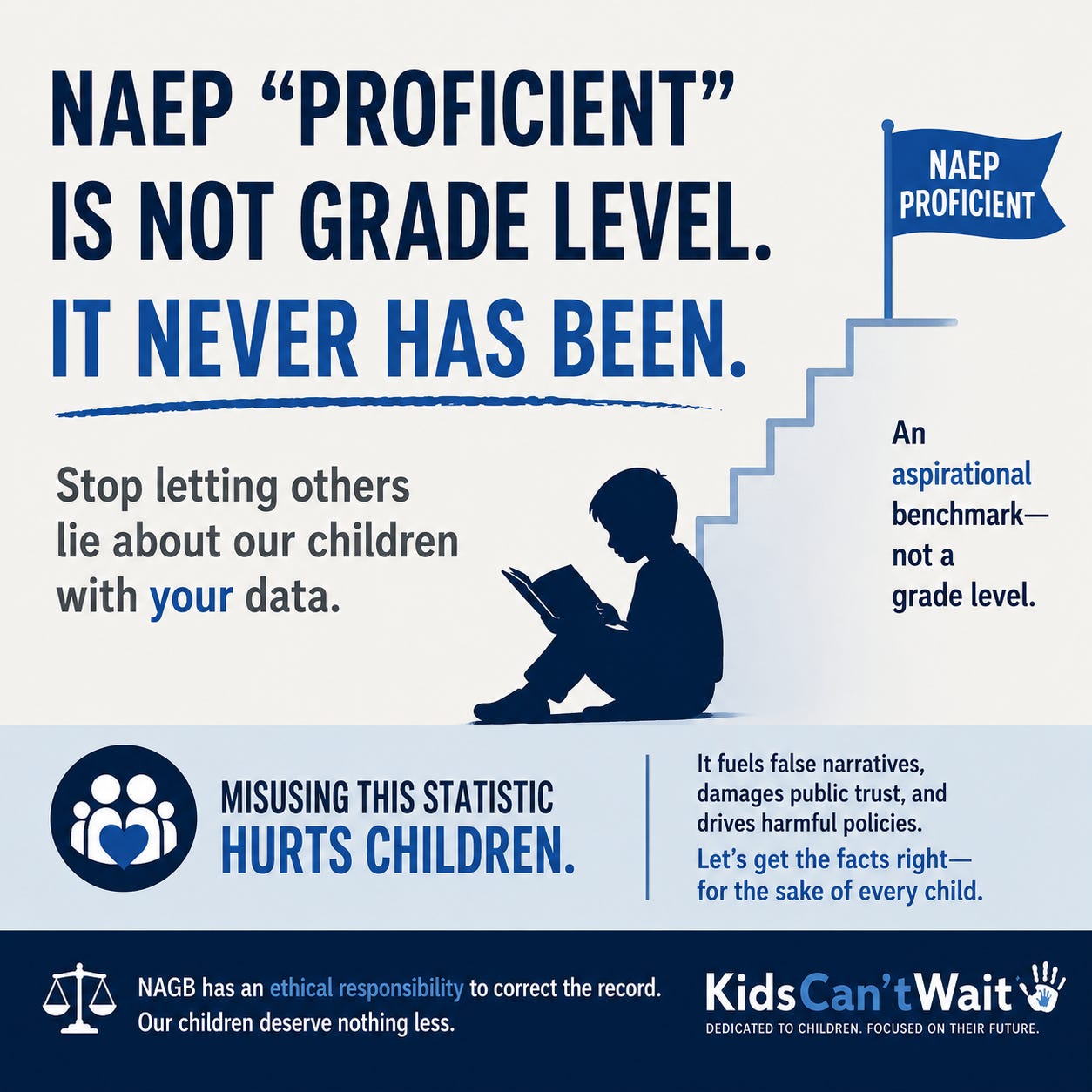
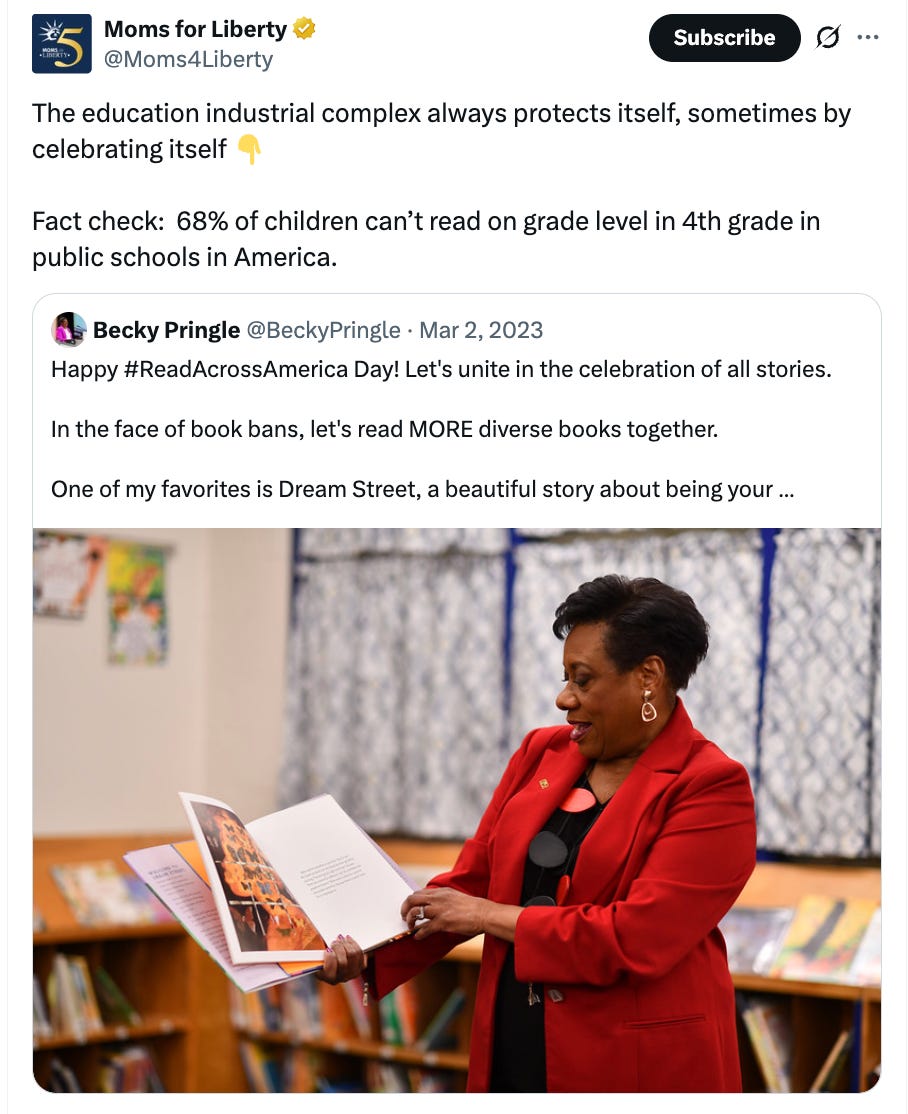
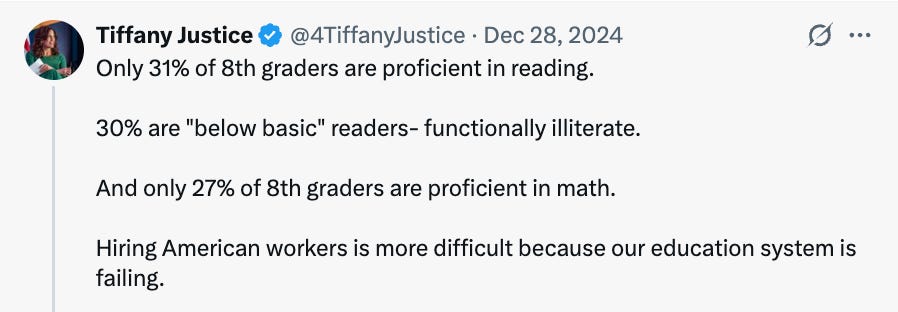
The biggest lie about American school kids is that most are “below grade level.” This lie is repeated so often by prominent figures that it is widely believed. But it’s not true. Those who believe it are wrong. Those who repeat it, knowing it’s not true, are liars.

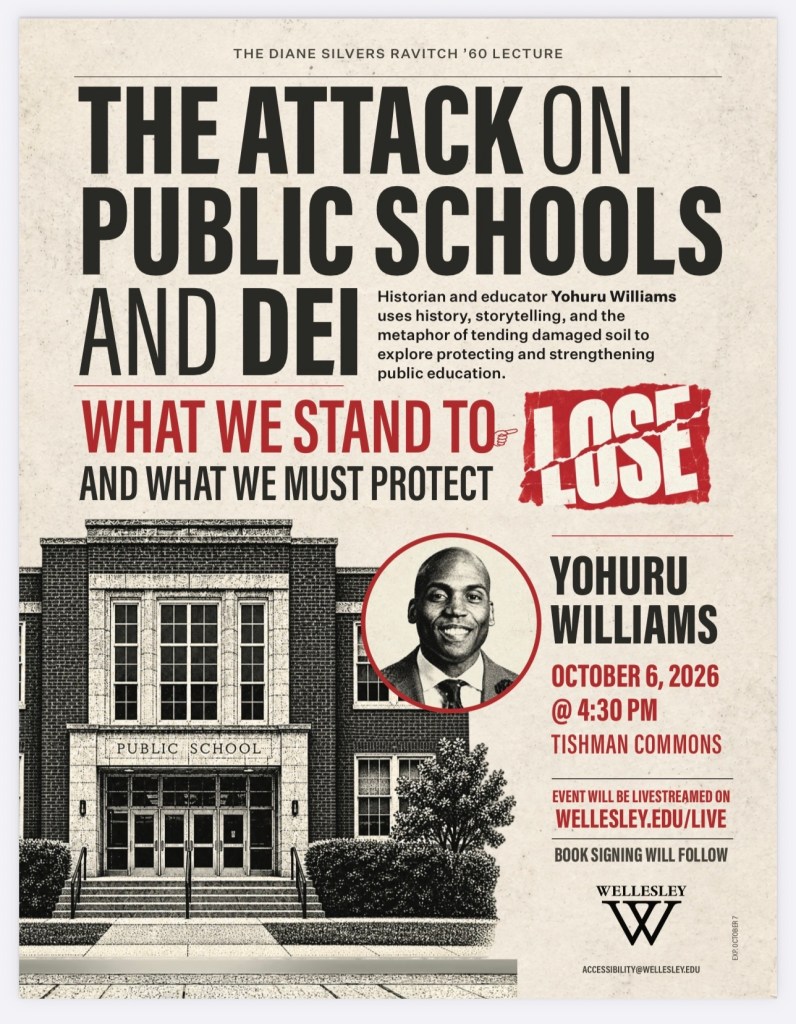
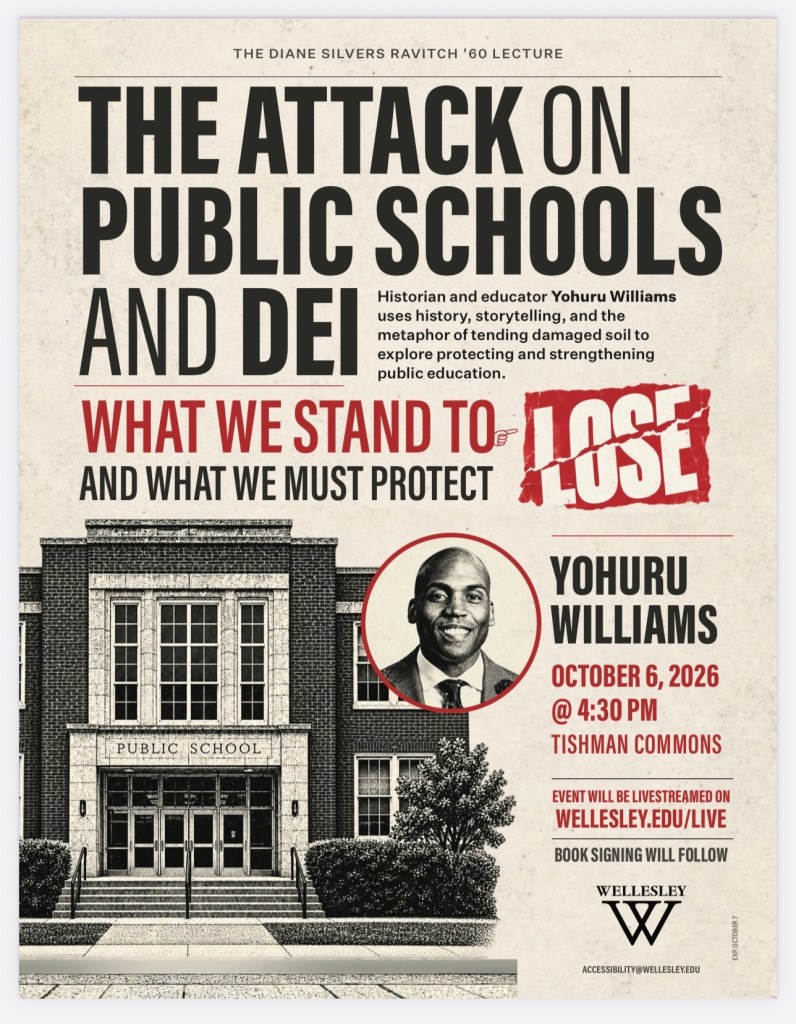
The source of the lie and the confusion is clear: the achievement levels in which NAEP scores are reported. The levels are “advanced,” “proficient,” “basic,” and “below basic.” When the media write about the latest release of NAEP scores, they frequently treat “proficient” as “grade level.”

But “proficient” is NOT “grade level.” It represents solid achievement, a rigorous aspirational goal. “Proficient” is equivalent to a solid A.

Every NAEP report on test scores says clearly in a footnote that “proficiency” is not the same as grade level. For example: “NAEP Proficient does not signify meeting grade-level expectations.” Yet the media and prominent commentators who should know better repeat the lie that most students are below grade level. The fact is that most students will never reach the high bar of “proficient.”

In 2023, as Bruce Lesley points out, Biden’s Secretary of Education–Miguel Cardona–testified to a Congressional committee that only one-third of American students were reading “at grade level.” I was flabbergasted. I couldn’t believe he said something so outrageous. I called Dr. Peggy Carr, who at that time was the Commissioner of Education Statistics. She was as surprised as I was that Secretary Cardona repeated the erroneous statistic. I asked Dr. Carr whether she had ever briefed him on understanding NAEP results; she had not.

I gave her an idea. Propose a change in name for “proficiency.” Change the name to “mastery.” No one would claim that “mastery” was the same as “grade level.” She liked the idea and promised to take it to the board. Whether she did, I don’t know. But nothing changed.

Bruce Lesley wrote this open letter to the National Assessment Governing Board, which oversees NAEP testing. Lesley is president of First Focus on Children and its partner organization First Focus Campaign for Children, bipartisan advocacy organizations dedicated to making children a priority in federal, state, and international policy. He has led both organizations since 2006 and 2009, respectively, building them into recognized national voices on child health, education, early childhood, economic security, budget and tax policy, immigration, children’s rights, and more recently, international child policy.

He wrote:

To the National Assessment Governing Board, the National Center for Education Statistics, and the leadership of the National Assessment of Educational Progress:

Every institution whose work affects children should begin with one question: “Is this good for children?”

By that standard, the National Assessment of Educational Progress (NAEP) has some important issues that deserve to be resolved. First and foremost, your achievement-level labels — “Basic,” “Proficient,” and “Advanced” — are being weaponized against the very children NAEP exists to serve, and you know it, because your own staff has been saying so for twenty-five years.

To be clear, this open letter is not a claim that NAEP’s underlying data is necessarily wrong, and it is not an argument against NAEP. The argument and request is narrower: you have a real and critically important ethical responsibility to correct the public misuse of your own data. NAEP should defend its credibility against those currently diminishing it.

This Week’s House Mark-Up Provides Another Example

On July 15, 2026, the House Education and Workforce Committee marked up a ten-bill package to facilitate the dismantling of the U.S. Department of Education.

In his opening statement, Chairman Tim Walberg (R-MI) argued that “too many children can’t read or do math at grade level,” and used that claim as a central justification for several of the bills. That claim is false.

Chairman Walberg was drawing on NAEP data — the statistic that roughly two-thirds of American fourth-graders do not score “Proficient” in reading, which is wrongly cited as evidence of failing to meet grade-level reading levels. For some, this is done out of confusion and, for others, to promote a political agenda to undermine public schools. In reality, NAEP proficient is aspirational and reflects a standard that is well above grade level.

Unfortunately, during the markup, multiple members of Congress repeated the same error. But again, NAEP Proficient is not grade level. It has never been grade level.

When the public, the press, the administration, and Congress repeatedly miscite this fact, the National Assessment Governing Board (NAGB) must do much more to clarify and correct misstatements about what it means.

Education expert Peter Greene explains:

The problem is two fold. One part of the problem is that “proficient” is used on many state and local assessments to mean “at grade level,” or what once upon a time would have been called a gentleman’s C; this leads to some honest confusion for some folks. The other part of the problem is folks who are invested in the narrative that public schools are failing and who benefit from the confusion surrounding the term.

Greene adds:

And every time NAEP scores are released, education journalists write piece after piece explaining “proficient” all over again, usually in the wake of some prominent person decrying the large number of students not “at grade level.”

That confusion is NAGB’s responsibility to address, and it has deserved attention for years, but all the more NOW.

This Is Not a Partisan Problem

Chairman Walberg and his colleagues’ misstatements are only the most recent officials to make this mistake (whether unintentionally out of confusion or internationally), and the pattern runs through both political parties.

Secretary Betsy DeVos, in the first Trump Administration, told the public that two-thirds of American students could not read at grade level— the same inaccurate conflation Chairman Walberg and his colleagues made yesterday.

Secretary Miguel Cardona, testifying before Congress in April 2023 under the Biden Administration, told lawmakers directly that only one-third of students were reading “on Grade level,” treating a NAEP proficiency figure as if it were a grade-level statistic, in nearly identical language.

Potential Democratic Party presidential candidate Rahm Emanuel is doing it as part of his tour of early primary states. 

And Secretary Linda McMahon, in the current Trump Administration, has used more careful wording — noting that nearly 70% of eighth graders are “not proficient” in reading — but has paired that technically accurate phrase with language implying total system failure. A Snopes piece by Rae Deng described this claim as lacking its own level of reading comprehension because, again, it completely mischaracterizes what NAEP’s “proficient” standard means.

Outside advocacy groups have been considerably less careful than any of them.

Moms for Liberty has publicly proclaimed that 68% of children cannot read at grade level, a direct misstatement of NAEP data. Here is just one of many examples. 

Furthermore, one of the organization’s co-founders has separately misread a state’s NAEP proficiency rate as that state’s overall literacy rate. Wrong again.

Corey DeAngelis, a leading advocate for school privatization, vouchers, and against public education, has cited NAEP proficiency figures directly, without qualification, as evidence that public schools are a system-wide “disgrace.”

Greene captures these types of political misuse of NAEP data in this Substack post.

Curmudgucation The Most Misused Statistics In Education.If someone is telling you that some extraordinary percentage of students can’t read at grade level, they’re probably wrong…Read more3 years ago · 2 likes · 1 comment · Peter Greene

This confusion is intentional by people arguing for both the dismantling of public education and federal investments in children.

Unfortunately, NAGB’s silence has allowed that rhetorical usefulness to go unchecked under Republican and Democratic administrations alike, and it is being used right now, this week, on Capitol Hill to justify eliminating the very agency that funds and safeguards the data NAGB produces.

NAGB’s Own Experts Have Been Saying This for Years

In 2001, Mary Lynne Bourque and Susan Loomis — a staff member and a board member of the National Assessment Governing Board itself — wrote plainly that the Proficient achievement level “does not refer to ‘at grade’ performance,” and that performance at Proficient is not the same as being “proficient” in a subject as any ordinary person would use that word.

Chester “Checker” Finn, Jr., who chaired the panel that adopted the achievement levels in 1992, has been candid that the levels were designed to be aspirational — a description of where students should ideally arrive, not a diagnosis of where most currently stand.

NCES itself has attached a caution to NAEP score reports for years: the Proficient level “does not represent grade level proficiency as determined by other assessment standards.”

If NAEP’s own architects and NAGB’s own website already say this, it is past time to be diligent in correcting the record when people misuse and misstate what it means. It is also on NAGB to stop publishing results in a format that predictably, foreseeably, and repeatedly gets misread as a verdict on grade-level performance, especially when you can see exactly how that misreading gets used again and again.

The clearest confirmation of all of this comes from NCES’s own data. Researchers Gina Cervetti and Kathleen Hinchman mapped every state’s definition of fourth-grade “grade-level” reading proficiency directly onto the NAEP scale and found that, as of the most recent analysis, nearly every state’s own standard for grade-level reading lines up with NAEP’s Basic level, not NAEP’s Proficient level. That means the honest translation of the data runs the opposite direction from how Chairman Walberg and others use it: by the states’ own definitions of grade level, roughly two-thirds of American fourth graders are reading at or above grade level, not below it.

Cervetti and Hinchman are also blunt about what actually is a crisis in the data: not a reading crisis, but an equity crisis. In 2022, only 48% of students eligible for free or reduced-price lunch scored at or above NAEP Basic, compared with 76% of students who were not eligible — a 28-point gap that has persisted, largely unchanged, for decades.

That is a story about generational wealth and unequal access to housing, healthcare, and school resources, not a story about failing classrooms, and NAEP’s own framing continues to let people tell the wrong story with your numbers.

What Education Writers and Researchers Have Been Saying

Diane Ravitch, who served seven years on the National Assessment Governing Board under President Clinton, has called out the confusion between NAEP Proficient and grade level as one of the most damaging and persistent falsehoods in American education discourse, noting that NAEP itself explicitly warns against the equivalence you continue to permit others to make.

Greene has argued that cut scores like “Proficient” function as scaled, curved judgments dressed up as fixed standards — noting that if every child scored above a cut, the establishment reaction would be to declare the cut too easy, not to celebrate the achievement. That is not how a genuine, fixed criterion is supposed to behave, and it is worth NAGB’s honest reckoning.

Mark Weber, a New Jersey teacher and education researcher, has done careful public work mapping state proficiency standards onto the NAEP scale, and his conclusion undercuts a favorite talking point of your critics-turned-allies in this fight: there is no empirical evidence that closing the so-called “honesty gap” between state and NAEP proficiency rates does anything to improve student achievement. If setting state cut scores to match yours were actually the lever for better outcomes, we would expect to see it in the data. We do not. That matters because it means the standard is being imported into state accountability systems on faith, not evidence — exactly the kind of unsupported claim NAGB should be correcting rather than allowing to spread.

The Brookings Institution’s Brown Center on Education Policy has been making this same case for nearly two decades. Tom Loveless, the Brown Center’s longtime director, authored a 2007 report concluding bluntly that NAEP’s cut scores were set too high. 

His 2016 Brookings piece, “The NAEP Proficiency Myth,” went further, noting that the achievement levels came under critical review from the U.S. Government Accountability Office, the National Academy of Sciences, and the National Academy of Education shortly after they were adopted — with the National Academy of Sciences review concluding the achievement levels were fundamentally flawed.

Loveless adds:

Advocates of the NAEP proficient standard want it to be for all students. That is ridiculous. Another way to think about it: proficient for today’s eighth graders reflects approximately what the average twelfth grader knew in mathematics in 1990. Someday the average eighth grader may be able to do that level of mathematics. But it won’t be soon, and it won’t be every student.

That is not a stray outside critique. That is respectable experts in the field, writing for decades, about the very categories NASB is still using today without correction.

One Point Should Not Separate “Failing” from “Successful”

NAGB also owes the public an honest accounting of what a cut score actually is. A cut score is a single point on a continuous scale, chosen somewhat arbitrarily by a panel, above which a child is declared “Proficient” and below which the same child, one point lower, is declared “Basic,” which is actually grade level.

Two children who are functionally indistinguishable in what they know and can do are sorted into entirely different public categories — one used as evidence that a school, a state, or a federal agency is failing, the other treated as evidence of success — because of a single point set by a committee, not because of any meaningful difference in the children themselves.

That is not a rounding error. It is the mechanism by which your data gets converted into political ammunition.

If NAGB cannot explain, in terms parents can understand, why the child who scores one point below the line is a different kind of learner than the child one point above it, then the line is doing rhetorical work the data was never built to support.

As the psychiatrist and educator William Glasser warned schools decades ago, chasing a point or two of movement on a test score is precisely the wrong institutional goal — and yet that is the goal NAEP’s cut scores hand every state, district, and school in the country by default.

Researcher Andrew Ho makes a similar point. He has identified proficiency cut scores as arbitrary markers, set through what he calls an “overwrought, judgmental, and ultimately political process,” not derived from any fixed line in human learning.

Ho has also documented a specific illusion that follows from that arbitrariness: because a large cluster of students always sits near the middle of the score distribution, a cut score placed close to that cluster will make small, ordinary shifts in performance look like dramatic gains or losses, purely as an artifact of how many students happen to sit right at the line — not because anything real changed in how much they learned. A researcher with no stake in the politics of this issue is describing the identical mechanism that turns your data into a rhetorical weapon: the closer the line sits to where children actually cluster, the more your data will appear to swing wildly for reasons that have nothing to do with children’s learning.

Criterion-Referenced in Name, Arbitrary in Practice

NAEP describes itself as a criterion-referenced assessment, distinct from norm-referenced tests like the SAT that simply rank students against one another. That distinction matters, and I want to represent it accurately rather than overstate it — NAEP does not “grade on a curve” in the way the SAT’s percentile scoring does.

However, the practical effect on families is not so different as the label suggests. NAEP’s cut scores were set by hand-picked panels making judgment calls about what students “should” know, not derived from an external, agreed-upon standard of competence, and independent evaluators — including a National Academies review in 2017 — have called for stronger evidence connecting NAEP performance levels to any real-world outcome at all.

A test that is criterion-referenced in name but whose criteria were set arbitrarily, and whose results still track family income and race as tightly as any norm-referenced test on the market, produces the same practical harm as the norming bias critics have long raised: it tells us more about a child’s zip code than about a fixed, meaningful standard of what that child knows.

Notably, NAGB has conceded the point this year. The 2026 NAEP reading framework — administered to students for the first time this spring — now explicitly disaggregates racial and ethnic subgroup results by socioeconomic status, on the premise, well documented for decades, that apparent racial differences in test scores largely track socioeconomic differences. That is a welcome and overdue acknowledgment.

But it is also, in effect, NAGB admitting in 2026 what critics have argued for years: that the results have been measuring wealth and family circumstance as much as they measure “proficiency,” all along. If that acknowledgment is real, it should extend backward, to how NAGB talks about every score ever published, not just forward, to a single new breakdown in the data tables.

The Test Itself Is Not Neutral

Even setting the cut scores aside, the content of the test carries its own bias, and NAEP’s own commissioned reviewers have said so. The NAEP Validity Studies Panel — a technical review body NCES itself created and funds — published an analysis by Gerunda Hughes in 2023 documenting that the statistical methods used to build NAEP-style test items can systematically disadvantage the very students the test is supposed to serve fairly.

When an item is answered correctly by nearly every student, it gets treated as a poor “discriminator” between high and low performers and is typically cut from the test in favor of harder items, even though that easy item may represent exactly the content that should be mastered.

This is not a hypothetical risk. Education researcher Wayne Au, in Unequal by Design: High Stakes Testing and the Standardization of Inequality, documents exactly how this mechanism has played out on the SAT, a test built using the same basic pretesting logic NAEP relies on.

In his book, Au cites researchers Kidder and Rosner, who examined more than 300,000 SAT test-takers and the pool of trial questions used to build future exams and found that some trial questions were answered correctly by Black students, or by Latino students, more often than by White students. Those questions were then discarded — not because they were poor measures of the content, but because they failed to reproduce the racial score gap the rest of the test already produced. A question only “counted” as valid if high-scoring test-takers, who are disproportionately White, tended to get it right in pretesting.

My mother has verified the same process when she was asked to be on a panel to evaluate whether the item questions were “fair”. The publishers of the Texas State assessment at the time ran through the questions and kept throwing out questions as biased toward Black or Hispanic children if they scored the same or close to the scores of White children. 

In contrast, questions in which there was a substantial gap in favor of White students were not flagged – thus, “norming” the disparity in test score outcomes into subsequent tests. Although my mother repeatedly objected, she was overruled throughout the day and, not surprisingly, never asked back to be a reviewer.

The result, as Au describes it, is a self-reinforcing loop: item selection is calibrated to match existing racial score gaps, which locks those same gaps into every future version of the test, all without anyone ever explicitly considering race in the selection criteria. 

NAEP is a different test administered by a different organization, and I am not asserting that NAEP’s item-selection process has been documented to work in the same way. But NAEP uses the same category of item statistics that made this outcome possible on the SAT, and NAGB’s own validity panel has already flagged the risk. Given what is now documented on a test as consequential as the SAT, NAGB owes the public a direct, public answer to a direct question: has anyone checked whether NAEP’s item-selection process does the same thing?

There is also cultural and geographic bias. As the son of an English teacher and a math teacher, it should be no surprise that I did fairly well on standardized tests throughout my life. But I vividly recall a reading passage from the PSAT that focused on nautical issues and the definition of a “flotilla.” 

Having grown up in El Paso, Texas, a city located hundreds of miles from any coastline, the passage and vocabulary word were unfamiliar to any of us taking the test in the desert borderlands. On the other hand, we would crush a passage referring to “tortillas.” NAEP’s own reviewers have a name for this: cultural validity, the idea that a test cannot cleanly separate what a child knows from what a child has been exposed to.

Research that NAEP’s own validity panel cites has found that when students are allowed to choose among reading passages on different topics, rather than being assigned a single passage that may be unfamiliar or uninteresting to them, some groups of students — including Black eighth graders and Hispanic twelfth graders in the panel’s own cited study — score much higher. That is evidence that some of what NAEP currently measures is exposure and familiarity, not just reading ability, and it argues for reform in how passages and vocabulary are chosen, not just in how results are labeled.

Again, the validity panel’s report contains proof that this is a design choice, not a fact of nature. In 1972, the psychologist Robert Williams built a test called the Black Intelligence Test of Cultural Hegemony, using vocabulary and content drawn from Black American culture instead of the dominant culture’s frame of reference. When Black and White teenagers took it, Black students substantially outscored White students by substantial margins.

Nothing about the underlying children changed between that test and the SAT. What changed was whose knowledge and cultural fluency the test happened to be built around.

That single fact should end, permanently, any claim that a test’s outcomes reveal some fixed truth about which children “can” or “cannot” read, think, or reason. What these tests reliably measure is often which cultural and economic frame of reference a child was raised in, and how well that frame matches the one test-makers chose to build around — which is another way of describing accumulated wealth, school funding, and generational inequity, not a verdict on a child’s mind.

That is real, and policies that address school finance inequity, child poverty, childhood hunger, and adverse childhood experiences (ACEs) deserve real policy attention. These issues would undoubtedly do more to improve educational outcomes in this country rather than privatization of public schools or the elimination of the Department of Education.

Claims that two-thirds of American children cannot read at grade level are simply false, and their interpretation by policymakers and advocates is harming children. There is an old warning that was popularized by author Mark Twain but attributable to British Prime Minister Benjamin Disraeli about three kinds of falsehood — “lies, damned lies, and statistics.”

In this case, even a true number, presented without its context, can mislead more effectively than an outright fabrication. NAEP’s “proficiency” level is an aspirational one, but the grade-level story built on top of it is doing real harm. NAGB is a position to explain the difference, and the public is not, until you tell them.

The Damage Is Not Abstract: What Gets Tested Is What Gets Taught

This is not a technical quibble.

Every time “below Proficient” gets reported to the public as “can’t read” or “can’t do math,” it becomes ammunition for defunding public schools and for portraying millions of children — disproportionately low-income children and children of color — as failures because of a label your board itself has said should not be read that way.

It also reshapes what happens inside the classroom. When reading and math scores on tests built around NAEP cut points become the metric by which schools, teachers, and even state superintendents are judged, instructional time follows the incentive:

  • Short, decontextualized passages crowd out real books — my children were taught how to write a brief constructive response (BCR) before they were even taught what a paragraph was.
  • Science, government, history, the arts, and physical education are pushed to the margins of the elementary school day because they are not tested and therefore not rewarded.

Children end up narrower, not better educated, in the very subjects that make them informed citizens — and NAEP’s own cut-score architecture is a direct contributor to that narrowing, whether or not that was your intent.

NAGB tried a partial fix in 2018, adding the word “NAEP” before each level — “NAEP Proficient” rather than “Proficient” — so people would stop equating your terms with generic ones.

James Harvey, executive director of the National Superintendents Roundtable, was right to call that gesture insufficient at the time. Harvey said:

…the American people should understand that the misleading term “proficient” sets a performance benchmark beyond the reach of most students in the world.

Harvey argued “proficient” should be changed to something like “high” to avoid being “fooled.”

His point has been proven many times, including this week when a sitting congressional committee chairman, citing NAEP-adjacent data to justify eliminating a federal agency, still used the word “grade level” as if it meant what NAEP’s Proficient level does not mean.

The Perverse Incentive NAEP Has Inspired: Grade Retention As Score Manipulation

The clearest evidence that NAEP’s cut scores create perverse incentives and “manufactured” crises, rather than honest information, is what states have started doing in response to them: holding back third-graders who miss an early-literacy cut score, in order to produce a fourth-grade NAEP cohort that looks better on paper.

Education professor and researcher Paul Thomas has documented this closely in states such as Mississippi, where fourth-grade reading gains celebrated as a “Mississippi miracle” tracked closely with a mandatory third-grade retention policy.

Paul ThomasCounter-Narratives: Mississippi Reading ReformEmily Hanford has profited from two very compelling stories…Read more2 days ago · 1 like · Paul Thomas

A child who is nine years old competing against classmates who are eight will predictably score higher on a test built around the same content; that is a fact about test administration, not about literacy. Furthermore, those same “gains” have been shown to fade by eighth grade, once the retained cohort catches up in age to its peers without having genuinely caught up in learning.

This is worth NAGB’s own honest reckoning, not because the research on retention is unanimous — reasonable analysts, including some closely tied to NAEP’s own governing board, dispute how much of Mississippi’s gain is genuine instructional improvement versus retention’s effect on cohort composition — but because NAEP’s achievement levels are the mechanism creating the incentive either way.

States are not retaining eight-year-olds because it is good for those children. They are retaining them because a single cut score on a single test has been elevated to a measure of whether a state’s education policy is working. The cost of that incentive falls on children: retained students who show a short-term score bump can, over time, experience the opposite of what was intended — greater disengagement, higher rates of dropping out before graduation, and the well-documented psychological toll of being told, at eight or nine years old, that they failed.

William Glasser spent much of his career, in Schools Without Failure, and later in The Quality School, explaining exactly why this backfires. He argued that standardized testing reduces learning to disconnected, memorized facts at the expense of critical thinking and real application — and that the “right answer, wrong answer” format of a multiple-choice test teaches children that education is a hunt for a single predetermined answer rather than a process of genuine understanding.

In the schools Glasser held up as models, closed-book tests were replaced with open-book, collaborative assessments that actually resembled the problems students would face outside school. His deeper claim, grounded in what he called Choice Theory, is that people — including children — are driven by needs for freedom, power, and simple enjoyment in their work, and that using test scores to rank, shame, or coerce students destroys the very motivation that produces quality work in the first place.

Labels matter. When children repeatedly hear that two-thirds of them “cannot read at grade level,” many internalize failure that is not supported by the evidence. Parents lose confidence in neighborhood schools. Teachers become demoralized. Policymakers propose increasingly radical structural changes to fix a crisis that has been inaccurately described.

Glasser also warned explicitly against making small, arbitrary numerical gains — his example was raising a test score by a point or two — the primary institutional goal of a school, insisting instead on building a genuine culture of quality. That is precisely the trap a single-point NAEP cut score sets for states, and it is the trap third-grade retention policies walk students directly into.

That is the opposite of what an assessment meant to serve children should produce, and it deserves your acknowledgment, not your silence.

What We Are Asking You To Do, Now

  1. Issue a direct, public correction each time a federal official misstates NAEP Proficient as “grade level,” the way you would correct any other material misuse of your data. Silence is not neutrality; it is acquiescence in the misuse.
  2. Publish, prominently and alongside every score release, the state-by-state mapping showing that “grade level” as states themselves define it corresponds to NAEP Basic, not NAEP Proficient — the analysis your own data already supports and that outside researchers have had to do on your behalf.
  3. Publish a plain-language document — “What NAEP Proficient Does, and Does Not, Mean” — and require it alongside every score release, every webpage, every press briefing, and every congressional testimony that cites NAEP data. Most of this letter’s argument could be prevented by a single page NAGB.
  4. Stop using “Basic,” “Proficient,” and “Advanced” as headline labels without their NAEP qualifier in every release, chart, and public statement — not as a footnote, but as a mandatory part of the label itself, displayed with the same prominence as the number.
  5. Retire “Basic,” “Proficient,” and “Advanced” altogether in favor of terms that do not already carry a plain-English meaning your data does not support. If the words themselves are the problem, changing a modifier in front of them has not been enough.
  6. Extend the honesty of the 2026 reading framework’s socioeconomic disaggregation backward, not just forward. If you now accept that racial gaps in your data are substantially explained by family socioeconomic status, say so plainly every time a racial achievement gap is reported, and stop letting that gap be cited as evidence of school failure without that context.
  7. Commission and publish the external validity evidence the National Academies asked for in 2017 — a transparent accounting of what your cut scores do and do not predict, so the public can evaluate the standard rather than take your word for its meaning.
  8. Publicly acknowledge the perverse incentive your cut scores have created for third-grade retention policies, and commission independent, longitudinal research — tracking students well past eighth grade, through high school graduation — before any state is permitted to point to NAEP gains as proof that retaining eight-year-olds is good policy.
  9. Act on your own validity panel’s 2023 findings, and answer the question the SAT evidence now raises. Publicly disclose whether NAEP’s item-selection process has ever been audited for the same self-reinforcing bias documented on the SAT — where trial questions that marginalized students answered correctly were discarded for failing to reproduce the existing score gap — and commit to an independent audit if it has not. Explain how tests are “normed” from one year to the next and made comparable in a manner that is understandable to the public.

Kids can’t wait for another year of this same correction being offered and ignored, or for another cohort of eight-year-olds to be held back so a state’s chart can look better. NAGB has the power to end the confusion your own board identified more than two decades ago. Please do so. Kids deserve it.

If you are a long-time reader of this blog, you know that I have a strong friendship with and great respect for the Rev. Charles Foster Johnson, executive director of Pastors for Texas Children. Charlie comes to every conference of the Network for Public Education and is a strong advocate for public schools and the 5.4 million children who attend them. He believes deeply in separation of church and state, as do the 2,000 faith leaders in Texas who are part of Pastors for Texas Children. PTC was deeply involved in the voucher battle, on the side of public schools and church-state separation.

PTC has encouraged the creation of similar groups in other states. One of these groups is in North Carolina. I received this notice and thought some of you might want to participate in their zoom conversation about “Christian nationalism.”

People of Faith for Public Schools

Dear Advocates,

Though it’s still summer, our advocacy doesn’t stop! Have you been hearing about “Christian nationalism” but maybe don’t know quite what it is or why it matters to public education advocacy?

People of Faith For Public Schools, a project of Pastors for NC Children

Christian Nationalism: 

What is it? 

Why should we care?

How To End Christian Nationalism Zoom Book Discussion

Pastors for NC Children and Christians Against Christian Nationalism-North Carolina are co-sponsoring a 2 part zoom book discussion of Amanda Tyler’s “How To End Christian Nationalism”. 

It will take place on Thursday, July 23 and Thursday, July 30 from 7-8:30pm. July 23 will look at the Introduction and Steps 1-4. July 30 will look at Steps 5-8 and the Conclusion. While we hope you read the book, you are invited to join in even if you haven’t. The discussion will include discussing the steps and how it intersects with our own experiences and life. The discussion will be led by Executive Director Rev. Suzanne Parker Miller.

ACTION ITEM: Register for the link at http://bit.ly/HTECNJuly2026

Support Our Work Today!

Thank you to everyone who has made a donation to PNCC’s ministry. WE ARE SO GRATEFUL! Would you consider becoming a monthly donor or make a one time contribution to our goal? Could your church include PNCC in their mission giving? THANK YOU!

ACTION ITEM: Donate to PNCC’s Ministry Today!

Know of congregational, denominational, or community grants or opportunities to support our work? Let us know at Fundraising@PastorsForNCchildren.org

919.346.6114

Rev. Suzanne Parker Miller, Director

Director@PastorsForNCchildren.org

PastorsForNCchildren.org

DONATE HERE!

Copyright (C) 2026 Pastors for NC Children. All rights reserved.

Our mailing address is:
Pastors for NC Children P. O. Box 37241 Raleigh, NC 27627 USA