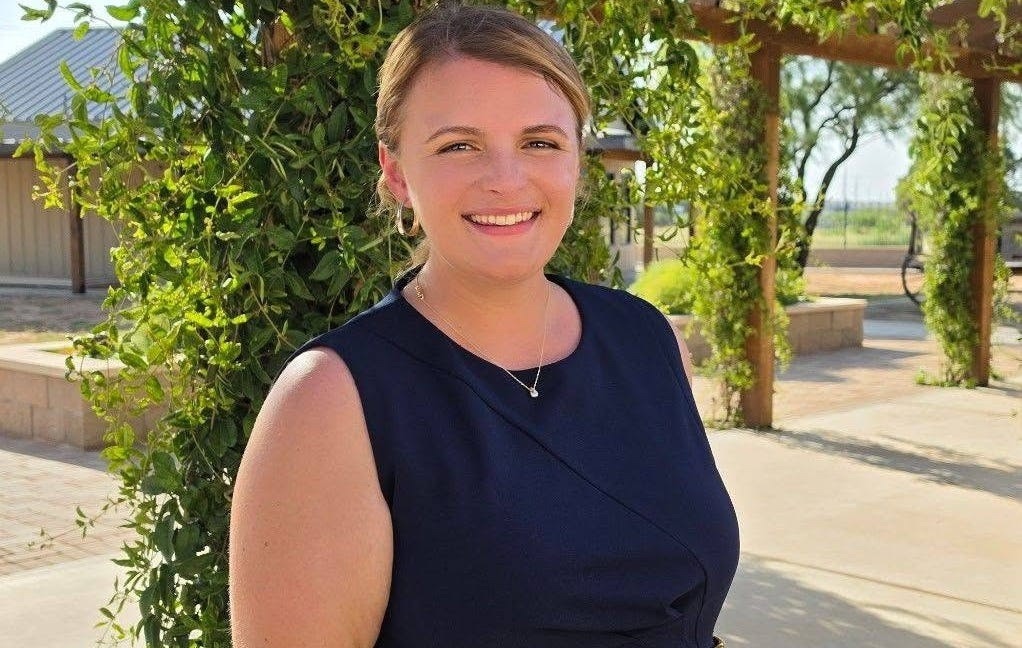
When Republicans start losing, they get desperate and spread lies. The best lies are created by Russian bots. Politifact rated a vile video attacking Talarico as a pedophile as an AI fake.
Russian disinformation group targets James Talarico with baseless claim in AI-generated video
IF YOUR TIME IS SHORT
The Russian disinformation campaign known as Storm-1516 used artificial intelligence to create a video that impersonated a real man, and claimed it showed a former student accusing James Talarico of misconduct, researchers say.
The account that initially shared the video was created in September and is based in Romania, NewsGuard reported.
A social media video purporting to show a former student accusing Texas Democratic U.S. Senate candidate James Talarico of sexual misconduct is the latest example of how Russian groups are generating false information to influence U.S. elections, researchers say.
As of Oct. 22, X had suspended the account that originally posted the baseless claim, but other accounts have since shared it. NewsGuard, a company that tracks online misinformation, reported that X said the account was created in September with Romania as the signup country.
Talarico spokesperson JT Ennis issued an emailed statement to PolitiFact about the video.
“The most powerful people in the world know they can’t beat James Talarico with the truth, so they’re slandering him with AI deepfakes, foreign bots, and conspiracy theories to protect their broken, corrupt political system,” Ennis said.
What we know about the video’s origin
Darren Linvill, a Clemson University professor and head of its Media Forensic Hub, said the video is the work of Storm-1516, a Russian propaganda campaign he said made a similar baseless attack on Minnesota Democratic Gov. Tim Walz in 2024 when Walz ran for vice president. In 2024, the group used a paid actor from West Africa to attack Walz, Linvill said.
Linvill said this video was generated to look like a real man who has an account on another platform. The video shows a man claiming to have been a former student of Talarico at Rhodes Middle School in San Antonio, Texas, where Talarico taught Language Arts before his political career as a state representative.
Graphika, a social media analytics company, said in a blog post that the X account that originally shared the video “very likely” impersonated a Facebook user by the same name. That person lives in Texas and was a former student of Talarico. The man has praised Talarico on his Facebook page on several occasions, as recently as February, Graphika noted.
Fact-checkers at Lead Stories spoke with that man and he said the video is not of him, and denied accusing Talarico of misconduct. PolitiFact reached out to him via Facebook, but he didn’t immediately respond. PolitiFact’s review of the man’s Facebook page found no video of him accusing Talarico.
NewsGuard reported that the videos had many signs of AI generation, such as unnatural eye movements and stagnant facial expressions, and that an AI detection tool showed a 98% likelihood of being a deepfake. A deepfake is a machine generated image or video that changes faces, bodies or voices, making people appear to do and say things that they never did or said.
Graphika said social media accounts known to amplify Storm-1516 content and several accounts from U.S. conservatives shared the video. It said a prominent Storm-1516 amplifier, SGAnon, originally shared the video, then deleted it, writing on X that an analysis showed it was “artificially generated.”
The Russian disinformation playbook
Linvill said Storm-1516 typically uses the same influencers to spread false narratives into political conversations.
“If you examine the recent content of the influencers who first shared this narrative you can easily identify other Storm-1516 lies,” Linvill said. “We believe they are paid to do this. In the same way marketing companies pay influencers to share products, the Russians pay influencers to share lies.”
The New York Times recently reported that Russia and other foreign governments have stepped up efforts to influence U.S. elections, mostly targeting Democrats.
Linvill co-wrote a recent report about Storm-1516 and its work targeting Ukrainian President Volodymyr Zelenskyy and found such campaigns often are not aimed at changing people’s behavior or opinions, but seek to shape public discourse.
He said the study’s findings apply to this baseless Talarico narrative.
“By entrenching people in this view of Talarico, the Russians likely hope to exacerbate extreme partisanship and also encourage people to get off the couch and vote for Ken Paxton,” Linvill said. “People who already like Talarico are going to dismiss this claim as the obvious fake it is, but they aren’t the audience.”
We rate the claim that this video shows Talarico’s former student accusing him of misconduct Pants on Fire!
Michelle H. Davis has been writing on her blog “Lone Star Left” about people who are running for the Texas legislature. I find her portraits compelling, because I learn a lot about districts that Democrats have written off and forgotten.
This series is called Meet the Candidates. Over the next three months, I’ll spotlight a handful of Democratic races each month, mainly in the Legislature and in Congress. These aren’t endorsements. They’re introductions, a way to understand who’s running, the districts they hope to represent, and what’s at stake for people across Texas.
Who is Laticia Ambroz?
Laticia Ambroz has lived in Texas for over 60 years. She’s from Quitman, out in Wood County, deep in the piney woods of East Texas. She and her spouse raised three kids. Now she’s got eight grandkids and a great-grandbaby on the way.
Growing up, her mother taught her a simple but powerful lesson. Always leave things better than you found them. That’s her whole campaign. And when Ambroz looks at the state of Texas government right now, she says she can’t in good conscience leave it to her grandchildren, or to yours, without doing something about it.
Here’s the part that matters. Ambroz is running in Senate District 1, a nineteen-county stretch of deep East Texas covering Bowie, Gregg, Harrison, Smith, Titus, Wood and more, currently held by Republican Bryan Hughes. The last Democrat to even show up on the ballot against him was Audrey Spanko, back in 2020. This isn’t a swing district. It’s a district Republicans have gotten used to not having to defend.
So why run somewhere the deck is stacked six ways from Sunday? Because somebody has to, and because Ambroz isn’t pretending otherwise. Her pitch is refreshingly unglamorous. Revitalize the East Texas economy, fight for a living wage, get rural healthcare within driving distance of the people who need it, fund public schools like they matter. It’s the kind of platform that used to be called common sense before that phrase got weaponized by the other side. Ambroz wants it back.
The district.
Is District 1 winnable in 2026? Almost certainly not, not with the current partisan lean and Hughes sitting comfortably unopposed the cycle before. But “unwinnable” and “not worth covering” aren’t the same thing, and a Democrat willing to put her name on the ballot in a district this red deserves the same fair hearing as anybody running in a toss-up.
Here’s what these nineteen East Texas counties are actually made of. Four counties do the heavy lifting. Smith County (Tyler) alone carries about a quarter of the entire district. Gregg County (Longview) adds another 124,239. Bowie County (Texarkana) brings 92,893. Harrison County (Marshall) chips in 68,839. Those four counties together are well over half the district. Everything else, Cass, Panola, Rusk, Upshur, Wood, Camp, Franklin, Delta, Red River, Marion, Morris, Titus, Fannin, Hopkins, Lamar, is small-town and rural East Texas, none of them cracking 70,000 people on their own.
If Democrats are looking for where the bodies actually are, it’s Tyler and Longview. That’s the floor of any real strategy here.
This district is old. 18.5% of the population is 65 or older, against 13.4% statewide. Working-age adults (18-64) are underrepresented at 57.7% versus 61.6% statewide. That shows up again in the household data: 35.1% of households here draw Social Security income, compared to 25.4% statewide. This is a retiree-heavy district, and retirees vote. Reliably.
Racially, it’s 62.9% Anglo, 37.1% non-Anglo. Black residents make up 17.0% of the population, actually higher than the state average of 14.1%. Hispanic residents are 16.7%, well below the state’s 39.7%. But that Hispanic population isn’t evenly distributed either. Titus County is the outlier of the entire district: 57.1% non-Anglo, 43.8% Hispanic, driven almost certainly by the poultry processing industry around Mount Pleasant.
Spanish-surname voter registration is only 6.8% of registered voters districtwide, against a state average of 24.7%, even though Hispanic residents are 16.7% of the population. That’s a registration and organizing problem. There’s a gap between who lives here and who’s on the rolls, and closing it, even partially, is base math.
Per capita income is $33,672, a full seven grand below the state’s $40,752. Only 22.8% of adults 25 and up hold a bachelor’s degree or higher, versus 33.8% statewide. This is a working-class, non-college district, and it is not a wealthy one. Poverty sits at 14.4%, slightly above the 13.8% state rate, and single-parent families make up 51.3% of families in poverty, with women heading the overwhelming majority of those households.
2024 general election: Trump 76.6%, Harris 22.5%. Cruz 74.7%, Allred 23.5%. Down the entire ballot, every statewide Democrat lands in that same 20-23% band, Supreme Court, Court of Criminal Appeals, Railroad Commission, all of it. This is a straight-ticket district. Nobody’s splitting tickets for a good Democrat down-ballot. Turnout was 63.5%, meaning roughly 405,000 people showed up, and roughly three out of four of them voted a straight Republican line regardless of the specific race.
This is not a competitive seat in 2026.
Forget flip math. Focus on three things. First, Tyler and Longview are where turnout operations get built, because that’s where the population is and where a Democratic floor already exists at the county level even if it’s thin. Second, the Spanish Surname VR gap in Titus County and beyond is real, uncontested organizing turf, registration work that doesn’t require converting a single Republican, just registering people who are already there. Third, message on the material conditions, income below the state average, education access below the state average, a manufacturing and healthcare workforce that depends on public investment staying intact. Culture war framing is a losing bet in a district like this. Kitchen-table economic populism, rural hospital access, wages, cost of living, is the only politics that has any shot of moving a number that currently sits at 23%.
Ambroz isn’t going to flip SD1. Nobody is, not this cycle. But if the goal is building infrastructure for the next decade instead of just showing up to lose gracefully every four years, this data tells you exactly where to plant the flag.
The incumbent.
Being a third-generation city girl myself, there’s one thing in the Texas Legislature that always gets under my skin. And that’s these country hillbilly lawyers who grew up deep in Klan Country, who run for office for the sole purpose of taking our state back to Jim Crow, while enriching all of their oil-loving, country club buddies back home. And if there ever were one, that would be Senator Bryan Hughes.
In 2021, when Republicans were ramming through SB1 and all of their voter-suppression laws, Hughes spearheaded a provision to keep Black churches from voting on Sunday (Souls to the Polls). After a ton of public pressure, that provision was stripped from SB1, but by golly, he sure did try it. It was Bryan Hughes who put it there, specifically him.
In the same session, Hughes fronted the ban on teaching critical race theory in Texas schools, along with an attempt to bar Texas corporations from adopting board diversity quotas.
Some Democrats described SB7’s provisions as “the new Jim Crow,” saying the bill amounted to voter suppression targeting Black voters specifically. Hughes’s response wasn’t to engage with that. He called it unfortunate that Texans were injecting “national political stuff” into what he framed as a straightforward policy discussion.
Hughes told CNN half a dozen times that the Texas Attorney General’s office had 400 open voter fraud cases, calling it documented fact beyond question. The actual number of pending voter fraud charges in Texas was 43, with only one stemming from the 2020 election in which more than 11 million Texans voted. He inflated the crisis by nearly tenfold on national television to justify a bill critics say targets Black and disabled voters.
And really, it’s only the tip of the iceberg with Hughes. He loves to write laws that will harm marginalized communities most.
In Laticia Ambroz’s own words.
Below are some questions I asked Ambroz, based on previous reader polls, along with her answers.
Q: Do you support a statewide minimum wage increase to at least $15/hour?
Absolutely, this is basic to helping Texas families survive. A livable wage is essential to a healthy economy. If people, moms and dads, are not having to work multiple jobs to make ends meet, they have more time to spend at home supporting their children-with homework, enjoying family meals, and instilling family values. Raising the minimum wage ensures that families and individuals can afford groceries, rely less on state benefits, and can keep a roof over their heads. Increasing the minimum wage to $15/hour should just be the starting point. People need to be able to afford housing, food, and medical care, which means a wage that keeps up with inflation, and we need to aggressively figure out how to slow inflationary costs.
Q: Should Texas end tax subsidies and abatements for large corporations?
This should be #1 on our list. Texas government is selling the People of Texas short. The State of Texas is so vast and has so many natural resources; in our own right, we are a wealthy state. We need industry to continue to be a healthy and wealthy state, but careful consideration has been thrown out the window. Why are we giving everything away? Why do we continue to line the pockets of the billionaires who are bleeding us dry? If you want to do business in Texas, Corporations must pay their fair share in taxes, be responsible stewards of our natural resources, and provide good-paying jobs and benefits for the people of Texas. If corporations cannot do this, then Texas does not need them. The Lone Star State should attract corporations that want to be partners with us.
Q: Do you oppose school vouchers and efforts to privatize public education?
This is the worst! 95% of our school children are in public schools. Our schools are already underfunded; the student-to-teacher ratio needs to be addressed, and teacher salaries need to be adjusted for the professionals that they are. This is our future, the future of Texas, and every child in Texas deserves the best education that we can provide. Texas is sadly lacking in education, and private and public schools are not the answer. Do not let Austin politicians run our public schools; they are not educators, and the school system should not be a for-profit entity, which is what they will turn it into.
Q: Should Texas guarantee free school meals to all K–12 students, regardless of income?
Yes, Children learn better with a full belly. School breakfast and lunch should be provided. This is a very small price to pay for quality schools.
Q: Do you support closing or downsizing state prisons and redirecting that funding to community-based alternatives like mental health care, housing, and youth programs?
Yes, so many of the people incarcerated need mental health assistance, and incarceration is not the answer. Getting the help needed beforehand and assisting in therapy and training would be a good start. Addressing affordable housing is a must across the board, and keeping our youth involved, educated, and supported is essential. People are lonely and looking for a place to belong, we need to provide that place, we need to support programs that provide that place.
Bonus Question: What does being a Democrat mean to you in 2026?
Being bold, thinking outside the box, considering all available options; actions speak louder than words.
Here’s what you’re actually looking at in SD1.
A retiree-heavy, working-class district that Trump carried by 54 points, represented by a man who spent every session trying to keep Black churches from voting on Sunday, banning honest history in classrooms, and lying to CNN about voter fraud by a factor of ten. Bryan Hughes is the honest face of what the state party has become when nobody’s forced to answer for it.
Laticia Ambroz is not going to beat him in 2026. Pretending otherwise insults both her and you. But somebody has to be on that ballot saying a $15 minimum wage isn’t a radical idea, that gutting corporate tax abatements while East Texas families choose between groceries and gas is a policy failure and not an act of God, that a fully-funded public school beats a voucher scheme every single time. Somebody has to be the name Democrats in Bowie, Smith, and Gregg County see when they open their ballot, so the muscle doesn’t atrophy completely between now and the year this district finally becomes contestable.
That’s infrastructure. It’s registration drives in Titus County where the Spanish surname numbers don’t match the population. It’s a floor in Tyler and Longview that doesn’t currently exist. It’s making sure the next Ambroz, or the one after her, isn’t starting from zero.
Hughes is betting nobody’s watching this district closely enough to notice what he’s spent a decade building. Ambroz is betting he’s wrong.
What is Donald Trump thinking about most of the time? To begin with, he’s traveling the nation now–mostly to red districts and red states–in hopes of holding on to unrestrained power. And he’s certainly on the lookout for opportunities to make more money, for himself and his children. There can never be enough money.
But his peculiar obsession is redecorating. He can’t leave anything alone. And he doesn’t want anyone to stop him once he gets a bee in his bonnet.
He tore down the East Wing of the White House last fall, on the day after the big No Kings Day, a sort of FU to the millions who joined protests against his peremptory rule. His response: I am a king, I don’t need no stinking approval by historical review boards or environmental review boards or anyone else. When a judge said he did need those approvals, he fired every member of those nonpartisan boards and stacked them with his sycophants and employees. Problem solved.
He’s following the same process with his other redecorating ideas: the John F. Kennedy Center for the Performjng Arts (which will close for two years because a judge wouldn’t let him become a co-equal with John F. Kennedy as an honoree of the memorial); the Lincoln Reflecting pool, the Arch of Trump, the painting of the granite Executive Office Building (experts have cautioned granite should not be painted).
Other changes, large and small, consume his time: turning the austere Oval Office into a gold-bedecked bordello; fencing in Lafayette Park, across from the White House; paving over Jackie Kennedy’s Rose Garden. Also, the Oval Office now has a very large sign in gold lettering, saying “The Oval Office.”
The latest manifestation of his redecoration of the nation’s Capitol is his plan to turn a popular public golf course into a championship course that would attract major PGA tournaments.
When environmental and civic groups heard about his plan, they sued to block it until there was proper vetting of the project. How would it affect the numerous trees on the site? Would the public still have access? Would it still be affordable to the people who live in the District?
The judge told the Interior Department and the National Park Service not to start this project without getting her approval. They delivered their plan at 5 pm on Friday before the Columbus Day weekend. The next day, nearly 500 mature trees were cut down. She was furious. Trump didn’t care. That’s the way he rolls.
An image Donald Trump posted this morning, of his vision for the locally cherished East Potomac Park golf courses in DC. Last weekend, Trump operatives illegally cut down hundreds of mature trees on the courses. Today he announced plans to close the courses altogether next month, to convert them to a PGA venue. DC-ites will note that this plan entirely eliminates the famous bike and running path around the perimeter of Hains Point, which among other things is a featured part of the annual Marine Corps Marathon. (Trump posting.)….
When I put up my previous chronicle, a federal judge was throwing the book at MAGA officials from the White House, the Interior Department, and the National Park Service for their illegal, surprise-attack toppling of several hundred mature trees at East Potomac Park, in Washington. (Also known as Hains Point.)
This desecration cut especially deep for people in the DC area, even when compared with … everything else. It’s not just that it will take another century to replace trees that were a hundred years old. It’s that Hains Point, which sits on the waters of the Potomac directly across from National Airport, and its park and recreation spaces have a unique place in DC community culture.
The golf and tennis facilities are distinctly public, and open to all, for very low fees. You see a wide range of people using them: Golfers and tennis enthusiasts, young families pushing strollers, runners and bikers and skaters taking the multi-mile course around the whole Hains Point peninsula, bird-watchers and nature-lovers and so on. Notably, they come from the full range of DC’s population. And this is what Trump now wants to bulldoze and turn into “One of the Best and Most Spectacular Golf Courses anywhere in the World,” as he put it this morning in a post.
In that post, he explicitly called out the new course’s appeal to the PGA tour and as a venue for golf’s “major” events. Toward that end, he said that the current courses would be closed altogether starting next month. “Thank you for your attention to this matter,” he concluded. Grrrrr.
Bruce Baker’s evaluation of education policy in Florida demonstrates that the state operates on the crazy theory that cutting funding is good, diverting funding from district schools to charters and vouchers is good, and underpaying teachers makes them better.
Several themes emerge from the analyses presented in this report.
First, regarding long term trends in Florida school funding, adequacy and efficiency:
• Florida schools have been squeezed by declining state aid since the early 2000s as the state has pursued its race to the bottom on taxpayer financing of public elementary and secondary schools.
• That squeeze has resulted in declining competitiveness of teacher wages over time and even more so, declining staffing ratios in schools increasing the workload on those that remain.
• Adjusted for labor costs over time, school spending per pupil in Florida and in Miami-Dade specifically, is less than it was 30 years ago.
• Florida school districts have responded by producing achievement levels beyond expectations given the resources they’ve been provided. Florida school districts are efficient when compared to school districts nationally, accounting for differences in costs.
• Still, because of the long slow reduction in effort, spending, staffing ratios and competitive wages, student outcomes in Florida have continued to decline, dropping among states and dropping in recent, post-COVID years as other states and the nation, on average, have begun to rebound.
• As the state has reduced its share of funding for public schooling, local districts have been forced to make up the difference with increased property taxes, to mitigate further damage to student outcomes by slowing the declining of competitive wages for teachers.
Second, regarding providing equal educational opportunity to all children in Florida:
Financing Florida’s Schools
• The state school finance system provides no discernable support to schools serving students with greater educational needs, outside of additional support for children with disabilities.
• The state’s charter school sector exacerbates inequality across student populations by operating within low-income neighborhoods, but serving far fewer children from low-income families, fewer children who are English learners and fewer children with disabilities.
• The state’s charter school sector also yields poor educational outcomes on state assessments when compared to traditional district schools or district magnet schools serving similar populations within the same district.
Finally, regarding spending for the greatest return on investment:
• The state has currently budgeted $3.8 billion dollars to be spent on students attending private schools, approximately 70% of which will likely be spent on children from higher income families who had not previously attended public district schools. That 70% of $3.8 billion would likely yield far greater return on investment and greater public benefit, based on existing research, if invested in public district schools in high poverty settings.
These findings lead to a clear set of policy recommendations. As shown in this report, the state has the economic capacity to pursue these recommendations. Even at the state’s own prior (2000s) education effort, funding for public schools would be 28% higher than it is presently. Add to that, more efficient allocation of funds currently being diverted to the school voucher program, and much of the state’s public education adequacy gap could be eliminated. As such, we propose the following recommendations:
Recommendation #1 – Phase 1: Engage in the work of setting a manageable standard of “high quality” public schooling for Florida’s children by engaging in analyses of the costs associated with providing each and every child in Florida with equal educational opportunity to achieve high education outcomes.
d. Establish a statewide commission on school funding.
e. Engage stakeholders in setting standards of excellence for Florida children.
f. Engage experts to estimate the costs associated with meeting those standards, applying appropriately rigorous methods.
Recommendation #1 – Phase 2: Guided by those estimates, reform the school finance formula and increase state aid to schools so as to provide them with the necessary resources for all children to have equal educational opportunity to achieve high education outcomes. That is, meet the constitutional standard ratified by Florida voters in 1998 and 2002. This should include estimates of commensurate funding for charter schools, based on needs and costs.
b. Take eliminating or reducing property taxes off the table. The most effective form of property tax relief is increased state aid, as would occur under implementation of this recommendation.
Recommendation 2 – Part 1: Impose a moratorium on charter school expansion, including the Schools of Hope Program. The existing charter school sector in Florida is compromising equity, eroding efficiency and producing poor educational outcomes for those it serves. New York’s Success Academies have no proven track record of serving children like those they’d be called upon to serve in Miami-Dade, having served very few English learners and underserving Latino communities in New York. Like Miami-Dade’s current charter sector, they have also underserved low-income populations and children with disabilities. Introduction of Success Academies in Miami-Dade will most likely exacerbate equity concerns that are already significant.
Recommendation 2 – Part 2: Establish new regulations for evaluating existing charter operators and vetting new charter operators to ensure improved equity in the distribution of students by their needs across schools. Adopt and enforce stricter regulations pertaining to student outcomes.
Recommendation 2 – Part 3: Adopt updated charter school legislation to ensure that charter schools are sufficiently “public,” required to operate as if “state actors,” protecting children’s constitutional rights and abiding by all relevant federal statutes.
Recommendation 3: Freeze expansion of the voucher program to free up state resources to support a fully funded, overhauled public school finance formula, to provide a uniform system of schools.
Ever since he served on the January 6th committee, along with Liz Cheney, two Republicans who cared more about their country than their party, I have admired Adam Kinzinger and faithfully read his blog.
Here is his roundup of the latest scandals surrounding the Trump administration. To hear his audios and see his videos, please open the link.
Hey everybody. Welcome back. Thanks for being here.
Our top story today: more corruption coming out of the White House. This one centers on a Venezuelan billionaire who needed a pardon. His family gave Alina Habba, Trump’s former personal lawyer, a 50 million dollar job while she was still a U.S. attorney. Or at least still calling herself one. A judge had already ruled she was in that office unlawfully. Two weeks after she started working for the billionaire, he had his pardon. What a coincidence!
We’ll also get into Steve Witkoff calling Vladimir Putin a humanitarian, the president’s new round of election-season bribes, a look inside the obscure DOJ office greenlighting Trump’s worst ideas, and the president’s own son breaking with him over the Iran war.
So do me a favor. Like this video, share it with someone who needs to see it, and subscribe so you never miss an episode.
Let’s get to it.
1. Habba’s $50 Million Pardon Payday
Julio Herrera Velutini is a billionaire banker from one of the oldest families in Venezuela. In 2022, he was charged with felony bribery for trying to get the governor of Puerto Rico to fire the regulator who was investigating his bank. In August 2025, his lawyer, who had been on Trump’s personal legal team, got that knocked down to a single misdemeanor campaign finance count. Career prosecutors were furious. Herrera wasn’t satisfied either. He wanted the record wiped clean.
So his 27-year-old daughter gave 3.5 million dollars to a Trump super PAC. Still no pardon. Then, in late October 2025, she registered a company in Florida called Concord Partners. Nobody seems to know what it does, including people inside the family’s own business empire. Within days, Alina Habba signed on as general counsel with a contract for ten million dollars a year for four years. The New York Times got a look at the terms. Once you add in bonuses, the total was around 50 million dollars. At that moment she was the acting U.S. attorney for New Jersey, a job a federal judge had already ruled she was holding unlawfully.
She started the Concord job January 1st. By then she was a senior adviser to the Attorney General, overseeing U.S. attorneys, with an office at the Justice Department and a Marshals protective detail. So she was working for the Herreras and the Justice Department at the same time. Two weeks later, on January 15th, Trump gave Herrera a full and unconditional pardon. The governor he was accused of bribing and the former FBI agent who worked for him were pardoned the same day, right before they were due to be sentenced.
Habba says any suggestion her job had anything to do with the pardon is “false and defamatory,” and that the DOJ knew about the job and signed off on it. The department says she never spoke to anyone about a pardon. The White House says she had nothing to do with it. People who know the terms of her contract told the Times they believed she was hired to help get the pardon, and were surprised at the size of the number.
Look, maybe a 27-year-old started a company nobody can describe and decided the first thing it needed was a 50 million dollar general counsel who happened to be the president’s former lawyer, and the pardon two weeks later is just luck. That’s what Habba and the White House want you to believe.
But the Times reports there’s now a whole pardon industry in Washington, where wealthy criminals pay fixers big money to get the president’s attention. For Herrera, the person he paid just happened to be working inside the Justice Department when the check cleared. How convenient!
2. Witkoff Calls Putin Humanitarian
Before we get into the shameless flattery, some good news: Stephen Hubbard is free. In 2022, he was living in Ukraine when the Russians invaded. They accused the 74-year-old of being a mercenary and sentenced him to nearly seven years in a Russian jail. The State Department called it what it was: a blatant wrongful detention. But after a phone call between Trump and Putin, he’s finally on his way home.
This is a good thing, but it doesn’t make Putin a good person. It doesn’t erase the four years this man spent locked up. When terrorists release hostages, we breathe a sigh of relief. We don’t praise the captors. But that’s exactly what Steve Witkoff, the president’s point man on Russia, did today in St. Petersburg. Have a listen.
A humanitarian. If you’re a regular listener, you can probably guess what I have to say about that. But I’ll say it anyway. This is the man who constantly bombs Ukrainian cities and civilian infrastructure. This is the man who has kidnapped thousands of Ukrainian children. This is a man who runs a brutal authoritarian regime that captures dozens of Americans just like Hubbard as bargaining chips. And that’s all these people are to Moscow. Just two weeks ago, a top Russian official posted that the Kremlin needed to stock back up.
This time around, there wasn’t a prisoner swap. Trump bragged about that, claiming we gave up nothing. Unless you’ve been living under a rock, you know that couldn’t be further from the truth. Trump has been on a gift-giving spree for Putin lately, and every one of those gifts is worth more to him than a hundred Russian prisoners. This is not a guy who cares about his own people. If he did, he wouldn’t be sending hundreds of thousands of soldiers to die in Ukraine.
This goes deeper than Witkoff. Flattery has been the strategy at every level of this administration from the beginning. If it was getting us somewhere, that would be one thing. But it isn’t. It’s been two years. There’s always just one more meeting. One more trip to Moscow. One more excuse for Witkoff and Kushner to dine at the Kremlin. Peace in Ukraine is always around the corner, but it never comes.
I hope I’m wrong. I hope that peace really is around the corner. But as long as we’re calling Putin a humanitarian, I don’t have high hopes.
3. Trump Holds Veterans Hostage
We’ve already talked about the 5,000 dollar checks, and the 90 dollar bonuses to seniors on Medicare. We also talked about the 500 dollar Obamacare checks that came with letters bragging about Trump’s healthcare record. More recently there was the 8 billion dollar bailout for farmers suffering from the Iran war’s effect on diesel. Last night in North Carolina, Trump indulged in a little more shameless bribery. But this time was a little different. Have a listen.
He then said “We will never abandon the heroes who served America.” Unless the GOP loses, of course. We’re talking about Marines and their families who were poisoned by water contaminated with industrial solvents, and Trump is holding their rightful settlements hostage. It doesn’t get more shameless than that.
He used a similar strategy in Kansas, telling corn farmers he’d approve E15 sales year-round to boost their profits, but only if the Democrat lost. The farm bailout also came with a promise of more “when the Republicans win.”The handouts were bad enough. But now Trump is telling voters he’ll refuse to do his job unless the GOP keeps their majorities.
He’s clearly getting more desperate by the day. Considering the polls that have been coming out, it’s no wonder. The New York Times and Siena had another bruiser for the GOP this morning. Trump’s approval at a record low 36 percent. Democrats up 11 on the generic ballot. And a few very revealing questions.
Which party understands people like me? Democrats 53, Republicans 39. Which party is the party of the working class? 53 to 40. Which party can fix my problems? 51 to 40. Democrats had a small lead on these questions in 2024. In two years, those leads have expanded to huge gaps. On which party keeps its promises, voters flipped altogether. Democrats now lead 46 to 38.
Voters don’t trust Trump any further than they can throw him, which, thanks to those Big Macs, isn’t very far. That lack of trust has trickled down to the GOP at large. Nobody is buying Trump’s promises. But he’ll make them anyway, and disrespect our veterans in the process.
One thing I can promise him: that strategy isn’t going to turn out so well in November.
4. DOJ Rubber Stamp Exposed
Every president has a small team of about two dozen lawyers on the fifth floor of the Justice Department. It’s called the Office of Legal Counsel. And its job is to tell the executive branch whether what it wants to do is legal, especially when it’s never been tried before.
For decades, that office was a real check. Its legal opinions bind the entire executive branch. And since President Kennedy, it has reviewed executive orders before the president signs them.
That changed in Trump’s second term. His team never sent his day-one executive orders to the office for review. In fact, the office went months without anyone even leading it. And when reviews resumed, it could offer comments but no longer had the final word.
Jack Goldsmith, who ran the office under President George W. Bush, said sidelining it was part of a strategy to ensure the president “can do whatever he wants.”
That might as well be true, as far as the office is now concerned. The Washington Post reports that the office is now run by Elliot Gaiser. He’s a lawyer from Trump’s 2020 campaign and, to this day, he refuses to say who won that election. Asked directly, he said Biden was sworn in and certified. What he privately thinks, he said, is privileged legal advice.
That’s the man who decides what’s legal for this White House. And his answer is almost always yes.
According to the Post, his office has signed off on global tariffs, on blowing up boats in international waters, on refusing to spend money Congress appropriated, and on deploying the National Guard.
And that’s just the start. It declared the Presidential Records Act unconstitutional. It said the government can seize state voter rolls and hand them to immigration agents. And in August, it stretched executive privilege to cover outside advisers, shielding people who don’t even work for the government from having to testify.
A former lawyer in the office said its opinions are usually based on shoddy legal arguments. Under previous administrations, the lawyer said, “you have opinions that at least try to grapple with counterarguments.” Not anymore.
We’re two weeks away from the midterms, and the man in the White House has a history of refusing to accept election results he doesn’t like. If that happens again, this is the office that’ll tell him whether he can follow through on whatever crazy idea he comes up with. Which is a problem, because so far this office hasn’t told him no.
5. Don Jr. Splits With Dad
Since the 2024 presidential campaign, Don Jr. has held a simple vision on foreign policy: keep America out of another war in the Middle East. That’s the same promise his father made on the trail. And a promise Don Jr. fully expected him to keep.
When Iran fired missiles at Israel in April 2024, Don Jr. posted on X: “Remember when they said Trump would get us into a full-blown war with Iran?” Then he added, “Times like these should make us all realize how lucky we were to have Trump, his strength and his resolve.” Nearly eight months since it began, President Trump’s war with Iran continues with no end in sight.
And Don. Jr. isn’t happy about it. The Atlantic reports that Don Jr. opposed the war from the beginning and even advised his father against it. One person close to him said, “Don Jr. has kept his views on the subject private, as he would never publicly break with his dad on an issue like this. But I can’t imagine anyone who knows Don would be surprised by his personal views.” Another remarked, “Don Jr. is the most MAGA of them all.”
That’s just the point. This isn’t a Never Trumper. This is the president’s son. The man who helped sell the movement on the idea that his father was the one who’d keep us out of a war. And it’s not just him. The Atlantic says Vance opposed the war privately. Meanwhile, CIA Director John Ratcliffe and Secretary of State Marco Rubio doubted Netanyahu’s pitch that you could change the regime from the air.
Trump didn’t listen. And he broke the campaign promise he made again and again to voters. Now he owns the consequences. A Pew Research survey found that 65 percent of Americans disapprove of how he’s handled the Iran War. Nearly half think it drags on for more than a year. That’s far beyond the administration’s initial estimate of four to six weeks.
And every day it drags on, more of the people who believed his promise will turn against him at the ballot box. Which is bad news for Trump, but good news for the country.
Texas has a legislature with a Republican super-majority. Republicans endorse policies that benefit the wealthiest people and big corporations. That is why Elon Musk moved from California to Texas.
The only way to change the political climate in Texas is to break the hold of MAGA and help Democrats get elected to the legislature. On the education issue, Democrats are strong supporters of public schools. When Texas Governor Greg Abbott wanted school vouchers, he faced strong opposition from moderate Republicans, mostly from rural districts. With the help of Pennsylvania billionaire Jeff Yass, Governor Abbott funded hard-right competitors against the moderate Republicans. He defeated enough of them to get his voucher bill. It is available for all, with no income limit. As usual, most vouchers are now claimed by students who never went to public schools, most of whom are students in religious schools.
This series is called Meet the Candidates. Over the next three months, I’ll spotlight a handful of Democratic races each month, mainly in the Legislature and in Congress. These aren’t endorsements. They’re introductions, a way to understand who’s running, the districts they hope to represent, and what’s at stake for people across Texas.
Who is Cecilia Castellano?
Cecilia Castellano is a third-generation Texan from Atascosa County. Her family’s been on this land since before “flippable seat” was a phrase anybody used, as she watched good people in her community leave because there’s no work.
She runs AZTECA Designs & Construction, has been married for twenty-three years and counting, has two grown kids, three grandkids, and has taught Bible study at New Life Christian Center since 2014. Castellano is a small business owner and a churchgoing grandmother running on public schools, rural hospitals, and property tax relief.
In 2024, weeks before what was supposed to be a competitive election, the Republican AG raided the homes of Democratic candidates, campaign staff, and elderly LULAC volunteers in their seventies and eighties, in one of the poorest areas in Texas. The referral came from a DA photographed campaigning with Castellano’s Republican opponent. Nineteen days out, that Republican opponent’s campaign funded an attack ad starring the sister of a sitting congressman, Rosie Cuellaer. In 2025, Castellano was indicted on two counts of vote harvesting. She pleaded not guilty. The charges are still active.
And she stuck out her chest (and maybe her middle finger), and she put her name on the ballot again in 2026.
That tells us all who Cecilia Castellano is. She’s someone with a spine.
The district.
HD80 is across six counties (Atascosa, Dimmit, Frio, Uvalde, Webb portion, Zavala). Hispanic population is 83.2%, compared to 39.7% statewide. Anglo population is 14.0%. This is one of the most Hispanic districts in the state legislature.
Age skews young. 22.2% of the district is 5-17 years old versus 18.6% statewide, and only 11.7% is 65+ versus 13.4% statewide.
Language matters here more than almost anywhere else in the state. 65.6% of the district speaks a language other than English at home, and 11.2% doesn’t speak English well or at all.
This is one of the poorest districts in Texas. 23.9% of the district lives in poverty versus 13.8% statewide. Per capita income is $22,813 against a state average of $40,752, roughly 56 cents on the dollar.
Housing: 63.8% owner-occupied, average home value $201,508 (about 55% of the state average), average rent $1,033. Cheap housing, low equity, low wealth accumulation. 22.3% of owners are cost-burdened at 35%+ of income, actually worse than the state rate of 17.3%, despite the lower home values, which tells you incomes are dragging harder than housing costs are.
November 2024 results:
Now compare that to the top of the ticket in the same district, same election:
Castellano ran 2.5 points ahead of Harris and roughly in line with the down-ballot judicial Democrats, but 1.9 points behind Allred.
Trump is underwater with Hispanic voters right now, badly. Nationally, Democrats are running ahead on the generic congressional ballot by mid-to-high single digits, depending on the poll. Put that next to a district that’s 83.2% Hispanic, and you have one of the biggest swing opportunities available in this election cycle.
None of that means anything without turnout, and turnout is where HD80 has bled Democrats for a decade. In 2024, a presidential year, the district saw only 48.3% turnout. Turnout is the biggest problem this district faces. Total voter registration in HD80 sits at 116,791, and 73 percent of that roll is Spanish Surname Voter Registration, nearly triple the statewide share. Close even half that turnout gap in a district already trending back toward Democrats nationally, and Castellano’s 9,949-vote loss from 2024 starts looking very different.
Castellano is running into a shift that’s already underway in a district that overlaps TX23 and TX28, both of which are Talarico and DCCC targets (translation: it’s raining money). Castellano’s challenge will be to target the same Democrats and make sure they vote down-ballot.
McLaughlin, then Uvalde’s mayor, stood up and called him “a sick son of a bitch that would come to a deal like this to make a political issue.” McLaughlin later said that it wasn’t the place or the time. But notice what actually offended him. Not the deaths. Not the 77 minutes cops stood in a hallway while kids bled out. The politics of pointing out Republicans’ poor governance leading to that year’s mass death of children.
McLaughlin is the one on the left:
Before being elected, McLaughlin spent a lot of time on Fox News talking about the white supremacist “great replacement theory.”
Once elected, he signed the “Contract on Texas,” a pledge backed by donors with documented ties to Tim Dunn’s Defend Texas Liberty PAC, the same PAC that spent seven hours meeting with Nick Fuentes, promising to strip political power from “Democrats” in the Legislature. Of course, McLaughlin DID vote in favor of the racist mid-districting maps.
McLaughlin spent two years savaging DPS for the Robb Elementary response. But when his own city commissioned a report, and it exonerated local police, he didn’t like that either; he said leadership failed and blamed the acting police chief. Meanwhile, when actual grieving fathers showed up to a city council meeting demanding real answers, he got into a shouting match with one of them, blamed the school board for stuff under his own authority, and dismissed another father with “I don’t know that man’s relationship with his daughter.” He called the slow release of the shooting footage “one of the most chicken things” he’d seen. Families in the room said the real chicken thing was the police response he’d spent two years defending politically while criticizing everyone else.
And nineteen days before the 2024 election, McLaughlin’s campaign funded an attack ad starring Rosie Cuellar, timed to a Paxton-office investigation referred by a DA who’d posed for campaign photos with him. He won by 19 points off the back of that. It happened for him, on schedule, funded by his own campaign, aimed at a district too poor and too worn down by a broken healthcare and education system to fight back at the ballot box the way a wealthier district might.
That’s the case against Don McLaughlin. A pattern of cruelty when it’s politically convenient, absence when it’s not, and a comfortable relationship with whoever’s willing to do his dirty work for him.
In Cecilia Castellano’s own words.
Below are some questions I asked Castellano, based on previous reader polls, along with her answers.
Q: Should Texas end tax subsidies and abatements for large corporations?
Yes. Large corporations should invest in the communities where they do business and pay their fair share. Texas taxpayers and small businesses should not have to subsidize large corporations that have the resources to pay their own way. Economic development should benefit the community, create good-paying jobs, and strengthen local infrastructure—not shift corporate costs onto taxpayers.
Q: Do you oppose school vouchers and efforts to privatize public education?
Yes. I oppose school vouchers and efforts to privatize public education. Public tax dollars should remain in our public schools, where they can support teachers, classrooms, special education, school safety, and student programs. Our priority should be fully funding and strengthening Texas public schools, not diverting limited resources to private institutions.
Q: Should Texas guarantee free school meals to all K–12 students, regardless of income?
Yes. No child should have to learn while hungry. Texas should guarantee free school meals to all K–12 students so every child has access to nutritious food without stigma or unnecessary paperwork. Feeding students helps them focus, learn, and succeed in the classroom.
Q: Do you support closing or downsizing state prisons and redirecting that funding to community-based alternatives like mental health care, housing, and youth programs?
Yes, where appropriate. I support reducing our reliance on incarceration for nonviolent offenses and investing more in mental health care, substance-use treatment, housing stability, and youth programs that can prevent crime before it happens. At the same time, Texas must maintain secure facilities for individuals who pose a serious threat to public safety.
Q: Do you support publicly financed elections to reduce corporate and PAC influence?
Yes. I support reforms that reduce the influence of corporations, PACs, and wealthy special interests in our elections. Public financing can help qualified candidates compete without being dependent on large donors, while giving everyday voters a stronger voice. Any system should be transparent, voluntary, and include strict accountability for how public funds are used.
Bonus Question: What does being a Democrat mean to you in 2026?
Being a Democrat, to me, is not about a party label. I believe people are tired of politics being divided into red versus blue while the issues affecting their families continue to go unresolved. Housing affordability, veterans’ services, water infrastructure, public education, healthcare, wages, and the rising cost of living are not Democratic or Republican issues—they are Texas issues.
I am especially concerned when government decisions benefit powerful interests while communities are left carrying the consequences, whether that involves data centers placing additional demands on our water and electrical infrastructure or BESS facilities being developed without adequate safety protections.
I believe we need to get back to talking about the things that matter to people and creating real pathways to opportunity—quality education, skilled trades, good-paying jobs, affordable healthcare, reliable infrastructure, and stronger communities. My goal is to help build a Texas that works for everyone, regardless of political party, income level, or ZIP code.
That’s the choice in front of HD80.
On one side, a legislator who found his voice in a hallway full of grieving parents and used it to call a concerned citizen a “sick son of a bitch,” who’s spent four years managing the optics of a massacre instead of the aftermath of it, who took the voucher money and signed the pledge and voted for the maps, and who benefited, whether he ordered it or not, from a Republican AG’s office turning a search warrant into a campaign ad nineteen days before an election.
On the other side, a woman who watched her own community get hollowed out for lack of work and decided to run for office anyway. She had her phone taken and her home raided, and her name dragged through an indictment, and she filed for the seat again regardless. You don’t have to guess what Cecilia Castellano is made of. The state already tried to find out, and she’s still standing.
The math says this district is winnable. Trump’s underwater with the exact voters who live here. Democrats are running ahead nationally. HD80 sits inside the same map as TX23 and TX28, both drawing national money and attention this cycle. And the district didn’t lose in 2024 because voters rejected Castellano, it lost because less than half the registered electorate showed up. That’s a door-knocking problem, a ride-to-the-polls problem, a somebody-asking-you-twice problem.
Cecilia Castellano is on the ballot again. Whether HD80 flips depends on whether the rest of us do our part.
Google posted the following unusual warning. The main sources are The New York Times, a YouTube video posted by Bloomberg News, and stories on MSNOW.
The warning asserted that Russian intelligence is deep into a campaign to sway the midterms in Trump’s favor, acknowledging his special relationship with Russian dictator Putin. That relationship was cemented by Trump’s latest deal to eliminate sanctions on Russian oil, to pour billions into the Russian economy, and to turn his back on Ukraine.
Google sent out the following warning:
Russia is deploying a highly sophisticated “army of bots” and generative AI to flood social media networks with fabricated videos, deepfakes, and targeted propaganda aimed at disrupting the upcoming November 3, 2026, U.S. midterm elections. [1, 2]
According to U.S. intelligence officials and recent independent research, Moscow’s primary goals are to inject chaos, undermine faith in democratic institutions, target Democratic candidates in key swing states, and weaken international support for Ukraine. [1, 2, 3]
Key Tactics and Operations
1. The “Matrioska” Drone Warfare Strategy
Automated Bot Swarms: A Russian disinformation network nicknamed Matrioska has been filling platforms like X (formerly Twitter) with fake election content. [1]
The Cycle: When researchers identify these accounts, X suspends them—but the network automatically replaces them with new dormant or artificial profiles. Experts describe this persistent replacement loop as the “disinformation equivalent of drone warfare”. [1]
Artificial Engagement: These bots rapidly inflate view counts on fabricated posts to make fake stories appear as though they are trending naturally. [1, 2]
2. AI-Generated Deepfakes & Impersonations
Celebrity Splice Fakes: Disinformation operators are pushing out AI-fabricated video clips of famous actors and musicians (including Robert De Niro, Julia Roberts, and Cher) appearing to attack political figures under campaigns like #AllDemocratsAreCriminals. [1]
Impersonating Major Media: U.S. intelligence reports that Russian covert campaigns are creating highly accurate clones of reputable Western news outlets like CNN, the BBC, and The New York Times to spread fake news articles and targeted character attacks against Senate candidates. [1, 2]
Commercial AI Misuse: Adversaries are reportedly utilizing commercial generative AI models, such as OpenAI’s ChatGPT and Anthropic’s Claude, to efficiently script and map out massive propaganda pipelines at an unprecedented speed. [1]
3. Integration into State Infrastructure
Cloud Infrastructure Consolidation: Security officials emphasize that Moscow has successfully integrated its state intelligence agencies with commercial cloud computing assets. This marks a shift from isolated “troll farms” (like the old Internet Research Agency) to a consolidated state digital ecosystem capable of massive scale.
Custom Bias Targeting: The Russian Foreign Intelligence Service (SVR) has been linked to programs designed to bypass traditional advertisement blocks by embedding customized, AI-driven propaganda directly into personal communication apps based on an individual voter’s specific biases. [1, 2]
Much of this material was based on a story in The New York Times about Russia’s election interference. This is a gift article. You can read it without a subscription.
Written by veteran intelligence reporters, it begins:
The Russian government has been targeting Americans with covert online disinformation operations seeking to undermine public confidence in November’s midterm elections, using a familiar playbook in an attempt to inject chaos into the voting season, according to U.S. officials familiar with the matter.
Classified U.S. intelligence assessments from recent months have determined that the Kremlin has again authorized a digital influence campaign to peddle content across social media in hopes of seeding or amplifying domestic divisions around the election season, the officials said.
The assessments did not find evidence of attempts to take aim at voting machinery in a way that could compromise the actual voting process, the officials added. The officials, who spoke on the condition of anonymity because they were not authorized to discuss classified information, did not specify the efforts to influence attitudes online. But experts in Russian disinformation have spotted some social media campaigns in recent weeks that use artificial intelligence to create fake videos of Hollywood celebrities talking about key battleground Senate races.
The disinformation campaign appeared to be less extensive or coordinated than at least some of Russia’s prior efforts in American elections, some of the officials said. Since 2016, the Kremlin has initiated online influence operations in every American federal election cycle, according to previously declassified assessments. The officials added that U.S. spy agencies see Moscow as less interested in midterm races than in presidential contests and as distracted by its grinding war with Ukraine.
Still, the push to inflame the electorate comes as President Trump has repeatedly sought to challenge the integrity of American democracy. In July, Mr. Trump gave a televised prime-time address on election security in which he claimed there were severe vulnerabilities in U.S. voting systems and accused American officials of a yearslong “cover-up” to conceal efforts by China and others to influence elections.
He has instructed a task force to declassify documents purporting to support his narratives of rampant voter fraud and foreign tampering, but those files, which were heavily redacted, did not reveal major new weaknesses in the country’s election systems or show that foreign governments had manipulated any votes.
Some of the officials said the main goal of the Russian influence operations appeared to be to sow chaos rather than aid one particular party, though the examples that independent disinformation researchers in recent weeks have attributed to Russia have exclusively attacked Democratic candidates in swing states.
The White House, the Office of the Director of National Intelligence and the Russian Embassy did not respond to requests for comment. Russia has historically denied U.S. allegations of election meddling.
Some intelligence assessments have also found that Iran, too, may engage in influence operations around the November election as well, the officials said, though little activity had been documented in classified channels that traced to Tehran. The country, which has been locked in a war with the United States since February, sought to spread propaganda undermining Mr. Trump in the 2020 and 2024presidential elections, and officials said it was reasonable to expect the regime to do so again….
In 2016, President Vladimir V. Putin of Russia ordered a multipronged interference effort that sought to denigrate Hillary Clinton, the Democratic nominee, and bolster the electoral prospects of her Republican rival, Mr. Trump, U.S. spy agencies concluded. Multiple audits of those intelligence findings, including a multiyear investigation by the Republican-led Senate Intelligence Committee, corroborated those conclusions.
Researchers in Europe and the United States who track Russian disinformation campaigns have seen recent signs of Russian activity. In two separate waves over the past week, a network previously linked to Kremlin trolls posted a series of videos on X and BlueSky that appeared to rely on A.I. to churn out baseless claims against Democrats running for Senate in closely contested races. Elements of the campaign were reported earlier by MS NOW.
The posts attacked the candidates using themes that Mr. Trump and the Republican Party have relied on to disparage Democrats, including accusations of corruption, antisemitism and support for gay and transgender rights.
Please open the article to finish reading this important article.
Every day, as I read the political news, I think to myself “This is not America.” A country where masked men assault people on the streets, drag them out of their cars and homes, run them over with their cars, even kill them. A country where authorities deport people to lands they never lived in. A land where casual cruelty is tolerated. A land where the President insults the free press daily. A land of obscene wealth at the top and a shrinking middle class. This is not the country to which I pledged my heart every day in school and for many years afterwards.
Rev. Benjamin R. Cremer of Idaho was raised and home-schooled by his strict fundamentalist parents, but he came to think differently as he reconciled the world with Jesus’s words.
On October 12th, during a Trump rally at Youngstown, Ohio, several men physically assaulted a woman as the crowd chanted “USA! USA! USA!”
The woman was wearing a t-shirt that said “Release the Epstein files!” and was loudly calling Trump a fascist. She was exercising her first amendment rights. Peacefully protesting at a public event.
Several men then began to push, punch, slap, and pull her to the ground. They even bragged about it later online.
The police came and instead of taking the men who were attacking her away, they removed her from the rally.
And the president of the United States was watching it all unfold. Instead of demanding them to stop. Instead of acting honorable and presidential. Instead of acting like a man. He called her “terrible” and a “big fat guy” as the police drug her away. “These are the people who want to destroy our country!” he said.
All while the crowd continued to chant “USA! USA! USA!”
This is just days after the president weaponized ICE to go after a sitting representative, Ilhan Omar and raided her home. A person he’s continued to target with overtly racist and bigoted rhetoric.
This is just days after the secretary of defense announced the live streamed execution of a prisoner confined to a wheelchair by firing squad.
This is in the wake of continued dehumanization and mistreatment of migrants and their children.
This is in the wake of barring journalists from the White House, book bans, eroding women’s rights, rounding up people in our streets, and making student read the Bible in schools, and so much more cruelty, all in the name of “patriotism” and “Christianity.”
All while people chant “USA! USA! USA!”
This is where we are as a country right now. It shouldn’t matter where we align ourselves politically or theologically. This dynamic should deeply disturb us all and drive us to oppose it.
History warns us time and time again that moral collapse in a society and the rise of authoritarian regimes rarely begins with a population openly declaring itself evil. It begins when people persuade themselves that their cruelty is necessary, their prejudice is justified, their enemies deserve what happens to them, and it is someone else’s responsibility to speak out.
That is why we must pay attention when dehumanizing language becomes ordinary, when humiliation becomes entertainment, when injustice is excused because the victims belong to the wrong group, and when religious leaders bless the very attitudes that the teachings of Jesus should compel them to confront.
The question is not simply whether we call ourselves Christians, patriots, conservatives, liberals, or defenders of freedom. The question is what those identities are producing in us. Are they making us more truthful, more merciful, more courageous, and more protective of human dignity? Or are they teaching us whom we are permitted to despise?
When the name of Jesus is invoked to excuse contempt, when political loyalty overrides mercy, when the vulnerable are treated as disposable, and when cruelty toward an out-group is celebrated as righteousness enmeshed with patriotism, Christ followers must ask whether they are bearing witness to Christ or merely baptizing the prejudices of their surrounding culture.
Cruelty, bigotry, corruption, and greed our masquerading themselves around as the definition of patriotism and Christian virtue.
While sitting in a concentration camp, awaiting his sham trial and execution, German theologian, pastor, and anti-Nazi dissident Dietrich Bonhoeffer wrote:
“If we look more closely, we see that any violent display of power, whether political or religious, produces an outburst of folly in a large part of mankind; indeed, this seems actually to be a psychological and sociological law: the power of some needs the folly of others. It is not that certain human capacities, intellectual capacities for instance, become stunted or destroyed, but rather that the upsurge of power makes such an overwhelming impression that people are deprived of their independent judgment, and-more or less unconsciously give up trying to assess the new state of affairs for themselves. The fact that the fool is often stubborn must not mislead us into thinking that he is independent. One feels in fact, when talking to him, that one is dealing, not with the man himself, but with slogans, catchwords, and the like, which have taken hold of him. He is under a spell, he is blinded, his very nature is being misused and exploited. Having thus become a passive instrument, the fool will be capable of any evil and at the same time incapable of seeing that it is evil. Here lies the danger of a diabolical exploitation that can do irreparable damage to human beings.”
As a Christian in America today, I refuse to be silent as this same mentality and evil continues rise among us.
May we raise our voices in solidarity together, not in mindlessly chanting “USA!” as blatant harm takes place before our eyes, but in speaking out against injustice and for liberty, freedom, and love to lead us.
Michelle H. Davis writes a blog called “Lone Star Left,” where she fights an uphill battle against Republicans who control every statewide office, including the legislature, where they have a super-majority.
For years, many legislative districts were so staunchly Republican that Democrats didn’t bother to field a candidate.
This year is different. The Texas Democrats are fielding a candidate in every district.
Michelle Davis describes one of the rural, poor districts where Democrats didn’t run a candidate for many years.
I wish there were a Michelle Davis in every state. I would like to know more about the candidates. I’m grateful Davis is providing profiles like this one.
Shiloh Salazar is a mom, small business owner, former educator, and lifelong West Texan who’s had enough of watching corporate interests get a seat at the table. In contrast, working families get the short end of the stick.
Salazar spent years organizing and showing up on public schools, early childhood programs, water security, agriculture, healthcare access, economic stability, the unglamorous stuff that actually determines whether a rural community survives. She’s testified about early intervention programs on Capitol Hill. She’s stood up at community meetings packed with residents furious about a data center project. She’s the reason there’s a paper trail on FCI Big Spring’s closure and what it’s doing to the families who depended on those jobs. This campaign is built on a record of actually being in the room.
She’s also a parent of a child with special needs. That’s not a talking point Austin Republicans can fake, no matter how many times they slap “family values” on a bill that guts the programs families actually need.
Her platform reads like a checklist of things Texas Republicans have spent a decade underfunding or ignoring. Protecting public schools, investing in rural healthcare, strengthening agriculture, planning honestly for a water future, and backing paid family leave and affordable childcare.
Salazar’s whole pitch is people-first solutions rooted in West Texas, not culture-war talking points imported from a cable news green room.
The district.
HD72 covers Coke, Coleman, Concho, Glasscock, Howard, Irion, Reagan, Runnels, Sterling, and Tom Green counties, basically the Concho Valley and the ranch and oilfield country around it, anchored by San Angelo (Tom Green County, roughly two-thirds of the district’s population) and Big Spring (Howard County). It is Drew Darby’s seat.
Demographics are 51.8% Anglo and 48.2% non-Anglo. Hispanic residents make up 40.3% of the district. Median household income runs well under the state average. Per capita income is $34,894 versus a state figure of $40,752, and nearly 22% of households earn under $25,000 a year.
It’s an older district. 17.1% are 65 or older versus 13.4% statewide, and it’s a heavily veteran district; over 11,000 veterans call it home. The economy runs on agriculture, ranching, and oil and gas (7.4% of employment versus 2.3% statewide) and on government jobs (18.6% of the workforce versus 14.1% statewide, driven in no small part by FCI Big Spring before the feds gutted it).
Housing is cheap by state standards. The average owner-occupied home value is $221,027 versus $366,039 statewide, but rent burden is brutal. 34% of renters pay more than a third of their income to keep a roof over their heads.
So this is a poorer, older, heavily rural, heavily veteran district with real pockets of Hispanic and Black population concentrated in specific counties, especially Howard and Reagan, sitting inside a state that is trending the other way politically even as its demographics shift.
In 2024, Trump led by 56 points here, Cruz led by 51 points, and Drew Darby ran unopposed. Turnout was only 62.1%. Darby also ran unopposed in 2022.
I’m not going to sit here and tell you this is a swing district, because it isn’t. The biggest goal in this election cycle should be to move the margins as far left as we can and see where we land, but this district would need a fundamental realignment to flip.
To make real gains, Salazar should focus where coalitions already exist, like Howard and Reagan Counties. They’re already majority non-Anglo with heavy Hispanic populations. That’s turnout work, and turnout is exactly where rural Democratic campaigns bleed out.
She has to run on material conditions since this district is poorer than the state average, older, more dependent on government jobs, and just got hit with a federal prison closure that gutted Big Spring’s employment base. That’s the actual local economy that may have a chance of cutting through in a district where “Democrat” has been a slur for two decades.
Democrats would be doing themselves a lot of favors to exploit the local fights the GOP has created. The Dove Creek data center fight, the water transparency mess, the “sanctuary county for the unborn” ordinance. These are all local controversies where the incumbent’s party is on the unpopular side, and where Salazar has already shown up in person.
Salazar’s campaign looks less like a Hail Mary and more like the first real investment anyone’s made in finding out what this district actually looks like when someone bothers to organize it. It’s a really good thing, but it isn’t easy.
The incumbent.
Drew Darby (R), an attorney and businessman, runs Drew Darby and Associates Law Firm and owns Surety Title Company out of San Angelo. He’s held HD72 since 2007. He chairs House Energy Resources, sits on House Administration and State Affairs, and got a seat on the special committee investigating the July 2025 flooding disaster. In a district built on oil, gas, and increasingly on data centers hungry for both power and water, chairing Energy Resources is a savvy bit of self-preservation.
And I didn’t catch on to how much until, in 2025, he had the gall to imply that the oil industry is taxed TOO MUCH.
Before Austin, he chaired the San Angelo Water Advisory Board and the Lake Nasworthy Advisory Board. This is a man who has literally chaired the region’s water planning bodies and now, decades later, is presiding over a district where residents are showing up to town halls furious about opaque data center deals and where Salazar is out there saying West Texas needs “honest water policies now.” Darby’s been the water guy all along.
In Shiloh Salazar’s own words.
Below are some questions I asked Salazar, based on previous reader polls, along with her answers.
Q: Do you support a statewide minimum wage increase to at least $15/hour?
I support this, but I actually think we need more of a sliding scale because in some areas even 15 is not enough. As someone who lives in West Texas, in the rural areas, I’m tired of a one-size-fits-all when it comes to things like the economy.
Q: Do you oppose school vouchers and efforts to privatize public education?
As a former public school educator at a Title I school, I’m against vouchers. I have a daughter who was in special education with a district that had only online therapists because they couldn’t afford to hire someone to keep them in rural West Texas. I’m actually in favor of doing a sales tax on the data that data centers acquire and store, and using that sales tax to fund our schools.
Q: Should higher education in Texas be free or debt-free at public institutions?
100%. As a student whose parents worked in public service and just over the threshold of too much for aid but not enough to help support me through getting a degree, I became an unconventional student who took classes online a little here a little there when I could afford them because we lived in that predicament. It wasn’t that I didn’t want a degree; I’m still a few classes shy of that degree because money got tight, but we were always just over that threshold and never quite made enough to keep going.
Q: Should Texas guarantee free school meals to all K–12 students, regardless of income?
100%. Again, I live in a Title I area where over 69% of the population is below the poverty line. I was pregnant, making only 669 a month working at the ISD, feeding kids some of my pregnancy snacks because lunch wasn’t enough, and they knew dinner would be short-handed. If we are going to force families to send their kids to school 8 hours a day, we better feed those babies.
Q: Should Texas end tax breaks and regulatory loopholes for oil and gas companies, including exemptions from emissions reporting and waste disposal standards?
Yes. We should go one step further and make sure that they are not doing in-house testing, and make sure a third party is testing and sending those results in a way that can be requested as open records if a need should arise. We should also be taxing oil and gas a lot more on the routes they take and helping rural counties that are primarily oil industries keep up with the county roads that were not made to handle that load. For example, in 2019, Howard County had $ 57 million dollars worth of road damage to county roads and had one of the worst safety ratings on those roads in the state of Texas. Many roads were deemed deadly because of their conditions, yet Howard County doesn’t have the tax base to fix those roads.
Bonus Question: What does being a Democrat mean to you in 2026?
Look, I’m running in 10 counties, and only 3 have party chairs; of those 3, they’re very small and not very active. I am in an R+56 area. I don’t have time to worry about the title or the party. To me, I’m a Democrat because I’m pushing to get people back at the kitchen table and talk about what we are going through and how we can work together and fix it. I don’t play party politics, though. I will call out both sides when they aren’t doing the right thing. I have told thousands of voters I don’t need you to become a Democrat; I need you to vote for the person that actually cares. Being a democrat out here means you get hated the moment you open your eyes, until you put the party aside and start talking about an electric bill that’s $500 that we both can’t afford.
Shiloh Salazar is running because the electric bill is $500 and nobody in Austin is losing sleep over it.
Meanwhile, Drew Darby, who’s had nineteen years and a chairmanship over the region’s own water board to actually fix something, spent 2025 arguing the oil industry gets taxed too much while his district’s roads crumble and his constituents ration lunch money.
HD72 isn’t flipping this cycle. That was never the pitch. But somebody finally showed up to find out what happens when you organize a district everyone else wrote off, and that alone is worth paying attention to. Watch this one.
Belief in transformative miracles is a recurring theme in the history of American education. Sometimes educators are compelled to embrace “miracles”” based on word of mouth. Other times, the media push educators to do something without evidence, but lots of enthusiasm. In 2000, I wrote a book called Left Back, which traced the rise and fall of cures and nostrums in the classroom. These bursts of enthusiasm are seldom promoted by teachers; they are too busy doing their job to come up with revolutionary ideas.
John Thompson reports from the front lines in Oklahoma:
Republican Mike Mazzie, an anti-Muslim freemarket ideolgue, showed more civility in the recent gubernatorial debate with Democrat Cyndi Munson than he did in the Republican primary debate. Maybe that is why he received less fact-checking from the daily press.
So, I will focus on my field of expertise, and limit my fact-checking to Mazzie’s claims regarding public education.
In his Republican primary debate, Mazzie denied that those cuts would hurt schools because, Oklahoma has 541 school districts “run by liberal left-leaning radical socialists.”
Three of his opponents, who had decades of experience in public education, pushed back.
Sen. Adam Pugh said he rejected Mazzie’s words “wholeheartedly.”
Superintendent John Cox called Mazzie’s comment “a direct hit on him. ‘I am an extremely conservative person, and I’m not that radical socialist.’”
And, Robert Franklin, who is now running for State Superintendent:
Invoked his years as an assistant principal …”When people made fun of one another, we call that bullying. We also put people in detention for that kind of stuff.” He said the rhetoric disqualified Mazzie from his vote, flatly without apology.
In the recent debate with Rep. Munson, the closest thing Mazzie said in terms of funding schools after extreme tax cuts was criticizing her for wanting “to pour more and more money into an already dysfunctional system.” And then he changed the subject to school choice, legislative bans for boys playing in girls sports, and requirements that boys should not be in girls bathrooms.
Mazzie’s other claims that need fact checking involve the so-called “Mississippi Miracle.”
He promised:
I will hire a statewide literacy director in my first week in office to replicate the very successful Mississippi model, which took them from 50th to first in the country in reading outcomes. The keys for their success are phonics curriculum, enough reading coaches statewide, and accountability.
Neither does Mazzie seem to understand how accountability-driven test prep, that took off due to No Child Left Behind (NCLB), undermined the teaching of History, Science, Critical Thinking, Recess, Arts, and Music. And, that is crucial because background knowledge is the key to reading, and the data-driven mindset that he wants were the major reasons why reading has declined.
Reynolds said the “Surface-level” instruction they discovered, “weakens instruction for students and can later manifest as a skills disadvantage.”
And, Mazzie doesn’t seem to know the history of simpler, cheaper reforms producing brief and short-lived gains. Yes, Mississippi produced big gains in 4th grade reading, even when it used NAEP test scores, which are more reliable than state tests that are designed to be taught to. But Mississippi’s 8th grade scores remain lower than they were in 2002. This indicates that retentions and test prep haven’t improved reading comprehension.
Even worse, as Mississippi ramped up 8th grade reading prep, evidence has grown that they are increasingly teaching kids to hate reading. For instance, Wired magazine reported how students would:
Grab a Chromebook and log in, at speeds ranging from feet-dragging to actively resistant. They open the StudySync software program, which shows them each a series of questions tailored to their weaknesses. Their faces look like they’re being marched to the guillotine.
And the article ends with the teacher saying that she “can’t think of a single student across her five periods who reads for fun, who considers her class anything beyond an ordeal to be survived.”
By the way, the debate prompted me to read new claims by the supporters of the “Miracle.” For instance, I reread a study that is representative of the rewriting of history that is being presented as evidence that the “Mississippi Miracle,” will be transformative because it is bringing back NCLB’s accountability system. It said that, “There is at least one study about the fact that NCLB led to achievement gains.”
That study actually explained that the “main advantage to using NAEP data for our analysis is that it is a low-stakes exam that is not directly tied to any state’s standards or assessments.” And, it found that, “Accountability has produced substantial gains in math skills but not in reading.” It estimated that, by 2007, as No Child Left Behind, “8th grade reading dropped by 3.8%.”
In conclusion, Mazzie seems completely unaware of both, peer reviewed social and cognitive science, and what actually happens in schools. Having had decades of experience working with Republicans, like Robert Franklin, the outstanding candidate for State Superintendent, I’m dismayed by the way he promoted fact-free claims. Having served in the nonpartisan MAPS for Kids, where we listened to national experts, as well as local educators, patrons, and students, I’ve worked in team efforts to tackle complex and interconnected education challenges, as well as witnessing the damage done by ideology-driven true believers in simplistic, cheap, market-driven mandates.