Archives for category: Parents

So-called reformers continue to pursue a fantasy: they believe that changing the governance of public schools will lead to improvement in the education of children.

And so they advocate for mayoral control, state takeovers, charter schools, vouchers.

They choose to ignore the overwhelming consensus among education researchers that the home lives of children has a far greater impact on children’s school performance than the governing structure.

Here is a case in point, offered by In the Public Interest.

If you’re worried about corporations taking over public schools, this next sentence will not allay your worry: The state of Indiana just turned over much of the responsibilities for the city of Indianapolis’ schools–public and charter–to something called the Indianapolis Public Education Corporation (IPEC).

“This new organization will be charged with building and transportation management for both charter and traditional public schools,” reports Governing. “It will also be charged with creating a single set of evaluation criteria for both types of schools.”

Admittedly, it’s a nonprofit corporation and its nine board members are appointed by the mayor with statutes to determine the corporate board’s membership: three come from the Indianapolis Public Schools [IPS] board of commissioners–which still exists, three from the charter school industry, and three with administrative and financial expertise. 

In reality, however, four board members are from the charter industry. Its board chairman is David Harris, who founded the Mind Trust-Indianapolis, the driving force pushing the charterization of the district. Harris is the President and CEO of Christal House International that operates the Christal House Academy charter chain. According to the organization’s 990 tax form, in 2025, Harris received $554,148 in compensation.

But IPEC inserts a layer of control and bureaucracy beyond–or, better put, around–Indianapolis’ elected school board. At least as troubling as that is the fact IPEC was given the authority to levy property taxes that it can use to fund–with public money–charter schools. This puts charter schools on equal footing–and funding–with public schools–a dangerous precedent that is certain to be attempted elsewhere. 

One of IPEC’s first orders of business is likely to be placing on the November ballot an operating referendum since IPS’ expires at the end of this year. While Indianapolis Public Schools expects a $40 million deficit for the year, that might have been addressed if IPS’s attempt to place an operating referendum on the 2023 ballot hadn’t been derailed by the charter school industry and the Greater Indianapolis Chamber of Commerce

For public school advocates, the implications of the new, non-elected board are clear–and disturbing.

“What is occurring in Indianapolis is part of a growing movement to destroy the neighborhood school governed by the community and replace it with a corporate vision of schooling that sees the marketplace and competition as the primary drivers of quality,” Carol Burris, executive director of the Network for Public Education, tells In the Public Interest. “We are now more than thirty years into the charter school experiment, and we have yet to see the miracle.”

Jeff Hagan
Communications Director

After decades of bashing public schools and advocating for privatization, charters, and vouchers, grumpy education reformers should familiarize themselves with the grand successes of Sahli Negassi.

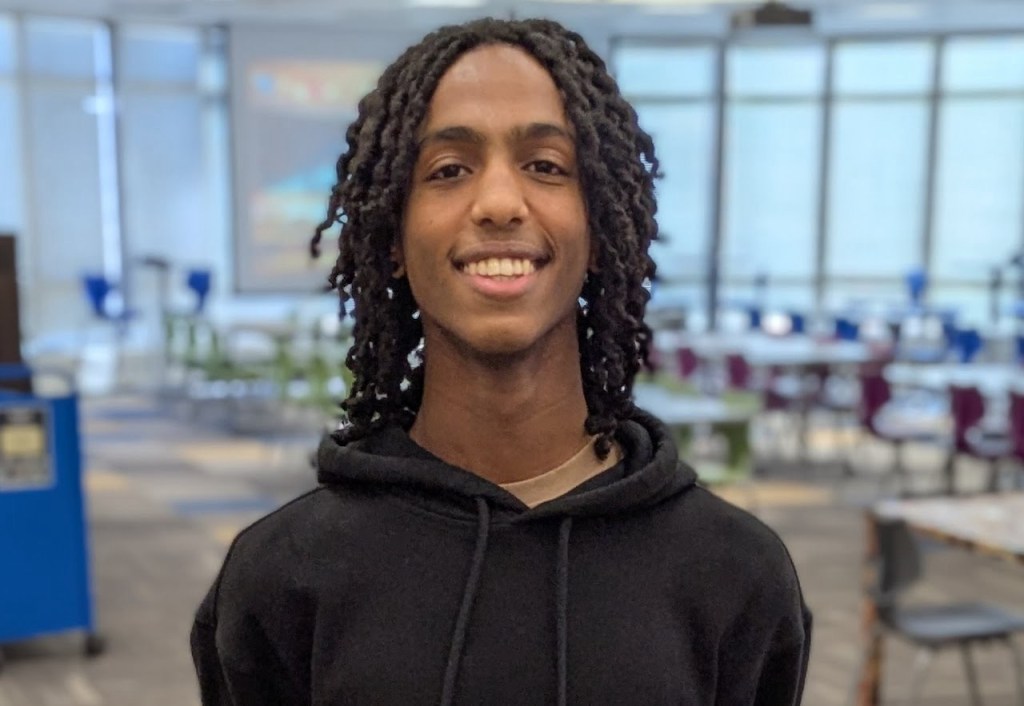
Sahli is a remarkable young man who recently learned that he scored a perfect 1600 on the SAT in reading and math.

He is a senior at West Orange High School in West Orange, New Jersey.

He didn’t go to a charter school or a fancy private school or a religious school, nor was he homeschooled. He went to public schools in West Orange.

Sahli was born in the U.S. to a family of Eritrean immigrants.

Nyah Marshall reported at NJ.com:

During his four years at West Orange High School, Sahli Negassi balanced two sports, served as president of two clubs and excelled in multiple Advanced Placement classes.

And as if that weren’t impressive enough, he recently achieved another milestone — one that fewer than a 1,000 students nationwide reach each year.

He received a perfect score on both the reading and math sections of the SAT. He hopes to be admitted to Harvard and eventually become a lawyer.

Negassi earned a near-perfect score on his first attempt, one that most would be happy with. But, he then took the test again and answered every question correctly, earning a 1600.

“I came into class and I was like, ‘I can do better,’” Negassi said.

Between classes and extracurriculars, he somehow found time to prepare for the test on his own, using free online resources….

His strategy, Negassi said, was all about preparation. Through practice questions, he learned that the SAT isn’t a test of intelligence — it’s about pattern recognition, memorization and time management, Negassi said.

“Preparation for the test fell on me, it was no tutor … it was me and whatever website I could find,” he said Thursday. “I was comfortable applying the skills I had trained and when the time came, it was no pressure.”

Negassi was born in New York City and raised in West Orange. 

He credits his father, who taught him to read before he even entered grade school, with laying the foundation for his success. It was the love and sacrifice of his parents that instilled in him the unwavering determination he carries today, Negassi said.

Negassi was involved in many school activities.

A local West Orange newspaper wrote:

Beyond academics, Negassi is deeply involved in extracurricular activities at West Orange High School. He has been a dedicated member of the cross-country and track teamssince seventh grade and spent two seasons on the color guard. He is also the president of the math team, chapter president of the National Honor Society, a varsity chess team member and part of the Royal Strings ensemble. His involvement in multiple honor societies speaks to his well-rounded excellence.

Sahli played in the String Quartet of the West Orange Music Departnent and was inducted into its honor society two years ago. At the induction ceremony, The String Quartet (Theo Brinkerhoff, Andrew Chan, Alexa Dias, Maya Kirton, Sahli Negassi, Henry Pfeifer) performed “Air” from “The Water Music Suite” by Handel.

I would like to know more about his family, but little is said about them in the coverage. Nothing has been reported about when they immigrated to the U.S. or their occupations.

Nancy Bailey is a retired educator and a dedicated ally of public schools. She understands the importance of public schools as the heart of communities, which bring parents together and teach citizenship.

In many communities, Friday night lights are an important civic ritual. Why should they be dimmed?

In this post, she voices a concern that many parents and educators share: Will school choice kill school sports?

Bailey writes:

Americans love sports, but what happens to athletic programs when democratic public schools close? Privatizing public education, so-called school choice, means drastic changes, as school officials grapple with the effects of school choice legislation.

Communities rally behind high school football in the fall, basketball during the winter, and track and field in the spring. Public schools might offer swimming, soccer, and other sports, critical for helping young people obtain college scholarships. Even though they aren’t easy to obtain, about 180,000 NCAA D1 and D2 student-athletes earn athletic scholarships each year.

School choice, including charter schools, vouchers, homeschooling, and open enrollment, alters who plays sports and undermines community pride in public schools. Defunding public schools ruins sports programs. Which students get access? Will only the wealthiest private schools get sports?

In 2023, West Virginia headlined How lawmakers helped ruin high school football in West Virginia reflecting on game “blowouts” in that state. When private schools corral all the best players, it changes the competition. It also makes for boring games. Brooke High Coach Mac McLean, whose team always struggled in the AAA class, said it’s only going to get worse: The rich will get richer and the poor will get poorer.

School choice crusaders seem not to have thought through what happens with sports. Olivia Nutter recently wrote in Athletics Directors 411:

Proponents of school choice argue that parents should be free to choose what’s best for their children, including athletic opportunities. But that freedom raises difficult questions about fairness and competitive balance. If top talent continually migrates to a handful of programs, the very structure of high school sports could change, creating a system where access to success depends less on effort and more on ZIP code flexibility.

Consider that between 2010–11 and 2021–22, 4,000+ public secondary schools closed due to declining enrollment, unaffordable housing, lower birth rates, and an overall defunding of public education by school privatizers seeking to create schools for profit.

Parental school choice is also deceptive. Private schools, not parents, ultimately choose students. Gifted athletes will likely be welcome at a private school that prioritizes sports. Wealthy private school teams will compete with other private schools, but what about students who never got swept up in the choice program, never got identified in their poor charter schools, or in their homeschools?

Undiscovered students who haven’t yet shown their prowess in sports may not have the opportunity to do so, relegated to a fledgling public school that has lost its resources, a charter school, or homeschool, where they remain unrecognized. What if they never get the opportunity to practice sports under the eyes of a good coach?

Charter schools often lack the budget or incentive to offer quality sports programs. Sports facilities, football fields, tracks, or access to swimming pools is costly. Some may rent facilities or partner with community organizations for practice, but this can be expensive.

States like Florida allow charter school and homeschool students (7.d) to participate in traditional public school sports, but this is controversial. It dismisses the community school pride factor, a significant all-American feature of school sports. If parents don’t want their child at that public school, take tax dollars elsewhere; why get the advantage of a public school sports program? What happens when the school ultimately closes?

Missouri is another state that permits homeschool students to participate in public education sports.

Students might also leave public school sports programs for sports clubs, which have become synonymous with college recruitment across areas, though in football, they appear less so.

Athletic organizations see the problems with school choice. Both the Oklahoma Secondary School Activities Association (OSSAA) and the Alabama High School Athletic Association (AHSAA) ran into difficulties with their states choice programs.

As one parent puts it:

Private schools often have access to resources that public schools do not – such as better facilities, more experienced coaches or even the ability to attract top talent through scholarships. This creates an uneven playing field during playoff competitions. According to a study by The Atlantic (2013), private high school students are over twice as likely as public school students to reach Division I college sports.

Some private schools are small and also lack resources, but will be expected to compete against wealthier private schools.

School board members in Hamilton, Tennessee, voiced concern that the state’s Education Freedom Scholarship, allowing students to attend private schools, siphons desirable athletes from public schools. They worry about a drop in public school attendance, likely related to the school choice program. Sports success skews toward wealthier super schools, leaving fewer high school teams for competition.

Texas exemplifies the problems school choice creates for sports. At 2.22 on the video below they discuss how football, basketball, and track, public school sports programs beloved in that state, could be affected. It might mean laying off school coaching staff.

Cultural overemphasis and concernsabout sports injuries leave critics to advocate for the end of school sports altogether. But athletics are an ingrained American tradition, and it’s hard to see public schools successfully survive without vibrant sports and extracurricular programs.

Sports aren’t only about making future successful athletes, of course. Students benefit physically and mentally, and team sports promote positive socialization and all around good health. Students learn how to win gracefully, build confidence, but also how to lose and accept defeat without always quitting.

But if public education is fully privatized, once unimaginable, public school sports could end. Most Americans are not on board for school choice and want to see better and more support of public schooling. The loss of sports might be added in as a reason to reject school choice. It may be time for pushback and Americans rallying around their democratic public schools. Could it be?

Consider Mississippi where football in small towns is called “the fabric of the community.” Parents worried about their public schools, and the Mississippi legislature recently killed the school choice bill which would have sent public school funding to private schools.

Maybe there’s hope, not only for school sports, team building, but for democratic public schools. Perhaps we’ll soon see a public school renaissance and a great refocus on the greatness of our country and its children and their schools, not only with sports but learning. Now that’s truly a winning idea!

Some years back–actually it was 2019–I read an article that gladdened my heart. It was written in The Atlantic by gazillionaire Nick Hanauer. It was titled “Better Schools Won’t Fix America.”

Nick is an interesting guy. He is an entrepreneur in Seattle. He works alongside other successful venture capitalists, and for a time, partnered with Bill Gates to persuade the Washington legislature to endorse charter schools as a remedy to replace “failing” public schools.

But somewhere along the way, he had a change of mind and heart. He realized that the basic problem in the U.S. was income inequality, not “failing schools.”

He began his 2019 article:

Long ago, I was captivated by a seductively intuitive idea, one many of my wealthy friends still subscribe to: that both poverty and rising inequality are largely consequences of America’s failing education system. Fix that, I believed, and we could cure much of what ails America.

This belief system, which I have come to think of as “educationism,” is grounded in a familiar story about cause and effect: Once upon a time, America created a public-education system that was the envy of the modern world. No nation produced more or better-educated high-school and college graduates, and thus the great American middle class was built. But then, sometime around the 1970s, America lost its way. We allowed our schools to crumble, and our test scores and graduation rates to fall. School systems that once churned out well-paid factory workers failed to keep pace with the rising educational demands of the new knowledge economy. As America’s public-school systems foundered, so did the earning power of the American middle class. And as inequality increased, so did political polarization, cynicism, and anger, threatening to undermine American democracy itself.Great public schools are the product of a thriving middle class, not the other way around.

Taken with this story line, I embraced education as both a philanthropic cause and a civic mission. I co-founded the League of Education Voters, a nonprofit dedicated to improving public education. I joined Bill Gates, Alice Walton, and Paul Allen in giving more than $1 million eachto an effort to pass a ballot measure that established Washington State’s first charter schools. All told, I have devoted countless hours and millions of dollars to the simple idea that if we improved our schools—if we modernized our curricula and our teaching methods, substantially increased school funding, rooted out bad teachers, and opened enough charter schools—American children, especially those in low-income and working-class communities, would start learning again. Graduation rates and wages would increase, poverty and inequality would decrease, and public commitment to democracy would be restored.

But after decades of organizing and giving, I have come to the uncomfortable conclusion that I was wrong. And I hate being wrong.

What I’ve realized, decades late, is that educationism is tragically misguided. American workers are struggling in large part because they are underpaid—and they are underpaid because 40 years of trickle-down policies have rigged the economy in favor of wealthy people like me. Americans are more highly educated than ever before, but despite that, and despite nearly record-low unemployment, most American workers—at all levels of educational attainment—have seen little if any wage growth since 2000.

To be clear: We should do everything we can to improve our public schools. But our education system can’t compensate for the ways our economic system is failing Americans. Even the most thoughtful and well-intentioned school-reform program can’t improve educational outcomes if it ignores the single greatest driver of student achievement: household income.

Hanauer recognized that the hollowing out of the middle class was harming our entire society:

In short, great public schools are the product of a thriving middle class, not the other way around. Pay people enough to afford dignified middle-class lives, and high-quality public schools will follow. But allow economic inequality to grow, and educational inequality will inevitably grow with it.

Hanauer’s turnaround resonated with me. He was boldly breaking ranks with his peers. I doubt he suffered ostracism, because many of the elites toy with education; it is not a vital interest to them. In my limited experience, watching the uber-rich participate on behalf of charter schools, it appeared that many were going along with the crowd, while some thought that privatization was a miracle cure.

Hanauer understood that children need a good start in life and they need a stable, secure home life to do their best in school. He understood that economic inequality undermined many children’s interest in school, which was less important than survival or a warm winter coat or medical care. He even understood that the decades-long efforts to stamp out unions contributed to economic inequality.

We spoke on the phone. I did a podcast with him. I was impressed by his keen intellect and independence of mind.

With each book I wrote about privatization, I insisted that schools are vital institutions in educating children, but they can’t do it alone. In Reign of Error, I spelled out what I considered a life-course approach to improving the chances of giving children the education they need and deserve.

In the competition between public schools and charter schools, the only measure that outsiders considered was test scores. But I knew that was not right. For many young people, it’s miraculous when they manage to show up for school. They chose to go to school, not to babysit a younger sibling, not to take a part-time job delivering to customers, not to hang out in the local park.

What kind of a school was that? I came to understand that the closest approximation of a school that I imagined was a community school. Community schools provide wraparound services to students and their parents.

The Trump administration is making life harder for young parents, says blogger “Home of the Brave.” Trump’s boasts about the economy don’t help families who are struggling to pay for groceries and to buy a home. Trump has even slashed funding for in vitro fertilization, which some families need to have children.

Donald Trump has dubbed himself “the fertilization president” and stacked his administration with self-described pro-natalists—most notably JD Vance—who say they’re concerned with increasing America’s birth rates. Trump has bragged, falsely and bizarrely, about being the “father of IVF” and said on the campaign trail that “we want more babies.”

Here’s the reality beyond the rhetoric: Trump’s presidency is a disaster for new parents and young families. If you’re looking to start a family today, Trump’s making that harder. And if you’re a new parent, Trump’s going out of his way to make that harder, too. Here are just some of the ways they’re doing it:

1.) Cutting funding for family planning.

Trump’s DOGE cuts have gutted federally-funded IVF programs. In April, the Centers for Disease Control and Prevention eliminated its Assisted Reproductive Technology Surveillance program, firing six researchers who tracked IVF effectiveness nationwide. People involved with the program told NBC News it was “a tremendous resource” and called its closure an “immediate loss.”

According to the Cleveland Clinic, since 1978 more than 8 million children have been born thanks to IVF, making it the most common type of fertility treatment available, and one of the most effective. Roughly 5 percent of couples experiencing infertility turn to the treatment, and it can offer life-changing results. For millions of Americans, IVF is their best hope for starting a family.

Far from being the “father of IVF,” Trump has made the treatment harder to get for ordinary Americans. When he originally came out in favor of IVF, many of Trump’s social conservative allies in the Republican Party were outraged, calling on him to “walk back” his remarks. They can rest easy now that they know that—as in so many other cases—Trump was lying.

2.) Driving housing costs through the roof.

Houses have become costlier year over year due to limited housing supply. With fewer houses on the market, demand from buyers—especially growing families—outpaces supply. This imbalance drives up prices, freezing out younger and less established homebuyers. To combat this, there’s bipartisan agreement on the need for millions of units worth of new home construction—and fast.

But Trump’s policies are making it harder to build anything. A large portion of the lumber used in American home construction comes from Canada. Steel, another critical building material, is imported predominantly from Japan. Trump has imposed steep tariffs on both countries, making the foundational materials needed to build homes more expensive, which drives up production costs and increases the final price. Regular American families bear the brunt of these increases.

On top of that, as many as 30 percent of construction workers in the United States are immigrants, and Trump’s campaign against immigration is shrinking the available labor supply for construction projects. Masked ICE agents are conducting jump-out raids on unsuspecting contractors and construction workers, in some cases trapping them on freezing cold job sites for hours. As a result, the construction industry is starting to see worsening labor shortages.

Trump built his image on being a real estate magnate, promising on the campaign trail that his administration would be “cutting the cost of a new home in half.” Instead, he’s the biggest obstacle to young parents and new families getting a roof over their heads.

3.) Making everything your child needs more expensive.

Any parent will tell you that you’re always buying something for your kids: babies grow out of clothes constantly, toddlers break toys, you’re forever restocking diapers and formula. It’s a never-ending cycle that is hard to budget for even in the best of times. Trump’s tariffs have made essential baby items—clothes, formula, cribs, strollers, car seats, toys—even more expensive than they already were.

Prices for toddler clothes have gone up 3.3 percent in recent months, according to the Bureau of Labor Statistics, whose non-political and widely-respected commissioner Trump recently fired for reporting accurate statistics. Other baby essentials have experienced similar jumps thanks to Trump’s tariffs. The Baby Center, a digital resource for parents, wrote that, unless diapers and other goods “are excluded from the tariffs, prices could increase … because manufacturing equipment, packaging, and materials may all be imported.”

Despite Trump’s “America First” monomania, we can’t source every single part of every single baby product here in the United States. It would make everything prohibitively expensive and undercut businesses’ bottom lines. And even if businesses were onboard with this scheme, it would take years or decades to re-shore all the necessary components to US soil. This is what happens when Trump’s economic illiteracy meets reality….

Trump has boasted about his lack of involvement in his children’s lives. He said tasks like changing the kids’ diapers were “just not for me” and he admitted in 2005 that he “won’t do anything to take care of” his children. According to Vanity Fair, his son Don Jr. told him, “You don’t love us! You don’t even love yourself. You just love your money.”

The pattern is clear: The “fertilization president” and “father of IVF” is systematically making it harder and more expensive for American families to have and raise children. He’s gutted IVF programs, driven up housing costs, made baby essentials more expensive, and even taxed parents’ coffee—all while breaking his campaign promises.

American parents shouldn’t have to suffer because Trump was a lousy dad and an even worse president.

The mainstream media never tires of printing stories about the “miracle” of charter schools. A few days ago, the Washington Post published an article by Eva Moskowitz, leader of the Success Academy charter chain, titled “These schools are the answer to unlocking every child’s potential: Children born into poverty should not be consigned to failing schools.” The article was shameless self-promotion, announcing that she was expanding her brand into Florida.

But much to my surprise, readers were not buying any of her pitch. The comments following the article overwhelmingly criticized charter schools, saying they chose their students, they kicked out those with low scores, they excluded kids with disabilities, they were no better than public schools.

If all those readers get it, why don’t the editors at the mainstream media?

They still cling to the myth of charter success in New Orleans. NOLA has not been great for the students and their parents. But it has been a public relations coup.

Carol Burris, executive director of the Network for Public Education, pulls back the curtain in The Progressive.

Her article: “The ‘Miracle’ of New Orleans School Reform Is Not What It Seems: The city’s all-charter school experiment is a cautionary tale about what happens when democracy is stripped from public education.”

After the hurricane, parents wanted well-resourced community-based public schools. Instead they got charters focused on testing and no/excuses discipline.

The entire “reform” project is based on the practice of “charter churn.” Of 125 charters that have opened since Hurricane Katrina, half have closed and been replaced.

Burris writes:

The truth is that the all-charter experiment in New Orleans was built on the displacement of Black educators, the silencing of parents, and the infusion of foundation dollars with strings attached. As a result, students and families have faced disruption, instability, and hardship as charter schools open and close. Two decades later, the “miracle” is not what it seems. It is instead a cautionary tale about what happens when democracy is stripped from public education and governance is handed over to markets and philanthropies.

Veteran journalist Eleanor Bader published the very first review of my new book!

It’s a great review!

The official publication date is October 20, but books are now in print and available.

My first appearance to talk about the book will be in my home town: Brooklyn, New York, on October 21 at 6 pm at the Brooklyn Heights branch of the Brooklyn Public Library.

I will have a conversation with the brilliant Leonie Haimson, leader of Class Size Matters.

I’m not traveling to promote the book, but I am doing Zooms. I will be speaking to educators in North Carolina on October 22. To learn more about it, contact Yevonne Brannon of Public Schools First NC at ybrannon@gmail.com.

Jennifer Berkshire writes a blog called The Education Wars, where she explains the latest attacks on public schools by entitled billionaires and their lackeys. In this one, she reviews the revival of the New Orleans “miracle,” you know, the claim that turning almost every public school in the city into a privately run charter schools produced dramatic gains. Not true.

She wrote:

Ten years ago, I wrote a piece about some of the many unintended consequences of New Orleans’ charter school experiment. Wildly at odds with the narrative of success and transformation being peddled by the education reform industry, the story was among my first real attempts to do ‘serious’ journalism, and I’m still really proud of it. (For those of you who don’t know, I got my start chronicling the excesses of education reform on a humorous blog.) I learned a lot working on that story, including that writers have no control over whatever terrible headline gets slapped on their masterpiece… But it was in New Orleans that I really began to understand something essential about education reform. If the vision of what’s on offer is narrower than what the community wants, these top-down efforts to “disrupt” public education are doomed from the start.

The twenty year mark since Hurricane Katrina has ushered in a predictable wave of celebratory accounts of the New Orleans miracle. I recommend giving them a miss and spending some time instead with an eye-opening new book by parent advocate Ashana Bigard. (Full disclosure: Ashana is one of my favorite people in the world, not to mention among the most amazing organizers I’ve ever met.) Called Beyond Resilience, Ashana’s book opens with a scene of a meeting held in the period after the hurricane erased whole neighborhoods, and claimed the lives of some 1,800 people. The purpose of these gatherings, Ashana writes, was to give local parents the opportunity to envision the sort of education future they wanted for their children. 

What they dreamed of was so much more than their children had before, and more than they themselves had had before. Having seen what was offered to children in other places, they wanted that and more for New Orleans’ children.

Among their demands: fully equipped science labs, theater programs, curriculum rich in local history, career and technical education that prepared students for jobs in the trades. The list was long. It was also grounded in the harsh reality of New Orleans’ brutal poverty. Parents asked for kids to be able to bring food home when money was tight, for washers and dryers in every school because so many laundromats had never reopened. And they wanted swim lessons in order to give their kids a fighting chance against the next hurricane.

The enormous gulf between those wishlists, compiled on flip charts and dry erase boards, and what the parents ultimately got is the subject of Beyond Resilience. “What they gave us instead was almost a cartoonish representation of the opposite of everything we had asked for,” writes Ashana. “The charter school operators and organizations that supported charter school reform efforts would listen to parents, guardians and community members, and then create schools that looked more like juvenile jail facilities than schools.”Subscribe

No excuses

I first encountered Ashana through her work as an advocate for students and parents who were caught up in the draconian discipline practices that took root during the early years of the New Orleans charter school experiment. While the rhetoric was all about preparing kids, or ‘scholars’ in charter parlance, for college, Ashana was spending more and more of her time intervening on behalf of kids who were being treated like criminals. There was the boy whose mother couldn’t afford to buy him the shoes that the uniform required, so got suspended and then expelled. There was the five year old who was repeatedly suspended for eating crackers on the bus. And there were the countless students accused of the vague yet sweeping offense known as “disruption of a school process,” who ended up, not just kicked out of school, but arrested. These children, writes Ashana, weren’t treated as human beings,

but as criminals who had already committed crimes and would most definitley commit more crimes if they weren’t guarded and watched every second of the day.

Since I’ve known Ashana, her criticism of the city’s schools has been remarkably consistent. At its core is this belief: a model of schooling centered on harsh discipline is developmentally inappropriate, especially for young kids. Early in the book, she recounts being told by Ben Kleban, a hard-charging charter school CEO who embodied the no-excuses ethos, that his K-2 elementary school was so quiet that “you could hear a pin drop.” Ashana was aghast. These were kids who should be playing, talking and singing. “[H]e went on to tell me that these kids were different.”

These children are different. That was the refrain. These Black children in New Orleans, who had lost everything, who were sleeping in abandonded buildings, grieving the loss of family members, friends, and entire neighborhoods were ‘different’ and therefore didn’t deserve the same developmental considerations as other children their age.

In recent years, Ashana has been part of an effort called Erase the Board that seeks to bring traditional public schools back to New Orleans. The group’s demands echo the ones put forth by those parents and community members so many years ago—schools that are human focused rather than test and discipline centered, music and art classes, trained teachers, and trauma informed practices. But Erase the Board is also challenging a central tenet of the New Orleans model: schools that fail to raise test scores are closed. Of the city’s 75 charter schools, 50 have been closed or reconstituted at some point. While that churn is in large part responsible for producing academic gains, it has also proven deeply unpopular with parents, who hate school closures even when said shuttering is being done for ‘the right reasons.’ 

The constant opening and closing of schools is also highly disruptive to students, Ashana argues. She tells the story of one student who attended twelve different schools: half he was pushed out of over disciplinary infractions, the other half closed. “You have schools closing, teachers moving in and out. Kids need stability and that’s the opposite of what we’ve got. All you’re showing these kids is displacement.” Among Erase the Board’s demands is that failing charter schools be reopened as traditional public schools. “We estimate that, at the rate that charter schools close, we’ll have half our city back in seven years,” says Ashana.

Selling the vision

“‘Never seen before’: How Katrina set off an education revolution,” was the title of the puffed piece that appeared in the Washington Post recently. Penned by a British scribe who used to pen speeches for former UK prime minister David Cameron, aka Baron Cameron of Chipping Norton, it’s the sort of breathless sales pitch that abounded in the first decade after the hurricane. These days, the ‘miracle’ talk is harder to find, in part because so many holes have been poked in the claims of success, as teacher and blogger Gary Rubinstein notes here. And while New Orleans may have ended up with a system ‘never seen before,’ the reality is that the same forces are coming for its charter schools that now threaten all public schools. 

For one, there aren’t enough kids, especially when you consider that the model entails constantly opening new schools. Back in 2022, New Schools for New Orleans, an architect of the all-charter model, warned “that schools citywide were nearing a tipping point in terms of enrolling enough students to pay for a full array of academics and services.” And that was before Louisiana enacted its ginormous new school voucher program. In a system that is entirely focused on test scores, the appeal of attending a private school where kids don’t take tests seems pretty obvious. 

Indeed, at a time when the GOP has largely moved on from charter schools, save for the classical variety, and gone full voucher, the New Orleans experiment—expensive, interventionist, couched in the language of civil rights—feels like a throwback. So too does one of the animating beliefs driving the experiment: that kids in one of the country’s poorest cities could overcome poverty if they all went to college. Hence the frustration in the final puffish piece I’ll mention: edupreneur Ravi Gupta’s lament for the 74: “The Inconvenient Success of New Orleans Schools.” Conservatives aren’t keen on the model’s aggressive intervention, complains Gupta, while Progressives are squeamish about the fact that New Orleans’ success required wiping out the city’s unionized teaching force, which made up much of its Black middle class. 

Gupta implores us to focus on the ‘hard numbers’ and avoid what he calls “the tyranny of the anecdote.” But Ashana Bigard and her powerful new book show exactly why that perspective is so short sighted. Why, if the model is so successful, asks Ashana, does the city require so many alternative schools and programs to catch the kids who ‘fall through the cracks’? Why are there so many ‘opportunity youth,’ kids who aren’t in school or working? Indeed, if you expand the frame beyond the metrics of academic achievement, it’s hard to make the case that life for young people in New Orleans has improved, the conclusion I reached back in 2015. “The math ain’t mathin’,” is how Ashana put it when we spoke recently.

That there’s been so little laudatory coverage of New Orleans’ education revolution “reveals something broken about our politics and media,” insists Gupta. But I think the real reason is much more simple. The reformers who drove the experiment never recovered from the scene that plays out at the start of Ashana’s book, when parents and community members, some of whom had been pushing for reform in the city’s schools long before Katrina, envisioned what education in New Orleans could be. Today, the gap between that vision of possibility for the city’s kids and what was delivered remains a chasm. 

Two decades after hurricane Katrina, Ashana is still fighting for the schools New Orleans’ children deserve. The rebuilding is still happening, she writes in the book’s conclusion.

But it’s not about getting back to what it was—it’s about creating something that never existed: a New Orleans where all of our children can thrive, where our culture is respected and our people are valued, where love and justice aren’t just words but ways of life, where the billions generated by our creativity flow back to strengthen our communities. 

An eternal optimist, Ashana ends on a hopeful note, insisting that “That New Orleans is possible. That future is within our reach.” 

I hope she’s right.
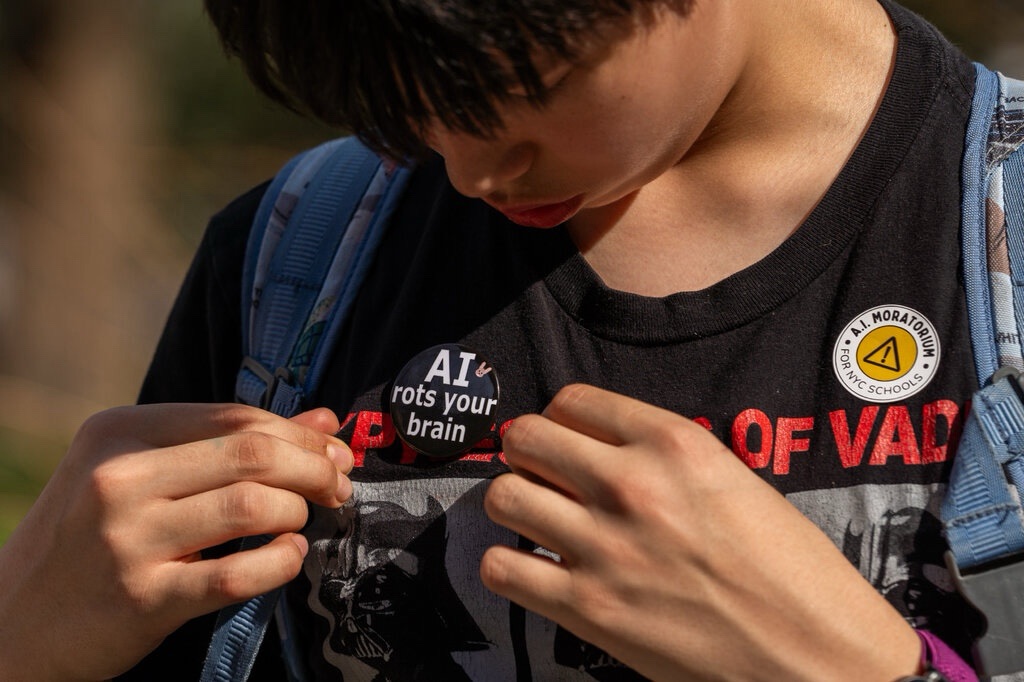
Ashana Bigard is a parent activist in New Orleans. From her perspective as a parent leader and as the parent of a child with special needs, the New Orleans experiment has been a very expensive flop.

She wrote this overview for Public Voices for Public Schools:

Twenty years after Hurricane Katrina, the nation’s most radical education overhaul has produced stunning inequality alongside modest test gains

As I sit in Bricolage Academy’s office, frustrated but trying to remain pleasant, I’m having the same conversation again about my son. He’s on the autism spectrum. He is high performing, extremely quiet, and sweet. Despite his IEP, he wasn’t receiving the required services. The special education coordinator had quit in frustration, the school counselor was cut due to budget issues, and my fifth-grader was falling through the cracks.

I’m not just any parent. I’m an advocate who has worked with the CEO since the school’s creation. I have written for national magazines about our system’s problems and challenged the school’s “diversity by design” narrative. Yet here I was, fighting for basic services. If this is my experience, imagine what average parents face.

The Numbers Don’t Add Up

Twenty years after Hurricane Katrina replaced New Orleans’ traditional public schools with the nation’s first all-charter system, the grand experiment presents a troubling paradox. With half the students and double the funding, the system has achieved modest academic gains while disempowering the communities it promised to serve.

Before Katrina, New Orleans educated over 65,000 students in 126 schools. Today, just 47,667 students attend 70 schools–a 27% enrollment reduction. Yet per-pupil spending has exploded to approximately $17,000-$20,000, significantly above Louisiana’s state average.

“When you have half the students and twice the resources, you should see transformational results,” says Neil Ranu, a civil rights attorney with the Southern Poverty Law Center. “Instead, we see money flowing upward to administrators while classrooms struggle.”

The money trail is revealing. Charter CEOs earn over $200,000 annually, while average teachers make between $44,000-$55,000 if they stay long enough.

The Human Cost

The city’s teacher turnover rate of 28% for new educators doubles that of comparable cities. The displacement began when the state fired the entire education workforce after Katrina, including over 4,000 teachers with an average of 15 years of experience. The teaching force dropped from 71% Black to under 50%.

When ‘Success’ Crumbles

The system’s fragility became apparent at John F. Kennedy High School in spring 2019. On graduation day, 177 students walked across the stage. A month later, state auditors revealed nearly half were ineligible to graduate due to grade changes from F’s to D’s, improper credit recovery, and students taking unsupervised classes at home.

Antonio Travis, director of Black Man Rising, mentored several affected students. “There was shame, self-blame. Many felt they wouldn’t be successful in college.” Families canceled graduation celebrations, uncertain about the future.

The Illusion of Choice

Parents quickly learn that “choice” often means choosing between bad options, especially for children with special needs. At Benjamin Franklin High School, Louisiana’s top-ranked public school, students from minority backgrounds face significant admission barriers. The school serves 39% white students in a city where whites comprise only 10% of public enrollment.

Special Education Crisis

In 2010, ten families sued the state over charter schools admitting too few special-needs students and failing to provide proper services. The resulting federal consent decree remains in effect today, with monitors continuing to find systematic violations, including parents being excluded from meetings, services not being provided, and evaluations being denied.

Right now, Louisiana U.S. District Judge Jay Zainey is currently presiding over the dissolution of the special-needs consent decree related to New Orleans schools. Because New Orleans public schools have no oversight, and no unions to fight to ensure the law is followed, we, as parents of children with special needs, have to fight to get our stories to the judge so hopefully he will keep it in place.

Economic Verdict

For a system serving 84% Black students, the economic impact is devastating. The racial wealth gap has widened dramatically since Katrina. White households now hold 13 times the wealth of Black families–$181,000 versus $18,000 median net worth. New Orleans went from 67% Black to 57%, losing over 120,000 Black residents.

Missing Pieces

Walk through charter schools and notice what’s absent or insufficient. Arts programs have declined; fewer offer pre-kindergarten, and students average 35-minute bus commutes. Basic skills, such as cursive instruction—required by state law for signing legal documents—are often ignored. “The children only learn what’s tested,” observes one advocate. “Everything else gets cut.”

The Honest Assessment

As the 20th anniversary of Katrina approaches,New Orleans offers a sobering lesson. With unprecedented resources and freedom, the charter system produced modest academic gains alongside community economic decline and systematic exclusion of vulnerable students.

“When people ask if they should move out of the city for better education,” says one advocate, “my answer is: if you can afford to move, you should. This system is not built to support our children.”

The comment hangs like an indictment not just of a school system, but of a 20-year experiment that promised everything and delivered prosperity for some, displacement for others, and continued struggle for families who need excellent public education most.


Ashana Bigard is a fifth generation New Orleanian and lifelong resident of the Crescent City. A mother of three, Ashana is a tireless advocate for equity and social justice, especially in her work advocating for children and families in New Orleans and Louisiana. She leads the Education Justice Project of New Orleans, where she organizes and advocates for the rights of students and parents. Ashana is an adult ally advisor to United Students of New Orleans. She also serves as a Community Faculty member with Tulane University’s Center for Public Service.

The Idaho state legislature passed a $50 million plan to subsidize vouchers. The usual arguments for vouchers–choice and competition–don’t apply in a largely rural state. The primary beneficiaries will be wealthy families whose children are already enrolled in private schools. The biggest losers will be rural schools, which desperately need upgrades.

Parents in Idaho are taking their challenge to the state courts, based on the explicit language of the State Constitution. The editorial board of the Idaho Statesman agrees with the parents.

Here is its editorial on the subject:

“(I)t shall be the duty of the legislature of Idaho, to establish and maintain a general, uniform and thorough system of public, free common schools.” — Article IX, Section 1, Idaho Constitution

A coalition of public school advocates announced Wednesday that it is asking the Idaho Supreme Court to rule that a refundable tax credit for families who send their kids to private schools is a violation of the Idaho constitution’s education clause.

We say it’s about time.

And just in time, since House Bill 93, which was passed last legislative session, allows families to start applying for the credits in January.

The law set aside up to $50 million for the tax credits.

We would much rather see that $50 million go toward the public education system, hiring more teachers, more counselors, repairing derelict school buildings and properly funding special education, which has an $80 million shortfall, according to the Office of Performance Evaluations.null

We have enumerated many times before the reasons vouchers for private schools is a terrible idea.

Most voucher schemes in other states started out like Idaho’s — small, limited and targeted. But state after state, the vouchers grew and are blowing holes in state budgets everywhere.

Many of these vouchers go to wealthy families who already have the means to pay for private school, and the vouchers merely subsidize part of the cost of a private school tuition.

The vouchers are open to fraud, waste and abuse.

There’s no accountability built into Idaho’s voucher system.

The Idaho Supreme Court won’t be interested in such policy discussions, but justices will be interested in hearing what we think is a valid constitutional argument.

One word, in particular, provides their best legal challenge: “uniform.”

In essence, by providing a refundable tax credit to families to send their children to a private school, the Legislature is establishing a second school system that isn’t the same as the public education system. It’s not uniform.https://f0fd809050f339b050a5948ada000ea9.safeframe.googlesyndication.com/safeframe/1-0-45/html/container.html?n=0

We are compelled by the testimony Wednesday of one mother who said her children were denied entry to a public school based on their religion. A public school can’t do that.

The argument is not without precedent.

A district court judge in Salt Lake City halted Utah’s education savings account programearlier this year, according to Idaho Education News. The state’s teachers’ union argued that the Utah Constitution bars state dollars from funding an education system that’s not free or open to all students.

The same could be said for Idaho’s voucher scheme.https://f0fd809050f339b050a5948ada000ea9.safeframe.googlesyndication.com/safeframe/1-0-45/html/container.html?n=0

In June, an Ohio state judge struck down that state’s voucher program, ruling that the program created a separate, unfunded, nonpublic system and funneled public money to private religious institutions. That, the judge ruled, violated constitutional mandates to fund a single public school system.

In 2024, the South Carolina Supreme Court struck down a 2023 law that created a private school voucher system. The court said the law illegally funneled state public funds to private schools, which is prohibited by the state constitution. The decision said vouchers undermine the state’s mandate to support public schools for all students.

We find it particularly appropriate that Idaho’s organizers announced this legal challenge on Constitution Day. Yes, it’s referring to the U.S. Constitution, but Idaho legislators should hold Idaho’s Constitution in equally high regard.

How we wish Idaho legislators would honor it all the time, not just when it’s convenient or when they want to change the constitution’s clear meaning to fit their agenda.https://f0fd809050f339b050a5948ada000ea9.safeframe.googlesyndication.com/safeframe/1-0-45/html/container.html?n=0

Where are all of Idaho’s “original meaning,” “not a living document” conservatives in this state when it comes to the state constitution’s education clause?

Because, if you read the Idaho Constitution plainly, vouchers just don’t pass muster.

Let’s hope the Idaho Supreme Court sees it the same way.

Statesman editorials are the opinion of the Idaho Statesman’s editorial board. Board members are opinion editor Scott McIntosh, opinion writer Bryan Clark, editor Chadd Cripe, newsroom editors Dana Oland and Jim Keyser and community members John Hess, Debbie McCormick and Julie Yamamoto