Archives for category: Joy

Trump is clearly bitter that his name is not on the Kennedy Center facade. The tarp that covers the original name still hangs, hiding the humiliation of Trump’s name removal.

Last week he cut down 40 weeping willow trees on the Center grounds, which symbolized a grieving nation, grieving for the assassinated President Kennedy.

This week, the Kennedy Center is removing a piece of outdoor art called “Blue,” which was installed in 2019. The artist, Joel Shapiro, thought it was a permanent installation.

“Blue”

The New York Times reported:

The John F. Kennedy Center for the Performing Arts began removing a major outdoor sculpture from the center’s grounds on Wednesday. The work, installed in 2019, was targeted for elimination after President Trump’s takeover of the center, according to internal documents obtained by The New York Times.

The Kennedy Center made no advance announcement of its plans to remove the towering, vivid blue metal sculpture of a stick-like human figure, called “Blue.”

On Wednesday morning, the limbs and torso of the figure were wrapped in protective material; an arm was the first to be removed.

The Kennedy Center confirmed in a statement on Tuesday that the sculpture was being deinstalled and that a foundation dedicated to the artist would determine its next location. It did not say the reason for the removal but noted that the deinstallation of artworks that had been donated or lent was common practice for conservation or preservation purposes.

A news release from around the debut of “Blue” describes it as a permanent sculpture for the grounds.

“We are deeply grateful to Joel Shapiro for the years ‘Blue’ has spent animating our campus and connecting visitors to his vision,” the statement said. “We are honored to have been stewards of his vibrant work and a part of his enduring legacy.”

Mr. Shapiro died in 2025. His daughter, Ivy Shapiro, who is president of his foundation, said in an interview that she thought her father would have been “alarmed” that the sculpture was being taken down from its intended location.

“In Joel’s mind, it was one of his greatest site-specific commissions, which celebrated joy, freedom and creativity,” she said.

Ms. Shapiro declined to discuss what she was told about the Kennedy Center’s reasoning for removing the sculpture. Her father had given it to the center as a gift, but she said that it was now owned by the foundation, and that she would like to see it installed at another public site.

The White House did not respond to a request for comment.

Josef Palermo, who was laid off in March as the curator of visual arts and special programming at the Kennedy Center, wrote in an essay for The Atlantic that he had been instructed to remove works from the center’s permanent art collection, and told that Mr. Trump’s renovations would include new art.

In an interview on Tuesday, Mr. Palermo recalled that “Blue” had been “targeted early on” and said he took issue with the lack of an announcement.

“The Kennedy Center,” he said, “is in effect holding these pieces in trust for the American people, and there should be a lot more transparency.”

The sculpture is on the grounds of the Reach, an addition to the Kennedy Center that opened in 2019. The sculpture was completed that same year by Mr. Shapiro, whose public art is found in cities around the world. One of his most prominent works is a tree-like bronze sculpture, called “Loss and Regeneration,” that is situated outside the U.S. Holocaust Memorial Museum in Washington.

“Blue,” which is visible from the Potomac and roads traversing the Kennedy Center, has become a local landmark. In a video about the work that was posted by the Kennedy Center around the time of its debut, Mr. Shapiro said he designed it so the figure would appear in different positions depending on the vantage point of the viewer.

“It’s about action and risk and performance and energy,” he said of the work. “It’s a celebration of possibility.”

Of course, Trump had to remove a sculpture that celebrated “Joy, freedom, and creativity.” These are qualities that Trump has never experienced and does not appreciate.

Will it be replaced by a statue of Trump? Gold, of course.

A few years ago, I came across this 1979 special performance by Dolly Parton and Carol Burnett. Watch them interact. They are wonderful. As they talk, they write a song, then invite the audience to join in. It is funny, warm, and happy. I think I have watched it 10 times.

“No One Picks Like a Nashville Picker Picks.”

It’s wonderful to watch two stars at the top of their game.

The death of Dolly Parton was a blow to millions of people who never met her but loved her for her spirit, her kindness, her humor, and of course, her music.

In a time of meanness, she was steadfastly kind.

She was born into dire poverty, one of 12 children in a one-room house. She was never bitter or angry about her meager beginnings. She marveled at where her talent took her.

Over the course of her long career, she amassed a huge fortune but she did not aspire to be a billionaire. She was a philanthropist. She gave her money away, unlike Jeff Bezos, Elon Musk, and the Trump family. Is there a hospital or library or public space named for them because of their generosity? None that I know of. People will remember Dolly for her generosity; the others and their ilk will be remembered for their avarice.

She was not political but she spoke up for Black Lives Matter and for LGBT people. When she was interviewed by Johnny Carson in 1977, she spoke up for LGBT people in her straightforward way. She loved drag queens; she knew that they liked to mimic her style, her hair, her dress. She said it was God’s role to judge, not ours. Hers was the voice of love and compassion.

Peter Greene wrote about Dolly here:

I wrote this four years ago when the twins aged out of her Imagination Library, one of the best things any wealthy person ever did. How cramped and meager some of our leaders look in comparison.

After five great years, the Board of Directors has aged out of Dolly Parton’s Imagination Library.
I have been plugging this program for years (my first post was in 2014, back before the Board of Directors was even a sparkle in our eyes). Parton has engineered putting a book a month into the hands of families all across the country–we’re talking (currently) 184 million books in millions of households meeting no requirement other than they have a child between the ages of born and five. It costs the family nothing.

The quality of the books is great. Over the years we have received classics, newer books, books featuring every sort of family, every sort of kid. They are filled with wonder, kindness, beauty, excitement. This is one of the best examples of thoughtful, useful, not-trying-to-take-over-a-government function philanthropy you’ll find.

The program launched in 1995 in Sevier County, and it grew quickly. By 2006, when the Washington Post wrote about it, the program had spread to 471 communities in 41 states. In 2011 it launched in Scotland, and it can now be found in the UK, Australia, and Canada. The site says that 706,468 US kids are currently signed up. It’s still fairly simple. Some combination of sponsors (some private, some government, depending on the locale) help with the financing (the cost is roughly $27 per child per year) and the Foundation delivers the books, each in its own poly bag with the child’s name on it (consider the power of a child, even a small one, receiving a book that is theirs, addressed to them, by name).

I am not, I’ll confess, a huge fan of Parton’s music, but she is the very best example of what good a person can do with their giant pile of money you can find. Not trying to shape the world to her own requirements, not trying to buy a good name, not trying to make herself the unelected boss of whatever. And the little PR that Imagination Library does is to get itself out into the hands of students, not to raise Parton’s profile. She doesn’t pay people to promote it, and it has spread largely through word of mouth or through the local organizations that co-sponsor it and help make the connections to local families.

Once a month, the boys received a book, addressed to them personally. We love books in this house, and the arrival of the monthly “book from Dolly” was an event. We will miss it.

The last book to arrive is Kindergarten, Here I Come, and the first page inside the front cover is a letter from Parton, that I’ll quote in part:

My, how time flies. It seems only yesterday when your family and friends read you your first story. You were just a baby. Now you’re five years old and about to go to school. How exciting!

This may be your last book from my Imagination Library but you have to promise me you will keep on reading…Every book is a treasure and every time you open one you will meet new friends and take wonderful journeys to magical places.

I hope you have a great time in school. I bet your school will even have a library where you can check out books. You and all your friends are very special. There is no limit to what you can do or how far you can go.

The board of directors examines a position paper

Her signature, a simple Dolly, is at the end. The first time we read the message together I was apparently having a bad allergy day.

None of the rich amateurs who want to change the face of education are doing anything of this value on this scale–both intensely personal and yet broadly across the globe. I mean, imagine if Bill Gates had said, “I want to give every child a book” instead of “I want to give every child a test.”

And if there is a tiny human in your life, and they aren’t signed up, go to the program website and see if it’s operating in your neighborhood, and if so, then sign up that child.

What a fabulous, generous, powerful program. God bless Dolly Parton. We are going to miss here at this house.

Most people do not live in New York City and many of them probably wonder why anyone does. There are more than 8 million people here of every possible race, religion, ethnicity, nationality, and gender. Often it seems crowded, busy, and hurried. But it’s never boring.

Because the city is so polyglot, we New Yorkers tend to be unusually tolerant. We are accustomed to living with diversity. Trump is an exception to that tolerance, but then he lived in a golden penthouse and didn’t have much to do with his fellow New Yorkers. Now that he has moved to Mar-a-Lago, we don’t have to dream up reasons for his ingrained racism.

I watched the “ticker-tape” parade in honor of the New York Knicks (on television, not in person). Around two million people lined the streets from Battery Park to City Hall, according to the NYPD. It was a world-class celebration, topped only by the unadulterated joy in the streets and neighborhoods on the night of the Knicks’ fifth game, when they overcame a large deficit and won the championship in the closing minute or two. As the New York Times recorded, people were dancing in the streets across the city.

NYC is filled with surprising and delightful moments.

Let me tell you about a recent day. We drove from Brooklyn to lower Manhattan to go book-shopping at the Strand, a four-story building at the corner of Broadway and 12th Street. The Strand is an iconic bookstore, the largest in the city, with some 2.5 million books–new, used, and rare. It was packed with customers, mostly young people of high school and college age. There were four or five cashiers to handle the long lines. It was a beautiful sight to see.

Then we walked to Veselka, a Ukrainian restaurant, a few blocks away and enjoyed borscht, pierogies, stuffed cabbage, and schnitzel. Authentic and delicious.

The week before, we invited a friend to go to an Austrian restaurant–Cafe Katja– on Orchard Street on the Lower East Side. I remember when the Lower East Side was mostly slums. No more. The streets were crowded, again, mostly with young people. We ate a meal whose highlight was white asparagus, flown in from Holland. Wow.

The street is lined with restaurants, boutiques, and artsy shops. While we were eating our lunch, a pick-up band began playing across the street. In a minute, the street was filled with people enjoying the music.

Another night we went to Broadway to see Mariska Hargitay playing solo in “Every Brilliant Thing.” She was wonderful. We love watching her on “Law and Order: Special Victims Unit.” As we walked out of the theatre, we crossed Broadway, which was aglow with neon lights and alive with visitors and tourists.

Only in New York!

There’s something about living in this city that is simply joyful. Time and again, we experience that joy and understand why young people in search of adventure will always come to big cities. Despite what you may have heard, NYC is very safe. And the possibility of joy is always around the corner.

After decades of bashing public schools and advocating for privatization, charters, and vouchers, grumpy education reformers should familiarize themselves with the grand successes of Sahli Negassi.

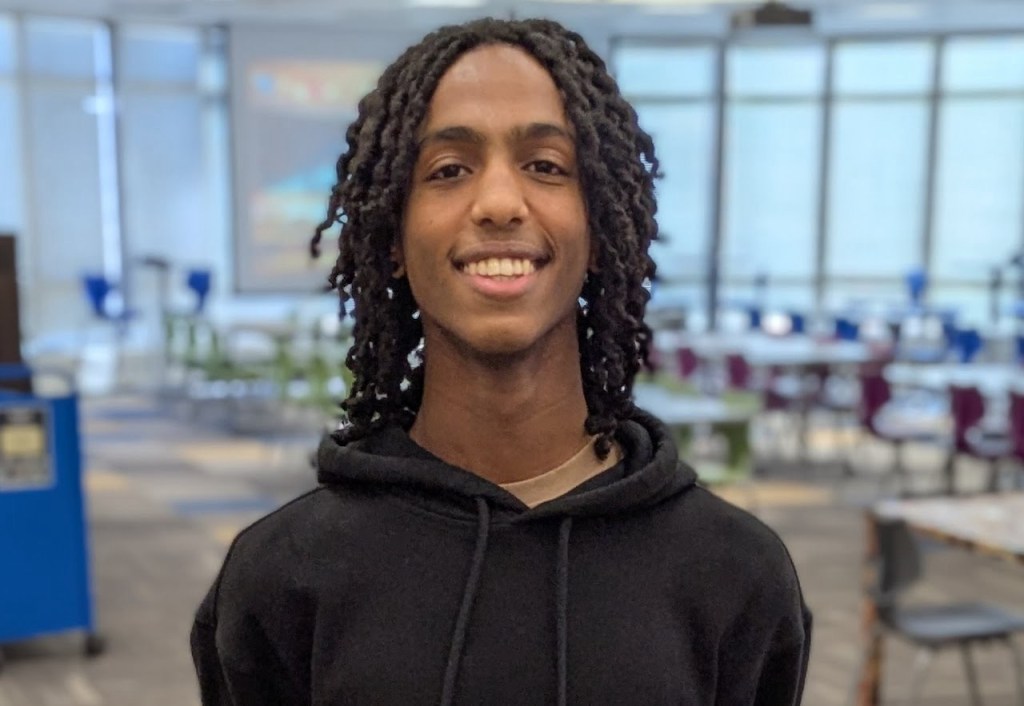
Sahli is a remarkable young man who recently learned that he scored a perfect 1600 on the SAT in reading and math.

He is a senior at West Orange High School in West Orange, New Jersey.

He didn’t go to a charter school or a fancy private school or a religious school, nor was he homeschooled. He went to public schools in West Orange.

Sahli was born in the U.S. to a family of Eritrean immigrants.

Nyah Marshall reported at NJ.com:

During his four years at West Orange High School, Sahli Negassi balanced two sports, served as president of two clubs and excelled in multiple Advanced Placement classes.

And as if that weren’t impressive enough, he recently achieved another milestone — one that fewer than a 1,000 students nationwide reach each year.

He received a perfect score on both the reading and math sections of the SAT. He hopes to be admitted to Harvard and eventually become a lawyer.

Negassi earned a near-perfect score on his first attempt, one that most would be happy with. But, he then took the test again and answered every question correctly, earning a 1600.

“I came into class and I was like, ‘I can do better,’” Negassi said.

Between classes and extracurriculars, he somehow found time to prepare for the test on his own, using free online resources….

His strategy, Negassi said, was all about preparation. Through practice questions, he learned that the SAT isn’t a test of intelligence — it’s about pattern recognition, memorization and time management, Negassi said.

“Preparation for the test fell on me, it was no tutor … it was me and whatever website I could find,” he said Thursday. “I was comfortable applying the skills I had trained and when the time came, it was no pressure.”

Negassi was born in New York City and raised in West Orange. 

He credits his father, who taught him to read before he even entered grade school, with laying the foundation for his success. It was the love and sacrifice of his parents that instilled in him the unwavering determination he carries today, Negassi said.

Negassi was involved in many school activities.

A local West Orange newspaper wrote:

Beyond academics, Negassi is deeply involved in extracurricular activities at West Orange High School. He has been a dedicated member of the cross-country and track teamssince seventh grade and spent two seasons on the color guard. He is also the president of the math team, chapter president of the National Honor Society, a varsity chess team member and part of the Royal Strings ensemble. His involvement in multiple honor societies speaks to his well-rounded excellence.

Sahli played in the String Quartet of the West Orange Music Departnent and was inducted into its honor society two years ago. At the induction ceremony, The String Quartet (Theo Brinkerhoff, Andrew Chan, Alexa Dias, Maya Kirton, Sahli Negassi, Henry Pfeifer) performed “Air” from “The Water Music Suite” by Handel.

I would like to know more about his family, but little is said about them in the coverage. Nothing has been reported about when they immigrated to the U.S. or their occupations.

In a closing performance at the Olympics, Amber Glenn poured her heart into her last act. Simply magnificent!

And Alysa Liu’s gold-medal-winning ice dance was stunning.

Wow!

Julian Vasquez Heilig watched the half-time performance of Bad Bunny at the NFL’s Suprrbowl and was moved to tears.

Here is why:

Some of us watched the halftime show and cried. Others changed the channel. That difference tells you everything.

If you were scrolling through Facebook or other media after the Super Bowl, what you saw depended entirely on your sphere of inclusion. Some timelines were full of joy, pride, and tears. Others filled instantly with the familiar chorus: worst halftime show ever, too political, too foreign, controversial, divisive, not for “real Americans.” Algorithms did what they always do, amplifying outrage in some spaces and celebration in others. 

What struck me most wasn’t the criticism itself, but how ready so many were to dismiss what they hadn’t even tried to feel, while others were overwhelmed by recognition. For many Latino viewers, that split wasn’t shocking at all, because it echoed a lifetime of us being told we belong in some rooms but not others, sometimes whispered, sometimes shouted, often disguised as concern, taste, or tradition.

What made this rejection cut deeper is that it didn’t begin after the performance ended. It began weeks before the game, when commentators openly questioned whether this show would “connect,” a word that so often means conformflatten, or assimilate. No one ever wondered aloud whether Kid Rock was American enough, even when his music is built on grievance, exclusion, and nostalgia for a past that never belonged to everyone. His belonging was assumed. His presence never put on trial.

At the same time, Latino culture was quietly framed as foreign, no matter how many generations it has lived here, worked here, fought here, and died here. Our music was treated like a visitor, our language like an interruption, our joy like something that needed justification. The stage was never neutral. The judgment was never waiting for the music. It had already been made, long before the lights came up. But what unfolded on that field at the Super Bowl refused to ask for permission. 

So let’s talk about what I noticed.

Sugarcane as the Opening Wound

Bad Bunny did not open with spectacle. He opened with a field covered in sugarcane, not just a backdrop, but a world presented on the field. The plants stood tall, swaying as if carried by an unseen breeze, but what most people didn’t realize in the moment is that nearly 400 humans were carefully costumed as sugarcane, blending into the scene with astonishing precision. Tall. Quiet. Unflinching. Heavy with memory. Sugarcane is how so many people of color came to the Caribbean, through chains and colonial economies that fed empires while consuming lives. It is the crop that reordered entire islands around extraction, turning land into profit and people into labor, and normalizing suffering as an economic necessity.

In Puerto Rico, sugarcane marks the moment when native Taíno worlds were shattered, not faded, not replaced, but violently erased. Declared “extinct,” even as their descendants lived on in bodies, in words, in bloodlines history tried to deny. To begin with sugarcane was to begin with truth instead of fantasy. It was to say our joy has a history, and that history was paid for with survival, endurance, and refusal to disappear.

From Fields to the Streets

The performance moved from the sugarcane fields into a different kind of economy altogether. From the fields into the cultural economy of the streets. Tacos on griddles, fruit drinks poured by hand, small businesses that exist because families willed them into being to suppor their families. What once took everything now gave way to spaces that feed people and keep memory alive through work that is chosen, not imposed. It was a quiet but powerful shift, from wealth taken to culture made, from plantations to livelihoods, from what was stolen to what was built and shared.

The Casita

From extraction to shelter. From labor to life. From history imposed to culture chosen. The Casita was not nostalgia placed on the field for sentiment. It was survival made visible, a place where memory rests without apology. I recognized it instantly because The Casita is a central feature of Bad Bunny’s current DeBÍ TiRAR MáS FOToS world tour, and I saw it myself at his concert in Mexico City in December 2025. 

When it appears during the concert and now the Super Bowl, the entire feeling of the space changes. The arena stops feeling like something meant to be consumed and starts feeling like a neighborhood gathering, like a block party where everyone knows why they’re there. Ricky Martin, Jessica Alba, Karol G and Cardi B and Pedro Pasqual were spotted on The Casita porch at the Super Bowl. For a song, the focus shifted inward, toward intimacy, memory, and shared recognition rather than outward toward scale or spectacle.

Familia Without Age Limits

Then there was a wedding, and everything softened. Children stood beside elders, small hands near hands worn smooth by time. Adults moved between them, linking generations without needing to explain why. No one was ornamental. No one was hidden or pushed to the margins. This was not a beauty showcase designed for perfection and polish. It was a life showcase: messy, intimate, and unmistakably real.

After the vows a salsa performance broke out in the wedding party. In Latino culture, dance moves through generations like inheritance, passed the way names and recipes are passed. Young people hear rhythm before they speak, absorbing belonging before language. Grandparents hum songs older than memory, melodies tied to places they left, places they carry, places that never really let them go. Teenagers take those sounds and bend them toward the future, making something new without breaking what came before. When that wedding appeared on the field, it wasn’t spectacle. It was continuity. It was culture saying, softly but firmly, we are still here together, and we are not done loving.

Spanish Without Apology

Bad Bunny sung and spoke Spanish the entire performance. He did not translate. The screen did not translate either. In fact, my TV screen didnt even get the Spanish lyrics right. And still, the message landed. For Latino families, this moment felt deeply familiar, because they translate everything else every day. At school. At work. In hospitals. In courtrooms. In moments where clarity is demanded of us but rarely offered in return.

This time, the burden was not on us. It wasn’t defiance. It was dignity. It was a reminder that our language does not need permission to exist, and that when language is treated as a threat, the issue is not understanding. It is whose comfort has been prioritized for far too long.

Bad Bunny at the Album of the Year grammy

Then Bad Bunny paused one of the biggest stages in the world to do something profoundly delicate and human. In the middle of a performance steeped in Latino/a history, memory, and pride, he handed one of his recently won Grammy Awards to a five-year-old child actor. The gesture was quiet, unhurried, and unmistakably intentional. It was meant to represent a younger version of himself, but it also reached far beyond biography. In that moment, the Grammy became a symbol of possibility placed gently in the hands of the future.

For many watching, that was the first moment the tears came. Not because it was sentimental, but because it felt like restoration. In communities where so much has been taken—land, labor, language, and often the right to dream publicly—the act of handing something earned to a child carried enormous weight. It said that success does not have to end with one generation, that recognition can be shared, and that pride can be inherited. 

When the Flags Rose

And then it happened. The moment that broke something open. Flags from across the Americas rose, and the field turned into a family reunion. Bad Bunny spoke the names of them all. Music, movement, and memory collided in a fiesta on a field, joy too big to hold only 100 yards of field. You could feel it traveling living room to living room, chest to chest.

This wasn’t spectacle. It was release. It was the sound of people recognizing themselves all at once, across borders, accents, and histories that have always been connected.

Daring and Well Executed

Some viewers said they didn’t understand what was being said. That, in itself, is a statement about whose histories we teach and whose we erase in this nation. Nothing about this performance was accidental. It was layered, intentional, and deeply rooted in memory, lineage, and love.

So no, this wasn’t the safest halftime show ever, and it certainly wasn’t the worst. It was one of the most daring because it chose truth over comfort and belonging over approval. It trusted that love, memory, and pride could fill a stadium without asking permission.

And for families watching together, something special happened. Memories. Parents thought of grandparents who never saw themselves reflected on this stage. Representation. Children saw peers performing and honored. Wisdom. Elders watched their roles honored. 

For a few luminous minutes, the biggest stage in America felt like a home open to everyone, a casa abierta. And when Bad Bunny held out a football and the words appeared—“Together we are America”… it wasn’t a slogan. It was a recognition. Across a record 135,000,000 living rooms and kitchens, across generations gathered on couches and around tables, there may not have been a dry eye at all. There was only the quiet certainty that we are still here, still together, still carrying one another forward—together—on a stage that, for one night, felt unmistakably like the Benito Bowl.

Bad Bunny holds football with message of unity


Julian Vasquez Heilig is a Bad Bunny fan who believes that music is one of the most powerful archives of social truth. A nationally recognized policy scholar and education advocate, he examines culture not as entertainment alone but as a lens through which people understand belonging, resistance, and possibility. From his first encounter with “Vete” in a late-night Puerto Rican lounge at La Concha on Friday, December 6, 2019, to standing inside a packed Mexico City arena during the DeBÍ TiRAR MáS FOToS World Tour, observing how crowd energy, memory, and identity move together, he approaches Bad Bunny’s work with the same curiosity he brings to public policy. For him, these moments are not just concerts or cultural events; they are data points of feeling and meaning, asking the same enduring question that guides his scholarship: What does this moment reveal about who we are, who gets to belong, and who we are becoming together?

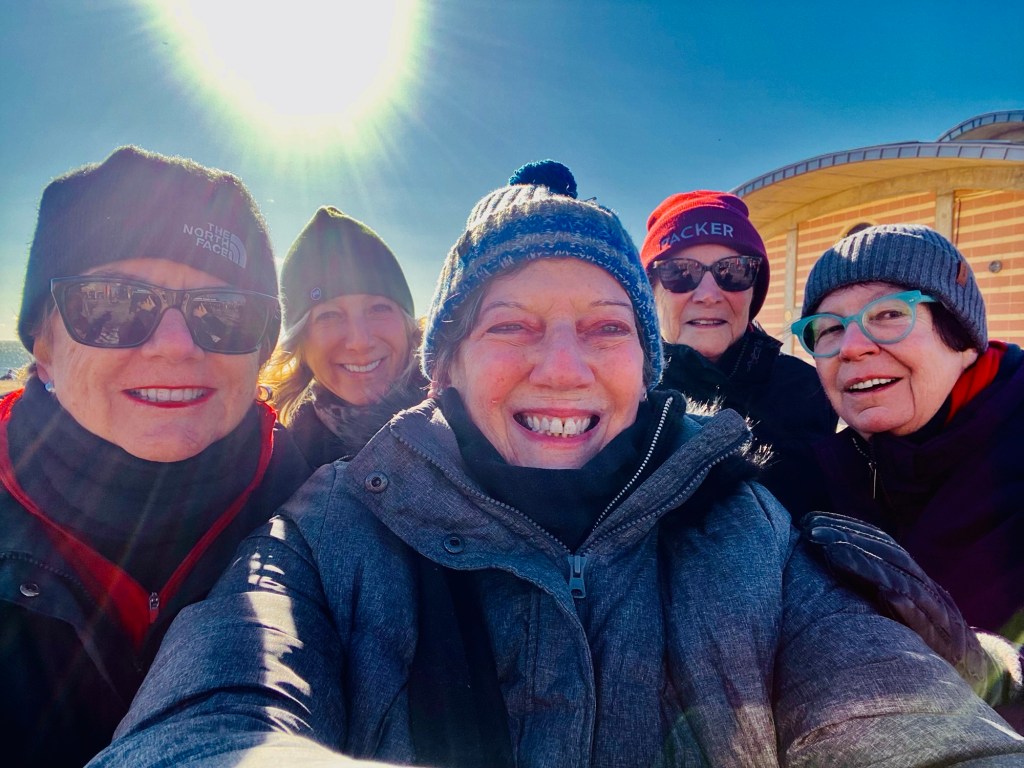
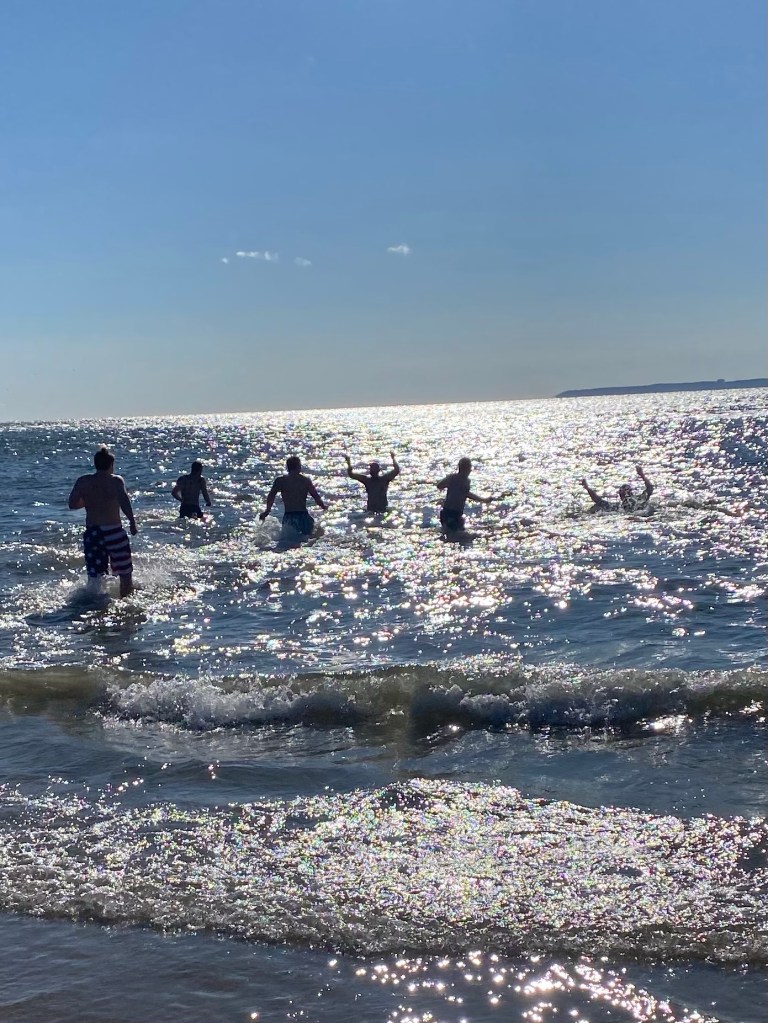
This morning I went with four friends to Coney Island in Brooklyn for the Annual Polar Bear Plunge. Hundreds of people (or more) showed up to take a dip in the ocean on a frigid day.

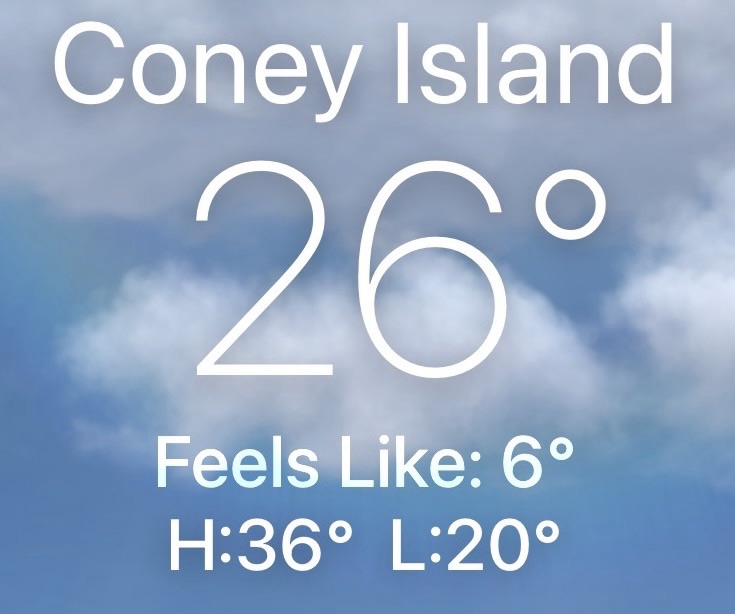
The sun was shining brightly, but the air temperature was in the high 20s, and the “real feel” due to gusty winds, was only 6 degrees.

The atmosphere was festive. Swimmers came with friends to cheer them on and offer them towels and blankets when they emerged from the water.

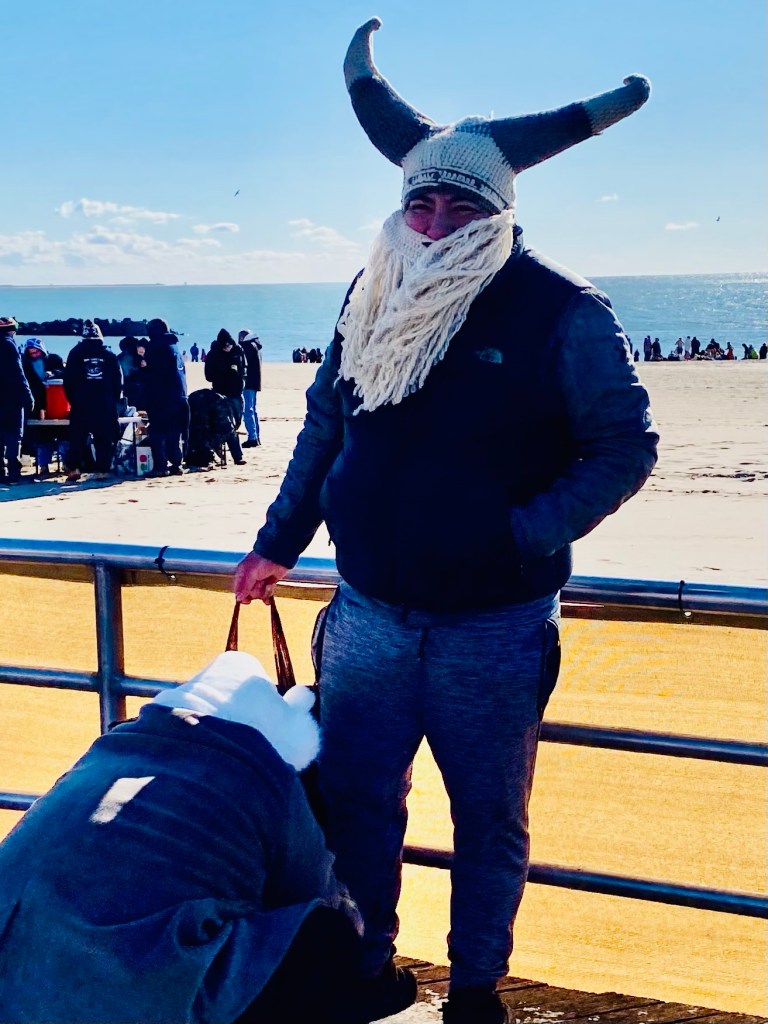
Some were in silly costumes. Some wore funny head pieces. None carried a mock Statue of Liberty into the water. Women and girls were in bikinis. They stripped off their warm clothes and their shoes and ran into the Atlantic Ocean.

There was a mood of hilarity about the madness of the event. Everyone was smiling or laughing or both. People run into the water. Some run out as soon as they have gotten wet. Others actually swim. Some splash around.

A lifeguard keeps watch, and a police boat is anchored about 100 yards beyond the swimmers.

The Coney Island Polar Bear Club sponsors the event every year to raise money for local charities. Their members swim all year round; the huge crowd of swimmers shows up only on January 1, to welcome in the New Year.

For two hours, politics, heated partisan issues, and acrimony were cast aside as a diverse crowd of Americans frolicked in the ocean.

I asked one young woman in a tiny bikini how it felt to jump in. She said “Exhilarating! The water was warmer than the air.”

Another young woman peeled off her clothes and stripped to her bathing suit, accompanied by three friends. She said it was her first Polar Bear Plunge. I asked why she was doing it. She said, “If I can do this, I can do anything.”

A handsome African-American man gathered a crowd as he danced around in his bathing suit, getting psyched to jump in. He told the crowd that it was his first time. He jumped up and down, kicked his legs in the air, yelled “Here I go!” And he ran straight into the ocean.

I wanted to wait until he emerged, because we were leaving, but he was cavorting in the water, having a great time. We left, bound for a hot and filling Chinese meal, at a tiny restaurant on Fort Hamilton Parkway in Brooklyn.

This is a joyful event. Join us next year if you can. I won’t swim with you but I will be glad to cheer you on.

Audrey, Hope, Maureen, me, Mary.
Getting ready to suit up and take the plunge
It was really, really cold.
Her first plunge on New Year’s Day
Dressed as a polar bear, ready to take the plunge
The swimmers had a great time!
Psyching himself up for his first January 1 swim
Doing his pre-swim high kicks, and off he goes!
Like most swimmers, they ran into the ocean as fast as they could
With the Ferris wheel in the background, a nylon igloo stated the obvious.

The New York Times Sunday Magazine published an article titled “America’s Children Are Unwell. Are Schools Part of the Problem?” It was written by staff member Jia Lynn Yang.

I anticipated that the article would be another lament about test scores, of which there have been many recently. But it wasn’t!

Instead, Yang described the explosion of mental health issues among the nation’s children. And she attributed it largely to the unending pressure to compete for ever higher test scores. EXACTLY!

Yang knows that the changes in school are not the only cause of declining mental health. There are many more culprits, including social media and the pressures of contemporary life. And there is also the possibility that children are being misdiagnosed and overdiagnosed. I can’t help but recall a story from 1994 about an elite private school that received a private $2 million grant to screen children for learning disabilities. Overrun by experts, the program “got out of hand.” Nearly half the children were diagnosed with disabilities, and the program was cancelled.

We live in a stressful world. Children are pressured to succeed, to comply, to compete, to win the approval of their peers, to dress the “right” way, to be and do things by which they will be judged by their peers, by their parents, by the world they inhabit. Some children succeed, many don’t.

Schools these days are doing things to children that add to their stress. They have been doing harmful things to children by federal mandate since 2002.

Besieged by expectations, demands, and pressures, many children are breaking. It’s our fault.

She writes:

One of the more bewildering aspects of the already high-stress endeavor of 21st-century American parenting is that at some point your child is likely to be identified with a psychiatric diagnosis of one kind or another. Many exist in a gray zone that previous generations of parents never encountered.

A diagnosis of attention deficit hyperactivity disorder is practically a rite of passage in American boyhood, with nearly one in four 17-year-old boys bearing the diagnosis. The numbers have only gone up, and vertiginously: One million more children were diagnosed with A.D.H.D. in 2022 than in 2016.

The numbers on autism are so shocking that they are worth repeating. In the early 1980s, one in 2,500 children had an autism diagnosis. That figure is now one in 31.

Nearly 32 percent of adolescents have been diagnosed at some point with anxiety; the median age of “onset” is 6 years old. More than one in 10 adolescents have experienced a major depressive disorder, according to some estimates. New categories materialize. There is now oppositional defiant disorder, in addition to pathological demand avoidance…

The experience of school has changed rapidly in recent generations. Starting in the 1980s, a metrics-obsessed regime took over American education and profoundly altered the expectations placed on children, up and down the class ladder. In fact, it has altered the experience of childhood itself.

This era of policymaking has largely ebbed, with disappointing results. Math and reading levels are at their lowest in decades. The rules put in place by both political parties were well-meaning, but in trying to make more children successful, they also circumscribed more tightly who could be served by school at all.

“What’s happening is, instead of saying, ‘We need to fix the schools,’ the message is, ‘We need to fix the kids,’” said Peter Gray, a research professor at Boston College and the author of “Free to Learn: Why Unleashing the Instinct to Play Will Make Our Children Happier, More Self-Reliant, and Better Students for Life….”

Other books have echoed this critique. I think offhand of the book by Pasi Sahlberg and William Doyle: Let the Children Play: How More Play Will Save Our Schools and Help Children Thrive. This is how they summarize their argument:

“Play is how children explore, discover, fail, succeed, socialize, and flourish. It is a fundamental element of the human condition. It’s the key to giving schoolchildren skills they need to succeed–skills like creativity, innovation, teamwork, focus, resilience, expressiveness, empathy, concentration, and executive function. Expert organizations such as the American Academy of Pediatrics, the National Academy of Sciences, and the Centers for Disease Control agree that play and physical activity are critical foundations of childhood, academics, and future skills–yet politicians are destroying play in childhood education and replacing it with standardization, stress, and forcible physical restraint, which are damaging to learning and corrosive to society.”

There is an organization–Defending the Early Years–that fights for the rights of childhood, that tries to keep academic pressures out of the classrooms of very young children.

But who defends the children in grades 1-12? There are groups of parents in almost every state who oppose the pressures of high-stakes testing, oppose the efforts by tech companies to replace actual experiences with machines and technologies, oppose the interference of politicians to standardize teaching.

One group fights off the tech companies that use personal student data to market their products: The Parent Coalition for Studebt Privacy.

Corporate America now looks to the schools as a source of profit. The schools and students need to be protected from rapacious capitalism, which wants to privatize schools for profit and sell products that monetize instruction.

Yang describes the transformation of the school from the 1980s to the present:

School was not always so central to American childhood. In 1950, less than half of all children attended kindergarten. Only about 50 percent graduated from high school, and without much professional penalty. A person spent fewer years of their life in school, and fewer hours in the day furiously trying to learn. However bored a child might become sitting behind a desk, freedom awaited after the final bell rang, with hours after school to play without the direction of adults.

But as the country’s economy shifted from factories and farms to offices, being a student became a more serious matter. The outcome of your life could depend on it.

During an era of global competition, the country’s leaders also began to see school as a potential venue for national glory, or shame. In 1983, a commission created by Ronald Reagan’s secretary of education, Terrel H. Bell, released a dire report on the state of American schools called “A Nation at Risk.” It warned that “if an unfriendly foreign power had attempted to impose on America the mediocre educational performance that exists today, we might well have viewed it as an act of war.”

Over the next decade, Democratic and Republican governors such as Bill Clinton in Arkansas and Lamar Alexander in Tennessee began molding their states’ schools with new standards of testing and accountability. Schools were treated more like publicly traded companies, with test scores as proxies for profits. Before long, schools had public ratings, so ubiquitous they now appear on real estate listings.

The pressure kept rising. By 2001, 30 states had laws that imposed a system of punishments and rewards for schools based on their test scores. The next year, President George W. Bush’s signature education reform law, No Child Left Behind, made the effort national.

With school funding now on the line, there were unmistakable incentives for children to be diagnosed. Starting in the 1990s, students with autism or A.D.H.D. become newly eligible for added support in the classroom. Getting a child treated, potentially with medication, could help an entire classroom achieve higher scores, especially if the child’s behavior was disruptive to others. And in some parts of the country, children with disabilities were not counted toward a school’s overall marks, a carve-out that could boost scores.

The added metrics may well have compelled more children to receive the support they needed. Either way, educational policymaking yielded a change in diagnoses. In states that added new accountability standards, researchers found a clear rise in A.D.H.D. According to one analysis, the rate of A.D.H.D. diagnoses among children ages 8 to 13 in low-income homes went from 10 percent to 15 percent after the arrival of No Child Left Behind.

The impact of the law on autism diagnoses has been less documented. But there is a great deal of overlap among these disorders. Anywhere from 30 to 80 percent of children diagnosed with autism also have A.D.H.D. Experts have also pointed out that the rise in autism has largely taken place on the more subtle end of the spectrum, where psychiatrists expanded the diagnosis. Students with this profile often need educators who can be eminently flexible in their approach, a tough task when an entire classroom has to focus on narrowly mastering certain testable skills.

The demands on performance in higher grades trickled down into younger and younger ages. In 2009, the Obama administration offered greater funding to schools that adopted new national learning standards called the Common Core. These included an emphasis on reading by the end of kindergarten, even though many early childhood experts believe that not all children are developmentally ready to read at that age.

With each new wave of reforms, the tenor of kindergarten changed. Rote lessons in math and reading crept into classrooms, even though experts say young children learn best through play. Researchers discovered that in the span of about a decade, kindergarten had suddenly become more like first grade.

Preschool was not far behind, as even toddlers were expected to stay still for longer stretches of time to imbibe academic lessons. This again defied the consensus among early childhood experts. Children, parents and teachers struggle through this mismatch daily. In 2005, a study showed that preschoolers were frequently being expelled for misbehavior, and at rates more than three times that of school-age children.

“We’re not aligning the developmental needs of kids with the policies and practices that go on daily with schools,” said Denise Pope, senior lecturer at Stanford University and co-founder of Challenge Success, a nonprofit group that works with schools to improve student well-being.

The pressure to learn more led to a restructuring of the school day itself. Before the 1980s, American children usually had recess breaks throughout the day. By 2016, only eight states required daily recess in elementary schools. And when researchers studied what had become of lunchtime, they learned that children often had just 20 minutes to not only eat but stop to use the bathroom after class, walk to the cafeteria and wait in line for food.

I think about my own time in the public elementary public schools in Houston. We had recess every day. I don’t think it was a matter of state law. Educators then knew that children needed time to play. It was common sense. Today, parent groups organize to persuade legislatures to mandate recess. If they don’t, parents fear, every minute will be spent preparing for tests and taking tests.

They are right. The so-called “reforms” of the past quarter century–No Child Left Behind, high-stakes testing, competition, Race to the Top, punishing or rewarding teachers for their students’ test scores, closing schools and firing staff because of low test scores, the Common Core standards–have made test scores and standardization the heart of schooling.

In a continuing campaign to raise test scores, there are winners and losers. Typically, the winners are children from affluent families, and the losers are the children of not-affluent families. The winners are celebrated, the losers are stigmatized. The social class divide among children is hardened by these practices.

Worse, the pressure on students has caused an increase in anxiety, depression, and boredom. In response, parents seek diagnoses of autism or some other learning disorder so that their children will get more time or attention.

Some parents blame the public schools for the pressure and competition imposed on them by elected officials. They seek alternatives to the public schools, which are obsessed with standardization, testing, and accountability.

Yang points out:

This discontent helps empower the conservative effort to defund the public school system and let parents pick their own schools, with taxpayers covering the tuition. Each child who no longer seems to fit into the country’s education system — and more often than not they are boys — potentially expands the constituency for these ideas. And trust erodes further in the progressive project of a democracy built on giving everyone a free and equal education.

The Democratic Party is unable or unwilling to see the problems they helped create. The Republican Party is quite happy to see the public search for alternatives like charter schools and vouchers, and it has enabled the movement to have taxpayers foot the bill for private and religious schools.

By turning childhood into a thing that can be measured, adults have managed to impose their greatest fears of failure onto the youngest among us. Each child who strays from our standards becomes a potential medical mystery to be solved, with more tests to take, more metrics to assess. The only thing that seems to consistently evade the detectives is the world around that child — the one made by the grown-ups.

Who made that world? Both political parties. Governors. Legislatures. Think tanks. The wealthiest, who believe their financial success proves their superiority. Editorial boards.

Here is the most significant lesson that our elected officials refuse to learn. Their elaborate schemes for testing and measuring children have hurt children and undermined the joy of learning. They have raised the anxiety level of children while corrupting education itself.

Education is not what gets measured on standardized tests. Education is exploration, investigation, insight, observation, wanting to know more, learning to love learning.

Our politicians, prodded by so-called “reformers,” have managed to pollute education while demoralizing teachers and destroying public commitment to public schools.

Our public schools need to be freed from the failed ideas that hurt children. We need a rebirth of sturdy ideas that