Thom Hartmann is one of the best political bloggers in the nation and a superb journalist. This is a very important article. In 2016, I pleaded with readers not to vote third party because Trump was clearly unhinged and ignorant. Jill Stein siphoned off enough votes to elect him. I’m still haunted by the infamous photo of Jill Stein sitting at Putin’s table with Michael Flynn before the election.


We can’t afford any more George W. Bush’s or Donald Trump’s, who were both brought to us by Democratic-leaning voters thinking they were doing the right thing by voting for third party candidates…

One of the most fashionable statements these days among progressive-leaning voters who pretend to great political insight is:

“I want to vote for the person I like themost, not some party or candidate that I only half-agree with.”

Its corollary is:

“You’re just trying to get me to vote Democratic because you support that party’s corruption. I won’t be intimidated: I’m going to vote for the best person to run the country!”

Often these types of statements are followed by:

“People in France and Israel can vote for any one of a dozen parties and nobody complains that they’re ‘throwing away their vote.’ This is America: we’re even better! So, I should be able to vote for anybody I want!”

Some people pushing this line simply don’t understand the difference between thepolitical systems of France/Israel and theUS. 

Others are cynical hustlers (this is true mostly of the talk-show and YouTube hosts trying to differentiate themselves by pushing this), trying to grab and hold an audience by being “edgy,” “iconoclastic,” or “a rebel with a cause.”

So, let’s review some political basics.

Whatever its genesis, this opinion — that ignoring our two-party system and “voting for the best candidate is a good thing” — is widespread. After all, intuitively it seems to make perfect sense. 

In a rational world, who would want to vote for anyone less than the best candidate? Unfortunately, though, America’s political system is not as rational as that of countries with proportional representation or ranked choice voting.

A 2022 Pew poll found people’s unfavorable view of both parties has gone from 6 percent in 1994 to 27 percent today. Similarly, 38 percent of Americans “wish there were more political parties to choose from in this country” and may be persuaded to vote for a third-party candidate.

So why is it that third parties don’t work in America, but they do in France?

The United States, in 1789, became the first modern democratic republic founded on thenotion of the leaders of a government, through elections, “deriving their just powers from theconsent of the governed.”

The Framers of the Constitution had never heard of proportional representation or themodern parliamentary system (more on that in a minute), so they went with a simple strategy that’s today referred to by political scientists as “first-past-the-post winner-take-all” (FPTP) or, sometimes, as “majoritarian” or “plurality” election systems.

Whoever gets the most votes becomes theelected politician, and everybody else gets nothing. If you voted with the majority, you’re represented; if not, you’re not at all represented by a person or party that shares your view.

America was an English-speaking country and, as a result, this system spread mostly throughout the English-speaking world and in former British or American colonies. Majoritarian FPTP systems like ours are used in Canada, the UK, India, Jamaica, Liberia, Singapore, Philippines, Pakistan, Australia, New Zealand, Ireland and Bangladesh.

As a result, most all of these countries are dominated by two parties who tend to pass control of the nation back-and-forth over time. (Australia, New Zealand, and Ireland use Ranked Choice Voting, an even more recent innovation which allows for more political parties; more on that in a moment.)

In such a system, third parties almost always act as spoilers, drawing votes away from the major party to which they’re most closely aligned. People who vote Green, for example, generally would have voted Democratic, thus reducing that party’s vote; people who vote Libertarian would have voted Republican with the same effect.

For example, in Florida in 2000, Ralph Nader on the Green Party’s ticket got 97,488 votes, while George W. Bush “won” Florida by 537 votes. 

It strains credulity to assert that the majority of Nader’s voters would have either voted for Bush or not voted at all, which is why when David Cobb ran for president on the Green Party ticket in 2004, he explicitly told people in swing states not to vote for him but to cast their ballots for John Kerry instead.

Jill Stein had no such moral compunction with her Green Party candidacy in 2016. Michigan, Pennsylvania, and Wisconsin provided Trump’s margin of victory in theElectoral College over Hillary Clinton, and, in each of those states, Stein pulled more votes than Trump’s margin.

(In Michigan she got 51,463 votes and Trump won by 10,704; in Pennsylvania she won 49,678 versus Trump’s margin of 46,765; and in Wisconsin Stein carried 31,006 votes but Trump only won by 22,177.)

In other words, had liberals not voted for Ralph Nader in Florida in 2000, Al Gore would have become president and we never would have been lied into a war; had people in Michigan, Pennsylvania, and Wisconsin not voted for Jill Stein in 2016, Hillary Clinton would have become president and America would have been spared thetrauma of 500,000 unnecessary Covid deaths and the ongoing assault to our democracy.

This is apparently not lost on sour-grapes Jill Stein, by the way; she’s reportedly helping run Cornell West’s 2024 Green Party candidacy. It’s also not lost on the Democrat-hating folks at No Labels, who have pledged to put up a candidate for president (presumably Joe Manchin) in 2024.

In the 1950s, French sociologist Maurice Duverger published several papers on this odd quirk of FPTP systems and the way they turn aligned third-party candidacies into agents for the opposition party.

This simple reality — apparently unknown to those who advocate third party candidates — has since come to be known as Duverger’s Law.

So, why can France have so many political parties without damaging their political system but here in America third parties harm those they’re most closely aligned with?

This goes to the invention of what’s called “proportional representation.”

It wasn’t until the year the Civil War started, 1861, that British philosopher John Stuart Mill published a how-to manual for multi-party parliamentary democracies in his book Considerations On Representative Government.

It was so widely distributed and read that nearly all of the world’s democracies today — all of them countries that became democracies after the late 1860s — use variations on Mill’s proportional representation parliamentary system.

In Mill’s system, if a political party gets, say, 12 percent of the vote then they also get 12 percent of the seats in that country’s congress or parliament. A party that pulls 34 percent of the vote gets 34 percent of the seats, and so on. 

The result is a plethora of parties representing a broad range of perspectives and priorities, all able to participate in thedaily governance of their nation. Nobody gets shut out.

Governing becomes an exercise in coalition building, and nobody is excluded. If you want to get something done politically, you have to pull together a coalition of parties to agree with your policy.

Most European countries, for example, have political parties represented in their parliaments that range from the far left to theextreme right, with many across the spectrum of the middle. There’s even room for single issue parties; for example, several in Europe focus almost exclusively on the environment or immigration.

The result is typically an honest and wide-ranging discussion across society about the topics of the day, rather than a stilted debate among only two parties. 

It’s how the Greens became part of today’s governing coalition in Germany, for example, and are able to influence the energy future of that nation. And because of that political diversity in the debates, the decisions made tend to be reasonably progressive: look at thepolitics and lifestyles in most European nations.

In our system, though, if a party gets 12 percent of the vote — or anything short of 50 percent plus one — they get nothing. Whoever gets 50-percent-plus-one wins everything and everybody else gets nothing, which is why we always end up with two parties battling for thehigher end of that 50/50 teeter-totter.

Pretty much every democracy in the world not listed above under the FPTP label are using Mill’s proportional representation. But we don’t, which is why we’re stuck with a two-party system.

Australia and New Zealand have diminished the damage third parties can do to themain, established parties, by using a voting system called ranked choice voting. In a system like that I could have voted for Ralph Nader as my first choice in 2000, with Al Gore as my second choice. When it becomes apparent that Nader isn’t going to make it, my first choice is discarded by thesystem and my vote for Gore becomes theone that gets counted.

Over 300 communities in America are now using ranked choice voting (including Portland, Oregon) and it works great. Moving from FPTP to proportional representation would require amending the Constitution, though, so that’s not going to happen any day soon: ranked choice voting is a nearly-as-good alternative.

At the national level, though, the best way to solve the problem of some Democratic politicians not being as progressive as we’d like is to get active by joining theDemocratic Party and becoming a force for positive change within it. To stand up for public office and elect more progressives, something that can only be done within theDemocratic Party.

To not “throw away your vote,” but to help rebuild the institution that brought America Social Security, the minimum wage, the right to unionize, Medicare, Medicaid, free college, regulatory agencies that defend and protect the environment and working class people, support for people in poverty, and that built America’s first real middle class.

Yes, there are corrupt and bought-off politicians within the Democratic Party. Ever since the Supreme Court fully legalized political bribery with their Citizens Uniteddecision and its predecessors, there have been more than a few Democrats who have enthusiastically put their hands out. The most obvious and cynical ones call themselves corporate “Problem Solvers.” 

But voting for a third-party candidate and thus handing elections to Republicans won’t solve that problem: if anything it will make it worse, because the entire GOP has committed itself to being on the take and, as we saw with Nader and Stein, third-party candidacies often simply hand more power to the GOP. 

Try to find, for example, even one Republican who isn’t benefiting from the billions in oil dollars that have flowed through the Koch network over the years and is thus willing to do something about climate change. Republican governance and their fealty to the fossil fuel industry is literally destroying America.

This is why real progressives like Bernie Sanders, Alexandria Ocasio Cortez, and Pramila Jayapal stay and work within theDemocratic Party. For progressives to take over the country, we must first take over the DNC.

In other words, get inside the Party and take it over! It’s what hard-core conservatives did with the GOP over the past 20 years, starting with the Tea Party movement, and it’s what progressives must do with the Democratic Party.

Cornell West is a great guy, but with our FPTP election system a vote for him for president in a swing state is effectively a vote for theRepublican nominee. No third-party candidate has ever won the White House, and none ever will until we have nationwide ranked choice voting.

So, the next time somebody tells you how they’re going to only vote for “the best candidate,” you may want to give them this little Civics 101 lesson, along with the phone number, website, or email address for their local Democratic Party. And get behind themovement to bring ranked choice voting to national elections.

We can’t afford any more George W. Bush’s or Donald Trump’s, who were both brought to us, in part, by Democratic-leaning voters thinking they were doing the right thing by voting for third party candidates
Josh Cowen, professor of education policy at Michigan State University, summarizes the latest research on vouchers for the Brown Center Chalkboard, a publication of the Brookings Institution.

He finds several salient points:

  • In 2023 alone, seven states passed new school voucher programs and nine expanded existing plans—highlighting a push that is largely coming from red states.
  • The last decade of achievement studies have shown negative voucher impacts, with more mixed or inconclusive results on attainment.
  • Data from traditional voucher programs has indicated that the larger the program, the worse the results tend to be.
  • Most students who use vouchers never attended public schools.
  • Many private schools raise their tuition to take advantage of voucher funding.
  • Many pop-up schools of dubious quality are created to receive voucher money.

Please open the link and read the rest of the article.

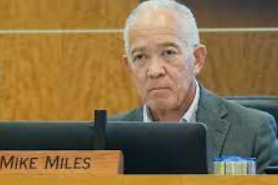
Mercedes Schneider summarizes the checkered career of Mike Miles, who was put in charge of the Houston Independent School District by State Commissioner Mike Morath, who was appointed by hard-right Republican Governor Greg Abbott. Abbott wants to punish Houston for not voting for him. What better punishment than to install Mike Miles as superintendent?

Schneider writes:

In June 2023, the Houston Independent School District (HISD) became the latest major school district to experience a top-down, ed-reform tactic that largely ignores community investment and fail to deliver on promised academic gains: the state takeover of a school district.

On June 01, 2023, the Texas Education Agency (TEA) appointed Mike Miles as the new HISD superintendent.

Miles is the golden-child product of market-based, ed-reform leadership. As reported in his LinkedIn bio, Miles holds no college degrees in teaching (engineering; slavic languages and literature; international affairs and policy). He has never been a classroom teacher, never a site-based administrator, yet he was a district superintendent in Colorado for six years (2006-11) and superintendent of Dallas ISD for three.

Though he does not mention it in his LinkedIn bio, Miles was a member of the Class of 2011 at the Broad Superintendents Academy A 2011 EdWeek article on Broad superintendents includes the criticism that they “use corporate-management techniques to consolidate power, weaken teachers’ job protections, cut parents out of decisionmaking, and introduce unproven reform measures.”

Indeed.

In 2015, Miles abruptly resigned from Dallas ISD amid being, as WFAA.com states, “at the center of controversy since he took the position nearly three years ago,” which apparently included questions about misdirecting funding intended for at-risk students and the subsequent exit of the Dallas ISD budget director. (Also calling Miles “a lightening rod for controversy,” WFAA.com offers this timeline of Miles’ unsettling tenure in Dallas.)

Despite all of his Dallas ISD controversy, TEA– which is no stranger to stepping into its own controversy— chose to hire Miles to lead its newly-state-snatched HISD.

Following his Dallas ISD exit, in 2016, he founded a charter school chain, Third Future Schools, which has locations in Colorado, Texas, and Louisiana. For two years (2017-19), Miles was a senior associate in an education consulting firm, FourPoint Education Partners.

And according to his LinkedIn bio, Miles is/was on a number of ed-reform organization boards, including Teach for America (TFA) Colorado (2017-20); National Council on Teacher Quality (NCTQ) (2013-present), and Chiefs for Change (2015-present).

Please open the link to finish reading the post.

Nancy Bailey, retired teacher, has been blogging for ten years. She reflects on the continuing efforts to destroy public education, based on a false narrative, hubris, and in some cases, the profit motive.

Nancy and I co-authored a book that serves as a glossary about fads and “reforms.”

She begins her new article:

School reform continues to privatize and destroy public schools. August marks ten years since I began blogging. Within that time I have written two books and co-authored a third with Diane Ravitch. I’m proud of all this writing but Losing America’s Schools: The Fight to Reclaim Public Education is the book title that especially stands out today.

Many Americans still don’t understand or value their ownership of public schools, and how they’re losing one of the country’s great democraticinstitutions. Instead of working together to build up local schools, to iron out difficulties, they’re willing to end them.

Thank you for reading my blog, commenting, and for those of you who have written posts. I am amazed at the wonderful educators, parents, students, and policymakers I have met. I have appreciated debate.

Here are some of the main education issues still of concern.

The Arts

School arts programs help children thrive. Those with mental health challenges benefit. Students might find art jobs. Sadly, many poor public schools ditched the arts. Some schools might get Arts Partnerships or entrepreneurships (Hansen, 2019). These programs aren’t always consistent. Public schools must offer well-rounded and fully resourced K-12 arts programs.

Assessment

Assessment is important for teachers to understand students. But high-stakes standardized tests push a narrow, one-size-fits-all agenda used to drive parents to private schools which, on the other extreme, have little accountability. Tests have been harmful to students.

Class Size

Children deserve manageable class sizes, especially for K-3rd grade (STAR Study), and for inclusion andschool safety.

Common Core State Standards

Controversy originally surrounded Common Core State Standards, promoted by the Bill and Melinda Gates Foundation in 2010, but Common Core continues to drive profiteering, especially in online programs.

Stan Karp of Rethinking Schoolssaid CCSS are:

A massively well-financed campaign of billionaires and politically powerful advocacy organizations that seeks to replace our current system of public education which, for all its many flaws, is probably the most democratic institution we have and one that has done far more to address inequality, offers hope, and provide opportunity than the country’s financial, economic, political, and media institutions with a market-based, non-unionized, privately managed system.

Corporations and Politicians

Corporations and politicians continue to work to end public schools and drive teachers out, transferring tax dollars to nonprofit and for-profit entities.

Nancy covers many more topics that have been harmful to public education.

Open the link and read her article in its entirety.

John Thompson, retired teacher and historian in Ohlahoma, keeps us up to date on the battle between Tulsa Public Schools and Ryan Walters, Oklahoma’s far-right MAGA Secretary of Education.

He writes:

Who won the latest battle between Oklahoma Superintendent of Public Instruction Ryan Walters and the Tulsa Public Schools (TPS)?

Walters had promised to fire TPS Superintendent Deborah Gist, and drive “Diversity, Equity, and Inclusion” (DEI) out of the classes, as well as mandating his ideology-driven curriculums. Then, Walters said at a Moms for Liberty event, “Tulsa Public Schools is getting money from the Chinese communist government,” He said, “They funneled it through a nonprofit — I mean, money-laundered it through a nonprofit in Texas.”

But Walters’ assault on the TPS accelerated further when Walters said he “had been in regular communication with Houston [HISD] about their school takeover.” And according to HTUL news, he has said “there’s currently a standards team and textbook committee to gather information on possible vendors like Hillsdale College and PragerU.” It thus became clear to Tulsans that the survival of their schools (and Oklahoma schools in general?) was at stake.

Walters’ promised to reveal his plan during the Oklahoma State Board of Education (OSDE) meeting on August 24. So, TPS board member, Jennettie Marshall, warned “during the board’s 90-minute discussion of the district’s accreditation status. ‘We are under attack. If you’re not keeping up with Houston, … if we continue the course we’re on, that’s where we’re headed. That shouldn’t be.’”

The day before the OSDE meeting, Deborah Gist resigned in the hope that Walters wouldn’t take over the state’s largest school system. And at the meeting, the World also explained that Walters “praised the local school board for ‘rooting out a cancer in the district that caused so many problems,’ referring to the Tulsa school board’s formal agreement approved Wednesday evening to part ways with Tulsa Superintendent Deborah Gist.” But “he also vowed to give the local Tulsa school board ‘a very short rope,’ saying he would return and ask for additional authority from the state Board of Education if he does not see adequate progress made within a few months.”

In response, the TPS Board Chairperson, Stacey Woolley, criticized Walters’ misstatements about the system’s student outcomes. She also said, “Antics and rhetoric must stop. We had two bomb threats at schools in the city of Tulsa because of rhetoric.” she said. “I do look forward to going forward and continuing the work and accelerating that work.”

Similarly, “Rep. Regina Goodwin, D-Tulsa, told the state board Walters has been ‘fostering an atmosphere of intimidation’” and protested, “When you talk about Black and brown children in Tulsa, Oklahoma, there are issues that go on in larger cities that have to be addressed. You don’t just say ‘You better perform better in three or four months!’ What kind of plan is that?”

Almost certainly, pushbacks by TPS supporters, and private communications, produced this outcome. It is too soon to know which side won the battle. Or, should I say lost less?

Unless Walters is correct and the TPS is secretly plotting with China to bring our democracy down, or violence erupts, I believe that the most important aspect of the battle could be the way that educators and journalists (especially at the Tulsa World) issued fact-based rebuttals to the extremists. Then, the Schusterman and the Kaiser foundations publicly opposed Walters’ takeover threats. Mayor G.T. Bynum finally came out against the takeover. And on the day of the OSDE meeting, Booker T. Washington H.S. students walked out.

The resistance even reached the point where the World editorialized, “conservative lawmakers must speak up.” And also, Gov. Kevin Stitt distanced himself from Walters who he appointed and then repeatedly supported. The World reported that Stitt said he “believes the State Board of Education will not overreact when considering accreditation for Tulsa Public Schools.” Stitt now says, “I don’t know what takeover is, what they are talking about. I believe in local control. I think the local board needs to address that.”

Secondly, the battle wasn’t over Deborah Gist. It was about the future of public education, and defending our democracy.

Thirdly, the former-teacher Rep. John Waldron (D) explained what we now know, “A far-right media source spread a doctored video suggesting a librarian was spreading a ‘woke agenda,’“ causing a Tulsa Union elementary school and the librarian to receive a bomb threat. (By the way, Waldron noted that the librarian’s actual agenda was promoting “reading and kindness.”)

Then, Walters reposted it, leading to two more bomb threats. NPR’s Beth Wallis reported that the first threat included, “I’m not going to stand as you bastards continue to indoctrinate and prey on our children.” And it also warned the librarian, “We know where you live.” Walters’ response was, “Woke ideology is real and I am here to stop it.” Another threat said:

“We placed a bomb at [the librarian’s elementary school address] and inside the Residence of [the librarian]. You will stop pushing this woke ideology or we will bomb every school in the union district.”

At the time that Wallis published the story, Walters had not removed his “repost of the altered video.”

Perhaps we will someday learn the behind the scenes discussions that prompted Walters to pull back from his most extreme threats. Who knows, perhaps this mayhem will prompt Republicans who are appalled by Walters to come out in support of public education and against the dangerous politics of hate. However, Rep. Mark McBride, R-Moore, the chair of the Oklahoma House subcommittee on education funding who has frequently challenged Walters, complained to the Oklahoman that “he was unable to sit in the conference room during the board meeting, despite requesting a seat along with multiple other lawmakers for several weeks.”

Finally, the other issues pushed by Walters at the OSDE meeting are a recipe for dysfunction and chaos. As Nondoc’s Bennett Brinkman reported, the board unanimously approved Walters’ demand for a “a report of ‘foreign government contributions to Oklahoma schools,’” and “a report regarding district policies and informal guidance for ‘student pronouns in Oklahoma schools.’” 

Moreover, Walters’ mandates, such as teacher training in the science of reading, can’t be rushed into place. As Linda-Darling Hammond explains, school improvement can only “move at the speed of trust.” Moreover, will teachers be expected to focus on phonics, or will the TPS be allowed to bring back the science and history instruction that is required to build the background knowledge that is needed for reading for comprehension? 

Sadly, we’re likely to learn more fake news over the next few months about what Walters sees as student outcomes, and a passing grade for high-challenge schools. Across the nation, we have seen the disastrous effects of rushed, test-driven instruction that was forced on high-poverty schools. Also, I sure hope we don’t see violence. But, even though Walters warned the TPS, “Do not test me,” I expect that the defenders of schools in Tulsa and elsewhere will continue to push back diplomatically but firmly. For better or for worse, we’re likely to see in the next few months what the TPS will face.

Johann Neem is author of Democracy’s Schools: The Rise of Public Education in America. He teaches history at Western Washington University in Bellingham, Washington.

A Plea for the New School Year- Johann Neem

I am so excited for the new school year to begin. I admit that I am a bit sentimental when it comes to public schools. That’s because public schools are one of the few institutions that almost all of us have been through, which means that the experiences of schooling connect us within and between generations. There are the common schedules and rituals. There will be the first day of school. There will be school pictures. There will be holidays and dances. There will be field trips. And, of course, homework and tests. It’s part of the growing up experience in America. In a diverse society, it’s easy to focus on our differences. But public schools not only bring diverse people together, they give us something to share for a lifetime.

As we head back for another school year, then, I hope that we can put aside some of the loudest and most extreme voices of our partisan culture wars. Actually, most Americans want the same things. We want our kids to have a fair shot. We want our kids to be part of a shared national community. We want our kids to be challenged, and also supported. We want our kids to be safe.

That’s why public schools, I still believe, can bring us together.After all, the overwhelming majority of parents support their local public school. And for good reasons. There is strong evidence that public schools are effective for students at all income levels. Yet partisan rhetoric has eroded support for public schools. From the right, advocates of parental rights and privatization urge parents to find schools that reflect their familyvalues, rather than see the schools as places where we forge common values. But too many on the left, including many educators, also question whether we Americans can share the same histories, holidays, values, and rituals. In the name of cultural pluralism and diversity, they challenge the public schools’ longstanding mission of socialization.

We need to keep the faith. As an immigrant, I know that public schools can be our welcome mats. Our nation has had, and still has, its share of nativism and prejudice, but what other nation welcomes so many people from so many different backgrounds? In public schools, we all become Americans. We read the same books, eat the same cafeteria food, play the same games, studythe same subjects, and get to know each other.

So this is my plea for the new school year. We will always argue over what we should teach, and in a democracy we should. But let’s enter this year focusing on what we share and what binds us together, rather than what separates us. There is so much pulling us apart today. It’s a shame that our public schools have become one more thing to fight over because we need them. We benefit individually and collectively from an educated public.

As the new school year begins, I hope we can all take a deep breath and remember that despite all their flaws, despite all our disagreements, at some deeper level, we Americans all agree that the rituals of American schooling—the academics, the bell schedules, the band concerts, the football games, the fieldtrips, the prom decorations—define us. We maintain them because they maintain us.

Greg Olear wrote an analysis of Samuel Taylor Coleridge’s “Kubla Khan,” which is hilarious and insightful. I read it in high school or college but never saw it as he sees it now: the product of an opium-addled brain. He compares parts of it to rock music and shows something my teachers never mentioned: that behind his feverish dream is an erotic imagination.

Then he connects the theme of the ecstatic poem to one Donald J. Trump and the joyless Putin.

His essay on this mysterious poem made me laugh out loud.

Enjoy!

Florida Governor Ron DeSantis told a story during the GOP debate about a baby who survived multiple attempts to abort her, presumably to justify his near-total ban on abortions (after six weeks). But the Miami Herald reported the true story, which is very different from DeSantis’ version. The event occurred long before abortion was legal, and the person who tried to abort the baby with a coat hanger was the baby’s father.

The story was reported by Julie K. Brown with the aid of Sarah Blaskey, investigative reporters for the Miami Herald and was based on statements previously recorded by Penny Hopper, contemporaneous newspaper articles, public records and an interview with a family member who asked not to be identified. The DeSantis campaign did not respond to a request for comment.

At Wednesday’s Republican candidates debate, during a discussion of late-term abortion, Gov. Ron DeSantis told a horrific but puzzling story.

“I know a lady in Florida named Penny,” the GOP presidential candidate said. “She survived multiple abortion attempts. She was left discarded in a pan. Fortunately, her grandmother saved her and brought her to another hospital.”

Critics of the governor flocked to social media to suggest the “Penny” story was made up or wildly embellished. Supporters countered that liberals were triggered by an ugly truth.

Penny is real and her last name is Hopper. But DeSantis failed to note key details from her remarkable story: The person who tried to end Penny’s life in the womb was not a doctor or even an illegal abortion provider — it was her father. And his effort to abort his daughter with a coat hanger took place almost two decades before the Supreme Court’s seismic Roe v. Wade decision, which established a woman’s right to an abortion…

Miriam “Penny” Hopper’s story begins in 1955, in a hospital in Wauchula, a small farming town in Central Florida. News reports at the time described her as a miracle baby, born weighing 1 pound, 11 ounces. She was so tiny that the nurses initially had to feed her with a dropper.

Her now-deceased father, Charles Wesley Browder Sr., was a U.S. Army sergeant during World War II who served on the front lines in Europe when he was just 20. His family said he was a “scout” who performed advance reconnaissance missions before being wounded, captured and tortured by the Germans. Military records show he was discharged with honors in 1945 and was awarded four Bronze Stars in addition to a Purple Heart, a Good-Conduct Medal and the World War II Victory Medal.

Charles married Glenda Marie Pierce, and they settled in Wauchula, Florida, about 75 miles from Tampa.

In 1953, birth records show, Hopper’s parents had a son, Charles Browder Jr., who was born at Walker Memorial Hospital in nearby Avon Park. At the time of the 1950 census, Glenda worked as a receptionist in a doctor’s office, and Charles was a salesman. Hopper’s mother soon became pregnant with her second child, also a boy. In a video posted on YouTube several years ago by a group called “Florida Right to Life,” Hopper said that she learned later that her father had used the coat hanger to abort her mother’s second child. It is one of at least two videos on the Internet relating her story, although the videos differ on some details.

When her mother became pregnant a third time with her, Penny Browder said her father returned to the same method in an attempt to end the pregnancy, later explaining to his daughter that he was earning only $125 a week, which he felt wasn’t enough to support a larger family.

Browder’s mother developed complications during the coat-hanger procedure. The couple rushed to a nearby medical facility in the middle of the night, with her mother very ill and bleeding. In the video interviews, Hopper said her parents were met at the clinic by a doctor in his pajamas. He examined her mother — and concluded that the fetus had no heartbeat. He advised the couple to abort the baby, telling them the child would likely be stillborn.

“If it lives, it will be a burden on you your whole life,” the doctor allegedly said. He used saline and injected her mother with a drug, then left, instructing the nurse to “discard the baby dead or alive,” Hopper said in a video interview, a segment that was to be incorporated into a TV commercial by the anti-abortion group “Faces of Choice.” It can be found on YouTube.

When the baby arrived shortly after 3 a.m., the nurse wrapped her in a towel and placed her in a pan, Penny Hopper said one video. In the other, Hopper said her mother told her the baby was placed in a basket.

The following day, Glenda’s mother and aunt came to check on her at the clinic, where she was recuperating. They found the baby outside on a back porch, unwrapped her, and discovered she was alive, Hopper said.

“My grandmother was so upset she called the local police,” she said.

A news clipping incorporated into a video segment said the baby was transported from the medical facility in Wauchula to what was then Morrell Regional Hospital in Lakeland. The news clipping, which isn’t labeled, seems to partially contradict Hopper’s story, as it states that the doctors at the Wauchula facility “put forth greater efforts to keep the 1 pound, 11 ounce baby alive.” The story said the child was on the “brink of death” when she was transported to Lakeland, with a police escort that crashed on the way to the hospital.

The Tampa Tribune from Nov. 29, 1955, reported on the crash, saying the baby had been born premature that morning. The infant was placed in an incubator, where she remained for four months. Hopper, however, said that while she was in the hospital her father tried to disconnect her from the incubator because he was upset at how much the care was costing. The hospital summoned the police to restrain him, Hopper said in one of the interviews.

“He basically couldn’t stand the thought I was alive,” Hopper said.

In March 1956, she was finally strong enough to go home with her parents…

Anti-abortion groups use Penny Hopper’s story to demonstrate why abortion should be banned.

Pro-abortion groups use it to demonstrate why abortion should be safe and legal. Coat-hanger abortions will resume, and they endanger the life of the mother.

Read more at: https://www.miamiherald.com/news/politics-government/article278586634.html#storylink=cpy

.

Steffen E. Polko is a retired professor of education at TCU in Texas. He wrote the following commentary for the Fort Worth Star-Telegram. Vouchers, he says, will doom community rituals, like Friday night football. Dividing students up by religion and other grounds will divide our communities and our country even more than at present.

He writes:

There appears to be some confusion regarding rural Texans’ opposition to school choice and vouchers. I think I may know why.

Gov. Greg Abbott’s espoused principal reason for promoting vouchers is to protect Texas children from the “woke” propaganda being disseminated by public school teachers. Let me assure the governor that teachers in upstanding, God-fearing communities such as Mineral Wells and Hico are not subjecting their students to “woke” ideology. In these communities, “woke” still means not asleep. This is not something that’s broken in small-town Texas, so it doesn’t need fixing.

Now, onto the most important reason. Vouchers pose a threat to high school football and could turn out Friday Night Lights. An education savings account program will reduce funding levels for public schools as students leave. The first thing to be hit will be athletic budgets.

Proponents note that there are few private school options in rural Texas. So, where will these students go? There are no options yet, but this will change with vouchers. Many churches face declining attendance and financial difficulty. If $8,000 per year vouchers are available a minister with 20 or more school-age children in the congregation will find it rational and financially prudent to start a school.

Let’s say I have 40 such children. If the state sends me $320,000 per year and I can keep expenses at $160,000, I will net $160,000 for my church. How do I keep my expenses so low? The key is technology. High-quality learning systems produced by nationally recognized educational providers such as Pearson are readily available over the Internet. The cost of learning management systems currently averages around $5 per student per month.

The state will require me to have two “teachers” for 40 students. No problem; this can be anyone in my congregation with a college degree and some time on their hands. Getting alternative certification from the state is relatively easy. My teachers need not be education experts because the learning management system does the heavy lifting. It provides instruction and creates and grades the homework and tests. The latest systems even use artificial intelligence to answer student questions.

The only job for the “teachers” would be to manage classroom behavior and help students use the software. A student leaving the public schools will probably get a fairly good Christian education. The public school will lose funding for athletic programs and perhaps a potential star quarterback. Ouch! For-profit schools will emerge employing a similar model. Using a hybrid instructional model and current costs, I calculate that a 200-student high school would bring cashflow of about $800,000 a year. Start 10 of

those and you have a nice chain of businesses. Could this be the real driving force behind vouchers? To recruit students, such schools could promise to teach artificial intelligence and the Python programming language to prepare students for a promising future in technology — or use some other clever hook. Texas has about 8,000 schools. The Texas Education Agency employs 1,000 people and spends around $2 billion per year to monitor the schools and hold them accountable.

I predict that vouchers will increase the number of schools in Texas four-fold. Will the Legislature increase funding by a factor of four to monitor this many schools? I think not. It will be a long time before state officials figure out if for-profit schools are delivering on their promise, and the owners will be very rich before they do. Good luck getting them and their money back from Barbados. Not only would church and for-profit schools poach rural athletes, but specialized voucher- and donor-funded sports academies could emerge. Let’s say someone starts a Dallas Football Academy. It could use an entrance exam similar to the NFL combine to assure it got the best athletes. The best coaches, fitness trainers, and other staff would be recruited.

These schools would have a direct connection to universities to give their athletes the best shot at a top-level scholarship. Such schools would dominate small-town teams and end the reign of, for example, the Aledo Bearcats. The state championship game would probably feature the Dallas and Houston football academies.

Rural Texas is our best bet to keep the state from making a huge mistake that is little more than a political stunt to get votes. Small communities have nothing to gain from vouchers and a lot to potentially lose, as does the rest of the state.

Steffen E. Palko is a retired associate professor of education at TCU. He lives in Fort Worth.

Read more at: https://www.star-telegram.com/opinion/opn-columns-blogs/other-voices/article277689198.html#storylink=cpy

Michael Hiltzik, columnist for the Los Angeles Times, finds a pattern in the Republican attacks on the schools and universities. Their hostility to teaching Black history, their encouragement of book banning, their strategic defunding of higher education, their treatment of teaching about race, gender, and climate change as “indoctrination”—together point to a goal: the dumbing down of American young people.

Republicans say they want to get rid of “indoctrination” but they are busily erasing free inquiry and critical thinking. What do they actually want? Indoctrination.

He reminds us of the immortal words of former President Donald J. Trump: “I love the uneducated.” Republicans do not want students to think critically about racism or the past. They do not want them to reflect on anything that makes them “uncomfortable.” They want to shield them from “divisive concerns.” They want them to imbibe a candy-coated version of the past, not wrestle with hard truths.

He writes:

For reasons that may not be too hard to understand, Republicans and conservatives seem to be intent on turning their K-12 schools, colleges and universities into plantations for raising a crop of ignorant and unthinking students.

Donald Trump set forth the principle during his 2016 primary campaign, when he declared, “I love the poorly educated.”

In recent months, the right-wing attack on public education has intensified. The epicenter of the movement is Florida under Republican Gov. Ron DeSantis, where the faculty and course offerings of one of America’s leading liberal arts colleges, New College, have been eviscerated purportedly to wipe out what DeSantis calls “ideological indoctrination.”

The state’s K-12 schools have been authorized to supplement their curricula with animated cartoons developed by the far-right Prager University Foundation that flagrantly distort climate science and America’s racial history, the better to promote fossil fuels, undermine the use of renewable energy and paint a lily-white picture of America’s past.

Then there’s West Virginia, which is proposing to shut down nearly 10% of its academic offerings, including all its foreign language programs. The supposed reason is a huge budget deficit, the harvest of a systematic cutback in state funding.

In Texas, the State Library and Archives Commission is quitting the American Library Assn., after a complaint by a Republican state legislator accusing the association of pushing “socialism and Marxist ideology.”

In Arkansas, state education officials told schools that they may not award credit for the Advanced Placement course in African American history. (Several school districts said they’d offer students the course anyway.) This is the course that Florida forced the College Board to water down earlier this year by alleging, falsely, that it promoted “critical race theory.”

I must interject here that I’m of two minds about this effort. On the one hand, an ignorant young electorate can’t be good for the republic; on the other, filling the workforce with graduates incapable of critical thinking and weighed down by a distorted conception of the real world will reduce competition for my kids and grandkids for jobs that require knowledge and brains.

Let’s examine some of these cases in greater depth.

Prager University, or PragerU, isn’t an accredited institution of higher learning. It’s a dispenser of right-wing charlatanism founded by Dennis Prager, a right-wing radio host. The material approved for use in the schools includes a series of five- to 10-minute animated videos featuring the fictional Leo and Layla, school-age siblings who travel back in time to meet historical figures.

One encounter is with Frederick Douglass, the Black abolitionist. The goal of the video is to depict “Black lives matter” demonstrations as unrestrained and violent — “Why are they burning a car?” Leo asks while viewing a televised news report. The animated Douglass speaks up for change achieved through “patience and compromise.”

This depiction of Douglass leaves experts in his life and times aghast. Douglass consistently railed against such counsel. Of the Compromise of 1850, which brought California into the union but strengthened the Fugitive Slave Act — arguably the most detested federal law in American history — he stated that it illustrated how “slavery has shot its leprous distillment through the life blood of the nation.” In 1861, he thundered that “all compromises now are but as new wine to old bottles, new cloth to old garments. To attempt them as a means of peace between freedom and slavery, is as to attempt to reverse irreversible law.”

Patience? The video depicts Douglass quoting from an 1852 speech to a Rochester anti-slavery society in which he said “great streams are not easily turned from channels, worn deep in the course of ages.”

But it doesn’t include lines from later in the speech, reproaching his audience for prematurely celebrating the progress of abolition: “Your celebration is a sham; your boasted liberty, an unholy license; your national greatness, swelling vanity; … all your religious parade and solemnity, … mere bombast, fraud, deception, impiety, and hypocrisy — a thin veil to cover up crimes which would disgrace a nation of savages.”

Another video in the series parrots the fossil fuel industry’s talking points against wind and solar power: Standing over the corpse of a bird supposedly slain by flying into a wind turbine, the schoolkids’ interlocutor states, “Like many people … you’ve been misled about renewable energy, and their impact on the environment…. Windmills kill so many birds, it’s hard to track how many…. Wind farms and solar farms disrupt huge amounts of natural habitat.”

Acid rain, pollution, global warming — those consequences of fossil fuel energy aren’t mentioned. The video ends with a pitch for nuclear power, never mind the unsolved question of what to do with its radioactive waste products.

PragerU’s sedulous attack on renewables perhaps shouldn’t be much a surprise: Among its big donors is the Wilks family, which derives its fortune from fracking and which approved “future payment” of $6.25 million to PragerU in 2013.

As for New College, its travails under the DeSantis regime have been documented by my colleague Jenny Jarvie, among many others.

In a nutshell, the Sarasota institution possessed a well-deserved reputation as one of the nation’s outstanding havens for talented, independent-minded students. Then came DeSantis. He summarily replaced its board of trustees with a clutch of right-wing stooges including Christopher Rufo, known for having concocted the panic over critical race theory out of thin air and then marketed it as a useful culture war weapon to unscrupulous conservative politicians, including DeSantis.

Rufo and his fellows fired the university president and installed a sub-replacement-level GOP timeserver, Richard Corcoran, in her place. Faculty and students have fled. Students who stayed behind and were in the process of assembling their course schedules for the coming year are discovering at the last minute that the courses are no longer offered because their teachers have been fired or quit.

Instead of ambitious scholars committed to open inquiry, Corcoran has recruited athletes to fill out the student body, even though the college has no athletic fields for many of them to play on. According to USA Today, New College now has 70 baseball players, nearly twice as many as the University of Florida’s Division I NCAA team.

More to the point, the average SAT and ACT scores and high-school grade point averages have fallen from the pre-Corcoran level, while most of the school’s merit-based scholarships have gone to athletes. New College, in other words, has transitioned from a top liberal arts institution into a school that places muscle-bound underachievers on a pedestal. DeSantis calls this “succeeding in its mission to eliminate indoctrination and re-focus higher education on its classical mission.”

Finally, West Virginia University. Under its president, Gordon Gee — who previously worked his dubious magic at Brown Universityand Ohio State University, among other places — the school built lavish facilities despite declining enrollments. The construction program at the land grant university contributed to a $45-million deficit for the coming year, with expectations that it would rise to $75 million by 2028.

But the main problem was one shared by many other public universities — the erosion of public funding. As the West Virginia Center on Budget and Policy points out, “if West Virginia lawmakers had simply kept higher education funding at the same levels as a decade ago, West Virginia University would have an estimated additional $37.6 million in state funding for [fiscal year] 2024, closing the majority of this year’s budget gap.”

The decision on which programs to shutter at WVU points to a shift in how public university trustees see the purpose of their schools, trying to align them more with economic goals set by local industries rather than the goal of providing a well-rounded education to a state’s students. Trustees in some states, including North Carolina and Texas, have injected themselves into academic decisions traditionally left to administrators, often for partisan political reasons.

When it comes to interference in educational policies by conservatives, such as what’s happened in Florida, Texas and Arkansas, there’s no justification for taking these measures at face value — that is, as efforts to remove “indoctrination” from the schools. The truth is that the right-wing effort serves the purposes of white supremacists and advocates of anti-LGBTQ+ discrimination — they’re moving to inject indoctrination that conforms more to their own ideologies.

Take the attack on critical race theory, or at least the version retailed by Rufo and his ilk. “The right has reduced CRT to an incendiary dog whistle,” the Black scholar Robin D.G. Kelley of UCLA has observed, by caricaturing a four-decade-long scholarly effort to analyze “why antidiscrimination law not only fails to remedy structural racism but further entrenches racial inequality” into “a racist plot to teach white children to hate themselves, their country, and their ‘race.’”

(The inclusion of Kelley’s work in the AP African American Studies course was cited as a “concern” by Florida officials in their rationale for rejecting the course; Kelley’s work was suppressed by the College Board in its effort to make the course more acceptable to the state Department of Education.)

These attacks are couched in the vocabulary of “parents’ rights” and student freedom, but they don’t serve the students at all, nor do they advance the rights of parents interested in a good, comprehensive education for their children, as opposed to one dictated by the most narrow-minded ideologues in their state.

Where will it end? Florida’s ham-fisted educational policies won’t produce graduates with the intellectual equipment to succeed in legitimate universities, much less in the world at large. The only university many will be qualified to attend will be Prager U, and that won’t be good for anyone.