Carol Burris is the executive director for of the Network for Public Education. in this post, which she wrote exclusively for the blog, she reveals the details of Arkansas Governor Sarah Huckabee Sanders’ plan to defund and destroy the public schools in her state.
Burris writes:
Sarah Huckabee Sanders, the daughter of Baptist minister and former Governor Mike Huckabee, missed learning the 9th commandment that prohibits telling a lie. As press secretary to Donald Trump, her distortions of the truth resulted in the editor of Forbes warning corporations against hiring Sanders and other Trump “propagandists,” writing, “Forbes will assume that everything your company or firm talks about is a lie.”
Now she is the Governor of Arkansas. On her first day in office and in her response to Biden’s State of the Union, she parroted the old “education is the civil rights issue of our time” line that has been used to justify horrible policies from school closures to charter schools and vouchers. However, the disconnect between what she says and what she does quickly became apparent. On her first day in office, she issued an executive order prohibiting “indoctrination and critical race theory in schools” and another banning the term “Latinx” from being used in state documents. State authorities are investigating AP African American Studies at Little Rock Central High School, where the majority of students are Black.
If we need further proof that this self-proclaimed champion of Civil Rights is more aptly described as a champion of Civil Wrongs, look at her recently leaked ed reform plan.
Here are its features:
The Privatization of Public Education:
· Her voucher plan is a universal ESA—the plan now favored by the far-right. These plans have few rules and no family eligibility requirements. They have become Entitlement Spending Accounts–cash going into the pockets of private school families regardless of income. The leaked plan does not say how taxpayers will pay for it. But everyone will be eligible by 2025. It includes Voucher funding for homeschools. The only restrictions will apply to vendors, so those who enroll their children in those recently uncovered Neo-Nazi homeschools can find ways to cash in.
· Increased tax credits for contributions to an existing voucher program.
· Local School Boards can contract with an open-enrollment charter school or private company to run a school campus at risk of state takeover due to low performance—and if they do, they get a financial incentive.
· Establishment of a charter-school construction fund for new charters and expansion.
· Elimination of the cap on charters.
· Charter school applications no longer need to be reviewed and approved by the local school district board of directors.
· All students attending a public school can take courses and earn credit for classes not offered in their school. By the beginning of the 2025-2026 school year, students attending a public school that receives a letter grade of “C”, “D”, or “P” from the Arkansas School and District Accountability System may take their required courses (i.e. math, English, etc.) through the course choice program. Bet your bottom dollar that these courses will be online, with vendors like Stride K12 making a fortune.
Censoring and Controlling Curriculum
· K-3 literacy evaluation will be aligned with the “science of reading.”
· Before grade 5, teachers cannot provide classroom instruction on the following topics: sexually explicit materials, sexual reproduction, sexual intercourse, gender identity, and sexual orientation.
· School districts must implement an age-appropriate child sexual prevention program for grades K-12, allowing parents to preview materials and exempt their children from instruction. (I have no idea what a child sexual prevention program even is.)
· The Secretary of Education will review the Department of Education regulations, policies, materials, and communications to ensure they do not indoctrinate students with ideologies that conflict with the principle of equal protection under the law.
· No school employee or student must attend training on prohibited indoctrination or Critical Race Theory.
Harmful Policies for Students
· 3rd-grade retention based on deficits in reading proficiency.
· An accountability system for pre-school education that includes student data.
· Literacy testing three times a year for all students in K-3.
· Curriculum tracking in Grade 8.
· Community service requirements, which may, for some students, be challenging to meet.
· Mandated cops on campus.
· Career-ready pathways in partnership with local business and industry leaders” translate workforce training programs to track students into low-paying and middle-wage jobs.
Punitive Policies for Teachers
· Elimination of due process in dismissals.
· Base salaries will no longer increase by years of experience or for Master’s degrees.
· Bonuses based on VAM.
There are a few likable initiatives in her plan, such as paid maternity leave for teachers, but if she makes districts fund them even as she drains their funding with charter schools and voucher expansion, a good initiative will be one more financial pressure on already underfunded schools.
Sarah Huckabee Sanders’ education plan is a hodgepodge of all the awful and ineffective ideas proposed since No Child Left Behind. The fingerprints of JEB! and the Walton family are over the leaked legislation.
Despite its hodgepodge nature, one thing is clear—its ultimate intent is to destroy public education in the state by slamming a fist down on students, public schools, and their teachers while propping up a wild and largely unaccountable privatized system.
This report was released about a major court decision in Pennsylvania that will affect millions of children:
For immediate release: Feb. 7, 2023 Contact: Jonathan McJunkin, Public Interest Law Center, 570-337-1969, jmcjunkin@pubintlaw.org; Paul Socolar, Education Law Center-PA, 215-372-1650, psocolar@elc-pa.org
A Historic Victory for Petitioners in School Funding Lawsuit
Today, Commonwealth Court Judge Renée Cohn Jubelirer ruled that Pennsylvania’s school funding system is unconstitutional and must be reformed.
In a 786-page decision, the court found that “All witnesses agree that every child can learn. It is now the obligation of the Legislature, Executive Branch, and educators, to make the constitutional promise a reality in this Commonwealth.”
The court order calls for the “respondents, comprised of the Executive and Legislative branches of government and administrative agencies with expertise in the field of education, the first opportunity, in conjunction with Petitioners, to devise a plan to address the constitutional deficiencies identified herein.”
The court rebuffed respondents’ argument that the current system is adequate, saying “In the 21st century, students need more than a desk, chair, pen, paper, and textbooks.”
The Education Law Center and Public Interest Law Center issued the following joint statement earlier today:
“Today’s decision declaring Pennsylvania’s school funding system unconstitutional is a historic victory for Pennsylvania’s public school children. It will change the future for millions of families, so that children are no longer denied the education they deserve. The court recognized that our schools require adequate funding to meet our constitution’s mandate. It’s time for our state legislature to fund public schools in every corner of Pennsylvania so all students, whether or not they live in a wealthy community, can receive the quality public education guaranteed in our state constitution.”
“The court’s decision recognizes what we showed during trial: Every year, hundreds of thousands of children in public schools in lower-wealth communities across Pennsylvania are being denied the basic resources needed for a quality education because the state is not adequately or equitably funding our schools,” said ELC legal director Maura McInerney. “The court’s order directs the state to change the way it funds our public schools from the current two-tiered system divided by local wealth to one that provides sufficient resources for all children.”
“This is a huge victory. Educators know that every child can learn, and they know the kinds of support that their students need to reach their potential,” said Dan Urevick-Ackelsberg, senior attorney at the Public Interest Law Center. “Our clients and others in low-wealth districts in Pennsylvania also know that for too long, they have had to triage their students’ needs, leaving some students behind because of the state’s failure to provide adequate funding for public education. Today’s decision makes it clear that this inequitable status quo cannot continue, and that every child in Pennsylvania has a fundamental right to receive a comprehensive, effective, and contemporary public education.”
“Education is the great equalizer — the key that opens the door to life-changing opportunities and world-changing ideas,” said Katrina Robson, partner at O’Melveny & Myers LLP. “No child should be left with their hand up, begging for but denied that opportunity. We are gratified by the judge’s ruling, which will help ensure that all children in Pennsylvania have equitable access to quality education. And we are proud of the legal team that worked tirelessly—for years—to help achieve this critically important result.”
Here is the language of the court order:
1. The Education Clause, article III, section 14 of the Pennsylvania Constitution, requires that every student receive a meaningful opportunity to succeed academically, socially, and civically, which requires that all students have access to a comprehensive, effective, and contemporary system of public education;
2. Respondents have not fulfilled their obligations to all children under the Education Clause in violation of the rights of Petitioners;
3. Education is a fundamental right guaranteed by the Pennsylvania Constitution to all school-age children residing in the Commonwealth;
4. Article III, section 32 of the Pennsylvania Constitution imposes upon Respondents an obligation to provide a system of public education that does not discriminate against students based on the level of income and value of taxable property in their school districts;
5. Students who reside in school districts with low property values and incomes are deprived of the same opportunities and resources as students who reside in school districts with high property values and incomes;
6. The disparity among school districts with high property values and incomes and school districts with low property values and incomes is not justified by any compelling government interest nor is it rationally related to any legitimate government objective; and
7. As a result of these disparities, Petitioners and students attending low-wealth districts are being deprived of equal protection of law.
The case William Penn School District et al. v. Pennsylvania Department of Education et al. was filed in 2014 by six Pennsylvania school districts (William Penn, Greater Johnstown, Lancaster, Panther Valley, Shenandoah Valley, and Wilkes-Barre Area), the Pennsylvania Association of Rural and Small Schools, the NAACP-PA State Conference, and a group of public school parents. They filed suit in Pennsylvania Commonwealth Court against state legislative leaders, state education officials, and the governor for failing to uphold the General Assembly’s constitutional obligation to provide a “thorough and efficient” system of public education. Petitioners also assert that the massive inequality this system fuels between poor and wealthy school districts discriminates against students in low-wealth communities, violating their right to equal protection in the state Constitution.
The school districts and other petitioners in the case are represented by the Education Law Center – PA, the Public Interest Law Center, and O’Melveny. During a four-month trial before Judge Cohn Jubelirer that concluded in March, witnesses explained in detail the deficiencies of the current system and the extreme, egregious disparities between school districts in Pennsylvania.
For more on the case, William Penn School District et al. v. PA Dept. of Education et al., visit FundOurSchoolsPA.org, a joint online project of the Education Law Center-PA and the Public Interest Law Center.
The Public Interest Law Center uses high-impact legal strategies to advance the civil, social, and economic rights of communities in the Philadelphia region facing discrimination, inequality, and poverty. We use litigation, community education, advocacy, and organizing to secure their access to fundamental resources and services in the areas of public education, housing, health care, employment, environmental justice and voting. For more information, visit www.pubintlaw.org or follow on Twitter @PubIntLawCtr.
The Education Law Center-PA (ELC) is a nonprofit, legal advocacy organization with offices in Philadelphia and Pittsburgh, dedicated to ensuring that all children in Pennsylvania have access to a quality public education. Through legal representation, impact litigation, community engagement, and policy advocacy, ELC advances the rights of underserved children, including children living in poverty, children of color, children in the foster care and juvenile justice systems, children with disabilities, English learners, LGBTQ students, and children experiencing homelessness. For more information, visit elc-pa.org or @edlawcenterpa on Twitter.
Dan Rather and Elliott Kirschner write a blog called Steady. Their voice is always thoughtful, reasonable, informed, and…steady. I think that they, like me, are old enough to remember when we believed that overt racism was ebbing and that white supremacy was dead. Our hopes have been shattered since 2016. It takes the use of critical race theory to understand why we were so naive. Here is their take on the big Education story of the day:
Photo credit: Octavio Jones
Editor’s note: this is an ironic banner in front of DeSantis. Florida is not free for those who don’t share his ideology. If you think racism exists today in Florida, you are not free to discuss it in school or college. You are free to agree with him.
Rather and Kirschner write:
Much of American history is entangled with racism and white supremacy. That is the reality of our beloved nation, no matter how much we wish it were not.
As we sit here nearly a quarter of the way through the 21st century, it is obvious that we need to have the maturity to look back to our past as well as ahead to the future. Can we do this with our eyes wide open? Will we study and learn from the lessons of history?
You can’t grapple with the truth if you hide it from view. Yes, our national narrative is an inspiring one — of freedom, rights, and new opportunities. But it is also a narrative of pain — of the bondage, rape, and murder of enslaved people. It is a story of mass death, broken treaties, and land stolen from Native people. And it is a story of persecution of the “other,” time and again.
The chasm between the noble promises of our founding documents and our historical realities continues to obstruct our national journey toward a more perfect union.
Yes, ours is a country that has facilitated exploration, innovation, and growth, but it is also one built upon families torn apart at the auction block, bodies whipped, and police dogs and fire hoses set against children.
Cities were redlined. Public schools were segregated. And despite our carefully cultivated national image as a meritocracy, throughout our history we have seen talent overlooked and our common humanity diminished on account of people’s race, religion, and sexual orientation.
The ripples of injustice continue to destabilize our society.
It shouldn’t be controversial to say any of this. But acknowledging these truths today is a political act, because it threatens the privileged narratives of those who seek to sugarcoat our past. These are men and women who serve their own ambitions by fortifying their cynical holds on power, delighting in division, feeding off fear, and applauding anger.
And that brings us to Florida’s Governor Ron DeSantis.
Listing all of his efforts to leverage the power of his office to attack equity, empathy, and justice would stretch this post immeasurably. But doing so would also jeopardize the central point: DeSantis is an opportunist. He is not weighing the merits of any one campaign. Rather, he wants headlines as a culture warrior standing up to “wokeness,” a term he has eagerly redefined to suit his own purposes. It allows him to sneer at and dismiss any attempt to reckon with American injustice.
DeSantis has focused his assaults on two of our society’s most traditionally marginalized groups: Black Americans and the LGBTQ community. While these populations have thus far felt the brunt of his targeting, we need to see clearly that his rhetoric is a threat to all who care about a democratic, peaceful, empathetic, and just America. Those of us with the greatest privilege should bear a special burden in rejecting this hate.
DeSantis’s pugilism has enabled him to consolidate power in Florida. Any opposition to his toxic initiatives must contend with the uncomfortable truth that voters validated his message and style via his landslide win in November. Now DeSantis thinks he can take his show on the road with a presidential bid. That remains to be seen. Florida has been trending Republican in recent years, and success there might not translate to the current battleground states, many of which saw big Democratic wins in the midterms.
All that being said, there is a great danger to framing this struggle primarily through the lens of electoral politics. This normalizes a discourse that should be rejected by society’s mainstream. Just as the outright bigotry of the past became socially unacceptable, so too should these latest attempts at divisiveness.
It should not surprise us that DeSantis is making schools — both K-12 and college — a central target. He wants to teach a distorted view of America. He wants to make dissenting speech not only suspect but even criminal. He wants to silence the voices of his critics and of critical thinking more generally. This is a playbook that has been followed by demagogues before to very dangerous ends.
It is essential that DeSantis not be covered by the press through a false equivalence paradigm. We can debate what we should teach and how to teach it. But we can’t replace the truth, as unsavory as it may be, with sanitized narratives that suit those already in power. This is a battle for the minds of the voters of the future. This is about what kind of nation we will become.
But DeSantis primarily cares about what kind of country we are now. He wants to appeal to fear because he thinks he can mine that fear for votes. That is his game plan. And he’s not hiding it. There can be no appeasement. DeSantis has already shown that he isn’t interested in deliberations or good faith compromise. Those would disrupt his approach of means to an end.
History illustrates that hatred can be taught, but so can empathy and justice. We are on a winding journey as a nation. And we have much farther to go. But we have made progress in the face of bigots and autocrats because people had the courage to forge the inequities of our past into a more equitable future.
This history, this truth, is what scares people like DeSantis the most. But it is one that can give us hope if we are determined not to look away.
Robert Hubbell writes a thoughtful, informative blog. I’m posting this as part of my personal project to understand the new face of white supremacy. White supremacy has always been there, simmering below the surface. Trump invited them to show their faces and step into the daylight. They did, and DeSantis is sending them signals that he wants to be their champion.
Florida Governor Ron DeSantis has set his anti-education sites on Florida’s state colleges. Through a series of political and legal maneuvers, he has ceded control over Florida’s state colleges to ultra-conservative culture warriors like Christopher Rufo. In short order, DeSantis has announced that he will rid Florida state colleges and universities of curricula not “rooted in Western tradition” or that “compels belief in critical race theory or related concepts such as intersectionality.”
Amid the torrent of reporting on Ron DeSantis’s attack on critical race theory and intersectionality, the quiet part is often left unsaid. So let me say it: DeSantis’s educational agenda is code for racism and white supremacy. (Other parts of his agenda seek to erase the dignity and humanity of LGBTQ people.) DeSantis’s invocation of “Western tradition” is meant to suppress knowledge regarding the people (and contributions) of Asia, Africa, South America, Oceania, and the Indigenous Peoples of the Americas. See Talking Points Memo, DeSantis Makes 2024 Ambitions Clear As He Pours Gasoline On His ‘Woke’ Education Fire.
Given DeSantis’s generalized ignorance, his call to focus on “Western tradition” is a slippery slope that will inevitably lead to the discussion of unpleasant truths about America. For example, the enslavement of Black people was a “tradition” in North America for 246 years—and the abolition of that evil practice is relatively recent (155 years ago). So, a college course that honestly addresses the Western “traditions” of North America should include an examination that the role of slavery played in the economic, social, and political development of America.
But DeSantis isn’t stopping at converting Florida’s colleges and universities into re-education camps in the worst traditions of the USSR. He is seeking to up-end centuries of “Western tradition” embodied in the Constitution and the English common law: the requirement of a unanimous jury to impose capital punishment. DeSantis has floated the idea that a less-than-unanimous jury verdict can impose a sentence of death—an unconstitutional proposal designed to inflict the death penalty on more Black and Latino Americans. See Vox, Ron DeSantis wants to make it much easier for the state to kill people.
DeSantis is willing to do all this because he wants to capture Trump’s loyal base—which is the only hope that DeSantis has of becoming a credible candidate. As Trump becomes mired in criminal prosecutions, DeSantis will become emboldened and radicalized beyond his already extremist views. Doing so ignores the lessons of the 2022 midterms: persuadable Americans are done with Trump and his MAGA extremism. Like all military generals, Ron DeSantis is fighting the last war (the presidential election of 2020) and has failed to heed the tectonic shift that occurred in the midterms.
Jan Resseger looks behind the daily news and ties together fast-moving events in the red states. The sudden proliferation of voucher programs is no accident, she writes, nor is it a response to public demands. It is a carefully crafted, well-funded strategy to defund public schools, to smash teachers’ unions, and to implement a rightwing ideology that does not benefit students or improve education.
She writes:
This week in Iowa, Governor Kim Reynolds signed an Education Savings Account, universal voucher program into law. And last week in Utah, the same kind of voucher plan took the first step toward adoption when it was passed by Utah’s House of Representatives.
The Des Moines Register reports on Iowa’s new vouchers. The program will “phase in over three years and eventually allow all Iowa families to use up to $7,598 a year in an ‘education savings account’ for private school tuition. If any money is left over after tuition and fees, families could use the funds for specific educational expenses, including textbooks, tutoring, standardized testing fees, online education programs and vocational and life skills training. The $7,598 per private school student is the same amount of funding the state provides to public school students and is expected to rise in future years… The bill allows the Iowa Department of Education to contract with a third party to administer the education savings accounts, but the state has not yet issued a request for proposals from companies seeking to manage the funds.”
It would appear that the Iowa Legislature tried to calm the fears of the public school community by promising that, “Public school districts would also receive an additional $1,205 in funding for students receiving education savings accounts who live within the public school district’s boundaries.” But despite that promise, a drop in overall public school funding is expected: “By the fourth year, the (Legislative Services) agency estimates public school districts will receive $49.8 million in new per-student funds for private school students within the public district’s boundaries. The agency also expects a net decrease of $46 million in public school funding as a result of more students attending private schools.”
It is hard to keep track of all the states that now have school vouchers or are considering voucher programs and to know which states have the latest flavor of vouchers—Education Savings Accounts (ESAs). Most ESA programs, unlike Iowa’s, don’t even require that families use the vouchers at private schools. In most places, ESA’s can be used for educational programs, for educational tools and materials like books and computers, and for homeschooling. In some states families can use the money for so-called micro-schools in which families come together and hire a teacher to work with children in someone’s home.
Why is there so much so much legislative activity about expanding vouchers? Several factors are important to consider, and many of them were the subject of economist Gordon Lafer’s analysis in The One-Percent Solution. Lafer’s book focused on the public policy that flowed from state legislatures after the Tea Party wave election in 2010, but his observations are still on point as we begin 2023. Lafer enumerates all the reasons why far-right ideologues and big corporate moneyed interests seek to undermine and privatize public schools: “At first glance, it may seem odd that corporate lobbies such as the Chamber of Commerce, National Federation for Independent Business, or Americans for Prosperity would care to get involved in an issue as far removed from commercial activity as school reform. In fact, they have each made this a top legislative priority… The campaign to transform public education brings together multiple strands of the agenda… The teachers’ union is the single biggest labor organization in most states—thus for both anti-union ideologues and Republican strategists, undermining teachers’ unions is of central importance. Education is one of the largest components of public budgets, and in many communities the school system is the single largest employer—thus the goals of cutting budgets, enabling new tax cuts for the wealthy, shrinking the government, and lowering wage and benefit standards in the public sector all coalesce around the school system… There are always firms that aim to profit from the privatization of public services, but the sums involved in K-12 education are an order of magnitude larger than any other service, and have generated an intensity of corporate legislative engagement unmatched by any other branch of government. Finally, the notion that one’s kids have a right to a decent education represents the most substantive right to which Americans believe we are entitled, simply by dint of residence… (F)or those interested in lowering citizens’ expectations of what we have a right to demand from government, there is no more central fight than around public education. In all these ways, then, school reform presents something like the perfect crystallization of the corporate legislative agenda.” (The One-Percent Solution, pp 128-129)
It is hard for public school advocates to mobilize nationally against the expansion of vouchers. Voucher battles are fought state by state because public education and the funding of public education is a state-by-state issue. Advocates are likely to focus on public education legislation in their own state and not to pay attention to what’s happening elsewhere. And citizens are not likely to pay much attention to what is happening in the legislature. Once again, Gordon Lafer identifies the problem: “(M)any of the factors that strengthen corporate political influence are magnified in the states. First, far fewer people pay attention to state government, implying wider latitude for well-funded organized interests… Apart from labor unions and a handful of progressive activists, the corporate agenda… encounters little public resistance at the state level because hardly anyone knows about or understands the issues… So, too, corporate lobbies’ financial advantage is magnified in the states. Citizens United marked a sea change in state as well as federal politics.” (The One Percent Solution, pp. 34-36)
Christopher Lubienski, a professor of education policy at Indiana University who has studied the impact of school privatization and the politics around privatizing public schools, recently published a reminder that school privatization is driven by the power of the corporate agenda. Expansion of vouchers has never been an expression of voters’ overall preference: “School choice is continuing to expand across the United states…. But these successes often come in spite of overwhelming voter opposition to school choice programs… According to the pro-voucher organization EdChoice.org, the U.S. has over 75 publicly funded private school choice programs, including vouchers, and education savings accounts, as well as another 45 charter school programs. But all of these programs have been implemented by legislators, not the electorate… In fact, voters have been allowed to weigh in on school choice programs only nine times since 2000, and they almost always reject them, often by overwhelming margins. Only twice did school choice programs pass through the ballot box. In 2012, Georgia voters empowered their legislature with the ability to create charter schools. That same year… Washington voters passed a charter school referendum.”
Who are the far-right advocacy groups and think tanks powerfully promoting Education Savings Account vouchers? They include the usual suspects: the American Legislative Exchange Council and a state- by-state group of think tanks that are ALEC’s partners in the State Policy Network, EdChoice, the Goldwater Institute, the Heritage Foundation, and the Institute for Justice, which provides two model laws—“Education Savings Account Act: Publicly Funded,” and “Education Savings Account Act: Tax-Credit Funded“—so that state legislators can merely adapt a canned statute to their own state’s particular needs. SourceWatch reports corporate funding streams for these and other far-right think tanks that promote vouchers—funding from the Koch Brothers, the Bradley Foundation, and investments from the Donor’s Capital Fund, a powerful investor of corporate dark money since the 2010, U.S. Supreme Court ruling in Citizens United.
In the past two years, the campaign to undermine public schooling and promote the expansion of vouchers has developed a new strategy to convince parents that their children in public schools are being brainwashed by critical race theory and surrounded by discussion of gender and sexual orientation. In a new report published by the Network for Public Education this week, political scientist Maurice Cunningham traces the money behind what may appear to be a spontaneous emergence of parents’ groups—Parents Defending Education, Moms for Liberty, and No Left Turn in Education. Cunningham points to clues that these are not local grassroots groups of parents; their websites, for example, betray a big investment in communications. And while, for example, the founders of Parents Defending Education (PDE) claim to be a bunch of working moms, Cunningham explains: “PDE took in $3,178,272 in contributions and grants in 2021… Donor’s Trust, a dark money donor associated with the Koch network donated $20,250 to PDE in 2021. The Achelis & Bodman Foundation which funds voucher and charter school programs and targets public education, contributed $25,000. Searle Freedom Trust, another right-wing donor with ties to Donors Trust, contributed $250,000 in 2021. We don’t know all the names on the checks, but we do know that those checks had to be pretty large, that the attorneys and consultants sit at the hierarchy of right-wing operatives, and that the board members and staffers are connected to the highest levels of conservative donors including the Koch network.”
The same people who are promoting vouchers are working to scare parents with the huge, culture war campaign driven by identifiable funders and a mass of dark money supporting an education marketplace and undermining parents’ confidence in public schools. But as Christopher Lubienski, the scholar who has studied the effect of the privatization of public education reminds us, expanding vouchers has not improved the outcomes for our children: “(R)ecent research is repeatedly showing that… vouchers are not a good investment. Although publicly funded vouchers may be propping up some private schools that might otherwise go out of business, they are not really helping the people they purport to help. In fact… study after study shows that students using vouchers are falling behind where they would have been if they had remained in public schools. Thus, policymakers might think twice about defying voters on initiatives that actually cause harm to children.”
The political theorist Benjamin Barber warns that school choice does not really provide freedom for families: “We are seduced into thinking that the right to choose from a menu is the essence of liberty, but with respect to relevant outcomes the real power, and hence the real freedom, is in the determination of what is on the menu. The powerful are those who set the agenda, not those who choose from the alternatives it offers. We select menu items privately, but we can assure meaningful menu choices only through public decision-making.” (Consumed, p. 139)
Historian Heather Cox Richardson reflects on the anniversary of Dr. Martin Luther King’s birthday. We now look on him as a hero, but during his lifetime, he was treated shamefully by many whites, and militant African-Americans scorned him as well, preferring the angry approach of Stokely Carmichael and Malcolm X. Dr. King was principled and fearless. He faced death daily, and he never back down. It is usually forgotten that he was assassinated in Memphis while there to support striking sanitation workers, who were trying to organize a union. He knew that unions offered the best protection for working people. White conservatives who fraudulently praise him now, claiming that racism is a thing of the past and should not be taught or discussed (so that everyone can be judged by “the content of their character, not the color of their skin”), oppose everything he fought and died for.
You hear sometimes that, now that we know the sordid details of the lives of some of our leading figures, America has no heroes left.
When I was writing a book about the Wounded Knee Massacre, where heroism was pretty thin on the ground, I gave that a lot of thought. And I came to believe that heroism is neither being perfect, nor doing something spectacular. In fact, it’s just the opposite: it’s regular, flawed human beings, choosing to put others before themselves, even at great cost, even if no one will ever know, even as they realize the walls might be closing in around them.
It means sitting down the night before D-Day and writing a letter praising the troops and taking all the blame for the next day’s failure upon yourself, in case things went wrong, as General Dwight D. Eisenhower did.
It means writing in your diary that you “still believe that people are really good at heart,” even while you are hiding in an attic from the men who are soon going to kill you, as Anne Frank did.
It means signing your name to the bottom of the Declaration of Independence in bold print, even though you know you are signing your own death warrant should the British capture you, as John Hancock did.
It means defending your people’s right to practice a religion you don’t share, even though you know you are becoming a dangerously visible target, as Sitting Bull did.
Sometimes it just means sitting down, even when you are told to stand up, as Rosa Parks did.
None of those people woke up one morning and said to themselves that they were about to do something heroic. It’s just that, when they had to, they did what was right.
On April 3, 1968, the night before the Reverend Doctor Martin Luther King Jr. was assassinated by a white supremacist, he gave a speech in support of sanitation workers in Memphis, Tennessee. Since 1966, King had tried to broaden the Civil Rights Movement for racial equality into a larger movement for economic justice. He joined the sanitation workers in Memphis, who were on strike after years of bad pay and such dangerous conditions that two men had been crushed to death in garbage compactors.
After his friend Ralph Abernathy introduced him to the crowd, King had something to say about heroes: “As I listened to Ralph Abernathy and his eloquent and generous introduction and then thought about myself, I wondered who he was talking about.”
Dr. King told the audience that, if God had let him choose any era in which to live, he would have chosen the one in which he had landed. “Now, that’s a strange statement to make,” King went on, “because the world is all messed up. The nation is sick. Trouble is in the land; confusion all around…. But I know, somehow, that only when it is dark enough, can you see the stars.” Dr. King said that he felt blessed to live in an era when people had finally woken up and were working together for freedom and economic justice.
He knew he was in danger as he worked for a racially and economically just America. “I don’t know what will happen now. We’ve got some difficult days ahead. But it doesn’t matter…because I’ve been to the mountaintop…. Like anybody, I would like to live a long life…. But I’m not concerned about that now. I just want to do God’s will. And He’s allowed me to go up to the mountain. And I’ve looked over. And I’ve seen the promised land. I may not get there with you. But I want you to know tonight, that we, as a people, will get to the promised land!”
People are wrong to say that we have no heroes left.
Just as they have always been, they are all around us, choosing to do the right thing, no matter what.
Wishing you all a day of peace for Martin Luther King Jr. Day, 2023.
A reader who signs as “Wait, What” left the following comment:
Dear Florida Woke Police:
You must ban these documents and prominent figures’ quotes from our schools’ textbooks and bookshelves immediately! They are clear examples of content woke schools teaching of “systemic injustices in our society”
Abraham Lincoln “There is no greater injustice than to wring your profits from the sweat of another man’s brow.” –
George W. Bush “Laura and I are anguished by the brutal suffocation of George Floyd and disturbed by the injustice and fear that suffocate our country.
We have often underestimated how radical that quest really is, and how our cherished principles challenge systems of intended or assumed injustice.” –
P.L. 94-142 “more than half of the handicapped children in the United States do not receive appropriate educational services which would enable them to have full equality of opportunity”
National Association Opposed to Woman Suffrage They stated that the interests of women and men were generally the same, and that women were not “suffering from any injustice” that having the vote would change. They also believed that women and men had different duties in the government, as they did in the home, and that the woman suffrage movement was a “backward step in the progress of civilization.”
Attorney General Eric Holder – 2009 on The Matthew Shepard and James Byrd, Jr., Hate Crimes Prevention Act of 2009
It also creates a new federal criminal law which criminalizes willfully causing bodily injury (or attempting to do so with fire, firearm, or other dangerous weapon) when:
(1) the crime was committed because of the actual or perceived race, color, religion, national origin of any person or (2) the crime was committed because of the actual or perceived religion, national origin, gender, sexual orientation, gender identity, or disability of any person and the crime affected interstate or foreign commerce or occurred within federal special maritime and territorial jurisdiction.
Abraham Lincoln, speech on Repeal of the Missouri Compromise, 1854 This declared indifference, but as I must think, covert real zeal for the spread of slavery, I can not but hate. I hate it because of the monstrous injustice of slavery itself.*
And, the granddaddy of them all.. “We the People of the United States, in Order to form a more perfect Union, establish Justice…”
*Continuation of Lincoln’s statement on Missouri Compromise – HA! TAKE THAT GOP – ah, the foreshadowing of the last phrase about “self-interest”
“…I hate it because it deprives our republican example of its just influence in the world — enables the enemies of free institutions, with plausibility, to taunt us as hypocrites — causes the real friends of freedom to doubt our sincerity, and especially because it forces so many really good men amongst ourselves into an open war with the very fundamental principles of civil liberty — criticizing the Declaration of Independence, and insisting that there is no right principle of action but self-interest.”
Jan Resseger, as always wise and compassionate, reviews the impact of the billionaire-funded culture wars on children and families. The particular focus on erasing the histories of children of color and demonizing LGBT families is harmful to them.
She writes:
Conversations about public schooling have been utterly sidetracked this year by fights about Critical Race Theory, “Don’t say gay!” laws, and whether somebody is “grooming” children at school? Where did these culture wars come from?
A NY Times analysis earlier this week tracks book banning in public schools as part of an epidemic of culture war disruption: “Traditionally, debates over what books are appropriate for school libraries have taken place between a concerned parent and a librarian or administrator, and resulted in a single title or a few books being re-evaluated, and either removed or returned to shelves. But recently, the issue has been supercharged by a rapidly growing and increasingly influential constellation of conservative groups. The organizations frequently describe themselves as defending parental rights. Some are new, and others are longstanding, but with a recent focus on books. Some work at the district and state level, others have national reach. And over the past two years or so, they have grown vastly more organized, interconnected, well funded — and effective. The groups have pursued their goals by becoming heavily involved in local and state politics, where Republican efforts have largely outmatched liberal organizations in many states for years.”
The reporters track research from PEN America: “(T)here are at least 50 groups across the country working to remove books they object to from libraries. Some have seen explosive growth recently: Of the 300 chapters that PEN tracked, 73 percent were formed after 2020. The growth comes, in part, from the rise of ‘parental rights’ organizations during the pandemic. Formed to fight COVID restrictions in schools, some groups adopted a broader conservative agenda focused on opposing instruction on race, gender and sexuality, and on removing books they regard as inappropriate.”
How is the culture war uproar affecting public schools? In a recent newsletter, the National Education Policy Center (NEPC) trackedresearch concluding: “Preparing students to participate in civil and respectful ways in our diverse democracy has long been a core mission of public schools.” Today, “U.S. high schools are struggling to fulfill this mission as they increasingly encounter hyper-partisan efforts. Those efforts have sought to spread misinformation, to encourage harassment of LGBTQ+ students, and to limit opportunities for productively discussing controversial topics. Such challenges are particularly pervasive in politically diverse areas where one party does not dominate.” The researchers surveyed 682 public high school principals and subsequently followed up by interviewing 32 of those principals. NEPC reports:
“Public schools increasingly are targets of political conflict. Nearly half of principals (45 percent) reported that the amount of conflict in their community was higher during the 2021-2022 school year than it was pre-pandemic… Teaching about race and racism was the area where principals were most likely to report challenges from community members, followed closely by LGBTQ+ content.”
“Political conflict undermines the practice of respectful dialogue. A majority of high school principals report that students have made demeaning or hateful remarks toward classmates for expressing either liberal or conservative views and that strong differences of political opinion among students have created more contentious classroom environments.”
“Conflict makes it harder to address misinformation. Misinformation—much of it tied to partisan organizations and causes—makes it more challenging to encourage productive and civil dialogue. After all, it is difficult to develop a shared sense of how to move forward when different people are working from different sets of ‘facts.’ Nearly two thirds of principals (64 percent) say parents or community members have challenged information used by teachers at their schools. The share of principals saying parents or community members challenged teachers’ use of information three or more times nearly doubled between 2018 and 2022.”
“Conflict leads to declines in support for teaching about race, racism, and racial and ethnic diversity. High schools increasingly struggle to teach students about the full spectrum of American experiences and histories, especially when it comes to issues related to racism and race… ‘My superintendent told me in no uncertain terms that I could not address issues of race and bias etc. with students or staff this year,’ said a principal in a red community in Minnesota. ‘We could not address the deeper learning.'”
“Principals report sizable growth in harassment of LGBTQ+ youth. The survey results also suggest that schools are increasingly facing challenges related to teaching students to treat one another with dignity and respect… Fewer than half of principals said school board members or district leaders made statements or acted to promote policies and practices that protected LGBTQ+ student rights.”
“Parents’ rights” are the rallying cry for many of today’s culture warriors who want to protect the dominant culture and shield their children from uncomfortable controversy. But in a recent and very personal Washington Post column, “When Children Ask About Race and Sex, We Have No Choice But to Answer,” Danielle Allen, a political theorist and the Director of the Edmond and Lily Safra Center for Ethics at Harvard University, and an African American mother, explains the point of view of many other parents and children. Allen examines why it is so urgently important for teachers to be able to respond to children’s own observations and questions when the students themselves initiate conversation about the same fraught subjects the NEPC researchers describe organized parents trying to ban from the schools.
Allen describes a conversation her own two-year-old daughter launched about race, while the child sat in seat of the grocery store cart as they were in the midst of shopping. The child declared, “Mommy, I think it’s not good to be Black.”
Allen reflects upon what her toddler had already observed about race in America: “My daughter’s statement was a question. Its subtext went like this: ‘I’ve noticed something, Mommy. It seems like it’s not good to be Black. But can that be right? You’re Black. I love you. How can these things fit together? And what does this mean for me?'”
Allen continues: “What I can assure you of is that even before any of our kids, of any racial or ethnic background, get to school, every Black family in the United States is having to teach its children about race and the history of enslavement and stories of overcoming that have played out generation after generation. The same must be true for kids raised in LGBTQ families, with regard to the history and contemporary experience of gender and sexuality… This means that the only way you can keep knowledge and questions about these histories, experiences and perspectives out of the school curriculum in early grades is to keep Black people or members of LGBTQ families out of school.”
Or, according to NEPC’s research, many school districts are enrolling Black and Brown children and children from LGBTQ families while the school districts may be imposing policies to silence such children, to make their realities invisible to other students, and to refuse to help them answer their own hard questions.
Public schools are required by law to serve all the children whatever their race, ethnicity, religion, or sexual orientation. It is not the business of school board members, school superintendents, school principals, or teachers to cater to any one group of parents’ rights advocates, no matter how well organized or well funded is their lobby.
Here, writing for The Progressive, is retired high school teacher, Peter Greene, who understands educators’ obligation to protect the interests of all the students who fill our nation’s public school classrooms: “Schools must balance the needs and concerns of all of their many stakeholders. Parents absolutely have rights when it comes to public schools, but so do non-parents, taxpayers and other community stakeholders. It’s up to the school district to balance all of these concerns, while also depending on the professional judgment of its trained personnel. It is a tricky balance to maintain, requiring nuance and sensitivity. It is correct to argue that ‘schoolchildren are not mere creatures of the state.’ But framing the issue as parents versus school has served some folks with a very specific agenda.”
Sit down and prepare for a long but very important read. You might conclude that the elected officials of South Carolina–Governor Henry McMasters, Senator Lindsay Graham, Senator Tim Scott, and the State Legislature–don’t give a damn about the children of South Carolina. You might be right.
Seven years ago, Arnold Hillman and his wife Carol retired as educators in Pennsylvania and moved to South Carolina. Instead of taking up golf, they became deeply involved in helping high school students in impoverished schools. Having served as volunteers in the schools, Arnold Hillman quickly realized that South Carolina ignores the needs of its children. There is no real system, he says. Charter schools have been a distraction, not a solution. He concludes that the schools of South Carolina need radical change. What are the chances of a deep Red state acting on his proposals? Sadly, not great. South Carolina has a well established record of tolerating neglect of its children, especially those who are impoverished and Black.
Arnold Hillman can be reached at arnold@scorsweb.org
Arnold Hillman writes:
THE NEED FOR RADICALIZATION IN EDUCATION
It’s time for us to look seriously at completely redoing the education system in South Carolina. As Senator Greg Hembree, Chair of the Senate Education Committee of the South Carolina Assembly told Barnett Berry, “ It is time to stop nibbling around the edges of school reform and the teaching profession.”1
No truer words have been spoken about our present education system. In fact, there really is no system. In the long scheme of things, our present way of doing education is a bunch of pile-ons from the original manufacturing design of Frederick Taylor and his scientific management.
While Taylor was creating the assembly line process, Ford was dehumanizing it by considering people as cogs in a great machine. If you don’t see any relationship between these two mammoth names in our economic history, go to your local high school and watch when the bells ring and students change classes.
More specifically, South Carolina ranks low on education state rankings that use multiple variables. They are variously ranked from 40thin the nation to 49th. Education Week gives South Carolina a C- for education quality.2 While the Annie Casey Foundation grades education as 43rd in the nation.3
Each year the legislature and the administration in South Carolina claim that we have a new program that will increase test scores and general education standards. According to the numbers, that just is not so. We may introduce the newest panaceas and claim that they will create higher state, federal and NAEP scores, but that does not usually happen.
This is not a single person’s opinion. In this article in the State Newspaper of August 5, 2022, it declares that “ SC has among worst school systems in US, new ranking shows. Here’s why and what’s being done.”
The problems will continue. The same people will present small ideas that will hold forth for a while. Then these ideas and programs will fade into the distance and new people with other small ideas will approach these problems and fail once more. Take a gander at the history of education in South Carolina over the past 50 or so years.
If what you see in our history disturbs you, then you are on the correct path to starting over again and creating a new way of teaching our children.
WHERE DO WE BEGIN ?
Minnesota passed the first Charter School law in 1991. It was followed by Massachusetts in 1993. The basic tenets of the laws were that these were going to be public schools, with independent management. They were also less restricted by state law and could become examples of innovation.5
Public schools would then have a chance to look at these innovations and use them in the regular public schools. That is not what happened. Charter schools became independent entities, sometimes managed by profit making organizations. Their history of innovation is slim. Furthermore, since they were able to disregard state law in many instances, while regular public schools could not copy any of the alleged innovations.
Here was a panacea that really had no possible way of succeeding for the overwhelming majority of public school children. Once again, here was an idea that would propel education into the 21st century and improve education for our children. It did not work that way.
As almost all of these panaceas fell by the wayside. It is evident that none of them had any chances of succeeding. The ideas that created these programs never seemed to begin with the children. They were always ideas that were promulgated to somehow enter the system and make things right. Few, if any of them, began with the needs of the children.
In any radicalization of education, students need to come first. All other things are just trimmings that come after. What is evident from all of these efforts to improve public education, is that they have no basis in children’s needs. Whether you agree with Maslow’s Hierarchy of Needs or its revision or not, children have absolute needs when they are in school.5
Proof of these needs has been highlighted recently when mass school shootings have created social and emotional disturbances among children. These children need to feel safe.
We can list children’s needs from pre-school to 12th grade. They will all be familiar to you.
Safe and Stable environment
Proper nutrition
Structure
Sense of belonging
Consistency
Health Care
Emotional Support
Education
There are many more items that could be added to the list. The author has chosen these because of consistent information about South Carolina’s children that appears in public journals and media. Here are some statistics.
One in six (or 178,710) children in South Carolina are food insecure — numbers that are growing due to the pandemic-induced unemployment.
• Over 12,000 students experienced homelessness in 2017-19, and another unidentified 34,000 were estimated to be without a home.
• Over 40 percent of South Carolinians live in childcare deserts — a term used to describe a Census tract of more than 50 children under the age of five where there are no childcare providers.
• In 2019, about 10 percent of the 15,000 children referred to the Department of Juvenile Justice were for status offenses (truancy, curfew violation, etc.) reflecting underlying personal, family, or community problems, not criminal ones.
The simple truth is that many children in our state have few of the basic needs outlined above. This is not just a problem of poor and minority communities. 6
A kindergarten assessment at the beginning of the 2020- 21 school year was modified because of the pandemic. However, the results published by the Westend Corporation, the creator of the assessment, found these numbers statewide:
33% of the 48,000 of the kindergartners tested at the beginning of the year had an Emerging Readiness. This means that they will need significant help to reach readiness.
40% of the children were classified as approaching readiness and would need some kind of intervention.
27% of the children are actually demonstrating readiness.7
During the early days of the pandemic there were contrary opinions about wearing masks and getting vaccinations. Even today cases of Covid variants are spiking in a number of counties in the state, according to the DHEC. The situation is confusing. There is an elected Superintendent of Education who had differing views from those of the administration.
This confusion made life difficult for local decision makers. Who does one listen to, the Governor, the Superintendent of Education or the Department of Health and Environmental Control? Consequently, there was little consistency across the state.
Leadership at the local level became a problem when 32 of the 78 school superintendents turned over from March of 2020 to June of 2022. That is 41%.8 This lack of consistency has propelled many school districts into micro-management by school boards. These kinds of happenings are never a positive event for the children.
If South Carolina has a system of education, it is not apparent. The funding mechanisms for school districts relies on many layers of bureaucratic meddling. As in most states in the union, school districts are governed by local school boards. At the upper levels of the state government, the Governor, or an appointed official, such as a Chief State School Officer actually operates the system.
Leadership at the local level became a problem when 32 of the 78 school superintendents turned over from March of 2020 to June of 2022. That is 41%.8 This lack of consistency has propelled many school districts into micro-management by school boards. These kinds of happenings are never a positive event for the children.If South Carolina has a system of education, it is not apparent. The funding mechanisms for school districts relies on many layers of bureaucratic meddling. As in most states in the union, school districts are governed by local school boards. At the upper levels of the state government, the Governor, or an appointed official, such as a Chief State School Officer actually operates the system.
South Carolina is one of 12 states that elects its chief state school officer. There are pros and cons to this system. In some cases, it can stimulate cooperative action, while in others it stimulates conflict.In South Carolina, there are a number of bureaucratic layers to school governance. At the local level, there are school boards, superintendents of schools, county councils, and something called a legislative committee whose power is ill defined. It is composed of both state senators and state house members. There is also the Education Oversight Committee (EOC). This is the legislators’ way of keeping on eye on education and how it is performing across the state.
SO WHAT IS THE CONCLUSION ?
Underneath the edujargon and the political palaver, most folks know that education is not doing well in South Carolina. We will not delveinto higher education. This is a concluding thought from many people.
Now, who do you blame? We blame everyone and no one. Many good hearted people of all political stripes have tried to fix things. They have not succeeded. The Covid-19 pandemic has pointed out that our system cannot deal with the realities of our current world. We have left our children to the devices of companies who are producing online products. We have left our teachers out there in the universe of online education with no tools at their disposal. They have tried mightily to do their job. It was mostly a futile attempt.
staff reports | Results from end-of-year examination scores revealed that South Carolina students are struggling in U.S. history, algebra and biology. More than a third of high school students failed algebra last year and 24% got a “D.” They scored even worse in history and biology with a mean of 65% and 66%, respectively.The culprit: Pandemic-related learning loss, education officials suspect.
State Superintendent of Education Molly Spearman said more work needed to be done to help students recover: “Preparing students to meet college and career-readiness standards must not just be an aspiration in our state,” she said, according to published reports. “It’s a responsibility that all of us must play a role in as we pursue meaningful solutions.16
As we get back to in-person education, the children have been besieged with social and emotional problems. Teachers are not able to handle such things by themselves. It is a gross miscalculation that all children are getting the help that they need. In fact, when they do get help, who is it that provides it ?
We are even further behind than we were in March of 2020. Yet, some school districts still seem to shine. In larger school districts, with many schools, there still seem to be those whodo well. They are singularly in the minority. How can we compare a school district with a median household income of $101,284 with one whose income is $26,074?9
Think of the resources that wealthy parents can provide for their child, compared to a child whose parents are just getting by and have no resources for their child, except for love.
O.K. RADICALS, WHAT DO WE DO ABOUT IT?
We begin with the children and the things that they need. We can look at the above-mentioned items as a beginning. As was said, there are many more things that children need. As they mature through the school and life experiences, their needs change. Do we know enough Piaget to list the things that the children need at particular ages. Notice, I did not say grades. As a noted educator and speaker Sam Clemens once said, “ How do you handle a kindergartner who comes into school carrying a New York Times when you also have a little one who walks in and needs to learn his alphabet?
It all begins at birth, or maybe even before. Without proper health care for expectant moms, the chances of a child having a normal entrance into this world is diminished. South Carolina’s infant mortality rate of 6.5% per 1000 live births is higher than the national average of 5.4% per 1000 live births. Pre-natal medical care is most lacking in rural areas of the state.
How does one prevent this kind of statistic? There are a number of ways, if the state is of a mind. One way is a massive public campaign aimed at areas with few physicians and few clinics. The need for medical facilities in these places should become a state priority.
A second, and more accelerated way is for consortia of school districts, local municipalities and hospitals to purchase medical vans. These vans have been in use in many rural and urban areas in the United States. The van could be under the jurisdiction of one of these entities for financial responsibility. The driver would be a staff member of one of these entities.
Medical personnel could be secured with volunteers, dentists, school psychologists, doctors, nurses, PAs and others. The vans could advertise when they would be in a certain area. Pre-natal exams could be a major function, while children from 0-4 could also be seen by some of these specialists.
A third method of securing health care for pre and post-natal care is an outreach program that is run by a local school district. The Appleton, Wisconsin School District has created a birth through five program that focuses on entire community resources to help parents in the community.
85% of the foundation for a child’s intellect, personality and skills is formed by age 5. Appleton Area School District’s Birth-Five Outreach offers an inclusive network of family care services, school information, and community support.Birth–Five Outreach builds positive relationships with families by offering connections to many school and community resources early on.11
A fourth possible method is to establish a 0-5 school building, or community building that will have all of the services needed by families with children from 0-5 and pre-natal care. In the early 1980’s such a school was created by the Titusville School District in Northwestern Pennsylvania.
All of these suggestions are now in effect in the United States of America, but not in South Carolina. These programs are not only helpful to the individual parent and child, but to the community and to the schools that these children will go to.
SO NOW THEY WALK INTO SCHOOL, OR DO THEY?
If we are going to deal with children where they are at, can we still use the old fashioned age requirement for kindergarten. Not only don’t we want to do that, but maybe we don’t even call the first year of school by that old name. There are things attached to the word, that it may be necessary to use some other word or some other description.
So many of the children that walk through those school doors are at variance with what we consider “ready to learn.” The differences between the children is immense. So what do we do? Here are some programs that could exist in a public school, a vocational school or a technical college.
A. Pre and postnatal care
B. Teenage pregnancy
C. Day Care for community members orschool staff
D. Day Care to programming 0-5
E. On site medical care
F. Training for students to learn day care skills
G. Special education programs for children with disabilities
H. Eldercare
I. Job Placement
J. Home for state reps and congress people
K. Psychological services
There are many definitions of what a school or series of schools might be. The origin of the term, “Community School” comes from Stewart Mott’s vision of the Flint community in Michigan in the mid 1930’s. As the head of General Motors, he was able to fund these programs through his Mott Foundation, which still exists today.
A simple definition of the term Community School comes from the NEA.
Community Schools are built with the understanding that students often come to the classroom with challenges that impact their ability to learn, explore, and develop to their greatest potential.
Because learning never happens in isolation, community schools focus on what students in the community truly need to succeed—whether it’s free healthy meals, health care, tutoring, mental health counseling, or other tailored services before, during, and after school. 13
In recent times, here in South Carolina, Professor Barnett Berry has coined the term “ Whole Child,” education.14His thesis is that unless we take care of the complete needs of children, they will not achieve their maximum capabilities. He also believes that “Whole Child” education begins at birth. Although teaching, “The Whole Child” was concept from the 1950’s, Berry’s description of the process of “Whole Child Education” is much wider and includes so much more than just teachers in a classroom.
One form of “Community School” has been a building that was open 24 hours a day and accommodated an entire community’s needs. The current administration in Washington has increased funding for these kinds of “community schools.” That is not to say that they do not exist already. Here is an example of a school district that has recognized the problems their children bring with them to school and has taken action.
The federal government has recently sent out a request for proposals with the intent of distributing the funding to school districts across the country to promulgate or expand community schools. The total of 468 million dollars in the federal budget proposal for 2023 expands the program. It will be distributed to schools that provide medical assistance, nutritional assistance, mental health, tutoring, enrichment and violence prevention services. The schools will have to be those who have been involved in these programs for a decade.
SO WHAT DOES ALL THIS HAVE TO DO WITH SOUTH CAROLINA EDUCATION ?
For the most part, South Carolina’s education system does not work for most of its children. The state has tried a number of changes, but to no avail. There is a feeling among educators and those who view the system, that caring for the students is not the priority that it should be.
A good example of this kind of attitude is the recent return of one billion dollars in taxes, rather than using these funds to upgrade education. The needs are so great in many districts.
The establishment of public education in the 19th century was challenged by churches and by religious organizations across the burgeoning country. In some states, religious leaders imposed their religious beliefs upon these new schools. As one example, in a number states, there were no events in schools on Wednesdays afternoons and evenings. Those times were set aside for religious experiences.
In other states, there were established times when students could be released early to go to religious studies in their churches. Certainly, no sporting events were to be held on Sunday. Bibles were distributed to 6th grade students in many schools across the nation.
These were but a few instances of church actions in public schools. Sometime at the end of the 1960’s, groups of right wing religionists and their acolytes met to try and undo public education in its entirety. Now, some 50 years later, that they are succeeding in their efforts.
There can be no doubt that elite billionaires with a religious bent are moving to destroy public education. The issue of the separation of church and state is dissolving amidst a cacophony of yelps from these right wing relgionists, or faux religionists, that they are being discriminated against.
It is a apparent that these plans are not only to create a side by side educational system, but to allow students, who they feel are not up to par,to remain in public schools.
In the prior administration, billions of dollars were distributed to charter school privateers, religious schools, private schools and others. This Paycheck Protection Plan was to be used for businesses that had not been doing well during the Covid 19 pandemic. Interestingly enough, none of these dollars could go to public schools.15
The history of public education both here and in all parts of our land is the history of our success as a country. The forces that continue to try and dissolve public education have no idea what will come next. Here in an essay by Anya Kamenetz, reporter from NPR, explains the history and a possible future of public education.
END NOTES
1 “ A Whole Child Policy Analysis,” Barnett Berry, University of South Carolina, SC4Ed P. 4 2022
2. Annie Casey Foundation 2022 Kids Count data book
3 “Map A-F Grades Rating States of School Quality”, Education Week Research 2021
4 “Minnesota is the Birthplace of Charter Public Schools” Minnesota Association of Charter Schools
5 “ Maslow’s Hierarchy of Needs” Simply Psychology April 2022
6 1 “ A Whole Child Policy Analysis,” Barnett Berry, University of South Carolina, SC4Ed P. 62022
Oklahoma, like many other conservative states, passed a law to restrict teaching about racism and other controversial subjects. John Thompson, a historian and retired teacher in Oklahoma, thinks that high school students should learn about and debate historical events. He wrote this post for the blog.
After Part I of Ken Burns’ The United States and the Holocaust was shown on PBS, I wrote a review calling for the documentary and its website to be taught in high school. As the three-part series progressed, I became more stunned by the information I had never been taught. Afterwards, conversing with neighbors and strangers, and ten lawyers, the virtually unanimous response I heard was a) The United States and the Holocaust must be taught in every Oklahoma high school, and b) because of HB 1775, educators won’t dare to do so.
I also tried to communicate with ten school systems and education institutions, but received no responses. In fairness, it is unlikely that districts would take a stand before studying the legal and political issues regarding the use of Burns’ work in the classroom.
Of course, I had known that Adolf Hitler patterned his crimes against humanity after America’s eugenics movement. But I hadn’t realized how much Hitler had studied its false claims that people of color were biologically inferior, as well as borrowed lessons from the genocide of Native Americans, the Ku Klux Klan, and Jim Crow. Similarly, I had read Anne Frank’s The Diary of a Young Girl and it seems unlikely that an Oklahoma teacher would be fired for violating HB 1775 by teaching about her the way it has normally been taught. But Burns tells the long story that has not been recognized. Even though the wording of HB 1775 doesn’t seem to ban The United States and the Holocaust from high school classrooms, it is widely assumed that teaching it would be too risky.
Burns tells how the United States State Department repeatedly tightened regulations designed to prevent Jews from escaping to the United States. The Frank family, like hundreds of thousands of Jews, was murdered after years of being excluded from the U.S.
A subsequent review by Diane Ravitch of Part II, explained how a million Jews were murdered by December, 1941 when the U.S. entered the war. She concluded, I believe correctly, that “This series should be shown to high school students in every school in the U.S.” In my first review, I concentrated on why and how Oklahoma educators and supporters of public schools should unite in teaching Burns’ film, and his standards-driven lessons. Part III further convinced me that the stakes are too high to allow Burns’ work to be pushed out of high schools. We must find a way to take a stand. All I know for sure, however, is that it will require careful planning and conversations between teachers and administrators; patrons; and political and community leaders.
We must make it clear that Burns affirms that there is plenty that is great about our democracy, and we must also focus on the heroism of anti-Nazi volunteers and key governmental leaders. He appropriately praises the military and other Americans for winning World War II, and thus putting an end to the Holocaust. Burns explains the logistics and technological limitations that would have made it hard to bomb the railroads to the concentration camps. But he also discusses the extreme anti-Semitism and how, in 1938, 2/3rds of Americans wanted to keep German, Austrian, and “other political refugees” out of the U.S., thus undermining President Franklin Roosevelt’s efforts to rescue as many as possible.
This piece will focus on two narratives that Burns uses to illustrate why this complicated history must be taught. And then it summarizes his belief that today it is doubly important that students are taught uncomfortable truths about the genocide of six million Jews.
First, Burns reviews the U.S State Department’s history of racism and its opposition to admitting Jews and Southern European immigrants, as opposed to the Northern Europeans they welcomed. For instance, in1939, Secretary of State Cordell Hull, who would later be awarded the Nobel Prize, led the infamous effort to block the St. Louis, a German ocean liner trying to transport 936 Jews seeking asylum to America.
In 1940, Asst. Secretary of State Breckinridge Long “wrote that consular officers should “put every obstacle in the way [to] “postpone and postpone and postpone the granting of visas.” As it was later learned, Long tried to stop intelligence about mass murder from reaching the United States.
After the U.S. had been at war with Nazis for two years, and a grass roots effort by Americans putting their lives at risk when saving tens of thousands from genocide, the truth was clear. Treasury Secretary Henry Morgenthau, Jr. finally was able to prove to President Roosevelt that the State Department was lying, and Long had been hiding the facts and the plans for rescuing refugees through southeastern and southwestern Europe.
Long resigned and FDR created the Wartime Refugee Board (WRB). The hero of the rescues that the State Department had undermined, John Pehle, was named the WRB director. The WRB helped to save up to 200,000 Jews, but Pehle said their effort was “little and late.”
The second story was about the initiative General Dwight Eisenhower started in order to inform the world about what happened in the concentration camps. First, he required soldiers and German civilians to walk through the concentration camps and see the piles of bodies. He then asked General George Marshall to bring members of Congress and journalists to the newly liberated camps “so that they could convey the horrible truth about Nazi atrocities to the American public.” Within days, they began to bear witness to Nazi crimes in the camps.”
And that leads to the question that Burns’ website recommends, “Although the images and videos shown in the last clip are very challenging to watch, why do you think U.S. Army leaders said they needed to be shown to people in the United States and across the world?”
In the last five minutes, The United States and the Holocaust returns to the reason why Burns and his team started to make this film in 2015. This was before Charlottesville, the shootings at the Tree of Life synagogue in Pittsburgh and at the supermarket in Buffalo, and before the January 6th insurrection. But they saw a similarity to “fragility of civilized behavior” that had existed in Germany. For instance, in the late 1920’s, Berlin was perhaps “the most open and cosmopolitan city in Europe” but only four years later, the Nazis were in charge.
This propelled Burns to reveal the full range of Americans’ actions and inactions. His research showed how quickly societies can spin out of control. Burns concluded that we must learn from the past in order to better deal with today’s “fragility of democratic civilization all over the world, not just here.”
Today, supporters of HB 1775 seem to argue that discussing today’s conflicts in the context of the dark chapters of American history is politicizing classroom instruction. Burns, however, rejects the practice of keeping students in the dark about past and present threats to democracy. Cross-generational conversations about The United States and the Holocaust could be a significant step towards bringing America together.
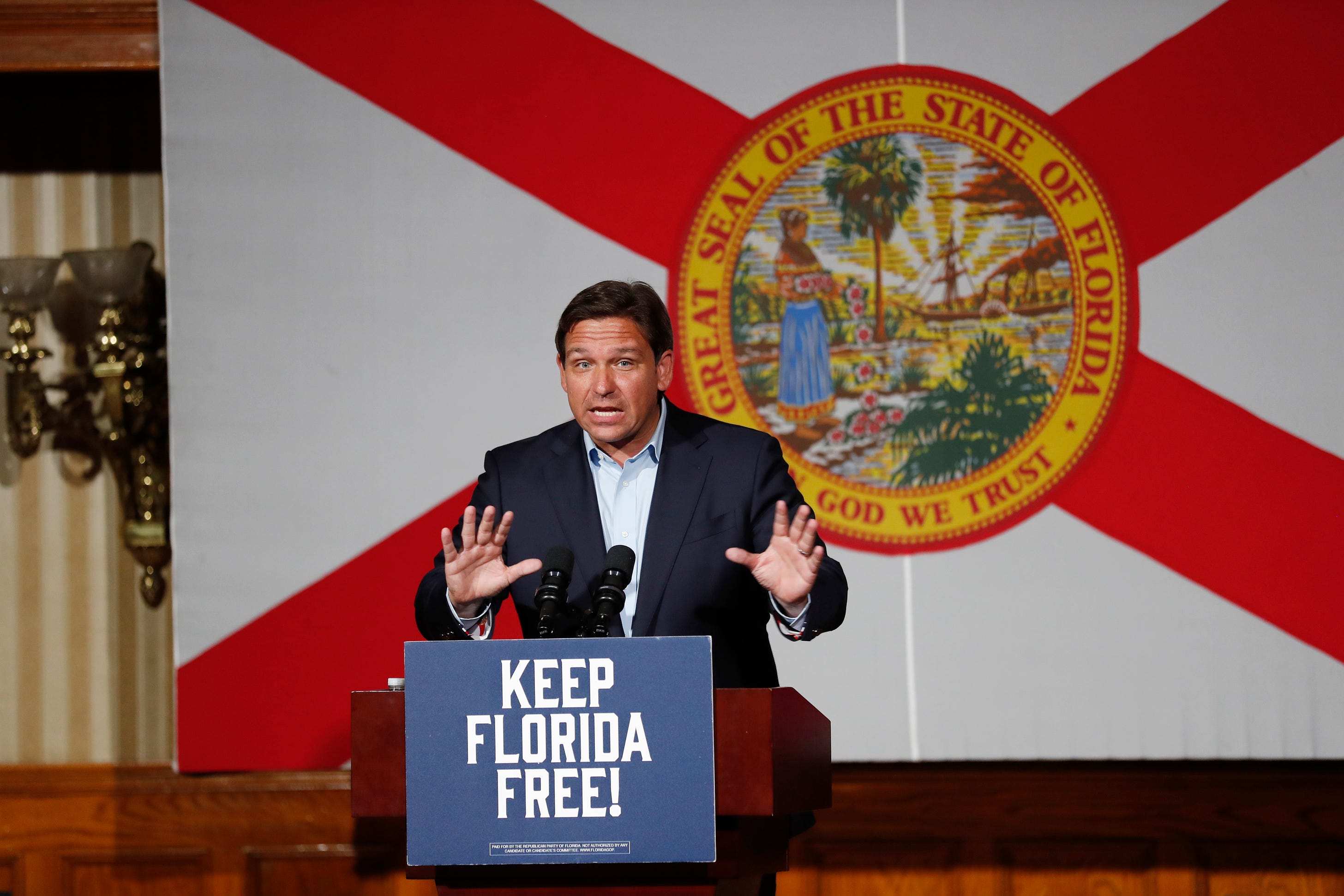


 Diane Ravitch's blog