Archives for category: Democracy

The New York Times published a long article about the rise and power of Stephen Miller. Miller is one of Trump’s closest aides. His title is Deputy Chief of Staff but he seems to be in charge of immigration policy and many more areas. His goal is to deport every immigrant out of the U.S.

This is a gift article, so you should be able to open it and read it.

Here are a few choice selections.

About the turmoil in Los Angeles, where Trump nationalized the state Guard and sent in hundreds of Marines, which generated protests:

The crisis, from the immigration raids that sparked the protests to the militarized response that tried to put the protests down, was almost entirely of Mr. Miller’s making. And it served as a testament to the remarkable position he now occupies in Mr. Trump’s Washington. Kristi Noem, the homeland security secretary, who reportedly accompanied Mr. Miller on his visit to ICE headquarters, seems to defer to him. “It’s really Stephen running D.H.S.,” a Trump adviser said. The attorney general, Pam Bondi, is so focused on preparing for and appearing on Fox News that she has essentially ceded control of the Department of Justice to Mr. Miller, making him, according to the conservative legal scholar Edward Whelan, “the de facto attorney general.” And in a White House where the chief of staff, Susie Wiles, is not well versed or terribly interested in policy — “She’s producing a reality TV show every day,” another Trump adviser said, “and it’s pretty amazing, right?” — Mr. Miller is typically the final word.

There is much truth to the conventional wisdom that the biggest difference between the first and second Trump presidencies is that, in the second iteration, Mr. Trump is unrestrained. The same is true of Mr. Miller. He has emerged as Mr. Trump’s most powerful, and empowered, adviser. With the passage of the big policy bill, ICE will have an even bigger budget to execute Mr. Miller’s vision and, in effect, serve as his own private army. Moreover, his influence extends beyond immigration to the battles the Trump administration is fighting on higher education, transgender rights, discrimination law and foreign policy….

Mr. Miller is more obdurate when it comes to domestic policy, particularly immigration. For Mr. Trump’s second term, he has led the president to stake out a series of maximalist positions, from the ICE raids to the use of the Alien Enemies Act to raising the possibility of suspending habeas corpus for people suspected of being undocumented immigrants. Mr. Trump seems to enjoy having Mr. Miller play the heavy on immigration. During his first term, he jokingly told people who urged him to take more moderate stances on immigration that Mr. Miller would never go for them. Last year, he reportedly quipped during a campaign meeting that if it was up to Mr. Miller, the population of the United States would be only 100 million people and they’d all resemble Mr. Miller. The humor, however, underscores something serious: On immigration, Millerism is a more consistent ideology than Trumpism.

While Mr. Miller is an ardent restrictionist, seeking to reduce all immigration to the United States, Mr. Trump has at times backed H-1B visas for skilled foreign workers; created a wait-list for a proposed special visa, called a Trump Gold Card, that wealthy immigrants could buy for $5 million apiece; and expressed regret about the impact ICE raids were having on the agriculture and hospitality industries. Indeed, the backlash to the ICE raids was so great that in early June, Mr. Trump reversed himself and declared the agriculture and hospitality sectors off-limits to that sort of strict immigration enforcement — before, after intense lobbying from Mr. Miller, he reversed himself again. Still, the hiccup was enough to hint at a broader potential rupture, especially if Mr. Miller’s immigration policies continue to prove unpopular. A recent Quinnipiac poll found that 57 percent of Americans disapprove of Mr. Trump’s handling of immigration, once his greatest political strength.

It is sickening to realize that the US, our beloved country, is now aligned with Russia and Putin. It is sickening to realize that when the UN took a vote to condemn Putin’s illegal invasion of Ukraine, the U.S. voted “no,” allied with Russia, North Korea, and Iran. It is sickening to realize that the U.S. is now in cahoots with the enemies of freedom and democracy.

It is sickening to see the Justice Department turned into a weapon for Trump’s personal revenge. It is sickening to see Trump’s vicious assault on higher education and academic freedom. It is sickening to watch the arrest and detention of immigrants by masked men without ID without a semblance of due process. It is sickening to see the massacre of civilians in Gaza. It is sickening to see the Trump family scoop up billlions in real estate deals, crytocurrency and other ventures. It is sickening to see the Republican Party pass a budget that cancels the health insurance of millions of low-income Americans to pay for tax cuts for the richest Americans.

One man is responsible: Trump. He worries about Putin’s feelings, not about Russian bombs hitting Ukrainian schools, playgrounds, hospitals, homes, and its energy supply. He plays with tariffs as a way to humiliate other countries, carelessly wiping out the life savings of people who trusted him. Was it by accident that he excluded Russia, North Korea, Belarus, and Cuba from his tariff threats? Trump jokes about turning Gaza into a luxury resort instead of demanding an end to the war. The cruel budget that takes from the poor and gives to the rich was his budget. It is his massive ego that has turned the Department of Justice into his personal revenge and retribution machine.

I wish he could watch Charlie Chaplin in this speech from his film The Great Dictator. It is only three minutes. Please watch. These thoughts are needed today more than at any time since 1945.

When Trump named Ed Martin as Acting U.S. Attorney for the District of Columbia, those who know his record (and are not faithful Trumpers) were appalled. He had actively defended the January 6 insurrection and had a long record as a Putin apologist, among other things. A strange choice for a very important role in law enforcement. Fortunately, the Republicans who are a majority on the Senate Judiciary Committee rejected his nomination.

Timothy Snyder writes here about the role Ed Martin has played as a mouthpiece for Putin. Another reason not to normalize the Trump regime. Snyder is perhaps the leading scholar of European history, authoritarianism and tyranny. He recently announced that he was leaving Yale University for the University of Toronto.

Snyder writes:

Ed Martin is a major actor in Trump’s attempted regime change to authoritarianism. His particular role is to transform the law into a tool to intimidate Americans. After a stint as interim US Attorney for DC which was marked by unprecedented weaponization of the position, Martin will now continue his work for Trump as the official “weaponization czar.”

This is a new position within the Justice Department, designed by the Trump administration, to punish people who have committed no crimes. Martin was originally placed on the “weaponization working group” seemingly ex officio when he was a US Attorney; he will now continue as its chairman. On Martin’s account, his assignment will be to publicly single out Americans who have not been found guilty of anything, or for that matter even indicted. He says there will be “no limit to the targets.”

Martin’s authoritarian past and loyalties are a matter of public record. He helped build an alternative reality around Trump’s Big Lie and coup attempt, treating the January 6th criminals as heroes deserving of financial support and pardons. As interim US attorney, he described himself as President Trump’s lawyer, and abused his position to send letters to people who displeased the president in some way. He threatened journalists, universities and scientists.

Martin, to use the historical term, is taking an ostentatious part in the ongoing attempt at what the Nazis called a Gleichschaltung of institutions: of dropping the distinction between the law and the leader, and of attempting to force everyone in public life into line with the leader’s latest statements. The reference is not accidental. Martin is on the far right, and an advocate of great replacement theory: the spurious idea that a conspiracy seeks to replace white Americans with immigrants. He had a very supportive relationshipwith a known American Nazi.

The czars, lest we forget, were Russian autocrats. The title “weaponization czar” reminds us that much of happening in the United States under Trump happened first in the home of the czars. In the Russian Federation today, the law is weaponized. Prosecutions follow the whims of Putin and his regime, and that the law will be invoked against them according to the political (and financial) interests of those who hold power. Russian media is full of accusations made by Russian officials that people are criminals or wrongdoers, even before they have been tried or subjected to any judicial procedure.

It is important that we understand that Russian-style authoritarianism is a real possibility in the world, one which Martin not only advocates but represents. Russia is not a comparison for Martin. It is a central part of his career. He has no actual qualifications to serve in the Department of Justice. His role has to do instead with making the law something that it is not supposed to be: a way to protect the powerful and punish the innocent who offend them. He auditioned for this role as a propagandist for Russia’s regime.

The title “weaponization czar” is appropriate because Martin’s most interesting achievements thus far are, in fact, in the service of Russia. He has done more visible work for the Russian state television than for any other institution. Martin, in other words, has already been part of one weaponized legal system for some time. His American career as “weaponization czar” is a natural second step of his Russian career as apologist for both Russian and American weaponizers and authoritarians.

Between 2016 and 2024, Martin was a star of both RT and Sputnik, which are propaganda arms of the Russian state. Putin himself has made this completely clear. One of the central missions of RT and Sputnik is to weaken the standing and power of the United States. Anyone who goes on RT or Sputnik, as Martin did more than a hundred times, knows what he is doing. For eight years, on any issue of the day, Martin was there to spread mendacious propaganda about Americans and to defend Putin and Trump. His Russian work surpassed any media exposure in the United States.

Julia Davis, who does the important work of contextualizing Russian propaganda television available for a global viewership, has made Martin’s appearances visible. With her permission, I am sharing her work in the following paragraph. It provides samples, with video links back to his appearances, of how Ed Martin spreads untruth in the service of Russian and American authoritarians. If you want to take the time to judge more of his appearances than the ones I cite below, here (again thanks to Julia Davis) is a longer compilationof Martin’s appearances on Russian propaganda television.

Trump as American president can do, says Martin on Russian propaganda television, whatever he wants. Martin proposes that we should live in the alternative reality provided by the Russian propaganda he serves, since American media cannot be trusted. He instructs us that American elections are rigged and that the January 6th criminals are political prisoners. (Note that Martin was thereby on Russian propaganda television forecasting his own role in seeking pardons for these people and raising money for them.) Martin denied that Russia interfered in the 2016 US elections, although this was quite blatant — and indeed continuous, right down to the uncontested reports that Russians called in bomb scares to predominantly Democratic precincts in 2024. Martin also quite clear on the American role in the world, which is that the US should serve Putin and his wars. Echoing Russian claims at the time, Martin claimed that US intelligence was wrong about the coming full-scale US invasion of Ukraine, when is in fact it was entirely correct. In his view, the NATOalliance is unnecessary. The United States should be Russia’s ally.

There was a time, not so very long ago, when long service to hostile foreign propaganda networks would have been disqualifying for positions in the federal government. Now, as the head of RT boasts, it seems to be a qualification. Since Trump wants loyalists to him rather than to the United States, willingness to serve foreign countries, at least corrupt dictatorships, would be a useful filter. Repeating Russian propaganda tropes could hardly be offensive to Trump; he does this all the time. Taking part in Putin’s propaganda system would be naturally understood as the right kind of apprenticeship for work on Trump’s own regime change. We know that Trump chooses his people by treating their television appearances as auditions. So why not Russian television appearances? All the better.

No surprisingly, Martin says that his key assignment as weaponization czar will be to punish those who investigated Trump’s very real connections to Russia. This country has paid a huge price for not recognizing Russia’s intervention in the 2016 election for what it was: highly consequential and quite possibly decisive in the moment, and a sign of the coming age of oligarchical cooperation via digital tools to build right-wing regimes. That age is now upon us. There is, unmistakably, something very strange about the Trump’s submissiveness to Russia: appointing its media darlings (the list includes Tulsi Gabbard, who is of all things director of national intelligence); exempting it from tariffs when everyone else was targeted, refusing to pressure Putin to end a war when that is the obvious policy, sending as his envoy to Moscow a man who simply repeats Russian claims and uses Russian translations. Too many of us have allowed ourselves to be intimidated by the fear that Trump will use the word “hoax” when we point to the Russian elements of our present reality: such as, for example, that our “weaponization czar” apprenticed in the role in the service of Russia. With our weaponization of the law and our czars, we have a Russia problem.

Working with Russian institutions will not hurt Martin with Trump’s followers, who have been trained to see Russia not as an actual country with interests but as part of a “hoax,” a conspiracy against Trump. This is the sad convenience of “America First”: it really means “America Only”: no matter how things get, we get to be first, since no other countries exist in our minds. If other countries are meaningless, then MAGA people can rest assured that there is nothing like the complicity of international oligarchs, or the guild of international fascists, or the plans of countries like Russia to destroy the United States from within. If other countries do not matter, then it never seems right to ask: just why is it that Russian propaganda and Trumpian rhetoric so often overlap, to the point that training on one is preparation for mouthing the other? But there are, of course, Republicans who have a notion of the interests of the United States, and of the rule of law. For them, Martin’s services to Russia should matter.

The Russia connection is perhaps most important to opponents of Trump. Speaking of Martin’s connections to Russia is not a way of sloughing off responsibility to another country for our own failings. It is, instead, a way to take responsibility. So long as we see Trump and his loyalists as purely American characters, our American exceptionalism tempts us to normalize what they do. We ask ourselves, over and over again, if this is “really” an attempt to end democracy. But if we take seriously the connections of someone like Martin with a hostile foreign authoritarian power engaged in a genocidal war, we get a sense of where things could be headed. Russia is a real country and, for us, a real possibility. When we recognize that the attempt to make America authoritarian is part of a tawdry global trend, with general patterns that we can recognize, we can better see where we are, and get to work.

The German data company Datapulse released a report showing the vast and growing power of billionaires in the U.S. The report confirms your and my suspicions about the rigging of our economy and our politics. Surely it’s no surprise that Trump’s Cabinet is packed with billionaires. Guess who they are looking out for? Not you.

They cheered on Elon Musk’s ignominious DOGS as they slashed vital government programs. They didn’t complain when Musk closed USAID, causing the ultimate deaths of millions of children and parents because of the halt in US food, medicine and health clinics.

They are thrilled to see Trump send in the troops to halt protests against ICE tactics.

A democracy is supposed to be of the people, for the people, by the people. We are rapidly devolving into an autocratic regime where the rich run the show.

Here is what Datapulse found:

The report, “The Rich Aren’t Just Getting Richer—They’re Running the Show” moves beyond familiar headlines to provide fresh, specific data points on wealth, power, and policy.

Key findings include:

  • The Myth of “Tax Flight”: Contrary to popular narratives, the mega-rich are not fleeing high-tax states. Our data shows that California and New York, states with progressive tax codes, are home to 40% of all U.S. billionaires.
  • Explosive Growth: The number of U.S. billionaires has nearly tripled since 2007, growing from 329 to 877 today. This trajectory is unique to America; China’s billionaire class, by comparison, is stalling.
  • The Rise of the Billionaire Political Class: In the post-Citizens United era, the top 10 political donors, all billionaires, contributed over $420 million in the 2024 cycle alone, directly translating wealth into political influence.
  • Policy for the Few: The study analyzes the direct impact of billionaire-backed policy, such as the House’s 2025 “Big Beautiful Bill,” which could see billionaires gain over $390,000 in annual after-tax income while households earning under $51,000 see their incomes shrink.
  • Concentrated Wealth: Tech and Finance now account for nearly half of all U.S. billionaires, with tech titans alone commanding 37% of total billionaire wealth.

The full study with all 10 interactive charts is available here:
https://www.datapulse.de/en/billionaires-usa/ 

This data provides a new lens through which to view the intersection of wealth and power in America.

The report was compiled by Datapulse.


https://www.datapulse.de/en/
(+49) 30-75437064

Since this is a mostly education blog, I have covered the budget debate by focusing on what the GOP is doing to maim public schools and enrich private (especially religious schools). In the past, Republicans were strong supporters of public schools. But the billionaires came along and brought their checkbooks with them.

The rest of the Ugly bill is devastating to people who struggle to get by. Deep cuts to Medicaid, which will force the closure of many rural hospitals. Cuts to anything that protects the environment or helps phase out our reliance on fossil fuels. Well, at least Senator Schumer managed to change the name of the bill, new name not yet determined.

One Republican vote could have sunk the bill. But Senator Murkowski got a mess of pottage.

David Dayen writes in The American Prospect:

Welcome to “Trump’s Beautiful Disaster,” a pop-up newsletter about the Republican tax and spending bill, one of the most consequential pieces of legislation in a generation. Sign up for the newsletter to get it in your in-box.

By the thinnest of margins, the U.S. Senate completed work on the One Big Beautiful Bill Act on Tuesday morning, after Sen. Lisa Murkowski (R-AK) decided that she could live with a bill that takes food and medicine from vulnerable people to fund tax cuts tilted toward the wealthy, as long as it didn’t take quite as much food away from Alaskans.

The new text, now 887 pages, was released at 11:20 a.m. ET. The finishing touches of it, which included handwritten additions to the text, played out live on C-SPAN, with scenes of the parliamentarian and a host of staff members from both parties huddled together.

At the very end, Senate Minority Leader Chuck Schumer knocked out the name “One Big Beautiful Bill Act” with a parliamentary maneuver, on the grounds that it was ridiculous (which is hard to argue). It’s unclear what this bill is even called now, but that hardly matters. The final bill passed 51-50, with Vice President JD Vance breaking the tie.

Murkowski was able to secure a waiver from cost-sharing provisions that would for the first time force states to pay for part of the Supplemental Nutrition Assistance Program (SNAP). In order to get that past the Senate parliamentarian, ten states with the highest payment error rates had to be eligible for the five-year waiver, including big states like New York and Florida, and several blue states as well. 

The expanded SNAP waivers mean that in the short-term only certain states with average or even below-average payment error rates will have to pay into their SNAP program; already, the language provided that states with the lowest error rates wouldn’t have to pay. “The Republicans have rewarded states that have the highest error rates in the country… just to help Alaska, which has the highest error rate,” thundered Sen. Amy Klobuchar (R-MN), offering an amendment to “strike this fiscal insanity” from the bill. The amendment failed along party lines.

The new provision weakens the government savings for the bill at a time when the House Freedom Caucus is calling the Senate version a betrayal of a promise to link spending cuts to tax cuts. But those House hardliners will ultimately have to decide whether to defy Donald Trump and reject the hard-fought Senate package, which only managed 50 votes, or to cave to their president.

In addition, Murkowski got a tax break for Alaskan fishing villages and whaling captains inserted into the bill. Medicaid provisions that would have boosted the federal share of the program for Alaska didn’t get through the parliamentarian; even a handwritten attempt to help out Alaska on Medicaid was thrown out at the last minute. But Murkowski still made off with a decent haul, which was obviously enough for her to vote yes.

All Republicans except for Sens. Rand Paul (R-KY), Thom Tillis (R-NC), and Susan Collins (R-ME) voted for the bill. Tillis and Collins are in the two most threatened seats among Republicans in the 2026 midterm elections; Tillis decided to retire rather than face voters while passing this bill. Paul, a libertarian, rejected the price tag and the increase in the nation’s debt limit that is folded into the bill.

Other deficit hawks in the Senate caved without even getting a vote to deepen the Medicaid cuts. That could be the trajectory in the House with Freedom Caucus holdouts. But the House also has problems with their handful of moderates concerned about the spending slashes in the bill.

The bill was clinched with a “wraparound” amendment that made several changes, including the elimination of a proposed tax on solar and wind energy production that would have made it impossible to build new renewable energy projects. The new changes now also grandfather in tax credits to solar and wind projects that start construction less than a year after enactment of the bill. Even those projects would have to be placed in service by 2027. The “foreign entities of concern” provision was also tweaked to make it easier for projects that use a modicum of components from China to qualify for tax credits.

The bill still phases out solar and wind tax credits rather quickly, and will damage energy production that is needed to keep up with soaring demand. But it’s dialed down from apocalyptic to, well, nearly apocalyptic. And this is going to be another source of anger to the Freedom Caucus, which wanted a much quicker phase-out of the energy tax credits.

The wraparound amendment also doubled the size of the rural hospital fund to $50 billion. The Senate leadership’s initial offer on this fund was $15 billion. Overnight the Senate rejected an amendment from Collins that would have raised the rural hospital fund to $50 billion. Even at that size—which will be parceled out for $10 billion a year for five years—it hardly makes up for nearly $1 trillion in Medicaid cuts, which are permanent. The hospital system is expected to buckle as a result of this legislation, if it passes.

Some taxes, including a tax on third-party “litigation finance,” were removed in the final bill. But an expanded tax break for real estate investment trusts, which was in the House version, snuck into the Senate bill at the last minute.

The state AI regulation ban was left out of the final text after a 99-1 rejection of it in an amendment overnight.

The action now shifts to the House, where in addition to Freedom Caucus members concerned about cost, several moderates, including Reps. David Valadao (R-CA) and Jeff Van Drew (R-NJ), have balked at the deep spending cuts to Medicaid and other programs.

The American Federation of Teachers released a statement by its President Randi Weingarten:

Contact:
Andrew Crook
607-280-6603
acrook@aft.org

AFT’s Weingarten on Senate’s Big, Ugly Betrayal of America’s Working Families

As we prepare to celebrate our independence, the promise of the American dream, of freedom and prosperity for all, is now further out of reach.’

WASHINGTON—AFT President Randi Weingarten issued the following statement after the Senate passed President Trump’s billionaire tax scam:

“This is a big, ugly, obscene betrayal of American working families that was rammed through the Senate in the dead of night to satisfy a president determined to hand tax cuts to his billionaire friends.

“These are tax cuts paid for by ravaging the future: kicking millions off healthcare, closing rural hospitals, taking food from children, stunting job growth, hurting the climate, defunding schools and ballooning the debt. It will siphon money away from public schools through vouchers—which harm student achievement and go mostly to well-off families with kids already in private schools. It’s the biggest redistribution of wealth from the poor to the rich in decades—far worse, to the tune of hundreds of billions of dollars, than the version passed by the House.

“But if you only listened to those who voted yes, you wouldn’t have heard anything like that. You would’ve heard bad faith attempts to rewrite basic laws of accounting so they could assert that the bill won’t grow the deficit. You would’ve heard false claims about what it will do to healthcare and public schools and public services, which are the backbone of our nation.

“The reality is that the American people have rejected, in poll after poll, this bill’s brazen deception. As it travels back to the House and presumably to the president’s desk, we will continue to sound the alarm and let those who voted for it know they have wounded the very people who voted them into office. But it is also incumbent on us to fight forward for an alternative: for working-class tax cuts and for full funding of K-12 and higher education as engines of opportunity and democracy.

“Sadly, as we prepare to celebrate our independence, the promise of the American dream, of freedom and prosperity for all, is now further out of reach.”

 ###


The AFT represents 1.8 million pre-K through 12th-grade teachers; paraprofessionals and other school-related personnel; higher education faculty and professional staff; federal, state and local government employees; nurses and healthcare workers; and early childhood educators.

Michelle H. Davis writes a thoughtful blog on Substack called “Lone Star Left,” where she reports incisively on politics in Texas. This column explains how white supremacists keep Blacks and Hispanic unrepresented and disenfranchised: gerrymandering voting district. What’s happening in Texas is happening in other states, especially the South.

It’s hard to remember that Congress passed the Voting Rights Act in 1965.

Davis writes:

In the early 1960s, Black residents in Leflore County, Mississippi, comprised two-thirds of the population. Despite that, they had no political representation. In 1962, when voter registration of Black voters increased, the all-white Board of Supervisors (similar to a Commissioners’ Court in Texas) cut off federal surplus food aid, a lifeline for over 20,000 poor Black sharecroppers and farmworkers. This move came to be known as the Greenwood Food Blockade.

This move by the white Board of Supervisors exacerbated widespread poverty-induced hunger and malnutrition among Mississippi Delta sharecroppers. This laid the groundwork for long-term food insecurity, economic marginalization, and ongoing inequality in Mississippi that persists to this day.

This pattern is not new. Every time Black Americans have taken even a step toward political power, white supremacy has moved to snatch it back. In Greenwood, it meant starving families to stop them from voting. In Tarrant County today, it means redrawing district lines to erase Black representation, again, by a white-majority governing body.

What happened in Mississippi in 1962 wasn’t just about food. It was about control. And what happened in Tarrant County today isn’t just about maps. It’s about the same thing.

Today, the Tarrant County Commissioners Court voted to approve a redistricting map that effectively eliminates the seat of Commissioner Alisa Simmons, the only Black woman on the court.

It’s not a coincidence. It’s not neutral. It’s not “routine.” It is the calculated removal of a voice that dared to speak up for all of us.

Commissioner Simmons has stood firmly against the racist agenda pushed by Judge Tim O’Hare and the Republican Commissioners on the court. She spoke out against the rise in jail deaths under their watch. She called out the cruelty of defunding Girls Inc., a nonprofit that empowers young women of color. She opposed the elimination of free rides to the polls, which made it harder for working-class people, especially Black and brown voters, to cast a ballot.

And now, she’s being punished for it.

Commissioner Simmons wasn’t just a name on a ballot. She is my commissioner. I voted for her. I campaigned for her. And like thousands of others in Precinct 2, I saw her as a voice for the voiceless, a woman unafraid to shine a light on white supremacy, even when it came dressed in a suit and tie.

That light scared them. So they tried to snuff it out.

What we witnessed today was retaliation. It was white supremacy striking back at a Black woman who told the truth. And just like in Greenwood in 1962, they’re using the tools of power, maps, votes, and bureaucratic language, to do what they couldn’t do in public: silence her.

But we see it. We name it. And we will fight it.

The new map that the County Commissioners voted on today.

The Republican Commissioners and their defenders kept repeating the same excuse over and over again, “This wasn’t about race. It was just about politics.”

They said the map was designed to secure a Republican majority, not to silence Black voters. As if those two things aren’t deeply intertwined.

It’s the same argument Greg Abbott’s lawyers made in Shannon Perez v. Abbott, when Texas was caught racially gerrymandering districts. Their defense?

A direct quote from Greg Abbott

“It is not our intent to discriminate against minorities. It is our intent to discriminate against Democrats. If minorities happen to vote Democrat, that is their fault, not ours.”

That’s not a denial. That’s a confession….

Let’s stop pretending this distinction between race and party means anything in Texas. In Tarrant County, in Harris County, across the South, voter suppression by “party” is voter suppression by race. When you target the communities who dare to elect Black women, working-class progressives, young organizers, and civil rights leaders, you are targeting those communities on purpose.

They can say it’s about partisanship all they want. But we know what it’s really about.

Because when Conservatives talk about “conserving” something, they mean it.

They want to conserve white supremacy.

They want to conserve inequality, corporate power, and police brutality.

They want to conserve a system where jails are full, books are banned, teachers are silenced, and women don’t have autonomy.

They want to conserve a Texas where your zip code decides your worth, and where Black and brown voices are only welcome if they stay quiet.

And when people like Alisa Simmons refuse to stay quiet, they get erased.

But erasing her seat won’t erase her power, or ours….

And just when we thought we might get a win, it vanished as quickly as it came.

Yesterday, far-right extremist Tony Tinderholt (R-HD94) announced he would not seek reelection to the Texas House. For a brief moment, there was celebration across Arlington. A man who built his career on cruelty, censorship, and conspiracy was finally stepping aside. But the celebration didn’t last.

Because today, just minutes after the Tarrant County Commissioners voted to dismantle Precinct 2, Tinderholt announced he would run for that very seat, Alisa Simmons’ newly gutted district.

And he didn’t come alone.

Cheryl Bean, another far-right extremist and ally of Tinderholt, announced her run for the now-open HD94 seat. A seat that was, conveniently, made safer for someone like her under the new maps.

Bean doesn’t even live in the district. She changed her voter registration to a new address inside it—an address she doesn’t own, according to the Tarrant Appraisal District. Her real home? Still outside the district lines. But facts don’t matter when the plan is to bulldoze through communities with precision and arrogance.

This wasn’t a coincidence. It was a coordinated political hit job, plain and simple.

A rigged map. A choreographed retirement. A handoff. A handpicked replacement. All timed to disempower the voices of Black and brown voters in Tarrant County. All orchestrated by Tim O’Hare and the extremist wing of the Republican Party.

They knew Simmons couldn’t be beaten fairly.

So they changed the lines.

They cleared the field.

And then they tried to rewrite the future.

But we see them.

We know the playbook.

And we’re not going to let this go unanswered.

This is part of a broader, coordinated strategy across Texas to suppress the political power of Black and brown communities under the guise of partisan politics…..

To read the post in full, open the link.

John Merrow was the education correspondent for PBS for many years. Now, in retirement, he continues to write and help us think through the existential moments in which we live.

He writes:

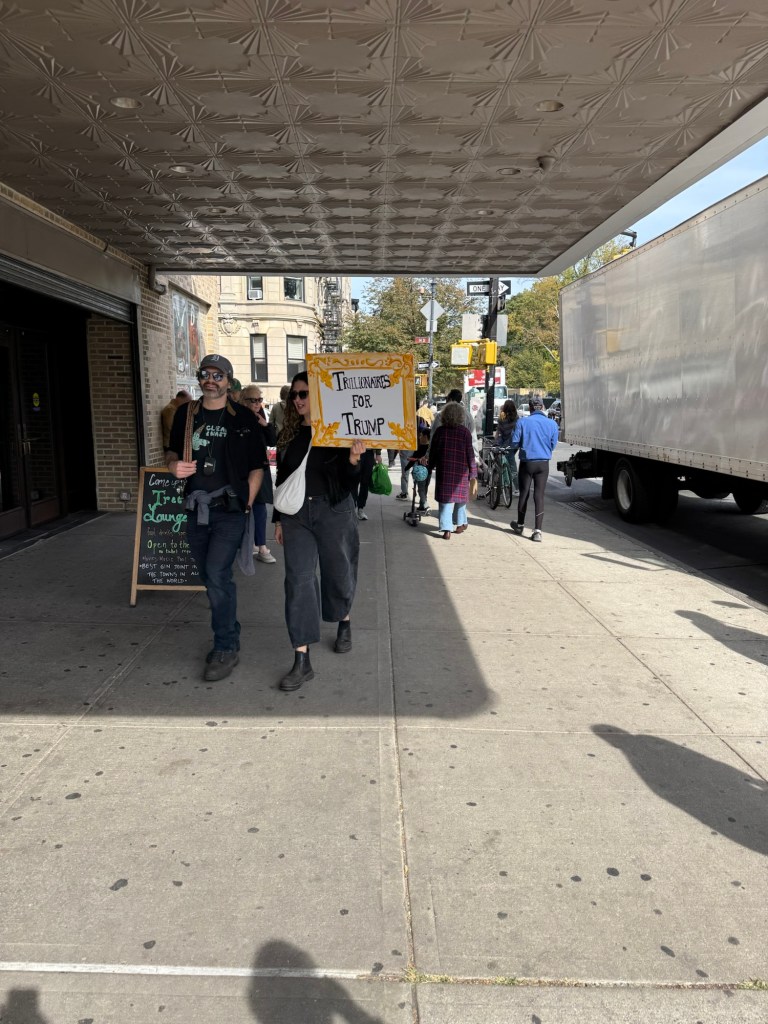
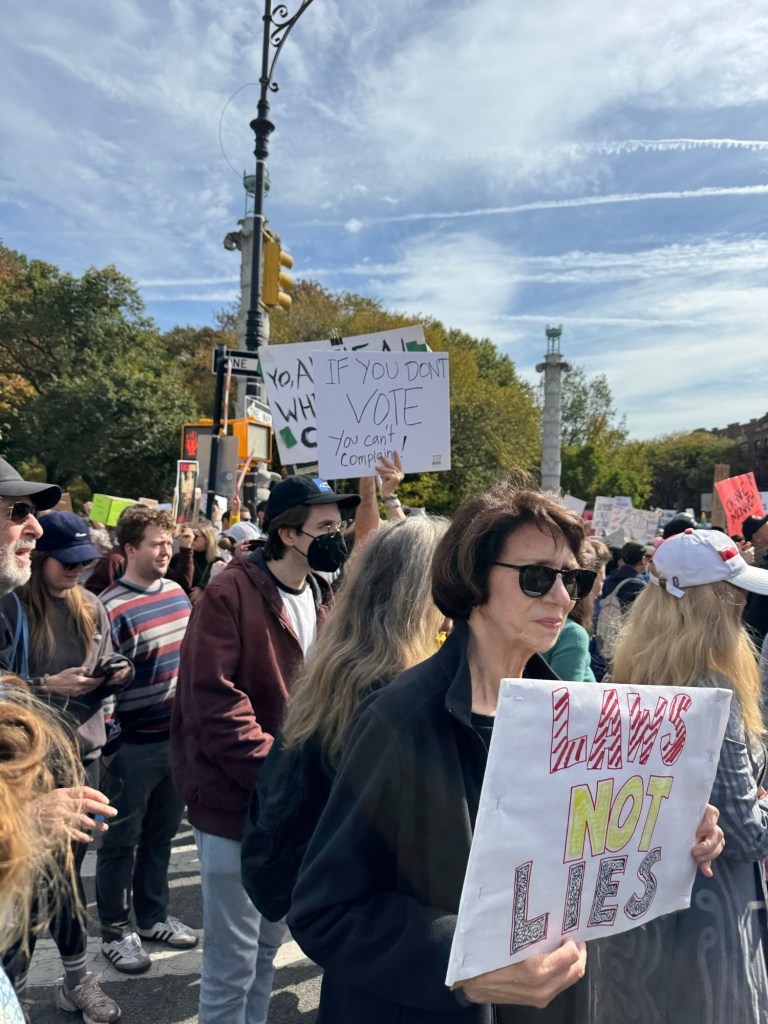
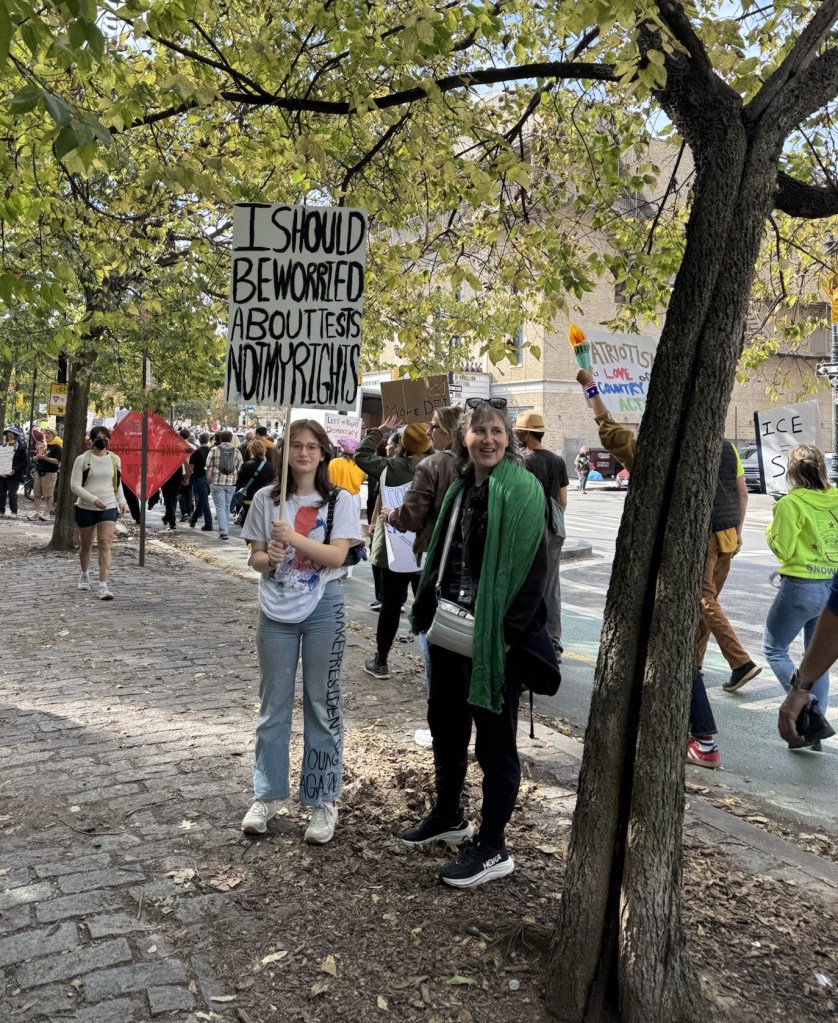
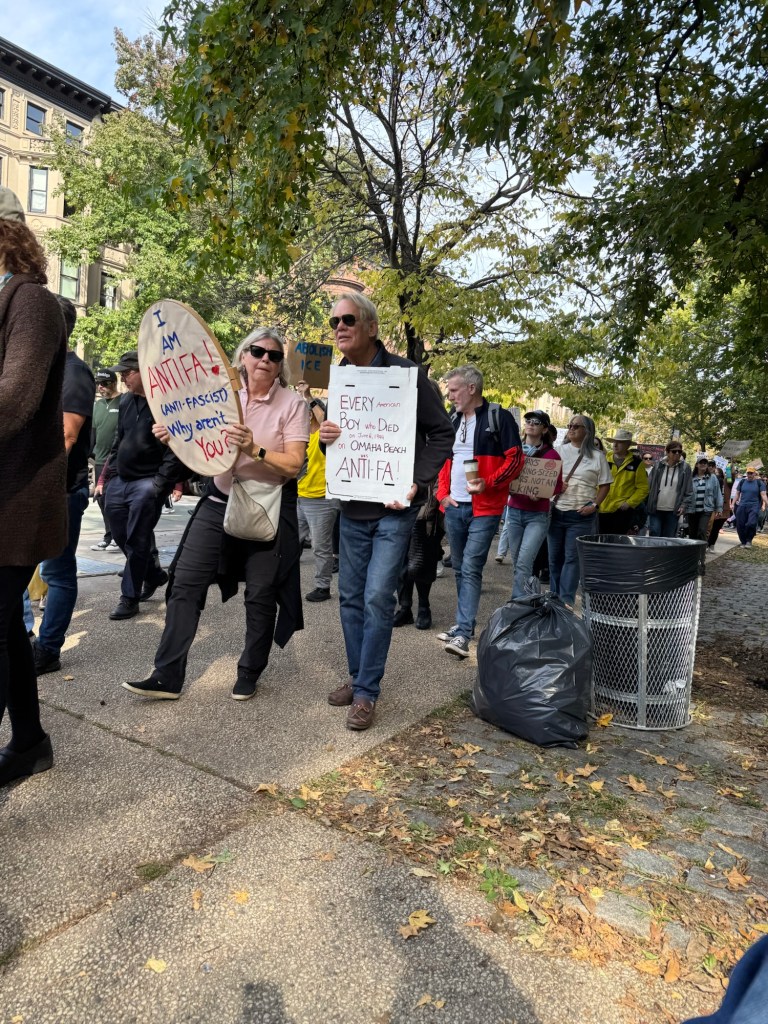
More than five million demonstrators in about 2000 communities stepped forward to declare their opposition to Donald Trump, on June 14th. “No Kings Day” was also Trump’s 79th birthday, Flag Day, and the anniversary of the creation of the American army.

So now we know what many of us are against, but the central question remains unanswered: What do we stand FOR? What do we believe in?

Just as FDR called for Four Freedoms, the Democratic party needs to articulate its First Principles.  I suggest three: “The Public Good,” “Individual Rights,” and “Rebuilding America after Trump.” 

 THE PUBLIC GOOD: Democrats must take our nation’s motto, E pluribus unum, seriously, and they must vigorously support the common good.  That means supporting public libraries, public parks, public schools, public transportation, public health, public safety, public broadcasting, and public spaces–almost anything that has the word ‘public’ in it.

INDIVIDUAL RIGHTS: Because the fundamental rights that are guaranteed in our Constitution are often subject to interpretation, debate, and even violent disagreement, Democrats must be clear.  Free speech, freedom of worship, habeas corpus, and other fundamental rights are not up for debate, and nor is a woman’s right to control her own body.  

Health care is a right, and Democrats must make that a reality.  

Conflict is inevitable–think vaccination requirements–and Democrats should come down on the side of the public good.  

Because Americans have a right to safety, Democrats should endorse strong gun control measures that ban assault weapons that have only one purpose–mass killing. 

REBUILDING AMERICA AFTER TRUMP:  The Trump regime was and continues to be a disaster for a majority of Americans and for our standing across the world, but it’s not enough to condemn his greed and narcissism, even if he goes to prison.  Let’s first acknowledge that Trump tapped into serious resentment among millions of Americans, which further divided our already divided country.  

The challenge is to work to bring us together, to make ‘one out of many’ in the always elusive ‘more perfect union.’  The essential first step is to abandon the ‘identity politics’ that Democrats have practiced for too long.  Instead, Democrats must adopt policies that bring us together, beginning with mandatory National Service: 

National Service: Bring back the draft for young men and women to require two years of (paid) National Service, followed by two years of tuition or training credits at an accredited institution.  One may serve in the military, Americorps, the Peace Corps, or other helping organizations.  One may teach or work in distressed communities, or rebuild our national parks, or serve in other approved capacities.  JFK famously said “Ask not what your country can do for you. Ask what you can do for your country.”  Let’s ask BOTH questions.  

Additionally: 1) Urge states to beef up civic education in public schools, teaching real history, asking tough questions.  At the same time, federal education policies should encourage Community schools, because research proves that schools that welcome families are more successful across many measures.

2) Rebuild Our Aging Infrastructure: This is urgent, and it will also create jobs.

3) Adopt fiscal and monetary policies to address our burgeoning national debt. This should include higher taxes on the wealthy, emulating Dwight Eisenhower. 

4) Adopt sensible and realistic immigration policies that welcome newcomers who arrive legally but close our borders to illegal immigration.

5) Rebuilding America also means rebuilding our alliances around the world.  Democrats should support NATO and Ukraine, and rejoin efforts to combat climate change. 

This is a startling and frightening article about the poison pill embedded in Trump’s One Big Ugly Budget Bill. It contains a plan for destroying the student aid program that has subsidized the cost of higher education for middle-income and low-income students. The plan was described in the 900-page Project 2025. Previous generations of lawmakers believed that the nation benefited by investing in the postsecondary education of young people. They could choose the program they wanted, whether in a liberal arts college or a trade school. Whichever route they chose, their education benefited the nation.

But today, Republicans don’t want the federal government to lend money for students to go to college.

The author of the education chapter in Project 2025 is now in charge of implementing the plan to deep-six student loans inside the Department of Education. Read this article and weep.

The article was written by Astra Taylor and Eleni Schirmer and appears in The New Republic:

The Trump administration’s bombastic attacks on the nation’s most prestigious universities have commanded the public’s attention all year long. Now congressional Republicans are poised to dramatically expand that onslaught. If you think the last few months have been bad for Harvard, brace yourself—the “big, beautiful bill” is coming, and with it, a new dimension of destruction. 

While it’s mostly gone unremarked upon in the mainstream media, institutions of higher learning across the country are about to be pummeled by the looming reconciliation bill, which may portend an extinction event for higher education as we know it. The bill weaponizes working-class families’ reliance on debt to finance their college dreams with such intensity that not only will it push millions to the financial brink, it will push them out of higher education altogether. 

For colleges and universities, the potential fallout is hard to overstate. Whatever schools survive are likely to be drained of working- and middle-class families, instead populated only by society’s most wealthy. As it is, millions of people rightly consider universities to be a costly endeavor that is irrelevant to their everyday life. But rather than remaking higher ed into a vibrant and more democratic institution, this bill threatens to do the opposite. It will cement the stereotype of higher education as an elite institution into an ironclad reality. On June 25, student debtors and their allies will be protesting these devastating cuts in Washington, D.C. But so far, very few elected officials are sounding the alarm on these issues with the fever pitch they deserve, let alone doing the work required to slow down and obstruct their passage into law.  

The overhaul of the student lending system championed by Republican legislators has nothing to do with fiscal responsibility or balancing the budget. Instead, it provides an ominous articulation of the Republican Party’s authoritarian ambitions, one that is chillingly consistent with the bill’s massive increases for immigration and border security. This is not a budget bill, it is a debt and deportation bill—and one built on the fascist foundation laid by the Heritage Foundation’s now-notorious Project 2025

As of this month, Lindsey Burke, formerly the Heritage Foundation’s top education policy official, serves as the Education Department’s deputy chief of staff for policy and programs. As the author of Project 2025’s chapter on education policy, Burke recommended gutting student loan relief (along with diversity, equity, and inclusion programs and scientific research funding) to bring universities to heel and reorient American society toward the far right. 

In the words of influential conservative activist Christopher Rufo, “Reforming the student loan programs could put the whole university sector into a significant recession” and state of “existential terror.” The goal is to use economic policy to impose an unpopular and stifling ideological agenda, exacted by punitive student debt. 

Whereas President Biden’s administration was defined by debates over how much student debt should get canceled and how quickly, this bill kicks away the concept of student loan relief altogether. In a draconian sweep, this bill removes the congressionally authorized power to cancel federal student loans that sitting presidents have long possessed. This means that even if the Democrats win back the White House in 2028, the next president will lack a critical tool—one that Biden possessed but, to his lasting shame, refused to use. 

Though many details are not yet settled, as the Senate and House negotiate between their respective versions, there is no doubt that the bill’s impact will be immediate and profound. Eight million student debtors will see their monthly payments spike from $0 to over $400. Dentists and doctors who choose to work in low-paying community health care centers will no longer be eligible for Public Service Loan Forgiveness programs, dramatically reducing the number of health care providers in communities that are already underserved. The bill even comes after the long-standing, Republican-approved federal student loan repayment plans, which allow borrowers to discharge their debts after a certain number of years of regular payments. 

While existing repayment programs cancel loans after 10 to 25 years of repayment, this bill moves the goalposts back to 30 years. As it is, Americans over 60 are the fastest-growing demographic of student debtors: the only age cohort to increase every single quarter of President Biden’s administration. This bill will all but ensure millions of working people carry their debts until death. 

House Republicans, whose proposals are even more extreme than their Senate colleagues’, want to end subsidized loans, driving up costs by tens of thousands of dollars, and place restrictive caps on federal loan amounts. The House bill viciously cuts Pell Grants while increasing the course load required for part-time students to access aid, making it more difficult for people with jobs or family responsibilities to afford to study. 

Both House and Senate versions strive to reduce Parent PLUS and Grad PLUS programs, decreasing working-class families’ abilities to take on loans commensurate with the costs of tuition. Families that can’t afford to pay up front will either have to take their chances with private lenders—who are likely to shut out the neediest families—or choose to forgo the education altogether. Those who take the gamble will face rising debt loads with little possibility of relief, prompting a doom loop of delinquencies, defaults, and tanked credit scores, exacerbating the financial precarity of already over-stressed and stretched borrowers. 

These cuts won’t just harm students who rely on loans to afford college; they will take the doors off colleges’ and universities’ capacity to expand minds and redistribute opportunity. Lost revenue will encourage schools to close programs, squeeze staff, and perhaps shutter entirely. A proposed endowment tax for colleges and universities has prompted fury among higher education lobbyists, but those players have said very little about the bill’s vigorous imposition of debt as a tool of social control. 

Most insidiously, the House bill conscripts colleges and universities themselves into debt. Under the guise of “accountability,” House Republicans want to force colleges and universities to pay back any unpaid federal loans for “high risk” students. This move is designed to penalize institutions for serving the low-income students who often struggle to pay their loans and discourage them from offering majors that are not maximally remunerative. They want to turn the working-class kid studying to become a social worker, artist, or a physician into a liability to her university. 

This kind of social engineering through debt isn’t new. In fact, it hails from the origins of the student loan crisis. In the early 1960s, an ambitious politician named Ronald Reagan made his name by picking a fight with the students protesting racism and war on the state’s then tuition-free campuses. “Those there to agitate and not to study might think twice before they pay tuition—they might think twice how much they want to pay to carry a picket sign,” he said. As California’s governor, Reagan tapped into his base’s anxieties about a rapidly integrating and evolving society to chip away at state support for education. As president, he doubled down on this strategy, following the recommendations of the first edition of the Heritage Foundation’s Mandate for Leadership, Project 2025’s precursor, slashing Pell Grants and tightening student loan eligibility for middle-class families. 

As Ryann Liebanthall details in Unburdened,an in-depth history of the student debt crisis, the number of Black college freshmen fell by nearly 8 percent between 1980 and 1983. More than any other figure, Reagan deserves credit for undermining what once passed as common sense in the U.S.—the principle that public college should be high quality, widely accessible, and tuition-free. Like today’s Republicans, Reagan invoked the figure of the student protester, the specter of racial equality, and the tool of student debt to implement a retrograde agenda. 

Contemporary Republicans are even more brazen. Consider a recent report released by the Heritage Foundation that recommends terminating higher education “subsidies” and student loan cancellation in order to “increase the married birthrate.” What does this goulash mean in plain English? Widespread access to college has enabled women to envision lives beyond childrearing; restricting access will increase fertility rates. Conservative power players are more than willing to cast the country into a scientific dark age in their quest to shore up traditional worldviews, outmoded hierarchies, and concentrated wealth. 

The reconciliation bill threatens to supercharge their oligarchic cause. Rising costs will reinforce the perception that education is the domain of an out-of-touch elite, prompting many to abandon or abort their academic dreams, which will resegregate broad swaths of society. The threat of mounting debt will discourage people from studying their passions or pursuing careers in public service, steering them instead toward the private sector or the military. It will weaken the general bargaining position of workers, who will be less able to use education as a path of upward mobility, while making the labor force more docile; workers burdened by debt are less likely to strike. By funneling student debtors’ ballooning payments into Wall Street coffers and regressive tax cuts, it will ensure that social and economic disparities become more entrenched.

And it will shrink our horizons. At their best, colleges and universities are not just places where people get trained in a skill or earn a degree; they enable people to grapple with bigger questions—to find out who they are, to unlock what they want to be and do, to discover how the world is made, and to dream how it could be remade differently. This is why authoritarians find education so threatening, and why the reconciliation bill must be understood as a strike against our freedom to question, learn, and choose our fates. Even, or especially, when that process challenges authority.

While some Democratic leaders have begun to warn of the economic dangers posed by this bill, none yet seem to grasp the existential stakes—nor the transformative vision required to build the political will required to change course. 

Where higher education is concerned, it is not enough to defend a status quo that the American public knows is broken. Today, an astonishing $1.6 trillion in federal student loans crushes nearly 43 million people. This insurmountable burden has made ordinary people increasingly skeptical of the value of education and more susceptible to anti-intellectual appeals. 

To counter the Republicans’ vision for higher education, Democrats must go far beyond a milquetoast goal of a less predatory student debt system. They must articulate a galvanizing vision for free college. The measure is popular: Surveys show that many people, including pluralities of Republicans and independents, are supportive of free college, despite decades of Republican propaganda demonizing academia. In recent months, faculty, staff, students, and student debtors have come together to lay this groundwork. It’s time for Democratic politicians to catch up. We need a legislative and executive agenda that courageously resists Republican tyranny by defending higher education as a public good that is both universal and free. Free as in cost and, just as importantly, free as in aimed at enhancing individual and collective freedom. We can’t afford anything less.

Bill Moyers died yesterday at the age of 91. He was a remarkable man, who served as President Lyndon B. Johnson’s closest advisor and his press secretary, until he quit in 1966. He was a highly accomplished journalist and television star, who dealt with the most controversial issues of the day.

I was privileged to appear on his program.

The full interview is here.

He was one of the great men of the past half-century: Truly moral, ethical, deeply committed to a just world.