Archives for category: Democracy

A reader who identifies as “Retired Teacher” sees the school choice juggernaut as a deliberate plan to destroy our common good: public schools. Thomas Jefferson proposed the first public schools. The Northwest Ordinances, written by the founding fathers, set aside a plot of land in every town for a public school.

The origin of the school choice movement was the backlash to the Brown Decision of 1954. Segregationists created publicly-funded academies (charters) for white flight and publicly-funded vouchers to escape desegregation.

What replaces public schools will not be better for students, and it will be far worse for our society.

So much reckless “choice” will make the public schools the schools of last resort for those that have nowhere else to go. Choice is a means to defund what should be our common good. How are the schools supposed to fund the neediest, most vulnerable and most expensive students when so much funding is transferred to private interests? How will public schools be able to pay to maintain the buildings, hire qualified teachers and pay for all the fixed costs like insurance, transportation and utilities?

The billionaires and religious groups behind so-called choice would like to see public schools collapse. Choice benefits the ultra-wealthy and segregationists. Choice empowers the schools that do the choosing, not the families trying to find a school for their child. If public schools become the bottom tier of choice, they will become like the insane asylums of the 19th century where the unfortunate were warehoused, ignored and abused. This dystopian outcome would be the opposite of what the founding fathers envisioned. Their vision was one of inclusion where all are welcome, a place serves the interests of the nation, communities and individuals with civil, social and individual benefits. A tiered system of schools is neither ‘thorough or efficient.’ It is a nightmare, and nothing any proponents of democracy should be supporting.

YOU ARE INVITED TO A “DAY OF ACTION” AT THE STATEHOUSE

Pastors for Indiana Children is a nonpartisan, independent ministry, not beholden to any special interest group, political party, or church office. We believe in local democracy, cooperation across lines of difference, and organizing to support public education opportunities for Indiana children.

WHO: Any Pastor, Community Leader, Parent, Student, Advocate who wants to keep public schools public, fully funded, and equitably meet the needs of ALL students. Pastor Charles Johnson, Executive Director of Pastors for Texas Children is planning to join us.

WHAT: Pastors for Indiana Children is hosting an Day of Action. We will be speaking with State Legislators directly about HB 1001, HB 1002 and HB 1591. These bills threaten the further destroy public education.

WHEN: Thursday, April 13th, 2023 from 10 a.m. to 12:30 p.m. Press Conference to follow at 12:30PM

WHERE: Indiana State Capitol Building
200 W Washington St, Indianapolis, IN 46204

WHY SHOULD PASTORS STAND UP FOR PUBLIC EDUCATION:

There are several reasons why pastors should stand up for public education:

  1. Public education is a common good: Public education is a fundamental pillar of a healthy and just society. It provides all children, regardless of their background, with the opportunity to learn and develop the skills they need to succeed in life.
  2. Equity and access: Public education is essential for promoting equity and access for all students. It provides a level playing field for students of different socio-economic backgrounds, and helps to reduce disparities in educational opportunities.
  3. Moral imperative: As leaders in our/your communities, Pastors have a moral obligation to support the common good and to advocate for justice and equality. Standing up for public education is one way to fulfill this obligation.
  4. Community engagement: Public schools are often the hub of their communities, serving not just as places of learning, but also as gathering places for community events and activities. Pastors can help to strengthen their communities by supporting public schools and advocating for their improvement.
  5. Shared values: Public education is consistent with many of the values that Pastors hold dear, such as the value of education, the importance of social justice, and the idea that we are all called to work for the common good.

By standing up for public education, Pastors can help to promote equity, justice, and the common good, while also strengthening our communities and living out our values.

Pastors, Ministers and Congregants please take the opportunity to share with other Pastors who may not know what is going on. Although, I have listed 3 bills that are a problem, there are many bills floating through and being passed in our statehouse. We must stand together to push back on this attack of public education and in specific the most vulnerable, OUR CHILDREN.

See you at the State House on April 13, 2023!

Sincerely,


Dr. Ramon L. Batts
State Director
Pastors for Indiana Children
www.PastorsForIndianaChildren.org

Fred Klonsky is a retired teacher who blogs regularly about Chicago, Illinois, the nation, politics, and culture. In this post, he draws an interesting comparison between the recent expulsion of two Black legislators in Tennessee and events concurrent with the end of the Reconstruction era and the reign of Jim Crow. There is this difference: The two ousted members are very likely to be restored to their seats in the legislature by their local elected officials. The Tennessee Three are now national figures revealing the fascist hand in the iron glove of the Republican Party when it has the majority.

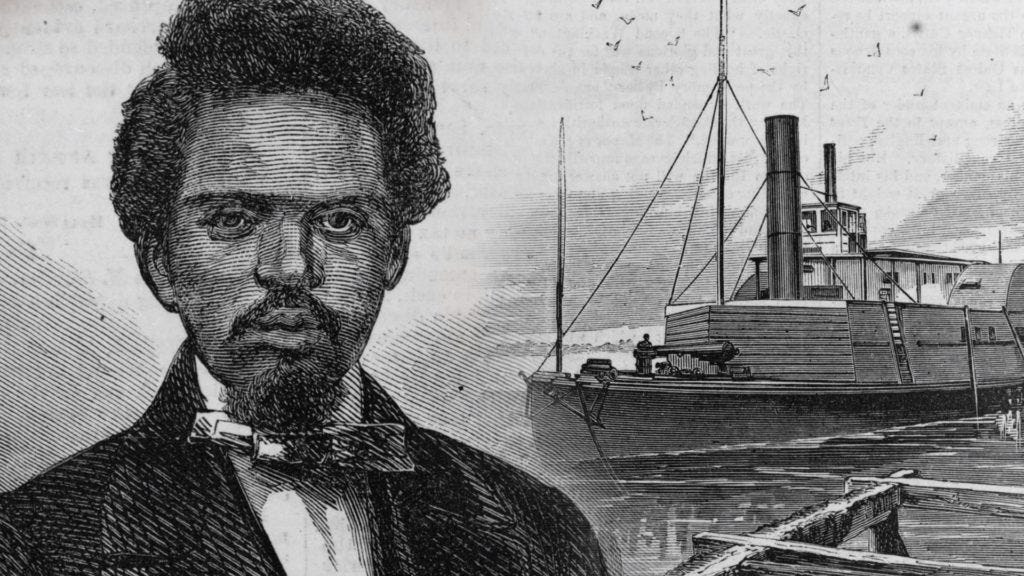
Robert Smalls, Congressman during Reconstruction.

The expulsion of Rep. Justin Jones and Rep. Justin Pearson from the Tennessee legislature has a direct historical link to the overthrow of real democracy and Reconstruction following the Civil War.

On May 13, 1862 an enslaved man named Robert Smalls, who labored on a Confederate steamer in South Carolina’s Charleston harbor, set into motion a daring plan.

As his great-great-grandson Michael Boulware Moore explained, “He saw that the Confederate crew had left, and he knew that oftentimes they left for the evening, not to come back until the next day.”

For Smalls and six other enslaved people and their families, the stakes couldn’t have been higher. “They knew that if they got caught, that they would be, not just killed, but probably tortured in a particularly egregious and public manner,” said Moore.

Disguising himself in the straw hat and long overcoat of the ship’s white captain, Smalls piloted the ship past Fort Sumter towards the Union blockade, and freedom.

After serving on a Union Naval vessel during the Civil War, Smalls returned home to Beaufort, S.C., and was elected to the U.S. House of Representatives – one of more than a dozen African Americans to serve in Congress during the period known as Reconstruction, when the formerly-rebel states were reabsorbed into the Union, and four million newly-freed African Americans were made citizens.

South Carolina, and throughout the former Confederacy, the era of Reconstruction saw the rise of Black political power and representation in both the U.S. Congress and Southern state legislatures.

During the 1870s, more than a dozen African American men, many of whom had been born into slavery, were elected to the U.S. Congress. 

It was a great democratic movement that ended all too quickly.

Former Southern insurrectionists, aided by the rise of the Ku Klux Klan, violently organized an anti-democratic counterrevolution.

Born in South Carolina, Aaron A. Bradley was a shoemaker in Augusta Georgia. Sometime around 1834 he ran away to the North, where he became a lawyer. 

In 1865 he returned to Georgia. He was the most outspoken member of the Black delegation to the constitutional convention. 

In 1868 he was elected state senator from the First District. Bradley rallied plantation workers around Savanah with his insistence that the formerly enslaved people be given land.

But Black political power and Reconstruction was short lived.

One quarter of the Black legislators in Georgia were killed, threatened, beaten, or jailed. In the December 1870 elections the Democrats won an overwhelming victory in overthrowing democracy and Reconstruction.

In 1906 W. H. Rogers from McIntosh County was the last Black legislator to be elected before Black voters were legally disenfranchised in 1908.

The actions by white Republican members of the Tennessee legislature to expel two elected Black members has all the stench of the overthrow of Reconstruction and the establishment of Jim Crow.

Thom Hartmann is reproducing chapters of his book on his blog. This is the beginning of Chaper 12. It is insightful, brilliant, hopeful.

A little patience, and we shall see the reign of witches pass over, their spells dissolved, and the people recovering their true sight, restoring their government to its true principles. It is true, that in the meantime, we are suffering deeply in spirit, and incurring the horrors of a war, and long oppressions of enormous public debt. …If the game runs sometimes against us at home, we must have patience till luck turns, and then we shall have an opportunity of winning back the principles we have lost. For this is a game where principles are the stake.

—Thomas Jefferson, writing about the conservative John Adams presidency

At the core of every form of political and social organization is culture—the collective stories people tell themselves about who they are, how they got there, and where they’re going. Government, in many ways, is one of the most direct expressions of culture, as we’ve seen by the forms of governance adopted by groups ranging from the Maori to the New Caledonians to the Danes to modern-day Americans. Conservatives are fond of describing contemporary political battles as “culture wars,” and this is far truer than most Americans realize.

The good news is that democracy has come under assault in America before, we’ve survived, and the nation actually became stronger for the struggle. The year 1798, for example, was a crisis year for democracy and those who, like Thomas Jefferson, believed the United States of America was a shining light of liberty, a principled republic in a world of cynical kingdoms, feudal fiefdoms, and theocracies. Although you won’t learn much about it from reading the “Republican histories” of the Founders being published and promoted in the corporate media these days (particularly those of John Adams, whom conservatives are trying to reclaim as a great president), the most notorious stain on the presidency of John Adams began in 1798, with the passage of a series of laws startlingly similar to the Patriot Act.

In order to suppress opposition from the Democratic Republican Party (today called simply the Democratic Party) and about twenty independent newspapers who opposed John Adams’s Federalist Party policies, Federalist senators and congressmen—who controlled both legislative houses along with the presidency—passed a series of four laws that came to be known together as the Alien and Sedition Acts.

The vote was so narrow—44 to 41 in the House of Representatives—that in order to ensure passage, the lawmakers wrote a sunset provision into the Acts’ most odious parts: Those laws, unless renewed, would expire the last day of John Adams’s first term of office, March 3, 1801.

Empowered with this early version of the Patriot Act, President John Adams ordered his “unpatriotic” opponents arrested (beginning with Benjamin Franklin’s grandson) and specified that only Federalist judges on the Supreme Court would be both judges and jurors.

The Alien and Sedition Acts reflected the new attitude Adams and his wife had brought to Washington, D.C., in 1796, a take-no-prisoners type of politics in which no opposition was tolerated. In sharp contrast to his predecessor, George Washington, America’s second president had succeeded in creating an atmosphere of fear and division in the new republic, and it brought out the worst in his conservative supporters. Across the new nation, Federalist mobs and Federalist-controlled police and militia attacked Democratic-Republican newspapers and shouted down or threatened individuals who dared speak out in public against John Adams.

In the end, the Sedition Act, which made it a crime to publish “false, scandalous, and malicious writing” against the government or its officials, expired in 1801. The Alien Enemies Act, which enables the president to apprehend and deport resident aliens if their home countries are at war with the United States of America remains in effect today (and is most often brought forth during times of war). Some things, it seems, have changed, but many remain the same from the days of Adams’s Federalist hysteria.[liv]

Recovering a Culture of Democracy

Our democracy and culture have truly reached a threshold. It is time, now, for us once again to follow Jefferson’s wise advice. Hope for the best, organize for a better America, and recognize the power and evil unleashed by politicians who believe that campaign lies are defensible, laws gutting the Bill of Rights are acceptable, and that the ends of stability justify the means of repression and corruption.

America has been through crises before, and far worse. If we retain the vigilance and energy of Jefferson, who succeeded Adams as president—as today we face every bit as much a struggle against the same forces that he fought—we shall prevail.

For the simple reason that, underneath it all, “this is a game where principles are the stake.”

While the principles of that day were confined largely to issues of democracy, personal liberty, and the public good (the interconnectedness of humans), today we have an added principle that we must draw quickly into our national—and international—consciousness. Very simply, if we fail to realize—and to make part of our national education and discourse—the reality of our interconnectedness with every other life form on the planet and the importance to hold them all sacred, we may well perish, or at the very least descend into a hellish existence of our own making.

As Leonardo DiCaprio so eloquently points out in his movie of the same name, we are now at the eleventh hour:

An acre and a half of rainforest is vanishing with every tick of the second hand—rain forests that are not only one of the two primary lungs of the planet, but also have given us fully 25 percent of our pharmaceuticals, while we’ve only examined about 1 percent of rain forest plants for pharmaceutical activity.[lv] They account for fully half of the planet’s biodiversity, although in the past century over half of the world’s rainforest cover has vanished. In Brazil alone over 90 separate rain forest human cultures, complete with languages, histories, and knowledge of the rain forest, have vanished since the beginning of the last century.[lvi]

In 2008 the “Red List” of endangered species was updated to note that fully half of all mammals on earth (we are mammals, let’s not forget) are in full-blown decline, while the number of threatened mammals is as high as 36 percent.[lvii]

* Every five seconds a child somewhere in the world dies from hunger; every second somebody is infected with TB, the most rapidly growing disease in the world, which currently infects more than a billion people; every day one hundred to species vanish forever from this planet.

In America there are 45 million people with no health insurance, and most Americans are one illness or job-loss away from disaster. Worldwide, more than half of all humans are already experiencing that full-bore disaster, living without reliable sanitation, water, or food supplies. As global climate change accelerates, within thirty years more than five billion humans living along seacoasts or in areas with unstable water supplies will experience life-threatening water-related crises.[lviii]

Every single one of these problems (and the many others mentioned earlier) is, at its core, a crisis of culture.

Reunite Us with Nature

Nothing but changing our way of seeing and understanding the world can produce real, meaningful, and lasting change, and that change in perspective—that stepping through the door to a new and healthy culture—will then naturally lead us to begin to control our populations, save our forests, recreate community, reduce our wasteful consumption, and return our democracy to “We the People.”

This requires transforming our culture through reimagining and re-understanding the world as a living and complex thing, rather than as a machine with a series of levers and meters. We are not separate from nature, and we are not separate from each other. “We are all one” is a religious cliché, but when you look at our planet from space and see this small blue marble spinning through empty blackness at millions of miles an hour, you get that, like most clichés, it’s grounded in a fundamental truth.

The message of mystics from time immemorial is that, at its core, that we’re all interconnected and interdependent. Ironically, such mystics were the founders of all the world’s great religions, yet that part of their message has largely been ignored—although every major religious tradition still has within it the core of the idea of oneness.

In October 2005, the thirty-million-member National Association of Evangelicals sent a statement to their fifty-thousand member churches that said, in part: “We affirm that God-given dominion is a sacred responsibility to steward the earth and not a license to abuse the creation of which we are a part. … [G]overnment has an obligation to protect its citizens from the effects of environmental degradation.”

It’s a beginning that we must bring to all religions, to all governments, to all people of the world.

Please open the link to read the rest of the chapter.
Republicans are shocked, shocked that Trump was indicted. Lest we forget, Aaron Blake of the Washington Post reminds us that Trump has repeatedly called for the indictment of other presidents and, in 2016, his political opponent. Who can forget the chant “Lock her up,” a refrain that was truly unprecedented in presidential politics.

A persistent idea undergirds reactions by Donald Trump and the GOP to Trump’s indictment. Sometimes it’s explicitly stated, and sometimes it’s more implicit: Indicting a former president and a candidate in the next election is beyond the pale. It’s even election “interference” or the stuff of banana republics.

Trump ceded the moral high ground on this idea long ago.

He has advocated for the prosecutions of each of the last four Democratic presidential nominees — every single one since 2004. In two cases, he did it during the campaign, even suggesting they should be ineligible to run.

And that’s to say nothing of the many other political opponents he has suggested should be prosecuted. He even, in some cases, actually agitated for that outcome when he held sway over the Justice Department.

‘Lock her up’

The “lock her up” chant leveled at Hillary Clinton is the most well-known entry in this long succession. Trump at times merely goaded his 2016 rally audiences to go down that road, but at other times he endorsed it. He said late in the 2016 campaign, “Hillary Clinton should have been prosecuted and should be in jail,” and he even told Clinton to her face at a debate that if he were president, “You’d be in jail.” He added at a later debate that “she shouldn’t be allowed to run.”

By 2020, Trump gave a similar treatment to both his predecessor as president, Barack Obama, and his then-opponent, Joe Biden.

A month before the election, Trump tweeted, “Where are all of the arrests?” He added: “BIDEN, OBAMA AND CROOKED HILLARY LED THIS TREASONOUS PLOT!!! BIDEN SHOULDN’T BE ALLOWED TO RUN – GOT CAUGHT!!!”

“But these people should be indicted, this was the greatest political crime in the history of our country — and that includes Obama and it includes Biden,” Trump added during an interview with Maria Bartiromo on Fox Business Network the next day. “These are people that spied on my campaign.”

Open the link and read the test, although it may be behind a paywall.

Ryan Cooper writes in The American Prospect that the anti-woke frenzy among Republicans is a purposeful smokescreen. While their followers rant and rave about WOKE targets, like books and drag queens, the Republican legislators will continue to pass legislation to protect the interests of the rich.

Cooper writes:

It’s long been a truism among liberal political writers that a great deal of conservative culture-war politics is misdirection that disguises the GOP’s real policy agenda. By far the most consistent laws the Republican Party has produced in office since the 1980s are tax cuts for the rich and deregulation. This type of thing is unpopular, even among Republican voters, and so a regular supply of shiny objects is needed to distract them.null

That is of course true of the latest conservative hate frenzy: the crusade against “wokeness,” which the right increasingly uses as a catchall slur for everything they dislike—diversity, reproductive rights, accurate history, climate policy, the dissolution of a failed bank, and so on. Meanwhile, beneath the din, typical pro-rich policy is quietly written up.

Yet not only is the anti-woke frenzy covering up the oligarchic economics of the GOP, it is also directly profiting the allies of Republican politicians. Helping corporate CEOs and anti-woke grifters: Like the gif says, why not both?

In Florida, Gov. Ron DeSantis and his allies are rushing through a law that would force banks not to use “environmental, social, and governance” (ESG) criteria in their investing decisions. This is a version of a resolution that Republicans passed through Congress recently, leading to what’s expected to be President Biden’s first veto. As Jason Garcia writes at Popular Information, the Florida law would forbid any bank with accounts from state government from making banking or investment decisions based on a company’s “business sector,” or based on “support of the state or Federal Government in combatting illegal immigration.”

This idea is wildly impractical, as ESG or “business sector” questions must include many factors that directly affect the profits of an investment—like when Norfolk Southern spilled a huge amount of vinyl chloride in East Palestine, Ohio. (Would they get civil rights protections because of that in Florida?) Taken literally, DeSantis’s law would outlaw virtually half of all banking.

Of course, it is not meant literally. The subtext is that Florida banks better start lending again to DeSantis’s favorite immigrant detention camp company, or else. A private prison firm called GEO Group, based in Boca Raton, got cut off from mainstream banking in 2019, thanks to protests over its appalling treatment of detainees. The company has been one of DeSantis’s biggest campaign contributorssince 2018, as well as of Florida Republicans, and it stopped paying dividends in 2022. That is likely to weigh on company stock, unless those “woke” rules turn around and GEO Group can get its financing back.

In short, DeSantis would force Wall Street to once again fund his political cronies, and thence his own political campaigns.

Or in Texas, Gov. Greg Abbott recently announced that the state government is taking control of the 200,000-strong Houston school district, supposedly because one of its 50 high schools has struggled academically. (The district as a whole was recently given a “B” by the state education agency.) It’s not a coincidence that, as Forrest Wilder writes at Texas Monthly, Abbott has recently been touring overtly right-wing private religious schools touting the benefits of his school voucher plan. These luxurious schools typically cost over $10,000 per year in tuition. The wealthy, ultra-right-wing families that use them—and the highly paid right-wing administrators and teachers who run them—would benefit from a voucher that might cover about half the cost, while undermining public schools. All that is needed to get the job done is to delete a provision in the Texas constitution separating church and state, which Texas Republicans have proposed, helped along by the fearmongering that woke schools are ruining children’s lives, no doubt.

Not only is the anti-woke frenzy covering up the oligarchic economics of the GOP, it is also directly profiting the allies of Republican politicians.

Perhaps most telling of all is the situation in Hungary, increasingly considered as an anti-woke utopia by American conservatives. CPAC invited Prime Minister Viktor Orban to their conference last year, and prominent conservatives like Tucker Carlson and Rod Dreher make regular pilgrimages.

Hungary is a quasi-dictatorship, and Orban has used his power to turn the country into a colony of international capital. When he took power in 2010, he made Hungary extremely attractive to foreign investors by slashing taxes on the rich and corporations while raising them on the working class. Together with Hungary’s low wages, this set the stage for a decade-long economic boom, concurrent with an explosion in domestic inequality. Orban’s latest plan is to entice a Chinese company into building the largest battery factory in Europe, though the idea is reportedly not popular among locals, who correctly suspect the company is not going to take proper precautions against pollution, and that workers and the local economy will see very little of the benefits.

Conservative politics is about creating, reinforcing, and preserving hierarchy. Oligarchic economics is only natural. Wedge issues that pit the lower classes against one another to cloak this hierarchy are also par for the course. If and when Republicans take national power again, it’ll be one more screaming tantrum after the next, while they rob the American people blind in the background.

The Indiana legislature is considering a bill that would empower parents to censor books they find objectionable and to criminalize librarians who allow such books in libraries. The story was originally reported on WYFI, the NPR station in Indiana.

Chalkbeat reported:

The House Education Committee heard hours of testimony Wednesday from school employees, librarians, and others across Indiana who expressed opposition to a proposed amendment to a bill that would strip these employees of a legal defense against charges they distributed material harmful to minors.

The hearing was the latest evolution in a months-long legislative process driven by concerns among some parents that pornography is rampant in schools. While lawmakers have drafted legislation to address these concerns, they’ve presented little evidence to suggest it’s a widespread problem. The latest iteration of the legislation also targets public libraries.

Rep. Becky Cash (R-Zionsville), who crafted the amendment, said she’s heard from “thousands” of parents who have lodged complaints with their schools over books they believed were objectionable.

“Parents have testified in school board meetings and come to me, and many members of this committee and assembly many, many times over the last couple of years saying that the system did not work for them,” Cash said.

She explained that the amendment mandates schools and public libraries lay out a transparent process for parents and residents to lodge complaints.

But several Democratic members of the committee expressed concern that the bill would empower some parents and disempower others by creating a system in which some parents could control access to books for all children. They also expressed opposition to a portion of the amendment that strips librarians and school employees from a legal defense.

“We are not the court of appeals from parents who are unhappy with school board decisions,” said Rep. Ed DeLaney (D-Indianapolis). “But if we were the Court of Appeals, we would want evidence. What parent? What school? What book? What hearing? What process? Not this vague discontent.”

These attacks on librarians and on the freedom to read are despicable. The red states are empowering ignorant censors who want to impose their values on people who don’t share them.

Two of three rebellious Democratic legislators were expelled from the Tennessee legislature. The two who were expelled are Black. The third, who survived, is a white woman. This is an unprecedented sanction for defying the majority and speaking without permission, on behalf of gun control. Expulsion in the past was reserved for criminal behavior or sex scandals, not dissidence. The two legislators were expelled for breaking House rules of decorum.

It was an outrageous, undemocratic decision.

The vote to expel the second legislator, Gloria Johnson, a special education teacher, failed by one vote. When asked why Rep. Jones was expelled but she was not, she responded, “It might have something to do with the color of our skin.”

The Republican Party in Tennessee gerrymandered legislative districts to give themselves a supermajority. Democrats are powerless. Governor Bill Lee is a hard right ideologue.

After the murder of three children and three staff members at the Coventry School in Nashville, parents and students surrounded the Statehouse demanding gun control, which will never happen in this state so long as the state is solidly owned by the GOP.

Instead of enacting gun control, the legislators passed a law to arm teachers and “harden” schools.

NASHVILLE, Tennessee — Voting has begun in Nashville, where the Republican-controlled Tennessee state House of Representatives have already agreed to oust one of the three Democratic lawmakers in what marks the first partisan expulsion in the state’s modern history.

State Rep. Justin Jones, the first lawmaker expelled when lawmakers voted to adopt HR65, called the resolution “a spectacle” and “a lynch mob assembled to not lynch me, but our democratic process.”

“We called for you all to ban assault weapons and you respond with an assault on democracy,” Jones said during his 20-minute opening statement.

Earlier in the Thursday session, the legislature passed HB322, a bill that requires schools to implement a number of safety plans and security systems, over the objections of the three members who face expulsion.

“This bill is not about school safety that will not make our students safer,” Jones said, adding the move to “make our schools militarized zones” is borne out of refusal “to address the real issue, which is easy access to military grade weapons, which is easy access to weapons of war on our streets.”

State Rep. Gloria Johnson, a former teacher, decried the possibility of “gun battles at our schoolhouse door,” and state Rep. Justin Pearson, the last of the trio, argued that “the root cause that each of us have to address is this gun violence epidemic do the due to the proliferation of guns.”

“We don’t need a solution that says if you don’t lock a door or get someone with a gun, we need a solution that says people shouldn’t be going to schools and to houses and to neighborhoods with weapons of war,” Pearson added.Protesters gathered both inside — in the gallery, where they were told to remain silent — and in large groups outside, in apparent support of the three Democratic lawmakers.

Jones, Johnson and Pearson are facing expulsion resolutions for allegedly violating the chamber’s rules of decorum by participating in a gun control protest at the state Capitol last week. The demonstration came in the wake of the deadly Covenant School shooting in Nashville on March 27, where a former student fatally shot three children and three adults, police have said.

Republican leaders said that by siding with the large crowd of peaceful parents and students the three legislators had encouraged an “insurrection,” and some (the House Speaker) said it was even worse than the January 6 events when thousands of people broke into the Capitol and sent members of Congress hiding for their lives.

The courageous “Tennessee Three” were subject to expulsion for defending the lives of the innocent while the Republicans cower before the NRA.

The Tennessean reported:

Moments after voting to expel Jones, the House took up a resolution to expel Rep. Gloria Johnson.

Johnson brought two attorneys, former state Reps. John Mark Windle and Mike Stewart, to represent her. Windle spoke first on her behalf, pointing out specific accusations in the resolution of actions that Johnson specifically did not commit.

“It is an absolute falsehood that has been perpetuated on this body,” Windle said. “This woman did not shout – and that’s the first particular that they charged.” 

Windle noted that Johnson did not bang on the House podium or become disorderly.

“Do you know who Gloria Johnson is? Does anybody know her? Is she a boogie man?” Windle asked. “Gloria Johnson is a school teacher. A special education teacher.”

“Today is Maundy Thursday, the day of betrayal,” he said. “Isn’t it fitting these allegations are made during Holy Week?” 

During his remarks, Stewart argued that expulsion of a member for decorum violations is unprecedented in the House body.

“I haven’t heard anybody on this floor cite a single example of somebody being expelled from a legislative body based on these sort of flimsy charges,” Stewart said. “This is not just unprecedented in the state of Tennessee, and has no precedent in the United States of America.”

Rep. Gloria was not expelled, although she acted in concert with the other two legislators, both of whom are Black men, the youngest in the legislature at 27.

Then the legislature took up the case of the 3rd Democrat—Rep. Justin Pearson—who protested inaction on gun control. Like Rep. Jones, Rep. Pearson was expelled.

The two representatives can run for their seats again, but their districts will currently have no representation.

The GOP is a party that opposes democracy. In state after state, it is going full fascist.

Donna Ladd wrote a compelling story about how white flight in Noxubee County, Mississippi, killed hopes for integration in the 1950s and 1960s. Ladd is the founder and editor of the Mississippi Free Press.

Whites had long controlled the county and its schools. They were determined not to permit any racial integration. Their response to the Brown decision of 1954 was to stall, stall, stall.

When whites realized that the federal courts were determined to integrate the schools, they had two strategies to defy court orders. One was to open “segregation academies,” like today’s charter schools. The other was to create voucher programs so that white children could participate at all-white private academies.

The story is fascinating. It’s not likely to be taught in public schools, because some people might think this honest retelling of what happened might make white students—more likely, their parents—uncomfortable.

Jan Resseger nails the central issue in the Chicago mayoral race: school reform. Pail Vallas tried to make the race about crime and his promise to control it. But the deciding issue was education, and their very different visions for improving it.

How do we know? Vallas has no record as a crime-fighter. He has a long resume as a school superintendent, starting in Chicago. He was the ultimate technocrat, who ruthlessly imposed his test-and-punish and school closing-choice ideology, regardless of how parents, students, and teachers felt about it.

Brandon Johnson was a social studies teacher and then a community organizer for the Chicago Teachers Union. He was the antithesis of Vallas. He knew that the root of school problems was not in the schools but in the social and economic conditions in which children were growing up.

Brandon is the heir of the late, great Karen Lewis. She changed the narrative when she led a citywide strike in 2012. She organized communities and teachers. She continues to be our greatest visionary of what education should be.

How about that, Brandon!

For another account, read Chalkbeat Chicago.

Johnson’s win marks a stunning achievement in the grassroots movement started by Chicago Teachers Union leadership roughly a decade ago to focus on issues beyond the classroom, such as affordable housing, public health, environmental justice, and police reform.

“We have ushered in a new chapter in the history of our city,” Johnson said. “Whether you wake up early to open the doors of your businesses, or teach middle school, or wear a badge to protect our streets, or nurse patients in need, or provide child care services, you have always worked for this city. And now Chicago will begin to work for its people…”

Vallas, a torch bearer for school choice and charter schools who has supported voucher expansion, faced criticism and applause for his complicated schools’ legacy. Johnson taught at Jenner Academy of the Arts and Westinghouse College Prep before becoming a union organizer for the Chicago Teachers Union. His education platform, which aligns closely with the teachers union, promises more staff, free transit for students, and green schools…

The CTU called Johnson a “protege” of the late former union president Karen Lewis, who almost ran for mayor herself in 2015 before being diagnosed with a brain tumor.

“You don’t have a Brandon Johnson without a Karen Lewis,” said CTU president Stacy Davis Gates said. “She transformed the political debate in our city. She showed Chicagoans how to stand up and demand what their schools and their city need and deserve. Tonight affirms Karen’s dream of a city that works for us all, not just a privileged few.”