Stephen Dyer has tracked charter schools over the years and knows their problems better than anyone else. They are very costly. Many have very low performance. They have enabled scandals and corruption due to lax oversight.

In this post, he presents his ideas about why charter legislation must change:

Yesterday, I discussed how Tuesday’s election results here and in Texas, as well as the political fallout therefrom will almost certainly result in the death knell for the ~ $1 billion EdChoice voucher program.

Today, it’s the Charter School program, which costs Ohio taxpayers 50 percent more than EdChoice annually. About $20 billion in total since 1998.

I’ve gone through this carnival of horrors many times, but let’s deal with the topline issues with Ohio’s Charter Schools.

  1. They receive 2 out of every 3 of failing grades on the most recent state report card
  2. More than 1 in 3 are on the state’s lowest-performing building list.
  3. More than 9 in 10 “Dropout Recovery” charters are on the list.
  4. About 1 in 5 charters have been on the list since 2018.
  5. More than 1 in 2 charter schools that have ever opened in Ohio are now closed.
  6. They received more than 1/2 of all F grades ever given to schools on Ohio’s Report Card, despite representing about 10% of all Ohio school buildings.
  7. They spend almost double the share of their funding on non-instructional administrators that Ohio’s traditional public schools spend.
  8. They receive more than double the state funding that a traditional Ohio public school student receives.
  9. They spend more, on average, per pupil than a traditional Ohio Public School District, even though charters can’t collect local revenue (except for a handful in Cleveland).
  10. They produced the single largest taxpayer ripoff scam in Ohio history, largely enabled by Sen. Jon Husted, and are constantly being busted for fraud and other corrupt practices.
  11. Charter School students are about 7 percent of the state’s school population, but receive 12 percent of the state’s funding for schools.
  12. That funding (along with EdChoice vouchers) is preventing the state from fully funding its own formula to provide resources to the state’s 1.5 million traditional public school students.
  13. More than 1 in 10 Ohio charter schools are on the state’s suspected test cheating list and 7 out of every 10 schools suspected of cheating on their state tests are charter schools.
  14. More than 1 in 4 of the state’s “high performing” charter schools are on the state’s suspected test cheating list.
  15. They have cost charter school graduates between $247 million and $321 million since 2018 and will cost them between $1.8 billion and $6.7 billion over their collective lifetimes.

A LOT to chew on there. But let’s deal with the three major issues overall issues with charters:

  1. They cost too much
  2. They perform too poorly
  3. They are scandal ridden

So how do we deal with each of these issues now? A few thoughts.

Costing too much

The original sin of Ohio Charter Schools is paying them like they cost the same to operate as traditional public schools. Under Ohio’s current Fair School Funding Plan, costs are calculated based on the overall cost of teachers, principals, administrative assistants, superintendents, treasurers, etc. for Ohio’s public school districts.

The issue with Ohio Charter Schools is they pay their people (except for administrators) way less than traditional schools. In fact, according to state data, they pay their teachers about 37 percent less. So just applying that lower teacher salary to the formula to pay Ohio Charter Schools cuts their funding by about $167 million.

Do that for principals, superintendents, treasurers, administrative assistants, etc. and you would realize additional cost savings.

In addition, you should limit their administrative costs to no more than 10 percent more than the average traditional public school. Currently, the average administrative expenditure in traditional public schools is about 13 percent of the overall spend. Limiting charters to just 10 percent more than that would free up another $210 million or so.

And online schools need a drastic reduction in state aid coupled with requirements to provide up-to-date computers and internet links. 

Brick and mortar charters and online schools need their own, separate funding formulas¹. 

Finally, tying per pupil funding for Charter Schools to no greater than what the state would have paid the school district of residence would also limit their funding to something that makes sense. If the state is paying $5,000 for a student to attend the local public school district, why should it pay $12,000 for that same student to attend a poorer performing charter school²?

Poor Performance

Which brings us to performance. 

Look, Ohio Charter School performance has always been pretty damn poor. The state only spent $8 million of the $71 million the state lied the Obama Administration into giving them a decade ago to grow high-quality Charters. Now we’ve got another $100 million in federal money to expand high-performing Charters here, but we have nowhere near that number of high-quality Charters.

So what can be done?

First, we need to immediately close Charters that have performance index scores that rank in the bottom 5 percent of Ohio public school districts³. If districts that score in the bottom 5 percent on Performance Index Score is bad enough to allow Charter Schools to open, certainly it’s fair that Charters who perform no better shouldn’t be operating and continue siphoning money away from kids in traditional public school districts.

Yes, those students would have to return to traditional public schools, but because the state pays so much more for those kids in Charters, there would also be savings when the kids return to the traditional public schools. Depending on how many years you’d want to include the 5 percent cut off⁴, you’d save $50 million to $450 million.

As for where would districts put these kids now? Just do to Charters what’s been done to Districts: Offer their buildings to the Districts that now need to take the kids at low to no cost. 

And no lottery money should be used to fund Charters. 

Like, ever.

Second, we need a much tighter automatic closure law that takes into account all the report card elements, not just cherry picked elements that put charters in the best light. So if a Charter underperforms the school district of residence from which the student is coming on more measures than it outperforms the district, the Charter can’t take the kid.

This is loosely based on a plan that former state Sen. Joe Schiavoni proposed more than a decade ago. Still works.

And if the Charter School does not outperform the lowest performing public school district in the state on more report card measures than it underperforms, it needs to close, regardless of whose kids the school takes. If you want to do this for two consecutive years or something, I’d listen.

Scandal Ridden

The primary issue with Ohio Charter Schools is their oversight is almost non existent. Yeah, they are audited every year, but as then-Auditor Dave Yost proved — that doesn’t mean they’re getting shut down. He gave the state’s highest auditing award to the Electronic Classroom of Tomorrow (ECOT) the same year they were actively ripping off taxpayers to the tune of $120 million plus. 

While more than 1/2 of all Ohio Charter Schools that have ever opened are now closed, only about 2 dozen of those closures were due to the state’s lax automatic closure law. 

In 2015, we tried putting the onus on Charter School Sponsors to take a more active approach to policing Charter School behavior — to great fanfare and hope from me. But that has largely failed because 1/3 of Ohio’s Charter Schools are on the state’s list of worst-performing schools. 

So here’s how to improve accountability and reduce the possibility of another ECOT scandal.

First, we ban for-profit operators from running Ohio Charter Schools. This is something former House Speaker (and current 20-year federal resident) Larry Householder proposed not long ago. Most states do not let private, for-profit companies to run their Charter Schools. Ohio should join them. Eliminating the profit motive should reduce costs as well, as I found back when Householder proposed the idea. For-profit schools spent about $1,200 more per pupil back then.

Second, we require that all charter school sponsors have to be publicly accountable entities. One of the elements that leads to us being deemed the Wild, Wild West of Charter Schools by Charter School advocates is that so many non-profits that have little to do with education run our Charter Schools, including an orphanage and a housing organization. This arrangement is almost unique in the country. 

Requiring Ohio Charter Schools to be run by school districts or the state would ensure more public accountability, as well as create better partnerships between the traditional and charter sectors — partnerships that have been nearly non-existent here as these schools were first and foremost a political, not an education reform project of big Republican campaign donors.

Finally, we need a transparent, KnowYourCharter.com-like state website where people can compare their schools and Charters easily and understandably. Sunshine is the best disinfectant, after all. 

Bottom Line

Doing these things will greatly reduce the taxpayer investment in Charter Schools, but will ensure a better Charter School program. Think quality, not quantity here. 

Would you rather have a huge Charter School program filled mostly with failed operations that cost state taxpayers more than school districts? Or fewer, higher performing schools that complement the traditional schools?

I have often differed with many public school advocates on Charter Schools. I have said they can work in limited circumstances. We have spent $20 billion and 30 years proving that they can’t work here in their current form as a broad-based education solution. 

As Charter School advocate Macke Raymond put it many years ago: Parental Choice has not improved education the way the School Choice advocates thought. 

That doesn’t mean Charter Schools can’t work in some form or fashion here. 

But I think we can all agree that after $20 billion and 30 years, this Charter School form is not working. 

They need to be reined in with the money saved from that re-directed to fully funding the state’s school funding formula and reducing the need and amount of property taxes collected.

It’s time for this program’s GLP-1 treatment.

Slimmer and better.

Our taxpayers and, most importantly, our kids deserve it.

To read the footnotes, open the link.

When Lyndon B. Johnson was President in the late 1960s, opponents of the war in Vietnam used to taunt him with this phrase when he appeared at public events: “Hey, hey, LBJ! How many kids did you kill today?”

These days, the same phrase could be used to describe Robert F. Kennedy Jr, Secretary of Health and Human Services, who has been a “vaccine skeptic” for many years. Now that RFK is the nation’s top public health official, he has pushed to make vaccines voluntary, not mandatory, and sided with parents who seek exemptions for religious or personal reasons.

In the year 2000, the U.S. had officially eliminated measles, due to near universal vaccination of children. Worldwide, the U.S. was considered the gold standard in public health.

With the number of unvaccinated children rising, so is the number of measles cases. See uuuh

The CDC (US Centers for Disease Control and Prevention) would normally be leading a national campaign to persuade parents to vaccinate their children and to warn states and communities to strengthen their vaccine mandates for the sake of their children.

But under RFK, every part of the public health agency has experienced large numbers of layoffs and deep budget cuts (in response to Elon Musk’s deeply irresponsible DOGE operation).

RFK has overseen rapid turnover in leadership as well as the imposition of his negative view of vaccines. He has said that vaccines create more problems than they solve. Some parents would hesitate before subjecting their young children to vaccines, if they listened to the nation’s leading public health official.

The CDC has reported 5,182 measles infections, matching a high not seen since 1991, twenty-five years. Eight people have died in the recent outbreak. The U.S. may lose its international reputation as a nation that has eradicated measles.

These are the data from the CDC website:

Key CDC Measles and Vaccine Data (2026)

  • Case Counts & Outbreaks:
    • 5,182 confirmed cases span 47 U.S. jurisdictions (plus 18 cases among international visitors).
    • 43 new outbreaks have been recorded in 2026, with 96% of cases (4,993 out of 5,182) linked to outbreaks.
    • By comparison, there were 2,289 confirmed cases in all of 2025 and 285 in 2024. [1]
  • Vaccination Status of Cases:
    • 96% of reported cases are among individuals who are unvaccinated or have an unknown vaccination status.
    • 2% received one dose of the MMR Vaccine, and 2% received the recommended two doses. [1]
  • Vaccine Effectiveness & Recommendations:
    • One dose of the MMR vaccine is 93% effective against measles; two doses are 97% effective.
    • The CDC recommends two doses: the first at 12 to 15 months of age and the second at 4 to 6 years old. [1]
  • Kindergarten Coverage:
    • During the 2025–26 school year, 92.4% of U.S. kindergartners received the MMR vaccine, down from 95.2% during the 2019–20 school year. [1]

Even its own website demonstrates the importance of vaccinations, for measles and other diseases. Exemptions should be few, very few. Yet the suspiciousness of vaccines and of government advice that was cultivated during COVID is feeding the fears of parents. That must stop. An administration that discourages vaccines cannot claim to be Making America Healthy Again.

1. Map of measles cases: https://share.google/pZQCqJs4MyazkBmw8

Veteran educator Nancy Bailey knows that the “science of reading” movement has promoted a zeal for “direct instruction,” an approach to teaching that relies heavily on scripts. Bailey looks here at the way Emily Hanford’s influential “Sold a Story” has promoted direct instruction and discouraged discovery learning.

She writes:

“Play is often talked about as if it were a relief from serious learning. But for children play is serious learning. Play is really the work of childhood.”

~Fred Rogers, You Are Special: Neighborly Words of Wisdom from Mister Rogers (1995)

Emily Hanford’s Sold a Story 2 is a tribute to Siegfried “Zig” Engelmann, whose Direct Instruction (DI) explicitly teaches scripted lessons, broken into small steps. One problem with this is that Engelmann opposed discovery learning.

His ideas matter, but so does the research of Piaget, Vygotsky, Erikson, and others. Discovery learning through play has been shown to be critical to a child’s growth and development. Children learn well by actively experimenting and problem-solving.

APM reviews why DI did not become mainstream after Project Follow Through, a massive, costly federal government project during the Johnson administration to see which programs helped disadvantaged children. Problems included insufficient funding, a lack of randomization, and biased testing.

Direct instruction may have shown impressive results on certain performance tests, and it may have been rejected because it doesn’t conform to the mainstream view. But its size and problems don’t make it definitive. The High/Scope Perry Preschool Project also appeared to do well.

The report notes that Gene Glass, a well-respected scholar and former president of the American Educational Research Association, disliked Direct Instruction.

I wish Emily would have compared DI and discovery learning. She could have discussed the Perry Preschool Project findings in detail.

The case for discovery learning.

Whatever the results of Project Follow Through, DI hasn’t been missing from public schools. Siegfried Engelmann and colleagues published DI curricula like DISTAR, Reading Mastery, Connecting Math Concepts, and Language for Learning in the 1960s, and McGraw-Hill still publishes them. Many have been used with students considered at high risk and with learning disabilitiesrt . They’re still found in more than 10,000 schoolsworldwide.

Research generally shows that DISTAR doesn’t perform better than traditional basal reader programs, except for progress in word-attack skills (Kudar, 1990). Like many phonics programs, students still lack comprehension skills.

DI was popular with Teach Like a Champion, but concerns surfaced about overcompliance and rigidness often found in charter schools that advertised “no excuses.”

As a resource teacher, I used SRA Corrective Reading and Morphograph Spelling, also co-created by Engelmann, with middle and high school students in the 1980s and 90s. DI can help children with reading difficulties and/or autism, especially with small groups, but students need much more.

Veteran early childhood (PK-3) teacher educator Karl Wheatley, writing for the National Education Policy Center,questions the lack of student choice with DI and self-determination in relation to human motivation, identity formation, internalization of values, and the effects on mental and physical health.

Yes, there are times when direct instruction is useful, but as an all-purpose instructional model, its effectiveness has been vastly overstated, and misunderstood. In a nutshell, the claim that direct, explicit instruction is more effective and more efficient than partial guidance is absolutely true in one way and absolutely false in another way.

Preschoolers learn much but probably don’t need algebra.

One troubling issue about public education today involves the high expectations that often appear beyond a child’s age and development.

In Sold a Story 2 Emily references Engelmann’s teaching preschoolers algebra and notes:

Most kids aren’t taught algebra until they’re in middle school or even high school. But these kids haven’t started elementary school yet.

These kids are in preschool.

Why? Why algebra at this age? Why make children learn faster? It’s cringeworthy to see kindergarten teachers using DI to teach the Science of Reading, sounds and decoding with large groups. Five-year-olds sit on the floor, wiggle, stare at the teacher making commands and seem forced to comply. Precocious children yell out answers, and quieter ones or those with auditory difficulties are lost.

Kindergarten never used to be structured this way. This age group was never expected to enter first grade as readers. When such instruction turns to standards with demanded mastery by all students, how many children fall behind?

The National Association for the Education of Young Children debunked the either or of DI and discovery learning.

…in the face of increased pressure on literacy and mathematics, driven in part by the No Child Left Behind Act and development of the Common Core Standards, policy-makers and some parents are expecting preschool programs to look more like classrooms for older children. They believe direct instruction is the way to meet these expectations.

They considered studies comparing DI and Discovery Learning

…children given direct instruction learned the intended use of the toy. Ultimately, the children in the free-play condition did so, as well. But the children in the exploration groups also discovered additional uses of the toy or its pieces. The authors concluded that this group showed creativity and problem solving skills not necessary in the direct instruction condition.

How many parents use Engelmann’s Teach Your Child to Read in 100 Easy Lessons,to teach early learners and believe their children are lacking because they’re not reading by age three?

The HighScope Perry Preschool Study is worthy of serious consideration, too.

The High Scope Perry Preschool Project involves discovery learning, appeared to score high in the Project Follow Through project and has had interesting long-term results.

According to Schweinhart and Weikart (1993), the High/Scope Perry study used an experimentally designed longitudinal study to show program effects, even decades after the program. They:

  • identified 123 young African American children living in poverty and at risk for school failure.
  • randomly assigned 58 of them to a program group and 65 of them to a no-program group.
  • I
  • collected data on both groups at ages 3 through 11 and then at age 14, 15, 19, and 27
  • after each phase of data collection they analyzed the data and wrote project reports.

They called the Perry Preschool Study a landmark study claiming it established the lasting human and financial value of early childhood education and led to the establishment of the HighScope Educational Research Foundation.

In Perry — Through Age 40 we learn:

The longitudinal study found that at age 40, participants who experienced the preschool program:

  • Were less likely to experience teenage pregnancy
  • Were more likely to graduate from high school
  • Were more likely to maintain employment and have higher earnings
  • Were less likely to commit crimes
  • Were more likely to own a home and a car

If you’re not aware of the High Scope Perry Preschool, find the book Educating Young Children through the High/Scope Educational Research Foundation. It’s filled with the kinds of activities where professional teachers plan and guide small groups of children in play-based and unstructured play. Students are active participants in learning. The results continue to be promising.

Educating Young Children should be a resource for any preschool. DI shouldn’t replace discovery learning. Some DI might be helpful to students who need lessons broken down.

DI should be able to co-exist with discovery learning. Promoting DI as the only way to teach is strangely deceptive. Teaching and learning are much more than scripted instruction and discovery learning is critical to child development.

References 

Kuder, S. J. (1990). Effectiveness of the DISTAR Reading Program for Children with Learning Disabilities. Journal of Learning Disabilities, 23(1), 69–71. https://doi.org/10.1177/002221949002300114

Schweinhart, L. J., & Weikart, D. P. (1993). Success by Empowerment: The High/Scope Perry Preschool Study Through Age 27. Young Children, 49(1), 54–58.

Emily Hanford is a journalist who achieved fame by making a podcast called “Sold a Story” about the “science of reading.”

Hanford rediscovered a federal report released in April 2000.

The report was prepared by a panel of reading researchers and titled Report of the National Reading Panel: Teaching Children to Read: An Evidence-Based Assessment of the Scientific Research Literature on Reading and Its Implications for Reading Instruction (NIH Pub. No. 00-4769). The panel recommended explicit and systematic phonics. The five keys to effective reading instruction, it concluded, are five key concepts: phonemic awareness, phonics, fluency, vocabulary, and comprehension. Hanford called this approach “the science of reading.”

Hanford argued that the findings of this report had been suppressed by an education establishment wedded to balanced literacy. When her claims were buttressed by reports of a “Mississippi Miracle,” in which 4th grade scores on NAEP soared, state legislatures reacted. Most passed laws requiring the teaching of “the science of reading” and banning approaches connected to balanced literacy, and the techniques associated with Lucy Calkins, professor at Teachers College, Columbia University, the most prominent exponent of balanced literacy.

Hanford, who is neither a teacher nor an education researcher, recently released the second season of “Sold a Story.” This time, she discovered the Direct Instruction method that Sigfried Engelmann developed. (To see the episodes of “Sold a Story, season 2,” Google the term).

As with “the science of reading,” Hanford argued that this extremely effective instructional method had been dismissed and buried by the educational establishment.

Engelmann was certain that his method of instruction, which was based on behaviorist psychology principles, was the one method that would leave no children behind. In 1968, the federal government launched a study to determine which pedagogy worked best with the most disadvantaged students. It was a large scale study that involved more than 200,000 students in K-3 in a trial of nine different models of instruction. At the end of nine years, direct instruction was declared the most effective pedagogy. But winning the competition did not lead to widespread adoption of DI.

Why?

Hanford looks back almost 50 years and sees a conspiracy to suppress the results of the contest. DI “won,” but its victory did not lead to the widespread adoption of DI.

In reality, it’s more complicated. There is no single instructional method that is universally in use in the schools of the U.S. Most teachers probably use mixed methods. No one really knows. There are surely teachers who don’t like the idea of a tightly scripted curriculum.

I don’t like the idea of state legislatures mandating how to teach reading.

I don’t like the idea of state legislatures mandating how to teach anything or everything.

If teachers want to adopt DI, go for it.

If they have a different way of teaching that turns their students into eager learners, good for them.

I have a problem with states mandating how professionals should do their work. I don’t want them to tell surgeons how to perform surgery or dentists how to do their work or airline pilots how to fly or lawyers how to do their work. That’s not the job of legislatures.

Here is a summary of the teaching of DI:

https://share.google/0ia2T9pEzDPqOHEcc

Here are some interesting critiques of “Sold Story, second season.”

Daniel Willingham, cognitive scientist.

A conversation between Trevor Aleo and Nick Covington about Emily Hanford’s “Sold a Story, Season 2.”

*Episodes 1 & 2: https://trevoraleo.substack.com/p/in-conversation-reflections-on-sold?r=rls8&utm_medium=ios

*Episode 3: https://trevoraleo.substack.com/p/in-conversation-reflections-on-sold-6a4?r=rls8&utm_medium=ios

*Episode 4: https://trevoraleo.substack.com/p/in-conversation-sold-a-story-season?r=rls8&utm_medium=ios

*Episode 5: https://trevoraleo.substack.com/p/in-conversation-sold-a-story-season-5cd?r=rls8&utm_medium=ios

Paired texts: https://trevoraleo.substack.com/p/paired-texts-for-sold-a-story-season?r=rls8&utm_medium=ios

Larry Ferlazzo, “What ‘Sold a Story’ Misses About Direct Instructuon,” Education Week, https://share.google/Z0HhUAWDKOtC97DAS

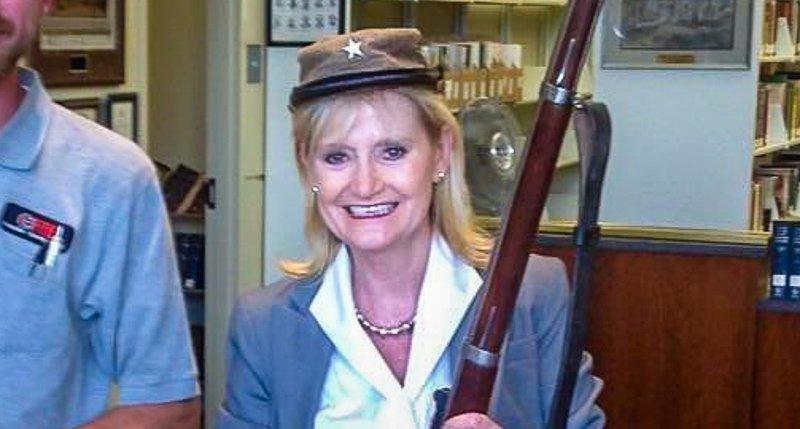
Scott Colom was declared the winner of the race for Senate in Mississippi, by the AP. The race was one of the closest in the nation. Almost one million votes were cast, and Colom led Senator Cindy Hyde-Smith by about 4,500 votes.

This is a historic moment in American history!

Scott Colom, Mississippi Senator-Elect, winner
Senator Cindy Hyde-Smith, loser

Senator Hyde-Smith may ask a court to order a recount.

Ironically, Senator Hyde-Smith blocked Scott Colom when President Joe Biden tried to name him a federal judge. If she hadn’t intervened to block his nomination to the bench, he would have held a lifetime appointment as a federal judge instead of running against her. Karma.

More than any other election in the nation, this one was astonishing, amazing, historic.

It’s great that Democrats swept Texas, Arizona, North Carolina, Georgia and other states. It’s great that they gained a majority in both houses of Congress.

But nothing–NOTHING–compares to the election of a Black Senator in Mississippi! This state was the beating heart of the Confederacy. No one thought it would change its political complexion now or in the foreseeable future.

But Mississippi elected Scott Colom to the U.S. Senate.

This was not just an election victory. It’s a dramatic sea change, one that should give hope to Democrats and Black people across the old Confederacy.

Welcome to the Senate, Senator Colom!

This song was recorded in a 1933 film, “Gold Diggers of 1933.” This song stars Joan Blondell and Etta Moten and was choreographed by Busby Berkeley. It is a powerful anti-war statement. The troops march to war in glory and return broken or in caskets.

REMEMBER MY FORGOTTEN MAN

https://youtu.be/fzNcT7wfHj4?is=DncYdteGYTQpWTDX

The startling transformation of Texas from a solid red state to a remarkably blue state is still hard to believe. For years, Texas Democrats have prayed for this change. They have been disappointed so many times that the reality is hard to absorb. Democrats won every statewide office, won control of the Texas House, and missed winning the state senate by one vote.

Dan Solomon of The Texas Monthly asks, what can Democrats accomplish?

He writes:

Back in January, Dan Patrick drew up the first charges on his biannual list of priorities for next year’s legislative session. In it, he outlined a handful of items that he would task the Ninetieth Texas Legislature to address, starting with “Preventing Sharia Law in Texas” and concluding with “Promoting America & Texas First in Our Schools.” It seemingly hadn’t occurred to the longtime lieutenant governor that he had to win an election first. 

And why should it have? Patrick had cruised to victory in three previous elections—most recently in 2022, by an easy ten-point margin—and the last Republican incumbent major statewide officeholder to lose a general election was Bill Clements, back in 1982. There was little reason to make plans for anything other than another term of Texas under Republican control. 

But then Texas voters chose to sweep Republicans out of power, electing Democrats to every statewide office on the ballot. They will now assume the levers of power in Texas, which have been oriented around one-party control. Patrick was a lead architect of that structure, implementing a rule that allowed Republicans to bring legislation to the Senate floor without a single Democratic vote and changing the precise number of votes required to advance a bill based on how many seats the GOP held in the chamber.

With Democrats preparing to assume control of many of the state’s institutions—only the Senate, the Supreme Court, the Court of Criminal Appeals, and the Railroad Commission still have GOP majorities—there are questions about what their governance of Texas will look like in practice. Let’s explore some of the most immediate and consequential policy matters now in play. 

Can Gina Hinojosa Finally Expand Medicaid?

Under Greg Abbott—and Rick Perry before him—Texas has refused to expand Medicaid under the Affordable Care Act—one of only ten holdout states to decline federal benefits. In practical terms, accepting Medicaid expansion would allow Texans who earn too much to qualify for Medicaid but not enough to afford private insurance on the ACA marketplace to obtain subsidies through the federal government. Forty states have opted into this; Texas is the largest that hasn’t, and expansion could help more than a million Texans get coverage. Texans alone represent 46 percent of the entire U.S. population that could benefit from expansion, per a study from the Kaiser Family Foundation. 

Governor-elect Gina Hinojosa pledged to expand Medicaid during her campaign, but the decision isn’t strictly hers. Implementing it will require the Legislature to act, and while Democrats claimed control of the House, Republicans maintain a majority in the upper chamber. Because the federal government covers around 90 percent of the cost of Medicaid expansion, the issue will be a test of one of the key questions facing the Lege this year: How conciliatory are Republicans in the Senate feeling? On its face, Medicaid expansion is an easy compromise—it costs Texans little, it has been implemented successfully even in Republican-controlled states around the country, and hospitals have long supported it.

If the Senate opts to find opportunities for bipartisan compromise, Medicaid expansion is likely the starting place; if the members of the chamber’s Republican majority won’t play ball, we’re all in for a good reminder of how unproductive a Texas legislative session can be. 

What Happens to the Public Universities? 

The terms of more than a dozen regents at Texas universities are set to expire shortly after Hinojosa takes office. She’ll appoint their replacements, subject to Senate confirmation. Hinojosa alone won’t shift the balance of power at any university—appointments are staggered, and Abbott appointees will still make up the majority of the folks atop the University of Texas, Texas A&M, and the rest of the state’s public universities, at least until 2029. But those institutions have been shaped by more than simply the legal power the current and previous governors have exercised—and it’s an open question whether Hinojosa will be able to wield influence and apply pressure in a manner similar to how Abbott and Perry did before her. 

UT-Austin and Texas A&M have been roiled by political pressure in recent years. Last year, A&M president Mark Welsh resigned after spending several months as a punching bag for conservatives (including Abbott). Welsh’s sins were mostly related to a trip the university was sponsoring to a conference that Abbott decried as too woke on X, and to a viral video in which an instructor discussed gender in ways that were unpopular with conservatives. Abbott didn’t possess the power to fire Welsh, but he was able to leverage his control over the board of regents to force an otherwise well-liked administrator to step down. At UT, meanwhile, Jim Davis, a former Ken Paxton aide, took over as president last year despite lacking any academic background, and he has been working to remake the institution in a conservative image. 

Hinojosa can’t fire Davis any more than Abbott could fire Welsh—but Abbott wanted Welsh out, and out he went. Will Hinojosa be able to wield similar influence, or was Abbott’s leverage the product of more than a decade spent consolidating power within the state? Even if Hinojosa is not able to directly replace the president—should that be her desire—to what extent do public universities that oriented themselves to appease right-wing state leaders change course now that Texas voters have made this a blue state? 

What About School Vouchers and Data Centers? 

School vouchers were the subject of Abbott’s most challenging legislative fight. They’re deeply unpopular among rural Texans, who have far fewer education options than their urban counterparts. In 2023, rural Republican legislators who represent such districts joined the Democratic caucus to block the passage of a school-choice bill. After taking $12 million from a pro-voucher out-of-state billionaire, Abbott retaliated by backing primary challengers to those incumbents, knocked off most of them, and then was able to pass the state’s voucher programin the 2025 session. In 2026, voters responded by choosing to put Democrats in charge of the state. (A significantly larger percentage of rural voterswent blue than in recent history.) 

Hinojosa campaigned on ending the voucher program. The newly Democratic House could defund it in the next budget, and Lieutenant Governor–elect Vikki Goodwin, who will preside over the Senate, could hold the line in the upper chamber. If that doesn’t happen, Hinojosa does have line-item veto power to drain the program of funding.

Data centers will be another key issue. During the campaign, Abbott instituted a moratorium on environmental permitting and grid connections for new projects. Hinojosa has vowed to maintain that moratorium, which can slow down such projects, if not fully stop them indefinitely, until the Lege passes new rules for the industry. She’s  promised that any already-permitted projects can continue. 

On its face, the politics of the issue appear bipartisan—voters around the state don’t like data centers, and Republicans have responded by signaling opposition to such projects. This is an area where Hinojosa ought to be able to deliver.

That’ll be important, because whether Democrats deliver on the issues that animated voters also has electoral implications. It’s admittedly early to look to 2028—but there is no greater force shaping national presidential politics than the possibility of Texas as a true swing state. Was what happened on election night a onetime fluke driven by once-in-a-generation circumstances or a true realignment in Texas politics? 

The answer is likely to be partially determined by how Democratic control of Texas actually plays out. For years, a core message to voters from the state’s Republican leaders was that electing Democrats risked everything they currently enjoyed about the state—that newcomers to Texas moved here to get away from Democratic mismanagement of blue states, and that longtime residents enjoyed low taxes and general prosperity that had started with the so-called Texas Miracle. 

If it turns out that Texans can still enjoy living in a blue state as much as they did under Republican leadership, then voting for Democrats consistently, even if there’s not a full sweep in every election from here on out, starts to seem a lot more likely. The electoral college map looks wildly different with a blue Texas than a reliably red one; if Republicans don’t have our state, then the map that gave Trump 312 votes in 2024 is no longer a winning one, provided the GOP loses literally any other state (it can’t even spare a Dakota!). Joe Biden’s 2020 map with a blue Texas becomes an overwhelming landslide. National politicians and their advisers will spend a lot of time trying to understand whether the successes Democrats achieved in 2026 are durable, fluky, or something else—and a lot of the answer to that question will rely on how the statewide slate of elected Dems performs for Texans over the next two years.

Jess Piper and her family live on a farm in Missouri. She has used her considerable voice to urge Democrats to contest every election. In the past, the Democratic Party assumed that its candidates would lose in rural districts and failed even to put up a candidate. People like her would go to the polls and find no one to vote for. Jess writes a regular blog called “The View from Rural Missouri,” where she speaks up for those who have been neglected like her. She has been a spokeswoman for “Dirt Road Democrats,” and is now active in Blue Missouri. She is a retired teacher who taught literature for many years.

She wrote soon after the conclusion of the midterm elections:

I stopped at Casey’s Wednesday morning to get some gas, and as I walked across the parking lot, I saw a local activist I often work with…her name is Nancy. 

I knew it was her Expedition because of all of the bumper stickers, but when she saw me, I thought she would cry. I wanted to cry too. When I reached her, I hugged her so hard and for so long that I know people must have wondered who died. 

There were no words needed during our gas station embrace. 

The relief we felt after the previous day’s midterm election, combined with knowing we had won so many important races across the state while losing all the ones in our own backyard, creates a special kind of bond. We live in one of the reddest parts of a “red” state.

But here’s the thing we both kept talking about…the progress we have made in the last decade. We haven’t won in our district in well over 30 years, but the last decade has proven a Democratic shift in nearly every election we have contested.

And you know that’s my passion — contesting every race. Even the rural ones, because we can’t win if we don’t run. So we run in places we can’t win until we do win.

Speaking on rural races at a DNC event in DC a few weeks back…

I bet you heard about what happened across the country Tuesday night in Georgia and Iowa and Kansas and Texas and South Carolina…you know, all the red states that seemed impervious to change and democracy.

But you may have not heard about Missouri, and I am going to change that because it is a story worth telling. We are seeing the beginning of a blue state in progress. A progressive state downloading. Blue on the horizon.

And you should know that I don’t say things like that without thought. I am way too cautious to be wrong on something so big. But I knew what I was looking at in Iowa and Kansas, and I know what I am seeing in my own state. 

I can see a blue wave from the cornfields.

Let me tell you why we are so hopeful and how I know we are close to a blue Missouri: Missouri Democrats just saw 16 seats flip red to blue. We beat another abortion ban. We beat another gerrymandered map. We forced Missouri politicians to follow the will of the people with a constitutional amendment.

In Missouri, we have been rejecting the Republican agenda for years through ballot initiatives, but still voting for Republican candidates. This cycle, that changed. We won races we weren’t supposed to win. Races in red districts.

And, for the first time in Blue Missouri history, our organization funded four Missouri candidates who flipped red seats blue. That means that four candidates, who each raised less than $8000, were supported by Blue Missouri grassroots donors.

Yes, you read that right…we flipped seats in Missouri with very small investments. 

Talk about the cheap seats.

And here is where I am going to get a little salty. When I speak about Blue Missouri, folks will tell me that my organization sounds like a lot of other grassroots organizations raising money for candidates across the country. 

And while I am very excited to see other orgs supporting down-ballot candidates, we need as many as we can get, Blue Missouri is not like any that I know, and here is the reason: we support the races that are supposed to lose. We support the candidates that most other organizations will not support because their races are not viewed as “winnable” or “flippable.”

Our starting question is different. We don’t start with, “Who is likely to win?” We start with, “Who is being left behind?”

And that’s why Blue Missouri is special and why our work is so difficult. We do what others are not willing to do. 

I regularly ask donors to give to candidates who have little chance of winning in their first cycle. Blue Missouri funds candidates who have not managed to raise much money. We fund the folks with the least first. 

We call it the bathtub method. You fill a bathtub by starting at the bottom. 

Much the same, we raise the funding floor for candidates in the entire state by making sure not even one candidate is left out. We know the reddest and most rural candidates will likely have the hardest time fundraising, so we do it for them.

We think it is political malpractice to have a first-time, red-state, red-district candidate spend time on the phone desperately looking for donors when they could be knocking on doors and calling voters in districts who haven’t had a Democrat run in decades. They could be walking in a parade or attending a debate or forum. They could be reaching voters.

Another benefit to funding for these red races is that the word is out and candidates are more likely to run if they can count on money from Blue Missouri donors. They are more likely to stick their neck out in a rural space knowing there is money coming in. 

And these down-ballot candidates are knocking doors in red congressional districts. The congressional candidates reap the benefits of Blue Missouri donors even though they themselves don’t receive funding.

It’s like a massive puzzle that we are finally putting together. We have had missing pieces for decades. It’s much easier to run for State Senate or Congress when you have several other candidates down-ballot doing their part. And while a legislative seat may not flip in a cycle, all those votes are counted at the top of the ticket. 

A win-win.

My friend Michele Hornish co-founded Blue Missouri. I’ve worked with her for three years, and I hear her voice when I talk about underfunded and uncontested races. She started what I can’t get enough of…funding difficult races because we believe in the candidates and in our state.

I also hear the voice of Stacey Abrams and the roadmap she created to take back Georgia. I think of Beto and what he was able to do in Texas. 

And guess what…it worked. They all planted something years ago that finally bore fruit last Tuesday. We owe them a debt of gratitude. They walked so we could run. They ran so we could derail fascism.

We did it. 

Jess 

One of the first resignations after the midterm elections was that of Harmeet Dhillon. She was the Assistant Attorney General in charge of the Civil Rights Division in the Justice Department. She not only oversaw the major civil rights laws, she also was responsible for those rights that protected students and staff in schools. Trump was trying to eliminate the U.S. Department of Education, and wrestling queen Secretary Linda McMahon sent the Department’s Office of Civil Rights to the Justice Department, to be overseen by Harmeet Dhillon.

Dhillon opposes most if not all civil rights laws, as they have been written and interpreted by legislators, judges, juries, lawyers, and citizens. Most people think that civil rights laws are intended to rectify past injustice or to safeguard those whose opportunities have been curtailed by state action or institutions. Dhillon prefers to ignore the history of civil rights in this country and to enforce strict equality, with no preferential treatment for anyone.

Her attention has been laser-focused on voter fraud and elections, supporting Trump’s strong belief that elections are rigged, that undocumented people are casting ballots, and that her office must pursue these crimes.

Jan Resseger, indefatigable champion of the underdog, explains how Dhillon used her position to undermine civil rights laws.

She writes:

Harmeet Dhillon, the Assistant Attorney General for Civil Rights in the U.S. Department of Justice, resigned on November 5.

President Trump has demanded that Education Secretary Linda McMahon shut down the U.S. Department of Education, and McMahon has distributed much of the work to other departments through “interagency agreements.” In the past six months, after the U.S. Department of Education began collaborating with the Justice Department through an interagency agreement, Harmeet Dhillon had undertaken leadership of much of the work of the Education Department’s Office for Civil Rights.

The NY Times‘ Glenn Thrush, Michael Bender, and Alan Feuer describe Dhillon’s resignation this week and her aggressive and twisted approach to civil rights enforcement:

“Harmeet Dhillon, the chief of the Justice Department’s civil rights division, resigned on Thursday after conflicts with department leaders, including disagreements over legal strategy in the midterm elections… Ms. Dhillon, whose tenure was defined by a successful pressure campaign against universities and unsuccessful efforts to obtain voting data from states had been telling friends for weeks that she planned to step down… In less than two years on the job, Ms. Dhillon repurposed a unit created to address Jim Crow injustices into a battering ram against the left, setting aside its longtime mission of fighting discrimination against Black people to battle campus antisemitism and diversity initiatives… Ms. Dhillon’s hard-line approach, laid out in a series of April 2025 memos declaring her intention to pursue a conservative culture war agenda, prompted the departure of hundreds of career officials in the unit. That left her short-handed to pursue many of her objectives, including the deployment of 1,000 election monitors around the country on Election Day….”

There is no indication that Dhillion’s resignation indicates any change in the civil rights strategy of the Trump administration.  Neither does Dhillon’s resignation appear to have been caused by the Democrats’ midterm rout. While her resignation was not announced until November 5, Dhillon had submitted a letter of resignation three weeks prior to last Tuesday’s election, and there is widespread agreement that resigning was her own choice, and not the President’s.  In August, the NY Times’ Glenn Thrush and Michael Bender reported: “She has told people in her orbit she may quit if she is not promoted to deputy attorney general, a post vacated by Todd Blanche when he rose to be attorney general—and would only stay if she respects the alternative pick.”

Coverage of Harmeet Dhillon’s policies at the Department of Justice’s civil rights division has addressed a number of urgently important issues.  The Washington Post‘s Perry Stein and Jeremy Roebuck track Dhillon’s failure to investigate the ICE practices that included the killings of Renee Good and Alex Pretti in Minneapolis.  And Democracy Docket‘s Matt Cohen and Yunior Rivas explore the federal investigations and lawsuits that DOJ filed under her leadership to challenge voter registration lists and interfere with the November mid-term election.

However, at the heart of Dhillon’s agenda was the twisted destruction of the federal government’s attempt to protect the educational mission of the Civil Rights Movement, which had sought to end racial segregation in the public schools and address the nation’s appalling educational inequality.

Dhillon’s primary agenda for K-12 public schools was to end the protection of diversity, equity and inclusion for groups of students who had attended segregated schools and whose rights had been violated historically. Dhillon’s agenda for the nation’s colleges and universities similarly sought to impose the Trump administration’s expansive interpretation of the 2023 Supreme Court decision in Students for Fair Admissions v. Harvard, a case Dhillon and her colleagues have interpreted as not only banning affirmative action, but also as terminating “diversity, equity, and inclusion” policies and initiatives across K-12 public schools and higher education.

“Dhillon dramatically transformed the civil rights division in a little over a year and a half,” writes The Guardian’s Sam Levine, “reorienting its mission away from the work it had traditionally done protecting the civil rights of minorities.  Under her leadership, the department dropped many cases alleging discrimination against racial minorities in voting, housing, employment and education. Scores of career lawyers also left the division under her leadership, leading to an exodus of expertise of civil rights enforcement.”

In early October, Glenn Thrush elaboratedon the disruptive transformation of DOJ’s Civil Rights Division after Dhillon’s appointment: Dhillon hired “130 lawyers who have recently joined the Justice Department’s short-staffed civil rights division as the Trump administration has struggled to fill the depleted ranks of a unit that was once a magnet for legal talent. Since early 2025, upward of 300 nonpolitical career employees, representing decades of experience, have left the division after its leader, Harmeet Dhillon, repurposed it to pursue President Trump’s agenda. As a consequence, the division has opened its doors to recruits, many of them conservatives, some with education and work histories that might have disqualified them from being hired in the past… Some have left a trail of hyperpartisan, conspiratorial and, in some instances, bizarre statements….”

Harmeet Dhillon’s Impact on Higher Education      

Dhillon filed lawsuits  threatening federal research grants to universities that she alleged were promoting “diversity, equity, and inclusion.” As reported by Thrush, Bender and Feuer, “In higher education, she mounted repeated challenges to admissions practices and campus speech policies, opening high-profile investigations and lawsuits against elite institutions. She sued Harvard twice, once over accusations of antisemitism and another over claims that the school’s admissions policies discriminated against white and Asian people (she lost both times). She also spoke out in support of parent rights groups, fueling the administration’s push to pare back protections for transgender students… In June 2025, Ms. Dhillon and her team pushed James E. Ryan, the president of the University of Virginia, into early retirement over his reluctance to adopt Mr. Trump’s anti-diversity policies and narrow view of anti-Semitism.” (parenthetical phrase in the original)

Last summer, Bender and Thrush exposed Dhillon‘s proactive strategy for pursuing her agenda: “After being confirmed to lead the civil rights division, Ms. Dhillon perused the U.S. News & World Report rankings of top undergraduate, law school and medical school programs, dispatching demands for admissions data, including applicants’ gender, race and test scores. She concluded that medical schools at U.C.L.A. and Yale were discriminating against white and Asian applicants. (Each school expressed confidence in its admissions practices.) At least 15 other top medical schools are under investigation… Over the past year, she has investigated the University of California system, Arizona State University, George Mason, the City University of New York, and the University of Nevada, Las Vegas… Mrs. Dhillon has targeted Harvard University as a prominent part of her battle against liberal academia, but it has the resources and the will to fight back.” (parenthetical phrase in the original)

Harmeet Dhillon’s Impact on K-12 Public Education     

Last July, after Education Secretary Linda McMahon transferred some of the responsibility for civil rights enforcement in public schools from the Department of Education’s Office for Civil Rights (OCR)  to be housed through an interagency agreement at the Department of Justice’s civil rights division, Education Week’s Alyson Klein explored what the new arrangement would mean:

“Former employees of both agencies… point to big structural differences between the two offices. OCR must consider every complaint it receives and generally seeks an administrative—rather than a legal—resolution whereas the Justice Department more commonly pursues litigation, and does so selectively… What’s more, the shift may give the Trump administration more potent legal tools to investigate and litigate against schools and districts that run afoul of its policies on DEI and transgender students. Earlier this summer, shortly after the transfer was announced, Harmeet Dhillon… told conservative radio host Glenn Beck that her office would pursue legal action to prevent students from having ‘illegal gender ideology… forced down their throats’ without parental permission… In her interview with Beck, Dhillon… also lambasted laws in states like California that she contends give preference in competitions for public contracts to historically disadvantaged groups, such as racial minorities. That’s a sign her agency may use its authority to pursue legal cases against districts it believes allow for racial preferences that the Trump administration contends are illegal.”

Finally, Dhillon’s division took an historic step away from civil rights enforcement in the nation’s public schools by terminating a mass of civil rights consent decrees.  The NY Times‘ Bender reported: “The Justice Department… ended its watchdog role in more than 50 cases enforcing racial desegregation in schools, mostly in the Deep South, a significant milestone in the Trump administration’s bid to overhaul civil rights enforcement in America. Justice Department records showed that 57 desegregation orders have been dismissed since the start of President Trump’s second term, although it could not be verified late Thursday that a judge had ruled in each one. Nearly 80 percent of the cases were in five Southern states—Alabama with five, Georgia with 15, Louisiana with 11, Mississippi with 13, and South Carolina with one… The Justice Department suggested that the desegregation cases were relics of the nation’s past that continued to impose unnecessary financial burdens on local governments. ‘In some cases, school districts have been under federal control for more than 60 years,’ Ms. Dhillon said in a statement.  Dhillon continued: ‘In this administration, we are ending prolonged federal oversight of these school districts because the effort does not reflect the reality of those classrooms today.’ ”

Bender describes the response of groups who work for the protection of civil rights: “Groups including the N.A.A.C.P. have said that desegregation orders do more than change the racial makeup of classrooms by mandating equal funding, access to high-quality facilities and fair representation in advanced placement programs.”

Harmeet Dhillon’s Impact on Education in America     

More than anyone in Donald Trump’s second administration, Harmeet Dhillon has represented the threat to a decades-long effort to repair the educational injustices of slavery and Jim Crow.

In his newest book, Dangerous Learning, constitutional law professor Derek W. Black summarizes what civil rights advocates have worked to achieve during the lifetimes of most of us who are reading this post today:  “Brown v. Board of Education and its progeny fundamentally altered the way society thinks about education, not just of Black children but of all children. Laws prohibiting discrimination against students based on sex, language status, ethnicity, alienage, disability, poverty, and homelessness all grew out of the foundation Brown laid. For the past half century, the federal legal apparatus as well as several state regimes have aimed to deliver equal educational opportunity.” (Dangerous Learning, p. 275)

Harmeet Dhillon has most prominently represented the Trump administration’s attack on that legacy. Dhillon has now left the administration, but there are others who will continue twisting the meaning of our nation’s civil rights struggle and attempting to undo the progress we have made. Protecting all children’s rights in the nation’s public schools, and protecting K-12 public schools and the nation’s colleges and universities from the imposition of a narrow and distorted ideology will continue to require public vigilance and advocacy.

I mistakenly posted the opening of a piece I am writing about the return of measles. I intended to schedule it for tomorrow or the next day.

It is unfinished. Forget about it. Or, as we say in Brooklyn, “fuhgeddaboutit.”

When you see it, it will be the finished version.

~Diane