In response to a lawsuit filed by more than 300 public school districts, a state appeals court ruled vouchers unconstitutional. The vote was unanimous.
Article VI, Section 2 of the Ohio State constitution says:
The General Assembly shall make such provisions, by taxation, or otherwise, as, with the income arising from the school trust fund, will secure a thorough and efficient system of common schools throughout the state; but no religious or other sect, or sects, shall ever have any exclusive right to, or control of, any part of the school funds of this state.
An Ohio appellate court has ruled that the state’s “EdChoice” private school voucher program is unconstitutional. The program uses public taxpayer dollars to fund private school tuition.
The program will still be able to exist, as the judges expect the state to appeal. An appeal will go to the 6-1 Republican-controlled Ohio Supreme Court. Ohio Republican state lawmakers made Ohio Supreme Court races overtly partisan by adding party labels in 2021.
The state Attorney General will appeal. He responded that parents should send their children to the school of their choice, and the state wants to help them.
A panel of Democratic judges on the 10th District Court of Appeals in Franklin County unanimously sided with the more than 300 public school districts that sued, alleging that the EdChoice private school voucher program was violating the Ohio Constitution by funding a separate school system, one with a lack of oversight that isn’t available to rural students.
“EdChoice, as presently structured and funded, secures with taxpayer funds a competing system of uncommon schools that is not subject to the same obligations imposed on Ohio’s system of common schools,” Judge Dave Leland wrote.
The voucher program is also illegal because it draws taxpayer money away from schools and cherry-picks the students it wants, which harms public schools.
Former Attorney General Dave Yost appealed Judge Jaiza Page’s 2025 ruling that the EdChoice universal school voucher program was unconstitutional. Less than a year later, Yost resigned as Ohio Attorney General to work for the Christian conservative legal group Alliance Defending Freedom, which actively defends and promotes universal school vouchers and public funding access for faith-based and religious schools. Alliance Defending Freedom is one of the most outspoken defenders of vouchers in the nation.
It’s not clear how the highest court of the state will rule, given its domination 6-1 by Republicans.
Tom Ultican, retired teacher of physics and advanced mathematics, writes powerful columns about the value of public schools and the misguided efforts of those who vilify public schools.
In this post, he wonders why Ohio adopted an expansive voucher program without bothering to get the consent of the public. He writes, “Even though vouchers are very unpopular, residents in Ohio will never have the opportunity to vote against them. “
He writes:
At NPE Houston, a woman from Ohio gave me the book Right Down the Drain. It is a product of the Department of Education graduate school at Miami University Oxford, Ohio. In 2023, the state created the EdChoice Expansion Voucher Program which takes more than $1 billion a year away from public education with no audits. I have visited Ohio a few times and really liked what I saw but do not believe it is immune to corruption. Having no oversight for a billion dollars of taxpayer money is bizarre. As Education Professor Thomas Poetter wrote, “… the EdChoice Expansion Voucher Program feels to us like throwing Public money right down the drain?” (Right Down the Drain [RDTD] page 13)
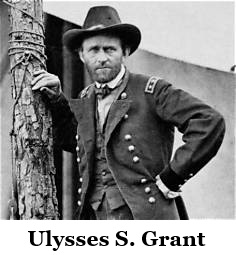
President Ulysses S. Grant saw the Common Schools as a tool to enhance democracy. In his 1875 address to the Army of Tennessee, He stated, “Encourage free schools, and resolve that not one dollar of money appropriated for their support, no matter how raised, shall be appropriated to the support of any sectarian school.” He concluded:
“Leave the matter of religion to the family circle, the church, and the private school, supported entirely by private contribution. Keep the Church and State forever separate. With these safeguards I believe that battles which create us ‘The Army of Tennessee,’ will not have been fought in vain.”
Grant Ignored in Ohio
Curiously, Grant was a Republican born in Ohio. Strikingly, the Ohio GOP of today completely rejects Grant’s admonition. In 1995, Republicans in Ohio’s legislature passed the Cleveland Scholarship and Tutoring Program. A coalition of parents and teachers sued to stop the program because among other reasons it allowed for taxpayer money going to religious institutions. This turned into a protracted legal struggle that saw victories for both sides. Finally, on June 27, 2002, the United States Supreme Court in a 5-4 decision declared that vouchers were constitutional. This opened the door for sectarian institutions to receive taxpayer money.
2023 saw Matt Huffman, one of the most powerful politician in Ohio, push through the billion dollar a year EdChoice Expansion Voucher Program. Huffman comes from the small isolated and shrinking old city of Lima, Ohio. An illustration of his political power is for the first time since the 19th century this politician was able to serve first as president of the Ohio senate and then became speaker of the house with no interruption between positions. The change was forced on him by term limits.
EdChoice’s adoption is an example of authoritarian government in action. Ohio is deeply gerrymandered and even though vouchers are very unpopular, residents will never be given the opportunity to vote against them.
The top 100 schools receiving the most cash for vouchers in Ohio are religious institutions. (RDTD page 51) In fact, 90% of Ohio voucher money is going to religious schools. (RDTD page 75) Even if Ohioans are not Catholic or Hindu, they are sending tax dollars to those institutions. So, the modern Ohio GOP supports sectarian schools and is unconcerned with the separation of church and state.
Maybe we should send taxpayer funds to religious schools but shouldn’t the public have some say in this?
What is the GOP Motive?
In 1955, economist Milton Friedman wrote an essay calling for the creation of a voucher system in America. The political establishment including President Eisenhower, the GOP and Democrats ignored what they perceived as a crackpot. It was Ronald Reagan who gave Friedman credibility in the 1980s which for the first time gave the voucher movement legs. In the early 2000’s, Friedman told the American Legislative Exchange Council that parents should pay for educating of their own children. Today, voucher zealots following Friedman’s lead are working to end taxpayer supported public education. (RDTD page 67) This appears to be the Ohio GOP motive.
Vouchers are a state-designed mechanism for channeling public dollars to private education providers. For the GOP, it is important that this money is provided without state oversight. For example, in June, Democrats put forward the Take the Dough, We Gotta Know Act that calls for state audits and monitoring enrollment, capacity, student demographics, tuition, services offered, and accreditation. This bill is probably already dead because House Speaker Huffman has contended that the fact parents enroll their kids in private schools constitutes accountability, and he is concerned that the bill might infringe on a private business. (RDTD page 77)
A Privatization Outcome
In their essay, Elijah L. Fenwick-Sanders and Anthony W. Rose state:
“When large amounts of public money are permitted to flow through private systems with limited transparency, the risk of corruption increases.”
“Public trust requires more than good intentions. It requires rules, records, audits, transparency and consequences.” (RDTD pages 84 and 85)
If a school does not want public audits, public reporting, nondiscrimination requirements, academic transparency or fiscal oversight it can opt not to accept public funds. That is a reasonable choice.
Support or opposition to vouchers is not a Left-Right situation. Many conservatives support public schools and some liberals support privatization. Emma Errang, who grew up in traditionally conservative Kentucky, bolstered this point in her essay when writing about the 2024 constitutional amendment vote that would have allowed school privatization in her state:
“The coalition against Amendment 2 was not liberal or conservative, nor was it Democrat or Republican. It included progressive voters like me and conservative voters like my father, who believe that choosing private education is a right but not something that should be funded at the expense of public education.” ( page 128)
Conclusion
I side with President Grant when he advised, “Encourage free schools, and resolve that not one dollar of money appropriated for their support, no matter how raised, shall be appropriated to the support of any sectarian school.” I would go a step farther and say that all private schools, not just those from religious institutions, be on their own and receive no taxpayer funding. Of course, the public has the right to support private schools if it desires, but that choice has the potential to undermine public schools and that would be a tragedy.
Reagan’s fraudulent A Nation at Risk report claimed, “We report to the American people that while we can take justifiable pride in what our schools and colleges have historically accomplished and contributed to the United States and the well-being of its people, the educational foundations of our society are presently being eroded by a rising tide of mediocrity that threatens our very future as a Nation and a people.” SAT scores were cited to defend this statement. Seven years later, the Sandia Laboratories in New Mexico found that using proper statistical techniques all groups disaggregated by race and gender showed improved scores in 1983. This is where the ongoing attack on public schools began in earnest and it was based on a fraud.
In America, public education has been a great bulwark for democracy. It is a shared democratic obligation that must be defended from greedy entrepreneurs and misguided social theorists.
Bruce Baker taught for many years at Rutgers University in New Jersey. He now teaches education policy at the University of Miami. He will have many opportunities to observe and document edu-grifting in Florida.
In this post, he identities the five biggest charter scandals and explains how they worked. Much of what you will read was called “legal graft” by past pundits. In other words, the charter operators collect millions in public funds while providing a dubious education, and they get away scot-free.
In other words, take the money and run. No consequences.
He writes:
Five cases, four mechanisms, one ranking: this post lines up the biggest fraud prosecutions, the biggest company-store combination, and the biggest sweeps contract in the charter sector’s history against the single largest real-estate deal any operator has ever built, and asks which one moved the most money. The answer isn’t the one with an indictment attached.
In The Grift Model I group the ways charter operators route public money into private hands into four repeating types: enrollment inflation (getting paid for students who aren’t really being educated — phantom seats, unverifiable attendance, ghost enrollees); related-party transactions (a school’s own board or executives sitting on both sides of a contract); the company store (a captive vendor a school is required to buy from — curriculum, credentials, back-office services — that happens to be owned by the people running the school); and real estate (buying, or arranging for a related party to buy, the very buildings public dollars already financed, then leasing them back at a markup).
What I hadn’t done before is put the five biggest documented cases — regardless of category — on the same page and rank them by dollar figure. A caveat before I do: these numbers come from different kinds of documents (a criminal restitution order isn’t the same instrument as a municipal bond prospectus), cover different time spans, and in a couple of cases reflect an auditor’s or a prosecutor’s counting choice as much as anyone’s. I’m ranking them anyway, because the comparison itself is the point — and because the single largest number on this list isn’t attached to anyone’s indictment.
Here they are, five to one.
5. White Hat Management, Ohio: about $100 million over a decade
White Hat’s “sweeps” contracts with ten Hope Academy and Life Skills Center campuses in Cleveland and Akron routed roughly 95 percent of each school’s state funding to the management company, which then handled teacher salaries, facilities, and operations with minimal board oversight — company-store logic applied to an entire school’s back office rather than one vendor line. Over a decade that added up to something like $100 million. When several of the nonprofit boards tried to switch management companies, White Hat argued the computers, furniture, and classroom equipment it had bought with that money belonged to White Hat, not the schools — meaning the boards would have to buy back the property their own public funding had already paid for once.
In 2015, a divided Ohio Supreme Court sided with White Hat, 4–3, upholding the buy-back scheme as an enforceable contract term. Justice Paul Pfeifer’s dissent put it about as plainly as a judicial opinion gets: “the contracts require that after the public pays to buy those materials for a public use, the public must then pay the companies if it wants to retain ownership of the materials.” Justice William O’Neill called it, in a dissent The Progressive covered in full, “a fraudulent conversion of public funds into personal profit.” Neither dissent changed the outcome. Nobody broke a law here — a state’s highest court looked at the arithmetic and, on the merits, said it was fine. (Court News Ohio’s case summary has the full procedural history.)
4. ECOT, Ohio: $117 million ordered repaid
Electronic Classroom of Tomorrow was, at its peak, Ohio’s largest online charter school. Ohio funds schools on a formula built around enrollment and documented hours of learning activity — a formula that works fine when “attendance” means a body in a classroom, and considerably less well when it means a login timestamp nobody is verifying. A state audit covering fiscal years 2016 through 2018 found ECOT couldn’t substantiate the participation hours behind a large share of the funding it had claimed. The Ohio Auditor of State’s officeultimately found the school owed $106.6 million to the Ohio Department of Education, plus additional findings against ECOT-affiliated management entities, for a combined total just over $117 million. ECOT shut down in January 2018 rather than pay it back; Ideastream’s coverage of the final audit and the Dayton Daily News both note the state has spent the years since trying to collect. A related judgment against affiliated entities separately reached $161.6 million. It remains the largest attendance-fraud clawback in the sector’s history: virtual schools, virtual kids, real dollars.
3. Chester Community Charter School / CSMI, Pennsylvania: roughly $122 million combined
This is the case I use to show what happens when the company store, related-party real estate, and plain self-dealing all show up in a single school under a single owner. Chester Community Charter, Pennsylvania’s largest brick-and-mortar charter, is managed by CSMI, a company controlled by Vahan Gureghian. A 2009 Philadelphia Inquirer public-records fightestablished that CSMI had been paid roughly $60.6 million in management fees since 1999. In 2010, Gureghian sold the school’s buildings — which he owned personally — to a newly created nonprofit, for the specific and sole purpose of leasing them back to the school, for $50.7 million, financed through municipal bonds and requiring roughly $4 million a year in lease payments; Pennsylvania’s Auditor General found the school had also improperly claimed $1.27 million in state lease reimbursements on buildings the program’s own rules made ineligible, because the “related parties” on both sides of the lease were, functionally, the same person before and after the sale. Then, in 2016, a federal Office of Inspector General audit found that the school’s CEO — Gureghian himself — had written checks to himself totaling $11 million without board approval. Add the pieces up and you get a single owner, across roughly fifteen years, sitting on every side of upward of $122 million in transactions with the school he ran. No criminal charges resulted from any of it.
2. The A3 charter network, California: $400 million generated, about $80 million allegedly diverted
Between 2015 and 2019, Sean McManus and Jason Schrock used a network of 19 online charter schools, partnerships with struggling private schools, and summer athletic programs to enroll thousands of students who, per prosecutors, never took a class. The scheme generated roughly $400 million in California public education funding; investigators alleged about $80 million of it was funneled into companies the two men controlled. Voice of San Diego’s account calls it, by the state’s own description, one of the largest charter-school fraud cases in the country’s history — and yet neither man served a day in prison. McManus, an Australian citizen, was sentenced to four years but served it under house arrest with an ankle monitor in Australia; Schrock’s ankle-monitor time was credited against his sentence. Nine other defendants pleaded to reduced or misdemeanor charges. Both men paid roughly $19 million each in fines and restitution, and the California State Controller’s office says the state has recovered more than $240 million overall — real money back, on a fraud whose architects never spent a night in a cell.
1. National Heritage Academies, Michigan and six other states: $853.6 million
In 2021, National Heritage Academies — the country’s third-largest for-profit charter operator, with more than 90 schools — arranged to sell 69 of its campuses across seven states to Campus Partners 1, a nonprofit newly created for the transaction, with no operating history and, at the time reporters looked, no registration on file with Michigan’s attorney general. NHA’s owner, J.C. Huizenga, controls both the seller’s side (through Charter Development Co., which retained the facility-maintenance and ground-lease contracts) and, through his general counsel installed as the new nonprofit’s president, effectively the buyer’s side as well. The purchase was financed through $853.6 million in tax-exempt municipal bonds, issued by an industrial development authority in La Paz County, Arizona — a jurisdiction with no obvious relationship to any of the seven states where the schools actually sit. The schools then signed 30-year leases back to the very entities that had just “sold” them. Network for Public Education’s account and NCSPE’s coverage at Teachers College, Columbia University both flag the same detail: nothing about this required hiding anything, and no one has been indicted. Local commissions in Michigan raised transparency objections and briefly slowed a few approvals, but the deal closed.
It is, by a wide margin, the largest single dollar figure on this list — more than double the other four cases combined — and it’s the cleanest illustration in the sector of this project’s core argument: the extraction that scales isn’t the kind that needs a prosecutor. It’s the kind a bond market is happy to underwrite.
The fabulous cabaret singer Sophie Tucker, well known in the mid-20th century, said: “I’ve been rich and I’ve been poor. Believe me, rich is better.”
If children have any say in the matter (they don’t), they should arrange to be born to a rich family. They would get regular medical care, nutritious meals, live in nice houses in safe neighborhoods. And their schools would get high ratings!
Here is this morning’s post with new analysis addedtoday from the Cleveland Plain Dealer’s data wonk, Rich Exner, on the meaning of Ohio’s 2026 School Report Cards.
Leading with a bar graph correlating the Census Bureau child poverty rate with Ohio school districts’ overall school report card rankings, Exner demonstrates that, once again in 2026, Ohio’s ratings of the state’s public school districts on the annual state report card correlate with school districts’ aggregate family income and other factors known to contribute to opportunity gaps. The Ohio Department of Education and the Workforce (Ohio DEW) rates and ranks Ohio school districts based on standardized test scores along with several other factors the state now considers such as graduation rates and the amount of chronic absence among students.
Exner writes: “The 2026 Ohio school report cards released this week not only provided a snapshot of each school district, but they also once again drove home the point that wealthier districts usually do better, a cleveland.com analysis found. Perhaps the relationship is no clearer than in comparing districtwide child poverty rates from the Census Bureau to the overall star ratings issued by the Ohio Department of Education and Workforce. Five-star districts, on average, have a child poverty rate of 6.1%, whereas schools scoring on the low-end with just two stars are nearly six times worse off for child poverty, at 35.1%, cleveland.com found. The trend holds true at each step between, with child poverty averaging 8.5% for 4.5-star districts, 12.8% for four-star districts, 15.6% for 3.5-star districts, 23% for three-star districts and 30.1% for 2.5-star districts.”
Children’s test scores also correlate with related factors. For example, “Within the districts receiving two stars, just 15.6% of the adults age 25 and older have a bachelor’s degree or above. In the five-star districts, the rate is more than three times as high, at 48.5%.”
Exner examines the correlation of a each school district’s aggregate child poverty rate and the percentage of adults with a B.A. or above with the state’s overall ratings, and with rankings in each of the subcategories the state considers: school achievement as measured by test scores; progress; gap closing; graduation rates; early literacy; and college, career workforce, and military readiness. In each case he confirms the years-long trend correlating the state’s ratings of public schools with socioeconomic factors.
—– Here is the original post published this morning —–
Earlier this week, the Ohio Department of Education and the Workforce (Ohio DEW) released state report cards for each Ohio school district and every one of the state’s traditional public schools and charter schools. The Plain Dealer‘s Laura Hancock reports: “Overall, English and math scores inched up statewide. The rate of chronic absenteeism inched downward and remains far from the state’s goal.”
A follow-up from Plain Dealer reporter Rich Exner lists Ohio’s top scoring schools: “Solon was among three Cuyahoga County districts scoring in the top five, and among 10 from the Greater Cleveland area in the top 25 statewide… Following Solon at the top of the list, in order, were Marion schools from western Ohio’s Mercer County, Chagrin Falls, Mariemont from outside Cincinnati, and Rocky River.” The three greater Cleveland districts in that list are Solon, Chagrin Falls and Rocky River, all upper-income suburbs.
Although Ohio DEW releases the school district report cards every fall with lots of hoopla as a kind of race with clear winners and losers, the causes of disparities in standardized test scores from school to school and district to district are far more complicated. Aggregate standardized test scores for any school or any school district are primarily shaped by one set of variables that are rarely named: family income and the overall income of the community. The standardized test score ranking is, in reality, a measure of economic privilege.
For years now, Rich Exner, the Plain Dealer’s data wonk, has followed up the state’s release of the state report cards with a far more nuanced analysis. In 2019, Exner presented a set of bar graphs demonstrating the following: “The latest set of Ohio school report cards not only provided a scorecard for each district statewide – they once again drove home the point that wealthier districts do better on such reports… To get an idea of how closely report card grades from the Ohio Department of Education follow demographic factors, cleveland.com (The Plain Dealer) compared those grades to U.S. Census Bureau community data for household income, child poverty and the education level of the adults. In nearly every key report card category, the trends followed census data closely.” I include one of Exner’s 2019 bar graphs depicting the correlation of Ohio state school report card rankings with family income.
Again last year, in 2025, when Ohio released the state school report cards, Exner reported the same pattern. While he notes a tiny number of encouraging exceptions when impoverished school districts made impressive test score gains, Exner explains: “For probably as long as the state has been issuing school report cards, one trend has held true – wealthier districts score better. Take this year when the richest 14 districts in the state based on the income of their residents all scored the highest available overall grade – five stars – on the new report cards.” And he explains further: “Income, of course, is not the only measure tied to the trends. Where incomes are higher, this often increases the likelihood that parents in the districts have college degrees, or the existence of two-parent households, with two incomes. And there are other factors that raise challenges for individual school districts.”
Decades of Research Confirm the Trend Exner Identifies
The late professor of education and former president of the American Educational Research Association (AERA) and the Division of Educational Psychology at the American Psychological Association (APA), David Berliner explained: “The big problems of American education are not in America’s schools… It’s neither this nations’ teachers nor its curriculum that impede the achievement of our children. The roots of America’s educational problems are in the numbers of Americans who live in poverty. America’s educational problems are predominantly in the numbers of kids and their families who are homeless; whose families have no access to Medicaid or other medical services. These are often families to whom low-birth-weight babies are frequently born, leading to many more children needing special education.”
In Ohio, Douglas Downey, a professor of sociology at The Ohio State University describes academic research showing that evaluating public schools based on standardized test scores is unfair to educators and misleading to the public. In a 2019 book, How Schools Really Matter: Why Our Assumption about Schools and Inequality Is Mostly Wrong, Downey explains: “It turns out that gaps in skills between advantaged and disadvantaged children are largely formed prior to kindergarten entry and then do not grow appreciably when children are in school.” (How Schools Really Matter, p. 9) “Much of the ‘action’ of inequality therefore occurs very early in life… In addition to the fact that achievement gaps are primarily formed in early childhood, there is another reason to believe that schools are not as responsible for inequality as many think. It turns out that when children are in school during the nine-month academic year, achievement gaps are rather stable. Indeed, sometimes we even observe that socioeconomic gaps grow more slowly during school periods than during summers.” (How Schools Really Matter, p. 28)
In 2017, Katherine Michelmore of Syracuse University and Susan Dynarski of the University of Michigan studied data from Michigan to identify the role of economic disadvantage in achievement gaps as measured by test scores: “We use administrative data from Michigan to develop a… detailed measure of economic disadvantage… Children who spend all of their school years eligible for subsidized meals have the lowest scores, whereas those who are never eligible have the highest. In eighth grade, the score gap between these two groups is nearly a standard deviation.” “Sixty percent of Michigan’s eighth graders were eligible for subsidized lunch at least once during their time in public schools. But just a quarter of these children (14% of all eighth graders) were economically disadvantaged in every year between kindergarten and eighth grade… Ninety percent of the test score gap we observe in eighth grade between the persistently disadvantaged and the never disadvantaged is present by third grade.”
In 2011, Stanford University educational sociologist, Sean Reardon reported on growing residential segregation by income—which correlates with segregation by race. Reardon used a massive data set to document the consequences of widening economic inequality for children’s outcomes at school. Reardon showed that while in 1970, only 15 percent of families lived in neighborhoods classified as affluent or poor, by 2007, 31 percent of families lived in such neighborhoods. By 2007, fewer families across America lived in mixed income communities. Reardon also demonstratedthat along with growing residential inequality and residential segregation by income is a simultaneous jump in an income-inequality school test score gap. The gap between the children with income in the top ten percent and the children with income in the bottom ten percent, was 30-40 percent wider among children born in 2001 than those born in 1975, and twice as large as the black-white test score gap.
Then in 2016, Reardon documented: “The socioeconomic profile of a district is a powerful predictor of the average test score performance of students in that district.” “The most and least socioeconomically advantaged districts have average performance levels more than four grade levels apart. Average test scores of black students are, on average, roughly two grade levels lower than those of white students in the same district; the Hispanic-white difference is roughly one-and-a-half grade levels. Achievement gaps are larger in districts where black and Hispanic students attend higher poverty schools than their white peers… and where large racial/ethnic gaps exist in parents’ educational attainment. The size of the gaps has little or no association with average class size, a district’s per capita student spending or charter school enrollment.”
In 2022, Reardon commented on the factors that contribute to opportunity gaps: “We examine… test score gaps because they reflect… differences in access to educational opportunities. By ‘educational opportunities,’ we mean all experiences in a child’s life, from birth onward, that provide opportunities for her to learn, including experiences in children’s homes, child care settings, neighborhoods, peer groups, and their schools. This implies that test score gaps may result from unequal opportunities either in or out of school; they are not necessarily the result of differences in school quality, resources, or experience. Moreover, in saying that test score gaps reflect differences in opportunities, we also mean that they are not the result of innate group differences in cognitive skills or other genetic endowments… (D)ifferences in average scores should be understood as reflecting opportunity gaps….”
When standardized test scores are aggregated and compared from school district to school district, the disparities reflect economic inequality as well as economic segregation across U.S. school districts. Although in a smaller town a school district’s aggregate test scores may reflect the economic range of a diverse community, in any metropolitan area, some schools are filled with rich kids, while others are filled with poor kids. And more important, test scores do not present any picture of what is happening in anybody’s schools. They don’t tell us anything about the richness of the curriculum or the extracurricular offerings for enrichment. They don’t tell us anything about how teachers work with students or whether students come to love learning.
In voucher debates around the country, parents of children with disabilities are often outspoken on behalf of vouchers. If they are dissatisfied with the services at the local public school, they feel sure they will find a private school that is better. What they don’t don’t know is that private schools do not have to follow federal laws. The Individuals with Disabilities Education Act does not affect private schools. Stories like this one are a wake-up call. When they leave public schools, they abandon their federal rights.
Pepper Stelter of The HECHINGER Report wrote about a family in Ohio that decided to place their child in a religious school, using voucher money. When the school decided her care cost too much, they told her grandparents to withdraw her. Private schools are not required to comply with the federal disability law.
CINCINNATI — The meeting with staff members of Cincinnati Christian Schools began with a prayer. Then they told Mike Grimmer and Linda Kelly that their granddaughter could no longer attend the private school.
Annabelle Kelly had enrolled there three months earlier, in August 2025, in a program specifically for students who struggle in mainstream classrooms. Annabelle, 15, has Rett syndrome, a genetic condition accompanied by significant cognitive and developmental delays. Her grandparents, who took legal custody of Annabelle when she was 5, believed that the small, faith-based setting of CCS would be a better fit than the local public school. She received a voucher from the state through a school choice program specifically for students with disabilities, which authorized paying CCS up to $29,750 for Annabelle to attend tuition-free.
But at the meeting in November, Kelly said, the school’s director of academic support services told her and Grimmer that Annabelle’s physical and educational needs were too extensive for her to continue at CCS. If they wanted her to stay, Annabelle would need an aide to work with her one-on-one, and her grandparents would need to pay the additional cost, roughly $25,000 per year.
Disability advocates warn that as private school voucher programs spread, more parents will find themselves in similar straits. Federal protections for students with disabilities don’t apply to private schools, and neither the schools nor voucher programs like the one Annabelle qualified for are required to inform parents that they waive certain rights when they leave the public school system. When Congress passed legislation last year establishing the nation’s first federal voucher program, it did not include language that disability rights groups had lobbied for that would have required private schools receiving federal funds to follow the law known as the Individuals with Disabilities in Education Act.
“If there are public funds being spent, public protections need to be afforded,” said Chris Roe, director of state policy at the Council of Parent Attorneys and Advocates, a policy advocacy organization that provides training and guidance in special education law. “At the very least, states that provide voucher programs should be required to inform parents of the rights they are giving up.”
Kelly said the decision from CCS came despite the family being transparent about Annabelle’s needs when they applied to the school: They shared medical information, copies of her academic evaluations and her learning plan from the public school she attended. The then-eighth grader attended three trial days at the school before enrolling, and several previous conferences with teachers had gone well, her grandmother said.
“We were blindsided by the school’s decision,” said Kelly.
Raymond Kochis, superintendent of Cincinnati Christian Schools, declined an interview but said in response to written questions that the costs of educating Annabelle exceeded what had been determined initially. “When a student’s needs evolve,” Kochis wrote, “the school works with the family to determine the most appropriate level of support.” (According to Kelly, Annabelle’s needs had not changed, and school officials quickly dismissed any alternative solutions she proposed.)
Private school voucher programs have proliferated in the United States in the last decade. The number of students with disabilities in these programs has grown too: In the 2025-26 school year, Annabelle was one of more than 200,000 students nationwide either using vouchers meant specifically for students with disabilities or enrolled in the country’s largest voucher programs, compared with more than 180,000 the year prior.
The federal school voucher program goes into effect next year. After failing to persuade Congress to include language stating that voucher programs and participating private schools must comply with IDEA protections, COPAA and other disability rights groups are focused on pressing states that choose to participate in the program to enforce the IDEA even for private schools.
Signed into law in 1975, the IDEA states that everyone ages three to 21 with a disability must be provided a free public education that meets their particular needs. In collaboration with parents, public school districts must develop an individualized education program, or IEP, establishing learning goals and plans appropriate for the student. The law also states that students with disabilities must be taught alongside children without disabilities “to the maximum extent appropriate.” Today, 8 million public school students are served by the IDEA.
While voucher programs like the one Annabelle received, Ohio’s Jon Peterson scholarship, are publicly funded, participating private schools like CCS control their own admissions and enrollment decisions. Students using a private school voucher are considered “parentally placed,” and private schools are not required to follow an IEP or uphold any IDEA protections. Families that use these vouchers sacrifice key civil rights afforded by the IDEA, including protection against discrimination and removal from the school based on a disability.
Kelly doesn’t remember, when filling out the scholarship application and enrolling Annabelle at CCS, being told that the rights and protections that apply to students with disabilities in public schools do not extend to private schools. Since students must have an IEP to qualify for the Jon Peterson scholarship, she assumed that the IDEA’s rules and policies would be followed.
In a response to written questions, a spokesperson for Ohio’s Department of Education and Workforce said there are multiple safeguards for students with disabilities who attend private schools. The department’s website never explicitly states that private schools are not required to comply with the IDEA’s mandates and regulations. But it does mention on a page of regulations that if a student is enrolled in a school that is not public, it is “not obligated to provide the child” with a free appropriate public education. Ultimately, the private school is not required to follow the IDEA, and parents have little recourse if the school chooses not to.
Stephen Dyer, a former legislator, keeps count. His blog is called 10th Period:
Ohio’s charter schools have underperformed for years, as compared to district public schools, but Republican legislators and state officials don’t care. Charter schools open, fail, close, and are replaced by more charter schools. Public money sustains them regardless of their poor performance.
Dyer wrote:
So if you’re paying $1.6 billion a year for an education sector whose graduates make 20% less upon graduation than public school graduates, can we really call that an option? Or is it just a waste of money. 30 years. $20 billion. And THIS is what we get in return? Outrageous.
I have now written this post in one form or another for 20 years.
Ohio Charter Schools get smoked on state report cards by Ohio School Districts.
I know, Charter School honks, you only want your performance to be compared with the Big 8 urban districts — Akron, Canton, Cincinnati, Cleveland, Columbus, Dayton, Toledo and Youngstown.
See, here’s the problem: 53% of the kids in Ohio charter schools come from those 8 districts.
That means 47% do not.
You can’t take $1.5 billion in state aid from kids attending all but a handful of school districts and then demand your performance be compared with 8 of those 607 districts — the 8 that are typically among the state’s lowest performing¹.
Here’s what this piss-poor Charter School performance looks like in charts:
The second chart kind of says it all.
Even though Charters received less than 1 in 4 of all the stars given, they received 2 out of every 3 1 Stars (F), all of the 1.5 Stars (D-) and about 2 out of every 3 2.5 Stars (C-).
Meanwhile, districts outperformed their overall grade share in every A, B and C category. Just a horrific performance by Charter Schools, considering they’ve had 30 years, $20 billion, just a fraction of the government oversight and incredible legislative and gubernatorial protection to achieve these gawd awful results.
In only 3 categories are more than 40% of Charter School grades C or higher: Overall (53%), Gap Closing (52.2%) and Progress (79%).
On the District side, the only categories where less than 86% of their grades are C or higher are Early Literacy (66%) and Progress (58%). That’s right. In all categories, the vast majority of School District grades are C or higher.
Take it easy, Charter Honk.
Just because Charters do better on the Progress rating² does not mean they’re better schools. Why can I say that with confidence?
Because Charters do so fantastically worse on the 6 other measures, including a stunning 58% 1 Star ratings on College, Career, Work and Military Readiness!
That CCWMR rating seems to be keeping in line with my post from this morning outlining how Charter School graduates make 20% less over their lifetimes than traditional public school graduates, which costs them hundreds of thousands of dollars.
Look, guys. All I can do is keep pointing all this out and hope that elected officials in Columbus stop drinking the Charter School Kool-Aid at some point.
To recap, here’s all we’ve found out over the last couple weeks about these things:
They receive 2 out of every 3 of failing grades on the most recent state report card
More than 1 in 3 are on the state’s lowest-performing building list.
More than 9 in 10 “Dropout Recovery” charters are on the list.
About 1 in 5 charters have been on the list since 2018.
More than 1 in 2 charter schools that have ever opened in Ohio are now closed.
They received more than 1/2 of all F grades ever given to schools on Ohio’s Report Card, despite representing about 10% of all Ohio school buildings.
They spend almost double the share of their funding on non-instructional administrators that Ohio’s traditional public schools spend.
They receive more than double the state funding that a traditional Ohio public school student receives.
They spend more, on average, per pupil than a traditional Ohio Public School District, even though charters can’t collect local revenue (except for a handful in Cleveland).
They produced the single largest taxpayer ripoff scam in Ohio history, largely enabled by Sen. Jon Husted, and are constantly being busted for fraud and other corrupt practices.
Charter School students are about 7 percent of the state’s school population, but receive 12 percent of the state’s funding for schools.
That funding (along with EdChoice vouchers) is preventing the state from fully funding its own formula to provide resources to the state’s 1.5 million traditional public school students.
More than 1 in 10 Ohio charter schools are on the state’s suspected test cheating list and 7 out of every 10 schools suspected of cheating on their state tests are charter schools.
More than 1 in 4 of the state’s “high performing” charter schools are on the state’s suspected test cheating list.
They have cost charter school graduates between $247 million and $321 million since 2018 and will cost them between $1.8 billion and $6.7 billion over their collective lifetimes.
Will any of this finally break through?
I guess we’ll find out in a couple months.
1.
I also don’t compare public school building performance with charters because the money for charters comes out of the same money pot meant for kids in districts. So the money comes out of the state aid to every building in a district — the lowest-performing and highest-performing ones. That’s why I’ve always only compared performance between districts and charters. Because if charters are going to be a worthwhile public policy endeavor, then they have to be worth taking state money away from kids in the state’s highest-performing buildings, not just the ones in the lowest-performing ones. I would argue that taking any state money from any public school kids, regardless of report card rating, to fund charters and unconstitutional private school tuition subsidies is public policy disaster. But that’s another argument for another day.
2.
About 43% of school district grades that are C or higher are Cs. Nearly 1/2 of all charter grades that are C or higher in Progress are Cs.
Carol Burris, executive director of the Network for Public Education, was the author of the recent report Public Schooling in America: Our 2026 Report Card on the States. The subtitle: THE BEST AND THE WORST STATEHOUSES FOR SUPPORTING PUBLIC SCHOOLS AND THEIR STUDENTS.
She wrote recently to explain why Ohio received a low grade:
Ohio lost more points on privatization in the NPE Report Card than any other state — more than Florida, more than Arizona. Its charter and voucher policies are among the most expansive and least accountable in the nation. The only reason Ohio does not rank at the very bottom is that it continues to fund its public schools at a relatively adequate level. That margin is shrinking.
The charter sector tells a particularly troubling story. Half of all charter schools in Ohio are operated by for-profit companies — an unusually high share even by national standards. Yet nearly half of all charter schools that have ever opened with enrollment in the state have since closed, a closure rate of 49 percent. These are not isolated failures. They reflect a system designed with too few guardrails and too little accountability.
A significant portion of these for-profit schools are credit recovery operations and online schools — low-cost, maximum-profit models held to lower academic standards than traditional public schools. Nearly one in three charter students in Ohio — 30 percent — attends a virtual school or an institution where instruction is delivered primarily online.
What explains so much low-quality supply? Ohio’s authorizing structure is a central culprit. The state permits multiple authorizers, including nonprofits that collect millions in authorizing fees and have a financial incentive to approve and retain schools regardless of performance.
Ohio also has more voucher programs than any other state in the country — eight in total — further diverting public dollars away from the students and communities that depend on public schools.
If Ohio continues on its current trajectory, the consequences are predictable: further erosion of public school funding, further decline in the rankings, and fewer educational options as the neighborhood public school choice disappears.
Denis Smith’s late brother was an FBI agent. He was part of a team of agents sent to Mississippi to protect voting rights. When Denis learned that Kash Patel’s FBI recently raided a voting rights organization in Cleveland, he had a flashback.
Denis Smith was a public school administrator. He worked in the charter school office at the State Education Department.
Smith doesn’t explain why the FBI raided a group that was encouraging people to register to vote. We are all left to wonder why.
He wrote in the Ohio Capital Journal:
Something happened in Cleveland recently that needs our attention, regardless of political affiliation.
With so many crises facing the nation now, do we have to read that six-word headline again to fully understand what we have come to as a republic celebrating its 250th birthday?
For me, reading about the FBI raiding a voting rights organization here in Ohio brought back a vivid memory about the career of my late brother, an FBI agent. Let me explain.
Six decades ago, the headlines back then also involved the FBI and voting rights, though the setting was not Ohio, but in Mississippi.
There was one huge difference with the Ohio FBI raid: The Bureau was not involved more than a half-century ago in raiding organizations supporting voting rights, whether in Mississippi or Ohio.
Quite the opposite.
In June 1964, three civil rights workers were murdered in Neshoba County, Mississippi by local members of the White Knights of the Ku Klux Klan.
James Chaney, Andrew Goodman, and Michael Schwerner died at the hands of the Klan because they were helping people register to vote.
Since the three men initially were listed as missing, the FBI was able to assume jurisdiction because the initial thinking had the three treated as being kidnapped, allowing federal agents to use federal abduction law to work around the local authorities, who were thought to be also involved in the disappearance of the trio.
That proved to be correct, as Lawrence Rainey, the Neshoba County sheriff and his deputy, Cecil Price, were indicted as part of a conspiracy that led to the murders of the activists. Rainey was acquitted but Price was convicted of civil rights violations and served most of a six-year prison sentence.
In 1988, Mississippi Burning, a film starring Gene Hackman, chronicled the epic events surrounding the murders of the civil rights workers.
The film name came from MIBURN, the case file named for the charred vehicle used by the men that was found after their disappearance as well as referring to the burned African American churches that were set ablaze during the summer of 1964.
As the scope of the case widened and weeks passed with no sign of the three men, more FBI agents from other field offices were put on temporary assignment to the case and traveled to Philadelphia, Mississippi, the Neshoba County seat.
One of those on temporary assignment in Mississippi was FBI Special Agent Edward C. Smith Jr., who was also from Philadelphia — the one in Pennsylvania. He was my brother.
As a career FBI agent, my brother was the utmost model of professionalism. He did not discuss his work, and during this era of civil and voting rights activism, particularly in the South, his family had no idea where he might be at any given moment.
That changed when my sharp-eyed mother was watching the Today Show at her home in Philadelphia one morning during that momentous summer of 1964.
As she was ironing, her attention was drawn to the TV screen by a report about the ongoing investigation in Mississippi.
When she heard the words Philadelphia, Mississippi, she dropped her weekly laundry routine to fixate on the story coming from the Neshoba County Courthouse.
To her great surprise she saw her son Ed on the TV screen standing among some other FBI agents on the courthouse steps.
Now our family knew the scope of work our brother was involved with and why he had not contacted us recently.
This personal detail about my brother is provided to inform as well as remind readers that once upon a time, the Federal Bureau of Investigation — however reluctant it might have been during the tenure of long-time director J. Edgar Hoover — nevertheless worked diligently to protect individuals involved in civil and voting rights activity.
It is no coincidence that the Voting Rights Act of 1965 was a consequence of the upheaval during the summer of 1964.
Upon his retirement, my brother did provide some details about his experience during the Mississippi Burning era, when some of the locals referred to his agency as the Federal Bureau of Integration.
But such epithets proved to be confirmation of the effectiveness of the FBI to enforce the newly enacted Voting Rights Act as well as ensuring that the Fifteenth Amendment and the right to vote extended to every eligible citizen.
It is therefore understandable that those who lived during the bad times of the 1960s, when the Federal Bureau of Investigation had a mission to enforce federal law and ensure that Americans had access to the ballot box, are uneasy about a raid by the same FBI on an organization that works to promote voting rights.
Again, we are not talking about Mississippi but Ohio. In addition to the headline, the lead played out that feeling of uneasiness.
“FBI agents on Thursday raided the Cleveland offices of the Ohio Organizing Collaborative, a pro-democracy organization that helps register voters in that state…” the story read.
My brother would be very upset if he knew his beloved FBI conducted a raid in Ohio on an organization whose mission is to ensure that people are registered to vote.
Yes, we are witness to an FBI raid on a voting rights organization in Ohio, not Mississippi. Edward C. Smith Jr., may you rest in peace. If you were still with us, you would realize better than the rest of us how far we as a nation have marched. Backwards.
Peter Greene describes the hypocrisy at the center of school choice. Its partisans talk about giving parents the power to choose the school they want. The truth is that the school they want doesn’t have to admit them. Schools choose the students they want. “School choice” literally means schools choose. That may explain why every state that offers universal vouchers is paying the tuition of kids who were already enrolled in private schools.
Around 200 school districts in Ohio sued the state over its voucher program, a program that funnels a billion dollars (give or take a few million) to private schools (most of them religious). Last summer, the Franklin County Judge Jaiza Page, ruled that EdChoice is mostly unconstituttional. That, of course, triggered an appeal (and some special legislator crankiness) and that appeal seems to have triggered a whole new definition of school choice.
The Institute for Justice, one more education privatization law shop, has been working on the state’s case, and after the Franklin County decision they were pointing at Simmons-Harris v. Goff, an old case that supported a different version of choice. They also mentioned the argument that the parental right to direct a child’s education requires a school choice system. And the state has also been claiming that having two separately operated but equally swell school systems is totally okay. Because “separate but equal” has always been a winning argument in education.
The Ohio 10th District Appellate Court panel of judges heard arguments from the parties (the school district count is now up to 330) and seemed to notice a problem with that whole “parental rights” argument.
Parents don’t actually get to choose.
Judge David Leland posited hypothetical gay parents of a student living in a rural area with just one private school. The school could reject that student, and then parental choice available would be… what?
“All the parents do is apply to private schools,” Leland said. “The schools are the ones who make the choice. They’re the ones who decide. Unlike a public school … the public schools have to take everybody. That’s the requirement in public education so that everybody in society would have an equal opportunity to get a good education and grow to the extent of their ability.”
That’s when the state floated its new definition of school choice:
Stephen Carney, an appellate lawyer with the Ohio Attorney General’s office, argued that parents nonetheless have a choice in applying. That’s why it’s considered school choice, he said.
Got it? Parents have a choice of where to apply, and that’s school choice.
First, that’s silly. I have a choice to apply for a mortgage for a multi-million dollar house. That’s not the same as being able to choose that house.
Second, if that’s what school choice means, then everyone in the state already had school choice before any voucher program was ever started! Every parent in the state always had the ability to apply for their child’s admission to any private school.
This is not what anyone ever thought school choice promised, though it is an accurate definition of what it delivers.
It’s one more reminder that the voucher crowd is not actually interested in school choice, because they consistently avoid addressing the actual obstacles to parents who want to choose a private school– tuition cost and discriminatory policies. EdChoice is not about providing actual school choice; it’s just about finding ways to funnel public tax dollars to private mostly-religious schools.
If the 10th District panel upholds the ruling against, that will simply grease the wheels carrying the case up to the state (mostly-GOP) supreme court. Can’t wait to see what arguments the state uses there, but I’m betting they’ll keep the wheels on those goalposts.
Jan Resseger is a careful researcher in Ohio who tracks education issues with careful attention to facts, details, and context. In this post, she notes that public schools have become the targets of ideologues in state legislatures and even the U.S. Department of Education. All too often, politicians use the public schools as a punching bag, but know nothing of their work or their accomplishments. werethe fsmiliar with the work and the accomplishments of teachers, she believes, state and federal officials would thank teachers instead disparaging them.
In recent local elections, voters in nearly 2/3 of school districts turned down relatively small property tax increases to fund the schools, usually repairs and physical upgrades. Legislators said this proved that voters are not happy with public schools, but Jan believes the election results reflect the squeeze of inflation and affordability caused by Trump’s policies and by the state’s failure to fund public schools adequately as it continues to expand charters and vouchers. Ohio has a Republican supermajority in both houses of its legislature, and they are eagerly funding charters and vouchers despite disappointing results.
As Jan writes, if the critics were familiar with the daily work of teachers, they would be champions of public schools, not critics.
She writes:
Attacks on the nation’s public schools fill the news. After last week’s May primary election in Ohio, the chair of the Senate Finance Committee reportedly blamed public schools for a statewide property tax revolt: “(T)hrowing money at schools stuck in an old way of thinking won’t solve any problems.”
And at the federal level at the end of April, the U.S. Department of Education, by amending federal guidance, stopped defining public school teachers and administrators as professionals by setting formal regulations that will mean graduate students in education cannot borrow as much money to pay for graduate school as others the Trump administration defines as professionals. Education Week’s Evie Blad reports that a new federal regulation finalized by the U.S. Department of Education would “exclude education from a list of ‘professional’ graduate degrees subjected to higher loan limits… The final rule lists the following graduate degrees as ‘professional’: pharmacy, dentistry, veterinary medicine, chiropractic, law, medicine, optometry, osteopathic medicine, podiatry, theology, and clinical psychology.” The new rule will make it harder for educators to afford graduate school by setting “new limits on federal student loans” for teachers and school administrators seeking advanced degrees to enhance their content knowledge and meet requirements for licensure.
The Department of Education must publish in the Federal Register new rules that are being proposed, and receive public comments prior to making the new rules final. In the case of redefining graduate programs in education as non-professional, there was considerable pushback from the public. Secretary McMahon’s department ignored the comments. For K-12 Dive, Anna Merod and Ben Unglesbee report: “Commenters told the department that impacted degree programs include master of arts in teaching, master of education, education specialist, master of library sciences, and doctor of education… The department’s final rule said the agency received many public comments calling for including education as a professional degree or to otherwise allow higher borrowing levels for students pursuing advanced education degrees. In their arguments, commenters cited teacher shortages and the importance of graduate programs for licensure advancement… Additionally commenters noted that career changers who want to enter the profession pursue master’s degrees in education for certification, especially in high-need areas.”
Many of us value public education, but increasingly we take these institutions for granted. While schools are essential to our neighborhoods, our communities and our children, most of us have not been inside a school for years due to lockdowns during our society’s epidemic of gun violence. Constitutional law professor, Derek W. Black recently shared some statistics which ought to remind us why public schools are so essential and at the same time so vulnerable to politics: “(A)s the largest government institution in the United States, public education is an obvious potential target of those aiming to undermine faith in government institutions. Public education is twice the size of the entire federal government. More important, it represents the most extensive and persistent relationship that citizens ever have with government. Public schools educate roughly ninety percent of Americans for more than a decade during their formative years.”
The Attack on Public Schools
The late Mike Rose, who devoted his long career at UCLA to preparing future members of the teaching profession, worried about what has, since the Reagan administration’s 1983 report, A Nation at Risk, been a political attack on the nation’s public schools: “Citizens in a democracy must continually assess the performance of their public institutions. But the quality and language of that evaluation matter. Before we can evaluate, we need to be clear about what it is that we’re evaluating, what the nature of the thing is: its components and intricacies, its goals and purpose…. Neither the sweeping rhetoric of public school failure nor the narrow focus on test scores helps us here. Both exclude the important, challenging work done daily in schools across the country, thereby limiting the educational vocabulary and imagery available to us. This way of talking about schools constrains the way we frame problems and blinkers our imagination…” (Why School? 2014 edition, pp 203-204)
Rose responded with a three year series of visits across the United States to the classrooms of excellent teachers identified by academics, by their peers, and by school district leaders. In the book which grew out of his school visits, Possible Lives, Rose described teachers at work and reflected on what school teachers do: “Our national discussion about public schools is despairing and dismissive, and it is shutting down our civic imagination. I visited schools for three and a half years, and what struck me early on—and began to define my journey—was how rarely the kind of intellectual and social richness I was finding was reflected in the public sphere… We hear—daily, it seems—that our students don’t measure up, either to their predecessors in the United States or to their peers in other countries… We are offered, by both entertainment and news media, depictions of schools as mediocre places, where students are vacuous and teachers are not so bright; or as violent and chaotic places, places where order has fled and civility has been lost. It’s hard to imagine anything good in all this.” (Possible Lives, p. 1)
What do teachers do?
Here instead, however, is what those three years showed Rose about school teachers and the complexity of their work: “To begin, the teachers we spent time with were knowledgeable. They knew subject matter or languages or technologies, which they acquired in a variety of ways: from formal schooling to curriculum-development projects to individual practice and study. In most cases, this acquisition of knowledge was ongoing, developing; they were still learning and their pursuits were a source of excitement and renewal… As one teaches, one’s knowledge plays out in social space, and this is one of the things that makes teaching such a complex activity… The teachers we observed operate with a knowledge of individual students’ lives, of local history and economy, and of social-cultural traditions and practices… A teacher must use these various kind of knowledge—knowledge of subject matter, of practice, of one’s students, of relation—within the institutional confines of mass education. The teachers I visited had, over time, developed ways to act with some effectiveness within these constraints… At heart, the teachers in Possible Lives were able to affirm in a deep and comprehensive way the capability of the students in their classrooms. Thus the high expectations they held for what their students could accomplish… Such affirmation of intellectual and civic potential, particularly within populations that have been historically devalued in our society gives to these teachers’ work a dimension of advocacy, a moral and political purpose.” (Possible Lives, pp. 418-423)
In a comprehensive 2014 summary, Rose defines what teachers do: “Some of the teachers I visited were new, and some had taught for decades. Some organized their classrooms with desks in rows, and others turned their rooms into hives of activity. Some were real performers, and some were serious and proper. For all the variation, however, the classrooms shared certain qualities… The classrooms were safe. They provided physical safety…. but there was also safety from insult and diminishment…. Intimately related to safety is respect…. Talking about safety and respect leads to a consideration of authority…. A teacher’s authority came not just with age or with the role, but from multiple sources—knowing the subject, appreciating students’ backgrounds, and providing a safe and respectful space. And even in traditionally run classrooms, authority was distributed…. These classrooms, then, were places of expectation and responsibility…. Overall the students I talked to, from primary-grade children to graduating seniors, had the sense that their teachers had their best interests at heart and their classrooms were good places to be.”
Reacquainting ourselves with Mike Rose’s thinking is one way for us all to consider the complexity of public schools as institutions and the challenges faced by the professionals who spend six or seven hours every day working with our children. I fear that few of the state legislators and federal officials who deride teachers, who insult teachers by denying their professional status, and who chronically underfund public schools have recently spent much time visiting a public school.