Archives for category: Shame

With only one exception, I have never before posted two articles by the same person on one day. The exception occurred several years back, when I discovered the brilliant teacher-blogger Peter Greene and devoted an entire day to his insightful, humorous writings. Heather Cox Richardson stands alone as a historian who posts a timely commentary almost every day. Consider subscribing to her blog. You will be glad you did.

Heather Cox Richardson wrote this post to recognize the historical roots that link contrasting visions of slavery and labor. We live in a society now that has no slavery yet has crippled organized labor and tolerates horrible working conditions. Some states, notably Arkansas and Iowa, have weakened child labor laws, so young teens are permitted to toil in dangerous jobs. Parental rights, you know. Texas legislators recently declined to pass a law requiring employers to provide 15 minutes for water breaks for employees working outdoors in a historic heat wave.

On March 4, 1858, South Carolina senator James Henry Hammond rose to his feet to explain to the Senate how society worked. “In all social systems,” he said, “there must be a class to do the menial duties, to perform the drudgery of life.” That class, he said, needed little intellect and little skill, but it should be strong, docile, and loyal.

“Such a class you must have, or you would not have that other class which leads progress, civilization and refinement,” Hammond said. His workers were the “mud-sill” on which society rested, the same way that a stately house rested on wooden sills driven into the mud.

He told his northern colleagues that the South had perfected this system by enslavement based on race, while northerners pretended that they had abolished slavery. “Aye, the name, but not the thing,” he said. “[Y]our whole hireling class of manual laborers and ‘operatives,’ as you call them, are essentially slaves.”

While southern leaders had made sure to keep their enslaved people from political power, Hammond said, he warned that northerners had made the terrible mistake of giving their “slaves” the vote. As the majority, they could, if they only realized it, control society. Then “where would you be?” he asked. “Your society would be reconstructed, your government overthrown, your property divided, not…with arms…but by the quiet process of the ballot-box.”

He warned that it was only a matter of time before workers took over northern cities and began slaughtering men of property.

Hammond’s vision was of a world divided between the haves and the have-nots, where men of means commandeered the production of workers and justified that theft with the argument that such a concentration of wealth would allow superior men to move society forward. It was a vision that spoke for the South’s wealthy planter class—enslavers who held more than 50 of their Black neighbors in bondage and made up about 1% of the population—but such a vision didn’t even speak for the majority of white southerners, most of whom were much poorer than such a vision suggested.

And it certainly didn’t speak for northerners, to whom Hammond’s vision of a society divided between dim drudges and the rich and powerful was both troubling and deeply insulting.

On September 30, 1859, at the Wisconsin State Agricultural Fair, rising politician Abraham Lincoln answered Hammond’s vision of a society dominated by a few wealthy men. While the South Carolina enslaver argued that labor depended on capital to spur men to work, either by hiring them or enslaving them, Lincoln said there was an entirely different way to see the world.

Representing an economy in which most people worked directly on the land or water to pull wheat into wagons and fish into barrels, Lincoln believed that “[l]abor is prior to, and independent of, capital; that, in fact, capital is the fruit of labor, and could never have existed if labor had not first existed—that labor can exist without capital, but that capital could never have existed without labor. Hence they hold that labor is the superior—greatly the superior of capital.”

A man who had, himself, worked his way up from poverty to prominence (while Hammond had married into money), Lincoln went on: “[T]he opponents of the ‘mud-sill’ theory insist that there is not…any such things as the free hired laborer being fixed to that condition for life.”

And then Lincoln articulated what would become the ideology of the fledgling Republican Party:

“The prudent, penniless beginner in the world, labors for wages awhile, saves a surplus with which to buy tools or land, for himself; then labors on his own account for another while, and at length hires another new beginner to help him. This, say its advocates, is free labor—the just and generous, and prosperous system, which opens the way for all—gives hope to all, and energy and progress, and improvement of condition to all.”

In such a worldview, everyone shared a harmony of interest. What was good for the individual worker was, ultimately, good for everyone. There was no conflict between labor and capital; capital was simply “pre-exerted labor.” Except for a few unproductive financiers and those who wasted their wealth on luxuries, everyone was part of the same harmonious system.

The protection of property was crucial to this system, but so was opposition to great accumulations of wealth. Levelers who wanted to confiscate property would upset this harmony, as Hammond warned, but so would rich men who sought to monopolize land, money, or the means of production. If a few people took over most of a country’s money or resources, rising laborers would be forced to work for them forever or, at best, would have to pay exorbitant prices for the land or equipment they needed to become independent.

A lot of water has gone under the bridge since Lincoln’s day, but on this Labor Day weekend, it strikes me that the worldviews of men like Hammond and Lincoln are still fundamental to our society: Should our government protect people of property as they exploit the majority so they can accumulate wealth and move society forward as they wish? Or should we protect the right of ordinary Americans to build their own lives, making sure that no one can monopolize the country’s money and resources, with the expectation that their efforts will build society from the ground up?

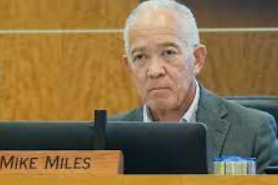
Mercedes Schneider summarizes the checkered career of Mike Miles, who was put in charge of the Houston Independent School District by State Commissioner Mike Morath, who was appointed by hard-right Republican Governor Greg Abbott. Abbott wants to punish Houston for not voting for him. What better punishment than to install Mike Miles as superintendent?

Schneider writes:

In June 2023, the Houston Independent School District (HISD) became the latest major school district to experience a top-down, ed-reform tactic that largely ignores community investment and fail to deliver on promised academic gains: the state takeover of a school district.

On June 01, 2023, the Texas Education Agency (TEA) appointed Mike Miles as the new HISD superintendent.

Miles is the golden-child product of market-based, ed-reform leadership. As reported in his LinkedIn bio, Miles holds no college degrees in teaching (engineering; slavic languages and literature; international affairs and policy). He has never been a classroom teacher, never a site-based administrator, yet he was a district superintendent in Colorado for six years (2006-11) and superintendent of Dallas ISD for three.

Though he does not mention it in his LinkedIn bio, Miles was a member of the Class of 2011 at the Broad Superintendents Academy A 2011 EdWeek article on Broad superintendents includes the criticism that they “use corporate-management techniques to consolidate power, weaken teachers’ job protections, cut parents out of decisionmaking, and introduce unproven reform measures.”

Indeed.

In 2015, Miles abruptly resigned from Dallas ISD amid being, as WFAA.com states, “at the center of controversy since he took the position nearly three years ago,” which apparently included questions about misdirecting funding intended for at-risk students and the subsequent exit of the Dallas ISD budget director. (Also calling Miles “a lightening rod for controversy,” WFAA.com offers this timeline of Miles’ unsettling tenure in Dallas.)

Despite all of his Dallas ISD controversy, TEA– which is no stranger to stepping into its own controversy— chose to hire Miles to lead its newly-state-snatched HISD.

Following his Dallas ISD exit, in 2016, he founded a charter school chain, Third Future Schools, which has locations in Colorado, Texas, and Louisiana. For two years (2017-19), Miles was a senior associate in an education consulting firm, FourPoint Education Partners.

And according to his LinkedIn bio, Miles is/was on a number of ed-reform organization boards, including Teach for America (TFA) Colorado (2017-20); National Council on Teacher Quality (NCTQ) (2013-present), and Chiefs for Change (2015-present).

Please open the link to finish reading the post.

This is one of the best letters that Heather Cox Richardson has written since I started reading her posts. It puts the current Supreme Court’s radical decisions into historical perspective. This Court, hand-picked by Leonard Leo and the Federalist Society, is engaged in a shameless effort to move the clock back to the world as it existed before the New Deal. This Court threatens our democracy and our rights.

She writes:

Today the Supreme Court followed up on yesterday’s decision gutting affirmative action with three decisions that will continue to push the United States back to the era before the New Deal.

In 303 Creative LLC v. Elenis the court said that the First Amendment protects website designer Lorie Smith from having to use words she doesn’t believe in support of gay marriage. To get there, the court focused on the marriage website designer’s contention that while she is willing to work with LGBTQ customers, she doesn’t want to use her own words on a personalized website to celebrate gay marriages. Because of that unwillingness, she said, she wants to post on her website that she will not make websites for same-sex weddings. She says she is afraid that in doing so, she will run afoul of Colorado’s anti-discrimination laws, which prevent public businesses from discriminating against certain groups of people.

This whole scenario of being is prospective, by the way: her online business did not exist and no one had complained about it. Smith claims she wants to start the business because “God is calling her ‘to explain His true story about marriage.’” She alleges that in 2016, a gay man approached her to make a website for his upcoming wedding, but yesterday, Melissa Gira Grant of The New Republic reported that, while the man allegedly behind the email does exist, he is an established designer himself (so why would he hire someone who was not?), is not gay, and married his wife 15 years ago. He says he never wrote to Smith, and the stamp on court filings shows she received it the day after she filed the suit.

Despite this history, by a 6–3 vote, the court said that Smith was being hurt by the state law and thus had standing to sue. It decided that requiring the designer to use her own words to support gay marriage violated the First Amendment’s guarantee of free speech.

Taken together with yesterday’s decision ruling that universities cannot consider race as a category in student admissions, the Supreme Court has highlighted a central contradiction in its interpretation of government power: if the Fourteenth Amendment limits the federal government to making sure that there is no discrimination in the United States on the basis of race—the so-called “colorblind” Constitution—as the right-wing justices argued yesterday, it is up to the states to make sure that state laws don’t discriminate against minorities. But that requires either protecting voting rights or accepting minority rule.

This problem has been with us since before the Civil War, when lawmakers in the southern states defended their enslavement of their Black (and Indigenous) neighbors by arguing that true democracy was up to the voters and that those voters had chosen to support enslavement. After the Civil War, most lawmakers didn’t worry too much about states reimposing discriminatory laws because they included Black men as voters first in 1867 with the Military Reconstruction Act and then in 1870 with the Fifteenth Amendment to the Constitution, and they believed such political power would enable Black men to shape the laws under which they lived.

But in 1875 the Supreme Court ruled in Minor v. Happersett that it was legal to cut citizens out of the vote so long as the criteria were not about race. States excluded women, who brought the case, and southern states promptly excluded Black men through literacy clauses, poll taxes, and so on. Northern states mirrored southern laws with their own, designed to keep immigrants from exercising a voice in state governments. At the same time, southern states protected white men from the effects of these exclusionary laws with so-called grandfather clauses, which said a man could vote so long as his grandfather had been eligible.

It turned out that limiting the Fourteenth Amendment to questions of race and letting states choose their voters cemented the power of a minority. The abandonment of federal protection for voting enabled white southerners to abandon democracy and set up a one-party state that kept Black and Brown Americans as well as white women subservient to white men. As in all one-party states, there was little oversight of corruption and no guarantee that laws would be enforced, leaving minorities and women at the mercy of a legal system that often looked the other way when white criminals committed rape and murder.

Many Americans tut-tutted about lynching and the cordons around Black life, but industrialists insisted on keeping the federal government small because they wanted to make sure it could not regulate their businesses or tax them. They liked keeping power at the state level; state governments were far easier to dominate. Southerners understood that overlap: when a group of southern lawmakers in 1890 wrote a defense of the South’s refusal to let Black men vote, they “respectfully dedicated” the book to “the business men of the North.”

In the 1930s the Democrats under President Franklin Delano Roosevelt undermined this coalition by using the federal government to regulate business and provide a social safety net. In the 1940s and 1950s, as racial and gender atrocities began to highlight in popular media just how discriminatory state laws really were, the Supreme Court went further, recognizing that the Fourteenth Amendment’s declaration that states could not deprive any person of the equal protection of the laws meant that the federal government must protect the rights of minorities when states would not. Those rules created modern America.

This is what the radical right seeks to overturn. Yesterday the Supreme Court said that the Fourteenth Amendment could not address racial disparities, but today, like lawmakers in the 1870s, it signaled that it would not protect voting in the states either. It rejected a petition for a review of Mississippi’s strict provision for taking the vote away from felons. That law illustrates just how fully we’re reliving our history: it dates from the 1890 Mississippi constitution that cemented power in white hands. Black Mississippians are currently 2.7 times more likely than white Mississippians to lose the right to vote under the law.

The court went even further today than allowing states to choose their voters. It said that even if state voters do call for minority protections, as Colorado’s anti-discrimination laws do, states cannot protect minorities in the face of someone’s religious beliefs. In her dissent, Justice Sonia Sotomayor wrote that for “the first time in its history,” the court has granted “a business open to the public a constitutional right to refuse to serve members of a protected class.”

It is worth noting that segregation was defended as a deeply held religious belief.

Today, using a case concerning school loans, the Supreme Court also took aim at the power of the federal government to regulate business. In Biden v. Nebraska the court declared by a vote of 6 to 3 that President Biden’s loan forgiveness program, which offered to forgive up to $20,000 of federally held student debt, was unconstitutional. The right-wing majority of the court argued that Congress had not intended to give that much power to the executive branch, although the forgiveness plan was based on law that gave the secretary of education the power to “waive or modify any statutory or regulatory provision applicable to the student financial assistance programs…as the Secretary deems necessary in connection with a…national emergency…to ensure” that “recipients of student financial assistance…are not placed in a worse position financially in relation to that financial assistance because of [the national emergency]”.

The right-wing majority based its decision on the so-called major questions doctrine, invented to claw back regulatory power from the federal government. By saying that Congress cannot delegate significant decisions to federal agencies, which are in the executive branch, the court takes on itself the power to decide what a “significant” decision is. The court established this new doctrine in the West Virginia v. Environmental Protection Agencycase, stripping the EPA of its ability to regulate certain kinds of air pollution.

“Let’s not beat around the bush,” constitutional analyst Ian Millhiser wrote today in Vox, today’s decision in Biden v. Nebraska “is complete and utter nonsense. It rewrites a federal law which explicitly authorizes the loan forgiveness program, and it relies on a fake legal doctrine known as ‘major questions’ which has no basis in any law or any provision of the Constitution.”

Today’s Supreme Court, packed as it has been by right-wing money behind the Federalist Society and that society’s leader, Leonard Leo, is taking upon itself power over the federal government and the state governments to recreate the world that existed before the New Deal.

Education Secretary Miguel Cardona called out the lurch toward turning the government over to the wealthy, supported as it is by religious footsoldiers like Lorie Smith: “Today, the court substituted itself for Congress,” Cardona told reporters. “It’s outrageous to me that Republicans in Congress and state offices fought so hard against a program that would have helped millions of their own constituents. They had no problem handing trillion-dollar tax cuts to big corporations and the super wealthy.”

Cardona made his point personal: “And many had no problems accepting millions of dollars in forgiven pandemic loans, like Senator Markwayne Mullin from Oklahoma had more than $1.4 million in pandemic loans forgiven. He represents 489,000 eligible borrowers that were turned down today. Representative Brett Guthrie from Kentucky had more than $4.4 million forgiven. He represents more than 90,000 eligible borrowers who were turned down today. Representative Marjorie Taylor Greene from Georgia had more than $180,000 forgiven. She represents more than 91,800 eligible borrowers who were turned down today.”

In the majority opinion of Biden v. Nebraska, Chief Justice John Roberts lamented that those who dislike the court’s decisions have accused the court of “going beyond the proper role of the judiciary.” He defended the court’s decision and urged those who disagreed with it not to disparage the court because “such misperception would be harmful to this institution and our country.” But what is at stake is not simply these individual decisions, whether or not you agree with them; at stake is the way our democracy operates.

Norman Ornstein of the American Enterprise Institute didn’t offer much hope for Roberts’s plea. “It is not just the rulings the Roberts Court is making,” he tweeted. “They created out of [w]hole cloth a bogus, major questions doctrine. They made a mockery of standing. They rewrite laws to fit their radical ideological preferences. They have unilaterally blown up the legitimacy of the Court.”

In a shot across the bow of this radical court, in her dissent to Biden v. Nebraska, Justice Elena Kagan wrote that “the Court, by deciding this case, exercises authority it does not have. It violates the Constitution.”

Dana Milbank, a regular columnist for the Washington Post, writes here about the bizarre behavior of House Republicans, who have no agenda other than impeaching Biden, censuring Adam Schiff, and punishing anyone else who doesn’t share their Trump-worship. Marjorie Taylor Greene and Lauren Boebert got into a tiff on the House floor about whose impeachment resolution would be introduced first. Greene reportedly called Boebert a “little bitch,” for being first to offer a Biden impeachment resolution.These petty, vindictive people are our nation’s “leaders.”

Milbank wrote:

A couple of weeks before the midterm elections, Kevin McCarthy assured voters that House Republicans, if given the majority, wouldn’t be so rash as to go on an impeachment binge.

“I think the country doesn’t like impeachment used for political purposes at all,” he told Punchbowl News at the time. “I think the country wants to heal,” he added, and avowed that he didn’t think anybody in the Biden administration merited impeachment proceedings.

The voters gave Republicans a chance, awarded them narrow control of the House.
And now Republicans are starting their impeachment binge.

Rep. Lauren Boebert (R-Colo.) rose in the House Tuesday evening after the last vote. “For what purpose does the gentlewoman from Colorado seek recognition?” asked the presiding officer, Rep. Russell Fry (R-S.C.).

The gentlewoman sought recognition to unveil a parliamentary maneuver that would force a vote within 48 hours on H. Res. 503, “Impeaching Joseph R. Biden Jr., president of the United States, for high crimes and misdemeanors.”

No impeachment proceedings. No investigation. No evidence. No crimes. Not so much as parking ticket. Just a willy-nilly, snap vote to impeach the president, because Boebert dislikes Biden’s immigration policies. In her mind, “President Biden has intentionally facilitated a complete and total invasion at the southern border,” she charged on the House floor.

At this, Rep. Marjorie Taylor Greene (R-Ga.) flew into a fit of jealousy because Boebert had thought to use the maneuver (called a “privileged resolution”) to force an impeachment vote before Greene got a vote on her articles of impeachment against Biden. Boebert stole her impeachment articles, Greene whined to reporters, calling Boebert that name that every kindergartner fears: “Copycat.”

Congresswoman Jewish Space Lasers then confronted Boebert on the House floor and called her a “little b—-” who “copied my articles of impeachment,” according to a Daily Beast account that Greene confirmed.

But Boebert was unmoved — because she’s on a mission from God. She filed her impeachment resolution because “I am directed and led by Him … by the spirit of God,” she told the evangelical Victory Channel.

God could not be reached for comment…

McCarthy had tried to stall his caucus’s drive for impeachment by setting House committee chairmen loose to launch a series of overlapping probes into whatever catches their fancy. At least three committees are investigating Hunter Biden. At least three committees are auditioning impeachment articles against Homeland Security Secretary Alejandro Mayorkas. At least three committees are probing imagined “censorship” of social media by the administration. Multiple committees are pursuing fanciful conspiracy theories involving public health officials and the supposed “weaponization” of the FBI, the Justice Department and the rest of the government by the “deep state.” And, of course, the committees investigate anybody — Jack Smith, Alvin Bragg — who investigates Trump.

Exit polls in the midterms showed voters cared most about inflation and abortion, followed by guns, crime and immigration. Yet the House majority just passed a bill to expand access to a common mass-shooting weapon and is now moving tax cuts that would aggravate inflation.
There’s talk that House Republicans next month will take up bills further restricting abortion access — that is, if they can find time between impeachment votes.

Since any legislation to impeach the President requires a 2/3 majority in the Senate, this bill is obviously cheap grandstanding. But House Republicans choose to devote their time and energy to such displays of petty vengeance. Pathetic.

Tony Evers ran for Governor of Wisconsin on a pro-public education platform. He had been the State Commissioner of Education, and he pledged to reverse the damage done by Republicans to the state’s once-eminent public schools. After years of Republican governors who supported privatization, Evers portrayed himself as a champion of public schools.

The Network for Public Education did not support him. One of our allies in Wisconsin warned that he was two-faced. When we did not support him, other Wisconsin friends were shocked and told us we were wrong about Evers. They said he would be a great friend to public schools.

Sadly, Governor Evers turned out to be a traitor. He just signed a bill giving more funding to voucher schools than to the state’s woefully underfunded public schools.

He betrayed his campaign promises and his supporters. Shame on Tony Evers!

The Wisconsin Public Education Network sent out the following bulletin:

Dear friends of Wisconsin students and their public schools,

You have likely heard the news that Gov. Evers signed into law today both the shared revenue bill and SB330/AB305, a bill that gives a bump to spending authority for low revenue districts while dramatically expanding state funding to private schools and independent charters. Combined with a gap-widening budget omnibus proposal that provides woefully inadequate and inequitable resources to public schools, the move is part of a larger deal that fails to meet any of the priority needs of students in Wisconsin’s public schools, marking 16 YEARS of preK-12 budgets that fail to keep pace with inflation. 

All day, our phones have been buzzing with messages of outrage, frustration, and betrayal.

Earlier today, our board of directors issued a public plea to the governor to reject this deal. The excerpts below sum up their concerns and what the passage of these bills means to Wisconsin kids.

From the Wisconsin Alliance for Excellent Schools board of directors:

The action taken by the Joint Committee on Finance falls well short of the state’s constitutional responsibilities in the area of K-12 education and must be dramatically improved by the state legislature. If not, the budget must be vetoed by the governor and recrafted in order to pass Constitutional muster.

Our chief concerns with this budget deal: 

  • Public school students have been defunded relative to inflation for fourteen years and the per pupil adjustments proposed by the Joint Committee on Finance will extend that defunding streak to 16 years.
  • During that period of time, funding for students with disabilities was frozen for a decade and the promised, but not guaranteed, 33% reimbursement rate for special education will continue to keep Wisconsin near the very bottom of all states in that category.
  • Local property tax payers will be forced to cover the costs of a massive expansion of the unaccountable voucher program.
  • Private schools will be provided more direct aid from the state than most public schools are even allowed to spend (see fiscal memo here).
  • Shared revenue deal usurps the authority of the MPS board by requiring reinstatement of police officers on school property.

We call on the state legislature to fix this budget bill by restoring special education reimbursement to a minimum of 60%, providing an inflationary increase in spendable aid to all students in public schools, and removing irresponsible provisions to expand spending on private education. We urge Governor Evers to veto any bill that arrives at his desk that fails to meet these critical needs of Wisconsin students.

Unfortunately, 15 minutes after our board of directors issued their statement on these fast-tracked proposals, we learned Gov. Evers had already signed into law the largest stand-alone voucher aid expansion in state history and a shared revenue bill that undermines Milwaukee Public Schools, so we issued this response. We hope you will share it widely, as it details some of the most harmful and gap-widening provisions of the “compromise”:

  • This deal will provide private voucher schools more guaranteed state aid than the average public school is even allowed to spend per student,
  • while public schools will see a less-than-inflationary increase to state aid and a less than 2% increase to special education, cementing funding discrimination for kids with disabilities.
  • Raising the low revenue limit ceiling by $1000 is a nice gesture, but it doesn’t even bring those districts up to the state average in spending authority.
  • Public school students and local property taxpayers will pay the price, while private schools that can legally discriminate and pick and choose their students get a blank check from the state.
  • With voucher enrollment caps set to come off entirely in 2 years, this is the most reckless and irresponsible thing Wisconsin could do with its massive surplus, especially when we consider that the nearly 80% of students participating in the statewide voucher program never attended a public school.

The three top concerns of the public at all four of the budget hearings (preK-12 public schools, higher ed, and childcare) were all put on the chopping block to reach this “compromise” and nearly $2 BILLION of Gov. Evers’ original budget proposal for public schools was exchanged for this massive, unconscionable, unconstitutional voucher expansion. The state is already not meeting its obligation to its children, and this budget demonstrates a refusal to use the biggest surplus we’ve ever seen to make a meaningful start toward doing so. It’s time to hold Wisconsin accountable for doing better.

The good news: it’s not too late to fix this.

CALL ON LAWMAKERS TO FIX THIS BUDGET SO THAT PUBLIC SCHOOL STUDENTS’ NEEDS ARE MET BEFORE IT’S TOO LATE, AND CALL ON GOV. EVERS TO VETO THE ENTIRE BUDGET BILL IF IT DOESN’T. 

And let them know: we are watching every single vote that betrays Wisconsin students. 

Find your lawmakers here or call 800-362-9472 for the Wisconsin legislature hotline. Contact Gov. Evers at (608) 266-1212 or online here

Every single lawmaker has a vote on this bill, and needs to hear from us. Don’t assume you know how they’ll vote – let them know what local kids need!

We know Governor Evers has pledged to do what’s best for kids, and it’s not too late for him to back out of a deal that has gone way too far in selling out students in the public schools we are morally and constitutionally responsible to support. He needs to hear from you!

We continue to advocate for the following to meet the needs our kids have now: 

  • no less than $1,510/per pupil in new spendable funds to their districts to catch up with inflation
  • 60% reimbursement of special education costs to begin closing the gap between the state’s special ed. support for public and private schools;
  • prioritizing funds where needs are greatest; 
  • and putting a moratorium on the use of public dollars on unaccountable private and privately-operated schools.

It’s not too late to deliver a budget that meets these needs.  Our kids are counting on us to do it.

Stay tuned for additional action steps and details on how you can get involved, and please continue to follow WisconsinNetwork.org/budget for updates!

– Your friends at Team Public

LOCAL LEVEL ACTION. STATEWIDE IMPACT. Wisconsin Public Education Network is a project of the Wisconsin Alliance for Excellent Schools, a nonprofit, nonpartisan public education advocacy organization. To support our work, donate here!

Mehdi Hassan of MSNBC writes here about Ron DeSantis’ lies about Florida’s COVID deaths.

DeSantis is an advocate of herd immunity, although he was not at the start of the pandemic. To woo the hard-right base of the GOP, he turned Florida into a state that opposed mandates for masks and vaccines. He found a surgeon general who agreed with him. He placed the economy above the lives of Floridians.

What were the results? Open the link.

If you read one article today, make it this one.

Kathryn Joyce is an outstanding journalist who has written several excellent articles about the far-right conspiracy to destroy public education. In this important article, published by both the Hechinger Report and Vanity Fair, she examines the rightwing takeover of public schools in Sarasota, Florida, by the extremist Moms for Liberty and their hero Governor DeSantis.

Joyce begins:

SARASOTA COUNTY, Fla. — On a Sunday afternoon in late May 2022, Zander Moricz, then class president of Sarasota County’s Pine View School, spent the moments before his graduation speech sitting outside the auditorium, on the phone with his lawyers. Over the previous month, the question of what he’d say when he stepped to the podium had become national news. That March, Florida Governor Ron DeSantis had signed the Parental Rights in Education Act, quickly dubbed the “Don’t Say Gay” law for its ban on all mention of gender identity and sexuality in K–3 classrooms and restriction of those discussions in higher grades as well. Moricz, a student LGBTQ+ activist, had led several protests against the act that spring and joined a high-profile lawsuit against the state. In early May, he charged on Twitter that Pine View’s administration had warned that if he mentioned his activism or the lawsuit at graduation, his microphone would be cut. (In a statement released last year, the school district confirmed that students are told not to express political views in their speeches.)

In the tumultuous weeks leading up to the ceremony, Pine View — Sarasota’s “gifted” magnet institution, consistently ranked one of the top 25 public high schools in the country — was besieged with angry calls and news coverage. Moricz stayed home for three weeks, he said, thanks to the rvolume of death threats he received, and people showed up at his parents’ work. When a rumor started that Pine View’s principal would have to wear a bulletproof vest to graduation, he recalled, “the entire campus lost their minds,” thinking “everyone’s going to die” and warning relatives not to come. His parents worried he’d be killed.

But after all the controversy, graduation day was a success. Moricz, now 19, delivered a pointedly coded speech about the travails of being born with curly hair in Florida’s humid climate: how he worried about the “thousands of curly-haired kids who are going to be forced to speak like this” — like he was, in code — “for their entire lives as students.” Videos of the speech went viral. Donations poured into Moricz’s youth-led nonprofit. That summer, he left to study government at Harvard.

Half-a-year later though, when Moricz came home, Sarasota felt darker.

“I’m wearing this hat for a reason,” he said when we met for coffee in a strip mall near his alma mater in early March. “Two years ago, if I was bullied due to my queerness, the school would have rallied around me and shut it down. If it happened today, I believe everyone would act like it wasn’t happening.”

These days, he said, queer kids sit in the back of class and don’t tell teachers they’re being harassed. A student at Pine View was told, Moricz said, that he couldn’t finish his senior thesis researching other states’ copycat “Don’t Say Gay” laws. (The school did not respond to a request for comment through a district spokesperson.) When Moricz’s nonprofit found a building to house a new youth LGBTQ+ center — since schools were emphatically no longer safe spaces — they budgeted for bulletproof glass.

“The culture of fear that’s being created is doing exactly what it’s supposed to do,” he said. And much of it was thanks to the Sarasota County School Board.

Over the last two years, education culture wars have become the engine of Republican politics nationwide, with DeSantis’s Florida serving as the vanguard of the movement. But within the state, Sarasota is more central still.

Its school board chair, Bridget Ziegler, cofounded the conservative activist group Moms for Liberty and helped lay the groundwork for “Don’t Say Gay.” After a uniquely ugly school board race last summer, conservatives flipped the board and promptly forced out the district’s popular superintendent. In early January, when DeSantis appointed a series of right-wing activists to transform Florida’s progressive New College into a “Hillsdale of the South” — emulating the private Christian college in Michigan that has become a trendsetting force on the right — that was in Sarasota too. In February, DeSantis sat alongside Ziegler’s husband and Moms for Liberty’s other cofounders to announce a list of 14 school board members he intends to help oust in 2024—Sarasota’s sole remaining Democrat and LGBTQ+ board member, Tom Edwards, among them. The next month, Ziegler proposed that the board hire a newly created education consultancy group with ties to Hillsdale College for what she later called a “‘WOKE’ Audit.” (Ziegler did not respond to interview requests for this article.)

The dizzying number of attacks has led to staffing and hiring challenges, the cancelation of a class, a budding exodus of liberals from the county, and fears that destroying public education is the ultimate endgame. In January, Ziegler’s husband, Christian — who chairs the Florida Republican Party — tweeted a celebratory declaration: “SARASOTA IS GROUND ZERO FOR CONSERVATIVE EDUCATION.”

It wasn’t hyperbole, said Moricz. “We say that Sarasota is Florida’s underground lab, and we’re its non-consenting lab rats.”

For as long as Florida has been grading schools and school districts — a late 1990s innovation that helped spark the “school reform” movement — Sarasota, with its 62 schools and nearly 43,000 students, has enjoyed an “A” rating. Perched on the Gulf Coast just south of Tampa, the county’s mix of powder-soft beaches and high-culture amenities — including an opera house, ballet and museums — have made it a destination for vacationers and retirees. And that influx has made Sarasota one of the richest counties in the state.

Since many of those retirees, dating back to the 1950s, have been white Midwestern transplants, it’s also made Sarasota a Republican stronghold and top fundraising destination for would-be presidential candidates. Both the last and current chairs of the state GOP — first State Senator Joe Gruters and now Christian Ziegler — live in the county. Sarasota arguably launched Donald Trump’s first presidential campaign, thanks to Gruters’s early support. These days, though, Sarasota isn’t just conservative, but at the leading edge of Florida’s turn to the hard right.

Partly that’s thanks to the Zieglers, who have become one of Florida’s premier power couples, with close ties to both Trump world and the DeSantis administration and a trio of daughters enrolled in local private schools. As founder of the digital marketing company Microtargeted Media, Christian did hundreds of thousands of dollars of work for pro-Trump PACs in 2021, the Sarasota Herald-Tribune reported. After being elected state GOP chair this February, he announced his goal was “to crush these leftist in-state Democrats” so thoroughly that “no Democrat considers running for office.” Although Bridget stepped down from Moms for Liberty shortly after its founding, she subsequently helped draftFlorida’s Parents’ Bill of Rights, which helped pave the way for DeSantis’s 2021 ban on mask mandates and ultimately last year’s “Don’t Say Gay” law. In 2022, the right-wing Leadership Institute hired her as director of school board programs, and built a 6,000-square-foot headquarters in Sarasota to serve as a national hub for conservative education activism. This winter, DeSantis also appointed her to a new board designed to punish the Disney Company for criticizing his anti-LGBTQ laws….

Last year, when Ziegler was up for reelection and two other board members were terming out, she ran as a unified slate with former school resource officer Tim Enos and retired district employee Robyn Marinelli. The candidates drew support from both DeSantis’s administration — which unprecedentedly endorseddozens of school board candidates across the state — and local members of the far-right. A PAC partially funded by The Hollow’s owner campaigned for the “ZEM” slate (a shorthand for the candidates’ surnames) by driving a mobile billboard around the county, calling one of their opponents a “LIAR” and “BABY KILLER” because she’d once worked for Planned Parenthood. Proud Boys hoisted ZEM signs on county streets and a mailer was sent out, castigating the liberal candidates as “BLM/PSL [Party of Socialism and Liberation]/ANTIFA RIOTERS, PLANNED PARENTHOOD BABY KILLERS, [who] WANT GROOMING AND PORNOGRAPHY IN OUR SCHOOLS.” (Enos and Marinelli did not respond to requests for comment for this article.)

Open the link and read all of the article. It is a devastating article about the takeover of the school board by hateful extremists whose tools are fear and divisiveness.

Mitch Randal, a pastor in Norman, Oklahoma, and CEO OF Good Faith Media, published his opposition to the state’s recent decision to fund a religious virtual charter school.

Randal wrote:

The Oklahoma Statewide Virtual Charter School Board voted 3-2 to approve using state funds to support a new Catholic school this week. One of the board members voting “yes” was installed to their post last Friday, according to Tulsa World.

The board’s actions began creating the first religious charter school supported by taxpayer dollars in the United States. The online school, St. Isidore of Seville Catholic Virtual School, will be managed and operated by the Roman Catholic Archdiocese of Oklahoma City and the Diocese of Tulsa.

Oklahoma’s previous Attorney General, John O’Connor, issued a non-binding 15-page opinion in December 2022 suggesting that Oklahoma’s restriction of taxpayer funds from being used for religious schools would most likely be found unconstitutional by the United States Supreme Court.

Education Week reported, “O’Connor had concluded that recent U.S. Supreme Court decisions authorizing the inclusion of religious schools in choice programs such as tax credits for scholarship donations, and tuition assistance meant that the high court would likely not ‘accept the argument that, because charter schools are considered public for various purposes, that a state should be allowed to discriminate against religiously affiliated private participants who wish to establish and operate charter schools.’”

St. Isidore of Seville Catholic Virtual School’s application asked for $2.5 million to serve a potential 500 students in the first year. That will be $2.5 million taken away from public schools to support private religious education.

O’Connor’s successor, Gentner Drummond, withdrew the opinion earlier this year, stating, “Religious liberty is one of our most fundamental freedoms.”

Drummond continued: “It allows us to worship according to our faith, and to be free from any duty that may conflict with our faith. The opinion as issued by my predecessor misuses the concept of religious liberty by employing it as a means to justify state-funded religion.”

While some Christian conservatives, such as Oklahoma’s State Superintendent Ryan Walters, praised the board’s decision, other politicians and faith leaders criticized its actions, characterizing them as unconstitutional and a direct violation of the Establishment Clause.

After the 3-2 vote in favor of funding St. Isidore of Seville Catholic Virtual School, Drummond reiterated his opinion that this decision was improper. “The approval of any publicly funded religious school is contrary to Oklahoma law and not in the best interest of taxpayers,” he said.

“It’s extremely disappointing that board members violated their oath in order to fund religious schools with our tax dollars,” Drummond said. “In doing so, these members have exposed themselves and the State to potential legal action that could be costly.”

Clark Frailey, executive director for Pastors for Oklahoma Kids, commented: “By authorizing a public school that is explicitly affiliated with a particular religion, Oklahoma is endorsing that religion and entangling the government in religious affairs.”

“In addition,” Frailey continued, “the proposed school is to be funded by taxpayer dollars. This clearly misuses public dollars, as it would fund religious indoctrination of children.”

Historically, Oklahoma has been notoriously guilty of using taxpayer dollars to indoctrinate children with religious doctrines. Many times, Good Faith Media has called attention to the misguided and violent actions occurring at Chilocco Indian Agricultural Boarding School.

Thousands of Indigenous children were taken from their families and provided “Christian” education using taxpayer funding. Hiding behind a compassionate mission to educate Indigenous children, the actual objective was to assimilate them into white Protestant doctrines.

While no one suggests the Oklahoma Catholic Diocese is following this model, the dangers of using taxpayer dollars are ominous. Besides taking precious funding away from public education to fund private religious charters, using taxpayer money violates the religious liberty of others not wanting to support religious teachings.

Should taxpayers be forced to support religious teachings contradictory to their belief systems? Will there be any oversight of the use of taxpayer money used at religious schools?

Like public schools, do religious schools have to accept all students or can they discriminate? Will religious schools need curriculum to be approved? If so, who decides? Can any religious sect apply for funding?

Americans United for Separation of Church and State responded, “It’s hard to think of a clearer violation of the religious freedom of Oklahoma taxpayers and public-school families than the state establishing the nation’s first religious public charter school.”

AU went on to point out the unconstitutionality of the action: “State and federal law are clear: Charter schools are public schools that must be secular and open to all students. No public-school family should fear that their child will be required by charter schools to take theology classes or be expelled for failing to conform to religious doctrines. And the government should never force anyone to fund religious education.”

“Funding private religious schools with public dollars violates core legal principles protecting religious freedom for all,” said Amanda Tyler, executive director of BJC (Baptist Joint Committee for Religious Liberty).

Paul Brandeis Raushenbush, CEO of Interfaith Alliance, told The Independent that this would “open the floodgates for taxpayer-funded discrimination.” He added: “Taxpayer money should never be used to fund religious instruction, and it is now up to the state to at least ensure St. Isidore abides by the federal nondiscrimination protections guaranteed in public schools.”

The decision by the Oklahoma Statewide Virtual Charter School Board is clearly a disregard for the democratic principles established by the nation’s founders.

Thomas Jefferson’s words in his letter to the Baptists of Danbury, Connecticut, are as crucial today as they were in 1802: “I contemplate with sovereign reverence that act of the whole American people which declared that their legislature should ‘make no law respecting an establishment of religion, or prohibiting the free exercise thereof,’ thus building a wall of separation between Church & State.”

Mitch Randall headshot

Mitch Randall

CEO of Good Faith Media.

goodfaithmedia.org

Rev. Clark Frailey is the chair of Pastors for Oklahoma Kids and a strong supporter of public schools, open to all children. He wrote in the Oklahoman against the decision by a state board to authorize a religious charter school. The original title of this article is: “Pastor: We’ve heard much about ‘indoctrination.’ What do you call Catholic charter school?”

It is important to preserve the separation of church and state as enunciated by Thomas Jefferson.

Before the Oklahoma Statewide Virtual Charter School Board, I recently testified that authorizing a religious private school as a public charter school would be an egregious violation of our state constitution, the First Amendment, and religious liberty.

Plainly stated: Church and state should be separate.

While I believe the virtual charter board has the right intentions at heart ― to expand educational choices to Oklahoma students ― the consequences of their recent decision will be far-reaching and harmful.

The First Amendment to the U.S. Constitution states, “Congress shall make no law respecting an establishment of religion, or prohibiting the free exercise thereof.” This means that the government cannot endorse or promote any particular religion, nor can it interfere with the free exercise of religion.The Oklahoma Constitution further states, “Provisions shall be made for the establishment and maintenance of a system of public schools, which shall be open to all the children of the state and free from sectarian control.”

The state is endorsing a particular religion by funding a sectarian public charter school with taxpayer dollars. Title 70 (§70-3-136) of Oklahoma’s Charter School Act could not be more precise in stating this is not allowed: “A charter school shall be nonsectarian in its programs, admission policies, employment practices, and all other operations. A sponsor may not authorize a charter school or program that is affiliated with a nonpublic sectarian school or religious institution.”

Why board members Brian Bobek, Nellie Sanders and Scott Strawn chose to violate historic precedent and plainly written laws is not clear. What is clear is that these board members voted to break charter school law as activists radically opposed to our current understanding of public education, which welcomes all students, regardless of religious preference.

We have heard much about the supposed “indoctrination” in public schools, which makes it incredibly ironic that an organization that makes its indoctrination aims clear is being authorized by a state agency with Gov. Kevin Stitt’s and state schools Superintendent Ryan Walters’ blessing.The separation of church and state is one of the most essential principles of our nation. The church should not resort to the civil power to carry on its work. Separation protects religious liberty and ensures that the government cannot interfere with our religious beliefs.We must protect the separation of church and state by opposing any attempt to use public funds to support religious schools.

The Rev. Clark Frailey

The Rev. Clark Frailey is pastor of Coffee Creek Church, Edmond, and the executive director of Pastors for Oklahoma Kids, a nondenominational coalition of pastors from across Oklahoma that advocates for excellent public schools for all kids

An obscure board appointed by Oklahoma Governor Kevin Stitt voted 3-2 to approve funding a virtual charter school operated by the Archdiocese of Oklahoma City abd the Diocese of Tulsa. This violates the state constitution, as well as the First Amendment to the Constitution. Randi Weingarten, who is a lawyer, decried this action. The state will end up spending many more millions in legal fees, as it battles for its decision in the courts. If the decision is upheld, Oklahoma and other states can expect to fund yeshivas, madrassas, fundamentalist schools, even Satanic schools. We don’t need schools that indoctrinate; we need public schools that educate children to think for themselves and to respect others.

AFT’s Weingarten on Oklahoma Religious Charter School Approval
 

WASHINGTON—American Federation of Teachers President Randi Weingarten issued the following statement after Oklahoma approved a taxpayer-funded religious charter school:

“This decision not only threatens to siphon millions of dollars in public money into private hands, it strikes at the heart of our nation’s very foundations. The framers never intended to require public funding of religious institutions or religious schools.

“The combination of the Constitution’s free exercise clause and the concept of separation of church and state is what ensures religious freedom in the United States. This decision turns that idea on its head.

“It also turns on its head the concept that charter schools were supposed to be public schools run in a different way. And it vitiates the distinction between public and nonpublic religious schools in the eyes of Oklahoma.

“It is telling that a bipartisan coalition was opposed to the approval, and that only an obscure, hand-picked board of the governor’s own choosing was able to force it through.

“This ruling will no doubt end up at the Supreme Court. It is a clear and present danger, not only to ensuring public schools are open and accessible to all, but to religious liberty and freedom in our democracy writ large.”