Archives for category: Separation of church and state

The Texas Monthly asks the question: Why is Governor Greg Abbott pitching vouchers only at private Christian schools? Could it be that he knows that vouchers are a subsidy for the tuition the family is already paying? If tuition is $12,500 per child, a voucher of $8,000 is a nice chunk of change. Maybe he knows that in other states, 75-80% of vouchers are used by students already enrolled in private schools. He knows this is a reward to his evangelical base. He doesn’t give a hoot about the 5.4 students in public schools, most of whom are not white. He cares a lot about the 300,000 kids in private schools. He criticizes public schools for “indoctrinating” students. What does he think happens in religious schools? It is spelled I-N-D-O-C-T-R-I-N-A-T-I-O-N.

Who would school vouchers really benefit?

Governor Greg Abbott is helping to answer that question, not so much through his rhetoric, which is relentlessly on-message (“educational freedom,” “parental rights,” “school choice”) as through his actions. Over the last few months, the governor has been taking his case for school vouchers on the road, traveling around the state to talk up the benefits of education savings accounts, the wonky name for a program that would offer taxpayer dollars to parents who enroll their kids in private schools.

But it’s impossible not to notice that Abbott has only visited expensive private Christian institutions—all Protestant—in front of friendly audiences of parents who have opted out of public education. Of the seven schools the governor has visited on his “Parent Empowerment Tour,” not a single one has been a public school or a secular private school or a religious school affiliated with Catholicism, Islam, or Judaism. Not even a Montessori. If the goal was to reassure critics that Abbott’s embrace of vouchers wasn’t a recipe for draining the public school system while subsidizing the children of wealthy Christian conservatives in private schools of their choice, well, none of those critics were around to hear it. The governor was quite literally preaching to the choir.

A recent appearance, at Brazos Christian School in Bryan, is representative. Brazos Christian is a private school serving kids from prekindergarten through high school, whose mission is “training, equipping, and educating students to impact the world for Jesus.” Tuition costs more than $12,500 a year for high-school students. Applicants for seventh through twelfth grade at Brazos Christian “must evidence a relationship with Jesus Christ” and provide a reference from a pastor to have a shot at acceptance. When Abbott showed up in early March, he spoke at a dais emblazoned with a sign reading “Parents Matter,” the kind of focus-group-tested slogan beloved by politicians and marketers. Hovering behind the governor’s head was the school’s cross-centric emblem.

Imagine your tax dollars supporting a school that will not accept your child because he or she does not have a “relationship with Jesus Christ.”

Jan Resseger foresees that the Republican-dominated Ohio legislature is determined to expand vouchers for private and religious schools.

They are determined to divert more money and students away from public schools despite the compelling evidence that vouchers are harmful to students, most of whom will attend schools that are lower in quality than their public school.

Jan explains why public education is essential to our democracy, not as a consumer good, but as a civic responsibility:

If you are a supporter of public education, and in your state you face proposed legislation for school vouchers, you are unlikely to convince conservative Republicans to vote against vouchers.

The issue has become purely ideological—a matter of core belief. The late political theorist Benjamin Barber almost perfectly characterizes the divide between supporters of public institutions and the radical marketplace individualists:

“Privatization is a kind of reverse social contract: it dissolves the bonds that tie us together into free communities and democratic republics. It puts us back in the state of nature where we possess a natural right to get whatever we can on our own, but at the same time lose any real ability to secure that to which we have a right. Private choices rest on individual power… personal skills… and personal luck. Public choices rest on civic rights and common responsibilities, and presume equal rights for all. Public liberty is what the power of common endeavor establishes, and hence presupposes that we have constituted ourselves as public citizens by opting into the social contract. With privatization, we are seduced back into the state of nature by the lure of private liberty and particular interest; but what we experience in the end is an environment in which the strong dominate the weak… the very dilemma which the original social contract was intended to address.” (Consumed, pp. 143-144)

A reader who identifies as “Retired Teacher” sees the school choice juggernaut as a deliberate plan to destroy our common good: public schools. Thomas Jefferson proposed the first public schools. The Northwest Ordinances, written by the founding fathers, set aside a plot of land in every town for a public school.

The origin of the school choice movement was the backlash to the Brown Decision of 1954. Segregationists created publicly-funded academies (charters) for white flight and publicly-funded vouchers to escape desegregation.

What replaces public schools will not be better for students, and it will be far worse for our society.

So much reckless “choice” will make the public schools the schools of last resort for those that have nowhere else to go. Choice is a means to defund what should be our common good. How are the schools supposed to fund the neediest, most vulnerable and most expensive students when so much funding is transferred to private interests? How will public schools be able to pay to maintain the buildings, hire qualified teachers and pay for all the fixed costs like insurance, transportation and utilities?

The billionaires and religious groups behind so-called choice would like to see public schools collapse. Choice benefits the ultra-wealthy and segregationists. Choice empowers the schools that do the choosing, not the families trying to find a school for their child. If public schools become the bottom tier of choice, they will become like the insane asylums of the 19th century where the unfortunate were warehoused, ignored and abused. This dystopian outcome would be the opposite of what the founding fathers envisioned. Their vision was one of inclusion where all are welcome, a place serves the interests of the nation, communities and individuals with civil, social and individual benefits. A tiered system of schools is neither ‘thorough or efficient.’ It is a nightmare, and nothing any proponents of democracy should be supporting.

Peter Greene has written several columns about the U.S. Supreme Court’s step-by-step effort to tear down the wall of separation between church and state. With its June 21: 2022, decision called Carson v. Makin, the High Court ordered the state of Maine to pay the tuition for students at two religious schools. Under Maine law, districts that do not have a public high school must pay tuition for high school students to attend a private non-religious school. A majority of the justices ruled that Maine violated the students’ free exercise of religion rights by denying them the same benefits as those who go to private schools at the public’s expense.

The decision was 6-3. The majority were all appointed by Republican presidents (Roberts, Alito, Thomas, Gorsuch, Kavanaugh, and Barrett). The minority were appointed by Democratic presidents (Breyer, Sotomayor, Kagan). All six of the Justices in the majority were born Catholic; Gorsuch graduated from Georgetown Preparatory Academy, a Jesuit school (Brett Kavanaugh was two years behind him.) Gorsuch and his family now attend an Episcopal church. The minority bloc consists of two Jews and a Catholic (Sotomayer).

Before the case was decided, Peter Greene expressed concern that the two religious schools openly discriminated against student, families, and staff by refusing to accept into the school’s community.

He wrote six months before the decision was released:

Bangor Christian Schools require adherence to a code of conduct; trans or gay students will be expelled, even if celibate. Their religious indoctrination is inseparable from their academic instruction. A fifth grade social studies objective is to “recognize God as Creator of the world,” while a ninth grade objective is to “refute the teachings of the Islamic religion with the truth of God’s word.” Teachers at BCS must certify that they are born again Christians.

Temple Academy is an extension of the Centerpoint Community Church. TA is unlikely to admit students that do not come from a Christian family; that family must sign a Family Covenant saying they agree with TA’s views on abortion, marriage, and homosexuality. Again, only born again Christians may be hired to teach; teachers also sign an employment agreement acknowledging that the Bible says that God considers “homosexuals and other deviants as perverted.”

The issue, he wrote, was not about freedom of religion or free exercise of religion, but about whether taxpayers should pay for schools that discriminated against defined groups of people.

For several years, fans of school choice have been pushing the argument that a religious school is not free to exercise its religious faith if it does not get to share in taxpayer dollars. The wall between church and state has thus been characterized as discrimination against religion. Turns out you can’t be really free without taxpayer funding.

A few weeks ago, Peter returned to the subject and reviewed some of the Justices’ arguments. Quite simply, he wrote, the Supreme Court was ordering the state of Maine to pay tuition at schools that engage in discrimination.

Justice Breyer asked:

What happens once “may” becomes “must”? Does that transformation mean that a school district that pays for public schools must pay equivalent funds to parents who wish to send their children to religious schools?

Justice Sotomayor said:

In 2017, I feared that the Court was “lead[ing] us . . . to a place where separation of church and state is a constitutional slogan, not a constitutional commitment.” Today, the Court leads us to a place where separation of church and state becomes a constitutional violation.

But the case goes on, because Maine passed a law stating that it would not fund schools that discriminate. The Bangor Christian Academy sued the state and asserted its right to discriminate.

Bangor Christian Schools is now suing the state of Maine, asking first for an injunction against the Maine Human Rights Act (MHRA) restriction that bars them from receiving state money as long as they continue to discriminate. Their assertion is that the “poison pill” of human rights law in Maine violates their religious liberty, that they cannot exercise that liberty unless they can both receive state funds and continue to discriminate against students and prospective faculty that don’t meet their religious requirements.

The state of Maine insists that it will not fund schools that discriminate:

Attorney General Aaron Frey said that “all Mainers deserve to be treated with dignity and respect, whether it be in their workplace, their housing, or in their classrooms. The Maine Human Rights Act is in place to protect Mainers from discrimination and the Office of the Attorney General is steadfast in upholding the law. If abiding by this state law is unacceptable to the plaintiffs, they are free to forego taxpayer funding.”

Peter continued his dissection of the decision in a third post, wherein he debated the libertarian Neil McCluskey of the CATO Institute. McCluskey asserts that secular schools are hostile to religion, and the only way to secure true freedom of religion is to fund all choices, all religions.

Peter writes:

First, I don’t accept the premise that “secular” requires hostility to religion. If you play in the percussion section, you aren’t hostile to melody–it’s just not your job to handle it. A secular education system doesn’t try to fulfill any religious functions, for a variety of reasons we’ll get into.

There’s another issue in that first point, which is the newly revived idea among some folks that they cannot fully and freely practice their religion unless they are free to discriminate against people of whom they disapprove, like the Mom who objects to having her child taught empathy because she believes there are some people her child should not feel empathy for. This is a whole other post, but my short answer is this–there is no placating these people as long as circumstances find them in a pluralistic society.

But where I really disagree with McCluskey is in his central notion that by allowing everyone to retreat to their own personal bubbles, we can end all the various battles over culture and religion…

The whole choice thesis is that by not using taxpayer funds to support private religious choice, the government is discriminating against religious folks (with the newest legal test of this theory coming to a courtroom in Maine). Again, this reasoning goes, I am not fully free to exercise my religion if the taxpayers aren’t subsidizing my choice.

I should get to practice in my little bubble, and the taxpayers should help pay for the bubble.

That’s how this vision of choice leads to religious discrimination on an unprecedented scale and takes us all the way back to the question of separate but equal.

Peter demonstrates a variety of scenarios that show how thorny this issue is.

A variety of secular schools realize that if they re-configure themselves as religious schools, the “free exercise” clause is a ticket to the Land of Do As You Please and they can start discriminating against students and faculty in pretty much any way they wish as long as they claim that it’s an essential part of their religion. This will force taxpayers to fund all sorts of things that they (and not just liberal especially) object to, from aryan supremacists to gender theory schools. One worst case scenario will be a government agency given the task of figuring out which religious schools are “real” religious schools and which are just playing games. The other worst case scenario will be states figuring out how to regulate these schools so that they can’t discriminate in ways that would be illegal for anyone else. Or maybe we’ll just have a government office of educational equality that makes sure that every religion gets an equal shake in the school funding/free exercise department. No way that could end badly. None of these “solutions” will be popular.

Now that we’re establishing that I can’t have freedom to exercise my religion without enough of a taxpayer subsidy, who is going to decide how much subsidy is enough?…

I can imagine taxpayers rejecting bond unissued because they don’t to subsidize all those religious schools.

Peter concludes:

I can imagine plenty of awful scenarios. What I can’t imagine is how vouchers + religious schools results in a free and adequate education for every child or greater harmony and cohesions for our pluralistic nation. Yes, yes, I understand we haven’t exactly mastered either of those things currently, but I don’t see how vouchers + religious schools does anything except make matters worse.

YOU ARE INVITED TO A “DAY OF ACTION” AT THE STATEHOUSE

Pastors for Indiana Children is a nonpartisan, independent ministry, not beholden to any special interest group, political party, or church office. We believe in local democracy, cooperation across lines of difference, and organizing to support public education opportunities for Indiana children.

WHO: Any Pastor, Community Leader, Parent, Student, Advocate who wants to keep public schools public, fully funded, and equitably meet the needs of ALL students. Pastor Charles Johnson, Executive Director of Pastors for Texas Children is planning to join us.

WHAT: Pastors for Indiana Children is hosting an Day of Action. We will be speaking with State Legislators directly about HB 1001, HB 1002 and HB 1591. These bills threaten the further destroy public education.

WHEN: Thursday, April 13th, 2023 from 10 a.m. to 12:30 p.m. Press Conference to follow at 12:30PM

WHERE: Indiana State Capitol Building
200 W Washington St, Indianapolis, IN 46204

WHY SHOULD PASTORS STAND UP FOR PUBLIC EDUCATION:

There are several reasons why pastors should stand up for public education:

  1. Public education is a common good: Public education is a fundamental pillar of a healthy and just society. It provides all children, regardless of their background, with the opportunity to learn and develop the skills they need to succeed in life.
  2. Equity and access: Public education is essential for promoting equity and access for all students. It provides a level playing field for students of different socio-economic backgrounds, and helps to reduce disparities in educational opportunities.
  3. Moral imperative: As leaders in our/your communities, Pastors have a moral obligation to support the common good and to advocate for justice and equality. Standing up for public education is one way to fulfill this obligation.
  4. Community engagement: Public schools are often the hub of their communities, serving not just as places of learning, but also as gathering places for community events and activities. Pastors can help to strengthen their communities by supporting public schools and advocating for their improvement.
  5. Shared values: Public education is consistent with many of the values that Pastors hold dear, such as the value of education, the importance of social justice, and the idea that we are all called to work for the common good.

By standing up for public education, Pastors can help to promote equity, justice, and the common good, while also strengthening our communities and living out our values.

Pastors, Ministers and Congregants please take the opportunity to share with other Pastors who may not know what is going on. Although, I have listed 3 bills that are a problem, there are many bills floating through and being passed in our statehouse. We must stand together to push back on this attack of public education and in specific the most vulnerable, OUR CHILDREN.

See you at the State House on April 13, 2023!

Sincerely,


Dr. Ramon L. Batts
State Director
Pastors for Indiana Children
www.PastorsForIndianaChildren.org

Governor Gregg Abbott has said repeatedly that vouchers was a high priority for him. He has traveled the state, visiting private schools, to promote them. His party controls both houses of the legislature. Voucher legislation passed in the Senate. Yesterday, the House of Representatives passed a bill barring vouchers by 86-52.

Edward McKinley of The Houston Chronicle reported:

The Texas House voted Thursday to restrict public funds from subsidizing private education, a major rebuke of Gov. Greg Abbott and the state Senate, which was expected to pass a so-called voucher program later in the day.

Although past efforts have fallen short in the House, voucher programs have received more support this year than ever before. Gov. Greg Abbott named them a priority in his State of the State address earlier this year, and he has toured the state calling for enaction. Abbott argues that parents are currently deprived of options for their children’s education, and he also says that public schools have become tools for progressive indoctrination.

The margin on Tuesday was 86 to 52. House Public Education Chair Brad Buckley, R-Killeen, attempted to prevent the chamber from voting on the measure at all, saying it was inappropriate considering that his committee plans to hold public hearings for several voucher policies next week.

“This process with this amendment turns things really in the wrong direction. It is the proverbial cart before the horse,” he said. In past sessions, Buckley has voted for the same amendment. If Buckley had been successful, it would have allowed the House to avoid any provocation of the governor or lieutenant governor.

Buckley’s effort failed by a seven-vote margin, with about a dozen Republicans joining the Democrats to stop it.

The House’s measure still needs approval from the Senate and from Abbott, and members could still decide to ultimately approve a voucher program later this session – but it proves there’s not a strong desire in the House to go on-record as supporting vouchers.

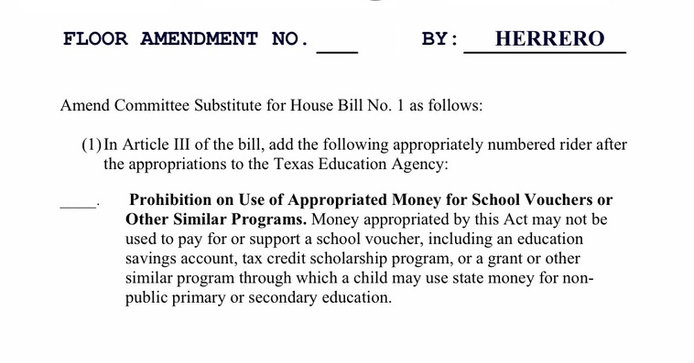
“These are public funds for public schools, as outlined and stated specifically in the Texas Constitution,” said Rep. Abel Herrero, a Robstown Democrat and the author of the amendment calling for the ban. Herrero has offered the same amendment in past sessions, where it has often won more than 100 votes.

In past years, the Herrero amendment has been opposed by the state Senate and ultimately stripped out during negotiations between the two chambers.

edward.mckinley@houstonchronicle.com

Governor Gregg Abbott went all in and all out to pass vouchers, so that public money would fund religious schools, private schools, and homeschools. His proposal passed in the State Senate.

But it in trouble in the House of Representatives, where rural Republicans are standing with urban Democrats against vouchers for nonpublic schools. The House today passed the Herrero Amendment, prohibiting public funding for vouchers.

The Pastors for Texas Children have worked tirelessly to protect public funding for public schools. Five million children attend public schools. Three hundred thousand students are enrolled in private schools. they issued the following statement about today’s events:


FOR IMMEDIATE RELEASE

CONTACT: Rev. Charles Foster Johnson

210-379-1066

Johnson.cfj@gmail.com


Herrero Amendment Blocking Voucher Funding Passes Overwhelmingly


The Herrero Amendment prohibiting tax money for private school vouchers passed the Texas House of Representatives this afternoon on an 86-52 vote.

The Texas House has once again repudiated a private school voucher program, as they have many times over the past 25 years.

This rejection of vouchers is particularly powerful because Gov. Greg Abbott made the passage of a voucher policy an “emergency item” this legislative session, and personally lobbied House members on the chamber floor to advance it.

“Texans abhor private school vouchers,” said the Rev. Charles Foster Johnson, Founder and Executive Director of Pastors for Texans Children. “For public dollars to be diverted to subsidize the private education of affluent children and to pay for religious education, particularly that contrary to one’s own, is fundamentally unjust.”

“Unfortunately, Gov. Abbott has tied up the entire legislature this session, at the cost of millions of tax dollars, for in his own petty personal political agenda.”

The Texas State Constitution, in Article 7, Section 1, calls for the suitable provision for “public free schools.” There is no consideration whatsoever for public funding diverted to private schools.

Using public tax dollars, taken from our 5.4 million Texas schoolchildren, to underwrite the private education of a few, is an egregious moral violation.

We find it particularly troubling for public funding to advance and establish religious programs in private schools. This is a clear violation of the First Amendment to the United States Constitution and God’s Moral Law.

Pastors for Texas Children is grateful that the Texas House of Representatives once again stood firm for the true Texas conservative value of universal education for all Texas schoolchildren, provided and protected by the public.

+++


Pastors for Texas Children mobilizes the faith community for public education ministry and advocacy. http://www.pastorsfortexaschildren.com

PO Box 471155 – Fort Worth, Texas 76147

http://www.pastorsfortexaschildren.com

Governor Gregg Abbott has pushed very hard for vouchers to fund religious schools, homeschooling, and anything else that calls itself a school. Texas has a state constitution that requires public schools, but voucher advocates abandon the language of state constitutions when they get in the way of their goal.

We know from experience that most vouchers will be used by students already enrolled in private or religious schools. We know that the cost of funding kids already in private schools will be enormous. More than 300,000 students attend private schools in Texas. Add in home schoolers, and you are looking at an annual cost of nearly $3 billion before any public school student has asked for a voucher.

We know from research studies that most of the public school kids who take vouchers will drop out of their religious school and return to their public school far behind their peers.

No group has been more effective in fighting to preserve public schools than Pastors for Texas Children. They have mobilized rural Republicans to stand strong for their public schools, which are the hub of their community.

PTC released the following report today:

Call and Write Your Senator and Representative TODAY!

The SB 8 education savings account voucher bill will likely pass out of the Senate Education Committee today or tomorrow, then go to the Senate floor for a vote. It’s been astonishing that the bill has been stalled in the Senate for the past week! As you know, the Texas Senate, under the leadership of Lt. Gov. Dan Patrick, has long supported private school vouchers. Contact your State Senator anyway! Our job is to influence and educate them!

Vouchers stop and die in the Texas House of Representatives. They will vote on Thursday on an amendment to the budget bill preventing public money from funding private schools. Here it is:

Call and email your State Representative before Thursday and urge him or her to support the Herrero Amendment prohibiting private school voucher funding.

You can find their Austin office numbers here.

PTC pastor Rev. Julio Guarneri, the pastor of Calvary Baptist Church in McAllen, has written a powerful letter to his state senator. It gives us all a good, succinct script for our talking points as we contact our policymakers.

It’s our job before God to speak truth to power. God bless us all as we bear witness to God’s truth and justice this week!


Senator Hinojosa,

I hope you had a good weekend. I attempted to call you on the phone this morning but you were in a meeting and I know this is a busy week for you. I hope to still be able to talk to you over the phone but in the meantime, let me share with you what I am calling about.

I am the Lead Pastor at Calvary Baptist Church in McAllen. I am also currently serving as president of the Baptist General Convention of Texas (Texas Baptists), to whom the Christian Life Commission relates. And I am with Pastors for Texas Children as well.

I am writing you in regard to SB 8 (Education savings account/school voucher bill). As a Baptist, as a pastor, and as a religious leader, I am opposed to SB 8 for several reasons. My conviction is that church and state should be separate. A free church in a free state is our ideal. Thus, I do not believe tax dollars should be used to fund religious education. Public tax dollars should be used for public schools. Religious causes should be supported by donations from private individuals.

There are only two choices for religious schools who receive help from tax credits. They either receive oversight from the government, which violates the separation of church and state, or they receive the benefit without accountability, which is wrong.

Furthermore, this measure seems to mostly benefit middle to upper class families, leaving lower income families either without enough of a tax credit to afford a private school or with an underfunded public school system. We will do a disservice to Texas if we leave lower income families at an educational disadvantage.

I know you have historically opposed school vouchers and I am thankful for that. I respectfully ask you to hold your position. As a religious leader I believe it is the right thing.

Please do not hesitate to call me or email me.

May you have a blessed Holy Week and a Happy Easter!

For our Texas children and our Texas future,

Julio S. Guarneri, Ph.D.

Calvary Baptist Church

McAllen, Texas

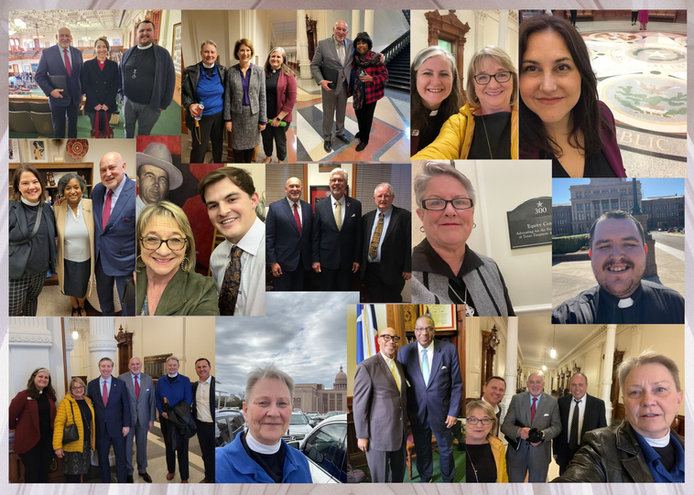
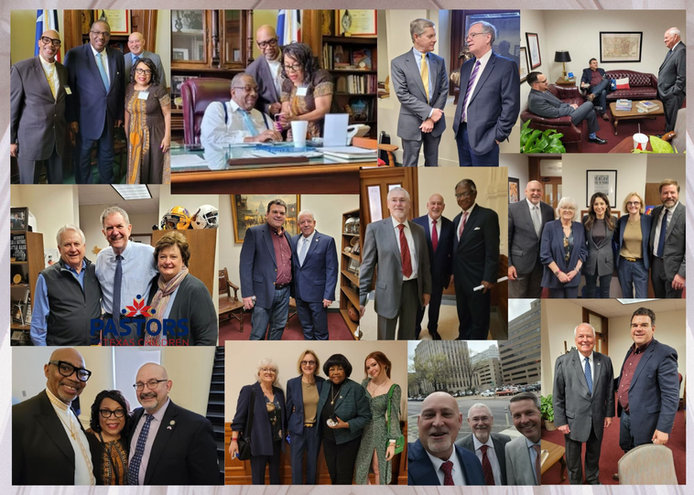
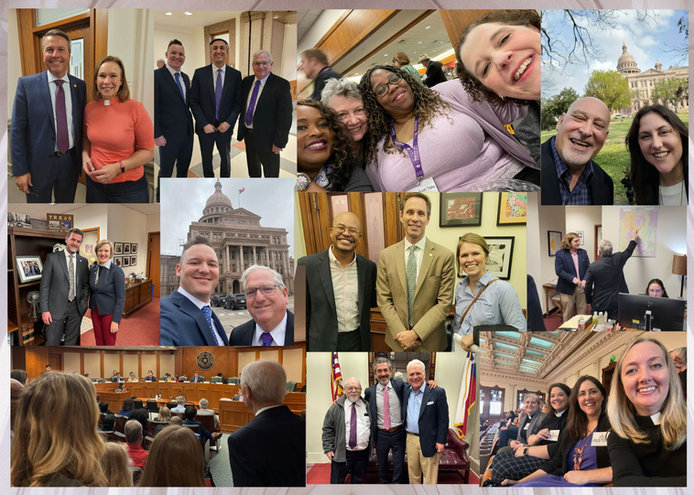
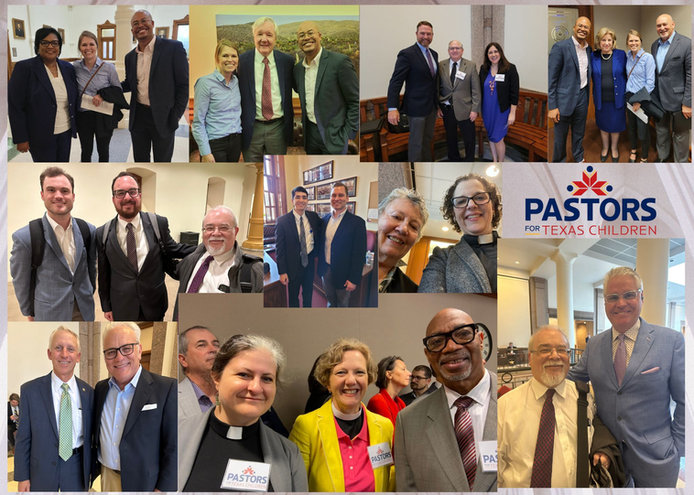
Pastors at the Capitol

DONATE TO PTC


PO Box 471155, Fort Worth, Texas, 76147

Check out our website  

Governor Ron DeSantis signed legislation that will offer public money for the schooling of every student in the state, with no income limits. The state will pay tuition for private schools, religious schools, homeschooling or any other variety of schooling. Critics warned that this bill would be devastating for the state’s public schools. Voucher schools are completely unregulated. The students are not required to take state tests; the schools are not required to hire certified educators. Anything goes. Florida has tough accountability for public schools, but no accountability for voucher schools.

The Orlando Sentinel reported:

At a bill signing ceremony at a private boys high school in Miami, DeSantis described the legislation as “the largest expansion of education choice not only in the history of this state but in the history of these United States. That is a big deal.”


The controversial bill was celebrated by GOP leaders and parents who currently use the scholarships, but it also faces fierce criticism from those who say its price tag — estimates range from $210 million to $4 billion in the first year — will devastate public schools, which educate about 87% of Florida’s students.


Critics also argue an expansion will mean more public money spent on private, mostly religious, schools that operate without state oversight. Some of the schools hire teachers without college degrees and deny admission to certain children — most often those who don’t speak English fluently, have disabilities or are gay.

“Funneling this much in taxpayer dollars to private schools with no parameters to ensure accountability for student success is fiscally irresponsible and puts at risk the families and communities who utilize our state’s public schools and the services they provide,” said Sadaf Knight, CEO of the Florida Policy Institute, in a statement.
The think-tank opposes the expansion of Florida’s voucher programs and estimated the $4 billion hit to public schools.


Through its voucher programs, Florida currently provides scholarships to more than 252,000 children with disabilities or from low-income families.


Under the new law, the income guidelines are wiped out, though preference will be given to those from low and middle-income backgrounds. The result of the universal voucher law is that all of the 2.9 million public school-age children in Florida could opt for an “education savings account,” if they left public schools, and those already homeschooled or in private school could seek the money, too.

In 2017, the Orlando Sentinel published a prize-winning investigation of Florida’s voucher schools called “Schools Without Rules.” The series has been repeatedly updated. It’s worth subscribing to the newspaper to read the series.

Our reader Carolmalaysia received a letter from the Indiana State Teachers Association, protesting two bills to undercut public schools, teachers and librarians. She signed the petition.

1.] TAKE ACTION: Tell legislators to prioritize public schools and reject private school voucher expansion in radical state budget

All kids, no matter where they live, should be able to pursue their dreams in a great public school. However, the currently proposed radical budget increases spending on private school vouchers by 70%, while increasing traditional public school funding, where 90% of Hoosier students attend, by only 5%.

The current budget would provide more than $1 billion for wealthy families making up to $220,000 to attend private school for free, while neighborhood public schools continue to struggle to provide enough resources for students and pay hard-working educators a competitive salary.

Urge lawmakers to prioritize public education and oppose this huge expansion of unaccountable private school vouchers in the budget. Ask them to increase their commitment to public schools.

2.] TAKE ACTION: TELL LEGISLATORS TO OPPOSE A BILL THAT WOULD REMOVE LEGAL PROTECTIONS FOR TEACHERS AND LIBRARIANS
02/17/2023

SB 12 is yet another culture war bill furthering a false narrative about our public schools. Rather than locally addressing issues over content, the bill would open teachers and librarians to criminal prosecution over educational materials. The bill would remove existing legal defenses schools and school libraries may use when locally determining educational materials. These matters will end up in litigation without administrative steps.

This bill has passed out of the Senate and is now under consideration by the House. Tell your representative to oppose SB 12.