Archives for category: Resistance

Carol Burris, executive director of the Network for Public Education, recently joined parents, students, and teachers at a rally in Austin, Texas, to protest the state’s decision to take control of the Houston Independent School District. The district is no longer “independent,” since the state asserted its control. And Republicans showed that they don’t really believe in “local control,” any more than they believe in “parents rights.”

As a graduate of HISD, I feel especially outraged by the state takeover on flimsy grounds. Governor Abbott and Commissioner Mike Morath are playing politics. These kids are the future of Texas. Why are they being used as pawns?

Burris wrote the following explanation of the state takeover. It appeared on Valerie Strauss’s “Answer Sheet” blog at the Washington Post website.

Strauss begins:

The administration of Texas Gov. Greg Abbott (R) announced this month that the state was taking over the public school district in Houston even though the Texas Education Agency last year gave the district a “B” rating. The district, the eighth-largest in the country, has nearly 200,000 students, the overwhelming majority of them Black or Hispanic, and opposition to the move in the city, which votes Democratic, has been strong.


Texas Education Agency Commissioner Mike Morath said the takeover was necessary because of the poor performance of some schools in the district — even though most of the troubled schools have made significant progress recently.


Here is the real story of the takeover, written by Carol Burris, an award-winning former New York school principal who is executive director of the Network for Public Education. The nonprofit alliance of organizations advocates the improvement of public education and sees charter schools — which are publicly funded but privately operated — as part of a movement to privatize public education.


By Carol Burris


Houston parents, teachers, and community leaders are protesting the decision by Texas Education Agency Commissioner Mike Morath to take over the Houston Independent School District. Some see the takeover as grounded in racism and retribution; others as big-government intrusion.


For Houston mom Kourtney Revels, the decision represents a hypocritical dismissal of parents by Gov. Greg Abbott (R). “How can Governor Abbott pretend to support parent empowerment and rights when he has just taken away the rights of over 200,000 parents in Houston ISD against their will and has not listened to our concerns or our voice?” she asked.

The takeover is the latest move in a long list of actions by Abbott’s administration to attack public school districts and expand privatized alternatives, including poorly regulated charter schools and now a proposed voucher program that would use public money for private and religious education. And critics see them all as connected.


State Rep. Ron Reynolds, a Houston Democrat, told the Houston Chronicle, that the takeover of the Houston district is part of Abbott’s attempt “to push” vouchers and charter schools, and to “promote and perpetuate the things that Governor Abbott believes and hears about, and that obviously isn’t diversity, equity and inclusion.”

The first takeover forum sponsored by the Texas Education Agency, which Morath leads, was described in the Houston Chronicle as “emotional and chaotic.” This week, the Greater Houston Coalition for Justice is leading a protest march before another TEA hearing. U.S. Rep. Sheila Jackson Lee (D), who represents the city, has asked the Biden administration to open a civil rights investigation into the takeover.

Background

The Houston Independent School District is Texas’s largest school district, with 284 schools and almost 200,000 students. It is also the eighth-largest district in the nation. Eight in 10 students come from economically disadvantaged families, and more than 1 in 3 students are not proficient in English. Fewer than 10 percent of the students are White.

The first attempted takeover of HISD by Morath was in 2019. The rationale for the takeover was school board misconduct and the seven negative ratings of Phillis Wheatley High School, one of the district’s 284 schools. Wheatley had been rated “academically acceptable” almost every other year until the YES Prep charter school opened nearby in 2011. During the 2021-2022 school year, Wheatley served 10 times as many Black students and more than twice as many students with disabilities as YES Prep, located just a five-minute drive away.

The district went to court to stop the takeover, and the debate wove through the courts until the Texas Supreme Court gave the green light for the takeover in January.

Almost four years have passed since the first takeover attempt, and the district has made impressive strides. The electorate replaced the 2019 school board, and a highly respected superintendent, Millard House, was appointed.

By every objective measure, the district is on a positive trajectory. The district is B-rated, and in less than two years, 40 of 50 Houston schools that had previously received a grade of D or F received a grade of C or better. Wheatley High School’s grade, the school that triggered that 2019 takeover attempt, moved from an F to a C, just two points from a B rating.

While there is a law that triggers a TEA response when a school repeatedly fails, the state Supreme Court did not mandate the takeover of the district. Under Texas law, Morath had two options — close the school or take over the district by appointing a new Board of Managers and a superintendent. He chose to strip local control. For those who have followed the decisions of Morath, his choice, the harsher of the two, comes as no surprise.

Mike Morath and charter schools

Mike Morath, a former software developer, was appointed education commissioner by Abbott in 2015. Morath had served a short stint on the Dallas school board, proposing that the public school district become a home-rule charter system, thus eliminating the school board and replacing it will a board appointed by then-Mayor Mike Rawlings, the former chief executive of Pizza Hut. Transformation into a charter system would also eliminate the rights and protections of Dallas teachers, making it easier to fire staff at will.

Morath and the mayor were supported in their quest to privatize the Dallas school system by a group ironically called Support Our Public Schools. While many of its donors remained anonymous, one did not — Houston billionaire John Arnold. Morath admitted encouraging the development of Support Our Public Schools and soliciting Arnold’s help in founding the organization.

Arnold, a former Enron executive and Houston resident, is a major donor and board member of the City Fund, a national nonprofit that believes in disruptive change and “nonprofit governing structures” for schools rather than traditional school boards. The City Fund touts New Orleans as the greatest school reform success. Arnold is joined on the board of the City Fund by billionaire and former Netflix CEO Reed Hastings, who has blamed public school woes on elected school boards and said 90 percent of all students should be in charter schools.

The plot to turn the Dallas school system into a charter system fizzled by January 2015. In December of that year, Abbott plucked Morath from the school board to become Texas education commissioner based on his record as a “change-agent.”

As commissioner, Morath has unilaterally approved charter schools at what many consider to be an alarming rate. Patti Everitt is a Texas education policy consultant who closely follows the decisions of the Texas Education Agency. Everitt noted that Morath “has the sole authority to approve an unlimited number of new charter campuses in Texas — without general public notice, no community meeting, and no vote by any democratic entity.” According to Everitt, he has used this power more frequently than his predecessors. “Since Mike Morath became Commissioner, data from TEA shows that he has approved 75 percent of all requests from existing charter operators to open new campuses, a total of 547 new campuses across the state,” she said.

In 2021, according to Everitt, Morath approved 11 new campuses for International Leadership of Texas Charter Schools, even though 28 percent of the chain’s schools had received D or F grades in prior ratings.


Georgina Cecilia Pérez served two terms on the Texas State Board of Education, from 2017 to 2022. During that time, she observed the Texas Education Agency up close. A 2017 state law provides financial incentives for districts to partner with open-enrollment charter schools, institutions of higher education, nonprofit organizations or government entities. She said that several charter partnerships with the Houston school district have been in the works waiting for the state takeover. She predicts Morath will approve them, “with no public vote.”


Abbott, Morath, and vouchers

Few were surprised this year when Abbott declared that establishing an Education Savings Account (ESA) voucher program would be one of his highest priorities this legislative session. ESA vouchers, the most controversial of all voucher programs, provide substantial taxpayer dollars, through an account or via a debit card, to private school and home-school parents to spend on educational services. Eight states presently have ESA vouchers, with three new programs in Arkansas, Iowa and Utah approved to begin in coming academic years. Other legislatures in red states, notably New Hampshire and Florida, are pushing for ESA program expansion.

Abbott had been reluctant to embrace vouchers — possibly because of a lot of opposition in Texas, especially in rural areas — causing some to speculate that his newly expressed support for them is linked to presidential ambitions. School choice is a pet cause of one potential rival for the Republican presidential nomination, Florida Gov. Ron DeSantis (R).

Two voucher bills are now weaving their way through the Texas Senate. S.B. 8 would give families a voucher of $8,000 per child a year and institute a parents’ “bill of rights” that allows parents to review public school curriculums through parent portals. A second bill, S.B. 176, would give private school and home-school families a $10,000-per-child annual voucher. Although Abbott has not endorsed either bill, he has made it clear that he supports a universal voucher program, promoting universal vouchers in speeches at some of the state’s most expensive private Christian schools.

Last year, Morath gave tacit support for vouchers, claiming that “there is no evidence” that vouchers would reduce public school funding. In February 2023, however, when questioned during a state Senate hearing, the commissioner admitted that voucher programs could have a negative fiscal impact on public schools.

That same month, his second-in-command, Deputy Commissioner Steve Lecholop, encouraged an unhappy parent from the Joshua Independent School District to work with the governor’s speechwriter to promote vouchers, saying it would be a great way to “stick it to” the school district.

The lack of success of district takeovers

Regardless of Abbott’s and Morath’s ultimate objective — whether it be flipping some or all of Houston’s public schools to charters — research on state takeovers has consistently shown that state takeovers nearly always occur in majority-minority districts and rarely improve student achievement. Student results in takeover districts, with only a few exceptions, have remained the same or decreased. That was the conclusion of a comprehensive cross-state study published in 2021. The study’s authors, Beth Schueler of the University of Virginia and Joshua Bleiberg of Brown University found “no evidence that takeover generates academic benefits.”

This intervention does not help students, and it mutes community voices, undermines democracy in Black and Hispanic communities, and pushes charter schools and other privatized alternatives to democratically governed schools.

An example is the takeover of Philadelphia’s public schools in 2001. Then-Gov. Tom Ridge (R) hired Edison Learning, a for-profit management company led by Chris Whittle, to study the district at the cost of $2 million. Edison Learning made a recommendation that it play a significant role in the reform and proposed running up to 70 schools. After community outrage, the number was reduced to 20. A few years later, the number of managed schools increased to 22. It was not long, however, before Edison Learning and the district were embroiled in a lawsuit concerning liability damages after a student was sexually assaulted in an Edison-operated school. By 2008, all for-profit management companies, including Edison, were gone. By 2017, the state takeover experiment ended.

Retired teacher Karel Kilimnik of Philadelphia had a first-row seat. She taught at a school taken over by the for-profit management company called Victory Co., which ran six schools under the School Reform Commission. The Reform Commission “promised academic and financial improvements that failed to materialize over their 16 years of control,” Kilimnik said. “Instead of improving the district, they opened the door to privatization and charter expansion and laid out the welcome mat for graduates of the uncertified Broad Superintendents Academy. They paved the way for the doomsday budget resulting in massive layoffs, larger class sizes, and the elimination of art and music.”

In his 2017 book, “Takeover,” New York University professor Domingo Morel concluded that, based on his extensive research, state takeovers are driven more by the desire of state actors to take political control away from Black and Hispanic communities than about school improvement. Recently in the Conversation, Morel described the seizure of the Houston school district as motivated by a need by the Republican establishment to thwart the growing empowerment of Black and Latinos as their numbers increase in Texas.

“The Houston public school system is not failing,” Morel said. “Rather, Republican Gov. Greg Abbott, Education Commissioner Mike Morath, and the Republican state legislature are manufacturing an education crisis to prevent people of color in Houston from exercising their citizenship rights and seizing political power.”

Allison Newport, a Houston mother of two Houston public school elementary students, agrees. “The commissioner should be congratulating Houston ISD and Wheatley High School for such incredible improvement in performance instead of punishing the students, parents, and teachers who worked so hard to make it happen.”
I had the pleasure of speaking by Zoom to a meeting of the Pastors for Florida Children. The event was reported by Baptist Global News.

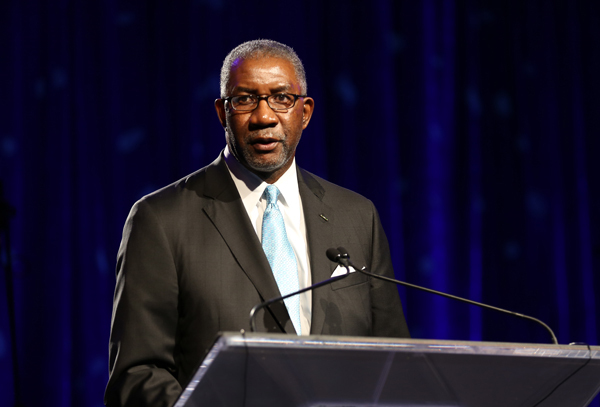
The morning session was also addressed by Baptist minister and retired Arkansas Judge Wendell Griffen. Although we have never met, our messages were in synch: Do not let the authoritarian Governor Ron DeSantis intimidate you!

Baptist minister and retired Arkansas judge Wendell Griffen stood before an audience of faith leaders and education advocates in Tallahassee, Fla., March 9, pointed to his lapel and dared Gov. Ron DeSantis to have him apprehended for being politically and racially aware.

“I wore a ‘woke’ button on purpose. I want to get arrested for being woke. I plead guilty to being woke. I want to be convicted of being woke,” Griffen said during a prayer breakfast sponsored by Pastors for Florida Children.

Wendell Griffen

Griffen, a BNG columnist and pastor of New Millennium Church in Little Rock, urged the in-person and virtual interfaith and multiracial audience to be equally defiant of Florida’s political leaders. “Be a community of prophets but teach as one and correct, confront, organize, interact, defy, dissent, disrupt.”

Jewish, Christian and Muslim participants who prayed ahead of the speeches by Griffen and education historian Diane Ravitch focused on DeSantis’ prohibition of books that teach about racial injustice and inclusion….

Please open the link and read his bold, wise, and brave advice.

Ravitch opened with a double-barreled barrage at DeSantis’ efforts to dismantle freedom of inquiry in public schools.

“I write a daily blog, and I find that it’s being overwhelmed by the bad news from Florida,” she said. “There doesn’t seem to be anything good coming from your elected officials. If anything, it seems to be building a more and more authoritarian empire to control the thinking of everybody in the state.”

She said DeSantis seems to be going out of his way to disprove Martin Luther King Jr.’s famous saying that “the arc of the moral universe is long, but it bends toward justice.”

“Your governor and your legislature are trying to flatten that arc so that it does not bend
towards justice,” she declared.

Current political events in Florida do not impact public schools alone, Ravitch said. “Florida today is at the very apex of a movement to turn the clock back a century, to turn the clock back on religious freedom, on racial justice and on all the evolution we have experienced over this past century to make ours a more just society. Your governor is creating a model of thought control and calling it freedom. Every time I see him standing in front of a banner that says ‘freedom,’ I’m reminded of George Orwell’s 1984, where freedom equals slavery.”

The conservative attack on the concept of “woke” is another sign of burgeoning authoritarianism, she said.

“We have to redeem that word. It means being awake — awake to injustice, awake to history, awake to all the things that are wrong in our society and that have been wrong over the centuries. And his (DeSantis’) idea of woke is simply to eliminate critical thinking about history and even knowledge of history. And this is very dangerous.”

And that’s only the beginning.

The Arkansas Legislature, controlled by Republicans, passed Governor Sarah Huckabee Sanders “education” bill, dubbed LEARNS, which authorizes vouchers. The first two hearings were held during school hours. The bill sailed through the legislature. The third hearing, where students were able to attend, was limited to a six-page amendment.

The students wanted to oppose the bill, but State Senator Jane English tried to shut them down, interrupting them, cutting them off.

Students found clever ways to work around her brusque treatment but their objections were ignored.

“I’m sorry, you just don’t get to talk on the bill,” English told the students. “If you want to talk on this amendment, specifically things that are in this amendment, you’re free to do that, but you cannot speak on the bill….”

“I’d like to speak on the amendments, and how they do not go far enough to tear down and decimate this bill,” said student Ethan Walker, over repeated interruptions by English. “These petty little wording rearrangements don’t do anything to address how bad this bill actually is….”

Another student, sophomore Rhone Kuta, worked around English’s objections by referencing a specific line on a specific page, as the Republican chair repeatedly interrupted him.

“Where it deletes ‘and’ and substitutes ‘or,’ the reasons I believe this amendment is bad is, this should actually say we are deleting the voucher program on section 63 because the voucher program absolutely reallocates resources from the working class Americans and Arkansans and reallocates it to the upper class,” Kuta said.

The students showed themselves to be far more intelligent than their elected officials. They were treated shamefully. The bill was a fair accompli.

If you do only one thing today at my request, please watch the video in the Alternet post, where you will see an adult bullying high school students.

Yesterday was the tenth anniversary of Mercedes Schneider’s wonderful blog!

I learned about it last night, too late to mark the actual blog birthday.

Mercedes is one of the sharpest, smartest voices of the Resistance to privatization. She is a hero of the Resistance thanks to her incisive, brilliant exposés of “reform” hoaxes.

She is a high school English teacher in Louisiana. She has a Ph.D. in statistics and research methodology. She could have been a professor but she wanted to teach high school students.

I started my blog in April 2012; she started hers in January 2013. We exchanged emails, and we met when I came to speak in Louisiana. We became fast friends. Mercedes has been a regular at annual conferences of the Network for Public Education, where she most recently gave lessons on how to obtain tax forms and other public data about “reform” groups, which sprout like weeds, with new names, lots of money, and the same set of actors.

Mercedes is relentless. While teaching and blogging, she wrote four books over the past decade.

In 2014, her first book was A Chronicle of Echoes: Who’s Who in the Implosion of Public Education, a vivid portrayal of the cast of characters who pursued privatization and teacher-bashing while calling themselves “reformers.” Might as well have called themselves “destroyers,” because that’s what they are.

In 2015, she published Common Core Dilemma: Who Owns Our Schools?, with a foreword by Carol Burris, executive director of the Network for Public Education.

In 2016, she published School Choice: The End of Public Education?, with a foreword by Karen Lewis, the late and much-loved President of the Chicago Teachers Union.

In 2020, she gathered her advice about research and published A Practical Guide to Digital Research: Getting the Facts and Rejecting the Lies.

In her blogday post, she reflected on some positive developments in the past decade

Of course, the fight continues, but allow me to celebrate a few realities:

  • Bobby Jindal is no longer governor of Louisiana, and his 2016 presidential ambitions were a flop.
  • John White is no longer Louisiana state superintendent. In fact, he is not a superintendent anywhere at all.
  • Michelle Rhee is no longer DC school chancellor. She, too, is chancellor of nowhere at all.
  • Hanna Skandera is no longer NM school chief. She, too, is school chief of nowhere at all.
  • Joel Klein holds no sway over NYC schools. Chief of nowhere.
  • Teach for America (TFA) is losing its luster. Though it tries to reinvent itself, the bottom line is that the org depends upon class after class of willing recruits– a well that appears to be hitting bottom.

Yes, the fight continues. But today– today I take a moment to celebrate just a wee bit.

Happy Blogday to me.

I celebrate Mercedes too and happily name her to the honor roll of this blog.

Love you, Mercedes! May you keep on making a difference.

At ex-Governor Cuomo’s urging several years ago, the Legislature passed a law requiring the New York City Department of Education to provide free space to charter schools, and if no space was available, to pay their rent in private space. This requirement gave rise to the dreadful practice of “co-location,” in which a new charter school was crammed into an existing public school. The public school typically lost space for class size reduction, performances, special education services, and everything else that was not designated as a classroom. Meanwhile, the charter school got fresh new furniture and the best of everything. There was no collaboration between the schools under the same roof.

A few days ago, charter advocates were stunned when the Department of Education rejected three requests for co-location by the rich and politically powerful Success Academy charter chain. The Wall Street Journal immediately published an editorial blasting Mayor Eric Adams (whose campaign was bankrolled by charter billionaires) and who put charter advocates on the city’s school board. The decision was made by Chancellor David Banks and never reached the pro-charter city board.

For Eva Moskowitz of Success Academy, this was a surprising rejection. She is accustomed to cowing politicians (she has her own PAC) and getting her way.

Charter fans and the pro-charter media blame “the unions,” their usual enemy, but this isn’t correct. Parents and educators in these communities contacted their legislators and won their support. And the legislators and local officials killed the deal.

Congressman Jamaal Bowman stepped up to oppose the co-location in a school that he knew. He wrote a thread on Twitter (@JamaalBowmanNY) that began:

The @NYCSchools proposal to open and co-locate a new @SuccessCharters school in Building X113 is absolutely outrageous. The Panel for Education Policy has to vote against this plan, and I urge my colleagues and neighbors to get loud in opposition. Here’s why: 🧵

As a former educator & principal of a middle school in the same district as X113, I’ve seen up close how the educators there have done a tremendous job serving their students & families. Our community is incredibly grateful for the love they pour into their work every day.

I’ve also seen how charter schools can harm students, educators, and traditional public schools in our communities. We can’t let that happen at X113.

Big charter networks have a history of draining students & funds from traditional public schools, and violating the rights of their students. Last year, Success Academy had to pay out $2.4 million in a federal court settlement for pushing out students with disabilities.

The plan will decrease available space for the existing schools at Building X113 – both district-run public schools – and prevent them from lowering class sizes adequately. Class size matters. We’ve got to demand schools get the resources & physical space to meet student needs.

As many charter school expansions do, this destructive plan will also disproportionately harm students with disabilities. The plan does not include sufficient analysis of what intervention rooms are necessary to provide students with IEPs with the services they need.

Another surprise: the Rupert Murdoch-owned New York Post got the story right. The story recognized that the pressure to block the co-locations came not from the union but from parents. The Post has been a vocal supporter of charters, and Murdoch himself has contributed to them.

Elected officials helped kill a plan to open three new charter schools in existing public schools or other city-owned buildings — after hearing fierce opposition from local parents.

Bronx Borough President Vanessa Gibson — who last week spoke at the ribbon-cutting ceremony for a new DREAM Charter High School in Mott Haven — suggested Tuesday that her hand was forced against the planned Success Academy in Williamsbridge.

“Parents of School District 11 spoke to us loud & clear. The deep rooted history of disinvestment at the Richard R. Green Campus must be recognized. So much progress has been made,” she tweeted.

A City Hall insider also cited “a lot of pushback” from community members opposed to the new charter schools.

“They vote and they hold folks accountable,” the source said.

Schools Chancellor David Banks’ unexpected withdrawal of the proposal came even though Mayor Eric Adams packed the board in charge of the decision with pro-charter allies.

Historian Heather Cox Richardson reflects on the anniversary of Dr. Martin Luther King’s birthday. We now look on him as a hero, but during his lifetime, he was treated shamefully by many whites, and militant African-Americans scorned him as well, preferring the angry approach of Stokely Carmichael and Malcolm X. Dr. King was principled and fearless. He faced death daily, and he never back down. It is usually forgotten that he was assassinated in Memphis while there to support striking sanitation workers, who were trying to organize a union. He knew that unions offered the best protection for working people. White conservatives who fraudulently praise him now, claiming that racism is a thing of the past and should not be taught or discussed (so that everyone can be judged by “the content of their character, not the color of their skin”), oppose everything he fought and died for.

You hear sometimes that, now that we know the sordid details of the lives of some of our leading figures, America has no heroes left.

When I was writing a book about the Wounded Knee Massacre, where heroism was pretty thin on the ground, I gave that a lot of thought. And I came to believe that heroism is neither being perfect, nor doing something spectacular. In fact, it’s just the opposite: it’s regular, flawed human beings, choosing to put others before themselves, even at great cost, even if no one will ever know, even as they realize the walls might be closing in around them.

It means sitting down the night before D-Day and writing a letter praising the troops and taking all the blame for the next day’s failure upon yourself, in case things went wrong, as General Dwight D. Eisenhower did.

It means writing in your diary that you “still believe that people are really good at heart,” even while you are hiding in an attic from the men who are soon going to kill you, as Anne Frank did.

It means signing your name to the bottom of the Declaration of Independence in bold print, even though you know you are signing your own death warrant should the British capture you, as John Hancock did.

It means defending your people’s right to practice a religion you don’t share, even though you know you are becoming a dangerously visible target, as Sitting Bull did.

Sometimes it just means sitting down, even when you are told to stand up, as Rosa Parks did.

None of those people woke up one morning and said to themselves that they were about to do something heroic. It’s just that, when they had to, they did what was right.

On April 3, 1968, the night before the Reverend Doctor Martin Luther King Jr. was assassinated by a white supremacist, he gave a speech in support of sanitation workers in Memphis, Tennessee. Since 1966, King had tried to broaden the Civil Rights Movement for racial equality into a larger movement for economic justice. He joined the sanitation workers in Memphis, who were on strike after years of bad pay and such dangerous conditions that two men had been crushed to death in garbage compactors.

After his friend Ralph Abernathy introduced him to the crowd, King had something to say about heroes: “As I listened to Ralph Abernathy and his eloquent and generous introduction and then thought about myself, I wondered who he was talking about.”

Dr. King told the audience that, if God had let him choose any era in which to live, he would have chosen the one in which he had landed. “Now, that’s a strange statement to make,” King went on, “because the world is all messed up. The nation is sick. Trouble is in the land; confusion all around…. But I know, somehow, that only when it is dark enough, can you see the stars.” Dr. King said that he felt blessed to live in an era when people had finally woken up and were working together for freedom and economic justice.

He knew he was in danger as he worked for a racially and economically just America. “I don’t know what will happen now. We’ve got some difficult days ahead. But it doesn’t matter…because I’ve been to the mountaintop…. Like anybody, I would like to live a long life…. But I’m not concerned about that now. I just want to do God’s will. And He’s allowed me to go up to the mountain. And I’ve looked over. And I’ve seen the promised land. I may not get there with you. But I want you to know tonight, that we, as a people, will get to the promised land!”

People are wrong to say that we have no heroes left.

Just as they have always been, they are all around us, choosing to do the right thing, no matter what.

Wishing you all a day of peace for Martin Luther King Jr. Day, 2023.

Notes:

Dr. King’s final speech:

https://abcnews.go.com/Politics/martin-luther-kings-final-speech-ive-mountaintop-full/story?id=18872817

John Merrow shares his wisdom and makes a list of worthy recipients of your holiday giving. I’m happy to note that he included the Network for Public Education.

Bill Phillis, leader of the Ohio Coalition for Equity and Adequacy, reports good news in the battle against the state’s expensive and ineffective voucher program.

Private School Voucher Lawsuit Given Green Light to Go to Trial

Effort by Attorney General and Out-of-State Interest Groups to Dismiss Foiled

COLUMBUS – The lawsuit challenging the constitutionality of the harmful private school voucher program was given the green light on Friday to go to trial sometime in 2023.

Franklin County Common Pleas Judge Jaiza Page dismissed motions by Ohio Attorney General Dave Yost and out-of-state pro-private school interest groups like the Institute for Justice to dismiss the case, and instead gave the go ahead to the coalition of public schools suing the state to present their case.

“We are one step closer to proving that private school vouchers are unconstitutional, and hurt Ohio, our public school students, educators, parents, taxpayers and our communities,” said William L. Phillis, Executive Director for the Ohio Coalition for Equity & Adequacy of School Funding. “Facts matter in the court of law. The Ohio Constitution is clear. There shall be a single system of public schools, not a separate and unequal system of schools that can apply a discriminatory litmus test against students based on race, religion, income, or any disqualifying factor that strikes their fancy.”

“School board members like me owe it to our taxpayers to bring this lawsuit because my district, like so many others, has been forced to increase our property taxes with local levies to make up for the public tax dollars lost to private school vouchers. We know the vast majority of these parents are using the voucher as a refund or a rebate and they never intended to enroll their children in public schools,” said Dan Heintz, a school board member with plaintiff district Cleveland Heights-University Heights.

To read the Motion for Judgement on the Pleadings click here.

To read the Motion to Dismiss click here.

The Ohio Coalition for Equity & Adequacy of School Funding is working with Vouchers Hurt Ohio, a growing coalition of public school districts that have come together to sue the state over the unconstitutional and harmful private school voucher program.

For the past few weeks, Iran has been rocked by protests over the death in police custody of a twenty-two-year-old Kurdish woman, Mahsi Amini, who was arrested by the infamous Morality Police for wearing her hijab incorrectly. Apparently a few strands of hair were showing, and she was beaten to death for defying the strict law about head covering.

Since then, women and men have joined to protest the harsh “morality” laws that govern women’s dress and hair covering. Led by women, the protests have featured women tearing off their hijabs and throwing them in bonfires. And women cutting their hair. In some demonstrations, young people have ripped down posters of the Ayatollah Homeini, the leader of the revolution that overthrew the secular Shah and created the strictly religious Islamic Republic of Iran.

The New York Times posted dramatic videos of the protests. They are amazing. You will see young women taking off their hijabs, twirling them in the air, then throwing them into the flames, as hundreds of other young people cheer.

The Times wrote:

Protests erupted in more than 80 cities across Iran following the death of Mahsa Amini, known by her first Kurdish surname Jina, after her detention by the morality police under the so-called hijab law. Footage of the demonstrations posted to social media has become one of the primary windows into what is happening on the ground and revealed what is different about this latest show of resistance inside Iran.

The New York Times analyzed dozens of videos and spoke with experts who have followed the country’s protest movements to understand what insights the often blurry, pixelated footage contains about what is propelling the demonstrations.

Attacking Symbols of the State

Now in their third week, protests have continued even as dozens of people have been killed. Many of the videos appeared on social media during the first week of the protests, before Iran’s government began limiting internet access in an effort to silence dissent.

The Washington Post wrote:

Iran’s bold and bracing protests, stretching across an unsettled nation for more than two weeks, have been marked by defiant acts and daring slogans that challenge the country’s clerical leadership and its stifling restrictions on all aspects of social life.
Government security forces have responded with deadly, uncompromising force. At least 52 people have been killed, according to Amnesty International, including women and children.
The ongoing protests began in response to the death of Mahsa Amini, a 22-year-old woman who fell into a coma after being detained by the country’s hated “morality police.”


Iran’s supreme leader, Ayatollah Ali Khamenei, claimed Monday that the unrest had been instigated by foreign powers and blamed protesters for the violence: “The ones who attack the police are leaving Iranian citizens defenseless against thugs, robbers and extortionists,” he said.
Khamenei gave his full backing to the security forces, signaling a further wave of repression could be coming.


To understand the extent of the government’s crackdown against protesters, The Washington Post analyzed hundreds of videos and photographs of protests, spoke to human rights activists, interviewed protesters and reviewed data collected by internet monitoring groups. The Post geolocated videos of protests in at least 22 cities — from the Kurdistan region, where the protests began, to Bandar Abbas, a port city on the Persian Gulf, to Rasht on the Caspian coast.

Beth Lewis, the director of Save Our Schools Arizona, thought that vouchers were a dead issue after 2/3 of voters rejected them in 2018.

But the Republican legislature, egged on by the usual billionaires, came back with a voucher plan even worse than the one that was defeated. They probably figured that the volunteers couldn’t muster the energy and resources to fight another round.

Beth Lewis writes:

This June, hours before adjourning their legislative session, Republican majority lawmakers delivered a massive blow to Arizonans by passing a universal voucher program that will siphon public dollars away from public schools to private schools with zero accountability to the public. Even worse, this program is significantly larger than a similar voucher program that was rejected by voters in 2018 by a margin of more than 2-1.

Make no mistake, lawmakers did not pass this bill at the urging of their constituents — who overwhelmingly support and rely on local public schools — but at the behest of special interest groups like Betsy DeVos’ American Federation for Children who aim to dismantle the public education system.

Lawmakers tried to sell these expanded vouchers as “school choice,” but we all know it has nothing to do with school choice and in fact harms the choice of the 1 million students who choose AZ’s public schools.

Republican lawmakers have long argued that universal vouchers would “free children from a broken school system.” But that argument was utterly destroyed recently when the Arizona Department of Education reportedthat 75% of families seeking new Empowerment Scholarship Accounts, which is what this voucher program is called, have never stepped foot in a public school.

And that’s just the start. Approximately 85,000 students already in private school and homeschool will become eligible for ESA vouchers overnight, potentially diverting another $600 million in funding away from public schools every year. This amounts to a 20% blow to local public schools across the board – a blow they cannot withstand. But of course, Governor Doug Ducey, DeVos and their cronies know that.

These deep dips into the school funding bucket drain the funding of the choice of 1 million AZ students who choose public schools. That’s not school choice— it’s highway robbery.

The only goal this disastrous bill accomplishes is fattening the bank accounts of special interests and for-profit operators at the expense of Arizona kids. Universal vouchers leave our taxpayer dollars ripe for fraud and abuse at the hands of extremist charlatans like Charlie Kirk and his radical Turning Point Academies (founded the same month as passage of Ducey’s voucher expansion). Using taxpayer dollars to indoctrinate children on bigotry and intolerance is not school choice – it’s dangerous.

Public funds belong in public schools where there is oversight and transparency, not in privately operated businesses with no accountability to taxpayers. There is nothing in this voucher expansion that would stop a bad actor from opening up a “private school” in a strip mall, lying to the parents, taking $7000 per child and closing up shop. Ducey’s expansion gives the state no mechanism to recover misspent or fraudulently used funds. There is zero oversight of academics, performance, curriculum, safety, or teacher credentials. And there is nothing to stop voucher schools from discriminating against students who don’t “fit” their ideology or mold. That’s not school choice – it’s indoctrination and segregation.

The entire program is a walking permission slip for future scandal, segregation, fraud and abuse. Meanwhile, hundreds of thousands of Arizona kids sit in overcrowded school classrooms with outdated textbooks, leaking roofs, and under-resourced teachers.

Save Our Schools Arizona is working to stop this law by turning in 118,823 valid signatures on Sept. 23, so that AZ voters will have the final say on the 2024 ballot. Find locations to sign the petition at teamsosarizona.com.


Beth Lewis is a mom, public education advocate, and K-12 policy expert who fights for a fully and equitably funded school for every Arizona child. As Director of Save Our Schools Arizona, Beth works to bring parents, educators, elected officials, business leaders, and community members together in support of Arizona’s public schools, which strengthen our communities and our great state. Beth has taught elementary and middle school in Arizona for 12 years. She holds a BA from the University of Notre Dame and a Master’s in Education from ASU. Reach out to her at beth@sosarizona.org