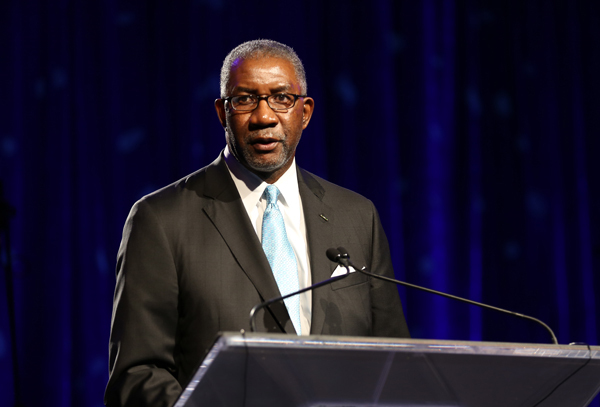
Randi Weingarten, president of the American Federation of Teachers, delivered the following remarks today at the National Press Club in Washington, D.C. She vigorously defended public schools against current efforts to destroy them. She named names. She explained the purpose of public schools, which makes them a precious part of our democratic aspirations but also a target for those who hate democracy.
Randi said:
Today, we once again grieve for families shattered by senseless gun violence. Please join me in a moment of silence for the lives lost at the Covenant School in Nashville, and for all victims of gun violence.
Today we renew our call for commonsense gun safety legislation including a ban on assault weapons. This is an epidemic that our great nation must solve.
There’s a saying: You don’t have to love everything about someone to love them. I’m sure my wife doesn’t love everything about me, but she loves me. (I, on the other hand, love everything about her.) Nothing is perfect. Banks aren’t. Congress isn’t. And neither are our public schools—not even our most well-resourced and highest-performing schools. Those of us involved in public schools work hard to strengthen them to be the best they can be. But only public schools have as their mission providing opportunity for all students. And by virtually any measure—conversations, polls, studies and elections—parents and the public overwhelmingly like public schools, value them, need them, support them—and countless Americans love them.
Public schools are more than physical structures. They are the manifestation of our civic values and ideals: The ideal that education is so important for individuals and for society that a free education must be available to all. That all young people should have opportunities to prepare for life, college, career and citizenship. That, in a pluralistic society such as the United States, people with different beliefs and backgrounds must learn to bridge differences. And that, as the founders believed, an educated citizenry is essential to protect our democracy from demagogues.
Thomas Jefferson argued general education was necessary to “enable every man to judge for himself what will secure or endanger his freedom.” Franklin D. Roosevelt said: “The real safeguard of democracy … is education.” And Martin Luther King Jr., in accepting the United Federation of Teachers’ John Dewey Award, made clear, “Education is the road to equality and citizenship.”
When kids go to school together, they become part of a community; their families become part of a community. That community comes together at school concerts, basketball games and science fairs, and for shelter and comfort, when people are displaced by natural disasters or, far too often, at vigils for victims of gun violence. In good times and bad, public schools are cornerstones of community, of our democracy, our economy and our nation.
But some people want that cornerstone to crumble—and they’re wielding the sledgehammers.
II. ATTACKS ON PUBLIC EDUCATION AND DEMOCRACY
Attacks on public education are not new. The difference today is that the attacks are intended to destroy it. To make it a battlefield, a political cudgel. After former President Trump lost re-election, Steve Bannon, his key ally, declared that their fight goes through school boards. In a speech last year, culture war operative and Governor Ron DeSantis’ appointee Christopher Rufo put it bluntly, “To get to universal school choice, you really need to operate from a premise of universal public school distrust.” To this end, he says, his side has “to be ruthless and brutal.”
And, I would add, well-funded, which it is. The DeVos, Bradley, Koch, Uihlein and Walton family foundations and others have poured many millions of dollars into anti-public education, pro-privatization groups like the American Federation for Children and EdChoice.
The Betsy DeVos wing of the school privatization movement is methodically working its plan: Starve public schools of the funds they need to succeed. Criticize them for their shortcomings. Erode trust in public schools by stoking fear and division, including attempting to pit parents against teachers. Replace them with private, religious, online and home schools. All toward their end goal of destroying public education as we know it, atomizing and balkanizing education in America, bullying the most vulnerable among us and leaving the students with the greatest needs in public schools with the most meager resources.
It’s an extremist scheme by a very vocal minority of Americans.It’s hurting our efforts to do the work we need to do, which is educating the nearly 50 million kids who attend America’s public schools. And the urgent work of helping kids recover from learning loss, sadness, depression and other effects of the pandemic.
And it’s not what parents or the public want.
Let’s start with defunding: This year alone, 29 state legislatures are considering bills to either create or expand existing voucher programs. This is on top of the 72 voucher and tax credit programs in 33 states already subsidizing private and home schooling, costing billions every year. Voucher programs are proliferating even though research shows that, on average,vouchers negatively affect achievement—the declines are worse than pandemic learning loss. In fact, vouchers have caused “some of the largest academic drops ever measured in the research record.”
Proponents of vouchers used to argue that they were a way for low-income and minority families to transfer out of low-performing schools. No longer. Today most vouchers go to families who already send their kids to private schools. And private schools are not required to follow most federal civil rights laws protecting students, so they can—and many do—discriminate, especially against LGBTQ students and students with special needs.
The universal voucher program signed by Florida Gov. DeSantis yesterday will divert $4 billion from the state’s public schools. Florida ranks 44th in the nation in per pupil spending, and 48thin average teacher salaries. DeSantis is sending taxpayers’ dollars in the wrong direction.
And then there are the culture wars. What started as fights over pandemic-era safety measures has morphed into fearmongering: False claims that elementary and secondary schools are teaching critical race theory; disgusting, unfounded claims that teachers are grooming and indoctrinating students; and pronouncements that public schools push a “woke” agenda, even though they can’t or won’t define what they mean. Banning books and bullying vulnerable children. School board meetings descending into screaming matches. This is an organized and dangerous effort to undermine public schools.
Over the last three years, legislators in 45 states proposed hundreds of laws placing public schools at the center of culture wars: laws seeking to ban books from school libraries—even books about Ruby Bridges and Anne Frank and Roberto Clemente; laws restricting what teachers can teach and students can learn—particularly about about race, gender, LGBTQ issues, current events and American history; and laws attacking kids who are transgender. Students and staff should feel welcome, safe and respected in school—but the culture wars are fueling hostility and fear.
A torrent of enacted and proposed legislation targeting even the mention of “controversial” topics—sweeping and open-ended restrictions on what can be taught—has teachers teaching on eggshells. In Florida, the Department of Education has threatened teachers and librarians with felony prosecution if they provide students with books that the state later decides are inappropriate. If Florida lawmakers have their way, colleges will no longer have diversity, equity or inclusion policies; or tenure;or academic freedom. And AP courses and the mere utterance of LGBTQ will be banned in all K-12 schools. And forget about facts. Many laws and pending bills allow any individual to sue schools and teachers for perceived violations. The intent and effect are to create a climate of fear and intimidation.
This takes a toll on the quality of education teachers can provide our students, and on the trust and connection that are so important. Shouldn’t teachers be free to talk with students who are withdrawn or in distress, and to answer students’ questions? Don’t we want students to learn both our nation’s achievements that make us proud and the failings that make us strive to do better? Isn’t that our job?
Teachers should have the freedom to teach. And students should have the freedom to learn.
These same governors who are pushing vouchers and culture wars are also trying to defund and weaken teachers unions, so educators don’t have the wherewithal to fight back against censorship, attacks on their academic freedom, threats to their livelihoods and criminal prosecution.
These attacks aren’t about protecting kids. If they were, they would be working with us to address learning loss and the youth mental health crisis. They would be working with us to take on social media companies for contributing to that crisis.
If these attacks were about protecting kids, they would be working with us to fight against the leading cause of death for American children—gun violence.
If this were about protecting kids, instead of putting LGBTQ youth at risk and banning books about Black people and by Black authors, they would give a damn about these kids’ safety and well-being, including the youth suicide crisis.
Forty-five percent of LGBTQ youth seriously considered suicidein the last year. And the suicide rate among Black youth of all sexual orientations has been increasing as well.
This is literally a matter of life and death. These attacks on public education make it increasingly difficult to create the welcoming, safe environment that our students need and deserve.
School climate and culture
It is a fraught time in our country. The effects of COVID-19; the climate of conflict; drug abuse; gun violence; economic insecurity; and the youth mental health crisis have all taken a heavy toll. Hate crimes have surged against many Americans—Asian, Black, Latino, Jewish and Muslim Americans.
School staff report a rise in bullying, verbal altercations and physical violence among students, as well as this behavior directed at them.
I recall a teacher saying that when her students are disruptive, it’s not because they are bad; it’s because they’re sad.
So many students have experienced isolation and trauma. They need help. But there weren’t enough mental health specialists before the pandemic, and they are in critically short supply now.
The persistent demonization and disrespect of teachers—from screaming matches at school board meetings to the former secretary of state saying teachers teach “filth”—have contributed to a culture of disrespect that seeps into our schools.
I just got a report from Florida. In Flagler County, a 17-year-old student with special needs pushed a paraprofessional so hard she went airborne and was knocked unconscious. A teacher in Osceola County was monitoring students in the hallway when a student sucker-punched him. And there are others. The educators who were hurt all cited lack of staff in the schools and lack of mental health support for students as the main reasons leading to the attacks.
And this crisis will only get worse as Gov. DeSantis’ universal voucher bill kicks in. What will the loss of $4 billion do to safety in Florida’s public schools? What will that do to the quality of academics, to the condition of school buildings, to teacher pay, to staffing shortages?
III. CRISIS IN THE TEACHING PROFESSION
Even before the pandemic, there were steep declines in teachers’ satisfaction. The percent of teachers who were “very satisfied” fell from 62 percent in 2008 to just 12 percent in 2022.
The stresses of the COVID-19 era—plus the culture wars, attacks on teachers, inadequate pay, poor teaching and learning conditions, and the threat of school shootings—have made recent years the toughest in modern times for educators.
Despite it all, teachers have thrown themselves into the mission of helping students recover academically, socially and emotionally. You heard Tamara (Simpson). I witness these acts of teaching, of nation-building, every day. Yet, according to our critics, we’re responsible for all the woes of society.
Even before the pandemic, nearly 300,000 teachers were leaving the profession each year. Now, it’s closer to 400,000.
And the teacher pipeline has collapsed as college students and career-changers choose not to go into education. How are we going to recruit and retain the staff schools need in this climate?
Our teaching profession is in crisis.
It’s in crisis because of the poor teaching and learning conditions created by inadequate funding for public schools. It’s teacher pay, which has been falling relative to other college graduates’ pay for the last 40 years. It’s giving teachers all the blame and little authority. And it’s the de-professionalization of teaching that demoralizes an already beleaguered profession.
I hear it all the time—teachers just want to teach.
IV.Strategies for Powerful Education
So where do we go from here?
The American Rescue Plan, and the programs it spawned, particularly the tutoring programs, have really helped. And we are grateful to President Joe Biden, Education Secretary Miguel Cardona and the last Congress for the much-needed resources. Of course we will continue to fight this defunding of our public schools and this dividing of our communities. But we also must do better to address the learning loss and disconnection we are seeing in our young people. And we can. We can make every public school a school where parents want to send their kids, educators want to work and all students thrive.
Four strategies can help transform our schools to realize the promise and purpose of public education. Not just to overcome learning loss or get back to normal, but to truly help us prepare all children with the knowledge and skills they need for their lives, for college, for career and for citizenship. These strategiescan help us create safe and welcoming environments and bring joy back to learning. And in tandem, they have a catalytic effect. I have seen it work. But we need to do these strategies at scale—for every child and in every school. These four strategies are expanding community schools, scaling experiential learning, addressing staff shortages, and deepening the partnership between families and educators.
Community Schools
First and foremost, we need to make sure our kids are OK. That’s why we need community schools, which are hubs for neighborhoods, combining academics with extended learning opportunities, family and community events, and an infusion of medical, mental health and other social services. They are the best system I know to connect students and families to the support they need to learn, live and thrive.
A recent University of Calgary study found that youth suicide attempts increased 22 percent during the pandemic. According to the Centers for Disease Control and Prevention, nearly 1 in 3 teen girls seriously considered suicide in 2021—up nearly 60 percent from a decade ago. More than 42 percent of high school students reported persistent feelings of sadness or hopelessness.
What helps? The Calgary report found that “school connectedness, defined as feeling close to people at school, has a long-lasting, protective impact for adolescents well into adulthood.”
Our schools must be equipped to support and connect with students, and there is no better model for this than community schools. There is another tragic reality in the United States: Half the students in America’s public schools live in poverty. Community schools mitigate the effects of poverty by providing essential services right where students are and where families can be.
Once kids’ physical and emotional needs are met, they are ready to learn, and teachers can focus on their primary role—which is to teach.
A few weeks ago I went back to Wolfe Street Academy, a community school in Baltimore, to see how they were doing.
Ninety-six percent of the students there qualify for free- or reduced-price lunch. Since converting to a community school nearly 20 years ago, Wolfe Street has gone from the 77th-most successful elementary school in Baltimore (out of 80) to the second-most successful. And, like other community schools,when COVID-19 hit it was a matter of ramping up services, not having to start from scratch.
Students have access to medical checkups, clothing and mental health services. Families have food assistance, language support and legal aid.
And this school is fun! Wolfe Street offers a wide variety of after-school programs, including chess club, robotics club, Mexican folkloric dance, orchestra, a soccer league and more.
And, by the way, Wolfe Street is a unionized public charter school.
There are successful community schools in rural and suburban areas, as well.
The Rome (New York) Teachers Association started a community school with help from the AFT in 2016. Today itsConnected Model has spread to 14 school districts and provides everything from access to mental health services and dental care, to food packages for weekends and holidays, and prom dresses!
A recent Rand Corp. study of community schools in New York City found positive impacts on both attendance and graduation rates. In New Mexico, community schools in operation for five or more years have better-than-average student achievement growth and higher attendance rates, and employed more highly effective teachers. And Robeson High School in Philadelphia went from nearly closing to a 95 percent graduation rate after implementing the community school model.
AFT members have helped create 700 community schools across the country, and we see how they meet kids’ needs. From Kimball Elementary School in Washington, D.C., to the Oyler School in Cincinnati, to Roybal-Allard Elementary in Los Angeles. That’s why the AFT is calling for 25,000 community schools by 2025 and our call is gaining steam. California just approved another $45 million to make 1 in every 3 schools in the state a community school. And President Biden’s budget doubles federal community school investment. We need to make this happen everywhere.
Experiential Learning
Second, we can re-engage students through experiential learning, transforming their educational experiences. Why do kids skip school, or slump in the back of the classroom? They may feel unsafe or unseen. Or just uninterested. We must do better. And we can.
Of course, fundamental academic subjects are important. But so is how we teach them. Experiential learning engages students through problem-solving, critical-thinking, teamwork, and learning by doing. We need to help kids engage with the world, with ideas and with each other—not just with their devices.
Experiential learning embeds the things that make kids want to be in school: The excitement of learning that is deeply engaging, and the joy of being together, especially after the isolation of the last few years. The camaraderie and responsibility of working together on a team.
And in the age of AI and chatGPT, this type of learning is critical to being able to think and write, solve problems, apply knowledge and discern fact from fiction.
Experiential learning can be applied to any content area from math to computer science to social studies, and often weaves subjects together in powerful interdisciplinary instruction. It can be adapted to any grade level. It can take place in rural, urban and suburban schools. And it nurtures kids’ natural curiosity and creativity. That is what robotics and debate teachers do all the time. It’s what I did as an AP government teacher at Clara Barton High School. These opportunities need to be the norm not the exception.
This type of learning makes clear just how outmoded the standardized test-based accountability system is. Of course, the country needs data on how our kids are doing, but if we are talking about student success, research shows classroom grades, not tests, are the best predictor of that. And experiential learning takes the classroom to a new level.
Experiential learning is assessed by teachers in their classrooms and focuses on mastery of the skill. It can include capstone projects that allow students to research a topic they’re passionate about and present it to their teachers and peers. It can include nature-based pre-K, where youngsters learn by exploring natural surroundings while building social skills with other kids. It can include students working together to code and build robotics projects; service-learning projects to support community members; and summer learning on a farm caring for crops or animals; or reporting for and producing a neighborhood newsletter. And it can start with field trips, during and after school.
Experiential learning has long been embedded in career and technical education programs where students use their minds and their hands to learn everything from auto repair, to nursing, IT, graphic design, welding and culinary skills. CTE students learn skills that give them a head start when they go to college or start their careers. Shouldn’t every student have that opportunity?
It’s also a proven strategy. Ninety-four percent of young people who concentrate in CTE graduate from high school, and 72 percent of them go on to college.
Talk to any employer about the skills and knowledge they look for in a successful employee, be it a plumber, a nurse or a lawyer, and you’re bound to hear similarities—employees who are creative, self-starters, critical-thinkers, problem-solvers;have empathy; and can build relationships. This type of learning provides every student with more options to develop those skills and to find their passion, their purpose and their pathway to good jobs and fulfilling careers.
Carpentry students use math when they’re figuring out the right cuts to make and how the pieces will all fit together. They’re using their hands and their minds to construct something. They’re acquiring literacy, technology and writing skills in developing business plans or a website. They’re building self-confidence and public speaking skills when they explain plans and work with customers or their peers. They have a sense of pride in the finished product. When a project doesn’t turn out as expected, they have to problem-solve what went wrong and try a new approach.
On Governors Island in New York City, students attending the Harbor School pursue industry certification in specialties like marine science and oceanography. In Louisiana, the Teaching and Reaching initiative is a two-year dual enrollment program that gives high school juniors and seniors the opportunity to earn credits and get a head start on pursuing a degree in education. In Peoria, Ill., CTE programs are preparing students for green energy jobs. And the Rio Rancho, N.M., public schools partner with the local college to provide stackable microcredentials in robotics, coding and automotive technology.
President Biden’s remaking of the economy through the CHIPS and Science Act, the Bipartisan Infrastructure Law, and the climate provisions of the Inflation Reduction Act will create millions of new high-paying jobs in renewable energy, broadband, semiconductors, construction, cybersecurity, transportation, small business, entrepreneurship and so much more. Then there’s healthcare and education, which have huge staffing crises right now. There are so many incredible opportunities for our young people in the job markets of today and tomorrow. They need to be ready to seize them. This dynamic new economic vision requires a dynamic new workforce vision.
We are all in, but this requires more than educators. And doing this at scale will require new approaches. We need to start by high school. We need employers to partner with us, giving students internships and apprenticeships, including paid opportunities so students who need to work can afford to participate. That’s why the AFT donated stipends for high school kids in Newark, N.J.’s Red Hawks Rising teacher pathway program. Teachers need experiential learning, too, and more externship opportunities in industry.
The potential for all of this is in our grasp, but we all need to do better on the alignment of people, preparation and professions. And it means all of us making changes. That is why we are working with the AFL-CIO, Commerce Secretary Gina Raimondo, Education Secretary Miguel Cardona, Acting Labor Secretary Julie Su, and the Bloomberg Philanthropies on this work. We are reaching out to business groups large and small, as experiential learning can take place in the private sector, the public sector and nonprofits. The formula of starting by high school and identifying school-to-career pathways, including community colleges, partnering with employers, and ensuring the opportunities are paid, can be replicated everywhere.
Revive and Restore the Teaching Profession
Third, for us to meet the needs of the 50 million children in our public schools, we need to revive and restore the teaching profession. That starts with addressing the teacher and school staff shortage crisis. And taking care of the educators we still have.
We know how to solve this. At our 2022 convention, AFT members unanimously approved the report our Teacher and School Staff Shortage Task Force had been working on for seven months. That report is a blueprint with scalable solutions that every district and state in the nation can implement. But it boils down to treating educators like the professionals they are, with appropriate pay and time to prepare for classes, the chance to collaborate with colleagues, the opportunity to participate in meaningful professional development, and the authority to make day-to-day classroom decisions. And ensuring they have the conditions that help students learn like buildings in good repair, with safe ventilation and smaller class size.
The Kansas City Federation of Teachers recently negotiated a new contract, and they used the AFT staffing shortage report as their blueprint. Now, every first- and second-year teacher will be mentored by an exemplary teacher, who will be paid for serving as a mentor. The union secured the highest starting teacher salaries in the region and increases to keep teachers in the profession. They won paid family leave for any parent, making them the first district in the state having this essential family benefit. Where there’s a will, there’s a way. Thank you, Jason Roberts, the KCFT president, for being with us today.
I’m really worried about the well-being of teachers and school staff. We are working with groups like Educators Thriving on strategies that address well-being. Their program has helped teachers reduce emotional exhaustion, a leading indicator of burnout. And as a union, we are providing a trauma benefit to all our members and have worked hard to reduce student debt and make the bipartisan Public Service Loan Forgiveness program work. That’s been life-changing for those who qualify. But I am asking politicians to do their part as well.
A word to politicians—rather than using educators as cannon fodder, why not work with us? Like New Mexico Gov. Michelle Lujan Grisham, who enacted a $10,000 raise for teachers in that state. And Michigan Gov. Gretchen Whitmer, who signed a bipartisan education budget that will make the highest state investment in Michigan history, investing in school infrastructure, teacher recruitment, school safety and mental health resources. And Sen. Bernie Sanders and Florida Rep. Frederica Wilson, whose bills would raise teacher salaries. And New York Rep. Jamaal Bowman, who has introduced a bill to reduce federally mandated standardized tests.
Parents and Community as Partners
Fourth, the pandemic proved what we always knew: In-person learning is essential for kids, and public schools are centers of their communities.
It’s beyond obvious that the school-family connection, the parent-teacher connection, is vital to children’s success. But as others are trying to drive a wedge in that connection, we need to deepen it.
PTAs are remarkable organizations; so are so many parent groups and parent-teacher groups like Red Wine and Blue, Parents Together, MomsRising and the Campaign for Our Shared Future. And we are honored to work with them and others. But we know we need to create this muscle of working together everywhere.
That’s why the AFT created the Powerful Partnerships Institute, which supports family and community engagement. In our inaugural year, the institute has given out 27 grants to AFT locals across the country. Montana is engaging thousands of public education-supporting families and educators across the state. New Haven is working with educators, families and students on fair school funding. And you just heard a little about our partnership in Houston.
Let’s be role models for how we deal with conflicts and disagreement. During the pandemic, we met via Zoom with parent groups that often disagreed with us on COVID-19 safety measures and school closures. We heard each other out and talked things through. We need more of that in America.
Two years ago, the AFT increased our legal defense fund, so we could help if a member was put in jeopardy for teaching honest history or answering a student’s question. But in too many places, there are no unions, or educational associations, or parent groups. People feel alone and isolated. Teachers. Parents. Children.
That’s why, in conjunction with the Campaign for Our Shared Future, we are launching a new Freedom to Teach and Learn hotline for teachers, parents or students to use if they need support. It’s a place to call if you’ve been told to remove a book from the curriculum or from the library, or that there are topics that can’t be discussed in your classes, or that you cannot teach honestly and appropriately, or if politicians in your district or state are targeting vulnerable student groups to score political points. The Freedom to Teach and Learn hotline number is 888-873-7227.
These four strategies are worthy on their own. Together, they are transformative. Community schools will help young people not just recover from these punishing years and the scourge of poverty, but thrive. Experiential learning will prepare our youth with the knowledge and skills to seize the opportunities in our changing economy. To nurture and educate our young people, we need an educator workforce that is supported, respected and compensated befitting their vital role. And we need students’ circle of care—family, educators and community members—to be united in their support.
Conclusion
This is our agenda. But this can’t just be the work of our union or of school staff and schools alone. This is the work of a great nation—to ensure that our children’s basic human needs are met so they are ready to learn to their full potential. To exchange outmoded and test-driven ways of teaching and learning for effective and engaging approaches that excite students and prepare them to live their dreams and aspirations.
Our public schools shouldn’t be pawns for politicians’ ambitions. Or defunded and destroyed by ideologues.
We are at a crossroads: Fear and division, or hope and opportunity.
A great nation does not fear people being educated.
A great nation does not fear pluralism.
A great nation chooses freedom, democracy, equality and opportunity.
All of that starts in our public schools. We are that great nation, and we must act together—to defend, support and strengthen our public schools. And we must do that now.
Our children deserve no less.
1