Educate Nevada Now is a pro-student, pro-public school organization funded by the Rogers Foundation.

It released its positions—support or oppose—on bills under consideration by the state legislature.

Its statement about vouchers is clear and strong:

Expanding Private School Vouchers

ENN opposes any bill that seeks to expand controversial private school vouchers. These schemes go by various names, “Choice Scholarships,” “Opportunity Scholarships” or “Education Savings Accounts.” Regardless of their name, voucher measures rely on taxpayer dollars but have little to no accountability, and they permit schools to discriminate for almost any reason (religion or lack thereof, LGBTQ status, inability to pay, student needs or outcomes). In other states that closely track student outcomes, voucher students often perform the same or worse than their public school peers. We OPPOSE any effort to expand access or spend taxpayer funds on these harmful programs because public dollars should go to public schools.

We urge you to speak up and OPPOSE:

AB 385 – (Assem. Hafen) Allocates $60 million to private school vouchers and expands eligibility.

SB 200 – (Sen. Hammond) Re-enacts a recently repealed universal voucher program, which would eventually result in every private school student eligible for taxpayer dollars, even the wealthiest.

SB 220 (Sen. Gansert, et al) Expanding funding and eligibility for private school vouchers, expanding the tax credit sources.

About Educate Nevada Now

The Rogers Foundation, a Nevada leader in support of public education, joined with local, state and national partners to launch Educate Nevada Now (ENN) in 2015. The organization is committed to school finance reform and improved educational opportunities and outcomes for all Nevada public school children, especially English language learners, gifted and talented students, students with disabilities or other special needs, and low-income students.

More information about ENN can be found at www.educatenevadanow.com

Republicans have gone stark raving mad. They are terrified that their children might read a book that will turn them gay or transgender or might make them feel bad about racism. of course, their children have access to the internet, where they can see stuff far more sensational than anything in a book.

Somebody has to be punished for the racy books in the libraries.

In Idaho, parents will be able to sue libraries and school districts if they find an inappropriate book on their shelves. The fine would be $10,000 for each time a dangerous book is accessed.

A bill that would allow parents to sue libraries and school districts for allowing books containing material considered “obscene” on their shelves is one step closer to becoming law.

The “Children’s School and Library Protection Act” passed the Idaho House on a 40-30 vote Monday afternoon.

The bill lays out a proposed definition for what it calls material that is “harmful to minors,” including material that contains description or representation of nudity, sexual conduct, sexual excitement or “sado-masochistic abuse.”

The bill also specifically mentions representations of “intimate sexual acts, normal or perverted” along with descriptions of “masturbation, excretory functions, or lewd exhibition of the genitals or genital area.”…

One legislator made a good point:

A representative from Latah County says libraries are not the main place where kids are being exposed to mature content.

“This telephone and this computer has more damage than any library is ever going to have to our children,” Lori McCann (R), representative of Legislative District Six, said.

How many of those voting went home to watch porn on their phone or computer?

The Florida legislature passed a universal voucher plan, meaning that the state will subsidize the tuition of every student, no matter their family income, Rich or poor. The state will hand out subsidies to rich families whose children go to elite private schools. All money deducted from public schools. Short-sighted and stupid, a giveaway to families who can afford private schools.

Currently, there are more than 400,000 students enrolled in private schools. About 80,000 may already have a voucher. Now, even those attending an exclusive school will be subsidized by the state. Homeschoolers will also be subsidized by the state, at least 20,000 in the fumigation year.

Most of the schools that take vouchers are religious and most are not accredited.

Likely new cost: 320,000 students already enrolled in private schools without a voucher plus 20,000 homeschooled kids x $7,800=$2.65 billion. And that’s without a single student now in public school asking for a voucher. A realistic estimate for the annual cost of Florida’s universal voucher would be at least $3 billion a year.

The Center for Budget and Policy Priotities notes that the Florida voucher funding is designed to reduce the funding of public schools, which currently enroll about 80-85% of the state’s children:

While voucher programs are often funded as line-item appropriations in state budgets or through private donations (which over time reduces the revenues available for education and other state priorities), this Florida voucher is actually designed to take money away from the state K-12 funding formula designated for public school districts.

Scott Maxwell of the Orlando Sentinel says that Florida’s universal voucher program is likely to blow a billion-dollar hole in the state budget. As I pointed out above, $1 billion is a low estimate. That hole in the budget will be closer to $3-4 billion, when you include the students whose parents can already afford to pay tuition.

He writes:

Florida lawmakers are about to take the biggest educational gamble in American history — financed with your tax dollars.

They want to offer every child in Florida the chance to use publicly funded vouchers at private schools that have virtually no regulation and offer no guarantee that the students will get educated.

Florida’s existing network of voucher schools is so infamously unchecked that the Orlando Sentinel has found schools employing teachers that don’t have high-school diplomas themselves. Some refuse to serve children with disabilities or gay parents. Others were such financial wrecks that they shut down in the middle of the school year, stranding students.

Flaw #1:

Voucher schools in Florida are unregulated. They can hire teachers who are not certified. They can hire teachers who never finished college. Voucher schools do not take state tests. They need not disclose their graduation rate or their curriculum. They are not overseen by state officials. Some voucher schools ignore safety codes, because they are not required to comply with them. The Orlando Sentinel conducted an investigation called “Schools Without Rules,” demonstrating that voucher schools take tax money without any oversight, transparency or accountability.

Flaw #2:

Voucher schools operate in secrecy. They are not required to report anything to the state.Not test scores, graduation rates, SAT scores, or anything else. Florida is operating on the principle of “Trust But Don’t Verify.” Public schools are held to tight accountability requirements. Voucher schools, none at all. If accountability is good for public schools, why is it unnecessary for voucher schools?

Flaw #3:

Voucher schools can discriminate against any group. Unlike public schools, voucher schools can discriminate on any grounds. They don’t have to accept students with disabilities, gay students, students who don’t speak English, or students from a religion they don’t like.

Flaw #4:

Legislators think that choice is the only accountability needed. If a parent is unhappy, make a different choice. The only choice that parents do not have is to stop paying their tax dollars to fund this sector.

There is another grievous flaw:

The Florida voucher program reduces funding for the schools that the overwhelming majority of students attend. Why does this make sense?

Maxwell says there are good voucher schools, and they should have no objection to accountability, transparency, and oversight. Maxwell recommends the following fixes for the state voucher program.

All voucher-eligible schools should be required to:

  1. Publish graduation rates and nationally accepted test scores.
  2. Hire teachers who are certified or at least have a college degree.
  3. Disclose all the curriculum being taught.
  4. Ban discrimination. (If discrimination is a key tenet of a religious organization’s belief system, they should fund that discrimination with their own money. Any group that receives public dollars should serve all the public.)

Maxwell does not address the two glaring defects of the voucher program:

1. 75-80% of the students who take vouchers already attend private schools. Why is it in the interest of Florida to pay their tuition?

2. About 60% of the students who switch from a public school to a voucher school will drop out within two years. The vast majority of voucher studies conclude that students lose ground academically when they take a voucher. Shouldn’t parents be warned of the risk that they are taking by accepting a voucher?

Florida is the state where freedom goes to die. The state university system intends to eliminate tenure and replace it with a five-year evaluation system. Theoretically, the review won’t include political views, but all professors will be expected to comply with state laws. Anyone who teaches courses about race, racism, gay studies, or inequality is unlikely to get a favorable evaluation because those subjects are banned by state law. Anyone who teaches or defends critical race theory is likely to be ousted.

Florida’s state university system is making major changes to long-time tenure protections, meaning that established professors would have to undergo a review every five years to determine the faculty members’ “productivity.”

However, Florida-based professors and other advocates say that the new rule, approved by the Florida Board of Governors Wednesday, could hurt academic freedom and impact a faculty members’ livelihood.

The issue of Florida’s five-year post-tenure evaluations, among other changes to the state’s universities, is getting nationwide criticism from multiple organizations, including American Association of University Professors, the American Psychological Association, Modern Language Association, and American Historical Association and a dozen others.

Faculty in other states are even voicing their opposition to Florida’s new higher education policies, such as the University of Rhode Island Faculty Senate and the Professional Staff Congress of the City University of New York.

“Over the past two years, Florida elected officials have attacked the independence and integrity of the state’s public higher education institutions…introducing a requirement for five-year post-tenure reviews, they have undermined tenure and academic freedom,” the Professional Staff Congress said in a written statement.

The American Association of University Professors explains that tenure serves as a “safeguard” for a professor’s academic freedom.

“A tenured appointment is an indefinite appointment that can be terminated only for cause or under extraordinary circumstances such as financial exigency and program discontinuation,” the AAUP explains on its website.

It continues: “When faculty members can lose their positions because of their speech, publications, or research findings, they cannot properly fulfill their core responsibilities to advance and transmit knowledge.”

But new rules adopted Wednesday by the Florida Board of Governors tasks each university board of trustees to adopt policies that evaluate tenured professors on a handful of unified goals from a statewide standpoint.

The rule adoption is due to a new law from the 2022 legislative session, which was pushed by then-Sen. Manny Diaz Jr., who added in a last-minute amendment calling for the 5-year tenure review. Then Sen. Ray Rodrigues was a co-sponsor. Diaz is now the Florida Education Commissioner. Rodrigues is the Chancellor of the university system.

Under this new rule, faculty are to be evaluated on “productivity,” “meeting the responsibilities and expectations associated with assigned duties,” and “compliance with state laws, Board of Governors’ regulations, and university regulations and policies.”

The chief academic officer of the university, often referred to as the ‘provost,’ would make the final call on a professor’s performance, according to the rule.

But the Florida higher education system has experienced an overhaul by the DeSantis administration, facing a mountain of changes that cater to Gov. Ron DeSantis’ conservative views regarding a variety of concerns, including tenure protections. That’s why some Florida professors are concerned that the state is becoming a hostile environment for current and prospective faculty.

The rule says that a professor evaluation “shall not consider or otherwise discriminate” based on a professor’s “political or ideological viewpoints,” but some are skeptical on whether that provision will be adhered to.

“The way that many of our faculty are looking at it is that this is intentionally designed from the ground up to allow bad actors to cull faculty from departments with whom they personally disagree or who have politics that are inconvenient to the institution,” Andrew Gothard, president of United Faculty of Florida, told the Phoenix.

“Or, as we’ve seen with the narrative that’s been coming out of Tallahassee, who have politics that disagree with those of the governor,” he added.

Good news! After Republican legislators in the state House defunded the state’s libraries for daring to sue the state to overturn a censorship law, the State Senate restored the libraries’ funding of $4.5 million. Yes, there are some sane Republicans in Missouri.

JEFFERSON CITY — The chief Senate budget writer said he plans to restore state funding for Missouri’s public libraries that was stripped out of the House version of the state’s spending plan.

Sen. Lincoln Hough, R-Springfield, who chairs the Senate Appropriations Committee, said Tuesday that the panel will place $4.5 million back in the budget, which covers spending for the fiscal year beginning July 1.

“There is no way that money is not going back into the budget,” Hough told the Post-Dispatch.

The restoration could mark the second reversal of a House budget prioritythat has stirred controversy under the Capitol dome. Hough and Senate President Caleb Rowden earlier said they oppose Republican language in the House blueprint that would prohibit the state from spending tax dollars on diversity, equity and inclusion initiatives….

The library money was removed from the House blueprint by House Budget Chairman Cody Smith and backed by the Republicans who control the chamber last week. He cited a lawsuit by two library groups to overturn a new state law banning sexually explicit material in school libraries.

The ACLU, the Missouri Association of School Librarians, and the Missouri Library Association in February asked a judge in Kansas City to find the law unconstitutional or clarify how and when it applies.

Smith, R-Carthage, believes the state shouldn’t subsidize the lawsuit by giving public libraries money.

Hough’s hometown library district, which covers Springfield and Greene County, would receive an estimated $368,000 if the money is restored.

Hough said libraries serve multiple purposes in communities, allowing people to not only get books, but internet service, job assistance and programs for adults and children.

“Libraries are an important resource for so many people,” Hough said.

Full accounts of fundraising and sources are not yet available, but here’s what we know so far:

NBC said a few days before the election that Paul Vallas raised $19 million, while Brandon Johnson raised “nearly $11 million.”

https://www.nbcchicago.com/investigations/high-dollar-donations-fueling-johnson-and-vallas-in-chicago-election-how-might-that-influence-the-next-mayor/3109471/?amp=1

Chalkbeat Chicago reviewed the donors. Johnson’s money came mainly from unions (CTU gave him $2.2 million) and 8,000 individual contributions. Vallas’ funding came mainly from financiers and supporters of charters, vouchers, and TFA.

https://chicago.chalkbeat.org/2023/3/31/23665374/chicago-mayors-race-campaign-donations-paul-vallas-brandon-johnson-teachers-union-betsy-devos?_amp=true

Against all predictions, Brandon Johnson was elected Mayor of Chicago!

Right up to the last minute, the polls showed Paul Vallas with a lead of 2-5 points. Vallas ran as a law-and-order candidate. He raised money from Betsy DeZvos and other billionaires, including Ken Griffen. Vallas outspent Johnson. Vallas has a long history of privatizing schools.

Johnson ran on a platform of investing in education and social services to improve people’s lives.

No one expected this upset!

This is great news for the people of Chicago!

The Koch brothers funded the Republican takeover of Wisconsin in 2010 and the election of Scott Walker as governor. Walker quickly cracked down on unions and stripped them of their rights. He pushed vouchers. He attacked Wisconsin’s great public university system. Meanwhile, the Republican legislature gerrymandered the state to guarantee control of the legislature. The state is evenly divided between Republicans and Democrats, but Republicans control both houses of the legislature.

That is why many observers considered the election of a new State Supreme Court to be the most important election in the nation. After the retirement of a Republican justice, the Court was split 3-3.

A liberal—Janet Protasiewicz—ran against a conservative—Dan Kelly. The liberal won. This means that the Court will have a Democratic majority.

The two biggest issues likely to be resolved by the Court are abortion rights and gerrymandering. The new Court now has the votes to restore abortion rights that were withdrawn by the U.S. Supreme Court in the Dobbs decision. It is likely that a lawsuit will challenge the deeply unfair gerrymandering of the state, and the new majority is sure to insist on a fair reapportionment.

A great day for democracy!

Governor Gregg Abbott has pushed very hard for vouchers to fund religious schools, homeschooling, and anything else that calls itself a school. Texas has a state constitution that requires public schools, but voucher advocates abandon the language of state constitutions when they get in the way of their goal.

We know from experience that most vouchers will be used by students already enrolled in private or religious schools. We know that the cost of funding kids already in private schools will be enormous. More than 300,000 students attend private schools in Texas. Add in home schoolers, and you are looking at an annual cost of nearly $3 billion before any public school student has asked for a voucher.

We know from research studies that most of the public school kids who take vouchers will drop out of their religious school and return to their public school far behind their peers.

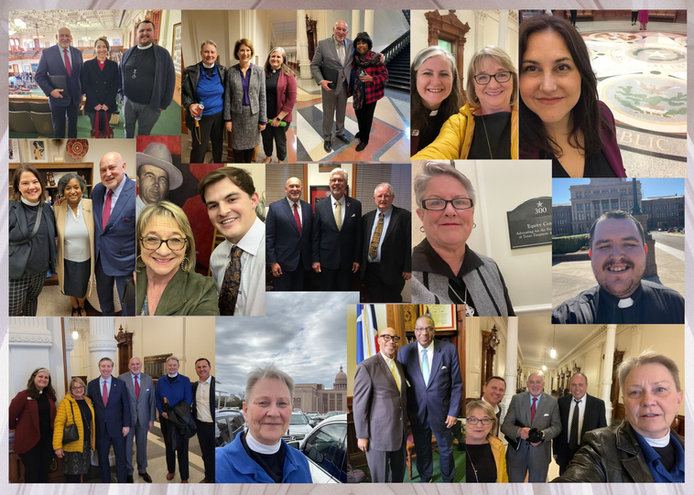
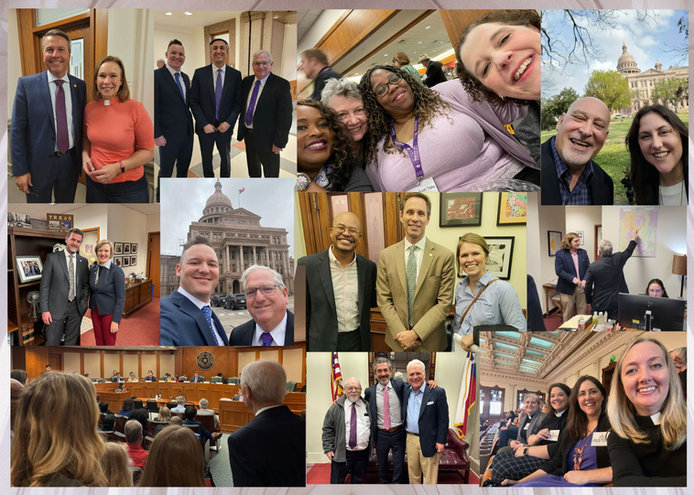
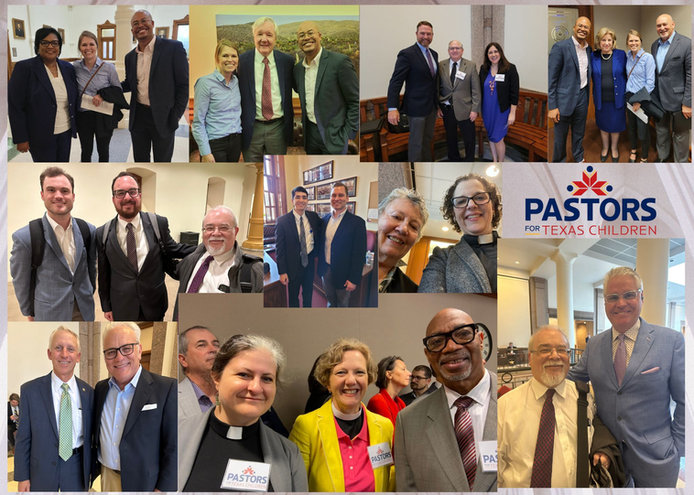
No group has been more effective in fighting to preserve public schools than Pastors for Texas Children. They have mobilized rural Republicans to stand strong for their public schools, which are the hub of their community.

PTC released the following report today:

Call and Write Your Senator and Representative TODAY!

The SB 8 education savings account voucher bill will likely pass out of the Senate Education Committee today or tomorrow, then go to the Senate floor for a vote. It’s been astonishing that the bill has been stalled in the Senate for the past week! As you know, the Texas Senate, under the leadership of Lt. Gov. Dan Patrick, has long supported private school vouchers. Contact your State Senator anyway! Our job is to influence and educate them!

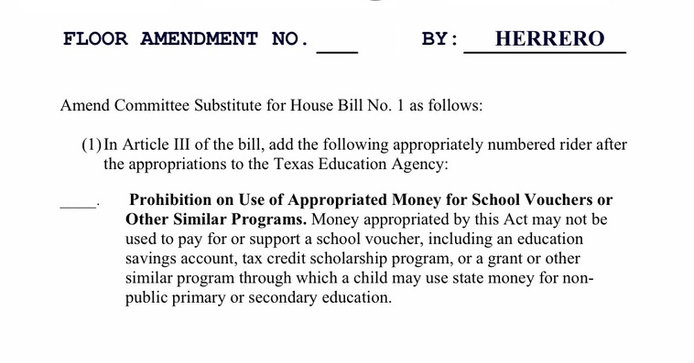
Vouchers stop and die in the Texas House of Representatives. They will vote on Thursday on an amendment to the budget bill preventing public money from funding private schools. Here it is:

Call and email your State Representative before Thursday and urge him or her to support the Herrero Amendment prohibiting private school voucher funding.

You can find their Austin office numbers here.

PTC pastor Rev. Julio Guarneri, the pastor of Calvary Baptist Church in McAllen, has written a powerful letter to his state senator. It gives us all a good, succinct script for our talking points as we contact our policymakers.

It’s our job before God to speak truth to power. God bless us all as we bear witness to God’s truth and justice this week!


Senator Hinojosa,

I hope you had a good weekend. I attempted to call you on the phone this morning but you were in a meeting and I know this is a busy week for you. I hope to still be able to talk to you over the phone but in the meantime, let me share with you what I am calling about.

I am the Lead Pastor at Calvary Baptist Church in McAllen. I am also currently serving as president of the Baptist General Convention of Texas (Texas Baptists), to whom the Christian Life Commission relates. And I am with Pastors for Texas Children as well.

I am writing you in regard to SB 8 (Education savings account/school voucher bill). As a Baptist, as a pastor, and as a religious leader, I am opposed to SB 8 for several reasons. My conviction is that church and state should be separate. A free church in a free state is our ideal. Thus, I do not believe tax dollars should be used to fund religious education. Public tax dollars should be used for public schools. Religious causes should be supported by donations from private individuals.

There are only two choices for religious schools who receive help from tax credits. They either receive oversight from the government, which violates the separation of church and state, or they receive the benefit without accountability, which is wrong.

Furthermore, this measure seems to mostly benefit middle to upper class families, leaving lower income families either without enough of a tax credit to afford a private school or with an underfunded public school system. We will do a disservice to Texas if we leave lower income families at an educational disadvantage.

I know you have historically opposed school vouchers and I am thankful for that. I respectfully ask you to hold your position. As a religious leader I believe it is the right thing.

Please do not hesitate to call me or email me.

May you have a blessed Holy Week and a Happy Easter!

For our Texas children and our Texas future,

Julio S. Guarneri, Ph.D.

Calvary Baptist Church

McAllen, Texas

Pastors at the Capitol

DONATE TO PTC


PO Box 471155, Fort Worth, Texas, 76147

Check out our website  


Peter Greene turned his blog over to an experienced journalist who covered education in Philadelphia for years. What’s the real story behind the outraged reaction by the charter lobby to “Abbott Elementary”?

Bill Hangley, Jr., is a free lance writer who worked the education beat in Philadelphia, and as such he has some thoughts about the charter scene in Philly as reflected through recent episodes of Abbott Elementary. I’m pleased to present his guest post on the subject.

Hangley writes:

America’s school-choice lobby can relax: when ABC’s Abbott Elementary returns this Wednesday [April 5], the plot will hinge on teacher qualifications, not charter school takeovers.

That’s good news for a community that’s used to being taken seriously – very seriously. Wherever charter supporters go, they usually have friends to defend their interests. But the choice lobby wasn’t represented in the Abbott writers’ room. Nobody stood in the way as the hit sitcom raked charters over the comedy coals, presenting them as cynical, counterproductive, and even absurd.

Unsurprisingly, the charter lobby didn’t like what America saw. “No one likes being vilified,” said Debbie Veney of the National Alliance for Public Charter Schools. “It’s pathetic … to criticize the schools that succeed,” tweeted Jeanne Allen of the Center for Education Reform.

As a journalist who covered Philadelphia’s charters for years, I expected to see people like Veney and Allen vigorously defend their industry. That’s what they’re paid to do.

I just wish somebody would pay them to take a good hard look in the mirror. Because as merciless as the sitcom’s portrayal of district-charter relations may have been, to me it looked far more accurate than charter supporters care to admit.

Admittedly, some might say I’m biased. As a reporter for WHYY News and the late, great Public School Notebook, I saw the ugly up close. In over a decade on the beat, I saw politicians meddle and school boards dissemble. I saw underperforming charters stay open while district-run schools shut down. I heard officials beg repeatedly for relief from costly charter payments that drain district budgets.

And I saw the real-life versions of the charter takeover featured in Abbott’s recent episodes. The sitcom version was funny. The real-life version was downright cruel.

In what our school district dubbed the “Renaissance” process, Philadelphia asked school communities to pick sides and fight it out. What America just saw on television, I saw a decade ago in places like Steel Elementary and Muñoz-Marín Elementaryand Wister Elementary and Martin Luther King High.

It was brutal. Parents were asked to choose between imperfect schools they knew and blue-sky promises from well-dressed “providers” they’d never met. The resulting campaigns were every bit as impassioned and intrigue-riddled as any other Philadelphia election. I did my best to cover them fairly, and interviewed countless parents. Plenty were willing to consider a charter, for plenty of reasons.

But the question that came up most often: “If our school’s not good enough, why don’t they just fix our school?”

I had no answer, and the School District of Philadelphia never really did either.

That’s what rings the most true for me about Abbott’s charter episodes: the underlying absurdity of offering “choice” as a solution to an underfunded system. How do you fix one school by opening another? Especially when the old schools have to pay for new ones?

Please open the link and read the rest of his piece about how deeply ingrained charters have become in Philadelphia. it’s no laughing matter, in light of how neglected and underfunded the public schools are.