Mercedes Schneider writes here about Governor Ron DeSantis’s shameless moves to wipe out courses in K-12 and in higher education that he does not like. He is leading an audacious attack on academic freedom that has not been seen in this country since the early 1950s during the Joe McCarthy era. Then the enemy was Communism, now it is fear of those who want to investigate the roots and practices of social and political injustice.
Such people, to DeSantis, are enemies of the social order. They are WOKE, awake to inequity; they make students want to change the status quo. They cannot be tolerated. Their ideas must be eliminated. DeSantis is leading this purge, he says, to protect “freedom.” The language is Orwellian. He means to stamp out the freedom to teach and learn while boasting of his love of freedom.
In addition, he wants to transfer the power to hire new faculty from the faculty to college presidents, whom he appoints. The entire state university would become subservient to his authoritarian impulses.
Schneider describes what is happening, mostly under the radar, as DeSantis wages war on freedom of inquiry:
The current ultra-conservative education platform seeks to stifle all formal or informal discussion of diversity, equity, or inclusion in public K12 and postsecondary education, with Florida apparently leading such efforts.
Though as of yet not a formally-declared 2024 candidate, Florida governor, Ron DeSantis is in the GOP polls as an assumed and formidible GOP presidential primary candidate.
DeSantis, and the Florida legislature are working hard to exercise power over what courses or majors could exist in Florida universities, with legislative efforts to kill womens and gender studies and, as the Insider notes, “gut” a variety of majors. Meanwhile, the February 24, 2023, Tampa Bay Times reports that the Florida Department of Education (FDOE) “told school districts to produce detailed information about the programs and materials they use to address some of the state’s most hotly debated subjects.” Continuing:
In an email delivered late Tuesday, the department instructed superintendents to fill out a 34-question survey identifying titles of books and programs they have relating to sex education, social-emotional learning, culturally relevant teaching and diversity, and equity and inclusion, among other topics. It asked for specifics for student courses and employee training.
The department requested names and examples from district and charter schools.
FDOE wants the information by Monday, February 27, 2023, though it did not offer any reason.
The FDOE request came on the same day that Florida HB 999 was filed by Alex Andrade (R-Pensacola). The bill would remove faculty input from the hiring process; prohibit hiring based on diversity, equity, and inclusion (DEI); remove majors and minors related to Critical Race Theory, gender studies or intersectionailty.
This rewrite of the previous bill seeks to remove any mention of “politics,” including striking through statements such as, “Motivate students throughout the Florida State University to become aware of the significance of government and civic engagement at all levels and politics in general”; “Provide students with an opportunity to be politically active and civically engaged”, and “Nurture a greater awareness of and passion for public service and politics.”
DeSantis does not want to encourage students to become engaged in civic action. He wants to nurture complacence and passivity “in this best of all possible worlds.
Please open her post to read the gory details of this audacious attempt to put the governor of the state in charge of whatever is taught in his state.
What DeSantis is doing is not conservative. It is radical. It is authoritarian. He shows no respect for critical thinking or debate. He is unwilling to allow students to learn anything he does not like. His desire for control of what can be taught or learned is dangerous to democracy. He is attempting to establish a dictatorship and has a super-majority of both houses in the legislature who will give him whatever he wants.
Governor Greg Abbott and Lt. Governor Dan Patrick want vouchers in Texas, just like other red states. So they swallow a bunch of myths about the benefits of choice. They want a subsidy of $10,000 for every child who wants to attend a private or religious school, and they ignore research that tells them their assumptions about vouchers are wrong. For one thing, if every one of the 300,000 plus students asked for a voucher, it would immediately cost the state $3 billion! But they are indifferent to actual evidence. Is it wishful thinking or the desire to please their hard-right funders that drives them to overlook the needs of the more than 5 million students in public schools?
Here are the best arguments for vouchers — and why they’re wrong.
Claim: Vouchers increase choice.
Who could be against choice? Not us. We’re just against a lack of accountability.
Texas is already awash in choice.
Take Houston ISD, with its mix of magnet schools, charter schools and traditional public schools. Texas also allows districts to participate in interdistrict open enrollment. And even if the districts don’t participate, students in certain low-performing schoolscan still request a transfer to another school in their district or even in another district.
If lawmakers want more choice, the state should be looking for ways to double down on what’s already working —and in some people’s eyes, that includes charters. Research is mixed there, too, on whether charter schools really perform any better than traditional public schools but at least there’s a thin layer of oversight. Over private schools, there could be none.
Claim: Vouchers increase choice for all students.
As more states adopt large-scale voucher systems, a clearer picture of who tends to benefit first is emerging: families already enrolled in private schools. “The only people it’s going to help are the kids who don’t need the help,” was how one rural Republican representative put it in November.
In Arizona, 80 percent of recipients were already enrolled in private schools. And when private school tuition at the top schools is tens of thousands of dollars, the benefit of a $10,000 subsidy might close the gap for a middle-income family, but is decidedly less able to do so for a low-income one. Those top tier private schools aren’t, by and large, the ones suddenly within reach. And they’re still able to reject students.
So what does that leave?
“The typical voucher school is what I call a sub-prime provider,” Joshua Cowen, a policy analyst and professor of education policy at Michigan State University, said. “They often pop up once a state passes a voucher program.”
Claim: Vouchers improve outcomes.
In the early days of smaller, more targeted voucher programs, the research seemed promising. But that promise has largely evaporated as programs have scaled up.
“I’ve been in both eras of this work,” Cowen explained. The early studies “are still the best evidence we have that vouchers work and they are 20 years old.” Instead he said more recent studies of Louisiana, Ohio and other large-scale voucher programs have shown “catastrophic, devastating outcomes” in student test scores, on par with the disruption caused by disasters including Hurricane Katrina.
Why? In part, lack of accountability.
“They don’t have to take STAAR, they don’t have to fall under A-F, they don’t have to accept all kids with a voucher,” said Bob Popinski, the senior director of policy at Raise Your Hand Texas, a public policy nonprofit that advocates for public education.
There are some programs that have added accountability guardrails with some positive effect, but without knowing what might take shape in Texas, a state that already struggles to regulate the proliferation of choice that exists today, we’re not hopeful.
Claim: Vouchers fight indoctrination.
In Texas, this latest fight for “school choice” has been tied just as often to supposed fights over curriculum and library books as it has been to improving learning.
It’s a dubious argument, alleging that public schools are indoctrinating children with what Abbott called “woke agendas.” Meanwhile, private schools that actually do follow a particular dogma of one stripe or another would actually stand to benefit the most through expanded voucher programs that suddenly mean public dollars can, in fact, support private religious schools free to teach whatever they believe.
That fight has been funded by conservative groups with deep pockets and focuses on buzz words and book titles – things that most parents aren’t really concerned about.
Literacy. Math. Bullying. Responsiveness.
Those are the issues that Colleen Dippel, director of Families Powered, hears most often from the parents who rely on her service to help navigate the many school choices currently available. Her organization supports more choice, including in the form of an effective voucher program, but she stressed that she’s equally likely to steer a parent to a public school as she is a charter or private school.
“It’s not the job of the parents to fix the schools,” she said of helping parents find the best fit for their child. “We have to start listening to them.” We agree but we believe the solutions should and can happen within our public schools.
Claim: We can fund both vouchers and public schools.
“We can support school choice and, at the same time, create the best public education system in America,” Lt. Gov. Dan Patrick wrote in support of vouchers back in 2022 when he was gearing up for this legislative session. “These issues are not in conflict with each other.”
In the State of the State, Abbott promised that public schools will remain fully funded if the state expanded its limited education savings accounts available to families with students with special education needs.
These statements are laugh-to-keep-from-crying wrong.
At first, school district funding looks stable, maybe even stronger thanks to occasional sweeteners such as a boost in the basic allotment or a one-time teacher pay increase, according to Cowen.
“Those are all short-term ways to make it harder to vote against,” he said. “But you can’t sustain that in the long-run.”
Within two or three budget cycles, he said, the state can’t keep up funding two parallel education systems. And eventually the state aid to school districts takes a hit. That’s what public school districts say happened in Ohio in a lawsuit that claims the state’s voucher system has siphoned “hundreds of millions of dollars of taxpayer funds into private (and mostly religious) institutions.”
Here in Texas, one-ranking official even confirmed as much in a secretly recorded conversation in which he said that public schools could lose out on funding if a student opted for a voucher: “maybe that’s one less fourth grade teacher,” the official explained.
In short: vouchers don’t make sense, or cents, for Texas. Lawmakers should reject them. Again.
John Thompson, historian and retired teacher in Oklahoma, provides up-to-date insight about the politics of education in his state. One remarkable development, which he describes, is the likely approval of a “religious charter school.”
This week in Oklahoma, as expected, State Superintendent Ryan Walters, Governor Kevin Stitt, and other far rightwing extremists continued their divisive and cruel campaigns. Legal and legislative investigations of scandals involving Gov. Stitt’s staffers were also advanced. And, as was also expected, more Republicans pushed back against ideology-driven privatization schemes. Also, the effects of Gov. Stitt’s unprecedented takeover of five state agencies have continued to make headlines in the Oklahoman and the Tulsa World.
“Walters’ proposed new rules on parental rights [which] would require schools to allow parents to inspect sexual education classroom materials and to have schools honor their written objections “in whole or in part” to sex ed “or any other instruction questioning beliefs or practices in sex, morality, or religion…”
And, “Walters’ proposed new rules on school library materials [to] define ‘pornographic materials’” and “to submit to the state a complete list of all books and other materials available in their school libraries and have a written policy for reviewing the ‘educational suitability and age-appropriate nature.’”
Walters also removed photos of educators in the Education Department Hall of Fame, to prevent the highlighting of “Union leaders and association heads.” Walters said the Education Department will not be showing “union bosses.”
Oklahoma also made national news for ignoring the law requiring charter schools to be “‘nonsectarian’ in their programs and operations and that no sponsor may ‘authorize a charter school or program that is affiliated with a nonpublic sectarian school or religious institution.’” A Catholic church applied for a virtual school charter. This religious charter school would be funded by “as much as $2.5 million in state money to serve a projected 500 students in its first year.” The school would hire “educators, administrators, and coaches committed to living and teaching Christ’s truth” as understood by the Catholic Church.
Education Week also explained that some “legal experts are horrified at the proposition.” For instance, Derek Black says, “The explicit merger of public education with religious organizations to deliver a public education to students is something we haven’t seen or even contemplated happening in our lifetimes.”
Moreover, “MAGA” Republicans continue to attack parents of transgender children. For instance, Sen. Shane Jett “said kids are being told lies that they can transition from one gender to another.” He added, “There is no spectrum of choice, … You are a boy. You are a girl.” Jett says “people are cashing in on transgender care” and he claimed “it involves horrific surgeries with cascading consequences.”
On the other hand, House Speaker McCall who previously opposed vouchers and who will probably be running for governor, advanced HB 2775 and HB 1935 which pushed back against Walters, Stitt, and other rightwingers. I’ve long respected the legislative leaders who stood in support of McCall’s bills, but I don’t know how to respond to that compromise. On one hand, I’d offer a concurring opinion in regard to Rep. Rhonda Baker, who said, “We figured out the solution without selling out to special interest groups that were putting pressure on us,” and I’d push back in terms of what happened when the House members were “very diligent about being careful to protect our constituencies.” But clearly, McCall’s constituencies were rewarded.
Yes, these House members proposed a $150 million pay raise, while protecting teachers from another doomed-to-fail merit pay gamble, but they offered a mere $2,500 raise, which is 1/2 of the Senate’s proposed raise. McCall protected rural and affluent schools but the funding formula capped payments at $2 million per district, meaning that urban districts that disproportionately serve poor children and children of color would be discriminated against. (An insider estimates that the largest districts will only receive a $250 per pupil increase, which is ½ of what smaller districts will receive. Another insider reports that the bill, as it reads today, would mean the high-poverty Oklahoma City Public Schools System would receive less than 1/10th of what a smaller district could receive.) Fortunately, former Speaker of the House Steve Lewis predicts that such a formula would be overturned in court.
Yes, McCall shifted $300 million in education funds away from vouchers to districts. But they then shifted $300 million in tax revenues to tax credits, which Nondoc correctly described as “slightly different than the education savings accounts — or school vouchers.” So, in describing their tax incentives for the rich without using the word voucher, the Speaker could benefit politically, while actually providing a system worse than some other voucher bills.
Steve Lewis explains why that is the case. He lists the tuition of top private schools: “Casady, $24,850; Bishop McGuinness $15,005 plus $1,195 in fees; Bishop Kelly, $9,845; Cascia Hall, $16,800; and Holland Hall, $21,449.” So, “one could argue that the $5,000 credit is not going to help many new students go to one of these schools. The credit is most likely a gift to people already sending their children to private schools.”
The compromise bill also offers a political bailout to Stitt and Walters, which is understandable for Republicans serving their most powerful constituencies. Both bills reward the affluent, but won’t help poor families that will be losing Covid-era health and food services.
Not being a Republican insider, I’m not qualified to judge the education policy concessions that were made by pro-education Republicans. Given my bias towards optimism, I would note that those trade-offs enable push-back against Stitt’s unprecedented takeover of state agencies. The World’s Carmen Forman reports, “Republican lawmakers want to reduce the number of appointments Stitt gets to the State Board of Education, Veterans Commission and the Turnpike Authority board — all governing bodies currently stacked with the governor’s appointees.”
In order to defend public schools, the complete control of the Board of Education by non-educators and privatizers must be reversed. So, Reps. Baker, and Rep. McBride “would dilute the governor’s near-total control of the Oklahoma State Board of Education. It [their bill] cleared the House Common Education Committee, which Baker chairs, on a unanimous 9-0 vote with no discussion or debate.”
By the way, McBride said, “I hope the governor does not take this as a personal attack.” But he was more explicit in his effort to block Ryan Walter’s rule-making. As Foreman reports, “McBride said he doesn’t want Walters making administrative rules for the State Department of Education as a ‘knee-jerk reaction.’” And he’s challenging the Board’s power to downgrade a school system’s accreditation because Walters criticized their books.
When McBride’s bill passed by a 10 to 1 votes, he spoke his mind: “we currently have a legitimate problem. I want to put this gentleman [Walters] in a box… focus on public education and not his crazy destruction of public education.” McBride also said explicitly, “Its fear mongering, I think …And teachers, librarians, superintendents, principals are in fear of what he might do.”
Moreover, regarding the other four state agency battles, “Rep. Danny Sterling cited recent drama related to some of the governor’s appointments to the Veterans Commission as a prime example of why changes are needed. And the attorney general recently said Stitt did not follow state law when appointing three members of the commission.” And recently, a district judge ruledthat Stitt’s Turnpike Authority did not follow the Open Meetings law when funding a $5 billion project.
Also, Stitt’s other two longstanding scandals are still unfolding. Newly-elected Attorney General Gentner Drummond is taking over the investigation of the Tourism Department and the “Swadley’s deal that spurred a criminal probe, an audit, a state lawsuit and numerous questions about why the business appeared to be overpaid for its work.”
The most recent, ongoing scandal was that, “Matt Stacy, who served as Gov. Kevin Stitt’s hospital surge plan adviser during the COVID-19 pandemic, was charged with 13 felony counts.” The World explained, “He was accused of paying residents to be ‘ghost owners’ of grow operations for Chinese organized crime operations and other out-of-state clients.” This also should be another reminder of the death toll that resulted from the confusion prompted by Stitt moving the Health Center’s testing lab as Covid was surging.
So, there are serious problems with even the best House bill, but maybe resistance to it will press legislators to support Republican Sen. Adam Pugh’s excellent bill. It would cost less by investing in schools, while not giving into pressure to help the affluent, and not discriminating against the poor.
Moreover, the pro-education Republicans understand that school improvement is impossible without building trusting relationships. And that is impossible until Stitt and Walters stop spreading hate and falsehoods. I also expect they understand that our democracy is in danger, and we must fight back against rightwing lies.
And, maybe more of the rest of their party will join them.
Florida Governor Ron DeSantis holds regular press conference where he issues new policies intended to curb the freedoms of some marginalized group or to impose his views on the whole state. Whenever he eliminates someone’s freedom, he boasts about Florida standing for “freedom.” What he means is that in Florida, everyone is free to agree with him.
Obviously he’s running for the Republican nomination for President, and he has decided that he must out-Trump Trump. He must be more racist, more homophobic, more xenophobic, and more contemptuous of democratic norms than Trump.
Trump often complained about his inability to sue reporters who criticized him. Many years ago, the Supreme Court ruled that prominent public figures could not sue the press for libel unless they are able to prove “malicious intent.” This standard was so high that it was virtually impossible for a president or governor or senator to sue and win.
DeSantis intends to change that by crafting a new law making it easier for him to sue reporters. This law, if challenged, would go all the way to the U.S. Supreme Court. It could curtail press freedom across the nation.
Gov. Ron DeSantis has targeted one political enemy after another, from removing a top state prosecutor in Tampa who disagreed with him on abortion rights to promoting an “anti-woke” agenda that limits the teaching of racism in public schools and diversity hiring programs at universities. He even went after business behemoth Disney when its CEO opposed an educational bill, dubbed by critics as the “Don’t Say Gay” law.
Now, Florida lawmakers — with the support of the governor — are taking aim at the media, pushing legislation that would dramatically weaken legal standards in place for more than a half century that protect the freedom of the press to report on politicians and other powerful public figures.
The bill would make it easier to sue media outlets for allegations of defamation and make it harder for journalists to do their jobs by undermining the use of unnamed sources, an important reporting tool — particularly for media trying to pull back the curtain on the dealings of elected officials.
Many First Amendment advocates and legal experts say it is clearly intended to muzzle reporters who serve as watch dogs for the public. “I see this as a deliberate effort to punish media organizations that have been critical of the governor and the Republican Legislature,” Thomas Julin, a First Amendment attorney with the Gunster law firm in Miami, said in an interview. “It’s doing that by stripping away protections that were seen as essential for those organizations to remain strong.
“It’s encouraging more people to file more damage claims and punitive damage claims against media organizations,” Julin told the Herald. “They’re trying to put them out of business. … What’s disturbing is that it’s meant to help DeSantis get elected as president — not because it’s good policy.”
The bill, filed by a GOP lawmaker this week, also poses a threat to press freedom beyond Florida. Given the governor’s clout in Tallahassee, it stands a solid chance of passage this spring in the Republican-controlled state Legislature and would likely spur more defamation cases in Florida, legal experts say.
Because of the clear-cut constitutional questions, the legislation could eventually be appealed all the way to the United States Supreme Court, where at least two justices have already signaled they are interested in revisiting libel law and press protections.
The Florida legislation (HB991) aims to eliminate longstanding protections for the news media in their coverage of politicians, government officials and public figures. For starters, the bill directly challenges a 1964 landmark U.S. Supreme Court ruling, New York Times v. Sullivan, that created a formidable standard — “actual malice” — in defamation disputes.
When the Civil Rights-era case in Alabama was decided as a constitutional First Amendment issue, the Supreme Court unanimously defined the new actual malice standard as making a false statement about a public official “with reckless disregard of whether it was false or not.” Those words were critical because from that point forward, public officials, along with public figures later on, have been faced with proving that a media outlet knew its reporting was false or inaccurate to clear the “actual malice” bar in a defamation lawsuit.
If passed, Florida’s anti-media bill would be the only one of its kind in the nation. But First Amendment advocates fear other states could follow and the legislation could clear the path for weakening press protections across the county.
Two conservative Supreme Court justices, Clarence Thomas, who is admired by DeSantis, and Neil Gorsuch, already have expressed in prior libel case rulings their interest to reevaluate that bedrock legal principle, citing the rapidly changing digital landscape of news reporting propelled by rampant misinformation, inaccuracies and conspiracies posted on social media site.
The Court already demonstrated its indifference to precedent by overturning Roe v. Wade.
Peter Goodman is a long-time commentator on education issues in New York City and New York State. In this post, he raises important questions: Have charter schools met the goals set when they were authorized? Should they have the right to exclude students they don’t want? Why should the city fund two competing school systems?
As you can see by the response of an editor at the pro-charter New York Post, part of Rupert Murdoch’s media empire, charter supporters oppose this idea and find it outrageous. What do you think?
Blogger Steve Hinnefeld posts about the new state budget proposals in Indiana, which increases spending on education. Unfortunately, a disproportionate share of the increase is allocated to expanding vouchers. A family with two children and an income of $222,000 will qualify for vouchers to a private or religious school. This does not “save poor kids trapped in failing schools.” It is a subsidy for the affluent.
He writes:
Indiana House Republicans are bragging that their proposed state budget will make record investments in education, including an 8.5% increase in K-12 funding next year. That’s not false, but it’s misleading.
A huge chunk of that increase would go to private schools under a vastly expanded voucher program, not to the public schools that most Hoosier students attend.
The budget would boost state funding for K-12 schools by $697 million next year, an 8.5% increase from what the state is spending this year. But it’s estimated that about $260 million of next year’s increase would go to growing the voucher program, according to the Indiana Capital Chronicle.
In other words, 37% of the new money for education would go to vouchers that pay tuition for private schools, which enroll just over 7% of Indiana K-12 students. That’s hardly equitable.
The budget appropriation for base school funding, which accounts for 80% of state funding for public schools, would increase by only 4% next year and 0.7% the following year, House Republicans admit. That’s nowhere close to the current or expected rate of inflation….
The budget legislation would expand the voucher program to include families that make up to 7.4 times the federal poverty level: $222,000 next year for a family of four. Overall, the state would spend $1.1 billion on vouchers over two years, double the current spending rate.
It would also eliminate the “pathways” that students must follow to qualify for vouchers, such as having attended a public school, being eligible for special education or being the sibling of a voucher student. In practice, any student can qualify for vouchers by receiving tuition funding from a “scholarship granting organization.” But eliminating the pathways will make it simpler to get a voucher.
I’ve written about the many reasons vouchers are a bad idea: for example, voucher schools aren’t accountable or subject to public oversight; they discriminate against students, families and employees; they cause students to fall behind academically; and more. But what’s truly confounding about this voucher expansion is that it would benefit only people who don’t need it.
Rep. Jeff Thompson, R-Lizton, who chairs the House Ways and Means Committee, said the objective is to increase “options.” “We want those parents to have the best choice they can have with regard to where their children should go, and all parents should have that,” he told reporters.
But a couple with two kids and an income of $222,0000 already has “options.” They can pay private school tuition without state assistance. In fact, it’s likely that most students who join the voucher program are already attending private schools. This is a handout for affluent families.
It should be common knowledge by now that Trump lost the 2020 election. It was not a close election. He decisively lost both the popular vote and the electoral college. In 2016, he won the electoral college while decisively losing the popular vote to Hillary Clinton. She could have easily spent four years claiming that she was cheated by an archaic institution (the electoral college), but she had two strong reasons to accept the result and remain silent: one, she has a deep knowledge of and respect for the Constitution; two, I suspect she was genuinely fearful that the impulsive fool who beat her would act on his oft-claimed desire to “lock her up” on Trumped-up charges.
A significant proportion of Republican voters believe that the 2020 election was stolen. Trump says so. More important, FOX “News” said so daily, incessantly. Despite the fact that Trump’s legal team lost more than 60 court cases, two of them in the US Supreme Court, FOX continued to put its spotlight on election deniers. In doing so, FOX undermined the public’s belief in our electoral system.
States conducted recounts and audits, even hand recounts. Arizona engaged an inexperienced firm to conduct its recount, and Biden gained more votes. None of the recounts uncovered fraud or changed the outcomes. Nonetheless FOX fueled doubts where there was no evidence of chicanery.
Dominion Voting Systems sued FOX for $1.6 billion for defaming it, for spreading lawyer Sidney Powell’s claims that Dominion machines had switched Trump votes to Biden votes, that Dominion was somehow connected to the late Venezuelan dictator Hugo Chavez. The other voting machine company, Smartmatic, has also filed defamation lawsuits.
During the course of the lawsuit, Dominion was able to gain access to internal emails among the hosts and producers at FOX. The emails revealed that the FOX people knew they were broadcasting lies. They did it because they were fearful that their audience would go to farther-right networks that fed their fantasy that Trump was cheated.
Two days after the 2020 election, Tucker Carlson was furious.
Fox News viewers were abandoning the network for Newsmax and One America News, two conservative rivals, after Fox declared that Joseph R. Biden Jr. won Arizona, a crucial swing state.
In a text message with his producer, Alex Pfeiffer, Mr. Carlson appeared livid that viewers were turning against the network. The message was among those released last week as part of a lawsuit by Dominion Voting Systems against Fox. Dominion, an elections technology company, has sued Fox News for defamation.
A graphic shows a text exchange from Carlson to Pfeiffer.
Carlson to Pfeiffer
We worked really hard to build what we have … It enrages me.
At the same time, Mr. Carlson and his broadcasting colleagues expressed grave doubts about an unfounded narrative rapidly gaining momentum among their core audience: that the 2020 presidential election was stolen by Democrats through widespread voter fraud. The belief was promoted by then-President Trump and a coalition of lawyers, lawmakers and influencers, though they produced no evidence to support their assertions.
Many hosts, producers and executives privately expressed skepticism about those claims, even as they gave them significant airtime, according to private messages revealed last week by Dominion. What they said in those messages often differed significantly from what Fox hosts said in public, though they weren’t always contradictory.
Two days after the election, Mr. Pfeiffer said that voices on the right were “reckless demagogues,” according to a text message. Mr. Carlson replied that his show was “not going to follow them.”
A graphic shows a text exchange between Pfeiffer and Carlson.
Said privately on Nov. 5, 2020
Pfeiffer to Carlson
It’s a hard needle to thread, but I really think many on ‘our side’ are being reckless demagogues right now.
Carlson to Pfeiffer
Of course they are. We’re not going to follow them.
But he did follow them. The same day, on “Tucker Carlson Tonight,” Mr. Carlson expressed some doubts about the voter fraud assertions before insisting that at least some of the claims were “credible.”
A graphic of a text exchange, followed by a video clip of Carlson on “Tucker Carlson Tonight.”
Said publicly on Nov. 5, 2020
Carlson: “Not all the claims are credible — some are. … Serious questions about the legitimacy of ballots remained unanswered.”
In the days and weeks that followed, Mr. Carlson was one of several Fox News hosts who repeatedly took a different tone when speaking to viewers on air than when they were talking privately.
The private conversations pose a serious legal threat to the nation’s most-watched cable news network. Dominion has obtained thousands of emails and text messages from Fox employees as part of its $1.6 billion suit. The messages, taken as a whole, are at the core of Dominion’s case.
Fox News has argued in court that the First Amendment protects its right to broadcast false claims if they are inherently newsworthy — and in this case that there was nothing more newsworthy at the time than a sitting president’s allegations of widespread voter fraud.
In a statement, the company said that “the core of this case remains about freedom of the press and freedom of speech, which are fundamental rights afforded by the Constitution” and protected by legal precedent. It added, “Dominion has mischaracterized the record, cherry-picked quotes stripped of key context, and spilled considerable ink on facts that are irrelevant under black-letter principles of defamation law.”
But if a jury looks at the messages from Fox hosts, guests and executives and concludes that people inside the network knew what they were putting on the air was false, it could find Fox liable and reward Dominion with substantial financial damages.
On Nov. 7, 2020, Mr. Carlson told Mr. Pfeiffer that claims about manipulated software were “absurd.” Mr. Pfeiffer replied later that there was not enough evidence of fraud to swing the election.
A graphic of a text exchange between Pfeiffer and Carlson.
Said privately on Nov. 7, 2020
Carlson to Pfeiffer
The software shit is absurd.
Nov. 8, 2020
Pfeiffer to Carlson
I dont think there is evidence of voter fraud that swung the election.
But during his broadcast on Nov. 9, Mr. Carlson devoted time to various theories, suggesting there could be merit to claims about software manipulation. “We don’t know, we have to find out,” he said.
A video clip of Carlson on “Tucker Carlson Tonight.”
Said publicly on Nov. 9, 2020
Carlson: “We don’t know anything about the software that many say was rigged. … And you are not crazy for knowing it. You are right.”
Mr. Carlson also privately criticized Sidney Powell, a lawyer and conspiracy theorist who was gaining traction among the far right for her involvement in several lawsuits aimed at challenging the election results, the court filings show. Lou Dobbs and Maria Bartiromo, two hosts on Fox Business, a sister channel to Fox News that is also part of Dominion’s lawsuit, repeatedly invited Ms. Powell onto their shows as an expert on voter fraud claims.
A graphic of a text message from Carlson.
Said privately on Nov. 16, 2020
Carlson to Pfeiffer
Sidney Powell is lying
Mr. Pfeiffer told Mr. Carlson over text message that election fraud claims, like those being made by Ms. Powell, “need to be backed up.” He warned that President Biden faced being undermined if he was eventually inaugurated.
Mr. Carlson agreed, the filings show.
A graphic of a text message from Carlson.
Said privately on Nov. 18, 2020
Carlson to Pfeiffer
Yep. It’s bad.
The next day, Mr. Carlson eviscerated Ms. Powell in a brutal 10-minute monologue, dissecting her claims as unreliable and unproven. He said the show had repeatedly asked her for evidence and, “when we kept pressing, she got angry and told us to stop contacting her.”
A video of Carlson from “Tucker Carlson Tonight.”
Said publicly on Nov. 19, 2020
Carlson: “She never demonstrated that a single actual vote was moved illegitimately by software from one candidate to another. Not one.”
In the same monologue, however, Mr. Carlson also gave some credence to Ms. Powell’s claims, saying that “we don’t dismiss anything anymore” and that he is “hopeful” she will come forward with evidence.
A video of Carlson from “Tucker Carlson Tonight.”
Said publicly on Nov. 19, 2020
Carlson: “We did not dismiss any of it. We don’t dismiss anything anymore.”
Viewers expressed outrage at Mr. Carlson for challenging a prominent Trump ally. And Mr. Trump’s associates quickly jumped to her defense.
Privately, Mr. Carlson continued to criticize Ms. Powell, calling her claims “shockingly reckless.” Mr. Pfeiffer and Mr. Carlson both privately called her a “nut.” Laura Ingraham, who is the host of a 10 p.m. show, and Raj Shah, a senior vice president at the Fox Corporation, the network’s corporate parent, were equally incredulous.
A graphic of several text messages from Raj Shah, Pfeiffer, Carlson and Ingraham.
Said privately on Nov. 22, 2020
Shah to Pfeiffer
so many people openly denying the obvious that Powell is clearly full of it.
Pfeiffer to Shah
She is a [expletive] nutcase.
Carlson to Ingraham
[Powell is] a nut, as you said at the outset. It totally wrecked my weekend. Wow… I had to try to make the WH disavow her, which they obviously should have done long before
Ingraham to Carlson
No serious lawyer could believe what they were saying.
Carlson to Ingraham
But they said nothing in public. Pretty disgusting.
The next day, Mr. Carlson appeared to soften his public stance, suggesting that some of the criticisms about voting machines had merit and concluding, “This is a real issue no matter who raises it.”
The article goes on to demonstrate that FOX hosts Lou Dobbs and Maria Bartiromo continued to feature Powell on their shows and allow her to spread her deep belief that Dominion voting machines were rigged.
The private messages also showed that Ms. Powell was in direct communication with Ms. Bartiromo and Mr. Dobbs, and that she revealed one of the sources for her outrageous claims. The court filings showed that Ms. Powell forwarded an email about voter fraud to Ms. Bartiromo from the source, a woman who claimed, among other things, that “the Wind tells me I’m a ghost.”
If Ms. Bartiromo was deterred by the unusual email, it was not evident to Fox News viewers. Ms. Powell was interviewed on the show the next day….
Several Fox News hosts and producers were criticizing Ms. Powell, including John Fawcett, a producer on Mr. Dobbs’s show, who said he believed Ms. Powell was “doing LSD and cocaine and heroin and shrooms.”
A text message from Ingraham.
Said privately on Nov. 15, 2020
Ingraham to Hannity and Carlson
Sidney Powell is a bit nuts. Sorry but she is.
But those criticisms never made it to air. Instead, when Ms. Powell appeared again on Mr. Dobbs’s show days later, she was hailed as a “great American” and “one of the country’s leading appellate attorneys.”
Although the producer of the Lou Dobbs show said derogatory things about Powell, Lou Dobbs brought her back as an expert on election security.
The next month, after Smartmatic, a competitor of Dominion Voting Systems, sent a letter to Fox News signaling that litigation was imminent, the network put together a video package of an election expert debunking the conspiracy theories that suggested the company’s technology allowed the presidential vote to be rigged. It aired on the programs hosted by Mr. Dobbs, Ms. Bartiromo and Jeanine Pirro.
On Feb. 5, 2021, one day after Smartmatic filed a defamation lawsuit against Fox, Fox Business canceled “Lou Dobbs Tonight.” At the time, Fox said it regularly reviewed its lineup. “Plans have been in place to launch new formats as appropriate postelection, including on Fox Business,” the network said.
Let’s see what the jury decides in Dominion’s and Smartmatic’s lawsuits against FOX and against specific individuals.
Historian Heather Cox Richardson summarized Secretary of State Anthony Blinken‘s address to the U.N. Security Council Ministerial Meeting on Ukraine Sovereignty and Russian Accountability. We must never forget that Ukraine is a sovereign nation, and it is irrelevant that it belonged to Russia in the past or during the repressive era of the Soviet Union. Ukraine belongs to the people of Ukraine. I have highlighted sections of his speech that touched me. Open the link to read the footnotes.
She wrote:
“One year and one week ago—on February 17th, 2022—I warned this council that Russia was planning to invade Ukraine,” Secretary of State Antony Blinken told the United Nations Security Council Ministerial Meeting on Ukraine Sovereignty and Russian Accountability today.
“I said that Russia would manufacture a pretext, and then use missiles, tanks, soldiers, cyber attacks to strike pre-identified targets, including Kyiv,” Blinken continued, “with the aim of toppling Ukraine’s democratically elected government. Russia’s representative—the same representative who will speak today—called these, and I quote, ‘groundless accusations.’
“Seven days later, on February 24th, 2022, Russia launched its full-scale invasion.”
When Putin’s initial attack failed to give him control of Ukraine, Blinken continued, “he called snap referenda in four occupied parts of Ukraine, deported Ukrainians, bussed in Russians, held sham votes at gunpoint, and then manipulated the results to claim near unanimous support for joining the Russian Federation.”
“Over the last year,” Blinken said, “Russia has killed tens of thousands of Ukrainian men, women, and children; uprooted more than 13 million people from their homes; destroyed more than half of the country’s energy grid; bombed more than 700 hospitals, 2,600 schools; and abducted at least 6,000 Ukrainian children—some as young as four months old—and relocated them to Russia.
“And yet, the spirit of the Ukrainians remains unbroken; if anything, it’s stronger than ever.”
Blinken’s remarkable speech told the history of Russia’s 2022 invasion of Ukraine, then highlighted that the world community has come together to stand behind Ukraine and the principles of the United Nations Charter that make all countries safer and more secure: “No seizing land by force. No erasing another country’s borders. No targeting civilians in war. No wars of aggression.”
He noted that the war had caused hardship around the globe, but the “vast majority” of states in the United Nations have condemned Russia’s violations of the U.N. Charter, including 141 who voted for a resolution along those lines just yesterday.
When Putin tried to use hunger as a weapon to end sanctions, more than 100 countries stepped up to bring down world grain prices; when Putin tried to use energy as a weapon, the rest of the world redirected national gas supplies so that the countries he was targeting could keep their people warm, and Europe worked hard to end its dependence on Russian energy.
Blinken said that if we do not defend the basic principles of the U.N. Charter, “we invite a world in which might makes right, the strong dominate the weak. That’s the world this body was created to end.”
While everyone—especially Ukraine—wants peace, he said, that peace must be durable, not simply an excuse to let Russia rest, rearm, and relaunch the war. As Ukraine president Volodymyr Zelensky has outlined, any peace must honor Ukraine’s territorial sovereignty. Putin has rejected this condition out of the box, saying that Ukraine must accept his “annexation” of Ukraine’s territories.
Blinken reminded his listeners that not everything in the world has two sides. “In this war, there is an aggressor and there is a victim,” he said. “If Russia stops fighting and leaves Ukraine, the war ends. If Ukraine stops fighting, Ukraine ends. The fact remains: One man—Vladimir Putin—started this war; one man can end it.”
When Russia and its defenders say the ongoing war is diverting resources from others in need, Blinken said, “look at Moscow’s actions” and look at the numbers. Last year, the U.S. contributed $13.5 billion in food aid and funded more than 40% of the World Food Program’s budget. Russia pays less than 1% of that budget.
Blinken went on: “Based on the latest UN figures, the United States donates over nine times as much as Russia to UN peacekeeping. We donate 390 times as much as Russia to UNICEF. We give nearly a thousand times as much as Russia to the UN Refugee Agency.”
Blinken reminded his listeners that the atrocities we are seeing Russians commit in Ukraine are not normal. “Bucha is not normal,” he said. “Mariupol is not normal. Irpin is not normal. Bombing schools and hospitals and apartment buildings to rubble is not normal. Stealing Ukrainian children from their families and giving them to people in Russia is not normal.
“We must not let President Putin’s callous indifference to human life become our own.”
Today, the leaders of the international Group of Seven, known as the G7, met virtually with Zelensky. The G7 includes Canada, France, Germany, Italy, Japan, the United Kingdom and the United States, as well as the European Union.
The statement they issued echoed Blinken’s speech, then went on to pledge to continue food and humanitarian aid as countries suffer from the war, and to continue to design sanctions to make sure those countries continue to have access to food and fertilizers. The G7 leaders expressed “profound sympathy” for those affected by the “horrifying earthquakes in Türkiye and Syria” and pledged continued support.
“Above all,” they said, “our solidarity will never waver in standing with Ukraine, in supporting countries and people in need, and in upholding the international order based on the rule of law.”
The Biden administration today announced $2 billion in military aid to Ukraine, including drones, communications equipment, HIMARS rockets, and 155-millimeter artillery ammunition, while the G7 has increased its 2023 support for Ukraine to $39 billion, and both Germany and Sweden committed to sending more Leopard 2 tanks.
The deputy chair of Russia’s security council, former president Dmitry Medvedev, said today that Russia planned to “push the borders of threats to our country as far as possible, even if these are the borders of Poland.” Poland is a member of the North Atlantic Treaty Organization (NATO), meaning an attack on it would be an attack on the rest of NATO, including the United States.
At a press conference in Kyiv today, Zelensky said: “Victory will be inevitable. I am certain there will be victory.”
“We have everything for it. We have the motivation, certainty, the friends, the diplomacy. You have all come together for this. If we all do our important homework, victory will be inevitable.”
No major media outlet did more to spread the lie that Trump won the 2020 election than FOX NEWS. It gave a platform to election deniers, including those who baselessly claimed that Dominion Voting Systems rigged the vote to favor Biden. Dominion is suing FOX and some of the leading exponents of this view. The case will be heard in April.
We now know, after publication of the depositions, that no one at FOX believed Trump’s lies. They agreed to spread them to protect their ratings. We will be watching to see if FOX is held accountable for allowing liars to undermine our democracy.
Five days after the 2020 presidential election, Sidney Powell, the fabulist lawyer, appeared on Maria Bartiromo’s Fox News show to say there has been “a massive and coordinated” effort to “delegitimize and destroy” Trump votes and “manufacture” Biden votes. Bartiromo asked her to elaborate. Powell obliged, talking about Dominion voting machines “flipping votes in the computer system or adding votes that did not exist.”
Four days later, Rudy Giuliani said on Fox Business’s Lou Dobbs program that the Dominion company’s owner was created “to fix elections” — to perform election fraud with sinister software. Dobbs: “It’s stunning.” And: “Rudy, we’re glad you’re on the case.”
On Dec. 10, 2020, Powell said on Dobbs’s program that a “controller module” in Dominion machines allows people to “manipulate the vote,” enabling “Dominion executives” to “sell elections to the highest bidder.” Dobbs lamented this “broadly coordinated effort” to defeat Trump.On Jan. 26, 2021, Mike Lindell, the pillow salesman and substantial advertiser on Fox News, said on Tucker Carlson’s program: “I have the evidence … I dare Dominion to sue me because then it will get out faster … they don’t want to talk about it.” Carlson: “No they don’t.”
Yes, they do. Come April, in the Superior Court of Delaware, the Dominion voting machine company will argue that it has suffered substantial injuries (it is seeking $1.6 billion in damages) because of defamatory statements about the 2020 presidential election that were made, repeatedly, on Fox News.
That the statements were false was obvious. That they were lies — known to be false by those who made them — cannot be reasonably doubted.
Among the difficult questions, however, are: What did Fox News know and when did it know it? (The Wall Street Journal, which like Fox News ultimately answers to Rupert Murdoch, was dismissive of the election fraud claims.) How did Fox News on-air personnel behave when the lies were spoken on the air? Did behavior by people purporting to be journalists constitute complicity in the lying?Dominion’s 139-page complaint alleges numerous examples, such as those above, of Fox News broadcasters being credulous when eliciting preposterous allegations from Donald Trump’s most unhinged devotees. The complaint says Fox “made,” “published,” “ratified,” “endorsed,” “adopted,” “amplified,” “promoted” and gave “a platform to” the lies. But those eight activities have different implications in litigation about defamatory journalism.
Dominion’s complaint argues that Fox News “gave life to” an election fraud story casting Dominion as “the villain.” Trump, enraged by Fox declaring Joe Biden the winner of Arizona and the presidency, successfully urged viewers to abandon Fox. To “lure viewers back” Fox News “endorsed, repeated, and broadcast” many “verifiably false yet devastating lies” about Dominion machines using “software and algorithms” to produce or erase votes, thereby assuring Biden’s victory. “Fox,” Dominion argues, “gave these fictions a prominence they otherwise would never have achieved.” It did this “because the lies were good for Fox’s business.”
Fox could argue, plausibly if uncomfortably, that some of its performers are entertainers lacking aptitudes, motives or incentives for making journalistic judgments about meretricious statements uttered on their programs. And that what might look like “reckless disregard” for the truth (a component of defamation) was merely indifference to it.
Was Fox malicious? Actual malice involves “knowledge that [a statement] was false” or “reckless disregard of whether it was false or not.” Fox could argue that its focus on Dominion was just show business — that Fox News performers were not preoccupied with accuracy. So, slovenly interviewing by Fox hosts pandering to fickle viewers could be presented as a defense against liability for defamation.
Dominion’s complaint alleges that repeated Fox appearances by Powell and Giuliani “gave Fox’s stamp of approval” to lies about Dominion. But the more Fox fanned the flames, the more it could say it was merely giving a platform to newsworthy arsonists.
In his essay “When Are Lies Constitutionally Protected?” UCLA law professor Eugene Volokh says the Supreme Court has upheld punishment for, inter alia, lies constituting defamation, libel, perjury, false statements to government investigators and fraudulent charitable fundraising. Dominion must establish legally cognizable harm from lies not merely reported by, but aggressively disseminated by, a media entity that prospered by encouraging the liars.
That some Fox News personalities (Jeanine Pirro: “Sidney Powell, good luck on your mission”) behaved abominably is indisputable, as is the fact that Dominion was severely injured. The Delaware court’s challenge will be to deliver justice for Dominion without having a chilling effect on journalism. Not that this profession was clearly involved in Fox’s role in the nation’s post-election embarrassment.
In his deposition for the lawsuit, FOX entertainer Sean Hannity allegedly testified that he never believed “for a second” that Trump won, even though he hosted numerous guests who said he did. Rupert Mt Murdoch, Tucker Carlson, and other FOX on-air personalities admitted that they peddled lies.
I haven’t been to the Metropolitan Opera in years, due to the pandemic. In the past, I went once or twice a year. It’s a great treat.
In early January, Mary and I took our 16-year-old grandson to see Aida. He had never seen an opera. What a thrill for him and us.
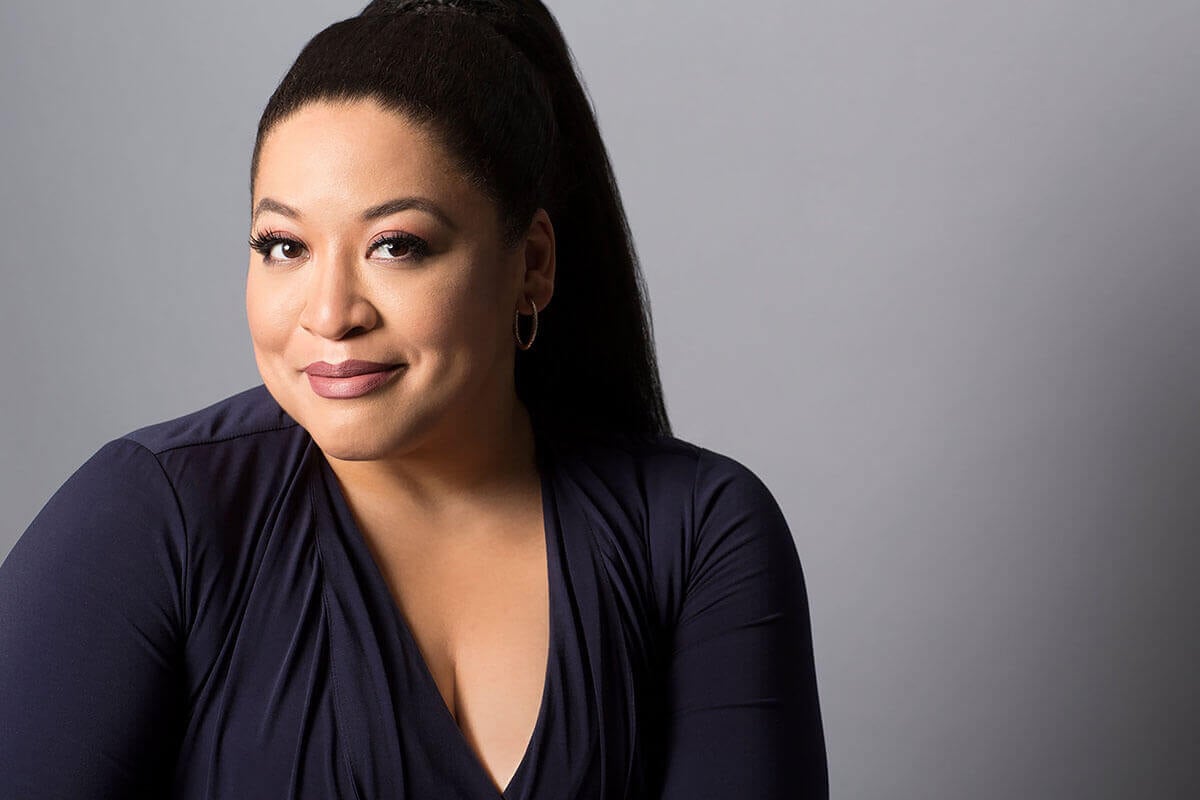
The role of Aida was performed by Michelle Bradley. She is a newcomer but is already a huge star on the international opera circuit. She is African American. She was born in Versailles, Kentucky, a town of 10,000 or fewer people. She graduated from Woodford County High School, then graduated from Kentucky State University, then studied vocal performance at Bowling Green State University.
The town of Versailles, small as it is, used to have three high schools. One of them was for Blacks only, even though the town’s Black population is tiny, about 6%. After the Brown decision, the three merged, and the Woodford County High School opened in 1963.
At school, she was the girl with the crooked teeth, the one the other kids teased and taunted. To spare herself the bullying, she kept her mouth shut.
“I didn’t talk at all until I got home,” soprano Michelle Bradley explains. “I was getting picked on a lot at school. And so I just stopped talking. Until I could get braces, I just didn’t talk in public.”
But in the afternoons, before her parents returned from work, Bradley would retreat into her sanctuary: her bedroom’s walk-in closet. There, with the door closed, Bradley would sing, without fear that anyone would hear her or judge her.
One day, though, her singing would no longer be a secret. One day, it would grace stages around the world, making her one of today’s most buzzed-about up-and-coming opera stars.
Growing up in Versailles, Kentucky, Bradley remembers her mother received free CDs in the mail, with songs from Aretha Franklin, Diana Ross, and The Clark Sisters, a gospel group from Detroit. Bradley loved them all. But there was one singer who inspired her the most: superstar Whitney Houston.
“She was my idol. That’s who I was trying to be as a little girl,” Bradley says.
In those early years, she would tally the ways she and Houston were alike—they shared a birth month, a Zodiac sign—just to feel a little closer to the superstar. And when the movie The Bodyguard came out, with Houston in the starring role, Bradley watched it over and over.
But trying to sing big, powerful ballads like Houston did in a closet made discretion difficult. Bradley had three brothers, two older and one younger. And like many a pesky sibling, Bradley’s younger brother was all too eager to spill the beans on his sister’s secret hobby.
“Mom, Dad, Tammy likes to sing in the closet! Tammy likes to sing in the closet,” she remembers him shouting, using the name she’s called at home.
Even with her parents, Bradley only spoke when spoken to. She was shy. Her parents could hardly believe she had a secret pastime singing. They called her into the living room and asked her to perform something. Naturally, Bradley chose a Houston song: “I Love the Lord” from The Preacher’s Wife.
“After that, my parents had me up singing at church services and everything else,” Bradley says. “It just started from there.”
Bradley had shown musical talent even from a young age. At Kmart, while her mother did the shopping, an 8-year-old Bradley would park herself in the aisle with all the musical equipment: “That was back when they had all the keyboards sitting out and had them all plugged up. Ooh, that was fun!”
She had no problem finding the keys to play the theme songs for kids’ shows like Sesame Street and Fraggle Rock. “I really don’t know how I did it,” Bradley says. “I loved my little cartoons, and so I would hear that and then I could sing it or play it. I just needed to hear it, and I had it.”
Neither of Bradley’s parents had studied music, but both loved to sing. They had met during the civil rights movement in the 1960s, two of the first Black students to integrate their Kentucky high school. Bradley’s father passed her mother a note that read, “I want to be your man.” They sang together in church choirs ever since they started dating.
It was with their help that Bradley started to overcome her shyness. Her father, a police officer, was a deacon at Polk Memorial Baptist Church. Her mother continued to sing in the church choir. Bradley started by learning to play services with the church pianist. By high school, she could carry a whole service.
And when, at age 14 or 15, she started singing in public, Bradley’s parents were always there, cheering her on. “Honestly, that’s who I would focus on when I was singing. I would look at them if I got nervous. So that helped me a lot. They helped me a lot.”
Soon, Bradley had the confidence to sing at school pep rallies and Christmas parties. “When I started doing that, when I started singing at school, people stopped picking on me. I was going from, ‘Hey, a crooked-tooth girl’ to ‘Hey, can you come sing for us?’”
It was the start of something great. Bradley would go on to graduate from the Metropolitan Opera’s prestigious Lindemann Young Artist Development Program. Her voice won her awards galore—from the Leonie Rysanek Award to the grand prize at the Marilyn Horne Song Competition—and she toured Europe, performing in great opera houses from Berlin to Vienna to Paris and beyond.
Now, she’s taking the U.S. by storm. This past fall, she starred as the heroine Liù in the Metropolitan Opera’s Turandot, and in March, she makes her debut with the Lyric Opera of Chicago as the title character in Tosca. Then, she joins San Francisco Opera for its Centennial Season, making her inaugural appearance in the company’s Dialogues of the Carmelites.
Bradley frequently visits Houston, because that’s where her voice teacher, Lois Alba, lives. When the pandemic closed down everything, including opera, she stayed with her family in Versailles for eight or nine months. She practiced at Kentucky State and the local church.
During that time, she got requests to sing virtually. She found that the best acoustics in the house was in the bathroom. So she would get dressed up in her regalia and sing at an angle that didn’t show the toilet.
When she was in high school, she thought she might one day be a music teacher or choir director. But in her freshman year at Kentucky State, her voice teacher, AndrewSmith, told her she had the voice to sing opera and encouraged her. She “just fell in love with it.” He showed her Turandot on a VHS, the first opera ever for her and she was immediately transfixed. Mr. Smith also gave her a CD of Leontyne Price, and Michelle was star struck.
It was like when I was a little girl listening to Whitney Houston, except this was an opera singer. I heard that voice and I don’t know what inside me said, “That’s me. I can do that.” But hearing one of the greatest voices of our time, I said, “I can do that too.” I still, to this day, don’t know where that came from. Or maybe I do know where it came from. But that was really my first thought: that I can do this. I can sound like that. It’s like I found a home.
From Versailles, Kentucky, to the Metropolitan Opera!
What a remarkable story, and what a wonderful voice!



 Diane Ravitch's blog