Archives for category: Literature

On Twitter (“X”), The Recount reports that the newly elected president of the Central Bucks County school board, Karen Smith, was sworn into office on a stack of banned books, not the Bible.

https://x.com/therecount/status/1732425364675203121?s=42&t=9ko2QEoKmRIlvHb1PdtjSw

The new board swept out a board of rightwing zealots.

The Washington Post published this story of a librarian in Florida who “couldn’t take it anymore.” The book bans and censorship imposed by Governor Ron DeSantis and his compliant Legislature violated her professional ethics. Her job became impossible.

Governor DeSantis insists that no book is banned in his state. Maybe he should interview a school librarian.

Florida is the state where freedom to read goes to die.

KISSIMMEE, Fla. — It was her last Monday morning in the library, and when Tania Galiñanes walked into her office and saw another box, she told herself that this would be the last one.

Inside were books. She didn’t know how many, or what they were, only that she would need to review each one by hand for age-appropriate material and sexual content as defined by Florida law, just as she’d been doing for months now with the 11,600 books on the shelves outside her door at Tohopekaliga High School.

Last box, and then after this week, she would no longer be a librarian at all.

She heard the first-period bell ring, 7:15 a.m. She’d wanted to get to the box right away, but now she saw one of the school administrators at her door, asking whether she’d heard about the latest education mandate in Florida.

“What’s the name of this thing?” he said. “Freedom Week?”

She exhaled loudly. “Freedom Week.”

“Oh, good,” he said. “You know about this.”

Yes, Tania knew about it. It was one more thing the state had asked of them, a mandatory recitation of parts of the Declaration of Independence “to reaffirm the American ideals of individual liberty,” along with something else she had heard from the district. “They asked us to please not celebrate Banned Books Week,” Tania said.

She was tired. Her husband was always reminding her: Tania, you have no sense of self-preservation. She had thought about pushing back against the district, had imagined putting up posters all over the walls from the American Library Association celebrating “freedom to read,” a final act before her last day on Friday. But even if she did put up the posters, who would be there to see them once she left? The library would be closed after this week, until they found someone to take her place.

Tania had planned to spend the rest of her career in the Osceola County School District. She was 51. She could have stayed for years at Tohopekaliga, a school she loved that had only just opened in 2018. The library was clean and new. The shelves were organized. The chairs had wheels that moved soundlessly across the carpet. The floor plan was open, designed by architects who had promised “the 21st century media center.”

That was before the school board meeting on April 5, 2022, when Tania watched parents read aloud from books they described as a danger to kids. It was before she received a phone call from the district, the day after that, instructing her to remove four books from her shelves. It was before a member of the conservative group Moms for Liberty told her on Facebook, a few days later, that she shouldn’t be allowed anywhere near students.

It had been 18 months since then. Nine months since she had taken Florida’s new training for librarians, a mandatory hour-long video, and heard the state say that books in the library must not contain sexual content that could be “harmful to minors” and that violating this statute would result in a third-degree felony. “A crime,” the training had said. “Districts should err on the side of caution.” It had been seven months since she began collecting Florida’s laws and statutes in a purple folder on her desk, highlighting the sections that made her mad, and also the ones that could get her fired. Six months since she broke out in hives, since eczema crept up the side of her face, since she started having trouble sleeping and got a prescription for an anti-anxiety medication. Five months since she stood in her house crying and her husband said it wasn’t worth it anymore. He could work two jobs if he had to. “You need to quit,” he’d told her. Six weeks since the start of another school year. Five weeks since she had given her notice.

And sometime in the middle of all that, as she showed up every weekday at 7 a.m. and tried to focus on the job she had signed up for, which was, she thought, to help students discover a book to love, Tania could feel something shifting inside her 21st-century media center. The relationships between students and books, and parents and libraries, and teachers and the books they taught, and librarians and the job they did — all of it was changing in a place she thought had been designed to stay the same.

A library was a room with shelves and books. A library was a place to read.

On her desk was a purple folder containing the laws and regulations imposed on librarians by the Legislature.

Inside, there were printouts of 79 pages of Florida law and statute that told her how to think about what students should and should not read. One law made it easier for people to challenge books they believed contained sexual conduct or age-inappropriate material. Another defined that term, “sexual conduct,” in layer upon layer of clinical specificity.

When she had decided to become a librarian almost 10 years ago, it was for a simple reason: She loved to read. Now she watched as the work she did at a high school in Central Florida became part of a national debate. There were fights going on over democracy and fascism. There were parents and school board members arguing on social media and in meetings. Florida Gov. Ron DeSantis (R) wasn’t just passing laws but using them to run for president. To Tania, the pure act of reading was becoming more and more political, and as a result, she had to spend much of her time reviewing the books on her shelves — not to suggest one to a student but to ask herself whether the content was too mature for the teenagers at her school. Then she had moved on to the books in each teacher’s classroom, because as of this year, the state considered those books to be part of the library, too.

All of this took time. The librarian’s job was expanding even as she felt it was shrinking to a series of rote tasks: She would copy a book’s ISBN number into a peer-review database. She would decide whether to mark it with the thumb-size red sticker, provided to her by the district, that read “M” for “mature.” If a book wasn’t listed in a database, she would review it by hand, and then she would start again with the next book. In those hours, the job became a series of keystrokes, and she began to feel more like a censor than a librarian.

It wasn’t just Tania doing this. It was more than 1,400 librarians in all of Florida’s 67 counties, each district interpreting the law in its own way. In the panhandle, Escambia County had instructed its schools to close parts of their libraries entirely until every book on every shelf had been reviewed for sexual content. In Charlotte County, near Fort Myers, schools were told to remove any books with LGBTQ characters from elementary and middle school libraries.

This reign of terror has spread from Florida to other red states. Students can see whatever they want on their cell phones. But what they read must be scrutinized and censored, and librarians must abandon their professional ethics.

Moms for Liberty faced big setbacks in school board races in Pennsylvania, reports Peter Greene in Forbes.

He writes:

When he talked to the Moms for Liberty convention back in July, Jordan Adams explained how new conservative board members could use their first 100 days to hit hard, flooding the zone with a kind of shock and awe. The conservatives of Pennridge School District board, Adams’ single client for his fledgling consulting business, may be rethinking his advice this morning as they contemplate their defeat in Tuesday’s elections.

Pennridge is in Bucks County, near Philadelphia, a county that has been ground zero for the Moms for Liberty style installation of far right policies in school boards. Since acquiring a majority, Pennridge has pursued a host of right wing policies. They had trouble telling creationism from science. They banned Banned Books Week. They tried to clamp down on student expression. And they removed DEI policies).

Pennridge’s conservative board also hired Adams, with close ties to conservative Christian Hillsdale College, to scour through their curriculum and remove all things woke. This was a new business model, a proof of concept for retooling a school’s curriculum along more conservative lines. He was, he told the Moms for Liberty crowd, the “fox in the henhouse.

Now the henhouse is under new management. As of this morning, it appears that all five open seats on the board were won by candidates who ran on opposition to culture wars, secret agreements, poor policies, and the adoption of the curriculum recommended by Adams.

The backlash was also felt in Central Bucks district school board race.

Central Bucks has drawn national attention for implementing a wave of conservative policies. They instituted a book banning policy, aided by the Independence Law Firm, the legal arm of the Pennsylvania Family Institute (“Our goal is for Pennsylvania to be a place where God is honored, religious freedom flourishes, families thrive, and life is cherished.”) They banned pride flags. They suspended a teacher who defended LGBTQ students. They implemented a policy that required the school to out LGBTQ students with a “gender identification procedure”. No student name changes allowed without a note from home.

The conservative shift drew enough attention that Penncrest school board on the other side of the statetreated Central Bucks as a model.

The race drew spectacular amounts of money, particularly from Paul Martino, a venture capitalist who had put half a million in 2021 Pennsylvania board races. This year he chipped in $279,000 (out of a total $600,000 for bother sides) in support of his wife’s campaign for a board seat.

The campaign was brutal and, if one followed it on social media, mean. But the Philadelphia Inquirer reported this morning that the Democratic candidates swept the election, including the defeat of Martino’s wife and Dana Hunter, incumbent board president.

Open the link to finish the article.

How do you measure the value of a novel? By its sales? By its reviews? By its awards?

This article in ArtnetNews by Ben Davis questions the intrusion of metrics into the world of aesthetics. Every teacher and parent should be asking the same questions: can you measure creativity? Can you measure curiosity? Can you measure persistence? Are we measuring what matters most?

He begins:

Let us pause to recall how proud Sam Bankman-Fried was to say that he could prove, with mathematical certainty, that Shakespeare was overrated.

As a matter of fact, the crypto wunderkind who now faces up to 115 years in prison for various crimes, once said the following:

I’m very skeptical of books. I don’t want to say no book is ever worth reading, but I actually do believe something pretty close to that. I think, if you wrote a book, you fucked up, and it should have been a six-paragraph blog post.

In the very recent past—as in a few months ago!—this was considered an obvious example of the unconventional thinking associated with a visionary.

The bit about hating books comes from a worshipful, now-scrubbed interview Bankman-Fried did with Sequoia Capital. As for his bold stand against reading Shakespeare, that dates to 2012, from the personal blog he kept while a student at M.I.T., titled “Measuring Shadows.” There, the future shitcoin entrepreneur held forth on sports statistics and preached the gospel of “effective altruism.

The Shakespeare line appears in a post called “The Fetishization of the Old” which argues that people only pretend to like Much Ado About Nothing, or Pride and Prejudice, or, for that matter, Citizen Kane (“an almost unwatchably empty film”), because they are too deferential toward tradition. People have made good fun of his reasoning. But more notable to me than his ostentatiously callow take on literature is the method Bankman-Fried used to prove it:

About half of the people born since 1600 have been born in the past 100 years, but it gets much worse than that. When Shakespeare wrote almost all of Europeans were busy farming, and very few people attended university; few people were even literate—probably as low as about ten million people. By contrast there are now upwards of a billion literate people in the Western sphere. What are the odds that the greatest writer would have been born in 1564? The Bayesian priors aren’t very favorable.

Simple statistics!

I thought of Sam Bankman-Fried’s numbskull posturing recently when I finally read Nathan Heller’s article about the “The End of the English Major” in the New Yorker. The most-shared tidbit from that piece had a professor lamenting that her Ivy League students who are social-media natives no longer have the attention for reading literature: “The last time I taught The Scarlet Letter, I discovered that my students were really struggling to understand the sentences as sentences—like, having trouble identifying the subject and the verb.”

Heller’s account of the collapse of undergraduate interest in the humanities touched off a lot of anguish, pained tweets, and op-eds this past month. For me, it also clarified something about the trajectory of culture in the recent past, and made me think about the increasing widespread popularity of something I’ll call Quantitative Aesthetics—the way numbers function more and more as a proxy for artistic value….

It manifests in music. As the New York Timeswrote in 2020 of the new age of pop fandom, “devotees compare No. 1s and streaming statistics like sports fans do batting averages, championship, wins and shooting percentages.” Last year, another music writer talked about fans internalizing the number-as-proof-of-value mindset to extreme levels: “I see people forcing themselves to listen to certain songs or albums over and over and over just to raise those numbers, to the point they don’t even get enjoyment out of it anymore.”

The same goes for film lovers, who now seem to strangely know a lot about opening-day grosses and foreign box office, and use the stats to argue for the merits of their preferred product. There was an entire campaign by Marvel super-fans to get Avengers: Endgame to outgross Avatar, as if that would prove that comic-book movies really were the best thing in the world.

On the flip side, indie director James Gray, of Ad Astra fame, recently complained about ordinary cinema-goers using business stats as a proxy for artistic merit: “It tells you something of how indoctrinated we are with capitalism that somebody will say, like, ‘His movies haven’t made a dime!’ It’s like, well, do you own stock in Comcast? Or are you just such a lemming that you think that actually has value to anybody?”

It’s not just financial data though. Rotten Tomatoes and Metacritic have recently become go-to arbitrators of taste by boiling down a movie’s value to a single all-purpose statistic. They are influential enough to alarm studios, who say the practice is denying oxygen to potentially niche hits because it “quantifies the unquantifiable.” (Funny to hear Hollywood execs echo Theodor Adorno’s Aesthetic Theory: “If an empirically oriented aesthetics uses quantitative averages as norms, it unconsciously sides with social conformity.”)

As for art, I don’t really feel like I even need to say too much about how the confusion of price data with merit infects the conversation. It’s so well known it is the subject of documentaries from The Mona Lisa Curse (2008) to The Price of Everything (2018). “Art and money have no intrinsic hookup at all,” painter Larry Poons laments in the latter, stating the film’s thesis. “It’s not like sports, where your batting average is your batting average… They’ve tried to make it much like that, like the best artist is the most expensive artist.”

But where Quantitative Aesthetics is really newly intense across society—in art and everywhere—is in how social-media numbers (clicks, likes, shares, retweets, etc.) seep into everything as a shorthand for understanding status. That’s why artist-researcher Ben Grosser created his Demetricator suite of web-browsing tools, which let you view social media stripped of all those numbers and feel, by their absence, the effect they are having on your attention and values.

Read the whole thing. It makes you think how and why we value what we do. And inevitably draws your attention to the misuse of standardized testing scores.

Greg Olear wrote an analysis of Samuel Taylor Coleridge’s “Kubla Khan,” which is hilarious and insightful. I read it in high school or college but never saw it as he sees it now: the product of an opium-addled brain. He compares parts of it to rock music and shows something my teachers never mentioned: that behind his feverish dream is an erotic imagination.

Then he connects the theme of the ecstatic poem to one Donald J. Trump and the joyless Putin.

His essay on this mysterious poem made me laugh out loud.

Enjoy!

PEN America is very busy trying to keep abreast of the states banning books. Thanks to reactionary Governor Kim Reynolds, Iowa has taken the lead in banning classics as well as books about sexuality and race.

Earlier this week, the Urbandale, Iowa, school district ordered its educators to remove a list of nearly 400 titles if found in district schools and classrooms. After public pressure including an open letter from PEN America, the district dropped its objections to many of the titles and released a new list of 65 books it identified in its libraries that it said violate state law, according to documents obtained by the Iowa anti-censorship group Annie’s Foundation.

Those books include Margaret Atwood’s The Handmaid’s Tale, John Green’s The Fault in Our Stars, Zora Neale Hurston’s Their Eyes Were Watching God, Aldous Huxley’s Brave New World, James Joyce’s Ulysses and dozens of others. This is still a jaw-dropping number of titles to be ordered removed from schools, with serious questions about how these titles were chosen and evaluated.

See the list of 65 books from the Urbandale, Iowa, school district.

The original PEN America article:

PEN America has sent an open letter to an Iowa school district calling on district leaders to reverse an order to remove a list of nearly 400 titles if found in district schools and classrooms.

Urbandale Community School District releaseda list of nearly 400 titles deemed to be in potential violation of newly enacted state legislation, Senate File 496. The list includes classics like The Catcher in the Rye by J.D. Salinger, Catch-22 by Joseph Heller, and The Bluest Eye by Toni Morrison; children’s books like Mayor Pete, an illustrated biography of Pete Buttigieg by Rob Sanders; several YA novels like The Hate U Give by Angie Thomas and Looking for Alaska by John Green; and other texts from authors as celebrated and as far-ranging as James Baldwin, James Joyce, and Albert Camus.

While not every book on the list is necessarily currently available in Urbandale schools, those that are must be removed, and, seemingly, cannot be assigned or purchased.

WHICH BOOKS WERE BANNED FROM SCHOOLS IN URBANDALE, IOWA?

According to a report in the Des Moines Register, nearly 400 books have been identified for removal from Urbandale schools. The list includes:

  • Literary classics like The Catcher in the Ryeby J.D. Salinger, Ulysses by James Joyce, I Know Why the Caged Bird Sings by Maya Angelou, As I Lay Dying by William Faulkner,Maus by Art Spiegelman, Are You There God?, It’s Me Margaret by Judy Blume, The Handmaid’s Tale by Margaret Atwood,Madame Bovary by Gustave Flaubert, 1984by George Orwell, Brave New World by Aldous Huxley, A Farewell to Arms by Ernest Hemingway, and Catch 22 by Joseph Heller.
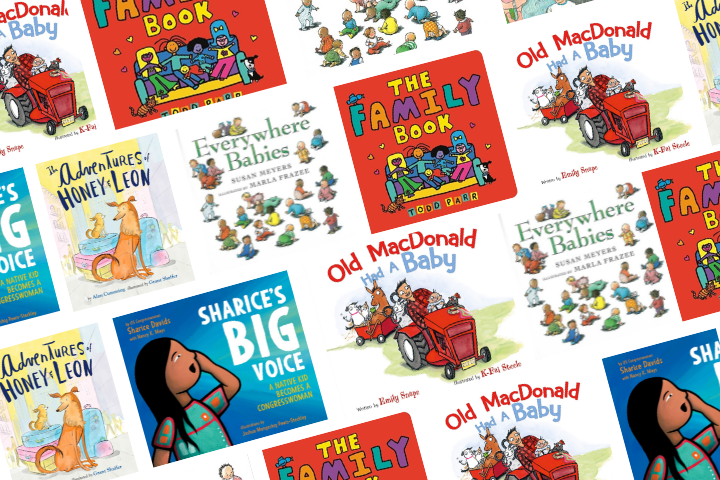
  • Children’s picture books like Mayor Pete, about the U.S. Secretary of Transportation Pete Buttigieg, Sharice’s Big Voice, about U.S. Rep. Sharice Davids, The Adventures of Honey & Leon, about actor Alan Cumming’s two dogs and books about families likeEverywhere Babies by Susan Meyers, The Family Book by Todd Parr, and Old MacDonald Had A Baby by Emily Snape.
  • Contemporary young adult books by award-winning authors such as The Hate U Give by Angie Thomas, I Am Not Your Perfect Mexican Daughter by Erika Sánchez, The Sun and Her Flowers by Rupi Kaur, Looking for Alaska, The Fault in Our Stars, and Paper Towns by John Green, Last Night at The Telegraph Club by Malinda Lo, All Boys Aren’t Blue by George Johnson, and Gender Queer by Maia Kobabe.
  • Works by renowned authors James Baldwin, Charles Baudelaire, Albert Camus, Nikki Giovanni, Toni Morrison, Henry Miller, Robert Cormier, Neil Gaiman, Roxane Gay, Zora Neale Hurston, Khaled Hosseini, Alice Walker, and Tony Kushner.

See the full list of books flagged for removal from Urbandale, Iowa, school libraries under the new law.

WHAT IS IOWA’S SENATE FILE 496?

Iowa Gov. Kim Reynolds signed Senate File 496into law in May 2023. The law has numerous provisions, based on a requirement that schools adopt what it calls an “age appropriate, multicultural and gender-fair approach” by schools and school districts.

The law includes:

  • A “Don’t Say Gay” provision, modeled on legislation passed in Florida in 2022, that applies to Kindergarten to 6th grade: “A school district shall not provide any program, curriculum, test, survey, questionnaire, promotion, or instruction relating to gender identity or sexual orientation to students in kindergarten through grade six.”
  • A directive to include “age appropriate” materials in classrooms and libraries. The law defines “age-appropriate” as “topics, messages, and teaching methods suitable to particular ages or age groups of children and adolescents, based on developing cognitive, emotional, and behavioral capacity typical for the age or age group.” The law also states that “’Age-appropriate’ does not include any material with descriptions or visual depictions of a sex act as defined in section 702.17.” This is a reference to Iowa criminal code, including a definition of sex acts and sexual activity that was not originally written to apply to written or visual materials.
  • A mandate for districts to develop policies for parents/guardians to to review all instructional materials, to file objections to challenge these materials, and a public listing of all books in school district libraries
  • A prohibition on students from serving on review committees that “determine, or provide recommendations related to, whether a material in a school library should be removed” after it has been challenged. Additionally, parents and guardians who challenge a book or library material are guaranteed confidentiality.
  • The potential for disciplinary action against educators found in violation of its provisions, particularly concerning “age appropriate” materials in school libraries, including the possibility of losing their licenses.

WHY WERE BOOKS BANNED FROM SCHOOLS IN URBANDALE, IOWA?

In the absence of state guidance on how to implement the new law, the Urbandale Community School has taken what it calls thebroadest possible interpretation of the law, in order to protect educators from disciplinary action. But in doing so, they have threatened the freedom to read for the district’s 4,000+ students.

Per the district’s statement, the list of books was curated from “a review of quarantined books from other states who had passed similar laws.” The district noted that the list is not “all-inclusive” nor represents books available in the district’s schools and classrooms.

One senior at Urbandale High Schooldescribed to a local NBC affiliate that the bans would impact her ability to complete her coursework. “I’m involved in a lot of AP and college-level courses and so for me, I was in AP Lit[erature] last year and so I read some amazing books…going forward [I’m] taking Advanced Comp[osition] this year. And so I won’t be able to study 1984 or The Color Purple and a lot of those books that are so important and so critical for those curriculums.”

The list, and the law that prompted it, comes amid a national wave of book bans andeducational gag orders that limit what can be said in the classroom, especially about race and LGBTQ+ topics.

WHAT CAN BE DONE?

PEN America invites the public to send its letter to school district officials, calling on them to reverse the policy, and to retain all reading materials so students can begin the school year with full access to literature in their classrooms.

The letter is also intended to signal to other school districts, parents, educators, librarians, and students that the government overreach stemming from Gov. Reynolds’ legislation is an affront to students’ bedrock rights.

Send the PEN America letter to Urbandale school officials

Leslie Postal of the Orlando Sentinel reports that the Orange County school district has removed classic literature in its efforts to comply with state laws.

She writes:

The classic novels “A Room With a View” and “Madame Bovary” and the epic poem “Paradise Lost” — published in England more than 350 years ago — have been at least temporarily rejected by Orange County Public Schools for sexual content that educators fear runs afoul of a new Florida law.

Novels that in past years were frequently taught in OCPS high school classes, such as “The Color Purple,” “Catch-22,” “Brave New World,” and “The Kite Runner” have been put on the rejected lists, too, as have novels by Toni Morrison and Ayn Rand and popular, turned-into-movies books like “Into the Wild,” and “The Fault in Our Stars.”

The lists of books rejected and approved for OCPS classrooms are not finalized yet as district media specialists continue their summer work of reviewing all books in classroom libraries, said several people familiar with the process.

Some books rejected earlier this summer, among them “The Scarlet Letter” and Shakespeare’s “A Midsummer Night’s Dream,” have since been approved, according to the lists shared with the Orlando Sentinel by a district teacher and by an advocacy group that obtained a rejection list through a public records request. Other books have been approved but only for certain grades.

Four plays by William Shakespeare, including “A Midsummer Night’s Dream,” are currently listed as approved for grades 10 through 12 only, as is Truman Capote’s “In Cold Blood” and Tennessee Williams’ “A Streetcar Named Desire,” the lists show.

For many of the books, the reason for at least a temporary rejection is sex. “Depicts or describes sexual conduct (not allowed per HB 1069-2023,” reads the explanation, referencing a new state law passed by the Republican-dominated Florida Legislature and signed into law by Gov. Ron DeSantis.

The new law makes book challenges easier and, if the concern is sexual content, requires the books to be removed from the shelves within five days and remain inaccessible to students while being reviewed. Republican lawmakers said they passed it to make sure pornography and books that depict sexual activity are kept from children.

But critics say the effort has wrongly labeled many books pornographic, when state law says, in part, that books with sexual content or nudity are considered pornography only if they are “without serious literary, artistic, political, or scientific value.”

This could be a clever plot to entice teens to read forbidden books. (“Come over to my house, I have ‘Paradise Lost!’”) But Florida’s legislators and state education officials are not clever. They are narrow minded bigots.

Rcharvet, a retired teacher and regular commenter here, explains how the pedagogy of the Commin Core taught his students to dislike reading. They were supposed to read excerpts of books, not a complete book. They were expected to analyze the meaning of words and sentences instead of following the narrative of the story. Mr. Charvet became a subversive. He explains here.

We had to use a program called Study Sync. The kids called it, “Study Stink.” It was a canned computer program that used excerpts from stories. It drove me nuts. A lot of highly-intellectual processing for kids who were “emerging readers.” I had to “study my brains out” to figure out what the “end game” was and then how to explain/teach it to my students. Once “I” got it (not lying took a lot of study time on my part) I could teach it. It was still boring.

We had “Lord of the Flies” but only an excerpt. None of the kids got it. I found several YouTube videos that reviewed and explained the story. Once I did that, one of my students said, “I went home and read the whole book three times! It was one of my favorites.”

When I taught reading, I would read out loud so kids would HEAR the characters voices (yes I did the voices as well). For struggling readers they typically move through a sentence like they are walking on glass. But, we worked together.

One book that we started was “The Pig Man.” It started out slow (geez I was slow) but started liking the book to the point kids were saying, “Can we read The Pig Man and find out what happened?” They felt the words. They connected to the characters. We could ask questions like, “If you were Tommy what would you do in this case? What should the Pig Man do about the broken statue?” Then because I was making a connection to the book and trying to follow the curriculum I was deemed “moving too slow” and the department head said, “Just collect all the books and move on.”

What did I know?

And then the kids had to take Accelerated Reader tests. This told them what type of book they qualified to read by their AR or Lexile number. When they went to the library the librarian would tell them, “Oh, the rocket ship book is not in your Lexile number range, you cannot read about rocket ships.” I grumbled something like, “This is f-ing messed up under my breath.”

Then, I noticed their test scores all went down. I asked them, “I am curious. You were all doing so well and then I noticed that your AR scores dropped (it’s okay) but I am just curious.” They told me the test added a clock-timer that their eyes kept looking at. “We got anxious because we could tell we only had so much time to answer the question.” Some Kids decided to punch any answer just to be done. Wow, that was fun.

And when we went to distant learning, one little girl asked, “Mr. Charvet, can I read this book because it is not my Lexile number.” I told her, “You read any book you want. Just do what I told you: if you don’t understand a word, look it up or put it on your sticky note so you can keep reading. I will help you later. But if you keep stopping, you will lose the flow and that’s no fun.”

The reading was painful to the point, I wanted to skip it. But, I did find some great FREE programs online that the kids loved as long as they didn’t tell anybody — making reading fun, our little secret.

I printed out all the papers because most kids like to have something they can “feel” when they read. The computer reading hurt my eyes; it created headaches for many of my kids.

When I taught art I had a magazine cabinet for collages. I looked up one day and there were a group of middle school boys giggling and having a good time. “Hey you kids! What are you doing back there?” I reminded them there was no reading, just collecting pictures. Then I said, “Nah, what did you find?” “Mr. Charvet, check out this giant spider egg that was buried in the ground. And look at this old boat they found. And look at this…and this… and this. They had so much fun. I said, “You know I come back here to look for pictures, too. Then an hour goes by after I read all these great articles and learned so much. You know, this is the stuff (by knowing) you can win thousands of dollars on a game show!” For crying out loud, they gave away $250K for knowing that Frodo (LOTR) was not a Pokemon. We all laughed, but that kind of reading didn’t count because they could only read books. You know REAL books.

I loved reading everything from matchbook covers and especially on the back of cereal boxes — to the comics that would take me on adventures.

Nowadays, “Yes we know Spiderman saved the day. But what was the tone of his thinking? What do you think he meant by using this word? In sentence three, he used plethora. How can that be applied in other ways?” Man, we were just happy Spiderman got rid of the bad guys. Peace out.

Mitchell Robinson is a professor of music education at Michigan State University who was recently elected to the Michigan State Board of Education. He shared a resolution that he introduced and that was passed by the State Board. Are there books that are not age-appropriate? Yes. Can we trust teachers and librarians to select the right books for the children in their care? The Michigan State Board of Education thinks we can. Michigan law already forbids pornography in schools.

Robinson sent the following to me:

Proud to introduce the “Freedom to Read” resolution yesterday. The State Board of Education respects the professional judgement of teachers and librarians when it comes to selecting learning materials that support the curriculum in their classrooms, and respects the rights of parents and caregivers to determine the developmental appropriateness of books and other materials for their children.

Teachers and parents are natural partners in the education of our children, and attempts to drive a wedge between schools and families by creating outrage over fabricated “crises” will simply not work.

“Board Of Ed Adopts Resolution Supporting ‘Freedom To Read'”

A resolution to support K-12 students reading whichever books they like as book bans continue to sweep the country was adopted by the State Board of Education Tuesday.

Board member Mitchell Robinson (D-Okemos) introduced the Freedom to Read Resolution. Robinson cited in the resolution that PEN America’s Index of School Book Bans listed 1,477 instances of individual books banned.

The resolution said in the first six months of 2023, 30 percent of the unique titles banned were books about race, racism, or feature characters of color and 26 percent of the unique titles banned had LGBTQ characters or themes.

On Monday, Illinois Governor J.B. Pritzker signed a law that deems Illinois public libraries ineligible for state funding if the library restricts or bans materials because of “partisan or doctrinal disapproval.”

“Closer to home, the Michigan Civil Rights Commission has asked the Attorney General for an official legal ruling on book banning as discrimination in respect to the Elliott Larsen Civil Rights Act that has expanded to include…LGBTQ+ communities,” Robinson said.

During public comment, several parents and organizations, including Moms for Liberty, spoke out against the resolution. They argued that none of their members were in favor of banning books but did not want their children to read what they deemed as inappropriate and pornographic content.

Board member Tiffany Tilley (D-West Bloomfield) introduced an amendment to the resolution supporting parents in their right to choose age appropriateness of material for their child and rights to make “critical decisions with their local schools.”

Tilley said as a child, she read several pieces of literature, including Shakespeare’s “Romeo and Juliet” that included content that some would say was “racy.”

“I got to a certain age, and I realized we were talking about a 16-year-old boy, 13-year-old girl and they both committed suicide,” Tilley said. “I’m not for banning books. My mom allowed me to read those things. I think that made my life richer, but for some parents, they may not be ready for their children to read about something.”

Tilley emphasized that her amendment would signal to parents that the state is not trying to make decisions for them, but also the state is not trying to ban certain books for everyone. If a parent reads a book and decides they do not want their child to read it, then they need to make that decision with their local school district, she added.

Superintendent of Public Instruction Michael Rice said this amendment was similar to resolutions the board supported previously. In February 2022, the Resolution on Sex Education included language that allowed for parents and legal guardians to opt-out of sex education classes without penalty.

Board member Tom McMillin (R-Oakland Township) wanted wording included that would make clear the board was stating pornography should not be allowed in schools. Board member Marshall Bullock (D-Detroit) jumped in, saying that there are already laws forbidding pornography in school. He asked McMillin how he defined pornography, saying his definition may lead to the banning of other subject matter such as the teaching of human anatomy in a biology course.

In the end, the board voted to approve the resolution 6-2, with McMillin and board member Nikki Snyder (R-Dexter) voting no.

One of our readers in Indiana noted the paradox that Illinois has banned the banning of books while Indiana Republicans are welcoming any parent or ne’er-do-well to complain about a book and get it removed from school libraries.

Indiana’s Republican-controlled General Assembly decreed this year in House Enrolled Act 1447 that every public school board and charter school governing body must establish a procedure for the parent of any student, or any person residing in the school district, to request the removal of library materials deemed “obscene” or “harmful to minors.”

The procedure may provide for an intermediate response by school personnel to a request to remove a library book, but it must include the school board reviewing, and possibly implementing, each removal request at its next public meeting.

The new law followed claims by Hoosier Republicans that Indiana school libraries are secretly loaded with books containing pornography and other content inappropriate for children.