Archives for category: Literature

PEN America is very busy trying to keep abreast of the states banning books. Thanks to reactionary Governor Kim Reynolds, Iowa has taken the lead in banning classics as well as books about sexuality and race.

Earlier this week, the Urbandale, Iowa, school district ordered its educators to remove a list of nearly 400 titles if found in district schools and classrooms. After public pressure including an open letter from PEN America, the district dropped its objections to many of the titles and released a new list of 65 books it identified in its libraries that it said violate state law, according to documents obtained by the Iowa anti-censorship group Annie’s Foundation.

Those books include Margaret Atwood’s The Handmaid’s Tale, John Green’s The Fault in Our Stars, Zora Neale Hurston’s Their Eyes Were Watching God, Aldous Huxley’s Brave New World, James Joyce’s Ulysses and dozens of others. This is still a jaw-dropping number of titles to be ordered removed from schools, with serious questions about how these titles were chosen and evaluated.

See the list of 65 books from the Urbandale, Iowa, school district.

The original PEN America article:

PEN America has sent an open letter to an Iowa school district calling on district leaders to reverse an order to remove a list of nearly 400 titles if found in district schools and classrooms.

Urbandale Community School District releaseda list of nearly 400 titles deemed to be in potential violation of newly enacted state legislation, Senate File 496. The list includes classics like The Catcher in the Rye by J.D. Salinger, Catch-22 by Joseph Heller, and The Bluest Eye by Toni Morrison; children’s books like Mayor Pete, an illustrated biography of Pete Buttigieg by Rob Sanders; several YA novels like The Hate U Give by Angie Thomas and Looking for Alaska by John Green; and other texts from authors as celebrated and as far-ranging as James Baldwin, James Joyce, and Albert Camus.

While not every book on the list is necessarily currently available in Urbandale schools, those that are must be removed, and, seemingly, cannot be assigned or purchased.

WHICH BOOKS WERE BANNED FROM SCHOOLS IN URBANDALE, IOWA?

According to a report in the Des Moines Register, nearly 400 books have been identified for removal from Urbandale schools. The list includes:

  • Literary classics like The Catcher in the Ryeby J.D. Salinger, Ulysses by James Joyce, I Know Why the Caged Bird Sings by Maya Angelou, As I Lay Dying by William Faulkner,Maus by Art Spiegelman, Are You There God?, It’s Me Margaret by Judy Blume, The Handmaid’s Tale by Margaret Atwood,Madame Bovary by Gustave Flaubert, 1984by George Orwell, Brave New World by Aldous Huxley, A Farewell to Arms by Ernest Hemingway, and Catch 22 by Joseph Heller.
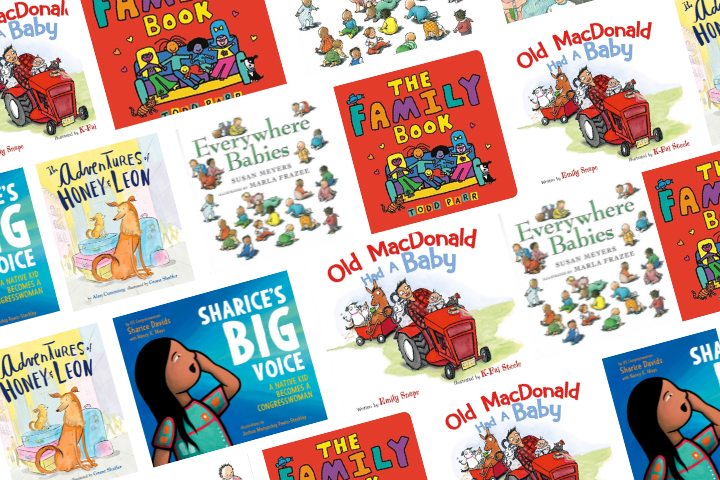
  • Children’s picture books like Mayor Pete, about the U.S. Secretary of Transportation Pete Buttigieg, Sharice’s Big Voice, about U.S. Rep. Sharice Davids, The Adventures of Honey & Leon, about actor Alan Cumming’s two dogs and books about families likeEverywhere Babies by Susan Meyers, The Family Book by Todd Parr, and Old MacDonald Had A Baby by Emily Snape.
  • Contemporary young adult books by award-winning authors such as The Hate U Give by Angie Thomas, I Am Not Your Perfect Mexican Daughter by Erika Sánchez, The Sun and Her Flowers by Rupi Kaur, Looking for Alaska, The Fault in Our Stars, and Paper Towns by John Green, Last Night at The Telegraph Club by Malinda Lo, All Boys Aren’t Blue by George Johnson, and Gender Queer by Maia Kobabe.
  • Works by renowned authors James Baldwin, Charles Baudelaire, Albert Camus, Nikki Giovanni, Toni Morrison, Henry Miller, Robert Cormier, Neil Gaiman, Roxane Gay, Zora Neale Hurston, Khaled Hosseini, Alice Walker, and Tony Kushner.

See the full list of books flagged for removal from Urbandale, Iowa, school libraries under the new law.

WHAT IS IOWA’S SENATE FILE 496?

Iowa Gov. Kim Reynolds signed Senate File 496into law in May 2023. The law has numerous provisions, based on a requirement that schools adopt what it calls an “age appropriate, multicultural and gender-fair approach” by schools and school districts.

The law includes:

  • A “Don’t Say Gay” provision, modeled on legislation passed in Florida in 2022, that applies to Kindergarten to 6th grade: “A school district shall not provide any program, curriculum, test, survey, questionnaire, promotion, or instruction relating to gender identity or sexual orientation to students in kindergarten through grade six.”
  • A directive to include “age appropriate” materials in classrooms and libraries. The law defines “age-appropriate” as “topics, messages, and teaching methods suitable to particular ages or age groups of children and adolescents, based on developing cognitive, emotional, and behavioral capacity typical for the age or age group.” The law also states that “’Age-appropriate’ does not include any material with descriptions or visual depictions of a sex act as defined in section 702.17.” This is a reference to Iowa criminal code, including a definition of sex acts and sexual activity that was not originally written to apply to written or visual materials.
  • A mandate for districts to develop policies for parents/guardians to to review all instructional materials, to file objections to challenge these materials, and a public listing of all books in school district libraries
  • A prohibition on students from serving on review committees that “determine, or provide recommendations related to, whether a material in a school library should be removed” after it has been challenged. Additionally, parents and guardians who challenge a book or library material are guaranteed confidentiality.
  • The potential for disciplinary action against educators found in violation of its provisions, particularly concerning “age appropriate” materials in school libraries, including the possibility of losing their licenses.

WHY WERE BOOKS BANNED FROM SCHOOLS IN URBANDALE, IOWA?

In the absence of state guidance on how to implement the new law, the Urbandale Community School has taken what it calls thebroadest possible interpretation of the law, in order to protect educators from disciplinary action. But in doing so, they have threatened the freedom to read for the district’s 4,000+ students.

Per the district’s statement, the list of books was curated from “a review of quarantined books from other states who had passed similar laws.” The district noted that the list is not “all-inclusive” nor represents books available in the district’s schools and classrooms.

One senior at Urbandale High Schooldescribed to a local NBC affiliate that the bans would impact her ability to complete her coursework. “I’m involved in a lot of AP and college-level courses and so for me, I was in AP Lit[erature] last year and so I read some amazing books…going forward [I’m] taking Advanced Comp[osition] this year. And so I won’t be able to study 1984 or The Color Purple and a lot of those books that are so important and so critical for those curriculums.”

The list, and the law that prompted it, comes amid a national wave of book bans andeducational gag orders that limit what can be said in the classroom, especially about race and LGBTQ+ topics.

WHAT CAN BE DONE?

PEN America invites the public to send its letter to school district officials, calling on them to reverse the policy, and to retain all reading materials so students can begin the school year with full access to literature in their classrooms.

The letter is also intended to signal to other school districts, parents, educators, librarians, and students that the government overreach stemming from Gov. Reynolds’ legislation is an affront to students’ bedrock rights.

Send the PEN America letter to Urbandale school officials

Leslie Postal of the Orlando Sentinel reports that the Orange County school district has removed classic literature in its efforts to comply with state laws.

She writes:

The classic novels “A Room With a View” and “Madame Bovary” and the epic poem “Paradise Lost” — published in England more than 350 years ago — have been at least temporarily rejected by Orange County Public Schools for sexual content that educators fear runs afoul of a new Florida law.

Novels that in past years were frequently taught in OCPS high school classes, such as “The Color Purple,” “Catch-22,” “Brave New World,” and “The Kite Runner” have been put on the rejected lists, too, as have novels by Toni Morrison and Ayn Rand and popular, turned-into-movies books like “Into the Wild,” and “The Fault in Our Stars.”

The lists of books rejected and approved for OCPS classrooms are not finalized yet as district media specialists continue their summer work of reviewing all books in classroom libraries, said several people familiar with the process.

Some books rejected earlier this summer, among them “The Scarlet Letter” and Shakespeare’s “A Midsummer Night’s Dream,” have since been approved, according to the lists shared with the Orlando Sentinel by a district teacher and by an advocacy group that obtained a rejection list through a public records request. Other books have been approved but only for certain grades.

Four plays by William Shakespeare, including “A Midsummer Night’s Dream,” are currently listed as approved for grades 10 through 12 only, as is Truman Capote’s “In Cold Blood” and Tennessee Williams’ “A Streetcar Named Desire,” the lists show.

For many of the books, the reason for at least a temporary rejection is sex. “Depicts or describes sexual conduct (not allowed per HB 1069-2023,” reads the explanation, referencing a new state law passed by the Republican-dominated Florida Legislature and signed into law by Gov. Ron DeSantis.

The new law makes book challenges easier and, if the concern is sexual content, requires the books to be removed from the shelves within five days and remain inaccessible to students while being reviewed. Republican lawmakers said they passed it to make sure pornography and books that depict sexual activity are kept from children.

But critics say the effort has wrongly labeled many books pornographic, when state law says, in part, that books with sexual content or nudity are considered pornography only if they are “without serious literary, artistic, political, or scientific value.”

This could be a clever plot to entice teens to read forbidden books. (“Come over to my house, I have ‘Paradise Lost!’”) But Florida’s legislators and state education officials are not clever. They are narrow minded bigots.

Rcharvet, a retired teacher and regular commenter here, explains how the pedagogy of the Commin Core taught his students to dislike reading. They were supposed to read excerpts of books, not a complete book. They were expected to analyze the meaning of words and sentences instead of following the narrative of the story. Mr. Charvet became a subversive. He explains here.

We had to use a program called Study Sync. The kids called it, “Study Stink.” It was a canned computer program that used excerpts from stories. It drove me nuts. A lot of highly-intellectual processing for kids who were “emerging readers.” I had to “study my brains out” to figure out what the “end game” was and then how to explain/teach it to my students. Once “I” got it (not lying took a lot of study time on my part) I could teach it. It was still boring.

We had “Lord of the Flies” but only an excerpt. None of the kids got it. I found several YouTube videos that reviewed and explained the story. Once I did that, one of my students said, “I went home and read the whole book three times! It was one of my favorites.”

When I taught reading, I would read out loud so kids would HEAR the characters voices (yes I did the voices as well). For struggling readers they typically move through a sentence like they are walking on glass. But, we worked together.

One book that we started was “The Pig Man.” It started out slow (geez I was slow) but started liking the book to the point kids were saying, “Can we read The Pig Man and find out what happened?” They felt the words. They connected to the characters. We could ask questions like, “If you were Tommy what would you do in this case? What should the Pig Man do about the broken statue?” Then because I was making a connection to the book and trying to follow the curriculum I was deemed “moving too slow” and the department head said, “Just collect all the books and move on.”

What did I know?

And then the kids had to take Accelerated Reader tests. This told them what type of book they qualified to read by their AR or Lexile number. When they went to the library the librarian would tell them, “Oh, the rocket ship book is not in your Lexile number range, you cannot read about rocket ships.” I grumbled something like, “This is f-ing messed up under my breath.”

Then, I noticed their test scores all went down. I asked them, “I am curious. You were all doing so well and then I noticed that your AR scores dropped (it’s okay) but I am just curious.” They told me the test added a clock-timer that their eyes kept looking at. “We got anxious because we could tell we only had so much time to answer the question.” Some Kids decided to punch any answer just to be done. Wow, that was fun.

And when we went to distant learning, one little girl asked, “Mr. Charvet, can I read this book because it is not my Lexile number.” I told her, “You read any book you want. Just do what I told you: if you don’t understand a word, look it up or put it on your sticky note so you can keep reading. I will help you later. But if you keep stopping, you will lose the flow and that’s no fun.”

The reading was painful to the point, I wanted to skip it. But, I did find some great FREE programs online that the kids loved as long as they didn’t tell anybody — making reading fun, our little secret.

I printed out all the papers because most kids like to have something they can “feel” when they read. The computer reading hurt my eyes; it created headaches for many of my kids.

When I taught art I had a magazine cabinet for collages. I looked up one day and there were a group of middle school boys giggling and having a good time. “Hey you kids! What are you doing back there?” I reminded them there was no reading, just collecting pictures. Then I said, “Nah, what did you find?” “Mr. Charvet, check out this giant spider egg that was buried in the ground. And look at this old boat they found. And look at this…and this… and this. They had so much fun. I said, “You know I come back here to look for pictures, too. Then an hour goes by after I read all these great articles and learned so much. You know, this is the stuff (by knowing) you can win thousands of dollars on a game show!” For crying out loud, they gave away $250K for knowing that Frodo (LOTR) was not a Pokemon. We all laughed, but that kind of reading didn’t count because they could only read books. You know REAL books.

I loved reading everything from matchbook covers and especially on the back of cereal boxes — to the comics that would take me on adventures.

Nowadays, “Yes we know Spiderman saved the day. But what was the tone of his thinking? What do you think he meant by using this word? In sentence three, he used plethora. How can that be applied in other ways?” Man, we were just happy Spiderman got rid of the bad guys. Peace out.

Mitchell Robinson is a professor of music education at Michigan State University who was recently elected to the Michigan State Board of Education. He shared a resolution that he introduced and that was passed by the State Board. Are there books that are not age-appropriate? Yes. Can we trust teachers and librarians to select the right books for the children in their care? The Michigan State Board of Education thinks we can. Michigan law already forbids pornography in schools.

Robinson sent the following to me:

Proud to introduce the “Freedom to Read” resolution yesterday. The State Board of Education respects the professional judgement of teachers and librarians when it comes to selecting learning materials that support the curriculum in their classrooms, and respects the rights of parents and caregivers to determine the developmental appropriateness of books and other materials for their children.

Teachers and parents are natural partners in the education of our children, and attempts to drive a wedge between schools and families by creating outrage over fabricated “crises” will simply not work.

—

“Board Of Ed Adopts Resolution Supporting ‘Freedom To Read'”

A resolution to support K-12 students reading whichever books they like as book bans continue to sweep the country was adopted by the State Board of Education Tuesday.

Board member Mitchell Robinson (D-Okemos) introduced the Freedom to Read Resolution. Robinson cited in the resolution that PEN America’s Index of School Book Bans listed 1,477 instances of individual books banned.

The resolution said in the first six months of 2023, 30 percent of the unique titles banned were books about race, racism, or feature characters of color and 26 percent of the unique titles banned had LGBTQ characters or themes.

On Monday, Illinois Governor J.B. Pritzker signed a law that deems Illinois public libraries ineligible for state funding if the library restricts or bans materials because of “partisan or doctrinal disapproval.”

“Closer to home, the Michigan Civil Rights Commission has asked the Attorney General for an official legal ruling on book banning as discrimination in respect to the Elliott Larsen Civil Rights Act that has expanded to include…LGBTQ+ communities,” Robinson said.

During public comment, several parents and organizations, including Moms for Liberty, spoke out against the resolution. They argued that none of their members were in favor of banning books but did not want their children to read what they deemed as inappropriate and pornographic content.

Board member Tiffany Tilley (D-West Bloomfield) introduced an amendment to the resolution supporting parents in their right to choose age appropriateness of material for their child and rights to make “critical decisions with their local schools.”

Tilley said as a child, she read several pieces of literature, including Shakespeare’s “Romeo and Juliet” that included content that some would say was “racy.”

“I got to a certain age, and I realized we were talking about a 16-year-old boy, 13-year-old girl and they both committed suicide,” Tilley said. “I’m not for banning books. My mom allowed me to read those things. I think that made my life richer, but for some parents, they may not be ready for their children to read about something.”

Tilley emphasized that her amendment would signal to parents that the state is not trying to make decisions for them, but also the state is not trying to ban certain books for everyone. If a parent reads a book and decides they do not want their child to read it, then they need to make that decision with their local school district, she added.

Superintendent of Public Instruction Michael Rice said this amendment was similar to resolutions the board supported previously. In February 2022, the Resolution on Sex Education included language that allowed for parents and legal guardians to opt-out of sex education classes without penalty.

Board member Tom McMillin (R-Oakland Township) wanted wording included that would make clear the board was stating pornography should not be allowed in schools. Board member Marshall Bullock (D-Detroit) jumped in, saying that there are already laws forbidding pornography in school. He asked McMillin how he defined pornography, saying his definition may lead to the banning of other subject matter such as the teaching of human anatomy in a biology course.

In the end, the board voted to approve the resolution 6-2, with McMillin and board member Nikki Snyder (R-Dexter) voting no.

One of our readers in Indiana noted the paradox that Illinois has banned the banning of books while Indiana Republicans are welcoming any parent or ne’er-do-well to complain about a book and get it removed from school libraries.

Indiana’s Republican-controlled General Assembly decreed this year in House Enrolled Act 1447 that every public school board and charter school governing body must establish a procedure for the parent of any student, or any person residing in the school district, to request the removal of library materials deemed “obscene” or “harmful to minors.”

The procedure may provide for an intermediate response by school personnel to a request to remove a library book, but it must include the school board reviewing, and possibly implementing, each removal request at its next public meeting.

The new law followed claims by Hoosier Republicans that Indiana school libraries are secretly loaded with books containing pornography and other content inappropriate for children.

In contrast to Florida, Texas, and other red states, Illinois has taken action to protect librarians and the right to read. The legislature passed a law promoting the banning of books for partisan and personal reasons. And Governor J.B. Pritzker signed it. No book banning in Illinois!

SPRINGFIELD, IL — Banned books will soon be a thing of the past at public libraries in Illinois now that the Library Freedom Act has been signed into law. Gov. J.B. Pritzker signed the bill Monday at the Harold Washington Library in Chicago.

Under the new law, public libraries must reject outside attempts at banning books for reasons that are partisan or doctrinal, to retain their eligibility for Illinois state grants.

The law allows Illinois to withhold state funding from public libraries and schools that remove books from their shelves and do not follow the American Library Association’s “Bill of Rights,” which states that books “should not be removed or restricted because of partisan or personal disapproval.”

“Here in Illinois, we don’t hide from the truth, we embrace it,” Gov. Pritzker said in a statement. “Young people shouldn’t be kept from learning about the realities of our world; I want them to become critical thinkers, exposed to ideas that they disagree with, proud of what our nation has overcome, and thoughtful about what comes next. Everyone deserves to see themselves reflected in the books they read, the art they see, the history they learn. In Illinois, we are showing the nation what it really looks like to stand up for liberty.”

The state legislature in Texas passed a bill that will place an expensive burden on the state’s 300 or so small small bookstores. The mandate is not only costly but almost impossible to comply with. The state wants every bookstore to rate every book they sell by its “sexual content” and to refuse to sell books with sexually explicit content to teachers, librarians, and school libraries. In addition, the bookstores are supposed to report whether they have ever in the past sold books with such content to teachers or schools.

Independent bookstores around Texas warn that a bill designed to rid school libraries of sexual content could have unintended consequences that devastate their businesses.

The bill, which received final passage in the Legislature this week and is awaiting Gov. Greg Abbott’s signature, requires booksellers to rate every book they sell to a school, librarian or teacher for use in their classroom. Books can be without a rating, “sexually relevant” or “sexually explicit,” and those with the explicit rating will be banned from schools entirely.

And by April of next year, every bookseller in the state is tasked with submitting to the Texas Education Agency a list of every book they’ve ever sold to a teacher, librarian or school that qualifies for a sexual rating and is in active use. The stores also are required to issue recalls for any sexually explicit books.

Many have expressed concerns that the bill is an effort to restrict books with LGBTQ themes or by Black authors. In addition, throughout the legislative process, independent bookstores repeatedly have warned that the bill misunderstands how book sales to schools work, is unworkable in its current form and could be harmful to small businesses.

“The First Amendment person in me says, ‘Why do we have to mark the books at all? ’ The business person in me says, ‘that’s going to be very hard to administer for the middle vendor,’ which we are,” said Valerie Koehler, owner of Blue Willow Book Shop in Houston.

Owners and employees of bookstores around the state have said they don’t have the staff or expertise to read and rate every single book they are selling to an educator, and they have no records to retroactively rate every book they’ve ever sold to a school. If the TEA finds that bookstores have been incorrectly rating books, they can be banned from doing business with charter schools or school districts, which might make up between 10 percent and a third of their business.

The bill was sponsored by Rep. Jared Patterson, R-Frisco. He dubbed it the Restricting Explicit and Adult-Designated Educational Resources act, or READER Act. The measure was born out of conservative fears in the last few years of sexual content in public schools. Many of the books that were subsequently identified as inappropriate were written for LGBTQ children and teenagers.

Patterson has said the bill was inspired by “Gender Queer,” a coming-of-age graphic novel that explores the author’s gender identity and personal sexuality.

“We’re not talking about a certain type of sexual activity. We’re talking about sexually explicit of any sort. It doesn’t belong in front of the eyes and in the minds of kids,” Sen. Angela Paxton, R-McKinney, said during a Senate debate Tuesday night. Paxton shepherded the measure through that chamber. [Senator Paxton is the wife of State Attorney General Ken Paxton, who was just impeached for multiple financial crimes by the Texas House.]

Paxton said the bill will mostly affect large vendors, as just 50 companies sell most books purchased by Texas public schools, and three giants are responsible for the bulk of titles in campus libraries.

“If vendors want to sell books in Texas, they certainly have a vested interest in making sure it’s done properly,” she added.

But while those large vendors may be able to more easily bear the extra costs associated with this bill if it becomes law, it will be more difficult for the roughly 300 independent bookstores in Texas that have much smaller profit margins overall than the giants.

It’s common for stores to offer discounts for teachers, librarians and schools, which means the margins on those sales are lower.

For example, a librarian might give the store a list of 150 books they want to buy, at an average of 200 pages each. If this bill becomes law, the store will need to pay someone to read and rate each of those books, and run the risk of being punished by the Texas Education Agency if they get it wrong.

This could either make it more expensive for schools to buy books or make such sales infeasible for small bookstores, said Elizabeth Jordan, general manager of Nowhere Bookshop in San Antonio. Her store had a goal of increasing its share of sales to schools to about 15 percent of its total business, she said, but that will no longer be possible.

“If I am selling a book to a school, I will have to have read the whole book to determine if it’s sexually relevant or sexually explicit. And both of those things, I think, are pretty subjective, and I might rate them differently than others might,” she said. “I don’t see why I would put myself at risk to do that. If all the onus is on me, all the liability is on me, and it’s not a job I’m trained to do or my employees are trained to do….

In addition, the bill requires stores to retroactively rate every book they’ve ever sold that is still “in active use by (a) district or school.”

“The way the bill is written right now is that not only can we get in trouble for what we sell to a school, we can get in trouble for something we sold 10 years ago to a school,” Koehler said.

When Ron DeSantis launched his candidacy on Twitter, he scoffed at the notion that schools were banning books in Florida. That alone should disqualify him, based on what we have seen, heard and read about the state’s encouragement of banning books that refer to gays or racism. A complaint by a single parent is sufficient to get a book removed from the school library. Most recently, a parent at an elementary school complained about Amanda Gorman’s poem “The Hill We Climb,” which she read at President Biden’s inauguration. The poem is now available to middle school children, but not to those in the elementary school.

The Miami Herald published this editorial about the phenomenon that DeSantis says is non-existent, a hoax.

Perhaps it’s because of how Amanda Gorman alluded to the Jan. 6 attack in her famous poem, finished the night after rioters stormed the U.S. Capitol: “We’ve seen a force that would shatter our nation rather than share it.”

Or maybe she wrote too bluntly about race and the legacy of slavery:

“We, the successors of a country and a time where a skinny Black girl descended from slaves and raised by a single mother can dream of becoming president, only to find herself reciting for one.”

Gorman, the youngest inaugural poet in U.S. history, read “The Hill We Climb” at President Joe Biden’s inauguration, watched by about 40 million people. She wrote the poem so “that all young people could see themselves in a historical moment,” she posted on Twitter Tuesday.

But Gorman’s poem is now deemed not age appropriate, one of four library titles Bob Graham Education Center banned, following a parent’s complaint, for elementary school students, the Herald reported. The books are now available only for middle-schoolers at the public school in Miami Lakes, even though some of them were written for younger children.

The school committee that reviewed the material didn’t offer an explanation for its decision. We’re left to wonder: What in the children’s illustrated book “The ABCs of Black History,” written for children ages 5 and up, made it so inappropriate?

Perhaps it was the mention of iconic author James Baldwin’s sexual orientation: “And he was a gay man who believed that when it comes to love, you should ‘go the way your blood beats.” Or the mention of the Little Rock Nine, the “first Black children in all-white schools,” or the Black Panther movement. Or were the colorful drawings of Black female icons like Michelle Obama and Toni Morrison — described as “ queens”— too much?

One thing is clear: Books by Black authors — and about the Black American experience — make up three of the four titles deemed inappropriate for young children at Bob Graham Education Center. The other one, “Cuban Kids,” uses photos to describe the lives of children in Cuba in the early 2000s and how different or similar they are to Americans, according to the author’s homepage. Learning about the lives of their counterparts in a socialist country — including how they got around paper shortages — is sure to turn our kids into communists.

We knew that the movement to “sanitize” school libraries that Gov. Ron DeSantis and the Legislature unleashed would eventually catch up with Miami-Dade. Our melting pot, after all, might not be so different from Escambia County in the Panhandle, whose school board has been sued for removing books about race and LGBTQ topics.

Florida’s laws have emboldened parents and activists like Moms for Liberty to challenge materials dealing with these topics. Most recently, DeSantis signed a bill that empowers one person to file a complaint and ban a book, at least temporarily, while a district reviews it. Parents not satisfied with how a district ruled on the challenge can appeal to the state. That is bound to make schools acquiesce to offended parents.

The result, as Gorman wrote on Twitter after her poem was restricted, is that “most of the forbidden works are by authors who have struggled for generations to get on bookshelves.”

Elementary students were not required to read Gorman’s work or any of the challenged titles. These were options at Bob Graham Education Center’s library. Those options also should be available for the children of all parents, not only those offended by certain content or groups skimming books to find any remote reference to race or LGBTQ issues.

“Love to Langston” was written at a second-grade reading level but no longer is accessible to second-graders at Bob Graham. The illustrated biography of Harlem Renaissancewriter Langston Hughes describes his own elementary school experience, tainted by racism, in the early 1900s:

“In Topeka, Kansas the teacher makes me sit in the corner; in the last row; far away; from the other kids.”

The parent who filed the complaint said “Love to Langston” contained critical race theory, “indirect hate messages,” gender ideology and indoctrination, the Herald reported. It’s unclear how.

It is curious, however, that “indoctrination” and “hate messages” seem to be flagged mostly when when Black authors write about being Black, or when LGBTQ authors write about being queer. The adults must ask themselves why that’s the case before making them inaccessible to children.

John Merrow is sick of the “reading wars.” So am I. I studied them intensively and wrote about their history in my book Left Back: A Century of Battles Over School Reform (2000).

In my opinion, Jeanne Chall (kindergarten teacher turned Harvard professor of literacy) settled the issues in her book called Learning to Read: The Great Debate. Her authoritative book, commissioned by the Carnegie Corporation, was published in 1967. She came out in favor of both early phonics and a rapid transition to children’s literature. She insisted that learning to read was never either-or. I wish she were alive to slap down the journalists and pundits who are now insisting that phonics and phonics alone is “the science of reading.” I feel sure she would laugh and say there is no science of reading. She warned that if we didn’t avoid either-or thinking, we would continue to swing from one extreme to another.

I am patiently waiting for evidence of any district (not counting affluent suburban districts) where “the science of reading” brought every child of every demographic and economic group to proficiency (not grade level, proficiency). The New York City Department of Education recently announced that it was mandating “the science of reading” across the entire city school system. We will be sure to check back in a few years and see how that worked out. Under Michael Bloomberg, Chancellor Joel Klein mandated “balanced literacy” (specifically, the work of Lucy Calkins of Teachers College, Columbia University, which was heavy on “whole word” and light on phonics). Phonics advocates were outraged, but they were ignored. Now the NYC Department of Education is swinging to the other extreme; balanced literacy is out, phonics is in.

John Merrow’s recent post about the “reading wars” reminded me of Jeanne Chall, who was a good friend.

I will post here a bit of it and urge you to open the link and read it all.

Learning the alphabet is a straightforward 2-step process: Shapes and Sounds. One must learn to recognize the shapes of the 26 letters and what each letter sounds like. There’s no argument about this, and certainly there has never been and never will be an “Alphabet War.”

The same rule–Shapes and Sounds–applies to reading. Would-be readers must apply what they learned about Sounds–formally called Phonics and Phonemic Awareness–to combinations of letters–i.e., words. They must also learn to recognize some words by their Shapes, because many English words do not follow the rules of Phonics. (One quick example: By the rules of Phonics, ‘Here’ and ‘There’ should rhyme; they do not, and readers must learn how to pronounce both.) To become a competent, confident reader, one must rely on both Phonics and Word Recognition.

Ergo, there’s absolutely no need, justification, or excuse for “Reading Wars” between Phonics and Word Recognition. None! And yet American educators, policy-makers, and politicians have been waging their “Reading Crusades” for close to 200 years. As a consequence, uncounted millions of adults have lived their lives in the darkness of functional illiteracy and semi-literacy.

Here’s something most Reading Crusaders don’t understand: Almost without exception, every first grader wants to be able to read, because they understand that reading gives them some measure of control over their world, in the same way walking does. And skilled teachers can teach almost all children–including the 5-20 percent who are dyslexic–to become confident readers.

Skilled teachers understand what the Reading Crusaders do not: Reading–again like walking–is not the goal. It’s the means to understanding, confidence, and control. Children don’t “first learn to read and then read to learn,” as some pedants maintain. That’s a false dichotomy: they learn to read to learn. And so skilled teachers use whatever strategies are called for: Phonics, Word Recognition, what one might call Reading as Liberation, and more.

Bob Shepherd lives in Florida and has watched Governor DeSantis’s effort to ban and demonize anything associated with gays: books, entertainment, cultural events, everything. Bob, who has a long career in education publishing, explains what we would lose if DeSantis has his bigoted way:

I have long loved theatre. When I was a young man, up until my thirties, I did a LOT of acting, and I have been a director, drama coach, playwright, screenwriter, and teacher of theatre and film at various times throughout my life. A couple years ago, I volunteered to do some work on stage sets at a local theatre company. Then, when one of the actors dropped out of the play that was underway, I was recruited to take his part. Fine. It was fun. But this was in Flor-uh-duh, where events often take a strange turn.

First, one day I was backstage painting a scrim. Next to me was another local, who had climbed a ladder to hang a light when, out of his back pocket fell his handgun, which dropped 15 feet or so and clattered to the stage. Well. How about that. This is Flor-uh-duh, in which random people are packing. Recently, in this stage, one of the workers slipped and fell on the gravel at a house construction site, and his gun accidentally went off and shot and killed a fellow worker up on the rooftop.

Second, I was warned by fellow actors to be mum about LGBTQ+ issues around the theater’s director, who was virulently anti LGBTQ+. This woman, who called all the shots at this small theatre company and appointed herself to direct all the plays, had stopped speaking to or seeing her own sister when the sister came out as lesbian. That seemed totally bizarre to me. An anti-LGBTQ+ THEATRE PERSON sounded, to me, like a a Jewish Nazi or a field mouse with a love for feral cats.

But there are, of course, such bizarre creatures. Consider, for example, former White House Propaganda Minister and creator of policies to separate babies from their parents, Stephen “Goebbels” Miller. When I was first told of this director’s opinions, I said, “But doesn’t she understand that this is a theatre company and ALMOST EVERYONE HERE is LGBTQ+ or as fluid as a river?” Evidently not. People attached to the company were so afraid of this woman that they tried to hide these things from her so that she would continue to cast them.

And I thought of Texas, back in my textbook editing and writing days, where the local Christian version of the Taliban morality police had suggested at several textbook adoption hearings banning “queer authors” from all K-12 literature textbooks. Which would have made for some pretty thin literature textbooks. There would be in them, for example, and in no particular order, NO James Baldwin, Lorraine Hansberry, Oscar Wilde, Federico Garcia Lorca, Walt Whitman, Emily Dickinson, Langston Hughes, Carson McCullers, E. M. Forster, Gore Vidal, Horace, Walter Pater, Lord Byron, Harvey Fierstein, Paul Goodman, Percy Bysshe Shelley, Noel Coward, Willa Cather, Petronius, Thornton Wilder, Evelyn Waugh, Gertrude Stein, Christopher Isherwood, Susan Sontag, Jeanette Winterson, Nikolai Gogol, Hilda Doolittle, Edna St. Vincent Millary, Elizabeth Bishop, Sarah Orne Jewett, David Sedaris, Edith Sitwell, Maurice Sendak, Arthur Rimbault, Mary Renault, Plato, Plutarch, Audre Lorde, Paul Verlaine, Stephen Spender, A. E. Housman, Thomas Mann, Aphra Behn, James Merrill, Marguerie Yourcenar, Terrance McNally, Virgil, Lytton Strachey, Michel Foucault, Samuel Delany, Jeremy Bentham, Anais Nin, Gerard Manley Hopkins, Howard Sturgis, Catullus, Adrienne Rich, John Donne, Colette, Daphne du Maurier, George Santayana, Mary Sarton, Frank O’Hara, Joe Orton, Wilfred Owen, Fran Lebowitz, Andre Gide, Allen Ginsberg, Alice Walker, Sir Francis Bacon, Virginia Woolf, Lord Tennyson, Alan Locke, Jack Kerouac, Countee Cullen, Truman Capote, Tennessee Williams, Yukio Mishima, F. O. Mattheissen, D. H. Lawrence, John Milton, Sara Teasdale, Patricia Highsmith, Angela Davis, Thomas Gray, Sappho, Edward Albee, Hans Christian Andersen, Jean Genet, John Ashbery, W. H. Auden, Honore de Balzac, Djuna barnes, Roland Barthes, John Cheever, Helene Cixous.

Which might be fine with the likes of DeStalinist and the many nonreaders among Repugnican standouts these days. What would be left? The collected poems of Jerry Fallwell? The essays on what a man he is of Josh Hawley? The treatises in metaphysics and epistemology of Ted Cruz and Margorie Taylor Greene?