Archives for category: Injustice

Government Executive pays close attention to the federal workplace; its reporting is especially crucial these days, as Trump attempts to downsize, demoralize, and politicize career civil servants. It reported today that a federal judge in California blocked Trump’s plan to crush federal employee unions. It is not clear how this decision will be affected by the U.S. Supreme Court decision earlier today that federal judges would no longer be able to issue national injunctions. Will the judge’s decision apply only in the 9th Circuit, which includes California and other western states?

Erich Wagner wrote in Government Executive:

A federal judge in California issued a preliminary injunction late Tuesday once again blocking President Trump’s executive order to strip two-thirds of the federal workforce of their right to join and be represented by a union, finding “persuasive evidence” that the measure was implemented in retaliation for speech protected by the First Amendment.

In March, President Trump signed an executive order invoking a rarely used provision of the 1978 Civil Service Reform Act to strip most federal employees of their collective bargaining rights under the auspices of national security. Since then, although agencies have ostensibly refrained from formally repudiating union contracts as they await a green light from courts, they have broadly disregarded the terms of those agreements, withdrawing from ongoing negotiations and grievance proceedings and cancelling the automatic collection of union dues from workers’ paychecks.

In a 29-page decision, U.S. District Judge James Donato, an Obama appointee, found that a coalition of unions led by the American Federation of Government Employees raise a “serious question as to whether their First Amendment rights have been violated.”

null

“In the words of a physical therapist who works at a VA medical center and is an executive vice president for the National Veterans Affairs Council of AFGE, ‘From my interactions with other VA employees, I believe many workers will feel pressure to conform to the administration’s political views and be reluctant to raise health and safety concerns or otherwise criticize agency management, for fear of further retaliation,’” Donato wrote. “[This] is persuasive evidence of the chilling effect of the government’s challenged conduct.”

Donato carefully crafted his ruling solely around the unions claims that they were retaliated against for opposing the Trump administration’s workforce policies. Last month, a federal appeals court issued a stay blocking a similar injunction in a legal challenge brought by the National Treasury Employees Union, finding the injuries in that case were still too “speculative” in nature, and impinging on the president’s legal deference on national security issues.

“The court has no intention in this order of second-guessing the president’s national security determinations or calling on the government to prove the determinations were properly made,” he wrote. “As noted, the executive branch is owed deference in such matters. But a claim of national security does not, of course, automatically negate the Constitution, particularly with respect to the First Amendment.”

Attorneys for the Trump administration contended that Donato lacked jurisdiction to hear the case and that the unions should instead pursue their claims before the Federal Labor Relations Authority. But Donato found the argument too circular in nature, describing it in a footnote as a “Heads, I win; tails, you lose” proposition.

“The government says plaintiffs’ claims should still go to the FLRA because plaintiffs allege that ‘Executive order 14,251 is invalid, meaning the agencies and subdivisions identified in the executive order remain subject to [federal labor law],’” Donato wrote. “[This] is an dd suggestion, particularly in light of the government’s insistence that EO 14251 has already excluded a large swath of agencies and subdivisions from Chapter 71 [of Title 5 of the U.S. Code]. The question of the court’s jurisdiction is not answered by the plaintiffs’ or defendants’ beliefs about the merits of the case. It is answered by the plain language of the [statute].”

In a statement Wednesday, AFGE National President Everett Kelley applauded the ruling.

“President Trump revoked our members’ union rights in retaliation for our advocacy on behalf of federal workers and the American people, and we are grateful that Judge Donato saw through his disingenuous ‘national security’ justification and has ordered the immediate restoration of their rights,” he said. “Federal employees have had the right to join a union and bargain collectively for decades, including during President Trump’s first term, and at no time have employees’ union rights caused concern for our nation’s national security.”

Tomorrow is “No Kings” Day. Join a group and protest Trump’s attempt to make himself our king, our permanent dictator.

Timothy Snyder, noted historian, analyzed Trump’s speech to the troops at Fort Bragg and determined that it was not only self-aggrandizing but also an appeal to disunity, division, and hatred. He honored traitors and oath-breakers, like those who participated in an actual insurrection on January 6, 2021, and leaders of the Confederacy.

Please read and take action to oppose Trump’s tyranny:

Earlier this week Donald Trump called for a second civil war at a US military base. This scenario can be resisted and prevented, if we have the courage to listen, interpret, and act. And this Saturday we will have the occasion to act.

The listening is important. The speech was given at the base now known again as Ft. Bragg. The fort was named for a confederate general. It was renamed Ft. Liberty. Under this administration, it was renamed Fort Bragg, now ostensibly to honor another American serviceman, not the confederate general. It is a dishonest pretense that dishonors everyone. The fort is now named again after a confederate general, as Trump made clear. The tradition that is now in fact being honored, that of oathbreakers and traitors.

In Trump’s speech, the existence of the United States is placed in doubt. We are not a country but a divided society in which some of us deserve punishment by others. He made no mention of the world today, nor of any common American interest that might necessitate national defense. There was no concern about threats from China or Russia. Middle Eastern dictatorships, the only countries that Trump singled out, garnered great praise because their leaders gave Trump money. There was no mention of any wars that are actually underway, such as the Russian invasion of Ukraine.

Trump invoked battlefields across the decades to create a sense of individual heroism, in which of course the history the the US Army is very rich. But that individual heroism is usually cited by commanders in chief as evidence of a nation that is worthy of defense. No such America figured in Trump’s speech. America did not exist Trump’s speech, except as a cult to him personally.

In the actual history of the United States, one war is central: the Civil War. Trump, who has never seen the point of the Union Army defending the republic, now seems now to have moved on to the position that the Confederacy should have won. He promised to rename Fort Gregg-Adams, the first base named for African-Americans, to Fort Robert E. Lee. The base in question hasn’t been known by the full name of the confederate commander since 1950. Lee was a traitor, an oathbreaker, a defender of slavery and the commander of a force whose mission was to break up the United States of America.

In his speech, Trump claimed that seizing undocumented migrants in 2025 shows the same courage as fighting in the Revolutionary War, or the First World War, or the Second World War, or Korea or Vietnam. It would have been news to the soldiers at the time that charging a trench or jumping from a plane is no different than ganging up on a graduate student or bullying a middle-aged seamstress.

But here we see the magic of Trump’s rhetoric: he seeks to transform the courage of the past into the cowardice of the future. He is preparing American soldiers to see themselves as heroes when they undertake operations inside the United States against unarmed people, including their fellow citizens.

All of this, of course, trivializes actual US military achievements. The actual battles of our history just become a “show,” to use one of Trump’s keywords. They are deeds performed for the pleasure of a Leader who then invokes them to justify his own permanent power. Denuded of all context, military glory becomes a spectacle into which any meaning can be injected. And he who injects the meaning is he who rules. That is the fascist principle that Trump understands. There is no politics except struggle, and he who can define the enemy in the struggle can stay in power. But whereas historical fascists had an enemy without and an enemy within, Trump only has an enemy within. The world is too much for him. The army is just for dominating Americans.

Abraham Lincoln statue

In his speech, Trump was trying to transform a legacy of battlefield victory around the world into a future willingness to take illegal orders regarding his own policy on the territory of the United States. The defiance of the law was clear. Trump cannot, for example, legally just rename those bases. The forts were named by an act of Congress. And he cannot legally deploy the Marines to Los Angeles. He has no authority to do so. The president is expressly forbidden by law from using the armed forces to implement domestic policies.

Trump defined himself not as a president but as a permanent Leader. In repeatedly mocking his predecessor, he was summoning soldiers to defy the fundamental idea that their service is to the Constitution and not to a given person. “You think this crowd would have showed up for Biden?” Whether or not it is unprecedented, as I believe it is, such mockery certainly dangerous. It suggests that something besides an election, something like individual charisma, some personal right to rule, is what matters. That soldiers should follow Trump because he is Trump, and not for any other reason.

In general, we imagine that the US Army is here to defend us, not to attack us. But summoning soldiers to heckle their fellow Americans is a sign of something quite different. Trump seized the occasion to summon soldiers to join him in mocking the press. Reporters, of course, as the Founders understood, are a critical check on tyranny. They, like protestors, are protected by the First Amendment of the Constitution. Trump was teaching soldiers that society does not matter, and that law does not matter. He “loves” soldiers. He is personally responsible for the pay raises: “I gave you so much money for four years it was crazy.” “We’re giving you an across-the-board raise” This is the way a dictator speaks to a palace guard, or a fascist to a paramilitary.

Trump is putting himself above the army and the army above the country: “we only have a country because we first had an army, the army was first.” That ridiculous: the Continental Army was formed in 1775 from the people, for the very specific and time-limited purpose of ending colonial oppression. Trump wants the armed force to be the end in itself, and freedom to be its enemy. Generally, presidents who speak to soldiers of military glory have had in mind the defense of American freedoms, such as the freedom of expression, including the freedom of the press and the freedom to assemble. Trump said nothing about freedom, except as a “flame” or a “shield.” He said nothing about rights. There was not a word about democracy.

We are witnessing an attempt at regime change, rife in perversities. It has a historical component: we are to celebrate the oathbreakers and the traitors. It has a fascist component: we are to embrace the present moment as an exception, in which all things are permitted to the Leader. And of course it has an institutional component: soldiers are meant to be the avant-garde of the end of democracy. Instead of treating the army as defenders or freedom, Trump presented soldiers as his personal armed servants, whose job it was to oppress his chosen enemies — inside the United States. Trump was trying to instruct soldiers that their mission was to crush fellow Americans who dared to exercise their rights, such as the right to protest.

Referring to migration as an “invasion,” as Trump did during the speech, is meant to blur the distinction between his immigration policy and a foreign war. But it is also meant to transform the mission of the US Army. The meaningful border here is that between reality and fantasy. If soldiers and others are willing to accept that migration is an “invasion,” then they enter into an alternative reality. Inside that alternative reality, they will see those who do not accept the invasion fantasy as enemies. And this is exactly what Trump called for when he portrayed elected officials in California as collaborators in “an occupation of the city by criminal invaders.”

The US Army, like other American institutions, includes people of various backgrounds. It depends heavily on African-Americans and non-citizens. One can try to transform the army into a cult of the Confederacy and a tool to persecute migrants, but this will cause, at a minimum, great friction. Beyond this, using the Army to enforce domestic policy risks ruining its reputation. Deploying the armed forces in cities risks US soldiers killing US civilians. It also risks that provocateurs, including foreign ones, including allies of Trump, will try to kill an American soldier to provoke a disaster. (Trump’s birthday parade seems practically designed for such an incident, by the way.) 

Trump will welcome and exploit such situations, of course. He doesn’t have the courage to say things clearly or start conflict directly, but instead sets up others for situations in which they suffer and he profits. The question is whether civil war is the future Army officers and soldiers want. When Trump promises to celebrate Robert E. Lee, he is telling the Army that oath-breakers and traitors will be celebrated in the future. This is not in his gift. Officers who bring the US armed forces to battle American civilians will be remembered by the heirs of a broken republic and as the people who started a second American civil war.

It is clear what Trump is trying to do. He wants to turn everything around. He wants an army that is not a legal institution but a personal paramilitary. He wants it not to defend Americans but to oppress them. He wishes the shame of our national history to become our pride. He wants to transform a republic into a fascist regime by transforming a history of courage into a future of cowardice.

This can only succeed if it goes unchallenged. All of us can think about his words and their implications. Officers and soldiers can remember that not all orders are legal orders. Those in the media can interpret Trump’s speeches clearly rather than just repeating them or seeing them as one side in a partisan dispute. Our courts can name the limits of his authority. And even a Republican Congress can recognize when its powers are being usurped in a way that risks the end of our country.

Though he did not mention the Civil War, Trump did refer to “the sacred soil of Gettysburg.” It is worth recalling Lincoln’s very different sense of the sacrifice of American soldiers in his Gettysburg Address:

The brave men, living and dead, who struggled here, have consecrated it, far above our poor power to add or detract. The world will little note, nor long remember what we say here, but it can never forget what they did here. It is for us the living, rather, to be dedicated here to the unfinished work which they who fought here have thus far so nobly advanced. It is rather for us to be here dedicated to the great task remaining before us — that from these honored dead we take increased devotion to that cause for which they gave the last full measure of devotion — that we here highly resolve that these dead shall not have died in vain — that this nation, under God, shall have a new birth of freedom — and that government of the people, by the people, for the people, shall not perish from the earth.

In the end, and in the beginning, and at all moments of strife, a government of the people, by the people, for the people depends upon the awareness and the actions of all of us. A democracy only exists if a people exist, and a people only exists in individuals’ awareness of one another of itself and of their need to act together. This weekend Trump plans a celebration of American military power as a celebration of himself on his birthday — military dictatorship nonsense. This is a further step towards a different kind of regime. It can be called out, and it can be overwhelmed.

Thousands of Americans across the land, many veterans among them, have worked hard to organize protests this Saturday — against tyranny, for freedom, for government of the people, by the people, for the people. Join them if you can. No Kings Day is June 14th.

The Economic Policy Institute issued an open letter to the American people, written and co-signed by six economists who won the Nobel Prize.

They wrote:

As economists who have devoted our careers to researching how economies can grow and how the benefits of this growth can be translated into broadly shared prosperity and security, we have grave concerns about the budget reconciliation bill passed by the U.S. House of Representatives on May 22, 2025.

The most acute and immediate damage stemming from this bill would be felt by the millions of American families losing key safety net protections like Medicaid and Supplemental Nutrition Assistance Program (SNAP) benefits. The Medicaid cuts constitute a sad step backward in the nation’s commitment to providing access to health care for all. Proponents of the House bill often claim that these Medicaid cuts can be achieved simply by imposing work reporting requirements on healthy, working-age adults. But healthy, working-age adults are by definition not heavy consumers of health spending, so achieving the budgeted Medicaid cuts will obviously harm others as well.

Medicaid provides health insurance coverage for low-income Americans, but this includes paying out-of-pocket health costs for low-income retired Medicare recipients and providing nursing home and in-home care services for elderly Americans. Medicaid also covers 41% of all births in the United States, including over 50% of all births in Louisiana, Mississippi, New Mexico, and Oklahoma. Work reporting requirements will obviously yield no savings from these Medicaid functions.

Besides providing affordable health care to families, Medicaid is also crucial to state budgets and hospital systems throughout the country—particularly in rural areas. In 2023, the federal government sent $615 billion to state governments to cover Medicaid spending; this federal contribution accounted for over 75% of total state Medicaid spending in more than 19 states. Rural hospitals in states that accepted the Medicaid expansion that was part of the Affordable Care Act were 62% less likely to close than rural hospitals in non-expansion states.

In addition to Medicaid, the House bill also significantly cuts SNAP. These steep cuts to the social safety net are being undertaken to defray the staggering cost of the tax cuts included in the House bill, including the hidden cost of preserving the large corporate income tax cutpassed in the 2017 tax law. But even these sharp spending cuts will pay for far less than half of the tax cuts (not even including the cost of maintaining the corporate income tax cuts of the 2017 law).

U.S. structural deficits are already too high, with real debt service payments approaching their historic highs in the past year. The House bill layers $3.8 trillion in additional tax cuts ($5.3 trillion if all provisions are made permanent) on top of these existing fiscal gaps—and these tax cuts are overwhelmingly tilted toward the highest-income households. Even with the safety net cuts, the House bill leads to public debt rising by over $3 trillion in coming years (and over $5 trillion over the next decade if provisions are made permanent rather than phasing out). The higher debt and deficits will put noticeable upward pressure on both inflation and interest rates in coming years.

The combination of cuts to key safety net programs like Medicaid and SNAP and tax cuts disproportionately benefiting higher-income households means that the House budget constitutes an extremely large upward redistribution of income. Given how much this bill adds to the U.S. debt, it is shocking that it still imposes absolute losses on the bottom 40% of U.S households(if some of the fiscal cost is absorbed in future bills with extremely high and broad tariffs, the share of households seeing absolute losses will increase rapidly).

The United States has a number of pressing economic challenges to address, many of which require a greater level of state capacity to navigate—capacity that will be eroded by large tax cuts. The House bill addresses none of the nation’s key economic challenges usefully and exacerbates many of them. The Senate should refuse to pass this bill and start over from scratch on the budget.

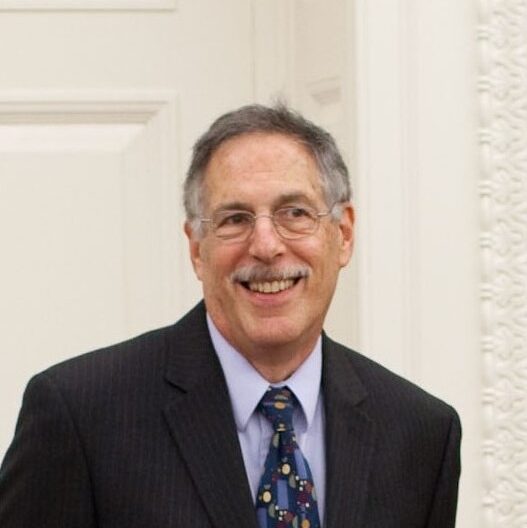
Daron Acemoglu
MIT Economics

Peter Diamond
MIT Economics

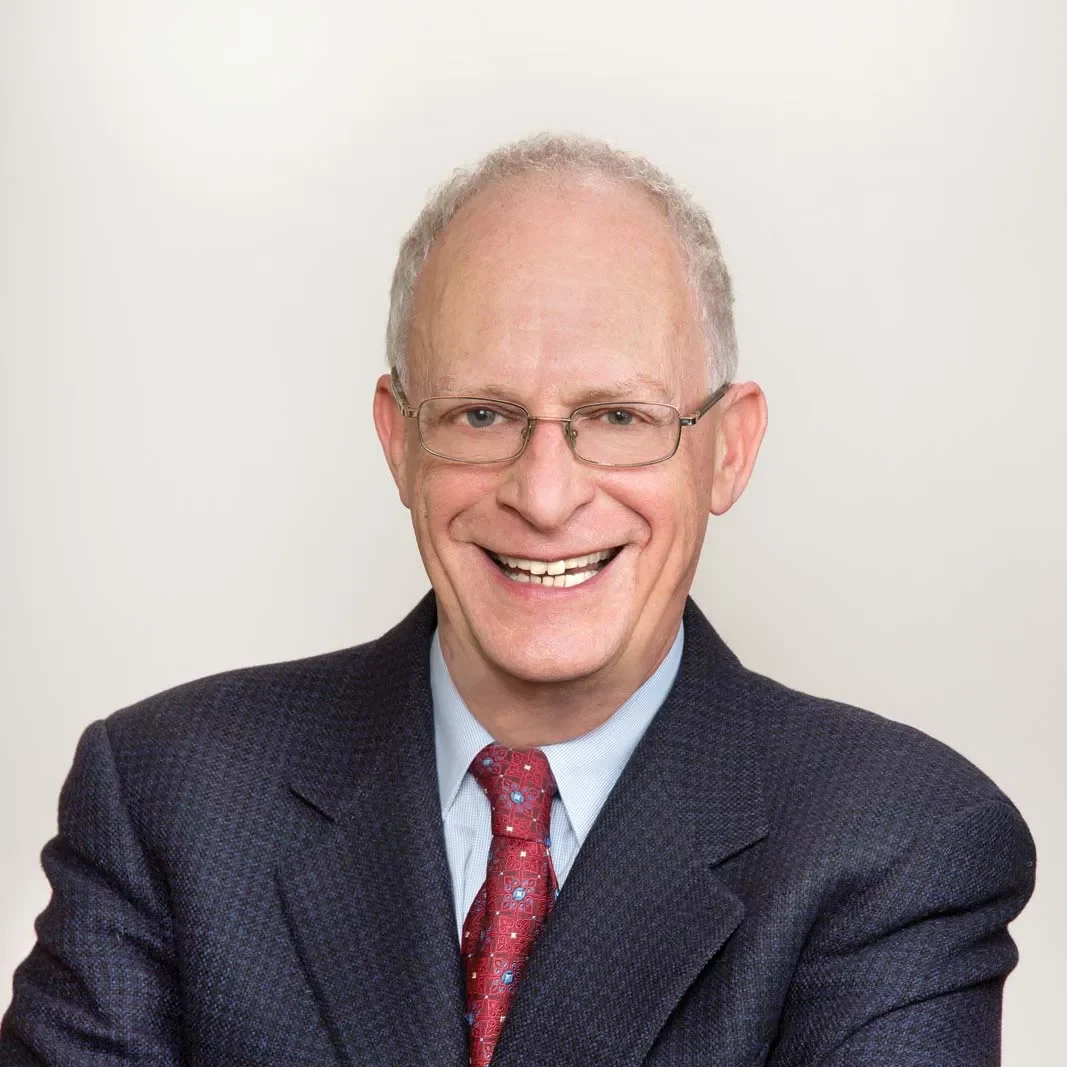
Oliver Hart
Harvard University

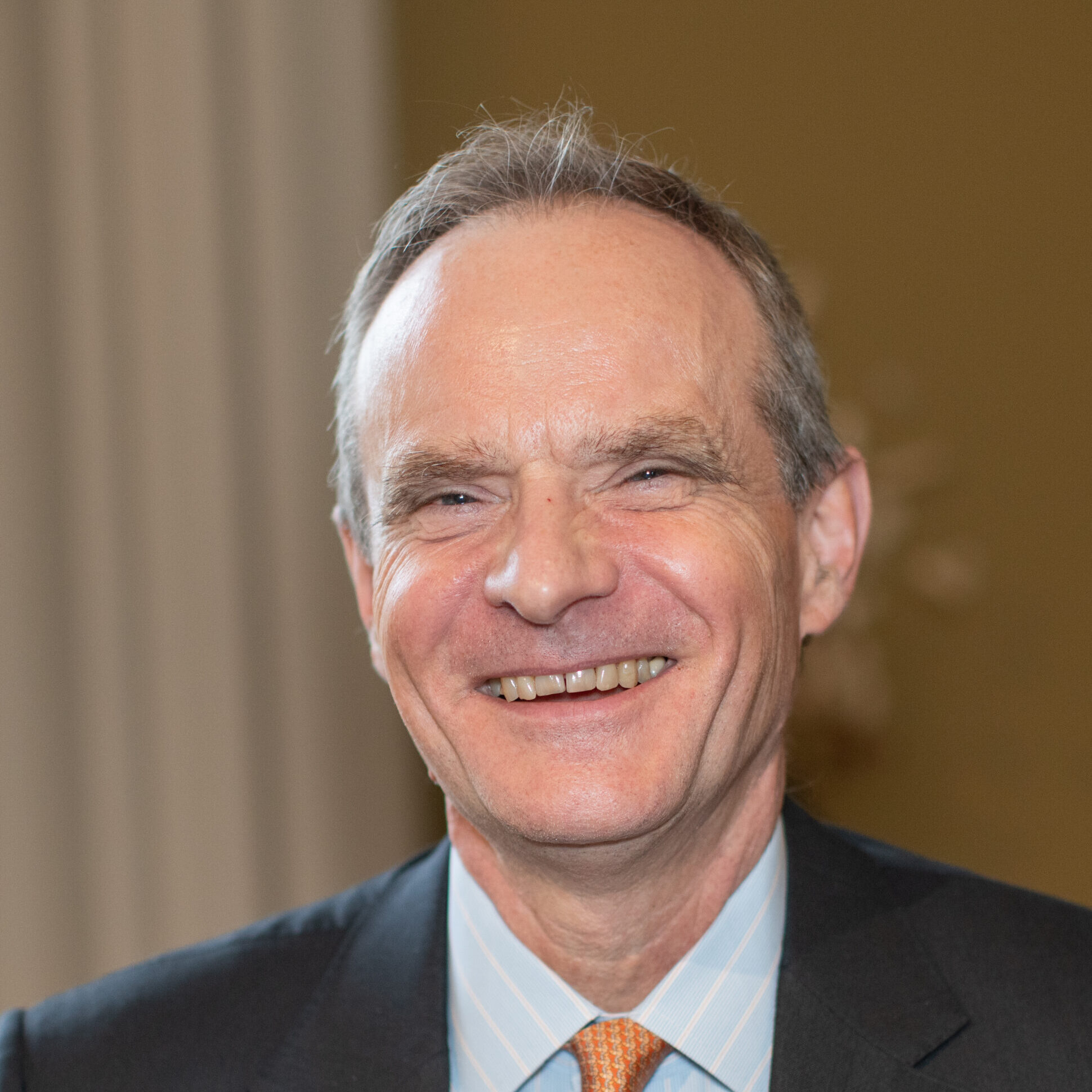
Simon Johnson
MIT Sloan School of Management

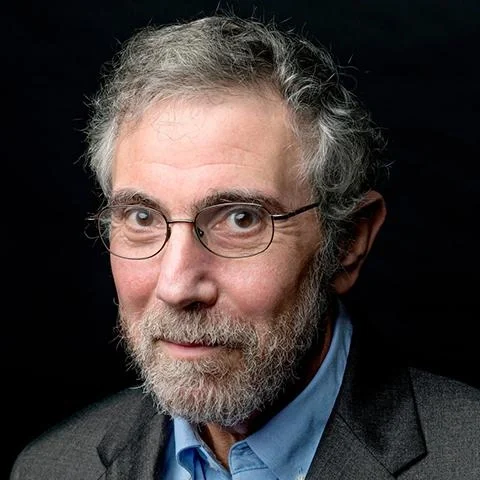
Paul Krugman
Graduate Center, City University of New York

Joseph Stiglitz
Columbia University

Soon after he was inaugurated, Trump began to inflict punishments on his enemies. That included law firms that had represented his political opponents in the past, such as federal prosecutor Jack Smith and prominent Democrats. He threatened to cancel any contracts those firms held with federal agencies and to bar them from future cases involving the federal government. Several major law firms worried about financial losses and immediately gave in to Trump’s demands. All agreed to provide pro bono services for causes chosen by Trump.

But a few major law firms refused to capitulate to Trump. Instead of agreeing to serve him, they went to court. To date, all the firms that challenged Trump have won in court. It’s a basic principle in American law that every defendant should have access to a lawyer and that lawyers can represent defendants no matter what they are accused of doing.

Now leaders of the legal profession are saying out loud what they thought all along: Trump’s demands and punishments are illegal.

NPR reported:

Veteran lawyers have reached a curious conclusion about President Trump’s deals with big law firms this year: they do not appear to be legally valid.

Trump since coming to office has punished certain firms for their past clients or causes, stripping them of security clearances and government contracts, while trumpeting deals with others, including titans like Kirkland & Ellis and Latham & Watkins.

The White House said the nine firms it’s settled with agreed to provide about $1 billion in pro bono services in order to curtail investigations into their hiring practices and maintain access to federal buildings. But the details of those agreements remain murky, even after Democratic lawmakers demanded answers.

“The problem with the law firm deals is … they’re not deals at all,” said Harold Hongju Koh, a professor and former dean at Yale Law School. “You know, a contract that you make with a gun to your head is not a contract.”

Secretary of Education Linda McMahon released her budget proposal for next year, and it’s as bad as expected.

Carol Burris, executive director of the Network for Public Education, reviewed the budget and concluded that it shows a reckless disregard for the neediest students and schools and outright hostility towards students who want to go to college.

We know that Trump “loves the uneducated.” Secretary McMahon wants more of them.

Burris sent out the following alert:

Image

Linda McMahon, handpicked by Donald Trump to lead the U.S. Department of Education, has just released the most brutal, calculated, and destructive education budget in the Department’s history.

She proposes eliminating $8.5 billion in Congressionally funded programs—28 in total—abolishing 10 outright and shoving the other 18 into a $2 billion block grant. That’s $4.5 billion less than those 18 programs received last year.

Tell Congress: Stop McMahon From Destroying Our Public Schools

And it gets worse: States are banned from using the block grant to support the following programs funded by Congress:

  • Aid for migrant children whose families move frequently for agricultural work
  • English Language Acquisition grants for emerging English learners
  • Community schools offering wraparound services
  • Grants to improve teacher effectiveness and leadership
  • Innovation and research for school improvement
  • Comprehensive Centers, including those serving students with disabilities
  • Technical assistance for desegregation
  • The Ready to Learn program for young children

These aren’t just budget cuts—they’re targeted strikes

McMahon justifies cutting support for migrant children by falsely claiming the program “encourages ineligible non-citizens to access taxpayer dollars.” That is a lie. Most migrant farmworkers are U.S. citizens or have H-2A visas. They feed this nation with their backbreaking labor.

The attack continues for opportunity for higher education:

  • Pell Grants are slashed by $1,400 on average; the maximum grant drops from $7,395 to $5,710
  • Federal Work-Study loses $1 billion—an 80% cut
  • TRIO programs, which support college-readiness and support for low-income students, veterans, and students with disabilities, are eliminated
  • Campus child care programs for student-parents are defunded

In all, $1.67 billion in student college assistance is gone—wiped out on top of individual Pell grant cuts. 

Send your letter now

And yet, McMahon increased funding for the federal Charter Schools Program to half a billion dollars for a sector that saw an increase of only eleven schools last year. Meanwhile, her allies in Congress are pushing a $5 billion private school and homeschool voucher scheme through the so-called Educational Choice for Children Act (ECCA).

And despite reducing Department staff by 50%, she only cuts the personnel budget by 10%.

This is not budgeting. It is a war on public education.

This is a blueprint for privatization, cruelty, and the systematic dismantling of opportunity for America’s children.

We cannot let it stand.

Raise your voice. Share this letter: https://networkforpubliceducation.org/tell-congress-dont-let-linda-mcmahon-slash-funding-for-children-college-students-and-veterans-to-fund-school-choice/  Call Congress.

Let Congress know that will not sit silently while they dismantle our children’s future.

Thank you for all you do,

Carol Burris

Network for Public Education Executive Director

The superstar Bruce Springsteen was giving a concert in Manchester, England, and he stopped to talk about what was happening in the country he loves.

Watch it here.

He was about to sing “My City in Ruins.”

Watching is better but if you prefer to read:

There’s some very weird, strange and dangerous shit going on out there right now. In America, they are persecuting people for using their right to free speech and voicing their dissent. This is happening now.

In America, the richest men are taking satisfaction in abandoning the world’s poorest children to sickness and death. This is happening now.

In my country, they’re taking sadistic pleasure in the pain they inflict on loyal American workers.

They’re rolling back historic civil rights legislation that has led to a more just and plural society.

They are abandoning our great allies and siding with dictators against those struggling for their freedom. They are defunding American universities that won’t bow down to their ideological demands.

They are removing residents off American streets and, without due process of law, are deporting them to foreign detention centers and prisons. This is all happening now.

A majority of our elected representatives have failed to protect the American people from the abuses of an unfit president and a rogue government. They have no concern or idea for what it means to be deeply American.

The America l’ve sung to you about for 50 years is real and regardless of its faults is a great country with a great people. So we’ll survive this moment. Now, I have hope, because I believe in the truth of what the great American writer James Baldwin said. He said, “In this world, there isn’t as much humanity as one would like, but there’s enough.” Let’s pray.

President Trump was very angry when he heard that the very popular Bruce Springsteen spoke out in dissent about the darkness across our land.

Trump posted this:

Was that last sentence a warning? What a petty, thin-skinned, vengeful man he is.

Thom Hartmann sums up what Trump is: a malignant narcissist intent on destroying every shred of our democracy and our ideals. we knew from his first term that he was a liar and a fraud. Yet here he is, acting with even more rage, vengeance, and destruction than before.

Let us not forget that Trump is enabled by the Republican Party. By their slim majorities in Congress. They have meekly watched as he terminated departments and agencies authorized by Congress. They have quietly given the power of the purse to Trump and Musk. They have watched as he turned himself into an emperor and made them useless. They could stop him. But they haven and they won’t.

He writes:

The Trump administration just gutted Meals on Wheels.

Seriously. Meals on Wheels!

Donald Trump didn’t just “disrupt” America; he detonated it. Like a political Chernobyl, he poisoned the very soil of our democratic republic, leaving behind a toxic cloud of cruelty, corruption, and chaos that will radiate through generations if we don’t contain it now.

He didn’t merely bring darkness; he cultivated it. He made it fashionable. He turned cruelty into currency and made ignorance a political virtue.

This man, a grotesque cocktail of malignant narcissism and petty vengeance, ripped the mask off American decency and showed the world our ugliest face. He caged children. Caged. Children. He laughed off their cries while his ghoulish acolytes used “Where are the children?” as a punchline for their next QAnon rally.

He welcomed white supremacists with winks and dog whistles, calling them “very fine people,” while spitting venom at Black athletes who dared kneel in peaceful protest.

He invited fascism to dinner and served it on gold-plated Trump steaks. He made lying the lingua franca of the right, burning truth to the ground like a carnival barker selling snake oil from a flaming soapbox.

And let’s not forget the blood on his hands: 1,193,165 dead from COVID by the time he left office, 400,000 of them unnecessarily, dismissed as nothing more than “a flu,” while he admitted — on tape — that he knew it was airborne and knew it was lethal. His apathy was homicidal, his incompetence catastrophic.

He tried to overthrow a fair election. He summoned a violent mob. He watched them beat cops with American flags and screamed “Fight like hell!” while cowering in the White House, delighting in the destruction like Nero fiddling as Rome burned.

And now, like some grotesque twist on historical fascism, Trump’s regime is quietly disappearing even legal U.S. residents — snatched off the streets by ICE and dumped into El Salvador’s CECOT mega-prison, a dystopian nightmare of concrete and cruelty.

One such man, Kilmar Ábrego García, had legal status and a home in Maryland. But Trump’s agents defied a federal court order and deported him anyway, vanishing him into a foreign hellhole so brutal it defies comprehension.

This isn’t policy: it’s a purge. A test run for authoritarian exile. And if Trump’s not stopped by Congress, the courts, or We The People in the streets, it won’t end there.

But somehow, he’s still here, waddling across the political stage like the Stay Puft Marshmallow Man of authoritarianism, bloated with power, empty of soul, and reeking of spray tan and sulfur.

Donald Trump didn’t just bring darkness: he’s a goddamn black hole, a gravity-well of cruelty sucking the light out of everything he touches.
This is a man who desecrates everything good.
Empathy? He mocks it. Truth? He slanders it. Democracy? He’d bulldoze it for a golf course.
And if we let him continue, he won’t just end democracy — he’ll make damn sure it never rises again.

So the question is: are we awake yet?

Or will we let this orange-faced death-cult leader finish the job he started, grinning over the corpse of the America we once believed in?

Now is not the time to kneel: it’s the time to rise. Stay loud, stay vigilant, and show up. Every protest, every march, every call to DC, every raised voice chips away at the darkness.

Democracy isn’t a spectator sport: it’s a fight, and we damn well better show up for it.

Trump’s FBI and ICE agents arrested Milwaukee County Circuit Judge Hannah Duggan in her courtroom and led her away in handcuffs because she sent a defendant out a back door. Trump officials said the judge was helping the defendant evade arrest, and they demonstrated that “no one is above the law” ( except Donald Trump). Critics said that Trump’s Department of Justice made a mockery of the law by arresting a judge.

See the comments of this Wisconsin Appeals Court judge who told CNN the Trump administration was sending a message to judges everywhere to bend to the will of the Trump administration. He was “appalled” that Judge Dugan was publicly humiliated, and that the director of the FBI Kash Patel posted a tweet of her being led away.

Judge Dugan told the agents that they should return with the correct warrant. One agent rode in the same elevator with the man sought by the Feds, but made no attempt to arrest him.

The New York Daily News editorial board said:

The FBI arrest of a Milwaukee local judge on felony counts related to immigration enforcement is an unwarranted and dangerous escalation by the Trump administration.

For the FBI to arrest someone at their workplace, they usually have to have been charged with something especially dire. For Milwaukee County Circuit Judge Hannah Dugan, this offense was allegedly refusing to hand defendant Eduardo Flores Ruiz, who had just had a hearing before the judge, over to an ICE task force that showed up in her courtroom. Dugan was charged with two federal felonies and taken into custody, which FBI Director Kash Patel gloated about on social media.

Attorney General Pam Bondi, for whom advancing the MAGA movement’s political agenda supersedes ensuring the equal and fair administration of justice, went on TV to say: “no one is above the law.” Aside from the dissonance of serving under a president who was only able to evade extremely serious federal charges by being elected to the White House, Bondi either doesn’t realize or doesn’t care that Dugan was in fact attempting to ensure the integrity of the legal process.

Flores may have been guilty of his misdemeanor charges, or he may not. The point of the proceedings before Dugan was to establish that and, if appropriate, what his punishment should be. Because of ICE’s detention, that won’t happen, which is bad for Flores, bad for any alleged victims — who won’t see justice — and bad for the larger community as immigrants and their families begin to see the courthouse as a dangerous place to be.

Having ICE at the courthouse means immigrants won’t report crimes, assist law enforcement, or show up for their own court hearings, which makes everyone less safe, not to mention completely undercuts the baseline American ideal of due process, not something that Bondi and her cadre seem to hold in very high esteem.

It’s ironic that Dugan was charged with “obstructing a proceeding” when the only people obstructing an official proceeding here were the task force that showed up to take Flores into custody. This task force, per the government’s own criminal complaint, consisted of just one ICE agent plus one Customs and Border Protection agent, two FBI agents and two DEA agents.

We wonder if six federal agents, four of whom are not in immigration-focused agencies, could have found a better use of their time than detaining a single person at a courthouse. Now, more federal resources will be wasted on this fiasco as the government tries to move forward with a prosecution of a sitting judge whose alleged crime was simply letting a defendant walk through a different hallway.

Patel, Bondi and Trump are overplaying their hand, especially as the president’s immigration policy approval keeps dropping amid public outrage over authoritarian assaults on due process and separation of powers. Going to war with the judiciary is not going to end well, especially given the volume of federal judges, including Trump-appointed and conservative judges and the Supreme Court’s own conservative majority, that are questioning the administration’s power grab.

Federal judges aren’t likely to look favorably on this flagrant assertion of power in arresting a popular county-level counterpart just for not letting her courtroom become an ICE staging ground.

Trump has long demonstrated his admiration for Putin. No one can say exactly why Trump admires Russia’s ruthless dictator. But Trump insists that Ukraine is responsible for Putin’s invasion of Ukraine in 2022. His lame efforts to broker an end to Russia’s war on Ukraine have robustly echoed Putin’s demands.

Heather Cox Richardson analyzes how Trump has changed American policy towards the Russian war on Ukraine. Trump’s “peace plan” gives Russia everything Putin wants:

She writes:

After previously suggesting that the U.S. would not involve European representatives in negotiations to end Russia’s war against Ukraine, Secretary of State Marco Rubio and presidential envoy Steve Witkoff met in Paris last week for talks with Ukrainian and European officials. The U.S. presented what it called “the outlines of a durable and lasting peace,” even as Russia continued to attack Ukrainian civilian areas.

A senior European official told Illia Novikov, Aamer Madhani, and Jill Lawless of the Associated Press that the Americans presented their plan as “just ideas” that could be changed. But Barak Ravid of Axios reported on Friday that Trump was frustrated that the negotiations weren’t productive and said he wanted a quick solution.

Talks were scheduled to resume today, in London, but yesterday Rubio pulled out of them. The U.S. plan is now “a final offer,” Ravid reported, and if the Ukrainians don’t accept it, the U.S. will “walk away.”

On a bipartisan basis, since 2014 the United States has supported Ukraine’s fight to push back Russia’s invasions. But Trump and his administration have rejected this position in favor of supporting Russia. This shift has been clear in the negotiations for a solution: Trump required repeated concessions from Ukraine even as Russia continued bombing Ukraine. Axios’s Ravid saw the proposed “final offer,” and it fits this pattern.

The plan would recognize Russia’s occupation of Ukraine’s Crimea and its occupation of almost all of Luhansk oblast and the portions of Donetsk, Kherson, and Zaporizhzhia oblasts Russia has occupied. This would essentially freeze the boundary of Ukraine at the battlefront.

Ukraine would promise not to join the North Atlantic Treaty Organization (NATO), the post–World War II defensive alliance that first stood against the aggression of the Soviet Union and now stands against the aggression of Russia.

Sanctions imposed against Russia after its 2014 and 2022 invasions of Ukraine would be lifted, and the United States, in particular its energy and industrial sectors, will cooperate with Russia.

In essence, this gives Russian president Vladimir Putin everything he wanted.

What the Ukrainians get out of this deal is significantly weaker. They get “a robust security guarantee,” but Ravid notes the document is vague and does not say the U.S. will participate. We have been here before. After the Soviet Union crumbled in 1991, Ukraine had the third-largest stockpile of nuclear weapons in the world. In exchange for Ukraine’s giving up those weapons, the United States, the United Kingdom, and Russia agreed to secure Ukraine’s borders. In the 1994 Budapest Memorandum on Security Assurances, they agreed they would not use military force or economic coercion against Ukraine.

Russia violated that agreement with its 2014 and 2022 invasions, making it unlikely that Ukraine will trust any new promises of security.

Under the new plan, Ukraine would also get back a small part of Kharkiv oblast Russia has occupied. It would be able to use the Dnieper River. And it would get help and funds for rebuilding, although as Ravid notes, the document doesn’t say where the money will come from.

There is something else in the plan. The largest nuclear power plant in Europe is Ukrainian: the Zaporizhzhia plant. It will be considered Ukrainian territory, but the United States will operate it and supply the electricity it produces to both Ukraine and Russia, although the agreement apparently doesn’t say anything about how payments would work. The plan also refers to a deal between the U.S. and Ukraine for minerals, with Ukraine essentially repaying the U.S. for its past support.

Ravid notes that the U.S. drafted the plan after envoy Steve Witkoff met for more than four hours last week with Putin. But the plan has deeper roots.

This U.S.-backed plan echoes almost entirely the plan Russian operatives presented to Trump’s 2016 campaign manager Paul Manafort in exchange for helping Trump win the White House. Russia had invaded Ukraine in 2014 and was looking for a way to grab the land it wanted without continuing to fight.

Special Counsel Robert Mueller’s 2019 report on Russian interference in the 2016 presidential election explained that Manafort in summer 2016 “discussed a plan to resolve the ongoing political problems in Ukraine by creating an autonomous republic in its more industrialized eastern region of Donbas, and having [Russian-backed Viktor] Yanukovych, the Ukrainian President ousted in 2014, elected to head that republic.”

The Mueller Report continued: “That plan, Manafort later acknowledged, constituted a ‘backdoor’ means for Russia to control eastern Ukraine.” The region that Putin wanted was the country’s industrial heartland. He was offering a “peace” plan that carved off much of Ukraine and made it subservient to him. This was the dead opposite of U.S. policy for a free and united Ukraine, and there was no chance that former secretary of state Hillary Clinton, who was running for the presidency against Trump, would stand for it. But if Trump were elected, the equation changed.

According to the Republican-dominated Senate Intelligence Committee, Manafort’s partner and Russian operative Konstantin Kilimnik wrote: “[a]ll that is required to start the process is a very minor ‘wink’ (or slight push) from D[onald] T[rump] saying ‘he wants peace in Ukraine and Donbass back in Ukraine’ and a decision to be a ‘special representative’ and manage this process.” Following that, Kilimnik suggested that Manafort ‘could start the process and within 10 days visit Russia ([Yanukovych] guarantees your reception at the very top level, cutting through all the bullsh*t and getting down to business), Ukraine, and key EU capitals.’ The email also suggested that once then–Ukrainian President Petro Poroshenko understood this ‘message’ from the United States, the process ‘will go very fast and DT could have peace in Ukraine basically within a few months after inauguration.’”

According to the Senate Intelligence Committee, the men continued to work on what they called the “Mariupol Plan” at least until 2018.

After Russia invaded Ukraine again in 2022, Jim Rutenberg published a terrific and thorough review of this history in the New York Times Magazine. Once his troops were in Ukraine, Putin claimed he had annexed Donetsk, Luhansk, Zaporizhzhia, and Kherson, two of which were specifically named in the Mariupol Plan, and instituted martial law in them, claiming that the people there had voted to join Russia.

On June 14, 2024, as he was wrongly imprisoning American journalist Evan Gershkovich, Putin made a “peace proposal” to Ukraine that sounded much like the Mariupol Plan. He offered a ceasefire if Ukraine would give up Donetsk, Luhansk, Zaporizhzhia, and Kherson, including far more territory than Putin’s troops occupy, and abandon plans to join NATO. “If Kyiv and the Western capitals refuse it, as before,” Putin said, “then in the end, that’s their…political and moral responsibility for the continuation of bloodshed.”

On June 27, 2024, in a debate during which he insisted that he and he alone could get Gershkovich released, and then talked about Putin’s 2022 invasion of Ukraine, Trump seemed to indicate he knew about the Mariupol Plan: “Putin saw that, he said, you know what, I think we’re going to go in and maybe take my—this was his dream. I talked to him about it, his dream.”

Now that plan is back on the table as official U.S. policy.

Ukraine president Volodymyr Zelensky has said that his country will not recognize the Russian occupation of Crimea. In this determination, he speaks for the global rules-based order the U.S. helped to create after World War II. Recognition of the right of a country to invade another and seize its territory undermines a key article of the United Nations, which says that members won’t threaten or attack any country’s “territorial integrity or political independence.” French president Emmanuel Macron and other European leaders are standing behind those principles, saying today in a statement from Macron’s office that they reject Russian territorial gains under the U.S. plan. “Ukraine’s territorial integrity and European aspirations are very strong requirements for Europeans,” the statement said.

But Trump himself seems eager to rewrite the world order. In addition to his own threats against Greenland, Canada, and Panama, in a post today on his social media site he echoed Putin’s 2024 statement blaming Ukraine for Russia’s bloody war because it would not agree to Putin’s terms. Today, Trump said Zelensky’s refusal to recognize the Russian occupation of Crimea was “inflammatory,” and he pressured Zelensky to accept the deal.

Curiously, he felt obliged to write that “I have nothing to do with Russia…”.

Aaron Tang, a law professor at the University of California, Davis, explains how the U.S. Supreme Court is more dangerous to the future of public schools than Trump’s policies.

He writes in Politico:

The greatest threat to public education in America isn’t Donald Trump.

Yes, he’s moving to dismantle the Department of Education, and yes, he’s trying to restrict what schools can teach about race. But the most dangerous attack on the horizon isn’t coming from the president, it’s coming from the Supreme Court.

This is a particularly disheartening reality because the Supreme Court has often been one of public education’s greatest champions. As far back as 1954, in Brown v. Board of Education, the court described public schooling as “the very foundation of good citizenship” and the “most important function of state and local governments.” Just four years ago, in an 8-1 opinion involving a Snapchatting cheerleader, the court proudly declared that “Public schools are the nurseries of democracy.”

Later this month, however, the court will hear oral argument in a pair of cases with the potential to radically destabilize public schools as we know them. And there is reason to be deeply worried about how the conservative majority will rule.

The first case, Oklahoma Statewide Charter School Board v. Drummond, poses the question of whether the 46 states with charter schools must offer public funds to schools that would teach religious doctrine as truth. The second case, Mahmoud v. Taylor, involves the claim that religious parents should have a right to opt their children out of controversial public school curricula.

Takentogether, Drummond and Mahmoud threaten the twin cornerstones of the American education system that Brown affirmed six decades ago: Since Brown, America’s public schools have operated under a norm of inclusive enrollment, and they’ve offered all children a shared curriculum that reflects the values that communities believe are essential for civic participation and economic success.

If the court tears down these foundational norms, the schools that remain in their wake will be a shell of the democracy-promoting institution the court itself has long lionized — and that healthy majorities of parents continue to support in their local neighborhoods. And although there’s a way to avoid the worst outcome in both cases, the path ahead is uncertain: It will require the court to follow history in an evenhanded manner (in Drummond) and progressives to accept a middle ground (in Mahmoud).

The legal challenges presented in Drummond and Mahmoud did not arise out of thin air. They are part of a long-term conservative movement strategy aimed at eroding public education.

A major component of this strategy has been a consistent call to fund school choice, a broad umbrella term that encompasses various programs such as school vouchers and educational savings accounts that channel taxpayer dollars away from traditional public schools and into private ones. Drummond’s call for a constitutional right to taxpayer-funded religious education can thus be thought of as a major front in Project 2025’s “core principle” of “significantly advanc[ing] education choice.”

Conservatives have likewise sought to brand public schools as purveyors of “woke” ideology rather than facilitators of a shared set of community values. The claim at issue in Mahmoud — a parental right to opt out of curricular choices that some find religiously objectionable — is accordingly another salvo in the broader culture wars, and one in which conservatives are asking the court to grant them a legal trump card.

Ultimately, to a significant cross-section of the Republican Party, public schools are now the “radical, anti-American” enemy. And viewed from that perspective, Drummond and Mahmoud may represent the greatest chance for delivering a knockout blow.

Drummond and Inclusive Enrollment

Technically, the Drummond case is just about Oklahoma. That’s because it arose out of Oklahoma’s refusal to fund a religious charter school named the St. Isidore of Seville Catholic Virtual School. (According to St. Isidore’s handbook, “the traditions and teachings of the Catholic Church and the virtue of Christian living permeate the school day.”)

But make no mistake: It is blue states that have the most to lose in this case. For if St. Isidore has a right to public funding in Oklahoma, that same right would exist for religious charter schools in California and New York — places where, until now, taxpayer funds have never been used to teach religion as truth to K-12 students.

It is hard to overstate how big a sea change this would be. Nonreligious charter schools currently receive more than $26 billion in public funds and educate some four million children. So a ruling in favor of religious charter schools could mean billions of dollars for religious education — a prospect that one Catholic school executive called “game-changing” for how it would enable religious schools to “grow [their] network.”

But the implications are far more than monetary. They strike at the very vision of public schools as places where children come together from all walks of life to learn what the Supreme Court once called the “values on which our society rests.” Bankrolled by taxpayer dollars, Drummond would transform the American education system into a taxpayer-funded mechanism for transmitting each family’s preferred religious tenets.

What is more, religious charter schools will likely argue that they have a further Free Exercise right to restrict enrollment only to adherents of their particular faith (indeed, a religious private school in Maine has already advanced this claim). At the end of that argument is a publicly funded K-12 education system that tribalizes the American people at a time when we need to be doing exactly the opposite: forging bonds of connection across our differences.

Justice Thurgood Marshall once cautioned that “unless our children begin to learn together, there is little hope that our people will ever learn to live together.” If the court rules for the religious charter schools in Drummond, we will come one giant — and regrettable — step closer to the world Marshall feared.

Mahmoud and the Attack on Curriculum

The Mahmoud case emerged out of a 2022 Montgomery County, Maryland, school board policy that introduced a new set of LGBTQ-inclusive storybooks into its pre-K through 12th-grade language arts curriculum. In general, the books aimed at instilling respect and civility for people from different backgrounds. In practice, though, the books led to controversy. One of the books, entitled Pride Puppy, was directed at pre-K students and invited students to search for images of a lip ring and a drag queen.

Montgomery County initially permitted parents to opt their children out of reading these new books. But the district soon changed course, which is what led the Mahmoud family to sue. Their argument was that the Free Exercise Clause grants parents like them the “right to opt their children out of public school instruction that would substantially interfere with their religious development.”

This is a truly difficult case, even for someone who, like me, holds an unyielding commitment to ensuring that all LGBTQ students feel safe at school. But one can hold that commitment while also acknowledging that the choice to force children as young as five years old to read books like Pride Puppy over their parents’ objection is not an obvious one. Indeed, Montgomery County has since removed Pride Puppy from its curriculum — a reasonable concession.

The great danger in this case, though, is not about the parental right to opt 5- and 6-year-olds out of controversial curricula. It’s that a decision recognizing a parental opt-out right would be difficult to contain via a sensible limiting principle. Would parents of middle or high school children enjoy a similar right to opt their children out of any assignment or reading that espouses support for LGBTQ rights? How about a right to opt out of science classes that teach biology or evolution? And what of history classes that some religious parents may find too secular for their liking?

In all of those contexts, lower federal courts had unanimously rejected the contention that simply because a parent finds something to be religiously objectionable, they can excuse their child from a shared curricular goal. Mahmoud could upend that settled consensus and replace it with a world in which public schools are forced to offer bespoke curricula to all different families based on their particular religious commitments.

That’s a recipe for an education system that would certainly teach some values to our children. But this much is for sure: They would no longer be shared ones.

How to Save Public Education at the Court

The plaintiffs in both Drummond and Mahmoud may be optimistic that the 6-3 conservative supermajority will side with them. After all, religious litigants have fared remarkably well at the Supreme Court of late.

But a surprising obstacle exists in the Drummond case — and Maryland officials, if they are smart, may yet have the final word in Mahmoud.

In Drummond, the best argument against the claimed Free Exercise right to taxpayer-funded religious schools comes from the very place that the conservative Supreme Court has lately looked to move the law right on abortion and guns: history and tradition.

As Ethan Hutt, a leading historian of education, and I show in a forthcoming paper, it turns out the denial of funding that St. Isidore complains of today is something that happened routinely during the founding era. Yet no one — no parent, no religious leader, not even a religious school that was denied funds on equal terms with its nonsectarian counterparts — ever filed a lawsuit (much less won one) arguing that the right to Free Exercise demanded otherwise.

This is precisely the historic pattern that the Supreme Court relied on to reject the right to abortion in Dobbs: “When legislators began to [ban abortion in the 19th century], no one, as far as we are aware, argued that [they had] violated a fundamental right.”

If the absence of legal contestation in the face of government action 200 years ago shows that the Constitution’s original meaning does not encompass a claimed right to abortion, it’s hard to see why that logic should differ when the claimed right involves religious school funding. Put simply, the court can be consistently originalist, or it can recognize the religious charter school funding right claimed in Drummond. But it can’t do both.

The legal argument to protect public education is less clear in Mahmoud. But in that case, there is another way to steer clear of a Supreme Court ruling that would imperil evolution, biology, history and LGBTQ-inclusive lessons in the upper grades: Maryland officials can override the Montgomery County policy and extend an opt-out choice to parents of young children like the Mahmouds.

There would be clear precedent for such an action by the state. After New York officials took a similar step to eliminate a policy dispute in a major gun case in 2020, the court dismissed that case as moot — putting off a dangerous ruling for at least the time being.

Of course, doing so would require lawmakers in Maryland to accept parents of young children choosing to withdraw their children from reading controversial LGBTQ-inclusive books. But perhaps lawmakers can see a principled distinction between the desire to make schools a safe space for LGBTQ children — a nonnegotiable, core value — and the desire to use elementary school classrooms as a tool for changing hearts and minds on controversial topics more generally.

In truth, progressives were probably never going to win that battle in kindergarten classrooms, especially with the present political climate. Progress on social attitudes concerning the transgender community was always more likely through the same mechanisms that produced rapid change for the gay and lesbian community — mainstream media, social media and the critical realization that our friends, family and other loved ones are members of these different communities and deserve equal respect.


In the end, the Supreme Court may choose simply to ignore history and tradition in Drummond, where it is inconvenient for a movement conservative cause. And a policy change in Maryland could simply delay the inevitable, as new cases could always be brought advancing

The bigger takeaway, then, is about the war against public education and its likely toll. Public schools were a major part of what made America great. So in seeking public education’s demise, the Drummond and Mahmoud cases could portend staggering consequences: less social tolerance, reduced international competitiveness and continued inequality along economic and racial lines.

But the greatest cost may be for our democracy. After all, the Supreme Court reminded us just four short years ago that public schools are where our democracy is cultivated. That’s why the timing of these cases could not be any worse. In a moment when American democracy is being tested like never before, the court should be the last institution — not the leading one — to dismantle our public schools.