Archives for category: Extremism

Scott Maxwell, opinion columnist for The Orlando Sentinel, wrote about the unusual public protest against the Legislature’s plan to cut funding for AP classes in public schools. For years, Republicans who run the state have inflicted blow after blow on the public schools, preferring to divert billions of public dollars to private and religious schools. But not this time. This time, the public organized fought back and blocked the latest effort to inflict damage on the state’s public schools.

Maxwell writes:

Chalk one up for the Floridians who are willing to stand up and make themselves heard.
Tallahassee politicians were forced last week to abandon their plans to gut funding for AP classes in public schools after they ran into something they rarely encounter in this state — a wall of public opposition.

GOP lawmakers have been pulling the rug out from under public education for the better part of two decades, driving away teachers, injecting political wars into classrooms and diverting public money to private schools. But their plan to cut funding to AP, IB and dual enrollment programs was a bridge too far.

Why? Because this plan to sabotage public schools would’ve impacted a population beyond the marginalized families that these insulated politicians are usually happy to short-change. Legislators were trying to undercut the college prospects of kids who go to high school in Windermere and Winter Park — the children of parents who normally write campaign checks.

And everyone banded together to object.
“I was getting emails from people asking: ‘What do I do? How do I help? Who do I email?’” said Orange County School Board member Stephanie Vanos. “And before long, we started hearing legislators saying: ‘Please make the parents stop emailing us. Please, just make it stop.’”

My thanks to those of you who did not relent, because this idea was as bone-headed as it was backwards.

Basically, Republican lawmakers in both chambers wanted to cut funding allocated for AP (Advanced Placement), IB (International Baccalaureate), AICE (Advanced International Certificate of Education) and even dual enrollment programs at places like Valencia College for students who want to get ahead.

One of the most nonsensical parts about this attack was that it targeted a program that awarded funding based on students who passed these courses. In other words, one that only paid for successful results.

The politicians were also targeting one of the few things Florida really does well in public schools. While Florida’s scores for the SAT and other tests have plummeted in recent years, Florida’s AP test scores have historically been quite good. The College Board ranked Florida in the Top 5 for passage rate in 2021, largely because of this successful and aggressive funding model.

So Republican lawmakers were attacking something that was both successful and popular, affecting more than 110,000 students.
There was no valid reason for this funding cut, other than trying to make public schools less attractive.

See, AP classes are one of the advantages public schools have over many private schools, especially the fly-by-night voucher ones that hire uncertified teachers and can’t even think about offering classes like AP calculus, Chinese and 3-D art and design.

“These are the programs that are among the most popular in our high schools,” Vanos said. “Families come back to our high schools specifically for these programs.”

So parents and supporters of public education banded together and spoke up.

I sensed a revolt brewing as soon as I published a column on the topic a few weeks ago entitled: “Cutting AP classes would dumb down Florida schools.”

House Republicans had just advanced their defunding plan by a vote of 22-6 in a subcommittee, and I urged anyone who thought this was a rotten idea to let their lawmakers know. Boy, did they.

One reader said she and her sister, a retired teacher, were gathering as many others as possible to get “riled up to action.”

Another said she sent Gov. Ron DeSantis an email that asked him a simple question: “Are you TRYING to drive us out of the Republican Party?”
Conservatives objected alongside liberals.

Seniors alongside teens. I heard from everyone from fired-up retirees in Osceola County to a genuinely perplexed Eagle Scout in Maitland.
Even Florida TV stations that usually pay more attention to car crashes than legislative subcommittees carried stories about Floridians who were up in arms.

Local elected officials noticed the widespread discontent and decided to weigh in as well. Jacksonville’s large and heavily Republican city council voted 16-1 to tell GOP lawmakers to back off their plan to sabotage AP classes.

The pressure ultimately worked. When leaders from both chambers went behind closed doors last week to hash out their final budget proposal, they ditched this latest attack on public schools in quiet, unceremonial fashion.

Imagine for a moment if Floridians used their voices more often.

Not just to protect public education, but to support other issues that the vast majority of Floridians on both sides of the aisle support.
We might not live in a state where more than 20,000 families grappling with special needs are stuck on a years-long waiting list for services.

Or a state that has allowed so much pollution to kill so many manatees that two rounds of federal judges had to step in to tell the state it had to stop allowing the slaughter of the state’s official marine mammal.

It’s often said that we get the government we deserve. But we also get the government we demand.

In this case, Floridians demanded that the politicians take their stinkin’ hands off a successful educational program that has helped countless students get a head start in college, careers and life.

Imagine if we all did that more often.
“Advocacy works,” Vanos said. “It’s all about people power.”
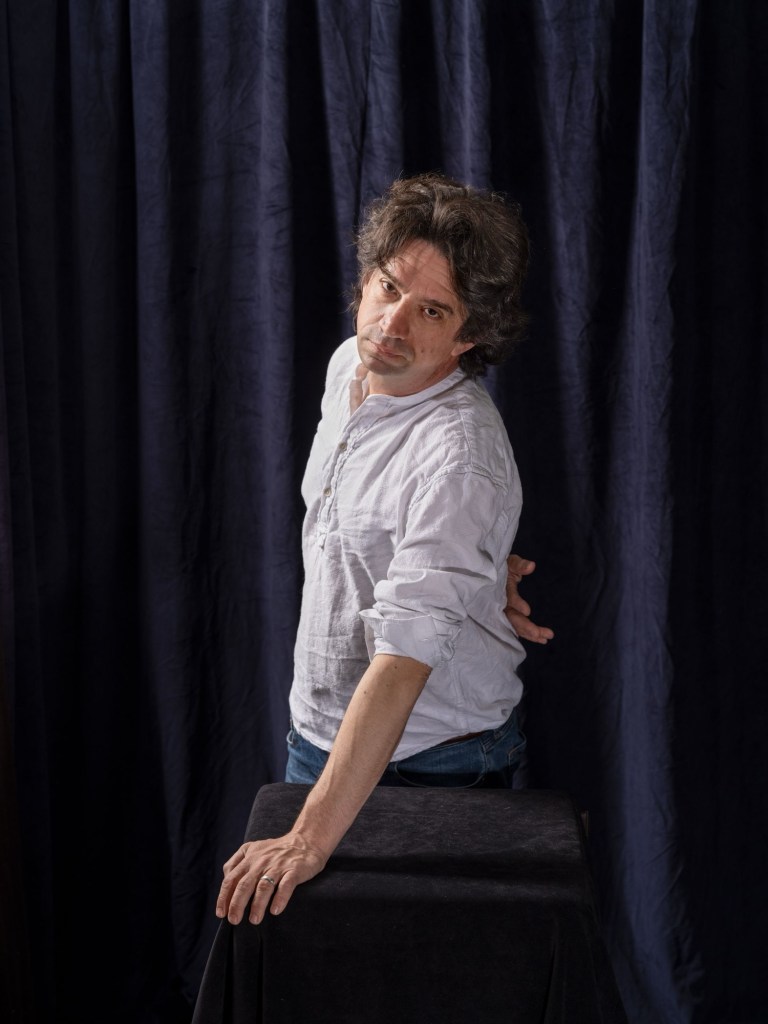
If you haven’t heard of Curtis Yarvin, you should learn about him now. Yarvin does not believe in democracy. He believes in a society commanded by a king or autocrat. He was a prodigy as a child and now considers himself to be a political genius. Powerful men in the tech industry and politics pay him court and admire him, men like the billionaires Peter Thiel and Marc Andreessen, and Vice-President JD Vance.

Curtis Yarvin, advisor to Peter Thiel, Donald Trump

This article in The New Yorker by Ava Kolman paints a biographical portrait of Yarvin, summarizes his major ideas and describes his international standing as a philosopher of far-right leaders of the tech industry.

Kolman writes about Yarvin’s extensive range of contacts among the Trump administration and his influence on them, as well as his contact with royalists in other countries..

Kolman begins:

In the spring and summer of 2008, when Donald Trump was still a registered Democrat, an anonymous blogger known as Mencius Moldbug posted a serial manifesto under the heading “An Open Letter to Open-Minded Progressives.” Written with the sneering disaffection of an ex-believer, the hundred-and-twenty-thousand-word letter argued that egalitarianism, far from improving the world, was actually responsible for most of its ills. That his bien-pensant readers thought otherwise, Moldbug contended, was due to the influence of the media and the academy, which worked together, however unwittingly, to perpetuate a left-liberal consensus. To this nefarious alliance he gave the name the Cathedral. Moldbug called for nothing less than its destruction and a total “reboot” of the social order. He proposed “the liquidation of democracy, the Constitution, and the rule of law,” and the eventual transfer of power to a C.E.O.-in-chief (someone like Steve Jobs or Marc Andreessen, he suggested), who would transform the government into “a heavily-armed, ultra-profitable corporation.” This new regime would sell off public schools, destroy universities, abolish the press, and imprison “decivilized populations.” It would also fire civil servants en masse (a policy Moldbug later called rage—Retire All Government Employees) and discontinue international relations, including “security guarantees, foreign aid, and mass immigration.”

Does anything on his wish-list sound familiar to you?

It should. Trump has loaded up his administration with people who imbibe Yarvin.

A decade on, with the Trumpian right embracing strongman rule, Yarvin’s links to élites in Silicon Valley and Washington are no longer a secret. In a 2021 appearance on a far-right podcast, Vice-President J. D. Vance, a former employee of one of Thiel’s venture-capital firms, cited Yarvin when suggesting that a future Trump Administration “fire every single mid-level bureaucrat, every civil servant in the administrative state, replace them with our people,” and ignore the courts if they objected. Marc Andreessen, one of the heads of Andreessen Horowitz and an informal adviser to the so-called Department of Government Efficiency (doge), has started quoting his “good friend” Yarvin about the need for a founder-like figure to take charge of our “out of control” bureaucracy. Andrew Kloster, the new general counsel at the government’s Office of Personnel Management, has said that replacing civil servants with loyalists could help Trump defeat “the Cathedral.”

“There are figures who channel a Zeitgeist—Nietzsche calls them timely men—and Curtis is definitely a timely man,” a State Department official who has been reading Yarvin since the Moldbug era told me. Back in 2011, Yarvin said that Trump was one of two figures who seemed “biologically suited” to be an American monarch. (The other was Chris Christie.) In 2022, he recommended that Trump, if reëlected, appoint Elon Musk to run the executive branch. On a podcast with his friend Michael Anton, now the director of policy planning at the State Department, Yarvin argued that the institutions of civil society, such as Harvard, would need to be shut down. “The idea that you’re going to be a Caesar . . . with someone else’s Department of Reality in operation is just manifestly absurd,” he said.

Yatvin’s ideas are quirky, inhumane, and extreme, to say the least:

On his blog, he once joked about converting San Francisco’s underclasses into biodiesel to power the city’s buses. Then he suggested another idea: putting them in solitary confinement, hooked up to a virtual-reality interface. Whatever the exact solution, he has written, it is crucial to find “a humane alternative to genocide,” an outcome that “achieves the same result as mass murder (the removal of undesirable elements from society) but without any of the moral stigma.”

Yarvin’s call for an American strongman is often treated as an eccentric provocation. In fact, he considers it the only answer to a world in which most people are unfit for democracy….

Yarvin’s influence on Trump’s inner circle is noticeable:

Last month, an anonymous doge adviser told the Washington Post that it was “an open secret that everyone in policymaking roles has read Yarvin.” Stephen Miller, the President’s deputy chief of staff, recently quote-tweeted him. Vance has called for the U.S. to retrench from Europe, a longtime Yarvin desideratum. Last spring, Yarvin proposed expelling all Palestinians from the Gaza Strip and turning it into a luxury resort. “Did I hear someone say ‘beachfront?’ ” he wrote on Substack. “The new Gaza—developed, of course, by Jared Kushner—is the LA of the Mediterranean, an entirely new charter city on humanity’s oldest ocean, sublime real estate with an absolutely perfect, Apple-quality government.” This February, during a joint press conference with Benjamin Netanyahu, the Israeli Prime Minister, Trump surprised his advisers when he made a nearly identical proposal, describing his redeveloped Gaza as “the Riviera of the Middle East.”

Trump, who doesn’t like to read, is unlikely to have read Yarvin’s philosophical treatises about the proper functioning of a modern society–without benefit of a popular vote–but certainly Trump’s view of the unlimited, imperial powers of the Presidency are similar to those of Yarvin.

Read the article if you can access it. Make yourself aware of the man who wields an outsize influence on Trump right now.

To learn more about Yarvin’s influence among rightwing billionaires, read:

https://theconversation.com/an-antidemocratic-philosophy-called-neoreaction-is-creeping-into-gop-politics-182581

Henry David Thoreau wrote: “In wildness is the preservation of the world.” Thoreau understood that as humans we need to be nourished by contact with or immersion in the natural world. Environmentalists understand this. They fight the inexorable march of what we call progress, which clear-cuts forest and paves over what once were boundless plains. Today, most of us get into a car and drive for hours to connect to wilderness. And we find solace in those encounters.

Most presidents take pride in the number of acres of wilderness that they have saved for future generations and the number of national monuments they designated to preserve unique natural formations. Not Trump. Trump has been openly hostile to environmental protection and to any measures that reduce the risks of climate change.

Yesterday the administration announced that it was opening up 58 million acres for commercial development.

Lisa Friedman wrote in The New York Times:

The Trump administration said on Monday that it would open up 58 million acres of back country in national forests to road construction and development, removing protections that had been in place for a quarter century.

Agriculture Secretary Brooke Rollins announced plans to repeal the 2001 “roadless rule” that had preserved the wild nature of nearly a third of the land in national forests in the United States. Ms. Rollins said the regulation was outdated.

“Once again, President Trump is removing absurd obstacles to common-sense management of our natural resources by rescinding the overly restrictive roadless rule,” Ms. Rollins said in a statement. She said the repeal “opens a new era of consistency and sustainability for our nation’s forests.”

Environmental groups said the plan could destroy some of America’s untouched landscapes and promised to challenge it in court.

The unspoiled land in question includes Tongass National Forest in Alaska, North America’s largest temperate rainforest; Reddish Knob in the Shenandoah Mountains, one of the highest points in Virginia; and millions of acres of the Frank Church-River of No Return Wilderness in Idaho.

“Most Americans value these pristine backcountry areas for their sense of wildness, for the clean water they provide, for the fishing and hunting and wildlife habitat,” said Chris Wood, the chief executive of Trout Unlimited, an environmental group.

Businesses are eager to chop down the timber. There’s profit in those untouched forests, maybe even tracts for homes. The word “pristine” in not in their vocabulary.

The Chronicle of Higher Education reports that legislatures in Republican-controlled states are passing laws to restrict teaching about racism or any kind of DEI in higher education. Such state laws follow the lead of Governor Ron DeSantis in Florida, who was first to launch the war on academic freedom, but also the policies of Trump, who has declared that he too will make war on “woke” (that is, anything that is honest about the dark side of the American past.)

Katharine Mangan reported:

Teaching social work in Tuscaloosa, Ala., Cassandra E. Simon often assigns readings that describe how the families her students might one day serve have been impacted by more than a century of housing, employment, and education discrimination. The associate professor has encouraged her students to engage in spirited discussions about race, even assigning a project in which they advocate for or against a social-justice issue.

Doing any of those things today, she argues in a federal lawsuit, could get her fired from the state flagship, where she’s taught for 25 years. Last year, the state’s Republican governor, Kay Ivey, signed into law a sweeping bill that restricts what professors can teach about race. If any of their lessons veer into what conservative politicians have deemed “divisive concepts,” faculty members risk being reported, investigated, and potentially fired.

That kind of incursion into the curriculum is growing and prompting a flurry of First Amendment challenges from Simon and other plaintiffs. It’s a line state lawmakers did not cross early on in their push to dismantle DEI efforts, even as universities shuttered offices, laid off employees, canceled scholarships, and called off diversity training. But over the past two years, more than a dozen laws have been enacted that either limit which classes can be taught or imposed restrictions on what professors can say in the classroom, according to a Chronicle analysis of state legislation and a compilation of what PEN America calls “educational gag orders.”

This year especially “has been a banner year for censorship at a state level across the country,” said Amy B. Reid, senior manager at PEN America’s Freedom to Learn program. “The point of a lot of these restrictions is to put people on guard, worried that anything or everything could be prohibited so you really have to watch what you say.”

Some of the chief architects of the DEI-dismantling playbook have insisted that they’re not trying to silence anyone. In a January 26 letter to the editor in The Wall Street Journal by Ilya Shapiro and Jesse Arm of the Manhattan Institute, the institute declared that “Conservatives Have No Interest In Censorship.”

“By ending practices such as identity-based discrimination and compulsory, politically coercive diversity statements,” these laws “protect the rights of professors and students to engage freely on all topics, including race,” they wrote.

Despite such reassurances, recent bills seeking to eliminate diversity efforts are encroaching on curricula in a variety of ways. Some states, like Texas, Florida, and Utah, are giving boards more control over what goes into the core curriculum, as well as the ability to shut down programs with low enrollments or questionable work-force advantages. Others, like Alabama and Mississippi, have erected guardrails on topics that can be discussed in the classroom.

Supporters say these laws are needed to prevent liberal professors from veering off into lessons that amount to activism. Some conservative lawmakers argue that it’s their responsibility, as stewards of taxpayer dollars, to ensure public universities are offering degrees that will help students be successful and land jobs.

Critics see these incursions as infringements on free speech and academic freedom. 

The intentions of those who launched “the war on woke” are irrelevant to the reality of what happens when their concerns are taken up by legislatures intent on stamping out disturbing but historically accurate discussions of race and gender. When red-state legislators restrict academic freedom, they do it with an axe, not a scalpel. The result is to instill fear in professors about what they teach and whether they will be fired for thought crimes.

On Friday June 20, the Fifth Circuit Court of Appeals overturned Louisiana’s law requiring that schools post the Ten Commandments in every classroom.

On Saturday June 21, Governor Greg Abbot of Texas announced that he had signed a law requiring that the Ten Commandments be posted in every classroom in the state.

The goal of plastering the Ten Commandments in every schoolroom is promoted by Christian nationalists who want to see an official declaration that the U.S. is a Christian nation.

The Founding Fathers would be stunned to hear the assertion that the Constitution they wrote was influenced by the Ten Commandments. The First Amendment very clearly states the importance of freedom of religion, meaning that anyone could practice any religion or none at all. It also declares that government should not “establish” any religion, meaning that government should not sponsor or endorse or favor any religion.

CNN reported:

Texas’ law requires public schools to post in classrooms a 16-by-20-inch (41-by-51-centimeter) poster or framed copy of a specific English version of the commandments, even though translations and interpretations vary across denominations, faiths and languages and may differ in homes and houses of worship.

Supporters say the Ten Commandments are part of the foundation of the United States’ judicial and educational systems and should be displayed.

NPR reported on the decision striking down the Louisiana law.

Its supporters said that the Ten Commandments were the foundation of the American legal system. The state of Louisiana intends to appeal to the U.S. Supreme Court.

The court’s ruling stems from a lawsuit filed last year by parents of Louisiana school children from various religious backgrounds, who said the law violates First Amendment language guaranteeing religious liberty and forbidding government establishment of religion.

The ruling also backs an order issued last fall by U.S. District Judge John deGravelles, who declared the mandate unconstitutional and ordered state education officials not to enforce it and to notify all local school boards in the state of his decision.

Republican Gov. Jeff Landry signed the mandate into law last June.

Landry said in a statement Friday that he supports the attorney general’s plans to appeal.

“The Ten Commandments are the foundation of our laws — serving both an educational and historical purpose in our classrooms,” Landry said.

The Founding Fathers would laugh at Governor Abbot and Landry. And Governor Sarah Huckabee Sanders, who shepherded a similar law in Arkansas. It’s especially funny that the leader of their party has broken almost every one of the Ten Commandments. Perhaps the place to start posting them is in the Oval Office.

In 2017, when Trump passed his first budget bill, his allies inserted into it an unprecedented tax on institutions of higher education that have large endowments. The tax was 1.4%. But that 1.4%, though it seemed small, was money that would not be available for low-income students at expensive colleges and universities. The next logical step–once the government starts taxing nonprofits– would have been to tax megachurches but that didn’t happen.

This year, the Trump administration has included in its “One Big Ugly Budget Bill” a dramatic increase in the tax on higher education endowments.

Instead of 1.4%, the highest rate would climb to 21%.

This onerous tax would limit colleges’ ability to cover the tuition of students who are fully qualified but lack the financial resources to pay. The inevitable result of this tax will be to restrict the number and size of scholarships.

I received this letter from President Paula A. Johnson of Wellesley College, my alma mater. Dr. Johnson grew up in Brooklyn, where she graduated from a large public high school (Samuel J. Tilden), then to Radcliffe and to Harvard Medical School. She was a cardiologist before she was chosen as Wellesley’s president almost a decade ago. She is dedicated to providing scholarships for students who need them.

She wrote to all alumnae:

It is hard to overstate the importance of this moment for higher education. We are being threatened in previously unimaginable ways that cut to the core of our values and endanger a large proportion of our students. At Wellesley, we are deeply concerned about changes that could affect academic freedom, our need-blind status, and our ability to build a diverse community, one made richer by our international students.  

One of the most significant threats comes from the likelihood of a major increase to the tax on college endowments. Last month, the U.S. House of Representatives passed a budget bill that would raise the tax from 1.4% to as much as 21%. Under this proposal, Wellesley would be taxed at 14%, which means our liability under the tax would increase from $3 million, where it is currently, to $30 million per year—an amount equal to fully funding financial aid for 325 students. 

When you consider that more than two-thirds of the $82 million Wellesley spent last year to support financial aid came from our endowment, the disastrous impact of this tax becomes clear. This is a punitive tax on students and families who need financial aid.

The tax would also have a disproportionate impact on small colleges like Wellesley that, without other revenue streams such as graduate programs or large research budgets, rely on endowments to support their mission.

At Wellesley, 43% of our operating budget comes from the endowment, making it our largest source of revenue. A tax increase would have a severe impact on our academic program and our ability to meet students’ financial needs. In addition, the tax would override the intent of generations of alumnae who have given to the endowment to support financial aid and our academic mission. 

That is why Wellesley has joined a coalition of more than two dozen small colleges and universities from 17 states across the country that together serve more than 50,000 students. The coalition’s core argument, which we are sharing with members of Congress, is that endowments are not a luxury for small colleges; they are essential to continuing our commitments to access, opportunity, and educational excellence for students. 

If this totally unwarranted tax is passed, the number of meritorious students from low-income, even middle-income families would shrink dramatically.

This is wrong.

Raise taxes on corporations and billionaires.

Tax megachurches.

Raise the taxes and tariffs on super yachts.

Don’t tax the endowments of institutions of higher education.

Matt Barnum and Richard Rubin of The Wall Street Journal describe the harm that Trump’s One Big Ugly Budget Bill will do to public schools.

They wrote:

Republicans’ tax-and-spending megabill would give the school-choice movement a major, long-sought victory—and deliver an unusually generous tax break to wealthy taxpayers.

The bill includes a new way for taxpayers—whether they are parents or not—to direct tax dollars to private-school scholarships instead of the Treasury. There is an extra twist: It could deliver virtually risk-free profits to some savvy investors.

The proposal has excited school-choice advocates, infuriated public school leaders and stunned tax experts.

“Overnight, this would give millions of students access to the school of their choice,” said Tommy Schultz, CEO of the American Federation for Children, an advocacy group pushing the provision. “This is a revolution within the tax code.”

The American Federation for Children is the far-right wing group created by Betsy DeVos to promote charter schools and vouchers.

The incentive is structured as a dollar-for-dollar federal tax credit. Give to a charity known as a scholarship-granting organization and you would get the same amount subtracted from your federal tax bill. 

It is equivalent to redirecting your taxes to a scholarship-granting organization (SGO), with the benefit capped at 10% of adjusted gross income or $5,000, whichever is greater. That is a far better deal than what is offered by normal charitable donations, which generally just reduce your taxable income and only if you itemize deductions….

For people with appreciated stock, the proposal could be even more attractive than a dollar-for-dollar credit, potentially creating net profits. 

Consider someone who bought a stock for $100 that is now worth $1,100. Selling that stock would trigger capital-gains taxes of up to $238. But under the bill, he could donate the $1,100 stock to an SGO. The government would give $1,100 back and he wouldn’t pay capital-gains taxes. 

He could then buy the same $1,100 stock on the open market. The result? He’s better off than when he started, spending nothing to erase a potential capital-gains tax liability. 

“In terms of something that is deeply offensive to basic tax logic, it’s hard to beat this,” said Lawrence Zelenak, a law professor at Duke University who expects donors to line up every Jan. 1 to take advantage. “Unless you actively hate the charity, you would want to do it…”

A federal program would expand private-school tuition subsidies into states such as New York and California that have resisted school choice programs….

The House bill caps credits at $5 billion annually, which would climb by 5% in subsequent years if the program is heavily used. That bill would run from 2026 through 2029. The Senate version released Monday includes $4 billion annually, starting in 2027 but without an expiration date. 

The credit would mark a significant injection of resources to private education as the Trump administration separately seeks to cut federal grants for public schools. Still, it would pale in comparison to funding for public schools, which receive several hundred billion dollars annually, mostly from state and local governments. 

Democrats hope the breadth of the policy changes will prompt the Senate parliamentarian to determine that it’s out of bounds for the budgetary fast-track process Republicans are using.

Public school advocates say the program would benefit better-off families at religious private schools. “The federal government needs to fund the neighborhood school that serves children from every walk of life,” said Sasha Pudelski, a lobbyist with the school superintendents’ association.

Opponents also say the idea has been rejected by voters. In November, three states voted down school-choice ballot measures.

Note: not only were vouchers defeated in three states last November, voters have rejected vouchers in every state referendum since 1967.

The new tax credit could become a model for Congress to direct money to other causes through the tax code, said Carl Davis, research director at the Institute on Taxation and Economic Policy, a progressive group that criticizes the plan.

Civil rights laws prohibit certain forms of discrimination in schools that receive federal funding, but it isn’t likely this would apply to private schools that benefit from the proposed tax credit, said Kevin Welner, a research professor at the University of Colorado Boulder. The House bill includes a provision barring discrimination against students with disabilities in school admissions; the Senate version doesn’t. 

State voucher plans do not bar discrimination in voucher-receiving schools. They can and do discriminate at will. Some require that families are members of their faith. Some bar LGBT students and families. Some bar students with disabilities. Some bar students with low test scores.

Trump’s funding of school choice is the fever dream of Christian nationalists. With one blow, they eliminate the separation of church and state, they get funding for religious schools, and they gut civil rights laws that barred discrimination.

It also permits the revival of school segregation, under the once-discredited banner of school choice. White Southerners who don’t like “race mixing” have dreamed of this day since May 17, 1954.

Voice of America is known worldwide for its straightforward, unbiased presentation of world news. Trump placed MAGA enthusiast Keri Lake in charge. At his behest, she just laid off most of the VOA staff. Remember when America was great? We thought we had a message for the world and that the truth would set us free.

But Trump doesn’t want to “Make America great Again.” He wants to make America a land of bitter divisions, where the rich get richer, and the poor get poorer and sicker, unable to get health insurance, medical care, good schools, or any opportunity to rise into the middle class. For that, you need unions and good jobs.

The New York Times just reported:

The Trump administration sent layoff notices on Friday to more than 600 employees at Voice of America, a federally funded news organization that provides independent reporting to countries with limited press freedom.

The layoffs, known as reductions in force, will shrink the staff count at the news organization to less than 200, around one-seventh of its head count at the beginning of 2025. They put Voice of America journalists and support staff on paid leave until they are let go on Sept. 1.

The termination notices are the latest round of the Trump administration’s attack on federally funded news networks, including Voice of America.

In March, President Trump accused the news group of spreading “anti-American” and partisan “propaganda,” calling it “the voice of radical America.” He then signed an executive order that effectively called for dismantling of the news agency and put nearly all Voice of America reporters on paid leave, ceasing its news operations for the first time since its founding in 1942.

Kari Lake, a fierce Trump ally and a senior adviser at the news organization’s oversight agency, U.S. Agency for Global Media, notified Congress earlier this month that her agency intended to eliminate most positions at Voice of America. Her letter identified fewer than 20 employees who must remain at the media organization, according to laws passed by Congress to establish and fund it. Friday’s termination notices leave around 200 employees.

Ms. Lake’s decision “spells the death of 83 years of independent journalism that upholds U.S. ideals of democracy and freedom around the world,” Patsy Widakuswara, a former Voice of America White House bureau chief who was placed on leave and is leading a lawsuit against Ms. Lake and the U.S. Agency for Global Media, said in a statement.

She encouraged Congress to intervene and to signal support for Voice of America, which was founded to combat Nazi propaganda and reported in countries that suppress independent reporting and free speech.

“Moscow, Beijing, Tehran and extremist groups are flooding the global information space with anti-America propaganda,” Ms. Widakuswara said. “Do not cede this ground by silencing America’s voice.”

Trump’s tax cuts for the wealthiest will be funded in large part by draconian cuts to Medicare, which provides insurance to poor people. The massive cuts to Medicaid will lead to closure of many rural hospitals, which rely on Medicaid payments. The Senate knows this, and so-called “moderates” are working on adding a fund for rural hospitals. The bill, which Trump insists must pass by July 4, will add trillions to the nation’s debt.

So for all the cuts and firings imposed by Elon Musk and his DOGS, the federal deficit will grow under Trump.

David Dayen of The American Prospect reports:

As we at the Prospect have reported, while the Senate’s version of the Republican budget reconciliation bill was widely expected to be more moderate than the House one, when it comes to health care it is more extreme. This came as a surprise to many Republicans, some of whom now want changes. And they all are highlighting the same area of concern. It would be “potentially really bad for rural hospitals,” Sen. Josh Hawley (R-MO) told The Wall Street Journal. It’s “going to hurt our rural hospitals and hurt them in a big way,” said Sen. Jim Justice (R-WV). Sen. Susan Collins (R-ME) expressed “concerns about the effect on rural hospitals in her state.”

This is all certainly true. Senate cuts to the provider tax, a way for states to get more federal funding for their Medicaid programs, along with the House cuts that have been analyzed as leading to at least 11 million fewer people on the Medicaid rolls, will deeply harm the 700-plus rural hospitals already at risk of closure.

But that’s too narrow a frame. The entire health care provider network would come under heavy strain, and possibly collapse.

That’s because each node of the system is interdependent. If the 190 rural hospitals estimated in a recent Center for American Progress report as collateral damage of the Republican cuts close, all of their patients must find treatment at the remaining health care providers. Many of these new-arrival patients are likely to be uninsured (many thrown off Medicaid or Obamacare by Republicans), crushing hospital finances and potentially adding more closures on top.

This means overcrowded hospitals and overburdened staff, in addition to the serious hardships for patients traveling long distances for care. “The Republican Senate budget accelerates the rural hospital collapse that is under way, like jet fuel on a fire,” said Alex Lawson of Social Security Works, who works directly on health care issues in Washington. “Hospitals that don’t close will be the ones people drive four hours to access. The quality of everybody’s health care in this country will plummet.”

HOSPITALS HAVE LURCHED FROM ONE CRISIS to the next for years. Between the 2020 COVID pandemic and 2024, 36 rural hospitals closed, on the heels of 136 closures in the previous decade. Another 16 have closed this year, suggesting an acceleration of the trend, and hundreds more are at risk.

If the entire hospital doesn’t close, unprofitable business lines are often shuttered first. “I’ve talked to a lot of hospitals worried about having to close maternity wards,” said Chiquita Brooks-LaSure, who ran the Centers for Medicare & Medicaid Services (CMS) in the Biden administration. In California alone, 56 hospitals have ended maternity care since 2012, and the crisis of maternity deserts is acute.

The situation is worse, Brooks-LaSure said, in states that haven’t expanded Medicaid, suggesting that the program is a lifeline for hospitals, supplying a steady stream of paid claims for insured patients. Indeed, Medicaid is often the biggest line item in the accounts receivable budgets for nursing homes, rural hospitals, and maternity wards, as Families USA’s Anthony Wright pointed out to The Bulwark. A letter to the Republican leadership citing data from the Sheps Center for Health Services Research at the University of North Carolina notes that 213 rural hospitals serve a disproportionately high share of Medicaid patients.

While hospitals sometimes complain about low Medicaid reimbursement rates, the government has in the past compensated for that with “state-directed payment” arrangements that boost levels to what commercial insurance pays. That is being attacked in the Senate Finance Committee version of the bill, cutting those reimbursement top-ups to Medicare levels.

Hospitals are legally required to take care of patients in an emergency, regardless of their ability to pay. And more emergencies occur when more people are uninsured and put off care until they absolutely need it, which are made worse still if patients have to travel for hours to get care. Uncompensated care builds up in states with larger proportions of their populations who are uninsured, severely damaging hospital budgets.

Taking nearly $1 trillion out of the health system will magnify that problem across the country. And Medicaid cuts that create more uninsured patients, along with the creation of potentially millions of uninsured through Affordable Care Act changes, are terrible for hospitals. According to the Robert Wood Johnson Foundation, uncompensated care would increase by $204 billion over the next decade if the House version of the bill passed; remember, the Senate bill is even worse. Much of that burden would be thrown onto already shaky hospitals.

To those who argue that the cuts are really to state Medicaid programs and not hospitals, the ways states will deal with those cuts is not likely to be through simply providing more money that they don’t have. They will either change enrollment rules, so fewer people stay on the program, or cut reimbursement payments to hospitals and other providers. Both of these options would directly harm hospital finances.

“These cuts will strain emergency departments as they become the family doctor to millions of newly uninsured people,” said Rick Pollack, president and CEO of the American Hospital Association, in a statement, adding that “the proposal will force hospitals to reconsider services or potentially close, particularly in rural areas.”

Please open the link to see the full scope of the threat this Big Ugly Bill poses to rural Americans, most of whom voted for Trump.

Glenn Kessler is the fact-checker for The Washington Post.

He wrote:

“There are all these humanitarian programs, where we sent money to people for medicine, for food, okay? What I thought, before I got into government, what most Americans think is, okay, so we sent $100,000 to this group to buy food, for like poor kids in Africa, okay? And what actually happens is it’s not $100,000 that goes to the poor kids in Africa. The NGO, the nongovernmental organization, that gets that money, contracts that out to somebody else, … there are like three or four middlemen. What Marco Rubio told me … his best estimate, after having his team look at it, is that 88 cents of every dollar is actually being collected by middlemen. So every dollar we were spending on humanitarian assistance, 12 cents was making it to the people who actually needed it. That’s crazy. There’s a lot of waste.”


— Vice President JD Vance, remarks during interview with Theo Von, June 7


We thought it would be helpful to display Vance’s full quote, because a social media post that received about 4 million views incorrectly attributed the 12-cents statistic to the U.S. DOGE Service. Instead, Vance said this number was the “best estimate” of Secretary of State Marco Rubio. Indeed, Rubio has used this statistic on Capitol Hill, decrying what he called the “foreign aid industrial complex.”

When asked for the source of this number, Vance’s spokesman did not respond to repeated queries and the State Department provided a nonresponsive statement that the “United States is no longer going to blindly dole out money with no return for the American people.”

Despite the stonewalling, we figured out where this 12-cents figure comes from. It’s a misunderstanding of a number in a U.S. Agency for International Development report issued before the Trump administration took office. That report recorded the percentage of funds that go directly to local entities, bypassing nongovernmental and international organizations. It’s not a new or undiscovered issue, as Vance framed it. In 2023, Samantha Power, USAID administrator in the Biden administration, had decried the “industrial aid complex” and set a goal of directing 25 percent of aid to local entities by 2025, more than doubling the level when she announced the goal.

As is often the case, the Trump administration is reinventing the wheel while misinterpreting the data.

The Facts

We’re not sure how much Vance knows about business, but it’s simpleminded to believe $100,000 in humanitarian assistance would end up in Africa intact. People who deliver the aid must get paid, for instance, even if they work for nonprofit organizations. These organizations need accountants, lawyers and managers, too. The aid — say, food — may need to be delivered on ships. That also adds to the expenses. Moreover, some contractors who deliver aid are profit-making enterprises, so that’s an extra cut off the top.

A similar thing happens in the opposite direction. A doll might get made for $5 in an African country, but then another $2 is needed for export and shipping costs, and $3 for storage, logistics and profit for the importer. The America retailer then doubles the price — to $20 — to cover store operations, staff, rent and profit. You can’t expect, as Vance apparently does, a cost-free transfer across oceans.

In the case of foreign aid, Congress has set rules that further increase expenses. For instance, food aid must be purchased in the United States and by law must be shipped on U.S. carriers, according to the Congressional Research Service.
For years, foreign-policy experts have argued for more aid to be handled at the local level, thereby saving on overhead. (Washington, D.C., for example, is more expensive than most cities in developing countries in Africa, South America, the Caribbean and Asia.) The Share Trust, which pushes for more local funding, estimated last year that local intermediaries in the Middle East could deliver programming that is 32 percent more cost efficient than international organizations.

Steve Gloyd, a global health expert at the University of Washington, had decried what he calls “phantom aid,” in which he said 30 to 60 percent of the total budget of some global health aid projects never even leave the headquarters of the nongovernmental organization hired to manage the program. International NGOs also can inflate the salaries of local staff, draining health ministries of expertise and raising in-country costs.

Not every country, however, has organizations in place that can take on the job. So, for-profit contractors such as Chemonics ($1.6 billion in 2024) and DAI Global ($500 million) win contracts from USAID to, among other tasks, reduce Ukrainian corruption, create a Famine Early Warning System Network and support democracy in El Salvador, according to Pub K Group, which surveys government contracts.
More than 20 years ago, President George W. Bush set up Millennium Challenge Corp. as a way to get individual countries more invested in using the funds wisely — and building sustainable programs to take on the task after the American contract has ended. (DOGE attempted to shutter MCC, but it appears to have gotten a reprieve.)

This brings us to the 12-cent statistic. We scoured for estimates of how much aid money is lost to fees and expenses. There’s no overall number, and the amount varies from program to program, with some highly efficient. But it’s not an 88 percent loss overall. Instead, Vance and Rubio are referring to a report issued under Power assessing progress on her goal of delivering 25 percent of funds to local aid organizations.

In the 2024 fiscal year, “USAID provided $2.1 billion directly to local nongovernmental, private sector and government partners, or 12.1 percent of USAID’s acquisitions and assistance (A & A) and government-to-government (G2G) funding,” the report said. Additional aid given to regional partners brought the percentage to 12.6. The Trump administration deleted the report, which noted that USAID for 15 years has sought to direct more aid to local entities, but it can still be found on the Wayback Machine internet archive.

Publish What You Fund, a group advocating for greater transparency in aid funding, disputed USAID’s methodology, saying the figure is just 5.1 percent, though no major donor country does well. (The Netherlands tops the list at 6.9 percent.)

But, again, this is not what Vance said — “Every dollar we were spending on humanitarian assistance, 12 cents was making it to the people who actually needed it.”

The misunderstanding may have started, as these things do, with a tweet by billionaire Elon Musk. On Feb. 1, as Musk led DOGE’s dismantling of USAID, he elevated a quote from a PBS interview with Walter Kerr, co-executive director of Unlock Aid, a D.C.-based nonprofit that aims to improve American aid effectiveness. “The level of corruption and waste is unreal!” Musk posted.

Kerr was quoted as saying: “It’s actually less than 10 percent of our foreign assistance dollars flowing through USAID is actually reaching those communities.” Kerr told The Fact Checker he had been interviewed in August, and he was referring to a previous report issued by USAID on the percentage of funds going to local aid organizations. His organization issued a statement saying the quote had been taken out of context — a graphic in the PBS segment made clear what he meant — but the genie was out of the bottle.

When Rubio testified before the Senate on May 20, asserting that “at USAID, 12 cents of every dollar was reaching the recipient,” some Democratic lawmakers called him out.

“It would certainly shock Americans to hear that only 12 percent of our foreign aid reaches recipients, needy recipients on the ground, the people who need the help,” said Sen. Chris Murphy (Connecticut). “That is not actually an accurate number. That is the amount of aid that goes directly to local groups on the ground. But as you know, most of our aid runs through bigger international organizations like Save the Children. Those entities are getting somewhere around 80, 85 percent of the aid we give them directly to recipients on the ground.”
Rubio did not respond.

Then Sen. Brian Schatz (Hawaii) followed up.
“It is just not true that only 12 percent of the aid reaches recipients. … That is excluding the World Food Program, that is excluding Catholic Relief Services,” he said. “I will just say if there’s an enterprise to reduce overhead, count me in, but it is not 88 percent overhead. That’s not what’s happening.”

This time, Rubio answered. “That number, just to clarify, was actually Samantha Power’s number,” he said, without admitting error. “And she regretted that one of the things she was unable to do at USAID is improve upon that number.”
Rubio may have trouble improving on that number as well.

The foreign-aid cuts under President Donald Trump have significantly tilted the percentage of foreign-aid awards toward U.S.-based institutions, according to an analysis by the Center for Global Development, a think tank.

“Given how scandalous members of the administration appeared to find the fact that only about ten percent of USAID awards went to prime awardees based in recipient countries, it is surely disappointing their ‘reform’ efforts have further decreased that percentage,” the analysis said.

The Pinocchio Test

There’s a good case that too many foreign-aid dollars get spent inside the Beltway, and that more funds should be directed to organizations on the ground in recipient countries. After years of debate, the Biden administration set a goal for improvement.

But Vance and Rubio are undermining the case for reform when they twist statistics and make outlandish claims in interviews and in congressional testimony. Rubio, in his testimony, appeared to acknowledge that he was citing a number generated by the Biden administration — but he failed to admit error. And apparently he failed to tell the vice president that “his best estimate” was false.


Four Pinocchios