Archives for category: Education Reform

Greg Sergeant of the Washington Post reviews the decision in Florida to ban Amanda Gorman’s Inaugural poem, keeping it out of the reach of elementary age children. Librarians are just following orders, as DeSantis knew they would. He doesn’t need to name the books. Hyper-vigilant parents do his dirty work for him.

At this point, it should be obvious that Florida Gov. Ron DeSantis’s culture-war directives are designed to encourage parents to indulge in book purges for sport. Precisely because removals have become so easy, lone right-wing actors are feverishly hunting for offending titles, getting them pulled from school libraries on absurdly flimsy grounds, sometimes by the dozens.

A new turn in the explosive saga involving the poem that Amanda Gorman read at President Biden’s inauguration underscores the point. DeSantis is now defending a Florida school’s decision to restrict access to “The Hill We Climb” — a move that has become a national controversy.

“It was a book of poems that was in an elementary school library,” DeSantis told a convention on Friday, though it was in fact one poem. DeSantis insisted the school district in question merely “moved it from the elementary school library to the middle school library,” and ripped “legacy media” for calling this a “ban,” complaining of a “poem hoax.”

That’s a shameless but revealing characterization of what happened. It’s true that Gorman’s poem was removed from the elementary school section of the library at Bob Graham Education Center in Miami Lakes and that access was preserved for middle school students. But this came in response to an objection from one parent.

The woman who complained about Amanda Gorman’s poem filled out a card. She thought the poem was written by Oprah Winfrey. She admitted that she had not read Gorman’s poem.

It turns out that Amanda Gorman’s poem is not freely available to students in middle school. As the Washington Post reported, a student must request it from a media specialist, then prove that they can read at a fifth-grade level. Otherwise it is restricted.

As this blogger wrote:

Imagine having to take a test to check out a book with one poem in it!

The reality of what DeSantis and Moms for Liberty are doing is now clear to everyone: With a combination of lies, misinformation and intimidation, they want to create an America where it’s easier for a white supremacist to ban a book than it is for a Black child to read a poem.

The editorial board of the prestigious journal “Scientific American” lambasted Ron DeSantis’ hostility to science, which endangers the people of Florida. Should he be successful in his quest for the Presidency, his retrograde ideology would endanger the entire nation. His combination of “cruelty, bigotry, and megalomania” will cause endless harm to the U.S.

Ron DeSantis, the governor of Florida, is running for president of the United States on a record of anti-diversity, pro-censorship, white nationalistmeasures. He has targeted education, LGBTQ rights and access to health care, and should he prevail, his anti-science candidacy stands to harm millions of Americans.

DeSantis has banned books in school libraries, restricted teachers’ classroom discussions about diversity, prohibited high school classes that focus on Black history and people, politicized college curricula, limited spending on diversity programs, ignored greenhouse gas reduction in climate change policy, diminished reproductive rights and outlawed transgender health care.

The governor has refused all evidence that masks are safe and help prevent COVID, appointed a surgeon general who advised against vaccines, and continues to paint science and evidence as restrictions to the freedom of Floridians. Instead of limiting the role of government, as he claimed in his fight against masks, he is expanding it to selectively promote a particular religious agenda.

The maternal mortality rate in Florida is rising, yet DeSantis signed one of the most restrictive abortion laws in the country, outlawing it after six weeks of pregnancy and endangering people who have life-threatening complications that termination could help. Black women in Florida have the worst maternal mortality rates of any group in the state, and research has shown that people who are denied abortions and forced to give birth suffer mentally, financially and educationally. These statistics surely won’t improve under these new laws, which are pushing health care providers to move out of the state.

By making gender-affirming care for youth illegaland disparaging the use of preferred pronouns and names, the governor and his followers will undoubtedly add to the suffering of transgender individuals. Multiple studies have looked at the mental health of transgender teens. Researchers have found that giving puberty blockers to youth questioning the gender they were assigned at birth reduces depression, anxiety and anger. In another study, 56 percent of transgender youth surveyed had attempted suicide, and causes included feeling they didn’t belong, being excluded and a profound lack of self-worth.

Despite Florida’s vulnerability to climate change, whether through natural disaster or sea-level rise, DeSantis has ignored scientific evidence again, refusing to address the role of greenhouse gas emissions in global warming. He has focused instead on adaptation, or resiliency measures. He’s also nixed sustainable investment efforts like bonds that would fund renewable energy measures in the state. But adaptation and mitigation go hand-in-hand. Without reducing the cause of climate change, adaptation will only go so far, and under DeSantis, Florida remains at high risk of climate-related disaster.

DeSantis has signed bills allowing people to challenge school library books they deem unfit for children. To date, books pulled from library shelves include a biography of baseball player Roberto Clemente (which was later restored), poetry from Amanda Gorman, Margaret Atwood’s The Handmaid’s Tale and books about Black, Cuban and LGBTQ perspectives.

The authors of several books that have been pulled from Florida’s shelves have sued the state for violating both their First Amendment rights to free speech and their 14th Amendment rights to equal protection under the law. The teachers’ union and other groups are suing on the grounds that the law extends beyond schools into public libraries.

His “Don’t Say Gay” law prevents teachers from talking about homosexuality or being transgenderthrough high school. Such rules prevent comprehensive sex education and invalidate LGBTQ students, adding to the mental health burden of a state that has a severe shortage of child and adolescent psychiatrists.

DeSantis and the far right misrepresent critical race theory (which examines the role of race in the legal system) and pressured the College Board to remove references to the theory from the Advanced Placement African American Studies curriculum. The governor’s actions are part of a large-scale misinformation campaign to stoke white fear and uphold white nationalism. Yet, racism is reality, and in our multicultural, multilingual, global society, promoting white nationalism will create a generation of students who cannot reason and think as critically as their peers.

The governor has also banned Florida colleges’ efforts to promote diversity, inclusion and equity. The bans could affect all aspects of education, including efforts to recruit nonwhite STEM students and scientists to higher education. He has stacked the New College of Florida board of trustees, historically apolitical, with conservative ideologues to create an institute of higher learning that adheres to his version of American education and white exceptionalism, which is explicitly modeled on conservative evangelical Christian colleges.

What Ron DeSantis has done in Florida mirrors efforts in other states, including Texas. He is among a new class of conservative lawmakers who speak of freedom while restricting freedom. This political maneuvering is part of building his national presence yet it does not represent most Americans’ views. The population of Florida is growing fasterthan most other places in the U.S., but the state is now poised to have fewer critical thinkers, fewer people of color as educators and as the subjects of education, more deaths in childbirth, and scores of people in the throes of crisis because of their identities. A country led by someone wielding such cruelty, bigotry and megalomania will never be “a more perfect Union.”

Christopher Tienken and Julia Larrea Borst wrote this article for NJ.com, where it is behind a paywall. It was reposted by the Network for Public Education blog:

In a guest editorial at NJ.com, Tienken, an associate professor at Seton Hall University, and Borst, executive director of Save Our Schools New Jersey, explain why it’s time to put an end to the big high stakes standardized test.

They wrote:

A veritable industrial-testing complex has been set up across the country that siphons educational resources from public schools to large corporations. The United States mandates more standardized tests of academic achievement than any other democratic country in the G20 group of nations. So, what have we learned from all of this testing?

Studies over the last 35 years have demonstrated that results from standardized tests are highly subjective and not entirely indicative of what is happening in the classroom. Findings from decades of scientific research suggest that standardized tests are blunt instruments, whose results can be predicted at the school and district levels by using family and community demographic data found in the U.S. Census.

Simply put, results from study after study over the last 70 years suggest that the tests are measuring more of a child’s experiences outside of school than what’s happening inside of school. The results do not provide valid information about the quality of teaching in a school, how a student learns, what a student learned, nor the learning potential of a student. According to the Standards for Educational and Psychological Testing, which was developed by leading education and psychology research associations, the tests are not diagnostic and the results cannot be used to inform classroom instruction.

Supporters of large-scale standardized tests continue to tell parents and taxpayers that without the results from standardized tests, no one will know how their children are doing in school or where financial resources should be allocated to close learning gaps. Both notions are false.

Read the full piece here.

Three literacy experts—David Reinking, Peter Smagorinsky, and David B. Yaden—wrote in opposition to the current “science of reading” frenzy. Unfortunately, their article does not mention the journalist Emily Hanford, who has zealously promoted the idea that American students don’t learn to read because their teachers do not utilize the “science of reading.” Google her name and you will find numerous articles repeating this claim. I wish I had been as successful in alerting the public and the media to the dangers of privatization as she has been in building a public campaign for phonics-as-silver-bullet. She is truly the Rudolf Flesch of our day (he published the best-selling Why Johnny Can’t Read in 1955.)

As I have often written here, I strongly support phonics. I was persuaded long ago by Jeanne Chall in her book Learning to Read: The Great Debate that students need to learn the sounds of letters and letter-combinations so they can decode unfamiliar words without thinking about it. But I am not a believer in “the science of reading.” Different children learn different ways. Phonics adherents cite the report of the National Reading Panel (2000), which consisted of university-based scholars and only one practitioner, Joanne Yatvin, who wrote a dissent. The phonics cheerleaders ignore the ignominious fate of NCLB’s Reading First program, which doled out nearly $6 billion to promote the recommendations of the National Reading Panel but failed to achieve anything.

There is no “science of reading.” There is no “science of teaching math” or any other academic skill or study. If someone can identify a district where every single student reads at a proficient level on state tests, I will change my view. I await the evidence.

This post by Reinking, Smagorinsky, and Yaden appeared on Valerie Strauss’s Washington Post blog, “The Answer Sheet.”

Strauss introduced their article:

The “reading wars” have been around for longer than you might think. In the 1800s, Horace Mann, the “father of public education” who was the first state education secretary in the country (in Massachusetts), advocated that children learn to read whole words and learn to read for meaning before they are taught the explicit sounds of each letter. Noah Webster, the textbook pioneer whose “blue-back speller” taught children how to spell and read for generations, supported phonics. So it started.

In the last century and now again, we have gone in and out of debates about the best way to teach reading — as if there was a single best way for all children — with the arguments focusing on phonics, whole language and balanced literacy. We’re in another cycle: Just this week, New York City, the largest school district in the country, announced it would require all elementary schools to employ phonics programs in reading instruction.

This post — written by David Reinking, Peter Smagorinsky, and David B. Yaden — looks at the debate on phonics in a different way than is most often voiced these days. It notes, among other things, that the National Reading Panel report of 2000, which is often cited in arguments for putting phonics front and center in school reading curriculum, says many things about the importance of systematic phonics instruction but it also says this: “Phonics should not become the dominant component in a reading program, neither in the amount of time devoted to it nor in the significance attached.”

Reinking is a professor of education emeritus at Clemson University, a former editor of Reading Research Quarterly and the Journal of Literacy Research, a former president of the Literacy Research Association and an elected member of the Reading Hall of Fame.

Smagorinsky is a research professor emeritus at the University of Georgia, a visiting scholar at the University of Guadalajara, a former editor of the journal Research in the Teaching of English, and an elected member of the National Academy of Education.

Yaden is a literacy professor in the College of Education at the University of Arizona, a former editor of the Journal of Literacy Research, and a past president of the Literacy Research Association.

Reinking, Smagorinsky and

Reinking, Smagorinsky, and Yaden wrote:

Two of the nation’s most trustworthy news sources, the New York Times and The Washington Post, recently ran opinion pieces asserting that there is a national reading crisis and a single solution: more phonics instruction. The Times followed with a news article about how a “science of reading” movement is sweeping the United States in support of more phonics instruction.

These claims have clearly impressed many politicians, journalists, educational leaders and parents. Phonics has become political fodder with copycat legislation in state after state mandating more of it. There is now a firmly rooted popular narrative of a national crisis in reading achievement supposedly linked to inadequate phonics instruction and unequivocally supported by a science of reading. Those who question it and ask for more evidence are portrayed as unenlightened or even as science deniers, including many experienced, dedicated and successful teachers who contend daily with the complex, multifaceted challenges of teaching children how to read.

As researchers and teacher educators, we, like many of our colleagues, shake our heads in resigned frustration. We believe phonics plays an important role in teaching children to read. But, we see no justifiable support for its overwhelming dominance within the current narrative, nor reason to regard phonics as a panacea for improving reading achievement.

Specifically, we do not see convincing evidence for a reading crisis, and certainly none that points to phonics as the single cause or a solution. We are skeptical of any narrowly defined science that authoritatively dictates exactly how reading should be taught in every case. Most of all, we are concerned that ill-advised legislation will unnecessarily constrain teachers’ options for effective reading instruction.

As for a crisis (always useful for promoting favored causes), the National Assessment of Educational Progress (NAEP) has been tracking reading achievement in the United States since 1972. Until the coronavirus pandemic began in 2020, the scores were mostly flat for decades, even trending slightly upward before covid-19 shut down schools. The decline since the pandemic is a clear example of how societal factors influence reading achievement. Given the nation’s increasing linguistic and cultural diversity and widening economic disparities, that upward trend might even suggest encouraging progress.

Less absurd, but no less arbitrary, is using NAEP scores to argue that two-thirds of students are not proficient in reading. Diane Ravitch, a former member of the NAEP governing board, has equated scores at the proficient level with a solid A. Peggy Carr, commissioner of the National Center for Education Statistics, which administers NAEP, has said that basic level is generally seen as grade-level achievement. Adding students who achieve at a Basic level (interpreted as a B) or above, two-thirds of students have solid reading skills. In other words, the argument only holds if we expect every student to get an A. We can always do better, but there is neither no convincing evidence of a crisis nor magic that eliminates inevitable variation in achievement.

But crisis or not, is there evidence that more phonics instruction is the elixir guaranteed to induce higher reading achievement? The answer isn’t just no. There are decades of empirical evidence that it hasn’t and won’t.

In the mid-1960s, the federal government funded two landmark national studies of early reading instruction in the United States at 23 sites (districts or regions) carefully chosen to represent a cross section of the nation’s students. One purpose was to determine which of several approaches to teaching reading was most effective, including a strict phonics approach.

The conclusion? All approaches worked well at some sites and less so in others. Phonics worked best when it was integrated with other approaches and is most effective with beginning readers. The researchers leading these multiple studies concluded “that future research should focus on teacher and learning situation characteristics rather than method and materials.”

In the 1980s, Dolores Durkin, an iconic reading researcher, found that phonics lessons dominated reading instruction and that the problem is not phonics-or-not, but ineffective instruction that, as she concluded, “turns phonics instruction into an end in itself but also deprives children of the opportunity to experience the value of phonics.”

The subsequent National Reading Panel report of 2000, much cited today for its support of phonics instruction, actually reported that teaching phonics had only moderate effects, limited to first grade. The report also advocated for balanced reading instruction in which phonics was only one of many components. In Chapter 2, page 97, the report stated unequivocally, “Phonics should not become the dominant component in a reading program, neither in the amount of time devoted to it nor in the significance attached.” And it says this: “Finally, it is important to emphasize that systematic phonics instruction should be integrated with other reading instruction to create a balanced reading program. Phonics instruction is never a total reading program.”

In the early 2000s, there was the evaluation of the massive Reading First program implemented across six years in grades 1 through 3 in more than 5,000 schools across all 50 states and implemented with federal funding north of $5 billion. Teachers were carefully trained to deliver “scientific” reading instruction that included a numbing 1.5 to 3 hours of phonics instruction each day. Yet, students receiving this extensive phonics instruction scored no better on tests of reading comprehension than did students in schools providing more conventional instruction.

These findings do not mean that phonics is unnecessary or unimportant. They simply suggest that there is no basis for the conclusions that the absence of phonics is the cause for a reading crisis and that the sole solution to reading difficulties is intensive phonics instruction for all readers. Nor is there a reason to believe that more phonics is the linchpin to raising reading achievement.

Rather, the lack of evidence supporting an increase in phonics may indicate that there is already enough phonics being taught in schools. Despite nebulous claims that there is widespread neglect of phonics in classrooms, no recent data substantiate those claims. But, beyond phonics, what other factors might inhibit greater reading achievement — factors that could be addressed more appropriately through legislation? There are possibilities, grounded in data, that are at least as reliable and convincing as increasing phonics.

Here are a few examples. There is hard evidence that in schools with a good library and librarians, reading scores are relatively high. Unfortunately, in a growing number of states, libraries are defunded, sometimes for ideological reasons. The number of school nurses has declined during the ongoing assault on school budgets, which we know increases absenteeism, which in turn, decreases achievement. Kids can’t learn phonics or any other academic skill if they are not in school.

What about poverty and hunger? We know that kids who do poorly on standardized reading tests tend to come from the nation’s least affluent homes. And, there is considerable evidence that educational reforms focused only on classrooms and not broader social factors like poverty often fail. What does help is the availability of free meals, which are associated with enhanced academic performance, including reading and math test scores.

So, to boost reading achievement, why not legislate more funding for libraries, school nurses and programs to feed hungry children? The evidence that such legislation would increase achievement is no less, and arguably more, than increasing phonics. The recent declines in NAEP scores during the pandemic, which raise concerns, sharpen the point. Possible explanations include lack of internet connections, distractions inherent to home learning, and untrained and overworked teachers, not phonics.

When pressed on these points, inveterate phonics advocates play a final trump card: the science of reading. They cash in on the scientific cachet of esoteric cognitive and neurological research, often collectively referred to as “brain science.”

There are several reasons to discount that response. Many brain researchers concede that their work is in its infancy using marginally reliable methods with small samples, leading to debatable interpretations that are difficult to translate into classroom practice. They are only beginning to investigate how social factors influence brain activity.

Further, as our colleague Timothy Shanahan has argued, there is a difference between a basic science of reading and a science of how to teach reading. The two are not entirely in sync. He cites several examples of empirical research validating effective reading instruction that is inconsistent with brain studies. Just as hummingbirds fly, even when aeronautical science concludes they can’t, brain research doesn’t negate the reality of instructional practice that works.

But, like the snark, the nonexistent creature in Alice in Wonderland, the narrative about phonics persists, because enough people say so, over and over. For at least 70 years, demanding more phonics has become a shibboleth among those who see, or want to see, reading as essentially a readily taught technical skill. We’ve been fiddling with phonics ever since, while more consequential societal factors burn brightly in the background.
Carol Burris is the Executive Director of the Network for Public Education. She watched Secretary Cardona testify before various committees and was chagrined to see how ill-informed he was. She called to tell me what he said, and I was appalled by how poorly informed he was.

Why does he know so little about the defects of vouchers? Why has no one in the Department told him that most students who take vouchers are already enrolled in private and religious schools? Why has no one told him about the dismal academic performance of students who leave public schools to use a voucher? I suggest that his chief of staff invite Joshua Cowen of Michigan State University to brief the Secretary; clearly, no one in the Department has.

Why is he so ill-informed about the meaning of NAEP scores? How can he not know that “proficient” on NAEP is not grade level? Why does he not know that NAEP proficient represents solid academic performance? Why has no one told him that he is using fake data?

Why is he not speaking out loud and clear against vouchers, armed with facts and data? Why is he not speaking out against privatization of public schools? Why is he not speaking out against censorship? Why is he not speaking out against the Dark Money-funded astroturf groups like “Moms for Liberty,” whose main goal is smearing public schools? Why is the Federal Charter Schools Program still funding charter chains that are subsidized by billionaires?

He is a mild-mannered man, to be sure, but now is not the time to play nice when the enemies of public schools are using scorched earth tactics and lies. Now is the time for a well-informed, fearless voice to speak up for students, teachers, principals, and public schools. Now is the time to defend the nation’s public schools against the nefarious conspiracy to defame and defund them. Not with timidity, but with facts, accuracy, bold words, and actions.

Carol Burris writes:

Secretary of Education Cardona is a sincere and good man who cares about children and public education. However, his appearances before Congress to defend the Biden education budget have been serious disappointments. The Republican Party is now clearly on a mission to destroy public education. He must recognize the threat and lead with courage and facts. Unfortunately, he seems more interested in deflecting arguments and placating voucher proponents than facing the assault on public education head-on. 

During the April 18 budget hearing, the Republicans, who now control the committee, had four objectives: to slash education funding, to score political points at the expense of transgender students, to support vouchers, and to complain that student loan forgiveness was unfair. 

Although the Secretary pushed back on all four, his arguments were at times disappointingly uninformed. Whenever asked about proposed policies regarding including transgender students in sports, his responses were evasive and robotic. He objected to vouchers because they reduced funding for public schools but never mentioned that vouchers result in publicly funded discrimination. Overall, he missed valuable opportunities to seize the opportunity to lead with moral courage in defense of children, democracy, and public education.

Shortly into the discussion, the Secretary argued the case against budget cuts by disparaging the performance of our public schools and their students. He called NAEP reading levels “appalling” and “unacceptable,” falsely claiming that only 33% of students are reading at “grade level.”

As Diane explained in her blog on April 19, Secretary Cardona is flat-out wrong. As described on the website of the National Center for Education Statistics:

“It should be noted that the NAEP Proficient achievement level does not represent grade level proficiency as determined by other assessment standards (e.g., state or district assessments).”

He could have made far better (and more honest) arguments for why the budget should not be cut. A wealth of research shows the connection between funding and student performance. He could have explained how Title I funds help close the gap between resource-rich and resource-poor districts. He could have argued how important a well-educated citizenry is in preserving our democracy. Instead, he kept repeating that a “tsunami of jobs” was coming as though the only purpose of schooling was job training. 

Later on, Secretary Cardona defended the budget by citing the teacher shortage. However, he pivoted and argued that we did not have a teacher shortage problem but rather a “teacher respect problem,” with no explanation regarding how his budget would address that. 

I cringed when he said, “Research shows that the most influential factor in a child’s success is the teacher in front of the classroom.” No, Mr. Secretary, that is not what research shows. Research consistently shows that out-of-school factors like poverty far more influence variations in children’s academic outcomes than in-school factors. This is not to say that teacher quality does not matter—it is the most important in-school factor, but outside factors are more influential.

Sadly, Secretary Cardona’s incorrect assertion harkens back to Race to the Top thinking, resulting in ineffective and unpopular policies such as evaluating teachers by student test scores.  Much like his inaccurate remarks about NAEP scores, he used an argument from the Republican playbook–public schools and teachers are failing America’s students.

When he was recently grilled by the Education and Workforce committee on whether he favors vouchers, he still would not confront the issue head-on, repeating that he used school choice to go to a vocational high school. When pressed, he responded, “What I’m not in favor of, sir, is using dollars intended to elevate or raise the bar, as we call it, public school programming, so that the money goes to private school vouchers. What happens is, we’re already having a teacher shortage; if you start taking dollars away from the local public school, those schools are going to be worse.”

Vouchers indeed drain funding from public schools, but there are far more compelling reasons to oppose them, beginning with their ability to discriminate in admissions. A 2010 study published by his own department showed that 22% of students who got a SOAR voucher never used it. The top reasons included: no room in the private school, the school could not accommodate the child’s special needs, and the child did not pass the admissions test or did not want to be “left back.” Schools choose—an aspect of school choice that voucher proponents ignore. 

And he allowed Aaron Bean of Florida to cite 2011 SOAR graduation statistics from the American Heritage Foundation about the DC voucher program without challenging him with the findings of a 2019 Department of Education study of SOAR that showed voucher student declines in math scores and no improvement in reading when they move to a private school. The overwhelming majority of voucher students use them in the early years, making graduation rate comparisons a less meaningful statistic. Interestingly, the 2010 study found that students often left the SOAR system because there was no room for them in high schools. More than half of all voucher students who take a voucher do not continue in the SOAR voucher system. 

Was the Secretary poorly briefed? Or did he believe he would win over Republican committee members by using their arguments when defending the President’s budget?

Either way, one can only hope that when he meets with the Senate, he is better prepared and dares to say that public money belongs in public schools that educate every child.  We need a Secretary of Education that is willing to stand up, push back and use facts to dispute the Republican narrative that American education is broken, not a Secretary who reinforces it.

People of deep faith don’t usually try to impose their beliefs on others. They don’t jump on platforms to salute their own piety. In Texas, some folks who have shown little or no compassion for the needy, who have scorned the tenets of their own religion, want to post the Ten Commandments in every classroom across the state. That way, no one will every break any of them, right? No one will covet what others have, no one will commit adultery, etc., etc.

Michelle Boorstein writes in the Washington Post about the growing demand in Texas to flaunt the symbols of religion. The legislature votes tonight on posting the Ten Commandments. This is the same legislature that allows anyone to carry a deadly weapon and refuses to protect the lives of innocents. Massacre after massacre in schools, bars, and residential neighborhoods, but nothing to protect people from killers. Hypocrites!

The legislature will vote in a few hours, or the proposal dies.

AUSTIN — Texas lawmakers are scheduled to vote Tuesday on whether to require that the Ten Commandments be posted in every classroom in the state, part of a newly energized national effort to insert religion into public life.

Supporters believe the Supreme Court’s ruling last summer in favor of a high school football coach who prayed with players essentially removed any guardrails between religion and government.

The bill, which is scheduled Tuesday for the House floor, is one of about a half-dozen religion bills approved this session by the Texas Senate, including one that would allow uncertified chaplains to replace trained, professional counselors in K-12 schools.

Texas’ biennial legislative session is short, chaotic and packed, and it was not certain Monday whether the Ten Commandments bill would definitely get a vote Tuesday. If it doesn’t by midnight, it’s dead for the session. But groups that watch church-state issues say efforts nationwide to fund and empower religion — and, more specifically, a particular type of Christianity — are more plentiful and aggressive than they have been in years. Americans United for Separation of Church and State says it is watching 1,600 bills around the country in states such as Louisiana and Missouri. Earlier this year, Idaho and Kentucky signed into law measures that could allow teachers and public school employees to pray in front of and with students while on duty.

Many legislators cite the Supreme Court’s June ruling in favor of Coach Joe Kennedy of Bremerton, Wash., who prayed with his players on the 50-yard-line. They see the Supreme Court as righting the American ship after a half-century of wrongly separating church and state.

“There is absolutely no separation of God and government, and that’s what these bills are about. That has been confused; it’s not real,” said Texas state Sen. Mayes Middleton (R), who co-sponsored or authored three of the religion bills. “When prayer was taken out of schools, things went downhill — discipline, mental health. It’s something I heard a lot on porches when I was campaigning. It’s something I’ve thought about for a long time.”

Those who object to the bills say they reflect a country that is tipping into a new, dangerous phase in its church-state balance, with people in power who want to assert a version of Christian dominance.

If the Founding Fathers wanted the new nation to be a Christian nation, the Constitution they drafted would say so. But it specifically says that there must be freedom of religion, the freedom to practice any religion or no religion. And the Constitution says there shall be no “establishment” of religion. That clearly means that the state shall not sponsor or favor any religion.

Texas is at war with the Founding Fathers and the Constitution.

For many years, economist Eric Hanushek has been the most outspoken critic of spending more for schools. He has written books and articles, given lectures, acted as a paid witness at trials in support of that position. His view is that HOW money is spent matters more than adding new money. Conservative politicians love his work because it gives them cover for their policy of underfunding schools.

Matt Barnum wrote an excellent, in-depth article about Hanushek’s long career as a proponent of the view that “money doesn’t matter,” what matters is how it’s spent. Barnum digs deep into Hanushek’s work and the decades-long debate. The upshot based on new research: Money does matter. Every teacher and principal know that; now most economists agree.

Barnum begins:

Eric Hanushek, a leading education researcher, has spent his career arguing that spending more money on schools probably won’t make them better.

His latest research, though, suggests the opposite.

The paper, set to be published later this year, is a new review of dozens of studies. It finds that when schools get more money, students tend to score better on tests and stay in school longer, at least according to the majority of rigorous studies on the topic.

“They found pretty consistent positive effects of school funding,” said Adam Tyner, national research director at the Fordham Institute, a conservative education think tank. “The fact that Hanushek has found so many positive effects is especially significant because he’s associated with the idea that money doesn’t matter all that much to school performance.”

The findings seem like a remarkable turnabout compared to prior research from Hanushek, who had for four decades concluded in academic work that most studies show no clear relationship between spending and school performance. His work has been cited by the U.S. Supreme Court and pushed a generation of federal policymakers and advocates looking to fix America’s schools to focus not on money but ideas like teacher evaluation and school choice.

Despite his new findings, Hanushek’s own views have not changed. “Just putting more money into schools is unlikely to give us very good results,” he said in a recent interview. The focus, he insists, should be on spending money effectively, not necessarily spending more of it. Money might help, but it’s no guarantee.

Hanushek’s view matters because he remains influential, playing a dual role as a leading scholar and advocate — he continues to testify in court cases about school funding and to shape how many lawmakers think about improving schools…

Hanushek hammered home this point with the message discipline of a politician and the data chops of an economist. He wrote updated versions of the same academic paper again in 1986 and then in 1989, 1997, and 2003. He also made the case in numerous reports and articles, as well as in testimony in increasingly prevalent school funding lawsuits. In 2000, he became a fellow at Stanford University’s Hoover Institution, a conservative think tank, where he remains based today.

Hanushek’s basic claim was that most studies of school “inputs” — like per-pupil spending, teacher salaries, and smaller class sizes — did not show a clear link between those resources and student outcomes. His 2003 paper showed that only 27% of the findings on spending were positively and significantly related to student performance. “One is left with the clear picture that input policies of the type typically pursued have little chance of being effective,” Hanushek wrote.

But new research has upended the debate.

Money does matter for Hanushek. His testimony does not come cheap:

The new research has not stopped Hanushek’s advocacy work outside of academia. He is still testifying on behalf of states in court cases about whether schools should get more money, including in ongoing lawsuits in Arizona and Maryland. (Recently, he’s been paid $450 an hour for his time in these cases. Jackson was paid $300 an hour as an expert on the other side of the Maryland case.) “More often than not the academic research indicates no significant improvements in student outcomes despite increased funding,” Hanushek wrote last year in an expert report for the Maryland case.

Please open the link and read the article.

It’s refreshing to see this in-depth, informed reporting of an important issue.

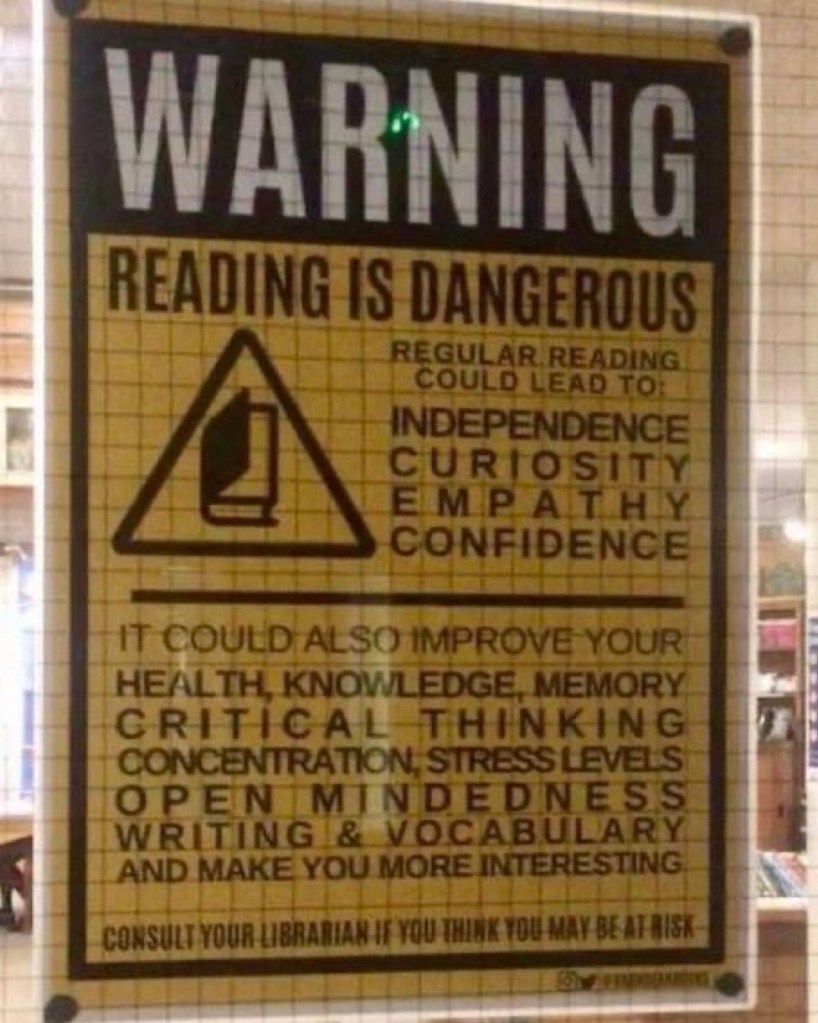
Read!

If you want to open your mind, read!

If you want to travel through time and space, read!

If you want to learn about other people and other cultures, read!

If you want to supercharge your creativity and imagination, read!

If you want to learn how other people see the world, read!

If you want to travel through time and space, read!

If you want to understand history, read!

Some people think these are dangerous activities. They want to control what students think. They censor books. They remove them from school libraries and public libraries. They forget that young people today have access to the Internet, which is not censored.

Live dangerously! Read books!

Let’s start at the beginning.

The Founding Fathers did not mention the word “education” in the Constitution. They left it as a state responsibility. However, the Founding Fathers did not ignore education. They drafted and approved the Northwest Ordinances of 1785 and 1787. These documents assured that new states would enter the United States on an equal footing with existing states. The Northwest Ordinance of 1785 declared that new towns would consist of 36 plots. One plot—#16, in the center of town—was to be set aside for a public school. Nothing was said about setting aside a plot for religious schools or private schools. Those were left to private discretion. (To learn more on this topic, read Derek Black’s Schoolhouse Burning; Black is a professor of law.)

The Northwest Ordinance of 1787 forever banned slavery in the new states. And it included this provision: “Religion, morality, and knowledge being necessary to good government and the happiness of mankind, schools and the means of education shall forever be encouraged.”

Those today who seek to divert public funding to religious and private schools are repudiating the intentions of the Foundding Fathers.

The following tweets seem closer to understanding the wishes of the Founding Fathers than do the legislators of Arizona, Ohio, and other states that are using public funds to subsidize religious and private schools.

Retired teacher Fred Klonsky points out the stark difference between national Democratic education policy and the views of Chicago’s new Mayor Brandon Johnson. He would love to see the party follow the lead of Mayor Johnson, who was a teacher in the public schools and an organizer for the Chicago Teachers Union.

The national Democratic Party was once a strong champion of public schools, it once understood the importance of resources and funding for needy students and schools, it was once skeptical about the value of standardized testing.

All of that changed, however, after the Reagan report “A Nation at Risk.” (In a recent article, James Harvey explained how that very consequential report was distorted with cherry-picked data to smear the nation’s public schools.)

Democratic governors jumped aboard the standards-and-testing bandwagon, led by Governor Bill Clinton of Arkansas. When Clinton became president in 1993, his major education legislation was Goals 2000, which put the Democratic Party firmly into the standards-and-testing camp with Republicans. Clinton was a “third way” Democrat, and he also enthusiastically endorsed charter schools run by private entities. His Goals 2000 program included a small program to support charter start-ups. That little subsidy—$4-6 milllion—has grown to $440 million, which is a slush fund mainly for big charter chains that don’t need the money.

George W. Bush’s No Child Left Behind legislation was supported by Democrats; it encompassed their own party’s stance, but had teeth. Obama’s Race to the Top rolled two decades of accountability/choice policy into one package. By 2008-2020, there was no difference between the two national parties on education. From Clinton in 1992 (with his call for national standards and testing) to NCLB to Race to the Top, the policies of the two parties were the same: testing, accountability, closing schools, choice. And let us not forget the Common Core, which was supposed to lift test scores everywhere while closing achievement gaps. It didn’t.

Democrats nationally are adrift, unmoored, while Republicans have seized on vouchers for religious and private schools that are completely unregulated and unaccountable. Despite evidence (Google “Josh Cowen vouchers”) that most vouchers are used by students who never attended public schools and that their academic results are harmful for public school kids who transfer into low-cost, low-quality private schools, red states are endorsing them.

Mayor Johnson of Chicago represents the abandoned Democratic tradition of investing in students, teachers, communities, and schools.

Fred Klonsky writes:

In his speech yesterday, Mayor Johnson addressed the issue of schools and education, an issue that as a retired career school teacher, is near and dear to my heart.

“Let’s create a public education system that resources children based on need and not just on numbers,” Johnson said.

I hope so.

Some have predicted that the election of Brandon to be mayor of a city with the fourth largest school district in the country might represent a shift in Democratic Party education policy.

Chicago under Mayors Daley and Emanuel gave the country Arne Duncan and Paul Vallas who together were the personifications of the worst kinds of top-down, one-size-fits-all curriculum, reliance on standardized testing as accountability and union busting.

Corporate school reform groups like Democrats for Education Reform and Stand for Children dominated the Democratic Party’s education agenda for two decades.

Joe Biden’s Department of Education has mostly been silent on these issues.

If Chicago’s election of Brandon Johnson does reflect a national shift, let alone a local one, it must do it in the face of a MAGA assault on free expression, historical truths and teacher rights.

None of this will be easy.

So, yes. I wish the Mayor the best and will do what I can to help.