Archives for category: Education Industry

Michelle H. Davis follows the sinister machinations of the Texas Legislature, which always pretends to be helping ordinary folks when they are actually hurting them.

She writes on her blog “Lone Star Left”:

Yesterday, the Texas Legislature took another step toward reshaping public education, not necessarily for the better. SB26, a sweeping education bill championed by Conservative lawmakers, passed with promises of boosting teacher pay and improving student outcomes. But beneath the surface, the bill reads more like a Trojan horse for privatization, union busting, and a long-term erosion of public education as we know it.

SB26 shifts teacher compensation from across-the-board salary increases and implements a performance-based pay system. On paper, rewarding high-performing teachers sounds excellent. In reality, this model has been used to justify pay disparities, foster favoritism, and force teachers into a test-score rat race rather than focusing on student development.

Merit and meritocracy are words we hear Conservatives use all too much. They frame these ideas as the backbone of fairness, insisting that success comes purely from hard work and ability. But in practice, “meritocracy” is often just a smokescreen for maintaining existing racial hierarchies. It ignores the systemic barriers that keep marginalized communities from accessing the same opportunities as their wealthier, white counterparts. In education, employment, and economic mobility, so-called “merit-based” systems reward those who already have advantages through generational wealth, access to elite schools, or the benefit of implicit biases in hiring and promotions. 

When conservatives push for “merit” in policies like education funding or hiring practices, they advocate for policies that protect privilege rather than create equity. In reality, meritocracy doesn’t level the playing field. It rigs the game in favor of those already winning. 

Brandon Creighton (R-SB04) used the words “merit” and “meritocracy” yesterday to describe SB26, which was a major red flag 🚩. This bill prohibits school districts from implementing general salary increases for instructional staff, except for inflation adjustments. Instead, funding is funneled into selective incentives that only some teachers will qualify for.

SB26’s move to contract a third party to provide legal assistance and liability insurance for teachers is particularly insidious. 

This might sound like a win, but here’s the catch: this state-controlled insurance provider would replace a key service teachers’ unions offer, weakening their role in advocating for educators’ rights. It’s union-busting in disguise. 

The bill also explicitly bans these contracted entities from engaging in political advocacy. Thus, teachers seeking to oppose harmful education policies will have one less resource. This is a classic conservative strategy: chip away at organized labor under the pretense of “helping” workers.

SB 26 isn’t about helping teachers. It’s about undermining unions, expanding state control over local schools, and pushing a corporate-style pay system that benefits wealthier districts while punishing the most vulnerable. Instead of investing in systemic reforms like universal Pre-K and across-the-board salary increases, the Texas Republicans have chosen to deepen inequities and destabilize an already struggling profession.

If the GOP were serious about education, they’d invest in all teachers, not just a select few. So, when Republicans announce that they’re pushing bills to raise teacher pay, just know that it’s total bullshit.

On top of this bill, which the Senate will claim is “teacher pay raises,” during yesterday’s hearing, Senator Bettencourt (R-SD07) continued his Trump impressions throughout. Weirdly, he does this in every hearing now. 

Please read my book Reign of Error, in which I review the research showing the consistent failure of merit pay.

Before the inauguration of Trump, The New York Review of Books invited me to write about his education agenda. I read three important documents in which his views and goal were spelled out: the education chapter in Project 2025; Agenda 47, Trump’s campaign document; and the website of the America First Policy Institute, the organization led by Linda McMahon, Trump’s choice for Secretary of Education. The three documents overlap, of course. Trump intends to privatize education; he despises public schools. He wants to eliminate the Department of Education. He and his supporters are obsessed with “radical gender ideology,” and they blame public schools for the very existence of transgender students. The election of Trump, it was clear, would mean the end of civil rights protections for LGBT students and a determined effort to defund and destroy public schools.

I posted the article yesterday.

The NYRB invited me to participate in an interview.

This article is part of a regular series of conversations with the Review’s contributors; read past entries here and sign up for our e-mail newsletter to get them delivered to your inbox each week.

In “‘Their Kind of Indoctrination,’” published on the NYR Online shortly before Donald Trump’s second inauguration, Diane Ravitch writes about the troubling future of American public education. Referring to the president’s infamous remark from his first campaign—“I love the poorly educated”—Ravitch warns that his second term is likely to lead to “more of them to love.”

A historian of education, Ravitch worked on education policy in both George H. W. Bush’s and Bill Clinton’s administrations. She has spent her career analyzing the national and state policies that reshape public schools, like laws that implement high-stakes testing or that divert taxpayer money to charter schools. In addition to writing nearly two dozen books—including The Troubled Crusade: American Education, 1945–1980 (1983), Reign of Error: The Hoax of the Privatization Movement and the Danger to America’s Public Schools (2013), and, most recently, Slaying Goliath: The Passionate Resistance to Privatization and the Fight to Save America’s Public Schools (2020)—Ravitch posts regularly about American education policy on her widely read blog. Her memoirs will be published later this year by Columbia University Press.

I reached out to Ravitch to discuss the current state of American education, the forces threatening it, and her vision for how public schools can better fulfill their democratic promise.


Regina Martinez: How did you start writing about education? Were you influenced by your time in public schools in the South? 

Diane Ravitch: I started writing about education when I was in college. The first paper I ever wrote was for a political science class in my freshman year at Wellesley in 1956. It was about the politics of the Houston public school system in the early 1950s, when I was a student there. Voters elected a new school board every two years, and control went back and forth between a group of far-right extremists, who saw Communists lurking everywhere, and moderates who just wanted to make sure that the schools were running well. At one point, books about Russia were removed from the high school library’s shelves. Under the moderates, we heard assembly speakers who spoke of racial and religious tolerance; under the Minute Women, the female wing of the John Birch Society, we were warned to beware of Communist influence. Also, while I was attending them, the schools were racially segregated.

In “Their Kind of Indoctrination,” you write, “One can only imagine the opprobrium that will be visited upon teachers who are not certified as patriots.” How do you imagine this will impact the teaching profession? What might it mean for teacher recruitment in the future?

The threat of political surveillance is chilling, as it would be in every profession. In many states, especially “red” states, teachers have to be careful about what they teach, what reading they assign, and how they handle topics related to race and gender. Trump recently issued an executive order stating that he would cut off the funding of schools that “indoctrinate” their students by teaching about “radical gender ideology” and racism. His effort to impose thought control is illegal but that hasn’t stopped him from trying. 

This sort of political censorship is happening in K–12 schools but also in higher education. The number of people choosing to prepare to be teachers plummeted in the wake of the Bush-Obama emphasis on standardized testing. The threat of political loyalty screening can only make matters worse.

One of President Trump’s recent executive orders reauthorized federal agents to detain children at schools. What actions if any can schools, families, and students take to resist the incursion of the security state into schools?

The determination of the Trump administration to raid schools is terrifying for children and for their teachers, whose job it is to protect their students. Imagine a child being arrested in his or her classroom. It is indeed frightening. Many districts have urged teachers to get legal advice from the district legal officers. At the very least, educators should demand to see a warrant. If ICE agents are armed, resistance may be futile. Elected leaders will have to develop contingency plans, if they have not done so already.

You worked on education policy under both President George H. W. Bush and President Bill Clinton. What, if anything, was different about your work between a Republican and a Democratic administration? How do you think the Department of Education—and federal education policy more generally—has changed since the early 1990s?

I served as assistant secretary for education research and improvement under President Bush. Then President Clinton appointed me to the national testing board, known as the National Assessment Governing Board. There was a continuity of policy from the first President Bush to Clinton, and then from Clinton to the second President Bush to President Obama.

The first President Bush wanted to reform American education through voluntary measures. He convened a meeting of the nation’s governors in 1989, and they agreed on a set of six goals for the year 2000. He thought that the goals could be reached by exhortation, at no cost. The goals were indeed aspirational (they hoped, for example, that American students would be first in the world in mathematics and science by the year 2000), but no one had a plan for how to reach them, nor was there any new funding. President Clinton got credit for drafting them, so he and Bush shared that commitment. He was willing to spend real money to help states improve their schools, and added two more goals (one about teacher training, another about parent participation). He also believed that the nation should have national standards and tests. None of the goals was reached by the year 2000, except for having 90 percent of students graduate from high school. But that goal was a matter of definition. If it meant that 90 percent should graduate high school in four years, we did not meet that goal. If you counted the students who graduated in five or even six years, we surpassed it.

Since you launched your education blog in 2012, it has become a popular forum for discussions about education and democracy. Looking back, are there any positions you’ve shared on the blog that you would reconsider or approach differently today? Are there positions you took or predictions you made that you’re particularly proud of?

I started blogging two years after publication of The Death and Life of the Great American School System: How Testing and Choice Have Undermined Education. In that book, I renounced views that I had advocated for decades: competition between schools, relying on standardized testing as the measure of students, merit pay, and many other policies connected to accountability and standardization.

What I have learned in the past fifteen years has made me even more alarmed than I was then about the organized efforts to destroy public education. That book has a chapter about “The Billionaire Boys Club.” I focused on the venture philanthropy of the Bill and Melinda Gates Foundation, the Eli and Edythe Broad Foundation, and the Walton Family Foundation. These billionaires used their philanthropy strategically to fund privately managed charter schools, high-stakes standardized testing, and a system that evaluates teachers by the test scores of their students and closes schools where students got low scores. I opposed all of these measures, which were endorsed by both the second Bush administration and the Obama administration. I demonstrated in that book and subsequent books that these strategies have been failures and are enormously demoralizing to teachers. They also turned schools into testing factories, crushing creative thinking and the joy of teaching and learning.

In the years since, I have learned that “the Billionaire Boys Club” is far larger than the three families that I mentioned. In my last book, Slaying Goliath, I tried to make a list of all the billionaires and the foundations that support charter schools and vouchers, and it was long indeed. Even now, I continue to come across billionaires and foundations that should be added to the list. What I suspected was that charter schools paved the way for vouchers by treating schooling as a consumer good, not a civic responsibility. What I did not realize was that the voucher movement is even more powerful than the charter movement. Its constituency is not just right-wing billionaires like the Koch brothers and the DeVos family, but Christian nationalists, white supremacists, extremist organizations like the Alliance Defending Freedom and the American Legislative Executive Council, affluent parents who want the state to subsidize their private school tuition, and Catholic leaders who have always believed that the state should underwrite Catholic schools.

There has been a lot of discourse recently about declining rates of literacy due to AI, the pandemic, phones, or a host of other causes. How significant do you think this risk is? What might be done to reverse the trend? 

I too am concerned about declining rates of literacy, as well as declining interest in literature. In my field of study, I believe that standardized testing has been a culprit in shortening the attention span of children of all ages. Students are expected to read short snippets, then to answer questions about those limited passages. In the early decades of the twentieth century, the College Board sponsored college entrance examinations in which students were assigned works of literature in advance, then asked to write about what they had read. Teachers and professors read their essays and graded them. Now the exam answers may be read by a machine or by a person hired off Craigslist to read swiftly, giving only a minute or two to each written answer.

In my dreams, I would change expectations and ask high school teachers to assign books that are worth reading, then require students to write three or four pages about why they did or did not like the book.

While I welcome the expansion of the canon to include works by women and by people of color, I would also welcome a revival of interest in the great works that were once considered the classics of Western literature. In too many high schools, the classics have not just been marginalized, they have been ousted. That is as grave an error as ignoring the works of those who are not white men.

Given the increasing momentum behind the privatization of education, how do you envision the next generation advancing public school advocacy? What do you anticipate will be their greatest challenge?

Public schools are one of the most important democratic institutions of our society. In many states, they enroll 90 percent of all students. They have always enabled children and adolescents to learn together with others who come from backgrounds different from their own. There is a major movement today, funded by right-wing billionaires, to destroy public schools and to replace them with religious schools, private schools, and homeschooling. It is called “school choice,” but the schools choose, not the students or families. Private schools are allowed to discriminate on any grounds and are not bound by federal laws that prohibit discrimination and that protect those with disabilities. Racial and religious segregation will increase. More students will attend schools whose purpose is indoctrination, not building a democratic society.

The greatest challenge facing those who believe in the value of public education is that the money behind privatization is enormous, and it is spent strategically to win political allies. To my knowledge, there is no billionaire funder for public education as there are for privatization. In the world of public education advocacy, there are no equivalents to the Koch money, the DeVos money, the Walton money, the Texas evangelical billionaires Tim Dunn and Farris Wilks, the Pennsylvania billionaire Jeff Yass. I have been president of an organization called the Network for Public Education since 2013, and our annual budget is a pittance compared to the privatizers’ organizations. One pro–school choice organization spent as much on their annual dinner party as our entire annual budget.

The other side of this struggle to save public education is the reality that important Democrats still believe that school choice helps poor Black and Hispanic kids, despite overwhelming evidence that this claim is not true and is in fact part of the hustle. Representative Hakeem Jeffries, Senator Cory Booker, Governor Jared Polis, and Senator Michael Bennett are a few of the Democrats who have dampened the interest of their party in fighting for public schools.

What makes me hopeful is that the reality is becoming clearer with every passing day: those who are concerned for the common good must support public schools, not undertake to pay the tuition of every student who chooses not to attend public schools. Privatization benefits some, not all, not even most. Public money should pay for public schools. Private money should pay for private schools.

I was invited to write about the Trump agenda for education by The New York Review of Books. This is a publication I love to write for, because it’s the most distinguished literary-political-cultural publication in the nation. In addition, the editing process is arduous and careful. Every word, every sentence was carefully scrutinized. I happen to love close editing because it is a demonstration of seriousness. The editors at NYRB are very serious.

Here is the article. It is not behind a paywall.

Sara Stevenson is a retired school librarian and Catholic school English teacher. She is a fearless advocate for public schools. Her article was published in The Austin American-Statesman. At this very time, the Texas Legislature is debating voucher legislation. It has already passed the State Senate. It is now being considered in the House.

She writes:

Many years ago at a school financing conference, I approached an East Texas House member from a rural district. I asked him, “Do y’all even have private schools for vouchers in your district?” He answered, “Hell, no. Private school vouchers are a tax break for families that already send their kids to private schools.” I thanked him for clearing that up.

Now most of those rural House Republicans opposing private school vouchers are gone. Jeffrey Yass, a Pennsylvania billionaire investor in TikTok, gave Governor Greg Abbott $10 million to primary them out of office.

Texas has been trying to pass a school voucher or (ESA: Educational Savings Account) bill since 1995, but the bills keep failing session after session. In their earlier forms, these bills called for ESAs (using public tax dollars to pay for private school tuition) as a way to help poor children or those with disabilities trapped in Texas’s “failing public schools.”

Sidenote: If Texas schools are failing, the Republican party is responsible since it has dominated the Legislature for more than two decades and has controlled the governor’s office since 1994.

But over time, the proposed bills kept demanding more, not only in the amount of tuition money offered, but in the expanding pool of students qualified to receive them.

With this year’s version, Senate Bill 2, which passed the Senate, the GOP is saying the quiet part out loud. No longer are the ESAs solely for the families who can’t afford private school tuition or those with disabilities; now a family of four, making as much as $161,000 a year, five times the federal poverty level, can still receive up to $10,000 toward private school tuition or $11,500 for students with disabilities.

Lt. Gov. Dan Patrick then reassures us that 80% of the vouchers will go to special needs or “low-income” children. Since eligibility is universal, 20% will go to families making more than $161,000 per year.

I remember in 1976 when Ronald Reagan talked about people who abused the welfare system by getting government handouts they didn’t need. He called them “welfare queens.” In those days the GOP praised the working poor for their dignity in refusing a government handout.

Fast forward to 2025. Now families making over $161,000 per year are entitled to your tax dollars to send their children to private schools with little to no accountability. In fact, Sen. José Menendez’s Amendment 36, requiring the state to collect data to determine if the program is even successful, failed.

In earlier iterations, the student had to be enrolled in a failing public school before receiving a voucher. Now children already enrolled in private schools are eligible. Promoters argue this is only fair because private school families pay thousands each year in property taxes to schools their children don’t attend. Well, if they deserve a taxpayer refund, what about all the Texas property taxpayers, including seniors, who have NO children currently attending Texas schools?

No, because contributing to public education is a common good; an educated citizenry benefits all Texans and the Texas economy.

And speaking of children with disabilities, this bill clearly states that these students receiving vouchers must waive any rights for accommodations guaranteed by IDEA (Individuals with Disabilities Education Act).

Although SB 2 boosters contend the bill promotes school choice for parents, the bill really means “schools’ choice” for private schools. While public schools must accept every child, private schools, including those receiving vouchers, are free to turn away or expel any child for any reason. For instance, they can continue to prefer legacies and the siblings of current students.

SB 2 earmarks $1 billion for this program in order to give vouchers to just 100,000 students. In contrast, 5.4 million Texas students currently attend public school, 10% of all U.S. school children.

Let’s first pass Senate Bill 1, the budget bill, and include increasing the basic student allotment to fully fund our public schools. Since Texas ranks 44th among the states in per pupil spending, let’s first invest in the school system we already have rather than spend a billion dollars to fund another one.

Annie Martin and Leslie Postal of the Orlando Sentinel have repeatedly exposed the fraud baked into Florida’s voucher program. It began in 1999 with the modest ambition of offering choice to low-income students in “failing schools.” It expanded to provide vouchers for students with disabilities. In past articles, they surveyed voucher schools and identified academic deficiencies, such as uncertified teachers and principals, and Bible-based textbooks. Now, they report on what happened after the state removed all income limits in 2023. Florida now offers money for all students, regardless of family income.

Most of the students getting the voucher money are not low-income, do not have disabilities, and are not escaping bad public schools.

The students getting vouchers are already enrolled in private schools. They don’t need the extra money but they are happy to take it.

They write:

A block from Winter Park’s tony Park Avenue sits St. Margaret Mary Catholic School, where tuition can top $14,000 a year for a K-8 education.

But at this school in the heart of one of Central Florida’s wealthiest communities, about 98 percent of students used taxpayer-funded scholarships worth roughly $8,000 to help pay tuition last year.

Only three percent of St. Margaret Mary’s students got that state financial aid just one year earlier.

The change – repeated at schools around the state – is one powerful measure of how a 2023 Florida law has supercharged a school voucher initiative that was already the nation’s largest.

Once reserved for low-income students and those with disabilities, state scholarships, often called vouchers, are now available to all – and they’re fueling an unprecedented pipeline of public money, estimated at $3.4 billion this year, into private, mostly religious schools across the Sunshine State.

All that money is doing more than just expanding Florida’s voucher program. The new rules are transforming it.

Since their emergence as a conservative educational talking point four decades ago, vouchers have been pitched as a way to provide “school choice” – the opportunity for families who couldn’t otherwise afford private education to escape a substandard neighborhood public school.

But when lawmakers dropped the income limits on Florida’s programs, the key element of the 2023 law, the system became something else:

Choice for lower-income families plus a wide-open taxpayer subsidy for the better off.
More than 122,000 new students started using vouchers for the first time in the 2023-24 school year, and nearly 70 percent were already in private school, many in some of Florida’s priciest institutions, according to data from Step Up For Students, the nonprofit that administers most of the state’s scholarships. About 40 percent came from families too wealthy to have qualified previously.

So in many cases the new law did not expand these new families’ options. Instead, it provided state subsidies for the choices they had previously made and were able to afford on their own.

The implications of that shift are vast, an Orlando Sentinel analysis has found.

• Voucher use has jumped by 67% since the new law was approved.
• Individual private schools are seeing even bigger surges, creating new reliance on taxpayer funding. The Sentinel found nearly 250 schools where the number of students using vouchers jumped by at least 100 children in the first year after the law changed. At St. Margaret Mary, the growth pushed total annual voucher funding from $65,000 to $3.5 million – in just one example of the multi-million dollar windfalls.
• A significant amount of the money is flowing to Florida’s most expensive private schools, many of which served few voucher students in the past: Campuses that advertise annual tuition of $15,000 or more added more than 30,000 voucher students last year.
• The proportion of private school students with state scholarships has topped 70% this school year. Ten years ago it was less than a third.
• More Florida students use vouchers — a total of 352,860 — to attend private campuses than are enrolled in public schools in Osceola, Orange and Seminole counties combined.

Program critics say Florida is now spending an inordinate amount of its education resources on the wrong people – rather than focusing on system improvements that would be good for all students.


“This is just a subsidy for wealthier people — people who already have the advantage,” said state Rep. Kelly Skidmore, a Democrat from Boca Raton who voted against the expansion.


Skidmore is among those who fear the impact of the voucher explosion on public schools – which are losing money as students shift to private education – and the implications of handing millions in taxpayer dollars to private schools over which the state has little control.


These schools are free, as the Sentinel has reported previously, to hire teachers without college degrees, teach history and science lessons outside mainstream academics and discriminate against LGBTQ students and staff. They do not face the same accountability requirements as their public counterparts, whose students’ test scores and graduation rates are publicly reported. Without such numbers for private schools, it’s difficult to assess the impact of Florida’s voucher program on the quality of education students receive.

Nevertheless, the voucher push shows no signs of abating, with more than 10% of all K-12 students in Florida now receiving the subsidy.

On Jan. 10, Gov. Ron DeSantis celebrated Florida’s “choice revolution” at Trinity Christian Academy in Jacksonville, which now enrolls more than 1,200 voucher students.

“The debate about school choice I think is over. Clearly you’re better offering choice than not offering choice,” DeSantis said.

An Orlando mother of four sent them to The First Academy, affiliated with First Baptist Church of Orlando, where high school tuition is more than $24,000 a year. Nearly 90% of the students use vouchers now, up from about 20% two years ago. She paid the full cost for her two oldest, who graduated, and can afford to pay for her two youngest, but is delighted to take the state subsidy.

Florida is spending $3.4 billion annually to subsidize the state’s most affluent families.

Is it surprising that Florida’s NAEP scores fell to their lowest point in 20 years? The state is not investing in its public schools, which enroll the overwhelming majority of its students.

The Walton Family Foundation, which is the second largest funder of privately-run charter schools (first is the U.S. Department of Education, which dispenses $400 million a year to charters), wanted to create positive press about charter schools in Alaska. So they commissioned a study by two charter advocates, who produced the positive results Walton wanted.

Beth Zirbes teaches math and statistics in a high school in Fairbanks, Alaska. With her friend Mike Bronson, she reviewed the data in the state records and reached a different conclusion: charter schools are no better than neighborhood public schools, even though the charter students are more advantaged. Their article, with a link to their study, was published by the Anchorage Daily News.

What’s impressive about this study is that a high school math teacher bested a Harvard professor of political science. It just goes to show: Don’t be overly impressed by the author’s academic credentials. And, never believe any charter or voucher research funded by foundations that fund charters and vouchers.

Would you believe a study claiming that cigarettes do not cause cancer if the study was funded by Philip Morris or some other tobacco vendor?

Zirbes and Bronson wrote:

The governor has claimed in several newspaper pieces that Alaska charter schools are more effective than neighborhood schools, and that the charters should be modeled more widely. He’d seen reports by Paul E. Peterson and M. Danish Shakeel, sponsored by the Walton Family Foundation, showing that Alaska charter schools held top rank academically among other states on a federal test.

We value the good performance of many charter school students, but we were skeptical that charter schools were necessarily more effective at lifting students up. So we looked at state data to find out how much of the charter schools’ better scores might be attributed to the schools themselves versus what the students bring to the schools. Read our full report here.

The state’s data showed the governor’s takeaway was incorrect. He was wrong that Peterson’s study showed the superior effectiveness of Alaskan charter schools over neighborhood schools. First, Peterson’s study did not even look at neighborhood schools. Second, after we accounted for numbers of students poor enough to be eligible for reduced-price or free lunches, we found that charter schools and neighborhood schools did not statistically differ in their English language proficiency scores. Instead, the percentage of proficient students in both charter and neighborhood schools was closely related to family income.

Alaska charter schools, on average, are distinguished by high proportions of white students, higher family income and fewer English language learners. Alaska charter school student bodies, in general, don’t even resemble Lower 48 charter schools, let alone Alaskan neighborhood schools. Unfortunately, Alaskan charter students do resemble other Alaskan public schools in that a majority of them score below the state standards in reading and math.

The graph shows a decline in percentages of third to ninth-grade participating students who scored proficient or better on the state’s 2019 PEAKS assessment of English language arts with increasing school percentages of students poor enough to be eligible for free or reduced-priced lunch, in other words economically disadvantaged. Each point shows a public school in Alaska school districts having charter schools. Neighborhood schools are considered non-charter, brick-and-mortar schools including alternative and lottery schools managed by a school district. Data are from the Department of Education and Early Development.

Texas Governor Greg Abbott is holding hostage the more than five million students in public schools while he demands vouchers for kids who are already enrolled in private and religious schools. Abbott has refused to increase funding for the state’s public schools unless the legislature approves vouchers, most of which will subsidize the affluent.

Last year, the legislature refused to approve vouchers. Since then, Abbott engineered the defeat of several anti-voucher Republicans. He’s hoping to win approval in the current session. Vouchers will pass easily in the state senate. We will see what happens in the House, where rural Republicans stood against vouchers in the past, before Abbott’s purge.

Abbott is playing Reverse Robin Hood. He is stealing from the poor to pay for the rich. Billionaires like Jeff Yass, the richest man jnnOennstlvsnia, and Betsy DeVos of Michigan, are funding his intransigence with millions in campaign contributions.

The Texas Monthly reports that school superintendents are increasing class sizes, laying off teachers, eliminating electives, and doing whatever they can to keep their doors open.

The article says:

Two years ago, during the 2023 legislative session, superintendents of Texas schools were optimistic that state lawmakers would boost public-education funding. After all, soaring inflation was straining the already meager finances of districts across the state, and lawmakers had at their disposal a $32.7 billion budget surplus. Spending some of that money on the urgent educational needs of the state’s children might have seemed like an uncontroversial proposal. 

Instead, the unthinkable happened: Legislators left Austin without putting any significant new money into schools or giving teachers a raise. The consequences have been dire.

Texas’s public schools were already among the most poorly resourced in the country: Our per-student funding is about 27 percent less than the national average. The basic allotment—the minimum amount of funding per student that school districts receive from the state—has been stuck at $6,160 since 2019. That would need to be upped by about $1,400 just to keep pace with rising costs. Public education advocates worry that lawmakers will provide only face-saving increases to the basic allotment in 2025 while diverting billions to private schools.

Many school leaders have had to undertake draconian austerity measures. Nearly 80 percent of districts have reported challenges with budget deficits. Given the stakes, 2025 could be a pivotal year for Texas’s public-education system….

Texas Monthly spoke to a group of superintendents to ask about how they were coping. They all spoke about the budget cuts and unfunded mandates (like requiring the hiring of police officers without providing funding). One superintendent, Jennifer Blaine of Spring Branch, said:

JB, Spring Branch: We don’t have anywhere else to cut. We are cut to the bone. I consolidated everything I could, and I cut everything that I could. If we have to cut further, you’re talking about severely impacting academics in the classroom and, quite frankly, safety and security. Five and a half million kids are in Texas public schools, and I don’t understand how our legislators and our governor don’t see this as a crisis. If we don’t educate these kids to the highest levels and prepare them for postsecondary success, we’re going to crumble as a state. I don’t know where the disconnect is. Education is the great equalizer. But nobody is talking about that, and I think it’s a missed opportunity because this is not going to end well. 

The title of the article in the print edition was  “A Legislature That Will Spend at Least as Much Per Pupil as Louisiana.”

Trump has always expressed contempt for public schools. In his first term, he appointed billionaire religious zealot Betsy DeVos to be Secretary of Education. She has spent many millions over decades to promote charters and vouchers, and she shoveled as much money as she could to charter schools, especially large chains.

His nominee for Secretary of Education, wrestling-entertainment entrepreneur Linda McMahon, will be no less spiteful towards public schools than DeVos. McMahon is chair of the extremist America First Policy Institute, which peddles the lie that public schools “indoctrinate” their students to hate America.

In his 2024 campaign, Trump pushed school choice as one of his major issues.

Yesterday he signed an executive order directing that discretionary federal funds be spent to promote all forms of choice, and he praised states with universal vouchers.

His executive order lambastes the “failure” of the public schools, a refrain we have heard from privatizers for the past 30 years, and he makes false claims about the benefits of private choices.

He says:

When our public education system fails such a large segment of society, it hinders our national competitiveness and devastates families and communities.  For this reason, more than a dozen States have enacted universal K-12 scholarship programs, allowing families — rather than the government — to choose the best educational setting for their children.  These States have highlighted the most promising avenue for education reform:  educational choice for families and competition for residentially assigned, government-run public schools.  The growing body of rigorous research demonstrates that well-designed education-freedom programs improve student achievement and cause nearby public schools to improve their performance. 

This paragraph is larded with lies. Despite decades of loud complaining about how public schools hurt our economic competitiveness, we have the most vibrant and successful economy in the world. Our public schools, which enroll 85-90% of our nation’s students, contributed to that success.

Next is his patently false claim that universal choice is the best path to educational success. There is no evidence for that claim. In fact, Florida–a leader in universal choice–just experienced a sharp drop in its NAEP scores. Its reading and math scores dropped to their lowest level in more than 20 years.

And most ridiculous is his assertion that “rigorous research demonstrates that well-designed education-freedom programs improve student achievement and cause nearby public schools to improve their performance.”

Josh Cowen’s new book The Privateers: How Billionaires Created a Culture War and Sold School Vouchers thoroughly debunks those claims.

The most rigorous research, which Cowen reviews, shows that poor kids who take vouchers and switch to a private school experience a dramatic decline in their test scores. Many return to public schools.

The most rigorous research shows that most students who use vouchers were already enrolled in private schools. The voucher is a subsidy for their religious and private school tuition.

The most rigorous research shows that universal vouchers in every state that has them are used by affluent families. They are welfare for the rich.

The most rigorous research shows that public schools lose funding when new and existing state funding goes to nonpublic schools.

The most rigorous research shows that universal choice busts the budgets of states that fund all students, including private school students.

Trump has sharpened his knife to destroy public education.

Fight back!

Join the Network for Public Education and link up with people in your community, your state, and the nation who believe that public dollars should be spent on public schools.

Sign up for the annual conference of the Network for Public Education in Columbus, Ohio, April 5-6 and meet your allies.

Organize, strategize, resist!

Somebody has figured out how to make a pile of money with a bright and shiny innovation: AI. Artificial Intelligence. Two hours of AI daily is all the students need.

Ah, innovation! We can never have too much innovation! But is two hours daily enough instruction?

Peter Greene explains it all here:

MacKenzie Price has made headlines with a charter school that uses two hours of AI instead of human teachers, then expanded that model to cyber schools under the “Unbound Academic Institute” brand. Now she is awaiting approval from the Pennsylvania Department of Education that would bring that same cyber charter model to cash in on the commonwealth’s already-crowded, yet still profitable, cyber school marketplace. 

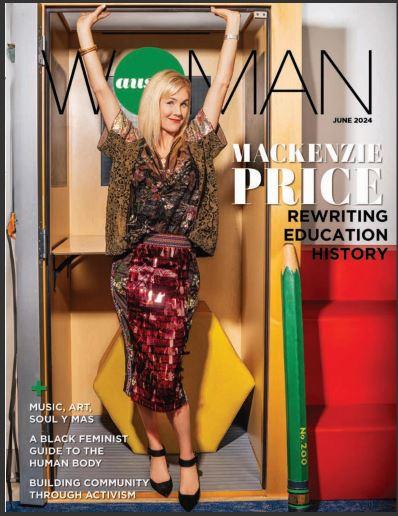
Price, a Stanford graduate now living in Austin, Texas, started her entrepreneurial journey with Alpha Private Schools. In this glowing profile from Austin Woman, Price tells the origin story of Alpha Schools, starting with her own child:

“Very early on, I started noticing frustration around the lack of ability for the traditional model to be able to personalize anything,” she recalls. “About halfway through my daughter’s second grade year, she came home and said, ‘I don’t want to go to school tomorrow.’ She looked at me and she said, ‘School is so boring,’ and I just had this lightbulb moment. They’ve taken this kid who’s tailor-made to wanna be a good student, and they’ve wiped away that passion.”

Price, who has no previous experience in education, launched Alpha Schoolsabout a decade ago, powered by a model that she soon spun off into its own company – 2 Hour Learning. She has thoughts about how long education needs to take, as she told Madeline Parrish of Arizona Republic:

When you’re getting one-to-one personalized learning, it doesn’t take all day. Having a personal tutor is absolutely the best way for a student to learn.

The snake oil pitch is even more direct on the company’s website:

School is broken, and we’re here to fix it. 2 Hour Learning gives students an AI tutor that allows them to: Learn 2X in 2 Hours.”

The personal tutor in this case is a collection of computer apps. After two hours at the computer, students spend the rest of the day pursuing “personal interests” and joining in life skills workshops. There are no teachers in Alpha’s schools, but “guides” are on hand to provide motivation and support. Tuition at most of the Alpha campuses is $40,000 a year. 

As Price tells an “interviewer” in one paid advertorial:

Yes, it’s absolutely possible! Not only can they learn in two hours what they would learn all day in a traditional classroom, the payoffs are unbelievable! My students master their core curriculum through personalized learning in two hours. That opens up the rest of their day to focus on life skills and finding where their passions meet purpose. Students love it because it takes them away from the all-day lecture-based classroom model. Instead, my students are following their passions.

Price has been clear that “AI” in this case does not mean a ChatGPT type Large Language Model, but apps more along the lines of IXL Math or Khan Academy’s Khanmigo, that pitch themselves as being able to analyze student responses and pick a next assignment that fits, or perhaps recommend a video to explain a challenging point. 

If that seems like an extraordinary stretch, Price has decided to go one better and turn that model into a virtual charter model. How that model would manage the “personal interest” afternoon structure is not entirely clear; one application promises “a blend of scheduled live interactions and self-managed projects.” As the application promises, “No Teachers, Just Guidance.”

And that model is the one Unbound wants to bring to Pennsylvania.

AD 4nXfGgeXQpbIX5l2StEZdpx2eH4vwKETBKdz1qjeGnn04aytVoJbFB1iPPMZKRq iE1czT0pZIoKNaXoqRgR908i2Z2Maw2VI9H6wJjOOeX6joh 6feLuAF1GcoLq 4eRF0e0DUzjekhHonThDi6AJn4?key=Zh58BXstnzJkvLRwAUAZj59 - Bucks County Beacon - Texas Businesswoman Wants to Open AI-Driven, Teacherless Cyber Charter School in Pennsylvania

The model looks to be a highly profitable one. While MacKenzie Price is the public face of the company, with a big social media presence, at least some of the business savvy may come from Andrew Price, MacKenzie’s husband and co-founder of the business. Andrew is the Chief Financial Officer at Trilogy, Crossover, Ignite Technologies, and ESW Capital. 

Crossover recruits employees, particularly for remote work. ESW is an private equity firm for one guy –Joe Liemandt, who made a huge bundle in the tech world; Leimandt also owns Trilogy. In 2021, Price’s boss was expressing some interesting thoughts about white collar jobs, as quoted in Forbes:

Most jobs are poorly thought out and poorly designed—a mishmash of skills and activities . . . poor job designs are also quickly exposed with a move to remote work

In 2023, Liemandt was found slipping a million dollars to Republican Glenn Youngkin’s gubernatorial campaign, via Future of Education LLC, formed just the day before the donation. It turns out the address of that group was the Price home ; MacKenzie had launched the Future of Education podcast in February of 2023 (though her LinkedIn dates it to August).

All of this interconnectedness is part of how the game is played. The Unbound application to open a cyber charter in Pennsylvania includes: 

In support of its operations, Unbound Academy will collaborate with 2hr Learning, Inc. to deliver its adaptive learning platform, while Trilogy Enterprises will manage financial services, and Crossover Markets, Inc. will assist with recruiting qualified virtual educators.

In Pennsylvania, it’s not legal to run a charter school for profit. But the law says nothing about running the school as a non-profit while hiring other for-profit organizations to handle the operation of the school. In Unbound Academy we find the Prices hiring themselves to operate the school. And they’re not done yet. 

YYYYY, LLC. will be the general and administrative service provider.

The President and Director of YYYYY, LLC. is Andrew Price. According to the application, YYYYY,LLC will provide a start-up donation for Unbound and then serve as its management organization. 

The application was filed by Timothy Eyerman, the Dean of Parents at Alpha Private Schools.

So we have a total of five organizations involved in the proposed school, all tied to MacKenzie and Andrew Price, and all proposing to pass a pile of Pennsylvania taxpayer money back and forth.

And what a pile of money it is.

Gary Rayno, veteran journalist in New Hampshire, reports on the Legislature’s pending decision on expanding vouchers. It is astonishing that any state is still considering universal vouchers, in light of what we have learned from the experience of every state that has done so.

We know now that the overwhelming majority of vouchers are used by students already enrolled in private and religious schools. In other words, they are for the most part a subsidy for families already able to pay tuition.

We know now that universal vouchers bust the state budget by offering to pay private school tuition.

We know now (see Josh Cowen’s recent book The Privateers) that when poor kids leave public schools for voucher schools, their academic performance declines, often dramatically.

We know now, based on state referenda, that the public opposes vouchers.

Gary Rayno writes about what’s happening in New Hampshire:

The advocates for opening the state’s school voucher program, Education Freedom Accounts, to all students in the state regardless of their parents’ income did a massive public relations and organization effort before the public hearing last week on House 115, which would remove the salary cap from the four-year old program.

While many parents with their children turned out for the public hearing that needed three rooms in the Legislative Office Building to hold the attendees, the people responding electronically —many posting testimony — on the bill were opposed by a more than four-to-one margin, 3,414-791.

Groups like the Koch Foundation funded by Americans for Prosperity sent out at least three email “urgent” messages to its followers encouraging supporters to attend the public hearing.

Department of Education Commissioner Frank Edelblut sent out a press release the day before the public hearing with the headline “New Hampshire’s cost per pupil continues upward trend,” indicating the state’s average per-pupil cost increased from $20,323 last school year to $21,545 this school year and noting the enrollment has been trending down.

In his press release he also noted the average national cost per pupil at $15,591, while noting that New Hampshire’s largest school districts were the cheapest with Manchester at $17,734, Nashua at $18,270, Bedford at $18,498 and Concord at $23,159, while rural Pittsburg, at the very top of the state, has the highest cost at $44,484.

“The taxpayers of New Hampshire have worked hard to support students, families and our public schools, increasing funding by more than $400 million since 2021, resulting in a record high cost per pupil,” Edelblut said. “New Hampshire remains dedicated to continuing efforts to expand educational opportunities and pathways to help every child succeed in a fiscally responsible approach. The persistent trend of declining student enrollment combined with rising costs creates substantial financial strain on school districts, taxpayers and communities, necessitating new and creative approaches to educating our children in a system that can be sustained over the long term.”

In other words these skyrocketing public education costs cannot be sustained, and efforts like the EFA program is the wave of the future for taxpayers and students, although the program offers no guarantees the state money flowing into the program is being used for what it was intended or wisely by parents.

He does not mention that New Hampshire is either 49th or 50th in financial support for K to 12th grade public education, while cities and towns are picking up over 70 percent of the costs of public education and yet their residents are the ones approving the budgets that increased per-pupil spending.

Edelblut also doesn’t mention that the state downshifted the obligation of hundreds of millions of dollars over the last 15 years to school districts, municipalities and counties when it stopped paying 35 percent of the retirement costs for employees, or that he has failed over the last five years to request additional money for the special education catastrophic aid program although costs have been rising substantially further downshifting millions more in costs to local school districts.

And the public hearing on the bill was held on one of the earliest days in the session, which says the Republican leadership wants to separate this bill from the state budget as much as possible.

A trend of declining revenues, the drying up of the federal pandemic aid and past surpluses, along with the elimination of the interest and dividends tax, which is a huge benefit to the state’s wealthiest residents, and business tax rate cuts will make difficult work for lawmakers and new Gov. Kelly Ayotte, who gives her first budget address next month.

The GOP leadership doesn’t want to discuss the $100 million in new expenses in HB 115 when budget discussions hit snags over what to fund.

During the public hearing, a number of parents brought their children with them to talk about the wonderful things they have been able to accomplish by using the state taxpayer money for alternative education settings.

Many also trashed public schools saying they failed their children although the public schools continue to serve about 90 percent of the state’s students.

Some of the parents noted public schools don’t align with their beliefs or political philosophies, which really says they do not want their children to be exposed to different beliefs or cultures.

David Trumble of Weare noted that some of the private and religious schools don’t take LGBTQ+, special education or English-as-a-second language students.

“There is nothing universal about universal vouchers. The only universal option is the public schools because they accept every single child and give every one of them a good education. That is why you have a constitutional duty to fund them. You have no obligation to fund the private schools,” Trumble told the House Education Funding Committee.

“Our first obligation is to fund the public schools.”

Under the EFA program, 75 percent of the students did not attend public schools when they joined the program, meaning that neither the school districts nor the state was paying for their education, their parents were.

In other states where universal vouchers have been approved almost all of the new money goes to families currently sending their children to private or religious schools or being homeschooled, which is a new expense to those states just as it would be in New Hampshire, where the potential for additional costs is over $100 million annually.

The money for New Hampshire EFA program comes from the Education Trust Fund which also provides almost all of the state education aid to public schools including charter schools.

The trust fund once had over a $200 million surplus, but ended the last fiscal year June 30, 2024 at $159 million, and is projected to drop to $125 million at the end of this fiscal year.

If the bill passes, it won’t be long before money is drained and the squeeze is on public education because of the new education system set up by the legislature that many told the committee last week lacks accountability and transparency.

Many of the people in opposition to the bill said the state first needs to meet its constitutional obligation to pay for an adequate education for the state’s children before setting up any new program costing hundreds of millions of dollars.

But universal vouchers are not only a priority for New Hampshire Republicans, it is a priority at the national level as well.

It continues a movement begun in the late 1950s and 1960s advised by James Buchanan, an economist from the University of Chicago, who was influenced by Frank Knight as was Milton Friedman.

The plan was to both develop more conservative Republicans through the education system and through state legislatures.

One of the targets was public education and reforming it into a private system where if you have the money you can receive a good education, but if you don’t, well too bad.

While the EFA program was touted as helping lower income parents find an alternative education setting for their children who did not fare well in a public education environment, it has essentially been a subsidy program for parents whose children were already in private and religious schools or homeschooled.

Many of the parents speaking in favor of expanding the EFA program said they wanted every child to experience what they experienced.

Rep. Ross Berry, R-Weare, told the committee why should the EFA program be means tested, when public schools don’t require wealthy parents to pay for their children to attend.

That was one of the catch phrases uttered several times during the hearing along with “support for the student not the system.”

Someone had distributed the talking points.

But several opponents noted the program would not help eliminate educational inequity, it would exacerbate it, because a lower-income parent would not be able to afford to send their child to one of the private schools where the average tuition is over $20,000 with a $5,200 voucher, while those already able to send their child to a private school will be able to cut their costs by the same amount.

Once again New Hampshire is a great place to live if you have money, if you don’t, not so much.

The EFA program is part of the push for individual rights over the common good. You see it in education where parents want to remove their child from those who do not have the same beliefs or philosophies, you also see in health care with the establishment of specialty and boutique practices where if you have the money you receive the best care, and in the judicial system where if you have enough money you never have to be accountable for your crimes.

If HB 115 passes, and it probably will, the legislature will have created a situation where the public schools including charter schools will face operating with less state aid, not more as the courts said the state needs, and that will impact many sectors including businesses who will not know if the state has a sufficiently educated workforce or not.

The state should not want businesses asking that question.

Garry Rayno may be reached at garry.rayno@yahoo.com.

Distant Dome by veteran journalist Garry Rayno explores a broader perspective on the State House and state happenings for InDepthNH.org. Over his three-decade career, Rayno covered the NH State House for the New Hampshire Union Leader and Foster’s Daily Democrat. During his career, his coverage spanned the news spectrum, from local planning, school and select boards, to national issues such as electric industry deregulation and Presidential primaries. Rayno lives with his wife Carolyn in New London.