Archives for category: Democracy

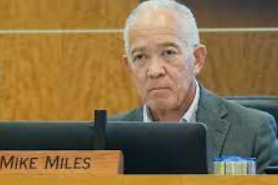
Mercedes Schneider summarizes the checkered career of Mike Miles, who was put in charge of the Houston Independent School District by State Commissioner Mike Morath, who was appointed by hard-right Republican Governor Greg Abbott. Abbott wants to punish Houston for not voting for him. What better punishment than to install Mike Miles as superintendent?

Schneider writes:

In June 2023, the Houston Independent School District (HISD) became the latest major school district to experience a top-down, ed-reform tactic that largely ignores community investment and fail to deliver on promised academic gains: the state takeover of a school district.

On June 01, 2023, the Texas Education Agency (TEA) appointed Mike Miles as the new HISD superintendent.

Miles is the golden-child product of market-based, ed-reform leadership. As reported in his LinkedIn bio, Miles holds no college degrees in teaching (engineering; slavic languages and literature; international affairs and policy). He has never been a classroom teacher, never a site-based administrator, yet he was a district superintendent in Colorado for six years (2006-11) and superintendent of Dallas ISD for three.

Though he does not mention it in his LinkedIn bio, Miles was a member of the Class of 2011 at the Broad Superintendents Academy A 2011 EdWeek article on Broad superintendents includes the criticism that they “use corporate-management techniques to consolidate power, weaken teachers’ job protections, cut parents out of decisionmaking, and introduce unproven reform measures.”

Indeed.

In 2015, Miles abruptly resigned from Dallas ISD amid being, as WFAA.com states, “at the center of controversy since he took the position nearly three years ago,” which apparently included questions about misdirecting funding intended for at-risk students and the subsequent exit of the Dallas ISD budget director. (Also calling Miles “a lightening rod for controversy,” WFAA.com offers this timeline of Miles’ unsettling tenure in Dallas.)

Despite all of his Dallas ISD controversy, TEA– which is no stranger to stepping into its own controversy— chose to hire Miles to lead its newly-state-snatched HISD.

Following his Dallas ISD exit, in 2016, he founded a charter school chain, Third Future Schools, which has locations in Colorado, Texas, and Louisiana. For two years (2017-19), Miles was a senior associate in an education consulting firm, FourPoint Education Partners.

And according to his LinkedIn bio, Miles is/was on a number of ed-reform organization boards, including Teach for America (TFA) Colorado (2017-20); National Council on Teacher Quality (NCTQ) (2013-present), and Chiefs for Change (2015-present).

Please open the link to finish reading the post.

Nancy Bailey, retired teacher, has been blogging for ten years. She reflects on the continuing efforts to destroy public education, based on a false narrative, hubris, and in some cases, the profit motive.

Nancy and I co-authored a book that serves as a glossary about fads and “reforms.”

She begins her new article:

School reform continues to privatize and destroy public schools. August marks ten years since I began blogging. Within that time I have written two books and co-authored a third with Diane Ravitch. I’m proud of all this writing but Losing America’s Schools: The Fight to Reclaim Public Education is the book title that especially stands out today.

Many Americans still don’t understand or value their ownership of public schools, and how they’re losing one of the country’s great democraticinstitutions. Instead of working together to build up local schools, to iron out difficulties, they’re willing to end them.

Thank you for reading my blog, commenting, and for those of you who have written posts. I am amazed at the wonderful educators, parents, students, and policymakers I have met. I have appreciated debate.

Here are some of the main education issues still of concern.

The Arts

School arts programs help children thrive. Those with mental health challenges benefit. Students might find art jobs. Sadly, many poor public schools ditched the arts. Some schools might get Arts Partnerships or entrepreneurships (Hansen, 2019). These programs aren’t always consistent. Public schools must offer well-rounded and fully resourced K-12 arts programs.

Assessment

Assessment is important for teachers to understand students. But high-stakes standardized tests push a narrow, one-size-fits-all agenda used to drive parents to private schools which, on the other extreme, have little accountability. Tests have been harmful to students.

Class Size

Children deserve manageable class sizes, especially for K-3rd grade (STAR Study), and for inclusion andschool safety.

Common Core State Standards

Controversy originally surrounded Common Core State Standards, promoted by the Bill and Melinda Gates Foundation in 2010, but Common Core continues to drive profiteering, especially in online programs.

Stan Karp of Rethinking Schoolssaid CCSS are:

A massively well-financed campaign of billionaires and politically powerful advocacy organizations that seeks to replace our current system of public education which, for all its many flaws, is probably the most democratic institution we have and one that has done far more to address inequality, offers hope, and provide opportunity than the country’s financial, economic, political, and media institutions with a market-based, non-unionized, privately managed system.

Corporations and Politicians

Corporations and politicians continue to work to end public schools and drive teachers out, transferring tax dollars to nonprofit and for-profit entities.

Nancy covers many more topics that have been harmful to public education.

Open the link and read her article in its entirety.

John Thompson, retired teacher and historian in Ohlahoma, keeps us up to date on the battle between Tulsa Public Schools and Ryan Walters, Oklahoma’s far-right MAGA Secretary of Education.

He writes:

Who won the latest battle between Oklahoma Superintendent of Public Instruction Ryan Walters and the Tulsa Public Schools (TPS)?

Walters had promised to fire TPS Superintendent Deborah Gist, and drive “Diversity, Equity, and Inclusion” (DEI) out of the classes, as well as mandating his ideology-driven curriculums. Then, Walters said at a Moms for Liberty event, “Tulsa Public Schools is getting money from the Chinese communist government,” He said, “They funneled it through a nonprofit — I mean, money-laundered it through a nonprofit in Texas.”

But Walters’ assault on the TPS accelerated further when Walters said he “had been in regular communication with Houston [HISD] about their school takeover.” And according to HTUL news, he has said “there’s currently a standards team and textbook committee to gather information on possible vendors like Hillsdale College and PragerU.” It thus became clear to Tulsans that the survival of their schools (and Oklahoma schools in general?) was at stake.

Walters’ promised to reveal his plan during the Oklahoma State Board of Education (OSDE) meeting on August 24. So, TPS board member, Jennettie Marshall, warned “during the board’s 90-minute discussion of the district’s accreditation status. ‘We are under attack. If you’re not keeping up with Houston, … if we continue the course we’re on, that’s where we’re headed. That shouldn’t be.’”

The day before the OSDE meeting, Deborah Gist resigned in the hope that Walters wouldn’t take over the state’s largest school system. And at the meeting, the World also explained that Walters “praised the local school board for ‘rooting out a cancer in the district that caused so many problems,’ referring to the Tulsa school board’s formal agreement approved Wednesday evening to part ways with Tulsa Superintendent Deborah Gist.” But “he also vowed to give the local Tulsa school board ‘a very short rope,’ saying he would return and ask for additional authority from the state Board of Education if he does not see adequate progress made within a few months.”

In response, the TPS Board Chairperson, Stacey Woolley, criticized Walters’ misstatements about the system’s student outcomes. She also said, “Antics and rhetoric must stop. We had two bomb threats at schools in the city of Tulsa because of rhetoric.” she said. “I do look forward to going forward and continuing the work and accelerating that work.”

Similarly, “Rep. Regina Goodwin, D-Tulsa, told the state board Walters has been ‘fostering an atmosphere of intimidation’” and protested, “When you talk about Black and brown children in Tulsa, Oklahoma, there are issues that go on in larger cities that have to be addressed. You don’t just say ‘You better perform better in three or four months!’ What kind of plan is that?”

Almost certainly, pushbacks by TPS supporters, and private communications, produced this outcome. It is too soon to know which side won the battle. Or, should I say lost less?

Unless Walters is correct and the TPS is secretly plotting with China to bring our democracy down, or violence erupts, I believe that the most important aspect of the battle could be the way that educators and journalists (especially at the Tulsa World) issued fact-based rebuttals to the extremists. Then, the Schusterman and the Kaiser foundations publicly opposed Walters’ takeover threats. Mayor G.T. Bynum finally came out against the takeover. And on the day of the OSDE meeting, Booker T. Washington H.S. students walked out.

The resistance even reached the point where the World editorialized, “conservative lawmakers must speak up.” And also, Gov. Kevin Stitt distanced himself from Walters who he appointed and then repeatedly supported. The World reported that Stitt said he “believes the State Board of Education will not overreact when considering accreditation for Tulsa Public Schools.” Stitt now says, “I don’t know what takeover is, what they are talking about. I believe in local control. I think the local board needs to address that.”

Secondly, the battle wasn’t over Deborah Gist. It was about the future of public education, and defending our democracy.

Thirdly, the former-teacher Rep. John Waldron (D) explained what we now know, “A far-right media source spread a doctored video suggesting a librarian was spreading a ‘woke agenda,’“ causing a Tulsa Union elementary school and the librarian to receive a bomb threat. (By the way, Waldron noted that the librarian’s actual agenda was promoting “reading and kindness.”)

Then, Walters reposted it, leading to two more bomb threats. NPR’s Beth Wallis reported that the first threat included, “I’m not going to stand as you bastards continue to indoctrinate and prey on our children.” And it also warned the librarian, “We know where you live.” Walters’ response was, “Woke ideology is real and I am here to stop it.” Another threat said:

“We placed a bomb at [the librarian’s elementary school address] and inside the Residence of [the librarian]. You will stop pushing this woke ideology or we will bomb every school in the union district.”

At the time that Wallis published the story, Walters had not removed his “repost of the altered video.”

Perhaps we will someday learn the behind the scenes discussions that prompted Walters to pull back from his most extreme threats. Who knows, perhaps this mayhem will prompt Republicans who are appalled by Walters to come out in support of public education and against the dangerous politics of hate. However, Rep. Mark McBride, R-Moore, the chair of the Oklahoma House subcommittee on education funding who has frequently challenged Walters, complained to the Oklahoman that “he was unable to sit in the conference room during the board meeting, despite requesting a seat along with multiple other lawmakers for several weeks.”

Finally, the other issues pushed by Walters at the OSDE meeting are a recipe for dysfunction and chaos. As Nondoc’s Bennett Brinkman reported, the board unanimously approved Walters’ demand for a “a report of ‘foreign government contributions to Oklahoma schools,’” and “a report regarding district policies and informal guidance for ‘student pronouns in Oklahoma schools.’” 

Moreover, Walters’ mandates, such as teacher training in the science of reading, can’t be rushed into place. As Linda-Darling Hammond explains, school improvement can only “move at the speed of trust.” Moreover, will teachers be expected to focus on phonics, or will the TPS be allowed to bring back the science and history instruction that is required to build the background knowledge that is needed for reading for comprehension? 

Sadly, we’re likely to learn more fake news over the next few months about what Walters sees as student outcomes, and a passing grade for high-challenge schools. Across the nation, we have seen the disastrous effects of rushed, test-driven instruction that was forced on high-poverty schools. Also, I sure hope we don’t see violence. But, even though Walters warned the TPS, “Do not test me,” I expect that the defenders of schools in Tulsa and elsewhere will continue to push back diplomatically but firmly. For better or for worse, we’re likely to see in the next few months what the TPS will face.

Michael Hiltzik, columnist for the Los Angeles Times, finds a pattern in the Republican attacks on the schools and universities. Their hostility to teaching Black history, their encouragement of book banning, their strategic defunding of higher education, their treatment of teaching about race, gender, and climate change as “indoctrination”—together point to a goal: the dumbing down of American young people.

Republicans say they want to get rid of “indoctrination” but they are busily erasing free inquiry and critical thinking. What do they actually want? Indoctrination.

He reminds us of the immortal words of former President Donald J. Trump: “I love the uneducated.” Republicans do not want students to think critically about racism or the past. They do not want them to reflect on anything that makes them “uncomfortable.” They want to shield them from “divisive concerns.” They want them to imbibe a candy-coated version of the past, not wrestle with hard truths.

He writes:

For reasons that may not be too hard to understand, Republicans and conservatives seem to be intent on turning their K-12 schools, colleges and universities into plantations for raising a crop of ignorant and unthinking students.

Donald Trump set forth the principle during his 2016 primary campaign, when he declared, “I love the poorly educated.”

In recent months, the right-wing attack on public education has intensified. The epicenter of the movement is Florida under Republican Gov. Ron DeSantis, where the faculty and course offerings of one of America’s leading liberal arts colleges, New College, have been eviscerated purportedly to wipe out what DeSantis calls “ideological indoctrination.”

The state’s K-12 schools have been authorized to supplement their curricula with animated cartoons developed by the far-right Prager University Foundation that flagrantly distort climate science and America’s racial history, the better to promote fossil fuels, undermine the use of renewable energy and paint a lily-white picture of America’s past.

Then there’s West Virginia, which is proposing to shut down nearly 10% of its academic offerings, including all its foreign language programs. The supposed reason is a huge budget deficit, the harvest of a systematic cutback in state funding.

In Texas, the State Library and Archives Commission is quitting the American Library Assn., after a complaint by a Republican state legislator accusing the association of pushing “socialism and Marxist ideology.”

In Arkansas, state education officials told schools that they may not award credit for the Advanced Placement course in African American history. (Several school districts said they’d offer students the course anyway.) This is the course that Florida forced the College Board to water down earlier this year by alleging, falsely, that it promoted “critical race theory.”

I must interject here that I’m of two minds about this effort. On the one hand, an ignorant young electorate can’t be good for the republic; on the other, filling the workforce with graduates incapable of critical thinking and weighed down by a distorted conception of the real world will reduce competition for my kids and grandkids for jobs that require knowledge and brains.

Let’s examine some of these cases in greater depth.

Prager University, or PragerU, isn’t an accredited institution of higher learning. It’s a dispenser of right-wing charlatanism founded by Dennis Prager, a right-wing radio host. The material approved for use in the schools includes a series of five- to 10-minute animated videos featuring the fictional Leo and Layla, school-age siblings who travel back in time to meet historical figures.

One encounter is with Frederick Douglass, the Black abolitionist. The goal of the video is to depict “Black lives matter” demonstrations as unrestrained and violent — “Why are they burning a car?” Leo asks while viewing a televised news report. The animated Douglass speaks up for change achieved through “patience and compromise.”

This depiction of Douglass leaves experts in his life and times aghast. Douglass consistently railed against such counsel. Of the Compromise of 1850, which brought California into the union but strengthened the Fugitive Slave Act — arguably the most detested federal law in American history — he stated that it illustrated how “slavery has shot its leprous distillment through the life blood of the nation.” In 1861, he thundered that “all compromises now are but as new wine to old bottles, new cloth to old garments. To attempt them as a means of peace between freedom and slavery, is as to attempt to reverse irreversible law.”

Patience? The video depicts Douglass quoting from an 1852 speech to a Rochester anti-slavery society in which he said “great streams are not easily turned from channels, worn deep in the course of ages.”

But it doesn’t include lines from later in the speech, reproaching his audience for prematurely celebrating the progress of abolition: “Your celebration is a sham; your boasted liberty, an unholy license; your national greatness, swelling vanity; … all your religious parade and solemnity, … mere bombast, fraud, deception, impiety, and hypocrisy — a thin veil to cover up crimes which would disgrace a nation of savages.”

Another video in the series parrots the fossil fuel industry’s talking points against wind and solar power: Standing over the corpse of a bird supposedly slain by flying into a wind turbine, the schoolkids’ interlocutor states, “Like many people … you’ve been misled about renewable energy, and their impact on the environment…. Windmills kill so many birds, it’s hard to track how many…. Wind farms and solar farms disrupt huge amounts of natural habitat.”

Acid rain, pollution, global warming — those consequences of fossil fuel energy aren’t mentioned. The video ends with a pitch for nuclear power, never mind the unsolved question of what to do with its radioactive waste products.

PragerU’s sedulous attack on renewables perhaps shouldn’t be much a surprise: Among its big donors is the Wilks family, which derives its fortune from fracking and which approved “future payment” of $6.25 million to PragerU in 2013.

As for New College, its travails under the DeSantis regime have been documented by my colleague Jenny Jarvie, among many others.

In a nutshell, the Sarasota institution possessed a well-deserved reputation as one of the nation’s outstanding havens for talented, independent-minded students. Then came DeSantis. He summarily replaced its board of trustees with a clutch of right-wing stooges including Christopher Rufo, known for having concocted the panic over critical race theory out of thin air and then marketed it as a useful culture war weapon to unscrupulous conservative politicians, including DeSantis.

Rufo and his fellows fired the university president and installed a sub-replacement-level GOP timeserver, Richard Corcoran, in her place. Faculty and students have fled. Students who stayed behind and were in the process of assembling their course schedules for the coming year are discovering at the last minute that the courses are no longer offered because their teachers have been fired or quit.

Instead of ambitious scholars committed to open inquiry, Corcoran has recruited athletes to fill out the student body, even though the college has no athletic fields for many of them to play on. According to USA Today, New College now has 70 baseball players, nearly twice as many as the University of Florida’s Division I NCAA team.

More to the point, the average SAT and ACT scores and high-school grade point averages have fallen from the pre-Corcoran level, while most of the school’s merit-based scholarships have gone to athletes. New College, in other words, has transitioned from a top liberal arts institution into a school that places muscle-bound underachievers on a pedestal. DeSantis calls this “succeeding in its mission to eliminate indoctrination and re-focus higher education on its classical mission.”

Finally, West Virginia University. Under its president, Gordon Gee — who previously worked his dubious magic at Brown Universityand Ohio State University, among other places — the school built lavish facilities despite declining enrollments. The construction program at the land grant university contributed to a $45-million deficit for the coming year, with expectations that it would rise to $75 million by 2028.

But the main problem was one shared by many other public universities — the erosion of public funding. As the West Virginia Center on Budget and Policy points out, “if West Virginia lawmakers had simply kept higher education funding at the same levels as a decade ago, West Virginia University would have an estimated additional $37.6 million in state funding for [fiscal year] 2024, closing the majority of this year’s budget gap.”

The decision on which programs to shutter at WVU points to a shift in how public university trustees see the purpose of their schools, trying to align them more with economic goals set by local industries rather than the goal of providing a well-rounded education to a state’s students. Trustees in some states, including North Carolina and Texas, have injected themselves into academic decisions traditionally left to administrators, often for partisan political reasons.

When it comes to interference in educational policies by conservatives, such as what’s happened in Florida, Texas and Arkansas, there’s no justification for taking these measures at face value — that is, as efforts to remove “indoctrination” from the schools. The truth is that the right-wing effort serves the purposes of white supremacists and advocates of anti-LGBTQ+ discrimination — they’re moving to inject indoctrination that conforms more to their own ideologies.

Take the attack on critical race theory, or at least the version retailed by Rufo and his ilk. “The right has reduced CRT to an incendiary dog whistle,” the Black scholar Robin D.G. Kelley of UCLA has observed, by caricaturing a four-decade-long scholarly effort to analyze “why antidiscrimination law not only fails to remedy structural racism but further entrenches racial inequality” into “a racist plot to teach white children to hate themselves, their country, and their ‘race.’”

(The inclusion of Kelley’s work in the AP African American Studies course was cited as a “concern” by Florida officials in their rationale for rejecting the course; Kelley’s work was suppressed by the College Board in its effort to make the course more acceptable to the state Department of Education.)

These attacks are couched in the vocabulary of “parents’ rights” and student freedom, but they don’t serve the students at all, nor do they advance the rights of parents interested in a good, comprehensive education for their children, as opposed to one dictated by the most narrow-minded ideologues in their state.

Where will it end? Florida’s ham-fisted educational policies won’t produce graduates with the intellectual equipment to succeed in legitimate universities, much less in the world at large. The only university many will be qualified to attend will be Prager U, and that won’t be good for anyone.
West Virginia is one of the poorest states in the nation, yet it has a billionaire governor (Jim Justice) and a billionaire senator (Joe Manchin), who pretend to serve their constituents by doing nothing for them. It is a deep red state. The legislature authorized charter schools and vouchers; the governor promised to veto both but he didn’t. Manchin continually blocks Biden programs that would help his constituents (like the Child Tax Credit) but protects the coal industry.

West Virginia University recently announced deep cuts to its programs and faculty, and students are angry.

Inside Higher Education reported:

MORGANTOWN, W.Va.—West Virginia University’s proposal to eliminate nearly a 10th of its majors and 169 full-time faculty positions from its flagship campus led hundreds of students to protest Monday, as a student union’s organizing power added volume to the online employee protestations and national media coverage that’s been buffeting the institution for more than a week.

Pressure on the administration to reverse its recommended cuts is growing as the WVU Board of Governors’ Sept. 15 vote on the proposals nears. The suggested cuts—not the first in recent years at West Virginia—were discussed around the end of the spring and through the summer, but WVU’s big reveal of how extensive the proposed layoffs and degree reductions would be didn’t come until Aug. 11.

“Stop the Cuts!” was students’ first chant outside the Mountainlair student union Monday, followed by “Hey hey, ho ho, Gordon Gee has got to go!”

Multiple chants, signs and a flame-bedecked “Fire Gee” banner that students held in front of the entrance to the Stewart Hall administration building all targeted Gee, the university’s two-time president whose current run has lasted nearly a decade. Chants and signs said, “Stop the Gee-llotine!” while other signs said, “Gee can take home 800K but we can’t take Spanish?” and “Cut Gee’s Pay, Not Our Programs!…”

WVU has proposed axing, among other degree offerings, its Ed.D. in higher education administration; Ph.D. in higher education; master of public administration; Ph.D. and master’s in math; bachelor’s in environmental and community planning; bachelor degree in recreation, parks and tourism resources; doctor of musical arts in composition; master of music in composition; and master’s in jazz pedagogy, acting and creative writing.

The university’s enrollment has declined 10 percent since 2015, far worse than the national average. In April, WVU leaders, projecting a further 5,000-student plunge over the next decade, said they needed to slash $75 million from the budget.

The university has pointed to low enrollments in certain programs to justify cuts, including a lightning rod proposal to eliminate the entirety of the department of world languages, literatures and linguistics. But Lisa Di Bartolomeo, a teaching professor of Russian studies at West Virginia, has retorted that WVU isn’t counting all students who are double majoring in languages.

“Cost-to-deliver is one of the metrics considered in the preliminary recommendations,” Kaull wrote in an email. “The data reflect students’ primary majors as they are the best reflection of the cost-to-deliver. Dual majors and minors don’t generate revenue like primary majors. Further, the cost and effort of supporting students (e.g., advising) is typically carried by the primary major.” 

WVU’s Aug. 11 news release announcing the proposed cuts said it was “exploring alternative methods of delivery” for languages, “such as a partnership with an online language app.” A sign on Monday called the university “Duolingo U,” complete with the green bird mascot of that phone app.

“We’re pissed,” Sadler said. “We’re losing languages; we’re losing departments; we’re losing faculty and friends.”

Gee told Inside Higher Ed Friday, “What we’re doing is that we’re really looking at the numbers and we realize that our students have spoken to us. And our students have said that offering languages the way that we are is just not something that they want.” 

Asked about the calls to reduce his salary, which were happening online before Monday’s protest, Gee said he contributes about 15 percent of his salary every year to student scholarships. 

John Fox, who just started his master’s degree in creative writing, one of the programs to be cut under the proposal, carried water bottles for the protesters. He’s from Morgantown.

“We’re losing out on the culture of West Virginia,” he said, “like a voice to the culture of West Virginia.”

The New York Times published a startling article about the increasing global dominance of one man. He may be the richest man in the world, but that’s not why he is the most dangerous man in the world. He currently is launching satellites into orbit on a weekly basis. He owns almost 5,000 satellites now, and the number in orbit increases regularly. If you can open the article, you will see graphic visualizations of the thousands of satellites owned by one man and unregulated by any government. That man is Elon Musk.

The article begins:

On March 17, Gen. Mark A. Milley, the chairman of the Joint Chiefs of Staff, and Gen. Valeriy Zaluzhnyi, the leader of Ukraine’s Armed Forces, dialed into a call to discuss Russia’s invasion of Ukraine. Over the secure line, the two military leaders conferred on air defense systems, real-time battlefield assessments and shared intelligence on Russia’s military losses.

They also talked about Elon Musk.

General Zaluzhnyi raised the topic of Starlink, the satellite internet technology made by Mr. Musk’s rocket company, SpaceX, three people with knowledge of the conversation said. Ukraine’s battlefield decisions depended on the continued use of Starlink for communications, General Zaluzhnyi said, and his country wanted to ensure access and discuss how to cover the cost of the service.

General Zaluzhnyi also asked if the United States had an assessment of Mr. Musk, who has sprawling business interests and murky politics — to which American officials gave no answer.

Mr. Musk, who leads SpaceX, Tesla and Twitter, has become the most dominant player in space as he has steadily amassed power over the strategically significant field of satellite internet. Yet faced with little regulation and oversight, his erratic and personality-driven style has increasingly worried militaries and political leaders around the world, with the tech billionaire sometimes wielding his authority in unpredictable ways.

Since 2019, Mr. Musk has sent SpaceX rockets into space nearly every week that deliver dozens of sofa-size satellites into orbit. The satellites communicate with terminals on Earth, so they can beam high-speed internet to nearly every corner of the planet. Today, more than 4,500 Starlink satellites are in the skies, accounting for more than 50 percent of all active satellites. They have already started changing the complexion of the night sky, even before accounting for Mr. Musk’s plans to have as many as 42,000 satellites in orbit in the coming years.

A global satellite network

There are over 4,500 Starlink satellites orbiting Earth. What appear to be long lines here are recently launched satellites approaching their place in orbit.

An animation showing circles that represent Starlink satellites orbiting Earth as it rotates. Most of the satellites are spaced out and move in a gridlike formation between Earth’s poles, while a few are closely clustered and move together in lines. [You must open the link to see the animations that show the global reach of Starlink satellites.]

The power of the technology, which has helped push the value of closely held SpaceX to nearly $140 billion, is just beginning to be felt.

Starlink is often the only way to get internet access in war zones, remote areas and places hit by natural disasters. It is used in Ukraine for coordinating drone strikes and intelligence gathering. Activists in Iran and Turkey have sought to use the service as a hedge against government controls. The U.S. Defense Department is a big Starlink customer, while other militaries, such as in Japan, are testing the technology.

But Mr. Musk’s near total control of satellite internet has raised alarms.

A combustible personality, the 52-year-old’s allegiances are fuzzy. While Mr. Musk is hailed as a genius innovator, he alone can decide to shut down Starlink internet access for a customer or country, and he has the ability to leverage sensitive information that the service gathers. Such concerns have been heightened because no companies or governments have come close to matching what he has built.

In Ukraine, some fears have been realized. Mr. Musk has restricted Starlink access multiple times during the war, people familiar with the situation said. At one point, he denied the Ukrainian military’s request to turn on Starlink near Crimea, the Russian-controlled territory, affecting battlefield strategy. Last year, he publicly floated a “peace plan” for the war that seemed aligned with Russian interests.

At times, Mr. Musk has openly flaunted Starlink’s capabilities. “Between, Tesla, Starlink & Twitter, I may have more real-time global economic data in one head than anyone ever,” he tweeted in April.

Mr. Musk did not respond to requests for comment. SpaceX declined to comment.

Worried about over-dependence on Mr. Musk’s technology, Ukrainian officials have talked with other satellite internet providers, though they acknowledged none rival Starlink’s reach.

“Starlink is indeed the blood of our entire communication infrastructure now,” Mykhailo Fedorov, Ukraine’s digital minister, said in an interview.

At least nine countries — including in Europe and the Middle East — have also brought up Starlink with American officials over the past 18 months, with some questioning Mr. Musk’s power over the technology, two U.S. intelligence officials briefed on the discussions said. Few nations will speak publicly about their concerns, for fear of alienating Mr. Musk, said intelligence and cybersecurity officials briefed on the conversations.

U.S. officials have said little publicly about Starlink as they balance domestic and geopolitical priorities related to Mr. Musk, who has criticized President Biden but whose technology is unavoidable.

The federal government is one of SpaceX’s biggest customers, using its rockets for NASA missions and launching military surveillance satellites. Senior Pentagon officials have tried mediating issues involving Starlink, particularly Ukraine, a person familiar with the discussions said.

The Defense Department confirmed it contracts with Starlink, but it declined to elaborate, citing “the critical nature of these systems.”

Other governments are wary. Taiwan, which has an internet infrastructure that could be vulnerable in the event of a Chinese invasion, is reluctant to use the service partly because of Mr. Musk’s business links to China, Taiwanese and American officials said.

China has its own concerns. Mr. Musk said last year that Beijing sought assurances that he would not turn Starlink on inside the country, where the internet is controlled and censored by the state. In 2020, China registered with an international body to launch 13,000 internet satellites of its own.

The European Union, partly driven by misgivings about Starlink and Mr. Musk, also earmarked 2.4 billion euros, or $2.6 billion, last year to build a satellite constellation for civilian and military use.

“This is not just one company, but one person,” said Dmitri Alperovitch, a cybersecurity expert who co-founded the Silverado Policy Accelerator think tank and has advised governments on satellite internet. “You are completely beholden to his whims and desires.”

The graphics in the article are powerful. Please open the link if you can.

As I read the article, I could not help thinking of the super-villains in James Bond movies who wanted to control the world.

Something weird has happened to the Republican Party. It used to favor local control. Not any more. Now Republicans think it okay to seize control of school districts instead of helping them with resources, as happened in Michigan, Ohio and Texas. And Texas just passed a law called “the Death Star” that allows the state to cancel local laws. No more local control in Texas!

Why have Republicans doubled down on suppressing the vote, gerrymandering legislatures to crush opposition, and undermining democracy whenever possible?

Gus Bova of The Texas Observer has the story here:

On November 3, 2020, as America watched the first results of a fateful presidential contest roll in, voters in a North Texas suburb struck a blow for workers’ rights. Euless residents approved a proposition limiting some large companies’ ability to force employees to work overtime if they didn’t want to.

The “fair workweek” initiative, comparable to measures passed recently in a handful of other cities, was led in Euless by employees of LSG Sky Chefs, an airline catering giant and meal-supplier for American Airlines. These workers, unionized with Unite Here, said they were being overwhelmed with mandatory overtime hours, often announced at the last minute, as American Airlines, headquartered near the sprawling Dallas-Fort Worth airport, sought to dramatically increase flight volume.

“You can have a wife and children, and yet every day you are forced to stay at work, and you have no time to even go back and sit and relax and play and take care of children,” said Samuel Tandankwa, a Sky Chefs driver and Unite Here member, recalling the conditions in 2019 and leading up to the COVID pandemic.

Despite getting voters’ approval, the initiative faced legal troubles from the first. Some city officials doubted it could be enforced. Sky Chefs told the Texas Observer it didn’t apply to them since they maintain a national contract with Unite Here. And Texas Attorney General Ken Paxton had already written a letter stating the policy would violate a state law that bans cities from setting minimum wages. Nevertheless, Tandankwa told the Observer in July that since the campaign, the company actually has turned away from using mandatory overtime, freeing up workers to meet family obligations, and neither he nor local worker advocates want to lose the ordinance.

But Euless’ overtime measure is among the local ordinances that will be vaporized by Texas’ House Bill 2127, dubbed the “Death Star” bill by critics, which was signed by GOP Governor Greg Abbott last month and takes effect in September. It’s causing uproar around the state, as city officials, workers, and others try to figure out what parts of municipal law and regulation the bill will nullify.

The bill’s sweeping, alleged purpose is stated in its opening sections: “returning sovereign regulatory powers to the state where those powers belong.” However, closer examination suggests that the legislation’s real intent is both narrower and potentially more profound than just upending city ordinance-making powers. First, it is a laser beam aimed at a small group of progressive ordinances improving worker and tenant protections—local victories won through hard-fought campaigns over the course of more than a decade. Second, and more importantly, it’s a bid to permanently hamstring municipal democracy in Texas, especially in its big blue cities. Cities are where most Texans live; they are increasingly liberal, their populations often majority nonwhite, and they are the level of government most responsive to ordinary citizens. In essence, the Legislature decided there was too much Democracy afoot in Texas, so it did something about it.

“To me, that’s the will of the people being taken away,” said Tevita Uhatafe, a Euless resident who works for American Airlines and is also a vice president of the Texas AFL-CIO. “We voted for it … and here we are, we’re going to get it taken away because people who claim to hate big government are acting just like [it].”

“There is no precedent for what they did this time,” said Rick Levy, president of the Texas AFL-CIO. “It was not a measured response to a given policy that corporate interests didn’t like; it was a wholesale transfer of power from cities to politicians in Austin.”

Please open the link and keep reading.

On August 20, the New York Times published a story about how Ron DeSantis joined the “ruling class” but now campaigns against it. His story is shot through with hypocrisy. He paints himself as the public school kid from middle-class Dunedin, Florida, surrounded by snobs from private schools who looked down on him. Yet now as governor, he treats public schools and their teachers with contempt and expanded vouchers to pay billions of taxpayer dollars for kids to go to private schools, including high-income families.

Why is he, the public school kid, subsidizing private and religious schools? Why is he so hostile to public schools? He complains that public schools indoctrinate their students yet he’s willing to send kids to religious schools whose purpose is indoctrination. Why does he subsidize the tuition of rich kids who go to private schools? Aren’t those the kind of kids who treated him with condescension?

Early last year, Gov. Ron DeSantis nestled into his chair onstage in Naples, Fla., to explain to an audience of the would-be conservative elite his journey through the reigning liberal one they hoped to destroy. His host was Larry P. Arnn, the president of Hillsdale College, a small Christian school in southern Michigan that has become an academic hub of the Trump-era right. His subject was Yale University, where Mr. DeSantis was educated and where, as he tells it, he first met the enemy.

The story begins:

“I’m a public school kid,” Mr. DeSantis told the audience, unspooling a story that he has shared in recent years with aides, friendly interviewers, donors, voters and readers of his memoir, “The Courage to Be Free.” “My mom was a nurse, my dad worked for a TV ratings company, installing the metering devices back then. And I show up in jean shorts and a T-shirt.” The outfit “did not go over well with the Andover and Groton kids” — sometimes it is Andover and Groton, sometimes it is Andover and Exeter, sometimes all three — who mocked his lack of polish.

Worse than Yale’s snobbery was its politics: College was “the first time that I saw unadulterated leftism,” he told the Republican Jewish Coalition this March. “We’re basically being told the Soviet Union was the victim in the Cold War.” Teachers and students alike “rejected God, and they hated our country,” he assured the audience in Naples. “When I get people that submit résumés,” he said, “quite frankly, if I got one from Yale I would be negatively disposed.”

Then there are the parts of the story he doesn’t tell: How his new baseball teammates at Yale — mostly fellow athletic recruits from the South and West who likewise viewed themselves as Yale outsiders — were among those who teased him about his clothes, and how he would nevertheless adopt their insular culture as his own. How he joined one of Yale’s storied “secret societies,” those breeding grounds of future senators and presidents, but left other members with the impression that he would have preferred to be tapped by a more prestigious one. How he shared with friends his dream of going to Harvard Law School — not law school, Harvard Law School — and successfully applied there, stacking one elite credential neatly onto another, and co-founded a tutoring firm that touted “the only LSAT prep courses designed exclusively by Harvard Law School graduates.” How his Yale connections helped him out-raise rivals as a first-time candidate for Congress, and how he featured his Ivy credentials — “a political scarlet letter as far as a G.O.P. primary went,” Mr. DeSantis likes to say — on his campaign websites, sometimes down to the precise degree of honors earned. And how that C.V. helped sell him to an Ivy-obsessed President Donald J. Trump, whose 2018 endorsement helped propel Mr. DeSantis to the governor’s office in Florida, where his Yale baseball jersey is displayed prominently on the wall next to his desk…

For Mr. DeSantis and his allies, the culture wars are the central struggle of American public life, and schools are the most important battleground where they will be fought. “Education is our sword,” Mr. DeSantis’s then education commissioner, Richard Corcoran, explained to a Hillsdale audience in 2021. And Mr. DeSantis is the man to wield it — a self-made striver who was “given nothing,” as he told the audience attending his campaign kickoff in Iowa in May. “These elites are not enacting an agenda to represent us. They’re imposing their agenda on us, via the federal government, via corporate America and via our own education system.”

DeSantis has aggressively taken political control of Florida’s schools and universities, passing laws that limit or eliminate what may be taught about gender and race. He has encouraged parent vigilantes to scour classrooms and libraries for books on controversial topics and ban them. His ally, radical conservative Chris Rufo, is quoted in the article:

“The goal of the university is not free inquiry,” Christopher Rufo, a conservative activist and one of the new trustees [of New College], said during a recent appearance in California. Instead, he argued, conservatives need to deploy state power to retake public institutions wherever they can.

“The universities are not overly politicized. The universities are overly ideologized and insufficiently politicized,” Mr. Rufo said. “We should repoliticize the universities and understand that education is at heart a political question.”

At Yale, DeSantis joined Delta Kappa Epsilon (Dekes), which was known for its vicious hazing of pledges. As an upper-class member, DeSantis was known for bullying pledges and forcing them to engage in pranks like dropping their pants and exposing their genitals, while the older members mocked their private parts.

The story says that DeSantis took a course on the Cold War taught by the esteemed scholar John Lewis Gaddis, who was an outspoken critic of the Soviet Union. In other words, DeSantis lied about being exposed to pro-Soviet views of the Cold War.

DeSantis portrayed Harvard Law School, where he studied, as a bastion of left wing thought. But the Dean of the law school when DeSantis arrived belonged to the conservative Federalist Society. And he was not the only member of that group on the faculty.

A 2005 survey of The Harvard Law Review, published in the Federalist Society’s flagship publication, The Harvard Journal of Law & Public Policy, found that staff members “identifying themselves as left-of-center did not comprise even a majority.”

DeSantis neglects to mention that he was an active member of the Harvard Law School’s Federalist Society. He prefers to play the victim.

When he ran for Congress and then for governor, he tapped his Yale and Harvard networks to raise money.

But then he discovered there was even more political advantage for him if he played the role of the enemy of the ruling class.

How better to attack the ruling class than to destroy the public schools that enabled him to enter Yale? If this makes no sense, neither does DeSantis’ fable about being victimized at Yale and Harvard.

Thom Hartmann, journalist and blogger, describes the loathsome identity of the Republican Party. It was once a sensibly Conservative Party that believed in local control and minimal government. It boasted leaders like Dwight D. Eisenhower, Howard Baker, Leverett Saltonstall, and Margaret Chase Smith.

What does the GOP believe today, other than cutting taxes for the richest?

Today, the GOP leaders peddle lies and conspiracy theories. On social media, they take turns smearing Biden (“the Biden crime family”) and retailing any charges they stumble across on the internet. I am appalled whoever I read any Tweet (X) posted by Ted Cruz, Josh Hawley, Jim Jordan, or other current GOP leaders.

You will not hear from any of them a hint of bipartisanship. It’s all hate, hate, hate. They call their opposition whatever names come to mind: socialists, Communists, radical left, fascists. Their words have no substantive meaning. They are intended to spread hate and fear.

Hartman explains why they stoke hate: They have no substantive ideas to improve people’s lives.

Hartmann writes:

So, Donald Trump says that if Judge Tanya Chutkan orders him not to reveal details of the prosecution’s case before they can be presented to a jury, including the names, addresses, and testimony of witnesses against him, he’s going to do it anyway and challenge the court.

And there’s little reason to believe he won’t do it: he’ll take what he’s asserting as his First Amendment right to troll and threaten witnesses against him all the way to the Supreme Court he packed with three rightwing crackpots. If nothing else, it may buy him enough time to get elected president and pardon himself before he’s convicted.

In this, Trump has raised vicious social media trolling into a form of electoral performance art. He’s become our troll-in-chief.

America has been under the sway of rightwing trolls before. When I was a child in the 1950s, Republican Senator Joe McCarthy was conducting an active witch-hunt for “communists” in the federal government. This was the era when Robert Oppenheimer lost his security clearance for, in part, declaring himself a “New Deal Democrat” and standing up to the witch hunters, as characterized in the new movie about his making the bomb.

McCarthy destroyed the lives of thousands of people, and many were imprisoned because of his efforts. Historian Ellen Schrecker estimates his victims at over 10,000. He — and his right hand man, Roy Cohn (who went on to be Trump’s mentor) — were classic trolls in the worst sense of the word.

Some of McCarthy’s efforts live to this day, including his insistence throughout the Army-McCarthy hearings on never saying “Democratic Party” but, instead, always saying, “Democrat Party.”

Similarly, McCarthy echoed the John Birch Society’s (JBS) argument that America is not a democracy but a republic, an argument that James Madison made — and then refuted — when he was trying to sell the US Constitution. McCarthy’s and the JBS’s apparent rationale was that “democracy” sounds too much like Democratic while “republic” evokes good feelings for the Republican Party.

Nelson Rockefeller, who would become Gerald Ford’s Vice President, got a dose of this with the John Birch Society-pushed Goldwater sweep of the Republican Party at their 1964 convention.

“It is essential that this convention repudiate here and now,” he said over boos and chants, “any doctrinaire, militant minority, whether Communist, Ku Klux Klan, or Bircher (pause for ‘republic not democracy!’ chants set off by his attacking the John Birch Society)…”

Today’s trolling, however, has gone beyond the fringes defined in that era by the JBS, Cohn, and the occasional McCarthyite wannabee. It’s become the core, the essential identity, of the post-Trump GOP.

From “rolling coal” trucks blowing poisonous smoke at Prius and EV drivers, to “Free helicopter rides for liberals” tee shirts invoking Pinochet’s murders, to hate groups and militia members showing up at school board meetings, today’s Republican Party has fully embraced hate and trolling.

“Owning the libs” is the main online sport of many Republicans today, as you can see by following the social media feeds or reading the hate mail of any high-profile progressives or Democrats.

In large part that’s because Republicans don’t have anything else to present to Americans as a positive national governing agenda.

Please open the link to read the rest of this excellent post.

Katherine Stewart has written several important books about the insidious Right and their radical, racist views. In this article in The New Republic, she looks at an influential reactionary organization, the Claremont Institute, and traces its ideological forebears. From crackpots to intellectual gurus, she traces the Right’s fascination with manliness, racism, anti-Semitism, and its longing for a world led by a new Caesar, a strong man who will protect other men from rapacious women and immigrants.

It’s a long read but worth your time. Stewart looks at the Fascist underbelly of conservatism, and it’s repulsive.