Archives for category: Cruelty

Timothy Snyder, a professor at Yale who writes often about European history and the fate of democracy, wrote a letter from Kyiv. Ukrainians, he says, are determined not to be conquered by Russia. And he notes the strange rules of this war, where Russia can strike civilian targets in Ukraine at will but Ukrainians are not supposed to strike back outside their own territory.

He wrote:

Greetings from Kyiv.  I have spent the last several days in Ukraine, here in the capital, and in the southerly regions of Odesa, Mykolaïv, and Kherson, trying to get a sense of the state of the war.  I will write more about the experience, but I thought that it might be a good time to share my most general sense.  

It is a crucial moment, partly because of what is happening, and partly because of our own sense of time. One and a half years is an awkward period for us.  We might like to think that it can be brought to a rapid conclusion, with this or that offensive or weapon.  When the war does not quickly end, we jump  to the idea that it is a “stalemate,” which is a situation that lasts forever.  This is false, and serves as a kind of excuse not to figure out what is going on.  This is a war that can be won, but only if we are patient enough to see the outlines and the  opportunities.

Russia’s gains in this invasion were made almost entirely during its first few weeks, in February and March 2022.  Those gains were largely possible thanks to the fact that Russia had seized the Crimean Peninsula in its earlier invasion of Ukraine in 2014.  Over the course of 2022, Ukraine won the battles of Kyiv, Kharkiv, and Kherson, and took back about half of the territory Russia gained. 

In the first half of 2023, Russia undertook an offensive that gained almost nothing but the city of Bakhmut.  In the second half of this year Ukraine has undertaken a counter-offensive which has taken far more territory than did the Russian offensive, but which has not (yet) changed the overall strategic position (but could).  In Russia, a military coup was attempted by Yevgeny Prigozhin, the leader of the mercenary group that took Bakhmut.  He and Putin made a deal, after which Putin killed him.  In a related development, Sergei Surovikin, probably the most capable Russian general, has been relieved of his command.  Russia now has no meaningful offensive potential. Its strategy is to continue terror against civilians until Ukrainians can endure no longer.  This, judging from my experience anyway, is not a tenable approach.  On the other hand, Russia has had time to extensively fortify a long long of defense in the east and south, and to prepare for Ukrainian offensives. This makes Ukrainian offensives very difficult. 

Ukraine did want to press forward last year, before the fortifications were built.  It lacked the necessary weapons, and Elon Musk chose to cut Ukraine off from communications.  That move likely extended the war. Because Musk’s decision was based on his internalization of Russian propaganda about nuclear war, and was accompanied by his repetition of that propaganda, he made a nuclear war more likely.  If powerful men convey the message that just talking about nuclear war is enough to win conventional wars, then we will have more countries with nuclear weapons and more conventional wars that can escalate into nuclear ones. Ukraine has been resistant to this line of Russian fearmongering, fortunately for us all.

Ukraine did not have the arms it needed last year in part for the same reason: Americans allowed Russian propaganda to displace strategic calculation. By now, though, the American side has generally understood that Russia’s nuclear threat was a psychological operation meant to slow weapons deliveries.  The United States and European partners have delivered arms to Ukraine, which has been absolutely indispensable. Hhistorically speaking, though, the pace is slow.  Fighter planes are coming, but a year late for the current offensive.  So Ukrainians are now trying an offensive in conditions that American staff officers would find challenging.  Americans take for granted economic superiority, prior destruction of logistics, and air supremacy, none of which describe the Ukrainian position.  Ukrainians do not even have numerical superiority, let alone of the 3-1 or 5-1 variety that would be standard advice for an offensive.

The fighting this summer has been very hard and very costly for Ukraine, harder and costlier, I think, than it had to be.  I visited wounded soldiers in a rehabilitation center earlier today; among the many feelings this aroused was some guilt that my people could have done more to protect these people. (If you want to protect them, consider a gift to Come Back Alive or United24 or Unite with Ukraine).

Kherson oblast, Ukraine, September 2023, TS

That said, Ukrainian territorial advances this summer have been sufficient to trigger a barrage of calls for a cease-fire from Kremlin-friendly voices.  Given the way or media seems to work, these calls (rather than the events on the ground) sometimes seem to be the news.  Pro-Kremlin op-eds smuggle in the assumption that Ukraine is not advancing, when in fact it is. The Kremlin allies make their case in terms of Ukrainian suffering, but never cite Ukrainians, nor the polling data that shows overwhelming support for the war.

There is zero reason to believe that the Kremlin would actually feel constrained by such an agreement in any place; it did not even begin to hold to the terms of the agreement after its last invasion, and in invading again Moscow has violated all of its agreements with Ukraine (while making clear that it does not consider Ukraine a state).  Russian propagandists talking to Russian audiences do not hide that the goal is the destruction of the Ukrainian nation, and that a ceasefire would just be meant to buy time. Now that the nuclear bluff has largely worn itself out, Moscow has changed its approach, trying instead to make people believe that nothing is happening on the battlefield.  Moscow’s hope is to motivate Ukraine’s allies to restrain Ukraine long enough for Russia to shift the balance of forces in its favor.  

Ukraine is deploying its own long-range strike capability to destroy airplanes and logistics in Russian territory, which is a necessary condition for winning the war.  This is an awkward development, since western partners don’t always think through how a war like this can be brought to an end.  It ends when one side wins.  The questions are who wins and under what conditions. 

The American allies take the correct view that Ukraine to win must break through the Russian lines.  But there are just not that many Ukrainians to throw into surges, and from a Ukrainian perspective those lives should be put at risk when the battlefield has been shaped.  The notion of a breakthrough is also too narrowly defined.  Even setting aside the value of life, which is what this war is all about, military history does show that battlefield victories are the final stage of a larger process that begins with logistics.  

This war has brought an entirely new theory of what a defensive war means: fighting only on one’s own territory.  This does not correspond to international law and has never made any sense.  It is a bit like rooting for a basketball team but believing it should play without ever taking the ball past halfcourt, or rooting for a boxer but claiming he is not allowed to throw a punch after his opponent does.  Had such a notion been in place in past wars, none of Ukraine’s partners would ever have won any of the wars they are proud of winning.  

The voiced concern is that Russia could “escalate.”  This argument is a triumph of Russian propaganda.  None of Ukraine’s strikes across borders has done anything except reduce Russian capacity.  None has led Russia to do things it was not already doing.  The notion of “escalation” in this setting is a misunderstanding.  In trying to undo Russian logistics, Ukraine is trying to end the war.  Ukraine will not do in Russia most of the things Russia has done in Ukraine.  It will not occupy or seize territory, it will not execute civilians, it will not build concentration camps and torture chambers.  What it must be allowed to do, to have some chance of stopping those Russian practices in Ukraine, is to have the capacity to win the war. With every village that Ukraine takes back, we see the most important de-escalation: away from war crimes and genocide, towards something more like a normal life.

Victory will be difficult, but it is the relevant concept.  I don’t know any Ukrainians at this point who have not lost a friend or a family member in this war.  My friends now tend to have a certain dark circle around the eyes and a tendency to look into the middle distance.  And yet the level of determination is very, very high. In the few days I have been here there have been missile attacks in or near both cities where I spent the night, a murderous Russian strike on a market, and a Russian attempt to cut off Ukrainian grain exports with missiles and drones.  This is daily life — but it is Ukrainian daily life, not ours.  The Ukrainians are doing all of the fighting; we are doing part of the funding.  What Ukrainian resistance protects, though, extends far beyond Ukraine.

The Ukrainians are defending the legal order established after the Second World War.  They have performed the entire NATO mission of absorbing and reversing an attack by Russia with a tiny percentage of NATO military budgets and zero losses from NATO members. Ukrainians are making a war in the Pacific much less likely by demonstrating to China that offensive operations are harder than they seem.  They have made nuclear war less likely by demonstrating that nuclear blackmail need not work.  Ukraine is also fighting to restore its grain exports to Africa and Asia, where millions of people have been put at risk by Russia’s attack on the Ukrainian economy.  Last but not least, Ukrainians are demonstrating that a democracy can defend itself.

Ukrainians are delivering to us kinds of security that we could not attain on our own.  I fear that we are taking these security gains for granted.  (In my more cynical moments, I fear that some of us, perhaps even some presidential candidates, resent the Ukrainians precisely for helping us so much.)  

This war will not end because of one sudden event, but nor will it go on indefinitely.  When and how it ends depends largely on us, on what we do, on how much we help. Even if we did not care at all about Ukrainians (and we should), getting this war to end with a Ukrainian victory would be by far the best thing Americans could do for themselves. Indeed, I do not think that, in the history of US foreign relations, there has ever been a chance to secure so much for Americans with so little effort by Americans. I do hope we take that chance.

TS Kyiv 7 September
This is one of the most brilliant articles I have read in many years. It answers the question that constantly arises: why do poor people vote for a political party that offers them nothing but alarming narratives about the Other?

Thom Hartmann explains that if you get people to vote for racism, against trans people, and against other imaginary threats, they will ignore the facts of poverty, health care, and the extreme income inequality and wealth inequality that characterizes our nation today.

Hartmann writes:

There’s a popular internet meme going around that says:

“Say you’re in a room with 400 people. Thirty-six of them don’t have health insurance. Forty-eight of them live in poverty. Eighty-five are illiterate. Ninety have untreated mental illnesses. And every day, at least one person is shot. But two of them are trans, so you decide ruining their lives is your top priority.”

Consider some of the basic realities of life in modern America:

— Almost 30 million Americans lack health insurance altogether, and 43 percent of Americans are so badly under-insured that any illness or accident costing them more than $1000 in co-pays or deductibles would wipe them out.

— Almost 12 percent of Americans, over 37 million of us, live in dire poverty. According to OECD numbers, while only 5 percent of Italians and 11 percent of Japanese workers toil in low-wage jobs, almost a quarter of Americans — 23 percent — work for wages that can’t support a normal lifestyle. (And low-income Japanese and Italians have free healthcare and college.)

— More than one-in-five Americans — 21 percent — are illiterate. By fourth grade, a mere 35 percent of American children are literate at grade level, as our public schools suffer from a sustained, two-decade-long attack by Republicans at both state and federal levels.

— Fully a quarter of Americans (26 percent) suffer from a diagnosable mental illness in any given year: over half of them (54 percent) never receive treatment and, because of cost and a lack of access to mental health care, of the 46 percent who do get help, the average time from onset of symptoms to the first treatment is 11 years.

— Every day in America an average of 316 people are shot and 110 die from their wounds. Gun violence is now the leading cause of death for American children, a situation not suffered by the children of any other country in theworld.

And these are just the tip of the iceberg of statistics about how Americans suffer from Reagan’s forty-year-long GOP war on working-class and poor people.

— Almost half (44 percent) of American adults carry student debt, a burden virtually unknownin any other developed country in the world (dozens of countries actually pay their young people to go to college).

— Americans spend more than twice as much for healthcare and pharmaceuticals than citizens of any other developed country. We pay $11,912 per person per year for healthcare; it’s $5,463 in Australia, $4,666 in Japan, $5496 in France, and $7,382 in Germany (the most expensive country outside of us).

And we don’t get better health or a longer lifespan for all the money; instead, it’s just lining the pockets of rich insurance, pharma, and hospital executives and investors, with hundreds of billions in profits every year.

— The average American life expectancy is 78.8 years: Canada is 82.3, Australia is 82.9, Japan is 84.4, France is 83.0, and Germany is 81.3.

— Our public schools are an underfunded mess, as are our highways and public transportation systems. While every other developed country in the world has high-speed train service, we still suffer under a privatized rail system that prevents Amtrak from running even their most modern trains at anything close to their top speeds.

Given all this, it’s reasonable to ask why Republicans across the nation insist that the country’s most severe problems are teaching Black History and trans kids wanting to be recognized for who they are.

If you give it a minute’s thought, though, the answer becomes pretty obvious. We have a billionaire problem, compounded by a bribery problem, and the combination of the two is tearing our republic apart.

The most visible feature of the Reagan Revolution was dropping the top income tax bracket for the morbidly rich from 74 percent down to 27 percent and then shooting the tax code so full of loopholes that today’s average American billionaire pays only 3.4 percent income tax. Many, like Trump for decades, pay nothing or next to nothing at all. (How much do you pay?)

But for a few dozen, maybe a hundred, of America’s billionaires that’s not enough.

Afflicted with the hoarding syndrome variant of obsessive compulsive disorder, there is never enough money for them no matter how many billions they accumulate.

If they’d been born poor or hadn’t gotten a lucky break, they’d be living in apartments with old newspapers and tin cans stacked floor-to-ceiling; instead, they have mansions, yachts, and virtual money bins worthy of Scrooge McDuck.

That in and of itself wouldn’t be so problematic if those same billionaires hadn’t worked together to get Clarence Thomas to cast the tie-breaking vote in the Citizens United case a few billionaires helped bring before the Supreme Court.

After Thomas and his wife, Ginni, were showered with millions in gifts and lavish vacations, the corrupt Supreme Court justice joined four of his colleagues — several of whom (Scalia, Roberts) were similarly on thetake — to legalize political bribery of politicians and Supreme Court justices.

The rubric they used was to argue that money isn’t really money; it’s actually “free speech,” so the people with the most money get to have the loudest and most consequential voices in our political and judicial discourse.

To compound the crisis, they threw in thenotion that corporations aren’t corporations but, instead, are “persons” fully deserving of the human rights enshrined in the Bill of Rights, the first ten Amendments to theConstitution — including the First Amendment right of free speech (now redefined as money).

In the forty-two years since the start of the Reagan Revolution, bought-off politicians have so altered our tax code that fully $51 trillion has moved from the homes and savings of working class Americans into the money bins of the morbidly rich.

As a result, America today is the most unequal developed nation in the world and the situation gets worse every day: many of our billionaires are richer than any pharaoh or king in the history of the world, while a family lifestyle that could be comfortably supported by a single income in 1980 takes two people working full-time to maintain today.

In the years since the Court first began down this road in 1976, the GOP has come to be entirely captured by this handful of mentally ill billionaires and the industries that made them rich.

As a result, Republican politicians refuse to do anything about the slaughter of our children with weapons of war; ignore or ridicule the damage fossil fuel-caused global warming is doing to our nation and planet; and continue to lower billionaire and corporate taxes every time they get full control of the federal or a state government.

The price of all this largesse for America’s billionaires is defunding the social safety net, keeping the minimum wage absurdly low, and gutting support for education and public services.

While there are still a few Democrats who are openly and proudly on the take (Manchin, Sinema, the corporate “problem solvers” in Congress), most of the Democratic Party has figured out how severe the damage of these neoliberal policies has been.

In the last session of Congress, for example, the For The People Act passed the House of Representatives with near-united Democratic votes (and not a single Republican) and only died in the Senate when Manchin and Sinema refused to go along with breaking a Republican filibuster.

The Act would have rolled back large parts of Citizens United by limiting big money in politics, providing for publicly funded elections, restoring our political bribery laws, and ending many of the GOP’s favorite voter suppression tactics.

All of this, then, brings us back around to that meme that opened this article:

Why are rightwing billionaires funding “activist” groups and politicians who’re trying to end the teaching of Black History and make the lives of trans people miserable?

When you think about it a minute — and look at the headlines in the news — the answer becomes apparent: as long as we’re all fighting with each other about history or gender, the “hoarding syndrome billionaires” and their corporations are free to continue pillaging America while ripping off working people and their families.

Mike Petrilli, president of the Thomas B. Fordham Institute, published an article in the New York Times yesterday in which he lamented the “learning loss” caused by the pandemic and called for a new national effort, like No Child Left Behind, to instill rigor and accountability, which he says will raise test scores. Time to bring back tough love, he wrote.

I have a hard time criticizing Mike Petrilli because I like him. When I was on the board of the Thomas B. Fordham Foundation/Institute, I got to know Mike, and he’s a genuinely good guy. But when I left the board of the TBF Institute in 2009, it was because I no longer shared its beliefs and values. I concluded as early as 2007 that No Child Left Behind was a failure. I wrote an article in the conservative journal EdNext in 2008 about NCLB, saying “End It,” paired with an article by the late John Chubb saying, “Mend It.”TBF sponsored charter schools in Ohio—a move I opposed because think tanks should be evaluating policy, not implementing it; also, during the time I was on the board, the charters sponsored by TBF failed.

By the time I left, I had concluded that the NCLB emphasis on high-stakes standardized testing was a disaster. It caused narrowing the curriculum, gaming the system, cheating, excessive test prep, and squeezed the joy of teaching and learning out of classrooms.

Furthermore, the very idea that Congress and the U.S. Department of Education were stigmatizing schools as failures and closing them was outrageous. I worked in the US ED. There are many very fine career civil servants there, but very few educators. In Congress, the number of experienced educators is tiny. Schools can’t be reformed or fixed by the President, Congress, and the Department of Education.

NCLB and Race to the Top were cut from the same cloth: Contempt for professional educators, indifference to the well-established fact that test scores are highly correlated with family income, and a deep but misguided belief that punishing educators and closing schools were cures for low test scores. Both the law (NCLB) and the program (RTTT) were based on the assumption that rewards and punishments directed at teachers and principals would bring about an educational renaissance. They were wrong. On the day that the Obama administration left office, the U.S. Department of Education quietly released a study acknowledging that Race to the Top, having spent billions on “test-and-punish” strategies, had no significant impact on test scores.

And as icing on the cake, Mike Petrilli wrote an article in 2017 about the latest disappointing NAEP scores, lamenting “a lost decade.” That “lost decade” was 2007-2017, which included a large chunk of NCLB and RTTT. In addition, the Common Core standards, released in 2010, were a huge flop. TBF was paid millions by the Gates Foundation both to evaluate them and to promote them. The NAEP scores remained flat after their introduction. Please, no more Common Core.

I wrote two books about the failure of NCLB and RTTT: The Death and Life of the Great American School System: How Testing and Choice Are Undermining Education (2010) and Reign of Error: The Hoax of the Privatization Movement and the Danger to America’s Public Schools.

Mercedes Schneider and I both wrote posts commending Mike Petrilli in 2019 when he wrote about the “dramatic achievement gains” of the 1990s and early 2000s before NCLB kicked in. He attributed those gains to improving economic conditions for families and declining child poverty rates. I wanted to give him a big kiss for recognizing that students do better in school when they are healthy and well-nourished.

So, what did No Child Left Behind and Race to the Top produce? A series of disasters, such as the Tennessee Achievement School District and Michigan’s Educational Achievement Authority, both gone. A landscape of corporate charter chains, for-profit charters, for-profit online charters, and now vouchers, in which red states commit to pay the tuition of students in religious schools and fly-by-night private schools. A national teacher shortage; a sharp decline in people entering the teaching profession.

Please, no more tough love. No more punishment for students, teachers, principals, and schools. Let bad ideas die.

Mike Miles was imposed on the Houston Independent School District by State Commissioner Mike Morath. Neither Miles nor Morath was ever a teacher. HISD was graded a B district before the state takeover. The takeover was based on spite, on Governor Greg Abbott’s hatred for a district that opposes him.

Miles thinks he is an innovator, but none of his authoritarian mandates has ever succeeded anywhere else. They won’t succeed in Houston because he lacks the single most essential ingredient of leadership: Trust.

He rules by fiat. That may work in dictatorships but not in schools. Fear is not a good long-term motivator. If Miles know anything about research on motivation, he would know that the greatest motivators are intrinsic, such as a sense of mastery and autonomy.

This post was written and published on a teacher website. It reports what’s happening in Houston’s classrooms, through the eyes of teachers.

The post begins:

The largest school district in Texas has been in the news a lot lately. You may know the district was issued a state takeover and its superintendent was replaced by Mike Miles, who, notably, has never taught. 

You may know that as a part of his “wholescale, systemic reform” he identified 28 underperforming schools and identified them as NES Schools—which stands for New Education System. 

You may know a few headlines—the most bizarre being that Miles starred in a musical skit for convocation that’s been scrubbed from the Internet. 

Often, the real story isn’t as bad as newspaper headlines make them out to be. That’s not the case with what’s happening in H.I.S.D. 

The experiences teachers are sharing are a different story entirely.

Here is what this reform looks like on a classroom level, from teachers currently in H.I.S.D. 

Teachers read from a script the first two days of school. 

Read right off the page. No get-to-know-yous, no surveys, no relationship-building, no games, nothing. Right into curriculum. 

Teachers must keep classroom doors propped open. 

However, teachers and parents argue this violates past safety mandates to leave classroom doors shut and locked.

Teachers cannot dim lights. 

Even if they leave the windows open, have lamps, etc., the lights must be at full power.

Teachers have constant interruptions from administrators and district “minders.”

APs have to submit a minimum of five teacher observations per day, so this means near-constant interruption.

Administrators evaluate teachers on a checklist that has very little to do with pedagogy.

Teachers don’t know how school leaders will use these observations. This is the actual form (big thanks to Janice Stokes).

[Open the link to see the form.]

My first three reactions:

If teachers are reading from a script created by the district, why are we evaluating them on their instruction being relevant and engaging? Isn’t that on your people, Mike? 

MRS stands for Multiple Response Strategies. Pair and share, whip around, etc. These are acceptable checks for understanding, but every four minutes is formulaic and prevents any kind of extended focus or stamina. 

I haven’t heard “DOL” since 1992.

Classroom monitors can coach teachers on instruction at any time.

Even with students present. Not insulting at all!

No “weak readers” can read aloud because it models disfluency.

Huh. OK.

At NES schools, libraries have been replaced with detention centers

A district employee I spoke to insists it is a “flex space that can have other uses besides discipline.” I said, “Oh, like a library?” She did not respond. 

Students may not free-write.

Also, they may not work independently for more than four minutes. 

Every four minutes, teachers are required to hold an all-class response to check for understanding. Which is great, until you actually have to read a book, take a standardized test, or focus for more than four minutes.

Every classroom activity must tie directly to instruction. 

No classroom celebrations, relationship-building activities, brain breaks, or routines/procedures instruction are permitted. 

Teachers received extremely limited training on this model.

The location chosen for training left people sitting on floors and stuck in parking lots for over 45 minutes.

There is no information tying any of these strategies to best practice or research on what’s best for kids.

This authoritarian approach to education is taking a huge toll on school climate and morale. A friend of mine said teachers at her school are breaking down on a daily basis. Even the strongest, most experienced educators—department chairs and leaders with stellar records—feel demoralized and unnerved (and that’s saying a lot after the past few years). 

And no, the answer isn’t to “just move,” or switch districts, or quit teaching altogether. First, that response is lazy and reductive, but more importantly doesn’t account for the hundreds of thousands of kids in H.I.S.D. schools forced to learn in environments counterproductive to their wellness and development. 

Public school teachers in Texas have known for years that it’s in the best interest of the state to destroy public education and reallocate funding to religious and private schools. Years of slashing budgets, demonizing teachers, lowering standards, letting chaplains offer mental health counseling—don’t tell me that’s a state that holds any kind of value for public education. That’s a state that wants to “prove” public education doesn’t work so it can privatize.

It’s just wild to me that they’re not even hiding it anymore.

Thom Hartman explains how Trump managed to devour the Republican Party, leaving nothing but an empty shell, without a platform or a philosophy. The internal collapse of the GOP started half a century ago….

He writes:

The Republican presidential debate wasn’t encouraging: Trump’s hold on the GOP appears stronger than ever. And that’s bad news for America.


In Robert Hubbell’s excellent Today’s Edition Newsletter on Substack, he made the point… that Trump’s relationship to the GOP is like that of one of those parasitic wasps that puts an egg into a caterpillar or spider and when the wasp larvae hatches it eats its host, leaving behind only a husk.


I’d take the metaphor a step farther: there’s a fungus, cordyceps, that infects ants and seizes control of their brains to alter their behavior ooto the fungus’ advantage. Another example is the toxoplasma parasite that’s often spread by cats: when mice are infected with the parasite, they no longer fear the smell of cats (and sometimes even want to play with them!), thus becoming easy prey. Scientists call it “fatal attraction.”


What Trump has done to the GOP is really quite impressive, worthy of either cordyceps or toxoplasma. And, frankly, it’s amazing that they didn’t even see it coming or try to stop him. (More on that in a moment.)


A registered Democrat and donor to the Democratic Party his entire life, Trump appropriated much of Bernie Sanders’ platform in 2016 to ingratiate himself with working class Americans.


He promised universal healthcare “cheaper than Obamacare,” taxes so high on the morbidly rich that “my friends won’t speak to me,” said he would bring America’s factories back home from overseas, and pledged to strengthen and expand Social Security and Medicare.


All, it turns out, were lies, although most in his base believe to this day that he did or nearly did all those things.


Having used Bernie’s policy positions (and a healthy dose of dog-whistle racism, essential for the Republican base) to win office in 2016, he proceeded to step into, take over, and then — like cordyceps or toxoplasma — alter top-to-bottom the behavior of the GOP.


Trump’s no idiot. He saw how the GOP was weakened, first by the Nixon scandals, then by Reagan’s neoliberalism that gutted the middle class, then by Bush and Cheney lying us into two unnecessary and illegal wars. The party was in a state of crisis when the nation elected our country’s first Black president, which gave Trump his opening.


Fifty years earlier, Nixon had injected the first “egg” of racism and white supremacy into the GOP with his “silent majority” and “war on drugs.”
The former was an explicit shout-out to white racists abandoned by the Democrats in 1964/1965 when LBJ pushed through and signed the Civil Rights and Voting Rights Acts, the latter an explicit technique to disrupt the Civil Rights and anti-war movements. Abandoning all subtlety, Nixon called it his “Southern Strategy.”


A decade later, Reagan pulled southern racists even deeper into the GOP by kicking off his 1980 election campaign with a speech about “states’ rights” to an all-white audience at an obscure Mississippi county fair near the site where three Civil Rights workers were brutally slaughtered in June, 1964. While most Americans — and all major American newspapers and TV networks — missed the significance of the event, southerners heard the whistle loud and clear.


Reagan amplified it with his “welfare queen” comments and his sympathy for white people offended by a “strapping young buck” using food stamps to “buy a T-Bone steak,” while “you were waiting in line to buy hamburger.”


With the ground laid by Nixon and Reagan, that singular event of Obama’s presidency gave Trump the lever he needed to inject the larvae of his sociopathy into the moribund GOP.


He began with his claim that Obama wasn’t even a US citizen but had been born in Kenya, as clear a reference to race as his assertion earlier this week that the Black prosecutor Fani Willis and the Black judge Tanya Chutkan are both “Riggers.”


But Trump was only able to finally take over the GOP in 2016 because a group of corrupt politicians and rightwing billionaires got there first, setting up the party’s faithful to believe absurd lies and step into alternate realities.


It started with Nixon claiming he had a “secret plan” to end the Vietnam War when, in fact, he’d reached out to the Vietnamese and scuttled an actual peace treaty that LBJ had negotiated in the summer of 1968.


When President Johnson called Republican Senator Everett Dirksen to tell him about it just days before the election, Dirksen accused Nixon of “treason.”
Reagan then convinced America’s Republican voters that if they’d just cut taxes on the morbidly rich, prosperity would “trickle down” to average middle class people because it would “unleash” the “job creators.”


His cutting the top tax bracket from 74 percent to 27 percent unleashed them, all right: it unleashed them to buy thousands of politicians at both the state and federal level; to flip more radio stations, TV stations, and newspapers hard right; to purchase yachts and mansions around the world, and even to build their own spaceships.


Reagan told Republicans if they stopped enforcing the anti-trust laws that Republicans had fought for in the 1890s and Republican presidents Teddy Roosevelt and Robert Taft had used, prices would drop and America’s small towns would prosper. Instead, the average American family pays $5,000 a year more than citizens of countries that still enforce their anti-monopoly laws and small-town America has been gutted, with literally millions of local retailers and small employers put out of business by Big Box stores.


Reagan sold Republicans (and a few Democrats) on the idea that “free trade” would lower costs for Americans and, to some extent, it did: our stores were quickly filled with cheap, disposable junk. But the price we paid was 50,000+ factories and over 16 million good-paying union jobs moving to Asia and Mexico.


Reagan promised us if we’d just follow Milton Friedman’s advice (when he was secretly being paid off by the real estate lobby) and end rent controls, cut home mortgage subsidies like those through the FHA and VA, and throw our housing markets open to unrestrained speculation and both corporate and foreign ownership, every American could live the American Dream.


Instead, foreign investors and massive hedge funds run by Wall Street billionaires are buying up America’s housing stock and turning it into rental properties, both exploding the price of houses and rents. The clear and measurable result is an epidemic of homelessness and tent cities.
Reagan promised us if we’d just end “oppressive regulations” — designed to keep our food supply safe, our drugs affordable, clean up our air and water, and protect our children from death by firearms — the “magic of the free market” would provide all those things in spades.


Instead, our food supply is filled with chemicals, microplastics, and heavily processed faux foods that have produced two generations of obesity and related metabolic disorders in children along with an explosion of cancer, birth defects, and other once-rare diseases.
Reagan promised us if we’d just stop funding public schools and stop teaching civics and instead direct that money to private for-profit or church-run voucher and charter schools it would grow the levels of literacy, civic engagement, and healthy political dialogue.
Instead, about half of all American adults cannot read a book written at an eighth-grade level, according to the U.S. Department of Education and the National Institute of Literacy. Only 39 percent of Americans can name all three branches of government, leaving our nation vulnerable to racist white nationalists and fascists wanting to transform the democratic experiment our Founders began with our American republic.


The next Republican president, George W. Bush, nakedly lied to America about the “threat” presented by Saddam Hussein and Iraq to justify a war that cost our nation dearly in both blood and treasure, just to enrich the failing Halliburton (former CEO: Dick Cheney) and other oil companies in Bush and Cheney’s orbit.


Bush also pushed through a plan to clear-cut forests he called the “Healthy Forests Initiative,” and a plan to deregulate pollution controls he called the “Clear Skies” legislation.


By 2010, Republican voters were primed to believe pretty much anything party politicians told them. That was the year the billionaires really got busy taking control of the party’s base.


They started by funding the Tea Party, theoretically a response to President Obama’s effort to provide affordable healthcare for all Americans. Tri-cornered hats and bizarre signs saying things like “Keep Your Government Hands Off My Medicare” popped up all over America, as the billionaires’ Astroturf movement rented high-end busses to bring gullible retired boomers to staged media events across the nation.


That morphed into the “freedom agenda,” branding everything in sight with the word. From trashing queer people, to calls for more tax cuts for billionaires, intimidation of teachers and librarians, massive Red-state-by-Red-state voter purges, legalizing open carry of assault weapons, criminalizing abortion, and a campaign to end the teaching of Black History, “freedom” has spread across the GOP.


This week we even learned that the billionaire-funded Freedom Caucus in the House intends to try to crash the US economy just in time for the election (knowing Biden will get the blame) by refusing to fund the government for the 2024 fiscal year.


Republicans have taken their “freedom agenda” to such extremes that they’re actively suppressing dissent to promote it. When a group of moms of children who died or barely survived a mass shooting at the Covenant Elementary School wanted to testify before the Tennessee General Assembly, they were escorted out by state police the Republican leader, Rep. Lowell Russell, had called.


In today’s GOP, fully in the thrall of Donald Trump and his authoritarianism, dissent is not allowed. Just ask Justin Amash or Liz Cheney.


Trump has done his work, and the Republican Party is no longer a legitimate political party. Like a cat with a toxoplasma-infected mouse, he’s eaten the party whole.


It has no platform, no moral compass, and no loyalty to the Constitution or America’s historic ideals. Instead, it does whatever the billionaires who own it tell it to do (with the ability to bribe given them by five Republicans on the Supreme Court who legalized political bribery in Citizens United).


This grift, started by Richard Nixon’s treason and lies and exploited over the years by the morbidly rich, has now so completely absorbed the party that it’s hard to see it returning to the conservative-but-willing-to-compromise entity it was during the Eisenhower presidency. Hell, most Republican voters today don’t even remember Eisenhower, much less venerate him.


As the esteemed Republican activist and constitutional scholar J. Michael Luttig told CNN a few weeks ago:

“A political party is a collection and assemblage of individuals who share a set of beliefs and principles and policy views about the United States of America. Today, there is no such shared set of beliefs and values and principles or even policy views as within the Republican party for America.”

Mourning the loss of the party he was once proud to be part of, Luttig added:

“American democracy simply cannot function without two equally healthy and equally strong political parties. So today, in my view, there is no Republican Party to counter the Democratic Party in the country. And for that reason, American democracy is in grave peril.”

A return to some semblance of normalcy in theGOP is essential to restoring a normal, functioning government to our nation, as Luttig points out. Odds are, however, it’s first going to take a widespread destruction of that party — provoked by huge Democratic wins in 2024 — to come about.

And, given the bizarre spectacle we witnessed in the Republican presidential debate, that can’t come soon enough.

Mercedes Schneider summarizes the checkered career of Mike Miles, who was put in charge of the Houston Independent School District by State Commissioner Mike Morath, who was appointed by hard-right Republican Governor Greg Abbott. Abbott wants to punish Houston for not voting for him. What better punishment than to install Mike Miles as superintendent?

Schneider writes:

In June 2023, the Houston Independent School District (HISD) became the latest major school district to experience a top-down, ed-reform tactic that largely ignores community investment and fail to deliver on promised academic gains: the state takeover of a school district.

On June 01, 2023, the Texas Education Agency (TEA) appointed Mike Miles as the new HISD superintendent.

Miles is the golden-child product of market-based, ed-reform leadership. As reported in his LinkedIn bio, Miles holds no college degrees in teaching (engineering; slavic languages and literature; international affairs and policy). He has never been a classroom teacher, never a site-based administrator, yet he was a district superintendent in Colorado for six years (2006-11) and superintendent of Dallas ISD for three.

Though he does not mention it in his LinkedIn bio, Miles was a member of the Class of 2011 at the Broad Superintendents Academy A 2011 EdWeek article on Broad superintendents includes the criticism that they “use corporate-management techniques to consolidate power, weaken teachers’ job protections, cut parents out of decisionmaking, and introduce unproven reform measures.”

Indeed.

In 2015, Miles abruptly resigned from Dallas ISD amid being, as WFAA.com states, “at the center of controversy since he took the position nearly three years ago,” which apparently included questions about misdirecting funding intended for at-risk students and the subsequent exit of the Dallas ISD budget director. (Also calling Miles “a lightening rod for controversy,” WFAA.com offers this timeline of Miles’ unsettling tenure in Dallas.)

Despite all of his Dallas ISD controversy, TEA– which is no stranger to stepping into its own controversy— chose to hire Miles to lead its newly-state-snatched HISD.

Following his Dallas ISD exit, in 2016, he founded a charter school chain, Third Future Schools, which has locations in Colorado, Texas, and Louisiana. For two years (2017-19), Miles was a senior associate in an education consulting firm, FourPoint Education Partners.

And according to his LinkedIn bio, Miles is/was on a number of ed-reform organization boards, including Teach for America (TFA) Colorado (2017-20); National Council on Teacher Quality (NCTQ) (2013-present), and Chiefs for Change (2015-present).

Please open the link to finish reading the post.

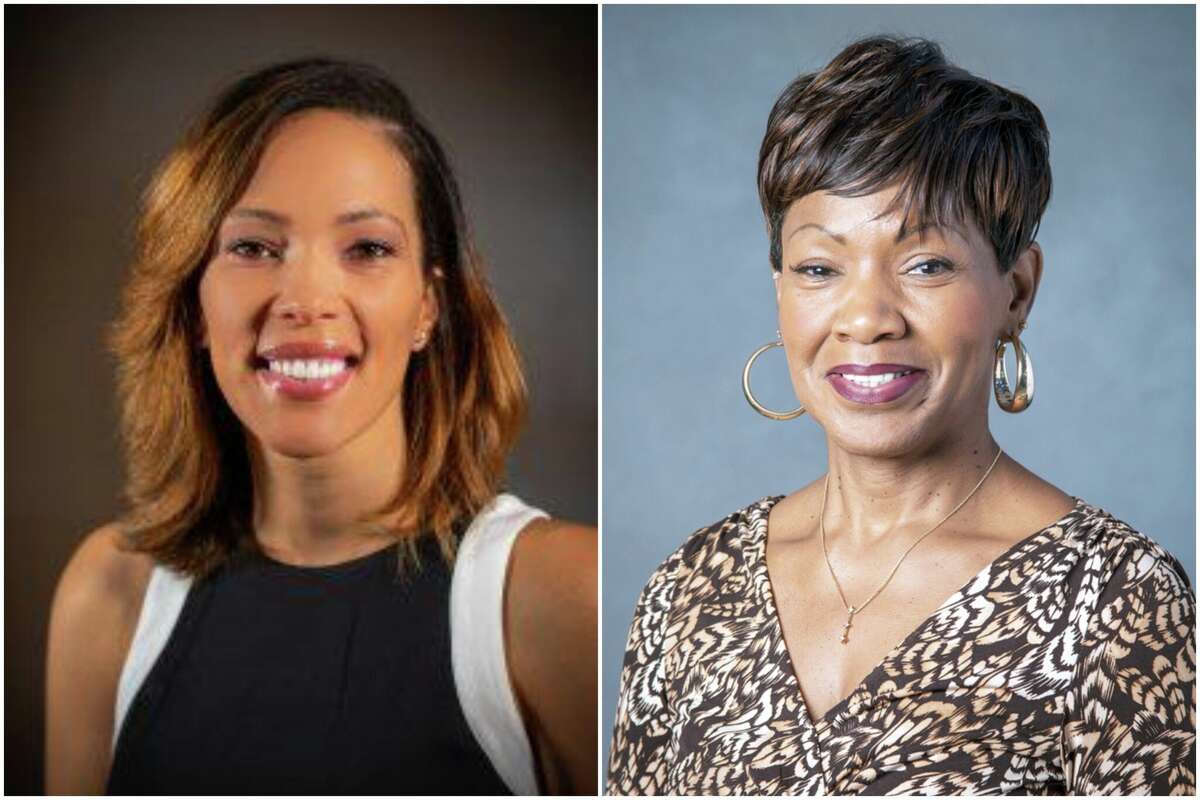
In true Broadie style, Houston Superintendent Mike Miles removed two elementary principals only days before the start of school. He started his job of “reforming” the Houston public schools in June, so he obviously did not observe either of them. This is disruption to the max. Teachers and parents learned about this abrupt action through an automated phone call.

Erin Trent (left), principal at Stevens Elementary School, and Linda Bellard, principal at Garcia Elementary School, were both removed from their positions Aug. 23, 2023. 

Erin Trent (left), principal at Stevens Elementary School, and Linda Bellard, principal at Garcia Elementary School, were both removed from their positions Aug. 23, 2023. Houston ISD

Parents and teachers at Stevens say they were “blindsided” by the announcement, which was made via an automated phone call.

“This unexpected and impersonal communication from the district caused immediate anxiety, confusion and fear, not just for me personally but among hundreds of parents,” said Adam Chaney, the parliamentarian for Stevens’ Parent Teacher Community Organization.

“Our community deserves clarification immediately. We are two days away from ‘Meet the Teacher,’ the whole campus is going to be present, and then Monday morning is the start of school,” Chaney said. “It’s become increasingly difficult to avoid interpreting this chaotic situation through the lens of this controversial takeover.”

HISD officials declined to comment further or provide a reason for the reassignments, saying that the district cannot comment on ongoing personnel matters. The call Stevens parents received Wednesday acknowledged that “the change may feel abrupt,” but that it had “become clear that this change is necessary to ensure Stevens Elementary students start the year off well with access to high-quality instruction on day one that meets their needs and supports increased academic outcomes on the campus…”

Trent’s abrupt removal has led members of the Stevens community to speculate that she was reassigned because she did not opt in to Superintendent Mike Miles’ New Education System earlier this summer.

One teacher, who asked to remain anonymous for fear of retaliation, said Trent resisted pushes from the HISD central office to become an NES-aligned school, which would have seen many of Miles’ most sweeping and controversial reforms implemented at Stevens.

Miles also disbanded the HISD team of autism specialists who served schools throughout the district.

The Republicans continue their war against abortion, even though the majority in every state want to keep it legal. Few if any women realize they are pregnant at the six-week mark.

The South Carolina Supreme Court on Wednesday upheld the state’s new near-total ban on abortion by a 4-1 vote, reversing a decision it had made in January that struck down a similar ban and declared that the State Constitution’s protections for privacy included a right to abortion.

The court’s decision was not unexpected, because the makeup of the bench had changed, and Republicans in the State Legislature had passed a new abortion law in the hopes that it would find a friendlier audience with the new court. The decision in January was written by the court’s only female justice; she retired and South Carolina now has the nation’s only all-male high court.

The decision repeated what the justices said in January about a right to privacy in the State Constitution, but said the Legislature had addressed the concerns in the first law and “balanced” the interests of pregnant women with those of the fetus.

“To be sure, the 2023 Act infringes on a woman’s right of privacy and bodily autonomy,” Justice John Kittredge wrote for the majority.

But, he added, “We think it is important to reiterate: we are constrained by the express language in the South Carolina Constitution that prohibits only ‘unreasonable invasions of privacy.’

“The legislature has made a policy determination that, at a certain point in the pregnancy, a woman’s interest in autonomy and privacy does not outweigh the interest of the unborn child to live…”

Until now, South Carolina had allowed abortion until 22 weeks, which had increasingly made the state a haven for women seeking abortions as other Southern states banned the procedure.

Republicans said their next step would be a total ban on abortions.

The likely result: Wealthy and middle-income women who want an abortion will go to a state where it is legal. Poor women won’t be able to afford to make the trip. There will be more children born to poor mothers. In South Carolina, there is fervor to support the unborn but not the born.

On August 20, the New York Times published a story about how Ron DeSantis joined the “ruling class” but now campaigns against it. His story is shot through with hypocrisy. He paints himself as the public school kid from middle-class Dunedin, Florida, surrounded by snobs from private schools who looked down on him. Yet now as governor, he treats public schools and their teachers with contempt and expanded vouchers to pay billions of taxpayer dollars for kids to go to private schools, including high-income families.

Why is he, the public school kid, subsidizing private and religious schools? Why is he so hostile to public schools? He complains that public schools indoctrinate their students yet he’s willing to send kids to religious schools whose purpose is indoctrination. Why does he subsidize the tuition of rich kids who go to private schools? Aren’t those the kind of kids who treated him with condescension?

Early last year, Gov. Ron DeSantis nestled into his chair onstage in Naples, Fla., to explain to an audience of the would-be conservative elite his journey through the reigning liberal one they hoped to destroy. His host was Larry P. Arnn, the president of Hillsdale College, a small Christian school in southern Michigan that has become an academic hub of the Trump-era right. His subject was Yale University, where Mr. DeSantis was educated and where, as he tells it, he first met the enemy.

The story begins:

“I’m a public school kid,” Mr. DeSantis told the audience, unspooling a story that he has shared in recent years with aides, friendly interviewers, donors, voters and readers of his memoir, “The Courage to Be Free.” “My mom was a nurse, my dad worked for a TV ratings company, installing the metering devices back then. And I show up in jean shorts and a T-shirt.” The outfit “did not go over well with the Andover and Groton kids” — sometimes it is Andover and Groton, sometimes it is Andover and Exeter, sometimes all three — who mocked his lack of polish.

Worse than Yale’s snobbery was its politics: College was “the first time that I saw unadulterated leftism,” he told the Republican Jewish Coalition this March. “We’re basically being told the Soviet Union was the victim in the Cold War.” Teachers and students alike “rejected God, and they hated our country,” he assured the audience in Naples. “When I get people that submit résumés,” he said, “quite frankly, if I got one from Yale I would be negatively disposed.”

Then there are the parts of the story he doesn’t tell: How his new baseball teammates at Yale — mostly fellow athletic recruits from the South and West who likewise viewed themselves as Yale outsiders — were among those who teased him about his clothes, and how he would nevertheless adopt their insular culture as his own. How he joined one of Yale’s storied “secret societies,” those breeding grounds of future senators and presidents, but left other members with the impression that he would have preferred to be tapped by a more prestigious one. How he shared with friends his dream of going to Harvard Law School — not law school, Harvard Law School — and successfully applied there, stacking one elite credential neatly onto another, and co-founded a tutoring firm that touted “the only LSAT prep courses designed exclusively by Harvard Law School graduates.” How his Yale connections helped him out-raise rivals as a first-time candidate for Congress, and how he featured his Ivy credentials — “a political scarlet letter as far as a G.O.P. primary went,” Mr. DeSantis likes to say — on his campaign websites, sometimes down to the precise degree of honors earned. And how that C.V. helped sell him to an Ivy-obsessed President Donald J. Trump, whose 2018 endorsement helped propel Mr. DeSantis to the governor’s office in Florida, where his Yale baseball jersey is displayed prominently on the wall next to his desk…

For Mr. DeSantis and his allies, the culture wars are the central struggle of American public life, and schools are the most important battleground where they will be fought. “Education is our sword,” Mr. DeSantis’s then education commissioner, Richard Corcoran, explained to a Hillsdale audience in 2021. And Mr. DeSantis is the man to wield it — a self-made striver who was “given nothing,” as he told the audience attending his campaign kickoff in Iowa in May. “These elites are not enacting an agenda to represent us. They’re imposing their agenda on us, via the federal government, via corporate America and via our own education system.”

DeSantis has aggressively taken political control of Florida’s schools and universities, passing laws that limit or eliminate what may be taught about gender and race. He has encouraged parent vigilantes to scour classrooms and libraries for books on controversial topics and ban them. His ally, radical conservative Chris Rufo, is quoted in the article:

“The goal of the university is not free inquiry,” Christopher Rufo, a conservative activist and one of the new trustees [of New College], said during a recent appearance in California. Instead, he argued, conservatives need to deploy state power to retake public institutions wherever they can.

“The universities are not overly politicized. The universities are overly ideologized and insufficiently politicized,” Mr. Rufo said. “We should repoliticize the universities and understand that education is at heart a political question.”

At Yale, DeSantis joined Delta Kappa Epsilon (Dekes), which was known for its vicious hazing of pledges. As an upper-class member, DeSantis was known for bullying pledges and forcing them to engage in pranks like dropping their pants and exposing their genitals, while the older members mocked their private parts.

The story says that DeSantis took a course on the Cold War taught by the esteemed scholar John Lewis Gaddis, who was an outspoken critic of the Soviet Union. In other words, DeSantis lied about being exposed to pro-Soviet views of the Cold War.

DeSantis portrayed Harvard Law School, where he studied, as a bastion of left wing thought. But the Dean of the law school when DeSantis arrived belonged to the conservative Federalist Society. And he was not the only member of that group on the faculty.

A 2005 survey of The Harvard Law Review, published in the Federalist Society’s flagship publication, The Harvard Journal of Law & Public Policy, found that staff members “identifying themselves as left-of-center did not comprise even a majority.”

DeSantis neglects to mention that he was an active member of the Harvard Law School’s Federalist Society. He prefers to play the victim.

When he ran for Congress and then for governor, he tapped his Yale and Harvard networks to raise money.

But then he discovered there was even more political advantage for him if he played the role of the enemy of the ruling class.

How better to attack the ruling class than to destroy the public schools that enabled him to enter Yale? If this makes no sense, neither does DeSantis’ fable about being victimized at Yale and Harvard.

Katherine Stewart has written several important books about the insidious Right and their radical, racist views. In this article in The New Republic, she looks at an influential reactionary organization, the Claremont Institute, and traces its ideological forebears. From crackpots to intellectual gurus, she traces the Right’s fascination with manliness, racism, anti-Semitism, and its longing for a world led by a new Caesar, a strong man who will protect other men from rapacious women and immigrants.

It’s a long read but worth your time. Stewart looks at the Fascist underbelly of conservatism, and it’s repulsive.