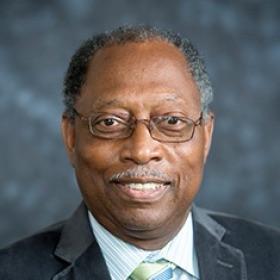
Heather Cox Richardson recounts the important exchanges between the new Pope, Leo XIV, and JD Vance, on the subject of immigrants. Vance, a convert to Catholicism, described Catholic doctrine and was quickly rebuffed at the time both by Pope Francis and by the future Pope. So, JD Vance has the dubious distinction of being rebuffed by two Popes!

She writes:

Today, on the second day of the papal conclave, the cardinal electors—133 members of the College of Cardinals who were under the age of 80 when Pope Francis died on April 21—elected a new pope. They chose 69-year-old Cardinal Robert Prevost, who was born in Chicago, thus making him the first pope chosen from the United States. But he spent much of his ministry in Peru and became a citizen of Peru in 2015, making him the first pope from Peru, as well.

New popes choose a papal name to signify the direction of their papacy, and Prevost has chosen to be known as Pope Leo XIV. This is an important nod to Pope Leo XIII, who led the church from 1878 to 1903 and was the father of modern Catholic social teaching. He called for the church to address social and economic issues, and emphasized the dignity of individuals, the common good, community, and taking care of marginalized individuals.

In the midst of the Gilded Age, Leo XIII defended the rights of workers and said that the church had not just the duty to speak about justice and fairness, but also the responsibility to make sure that such equities were accomplished. In his famous 1891 encyclical Rerum Novarum, translated as “Of New Things,” Leo XIII rejected both socialism and unregulated capitalism, and called for the state to protect the rights of individuals.

Prevost’s choice of the name Leo invokes the principles of both Leo XIII and his predecessor, Pope Francis. In his own lifetime he has aligned himself with many of Francis’s social reforms, and his election appears to be a rejection of hard-line right-wing Catholics in the U.S. and elsewhere who have used their religion to support far-right politics.

In the U.S., Vice-President J.D. Vance is one of those hard-line right-wing Catholics. Shortly after taking office in January, Vance began to talk of the concept of ordo amoris, or “order of love,” articulated by Catholic St. Augustine, claiming it justified the MAGA emphasis on family and tribalism and suggesting it justified the mass expulsion of migrants.

Vance told Sean Hannity of the Fox News Channel, “[Y]ou love your family, and then you love your neighbor, and then you love your community, and then you love your fellow citizens in your own country, and then, after that, you can focus and prioritize the rest of the world. A lot of the far left has completely inverted that.” When right-wing influencer Jack Posobiec, who is Catholic, posted Vance’s interview approvingly, Vance added: “Just google ‘ordo amoris.’ Aside from that, the idea that there isn’t a hierarchy of obligations violates basic common sense.”

On February 10, Pope Francis responded in a letter to American bishops. He corrected Vance’s assertion as a false interpretation of Catholic theology. “Christians know very well that it is only by affirming the infinite dignity of all that our own identity as persons and as communities reaches its maturity,” he wrote. “Christian love is not a concentric expansion of interests that little by little extend to other persons and groups…. The true ordo amoristhat must be promoted is that which we discover by…meditating on the love that builds a fraternity open to all, without exception.”

“[W]orrying about personal, community or national identity, apart from these considerations, easily introduces an ideological criterion that distorts social life and imposes the will of the strongest as the criterion of truth,” Pope Francis wrote. He acknowledged “the right of a nation to defend itself and keep communities safe from those who have committed violent or serious crimes while in the country or prior to arrival,” but defended the fundamental dignity of every human being and the fundamental rights of migrants, noting that the “rightly formed conscience” would disagree with any program that “identifies the illegal status of some migrants with criminality.” He continued: “I exhort all the faithful of the Catholic Church, and all men and women of good will, not to give in to narratives that discriminate against and cause unnecessary suffering to our migrant and refugee brothers and sisters.”

The next day, Trump’s border czar, Tom Homan, who said he was “a lifelong Catholic,” told reporters at the White House, “I’ve got harsh words for the Pope…. He ought to fix the Catholic Church and concentrate on his work and leave border enforcement to us.”

Cardinal Prevost was close to Pope Francis, and during this controversy he posted on X after Vance’s assertion but before Pope Francis’s answer: “JD Vance is wrong: Jesus doesn’t ask us to rank our love for others.” After the pope published his letter, Prevost reposted it with the comment: “Pope Francis’ letter, JD Vance’s ‘ordo amoris’ and what the Gospel asks of all of us on immigration.”

On April 14, Prevost reposted: “As Trump & [Salvadoran president Nayib] Bukele use Oval to [laugh at] Feds’ illicit deportation of a US resident [Kilmar Abrego Garcia], once an undoc[ument]ed Salvadorean himself, [Bishop Evelio Menjivar] asks, ‘Do you not see the suffering? Is your conscience not disturbed? How can you stay quiet?’”

The new Pope Leo XIV greeted the world today in Italian and Spanish as he thanked Pope Francis and the other cardinals, and called for the church to “be a missionary Church, building bridges, dialogue, always open to receiving with open arms for everyone…, open to all, to all who need our charity, our presence, dialogue, love…, especially to those who are suffering.”

As an American-born pope in the model of Pope Francis, Pope Leo XIV might be able to appeal to American far-right Catholics and bring them back into the fold. But today, MAGAs responded to the new pope with fury. Right-wing influencer Laura Loomer, who is close to Trump, called Pope Leo “another Marxist puppet in the Vatican.” Influencer Charlie Kirk suggested he was an “[o]pen borders globalist installed to counter Trump.”

In the U.S., President Donald Trump, who said he would like to be pope and then posted a picture of himself dressed as a pope on May 2, prompting an angry backlash against those who thought it was disrespectful, posted on social media that the election of the first pope from the United States was “a Great Honor for our Country” and that he looks forward to meeting him. ‘It will be a very meaningful moment!” he added.

This is an amazing story about the new Pope. Not only is he the first American-born pope, not only is he the first Peruvian pope, but he is descended on his mother’s side from Afro-Caribbeans.

The New York Times published the story today:

Robert Francis Prevost, the Chicago-born cardinal selected on Thursday as the new pope, is descended from Creole people of color from New Orleans.

The pope’s maternal grandparents, both of whom are described as Black or mulatto in various historical records, lived in the city’s Seventh Ward, an area that is traditionally Catholic and a melting pot of people with African, Caribbean and European roots.

The grandparents, Joseph Martinez and Louise Baquié, eventually moved to Chicago in the early 20th century and had a daughter: Mildred Martinez, the pope’s mother.

The discovery means that Leo XIV, as the pope will be known, is not only breaking ground as the first U.S.-born pontiff. He also comes from a family that reflects the many threads that make up the complicated and rich fabric of the American story.

The link is a gift article so feel free to open it and read about the genealogical research.

Politico reported that Kristi Noem, the Secretary of Homeland Security who shot and killed her 14-month-old dog Cricket, fired the Acting Director of FEMA.

Thomas Frank of Politico reported:

The head of the Federal Emergency Management Agency was fired Thursday morning, according to two people with direct knowledge of the situation.

Cameron Hamilton, FEMA’s acting administrator, has told people that he was terminated, leaving the nation’s disaster agency without a top official three weeks before the start of the Atlantic hurricane season and as Congress scrutinizes FEMA’s proposed budget for fiscal 2026.

Hamilton was summoned to Department of Homeland Security headquarters in Washington on Thursday morning and told of his termination by Deputy Homeland Security Secretary Troy Edgar and Corey Lewandowski, a longtime adviser to President Donald Trump, according to a person with direct knowledge.

Hamilton was driven back to FEMA headquarters a few miles away, where he cleared out his desk and left, the person told POLITICO’s E&E News.

FEMA confirmed the news. 

The firing occurred one day after Hamilton told a House Appropriations subcommittee that the nation needs FEMA, which Trump has suggested abolishing or shrinking.

“I do not believe it is in the best interests of the American people to eliminate the Federal Emergency Management Agency,” Hamilton said at the hearing.

Trump pulled the nomination of the noxious Ed Martin, whom he had nominated to be U.S. Attorney for DC, a crucial post.

After Senator Thom Tillis of North Carolina announced that he would not vote for Martin, his nomination was dead. The vote in the Senate Juduciary Committee would be 11-11, and Martin’s name would not go to the Senate floor.

In the world of horrible nominations for important posts, this was one of the worst. Ed Martin has been a vocal defender of the January 6 insurrectionists, even those who violently assaulted police officers. Think MAGA, then think extreme MAGA, and that’s Ed Martin. It was recently revealed that Martin appeared on Russian state media more than 150 times since 2016.

Thankful there is at least one Republican in the Senate who is not kissing Trump’s feet.

The Washington Post reported that the Trump administration is promoting Elon Musk’s Starlink Internet service while negotiating trade deals.

Less than two weeks after President Donald Trump announced 50 percent tariffs on goods from the tiny African nation of Lesotho, the country’s communications regulator held a meeting with representatives of Starlink.

The satellite business, owned by billionaire and Trump adviser Elon Musk’s SpaceX company, had been seeking access to customers in Lesotho. But it was not until Trump unveiled the tariffs and called for negotiations over trade deals that leaders of the country of roughly 2 million people awarded Musk’s firm the nation’s first-ever satellite internet service license, slated to last for 10 years.

The decision drew a mention in an internal State Department memo obtained by The Washington Post, which states: “As the government of Lesotho negotiates a trade deal with the United States, it hopes that licensing Starlink demonstrates goodwill and intent to welcome U.S. businesses.

A series of internal government messages obtained by The Post reveal how U.S. embassies and the State Department have pushed nations to clear hurdles for U.S. satellite companies, often mentioning Starlink by name. The documents do not show that the Trump team has explicitly demanded favors for Starlink in exchange for lower tariffs. But they do indicate that Secretary of State Marco Rubio has increasingly instructed officials to push for regulatory approvals for Musk’s satellite firm at a moment when the White House is calling for wide-ranging talks on trade.

In India, government officials have sped through approvals of Starlink with the understanding that doing so could help them cement trade deals with the administration, according to two people familiar with the matter, speaking on the condition of anonymity to reflect private deliberations.

Other nations seeking relief from Trump’s killer tariffs have discovered that adopting Starlink is part of the deal. I think this is called cronyism.

A colleague said recently to me that the abandonment of vocational education was one of the great errors in American education in the past generation. I recall when New York City had successful high schools that prepared students for vocations and careers that paid well. The concept of “college for all” undermined support for such schools, and most of them closed.

A few days ago, Randi Weingarten wrote an article in the New York Times endorsing CTE–career and technical education--a cause she has been supporting for years. CTE is an updated term for vocational education. One of the r big complaints about vocational education was that students were being trained to service obsolete machinery. CTE incorporates the latest technology into its curricula.

Isn’t it time to recognize that electricians, plumbers, nurses, computer technicians, auto mechanics, and other skilled occupations are needed as much and often paid more than those with a Ph.D.? To be clear, I admire those who spend years to acquire a doctorate in the liberal arts, but the reality today is that most college professors are underpaid adjuncts.

We should recognize that education is a lifelong endeavor. Everyone needs a strong foundation from K-12 in the skills of reading, writing, thinking, and using technology, as well as a solid grounding in mathematics, civics, history, the sciences, and the arts. Students should graduate high school ready for college or careers. They should be ready to make choices and able to change course, which many adults do.

Randi writes:

For years, America’s approach to education has been guided by an overly simplistic formula: 4+4 — the idea that students need four years of high school and four years of college to succeed in life.

Even with this prevailing emphasis on college, around 40 percent of high schoolers do not enroll in college upon graduating, and only 60 percent of students who enroll in college earn a degree or credential within eight years of high school graduation.

While college completion has positive effects — on health, lifetime earnings, civic engagement and even happiness — it’s increasingly clear that college for all should no longer be our North Star. It’s time to scale up successful programs that create multiple pathways for students so high school is a gateway to both college and career.

More than 80 percent of America’s young people attend public schools, and the challenges many students and their families face are well known. Chronic absenteeismworsened during the pandemic. For many reasons, the country’s lowest-performing students are being left behind. Cellphones and social media have helped fuel an epidemic of bullying, loneliness and mental health struggles among youth. Educators, who have less and less authority in their classrooms, are valiantly fighting those headwinds, too often with insufficient resources.

So far, President Trump’s response has been to order the dismantling of the Department of Education and to propose billions of dollars of cuts to K-12 education that will push our system of public schools closer to the breaking point.

Republican-led states are increasingly embracing school vouchers, which let parents spend public funds on private schools, despite evidence of the negative effect of vouchers on student achievement: Evaluations of vouchers in IndianaLouisianaOhio and Washington, D.C., show that these programs can cause drops in test scores. And vouchers divert vital funding that could and should go to public schools. Arizona is spending millions of dollars on vouchers for kids already attending private schools. Students in Cleveland’s public schools may lose up to $927 per pupil in education spending to vouchers each year.

I propose a different strategy: aligning high school to both college prep and in-demand vocational career pathways. Just as students who plan to go to college can get a head start through Advanced Placement programs, high schools, colleges and employers should work together to provide the relevant coursework to engage students in promising career opportunities.

I’m not suggesting reviving the old shop class, although there is value in aspects of that approach, including hands-on learning. We’ve got to shed the misperception some may still have of technical education as a dumping ground for students headed for low-skill, low-paying jobs.

I taught social studies and A.P. government in a career and technical education, or C.T.E., school. My students not only prepared for careers in health care such as nursing; they also had robust discussions about the Constitution and won national debate competitions. I have seen innovative programs throughout the country, which show that high schools — with work force partners — can prepare all students for a variety of careers and fulfilling lives whether they go on to four-year or two-year college or training for a variety of skilled trades and technical careers.

In April, I attended the opening of a C.T.E. high school, RioTECH, in Rio Rancho, N.M. RioTECH is a partnership between the public schools and a local community college, with support from industry partners and the local teachers union — an affiliate of the organization I lead, the American Federation of Teachers — giving students the opportunity to earn stackable credentials in high-demand skilled trades as well as tuition-free, dual-credit classes that count for both high school and college credit.

The Brooklyn STEAM Center is a public school at the Navy Yard that partners with businesses, public high schools and the local union, the United Federation of Teachers. Students there have access to internships and apprenticeships and the potential of full-time jobs with more than 500 businesses on site. Career pathways include cybersecurity, construction technology and computer-aided design and engineering.

In Newark, students at the Red Hawks Rising Teacher Academy can enter a no-cost, dual-enrollment program in partnership with Montclair State University, Newark Public Schools and the A.F.T. This high school experience with a high-quality teacher preparation program helps create a pipeline to educate, train and retain future teachers, and to diversify the teacher work force.

Last year, the A.F.T. and two affiliates began an advanced technology framework with Micron and the state of New York in 10 school districts, now expanding to districts in Michigan and Minnesota, with federal funding. In this program, high school students acquire technical and foundational skills, creating pathways to middle-class jobs in the microchip sector that often won’t require a four-year college degree.

More than 90 percent of students who concentrate in career and technical education graduate from high school, and about three-quarters of them continue their education after high schoolResearch shows that career and technical education has positive effects on students’ academic achievement, high school completion and college readiness…

Ensuring all students get a great public education takes resources, which is why Mr. Trump’s planned cuts are just plain wrong. The Senate passed a resolution this year “supporting the goals and ideals of ‘Career and Technical Education Month’”; a similar resolution is pending in the House. Now it’s time for Congress and the administration to offer tangible support for those goals in the federal budget.

Rather than undercutting the Education Department, or using the challenges that public schools face as a rationale to cut vital federal funding under the pretext of sending more authority to the states (which already have most of the authority for schools), why not support and scale practices, policies and programs that will make our schools more engaging and relevant to more students?

Rob Curran writes about finance and other topics for Dow Jones, The Wall Street Journal, and other major publications. This article appeared in The Dallas Morning News.

Curran writes:

Neri Alvarado Borges was working for Latin Market Venezuelan Treats, which has locations in Far North Dallas and Lewisville, before he was deported to El Salvador’s Centro de Confinamiento Contra del Terrorismo last month.(Alvarado family / Courtesy)

****

The Trump administration has couched its aggressive ramp-up of deportations as an action to root out criminals. But signs are quickly emerging that the Immigration and Customs Enforcement Agency is scooping up hardworking North Texas migrants with little or no criminal past in its “crackdown.”

Last week, editorial columnist Robert Wilonsky chronicled the case of Neri Alvarado Borges, a young Lewisville resident with a jigsaw-ribbon tattoo associated with autism awareness he wore in honor of his autistic little brother. Did Alvarado look like a hardened criminal to you?

In February, the Venezuelan citizen was seized by ICE officers outside his apartment, and eventually taken to an El Salvadoran prison with suspected members of the Tren de Aragua gang. If he ever gets out, Alvarado’s trauma will be lifelong.

Paul Hunker is a Dallas immigration attorney and former chief counsel of the Dallas office of the U.S. Immigration and Customs Enforcement agency. Since the Trump administration took power, Hunker has been shocked by the profile of clients who come to him for help fighting deportation proceedings, he told me. These clients typically do not have criminal histories, Hunker said. They are hardworking members of the community, longtime residents. There’s a brief police encounter, a routine traffic stop, and they land in ICE custody.

“The model is detain-and-deport,” Hunker said. “The focus [in my time] was people who were a threat to their community, national-security threats and recent entrants. … Now they’re just going after everybody, even if they’ve been here for 20 years, with family ties. It doesn’t matter.”

ICE’s remit has changed drastically, and that change threatens to drag us all into something akin to a police state. ICE, and before it the Immigration and Naturalization Service’s enforcement arm, traditionally worked with the border patrol, focused on preventing undocumented migrants crossing the border. Apprehending a migrant in the act of an irregular border crossing is a vital part of rule-keeping, and something that has happened throughout U.S. history. Dragging family men out of their cars, throwing them into detention centers and kicking them out of the country is something ICE has never done. Until now.

That’s what appears to be happening to Jesus Ramos, of Lewisville. He, like me, is a green-card holder. Now, he’s facing deportation, allegedly because of nonviolent offenses in his past which have already been adjudicated. Ramos is on probation for simple assault and intent to possess drugs, according to reporting from NBC5.

He may have some substance-abuse problems, but Ramos is not a hardened criminal. Most families have members who go through similar struggles.

There are other stories. In Cedar Park in January, a young Venezuelan man with no criminal record was apprehended by ICE, according to an NPR story which withheld his name. Immigration officers told his family that the 18-year-old had appeared in an online video with guns and drugs, but they couldn’t produce the video for the family or for NPR.

ICE is still targeting serious offenders as the agency has always done since it launched in 2003, according to Hunker. But, as these cases and many of Hunker’s cases illustrate, ICE has new targets, too. And they are targets that we all know well.

ICE is targeting the people who climb on our roofs after hailstorms to fix the shingles. ICE is targeting the people who clean our houses and mind our children. What happens the next time your house-cleaner or your handyman drives home after a few too many?

That’s when the thorny moral question arises, the one your grandchildren may ask you: What did you do when dear, dear Nanny Gloria was swept up by burly officers and thrown in a cell?

What could you do? You will say. You were just one person.

“Tell your congressmen, ‘We don’t want this police state,’” said Hunker, who worked for ICE and its predecessor for more than 20 years. “‘Let ICE focus on people that are dangerous, and don’t try to deport those people who have their lives here.’”

I was reared in Ireland where memories of 1930s Central Europe were fresh. We are not there, yet or hopefully ever, but 20th-century history is no longer an abstract lesson. 

My grandmother met some of the young people brought to London in the Kindertransport operation that evacuated Jewish children from Central Europe before World War II. She inspired my mother with a compassion for displaced families, and an animus for state authorities who displaced those families because of their outsider status. 

It is all too easy, my mother taught me, to turn a blind eye to the state’s mistreatment of vulnerable outsiders. 

A couple of weeks ago, I was in Houston. I saw an ICE officer cruising around a strip mall in her patrol SUV, and felt a familiar chill. As a reporter with interest in the subject, I wanted to ask the officer why she was there, who she was looking for. But I turned my back, and moved on.

In Ireland, looking on from across the ocean, we contrasted Europe’s 20th-century dystopia with Reagan’s America, a land where hard work and enterprise counted for more than paperwork. Kids a few years ahead of us in school escaped to New York and Chicago from recession-wracked Ireland. A few won green-card lotteries. Most fudged the paperwork for a few years. Nobody shook them down. They were allowed to build skyscrapers, restaurant chains and plumbing empires, and sort the paperwork out later.

Now their children run emergency rooms, law offices and trading floors all over this nation.

That’s the story of immigration in modern America. The authorities have always sought to facilitate the inclusion of hardworking immigrants, rather than seeking to exclude and detain people for paperwork reasons.

The Trump administration continues to insist it is only targeting migrants with a criminal past. ICE’s broad interpretation of those criteria is what troubles me. Who’s to say that today’s deportation for DUI won’t be tomorrow’s deportation for a traffic violation, or for having the wrong surname?

Or writing a newspaper column critical of the regime. My green card is soon up for renewal. I sometimes fear it will be revoked by the thin-skinned Trump government.

But I must be able to look my children in the eye, and so I must speak up for Neri Alvarado and for Jesus Ramos and an unnamed Venezuelan 18-year-old.

Someone has to.

Elon Musk plans to expand his rocket business, in hopes of eventually reaching Mars. He moved his rocket business to Texas, far from the environmentalists who get in his way. So he bought a massive plot of land in Texas and started building the new town of Starbase. The residents of Starbase, almost all employed by Musk, held an election and voted to create a new town. Surprise! It was a landslide, reports Berenice Garcia of The Texas Tribune. He calls Srarbase a city, but with a likely population of 500 residents, it’s a small town.

Just down the road from the SpaceX launch site is Boca Chica Beach. A public strip sandwiched between South Padre Island and the Rio Grande, the beach is popular with locals who fish, drive and camp on its windy dunes.

At the beach on Saturday, the protesters said local politicians have not properly protected the land. Environmentalists, indigenous leaders and local fishermen said the beach needs to remain out of SpaceX’s control.

Veteran prosecutor Joyce Vance shared some good news: the nomination of Ed Martin to be U.S. Attorney in DC is hanging by a thread and may be dead. Senator Thom Tillis of North Carolina interviewed Martin and said he would vote no in the Senate Judiciary Committee because Martin supported the January 6 insurrectionists, even those who assaulted police officers. Since the split on the committee is 12 Republicans and 10 Democrats, Martin’s nomination would not get to the Senate floor. If you live in North Carolina, please call Senator Tillis and thank him.

Vance writes:

Last night, I wrote to you about Ed Martin, Trump’s nominee to be the United States Attorney in Washington, D.C.. Martin, until quite recently, used the handle “Eagle Ed Martin” on Twitter, a reference to his days working for Phyllis Schlafly’s Eagle Forum. Apparently, someone mentioned to him during the last month that the handle wasn’t appropriate for a U.S. Attorney hopeful.

But no whisper in the ear could fix Martin’s other flaws, from utter lack of qualifications and knowledge about how to do the job to flagrant ties to people known for their open antisemitism. Last night, I suggested we all needed to be in touch with our senators on the Martin nomination. Although we still need to do that, the message is different now. That’s because North Carolina Senator Thom Tillis, a Republican who sits on the Senate Judiciary Committee, made it known that he won’t support Martin. 

Before Martin goes to the floor of the Senate for a confirmation vote, he has to make it out of committee. And that’s unlikely to happen now. The Senate Judiciary Committee is made up of 12 Republicans and 10 Democrats. All of the Democrats oppose Martin. With Tillis abandoning him, the best Martin could do is 11-11, and a nominee who receives a tie vote doesn’t advance. For all practical purposes, the outcome of that vote will be a death knell for his nomination.

Martin may end up rewarded for his loyal service to Trump and Musk with another plum job, one that doesn’t require Senate confirmation. But that doesn’t mean we shouldn’t celebrate the moment and the fact that it looks like he won’t be the top law enforcement officer in the District of Columbia. Defeating Martin’s nomination wasn’t a foregone conclusion—far from it. It took lots of research, lots of conversation, and lots of hard work by a lot of people. You never know which issue, or even which call or letter, is going to be the last straw. What matters is that Trump and his plans are not inevitable, and it makes a difference when all of us push back against the horrible as hard as we can.

Tillis told reporters this morning that he is unable to support Martin because of Martin’s support for defendants convicted of committing crimes in connection with January 6. He is certain to face a sustained backlash from MAGA’s inner circle, so if he’s your senator, make sure you thank him, and if your senator is on the Judiciary Committee (that’s Grassley, Graham, Cornyn, Lee, Cruz, Hawley, Tillis, Kennedy, Blackburn, Schmitt, Britt, and Moody on the Republican side and Durbin, Whitehouse, Klobuchar, Coons, Blumenthal, Hirono, Booker, Padilla, Welch, and Schiff for the Democrats) this is a good time to reach out and either thank them for opposing or encourage them to show a little backbone and follow Tillis’ lead. Martin, after all, supports the people who overran the Capitol, threatening these folks and their staff. He is the least qualified selection I can recall seeing to lead a U.S. Attorney’s office, even edging out Trump’s former attorney Alina Habba, the New Jersey nominee, who should be rejected as well. This is a very big win for pro-democracy forces.

There was also a win on a very different front, one that didn’t get a lot of national attention. Trump’s efforts to cut staff and funding at national parks have garnered a lot of attention in the protests that have cropped up across the country. Many protests have taken place at the parks themselves, notably at Yosemite, where staff unfurled an upside-down American flag atop El Capitan to signal distress. On March 1, people protested at all 433 sites in the national park system—the 63 national parks and additional sites like monuments and historic places. Americans, it turns out, love their national parks.

Despite that, the Trump administration continues to keep them on the chopping block. Last week, the Washington Post reported that the Trump administration had suspended all air-quality monitoring at national parks, stating that “The Interior Department, which includes the National Park Service, issued stop-work orders last week to the two contractors running the program, the email shows.”

The reporting provided detail that makes it clear this is a serious matter:

  • Data was being collected on ozone and particulate matter and being used in connection with requests to grant permits to industrial facilities like power plants and oil refineries in close proximity to the parks.
  • The pollutants data was being collected on are “linked to a range of adverse health effects,” including “heart attacks, strokes, asthma attacks and premature death.”
  • One goal of the program is “to curb regional haze,” which has “reduced visibility at scenic viewpoints in parks nationwide” over the past few decades.

Park Service employees pushed back and demanded that monitoring continue. They pointed out that states lack the equipment and resources to monitor and that without federal monitoring, they would be flying blind. It’s part and parcel of discontinuing environmental justice work at the Justice Department. Data makes it possible to protect the environment and the people who live in it. Trump is creating a permissive environment for business—when you can’t document the consequences of a new plant permit, for instance, it’s hard to oppose it.

But today, Washington Post reporter Teddy Amenabar posted on social media that “After The Post’s article was published, a Park Service spokesperson said the stop-work orders would be reversed and that ‘contractors will be notified immediately.’” Whether it’s traditional media, new media, protests, or our communications with our elected officials, it’s clear that none of what Trump wants to do is inevitable. Sunlight continues to act as a disinfectant. Government employees need public support right now, especially as many of them continue to bravely do the right thing, whether it’s federal prosecutors or park rangers. They richly deserve our support.

So if you’ve been questioning whether what you’re doing matters, it does. The signs you make, the protests you go to, the letters and calls you make to elected officials, your efforts to share information (like this newsletter) with people—all of these efforts matter. It all adds up, small victories and large ones.

Speaking of big ones, Donald Trump appears to have knowingly lied when he invoked the Alien Enemies Act (AEA) in order to deport alleged members of the Venezuelan Tren de Aragua gang. In his proclamation, he said, “TdA operates in conjunction with Cártel de los Soles, the Nicolas Maduro regime-sponsored, narco-terrorism enterprise based in Venezuela, and commits brutal crimes, including murders, kidnappings, extortions, and human, drug, and weapons trafficking. TdA has engaged in and continues to engage in mass illegal migration to the United States to further its objectives of harming United States citizens, undermining public safety, and supporting the Maduro regime’s goal of destabilizing democratic nations in the Americas, including the United States.”

Not so fast. An intelligence community memo was partially declassified yesterday, two weeks after a FOIA request was made for it—that’s lightning speed in the world of FOIA, where requests can drag on for years. The memo contradicts Trump’s claimed basis for invoking the AEA. Hat tip to my friend Ryan Goodman, whose new Substack is great if you haven’t seen it already, for highlighting the parts of the memo that contradict Trump’s claim that TdA is mounting an invasion of the U.S. on behalf of Venezuela’s government.

Someone involved in responding to FOIA requestsseems to have been highly motivated to make sure the American people have access to the truth. Win.

It’s not clear how or whether this will impact ongoing litigation. Judges largely defer to presidential assessments of this nature under the political questions doctrine. We don’t know if this revelation will have any impact in court, although there should be some ambit, even if it’s small, for courts to reject presidential assessments that run entirely contrary to the facts. But in the court of public opinion, where facts still matter, here are some facts, from the people who know the subject best.

Finally for tonight, the North Carolina Supreme Court race that we’ve been following so carefully since last November seems to finally be over, and Allison Riggs, the Democrat who won the race, will now be declared the winner per an order issued by a federal judge who is a Trump appointee. Two recounts confirmed Riggs’ victory, but the disgruntled loser challenged it nonetheless. He tried to convince courts to disallow ballots cast by North Carolina voters who complied with all of the rules for voting by changing the rules about what ballots could be counted after the fact. He could still appeal this ruling, but it is a solid decision and unlikely to be reversed on appeal. The bottom line democratic principle is that you don’t get to move the goal posts to secure a victory. Didn’t work for Trump, and it didn’t work in North Carolina. Chalk another one up for the rule of law.

Whether it’s lawsuits or your letters, engaged citizens get results. We have a long way to go, but take heart; we are making progress. We can get there. Every little step forward adds to the tally in favor of democracy.

We’re in this together,

Joyce

Thom Hartmann sums up what Trump is: a malignant narcissist intent on destroying every shred of our democracy and our ideals. we knew from his first term that he was a liar and a fraud. Yet here he is, acting with even more rage, vengeance, and destruction than before.

Let us not forget that Trump is enabled by the Republican Party. By their slim majorities in Congress. They have meekly watched as he terminated departments and agencies authorized by Congress. They have quietly given the power of the purse to Trump and Musk. They have watched as he turned himself into an emperor and made them useless. They could stop him. But they haven and they won’t.

He writes:

The Trump administration just gutted Meals on Wheels.

Seriously. Meals on Wheels!

Donald Trump didn’t just “disrupt” America; he detonated it. Like a political Chernobyl, he poisoned the very soil of our democratic republic, leaving behind a toxic cloud of cruelty, corruption, and chaos that will radiate through generations if we don’t contain it now.

He didn’t merely bring darkness; he cultivated it. He made it fashionable. He turned cruelty into currency and made ignorance a political virtue.

This man, a grotesque cocktail of malignant narcissism and petty vengeance, ripped the mask off American decency and showed the world our ugliest face. He caged children. Caged. Children. He laughed off their cries while his ghoulish acolytes used “Where are the children?” as a punchline for their next QAnon rally.

He welcomed white supremacists with winks and dog whistles, calling them “very fine people,” while spitting venom at Black athletes who dared kneel in peaceful protest.

He invited fascism to dinner and served it on gold-plated Trump steaks. He made lying the lingua franca of the right, burning truth to the ground like a carnival barker selling snake oil from a flaming soapbox.

And let’s not forget the blood on his hands: 1,193,165 dead from COVID by the time he left office, 400,000 of them unnecessarily, dismissed as nothing more than “a flu,” while he admitted — on tape — that he knew it was airborne and knew it was lethal. His apathy was homicidal, his incompetence catastrophic.

He tried to overthrow a fair election. He summoned a violent mob. He watched them beat cops with American flags and screamed “Fight like hell!” while cowering in the White House, delighting in the destruction like Nero fiddling as Rome burned.

And now, like some grotesque twist on historical fascism, Trump’s regime is quietly disappearing even legal U.S. residents — snatched off the streets by ICE and dumped into El Salvador’s CECOT mega-prison, a dystopian nightmare of concrete and cruelty.

One such man, Kilmar Ábrego García, had legal status and a home in Maryland. But Trump’s agents defied a federal court order and deported him anyway, vanishing him into a foreign hellhole so brutal it defies comprehension.

This isn’t policy: it’s a purge. A test run for authoritarian exile. And if Trump’s not stopped by Congress, the courts, or We The People in the streets, it won’t end there.

But somehow, he’s still here, waddling across the political stage like the Stay Puft Marshmallow Man of authoritarianism, bloated with power, empty of soul, and reeking of spray tan and sulfur.

Donald Trump didn’t just bring darkness: he’s a goddamn black hole, a gravity-well of cruelty sucking the light out of everything he touches.
This is a man who desecrates everything good.
Empathy? He mocks it. Truth? He slanders it. Democracy? He’d bulldoze it for a golf course.
And if we let him continue, he won’t just end democracy — he’ll make damn sure it never rises again.

So the question is: are we awake yet?

Or will we let this orange-faced death-cult leader finish the job he started, grinning over the corpse of the America we once believed in?

Now is not the time to kneel: it’s the time to rise. Stay loud, stay vigilant, and show up. Every protest, every march, every call to DC, every raised voice chips away at the darkness.

Democracy isn’t a spectator sport: it’s a fight, and we damn well better show up for it.