Archives for category: Literature

I have said before that I love Peter Greene. He has turned his four decades of experience as a high school English teacher into a compendium of wisdom. He knows when to listen carefully to new ideas and when to throw them out with the garbage. He usually says what I have been thinking, but writes it up better than I could. This is one of those wonderful pieces that are trademark Peter Greene.

He writes:

Last week I had a bluesky post blow up, a simply referral to Dana Goldstein’s New York Times pieceabout how nobody reads whole books in school any more. It’s a good piece, pretty fairly balanced even as it points out the role of technology, Common Core, and testing in the decline of whole-book reading (and allows some folks to try to defend the not-very-defensible). 

The article itself drew well over a thousand comments, most of them supportive of the idea of reading whole books. The responses to my post were a more mixed bag, with responses that included variations on “Students would read more books if they were assigned good stuff like [insert your fave here] and not crap like [insert author who bugs you and/or Shakespeare here].” Also variations on “Aren’t books over, really?” and its cousin “I didn’t read any books and I am just swell.”

Goldstein gives Common Core a few graphs of defense, because the world still includes people who think it’s great. I am not one of those people, and I have filled up a lot of space explaining why. But in the drop in book reading we can see a couple of the long-term ill effects of the Core (including all the versions hiding in states under an assumed name).

One problem is the Core’s focus on reading as a set of discrete skills that exist in some sort of vacuum absent any content, like waves without water or air. The Core imagined reading as a means of building those skills, and imagined in that context that it doesn’t matter what or how much you read. If today’s lesson is on Drawing Inferences, it doesn’t matter whether you read a scene from Hamlet or a page from a description of 12th century pottery techniques. You certainly don’t need to read the entire work that either of those excerpts came from. Read a page, answer some questions about inferences. Quick and efficient.

And that emphasis on speed and efficiency is another problem.

The Big Standardized Test doesn’t just demand that students get the right answer. It demands that they come up with the right answer RIGHT NOW! And that scaffolds its way backwards through the whole classroom process. The test prep emphasizes picking the One Correct Answer to the question about the one page slice o’writing, and it emphasizes picking it quickly. There is no time allotted for mulling over the reading, no time for putting it in the context of a larger work, certainly no time for considering what other folks have thought about the larger work.

To read and grapple with a whole book takes time. It takes reflection, and it can be enhanced by taking in the reactions of other readers (including both fancy pants scholars and your own peers). I reread Hamlet every year for twenty-some years, each time with a different audience, and I was still unpacking layers of ideas and language and understanding at the end. I taught Nickel and Dimed for years, and the book would lend itself very easily to being excerpted so that one only taught a single chapter from it; but the many chapters taken together add up to more than the sum of their parts. And it takes a while to get through all of it.

If you think there is more value in reading complete works than simply test prep for reading “skills,” then you have to take the time to pursue it.

It is easy as a teacher to get caught up on the treadmill. There is so much you need to cover, and only so much time. There were many times in my career when I had to take a deep breath and walk myself back from hammering forward at breakneck speed. And education leaders tend only to add to the problem and pressure (the people who want you to put something else on your classroom plate rarely offer any ideas about taking something off to make room).

And look– I don’t want to fetshize books here. We English teachers love our novels, but it’s worth remembering that the novel as we understand is a relatively recent development in human history. Some works that we think of as novels weren’t even first published as books; Dickens published his works as magazine serials. And reading novels was, at times, considered bad for Young People These Days. For that matter, complaints about how Kids These Days don’t read full works takes me back to a college class where we learned that pre-literate cultures would sometimes bemoan the rise of literacy– “Kids These Days don’t remember the old songs and stories any more.”

Reading entire works is not automatically magical or transformative. But there is a problem that comes with approaches to comprehending the world that emphasize speed rather than understanding, superficial “skills” over grappling with the ponderable complexities of life. The most rewarding relationships of your life will probably not be the ones that are fast and superficial. And I am reflexively suspicious of anyone who does not themselves want to be seen, heard, or understood on anything beyond a swift and shallow read.

If education is about helping young humans grasp the better version of themselves while understanding what it means to be fully human in the world (and I think it is) then students need the opportunity to grapple with works that mimic the depth and size and complexity of real humans in the real world.

The case has been made for slow school, analogous to the slow food movement, and it can have its problems, like fetishizing a selective view of tradition. But I like the basic idea, the concept of slowing down enough to be able to take in and digest large slices of the world. That should certainly take the form of engaging students with complete works, but I expect that it can take other forms as well.

Test-centric schooling has narrowed and shallowed our concept of education in this country, and while there has never been a reason to stop discussing this issue over the last twenty years, much of the conversation has moved on to other issues, like the current emphasis on culture panic and dismantling the system. But we can do better, dig deeper, tap richer educational veins, if we are just honest about our goals and our obstacles. I hope we’ll get there before my children and grandchildren get too much older.

Here is a Sunday special by one of my favorite writers, Greg Olear.

Please open and read to the end. He takes the topic and relates it to the present moment, when many of us fear that our republic is in mortal danger, as fascism swirls around us.

He writes:

Dear Reader,

A Shropshire Lad is a collection of 63 short poems, written in London by a classics scholar who had never once been to Shropshire, involving young men living, working, drinking, wooing, ruing, philosophizing, and dying in the British countryside. The narrator of most of the poems, the titular “lad of Shropshire,” is called Terence, who sometimes is, and sometimes is not, a stand-in for the actual author, A.E. Housman.

The book was published in 1896, when Housman was 37 years old, and did not exactly fly off the shelves. But many of the poems touch on the theme of mortality—particularly, of young men dying before their time—and therefore sales picked up during the Boer War and, especially, the Great War.

A number of the Shropshire poems have been set to music; there are almost 50 different songs that use “Loveliest of Trees, the Cherry Now” for lyrics.

Between their simple earnestness, melancholy bent, and wide literary renown, the poems lend themselves well to parody. You can get the gist of the entire collection from a few of the short spoofs. Pre-fascist Ezra Pound wrote a nice one, in 1911:

O woe, woe,
People are born and die,
We also shall be dead pretty soon.
Therefore let us act as if we were
dead already.

Hugh Kingsmill trod this same ground in 1920:

What, still alive at twenty-two,
A clean upstanding chap like you?

I cannot track down the full text, but “Loveliest of cheese, the Cheddar now,” by the pseudonymous Terence Beersay, made me chortle. Even Dorothy Parker, no comic slouch, took a whack at Housman:

I never see that prettiest thing—
A cherry bough gone white with Spring—
But what I think, “How gay t’would be
To hang me from a flowering tree.”

Housman claimed not to find any of the Shropshire parodies funny, which seems to me unlikely—although, being an academic who devoted most of his intellectual energy to Latin poetical scholarship, he wasn’t exactly Robin Williams with the jokes. From what I can gather, he was something of a fusspot.

But he was able to laugh at himself, or at least to recognize the prevailing darkness of his signature work. The penultimate poem in A Shropshire Lad, “Terence, This is Stupid Stuff,” attacks this head-on—as if Housman knows what the critics would say, and hits them with a preemptive strike. The text is a dialogue between Terence, who writes the depressing poems, and one of his friends, who is forced to read the depressing poems. Housman never tells us where they are when this exchange takes place, but I imagine them sitting at a pub, when, after a few pints of liquid courage, the friend offers some brutally honest criticism:

‘Terence, this is stupid stuff:
You eat your victuals fast enough;
There can’t be much amiss, ‘tis clear,
To see the rate you drink your beer.
But oh, good Lord, the verse you make,
It gives a chap the belly-ache.
The cow, the old cow, she is dead;
It sleeps well, the horned head:
We poor lads, ‘tis our turn now
To hear such tunes as killed the cow.
Pretty friendship ‘tis to rhyme
Your friends to death before their time
Moping melancholy mad:
Come, pipe a tune to dance to, lad.’

(The bit about the cow is a reference to lyrics of a song popular in Housman’s day, and thus made more sense in 1896. )

His buddy is saying, basically, “Dude, why so pouty? No one wants to read this depressing shit. I know you’re not really this much of a downer, because I see how you knock down the pints of ale. Maybe try writing something upbeat, that we can dance to.”

And Terence replies:

Why, if ‘tis dancing you would be,
There’s brisker pipes than poetry.
Say, for what were hop-yards meant,
Or why was Burton built on Trent?

Burton-on-Trent is the brewing capital of Britain—like referencing Milwaukee or Latrobe, PA or Anheuser-Busch, St. Louis, Missouri. The “peers” he refers to next include, according to the footnote at The Housman Society, “Michael Arthur Bass, baron (1886) and Edward Cecil Guiness, baron (1891):”

Oh many a peer of England brews
Livelier liquor than the Muse,

And this alliterative couplet, comparing one of the greatest of British poets to beer, is chef’s kiss:

And malt does more than Milton can
To justify God’s ways to man.

But for all the magical powers of alcohol to improve our mood, drunkenness does not make the pain go away—not really:

Ale, man, ale’s the stuff to drink
For fellows whom it hurts to think:
Look into the pewter pot
To see the world as the world’s not.
And faith, ‘tis pleasant till ‘tis past:
The mischief is that ‘twill not last.
Oh I have been to Ludlow fair
And left my necktie God knows where,
And carried half way home, or near,
Pints and quarts of Ludlow beer:
Then the world seemed none so bad,
And I myself a sterling lad;
And down in lovely muck I’ve lain,
Happy till I woke again.
Then I saw the morning sky:
Heigho, the tale was all a lie;
The world, it was the old world yet,
I was I, my things were wet,
And nothing now remained to do
But begin the game anew.

The world is full of woe and rue, you see, and we are wise to prepare ourselves for the bad stuff that’s coming down the pike, not ignore it or pretend it doesn’t exist. Poetry helps accomplish this more effectively than pints of Bass or Guiness:

Therefore, since the world has still
Much good, but much less good than ill,
And while the sun and moon endure
Luck’s a chance, but trouble’s sure,
I’d face it as a wise man would,
And train for ill and not for good.
‘Tis true, the stuff I bring for sale
Is not so brisk a brew as ale:
Out of a stem that scored the hand
I wrung it in a weary land.
But take it: if the smack is sour,
The better for the embittered hour;
It should do good to heart and head
When your soul is in my soul’s stead;
And I will friend you, if I may,
In the dark and cloudy day….

In the fall of 2025—which, at the rate we’re going, might also wind up being the fall of the Republic—this strikes me as sound advice. Too many Americans are sleepwalking through the Trump horrors, and while this “antiwokeness” might keep them docile, it will not protect them from what’s coming. The newsfeed, meanwhile, is so toxic that we risk succumbing to its fascist poison. We must make like Mithradates and take it all in small doses….

Do read it all.

Contrary to previous announcements, Dr. Azar Nafisi will NOT appear at Wellesley College on April 15.

Non-tenure track teaching faculty are string, and Dr. Nafisi would not take the chance of appearing while faculty are striking. She would not cross a picket line.

Her lecture–about her book Reading Dangerously–will be rescheduled.

Greg Olear is simply amazing. Read the post here and perhaps you will agree. He is wise, smart, learned, insightful, and inspiring. I know of no other writer who weaves together politics, literature, and history as seamlessly as Olear. He writes at Substack and charges no fee.

Dear Reader,

The great British historian Eric Hobsbawm wrote an indispensable series of books in which he divides the 20 decades after the French Revolution into historical “ages.” The period from the 1789 storming of the Bastille to the uprisings sweeping across Europe in 1848 he termed the Age of Revolution. Eighteen forty-eight until the end of the Great Boom circa 1875 is the Age of Capital. The Age of Empire spanned from the mid-1870s until the start of the Great War in 1914. And the “short twentieth century,” a term he coined, was dubbed the Age of Extremes, and ran from the assassination of the archduke until 1991.

Ever since I discovered his books in 2012, the year of his death, I’ve often wondered what Hobsbawm would have called the fifth historical “age”—the one that began in 1991. That was the year of the first Gulf War, and the banishment from Saudi Arabia of Osama bin Laden that kickstarted his Al Qaeda movement; the mysterious death of Robert Maxwell—friend to the British royal family, mentor to Jeffrey Epstein, business partner of the Russian mobster Semion Mogilevich, and Israeli spy—who fell off his yacht off the coast of the Canary Islands; the repeal of the apartheid laws in South Africa, where Errol Musk made his fortune; the rollout of the WorldWideWeb; and the breakup of the Soviet Union—on Christmas, no less, capitalism’s holiest of holy days.

Today, a mere 24 hours and change before we hand the federal government off to a hateful confederacy of Nazis, mobsters, Opus Dei weirdos, white Christian nationalists, and billionaire dorks, I think I know not only the name of the period after the Age of Extremes, but also its termination date. As I type this, we are living in the last few hours of the Age of Unreality. It ends tomorrow at noon.

Something else happened in 1991, you see—something that likely eluded Eric Hobsbawm. Producers at MTV were developing a TV show that would begin filming in February of 1992. It was called The Real World: New York. It was the first reality TV show—or, at least, the seminal reality TV show of the subsequent reality TV explosion. Riding the reality TV wave was a British producer named Mark Burnett, who would give us Survivor in 2000, and, four years later, what wound up being the most historically significant reality TV show of all time, The Apprentice.

Although I confess to having enjoyed a few seasons of The Surreal Life, back when our eldest son was a baby—Flavor Flav does not disappoint!—I have never liked reality TV shows, encouraging, as they often do, the very worst of human behavior. I don’t like meanness. I don’t like ruthlessness. I don’t like watching anyone being voted off the island. I don’t like when people are fired. I don’t like talentless humans. I don’t like Kardashians. Most of all, I don’t like the unscripted-but-very-much-scripted fluff that has replaced actual shows written by actual writers. By encouraging us to believe in a heavily-retouched fictional universe presented as the real world—or, I suppose, The Real World—reality TV has left us more susceptible to Russian disinformation, to deep fakes, to conspiracy theories, to manufactured media narratives, to tech-bro charlatans, to pseudo-scientific arguments against vaccines, and to mendacious politicians who have supercharged lying to a form of warfare.

I have often grumbled, half in jest, that reality TV would bring about the end of Western civilization. I did not think it would also bring about the end of Western democracy. To paraphrase Don DeLillo: Reality TV has given us Joe Rogan; that alone warrants its doom.

(Is this the real life? Is this just fantasy? Freddie Mercury died in—when else?—1991.)


One of the most significant, world-altering events in this Age of Unreality was, of course, 9/11. In response to the WTC attacks, the FBI shifted its focus from transnational organized crime, which was already operating in the United States and growing more powerful by the day—a genuine threat to our society—to Islamic extremist terrorism, which involved not very many crazy people mostly living in caves far, far away from New York. In response to 9/11, we have to subject ourselves to TSA search before boarding an airplane. In response to 9/11, Bush and Cheney launched a long and expensive war on Saddam Hussein, who had nothing whatsoever to do with the attacks, while simultaneously cutting taxes for their wealthy benefactors—two actions that, in tandem, starved the U.S. treasury and put the country so far into the red that it may never recover. In Britain, meanwhile, Tony Blair’s blind loyalty to Bush—a foreshadowing, perhaps, of Joe Biden’s blind loyalty to Bibi Netanyahu—paved the way for BREXIT and the series of hapless prime ministers that followed the disastrous decision to LEAVE.

Five days after 9/11, Anthony Lane, the New Yorker’s savagely witty film critic, published what remains one of the finest pieces of writing on the attacks, a short essay called “This Is Not a Movie.” I go back and revisit it every once in a while, when the mood strikes me. Reading it now, I see that Lane perfectly articulates the paradox of the Age of Unreality, the uneasy blur between fact and fiction, when he comments on “the degree to which people saw—literally saw, and are continuing to see, as it airs in unforgiving repeats—that day”—that is, September 11, 2001—“as a movie.” He notes that the elapsed time between the initial hijackings and the collapse of the north tower was “a little over two hours;” the length of a summer blockbuster disaster film.

Lane writes:

We are talking…of the indulgence that will always be extended to an epoch blessed with prosperity—one that has the leisure, and the cash, to indulge its fancies, not least the cheap thrill of pretending that the blessing could be wiped out. What happened on the morning of September 11th was that imaginations that had been schooled in the comedy of apocalypse were forced to reconsider the same evidence as tragic. It was hard to make the switch; the fireball of impact was so precisely as it should be, and the breaking waves of dust that barrelled down the avenues were so absurdly recognizable—we have tasted them so frequently in other forms, such as water, flame, and Godzilla’s foot—that only those close enough to breathe the foulness into their lungs could truly measure the darkening day for what it was.

There are echoes of this in the fires that have ravaged Los Angeles. Looking at those horrific images, it is impossible not to describe the fiery scenes as something from a movie—or, rather, a limited series, because, unlike with 9/11, the L.A. fires did not confine themselves to a movie-length running time. They began last Tuesday, almost two full weeks ago, and are still ongoing. If 9/11 was, as Lane suggests, a disaster film come to life, the fires are a combination of disaster film and horror movie: not just the fires themselves but the hundred-mile-an-hour winds and the dread of the fires spreading. Only those close enough to breathe the foulness into their lungs could truly measure the darkening days for what they are. My heart breaks for everyone in L.A., even as I know I can never fully understand their ordeal.

The fires are not a movie, just like 9/11 was not a movie. The fires are all too real.

As a country, we have not even begun to comprehend the extent of the damage, or its impact on all those hundreds of thousands if not millions of people in the Pacific Palisades and Altadena and beyond, much less the effect the fires will have nationally, culturally, societally—not least because the recovery will ultimately be overseen by an incoming administration not much known for its compassion, its competence, or its love for Hollywood.


The last paragraph of Lane’s essay is achingly, hauntingly beautiful. Many, many people wrote about 9/11 in the days that followed it, and it always struck me as both unlikely and somehow appropriate that a film critic would offer the purest take:

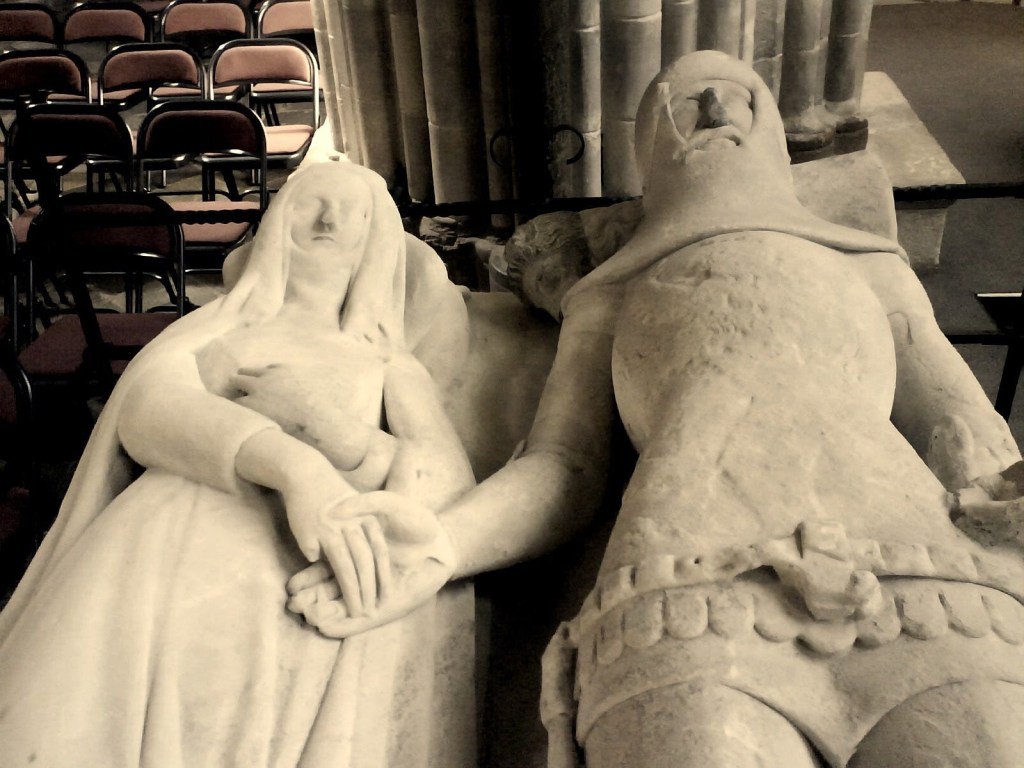
To be forced to disdain the ideal in favor of the actual is never a pleasant process. Even at its worst, however, it can deliver a bitter redemption. We gazed upward, or at our TV screens, and we couldn’t believe our eyes; but maybe our eyes had been lied to for long enough. Thousands died on September 11th, and they died for real; but thousands died together, and therefore something lived. The most important, if distressing, images to emerge from those hours are not of the raging towers, or of the vacuum where they once stood; it is the shots of people falling from the ledges, and, in particular, of two people jumping in tandem. It is impossible to tell, from the blur, what age or sex these two are, nor does that matter. What matters is the one thing we can see for sure: they are falling hand in hand. Think of Philip Larkin’s poem about the stone figures carved on an English tomb, and the “sharp tender shock” of noticing that they are holding hands. The final line of the poem has become a celebrated condolence, and last Tuesday—in uncounted ways, in final phone calls, in the joined hands of that couple, in circumstances that Hollywood should no longer try to match—it was proved true all over again, and, in so doing, it calmly conquered the loathing and rage in which the crime was conceived. “What will survive of us is love.”

Larkin, the poet who wrote that line—and who is, like Lane, British—was not at all a sentimental sort. His stuff is gloomy, sourpuss, almost defeatist. Throughout his poems we see a struggle between, on the one hand, recognizing the futility of life, and on the other, being paralyzed by the fear of death. It is his poem “This Be The Verse,” about how our parents “fuck us up,” that the pub owner quotes, somewhat incongruously, in Ted Lasso:

Man hands on misery to man.
It deepens like a coastal shelf.
Get out as early as you can,
And don’t have any kids yourself.

Sunny stuff, right? Larkin’s entire worldview is neatly encapsulated in this line from “Aubade,” a title that indicates this is a poem about the dawn:

And so it stays just on the edge of vision,
A small unfocused blur, a standing chill
That slows each impulse down to indecision.
Most things may never happen: this one will,
And realisation of it rages out
In furnace-fear when we are caught without
People or drink. Courage is no good:
It means not scaring others. Being brave
Lets no one off the grave.
Death is no different whined at than withstood.

The antecedent of the “it” in the first line is “death.” But we may just as well substitute “Trump,” and the lines work just as well: the standing chill, the furnace-fear and the rage, the necessity of other people and a good stiff drink, the futility of courage.

The poem that Lane quotes is called “An Arundel Tomb.” At Arundel, a medieval British town, is the tomb of Richard FitzAlan, the tenth Earl of Arundel, who died in 1371, and that of his second wife, Eleanor of Lancaster, who predeceased him by a few years. The tomb is capped by stone statues of the couple, who are, surprisingly, holding hands:

Side by side, their faces blurred,
The earl and countess lie in stone,

Larkin, a dour librarian and bemoaner of the decline of civilization who seems not to have believed in love (even as he juggled three women for most of his adult life), calls bullshit on this romantic display:

They would not think to lie so long.
Such faithfulness in effigy
Was just a detail friends would see:
A sculptor’s sweet commissioned grace

In other words, while the holding of stony hands has stood the test of time, the love it represents was probably a figment of the artist’s rosy imagination. (Note the double meaning of “lie.”)

How soon succeeding eyes begin
To look, not read. Rigidly they

Persisted, linked, through lengths and breadths
Of time. . .

Until,

Now, helpless in the hollow of
An unarmorial age. . .
Only an attitude remains:

Time has transfigured them into
Untruth. The stone fidelity
They hardly meant has come to be
Their final blazon, and to prove
Our almost-instinct almost true:
What will survive of us is love.

Larkin is saying that what the statues represent isn’t real—that our “almost-instinct” is to believe in the much-ballyhooed power of love, and that the “stone fidelity” of the earl and his wife is so compelling as to make said love-power “almost true.” Almost true is not true; almost true is AI true—a lie we want badly to believe in. The entire poem is him expressing his deep, nasty cynicism. The oft-quoted last line is intended to be ironic—a fitting epitaph for our Age of Unreality.

Even so, what survives of Larkin is “What will survive of us is love.” And I like to think, as Lane does, that, whatever the poet’s intention, the Arundel sentiment is real.


The Age of Unreality began in 1991, when all the ingredients of the historical cocktail were thrown into the shaker: the fall of the Soviet Union, the rise of the Russian mafia, the ascendance of Jeffrey Epstein, the dawn of reality TV, the end of apartheid, and the last time that a coalition of Western democracies repulsed an attempt by a despot to invade a sovereign nation—thus upholding the tenets of the Westphalian order. Out of that cocktail shaker, cold as ice, was poured Jeffrey Epstein and Semion Mogilevich, Elon Musk and Peter Thiel, Vladimir Putin and Donald Trump.

Tomorrow, that mindfuck age draws to a close, and a new one begins. What it has in store for us is anyone’s guess. Will the last barriers between fantasy and reality be worn away, or, as Lane poetically puts it, have our eyes been lied to for long enough? Will democracy really die, as the fascism scholars have been warning us for years, or will the Trump power-grab finally wake up the American people and restore our love of liberty? Will generative AI destroy all art, or will a new analog artistry emerge? What will happen to our beloved Hollywood, to which Trump has named meathead Sylvester Stallone, rightwing wacko Jon Voigt, and radical Catholic weirdo Mel Gibson his MAGA “ambassadors?”

I take some small solace in knowing that we’ve been here before. As Hobsbawm notes in The Age of Capital, the United States in the late nineteenth century—the America Trump wants us to return to—was marked by

the total absence of any kind of control over business dealings, however ruthless and crooked, and the really spectacular possibilities of corruption both national and local—especially in the post-Civil War years. There was indeed little that could be called government by European standards in the United States, and the scope for the powerful and unscrupulous rich was virtually unlimited. In fact, the phrase ‘robber baron’ should carry its accent on the second rather than the first word, for, as in a weak medieval kingdom, men could not look to the law but only to their own strength—and who were stronger in a capitalist society than the rich? The United States, alone among the bourgeois world, was a country of private justice and armed forces….

Our current crop of robber barons is orders of magnitude worse than its forebears—but maybe the abject awfulness of these despicable people will make their reigns shorter, their fall more humiliating, and their historical impact less profound.

Even so, for all my optimistic tendencies, I fear tomorrow as surely as Larkin feared death, which he describes as

The sure extinction that we travel to
And shall be lost in always. Not to be here,
Not to be anywhere,
And soon; nothing more terrible, nothing more true.

Death is permanent and absolute, but dictatorships are neither; moreover, Donald isn’t a dictator yet, and may well never be. Even as I have witnessed the poltroonish capitulation of our political leaders, our robber barons, our media figureheads, even our Snoop Doggs, I have faith that we will somehow find a better way, that we will repulse this ugly MAGA incursion, that the moral arc of the universe will bend towards justice, that the better angels of our nature will prevail. My faith will be tested, surely. But it will remain.

Nothing more true than this: What will survive of us is hope.

Share

Greg Olear writes a blog that is always rewarding to read–full of insight, experience, knowledge, wisdom. His post below connects the world of Dickens to the Age of Trump.


If Charles Dickens were alive today, and at the peak of his considerable powers, he would not invest his energies writing interminable novels for an increasingly book-averse population. Instead of waiting for fresh serialized chapters of David Copperfield, we’d be eagerly anticipating the next episode of a series of that title to drop on HBO. Twenty twenty-four Dickens would be Shonda Rhimes—creative dynamo, showrunner of some of the most popular, most watched, and most lucrative programs on television, with a thousand projects big and small going at all once.


Commercially- and critically-successful creative dynamo is what Dickens was in his own period, which is to say the era between the publication of the first installment of The Pickwick Papers in April 1836—a year before Queen Victoria took the throne—to the scrawling of the last lines of the unfinished Mystery of Edwin Drood, as he lay dying, at age 58, in June 1870. Unlike many writers, who are given to shyness, he was an enormous personality in real life. He was a gifted mimic, a talented comic performer with great stage presence, and he may well have gone into his beloved theater if the chips had fallen differently. He wrote voluminous correspondence and took in plays and did some acting and directing and wrote letters to newspapers and contributed some journalism and went on speaking tours and traveled around Europe and the United States, and he walked a dozen miles a day around London, and he fathered ten children, and he spent the last dozen years of his life living “in sin” with a woman who nowadays would be his second wife but back then was a secret partner because the discovery of their forbidden relationship would have been scandalous, and while he was doing all of THAT, this literary Energizer Bunny was banging out novel after novel after novel, bestseller after bestseller after bestseller, each one longer than the next. Bleak House, which some consider his best literary work, checks in at over 358,000 words! 


I have long resisted Dickens. He got paid by the word, and was thus financially incentivized to add extra padding to the books; this always struck me as too commercial an approach to produce great literary fiction. And the character names, while delightful—Ebenezer Scrooge, of course; but also Oliver Twist, Martin Chuzzlewit, Uriah Heep, Sophy Wackles, Lucretia Tox, Charity Pecksniff, and [checks notes] Dick Swiveller—are too silly to be taken seriously. Any of the appellations just listed could plausibly be the stage name of some lesser porn star.
(It is a fun game to pick which figures in the MAGA universe have Dickens names. Elon Musk, most definitely. Hope Hicks, for sure. Seb Gorka, Mehmet Oz, Mike and Sarah Huckabee. Marsha Blackburn could have been a minor character who spontaneously combusts, as Krook does in Bleak House. And with his Dickensian name, his caricature of a personality, his naked parsimony, and his active malevolence, especially towards children, Donald Trump might just as well be a character in the novel. We can easily imagine him surveying the Bleak House grounds1 and remarking on what a fine golf course he could make of it.)


In high school, I read Great Expectations. I’ve tried several times since to re-read it, but I can’t get past the child abuse depicted in the first chapters. As good as the introduction to A Tale of Two Cities is—although often misconstrued2—I lose the plot by chapter three. And I’ve seen a thousand variations of A Christmas Carol but never delved in to the original text. That’s the full extent of my Dickens reading.


But then, a few weeks ago, the thick Penguin Classics paperback of Bleak House, which has been in my possession for God knows how long, called out to me, for three days in a row, from its place on the dusty shelves. With my brain feeling like an old car that just hit 200,000 miles, I knew it would do me some good to read, and not just read but finish, a long novel. Long-novel-reading is like Pilates for the mind—it exercises muscles not much used in quotidian life, and that are otherwise in danger of atrophying. It was time, I decided, to get my Dickens on. And so, over the course of a few weeks, I made my slow, steady way through all 989 pages.


In his lecture on Bleak House, first given while teaching at Wellesley College in 1941,3 Vladimir Nabokov said that to tackle the novel, “We just surrender ourselves to Dickens’s voice—that is all. . . All we have to do when reading Bleak House is relax and let our spines take over. Although we read with our minds, the seat of artistic delight is between the shoulder blades. That little shiver behind is quite certainly the highest form of emotion that humanity has attained when evolving pure art and pure science…The brain only continues the spine: the wick goes through the whole candle. If we are not capable of enjoying that shiver, if we cannot enjoy literature, then let us give up the whole thing and concentrate on our comics, our videos, our books-of-the-week.” (If updated for today, he might have instead said, “our TikToks, our Instagram reels, our Netflix specials, our Spotify wraps.”)


“But,” he continues, “I think Dickens will prove stronger.” One of my favorite writers, Nabokov has provided my spine with no short supply of shivers. So if he says we should surrender to Dickens’s voice, and that said voice is powerful enough to drown out the noise around us, well, that’s good enough for me.


Lo, Nabokov was right. Dickens is—here’s a hot take—a magnificent writer in terms of the construction of sentences, the vast vocabulary at his disposal, the wry deployment of jokes, the poetry of individual paragraphs, and the weaving together of seemingly endless strands of plot-lines, transforming, with almost architectural precision, what seems like a mountainous pile of clumped-together yarn (like the one in our bedroom that my wife, as I type this, is endeavoring to untangle) into a perfectly knit work of art. As Nabokov puts it, “The magic trick Dickens is out to perform implies balancing these three globes [i.e., the three themes of the book], juggling with them, keeping them in a state of coherent unity, maintaining these three balloons in the air without getting their strings snarled.”
And, yes: Dickens brings the spine-shivers. Making my way through the book, I stopped countless times to admire a passage. Here is one paragraph, well into a very long book, right after the disappearance of the wonderfully named Lady Dedlock—lovely in its construction, gorgeous in its word choices, and poetical in its observations:

There’s a lot going on in Bleak House, but ultimately, the book is a scathing commentary on lawyers—a profession which, as a whole, Mr. Dickens is not particularly fond of. Rather, he seems to hold with Mr. George, the military veteran and gun-shop owner, accused, falsely, of a homicide:

“You won’t have a lawyer?”

“No, sir.” Mr. George shook his head in the most emphatic manner. “I thank you all the same, sir, but—no lawyer!”

“Why not?”

“I don’t take kindly to the breed,” said Mr. George.

And since the homicide in question is Mr. Tulkinghorn’s, the “whodunit” narrative that dominates the last third of the novel quite literally involves an eminently capable investigator, said Mr. Bucket, trying to determine which, among the many, many primary, secondary and tertiary characters that might have wanted the terrifying lawyer dead, actually did the deed.

Dickens doesn’t hide his disdain for the Chancery Court—that is, the court that deals with wills, probates, estates, and other civil matters.⁴ He lets us know his feelings right up front, in the fifth and sixth paragraphs of the first chapter:

Never can there come fog too thick, never can there come mud and mire too deep, to assort with the groping and floundering condition which this High Court of Chancery, most pestilent of hoary sinners, holds this day in the sight of heaven and earth.

On such an afternoon, if ever, the Lord High Chancellor ought to be sitting here—as here he is—with a foggy glory round his head, softly fenced in with crimson cloth and curtains, addressed by a large advocate with great whiskers, a little voice, and an interminable brief, and outwardly directing his contemplation to the lantern in the roof, where he can see nothing but fog. On such an afternoon some score of members of the High Court of Chancery bar ought to be—as here they are—mistily engaged in one of the ten thousand stages of an endless cause, tripping one another up on slippery precedents, groping knee-deep in technicalities, running their goat-hair and horsehair warded heads against walls of words and making a pretence of equity with serious faces, as players might. On such an afternoon the various solicitors in the cause, some two or three of whom have inherited it from their fathers, who made a fortune by it, ought to be—as are they not?—ranged in a line, in a long matted well (but you might look in vain for truth at the bottom of it) between the registrar’s red table and the silk gowns, with bills, cross-bills, answers, rejoinders, injunctions, affidavits, issues, references to masters, masters’ reports, mountains of costly nonsense, piled before them. Well may the court be dim, with wasting candles here and there; well may the fog hang heavy in it, as if it would never get out; well may the stained-glass windows lose their color and admit no light of day into the place; well may the uninitiated from the streets, who peep in through the glass panes in the door, be deterred from entrance by its owlish aspect and by the drawl, languidly echoing to the roof from the padded dais where the Lord High Chancellor looks into the lantern that has no light in it and where the attendant wigs are all stuck in a fog-bank! This is the Court of Chancery, which has its decaying houses and its blighted lands in every shire, which has its worn-out lunatic in every madhouse and its dead in every churchyard, which has its ruined suitor with his slipshod heels and threadbare dress borrowing and begging through the round of every man’s acquaintance, which gives to monied might the means abundantly of wearying out the right, which so exhausts finances, patience, courage, hope, so overthrows the brain and breaks the heart, that there is not an honourable man among its practitioners who would not give—who does not often give—the warning, “Suffer any wrong that can be done you rather than come here!”

The book’s “MacGuffin” is an eternal probate case, Jarndyce and Jarndyce, which has been wending its way through the Chancery Court, seemingly from time immemorial. The main characters are all connected to the case or the Court. Some are extended members of the Jarndyce family, on one side or the other of the internecine legal battle. Some, like the aforementioned Mr. Tulkinghorn, are lawyers. Others earn their daily bread by doing business with and for the Court and its lawyers, while still more have some tangential connection to the Court, the case, or the other characters. The molassesine morass of the Chancery Court and the self-serving avarice of everyone involved with Jarndyce and Jarndyce, legal professionals and suitors both, are at the heart of Bleak House.

Perhaps this is what drew me to this novel at this time—our current legal profession’s contemptible deployment of lawfare to silence dissent. This week, Trump filed a lawsuit against the Des Moines Register and an individual pollster, Ann Seltzer, for running a poll suggesting—wrongly as it turned out, to our great dismay—that he was losing in Iowa. This, Trump’s ridiculous lawsuit claimed, amounted to “brazen election interference.” He will lose this case, but that’s not the point. The point is to sap his critics of time, money, energy, and the will to live. That new lawsuit came on the heels of a speedy settlement Donald arrived at with ABC News, which corporate overlords, despite their deep pockets, pusillanimously decided not to fight for the First Amendment in court. 

The vengeful President-Elect is not the only MAGA figure to file frivolous lawsuits with the aim of thwarting and/or silencing critics. Devin Nunes sued a pseudonymous Twitter user, Devin’s Cow. Elon Musk sued Media Matters. Mike Flynn sued the indefatigable Jim Stewartson and the Lincoln Project’s Rick Wilson. That last case was tossed out earlier this month. 

“If the purpose of terror is to terrorize,” Wilson wrote of his unpleasant and expensive experience, “the purpose of lawfare is also to terrorize. The tools and techniques of lawfare, particularly these loonbucket defamation suits, would terrify people without means, experience, and strong legal representation.”

If the Trump people keep up with this “SLAPP” lawsuits—and, being soulless ghouls, they will—perhaps the American Bar Association, or the bars of the individual states, might take some decisive action and start 86-ing the attorneys who are serial participants in this systematic legal harassment. But I won’t hold my breath.

Deep into the novel, in a chapter devoted to another amoral attorney, the gray and dull Mr. Vholes, Dickens gives us as unvarnished an assessment as can be found in the thousand pages:

The one great principle of the English law is to make business for itself. There is no other principle distinctly, certainly, and consistently maintained through all its narrow turnings. Viewed by this light it becomes a coherent scheme and not the monstrous maze the laity are apt to think it. Let them but once clearly perceive that its grand principle is to make business for itself at their expense, and surely they will cease to grumble.

But not perceiving this quite plainly—only seeing it by halves in a confused way—the laity sometimes suffer in peace and pocket, with a bad grace, and DO grumble very much. 

What was true of English law then is, if I might suggest, equally true of U.S. law today. Furthermore, we might also, at the butt-end of the Year of our Lord 2024, replace, in that wonderfully candid passage, “the English law” with “the American legacy media,” “the American political system,” “the American entertainment industry,” and, as a nod to the contemporary assassin with the Dickensian monicker of Luigi Mangione, “the American for-profit healthcare industry.”

Money makes the world go round, and their side has a lot more of it than ours—or, at least, a lot more that they are willing to blow on assholery of the kind that will chill journalism and hasten our descent into dictatorship. Democracy doesn’t die in darkness; democracy dies in deposition.

There is also Trump’s fascination with the Gilded Age, the Robber Baron era. Dickens was dead a quarter century before McKinley was elected in 1894, and his descriptions of London are largely drawn from his own childhood in the 1820s. Even so, we can see in Bleak House the qualities that, to Donald’s way of thinking, are what made America so great back in the 1890s: child labor, unsafe housing, air and water pollution, outbreaks of diseases we now vaccinate against, domestic violence, rigid class systems, women as second-class citizens, and, of course, the existence of monarchs.

What I like most about Dickens is that he addresses grim subjects without being a total downer—and thus avoids making us want to stop reading. There is always a level of detachment from the goings-on. Not that we are not emotionally connected—I loved Lady Dedlock, and Esther Summerson, and John Jarndyce—but we never quite feel the danger ourselves. We readers are in a safe space, protected like Mr. Jarndyce protects Miss Summerson.

Dickens is never not optimistic. For all the death and shame and bankruptcy and contagion and dirt and fog and smoke and fire, for all the corrupt lawyers and nasty blackmailers and abused children and homicidal housekeepers, Bleak House is ultimately a hopeful book. If we are shown the worst of humanity, we are also given examples of people at their best—paragons of virtue and decency.

In the 67th and final chapter of the book, the exemplary Esther, our occasional narrator, describes her happiness with her marriage to Allan Woodcourt, a small-town doctor who is the love of her life:

We are not rich in the bank, but we have always prospered, and we have quite enough. I never walk out with my husband but I hear the people bless him. I never go into a house of any degree but I hear his praises or see them in grateful eyes. I never lie down at night but I know that in the course of that day he has alleviated pain and soothed some fellow-creature in the time of need. I know that from the beds of those who were past recovery, thanks have often, often gone up, in the last hour, for his patient ministration. Is not this to be rich?

It is, Esther. It is indeed.

And some of us don’t even require a visit from the Ghost of Christmas Future to know it.

Thank you, Greg Olear, for your gift as a writer and a thinker and for your kindness.

Most people would promptly respond to the question that is the title of this post: NO! the First Amendment was written to protect the people against government over-reach. The very question is absurd on its face. Yet Republican Attorneys General have argued that the First Amendment protects their right to ban books. No, no, no, a million times NO!

Chris Tomlinson, a columnist for The Houston Chronicle, wrote about the case:

Book banners in Llano County and Florida’s attorney general will try to convince a federal appeals court Tuesday that the First Amendment grants elected officials the unlimited right to remove books from public libraries.

Conservatives will turn freedom of speech on its head by arguing that politicians are expressing themselves when they ban books, and therefore, the Constitution protects book bans. In a perverse twist, they will make this argument during Banned Books Week, the time of year when writers defend the right to share ideas.

The Little v. Llano case will undoubtedly go to the U.S. Supreme Court. Seventeen Republican state attorneys general have joined Ken Paxton in defending the Llano County Commissioners Court’s order to remove 17 books from the public library. Not the school library, mind you, but the library system for all residents.

The banned books include the award-winning “They Called Themselves the K.K.K: The Birth of an American Terrorist Group,” by Susan Campbell Bartoletti, “Caste” by Isabel Wilkerson, and “It’s Perfectly Normal: Changing Bodies, Growing Up, Sex and Sexual Health,” by Robie Harris.

Llano is not alone. Texas has led the nation in book bans, according to PEN America, a nonprofit freedom of speech group of which I am a member.

Historically, the U.S. Supreme Court has held that the First Amendment severely limits the power of government to control speech and other forms of expression. Governments are not allowed to ban books based solely on their viewpoint; there must be a public safety issue.

Llano County residents sued in federal court last year to have the books returned. U.S. District Judge Robert Pitman found that Llano officials only banned the books because they disagreed with the content and determined the commissioners had no compelling government interest to remove them. He ordered all the books restored to library shelves.

The county appealed to the 5th U.S. Circuit Court of Appeals, which split in a preliminary decision. The full 17-judge court will hear arguments Tuesday.

The 18 Republican attorneys general who have joined the case want the judges to accept a new interpretation of the First Amendment, one first pushed in Florida. They argue government officials have free speech rights, and the court must protect them as much as a librarian’s, a writer’s or a reader’s civil liberties.

“The county’s decisions over which books to offer its patrons in its public libraries, at its own expense, are its own speech,” the states argued in a court filing last month. “The government does not violate anyone’s free speech rights merely by speaking — no matter what it chooses to say or not to say.”

If Little v. Llano makes it to the Supreme Court, and the justices agree with this argument, they will hobble the foundation of our democracy: the free exchange of ideas. The flip side of the freedom to write is the freedom to read. One is useless without the other.

Libraries play a crucial role in a free society. They are repositories not only of history and entertainment but of accumulated knowledge and new ideas. Books are expensive, and libraries make them available to the entire community.

Public libraries are, by definition, government entities financed with taxpayer dollars. In a free society, they must be nonpartisan and contain a wide range of content absent political litmus tests. A conservative victory for Llano would turn politicians into thought police.

The conservative activists who complained about the Llano library books relied on a list of 850 titles published by former state Rep. Matt Krause, a Fort Worth Republican, in 2021. Krause focused on books about racismLGBTQ issues or anything else that “might make students feel discomfort, guilt, anguish.”

Krause was among the state lawmakers who limited how teachers can discuss slavery and discrimination against African Americans because it might make descendants of slaveholders uncomfortable. Possessing “The 1619 Project” is now a firing offense at Texas public schools.

Where does it end if politicians have a free speech right to ban books? We know politicians try to outdo each other with ideological purity tests. Activists on the left and right will draft lists of authorized and prohibited books, and libraries will have to restock their shelves after every election.

As for those who argue libraries are full of pornography, I say poppycock. The American Library Association and professional librarians follow well-considered procedures in choosing what titles to carry, and one person’s taste should not determine what a library buys.

If politicians do end up determining what we can find at the library, you’ll have fellow Texans to thank.

A high school student in Idaho peaceably performed a quiet but powerful protest against censorship at her graduation ceremonies. For her courage, her commitment to freedom to read, and her sheer chutzpah, I add the name of Annabelle Jenkins to the honor roll of this blog.

An Idaho high school graduate staged an unusual form of protest at her graduation when she offered a book to the school district’s superintendent, who had banned it months earlier.

Annabelle Jenkins was one of 44 graduates to have her name called during the Idaho Fine Arts Academy graduation ceremony on May 23.

After she shook hands with administrators on the stage, Jenkins paused in front of West Ada School District Superintendent Derek Bub and pulled out “The Handmaid’s Tale” from the sleeve of her graduation gown.

Bub stood firm with his arms crossed and declined the book, leaving Jenkins to drop it at his feet as she moved across the stage.

The graphic novel version, written by Margaret Atwood and Renee Nault, was one of 10 the school district banned from its libraries earlier in the academic year over its graphic imagery, deemed unsuitable for the student body.

I hope that Annabelle read the full text version of the book, in addition to the banned graphic novel.

Good news in New Hampshire! Federal Judge Paul Barbadoro threw out the state’s “divisive concepts” law, which banned the teaching of anything that might be “divisive.” The same kind of law has been used in other states to ban the teaching of historical facts and literature about Blacks and gays. The judge declared it was too vague to be Constitutional and created confusion about what was and was not allowed in the classroom. In an ironic twist, the law that censors teaching and curriculum is titled “The Law Against Discrimination.”

Nancy West of InDepthNH.com wrote about the decision, which certainly must have upset State Commissioner Frank Edelblut and Governor Chris Sununu, as well as the state’s busybody Moms for Liberty.

West writes:

CONCORD – A federal judge on Tuesday struck down the state’s controversial ‘divisive concepts’ law, which had its roots in an executive order by former President Trump, that limited how teachers can discuss issues such as race, sexual orientation and gender identity with students.

The law, passed in a budget rider in 2021, created a chilling atmosphere in classrooms around the state with teachers unsure of what they could discuss about those issues without fear of being suspended or even banned from teaching altogether in the state.

The four banned concepts include:  That one’s age, sex, gender identity, sexual orientation, race, creed, or color is inherently superior or inferior; that an individual, by virtue of age, sex, gender identity, sexual orientation, race, creed, color…is inherently racist, sexist, or oppressive, whether consciously or unconsciously; that an individual should be discriminated against  because of his or her age, sex, gender identity, sexual orientation, race, creed, color; and that people of one age, sex, gender identity, sexual orientation, race, creed, color…cannot and should not attempt to treat others without regard to age, sex, gender identity, sexual orientation, race, creed, color…., according to the judge’s ruling.

In New Hampshire it’s called the Law Against Discrimination and makes it unlawful for a public employer to “teach, advocate, instruct, or train” the banned concepts to “any employee, student, service recipient, contractor, staff member, inmate, or any other individual or group.”

U.S. District Court Judge Paul Barbadoro ruled the law is unconstitutional under the 14th Amendment because it is too vague.

In the suit filed against Education Commissioner Frank Edelblut and the Department of Education by the National Education Association of New Hampshire and the American Federation of Teachers of New Hampshire, Barbadoro sided with the teachers and granted their motion for summary judgment.

  “The Amendments are viewpoint-based restrictions on speech that do not provide either fair warning to educators of what they prohibit or sufficient standards for law enforcement to prevent arbitrary and discriminatory enforcement. Thus, the Amendments violate the Fourteenth Amendment to the U.S. Constitution,” Barbadoro wrote…

The controversy escalated after Edelblut posted a page of the Department of Education website to file complaints against teachers for allegedly discriminating and a group called Moms for Liberty offered a $500 reward “for the person that first successfully catches a public school teacher breaking this law.”

Barbadoro wrote: “RSA § 193:40, IV provides that a “[v]iolation of this section by an educator shall be considered a violation of the educator code of conduct that justifies disciplinary sanction by the state board of education.

“An ‘educator’ is defined as ‘a professional employee of any school district whose position requires certification by the state board [of education].’ RSA § 193:40, V. Potential disciplinary sanctions include reprimand, suspension, and revocation of the educator’s certification.

“In other words, an educator who is found to have taught or advocated a banned concept may lose not only his or her job, but also the ability to teach anywhere in the state,” Barbadoro wrote…

Barbadoro was critical of Edelblut’s two op-ed pieces in the New Hampshire Union Leader.

“Despite the fact that the articles offer minimal interpretive guidance, Department of Education officials have referred educators to them as a reference point. For example, after showing two music videos to her class as part of a unit on the Harlem Renaissance, Alison O’Brien, a social studies teacher at Windham High School, was called into a meeting with her principal and informed that she was being investigated by the Department of Education in response to a parent’s complaint.

“Department of Education Investigator Richard Farrell recommended that Windham’s administrators consult Edelblut’s April 2022 opinion article to understand the context of the investigation against O’Brien, without otherwise explaining why O’Brien’s lesson warranted investigation. After witnessing her experience, O’Brien’s colleagues grew anxious about facing similar actions,” Barbadoro wrote.

What did she do wrong? She doesn’t know.

Edelblut, the state’s top education official, homeschooled his children. He was appointed by Governor Sununu. The governor likes to pretend he is a Republican moderate. Don’t be fooled.

Judge Barbadoro was appointed by President George H.W. Bush.

Open the link to finish reading the article.

.

Jan Resseger explains how young people are injured when adults censor what they read and teach them inaccurate history.

She writes:

Public schools, which serve more than 50 million of our nation’s children and adolescents are perhaps our society’s most important public institution. Unlike private schools, public schools guarantee acceptance for all children everywhere in the United States, and they protect the rights of all children by law. And unlike their private school counterparts, public schools are also required to provide services to meet each child’s educational needs, even children who are disabled or who are learning the English language.

Today’s culture war attacks on public education drive fear of “the other” and attempt to frighten parents about exposing their children to others who may come from other countries, from other cultures, from a different race or ethnicity, from a different religion, or from a gay or lesbian family.

The idea of insulating children is, however, counter to the whole philosophical tradition that is the foundation for our system of public schooling.

More than a century ago, education philosopher John Dewey declared: “What the best and wisest parent wants for his own child, that must the community want for all of its children… Only by being true to the full growth of all the individuals who make it up, can society by any chance be true to itself,” (The School and Society, p. 5)

For Dewey, however, educating all children together without insulating them was important as more than an abstract principle. Dewey believed that the experience of school was itself a way of learning to live in a broader community: “I believe that the school is primarily a social institution. Education being a social process, the school is simply that form of community life… I believe that much of present education fails because it neglects… the school as a form of community life… I believe that… the best and deepest moral training is precisely that which one gets through having to enter into proper relations with others in a unity of work and thought.” (My Pedagogic Creed, January 1897)

A hundred years later, in 1998, the political philosopher Benjamin Barber defended the idea of public schools as a microcosm of the community: “America is not a private club defined by one group’s historical hegemony. Consequently, multicultural education is not discretionary; it defines demographic and pedagogical necessity.  If we want youngsters from Los Angeles whose families speak more than 160 languages to be ‘Americans,’ we must first acknowledge their diversity and honor their distinctiveness.”( Education for Democracy,” in A Passion for Democracy: American Essays, p.231).

And in the same year, another philosopher of education, Walter Feinberg explained that in public school classrooms students should learn to tell their own stories, to listen and respect the stories of others, and through that process prepare for democratic citizenship: “That there is an ‘American story’ means not that there is one official understanding of the American experience but, rather, that those who are telling their versions of the story are doing so in order to contribute to better decision making on the part of the American nation and that they understand that they are part of those decisions. The concept is really ‘Americans’ stories.’” (Common Schools: Uncommon Identities, p. 232) (emphasis in the original)

Today, of course, the culture wars attacks on public education seek to reshape the curriculum, silence controversial discussion, and ban books.

Massachusetts political science professor Maurice Cunningham explains that well-funded advocates for reshaping school curricula—including the Heritage Foundation, the Manhattan Institute, the Council for National Policy and a number of dark money groups—are spending millions of dollars to fan the fears of parents by supporting local advocates in organizations like Moms for Liberty and Parents Defending Education. The goal is to agitate against overly “woke” public school curricula and to frighten parents by telling them that teachers are frightening children by including the nation’s sins as well as our society’s virtues as part of the American history curriculum, and by encouraging children to listen to the voices of people who have traditionally been marginalized.  There is, however, no evidence that our children have been personally or collectively frightened when they learn about slavery as the cause of the Civil War or when they learn about gender identity as part of a high school human sexuality curriculum. Accurate and inclusive curricula and open class discussion where all voices are heard and considered are essential for truly public education.

Robert Samuels’ When Your Own Book Gets Caught Up in the Culture Wars profoundly explains the damage wrought by book banning, Samuels, a Washington Post reporter and his colleague Toluse Olorunnipa, had just won the 2023 Pulitzer Prize for General Nonfiction last fall when they were invited to a Memphis high school to discuss their new book, His Name Is George Floyd: One Man’s Life and the Struggle for Racial Justice.  Samuels describes why he wanted to share his book with the Memphis high school students: “I had once been told that the answer to anything could be found in a book… One day, during my senior year, I was browsing an airport bookstore when I saw Stokely Carmichael’s autobiography, “Ready for Revolution.” A whole chapter was devoted to Bronx (High School of) Science, which he had also attended. I was riveted. It started with an officer hassling him on the street, only to be stunned when Carmichael shows him a book with the school’s logo. Although our time there was separated by four decades, we both had the same confusion upon discovering that white classmates had grown up reading an entirely different set of material….  We were both surprised by how little dancing there was at white classmates’ parties. ‘It was at first a mild culture shock, but I adapted,’ he wrote. I, too, had to learn to adapt, to not be so self-conscious about getting stereotyped because of my speech, my clothes, my interests. It was the first time I had ever truly felt seen in a book that was not made for children.”

Samuels and Olorunnipa received a call just before their Memphis visit warning them they could not read from the book and that the school could not distribute copies to students. And during their visit, it became evident that students’ questions had even been carefully edited by their teachers.  Then, in the weeks after the visit, the Memphis-Shelby County school staff and event sponsoring organization stepped all over themselves trying to apologize to Samuels and Olorunnipa.  It became evident that school staff had been frightened and intimidated by school district regulations; the penalties were severe while the rules themselves remained unclear.

Samuels describes what happened: “(T)he spokesperson for the school district e-mailed… to apologize for the miscommunication and misinformation ‘surrounding your recent visit’… (She) defended prohibiting the book itself, on the ground that it was not appropriate for people under the age of eighteen… (She) then admitted that no one involved in the decision had actually read it. The district’s academic department didn’t have time… A staff person in the office searched for it in a library database, noting that the American Library Association had classified it as adult literature.” There was one positive result of the whole fiasco:  with a donation from Viking Books, the publisher, a Memphis community development group, promised any student from Whitehaven High School a free copy of His Name is George Floyd: One Man’s Life and the Struggle for Racial Justice.

Philosophers of education, academic researchers, educational psychologists, and the students in America’s classrooms all tell us that young people are hurt when the school is forced to remove the books that tell students’ own stories.

Young people are made invisible when state laws suppress accurate teaching about all the strands of the American story including slavery, and what happened during the Civil War, Reconstruction, and the Civil Rights Movement. Children who are gay or lesbian learn that they should withdraw and hide when the words that describe them are banned. Experts also tell us that the other children in the classroom are not frightened when, for example, a classmate shares the challenges his or her family faced as immigrants trying to find a place to feel welcome.

Please open the link and finish reading this important article.

John Thompson, historian and retired teacher in Oklahoma, writes here about a book that is important in Oklahoma history and American history.

He writes:

When I first read Victor Luckerson’s Built from the Fire: The Epic Story of Tulsa’s Greenwood District, America’s Black Wall Street, I was stunned by his beautiful prose. Watching Luckerson on CSPAN Book T.V., I was reminded of his eloquence. And I was even more impressed by the timeliness of the story of the communities and families who built and rebuilt Greenwood after the 1921 Tulsa Massacre, and who then had to repeatedly fight to keep their community from being erased. 

This April 2, 2024, when hearing a lawsuit on reparations, the Oklahoma Supreme Court Justice Yvonne Kauger said to the litigants, “When I went to high school, … Greenwood was never mentioned,” so “I think regardless of what happens, you’re all to be commended for making sure that that will never happen again. It will be in the history books.”  We all must also commend Luckerson’s contribution to that essential story, and help pass it down to younger generations.

As Marcia Chatelain’s New York Times review of Built from the Fire explained, “The seemingly unfettered opportunity in the new state of Oklahoma drew unabashed capitalists, confidence men, industrious wives and loyal mothers to what had formerly been known as Indian Territory…” The story of diverse Black people who built Greenwood, the “Eden of the West” is just as complex.

Similarly, Suzette Malveaux’s Washington Post review started with the lie that prompted the Massacre by claiming:

Dick Rowland, a Black teenager, had sexually assaulted a white woman in an elevator. A show of force by Greenwood men to prevent Rowland from being lynched escalated into an all-out attack on Black Tulsans by white vigilantes, who in some cases had been handed arms by the police. As Luckerson recounts, “More than 1,200 houses were leveled, nearly every business was burned to the ground and an unknown number of people — estimates reach as high as 300 — were killed.”

As one white person recalled, white officers quickly deputized the crowd; he was told, “Get a gun and get busy, and try to get a n—–.”

But Malveaux also stresses the way that:

Luckerson shines a light on uncomfortable fissures between Oklahoma’s Black freedmen and Black migrants from the South; Native American enslavers and Black enslaved people; and the American Red Cross’s White “angels of mercy” and Tulsa’s mobsters. And he doesn’t shy away from telling the full story of Greenwood’s great leaders.

For instance, one of the fathers of Greenwood’s economic and cultural strength was J.H. Goodwin, a former railroad brakeman, who leveraged his position with the railroad (which was rare for a Black man at the time) and who was able to work with all types of people, but who passed down psychological burdens, as well as resilience to his family. His family invested in journalism, said one of their readers, so “you can have free speech and have privilege to act as a man without being molested.”

Goodwin’s stories, and those of other families in the book, include experiences gained and brought back from Fiske University, Chicago, Washington D.C., and elsewhere. The family became best known for the Oklahoma Eagle newspaper, which shared diverse perspectives and kept up the fight for justice. They also played leadership roles in desegregating Tulsa schools. And like so many Black Tulsans, in doing so, they drew on both “Booker T. Washington’s model of economic power and W.E.B. DuBois’s model of political power.”

Goodwin’s most influential recent descendent, Sen. Regina Goodwin, kicked off her political career in 2015 with the words, “Some women get lost in the fire and some … are built from the fire.”  

Luckerson explained that “residents of Greenwood bore the burden of living in two Americas at once, the idealized version imagined in the minds of white slaveholders in 1776, and the more brutal reality that black Tulsans and their ancestors bore witness to.” He balances tales of graft by both Black and much worse White entrepreneurs. Although W.E.B. DuBois correctly described the resulting community as “impudent and noisy,” those same businessmen “opposed economic injustice just as fiercely as they fought segregation.”

Immediately after the massacre, Tulsa officials used zoning ordinances to keep Black residents from rebuilding. The insurance claims of Black residents were rejected. New segregation laws were passed, and bankers used “red lining” to deny new loans to Blacks. Moreover, criminal courts failed to find whites guilty of assault, arson and murder. However, Luckerson also chronicled skillful but often unsuccessful legal battles by attorneys like B.C. Franklin.

Over the next decade, Black resilience got the business community back on track. The gains were first undermined by the Great Depression, and then recovered as WWII approached. The Roosevelt administration implemented successful economic stimulus programs, as well discriminatory and counter-productive efforts. The same occurred during the war when Greenwood leaders had some successes in creating economic opportunities with the help of the federal government, while other wartime and post-war investments were too discriminatory to be constructive. Efforts to rebuild Greenwood’s neighborhoods sometimes prompted violence like a KKK cross burning and the dynamiting of a Black family’s home.

Luckerson then describes the 1950s and 1960s when legal battles and grassroots organizing created successes, as well as mixed feelings. For instance, Greenwood’s local political efforts resulted in funding Black schools like Booker T. Washington high school. (Don Ross, a teenager who would become an influential state legislator, was a leader in the fight for educational opportunities.) Thurgood Marshall’s anti-segregation efforts contributed to his historic Brown v Board of Education victory. But some Greenwood residents mourned the loss of Booker T. Washington, saying it “ripped the heart out of a community that had once had the pride to succeed in all parts of life.”

There was unanimity, however, in rejecting the way that highway construction and Urban Renewal once again devastated Greenwood.

Luckerson then brings the narrative through tragedy to sometimes promising political efforts and the often successful, but sometimes divisive efforts to build a dynamic 21st century Greenwood. One of the leaders was Tiffany Crutcher, whose unarmed brother, Terence, was shot to death in the middle of the street by police officer. Moreover, Rep. Bob Ross and Rep. Regina Goodwin worked skillfully within the legislative system to fund studies of the 1921 Massacre and reparations. Sadly, white political leaders, who had sounded so supportive of such efforts, largely failed to follow through.

Fortunately, the HBO film, The Watchmen, brought the Massacre to the attention of millions of Americans. And the George Kaiser Family Foundation established the Greenwood Cultural Foundation.  Luckerson also provides an objective account of the fight over today’s reparations lawsuit. 

The Greenwood revival also led to President Joe Biden’s commemoration of the Massacre. Speaking in Greenwood, he didn’t use the word “reparations,” but he “discussed the devastating effect of urban renewal on Greenwood. ‘A highway was built right through the heart of the community … cutting off black families and businesses from jobs and opportunity.’” The President then “announced plans to increase federal contracts for minority-owned businesses and try to curb racist housing appraisals.”

Luckerson concludes with the words of B.C. Franklin, “Right is slow and tardy while wrong is aggressive.” He then adds, “For more than a century, Greenwood has been grappling with wrong in all its combative forms. Wickedness flamed white-hot in 1921, but the embers continued to burn long after.” This stretched “from relief aid being withheld during the Great Depression … [to] Urban Planning brochures featuring smiling black faces and words laden with double meaning – blight, renewal, progress.” He later makes one prediction, “Whether or not Tulsa does right by the people of Greenwood and North Tulsa, they will continue to do what they’ve always done: build.”

Given the pressure by State Superintendent Ryan Walters to censor books that he believes would wrongly make White kids feel uneasy, I understand why teachers would feel afraid to teach Lukerson’s book. But we owe it to students to make his masterpiece available to all.