Archives for category: Justice

Historian Heather Cox Richardson reflects on the anniversary of Dr. Martin Luther King’s birthday. We now look on him as a hero, but during his lifetime, he was treated shamefully by many whites, and militant African-Americans scorned him as well, preferring the angry approach of Stokely Carmichael and Malcolm X. Dr. King was principled and fearless. He faced death daily, and he never back down. It is usually forgotten that he was assassinated in Memphis while there to support striking sanitation workers, who were trying to organize a union. He knew that unions offered the best protection for working people. White conservatives who fraudulently praise him now, claiming that racism is a thing of the past and should not be taught or discussed (so that everyone can be judged by “the content of their character, not the color of their skin”), oppose everything he fought and died for.

You hear sometimes that, now that we know the sordid details of the lives of some of our leading figures, America has no heroes left.

When I was writing a book about the Wounded Knee Massacre, where heroism was pretty thin on the ground, I gave that a lot of thought. And I came to believe that heroism is neither being perfect, nor doing something spectacular. In fact, it’s just the opposite: it’s regular, flawed human beings, choosing to put others before themselves, even at great cost, even if no one will ever know, even as they realize the walls might be closing in around them.

It means sitting down the night before D-Day and writing a letter praising the troops and taking all the blame for the next day’s failure upon yourself, in case things went wrong, as General Dwight D. Eisenhower did.

It means writing in your diary that you “still believe that people are really good at heart,” even while you are hiding in an attic from the men who are soon going to kill you, as Anne Frank did.

It means signing your name to the bottom of the Declaration of Independence in bold print, even though you know you are signing your own death warrant should the British capture you, as John Hancock did.

It means defending your people’s right to practice a religion you don’t share, even though you know you are becoming a dangerously visible target, as Sitting Bull did.

Sometimes it just means sitting down, even when you are told to stand up, as Rosa Parks did.

None of those people woke up one morning and said to themselves that they were about to do something heroic. It’s just that, when they had to, they did what was right.

On April 3, 1968, the night before the Reverend Doctor Martin Luther King Jr. was assassinated by a white supremacist, he gave a speech in support of sanitation workers in Memphis, Tennessee. Since 1966, King had tried to broaden the Civil Rights Movement for racial equality into a larger movement for economic justice. He joined the sanitation workers in Memphis, who were on strike after years of bad pay and such dangerous conditions that two men had been crushed to death in garbage compactors.

After his friend Ralph Abernathy introduced him to the crowd, King had something to say about heroes: “As I listened to Ralph Abernathy and his eloquent and generous introduction and then thought about myself, I wondered who he was talking about.”

Dr. King told the audience that, if God had let him choose any era in which to live, he would have chosen the one in which he had landed. “Now, that’s a strange statement to make,” King went on, “because the world is all messed up. The nation is sick. Trouble is in the land; confusion all around…. But I know, somehow, that only when it is dark enough, can you see the stars.” Dr. King said that he felt blessed to live in an era when people had finally woken up and were working together for freedom and economic justice.

He knew he was in danger as he worked for a racially and economically just America. “I don’t know what will happen now. We’ve got some difficult days ahead. But it doesn’t matter…because I’ve been to the mountaintop…. Like anybody, I would like to live a long life…. But I’m not concerned about that now. I just want to do God’s will. And He’s allowed me to go up to the mountain. And I’ve looked over. And I’ve seen the promised land. I may not get there with you. But I want you to know tonight, that we, as a people, will get to the promised land!”

People are wrong to say that we have no heroes left.

Just as they have always been, they are all around us, choosing to do the right thing, no matter what.

Wishing you all a day of peace for Martin Luther King Jr. Day, 2023.

—

Notes:

Dr. King’s final speech:
https://abcnews.go.com/Politics/martin-luther-kings-final-speech-ive-mountaintop-full/story?id=18872817

Ellie Honig and friends have a podcast called Cafe Insider. It offers insights into current politics. In this free edition, the question is why Attorney General Merrick Garland is moving so slowly to prosecute the planners of the 1/6 insurrection, one of the biggest federal crimes in U.S. history.

Note From Elie: DOJ and The Cost of Getting There Second

By ELIE HONIG

Featured Image

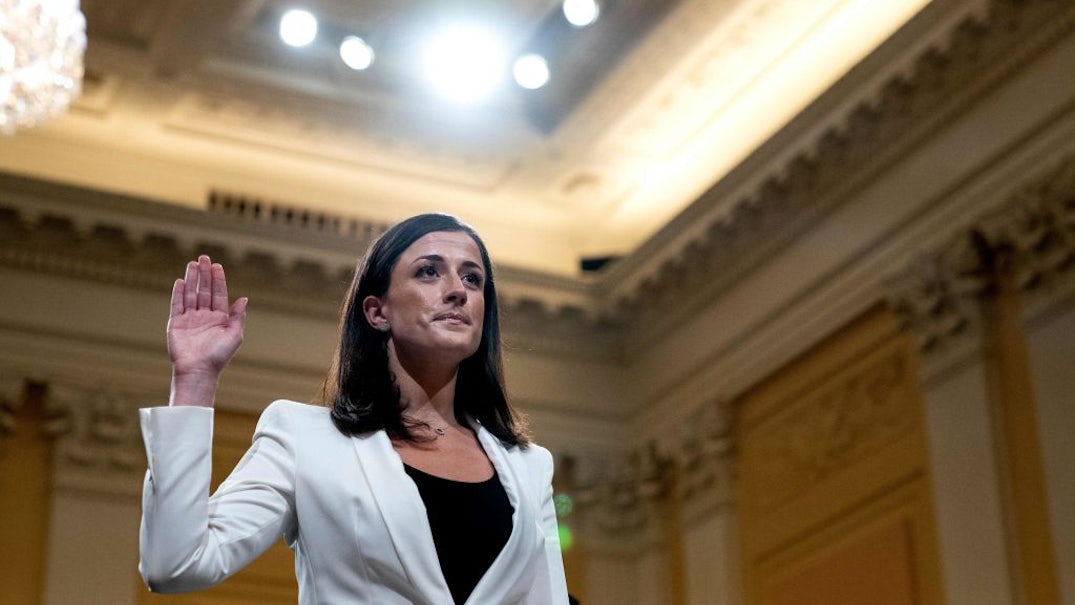
Cassidy Hutchinson is sworn in by the House Select Committee to Investigate the January 6th Attack on the US Capitol on June 28, 2022. (Photo by Stefani Reynolds / AFP)

Sign up free to receive the CAFE Brief in your inbox every Friday: cafe.com/brief

Become a member of CAFE Insider: cafe.com/insider

Dear Reader,

Cassidy Hutchinson is the perfect witness for a potential prosecution of Donald Trump. She had insider access as an aide to former White House Chief of Staff Mark Meadows; she was inside the West Wing during the frantic days leading up to January 6, and then as the Capitol attack went down that fateful afternoon, two years ago today. Her testimony is damning to Trump and others, and is corroborated in key respects by independent evidence. She is a compelling figure, at once likable, sympathetic, and believable. She is a prosecutor’s dream.

Also: Cassidy Hutchinson lied to federal investigators, under penalty of perjury.

This is not a matter of opinion or debate. It is a fact, openly admitted now by Hutchinson herself. And it’s not even Hutchinson’s fault, not entirely. I place much of the blame on Justice Department prosecutors who twiddled their thumbs for far too long and let themselves get beaten to the punch by the January 6 Committee. This is the cost of DOJ’s dilatory, meandering, hand-wringing approach to its investigation of the real power sources behind the coup attempt. This is the cost of getting there second.

During the first year-and-a-half or so after January 6, the Justice Department focused its prosecutorial efforts on the people who physically stormed the Capitol. Attorney General Merrick Garland vowed at his February 2021 confirmation hearing to “begin with the people on the ground and we work our way up.”

Of course, DOJ had to prosecute those who breached the Capitol and, for the most part, the feds have done an admirable job on these 900-plus cases.

The problem, however, was with Garland’s bureaucratic, bottom-up approach. Yes, prosecutors sometimes do start at ground level and work up the chain of command – but aggressive prosecutors know you don’t have to do it that way. In fact, circumstances sometimes give prosecutors a direct shot at the upper echelons of power, and there’s no reason to refrain from going after the bosses until after you’re done with the riff-raff. To put it in concrete terms: DOJ absolutely could have identified and talked to Hutchinson, Pat Cipollone, Marc Short, and other key White House insiders back in, say, mid-2021. The Justice Department has now spoken with all these folks, and other well-situated witnesses, but it didn’t get around to them until mid- to late-2022.

In the meantime, while DOJ was focused exclusively on the guys in face paint and rhino horns, the January 6 Committee – armed with less powerful investigative tools and resources– got to Hutchinson first. In February 2022 – before she gave her blockbuster, nationally broadcast testimony in June 2022 – she testified behind closed doors. The Committee asked Hutchinson whether she knew anything about a dispute on January 6 between Trump and Secret Service agents, who refused his command to take him to the Capitol. Hutchinson testified that she had heard of no such thing. At this point, Hutchinson was represented by a lawyer named Stefan Passantino, a former Trump White House ethics lawyer (yes: ethics) who was being paid by Trump’s “Save America” political action committee. (Put a pin in this; we’ll get back to Passantino in a bit).

This testimony by Hutchinson, given under penalty of perjury, was false. Months later, in June 2022, she testified publicly that she had heard that Trump had lashed out physically and verbally at Secret Service agents, at one point physically lunging for the steering wheel of the presidential SUV. In a subsequent deposition in September 2022, Hutchinson admitted that she had lied to the Committee the first time around. After her original false testimony, Hutchinson was racked with worry; she said to Passantino, “Stefan, I’m f****d. I just lied… I lied. I lied, I lied, I lied.” (That’s four “I lieds,” for those keeping count.)

There are perfectly understandable and defensible reasons why Hutchinson lied in her first deposition. As she later explained to the Committee, she was under enormous personal and financial pressure to hew to the party line and avoid testifying in any way that might harm Trump. According to Hutchinson, Passantino reinforced that perception, telling her that, “We just want to focus on protecting the President.” Worse, Hutchinson testified that when she told Passantino during prep sessions about the incident between Trump and the Secret Service, Passantino told her, “No, no, no, no, no… We don’t want to go there. We don’t want to talk about that.” (That’s five “nos,” for those keeping count.) Passantino said she could simply claim she did not recall, and there’s no way the Committee could know what she did or did not remember. Passantino contests Hutchinson’s account and starkly denies any wrongdoing.

While this was all going down, Garland was asleep at the wheel. When Hutchinson testified publicly in June 2022, federal prosecutors reportedly were “astonished” as they sat on their couches, watching on television along with the rest of us in the general public.

So here’s the problem now for DOJ (and the Fulton County DA). Hutchinson, as vital a witness as she is, is also damaged goods. She’s probably not fatally undermined but, make no mistake, defense lawyers will have a field day cross-examining her:

You lied to the Committee, didn’t you? (Yes)

You knew you were testifying to the United States House of Representatives, right? (I knew that)

And you knew you were testifying under penalty of perjury, right? (That’s right)

Just like you’re under penalty of perjury now at this trial? (Yes).

But you lied. (Correct)

You knew you could get prosecuted and go to federal prison if you lied, didn’t you? (I did)

Yet you lied, anyway. (Yes)

“I lied, I lied, I lied, I lied.” Those were your words. (Right)

By the way: you haven’t been prosecuted for perjury, have you? Even though you lied? (No, I haven’t)

These prosecutors did you a favor. They could have thrown you in prison, but they gave you a free pass, didn’t they? (Well, I guess I haven’t been charged with anything)

But you did commit perjury. (I suppose so)

Again: I find Hutchinson, on the whole, to be remarkably credible. I believe the substance of her testimony, and I believe that she lied only because of pressure applied by Passantino and others in Trumpworld. But there’s no denying it: this line of cross-examination will hurt.

Yes, Hutchinson has a plausible explanation why she originally lied to the Committee. I’ve seen plenty of witnesses in her situation, and it’s common and understandable for a person who feels financial or political or personal pressure to shade the truth. Prosecutors will surely make this argument if they ever call Hutchinson as a witness and need to rehabilitate her. But it’s an unforced error by DOJ. The Justice Department got beat to the punch, and now they needlessly have to fight a battle over Hutchinson’s credibility. By their inaction, Justice Department prosecutors have handed defense lawyers a gift.

Garland boosters sometimes argue: oh, but he is the humble tortoise, the slow but steady technician who lacks flash but wins the race in the end. Sounds reassuring, but this is apologist pablum. Speed absolutely matters. There’s a reason why prosecutors fight like mad to get to key witnesses first, and then protect them against having to testify in other settings: to prevent a Hutchinson-like scenario where, through no real fault of the witness herself, she winds up giving testimony that undermines her credibility down the line.

As I’ve noted many times in this space, prosecutors may still indict Trump, someday. But Garland’s own delay will make the ultimate job – securing a conviction – even more difficult than it needed to be.

Stay Informed,

Elie

It gets tiresome to read about the cheats, liars, grifters, and dishonorable people who rise to wealth and power. Thus it is a relief to read about a young woman who had neither wealth nor power, but something far more powerful: a moral core. A sure sense of right and wrong. Principles. Others could boldly lie or feign ignorance when testifying under oath. She couldn’t do it. She wanted to be able to look herself in the mirror every day without grimacing.

Ruth Marcus, the deputy editor of The Washington Post, wrote about her, a woman with more wealth and power than those she served because she has a clear conscience.

After I read the column below, I read the transcript of Cassidy’s interview with the January 6 Committee. She goes through the details of how she changed from a loyal partisan of Trump world to a renegade, more concerned with telling the truth than pleasing her handlers. She was without a job for a year, and she relied on a Trump world lawyer. He advised her to say as little as possible in answer to the Committee’s questions and to answer whenever possible, “I don’t recall.” He and others in Trump’s entourage promised to get her a good job, to take care of her, as long as she protects the team. They flattered her and told her that she’s doing a good job, she’s a member of the family, and they will always have her back. So much of it sounds like something out of The Sopranos. She wants to please them, but she also wants to tell the truth. At one point, as she is doing her best to please them, she admits that she is “disgusted” with herself.

A cynic might wonder why she had so many qualms about lying for a president who lied repeatedly every day. But then you remind yourself that she’s a young kid, not long out of college, working in a dream job. Of course she wanted to please her superiors in Trump world. Of course she was afraid that they would destroy her if she defected. But somewhere inside her was a moral core that required her to tell the truth.

Marcus wrote:

Cassidy Hutchinson knew better than to put herself in debt to what she called “Trump world.” As she would later testify, “Once you are looped in, especially financially with them, there is no turning back.”

But Hutchinson, who witnessed the final days of the Trump White House from her all-access perch as an aide to Chief of Staff Mark Meadows, had been subpoenaed by the Jan. 6 select committee. The deadline for turning over documents was looming, and Hutchinson was, she said, “starting to freak out.” One lawyer she consulted said he could assist — then demanded a $150,000 retainer.

So, the young aide, out of work since Donald Trump had left office a full year earlier, initially decided to turn to Trump world for help. Which is how she came to receive a phone call from Stefan Passantino, previously a lawyer in the Trump White House counsel’s office.

“We have you taken care of,” he told Hutchinson. When she asked who would be paying the bills, Passantino demurred — this despite legal ethics rules that let attorneys accept payment from third parties but only with the “informed consent” of their client.

“If you want to know at the end, we’ll let you know, but we’re not telling people where funding is coming from right now,” Hutchinson, in her deposition, recalled him saying. “Like, you’re never going to get a bill for this, so if that’s what you’re worried about.”

If Hutchinson’s live testimony before the select committee was riveting, her deposition testimony, taken several months later and released Thursday, is a page-turner: The Godfather meets John Grisham meets “All the President’s Men.” Before, we could only imagine how frightening the situation must have been for the 20-something Trump staffer. Now, we can read of her frantic search for help, and her terror as she contemplated telling the truth.

It is a tale, at least in Hutchinson’s telling, of Trump allies dangling financial support in exchange for unyielding loyalty. “We’re gonna get you a really good job in Trump world. You don’t need to apply other places,” Passantino assured Hutchinson. “We’re gonna get you taken care of. We’re going to keep you in the family.” The goal, as he set it out, was clear: “We just want to focus on protecting the President.”

It’s a story of meek compliance enforced by fear of consequences — and menacing admonitions to remain on board. “They will ruin my life, Mom, if I do anything they don’t want me to do,” Hutchinson told her mother when she offered congratulations about finally securing a lawyer.

The night before her second interview with the committee, an aide to Meadows called Hutchinson about her former boss: “Mark wants me to let you know that he knows you’re loyal and he knows you’ll do the right thing tomorrow and that you’re going to protect him and the boss. You know, he knows that we’re all on the same team and we’re all a family.”

Most vividly, it is a chilling account of questionable legal ethics practiced by Passantino who, in a plot twist worthy of a Hollywood scriptwriter, was the Trump White House’s chief ethics officer. Passantino is depicted repeatedly advising Hutchinson to fall back on an asserted failure to remember anything. “The less you remember, the better.”

Except Hutchinson did remember — and quite a lot. Such as the incident in the presidential limousine, as related to Hutchinson by deputy chief of staff Tony Ornato, in which an enraged Trump allegedly lunged at his lead Secret Service agent when he refused to take the president to the Capitol on Jan. 6.

When Hutchinson mentioned this episode to Passantino shortly before her first interview with the committee, “he’s like, ‘No, no, no, no, no. We don’t want to go there. We don’t want to talk about that.’” The committee, he said, “have no way of knowing that. … But just because he told you doesn’t mean that you need to share it with them.”

Deposition prep with Passantino seemed confined less to reviewing the facts than to instructing the witness in the art of declining to disclose them. “He was like, ‘Well, if you had just overheard conversations that happened, you don’t need to testify to that,’” Hutchinson said.

“Stefan never told me to lie,” she told the committee. “He specifically told me, ‘I don’t want you to perjure yourself, but “I don’t recall” isn’t perjury. They don’t know what you can and can’t recall.’” Hutchinson pressed him on this matter. “I said, ‘But, if I do recall something but not every little detail, Stefan, can I still say I don’t recall?’ And he had said, ‘Yes.’”

A week later, appearing before the panel, Hutchinson found herself peppered with questions about the Trump limousine incident. She kept saying she hadn’t heard anything like that — and Passantino sat silently by as his client offered testimony he knew to be false.

“I just lied,” a rattled Hutchinson told Passantino during a break. “And he said, ‘They don’t know what you know, Cassidy. They don’t know that you can recall some of these things. So you saying “I don’t recall” is an entirely acceptable response to this.’”

No, no, no. Lawyers advise their clients not to volunteer information — that’s appropriate. They instruct them to give limited answers, confined to the precise scope of the question — that’s appropriate, too.

But lawyers — at least lawyers who want to keep their law license — do not provide the kind of counsel that Hutchinson describes. There is no “overheard” or “I don’t recall” loophole if, in fact, you did hear something and you do remember it. Ominously for Passantino, the deposition transcript reveals that Hutchinson provided the same information to the Justice Department.

Passantino, who has taken a leave of absence from his law firm to “deal with the distraction of this matter,” said in a statement that he represented Hutchinson “honorably, ethically, and fully consistent with her sole interests as she communicated them to me” and believed she “was being truthful and cooperative with the Committee throughout the several interview sessions in which I represented her.”

In the end, Hutchinson decided she could not accept such advice and still look at herself in the mirror. So, she dumped Passantino and decided to spill what she knew to congressional investigators.

“To be blunt, I was kind of disgusted with myself,” Hutchinson said. “I became somebody I never thought that I would become.”

To read her deposition is to wonder: What do the others in the Trump crowd see when they look in the mirror?

Like Robert Hubbell, I have been perplexed about the statements on news stories that police are trying to identify the motive of the man who broke into the Pelosi home, shouting “Where’s Nancy?” and attacked her husband.

Rightwing media and prominent figures such as Don Trump Jr. have spread lies (amplified by Elon Musk), but the law authorities know what happened and they are charging the assailant with a long list of felonies.

I’m not putting the quote into italics so that you can see Hubbell’s use of italics.

Hubbell writes:

The attempted assassination of Speaker Nancy Pelosi has struck at the heart of America’s political dysfunction and mass delusion. Major media outlets are going out of their way to caution that “the assailant’s motives are unknown” and limiting their description of what occurred to “an attack on Paul Pelosi” without acknowledging that the intended target was the person third-in-line for the presidency of the US. Right-wing media is in full conspiracy mode, trafficking in wild and baseless claims that are insulting, defamatory, and offensive to a grieving family and a severely wounded victim. Elon Musk inflamed the situation by tweeting and deleting a bogus “opinion” article from a media outlet known for peddling bizarre conspiracy theories, e.g., that Hillary Clinton died before the 2016 election and her “body double” debated Trump.

          At a time when the focus should be on the recovery of the victim, the safety of Speaker Pelosi, and the hate speech that provoked the attack, the media seems to be talking about nearly everything and anything else. It is maddening and sickening.

          First, as to the attack on Paul Pelosi: The assailant illegally entered the Pelosi home armed with a hammer, zip ties, duct tape, and a “list of people he wanted to target.” The assailant, David Depape, found Paul Pelosi asleep in an upstairs bedroom and confronted him, demanding to know “Where’s Nancy?”  Paul Pelosi engaged the unknown intruder in conversation and managed to surreptitiously dial 9-1-1. Pelosi kept the line open so an operator could hear the exchange in which Paul Pelosi signaled that the was in peril without saying those words—to avoid provoking Depape. Pelosi’s strategy worked, giving police enough time to arrive and capture Depape as he and Pelosi were struggling to gain control over Depape’s hammer.  

          Second, erroneous reporting by a local Fox News affiliate in San Francisco included details that were later retracted—but not before the falsehoods spread like wildfire on Twitter. A right-wing website in Santa Monica that frequently publishes falsehoods ran an “opinion” piece on Saturday that was clearly labeled as opinion (using the abbreviation IMHO—”in my humble opinion”). The author “opined” a wild scenario that I won’t describe (although Washington Post and New York Timesrepeated it in detail). Key details of the “opinion” piece were later explicitly refuted by prosecutors in San Francisco. For clarity, Depape illegally entered the Pelosi home with a list of “targets” and a hammer, duct tape, and zip ties. Depape was not previously known to Paul Pelosi, who was asleep in an upstairs room when Depape broke into the house. And reporting by the Fox affiliate about the state of dress of the assailant was later retracted.

          Third, many right-wing disinformation specialists immediately began claiming that the attack was a “false flag” operation designed to affect the midterms.

          Finally, Elon Musk then tweeted a link to the baseless “opinion” piece that speculated about what “might” have happened preceding the break-in. Musk deleted the tweet shortly thereafter, but not before it was exposed to his 120 million followers. The damage was done. No amount of truth-telling or retractions by reckless Fox affiliates will overcome the momentum created by Musk’s tweet. See NYTimes, Elon Musk, in a Tweet, Shares Link From Site Known to Publish False News and WaPo, Paul Pelosi attack prompts Elon Musk and political right to spread misinformation.

          In short order, Elon Musk and a reckless Fox affiliate converted a near-miss national tragedy into a cesspool of disinformation and delusion. In the process, the Pelosi family is being subjected to a second trauma that may be greater than the original assassination attempt and injuries suffered by Paul Pelosi.

           It is vital that we speak the truth about the cause and nature of the attack.

          As to the cause, there is a direct line between the hate speech and coded incitement to violence that has become accepted in the Republican Party. Marjorie Taylor Greene said that Speaker Pelosi had committed a crime “punishable by death”—a tweet greeted by a collective yawn by GOP leadership in the House. But the dog whistle attacks on Speaker Pelosi have been occurring for decades. See Vox, Republicans demonized Nancy Pelosi long before the attack on her husband.

          Max Boot has it right in this essay in WaPo, Don’t blame ‘both sides.’ The right is driving political violence. Boot writes,

There is little doubt about what is driving political violence: the ascendance of Trump. The former president and his followers use violent rhetoric of extremes: Trump calls President Biden an “enemy of the state,” attacks the FBI as “monsters,” refers to the “now Communist USA” and even wrote that Senate Minority Leader Mitch McConnell (R-Ky.) has a “DEATH WISH” for disagreeing with him. Rep. Marjorie Taylor Greene (R-Ga.) has expressed support for executing Nancy Pelosi and other leading Democrats.

          As to the nature of the attack, major media outlets are missing the point. In the main, the incident is being described as “an assault on Paul Pelosi.” That description is true, but misleading. Depape was not looking for Paul Pelosi, but for Speaker Nancy Pelosi. The fact that Nancy Pelosi was not home at the time does not change the essential nature of the attack or its intended victim, which makes it an attempted assassination. Why major media outlets seem to be minimizing the true nature of the crime is puzzling. Indeed, as many readers noted, the NYTimes reported the incident “below the fold” in its Saturday edition. Would the same low-key coverage have been given if the intended victim was a former president whose spouse was savagely beaten when the assailant could not find the former president after breaking into their home?

Also puzzling is the extraordinary caution of media outlets that make the point that Depape’s “motives are unknown.” Really? Journalists spend all day every day speculating about the outcome of the 2022 election, but they are unable to make a reasonable inference that Depape was looking to assassinate Nancy Pelosi given that he broke into her home, was calling “Where’s Nancy?”, and was armed with a hammer, duct tape, and zip ties? Oh, and there’s the fact that he posted conspiracy theories about 2020 election and the January 6thattack.

Here is good news. The politicians in Mississippi tried to divert public funds to benefit private schools. This is taking from the poor and middle-class to benefit the children of the affluent. The judge said no. in most red states, state judges have repeatedly ruled that state constitutions are invalid when it comes to funding private and religious schools. All state constitutions require that public funds are for public schools. Mississippi is lucky to have a judge who ruled that the state constitution means what it says.

(JACKSON, MS October 13, 2022) On Thursday, Hinds County Chancery Court Judge Crystal Wise Martin ruled that a recent law which would allocate $10 million of federal pandemic relief money to infrastructure grants for private schools is unconstitutional. This ruling by Judge Martin is a major victory for Parents for Public Schools, a national organization based in Mississippi with chapters in several states.

Parents for Public Schools (PPS), represented by The American Civil Liberties Union (ACLU)-Mississippi, Democracy Forward, and the Mississippi Center for Justice, filed a complaint in June petitioning the court to prevent the State from implementing this grant program. The attorneys representing PPS argued that Section 208 of the Mississippi Constitution prohibits the use of any public funds in support of private schools, and thus, the money allocated through this law is indeed unconstitutional.

The grant program, created as the result of one law and funded by an additional law, would allow only private/independent schools in Mississippi which are members of the Midsouth Association of Independent Schools to receive up to $100,000 each for infrastructure improvements, yet public schools are not eligible to apply for these grants. By contrast, the Mississippi Legislature created a loan program for public schools to improve infrastructure; however, those loans, although interest free, must be repaid to the State within 10 years. The grants to private schools do not have to be paid back.

PPS Executive Director, Joann Mickens, testified during the hearing in August that any public funding spent on private schools has a detrimental impact on public school students due to the Mississippi Legislature’s historic underfunding of public schools. “For 23 of the past 25 years, the Legislature has chosen to underfund the Mississippi Adequate Education Program (MAEP), which is the State portion and main source of funding for Mississippi’s public schools. One of the results of this is that we now have schools all over the state that are struggling in multiple ways, including – and especially in – infrastructure needs. For over 30 years, PPS has worked with parents, public schools, and other organizations to improve equity and student outcomes in public schools,” said Mickens.

“Parents for Public Schools advocates on behalf of public schools because each child, each family, each community, and our collective democracy depend on education. We chose to enter this arena in Mississippi knowing that victory would not mean monetary gain for us or even for Mississippi’s public schools. We entered this argument because one of our core values is to educate all children well and equitably. In this case, we’re standing up for almost half a million children, their families, and their communities. In doing that, we stand up for a stronger, better Mississippi and against perpetuating inequity. We’re grateful to PPS parents and families who spoke up, for our legal representatives, and for the Court’s wise decision to honor the plain and clear language of our constitution,” said Becky Glover, Policy Analyst at Parents for Public Schools, Inc.

Vangela M. Wade, president and CEO of the Mississippi Center for Justice: “Today’s ruling is a resounding victory for the hundreds of thousands of public school students in Mississippi. At a time when public schools are already strapped for resources, the legislature’s attempt to funnel $10 million to private schools was egregious. We thank the court for its ruling but also recognize that much more must be done to foster high-quality public education for all Mississippi school children.”

“We are elated with the Court’s ruling, which affirms our argument that the Mississippi Constitution explicitly forbids appropriating public funds to private schools. Public funds must have a system of accountability. Senate Bill 2780 and Senate Bill 3064 funneled taxpayer dollars to private schools, which have no responsibility to taxpayers. This outcome returns $10 million to Mississippi taxpayers,” Joshua Tom, legal director at ACLU of Mississippi.

“Today’s ruling is a victory for the Mississippi Constitution and every person who cares about public education in the state,” said Will Bardwell, Senior Counsel at Democracy Forward. “When the state legislature violated the Constitution by directing public money to private schools, it did more than merely continue Mississippi’s shameful history of undermining its children’s public schools. It broke the law, period. Today’s ruling makes clear: no one, not even the Mississippi legislature is above the law.”

Parents for Public Schools, Inc. is a nonpartisan nonprofit that began in Mississippi more than 30 years ago by parents who organized to support their public schools while educating and mobilizing themselves and others to demand higher standards and better resources for each student. Following interest from other cities around the nation, the National Office for Parents for Public Schools, Inc. (PPS) was founded in 1991. Since then, PPS has become a diverse, national organization of community-based chapters whose mission is to advance the role of parents and communities in securing a high-quality public education for every child by providing professional leadership training that prepares parents and others to become equal partners with and responsible stewards of their public schools.

Democracy Forward Foundation(“Democracy Forward”) is a nonprofit legal organization founded in 2017 that litigates cases involving government action on behalf of organizations, individuals, and municipalities. The organization has taken 650 legal actions and achieved victories supporting democracy and improving the lives and well-being of people and communities. Democracy Forward Foundation is a 501(c)(3) non-profit organization.

ACLU of Mississippi is a non-partisan, not-for-profit organization that defends and expands the constitutional rights and civil liberties of all Mississippians guaranteed under the United States and Mississippi Constitutions, through its litigation, legislative and public education programs. It is an affiliate of the national ACLU.

The Mississippi Center for Justice is a nonprofit, public interest law firm dedicated to dismantling the state’s culture of inequity and injustice. Supported and staffed by attorneys and other professionals, the Center pursues strategies to combat discrimination and poverty statewide.

Here is a message to you and all my friends!

Be happy!

Be kind to people of different religions as well as those who have no religious beliefs!

Welcome the stranger!

Open your hearts!

Banish cruelty, hatred, and bigotry!

Save some time to laugh every day, even to laugh at yourself!

Happy New Year!

Do you remember that Supreme Court nominee Brett Kavanaugh liked beer? During his Supreme Court hearings, he was accused of sexual assault when he was in high school. The FBI had a tip line for complaints about Kavanaugh. We now know that the tips were forwarded to the White House, which decided which ones to investigate. Vanity Fair said “We now know that the FBI Investigation of Kavanaugh was a total sham.”

Supreme Court confirmation hearings aren’t usually burned into people’s minds, but there were a number of things that went down during Brett Kavanaugh‘s that will be difficult to ever forget. For one thing, the fact that he referenced his love of beer approximately 30 times, telling the lawmakers interviewing him for the job: “We drank beer. My friends and I. Boys and girls. Yes, we drank beer. I liked beer. Still like beer. We drank beer.” For another thing, the fact that his answer to the question “Was there ever a time when you drank so much that you couldn’t remember what happened or part of what happened the night before?” wasn’t a simple “No” or “Not since college,” but “Have you?” Then, of course, there was the weeping over calendars.

Still, the thing that probably struck people as the most memorable, because it was the most disturbing, was the fact that much of the proceedings centered around the credible accusations of sexual misconduct that had been lodged against the would-be justice, most notably by Christine Blasey Ford, who testified that Kavanaugh had sexually assaulted and tried to rape her when they were in high school. (Kavanaugh has denied this and all other allegations against him.)

Given these allegations—in addition to Kavanaugh’s temperament, which, to put it in terms he can understand, could be best described as “a hothead who just did a 10 Jägerbombs”—it struck many as outrageous for him to be given a lifetime appointment on the Supreme Court. That sense of outrage only deepened last year, when we learned that the FBI had received 4,500—4,500!—tips about Kavanaugh, which were referred to the White House, i.e. the organization trying to get the guy confirmed to the Court. And now, the FBI has confirmed that, yeah, it didn’t really feel the need to look into any of those tips, and when it did follow up on some, the White House was making sure it didn’t dig too far.

Baker Mitchell is not an educator but has created a charter school empire soon after the Tea Party took control of North Carolina. In 2014, the U,S. Department of Education conducted an investigation of Mitchell’s financial practices at his for-profit schools. NC Policy Watch reported that he collected $16 million in only three years from his chain.

The FBI executed a search warrant approved by a federal judge and searched Trump’s home in Florida in search of government documents that were illegally removed from the White House when Trump grudgingly left office.

It is a felony to remove classified documents from the White House or other government offices. We like to think that “no man is above the law,” but we have seen too many exceptions. For example, it is obvious that Trump incited the attack in the U.S. Capitol. He even wanted to join the mob as it ransacked the building. Yet he says the mob acted on its own and his followers insist the mob was really Antifa. Too bad he didn’t join the mob so he couldn’t disclaim any responsility. Isn’t it a crime to incite an insurrection? But no man is above the law.

Trump issued a statement in which he whined that the FBI raid on his manor was no different from the break-in to the DNC headquarters at Watergate.

But historian Michael Beschloss explained the difference last night on MSNBC. The Watergate break-in was a criminal act. The raid on Mar-A-Lago was authorized by a federal judge and carried out lawfully in search of documents that Trump took with him from the White House. All presidential documents are supposed to be turned over to the National Archives. They are the property of the federal government, not the president’s personal property. Refusing to return them is a felony.

Trump’s loyal supporters in Congress are outraged. They believe that he is above the law.

There will never be justice for the families who lost loved ones at the Sandy Hook (Ct) massacre.

But Alex Jones will pay for his lies, his claims that the massacre of children and educators was a hoax staged by “crisis actors” to build support for gun control.

A jury in Texas awarded one set of parents $45 in punitive damages in addition to $4 million in compensatory damages for the pain and anguished he inflicted on the survivors.

This is the first trial. There are more to come.

Others will have to explain why Jones shamelessly exploited the suffering of Sandy Hook families. If it was greed, then it is just that he lose his ill-gotten gains.

What a vile, evil man.

Denis Smith is a retired educator. After teaching for many years, he worked in the charter school office of the Ohio Department of Education. There, he learned about charter frauds and charter political influence. He wrote the following article in the Ohio Capital Journal.

He begins:

Like the famed Casablanca police captain Louis Renault, Ohio taxpayers were shocked, shocked to learn recently from the state auditor’s office that the notorious online charter school ECOT, which closed in 2018, owes the state $117 million. A “Finding for Recovery” posted last week on the auditor’s website provided the details.

The announcement by Auditor of State Keith Faber that the Electronic Classroom of Tomorrow, known familiarly as ECOT, owes the state such a huge amount for submitting inflated student enrollment data was met by a prolonged yawn among most of the state’s residents as well as media outlets.

Ohio residents were shocked, shocked at the news.

Not.

It seems that Ohioans have formed a natural immunity regarding any additional bad news about ECOT, known by some as “The School for Scandal,” with apologies to playwright Richard Brinsley Sheridan. Back in 2017, one of my articles about “The School for Scandal” likened its longevity to the Energizer Bunny and described the different meanings people derived from seeing the online charter school’s acronym. Readers also chimed in with their own descriptors:

ECOT Effectively Cleaning Ohio’s Treasury

ECOTEndlessly Cheating Ohio’s Taxpayers

ECOTEnough Corruption for Ohio Taxpayers

ECOTEasy Cash on Tap

What does not make the ECOT saga unique is that it merely mirrors much of charterdom and affirms the industry’s image as a slow-motion train wreck. Sadly, a plethora of stories about issues surrounding The School for Scandal’s improprieties published years before its demise were not catalysts for action.

But if misery loves company, ECOT, which operated at full blast draining the state’s treasury for 18 years, is but one of more than 300 failed charter schools now closed that performed with near impunity as the result of a charter-friendly design built into the Ohio Revised Code. That section of the code favors private operators for the schools and limits the amount of transparency and accountability for these constructs that are provided about 150 exemptions in law that public schools themselves are required to meet.

That charter DNA design allowed ECOT’s founder, William Lager, to form privately owned management companies to operate the school and thus limit the amount of sunshine that could be cast by auditors and those charged to provide oversight for the school. That same design for charters, which are privately operated with public funds, allowed Lager to donate generously to some of his favorite Republican politicians, including state Sen. Andrew Brenner, who currently serves as chair of the Senate Education Committee.

Over the years of its operation, as seen by his donations to the Republican leadership, it was clear that Lager was buying friends in the legislature.

“Lager is, by far, Brenner’s largest individual contributor,” the Columbus Dispatch reported in May 2018, four months after the school’s closure. Brenner pocketed $27,564 in three payments from Lager from 2015-2017, but lamely said that the money didn’t come from the school. Moreover, Brenner, a champion of the private sector and privately operated but state funded charter schools, had no qualms about accepting money from Lager, whose fortune was built upon a cash cow fed by the public treasury.

Then there is the situation with Attorney General Dave Yost. From 2013-2015, Yost spoke at ECOT graduation ceremonies and heaped praise on its supposed place in the state’s educational sector. At one of those commencements, the then-Auditor of State presented ECOT with the Ohio Auditor of State Award with Distinction, meaning the school met the standard for a “clean audit.”

Clean audit? Refer to the previous box – ECOT = Effectively Cleaning Ohio’s Treasury. In retrospect, that acronym might be appropriate.

According to the state auditor’s website, the Ohio Department of Education “determined ECOT was not entitled to a portion of the funding it had received in fiscal years 2016 and 2017, as well as none of the funding received in fiscal 2018.”

ECOT critics might pose another question: what about from 2000 to 2015?

The current situation with ECOT reminds us of the classic Thomas Nast cartoon which first appeared 150 years ago:

What Are You Going to Do About It?

More than four years after the school’s closure, that question can’t be avoided.

When it comes to this charter’s audits, some things just don’t add up, particularly when the state auditor went out of his way to praise ECOT. Yet for years some individuals in state government, particularly in the department of education, had serious concerns about the reported enrollment figures for the school, well before the praise heaped on it by then-auditor Yost.

The Auditor of State’s website shows the honor conveyed in January 2016, less than two years before the school was shuttered.

“The school’s excellent record keeping has qualified for the Auditor of State Award with Distinction,” Yost’s AOS website boasted about the nefarious online charter school.

Those familiar with the jaded history of the failed charter, with its founder’s habit of distributing widespread campaign contributions to powerful Republican officeholders, are skeptical about seeing any accountability in this election year for the school’s submission of padded student enrollment figures.

Indeed, when allegations grew in 2016 about the school’s true enrollment, Lager’s contributions to the state Republican Party and officeholders continued unabated. Moreover, a mysterious website called 3rd Rail Politics emerged that year to defend the school as well as attack those who opposed charters in general and ECOT in particular.

If all things related to ECOT have moved at a snail’s pace – or not at all – 4 ½ years after the school’s closure, skepticism about action against Lager and his acolytes in state government, who provided favorable treatment for this generous Republican mega donor, is palpable among the populace.

In 2018, Louise Valentine, Brenner’s Democratic opponent for the Senate seat he currently holds, framed the issue with Brenner and his ties to Lager and the rest of the charter industry.

“It all started with the legislators who crafted the education policies that allowed for a complete lack of oversight for these so-called schools,” she said in a Tweet. “People like @andrewbrenner took $$$$ from ECOT and then defended their lack of accountability.”

There’s that word again – accountability. But there are some astute citizens who are speaking their minds about the influence of donors in the charter industry and with the ECOT situation.

The reader comments following one of the latest Columbus Dispatch articles detailing the auditor’s Findings for Recovery against ECOT contain several comments which are illustrative of the skepticism about eventual action against Lager:

Corrupt GOP general assembly aided and abetted this scam from the beginning.

Or this:

ECOT spent millions getting the GOP elected. No worries, Bill Lager.

As Ohio citizens begin to focus on issues for the fall elections, including gun violence and the wholesale proliferation of weapons, the growing threat from right-wing domestic terrorism, reproductive rights, environmental protection and regulation, along with voting rights, we need to add one more to this list of issues: ECOT – and the charter industry itself.

What are we going to do about it? What kind of controls are in place by law and regulation to ensure the lawful expenditure of public funds consumed by a rogue online charter school? For that matter, with more than 300 “dead” Ohio charter schools that are part of the detritus created by school privatization and educational deregulation, why in heaven is the legislature considering any kind of voucher legislation that will only add more stress to our fracturing society?

If we are supposed to remember in November, we should be alert as to what actions, if any, have been put in motion to do whatever it takes to recover the lion’s share of the $117 million owed to Ohioans. And if you’re skeptical, join the club.

ECOT was supposed to provide daily a minimum of five hours of “learning opportunities” for its students. If a number of our fellow citizens start contacting their elected representatives to ask them what they’re going to do about the ECOT debacle and more regulation of charters, perhaps that might serve as a preemptive measure to stop any further action about educational vouchers. Your call will no doubt provide a learning opportunity for Republicans in the legislature to realize that with ECOT and other charter scandals, enough is too much.

One more thing. Now that we know all of this, what are we going to do about it?