Archives for category: Inequity

Jeff Bryant writes often about education. He lives in North Carolina. In this article, he tries to solve the mystery of why Democratic state legislator Tricia Cotham switched sides and joined the Republican Party, giving them a supermajority in both houses of the General Assembly?

Cotham was a Democrat who had campaigned in promises to oppose school vouchers; to defend LGBT rights; and support abortion rights.

Once she gave the Republicans the decisive vote in the lower house, the Republicans had a veto-proof majority and were in a position to override any veto by Democratic Governor Roy Cooper.

Cotham, the new Republican, reversed her vote on everything she campaigned for or against. She supported Republicans’ efforts to reduce abortion rights; she endorsed school vouchers; and she sided with Republicans in their attack on trans youth.

In other words, she betrayed the people who voted for her and cast her lot with the hard-right Republicans who have aligned themselves with anti-progressive, anti-liberal, anti-Democrat policies.

Why? She said the Democrats were mean to her. She said they ignored her. She said she didn’t get the committee assignments she wanted. Are these good reasons to join forces with a party that has sought to destroy public education, demoralize teachers, and gerrymander the state to protect its advantages?

None of this made sense. A person doesn’t change their fundamental values because of hurt feelings.

Jeff investigated and determined that her decision was transactional. What did she get in exchange for double-crossing her constituents and her colleagues? Read his article to find out.

The New York Times reported on the annual competition for admission to New York City’s most selective high schools, where about 26,000 eighth-grade students competed for some 4,000 openings. Admission is based on a single standardized test, offered only once. Although two-thirds of the city’s students are Black or Latino, about 10% of offers went to students from these groups. More than half the acceptance offers (53%) went to Asian-American students.

Latino students were 26% of the test-takers and received 6.7% of the offers. White students were 17% of the students who took the test and received 27% of the offers. Asian-American students were 32% of test-takers and received 53% of the offers. Black students were 19% of the test-takers and received 3% of the offers.

Admission to the selective high schools is considered a ticket to the best colleges (but students have to work hard in high school to earn that ticket).

It should be noted that New York City has dozens of excellent high schools that do not require students to take the Specialized High School Admissions Test that is required by the elite high schools.

Former Mayor Bill de Blasio tried to change the admissions criteria to increase the proportion of Black and Latino students to 40%, but any change in the testing requirement must be approved by the State Legislature. That body includes graduates of the elite schools, who protect the status quo. Also, Asian-Americans fiercely oppose any change in the admissions process. All proposals for change have failed.

At Stuyvesant High School in Manhattan, the most selective of the city’s so-called specialized schools, seven of the 762 offers made went to Black students, down from 11 last year and eight in 2021. Twenty Latino students were offered spots at Stuyvesant, as were 489 Asian students and 158 white students. The rest went to multiracial students and students whose race was unknown.

Gaps at many of the other schools were also stark: Out of 287 offers made at Staten Island Technical High School, for example, two Black students were accepted — up from zero last year — along with seven Latino students….

The schools also represent perhaps the highest-profile symbol of segregation across the system, where over the last decade, Black and Latino students have never received more than 12 percent of offers.

Decades ago, the specialized schools tended to serve much larger proportions of Black and Latino students. And a handful of elite schools, like the Brooklyn Latin School — where 73 Black and Latino teenagers were accepted in a class of 388 this year — are somewhat more reflective of the city’s demographics….

The Adams administration has not made school integration a top priority, quieting the public and political attention on the issue after years of intense fights.

The system’s chancellor, David C. Banks, has argued that many Black and Latino families care more about school quality than who their children’s classmates are.

He has aimed to overhaul how students are taught to read, and supported increasing seats in the city’s selective gifted and talented program for elementary students, reversing Mr. de Blasio’s plan to eliminate it.

In several cities, charters get space by moving into a public school building and “co-locating” with the existing public school. The existing public school never likes giving up classrooms, but they are not allowed to say no. The deal is done by the school board or the mayor or some other authority.

The two schools in the same building are typically separate. The students do not have shared activities. The new charter gets spruced-up classrooms and the best of everything. The students in the public school lose space and get no improvements. The two schools are separate and unequal.

Recently, a teacher wrote to describe what happened to her/his school in Harlem after the richly-funded Success Academy co-located into the building:

in 2012 Success Academy was allowed to co-locate in a landmark Harlem building amidst protests from NAACP and several political figures. Over ten years later, the same public school has lost an entire floor of classrooms including a radio broadcasting space, cafeteria space, and auditorium usage. While the traditional public school (that serves every student who enrolls) continues to struggle with attendance, credit matriculation, and graduation rates etc. the charter is allowed to “thrive” by cherry-picking students and choosing to not backfill seats in the younger grades. Charter/public co-locations are separate and unequal treatment of students and are extremely detrimental to our traditional public school community that has originally occupied the building for over 100 years.

A reader of the blog uses the sobriquet “Democracy” to protect his or her anonymity. His/her comments are always thoughtful.

The attack on public schools — in Virginia and across the country — is not some spontaneous “parent rights” outburst. It’s orchestrated. It’s being funded and set into motion by right-wing “Christians” at the Council for National Policy, a far-right group that had outsized-influence with the Trump administration.

Richard DeVos, husband of Betsy, has been president of CNP twice. Ed Meese, who helped Reagan cover up the Iran-Contra scandal, has been president of CNP. So has Pat Robertson. And Tim LaHaye.

Current and former CNP members include Cleta Mitchell, the Trump lawyer who was on that call to the Georgia Secretary of State demanding that he find Trump more than 11,780 votes, and Charlie Kirk, head of Turning Point USA who bragged about bussing tens of thousands of people to the January 6th ‘Stop the Steal’ rally and insurrection. Two of the top peeps at the Federalist Society, Eugene Meyer and Leonard Leo, are also CNP members. (Brett Kavanaugh and Amy Coney Barrett were high priorities for the Federalist Society and for CNP). Ginni Thomas, the wife of Supreme Court Justice Clarence Thomas, is a member. So is Stephen Moore, the wack-boy “economist” that Trump wanted to appoint to the Federal Reserve but ultimately didn’t because he owed his ex-wife $300,000 in back alimony and child support, and who was an “advisor” Glenn Youngkin in his campaign for Virginia governor even though he’s been dead wrong about virtually all of his economic predictions and who helped Sam Brownback ruin the economy of Kansas.

The Council for National Policy is interconnected to the American Legislative Exchange Council (ALEC) and the State Policy Network and Tea Party Patriots and a host of other right-wing groups. This is – in fact – the vast “right-wing conspiracy” that Hillary Clinton complained about. Glenn Youngkin made himself all very much a part of this.

Did this “new” Republican Southern Strategy work? Well, Youngkin won the Virginia governorship, and exit polls showed that Youngkin won 62 percent of white voters, and 76 percent of non-college graduate whites. And, Youngkin got way more of the non-college white women votes (75 percent) than his Democratic opponent, Terry McAuliffe.

Here’s how the NY Times explained it:

“Republicans have moved to galvanize crucial groups of voters around what the party calls ‘parental rights’ issues in public schools, a hodgepodge of conservative causes ranging from eradicating mask mandates to demanding changes to the way children are taught about racism…Glenn Youngkin, the Republican candidate in Virginia, stoked the resentment and fear of white voters, alarmed by efforts to teach a more critical history of racism in America…he released an ad that was a throwback to the days of banning books, highlighting objections by a white mother and her high-school-age son to ‘Beloved,’ the canonical novel about slavery by the Black Nobel laureate Toni Morrison…the conservative news media and Republican candidates stirred the stew of anxieties and racial resentments that animate the party’s base — thundering about equity initiatives, books with sexual content and transgender students on sports teams.”

Republicans and racism. Who knew?

Lots of people.

Yale historian David Blight put it this way:

“Changing demographics and 15 million new voters drawn into the electorate by Obama in 2008 have scared Republicans—now largely the white people’s party—into fearing for their existence. With voter ID laws, reduced polling places and days, voter roll purges, restrictions on mail-in voting, an evisceration of the Voting Rights Act of 1965, and a constant rant about ‘voter fraud’ without evidence, Republicans have soiled our electoral system with undemocratic skullduggery…The Republican Party has become a new kind of Confederacy.”

And this Republican “Confederacy” hates public education.

A reader shared a link to an important study of the damaging effects of student mobility. The more students changed schools, the more negative effects on them.

Too bad Margaret Spellings and Arne Duncan didn’t know about this research when they decided that the best way to help low-scoring students was to close their schools. Too bad Rahm Emanuel didn’t know about it when he closed 50 public schools in a single day.

School mobility has been shown to increase the risk of poor achievement, behavior problems, grade retention, and high school drop-out. Using data over 25 years from the Chicago Longitudinal Study, we investigated the unique risk of school moves on a variety of young adult outcomes including educational attainment, occupational prestige, depression symptoms, and criminal arrests. We also investigated how the timing of school mobility, whether earlier or later in the academic career, may differentially predict these outcomes over and above associated risks. Results indicate that students who experience more school changes between kindergarten and twelfth grade are less likely to complete high school on time, complete fewer years of school, attain lower levels of occupational prestige, are more likely to experience symptoms of depression, and are more likely to be arrested as adults. Furthermore, the number of school moves predicted above and beyond associated risks such as residential mobility and family poverty. When timing of school mobility was examined, results indicated more negative outcomes associated with moves later in the grade school career, particularly between fourth and eighth grade.

Doesn’t this seem like common sense? Your child is in a school where he or she makes friends and has a good relationship with teachers. You take the child out, and he or she has some trouble readjusting. Maybe the family moved, and it was necessary. But why would the government inflict it on children, call it “reform,” and celebrate the harm to the children?

The movies taught us to believe that sometimes the little guy/gal wins and defeats the powerful. You know, movies like “Mr. Smith Goes to Washington.” The students of Edward A. Reynolds West Side High School pinned their hopes on that scenario.

The Young Women’s Leadership Academy wanted their building. They wanted to swap their building, which was smaller and lacked the facilities and services of EARWSHS.

EARWSHS is a transfer school that serves students who have one last chance to get a high school diploma. Many of its students are in their early 20s. Some have babies. The school has a child care center, a large gym, a kitchen big enough for cooking classes, a health clinic, and more.

Last night the city’s Panel on Educational Policy met. They heard hours of testimony, overwhelmingly favoring EARWSHS. The PEP ignored the students and teachers. It voted to make the swap, despite overwhelming opposition.

The students and teachers at EARWSHS has passion and energy.

What did they lack? Money, power, influence.

Leonie Haimson explained the msyor’s favoritism here.

Some clues may be found in the fact that TYWLS is a chain of single-sex girl schools for grades 6-12, founded by Ann Tisch, a member of one of the wealthiest and most powerful families in NYC. Ann’s sister-in-law, Merryl Tisch is the former Board of Regents chancellor and now the SUNY board chair; her niece is Jessica Tisch, the current Sanitation Commissioner. Andrew Tisch, her husband, is a billionaire and the co-chair of Loews Corporation. Together with his brother, James S. Tisch, and cousin, Jonathan Tisch, he runs a holding company involved in hotels, oil, and insurance companies. From 1990 to 1995, he was CEO of Lorillard Tobacco Company, and in that capacity testified before Congress that “nicotine is not addictive,” and that he didn’t believe that smoking causes cancer. He currently heads the board of the secretive and controversial Police Foundation, which has been called the “Piggybank of the NYPD.”

Ann Tisch and her wealthy friends have given millions to the Student Leadership Network, the non-profitthat subsidizes her chain of schools, to hire college counselors, trips, and other opportunities for their students. The network recently received $7 million from philanthropist MacKenzie Scott. An investigation by Liz Rosenberg at NYC News service found that from 2006 to 2018, the Tisch Foundation gave nearly $50,000 to the Eagle Academy Foundation, which supports the single-sex chain of schools for boys started by Chancellor Banks.

Moreover, this year, the Student Leadership Network paid $12,000 to one of the top lobbyists in the city, Kasirer LLC to lobby Banks and other city officials.Further digging by Daniel Alicea under his twitter handle Educators of NYC reveals that they have spent over $120,000 on lobbying since 2021. A look at NYC lobbying reports shows the Network has paid Kasirer $194,000 for lobbying since 2020. As a result, they have received $250,000 in NYC Council discretionary funding every year since at least 2016. (I couldn’t find any discretionary funding for West Side High School.)

Money talks.

Donna Ladd, a native Mississippian, founded the Mississippi Free Press three years ago to shine a bright light on the state’s politics, history, and culture. The MFP has grown into a journalistic force. I am excited to join its advisory board, because the force of sunlight can be so powerful. I want to share Donna Ladd’s last newsletter, introducing a new reporter—Torsheta Jackson—and describing some of their exciting plans for the future. This team wants to free Mississippi from the dead hand of the past. Read Donna’s letter and I think you will understand why I am so enthusiastic about the Mississippi Free Press.

Read our latest stories from mfp.ms. And please support our work: mfp.ms/donate. Thank you! Meet Torsheta Jackson!
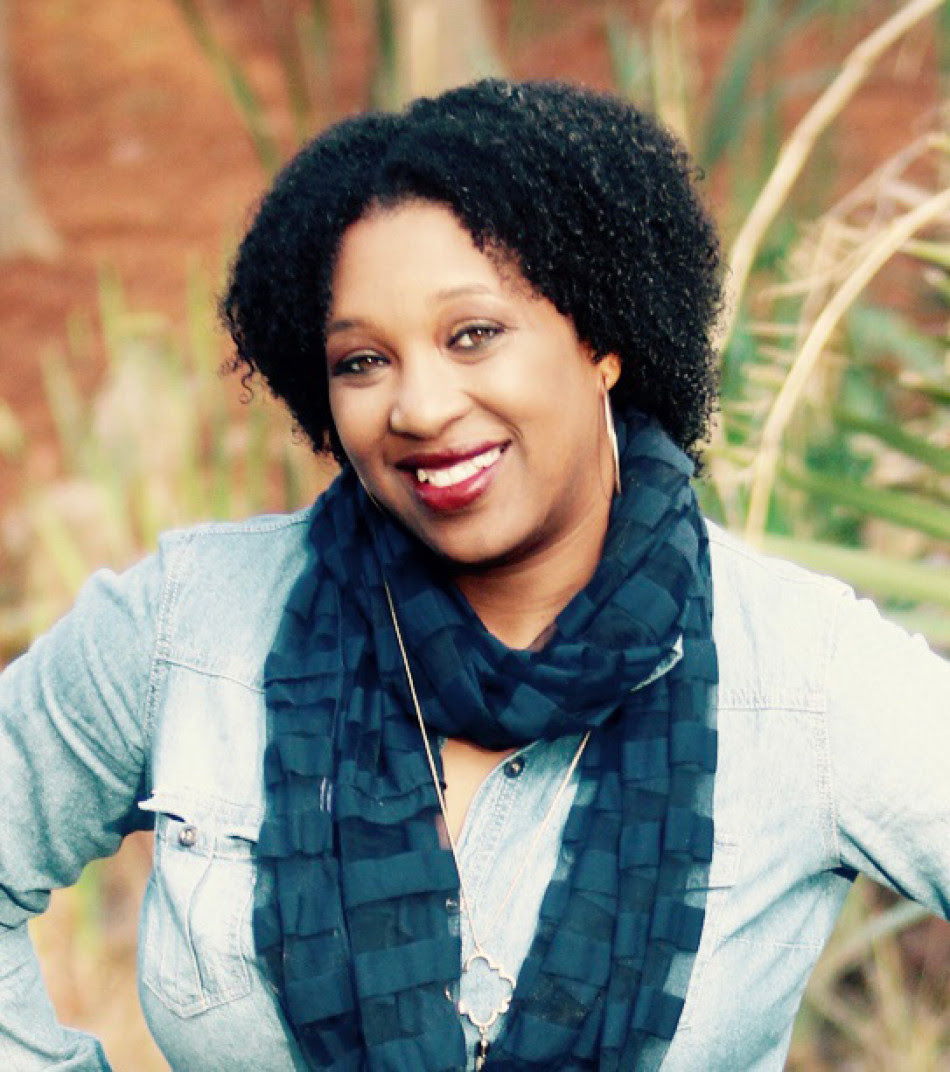
Donna writes:

One of my favorite reporting trips ever was touring around Noxubee County with then-freelance writer Torsheta Jackson in the thick of the COVID-19 pandemic. Because she grew up in the East Mississippi county, over on the Alabama border, Torsheta was the tour guide, driving us around in her big truck I had to lift myself into. First, she pointed out where she grew up in Shuqualak (locally pronounced “Sugar-lock”), the child of educators. Along the way, she pointed out slabs where industry, grocery stores and schools used to stand before her hometown became a shell of its former self over the decades after forced integration in 1970.

We walked around the ruins that now dominate the little downtown and talked about poverty, neglect, white-flight cycles and disinvestment in the county settled by rich white planters—including Mississippi State University founder Stephen D. Lee’s family—and built by enslaved people. The county has always been majority-Black, but usually under white control, from newspapers, to industry, to local education decisions and resources. It was also the site of vicious white terrorism to keep it that way.

Click now to support MFP’s Mapping Mississippi systemic-reporting strategy covering the 82 counties of Mississippi.

In the county seat of Macon, Torsheta showed me the county’s only remaining grocery store—white-owned and too expensive in a region where hunger is far too rampant, she said. She then took me to see the library, which still has its gallows, where they used to hang people in front of crowds on the front lawn, now marketed as a tourist attraction. We looked straight out the front window of the library at the tall Confederate statue standing in front of the courthouse across the street in a town that is 82% Black. The Board of Supervisors voted in July 2020 to remove it; last I checked, it was still there as post-George Floyd anti-racism enthusiasm wanes.

Torsheta showed me the abandoned Central Academy, which the superintendent of the county public schools helped open in the 1960s, supported by state vouchers, becoming the seg academy’s headmaster. She drove me to all the now-boarded-up, or disappeared or repurposed, public schools that used to be in Noxubee (locally pronounced “Nock-shu-bee”) County before most white families fled either to C.A. or to the local Mennonite school, which also opened in 1970.

Torsheta and I spent hours in the “new” Noxubee County public school just north of Macon, talking to the principal and the school psychologist—both women she knew growing up there. We learned about the perpetual state of crisis that faces the district and its one remaining public-school system covering the entire county; district leadership was changing again that day, in fact. And, of course, we learned about the systemic challenges that face Black women and their families, in particular, in Noxubee County, from no broadband, to hunger, to mental health and more. Their honesty with us informed Torsheta’s award-winning installment of our “(In)equity and Resilience: Black Women, Systemic Barriers and COVID-19” cause-solutions journalism project. It is now the prototype of our statewide county-level Mapping Mississippi systemic-reporting strategy that we’re amping up by summer with Torsheta’s help and inspiration.

Not to mention, a new area of research opened up for me when I heard the school psychologist’s story about a mob of local white men killing a Black woman school principal to stop the education and advancement of Black children: white terrorism specifically deployed to keep Black children uneducated and, thus, inequity and white control in place for generations to come. They said what they were doing for white-supremacy perpetuity right in the local newspaper. It wasn’t a secret. They bragged about ugly mob race violence by county leaders.Make a recurring donation now monthly, quarterly or annually to support the systemic journalism of Torsheta Jackson and our other reporters. Become an MFP VIP Club member.

It was an eye-opening and powerful journey for us both. Torsheta would later say on MFP Live that, before that reporting experience, she had not understood fully how intentional barriers and discrimination caused the decline of her home county over the decades. After this journey into the past, she did.

It was also on that tour of Noxubee County that I decided that I wanted Torsheta as a full-time reporter to take her systemic journalism across the state and help me build our Education Equity Solutions Lab. This is a very different kind of education reporting than the partisan griping about schools and funding that we usually see in Mississippi. For me, what I called Project Torsheta started on that trip. With her years of teaching experience (19 as of now), her brilliance, her curiosity, her wit and her stunning work ethic, I knew Torsheta was the kind of reporter Mississippi needs and deserves covering education. She can show us like no one else how education’s use as a political tool hurts families, children and whole communities.

Fast forward a couple of years, and it’s happening. Report for America announced Wednesday that it is supporting Torsheta as our lead education-equity reporter to do this work, paying a chunk of her salary for the next two to three years. After two years of working together to figure out timing and resources, Torsheta and I—and our whole team—are ecstatic that our vision is happening. I cannot wait to develop this work with Torsheta, and it doesn’t hurt that we recently hired fantastic Business Manager Jared Norton to free me up for more journalism. Torsheta and I (and others) will soon be traveling the state together again, doing the systemic journalism we know can help improve this state for all of our people.

I’ll talk more soon about our second new reporter we announced this week. Heather Harrison of Copiah County is the vivacious and dogged outgoing editor of The Reflector at Mississippi State. I knew in our first conversation (and then confirmed in a team solution circle) that she is bringing the energy, passion and curiosity that it takes to succeed and thrive at the Mississippi Free Press. She’ll be our first regional full-time bureau reporter, remaining in Starkville to largely cover that region of the state and help us collaborate with the Starkville Daily News.

Needless to say, you readers are making all of this growth happen. We started with $50,000 and one full-time reporter just three years ago. You have helped create 17 good-paying jobs and pay for myriad freelancers, contractors and interns—most of them brilliant and engaged Mississippi natives staying in their home state to do the work. Our resources are mostly from readers. You get it, and you are intentionally helping us grow our team and our reach to more counties.

Please help keep us growing by giving what you can now at mfp.ms/donate. Remember, your recurring donations are paying for at least one reporter already, so every amount matters.

Donna Ladd, Editor and CEO

A “transfer school” in New York City is one that enrolls high school students—some in their early 20s—who have fallen far behind and need intensive support to graduate. The Edward A. Reynolds West Side High School is a transfer school. It has been a life-saver for students who would otherwise have dropped out. The school has a wonderful range of facilities: “the suite of services West Side has offered from its specially designed West 102nd Street building—equipped with a gym big enough for Public School Athletic League play, a working kitchen for cooking classes, a health clinic, a childcare center and a youth employment program—can be transformative.”

Unfortunately for the West Side High School, another school wants its building. The Young Women’s Leadership Academy wants a swap. As journalist Liz Rosenberg reports, the students and teachers at West Side High School don’t want to move. The YWLA building is smaller and lacks the amenities of West Side High School.

But YWLA has some advantages. It was founded by Ann Tisch, who is part of the billionaire Tisch family, who are part of the ownership of the Loew’s Corporation.

Some West Side supporters question whether the Andrew H. and Ann R. Tisch Foundation’s support for the Young Women’s Leadership School, its backing of the Eagle Academy Foundation led by Banks until he was appointed by Mayor Eric Adams in 2022 and its working relationships with both city officials—is playing a role in the DOE’s plans.

There are six YWLA schools in the city, and more in other cities. Last year, their network received a gift of $7 million from McKenzie Scott. Over the past years, the Tisch Foundation gave $50,000 to the Eagle Academy schools run by now-Chancellor David Banks.

Will these cozy relationships encourage the City to mandate the building swap?

Or will the billionaire Tisch family use some of their assets to build or buy a suitable structure for their YWLA? It would also be a good use of MacKenzie Scott’s millions.

The 23-member Panel on Educational Policy will vote tomorrow night on the swap. Thirteen members of the Panel were appointed by the Mayor, as was Chancellor Banks.

It is well known that the idea of vouchers was launched in response to the Brown decision of 1954. Southern states wanted to avoid desegregating their schools, so they created voucher laws so that white students would not be forced to go to school with Black students. (A useful history is Steve Suitts’ Overturning Brown: The Segregationist Legacy of the Modern School Choice Movement.) Some “credit” libertarian Milton Friedman as the godfather of the voucher movement, but his 1955 essay advocating vouchers would have disappeared into the mists of time without the legislation passed across the South.

The voucher idea was stigmatized for many years because of its association with segregation. But it was revived in 1990 by a scholarly book by John Chubb and Terry Moe called Politics, Markets, and America’s Schools, in which they theorized that vouchers were actually a panacea. (Their word.)

We now know they were wrong. As multiple studies have reported, student academic performance is worse in voucher schools than in public schools. we also know that most vouchers are used by students who were already enrolled in private and religious schools, so vouchers are an expensive subsidy for families that like the subsidy but don’t need it.

So, why is there continued advocacy for vouchers? why do voucher advocates say that “all families should have the same choice as the rich” when the value of vouchers don’t pay for elite schools attended by the rich? Why are they sold as salvation for children when they are not?

Peter Greene sees a nefarious goal behind the voucher movement. He originally wrote this post two years ago, but recently reposted it because it was prescient.

The purpose of vouchers is to abandon public schools. As choice prevails, the community sees no reason to tax itself for private choices. Bond issues will lose. Parents whose children are no longer in school will not pay taxes for other people’s children. People without children will think, “that’s not my responsibility.” People will not want to pay for religious schools for those of a different faith. Schooling will become a personal responsibility, not a civic responsibility.

Peter writes:

We need to find another way to talk about vouchers.

As the GOP mounts a multi-state initiative to implement vouchers or super-voucher education savings accounts in many states across the country, it’s becoming increasingly clear that we’ve been looking at the voucher movement through the wrong lens (which is to day, the lens that voucheristas have promoted).

Vouchers are not about freeing or empowering parents. They are about empowering private interests to chomp away at the giant mountain of education money in this country. They are about dismantling any sort of oversight and accountability; it’s striking how many of these voucher bills/laws very specifically forbid the state to interfere with the vendors in any way, shape or form.

Think of voucher programs this way.

The state announces, “We are dismantling the public education system. You are on your own. You will have to shop for your child’s education, piece by piece, in a marketplace bound by very little oversight and very few guardrails. In this new education ecosystem, you will have to pay your own way. To take some of the sting out of this, we’ll give you a small pocketful of money to help defray expenses. Good luck.”

It’s not a voucher system. It’s a pay your own way system. It’s a you’re on your own system. The voucher is not the point of the system; it’s simply a small payment to keep you from noticing that you’ve just been cut loose.

Freedom and empowerment will come, as always, in direct proportion to the amount of money you have to spend.

The voucher amount will dwindle. That amount is based on what the public school system spends to educate a child, and taxpayers will shrink that amount going forward as the schools themselves shrink to holding facilities for students who can’t find a private vendor to accept them, or whose parents can’t afford what the voucher won’t cover. And remember, we’ve seen this movie before– after Brown v. Board of Education, white families in some states moved their children into private segregation academies, and then they cut public school taxes (because why keep paying taxes on the system that your child no longer used).

Vouchers are the tail, not the dog. They are the public-facing image of privatization– and not just privatization of the “delivery” of education. Voucherization is also about privatizing the responsibility for educating children, about telling parents that education is their problem, not the community’s.

We need another term for discussing this family of policies; “voucher” doesn’t begin to capture what’s truly at stake. I can imagine a world in which charter schools are a viable, even useful part of a robust pubic education system; it’s not at all the world we currently live in, but I can imagine it. But the system that voucher proponents want is absolutely incompatible with a functioning public education system. And it has nothing to do with freedom.

Joshua Cowen, Professor of Education Policy at Michigan State University, wrote the following article for TIME magazine:

In recent months, state legislatures across the country have broadened efforts to subsidize private school tuition with taxpayer dollars. New proposals for these programs—collectively called school vouchers—have appeared in more than a dozen states and passed as major priorities for Republican governors like Kim Reynolds in Iowa and Sarah Huckabee Sanders in Arkansas. Since 2021, Arizona, Florida, Utah and West Virginia have also created or expanded voucher plans. Meanwhile, a handful states like Indiana, Louisiana, Ohio and Wisconsin have run voucher programs for years. But do school vouchers actually work? We need to focus on what research shows, and what that means for kids moving forward.

As an analyst who has studied these and other forms of school choice for nearly two decades, I’m in a good position to give an answer. And based on data from existing voucher programs, the answer is almost unambiguously negative.

Let’s start with who benefits. First and foremost, the answer is: existing private school students. Small, pilot voucher programs with income limits have been around since the early 1990s, but over the last decade they have expanded to larger statewide initiatives with few if any income-eligibility requirements. Florida just passed its version of such a universal voucher program, following Arizona’s passage in the fall of 2022. In Arizona, more than 75% of initial voucher applicants had never been in public school—either because they were new kindergartners or already in private school before getting a voucher. That’s a problem because many voucher advocatesmarket these plans as ways to improve educational opportunities for public school children.

And what about the students who do leave public schools? Some plans, like the currently proposed bill in Texas, restrict eligibility to students in public school for at least one year. But for the children who do transfer using a voucher, the academic results in the recent scaled-up statewide programs are catastrophic. Although small, pilot-phase programs showed some promise two decades ago, new evaluations of vouchers in Washington, D.C.,Indiana, Louisiana, and Ohio show some of the largest test score drops ever seen in the research record—between -0.15 and -0.50 standard deviations of learning loss. That’s on par with what the COVID-19 pandemic did to test scores, and larger than Hurricane Katrina’s impacts on academics in New Orleans.

And these harmful voucher impacts from existing statewide vouchers lasted for years, with little else on balance to show for it.

What explains these extraordinarily large voucher-induced declines? Aren’t private schools supposed to be elite educational opportunities? When it comes to private schools accepting voucher payments, the answer is clearly no. That’s because elite private schools with strong academics and large endowments often decline to participate in voucher plans. Instead the typical voucher school is a financially distressed, sub-prime private provider often jumping at the chance for a tax bailout to stay open a few extra years.

In Wisconsin, 41% of voucher schools have closed since the program’s inception in 1990. And that includes the large number of pop-up schools opening just to cash in on the new voucher pay-out. For those pop-up schools, average survival time is just 4 years before their doors close for good.

Here’s another problem: for most students, using a voucher is a temporary choice to begin with. In states that have reported data on the question–Indiana, Louisiana, and Wisconsin—roughly 20% of students leave voucher programs each year, either because they give up the payment or because schools push them out. In Florida, where vouchers just expanded, that number is even higher: around 30% per year in pre-expansion data.

That kind of turnover is bad for kids, even when they’re leaving under-performing voucher schools. Not least because kids who leave voucher programs tend to be students of color, lower income children, and kids struggling academically in the first place.

And it’s not just the academic results that call into question any rhetoric around opportunities created by vouchers. Private schools can decline to admit children for any reason. One example of that is tied to the latest culture wars around LGBTQ youth, and strengthened in current voucher legislation. In Florida, a voucher-funded school made national news last summer when it banned LGBTQ children. In Indiana, pre-pandemic estimates showed that more than $16 million in taxpayer funding had already gone to voucher schools with explicit anti-LGBTQ admissions rules.

Voucher schools also rarely enroll children with special academic needs. Special education children tend to need more resources than vouchers provide, which can be a problem in public schools too. But public schools are at least obliged under federal law to enroll and assist special needs children—something private schools can and do avoid.

When we look at all the challenges to accessing education with these programs it’s clear that actually winning admission to a particular private school is not about parental school choice. It’s the school’s choice.

That is what research on school vouchers tells us. Vouchers are largely tax subsidies for existing private school families, and a tax bailout for struggling private schools. They have harmful test score impacts that persist for years, and they’re a revolving door of school enrollment. They’re public funds that support a financially desperate group of private schools, including some with active discriminatory admissions in place.

And public support for these programs is tenuous at best, highly dependent on state contexts. Recent media reports indicate that the latest voucher push is at least partly the result of well-funded campaigns led by Betsy DeVos, the conservative billionaire and U.S. Education Secretary under Donald Trump. DeVos has championed vouchers for decades as an alternative to traditional public education in what she, Trump, and other supporters call “government schools.”

But DeVos has acknowledged the poor track record for vouchers—at least when it comes to academic impacts. Asked about the dismal results of the Louisiana voucher plan while she was a public official, DeVos avoided detailed comment, but her answer back then was as good a summary as any that a voucher expert like me could provide. That program, she said, was “not very well-conceived.”

That goes for school voucher plans today, currently spreading across the country.