The more we learn about Ron DeSantis, the more obvious it is that he is unfit for any office due to his lack of ethics, his vindictiveness, and his authoritarianism. The Orlando Sentinel published an article about an investigation into the abusive behavior of a DeSantis appointee, who was appointed by DeSantis—without any background check, references or resume— to lead the state’s multi-billion dollar affordable housing program.
TALLAHASSEE — Gov. Ron DeSantis’ affordable housing executive director yelled and screamed at staff, made sexist comments, talked about their weight and threatened their jobs, employees of the Florida Housing Finance Corp. told an inspector general during an investigation.
The behavior of Mike DiNapoli, a former New York City financial adviser chosen by DeSantis to lead the corporation, created a hostile work environment that violated the organization’s policies, the corporation’s inspector general told board members Thursday.
“The conduct is severe and pervasive enough to create a work environment that a reasonable person would consider intimidating, hostile or abusive,” said Chris Hirst, the inspector general.
The investigative report into DiNapoli, which was not released publicly, was highly anticipated by those in Florida’s affordable housing community. Since the board approved hiring DiNapoli in February, 15 employees — 10% of the corporation’s workforce — were either fired by DiNapoli or quit.
DiNapoli was placed on paid administrative leave by the board in July. Last month, DeSantis reinstated him, with a spokesperson for the governor telling Politico that he never should have been suspended and that the investigation “has found nothing to justify the placement of Mr. DiNapoli on administrative leave….”
DeSantis’ press secretary lashed out at the board in a statement Thursday, calling members “clearly incapable of exercising prudent judgment.”
“If anyone wonders what the deep state looks like, this is it,” Jeremy Redfern said. “It’s clear to us that at least some members of this Board believe they can wield unchecked power to recklessly disparage a public official and tarnish his reputation without basic fairness and due process.”
He added, “We will explore every available tool to ensure proper management and oversight of the board and its staff, including the Inspector General, and to ensure further that this agency ultimately remains accountable to the people of Florida….”
DiNapoli also serves on the board of the First Housing Development Corp. of Florida, which has contracts with the corporation. Three of the corporation’s general counsels, who doubled as ethics officers, said it was a conflict of interest. Hirst agreed and concluded it was a violation of the corporation’s policies.
When asked about the conflict, DiNapoli said it was a “gray line,” and “an appearance of a conflict is not a conflict,” Hirst said….
Hirst also found that the corporation violated its hiring policies when it chose DiNapoli.
The corporation was supposed to advertise the executive director position, conduct interviews, do background checks and call work references. None of that happened, Hirst said. The corporation doesn’t even have an application or a resume on file for DiNapoli, he added.
Instead, DiNapoli was simply appointed by DeSantis, with the only letter of recommendation coming from James Uthmeier, DeSantis’ chief of staff who is currently leading DeSantis’ campaign for president.
The Times/Herald has previously reported that, before taking the job with the Florida Housing Finance Corp., DiNapoli had struggled with financial issues, including a bankruptcy, debtors garnishing his wages and a foreclosure on an Ocala home.
So DeSantis hired a guy with no background checks, not even a resume or references, to oversee the disbursement of billions of dollars for affordable housing. What could possibly go wrong?
A 15-year-old boy in New Hampshire, Quinn Mitchell, asked candidate Ron DeSantis a question he couldn’t or wouldn’t answer. At other appearances in New Hampshire, DeSantis’s security guards kept the boy away from the governor.
“Do you believe that Trump violated the peaceful transfer of power, a key principle of American democracy that we must uphold?” Quinn Mitchell asked Mr DeSantis during a town hall event in Hollis, New Hampshire, in June.
“Are you in high school?” the governor asked before he avoided answering the question, instead saying that Americans shouldn’t obsess about the past.
Quinn, who has seen 35 presidential candidates since 2019, also told The Daily Beast that he was physically intimidated when allegedly grabbed by DeSantis campaign security at two events for the governor.
But DeSantis eventually said that he couldn’t comment because he wasn’t there on January 6.
A tweet cited in the article:
Gov. Ron DeSantis (R-FL), when asked if Donald Trump violated the peaceful transfer of power on January 6th: “I wasn’t anywhere near Washington that day. I have nothing to do with what happened that day. Obviously, I didn’t enjoy seeing what happened.”
In response to reporter Kaitlin Collins: Chris Christie ripped DeSantis’s canned response:
@kaitlancollins
Chris Christie on Ron DeSantis’s Jan. 6 answer: “’He wasn’t anywhere near Washington’? Did he have a TV? Was he alive that day? Did he see what was going on? I mean, that’s one of the most ridiculous answers I’ve heard in this race so far.”
The governor’s security guards kept Quinn away from him.
Quinn said he was followed by two guards at an event on 19 August and an attendee told the outlet that they spotted a staffer from DeSantis Super PAC Never Back Down post a photo of him on Snapchat with the caption, “Got our kid”.
The Daily Beast reported that seven other sources confirmed Quinn’s version of events.
Quinn said the campaign’s treatment of him was “really stupid in a small state like New Hampshire”.
Mike Petrilli, head honcho of the right-tilted Fordham Institute thinky tank, made it into the New York Times today to do some chicken littling about Learning Loss and suggest a bold solution. Don’t have a NYT subscription? That’s okay– let me walk you through the highlights of this festival of Things We Can Stop Saying About Education Right Now, Please.
Let’s start by invoking general Learning Loss panic. Petrilli points out that students “lost significant ground” during covid, and now NWEA says that students continue “backsliding” and “falling further behind.” People, in Petrilli’s view, are not panicking enough about “America’s massive learning loss.”
First, let’s use some more precise language, please. In all discussions of learning loss, we are actually talking about scores on a Big Standardized Test of reading and math going down. We will never, ever know how much of the slippage in tests scores is the result of students going a year or two without practicing for the BS Test. But in the meantime, it would be great if we stopped talking about test scores as if they were infallible equivalents of learning and achievement.
Second, “learning loss” is a misnomer. I’m willing to bet that verrrrrrry tiny number of students in this country actually lost learning. I’m equally certain that the vast majority of students did not learn as much as they would have in a non-pandemic year, but that’s not the same.
Think of it this way. It’s budget time, and the Mugwumps’ proposed budget increases spending on widgets from $500 to $600. The Wombats say, “Let’s only increase widget spending to $550.” That gets us to the part where the Mugwump talking point is “The Wombats want to cut spending on widgets.” When in fact everybody wants widget spending to go up.
That’s where we are. During the pandemic, learning occurred–just not as much as might have been expected in a normal-ish year. And this looks most like a crisis if you think of test scores like stock prices and focus on data rather than individual human students. (Petrilli does not invoke the baloney about impact on future earnings, so we’ll not go there right now.)
And, it should also be pointed out, it is where we were for a decade before covid even hit.
Having sounded the alarm, Petrilli bemoans the surfeit of leaders willing to make alarmy noises.The country is in desperate need of leaders who will speak the truth about what’s happening in our K-12 schools, and are willing to make the hard choices to fix it. Simply put, we need to bring some tough love back to American education.
Tough love? Back? Petrilli doesn’t really explain how the pandemic led to a loss of tough love in education. But that’s the dog we’re going to try to hunt with.
He cites Michael Bloomberg, who is ceaselessly alarmed about anything going on in public schools. Bloomberg wants a plan from Washington, a joint session of Congress, a Presidential address.
Ah, says Petrilli–you know when politicians were on the same page about education, presumably flinging tough love around with wild abandon.
We’re talking, of course, about the golden days of No Child Left Behind.
Petrilli remembers it fondly, citing how we saw “significant progress” which of course means “test scores went up,” which they did, at first, for a few years. Anyone who was in a classroom, especially a math or reading classroom, can tell you why. Within a couple of years, schools figured out what test prep would be most effective. Then they targeted students who were teetering on the line between High Enough Scores and Not High Enough Scores, especially the ones in special subgroups, and test prepped the hell out of those kids. At which point scores started stagnating because schools had done all they could do.
The Average Yearly Progress requirements were set up as a bomb that would go off during the next administration. Again, if you were working in a school at the time, you remember that chart, showing a gentle upward glide for a bit before jutting upward to 2014, the magical year in which 100% of students were to score above average on the BS Test. Oh, Congress will fix that before it happens, we were told. They did not. By the early 20-teens, there were two types of school districts–those that were failing, and those that were cheating.
Petrilli claims maybe success probably, saying NCLB “likely contributed” to graduation rates (no, schools just learned how to game those), college attainment rates (eh, maybe, but correlation is not causation) and “possibly” future real-life outcomes (absolutely not a shred of evidence–even reformster Jay Greene said as much).”It’s true that No Child Left Behind was imperfect,” says Petrilli. No. It stunk. But Petrilli has quite the tale here.There were fierce debates over “teaching to the test” and “drill and kill” instruction; about closing low-performing schools versus trying to fix them; and about the link between student achievement and family poverty. But once the law’s shortcomings became apparent, policymakers responded by adopting common standards and improving standardized tests, so as to encourage higher-level teaching. They poured billions into school turnarounds, invested in stronger instructional materials and started grading schools on how much progress their kids made from year to year, rather than focusing on one snapshot in time — an approach that is markedly fairer to high-poverty campuses. Still, the bipartisan effort that was No Child Left Behind ultimately fell apart as our politics fractured.
That’s quite the load. There was no debate about teaching to the test or drill and kill, because nobody was in favor of it except shrugging administrators who were staring at 2014. Petrilli also forgets that “teach to the test” ended up meaning “cut out any other classes–or recess–that does not appear on the test.” Arts slashed. History and science cut (at least for those teetering students). Closing low-performing schools was, in fact, the quickest way for a district to free itself of the low scores; who knows how many districts were restructured to put predictably low 8th grade scores under the same roof as better scores from lower or higher grades. And yes, poverty affects scores, despite all the No Excusing in the world.
What came next did not address any of these issues, The Common Core was an amateur hour fiasco. Were standardized tests improved? Not really (as witnessed by the fact that states dumped the SBA and PARCC as quickly as they could)–but it made a lucrative contract for some test manufacturers. Including progress in scores is great–unless you’re teaching kids who are already scoring at the top. School turnarounds have consistently failed (e.g. Tennessee’s failed Achievement School District).
But he’s right that Trump’s election and appointment of Betsy DeVos hurt the reformster alliance (despite the fact that DeVos had long been part of the club). But then, so was the increasing split between the social justice wing of reform and the free marketeer AEI-Fordham wing.
But look– NCLB and the sequel, Race to the Top, were just bad. They started from bad premises: 1) US education is failing because 2) teachers either don’t care or don’t know what they’re doing. They rest on a foundation of using a mediocre BS Test as an unquestioned proxy for student learning and teacher effectiveness, creating a perfect stage on which to conduct a national field test of Campbell’s Law (when you make a measure a proxy for the real thing, you encourage people to mess with the measure instead of the real thing, and it gets worse if the measure isn’t very good). And none of the “policymakers” who championed this mess ever came up with a single solitary idea of how to Fix Things that actually worked on either a local or macro scale.
The pandemic did not help anything in education. But it did lead to some flaming prose, like Petrilli’s assertion that “here we are, with decades of academic progress washed away and achievement trends still moving in the wrong direction.” This kind of overheated rhetoric is nothing new from the folks who gave us The Pandemic Erased Two Decades of Progress in Math and Reading as a headline. But what does it even mean? Washed away to where? Did knowledge dribble out of students’ heads? Did the learning of the past several years retroactively vanish with former students waking up across America feeling a little bit dumber somehow? Did teachers forget everything they knew about how to teach students, so they have to start over? Or do we just mean “test scores are down”?
Petrilli breaks this down to some other issues. His first point starts out fine– there’s an attendance problem right now. But he tries to set that beside an alleged nationwide move to lower standards. I’m not sure what basis there is for that assertion. He points to the “no zeros” rule used in some schools, but that rule existed in many places (like my old district) for ages. Maybe it’s letting slackers slide through in other places, but my own experience with no zeros policy is that it merely kept students working who would otherwise have given up–kind of the opposite of encouraging slacking.
But then he’s slicing NCLB-style baloney again:Virtually all schools and districts have enjoyed a vacation from accountability. Almost nobody is worried about state officials shutting their campuses because of low performance, or forcing district schools to replace their principals or teachers.
You say that like it’s a bad thing, Mike.
Embedded here are many of the same bad assumptions that have driven ed reform for decades. Teachers and schools have no motivation to do their jobs unless they have some kind of threat of punishment hanging over their heads. This isn’t just bad education policy–it’s bad management. As management which W. Edwards Deming pointed out often, fear should be driven out of the workplace. But NCLB and RttT were always all stick, no carrot, always starting out with the worst possible assumptions about the people who had chosen education as their life’s work (assumptions made largely by people who had never actually worked in a school).
And even if you don’t dig Deming, there’s another thing to consider–none of the stuff Petrilli misses actually worked (which was Deming’s point). He points out that the kind of thing being done in Houston right now has become rare, to which I say “Good,” because Houston is a nightmare and it will end just like all the other similar attempts–no actual success, but lots of disruption and dismay and upheaval of children’s education.
Petrilli will now argue for NCLB 3.0. We need “action at scale,” but we can’t ignore “the support and assistance schools require.” Holding schools accountable wasn’t enough because– wait for it– if NCLB failed it was because schools lacked the expertise and know-how to do it right. And now Petrilli almost–but not quite–gets it.“Teaching to the test” and other problems with No Child Left Behind stemmed from schools resorting to misguided practices to meet requirements. Under pressure to boost scores, but without the training to know what to do, some educators engaged in endless practice testing, and stopped instruction in any subject that was unlikely to be on the state assessment. In a few places, educators even resorted to outright cheating. They likely felt they had no choice, because they hadn’t been given the tools to succeed.
Nope. Close but no cigar. No, the reason all those things happened was because, as NCLB 1.0 and 2.0 were designed, those things were the tools to “succeed.” Because “success” was defined as “get maximum number of kids to score well on a poorly-designed multiple-choice math and reading test.” Granted, when most of us think about “success” in education, we have a whole list of other things in mind–but none of those things were valued by NCLB or RttT.
But we’re rolling up to the finish now. But after a decade of building capacity, offering helping hands and adding funds, it’s time once again to couple skill-building with will-building.
That is a great line. But what capacity-building? More seats in unregulated charters and voucher-accepting schools? Which helping hands? And exactly whose will needs to be built? Parents? Children? Teachers? Policymakers? I’m seriously asking, because I think a hell of a lot of will was involved in slogging through the last couple of years.
Petrilli calls on schools to spend their “federal largesse” to “catch their kids up”–and I think the call to accelerate education is one of the most infuriating calls of the last few years. Sure– because all along teachers have known how to educate children faster but they just haven’t bothered to do it, but hey, now that we have certified lower test scores, teachers will all bust the super-secret Faster Learning plans out of their file cabinets.
Petrillii says we don’t actually need to bring back NCLB, though he seems to have been talking about nothing else– just let’s get out those big sticks and get back to (threats of) “tough interventions for persistent underperformance,” because that has totally worked in the past. No, wait. It hasn’t actually worked ever. Kids, too, should know that it’s time to hit the books again. We need to rethink our lax grading policies, make clear to parents that their children need to be at school and bring back high school graduation exams and the like to ensure that students buckle down.
Also, get those kids off our lawns. And while you’re making sure parents know their kids should be in school, maybe talk to all the reform crowd that has been working hard to build distrust of public schools and deepen disrespect of educators.
And the big finish:Education matters. Achievement matters. We need leaders who are willing to say so, and educators who are willing to act like these simple propositions are true.
This seems straightforward enough, though if you replace “achievement matters” with “standardized test scores matter,” which is what he really means, it doesn’t sound quite as compelling. And it’s insulting as hell to suggest that the ranks of educators are filled with people who are unwilling to act as if education matters.
Well, the piece is completely on brand for the New York Times, and it certainly echoes the refrain of that certain brand of reformster whose response to their own policy failures has been, “Well, get in there and fail harder.” No Child Left Behind failed, and it not only failed but left some of its worst policy ideas embedded in the new status quo, continuing to do damage to public education right through today.
The pandemic did many things, and one thing it did was panic the testing industry, which faced an existential threat that everyone might realize that school without the BS Test, or NWEA’s lovely test-prep tests, might actually be okay. It’s no wonder that they feel a special nostalgia for the days when the entire weight of the government reinforced their importance. So here we are, painting low reading and math tests scores as an educational crisis whose only solution is to get more fear, more threats, and especially more testing back into schools.
I’m sorry if this assessment of some reformsters, their policies, and their motives seems harsh, but, you know– tough love.
Mike Petrilli, president of the Thomas B. Fordham Institute, published an article in the New York Times yesterday in which he lamented the “learning loss” caused by the pandemic and called for a new national effort, like No Child Left Behind, to instill rigor and accountability, which he says will raise test scores. Time to bring back tough love, he wrote.
I have a hard time criticizing Mike Petrilli because I like him. When I was on the board of the Thomas B. Fordham Foundation/Institute, I got to know Mike, and he’s a genuinely good guy. But when I left the board of the TBF Institute in 2009, it was because I no longer shared its beliefs and values. I concluded as early as 2007 that No Child Left Behind was a failure. I wrote an article in the conservative journal EdNext in 2008 about NCLB, saying “End It,” paired with an article by the late John Chubb saying, “Mend It.”TBF sponsored charter schools in Ohio—a move I opposed because think tanks should be evaluating policy, not implementing it; also, during the time I was on the board, the charters sponsored by TBF failed.
By the time I left, I had concluded that the NCLB emphasis on high-stakes standardized testing was a disaster. It caused narrowing the curriculum, gaming the system, cheating, excessive test prep, and squeezed the joy of teaching and learning out of classrooms.
Furthermore, the very idea that Congress and the U.S. Department of Education were stigmatizing schools as failures and closing them was outrageous. I worked in the US ED. There are many very fine career civil servants there, but very few educators. In Congress, the number of experienced educators is tiny. Schools can’t be reformed or fixed by the President, Congress, and the Department of Education.
NCLB and Race to the Top were cut from the same cloth: Contempt for professional educators, indifference to the well-established fact that test scores are highly correlated with family income, and a deep but misguided belief that punishing educators and closing schools were cures for low test scores. Both the law (NCLB) and the program (RTTT) were based on the assumption that rewards and punishments directed at teachers and principals would bring about an educational renaissance. They were wrong. On the day that the Obama administration left office, the U.S. Department of Education quietly released a study acknowledging that Race to the Top, having spent billions on “test-and-punish” strategies, had no significant impact on test scores.
And as icing on the cake, Mike Petrilli wrote an article in 2017 about the latest disappointing NAEP scores, lamenting “a lost decade.” That “lost decade” was 2007-2017, which included a large chunk of NCLB and RTTT. In addition, the Common Core standards, released in 2010, were a huge flop. TBF was paid millions by the Gates Foundation both to evaluate them and to promote them. The NAEP scores remained flat after their introduction. Please, no more Common Core.
I wrote two books about the failure of NCLB and RTTT: The Death and Life of the Great American School System: How Testing and Choice Are Undermining Education (2010) and Reign of Error: The Hoax of the Privatization Movement and the Danger to America’s Public Schools.
Mercedes Schneider and I both wrote posts commending Mike Petrilli in 2019 when he wrote about the “dramatic achievement gains” of the 1990s and early 2000s before NCLB kicked in. He attributed those gains to improving economic conditions for families and declining child poverty rates. I wanted to give him a big kiss for recognizing that students do better in school when they are healthy and well-nourished.
So, what did No Child Left Behind and Race to the Top produce? A series of disasters, such as the Tennessee Achievement School District and Michigan’s Educational Achievement Authority, both gone. A landscape of corporate charter chains, for-profit charters, for-profit online charters, and now vouchers, in which red states commit to pay the tuition of students in religious schools and fly-by-night private schools. A national teacher shortage; a sharp decline in people entering the teaching profession.
Please, no more tough love. No more punishment for students, teachers, principals, and schools. Let bad ideas die.
This post is one of Jan Resseger’s best, most trenchant analyses of the robust and evil plot to defund public schools. She explains how the federal government—through No Child Left Behind and Race to the Top—drove federal Test-and-Punish practices and laws into the states. Even though those two vast federal programs failed, they remain alive in the states. Their “success,” if you can call it that, was in discrediting public schools and promoting privately-managed charter schools and vouchers.
The transformation of education from a civic obligation to a consumer good accelerated the passage of voucher legislation. Meanwhile the rhetoric of “saving poor kids from failing public schools” has quietly disappeared. Red states are lifting their income limits on voucher eligibility to make them available to all students, rich and poor. Despite research showing that vouchers are worse for poor students than the public schools they left, red state legislators are undaunted. Despite evidence that most vouchers are claimed by students already enrolled in private schools, red states continue to expand them. In effect, the rationale for privatization is no longer to fund a better alternative to public schools, but to hand public money to a clamorous interest group: private school parents.
Jan Resseger begins:
The federal No Child Left Behind Act (NCLB), passed in 2002, embodied school reform premised on the theory of test-based accountability—the requirement of high-stakes standardized tests for all students and the application of sanctions for schools unable to raise test scores. The idea was that if you threatened schools with closure or threatened to turn them into charter schools or threatened to punish teachers if their students’ overall scores were low, you could make the teachers work harder and somehow raise an entire school’s test scores. It was an experiment whose proponents believed all children could be made proficient by 2014.
By 2013, those of us who support our nation’s public schools knew the experiment had failed. Even the Congressional supporters of No Child Left Behind knew it had not worked; they created waivers for the growing number of school districts unable to guarantee all students would be proficient in 2014. In 2015, when Congress reauthorized the federal education law as the Every Student Succeeds Act, the new law reduced federal punishments, while it still required the states to test students every year and create plans to turn around low scoring schools. Test-and-Punish school reform did not end, however. Its remnants remained in the state policies that had been mandated by NCLB and Race to the Top and had been enacted in state laws.
Today after two decades, it is clear that overall test scores have not risen; neither has the stated goal of corporate school accountability—closing achievement gaps—been accomplished. Diane Ravitch explains that test-and-punish school accountability, “overlooks the well-known fact that test scores are highly correlated with family income and are influenced more by home conditions than by teachers or schools. Hundreds, perhaps thousands, of public schools were closed because of their inability to meet high test score goals. All of the closed schools were in impoverished communities. Thousands of teachers were penalized or fired because they taught the children with the biggest challenges, those who didn’t speak English, those with severe disabilities, those whose lives were in turmoil due to extreme poverty.”
State politics has now, however, made it even more difficult to push back against the forces attacking public schooling. The federal legislation was designed to drive a test-and-punish agenda into the state legislatures. No Child Left Behind began by mandating testing and sanctions. Then Race to the Top bribed states to enact their own sanctions for low-scoring schools and punish teachers by tying their evaluations to their students’ test scores. And ESSA continued requiring testing all students and required states to devise turnarounds for the lowest scoring schools. While under No Child Left Behind and the early days of Race to the Top advocates across the states could collaborate nationally to push back against the federal policy itself, the school reform battle in recent years has devolved to the state legislatures which enacted the federal requirements idiosyncratically into their own laws. Right now we are watching the state takeover of the public schools in Houston, Texas and Oklahoma’s threatened takeover of the Tulsa public schools, at the same time we are watching the consequences ten years later of the closure in 2013 of 50 public schools in Chicago’s poorest African American neighborhoods.
Test-based, punitive school reform has also dangerously discredited the nation’s public schools. The school accountability movement created the concept of “failing schools,” persistently condemned the schools in urban America, and accelerated the drive for school choice and privatization. Twenty years of school reform has culminated in the vast expansion of school privatization in the form of vouchers. This year, 12 states—by my count, and I may have missed some—have enacted or significantly expanded state-funded private school tuition vouchers at the expense of public school funding: Arkansas, Florida, Indiana, Iowa, Montana, Nebraska, North Carolina, Ohio, Oklahoma, South Carolina, Utah, and Wisconsin.
Please open the link and finish reading this important post.
Stephen Dyer is a former Ohio legislator who keeps track of education policy in his state. He reports frequently on scandals in charter schools, Cybercharters, and voucher schools. Every state should have a watchdog like him.
In his latest post, he writes about the failure of most of Ohio’s charter schools. Remember, they were supposed to “save” students from low-performing public schools? Instead, they offer an inferior choice, which coincidentally defunds higher-performing public schools. Who will save the children of Ohio from failing charter schools?
He writes:
In its latest national rankings, U.S. News & World Report pointed out that generally, charter schools around the country are disproportionately doing well on their national ratings. “Charters show up in disproportionately high rates among the top schools,” according to the report. And I’m sure charter proponents will take off and run with that.
But that ain’t happening in Ohio.
According to the rankings released today, only 5 of 44 ranked Ohio Charter Schools rate outside the bottom 25 percent nationally. U.S. News doesn’t rank high schools lower than 13,261st. They just put the worst performers in a single band.
And only 5 Ohio Charter High Schools are NOT in that band.
Saying that nearly 9 in 10 Ohio Charter High Schools rank in the bottom 25 percent of all High Schools in the country is a terrible black eye for our state. Especially as the Ohio General Assembly continues to dump more than $1 billion a year into these schools.
And even the 5 that do better than the bottom 25 percent nationally still don’t do awesome.
For example, the top ranked school — KIPP Columbus — ranked lower than two Akron Public Schools, two Cincinnati Public Schools, three Cleveland Municipal schools, a Columbus City school, and a Dayton City school.
That’s not great, especially when Charter Schools were promised as rescue vehicles for kids in urban public schools.
House Bill 2 was supposed to save Ohio’s Charter Schools from being the “wild, wild west” of the nation’s charter schools. But clearly it’s not working. If only 5 of Ohio’s 44 ranked Charter High Schools are not ranked in the bottom 25% nationally, then perhaps it’s time to re-examine our $1 billion a year commitment to these privately run, publicly funded schools.
The Florida Board of Education approved new state social studies standards on Wednesday, including standards for African American history, civics and government, American history, and economics. Critics immediately called out the middle school instruction in African American history that includes “how slaves developed skills which, in some instances, could be applied for their personal benefit.” (p. 6). They noted that describing enslavement as offering personal benefits to enslaved people is outrageous.
But that specific piece of instruction in the 216-page document is only a part of a much larger political project.
Taken as a whole, the Florida social studies curriculum describes a world in which the white male Founders of the United States embraced ideals of liberty and equality—ideals it falsely attributes primarily to Christianity rather than the Enlightenment—and indicates the country’s leaders never faltered from those ideals. Students will, the guidelines say, learn “how the principles contained in foundational documents contributed to the expansion of civil rights and liberties over time” (p. 148) and “analyze how liberty and economic freedom generate broad-based opportunity and prosperity in the United States” (p. 154).
The new guidelines reject the idea that human enslavement belied American principles; to the contrary, they note, enslavement was common around the globe, and they credit white abolitionists in the United States with ending it (although in reality the U.S. was actually a late holdout). Florida students should learn to base the history of U.S. enslavement in “Afro-Eurasian trade routes” and should be instructed in “how slavery was utilized in Asian, European, and African cultures,” as well as how European explorers discovered “systematic slave trading in Africa.” Then the students move on to compare “indentured servants of European and African extraction” (p. 70) before learning about overwhelmingly white abolitionist movements to end the system.
In this account, once slavery arrived in the U.S., it was much like any other kind of service work: slaves performed “various duties and trades…(agricultural work, painting, carpentry, tailoring, domestic service, blacksmithing, transportation).” (p. 6) (This is where the sentence about personal benefit comes in.) And in the end, it was white reformers who ended it.
This information lies by omission and lack of context. The idea of Black Americans who “developed skills” thanks to enslavement, for example, erases at the most basic level that the history of cattle farming, river navigation, rice and indigo cultivation, southern architecture, music, and so on in this country depended on the skills and traditions of African people.
Lack of context papers over that while African tribes did practice enslavement, for example, it was an entirely different system from the hereditary and unequal one that developed in the U.S. Black enslavement was not the same as indentured servitude except perhaps in the earliest years of the Chesapeake settlements when both were brutal—historians argue about this— and Indigenous enslavement was distinct from servitude from the very beginning of European contact. Some enslaved Americans did in fact work in the trades, but far more worked in the fields (and suggesting that enslavement was a sort of training program is, indeed, outrageous). And not just white abolitionists but also Black abolitionists and revolutionaries helped to end enslavement.
Taken together, this curriculum presents human enslavement as simply one of a number of labor systems, a system that does not, in this telling, involve racism or violence.
Indeed, racism is presented only as “the ramifications of prejudice, racism, and stereotyping on individual freedoms.” This is the language of right-wing protesters who say acknowledging white violence against others hurts their children, and racial violence is presented here as coming from both Black and white Americans, a trope straight out of accounts of white supremacists during Reconstruction (p. 17). To the degree Black Americans faced racial restrictions in that era, Chinese Americans and Japanese Americans did, too (pp. 117–118).
It’s hard to see how the extraordinary violence of Reconstruction, especially, fits into this whitewashed version of U.S. history, but the answer is that it doesn’t. In a single entry an instructor is called to: “Explain and evaluate the policies, practices, and consequences of Reconstruction (presidential and congressional reconstruction, Johnson’s impeachment, Civil Rights Act of 1866, the 13th, 14th, and 15th Amendments, opposition of Southern whites to Reconstruction, accomplishments and failures of Radical Reconstruction, presidential election of 1876, end of Reconstruction, rise of Jim Crow laws, rise of Ku Klux Klan)” (p. 104).
That’s quite a tall order.
But that’s not the end of Reconstruction in the curriculum. Another unit calls for students to “distinguish the freedoms guaranteed to African Americans and other groups with the 13th, 14th, and 15th Amendments to the Constitution…. Assess how Jim Crow Laws influenced life for African Americans and other racial/ethnic minority groups…. Compare the effects of the Black Codes…on freed people, and analyze the sharecropping system and debt peonage as practiced in the United States…. Review the Native American experience” (pp. 116–117).
Apparently, Reconstruction was not a period that singled out the Black population, and in any case, Reconstruction was quick and successful. White Floridians promptly extended rights to Black people: another learning outcome calls for students to “explain how the 1868 Florida Constitution conformed with the Reconstruction Era amendments to the U.S. Constitution (e.g., citizenship, equal protection, suffrage)” (p. 109).
All in all, racism didn’t matter to U.S. history, apparently, because “different groups of people ([for example] African Americans, immigrants, Native Americans, women) had their civil rights expanded through legislative action…executive action…and the courts.”
The use of passive voice in that passage identifies how the standards replace our dynamic and powerful history with political fantasy. In this telling, centuries of civil rights demands and ceaseless activism of committed people disappear. Marginalized Americans did not work to expand their own rights; those rights “were expanded.” The actors, presumably the white men who changed oppressive laws, are offstage.
And that is the fundamental story of this curriculum: nonwhite Americans and women “contribute” to a country established and controlled by white men, but they do not shape it themselves.
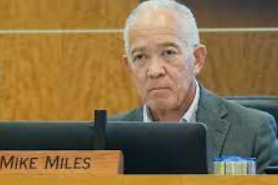
Mercedes Schneider summarizes the checkered career of Mike Miles, who was put in charge of the Houston Independent School District by State Commissioner Mike Morath, who was appointed by hard-right Republican Governor Greg Abbott. Abbott wants to punish Houston for not voting for him. What better punishment than to install Mike Miles as superintendent?
On June 01, 2023, the Texas Education Agency (TEA) appointed Mike Miles as the new HISD superintendent.
Miles is the golden-child product of market-based, ed-reform leadership. As reported in his LinkedIn bio, Miles holds no college degrees in teaching (engineering; slavic languages and literature; international affairs and policy). He has never been a classroom teacher, never a site-based administrator, yet he was a district superintendent in Colorado for six years (2006-11) and superintendent of Dallas ISD for three.
Though he does not mention it in his LinkedIn bio, Miles was a member of the Class of 2011 at the Broad Superintendents Academy A 2011 EdWeek article on Broad superintendents includes the criticism that they “use corporate-management techniques to consolidate power, weaken teachers’ job protections, cut parents out of decisionmaking, and introduce unproven reform measures.”
Indeed.
In 2015, Miles abruptly resigned from Dallas ISD amid being, as WFAA.com states, “at the center of controversy since he took the position nearly three years ago,” which apparently included questions about misdirecting funding intended for at-risk students and the subsequent exit of the Dallas ISD budget director. (Also calling Miles “a lightening rod for controversy,” WFAA.com offers this timeline of Miles’ unsettling tenure in Dallas.)
Following his Dallas ISD exit, in 2016, he founded a charter school chain, Third Future Schools, which has locations in Colorado, Texas, and Louisiana. For two years (2017-19), Miles was a senior associate in an education consulting firm, FourPoint Education Partners.
Tom Ultican writes about the Delaware disaster. Delaware went all in for neoliberal school reform, being one of the first winners of a Race to the Top award, and has seen its academic performance decline. It’s time to switch gears, he says, and let teachers teach without threats and fear. He writes that the Delaware story should be a lesson for the nation on the failure of No Child Left Behind and Race to the Top ideology —both representative of neoliberal school reform. This is one of Tom’s very best posts. Open the link and read it all!
He begins:
An unholy alliance between neoliberal Democrats and education reform oligarchs is harming Delaware public education. This is a lesson for the rest of the nation.
A new charter school law introduced to reduce principal professionalism is the latest example. Data clearly shows for almost two decades, top-down education reform has been ineffective and seriously damaged a once exemplary system.
In March, the Delaware Professional Standards Board recommended charter school certification requirements match public school rules. Kendall Massett, executive director of the Delaware Charter Schools Network, immediately responded, “All Delaware charter schools are led by highly qualified administrators.” She said charter school principals have a different role than public school leaders and need to be excellent marketeers to raise funds and drive enrollment.
Did she mean charter school principals don’t need to be professional educators?
For the Standards Board recommendation to take effect, adoption by the State Board of Education is required. Before they acted, Senate President Pro Tem David P. Sokola introduced senate bill 163 to relax certification rules for charter school principals.
The heart of Democrat Sokola’s legislation says:
“The bill creates new subsections in Section 507(c) of Title 14 of the Delaware Code to define the licensure and certification requirements more clearly within Chapter 5 of Title 14. Finally, the bill requires the Secretary of Education to work with the Delaware Charter Schools Network to create a qualified alternative licensure and certification pathway for charter school administrators engaged in the instruction of students (Instructional Administrators).”
Teachers’ union leader, Mike Matthews, wrote to the Senate Executive Committee:
“I was disheartened to see that SB 163 — a bill that will actually deprofessionalize the education profession — was introduced by Senator Sokola. I was even more disappointed — and concerned — to see it filed in the Senate Executive Committee instead of the Senate Education Committee where it belongs. Why was that?”
The Bill was passed by the State Senate and is currently awaiting action in the House Administration Committee. The House Education Committee, like its counterpart in the Senate, is not involved.
Neoliberal Education Reform
A Delaware Live headline howls, “School test scores dismal again despite new math, reading plans.” Two decades of 4th and 8th grade reading and math data on the National Assessment of Education Progress (NAEP) support the headline. NAEP is often referred to as the nation’s education report card. The above graphs beg the question,“what happened in 2010?”
Long-term NAEP data showed that from 1971 until 2002, there was steady growth in math and reading. The steady growth ended concurrent with the adoption of the bipartisan Kennedy-Bush education reform called No Child Left Behind. The graphs illustrate this phenomenon.
Why did Delaware’s scores start falling?
In 2010 educator and blogger, Susan Ohanian, reported,
“Delaware and Tennessee came out on top in round one of RTTT: Delaware got $100 million (about $800 per student), and Tennessee $500 million (about $500 per student). Since these states radically changed their education strategies to receive what amounts to 7 percent of their total expenditures on elementary and secondary education, the feds are getting a lot of bang for the buck.”
The $4.5 billion dollar Obama-era Race To The Top (RTTT) program was administered by Education Secretary Arne Duncan. Grants were given to states that complied with three key elements: (1) Evaluate teachers based on student test scores (2) Close and turn into charter schools public schools that continue to get low test scores (3) In low-test score schools, the principal and half of the staff are to be fired and replaced. In addition, states were encouraged to create more privately-managed charter schools.
Education historian and former Assistant US Secretary of Education Diane Ravitch predicted the program’s utter failure when it was announced:
“All of these elements are problematic. Evaluating teachers in relation to student test scores will have many adverse consequences. It will make the current standardized tests of basic skills more important than ever, and even more time and resources will be devoted to raising scores on these tests. The curriculum will be narrowed even more than under George W. Bush’s No Child Left Behind, because of the link between wages and scores. There will be even less time available for the arts, science, history, civics, foreign language, even physical education. Teachers will teach to the test. There will be more cheating, more gaming the system.”
For more than a century, brilliant educators have been skeptical of top-down coerced education reform like those from Duncan, Obama, Bush and Kennedy. Alfred North Whitehead published his essay, “The Aims of Education” in 1917, stating:
“I suggest that no system of external tests which aims primarily at examining individual scholars can result in anything but educational waste.” (Page 13)
“But the first requisite for educational reform is the school as a unit, with its approved curriculum based on its own needs, and evolved by its own staff. If we fail to secure that, we simply fall from one formalism into another, from one dung-hill of inert ideas into another.” (Page 13)
Former McKinsey Consultant and Democrat with neoliberal inclinations, Jack Markell, was elected Delaware Governor in 2009. His first major victory was winning the RTTT grant. He said:
“What’s really important today is where we go from here; whether we have the will to put our children first and move forward with reforms to improve our schools so that Delaware children can successfully compete for the best jobs in an increasingly competitive global economy. That won’t be easy, but we have proven in these past few months that it can be done. I would like to thank all those who worked with us in support of our application and look forward to moving ahead to improve our schools.”
Markell praised then Senate Education Committee Chair, David Sokola, for his work on the RTTT grant proposal, the same Senator who just introduced legislation to soften certification requirements for charter school principals.
Since the RTTT announcement, Delaware has gone from consistently scoring above the national average on all NAEP testing to dropping well below.
John Thompson, historian and retired teacher, believes that Ryan Walters, the state superintendent, may take control of Tulsa Public Schools, despite the fact that he has no idea how to improve them and that state takeovers have seldom (if ever) improved any schools. It’s ironic that Walters is eager to fire Tulsa superintendent Deborah Gist, since Gist received national plaudits for threatening to seize control of the impoverished Central Falls school district in 2010 when she was state superintendent in Rhode Island.
Thompson writes:
We’ve known that State Superintendent Ryan Walters was rapidly ramping up his attacks on public education, especially the Tulsa Public Schools (TPS), but the intensity of his assaults keeps growing at a frightening rate. Even though I’ve been worrying that Walters would combine the destructive rightwing extremists’ venom with the worst of the discredited neo-liberal corporate privatization reforms, it sounds like on August 24, he may do it in the worse possible way. Rather than remove the TPS’s accreditation and/or its superintendent, Walters may order a rushed takeover of the district patterned after the recent takeover of Houston’s schools.
As Nondoc reported on Tuesday, on Saturday Walters said at a Moms for Liberty event, “Tulsa Public Schools is getting money from the Chinese communist government,” He said, “They funneled it through a nonprofit — I mean, money-laundered it through a nonprofit in Texas.” On Monday, “Walters appeared at the Tulsa County Republican Party headquarters to discuss the district,” saying that it must “Reorient finances to serve students, increase reading proficiency scores to the state average, and lift its schools off of the state F-list.” “Now,” Nondoc reports, “state board members could choose to place TPS on full probation.” Moreover, Walters has “also declined to rule out a non-accreditation vote on TPS, though it is unclear how that action would play out for a district of 33,000 students after the school year has already started.”
Clearly, the removal of Superintendent Deborah Gist is a major priority. Ironically, Walters is challenging the honesty of TPS administrators as his “administration of federal GEER funds is being investigated by FBI agents and the Oklahoma Attorney General’s Office, according to people with direct knowledge of the inquiry.”
Even worse, Walters says he is regularly consulting with the Texas education commissioner, Mike Morath, about “strategies Texas used in its takeover of HISD.” The new Houston superintendent, Mike Miles, has long relied on mass exiting of teachers, and he’s already ordered educators at 28 schools to reapply for their jobs, and ordered the closures of many “reformed” schools’ libraries. So, it is no surprise that the President of the Tulsa Classroom Teachers Association, Shawna Mott-Wright, says that “the uncertainty over the district’s future already has some teachers stepping away from their jobs.”
In response, TPS board member, Jennettie Marshall, “said during the board’s 90-minute discussion of the district’s accreditation status. ‘We are under attack. If you’re not keeping up with Houston, … if we continue the course we’re on, that’s where we’re headed. That shouldn’t be.’” She warned, “We can’t afford to lose our educators, support groups and people who provide wraparound services. We can’t afford for this district to lose its accreditation.”
To understand why Walters’ new attack could be an existential threat to public education in Tulsa, one should listen to Nancy Bailey’s analysis of such takeovers:
State takeovers aren’t new. Nor are they known for innovation, but for creating school voids, cutting services, and firing key staff, promising to close learning gaps. Takeovers usually only weaken schools, breaking them up and leaving communities with fewer and poorer schools.
Moreover, the Hechinger Report cited a study by Brown University and the University of Virginia which “looked at all 35 state takeovers between 2011 and 2016. ‘On average, we find no evidence that takeover generates academic benefits.’” But the Hechinger Report added, “Race, meanwhile, plays a role in the likelihood of a district being taken over.”
The HIDC takeover campaign sped up in 2018 when “four of Houston’s 274 schools, all of them in the city’s economically distressed north and east sides, hadn’t met the standards for four years running.” By the time the takeover was ordered, “all but one of the district’s four failing schools was meeting state standards” but a rule change caused Phillis Wheatley High School to “narrowly” miss the mark. By 2021-22, Phyllis Wheatley had already improved from an F to a high C grade. Persisting in the takeover thus added support to researchers who concluded, “Now red-state governors increasingly use the takeovers to undermine the political power of cities, particularly those governed by Black and Hispanic leaders.”
We must also remember the history of the disastrous reigns of non-educator Mike Miles, a Broad Foundation corporate reform trainee, who Texas commissioner Morath placed in charge of Houston. When Miles was selected, apparently nobody asked about “the 26% drop in high school enrollment during the 6 years he was superintendent over Harrison School District Two in Colorado.” In Dallas, Miles set a target of “at least 75 percent of the schools are ‘partially proficient’ in four areas that focus on classroom instruction.” One of many reasons why that goal was impossible was “the loss of 6000 teachers in just three years.” His dictatorial mindset was illustrated by Miles ordering the removal by the police of a board member visiting a middle school where he had “replaced the principal, two assistant principals and 10 teachers.”
Dallas student outcomes had been increasing before Miles took over but student performance largely stagnated during his administration. As the Dallas Morning News reported, his tenure was marked by “disruptions, scandals, clashes.”
Now, Houston is facing the same situation where “sweeping changes include longer instructional days, lessons scripted by planners, not teachers, and new evaluations for educators that tie pay to academic performance.” The focus will be on math and reading. Cameras will be placed in each classroom to monitor behavior. Not surprisingly, Nancy Bailey notes that as the “HISD is losing qualified teachers, school libraries, and librarians,” it is “advertising for 350 long-term substitutes who don’t require a college degree.” She presciently concludes, “Watch as these kinds of reforms become prevalent in other school districts if they haven’t already.”
I have long had serious problems with Superintendent Gist, but I would have never called her “Woke Barbie” as her opponents have. To me, this is similar to the situation when Democrats joined with former Rep. Liz Cheney in defending our democracy. And, if we unite, the damage that Walters is promising to inflict on the TPS, and the Tulsa metropolitan area as a whole, could undermine his extremist campaigns. On the other hand, if we don’t recognize the extent of the threats of a HISD-style takeover, he might unite the worst of the corporate reform privatizers, with his Moms for Liberty extremism, and impose irreparable damage on the TPS and other school systems.




 Diane Ravitch's blog