Archives for category: Education Reform

Juan Perez Jr. of Politico painted a portrait of the State Superintendent who is leading the charge to put God into America’s classrooms. Whose God? The God of Protestants? Catholics? Jews? Muslims? Buddhists? Hindus? Or which sect of any of these religions or the scores not listed here? And what about atheists?

There is good reason that our Founding Fathers wanted to separate church and state. They were well aware of the havoc and wars that religious sectarians had inflicted on Europe for centuries. They did not want to import that religious divisiveness here. So while they were perfectly willing to praise religion in general, they wanted every sect to practice its own religion and they wanted to bar the state from imposing any religion. They made that clear in the First Amendment to the Constitution.

Ryan Walters of Oklahoma is leading the charge to make America’s schools religious. He knows that the rightwing domination of the U.S. Supreme Court has taken a sledgehammer to the wall that was supposed to separate church and state in recent rulings; consequently, states may now fund religious schools. SCOTUS unleashed the recent wave of voucher legislation in red states.

TULSA, Oklahoma — “You are at Ground Zero of the left’s war on education,” Oklahoma State Superintendent of Public Instruction Ryan Walters told the crowd inside a barbecue joint on a blazing August afternoon last year.

The day’s Tulsa County Men’s Republican Club meeting opened with a prayer, the Pledge of Allegiance and an ovation for the gathering’s featured speaker. Walters, a 38-year-old ex-teacher, was not here just to chat up a friendly audience and raffle off some Newt Gingrich and Rush Limbaugh books. He was here to make a case that, in a country he sees as corrupted by liberal indoctrination and beset with a civil war over young minds, God has a place in public schools.

“I’m going to get to the biggest assault that you see,” Walters said to the hushed gathering of predominantly older, white voters. Something, he said, “that makes the left the most mad”: “If you say a prayer. If you mention God. If you were to even quote the Declaration of Independence and say we’re endowed — by who? — our Creator with certain inalienable rights. Folks, that is key to our young people’s understanding of what made this country great.”

Walters became superintendent, a role that oversees all public education in the state, a year ago after winning a commanding margin during 2022’s midterm elections, and he’s quickly catapulted himself to the forefront of social conservatives’ influence over education just as the 2024 presidential election promises enormous consequences for American schooling. Wielding a doctrine of brimstone-salted classroom policy, he is the incarnation of a post-pandemic GOP school takeover attempt that has boiled over from local boards to higher-profile jobs like state superintendent and beyond.

Walters has tried to use his office to back a courtroom battle over the nation’s first public religious charter school — a Catholic institution that would be financed by taxpayers but free to teach, enroll and expel students based on faith-based doctrines just like a private parochial school.

Supporters view the concept as the natural outcome of a growing school choice movement that claims legal backing from a conservative-controlled Supreme Court. Opponents say it’s the next frontier in a “full-on assault on church-state separation and public education.” Either way, Walters and his allies are advocating an enormous shift in how schools work in the United States.

But he hasn’t restricted himself to just that cause. He’s instead interjected himself into a consistent string of news cycles. He’s described teacher unions as Marxist terrorist organizations (in the same state where domestic terrorists bombed a federal building and killed 168 people three decades ago). He explored a takeover of the Tulsa Public Schools system, Oklahoma’s biggest, after a fight with the district’s former leader that ultimately led to her resignation. He appointed Chaya Raichik, the far-right social media star who runs the Libs of TikTok account, to a state library committee in January, months after her criticism of a satirical video from a Tulsa school librarian sparked bomb threats.

His staunch opposition to LGBTQ+ rights has come under increasing national focus over the past month following the death of Nex Benedict, a 16-year-old nonbinary student in Owasso who, according to a preliminary medical examiner report, died from an apparent suicide after a bathroom altercation at their high school. Last week, Benedict’s family released more detailsthat documented “numerous areas of physical trauma over Nex’s body that evidence the severity of the assault” while calling on public officials and schools to “come together to prevent any other family from having to suffer through the heartache now borne by Nex’s loved ones.”

Hundreds of civil rights, education and LGBTQ+ organizations have demanded legislators remove Walters from office and investigate his department, asserting his conduct “shows a willful rejection of his duty to protect the health and welfare of the children in Oklahoma’s public schools.” In response, his office said: “Superintendent Walters will never back down to a woke mob.”

Walters has addressed lawmakers in Washington on Capitol Hill and spoken at the past year’s biggest conservative gatherings. He endorsed Donald Trump’s 2024 presidential bid — after, he said, receiving a call from the former president himself.

But unlike some of his ideological allies, Walters must tend to more than messaging. He is responsible for running a massive, complex government agency that oversees more than $3 billion in spending plus the education of hundreds of thousands of young people. While his hard-line politics have put him at the vanguard nationally, and often in line with the Republican base, his views have alienated an unexpected cohort of former allies and fellow conservatives in Oklahoma — and prompted a battery of unflattering coverage from a dogged corps of local journalists.

Last year state Republican Gov. Kevin Stitt removed Walters as education secretary, another role he’d been appointed to and in which he was serving simultaneously. A flood of employees has abandoned the state education agency, including high-profile departures who have publicly criticized Walters’ leadership and sued him for wrongful termination. An Oklahoma City-area school district is also suing Walters’ office, challenging orders to remove two books — including the 2003 novel The Kite Runner — from its high school libraries after the state library committee proclaimed they contained pornographic material. The superintendent’s office used state resources to hire a communications firm tasked with boosting Walters’ national profile, according to one local investigation that has raised questions about improper spending.

“What’s a shame is that he and I — we didn’t agree on a lot of things — but we agreed on public education and educating our kids,” said Republican state Rep. Mark McBride, an assistant floor leader and education appropriator who now is one of Walters’ fiercest conservative critics. “Since he got elected, he just has gone off the rails. I can’t support much of anything he does.”

Walters is also facing more potential legal trouble; the FBI and Republican Attorney General Gentner Drummond have looked into questions surrounding Walters’ campaign and a prior role he held leading a prominent education nonprofit once known as Every Kid Counts Oklahoma, according to four people familiar with the probes. Democrats have sought to impeach him. Republicans have subpoenaed him.

“My speculation, and I have heard that he’s made this comment, is that he would like to run for governor,” said McBride, who proposed legislation to curb the superintendent’s power soon after Walters took office. “I’m sure that he might consider himself as a [federal] secretary of Education … or something like that if he’s crazy enough.”

Yet if Walters is chastened by his array of opponents, he does not show it publicly. In a statement to POLITICO Magazine, Dan Isett, a Walters spokesperson, said staff departures were necessary to “end a union stronghold in Oklahoma’s education,” that Walters has never been interviewed or subpoenaed by federal investigators, and that “the liberal media and jealous liberal activists” have sought to undermine the superintendent.

And after Tulsa’s GOP gathering emptied, Walters compared his work to one of his political idols. “He took some hard-line stands,” Walters told me of Winston Churchill in a slight Oklahoma drawl, between sips of sweet tea. He wore a black “W.W.J.D.” band around his wrist. Dressed in designer blue jeans, a navy sportcoat and brown roper boots, Walters seemed at ease as he deployed Fox News-ready talking points, peppered his answers with ‘Yes, sir’ and never raised his voice.

“Oklahomans see very clearly, the left are the ones who politicized the classroom,” Walters told me. “My goal is to take those politics and rid them from the classroom.”

Years before he captivated crowds at national rallies for influential conservative groups such as Moms for Liberty, Walters was his hometown’s star teacher.

He grew up in McAlester, a predominantly white southeastern Oklahoma town of about 18,000 people that is home to the state’s infamous penitentiary, a major Army ammunition plant and a string of prominent state Democrats.Walters said he was enchanted as a kid by classroom lessons on American history. He credits his childhood educators, plus supportive parents who serve as a minister and elementary education director at a local church, for nurturing his interest in teaching. He left home for college, attending Harding University, a private Christian institution in Arkansas. But a year after he graduated in 2010, he was back at McAlester High as a teacher.

His first year in the classroom was challenging. He later remembered that it hit him “like a ton of bricks.” But he proved popular both with students and the administration at his alma mater and soon was teaching Advanced Placement history and government courses. He was named McAlester’s teacher of the year in February 2015 and five months later was picked as one of 12 finalists for the state’s highest teaching honor. “An outstanding educator,” Walters was quoted as saying at the time, “can transcend racism, poverty, and all other barriers that stand between a child and success.”

He developed a reputation as a charismatic instructor and tennis coach with a Twitter habit and a regular classroom wardrobe of suits and skinny ties. But in the early days, he largely kept his politics to himself. His online feed was filled with posts admiring Bachelor in Paradise and Game of Thrones, and predictions that Hillary Clinton would win the 2016 presidential election. “You can hear this from my former students; they didn’t know I was conservative,” Walters said.

Walters does not offer much detail on the precise events that shaped his current politics. Former students and some of his onetime colleagues have told me and other journalists that they have trouble reconciling Walters’ political persona with the person they once knew. Walters didn’t seem keen on answering more questions about his evolution, either. He and his advisers were eager to talk when I first started reporting this story last year. But Walters canceled follow-up interviews as controversies piled up through the winter and spring.

Walters did suggest, though, that some of his political views intensified around the time he was nominated for the state’s teacher of the year award. He claims educators he encountered during that time “lashed out” at his support for school choice, though it’s not clear how stridently he made his views known publicly. He also remembered defending Thomas Jefferson during one teacher training that he said criticized the founder’s legacy as a slaveholder. His hard-right views later “crystallized” during his campaign, he said.

“I had these moments where I started to see what’s going on,” Walters said. “There was this dramatic shift, even in a state like Oklahoma, towards these associations and groups in place that are pushing a viewpoint that I just don’t see out of most Oklahomans.”

He started writing op-eds for conservative media outlets The Federalist and Daily Caller, where he suggested defying “unconstitutional court rulings” and criticized the Supreme Court decision that legalized gay marriage. Yet he hadn’t fully adopted his current culture warrior persona. In 2018, he served on a committee that helped write the state’s straightforward social studies curriculum — and praised the final product in 2019 without a single complaint about the type of “woke ideology” he denounces today.

Randy Hughes, McAlester’s former superintendent, would later describe Walters as “one of the most remarkable educators to have served students at McAlester Public Schools.”

And that could have been the extent of Walters’ career, if it wasn’t for a major political patron.

“This guy is nothing without the governor,” said one knowledgeable Oklahoma power broker who requested anonymity to discuss Walters because of the volatile political situation. “He is coaching tennis in McAlester without Kevin Stitt.”

The governor has said the two became friends after meeting at high school tennis tournaments during Stitt’s 2018 campaign while his daughter was competing, and Walters was coaching one of the other teams. “I just knew that his heart was all about kids, it was all about outcomes and it was all about becoming top 10 in education,” Stitt said of Walters in a 2021 Harding University video feature about Walters.

After the governor took office in 2019, Stitt appointed Walters to serve as a member of the state’s Commission for Educational Quality and Accountability. Weeks later, Walters became the executive director of Oklahoma Achieves, a nonprofit established by the state Chamber of Oklahoma in 2013 to advocate on education with the business community.

When he took the job, Walters insisted that he be allowed to continue teaching at McAlester — and start a new second teaching gig at an Oklahoma City high school — in a kind of hybrid in-person and virtual role that augured the sort of classes endured by millions beginning the following year. In the first Covid-19 summer of 2020, Oklahoma Achieves folded into a new nonprofit — with Walters still at the helm — called Every Kid Counts Oklahoma.

Stitt soon announced a $30 million federally funded school pandemic assistance program that featured private education tuition subsidies and grants for families to purchase remote learning curriculum, technology or tutoring. Every Kid Counts Oklahoma and Walters were responsible for awarding the remote learning funds.

The U.S. Education Department and local investigators later documented significant problems with how Oklahoma administered and spent school pandemic assistance funds. Authorities said Walters, in his role at Every Kid Counts Oklahoma, organized a meeting with a company known as ClassWallet before the state gave the firm a no-bid, $18 million contract to help administer Stitt’s tuition and remote learning initiatives. Those programs were also beset with improper spending and insufficient documentation, authorities said.

Back in 2020, though, those issues weren’t yet public knowledge. That September, Stitt cited Walters’ pandemic spending leadership when the governor appointed him as the state’s education secretary. Less than a year later, Walters launched his campaign for state superintendent.

Walters’ entry into electoral politics came at a time when Covid-19 and the country’s racial reckoning had Oklahoma primed to fight over education. Two months before Walters officially launched his campaign in July 2021, Stitt signed state laws that curtailed school mask mandatesand barred educators from requiring courses or teaching concepts that cause individuals to “feel discomfort, guilt, anguish or any other form of psychological distress” due to their race or gender.

During the campaign, Walters praised H.B. 1775, the state’s race and gender teaching requirement, when the American Civil Liberties Union launched a still-ongoing lawsuit to overturn the law. He said the Biden administration was “way out of line” after a state mask mandate ban sparked a fight with the White House. “Only a parent should be able to make the decision if their child receives the vaccines or wears a mask to school,” Walters said while hundreds of mask and vaccine opponents rallied at the state capitol.

By early 2022, Walters’ campaign was defined by taking stances on everyday education issues — such as early childhood reading, school choice, and private sector-friendly school reform — and weaponizing them with a culture war message that resonated with social conservatives. Republican Govs. Glenn Youngkin and Ron DeSantis had already pioneered similar models in Virginia and Florida, noted Matt Langston, Walters’ main campaign aide who would eventually become his chief policy adviser after he took office.

“You can take education and put it into a much broader worldview,” Langston told me. “And that becomes a way of building a very credible base of individuals who may not be ‘education voters,’ but they are looking at it and saying ‘We’re very frustrated. We are very disenchanted with a lot of things that are happening within the country and the state.’”

Social media became a focal point for the campaign’s strategy. That left Walters facing a choice between positive messages that garnered a handful of retweets and impressions, or something darker.

“To be clear, in Oklahoma, our schools are not going to go woke,” Walters said in a widely shared March 2022 video that praised the country’s Christian roots after a religious group criticized his embrace of the state race and gender law. He then wrote in a Fox News op-edthat “the far-left’s attempts to destroy our nation’s history and indoctrinate our children must be stopped.”

📣 Want more POLITICO? Download our mobile app to save stories, get notifications and more. In iOS or Android.

The next month Walters attacked a Stillwater Public Schools policy that had allowed students to use bathrooms corresponding with their gender identity, a policy that had been in place for years without incident, according to the district. “You have chosen radicals over your students, ideology over biology, and ‘wokeness’ over safety,” Walters told the board. The firestorm garnered more media coverage and culminated later in the year with a state law that restricted transgender students’ restroom use.

“When you start looking at those comparisons,” Langston said, “whether he weighs in on ‘We need more teacher pay’ or ‘Our teachers are the greatest here in the state and this is why’ versus rolling out a position on ‘We have to stop porn in schools,’ or ‘We have to stop liberal indoctrination’ — it’s not even close to the amount of attention either one of those gets.”

The strategy paid off. Walters won 41 percent of the vote in a four-way GOP primary, then 53 percent in a party runoff. During the general election, he didn’t stray from appealing to the conservative base. He called to revoke the licenseof a high school teacher who resigned in opposition to Oklahoma’s banned-concepts law and accused his opponents of supporting “radical gender theory.” Former Education Secretary Betsy DeVos and her spouse each donated to Walters. Americans for Prosperity and other national conservative groups sent hundreds of thousands of dollars to support Walters. Texas Republican Sen. Ted Cruz was another backer, and Walters posed for selfies with Youngkin ahead of the election.

Walters won with nearly 57 percent of the general election vote — putting him at the forefront of a new wave of Republican state school chiefs in Arizona, Idaho, Georgia, South Carolina and Wyoming.

The protesters crowded against the barricades outside Moms for Liberty’s summit in Philadelphia last summer may not have known about the teacher from McAlester. But one of the country’s most influential conservative education groups offered an ideal venue to build Walters’ national profile.

“The reality is the forces that you all are fighting — these are folks that want to destroy our society,” Walters told the gathering’s Republican audience during a panel with education chiefs from South Carolina, Arkansas and Florida.

“They want to destroy your family,” Walters said. “And they want to destroy America as we know it. This is the fight that we’re in, folks. The stakes couldn’t be higher.”

Walters has asserted that his political opponents are waging “civil war” against children and conspiring to topple religion, and he’s defended a highly disputed conservative philosophy that rejects the separation of church and state. “There’s no basis for it in the Constitution,” Walters told me. “This was not something the Founders talked about. This wasn’t a core fundamental principle. And what we’ve seen is the left weaponize this term to actually mean the state will promote atheism and target any other faiths.”

Instead, Walters wants to inject religion into public schooling. Last year, he called to enforce an Oklahoma law that requires a daily minute of silence at schools — and said students must be told they can pray during that time. He seized onto a dispute over a graduation ceremony prayer delivered by a Tulsa Public Schools board member amid a broader clash with former district chief Deborah Gist over academics and financial controls. (Walters even floated a state takeover of the district before Stitt downplayedthe idea and Gist stepped down amid pressure from the superintendent and his allies.)

But most significantly, Walters has used his megaphone to support Oklahoma’s campaign to open explicitly religious public charter schools.

Religious liberty and public schools have tangled in the Supreme Court for decades. Yet church leaders and conservative advocates say Oklahoma’s campaign for religious public schools promises a monumental leap for school choice and religious liberty. Instead of simply giving families subsidies they can use on private school tuition — as other states have implemented — this new model promises a direct injection of taxpayer funds into religious schools that can hire educators, enroll students and teach classes based on church doctrine.

“We’re all looking at the same end in mind,” said Brett Farley, executive director of the Catholic Conference of Oklahoma, “which is ultimately breaking the monopoly of public schools on education so that parents have real, universal choice. That’s the end goal.”

A series of conservative arguments lie at the center of this campaign: Judeo-Christian beliefs are historically bound with education in the United States. Government has improperly imposed secular standards on public schools in an infringement on religious liberty. And public funding must support religious schools if the public is going to pay for education at all.

Some of those views got a boost from three Supreme Court cases that expanded faith-based institutions’ access to public funds — Carson v. Makin in 2022, Espinoza v. Montana Department of Revenue in 2020, and Trinity Lutheran Church of Columbia v. Comer in 2017.

Former Oklahoma Attorney General John O’Connor, while leaving office after losing his primary to now-AG Drummond, cited those cases when he declared in 2022 that the state could not block churches from using taxpayer dollars to create public schools that teach religion like private schools.

Want to read more stories like this? POLITICO Weekend delivers gripping reads, smart analysis and a bit of high-minded fun every Friday. Sign up for the newsletter.

Catholic authorities used O’Connor’s nonbinding opinion to justify their attempt to open the St. Isidore of Seville Catholic Virtual School, which would be the country’s first public charter to function as a religious institution. Groups aligned with the conservative legal movement and its financial architect, Leonard Leo, have promoted the publicly funded Christian school in the hopes of creating a test case that would change the Supreme Court’s interpretation of the First Amendment’s separation of church and state.

“The Supreme Court has been wrong. There is no separation of church and state in the Constitution or Declaration of Independence. It doesn’t exist,” Walters told a convening of the Family Research Council in Washington, D.C., last fall. “So we will bring God back to schools and prayer back in schools in Oklahoma, and we will fight back against that radical myth.”

The idea has divided even conservatives. Drummond withdrew O’Connor’s opinion under the argument that it misused “the concept of religious liberty by employing it as a means to justify state-funded religion” and he is suing to stop the school from opening. An array of civil rights groups, faith leaders and secular organizations have also sued to block the school and excoriated the embrace of religious orthodoxy in public education.

“What’s happening with Ryan Walters and his cabal is happening all around the country, as part of this emboldened Christian nationalist movement,” said Rachel Laser, who leads Americans United for Separation of Church and State. “And one of their key frontiers for making America a Christian nation and retaining their power and privilege in America is a takeover of public schools.”

Walters had weathered a bumpy start in office. Stitt reappointed him to continue serving as education secretary in January 2023, which would have granted Walters sweeping authority in an unusual double-barreled state role if lawmakers approved. But Drummond, the new Republican AG, soon opined that Walters could not legally hold two state offices, and later said the superintendent’s unilateral attempt to require schools to notify parents if their child changed their gender identity and ban “pornographic” library content should be voided. Just months into the job, Walters’ new employees told journalists the education department had become “toxic” after he took office.

“The culture changed within a matter of weeks,” said one of Walters’ former colleagues, who requested anonymity to discuss the superintendent’s tenure. “The real fear that people felt across the agency was not only that they might be fired but that they would be caught up in something illegal and they would be responsible for it. I had never seen a culture like that.”

In response to written questions about the staffing turmoil, Dan Isett, the department’s director of communications, said: “Many of the staff departures have been necessary and long needed to end a union stronghold in Oklahoma’s education. Change is sometimes difficult and necessary.”

In April 2023, Stitt replaced Walters as education secretary with an Oklahoma State University professor. People close to the situation told me Walters was furious to be cut from a second role.

His replacement, Katherine Curry, then resigned just months after taking office citing the “complexity and political environment” surrounding the secretary job. Curry later told The Oklahoman that the state superintendent’s office would not turn over information on how the agency budgeted and spent money. Another department grant official, Pamela Smith-Gordon, abruptly left her office in the fall citing similar concerns. She also told the Tulsa Worldthat she never saw Walters in the office.

“I don’t know if he doesn’t know what the job is that he ran for, or if he’s scared to do the job that he ran for, or he doesn’t know how to do the job that he ran for. What I do know is that he isn’t doing it,” Gist, the former head of Tulsa schools, told me a few days before she resigned. “The superintendent’s actions have made it clear that he’s focusing on political talking points rather than the real work of serving the community.”

‘We’re being overshadowed by the antics of our state superintendent’

New controversies continue to blossom. Walters pushed out an Oklahoma City-area principal who moonlights as a drag queen. Walters reposted an altered version of a librarian’s satirical video that spurred school bomb threats when it was amplified by the Libs of TikTok account. Benedict’s death is now the subject of a federal Education Department civil rights investigation. Hostile onlookers are not an unusual presence at state board meetings.

And questions swirl about the superintendent’s potential legal entanglements and ability to work with policymakers. The FBI and state attorney general have investigated Walters’ stewardship of federal pandemic relief funds and activities related to campaign and nonprofit roles he held before winning office, according to four people with knowledge of the investigations who requested anonymity to discuss the sensitive matter. (Walters resigned his nonprofit job upon taking the superintendent position last year.) The Oklahoman first reported the existence of the FBI’s investigation.

Walters has not been formally accused of criminal wrongdoing. Drummond’s office declined to comment, saying it does not speak on the existence or nonexistence of any investigation. FBI policy prohibits confirming or denying the existence of an investigation, a bureau spokesperson said. Allegations of criminal conduct are reviewed by the FBI for their merit, the spokesperson added, but such reviews do not necessarily result in a full investigation.

Walters told me in August that he was not aware of whether he was a target of any state or federal investigation. “Ryan Walters has never been subpoenaed or questioned by federal law enforcement,” the superintendent’s spokesman said this month in a statement. “This has been an active lie promoted by the liberal media and jealous liberal activists. Superintendent Walters is transparent with taxpayer dollars and every program that he’s involved in.”

People with knowledge of the matter said federal agents have asked some of Walters’ former colleagues and supporters about the superintendent’s campaign fundraising and reporting practices. Former colleagues told me they witnessed the superintendent’s executive assistant at Every Kid Counts Oklahoma collecting campaign donations for Walters at fundraisers, raising questions about whether firewalls were in place to isolate Walters’ government work from the nonprofit and his political campaign. Authorities have also sought information on lax controls related to the millions of federal pandemic relief dollars that Walters helped oversee in his former nonprofit role.

Oklahoma State Auditor Cindy Byrd’s office is in the final stages of conducting a forensic audit of the state education department, a highly detailed investigation that often helps prosecutors investigate criminal allegations. The U.S. Education Department also conducted a routine review of the state’s implementation of federal programs earlier this year and is finalizing a report that will be shared with Walters’ office.

At the same time his national profile has increased, Walters has at times been sidelined on education policy at home. Oklahoma lawmakers have approved a massive tax credit program for private school tuition, teacher pay raises worth thousands of dollars, a $150 million school safety program, literacy programs and hundreds of millions of dollars in new education funding. “We did every bit of that without our state superintendent,” Republican state Rep. Rhonda Baker told me. “Because we knew that he could not be part of it or the whole thing would blow up.”

“In Oklahoma, the legislature is really trying to move the needle in education,” said Baker, a veteran educator and chair of key education committees in her chamber. “And frustratingly enough, we’re being overshadowed by the antics of our state superintendent.”

McBride, Baker and state House Speaker Charles McCall subpoenaed Walters for a series of records in late December, including his emails from his tenure at Every Kid Counts Oklahoma. Walters responded to most of their inquiries but said he couldn’t provide any emails. Lawmakers have managed to obtain a trove of his messages anyway, McBride told me. Ongoing controversy over Walters’ national media campaign has prompted notable criticism from Stitt and McCall. Walters’ office did not respond to questions about whether the superintendent believes he still has the governor’s support.

But even as he faces dissent from sectors of his party at home, his meteoric rise in the national spotlight hasn’t slowed down. Walters demurs when asked about his political ambitions, including a gubernatorial run. His spokesman added: “While he has many options for the future, those choices are for a later date.”

Even some of Walters’ detractors agree that he’s tapped into deep-seated anger over a changing country. “He has become a lightning rod for decades of frustration,” Robert Franklin, a former Democrat who switched parties and leads the state’s virtual charter school board, told me.

You can hear that from the voters at the Tulsa County Men’s Republican Club, or the Christian radio personalities who urge followers to take back their schools on long stretches of interstate that span between Oklahoma City, Tulsa, McAlester and beyond. A new generation is now in power.

“Folks are sick and tired of people that say one thing to get elected and go in and do the exact opposite once elected,” Walters told me last summer. “I looked every voter in the eye throughout the entire campaign and I told them what I was going to do.”

Jess Piper lives in rural Missouri. She is a fearless progressive and a fighter. She has repeatedly called on the Democratic Party to contest every seat, even in rural areas, where voters usually have no choice. She will be a featured speaker at the next convening of the Network for Public Education in April 2025 in Columbus, Ohio.

She wrote recently:

“You don’t like it? Move.” 

This sort of advice is often given to me in online spaces when I say something truthful about Missouri that irritates folks on the right. When I talk about abortion bans, I should move to California. When I talk about funding schools, I should move to New York. When I speak out against harmful policies, I’m just an out of place, out of touch, liberal.

I’ve been told to move to California or New York many times, and while I have visited both states, and appreciate the CA beaches and the NY atmosphere, I wouldn’t move to either state for two very important reasons: 1) This is where my children and grandchildren live. 2) This is my state too.

Here’s something that may interest you; I hear the same rhetoric, although presented in a much more caring way, from progressives in states with better representation. My blue state friends have given me the “just move” advice on several occasions. They fear that I am in danger or that specific policies will hurt my family. They are justified in thinking I should move, but what they don’t realize is that moving will eventually harm them. If all of the like-minded congregate in progressive states, we will all eventually be overwhelmed by the regressive states. 

If we don’t contest and protest in every GOP-dominated state, the bad policies will leach into all the states.

I will preface this essay by saying that I understand that not all folks have the privilege I have to stay and fight. Those with trans children, those impacted by our state healthcare failings and childcare issues, those dealing with things I can’t even begin to understand have every reason to flee states like Missouri. I make absolutely no judgment on those who choose to leave. I am in solidarity with them.

If you’ve done the reading, you know that our country is slowly being swallowed up by right-wing billionaire rhetoric and policies. You likely know the long-game for this takeover was hashed out decades ago, and the way the extremists were able to do this was by taking over state legislatures and positions like the Secretary of State and the Attorney General. They have bankrolled the campaigns of State Reps and Senators, and even dip their toes into school board races.

In my state, the evolution is complete. Missouri went from a bellwether state to a radical state bent on stripping the rights of over 1/2 of the population and passing policies meant only for the wealthy. But, my leaving this state would be detrimental to other states and here’s how: GOP-dominated states create the policies that would overcome the country if left unchecked and uncontested.

None of us is safe so long as there are folks living in states that are unsafe. They will roll over us first, and you next.

The billionaires are using my state AG and other regressive state AGs to file suit to dismantle public schools. They sue to ban abortion and the medicine for self-managed abortions. They sue to stop college loan forgiveness. They sue to overturn civil rights and anti-discrimination policies. My former AG, Eric Schmitt, even sued Missouri public schools to make them stop masking procedures during a global pandemic. The worst part? He was then elected as our Senator. 

If we can’t stop these extremists in our states, they often go on to win higher office and harm the entire country.

The billionaires are also using GOP-dominated states to appoint Secretaries of States who will throw voting rights into the toilet. These SOSs have the ability to impact the nation and create the chaos we saw in the 2020 Presidential election with some states allowing fake electors that would have given the office to Trump. 

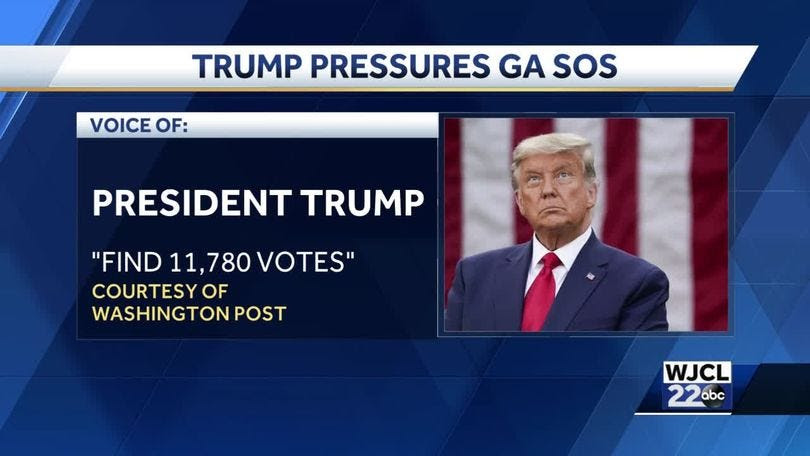
And there’s this: On January 2, 2021, during an hour-long conference call, then-President Trump pressured Georgia Secretary of State Brad Raffensperger to change the state’s election results from the 2020 presidential election. The country is lucky the GA Republican Secretary of State did not fold, but we may not always be so lucky.

Progressives fighting back in regressive states are fighting for all of us. They represent the tipping point for the nation. They contest seats, they protest human rights violations, and they show up to keep the red from leaching into the blue. 

The real fight for democracy is at the state level. Activists in GOP-dominated states can’t just move…there is nowhere to go. 

If we can’t stop the slow churn toward fascism in our states, there is little hope we can stop it nationwide. So, we stay. We stand up and talk back. We link arms and fight the local corrupt policies to stop national corrupt policies.

Just move? No. I can’t. I won’t. 

This is my state too.

~Jess

Jan Resseger provides a thoughtful analysis of what seems to be a new phenomenon called “white Christian nationalism.” Others say it’s nothing new, that it is just another manifestation of racism, as in the KKK, the White Citizens Councils, and other hate groups. She reviews a new book, The Flag and the Cross: White Christian Nationalism and the Threat to American Democracy that provides a historical perspective.

She writes:

Our politics and our national ethos seem to have gone awry, and a lot of people blame it on something called Christian nationalism or white Christian nationalism. And yet, the book bans, the efforts to prohibit honest teaching about slavery, and the attempts to quash equity and inclusion seem to have nothing to do with the teachings of Jesus, embodied, for example, in the Great Commandment: “You shall love your neighbor as yourself.” (Matthew 22: 39) If, like me, you have been confused by the seeming contradictions, I recommend a book that begins: “This book is a primer on white Christian nationalism, what it is, when it emerged, how it works, and where it’s headed. White Christian nationalism is one of the oldest and most powerful currents in American politics.” (The Flag and The Cross, p. 1)

The book is The Flag and The Cross: White Christian Nationalism and the Threat to American Democracy, by two professors of the sociology of religion, Philip S. Gorski at Yale University and Samuel L. Perry at the University of Oklahoma. The book is short, readable, and extremely relevant to the political maelstrom in today’s United States.

The authors trace the existence of white Christian nationalism back to the introduction of slavery to Virginia; the subjugation of American Indians beginning in Massachusetts and then westward through the eighteenth and nineteenth centuries; the Civil War and subsequent collapse of Reconstruction followed by Jim Crow; the Mexican American War; and the Spanish American War with the establishment of an American empire including the Philippines, Guam and Puerto Rico.

So… what is white Christian nationalism? “White Christian nationalism is a ‘deep story’ about America’s past and a vision of its future. It includes cherished assumptions about what America was and is, but also what it it should be…  America was founded as a Christian nation by (white) men who were ‘traditional’ Christians, who based the nation’s founding documents on ‘Christian principles.’ The United States is blessed by God, which is why it has been so successful; and the nation has a special role to play in God’s plan for humanity. But these blessings are threatened by cultural degradation from ‘un-American’ influences both inside and outside our borders.” (The Flag and The Cross, pp. 3-4)

Gorski and Perry continue: “Like any story, this one has its heroes: white conservative Christians, usually native-born men. It also has its villains: racial, religious, and cultural outsiders. The plot revolves around conflicts between the noble and worthy ‘us,’ the rightful heirs of wealth and power, and the undeserving ‘them’ who conspire to take what is ours. Sometimes the conflicts culminate in violence—violence that restores white Christians to what they believe is their rightful place atop America’s racial and religious hierarchy… But this story is a myth… At this point, the skeptical reader might wonder what’s ‘Christian’ about this deep story.  It is ‘Christian’ because the vast majority of those who believe this story identify as such.” (The Flag and The Cross, pp. 4-5)

Why has white Christian nationalism exploded in recent years? “The source of the growing pressure is a set of slow-moving changes in American society.  The United States has slowly become less white, less Christian, and less powerful; more diverse, secular, and cosmopolitan. And this collided with a certain conception of America as a white Christian nation favored by God and ruled by white Christian men ready to defend freedom and order with violence.” (The Flag and The Cross, p. 103) Gorski and Perry describe the January 6th insurrection as a symbol of the conflict.

After defining “white Christian nationalism,” Gorski and Perry explain what it is not: “(W)hite Christian nationalism is not ‘Christian patriotism’; white Christian nationalism…. is rooted in white supremacist assumptions and empowered by anger and fear. This is nationalism, not patriotism… Second, white Christian nationalism is not synonymous with white evangelicalism per se, even if there is considerable overlap… Third and finally, white Christian nationalism is not just a problem among white American Christians. There are secular versions of white Christian nationalism that claim to defend ‘Western Culture’ or ‘Judeo-Christian civilization.’ And there are secular white Americans who know how to leverage white Christian nationalist language. For such Americans, the ‘Christian’ label simply signals shared tribal identity or veils political values that would otherwise be socially unacceptable. That is certainly how Trump himself used the label—as a rallying cry and a fig leaf—and one reason why so many white Christians have been attracted to him: not because he himself is an exemplar of Christian piety, but because he waved the Christian flag and announced his willingness to ‘fight’ for it.” (The Flag and The Cross, pp. 8-10)

The book is not principally about the institution of public education, but it says a lot about today’s assault on inclusive public schools. The authors name some of what’s been happening in recent years and in addition create a theoretical scaffolding to help us understand attacks on public education as part of a scheme to use public schools to protect the dominant culture.  Here are four threats to public education that reflect white Christian nationalism:

  • opposition to teaching about racism in American history, and the passage of state laws to ban multicultural education, and ‘diversity, equity and inclusion;’ (The Flag and The Cross, p. 14);
  •  efforts to permit religious education at public expense—promotimg the beliefs of specific faith traditions and undermining the protection of religious liberty (The Flag and The Cross, p. 16);
  • efforts to block school integration after Brown v. Board of Education (The Flag and The Cross, p. 69); and
  • the recent proposal by the Heritage Foundation of a strategy to overturn Plyler v. Doe to exclude from public schools undocumented students who cannot afford to pay tuition.

All  of these attacks exemplify pushback against inclusion and welcome for ‘the other’: “The first and most fundamental way in which white Christian nationalism threatens American liberal democracy is that it defines ‘the people’ in a way that excludes many Americans. White Christian nationalism is a form of what is often called ‘ethno-nationalism.’ Liberal democracy rests on what is usually called ‘civic nationalism’ It defines the nation in terms of values, laws, and institutions.’” (The Flag and The Cross, p. 114)

A group of scholars at Indiana University led by Christopher Lubienski developed a methodology for ranking organizations and individuals in the field of education.

It was disheartening to see that nine of the ten most influential organizations advocate for school privatization, for charter schools and vouchers. It was also disheartening to see that these nine organizations have revenues in the millions of dollars each year. They are heavily funded by rightwing organizations and billionaires.

It was exciting, however, to see that #3 on the list of the 10 most influential organizations was the Network for Public Education!

It also was the organization with the smallest budget!

Wow! Standing up for public schools without billionaire $$$!

Years ago, there was buzz about New York Times columnist Thomas Friedman’s tendency to quote taxi drivers to capture the view of the “man on the street.” Carol Burris, executive director of the Network for public Education, has recently noticed that Rick Hess of the American Enterprise Institute has a similar journalistic gambit. He picks up policy clues from Uber drivers.

She writes:

It seems like Rick Hess of the American Enterprise Institute (AEI), a think tank that loves all things school choice, has an extraordinary gift for bringing out the inner Betsy DeVos in every Uber Driver he meets.

 Recently, the Hessian Uber adventure was a story about how his Uber driver hates student loan forgiveness. Yes, of course, that must be true. An Uber driver would be absolutely furious if they or their brother, son, or daughter had some help with their crushing student debt. Everyone knows that Uber drivers only hang with the 2%.

 When I call an Uber, I never get the same driver, but Rick gets repeats. Just a few months ago, that same driver picked up Rick and gave him an earful about the Newton, Massachusetts, teacher strike. For the second time, she even let Rick take her picture in the rearview mirror and put it in Ed Next. 

 However, that Uber driver is not nearly as outraged as the teacher-bashing Uber driver Rick met in 2018. She was even willing to throw her own teacher husband under the bus (or should I say, cab). And Rick got it all down, along with her picture.

 Please don’t confuse that Uber driver with the very well-informed driver Rick met in 2016 who told Rick that “reformers used to take great joy in seeing traditional school districts pilloried by John Stossel …”  Now that is one interesting Uber driver. I never heard of John Stossel. All of this pillory talk was part of a deeper conversation about Jon Oliver’s very funny show criticizing charter schools. This Uber driver defended public schools, but by the end of the ride, Rick had set him straight.

 I don’t take Ubers. I prefer yellow cabs. We talk about traffic, the weather, or the price of gas. These Uber rides must be absolutely exhausting for poor Rick. Maybe next time, he should call a Lyft. 


Good and Bad Teachers: So Many More of the Former,

So Many Fewer of the Latter

David C. Berliner 

Arizona State University

A refereed journal article by colleagues1reported on a survey of adults, asking for their beliefs about “good teachers.” The respondents defined good teachers as those who “knew me, cared about me, and wanted me to do well; created interesting activities for us to do; praised me and other students for good grades and improvements; gave extra help or a challenge to students who needed or wanted it; covered a lot of material that was useful; and made learning relevant to me and my life.”

These respondents had little trouble recallingsuch teachers. Good teachers demonstrated caring and support, along with strong subjectmatter knowledge. They also estimated that more than two-thirds of their teachers were good or very good teachers, and they believed that only 12% of their teachers were bad or very bad.

​With a different set of colleagues2, I studied what students said about their “bad teachers”. In that study we had access to 4.8 million ratings of teachers! Using a 100-point scale, 55% of our respondents gave a maximum rating of 100 (the best score), 75% gave a rating of 80 or more, and 89% gave a rating greater than 50 points. These data are compatible with other studies suggesting that America’s students are exposed to highpercentages of “good” teachers, and a lowpercentage of “bad” teachers. 

From other research, Berliner estimated the number of “bad” teachers in the USA to be about 3%, with “bad” being generally and poorly defined. The well-respected Hechinger report, in 2014,reported that states such as Tennessee, Michigan, Georgia, Florida, and Pennsylvania, particularly in Pittsburgh, all provided estimates of “bad” teachers that were in this same low range. Danielson, who visited and coded hundreds of classrooms, estimated the “bad teacher” percentage to be around 6%. From those who are experienced classroom analysts, that seems to be on the high end of the estimates in the literature—though it is still a relatively low percentage. 

Furthermore, in our study, when we analyzed the comments associated with teachers judged to be “bad,” we found that unanimity among the classmates of those who rated their teachers poorly was quite rare. Nevertheless, we did find a few classrooms where the unanimity and diversity of the charges leveled by students against their teachers made us think that a particular teacher should be dismissed immediately! However, for large numbers of teachers who were rated “incompetent” or “bad” by many of their students, we found other reviews (and sometimes many such reviews) of the same teacher that were positive. Further analysis showed why such disparate judgements made sense. For example, a teacher may be rated poorly because they have strict rules about how essays should be done andgrade them accordingly. And teachers’ who were quite strict about classroom behavior, or who gave out lots of homework, might also be rated low by some of their students. But for other students–say those who make few grammatical mistakes, those who don’t act out in classes, and those who do not find their homework burdensome, ratings of their teachers might be considerably higher. In our study, this seemed to explain why so many reviews of teachers by students were not uniformly either positive ornegative. 

​So, what do we know through research–not from publicity-seeking partisan news columnists, irate parents, or the public-school critics among the “Moms for Liberty? Research suggests wecan defend a general statement such as this:“Among America’s 3+ million public-schoolteachers, the numbers of genuinely “bad” public school teachers are quite small, while the numbers of “acceptable” and “good” public school teachers is quite large.” Furthermore, both the positive and negative characteristics of these teachers are recognized by adults long after they have experienced them. Given the relatively low pay, low prestige, difficulty of the work, and fairly regular abuse of teachers by some parents and newspapers, how lucky we are to have staff for the public-schools that are generally so well regarded.


1. Haas, E., Fischman, G., & Pivovarova, M. (2023). Public beliefs about good teaching. Research in Education. https://doi.org/10.1177/00345237231207717


2. Valcarcel, C., Holmes, J., Berliner, D. C., & Koerner, M. (2021). The value of student feedback in open forums: A natural analysis of descriptions of poorly rated teachers.  Education Policy Analysis Archives, 29 (January – July), 79. https://doi.org/10.14507/epaa.29.6289

Peter Greene was a classroom teacher for 39 years, and he knows that teachers are overworked. There are not enough hours in the day for them to meet all their obligations. He considers in this post what to do. He certainly does not think that AI or scripted curriculum is the answer.

He writes:

When I was ploughing through the Pew Center survey of teachers, I thought of Robert Pondiscio.

Specifically, it was the part about the work itself. 84% of teachers report that there’s not enough time in the day to get their work done, and among those, 81% said that a major reason was they just have too much work (another 17% said this was a minor reason, meaning that virtually no overstretched teachers thought it wasn’t part of the problem at all). The other reasons, like non-teaching duties, didn’t even come close.

Meanwhile, in another part of the world this weekend, Pondiscio was presenting on something that has been a consistent theme in his work– Teaching is too hard for mere mortals, and we need a system that allows teachers to focus on teaching. 

Pondiscio has long argued that some aspects of teaching need to be taken off teachers’ plates so that they can put more of their energy into actual classroom instruction. I’ve always pushed back, but maybe I need to re-examine the issue a bit. 

Plugging 47 Extension Cords Into One Power Strip

Certainly every teacher learns that there’s never enough. One of my earliest viral hits was this piece about how nobody warns teachers that they will have to compromise and cut corners somewhere. It touched many, many nerves. We all have stories. My first year of teaching I worked from 7 AM to 11 PM pretty much every day. I had a gifted colleague who couldn’t bring herself to compromise on workload, so once every nine weeks grading period, she took a personal day just to sit at home and grade and enter papers. And let’s be honest–being the teacher who walks out the door as the bell rings, and who carries nothing out the door with them–that does not win you the admiration of your colleagues.

Being overworked is part of the gig, and some of us wear our ability to manage that workload as a badge of honor, like folks who are proud of surviving an initiation hazing and insist that the new recruits should suck it up and run the same gauntlet. On reflection, I must admit this may not be entirely healthy, especially considering the number of young teachers who blame themselves because they can’t simply gut their way past having overloaded circuits. 

There’s also resistance because the “let’s give teachers a break” argument is used by 1) vendors with “teacher-assisting” junk to sell and 2) folks who want to deprofessionalize teaching. That second group likes the notion of “teacher-proof” programs, curriculum in a box that can be delivered by any dope (“any dope” constitutes a large and therefor inexpensive labor pool).

We could lighten the teacher load, the argument goes, by reducing their agency and autonomy. Not in those exact words, of course. That would make it obvious why that approach isn’t popular.

Lightening the Load

So what are the ways that the burden of teaching could be reduced to a size suitable for actual mortals. 

Some of the helps are obvious. Reduce the number of non-teaching duties that get laid on teachers. Study halls. Cafeteria duty. Minute-by-minute surveillance and supervision of students. 

Some of the helps are obvious to teachers, yet difficult to implement. Most schools has a variety of policies and procedures surrounding clerical tasks that are set up to make life easier for people in the front office, not teachers in the classroom (e.g. collecting students excuses for absence, managing lunch money, etc). Then there’s the tendency to see new programs adopted at the state or district level with a cavalier, “We’ll just have teachers do that” as if there are infinite minutes in the teacher day and adding one more thing won’t be a big deal. Imagine a world in which preserving teacher time was a major sacred priority. 

Some of the helps would be hard to sell because they would cost real money. Quickest way to reduce teacher workload? Smaller classes. Or more non-teaching hours in the day for teachers to use for prep and paperwork (hard sell because so many boards believe that a teacher is only working when she’s in front of students). These are both tough because they require hiring more staff which 1) costs a bunch of money and 2) requires finding more of the qualified teachers that we already don’t have enough of.

So what are we left with?

Hiring aids to do strictly clerical stuff like scoring objective tests and putting grades into the gradebook. There are also plenty of folks trying to sell the idea of suing AI to grade the non-objective stuff like essays; this is a terrible idea for many reasons. I will admit that I was always resistant to the idea of even letting someone record grades for me, because recording grades was part of how I got a sense of how students were doing. Essentially it was a way to go over every single piece of graded work. But that would be a way to reclaim some time.

But after all that, we’ve come down the biggie, and the thing that Pondiscio has always argued is a huge lift for mere mortals–

Curriculum and instructional planning.

The Main Event

As a classroom teacher, the mere suggestion of being required to use canned curriculum made my hackles climb right up on my high dudgeon pony. For me, designing the lessons was part of any important loop. Teach the material. Take the temperature of the students and measure success. Develop the next lesson based on that feedback. That’s for daily instruction. A larger, longer, slower loop tied into larger scale feedback plus a constant check on what we’d like to include in the program. 

I like to think that I was pretty good at instructional design. But I must also admit that not everyone is, and that teachers who aren’t can create a host of issues. I will also fly my old fart flag to say that the last twenty years have produced way too many neo-teachers who were taught that if you design your instruction about the Big Standardized Test (maybe using select pieces of the state standards as a guide) you’re doing the job. I don’t want to wander down this rabbit, but I disagree, strenuously. 

So is there a place for some sort of high-quality instructional design and curriculum support for mere mortal teachers. Yes. Well, yes, but.

While I think a school should have a consistent culture and set of values, I think a building full of teachers who work in a wide variety of styles and approaches and techniques is by far the best way to go. Students will grow up to encounter a wide variety of styles and approaches in the world; why should they not find that in school (and with that variety, a better chance of finding a teacher with whom they click)?

Please open the link to finish reading.

All are welcome to a very important lecture at Wellesley College in Wellesley, Massachusetts. Admission is free. Join me!

The speaker is a pioneer of critical race theory.

Professor Soo Hong, chair of the Education Department at Wellesley, released the following announcement.

We are thrilled to announce that our 2024 Ravitch Lecture in Education will be presented by Professor Patricia Williams ’72, University Distinguished Professor of Law and Humanities at Northeastern University. Professor Williams’s talk is titled, “Burying the Bodies: Book-Banning and the Legacy of Anti-Literacy Laws in Constructing Erasures of History.

This is a topic that feels relevant now more than ever. 

The lecture will be held on Thursday, April 18, 4:30 PM in Jewett Auditorium. Please share the details of this event widely!

************************************************************

Description of “Burying the Bodies: Book-Banning and the Legacy of Anti-Literacy Laws in Constructing Erasures of History” 
We live in an oddly contradictory moment: politicians who position themselves as supporters of “absolute” freedom of speech simultaneously enact laws that restrict access to books about race, gender, or critical theory, and seek to constrain conversations about diversity, equity, and inclusion. There have always been “culture wars” in America—it is not surprising that conversations about traumatic histories and contested historical perspectives might be fractious. In a civil society, we commit to arguing our way to consensus, however noisily or uncomfortably, and even if it takes generations. But it is the mark of an uncivil—or authoritarian—society when we find ourselves without the right to speak, hear, write, publish, dissent, or share common space even in our disagreement. The First Amendment rightly allows us to curtail speech that poses an “imminent threat of physical harm.” But recent “anti-woke” laws banish from public spaces books and ideas that merely might inspire “shame,” “guilt,” or “discomfort.” This lecture will ponder the conceptual chasm between those two notions of constraint upon speech. What power imbalance, what uses of force are rationalized in erasing whole histories from collective contemplation? What civic dispossession is enacted when certain lives or lived narratives are discounted as intolerable, unknowable–whose mere recounting is silenced as illegal?

Wellesley Logo

Soo Hong

The lecture will be taped and available online at a later time.

Julian Vasquez Heilig, Provost at Western Michigan University and founding board member of the Network for Public Education , here reflects on his personal connection to a comprehensive new review of prominent thinkers in education—of which he is one!

He begins:

The upcoming Palgrave Handbook of Educational Thinkers evokes a deep sense of connection with the lineage of educators and thinkers who have sculpted the contours of educational discourse and practice from antiquity onward. The roster of thinkers, whose work spans the spectrum of educational thought and action, represents a mosaic of visions and voices that have collectively pushed the boundaries of what education can and should be…

Then the Table of Contents:

The list of these thinkers, as featured in the handbook, reads as a roll call of transformative influence and enduring legacy:

Section I. Antiquity to 1200 
1. Peter Abélard  
2. Aristotle  
3. Buddha  
4. Cicero  
5. Confucius

6. Horace  
7. Isocrates  
8. Plato  
9. Plutarch  
10. Pythagoras 
11. Seneca  
12. Socrates  
13. St. Augustine 

14. Thucydides  
15. Virgil  
16. Hipparchia 
17. Akka Mahadevi  
18. Gargi Vachaknavi 
19. Hypatia  
20. Hildegarde of Bingen 

Section II. 1200 – 1900


1. Rodolphus Agricola  
2. Louisa May Alcott  
3. Thomas Aquinas  
4. Matthew Arnold  
5. Robert Ascham  
6. Francis Bacon  
7. Louis Braille  
8. John Calvin  
9. John Amos Comenius  
10. Gabriel Compayre  
11. Charles Darwin  
12. Eugenio Maria De Hostos  
13. Michel de Montaigne  
14. Charles Dickens  
15. Thomas Elyot  
16. Ralph Waldo Emerson  
17. Desiderius Erasmus  
18. Johann Gotlieb Fichte  
19. August Herman Francke  
20. Benjamin Franklin  
21. Valentin Friedland  
22. Fredric Froebel  
23. Nikolai Frederick Grundtvig  
24. Francois Guizot  
25. Valentin Hauy  
26. Georg Wilhelm 
27. Johann Friedrick Herbart  
28. Thomas Jefferson  
29. Immanuel Kant  
30. Arthur F. Leah  
31. John Locke  
32. Ignatius Loyola  
33. Martin Luther 34. Horace Mann  
35. Phillip Melanchthon  
36. John Stuart Mill  
37. Richard Mulcaster  
38. John Henry Newman  
39. Friedrich Nietzsche  
40. Robert Owen 

41. Johann Heinrich Pestalozzi  
42. Wolfgang Ratke  
43. Charles Rollin 
44. Jean Jacques Rousseau  
45. John Ruskin  
46. Egerton Ryerson  
47. Herbert Spencer 48. Johannes Strum  
49. Juan Luis Vives  
50. Wilhelm Von Humboldt 
51. John Wesley  
52. Mary Wollstonecraft 

Section III. 1900 – 1970 

1. Jane Addams  
2. Hannah Arendt  
3. Margaret Bancroft  
4. Alfred Binet  
5. Benjamin Bloom  
6. Harry Broudy  
7. Jerome Bruner  
8. Martin Buber  
9. Cyril Lodovic Burt  
10. Noam Chomsky  
11. Lawrence A Cremin  
12. John Dewey  
13. Donalda Dickie  
14. WEB Dubois  
15. Emile Durkheim  
16. M.K. Gandhi  
17. Antonio Gramsci  
18. Kurt Hahn  
19. Martin Heidigger  
20. Susan Isaacs  
21. Emile Jaques-Dalcroze  
22. Anna Julia Haywood Cooper 23. Bel Kaufman  
24. 22. Helen Keller  
25. Clark Kerr  
26. Melanie Klein  
27. Janusz Korczak  
28. Charlotte Mason  
29. Maria Montessori  
30. A.S. Neill  
31. Michael Oakeshott  
32. Jean Piaget 
33. Carl Rogers  
34. Bertrand Russell  
35. Edward Said  
36. Joseph Schwab  
37. BF Skinner. 
38. Rudolf Steiner  
39. Rabindranath Tagore  
40. Ralph Winifrid Tyler  
41. Lev Semyonovich Vygotsky  
42. Booker T. Washington  
43. Max Weber 

43. Simone Weil  
44. Ludwig Wittgensten  
45. Jose Ortega Y Gasset  
46. Howard Zinn 

Section IV. 1970 – Current 

1. Cami Anderson  
2. Josh Angrist  
3. Michael W. Apple 
4. James A. Banks  
5. David C. Berliner  
6. Jo Boaler  
7. Derek Curtis Bok 
8. Pierre Bordieux  
9. Geoffrey Canada  
10. Raj Chetty  
11. David Coleman  
12. David Cooperrider 
13. Linda Darling-Hammond  
14. Edward De Bono  
15. Jeff Duncan-Andrade  
16. Angela Duckworth  
17. Nell K. Duke 
18. Greg J. Duncan 

19. Carol Dweck  
20. Richard Elmore  
21. Michel Foucaut  
22. Paulo Freire  
23. Howard Gardner  
24. Henry Giroux  
25. Gene V. Glass  
26. John I. Goodlad  
27. Bryan Goodwin  
28. Maxine Greene  
29. Erin Gruewell  
30. Eric Hanushek 
31. Shaun R. Harper  
32. Clara Hemphill  
33. Frederick Hess  
34. John Holt  
35. bell hooks  
36. Ivan Illich  
37. Baruti Kafele  
38. Salman Kahn  
39. Lawrence Kohlberg  
40. Gloria Ladson-Billings 

41. Zeus Leonardo  
42. Dennis Littky  
43. Bettina Love  
44. Angela Maiers  
45. Jane Roland Martin 
46. Robert J. Marzano  
47. Deborah Meier 
48. Rich Milner  
49. Sugata Mitra  
50. Michael Grahame Moore  
51. Richard J. Murnane  
52. Nel Noddings 
53. Pedro Noguera  
54. Martha Nussbaum  
55. Julius Nyrere  
56. Gary Orfield  
57. R.S. Peters  
58. Robert C. Pianta  
59. Diane Ravitch  
60. Sean F. Reardon  
61. Joeseph Renzulli  
62. Sir Ken Robinson  
63. Pasi Sahlberg  
64. Seymour B. Sarason  
65. Lee S. Schulman 
66. Jack Pl Shonkoff 
67. Theodore Sizer  
68. Robert E. Slavin  
69. Catherine Snow

70. William G. Tierney  
71. Carol A. Tomlinson  
72. Beverly Tatum  
73. Virginia Uribe  
74. Paul Wehman  
75. Daniel Willingham  
76. Patrick J. Wolf

 77. Yong Zhao  
78. Estela Bensimon  
79. Sara Lawrence-Lightfoot  
80. Adrianna Caesar

81. Julian Vasquez Heilig

Each name on this list represents a chapter in the ongoing story of educational evolution—a story marked by challenges, innovations, and insights that have, in their own unique ways, reshaped the landscape of learning and teaching.

He then goes on to discuss his personal relationship with several of those on the list, including David Berliner, Pierre Bourdieu, Linda Darling Hammond, Shaun R. Harper, Frederick Hess, bell hooks, Gloria Ladson-Billings, Bettina love, Pedro Noguera, Gary Orfield, me, and Sean Reardon.

Julian Vasquez Heilig and me!

The National Education Policy Center at the University of Colorado posted a summary of research about the current “Science of Reading” fad, which finds that the “science” is missing. SoR has turned into another “miracle cure” that is being imposed and mandated by legislatures, anticipating a dramatic result in which “no child is left behind.”

NEPC reports:

What’s scientific about the “science of reading?”

Not much, according to NEPC Fellow Elena Aydarova of the University of Wisconsin-Madison, as explained in a recent article published in the peer-refereed Harvard Educational Review. In fact, she warns that legislators are using science-of-reading legislation to distract from more serious approaches to addressing students’ needs.

Using an “anthropology of policy approach,” Aydarova zeroes in on legislative debates surrounding science of reading (SOR) reforms that have swept the nation in the past half decade. As of July 2022, 29 states and the District of Columbia had adopted this approach, Aydarova writes.

Aydarova closely examines Tennessee’s Literacy Success Act (LSA). She analyses videos of legislative meetings and debates, stakeholder interviews, and examinations of bills, policy reports, media coverage, and other documents associated with the LSA, which was passed in 2021.

This SOR bill was first introduced in 2020. As the bill underwent revisions, the phrase “science of reading” was substituted with “foundational literacy skills” to describe the same content: “Across contexts and artifacts produced by various actors, the meanings of ‘science of reading’ shifted and were frequently replaced with new signs, such as ‘foundational literacy skills,’ ‘phonics,’ and others.”

Aydarova finds little evidence that advocates, intermediaries, or legislators grounded their support in anything resembling scientific evidence. Instead, “science of reading” becomes a catch-all phrase representing a grab bag of priorities and beliefs: “[I]n advocates’ testimonies and in legislative deliberations, neuroscience as SOR’s foundational element was reduced to vague references to ‘brain’ and was often accompanied by casual excuses that speakers did not know what ‘it all’ meant.”

Motivations for supporting SOR reforms range from commercial to ideological. For instance, Aydarova notes that after the passage of The Literacy Success Act in 2021, nearly half of Tennessee’s school districts adopted curricula promoted by the Knowledge Matters Campaign. This campaign, supported by curriculum companies such as Amplify and wealthy backers such as the Charles Koch Foundation, added SOR wording to its marketing effort as the curriculum it had originally supported fell out of favor due to its association with Common Core State Standards, which had become politically unpopular in many states.

As the SOR bill reached the legislative floor, “science” was rarely mentioned.

“The link to science disappeared, and instead the sign shifted toward tradition rooted in these politicians’ own past experiences,” Aydarova writes. “During final deliberations, legislators shared that they knew phonics worked because they had learned to read with its help themselves.”

Concerningly, the bill’s supporters also positioned it as “a substitution for investing in communities and creating the safety nets that were necessary for families to climb out of poverty.”

For instance, legislators dismissed as “state over-reach” proposals that would have expanded access to early education or placed more social workers in schools in underserved communities. Yet they “emphasized the importance of proposing legislation to reform reading instruction to solve other social issues,” such as incarceration, impoverishment, and unemployment. Aydarova writes:

Based on artificial causality—poverty and imprisonment rates would decline if phonics was used for reading instruction—these reforms naturalized the widening socioeconomic inequities and depoliticized social conditions of precarity that contribute to growing prison populations. Through these material substitutions, the SOR legislation promised students and their communities freedom, and robbed them of it at the same time.

In the end, Aydarova finds that, “Science has little bearing on what is proposed or discussed, despite various policy actors’ claims to the contrary. Instead, SOR myths link tradition, curriculum products, and divestment from social safety nets.”