Archives for category: Disruption

Stephen Dyer is a former Ohio legislator who keeps track of education policy in his state. He reports frequently on scandals in charter schools, Cybercharters, and voucher schools. Every state should have a watchdog like him.

In his latest post, he writes about the failure of most of Ohio’s charter schools. Remember, they were supposed to “save” students from low-performing public schools? Instead, they offer an inferior choice, which coincidentally defunds higher-performing public schools. Who will save the children of Ohio from failing charter schools?

He writes:

In its latest national rankings, U.S. News & World Report pointed out that generally, charter schools around the country are disproportionately doing well on their national ratings. “Charters show up in disproportionately high rates among the top schools,” according to the report. And I’m sure charter proponents will take off and run with that.

But that ain’t happening in Ohio.

According to the rankings released today, only 5 of 44 ranked Ohio Charter Schools rate outside the bottom 25 percent nationally. U.S. News doesn’t rank high schools lower than 13,261st. They just put the worst performers in a single band.

And only 5 Ohio Charter High Schools are NOT in that band.

Saying that nearly 9 in 10 Ohio Charter High Schools rank in the bottom 25 percent of all High Schools in the country is a terrible black eye for our state. Especially as the Ohio General Assembly continues to dump more than $1 billion a year into these schools.

And even the 5 that do better than the bottom 25 percent nationally still don’t do awesome.

For example, the top ranked school — KIPP Columbus — ranked lower than two Akron Public Schools, two Cincinnati Public Schools, three Cleveland Municipal schools, a Columbus City school, and a Dayton City school.

That’s not great, especially when Charter Schools were promised as rescue vehicles for kids in urban public schools.

House Bill 2 was supposed to save Ohio’s Charter Schools from being the “wild, wild west” of the nation’s charter schools. But clearly it’s not working. If only 5 of Ohio’s 44 ranked Charter High Schools are not ranked in the bottom 25% nationally, then perhaps it’s time to re-examine our $1 billion a year commitment to these privately run, publicly funded schools.

Just saying.

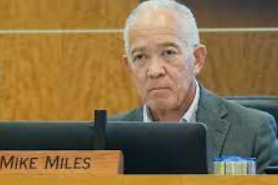
Mercedes Schneider summarizes the checkered career of Mike Miles, who was put in charge of the Houston Independent School District by State Commissioner Mike Morath, who was appointed by hard-right Republican Governor Greg Abbott. Abbott wants to punish Houston for not voting for him. What better punishment than to install Mike Miles as superintendent?

Schneider writes:

In June 2023, the Houston Independent School District (HISD) became the latest major school district to experience a top-down, ed-reform tactic that largely ignores community investment and fail to deliver on promised academic gains: the state takeover of a school district.

On June 01, 2023, the Texas Education Agency (TEA) appointed Mike Miles as the new HISD superintendent.

Miles is the golden-child product of market-based, ed-reform leadership. As reported in his LinkedIn bio, Miles holds no college degrees in teaching (engineering; slavic languages and literature; international affairs and policy). He has never been a classroom teacher, never a site-based administrator, yet he was a district superintendent in Colorado for six years (2006-11) and superintendent of Dallas ISD for three.

Though he does not mention it in his LinkedIn bio, Miles was a member of the Class of 2011 at the Broad Superintendents Academy A 2011 EdWeek article on Broad superintendents includes the criticism that they “use corporate-management techniques to consolidate power, weaken teachers’ job protections, cut parents out of decisionmaking, and introduce unproven reform measures.”

Indeed.

In 2015, Miles abruptly resigned from Dallas ISD amid being, as WFAA.com states, “at the center of controversy since he took the position nearly three years ago,” which apparently included questions about misdirecting funding intended for at-risk students and the subsequent exit of the Dallas ISD budget director. (Also calling Miles “a lightening rod for controversy,” WFAA.com offers this timeline of Miles’ unsettling tenure in Dallas.)

Despite all of his Dallas ISD controversy, TEA– which is no stranger to stepping into its own controversy— chose to hire Miles to lead its newly-state-snatched HISD.

Following his Dallas ISD exit, in 2016, he founded a charter school chain, Third Future Schools, which has locations in Colorado, Texas, and Louisiana. For two years (2017-19), Miles was a senior associate in an education consulting firm, FourPoint Education Partners.

And according to his LinkedIn bio, Miles is/was on a number of ed-reform organization boards, including Teach for America (TFA) Colorado (2017-20); National Council on Teacher Quality (NCTQ) (2013-present), and Chiefs for Change (2015-present).

Please open the link to finish reading the post.

Nancy Bailey, retired teacher, has been blogging for ten years. She reflects on the continuing efforts to destroy public education, based on a false narrative, hubris, and in some cases, the profit motive.

Nancy and I co-authored a book that serves as a glossary about fads and “reforms.”

She begins her new article:

School reform continues to privatize and destroy public schools. August marks ten years since I began blogging. Within that time I have written two books and co-authored a third with Diane Ravitch. I’m proud of all this writing but Losing America’s Schools: The Fight to Reclaim Public Education is the book title that especially stands out today.

Many Americans still don’t understand or value their ownership of public schools, and how they’re losing one of the country’s great democraticinstitutions. Instead of working together to build up local schools, to iron out difficulties, they’re willing to end them.

Thank you for reading my blog, commenting, and for those of you who have written posts. I am amazed at the wonderful educators, parents, students, and policymakers I have met. I have appreciated debate.

Here are some of the main education issues still of concern.

The Arts

School arts programs help children thrive. Those with mental health challenges benefit. Students might find art jobs. Sadly, many poor public schools ditched the arts. Some schools might get Arts Partnerships or entrepreneurships (Hansen, 2019). These programs aren’t always consistent. Public schools must offer well-rounded and fully resourced K-12 arts programs.

Assessment

Assessment is important for teachers to understand students. But high-stakes standardized tests push a narrow, one-size-fits-all agenda used to drive parents to private schools which, on the other extreme, have little accountability. Tests have been harmful to students.

Class Size

Children deserve manageable class sizes, especially for K-3rd grade (STAR Study), and for inclusion andschool safety.

Common Core State Standards

Controversy originally surrounded Common Core State Standards, promoted by the Bill and Melinda Gates Foundation in 2010, but Common Core continues to drive profiteering, especially in online programs.

Stan Karp of Rethinking Schoolssaid CCSS are:

A massively well-financed campaign of billionaires and politically powerful advocacy organizations that seeks to replace our current system of public education which, for all its many flaws, is probably the most democratic institution we have and one that has done far more to address inequality, offers hope, and provide opportunity than the country’s financial, economic, political, and media institutions with a market-based, non-unionized, privately managed system.

Corporations and Politicians

Corporations and politicians continue to work to end public schools and drive teachers out, transferring tax dollars to nonprofit and for-profit entities.

Nancy covers many more topics that have been harmful to public education.

Open the link and read her article in its entirety.

John Thompson, retired teacher and historian in Ohlahoma, keeps us up to date on the battle between Tulsa Public Schools and Ryan Walters, Oklahoma’s far-right MAGA Secretary of Education.

He writes:

Who won the latest battle between Oklahoma Superintendent of Public Instruction Ryan Walters and the Tulsa Public Schools (TPS)?

Walters had promised to fire TPS Superintendent Deborah Gist, and drive “Diversity, Equity, and Inclusion” (DEI) out of the classes, as well as mandating his ideology-driven curriculums. Then, Walters said at a Moms for Liberty event, “Tulsa Public Schools is getting money from the Chinese communist government,” He said, “They funneled it through a nonprofit — I mean, money-laundered it through a nonprofit in Texas.”

But Walters’ assault on the TPS accelerated further when Walters said he “had been in regular communication with Houston [HISD] about their school takeover.” And according to HTUL news, he has said “there’s currently a standards team and textbook committee to gather information on possible vendors like Hillsdale College and PragerU.” It thus became clear to Tulsans that the survival of their schools (and Oklahoma schools in general?) was at stake.

Walters’ promised to reveal his plan during the Oklahoma State Board of Education (OSDE) meeting on August 24. So, TPS board member, Jennettie Marshall, warned “during the board’s 90-minute discussion of the district’s accreditation status. ‘We are under attack. If you’re not keeping up with Houston, … if we continue the course we’re on, that’s where we’re headed. That shouldn’t be.’”

The day before the OSDE meeting, Deborah Gist resigned in the hope that Walters wouldn’t take over the state’s largest school system. And at the meeting, the World also explained that Walters “praised the local school board for ‘rooting out a cancer in the district that caused so many problems,’ referring to the Tulsa school board’s formal agreement approved Wednesday evening to part ways with Tulsa Superintendent Deborah Gist.” But “he also vowed to give the local Tulsa school board ‘a very short rope,’ saying he would return and ask for additional authority from the state Board of Education if he does not see adequate progress made within a few months.”

In response, the TPS Board Chairperson, Stacey Woolley, criticized Walters’ misstatements about the system’s student outcomes. She also said, “Antics and rhetoric must stop. We had two bomb threats at schools in the city of Tulsa because of rhetoric.” she said. “I do look forward to going forward and continuing the work and accelerating that work.”

Similarly, “Rep. Regina Goodwin, D-Tulsa, told the state board Walters has been ‘fostering an atmosphere of intimidation’” and protested, “When you talk about Black and brown children in Tulsa, Oklahoma, there are issues that go on in larger cities that have to be addressed. You don’t just say ‘You better perform better in three or four months!’ What kind of plan is that?”

Almost certainly, pushbacks by TPS supporters, and private communications, produced this outcome. It is too soon to know which side won the battle. Or, should I say lost less?

Unless Walters is correct and the TPS is secretly plotting with China to bring our democracy down, or violence erupts, I believe that the most important aspect of the battle could be the way that educators and journalists (especially at the Tulsa World) issued fact-based rebuttals to the extremists. Then, the Schusterman and the Kaiser foundations publicly opposed Walters’ takeover threats. Mayor G.T. Bynum finally came out against the takeover. And on the day of the OSDE meeting, Booker T. Washington H.S. students walked out.

The resistance even reached the point where the World editorialized, “conservative lawmakers must speak up.” And also, Gov. Kevin Stitt distanced himself from Walters who he appointed and then repeatedly supported. The World reported that Stitt said he “believes the State Board of Education will not overreact when considering accreditation for Tulsa Public Schools.” Stitt now says, “I don’t know what takeover is, what they are talking about. I believe in local control. I think the local board needs to address that.”

Secondly, the battle wasn’t over Deborah Gist. It was about the future of public education, and defending our democracy.

Thirdly, the former-teacher Rep. John Waldron (D) explained what we now know, “A far-right media source spread a doctored video suggesting a librarian was spreading a ‘woke agenda,’“ causing a Tulsa Union elementary school and the librarian to receive a bomb threat. (By the way, Waldron noted that the librarian’s actual agenda was promoting “reading and kindness.”)

Then, Walters reposted it, leading to two more bomb threats. NPR’s Beth Wallis reported that the first threat included, “I’m not going to stand as you bastards continue to indoctrinate and prey on our children.” And it also warned the librarian, “We know where you live.” Walters’ response was, “Woke ideology is real and I am here to stop it.” Another threat said:

“We placed a bomb at [the librarian’s elementary school address] and inside the Residence of [the librarian]. You will stop pushing this woke ideology or we will bomb every school in the union district.”

At the time that Wallis published the story, Walters had not removed his “repost of the altered video.”

Perhaps we will someday learn the behind the scenes discussions that prompted Walters to pull back from his most extreme threats. Who knows, perhaps this mayhem will prompt Republicans who are appalled by Walters to come out in support of public education and against the dangerous politics of hate. However, Rep. Mark McBride, R-Moore, the chair of the Oklahoma House subcommittee on education funding who has frequently challenged Walters, complained to the Oklahoman that “he was unable to sit in the conference room during the board meeting, despite requesting a seat along with multiple other lawmakers for several weeks.”

Finally, the other issues pushed by Walters at the OSDE meeting are a recipe for dysfunction and chaos. As Nondoc’s Bennett Brinkman reported, the board unanimously approved Walters’ demand for a “a report of ‘foreign government contributions to Oklahoma schools,’” and “a report regarding district policies and informal guidance for ‘student pronouns in Oklahoma schools.’” 

Moreover, Walters’ mandates, such as teacher training in the science of reading, can’t be rushed into place. As Linda-Darling Hammond explains, school improvement can only “move at the speed of trust.” Moreover, will teachers be expected to focus on phonics, or will the TPS be allowed to bring back the science and history instruction that is required to build the background knowledge that is needed for reading for comprehension? 

Sadly, we’re likely to learn more fake news over the next few months about what Walters sees as student outcomes, and a passing grade for high-challenge schools. Across the nation, we have seen the disastrous effects of rushed, test-driven instruction that was forced on high-poverty schools. Also, I sure hope we don’t see violence. But, even though Walters warned the TPS, “Do not test me,” I expect that the defenders of schools in Tulsa and elsewhere will continue to push back diplomatically but firmly. For better or for worse, we’re likely to see in the next few months what the TPS will face.

Steffen E. Polko is a retired professor of education at TCU in Texas. He wrote the following commentary for the Fort Worth Star-Telegram. Vouchers, he says, will doom community rituals, like Friday night football. Dividing students up by religion and other grounds will divide our communities and our country even more than at present.

He writes:

There appears to be some confusion regarding rural Texans’ opposition to school choice and vouchers. I think I may know why.

Gov. Greg Abbott’s espoused principal reason for promoting vouchers is to protect Texas children from the “woke” propaganda being disseminated by public school teachers. Let me assure the governor that teachers in upstanding, God-fearing communities such as Mineral Wells and Hico are not subjecting their students to “woke” ideology. In these communities, “woke” still means not asleep. This is not something that’s broken in small-town Texas, so it doesn’t need fixing.

Now, onto the most important reason. Vouchers pose a threat to high school football and could turn out Friday Night Lights. An education savings account program will reduce funding levels for public schools as students leave. The first thing to be hit will be athletic budgets.

Proponents note that there are few private school options in rural Texas. So, where will these students go? There are no options yet, but this will change with vouchers. Many churches face declining attendance and financial difficulty. If $8,000 per year vouchers are available a minister with 20 or more school-age children in the congregation will find it rational and financially prudent to start a school.

Let’s say I have 40 such children. If the state sends me $320,000 per year and I can keep expenses at $160,000, I will net $160,000 for my church. How do I keep my expenses so low? The key is technology. High-quality learning systems produced by nationally recognized educational providers such as Pearson are readily available over the Internet. The cost of learning management systems currently averages around $5 per student per month.

The state will require me to have two “teachers” for 40 students. No problem; this can be anyone in my congregation with a college degree and some time on their hands. Getting alternative certification from the state is relatively easy. My teachers need not be education experts because the learning management system does the heavy lifting. It provides instruction and creates and grades the homework and tests. The latest systems even use artificial intelligence to answer student questions.

The only job for the “teachers” would be to manage classroom behavior and help students use the software. A student leaving the public schools will probably get a fairly good Christian education. The public school will lose funding for athletic programs and perhaps a potential star quarterback. Ouch! For-profit schools will emerge employing a similar model. Using a hybrid instructional model and current costs, I calculate that a 200-student high school would bring cashflow of about $800,000 a year. Start 10 of

those and you have a nice chain of businesses. Could this be the real driving force behind vouchers? To recruit students, such schools could promise to teach artificial intelligence and the Python programming language to prepare students for a promising future in technology — or use some other clever hook. Texas has about 8,000 schools. The Texas Education Agency employs 1,000 people and spends around $2 billion per year to monitor the schools and hold them accountable.

I predict that vouchers will increase the number of schools in Texas four-fold. Will the Legislature increase funding by a factor of four to monitor this many schools? I think not. It will be a long time before state officials figure out if for-profit schools are delivering on their promise, and the owners will be very rich before they do. Good luck getting them and their money back from Barbados. Not only would church and for-profit schools poach rural athletes, but specialized voucher- and donor-funded sports academies could emerge. Let’s say someone starts a Dallas Football Academy. It could use an entrance exam similar to the NFL combine to assure it got the best athletes. The best coaches, fitness trainers, and other staff would be recruited.

These schools would have a direct connection to universities to give their athletes the best shot at a top-level scholarship. Such schools would dominate small-town teams and end the reign of, for example, the Aledo Bearcats. The state championship game would probably feature the Dallas and Houston football academies.

Rural Texas is our best bet to keep the state from making a huge mistake that is little more than a political stunt to get votes. Small communities have nothing to gain from vouchers and a lot to potentially lose, as does the rest of the state.

Steffen E. Palko is a retired associate professor of education at TCU. He lives in Fort Worth.

Read more at: https://www.star-telegram.com/opinion/opn-columns-blogs/other-voices/article277689198.html#storylink=cpy

Michael Hiltzik, columnist for the Los Angeles Times, finds a pattern in the Republican attacks on the schools and universities. Their hostility to teaching Black history, their encouragement of book banning, their strategic defunding of higher education, their treatment of teaching about race, gender, and climate change as “indoctrination”—together point to a goal: the dumbing down of American young people.

Republicans say they want to get rid of “indoctrination” but they are busily erasing free inquiry and critical thinking. What do they actually want? Indoctrination.

He reminds us of the immortal words of former President Donald J. Trump: “I love the uneducated.” Republicans do not want students to think critically about racism or the past. They do not want them to reflect on anything that makes them “uncomfortable.” They want to shield them from “divisive concerns.” They want them to imbibe a candy-coated version of the past, not wrestle with hard truths.

He writes:

For reasons that may not be too hard to understand, Republicans and conservatives seem to be intent on turning their K-12 schools, colleges and universities into plantations for raising a crop of ignorant and unthinking students.

Donald Trump set forth the principle during his 2016 primary campaign, when he declared, “I love the poorly educated.”

In recent months, the right-wing attack on public education has intensified. The epicenter of the movement is Florida under Republican Gov. Ron DeSantis, where the faculty and course offerings of one of America’s leading liberal arts colleges, New College, have been eviscerated purportedly to wipe out what DeSantis calls “ideological indoctrination.”

The state’s K-12 schools have been authorized to supplement their curricula with animated cartoons developed by the far-right Prager University Foundation that flagrantly distort climate science and America’s racial history, the better to promote fossil fuels, undermine the use of renewable energy and paint a lily-white picture of America’s past.

Then there’s West Virginia, which is proposing to shut down nearly 10% of its academic offerings, including all its foreign language programs. The supposed reason is a huge budget deficit, the harvest of a systematic cutback in state funding.

In Texas, the State Library and Archives Commission is quitting the American Library Assn., after a complaint by a Republican state legislator accusing the association of pushing “socialism and Marxist ideology.”

In Arkansas, state education officials told schools that they may not award credit for the Advanced Placement course in African American history. (Several school districts said they’d offer students the course anyway.) This is the course that Florida forced the College Board to water down earlier this year by alleging, falsely, that it promoted “critical race theory.”

I must interject here that I’m of two minds about this effort. On the one hand, an ignorant young electorate can’t be good for the republic; on the other, filling the workforce with graduates incapable of critical thinking and weighed down by a distorted conception of the real world will reduce competition for my kids and grandkids for jobs that require knowledge and brains.

Let’s examine some of these cases in greater depth.

Prager University, or PragerU, isn’t an accredited institution of higher learning. It’s a dispenser of right-wing charlatanism founded by Dennis Prager, a right-wing radio host. The material approved for use in the schools includes a series of five- to 10-minute animated videos featuring the fictional Leo and Layla, school-age siblings who travel back in time to meet historical figures.

One encounter is with Frederick Douglass, the Black abolitionist. The goal of the video is to depict “Black lives matter” demonstrations as unrestrained and violent — “Why are they burning a car?” Leo asks while viewing a televised news report. The animated Douglass speaks up for change achieved through “patience and compromise.”

This depiction of Douglass leaves experts in his life and times aghast. Douglass consistently railed against such counsel. Of the Compromise of 1850, which brought California into the union but strengthened the Fugitive Slave Act — arguably the most detested federal law in American history — he stated that it illustrated how “slavery has shot its leprous distillment through the life blood of the nation.” In 1861, he thundered that “all compromises now are but as new wine to old bottles, new cloth to old garments. To attempt them as a means of peace between freedom and slavery, is as to attempt to reverse irreversible law.”

Patience? The video depicts Douglass quoting from an 1852 speech to a Rochester anti-slavery society in which he said “great streams are not easily turned from channels, worn deep in the course of ages.”

But it doesn’t include lines from later in the speech, reproaching his audience for prematurely celebrating the progress of abolition: “Your celebration is a sham; your boasted liberty, an unholy license; your national greatness, swelling vanity; … all your religious parade and solemnity, … mere bombast, fraud, deception, impiety, and hypocrisy — a thin veil to cover up crimes which would disgrace a nation of savages.”

Another video in the series parrots the fossil fuel industry’s talking points against wind and solar power: Standing over the corpse of a bird supposedly slain by flying into a wind turbine, the schoolkids’ interlocutor states, “Like many people … you’ve been misled about renewable energy, and their impact on the environment…. Windmills kill so many birds, it’s hard to track how many…. Wind farms and solar farms disrupt huge amounts of natural habitat.”

Acid rain, pollution, global warming — those consequences of fossil fuel energy aren’t mentioned. The video ends with a pitch for nuclear power, never mind the unsolved question of what to do with its radioactive waste products.

PragerU’s sedulous attack on renewables perhaps shouldn’t be much a surprise: Among its big donors is the Wilks family, which derives its fortune from fracking and which approved “future payment” of $6.25 million to PragerU in 2013.

As for New College, its travails under the DeSantis regime have been documented by my colleague Jenny Jarvie, among many others.

In a nutshell, the Sarasota institution possessed a well-deserved reputation as one of the nation’s outstanding havens for talented, independent-minded students. Then came DeSantis. He summarily replaced its board of trustees with a clutch of right-wing stooges including Christopher Rufo, known for having concocted the panic over critical race theory out of thin air and then marketed it as a useful culture war weapon to unscrupulous conservative politicians, including DeSantis.

Rufo and his fellows fired the university president and installed a sub-replacement-level GOP timeserver, Richard Corcoran, in her place. Faculty and students have fled. Students who stayed behind and were in the process of assembling their course schedules for the coming year are discovering at the last minute that the courses are no longer offered because their teachers have been fired or quit.

Instead of ambitious scholars committed to open inquiry, Corcoran has recruited athletes to fill out the student body, even though the college has no athletic fields for many of them to play on. According to USA Today, New College now has 70 baseball players, nearly twice as many as the University of Florida’s Division I NCAA team.

More to the point, the average SAT and ACT scores and high-school grade point averages have fallen from the pre-Corcoran level, while most of the school’s merit-based scholarships have gone to athletes. New College, in other words, has transitioned from a top liberal arts institution into a school that places muscle-bound underachievers on a pedestal. DeSantis calls this “succeeding in its mission to eliminate indoctrination and re-focus higher education on its classical mission.”

Finally, West Virginia University. Under its president, Gordon Gee — who previously worked his dubious magic at Brown Universityand Ohio State University, among other places — the school built lavish facilities despite declining enrollments. The construction program at the land grant university contributed to a $45-million deficit for the coming year, with expectations that it would rise to $75 million by 2028.

But the main problem was one shared by many other public universities — the erosion of public funding. As the West Virginia Center on Budget and Policy points out, “if West Virginia lawmakers had simply kept higher education funding at the same levels as a decade ago, West Virginia University would have an estimated additional $37.6 million in state funding for [fiscal year] 2024, closing the majority of this year’s budget gap.”

The decision on which programs to shutter at WVU points to a shift in how public university trustees see the purpose of their schools, trying to align them more with economic goals set by local industries rather than the goal of providing a well-rounded education to a state’s students. Trustees in some states, including North Carolina and Texas, have injected themselves into academic decisions traditionally left to administrators, often for partisan political reasons.

When it comes to interference in educational policies by conservatives, such as what’s happened in Florida, Texas and Arkansas, there’s no justification for taking these measures at face value — that is, as efforts to remove “indoctrination” from the schools. The truth is that the right-wing effort serves the purposes of white supremacists and advocates of anti-LGBTQ+ discrimination — they’re moving to inject indoctrination that conforms more to their own ideologies.

Take the attack on critical race theory, or at least the version retailed by Rufo and his ilk. “The right has reduced CRT to an incendiary dog whistle,” the Black scholar Robin D.G. Kelley of UCLA has observed, by caricaturing a four-decade-long scholarly effort to analyze “why antidiscrimination law not only fails to remedy structural racism but further entrenches racial inequality” into “a racist plot to teach white children to hate themselves, their country, and their ‘race.’”

(The inclusion of Kelley’s work in the AP African American Studies course was cited as a “concern” by Florida officials in their rationale for rejecting the course; Kelley’s work was suppressed by the College Board in its effort to make the course more acceptable to the state Department of Education.)

These attacks are couched in the vocabulary of “parents’ rights” and student freedom, but they don’t serve the students at all, nor do they advance the rights of parents interested in a good, comprehensive education for their children, as opposed to one dictated by the most narrow-minded ideologues in their state.

Where will it end? Florida’s ham-fisted educational policies won’t produce graduates with the intellectual equipment to succeed in legitimate universities, much less in the world at large. The only university many will be qualified to attend will be Prager U, and that won’t be good for anyone.

West Virginia is one of the poorest states in the nation, yet it has a billionaire governor (Jim Justice) and a billionaire senator (Joe Manchin), who pretend to serve their constituents by doing nothing for them. It is a deep red state. The legislature authorized charter schools and vouchers; the governor promised to veto both but he didn’t. Manchin continually blocks Biden programs that would help his constituents (like the Child Tax Credit) but protects the coal industry.

West Virginia University recently announced deep cuts to its programs and faculty, and students are angry.

Inside Higher Education reported:

MORGANTOWN, W.Va.—West Virginia University’s proposal to eliminate nearly a 10th of its majors and 169 full-time faculty positions from its flagship campus led hundreds of students to protest Monday, as a student union’s organizing power added volume to the online employee protestations and national media coverage that’s been buffeting the institution for more than a week.

Pressure on the administration to reverse its recommended cuts is growing as the WVU Board of Governors’ Sept. 15 vote on the proposals nears. The suggested cuts—not the first in recent years at West Virginia—were discussed around the end of the spring and through the summer, but WVU’s big reveal of how extensive the proposed layoffs and degree reductions would be didn’t come until Aug. 11.

“Stop the Cuts!” was students’ first chant outside the Mountainlair student union Monday, followed by “Hey hey, ho ho, Gordon Gee has got to go!”

Multiple chants, signs and a flame-bedecked “Fire Gee” banner that students held in front of the entrance to the Stewart Hall administration building all targeted Gee, the university’s two-time president whose current run has lasted nearly a decade. Chants and signs said, “Stop the Gee-llotine!” while other signs said, “Gee can take home 800K but we can’t take Spanish?” and “Cut Gee’s Pay, Not Our Programs!…”

WVU has proposed axing, among other degree offerings, its Ed.D. in higher education administration; Ph.D. in higher education; master of public administration; Ph.D. and master’s in math; bachelor’s in environmental and community planning; bachelor degree in recreation, parks and tourism resources; doctor of musical arts in composition; master of music in composition; and master’s in jazz pedagogy, acting and creative writing.

The university’s enrollment has declined 10 percent since 2015, far worse than the national average. In April, WVU leaders, projecting a further 5,000-student plunge over the next decade, said they needed to slash $75 million from the budget.

The university has pointed to low enrollments in certain programs to justify cuts, including a lightning rod proposal to eliminate the entirety of the department of world languages, literatures and linguistics. But Lisa Di Bartolomeo, a teaching professor of Russian studies at West Virginia, has retorted that WVU isn’t counting all students who are double majoring in languages.

“Cost-to-deliver is one of the metrics considered in the preliminary recommendations,” Kaull wrote in an email. “The data reflect students’ primary majors as they are the best reflection of the cost-to-deliver. Dual majors and minors don’t generate revenue like primary majors. Further, the cost and effort of supporting students (e.g., advising) is typically carried by the primary major.” 

WVU’s Aug. 11 news release announcing the proposed cuts said it was “exploring alternative methods of delivery” for languages, “such as a partnership with an online language app.” A sign on Monday called the university “Duolingo U,” complete with the green bird mascot of that phone app.

“We’re pissed,” Sadler said. “We’re losing languages; we’re losing departments; we’re losing faculty and friends.”

Gee told Inside Higher Ed Friday, “What we’re doing is that we’re really looking at the numbers and we realize that our students have spoken to us. And our students have said that offering languages the way that we are is just not something that they want.” 

Asked about the calls to reduce his salary, which were happening online before Monday’s protest, Gee said he contributes about 15 percent of his salary every year to student scholarships. 

John Fox, who just started his master’s degree in creative writing, one of the programs to be cut under the proposal, carried water bottles for the protesters. He’s from Morgantown.

“We’re losing out on the culture of West Virginia,” he said, “like a voice to the culture of West Virginia.”

In true Broadie style, Houston Superintendent Mike Miles removed two elementary principals only days before the start of school. He started his job of “reforming” the Houston public schools in June, so he obviously did not observe either of them. This is disruption to the max. Teachers and parents learned about this abrupt action through an automated phone call.

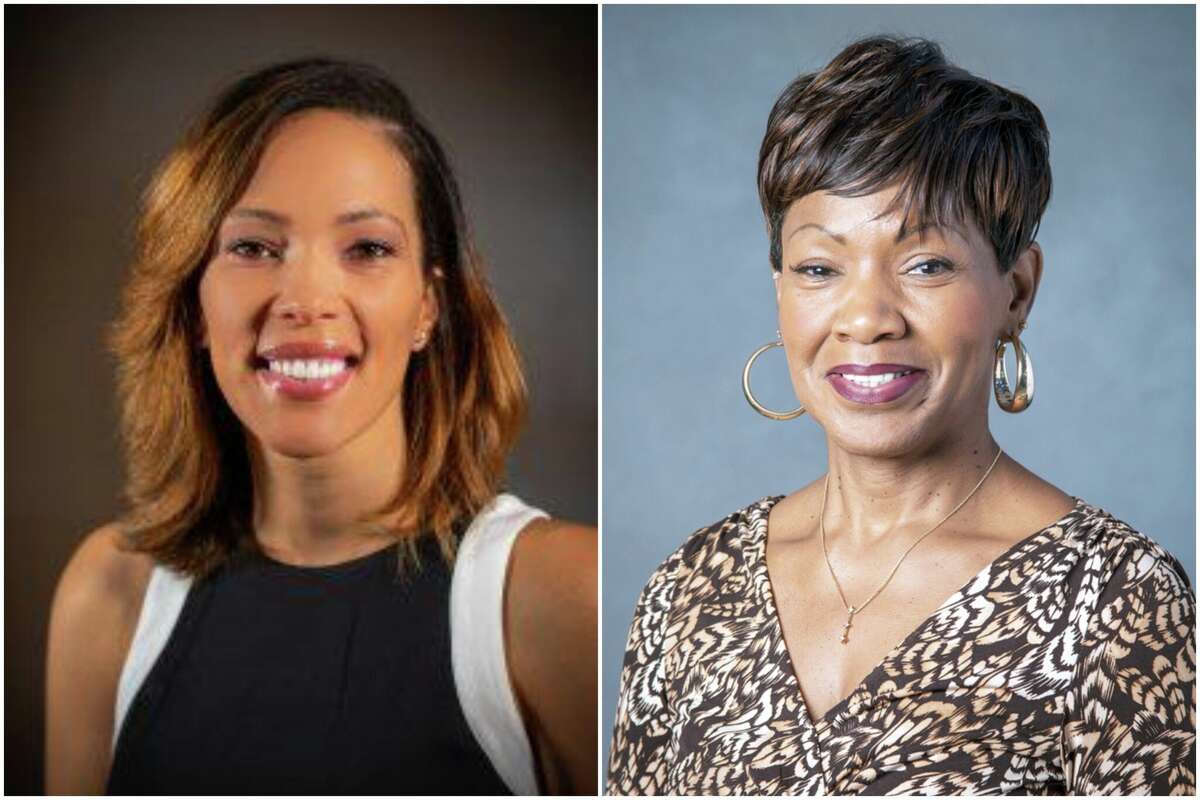
Erin Trent (left), principal at Stevens Elementary School, and Linda Bellard, principal at Garcia Elementary School, were both removed from their positions Aug. 23, 2023. 

Erin Trent (left), principal at Stevens Elementary School, and Linda Bellard, principal at Garcia Elementary School, were both removed from their positions Aug. 23, 2023. Houston ISD

Parents and teachers at Stevens say they were “blindsided” by the announcement, which was made via an automated phone call.

“This unexpected and impersonal communication from the district caused immediate anxiety, confusion and fear, not just for me personally but among hundreds of parents,” said Adam Chaney, the parliamentarian for Stevens’ Parent Teacher Community Organization.

“Our community deserves clarification immediately. We are two days away from ‘Meet the Teacher,’ the whole campus is going to be present, and then Monday morning is the start of school,” Chaney said. “It’s become increasingly difficult to avoid interpreting this chaotic situation through the lens of this controversial takeover.”

HISD officials declined to comment further or provide a reason for the reassignments, saying that the district cannot comment on ongoing personnel matters. The call Stevens parents received Wednesday acknowledged that “the change may feel abrupt,” but that it had “become clear that this change is necessary to ensure Stevens Elementary students start the year off well with access to high-quality instruction on day one that meets their needs and supports increased academic outcomes on the campus…”

Trent’s abrupt removal has led members of the Stevens community to speculate that she was reassigned because she did not opt in to Superintendent Mike Miles’ New Education System earlier this summer.

One teacher, who asked to remain anonymous for fear of retaliation, said Trent resisted pushes from the HISD central office to become an NES-aligned school, which would have seen many of Miles’ most sweeping and controversial reforms implemented at Stevens.

Miles also disbanded the HISD team of autism specialists who served schools throughout the district.

While browsing through some old posts, I stumbled upon this one, which is a story that appeared in the Dallas Morning News in 2012, shortly after Mike Miles took charge of the Dallas public schools. It gives valuable insight into Mike Miles’ thinking. Miles was appointed to lead the Houston Independent School District by State Commissioner Mike Morath after the state of Texas took control of Houston, fired its elected board and their superintendent. Miles is a military man who learned about education at the Broad Academy. Military men give orders; so do Broadies.

Please note that nothing in Miles’ goals addresses early childhood education, class size, medical clinics, or nutrition. Miles believes in metrics, the coin of the conservative, neoliberal realm.

Matthew Haag and Tawnell D. Hobbs wrote this story for the Dallas Morning News. It appeared May 10, 2102.

Dallas ISD Superintendent Mike Miles outlines ambitious plan to help make district one of the nation’s best

Mike Miles not only wants to boost graduation rates but also wants to see more high school graduates go straight into the workforce. To achieve that, he wants to create a “career-ready” certificate that would give eligible students priority for entry-level jobs at area businesses.


Dallas ISD Superintendent Mike Miles on Thursday unveiled a slew of ambitious goals, proposals and recommendations designed to turn around the school district and make it one of the nation’s best.

In his first presentation to trustees as the district’s new leader, Miles spent nearly two hours laying out his vision for the district in a presentation that both excited and overwhelmed the board members.

Under the plan, teachers would be under more scrutiny. Principals would have one year to prove their worth. And the business community would be asked to step up.

If the road map is followed, Miles said, Dallas ISD is bound to become a premier school district.

“We are going to raise expectations for our staff,” said Miles, who earned a reputation for disrupting the status quo in the school district he will soon leave in Colorado Springs, Colo. “If you cannot tell that from the presentation, you have to know it from what you heard about me.”

He said DISD will begin rolling out some changes next school year, while other changes will span several years. The most immediate change, he said, will be a philosophical one. The district must embrace a vision and mission of raising academic achievement, improving instruction and not accepting excuses.

“We cannot just post it and market it and put it in little brochures. We have to practice this,” said Miles, adding that he wants 80 percent of DISD employees to be “proficient” on those beliefs in a year.

Many of the changes Miles laid out Thursday mirror those he implemented while in Harrison School District 2 in Colorado Springs.

A seemingly small change he suggested — one he said stirred outrage among teachers in Harrison — is to keep classroom doors open all day.

With the doors open, principals and administrators can move freely into classrooms to observe teachers. Under Miles’ plan, every Dallas teacher would be observed up to 10 times a year. In three years, those observations will contribute to teachers’ grades and factor into their salaries, as part of a pay-for-performance evaluation system.

Rena Honea, president of the teachers group Alliance-AFT, said “people are going to be in shock” with Miles’ proposals. “I envision it will be very different from what DISD has seen and experienced,” she said.

Miles has said change will be hard, but it’s necessary.

“If you cannot raise student achievement or have high quality of instruction, you cannot be a teacher in Dallas,” he said Thursday.

90% grad rate by 2020.

If the changes are successful, Miles said, the district will see skyrocketing graduation rates and achieve goals former superintendents promised but failed to reach.

Only three-quarters of DISD students currently graduate in four years of high school — a number Miles wants to see hit 90 percent by 2020. He also wants student SAT scores to jump nearly 30 percent over that time.

“Even if the district was in the best position possible, we would have to change things,” Miles said. “There is growing belief that children need more education after high school. High school is not the end point anymore.”

Throughout Miles’ presentation, trustees said little as they absorbed details of the 29-page plan and asked only a handful of questions. At one point, trustee Nancy Bingham, who appeared in favor of the goals, said Miles had caused her heartburn. Other trustees wondered how he would pay for everything.

Miles told trustees that he will spend the next few weeks finding money to cover new programs and initiatives. He said he would have to cut elsewhere to make room for his plans.

Miles’ plan would allow principals more control over their campuses, but they would also be required to meet higher expectations, such as improving communication with parents and the community. If the principals fail, others will be waiting for their jobs.

Starting next school year, Miles wants to create a leadership academy for 50 or 60 educators who want to become principals. They would spend the entire year in training and will vie for open positions.

The idea brought nods and smiles from some board members, but trustee Carla Ranger questioned the program. She hinted that the people who go through the yearlong training lab would have an unfair advantage to land the jobs over existing principals.

“If the notion is that there is an unfair advantage, welcome to principalship,” Miles told her. “You have to compete. That’s the way the world works.”

Miles said he will be open to tweaking his action plan, called “Destination 2020,” but remained unapologetic about his ambitious goals and plans.

Previous downfalls

Lofty expectations for DISD have been mentioned before.

Former DISD Superintendent Michael Hinojosa rolled out an ambitious reform plan when he arrived in 2005. A major component was to reach a 90 percent passing rate on state exams by 2010 for all student groups.

The ultimate goal, Hinojosa said, was for Dallas to be the top urban district in the nation within five years, culminating by winning the coveted Broad Prize for Urban Education. While test scores improved under Hinojosa’s watch, DISD did not come close to winning the Broad Prize.

Hinojosa also set goals for the district’s graduation rate. Before his arrival, the graduation rate was 81 percent in 2003-04. He had set a 93 percent graduation rate goal for 2009-10. But the goal wasn’t met. The Class of 2010 had a graduation rate of about 75 percent.

Miles not only wants to boost graduation rates but also wants to see more high school graduates go straight into the workforce. To achieve that, he wants to create a “career-ready” certificate that would give eligible students priority for entry-level jobs at area businesses.

Starting next school year, Miles wants 1,000 entry-level jobs for students with the certificates. And he wants the certificate program to grow in the coming years — with 3,000 jobs by 2015.

Miles said he will go to the business community, ask for their support and urge them to focus their efforts on helping DISD students. He said he also wants the business community to help define what it means to be career-ready.

“Let’s let them put their money where their mouth is,” he said.

At a glance: The superintendent’s plan

In his first presentation to the Dallas ISD trustees, new Superintendent Mike Miles unveiled “Destination 2020,” a plan that sets goals for the district. Here are parts of that plan.

STUDENT ACHIEVEMENT GOALS FOR 2020

Graduation: 90 percent of students will graduate on time. [The Class of 2010 had a graduation rate of about 75 percent, which is the percentage of ninth-graders who graduated in four years, according to Texas Education Agency records.]

Test scores: 60 percent of students will receive a 21 or higher composite score on the ACT out of a possible score of 36, or 1110 on the reading and math portions of the SAT out of a possible score of 1600. [For the Class of 2010, the average ACT score was 17.1; the average SAT score was 860, according to Texas Education Agency records.]

Workplace ready: 80 percent of student will be proficient on the “Year 2020 workplace readiness assessments.” According to the plan, “These assessments will be designed by the business and nonprofit communities and will include critical thinking, communications, teamwork, information literacy, technology skills, and worth ethic.”

College and careers: 90 percent of students will enter college, the military or a “career-ready job” right out of high school. A career-ready certificate will be created for students who meet certain goals. Businesses will be asked to commit to providing entry jobs for those students.

AREAS OF FOCUS

Some areas of focus for the next three years:

Effective teachers: “While teachers in DISD are working hard and are committed to children, a quick review of instruction and discussions with instructional leaders in Dallas reveals that the quality of instruction is inconsistent and that good instruction is not pervasive in many schools.”

Effective principals: “While we will provide the best support and professional development any principal in the state could hope to receive, they will have only one year to demonstrate that they have the capacity and what it takes to lead change and to improve the quality of instruction.”

Professional and high-functioning central office: “The entire central office system will be designed to support schools as teachers and principals try to accomplish three main goals: 1) Improve the quality of instruction; 2) Raise student achievement; 3) Create a positive school culture and climate.”

Engaging parents and the community: “We will be much more purposeful in helping community supporters work in reinforcing ways. … We cannot have 100 different partners spraying reform initiative on our schools. That would diffuse the efforts and take us off our direction. Thus, we will help channel the support and ensure the major educational initiatives work in reinforcing ways.”

KEY TARGETS FOR AUGUST 2015

At least 75 percent of the staff and 70 percent of community members agree or strongly agree with the direction of the district.

At least 80 percent of all classroom teachers and 100 percent of principals are placed on a pay-for-performance evaluation system.

At least 60 percent of teachers on the pay-for-performance evaluation system and 75 percent of principals agree that the system is “fair, accurate and rigorous.”

Create a rubric to assess the professional behavior and effectiveness of each major central office department.

For 90 percent of new hires, the maximum length of the hiring process will be less than five weeks.

The community provides 3,000 jobs for graduates who have “career-ready” certificates.


SOURCES: Destination 2020; Texas Education Agency

Miles started in Dallas with a five-year contract. He resigned after three years.

The Republican debates, starting tonight, will attack President Biden relentlessly. Thom Hartmann has compiled a list of Biden’s accomplishments to counter the lies and exaggerations of Republican contenders for the nomination.

He writes:

The first Republican debate of the 2024 election cycle is tonight, and while all the drama seems focused on whether or not anybody beyond Chris Christie will take a serious swing at Trump, odds are most of the evening’s time will be devoted to trashing President Joe Biden.

So, to help keep you sane through all the lies and BS — and the fog you may be in by the end of the debate if your drinking game involved the word “woke” — here’s a quick summary* of the things that Biden has accomplished (with a little help from Democrats in Congress) in his first two-and-a-half years in office.

First of all, Joe Biden has restored trust, confidence, and faith in the honesty, credibility, and integrity of America. He doesn’t suck up to dictators like Trump did, and doesn’t lie to Americans or our allies. He’s restored independence to the Department of Justice and funding and support to regulatory agencies like the EPA.

Over united Republican opposition, the Biden administration has succeeded in lowering most Americans’ cost of living. The Inflation Reduction Act has reduced inflation to a full point lower than it was when Reagan was running his “Morning in America” ads in 1984 (unemployment is several points lower, too!).

Because of that law, for the first time, Medicare is able to negotiate the price of certain high-cost drugs: a month’s supply of insulin for seniors is capped at $35, Medicare beneficiaries pay $0 out of pocket for recommended adult vaccines, and seniors’ out of pocket expenses at the pharmacy will be capped at $2,000 a year.

America has just completed the strongest two years of job growth in the history of our country. Nearly 11 million jobs have been created since President Biden took office — including 750,000 manufacturing jobs. The unemployment rate is at a 50-year low, and a record number of small businesses have started since Biden took office. Black Americans and Hispanic Americans have near record low unemployment rates and people with disabilities are experiencing record low unemployment.

We’re experiencing a boom in manufacturing and the construction of manufacturing facilities like we haven’t seen since before the Reagan Revolution began offshoring American factories and jobs. Companies have invested more than $300 billion in good jobs, many of them unionized, as America’s technical capabilities sharpen along with this job growth.

Biden has expanded services available to our veterans (after Trump cut them), including 31 new clinical sites and a comprehensive program to help the estimated 5 million veterans who, like President Biden’s son Beau, have been exposed to toxic chemicals as a result of their service to our country.

President Biden brought together Democrats and Republicans to pass the Bipartisan Safer Communities Act, the first major piece of gun safety legislation in three decades. The law will save lives by:

— requiring young people ages 18 to 21 to undergo enhanced background checks; 
narrowing the “boyfriend loophole” to keep guns out of the hands of convicted dating partners;
— funding crisis interventions, including extreme risk protection orders (“red flag”) laws; 
— making significant investments to address the mental health crisis in America, including in our schools; 
— clarifying who needs to register as a federally licensed gun dealer and run background checks before selling a single weapon; 
— and making gun trafficking and straw purchases distinct federal crimes.

Over ten years ago, President Biden announced his support for marriage equality, becoming the highest-ranking U.S. government official to do so. Building on his longstanding support and generations of civil rights advocacy, President Biden signed historic bipartisan legislation protecting marriage for same-sex and interracial couples.

And the President took historic steps to advance full equality for LGBTQI+ Americans, including reversing the discriminatory ban on transgender servicemembers in the military, strengthening non-discrimination protections in health care, housing, education, and employment, and ensuring that transgender Americans can access government support and services.

Biden has put a more diverse group of people on the federal judiciary than any president in history. Sixty-six percent of his nominees have been women and 65 percent were people of color, including the Supreme Court’s first Black woman justice, Ketanji Brown Jackson.

After Putin declared war on democracy and launched a terrorist invasion of Ukraine, targeting civilians and using rape as a weapon of war, President Biden has brought the world together to stand up to a fascist autocracy and defend Europe’s largest democracy.

Following Trump’s humiliating groveling before Putin and attacks on NATO, the European Union, and our democratic allies around the world, President Biden has rebuilt the American alliances that have, in some cases, stood for over two centuries. Sweden and Finland have joined NATO, and China appears to be re-thinking their belligerent attitude toward Taiwan after last week’s meeting and agreements between the leaders of the US, South Korea, and Japan.

After Trump unilaterally closed all but one of our air bases in Afghanistan to maliciously make his successor’s job more difficult, the Biden administration ended the war in Afghanistan that George W. Bush and Dick Cheney had lied us into. He’s also decapitated the leadership of ISIS and El Qaeda.

Ever since six Republicans on the Supreme Court gutted American women’s right to abortion (and multiple Republicans are now trying to ban birth control), President Biden has stood up for women’s healthcare rights. He’s signed several Executive Orders to protect access to reproductive healthcare (including for our military). When 19 Republican state attorneys general demanded the healthcare records of women who’ve sought abortions in more than thirty states, Biden signed an Executive Order strengthening patient privacy.

The Biden administration rolled out a plan to cut as much as $20,000 from the debt carried by America’s student borrowers (student debt of these proportions, the direct result of the Reagan Revolution, does not exist in any other nation on Earth). When a Republican lawsuit before the Supreme Court blocked his efforts, he announced a plan to provide millions of borrowers with more affordable monthly student loan payments through changes to income-driven repayment plans.

While Red states still put people in prison for years for possessing a single marijuana cigarette, President Biden pardoned allAmericans who’ve ever been convicted of a federal pot offense. He’s more recently initiated a multi-agency review of the drug’s Schedule 1 status, with an eye to decriminalizing it nationwide.

After centuries of police violence against Black people and other minorities, Biden signed a landmark executive order on safe, effective, and accountable policing that mandated federal reforms such as banning chokeholds, restricting no-knock entries, creating a national police accountability database, and restricting the transfer of military equipment to local police departments.

Through over a hundred executive actions and the Inflation Reduction Act, President Biden has finally put America on course to cut our emissions in half by 2030 and to get to net-zero by 2050. He also protected more lands and waters in his first year than any President since John F. Kennedy.

While Republicans continue to strip people off Red state Medicaid rolls in their pursuit of cruelty, Biden expanded the Affordable Care Act. Millions can now find healthcare for $10 a month or less, and most Americans will see an Obamacare saving of an average of $800 a year.

Since he took office, there has been a combined 50 percent increase in enrollment in states that use HealthCare.gov and the nation’s uninsured rate is historically low at 8 percent. Over 16 million Americans signed up for quality, affordable health coverage, the highest number ever produced in an Obamacare open enrollment period.

Perhaps the most important accomplishment of President Biden has been re-aligning the Democratic Party with its progressive base. Biden worked hand-in-hand with Senate Budget Committee Chair Bernie Sanders to put forward a sweeping progressive agenda involving an investment of over $5 trillion in America and American working people.

Although united opposition from Republicans and a handful of sellout Democrats (including Manchin, Sinema, and the “corporate problem solvers”) forced him to cut the program back, it is still revolutionary given the past 40 years of bipartisan embrace of neoliberalism. 

Reversing the anti-organized-labor trend started by Reagan that continued through the Bush, Clinton, Bush, Obama, and Trump administrations, President Biden has aggressively promoted unions and unionization as essential to the future of working people in America.

President Biden also worked with and helped Nancy Pelosi pass through the House the For The People Act, which would have rolled back much of Citizens United and ended most Republican voter suppression by asserting Americans’ absolute right to vote. Had he not been betrayed by Manchin and Sinema, it would now be law.

The Congressional Progressive Caucus (founded by Bernie) has gone from the handful of members (fewer than 10) it was when I did fundraisers for them more than a decade ago to being one of the strongest and largest in Congress (104 members right now). While this isn’t Biden’s doing and much credit goes to its members, Biden is the first Democratic president since LBJ to fully embrace progressives in Congress and fast-track their legislation. 

Biden has also:

— Set new policies to reduce super pollutants like HFCs and methane to protect communities and reduce emissions fueling climate change
— Advanced cutting-edge research on cancer and other diseases through the ARPA-H initiative
— Signed legislation to put more cops on the beat and invest in community policing
— Signed the Electoral Count Act, which takes long overdue steps to protect the integrity of our elections
— Lowered the cost of hearing aids by making them available over the counter
— Created more manufacturing jobs in 2022 than in any single year in nearly 30 years
— Signed an Executive Order to encourage competition across industries
— Took action to lower energy costs for families
— Lowered seniors’ health care expenses, including by capping out of pocket expenses on prescription drugs for seniors at $2,000 per year, ensuring that people enrolled in Medicare will not pay more than $35 for a month’s supply of insulin, and recipients will receive free vaccines
— Accelerated adoption of electric vehicles by reducing costs for families, jumpstarted the first national EV charging network, and made historic investments into EV batteries and materials
— Rejoined the Paris Agreement on day one to reassert the United States’ global leadership to combat the climate crisis
— Jumpstarted the American offshore wind industry and convened the nation’s first federal-state offshore wind partnership
— Set new policies to reduce super pollutants like HFCs and methane to protect communities and reduce emissions fueling climate change
— Lowered the deficit with the single largest annual reduction in American history
— Secured commitments from 20 leading internet providers to increase speeds and cut prices
— Signed legislation to reauthorize and strengthen the Violence Against Women Act
— Awarded the most ever federal contracting dollars to small businesses and disadvantaged small businesses
— Reignited the Cancer Moonshot with the goal of cutting the cancer death rate by at least half over the next 25 years
— Appointed a record number of women and people of color to serve in his Administration
— Hosted the first White House Conference on Hunger, Nutrition, and Health in over 50 years and released a National Strategy to end hunger and reduce diet-related diseases and disparities by 2030
— Awarded more than $1 billion to initiate cleanup and clear the backlog of 49 previously unfunded Superfund sites, over $250 million to clean up hundreds of contaminated brownfield sites, and $725 million for abandoned mine lands
— Restored protections for Bears Ears, Grand Staircase-Escalante, and Northeast Canyons and Seamounts National Monuments and designated Camp Hale-Continental Divide National Monument to conserve our lands and waters, honor our nation’s veterans, protect Tribal cultural resources, and support jobs and America’s outdoor recreation economy
— Signed an Executive Order on Improving Public Safety and Criminal Justice for Native Americans and Addressing the Crisis of Missing and Murdered Indigenous People
— Invested historic funding for Tribal governments and Native communities, and
— Mailed over 740 million free COVID-19 tests directly to tens of millions of Americans

Below are a set of handy memes you can copy and paste into social media if any of these accomplishments resonate with you or you want to back up claims you’re making online. Just right-click and choose to save, copy, or download them: they’re copyright free. 

Here’s to a fascinating (and, no doubt, infuriating) debate!

OPEN THE LINK TO SEE HARTMANN’S MEMES.