Archives for category: Budget Cuts

Leonie Haimson is executive director of Class Size Matters. She has worked tirelessly to persuade legislators in New York State to limit class sizes. Her efforts were successful in the latest legislative session when both houses passed limits on class sizes.

However billionaire Michael Bloomberg, who was mayor of New York City for 12 years, has been an outspoken critic of class size reduction. In this article that appeared on Valerie Strauss’s “Answer Sheet,” Haimson explains why Bloomberg is wrong.

Strauss writes:

In 2014, I wrote this: “Every now and then someone in education policy (Arne Duncan) or education philanthropy (Bill Gates) …. will say something about why class size isn’t really very important because a great teacher can handle a boatload of kids.”


Well, some can do that, but anybody who has been in a classroom knows the virtues of classes that are smaller rather than larger even without the research that has been shown to bear that out.


Now the issue is back in the spotlight, this time in New York City, where a new state law requires the public school system — the largest in the country — to reduce class sizes over five years. Opponents of the law are pushing back, especially Mike Bloomberg, mayor of New York City from 2002 to 2013. He called for smaller class sizes in his first mayoral campaign but has now changed his mind.


In an op-ed in several publications, Bloomberg says students don’t need smaller classes but better schools — as if the two were entirely unrelated — and he ignores research, such as a 2014 review of major research that found class size matters a lot, especially for low-income and minority students.

This post, written by Leonie Haimson, looks at the issue, and Bloomberg’s position. Haimson is executive director of Class Size Matters, a nonprofit organization that advocates for smaller classes in New York City and across the nation as a key driver of education equity.

By Leonie Haimson


The knives are out against the new class size law, overwhelmingly passed in the New York State Legislature in June 2022, requiring New York City schools to phase in smaller classes over five years, starting this school year. The law calls for class sizes in grades K-3 to be limited to no more than twenty students; 23 students in grades 4-8, and 25 in core high school classes, to be achieved by the end of the 2027 school year. The law was passed despite the opposition of the city’s Department of Education officials, who insist that it will be too expensive, and somehow inequitable, because, they say, the highest-need students already have small enough classes.

Most recently, Mike Bloomberg, the former mayor of New York City and an adviser to Mayor Eric Adams, published identical opinion pieces in three major outlets: Bloomberg News (which he owns), The Washington Post, and the New York Post, inveighing against the goal of lowering class sizes. His piece is clearly meant to sway opinion leaders and legislators to repeal the law, and because of his prominent position, some may listen without knowing about fundamental problems in his op-ed.

Class size reduction has been shown as an effective way to improve learning and engagement for all students, especially those who are disadvantaged, and thus is a key driver of education equity. The Institute of Education Sciences cites lowering class size as one of only four education interventions proven to work through rigorous evidence; and multiple studies show that it narrows the achievement or opportunity gap between income and racial groups.

Bloomberg claims that because of the initiative, “City officials say they’ll have to hire 17,700 new teachers by 2028.” Actually, the estimate from the New York City Department of Education (DOE) itself is far smaller. In their draft class size reduction plan, posted on July 21, DOE officials estimated that 9,000 more teachers would be required over five years. While it’s true that the Independent Budget Office estimated the figure cited by Bloomberg, this large disparity between the two figures appears to stem from the fact that, as the IBO pointed out, the DOE’s budget already includes 7,500 unfilled teaching positions, which schools have not been allowed to fill. While Bloomberg claims the cost will be $1.9 billion for staffing, the DOE’s own plan estimates $1.3 billion — and these costs could be considerably lower if they redeployed teachers who are currently assigned to out-of-classroom positions to the classroom to lower class size.

The legislature passed the new law in recognition that the city’s DOE is now receiving $1.6 billion in additional state aid to finally settle the Campaign for Fiscal Equity lawsuit launched more than 20 years ago. In that case, the state’s highest court found that, because of excessive class sizes, the city’s children were deprived of their constitutional right to a sound, basic education.

Yet since his election, Adams has repeatedly cut education spending, and now threatens to cut it even more, by another 15 percent. As a result of these cuts, class sizes increased last year and will likely be larger this year. Hiring enough teachers to meet the law’s requirements will be a challenge in any case, but it will be impossible to achieve if the administration’s repeated cuts and hiring freezes are implemented.

Yet in the end, smaller classes would likely strengthen teacher quality by lowering teacher attrition rates, especially at our highest-need schools, as studies have shown.

In his op-ed, Bloomberg claims that creating the additional space necessary to lower class size will cost $35 billion, which is misleading. DOE did include this estimate in its original May 2023 draft class size plan. However following pushback by critics who pointed out that this figure bore no relation to reality, they deleted that inflated estimate in their more recent July class size plan. If DOE equalized or redistributed enrollment across schools, this would likely save billions of dollars in capital expenses. Right now, there are hundreds of underutilized public schools, sitting close by overcrowded schools that lack the space to lower class size.

Bloomberg, echoing an erroneous DOE claim that funds spent on lowering class size will not help the highest-need students, wrote: “Under the new mandate, only 38 percent of the highest-poverty schools would see class sizes shrink, compared to nearly 70 percent of medium- to low-poverty schools … it won’t help the students who need it most.”

Actually, only 8 percent of schools with the highest poverty levels (with 90 percent or more low-income students) fully complied with the class size caps last year, according to an analysis by Class Size Matters. Thus, 92 percent of these schools would see their class sizes shrink if DOE complied with the law, rather than the 38 percent that Bloomberg claims.

Moreover, by solely focusing on schools with 90 percent poverty levels or more, his claims are misleading. A piece in the education publication Chalkbeat attempted to make a similar argument, by using class size data provided by DOE that shows that 68 percent of classes in the highest-poverty schools met the class size limit. This is far different than Bloomberg’s claim that 68 percent of these schools are achieving the limits in all of their classes.

In addition, the class size data, analyzed in conjunction with DOE demographic data, shows that there are many more NYC public schools in the other two categories summarized by Chalkbeat, “Low-to-Mid Poverty” (schools with 0-75 percent low-income students) and “High Poverty” (schools with 75 percent to 90 percent low-income students), than those in their “Highest Poverty” category. Most importantly, these two categories of schools enroll a supermajority of our highest-needs students.

In fact, 79 percent of low-income students, 78 percent of Black students, 74 percent of Hispanic students, and 74 percent of English-language learners are enrolled in these other two categories of schools, while only 21 percent to 26 percent of these students are enrolled in the “Highest Poverty” category.

This further indicates that without a citywide mandate to lower class size, smaller classes would likely never reach most of our most disadvantaged students.

Indeed, the highest-needs students, including students of color, low-income students, and English-language learners, have been shown to gain twice the benefits from smaller classes in terms of higher achievement rates, more engagement, and eventual success in school and beyond, which is why class size reduction is one of very few education reforms proven to narrow the achievement or opportunity gap. Thus, by its very nature, lowering class size is a key driver of education equity.

There is also no guarantee that the smaller classes in our highest poverty schools will be sustained without a legal mandate to do so. In July, DOE officials omitted the promise in their May class size plan that schools that had already achieved the caps would continue to do so, as pointed out by a letter signed by over 230 advocates, parents, and teachers. In fact, we found that fewer of the schools in every category achieved the class size caps last year compared to the year before.

Only 69 schools citywide fully met the caps in the fall of 2022, compared to 89 in the fall of 2021, and the number of students enrolled in those schools declined from 18,248 to only 13,905, a decrease of nearly 25 percent. Fewer still will likely do so this year.

So given that the data does not back up his claims, why is Bloomberg so apparently enraged at the notion that public school students would be provided the opportunity to benefit from smaller classes.

One should recall that when he first ran for mayor more than 20 years ago, Bloomberg himself promised to lower class size, especially in the early grades. His 2002 campaign kit put it this way: “Studies confirm one of the greatest detriments to learning is an overcrowded classroom … For students a loud packed classroom means greater chance of falling behind. For teachers, class overcrowding means a tougher time teaching & giving students attention they need.”

Yet class sizes increased sharply during the Bloomberg years, and by 2013, his last year in office, class sizes in the early grades in public schools had risen to the highest levels in 15 years. By that time, he had long renounced his earlier pledge, and had proclaimed in a 2011 speech that he would fire half the teachers and double class sizes if he could, and this would be a “good deal for the students.”

Bloomberg’s main educational legacy in New York City was a huge increase in the number of charter schools as a result of his decision to provide them free space in public school buildings, and his successful effort to persuade state legislators to raise the charter cap. During his three terms in office, the number of charter schools in the city exploded from 19 to 183.

Since leaving office, Bloomberg has continued to express his preference for charter schools, and has pledged $750 million for their further expansion in the city and beyond. A close reading of his op-ed suggests that one of the main reasons for his vehement opposition to the new law is because lowering class size may take classroom space in our public schools that, in his view, should be used instead for charter schools.

Indeed, he concludes the op-ed by saying “it would help if Democratic leaders were more supportive of high-quality public charter schools,” and goes on to rail against a recent lawsuit to block the Adams administration’s decision to co-locate two Success charter schools in public school buildings in Brooklyn and Queens — a lawsuit filed on the basis that it would diminish the space available to lower class size for existing public school students.

Of the $750 million Bloomberg pledged for charter expansion, $100 million was specifically earmarked for Success Academy. Regarding the lawsuit, launched by the teachers union along with parents and educators in the affected schools, Bloomberg writes, “It was an outrageous attack on children, and thankfully, it failed.”

Misleading people about the value of small classes to teachers and students as well as about class size data seems to be an attack on opportunities for New York City public school children, who deserve better. Class Size Matters hopes these efforts fail.

Michael Hiltzik, my favorite columnist in the Los Angeles Times, writes about the demands of the House GOP to avert a government shutdown. Their draconian cuts would protect their wealthy donors (by cutting IRS agents) but savage the programs that are essential for the neediest families, adults, and children.

He writes:

It’s all well and good to treat the House Republicans’ careening toward a government shutdown as a cabaret farce staged for our amusement

However, the threat to ordinary Americans, especially those dependent on government programs, is no joke.

As outlined by the Center for American Progress and the Center on Budget and Policy Priorities, two progressive think tanks working from official communications including the budget resolution released Sept. 20 by House Budget Committee Chair Jodey Arrington, they would involve these cuts in the social safety net:

Even if the Republicans don’t provoke the shutdown currently likely to begin at 12:01 a.m. Sunday, the budget cuts House Speaker Kevin McCarthy (R-Bakersfield) has said he would support to meet the demands of his caucus’ far-right wing would devastate government assistance to the most vulnerable Americans.

  • A cut of $14.7 billion, or 77%, in Title I education grants to school districts with high levels of poverty, which fund services and supports for students from low-income or disadvantaged backgrounds. The CBPP calls this funding “a core federal support for K-12 education.”
  • Reduction of the fruit and vegetable benefit in the Agriculture Department’s Special Supplemental Nutrition Program for Women, Infants and Children (WIC)by 56% to 70%, affecting about 5 million participants.
  • Unsustainable reductions in low-income assistance programs for housing and heating.
  • $1.9 trillion in Medicaid cuts over 10 years.

These cuts go well beyond those agreed upon in the debt-ceiling negotiations last May, which McCarthy accepted.

As a sop to the Republicans’ rich patrons, the House caucus would rescind all of the $88 billion in additional funding for the Internal Revenue Service that was enacted as part of last year’s Inflation Reduction Act.

The absurd truth of all this “negotiating” is that it won’t help Speaker McCarthy, America’s most outstanding political invertebrate, get a funding proposal through his chamber that would be even remotely acceptable to the Senate. That includes Senate Republicans, who have signed on to a bipartisan spending scheme.

There are doubts that McCarthy can get any proposal through his caucus, which is effectively controlled by extremists who keep moving the goalposts by insisting on ever more draconian spending cuts. They show every sign of determination to shut the government down this weekend, even though it’s a political article of faith that the public always blames the GOP for shutdowns (as it should), leading to disaster at the ballot box.

The lack of character among congressional Republicans, not excepting those aligned with McCarthy, is truly amazing. These are people who have no compunctions about slandering working Americans while taking every opportunity themselves for slacking off.

Rep. Garret Graves (R-La.), one of McCarthy’s lieutenants, remarked during the debt-ceiling negotiations that Democrats were “willing to default on the debt so they can continue making welfare payments for people that are refusing to work.”

The serene nerviness of this slander was truly impressive, given that the House of Representatives had taken 12 of 20 workdays off in April and 10 of 22 workdays (not counting Memorial Day) off in May. Overall, the House has been scheduled to be in session only 117 days in 2023, fewer than half the 240 days most of the rest of us are at work.

The House took off the entire month of Augustand didn’t return to session until Sept. 12, all while the possible shutdown was looming. The rest were officially designated “district work days,” to which we can only respond, “Oh, sure.”

Graves has resurfaced during the shutdown negotiations, telling the Washington Post that the Republicans’ “bottom line is we’re singularly focused right now on achieving our conservative objectives,” which include “huge savings.”

As the Post toted up the numbers, those savings involved “taking more than $150 billion per year out of the part of the budget that funds child care, education subsidies, medical research and hundreds of additional federal operations.”

If there’s a silver lining in the House GOP’s performative horseplay, it’s that it has cured the political press of treating the standoff as a symptom of congressional dysfunction. It’s not; as is being reported more accurately and sensibly in recent days, it’s a symptom of Republican dysfunction and, more than that, McCarthy’s dysfunction.

McCarthy sold his soul to the Republican extremist in order to win the job of speaker. Now what will he do?

The extremists have made their priorities clear. Protect their rich donors, while slamming the door shut on those who rely on government aid to survive. They are a cruel and shameless lot.

Reader Raymond F. Tirana posted a comment in which he described the end goal of the libertarian overhaul of school funding. In Kansas, Florida, and other red states, he says, they are trying to shift responsibility for funding and providing schools from the state to parents. This will not only exacerbate segregate but increase inequity. Of course, they will do this under false pretenses, claiming to “widen opportunities” and to “save poor children from failing schools.” Don’t believe them.

He wrote in a comment:

What will really happen once the state offloads all responsibility for educating children: Inevitably, the budget will be slashed each year (Kansas is already enacting a flat tax that will decimate the State’s ability to raise revenue – people remember Koch Industries is based in Kansas, right?) until the public schools are forced to fold and Kansas parents will be lucky to get any crumbs from their masters to be used toward the education of their kids. This was Milton Freidman’s fantasy, and we are close to seeing it realized in Kansas, Florida and other states, as parents sit by and let their children’s future be stolen from them.

Nancy Bailey, retired teacher, has been blogging for ten years. She reflects on the continuing efforts to destroy public education, based on a false narrative, hubris, and in some cases, the profit motive.

Nancy and I co-authored a book that serves as a glossary about fads and “reforms.”

She begins her new article:

School reform continues to privatize and destroy public schools. August marks ten years since I began blogging. Within that time I have written two books and co-authored a third with Diane Ravitch. I’m proud of all this writing but Losing America’s Schools: The Fight to Reclaim Public Education is the book title that especially stands out today.

Many Americans still don’t understand or value their ownership of public schools, and how they’re losing one of the country’s great democraticinstitutions. Instead of working together to build up local schools, to iron out difficulties, they’re willing to end them.

Thank you for reading my blog, commenting, and for those of you who have written posts. I am amazed at the wonderful educators, parents, students, and policymakers I have met. I have appreciated debate.

Here are some of the main education issues still of concern.

The Arts

School arts programs help children thrive. Those with mental health challenges benefit. Students might find art jobs. Sadly, many poor public schools ditched the arts. Some schools might get Arts Partnerships or entrepreneurships (Hansen, 2019). These programs aren’t always consistent. Public schools must offer well-rounded and fully resourced K-12 arts programs.

Assessment

Assessment is important for teachers to understand students. But high-stakes standardized tests push a narrow, one-size-fits-all agenda used to drive parents to private schools which, on the other extreme, have little accountability. Tests have been harmful to students.

Class Size

Children deserve manageable class sizes, especially for K-3rd grade (STAR Study), and for inclusion andschool safety.

Common Core State Standards

Controversy originally surrounded Common Core State Standards, promoted by the Bill and Melinda Gates Foundation in 2010, but Common Core continues to drive profiteering, especially in online programs.

Stan Karp of Rethinking Schoolssaid CCSS are:

A massively well-financed campaign of billionaires and politically powerful advocacy organizations that seeks to replace our current system of public education which, for all its many flaws, is probably the most democratic institution we have and one that has done far more to address inequality, offers hope, and provide opportunity than the country’s financial, economic, political, and media institutions with a market-based, non-unionized, privately managed system.

Corporations and Politicians

Corporations and politicians continue to work to end public schools and drive teachers out, transferring tax dollars to nonprofit and for-profit entities.

Nancy covers many more topics that have been harmful to public education.

Open the link and read her article in its entirety.

Thom Hartmann is an insightful, incisive journalist and blogger. In this terrifying post, he describes what to expect if the Republican Party wins the presidency.

Please read and react.


Thom Hartmann

So, yeah, let’s take seriously the existential threat a GOP president represents to our nation, the nations of the world, and all life on Earth. The stakes have literally never been higher…

Hartmann writes:

Every day that goes by, even with yesterday’s newest indictment, looks more and more like Donald Trump will be the GOP’s standard bearer in 2024. After all, his popularity stood at 44 percent when NY DA Alvin Bragg indicted him; it then rose to 49 percent when he was indicted in the documents crime; following his conviction for raping E. Jean Caroll it rose to 54 percent among Republicans.

But even if he’s not the candidate, Republican primary voters will demand a candidate with the same affection for Putin and other dictators; the same disdain for racial, religious, and gender minorities; the same abusive attitude toward women and girls; the same faux embrace of Confederate and hillbilly values and hatred of city-dwellers and college graduates; the same cavalier attitude toward guns and fossil fuels.

There’s also the growing possibility that Trump or another MAGA Republican could win the White House. Yesterday, both the New York Times and CNN reported on polls showing that Trump and Biden are right now at a dead heat.

And even if Trump collapses in the polls as the result of the indictments, which is unlikely (Netanyahu is under indictment for bribery and some pretty terrible stuff and he just got re-elected), there are numerous other Republicans who would love to take his place. 

And no matter who it is, if they are MAGA inclined, Trump has shown them where there are levers of power and corruption that are consequential in ways that they never dreamed of before him.

Joe Biden, at 81, faces multiple possible personal scenarios that could pull him out of the race. No Labels and the Green Party’s candidates (presumably Joe Manchin and Cornell West) could pull enough votes from Biden to hand the election to Trump as Jill Stein did in three swing states in 2016 (she pulled more votes in each of those states than Trump’s margin of victory).

The prosecution of Trump (which almost certainly won’t be resolved before the election — and it’s not even remotely possible that appeals would be resolved by then — because of Garland’s dithering for two years) could backfire politically and make him into a popular martyr even with Republicans who disliked him before.

And don’t discount the impact Putin throwing millions of rubles into social media can have: his previous fleet of trolls overwhelming social media helped get Trump elected in 2016 and drove Brits to make the crazy decision to separate from the European Union.

So, it’s important to examine what a second Trump or 2025 MAGA presidency would look like, what effect it would have on America and the world, and how it will impact average Americans. 

Forewarned, after all, is forearmed, and all these predictions are based on past behavior and public statements:

Women make up 51 percent of the American populace but they won’t be spared by a MAGA presidency.

MAGA voters celebrate Trump’s “proof of manhood” through his multiple sexual assaults, from his alleged rape of 13-year-old Katie Johnson (with Jeffrey Epstein) to the adult E. Jean Carroll and more than 20 others. He publicly bragged that he just “grabs them by the…” whenever he wants, and Republicans — including more than half of all white women voters — ran to the polls to mark his name on their ballots.

The MAGA base supports bans on abortion: the white nationalist part of that base is fervent about having more white babies (and middle class white women are the most likely to get abortions when they’re legal, according to these people).

Catholics and evangelicals even support bans on birth control, an issue that’s already been floated by Clarence Thomas on the Supreme Court and in several state legislatures. Fully 195 Republican members of the House of Representatives voted against protecting birth control from state bans. And all of the Republicans on the Court are conservative Catholics (Gorsuch attends his wife’s church, but was raised Catholic).

Additionally, MAGA Republicans support ending no-fault divorce and limiting alimony, putting women back under husband’s thumbs; lowering the marriage age for girls to as low as 12, as Republicans have already attempted in Idaho, Wyoming, Tennessee, Missouri, and Louisiana; and seizing and monitoring the health and doctor’s records of all childbearing-age women to catch early pregnancies so those women can be detained or surveilled “for their own good” (yes, it’s already happened).

The LGBTQ+ community will come under assault in ways not seen for decades.

Like in Germany in 1933, the trans communitywill be the first to come under assault, a process that’s already begun as Red state after Red state enacts laws banning gender-affirming healthcare. Drag queens are already criminalized in multiple states.

Gays and lesbians won’t be far behind; Republicans are already trying to outlaw gay marriage and adoption. Three-quarters of all House Republicans voted against a Democratic bill protecting gay marriage; all but one Republican on the House Appropriations Committee voted for a Republican bill that would allow states to ban gay and lesbian parents from adopting.

Stochastic terrorism against the LGBTQ+ community will explode, and, in a throwback to the 1980s (when Reagan refused to say the word “AIDS” for 8 long years as tens of thousands, including close friends of mine, died) and before, rural law enforcement will often yawn when queer people are assaulted or even murdered.

Terror against racial and religious minorities will become routine.

The last time Trump was president and sanctioned a “very fine people on both sides” climate of hate and bigotry, incidents of lone-wolf terrorism exploded. Jews executed at Pittsburgh’s Tree of Life synagogue; Blacks gunned down in a supermarket in Buffalo and executed at Mother Emmanuel church in Charleston; Hispanics slaughtered in El Paso. All of the killers cited or wrote what were essentially MAGA or MAGA-aligned propaganda instruments as part of their motivation.

When minority communities rise up in indignation and step out into the streets to demand protection from roving bands of street Nazis, armed vigilantes will threaten and even kill them with impunity. As I noted yesterday, Kyle Rittenhouse is now lionized by Republicans and three states have passed into law provisions that hold people who kill protestors with their cars free from prosecution.

American support for democracy around the world will end and Putin will destroy Ukraine.

During his first four years, Trump did everything he could to ridicule and minimize our democratic allies and suck up to strongman dictators around the world.

He tried to blackmail Ukraine’s president and then withheld defensive weapons from that country when Zelenskyy refused to go along.

He told the world that he trusts Putin more than America’s intelligence services. After meeting privately with Putin, he demanded a list of all of America’s spies and their stations around the world; within months, the CIA reported that their assets were being murderedwith an unprecedented speed and efficiency.

He or his son-in-law conveyed top-secret documents to the brutal murderer MBS in Saudi Arabia that enabled him to stage a coup and seize control of that nation, a gift for which the Trump family has already received at least $2.5 billion with more coming every day.

Trump has now said that he will end the Ukraine war “in 24 hours.” His strategy? As Mike Pence (who would know) said, “The only way you’d solve this war in a day is if you gave Vladimir Putin what he wanted.”

Putin’s allies, in fact, have told the press that his main strategy for seizing all of Ukraine is to wait for Trump to re-take the White House (and, of course, he’ll do everything he can to make that happen). And just last week, in Erie, Pennsylvania, Trump came right out and saidthat he’d end all arms support to Ukraine on day one.

Seeing that America will no longer defend democracies, China will take Taiwan and North Korea may well attack South Korea. It could trigger a nuclear World War III, although instead of America being the “bulwark of freedom” as we were in the 1940s, that burden will fall to Europe, Japan, and Australia.

Reagan’s Republican War on Workers will resume and even pick up steam.

The Heritage Foundation already has a 900+ page plan to change the American government, stripping the DOJ, FBI, FCC and the Fed of their independence while ending most union rights and effectively outlawing strikes.

Billionaires will receive more tax cuts, Social Security and Medicare will be fully privatized, and public schools will be replaced with vouchers for private, segregated, religious academies as has already happened under Republican administrations in Arizona and Florida.

The EPA and other regulatory agencies that protect workers, consumers, and the environment will be gutted to the point of impotence in the face of corporate and billionaire assaults.

Efforts to mitigate the climate emergency will be rolled back and fossil fuel extraction and use will explode.

The world just lived through the hottest month in human history; ocean waters off Florida are at the temperature Jacuzzi recommends for their hot tubs; the world’s oceans are dying and winter sea ice isn’t forming in Antarctica.

Right now we humans are adding heat to the atmosphere (because of higher levels of greenhouse gasses) at a rate identical to 345,600 Hiroshima bombs going off in our atmosphere every day: four nuclear bombs per second, every second, minute, and hour of every day.

In response, our planet is screaming at us.

Fossil fuel billionaires and their shills, however, are unconcerned as they continue to fund climate denial nonprofits and Republican politicians who claim it’s all a hoax. They apparently believe their vast wealth will insulate them from the most dire effects.

And they’re probably right: a third of poverty-stricken Bangladesh was underwater this year, as drought, floods, wildfires, heat domes, bomb cyclones, tornadoes, derechos, and typhoons ravaged America with unprecedented ferocity. Increasingly, those without the financial means to withstand weather disasters are killed or wiped out, losing their family homes and often their livelihoods.

Scientists tell us we may have as few as fiveyears, and certainly not more than 20, to end our use of fossil fuels and fully transition to clean renewables. Even within the five-year window it’s technically feasible, but if Trump or another MAGA Republican is elected, civilization-ending weather and the death of much of humanity is virtually assured.

We must wake up America.

So, yeah, let’s take seriously the existential threat a MAGA president represents to our nation, the nations of the world, and all life on Earth. The stakes have literally never been higher.

Texas Governor Greg Abbott wants vouchers. He claims that polls show parents want vouchers. But they don’t, as this article shows. He says he wants “education not indoctrination,” yet advocates public money to fund schools that explicitly indoctrinate students.

He’s annoyed that he has not yet been able to twist enough arms in the Legislature to get them. He even visited private and religious schools to spread the message that parents would get tuition help from the state. But a strong coalition of Democrats and Republicans has returned him down repeatedly.

Two Texas scholars, David DeMatthews and David S. Knight, wrote an opinion piece in The Houston Chronicle explaining that the public wants better-funded public schools, not tuition for kids in private and religious schools.

They wrote:

Governor Abbott will likely call a special session on school vouchers after House Bill 100 failed to pass during the regular legislative session. But we believe a special session should instead be called to improve school safety and teacher retention, not a voucher scheme that runs counter to what Texas families want for their children.

Texas families want safe schools with a stable teacher workforce, especially following the mass shooting in Uvalde and the fact that roughly 50,000 teachers left their positions last year. In a recent statewide poll, 73 percent of Texans identified school safety, teacher pay, curriculum content and public school financing as top priorities.

In the same poll, few Texans viewed vouchers as a priority, although stark differences in opinion emerged between Democrats and Republicans. Only eight percent of Texans prioritized vouchers.

Historically, Americans with children report strong support for public schools when polled. In 2022, 80 percent of parents across the nation were completely or somewhat satisfied with the quality of education their oldest child was receiving, with little change over 20 years.

Unfortunately, some state policymakers continue to push vouchers by attacking public schools. Abbott has overseen the state’s public education system since he took office in 2015, yet only recently has he begun to claim that schools are sites of “indoctrination.”

These attacks likely contribute to Americans’ loss of confidence in public schools. In January 2019, Gallup reported that 50 percent of Democrats and 50 percent of Republicans were satisfied with public schools. By January 2022, Republican support dropped sharply to 30 percent. Democratic support remained stable.

With that background, it’s easy to believe that Texans have grown interested in vouchers. But polls showing that, we believe, are misleading.
For example, a University of Houston poll asked a sample of 1,200 Texans about their support of vouchers. The researchers concluded that 53 percent of respondents supported the policy. Yet a close examination of the data shows that the statistic leaves out approximately 12 percent of respondents — the ones who said that they “don’t know” enough to express an opinion. When the “don’t know” group is added back in, voucher supporters are in the minority.

Polls asking Texans whether they support vouchers are of little value if Texans are unfamiliar with the policy. And to make matters worse, advocacy groups have invested significant resources to mislead the public.

Texans would not support vouchers if they knew the truth. Ask yourself the following questions. What Texan would support vouchers if they knew recent studies found students using vouchers underperformed on standardized tests relative to their public school peers?

What Texan would support vouchers after learning that the cost of Arizona’s voucher program ballooned from $65 million to a projected $900 million in a few years? And that vouchers disproportionately benefited families who were already sending their children to private schools?

State policymakers pushing vouchers are not asking the right questions or presenting adequate evidence. They are being disingenuous.
A special session should focus on school safety and teacher retention, not vouchers. As more families become aware of the harm vouchers cause students, we can’t imagine that most Texans will support them.

David DeMatthews is an associate professor in the Department of Educational Leadership and Policy at the University of Texas.

David S. Knight is an associate professor of education finance and policy at the University of Washington.

Steve Berch is a member of the Idaho House of Representatives, one of only 11 Democrats in a body with 70 members. He is serving his third term. His analysis of the attack on public education in Idaho and other states is brilliantly cogent. He understands that privatization is all about the money. This article appeared in the nonprofit IdahoEdNews.org.

Berch describes the playbook of the privatization movement.

Berch writes:

Idaho will spend $2.3 billion on K-12 public education in 2024. There are powerful out-of-state forces who want to get their hands on that money. Some are driven by profit, others by political ideology, religious beliefs, or a combination of interests. They all share one common goal: shift your public schools dollars to the private sector. Here are some of the dots to connect in the “privatizing public education” playbook:

  1. Make public schools look worse than other school choices. The legislature does this by continually underfunding public education. Schools can’t meet parental expectations, accommodate growth, or hire/retain experienced teachers when salaries are not competitive and buildings are falling apart. Idaho has a backlog of over $1 billion in K-12 school building maintenance and we’re still at or near the bottom in per-student investment, even after having a $2.1 billion surplus and a recent budget increase. This makes other school choices look more attractive by comparison.
  2. Undermine confidence in public schools. Propaganda campaigns incite fear and anger against local schools. Parents are bombarded with false claims about porn in libraries, groomers in classrooms, and student indoctrination. Non-stop postings on social media perpetuate these inflammatory accusations. Self-proclaimed “think tanks” funded by third-parties produce official looking reports that create a false perception of legitimacy to these manufactured fears.
  1. Hide the facts. Legislative leaders tried to kill the Office of Performance Evaluations (OPE) – which provides factual, in-depth, unbiased research and analysis to the legislature. The public wouldn’t know about the billion dollar backlog in school building maintenance if OPE didn’t exist. The OPE report that revealed this new information angered political leaders trying to tell a different story. Without facts, false narratives go unchallenged.
  2. Legislative intimidation. New laws are making classrooms a hostile workplace. This includes bills that threaten to sue educators, imprison librarians, fine school districts, muzzle teachers, and empower the Attorney General to aggressively prosecute the targets of these punitive laws. No wonder teachers are leaving Idaho.
  1. Promote “school choice” and “education freedom.” This is clever rhetoric, but it is meaningless since Idahoans already have a myriad of education choices – none of which are going away. It’s not about having choice, but rather having you pay for someone else’s choice. A recent in-depth investigationrevealed a vast network of powerful forces funneling money into Idaho to promote and sell their alternative education choices to the public.
  2. Kill public education with vouchers (deceptively called Education Savings Accounts, or ESAs). An attempt was made earlier this year to convert most of the $2.3 billion public education budget into checks sent to parents to spend however they want – without accountability. This would starve Idaho public schools into oblivion.

The 2023 bill tried to hit a home run and failed. However, the lobbyists behind privatizing public education will be back, fronted by their legislative allies. Expect to see legislation next year that allows public tax dollars to pay for private and religious school tuition in limited amounts and isolated situations.

This is fool’s gold – there is no room for compromise. If the legislature allows just a small amount of public tax dollars to be spent on tuition for any private school, your tax dollars must be made available to all types of private schools and religious schools. Once one bill passes, the flood gates open up to flow your public education dollars to the bottom line profits of private sector businesses.

Your public education tax dollars belong in your public schools, not in their pockets.

The following is a press release from Democrats on the House Appropriations Committee, reacting to deep cuts in the funding bill proposed by House Republicans for federal programs in education, health, labor, and human services. The Title I funding program, which supports schools serving low-income students, is subject to a draconian cut which could lead to layoffs of 220,000 teachers. Every other program sustains cuts. Though not mentioned here, the federal Charter Schools Program received additional funding, one of the few to escape the Tepunlican axe.,

From: House Appropriations Democrats <DemApprops.Press@mail.house.gov>
Sent: Thursday, July 13, 2023 10:04 AM
Subject: House Republican Funding Bill Kicks Teachers Out of Classrooms, Takes Away Job Opportunities, and Harms Women and Children

FOR IMMEDIATE RELEASE

July 13, 2023

Contact:

Katelynn Thorpe, 202-225-1599


House Republican Funding Bill Kicks Teachers Out of Classrooms, Takes Away Job Opportunities, and Harms Women and Children


In the midst of a teacher shortage, Republicans are kicking more than 220,000 teachers from classrooms.

WASHINGTON — House Appropriations Committee Republicans today released the draft fiscal year 2024 Labor, Health and Human Services, Education, and Related Agencies funding bill, which will be considered in subcommittee tomorrow. The legislation is an assault on education and job training, decimates research funding, and abandons ongoing public health crises.


For 2024, the bill provides $163.0 billion, a cut of $63.8 billion – 28 percent – below 2023. This year’s Republican allocation was the lowest for the Labor, Health and Human Services, Education, and Related Agencies bill since 2008. The legislation:


  • Decimates support for children in K-12 elementary schools and early childhood education.
  • Abandons college students and low-income workers trying to improve their lives through higher education or job training.
  • Stifles lifesaving biomedical innovation by cutting funding for cancer research, mental health research, and neurological research, and by slashing funding for advanced research projects intended to develop new cures and therapies.
  • Surrenders to ongoing public health crises in mental health, opioid use, HIV/AIDS, and health disparities.
  • Harms women’s health by cutting programs that support maternal and child health, eliminating programs that provide access to health services and contraception, and adding numerous partisan and poison pill riders related to abortion and reproductive health.


“When 161 House Republicans voted earlier this year to eliminate all K-12 funding at the Department of Education, I was horrified, but that was just the beginning. Now, in the midst of a teacher shortage, they have introduced a bill that would kick 220,000 teachers from classrooms. We are witnessing a widespread attack on public education that should horrify all of us” Appropriations Committee Ranking Member Rosa DeLauro (D-CT-03) said. “Regardless of age or stage in life, this bill means you cannot count on government for any help.  It limits women’s access to abortion while stripping maternal health services and making diapers more expensive. It decimates access to preschool, education, and job training. People can only hope they do not get cancer or need mental health services—you will not find support from House Republicans. These awful cuts will make it very hard for people and should not even be considered by this committee.”

Key provisions included in the draft fiscal year 2024 Labor, Health and Human Services, Education, and Related Agencies bill are below. The text of the draft bill is here. The subcommittee markup will be webcast live and linked on the House Committee on Appropriationswebsite.

The 2024 funding bill:

Department of Education (ED) – The bill includes a total of $57.1 billion in discretionary appropriations for ED, a cut of $22.5 billion – 28 percent – below the FY 2023 enacted level. Of this amount:

  • The bill includes $3.7 billion for Title I Grants to Local Educational Agencies, a cut of $14.7 billion below the FY 2023 enacted level. This cut could force a nationwide reduction of 220,000 teachers from classrooms serving low-income students.
  • The bill eliminates funding for English Language Acquisition, a cut of $890 million that would remove vital academic support for 5 million English learners nationwide.
  • The bill eliminates funding for Title II-A (Supporting Effective Instruction State Grants), a cut of $2.2 billion below the enacted level.
  • The bill eliminates funding for Promise Neighborhoods, a cut of $91 million below the enacted level.
  • The bill eliminates funding for Social and Emotional Learning (SEL) grants within the Education Innovation and Research program, a cut of $87 million below the enacted level.
  • The bill eliminates funding for Magnet Schools, a cut of $139 million below the enacted level.
  • The bill includes $100 million forFull-Service Community Schools, a cut of $50 million below the enacted level.
  • The bill fails to provide an increase for the maximum Pell Grant award for the first time since 2012.
  • The bill eliminates funding for Federal Work Study, a cut of $1.2 billion that would eliminate work-based assistance to 660,000 students nationwide
  • The bill eliminates funding for Federal Supplemental Educational Opportunity Grants, a cut of $910 million that would eliminate need-based financial aid for 1.7 million students nationwide
  • The bill includes $1.8 billion for Student Aid Administration, a cut of $265 million below the enacted level.
  • The bill eliminates funding for Teacher Quality Partnerships, a cut of $70 million below the enacted level.
  • The bill eliminates funding for Child Care Access Means Parents in School, a cut of $75 million below the enacted level.
  • The bill eliminates funding for Hawkins Centers of Excellence, a cut of $15 million below the enacted level.
  • The bill eliminates funding for HBCU, TCU, and MSI Research and Development Infrastructure Grants, a cut of $50 million below the enacted level.
  • The bill includes $105 million for theOffice for Civil Rights, a cut of $35 million below the enacted level.


Department of Labor (DOL) – The bill includes a total of $9.1 billion in discretionary appropriations for DOL, a cut of $4.7 billion – 34 percent – below the FY 2023 enacted level. Of this amount:

  • The bill eliminates funding for WIOA Adult Job Training state grants, a cut of $886 million that would eliminate job training and employment services for 300,000 adults who face barriers to employment.
  • The bill eliminates funding for WIOA Youth Job Training state grants, a cut of $948 million that would eliminate job training and employment services for 128,000 youth who face barriers to employment.
  • The bill eliminates funding for Job Corps, a cut of $1.8 billion that would eliminate job training and employment services for 50,000 youth who face barriers to employment.
  • The bill eliminates funding for the Senior Community Service Employment Program, a cut of $405 million that would eliminate community service positions for more than 40,000 low-wage seniors.
  • The bill includes $1.4 billion for theWorker Protection Agencies at the Department of Labor, a cut of $313 million below the enacted level, including—
    • $153 million for the Employee Benefits Security Administration, a cut of $38 million below the enacted level
    • $185 million for the Wage and Hour Division, a cut of $75 million below the enacted level
    • $537 million for theOccupational Safety and Health Administration, a cut of $95 million below the enacted level
  • The bill includes $98 million for theOffice of the Solicitor, a cut of $33 million below the enacted level.
  • The bill eliminates funding for theBureau of International Labor Affairs (ILAB), a cut of $116 million below the enacted level.
  • The bill eliminates funding for theWomen’s Bureau, a cut of $23 million below the enacted level (including elimination of the Women in Apprenticeship & Nontraditional Occupations program).

Department of Health and Human Services (HHS) – The bill includes a total of $103.7 billion for HHS, a cut of $17.4 billion – 14 percent – below the FY 2023 enacted level. Of this amount:

  • National Institutes of Health (NIH) – The bill includes a total of $44.6 billion for NIH, a cut of $2.8 billion below enacted level, including:
    • $7.1 billion for the National Cancer Institute (NCI), a cut of $216 million below the enacted level
    • $2.7 billion for the National Institute of Neurological Disorders and Stroke (NINDS), a cut of $139 million below the enacted level
    • $2.2 billion for the National Institute of Mental Health(NIMH), a cut of $139 million below the enacted level
    • $5.1 billion for the National Institute of Allergy and Infectious Diseases (NIAID), a cut of $1.5 billion below the enacted level


  • Advanced Research Projects Agency for Health (ARPA-H) – The bill includes $500 million for ARPA-H, a cut of $1 billion below the enacted level.
  • Centers for Disease Control and Prevention (CDC) – The bill includes a total of $7.6 billion for CDC, a cut of 1.6 billion below the enacted level.
    • The bill eliminates funding for Firearm Injury and Mortality Prevention Research, a cut of $12.5 million below the enacted level
    • The bill eliminates funding for Tobacco Prevention and Control, a cut of $247 million below the enacted level
    • The bill eliminates funding for the Ending the HIV Epidemic initiative, a cut of $220 million below the enacted level
    • The bill includes $100 million forPublic Health Infrastructure and Capacity, a cut of $250 million below the enacted level
    • The bill includes $75 million forPublic Health Data Modernization, a cut of $100 million below the enacted level
    • The bill includes $371 million forGlobal Health, a cut of $322 million below the enacted level
    • The bill eliminates funding for the Climate and Health program, a cut of $10 million below the enacted level
    • The bill eliminates funding for the Center for Forecasting and Analytics, a cut of $50 million below the enacted level


  • Substance Abuse and Mental Health Services Administration (SAMHSA) – The bill funds SAMHSA at $7.1 billion, a cut of $234 million below the enacted level. 
     
  • Health Resources and Services Administration (HRSA) – The bill includes $7.3 billion for HRSA, a cut of more than $700 million below the enacted level. (The comparison does not include Community Project Funding included in the FY 2023 enacted bill.)
    • The bill eliminates funding for Title X Family Planning, a cut of $286 million below the enacted level
    • The bill includes $781 million for the Maternal and Child Health Block Grant, a cut of $35 million below the enacted level
    • The bill eliminates funding for Healthy Start, a cut of $145 million below the enacted level
    • The bill eliminates funding for the Ending HIV Epidemic initiative, a cut of $220 million below the enacted level
    • The bill eliminates funding for multiple programs to support diversity in the healthcare workforce, including—
      • Health Careers Opportunity Program($16 million)
      • Centers of Excellence($28 million)
      • Nursing Workforce Diversity ($24 million)


  • Agency for Healthcare Research and Quality (AHRQ) – The billeliminates funding for AHRQ, a cut of $374 million below the enacted level.
  • Centers for Medicare & Medicaid Services (CMS) – The bill includes a total of $3.3 billion for CMS administrative expenses, a cut of $798 million below the enacted level.
  • Administration for Children and Families (ACF) – The bill provides $28.3 billion for ACF, a cut of $4.8 billion below the enacted level.
    • The bill includes a total of $11.2 billion for Head Start, a cut of $750 million below the enacted level. This cut would result in more than 50,000 children losing access to Head Start programs.
    • The bill eliminates funding for Preschool Development Grants, a cut of $315 million below the enacted level
    • The bill includes $457 million for refugee programs, includingTransitional and Medical Services and Refugee Support Services, a cut of $414 million below the enacted level
    • The bill includes $2.25 billion for the Unaccompanied Children program, a cut of $3.3 billion below the enacted level.


  • Administration for Community Living (ACL) – The bill includes $2.5 billion for ACL, a cut of $22 million below the enacted level.


  • Office of the Secretary—General Departmental Management – The bill includes $344 million for GDM, a cut of $258 million below the enacted level.
    • The bill eliminates funding for the Teen Pregnancy Prevention Program, a cut of $108 million below the enacted level
    • The bill includes $26 million for the Office of Minority Health, a cut of $49 million below the enacted level.
    • The bill includes $28 million for the Minority HIV/AIDS Initiative, a cut of $24 million below the enacted level.
    • The bill includes $20 million for the Office on Women’s Health, a cut of $49 million below the enacted level.


Related Agencies –

  • The bill eliminates funding for theCorporation for Public Broadcasting, a cut of $595 million below the enacted level.
  • The bill includes $661 million for theCorporation for National and Community Service, a cut of $652 million below the enacted level.


  • The bill includes $200 million for theNational Labor Relations Board, a cut of $99 million below the enacted level.
  • The bill includes $13.8 billion for theSocial Security Administration, a cut of $183 million below the enacted level.

Policy Riders –


  • The bill includes multiple policy riders to block the Department of Labor from implementing regulatory changes that would improve working conditions for workers in various industries.
  • The bill includes a prohibition on funding to conduct or support research using fetal tissue.
  • The bill includes a prohibition on funding for Planned Parenthood health centers.
  • The bill includes multiple policy riders to block access to abortion services or reproductive healthcare services.
  • The bill includes multiple policy riders to block the Biden Administration’s policies to ensure nondiscrimination on the basis of gender identity or sexual orientation.
  • The bill includes a rider to amend the Public Health Service Act to create a right to monetary damages in a civil action for a violation of the Weldon amendment (which allows health care providers to discriminate against patients by refusing to provide, pay for, cover, or refer for abortion).
  • The bill includes a rider to block the Department of Education from issuing a final rule to prevent sex discrimination and sex-based harassment at schools or a final rule to clarify how all students can participate in athletics.
  • The bill includes multiple riders to block the Department of Education from implementing regulations related to student loans and income-driven repayment.
  • The bill includes a rider to prevent the NLRB from implementing a rule related to Joint Employer status.
  • The bill includes a rider to block funding related to Critical Race Theory.
  • The bill includes multiple riders to prevent policies or programs intended to promote diversity, equity, or inclusion.
  • The bill includes a rider to block funding to take action against a person who opposes marriage equality.
  • The bill includes a rider to limit which flags can be flown over a federal facility.


###

Paul Bowers, who covered education for the Charleston Post and Courier, writes on his blog Brutal South about deteriorating working conditions for the state’s teachers. Class sizes are rising, and the state has chosen to divert funding from the public schools.

Compared to 15 years ago, South Carolina public school teachers are doing more work, administering more tests with higher stakes, for wages that increasingly get eaten by inflation, under intensifying scrutiny from aggrieved political actors — and in many cases, they’re doing it with more students than ever.

The last time I looked into the growth of K-12 classroom sizes in my state was 2019, and the picture was bleak. While state regulations1 set strict limits on student-teacher ratios in most types of classrooms, the state legislature had started granting waivers to those caps during the Great Recession and had not resumed enforcement.

Predictably, median classroom size soared as the state stopped funding its obligations to school districts, teachers’ promised pay increases were frozen, and teachers quit the profession faster than the colleges of education could graduate new ones. When I wrote about the trend for The Post and Courier in 2019, classroom sizes had begun to shrink but were still significantly larger than they were in the 2007-08 academic year…

I’m a graduate of South Carolina public schools who sends his kids to South Carolina public schools, and despite the bad headlines and flagging test scores, I’ve seen firsthand how our education system can change people’s lives for the better. I’m certainly better for it, and my own kids are flourishing.

But after a decade-and-a-half of austerity and a century-and-a-half of backlash to the universal public good of education in South Carolina, I’m left wondering how many more hits the system can take….

South Carolina Gov. Mark Sanford and the Republican-controlled legislature kneecapped school funding in 2006 with a tax handout to homeowners (Act 388) that routinely wrecks school revenues during economic downturns. As metropolitan school districts have grown thanks in part to an influx of workers for manufacturing concerns like Boeing, Volvo, and BMW, county governments have handed those employers massive tax incentives that cheated schools out of $2.2 billion in the last 5 years alone. And the legislature has not funded its own legally mandated Base Student Cost to districts since 2009, flagrantly violating the law every time it passes a budget — with outsize effects in our poorest rural districts.

Clearly, the leaders of the state don’t understand that their penuriousness towards the schools will hurt the next generation and the future of the state. They think in the moment. They forget about the future. They can attract corporations with a low-wage, non-union workforce, but they can’t build a thriving state unless they educate all the children.

Joe Holley, a columnist for The Houston Chronicle writes here about why rural Republicans in Texas vote against vouchers. The public schools in their home districts are in deep financial trouble. They can’t pay enough to attract teachers. They lack the funding for physical improvements. The public schools are the heart of their communities. Most rural districts don’t have any private schools. Those that do don’t want to lose their funding to pay for kids to go to private schools.

Holley writes:

MARATHON – One afternoon not long after Laura and I bought The Wee House, our home away from home in this small, unincorporated community west of the Pecos, I decided to go run the bleachers at the high school football field a block up the street. I didn’t know it at the time, but the long-abandoned field, dry grass giving way to patches of hard dirt and scraggly weeds, had been home in years past to arguably the most formidable six-man football dynasty in Texas history.

Between 1967 and 1976, the Mustangs compiled a record of 100-6, including a 42-game winning streak that stretched from October 1968 until November 1971. Fans from all over the trans-Pecos made the long drive to Marathon on Friday nights to watch the mighty Mustangs beat up on both six- and 11-man teams. The Mustangs were twice state champions.

It quickly became obvious that my ambitious exercise regimen was foolhardy. The spindly-looking bleachers were only eight rows high, the rows so far apart I almost had to climb from one to the next. I decided instead to investigate the rusted sheet-metal press box perched on the top row, so small that maybe three Howard Cosell-wannabes, no more, could squeeze in. I thought I might find an old program, a yellowed memento from the Mustangs’ glory days. Opening the squeaky door into the dark interior, I set off a clamorous tumult. Then came a whoosh. Powerful wings grazed the top of my head and almost sent me tumbling backward down the steps. I had disturbed a great horned owl.

Marathon’s Friday-night lights were extinguished in 2007, but as in every small Texas town I know, the school remains the heart of the community. The school is where town kids and ranch kids get to know each other. It’s where the well-off and the not-so-well-off mix and mingle; where Hispanic kids and Black kids and white kids work out their differences and discover their similarities; where members of the Parent Teacher Organization man the concession stand for basketball games in the venerable gym.

Money is a perennial problem. With a total K-12 enrollment of 53 in the school year that just ended, consolidation with nearby Alpine or Fort Stockton is always a possibility. If that happened, though — if the stately rust-colored brick high school and the low-slung elementary school across the street were left to the great horned owls — Marathon would not be Marathon.

That fact of small-town Texas life is something Gov. Greg Abbott, Lt. Gov. Dan Patrick and voucher-peddling legislators either don’t understand or refuse to admit. This legislative session, while they toyed like Scrooge McDuck with a mountainous pile of cash — an unprecedented $33 billion budget surplus — they left rural school districts across the state to grapple with ever-increasing operating costs, deteriorating facilities, teacher shortages, and an unfair funding system. New requirements for security upgrades are only partially funded.

HB 100, the Legislature’s primary education bill, would have raised the state’s basic allotment, but even a modest increase — not to mention the $900 needed to match inflation — was held hostage to getting vouchers passed. The governor promises that education will be the focus of another special session later this summer, but so far, rural schools have received next to nothing. Meanwhile, administrators for schools large and small are trying to craft a budget for the coming school year without knowing what the Legislature has in store.

Instead of dipping into that enormous budget surplus to ease the hardships of small-town schools, Abbott, Patrick and friends are distracted by a different mountain of money. They covet an Everest of campaign cash from a trio of West Texas oil and fracking billionaires — people who had just as soon put public schools out of business in favor of private schools funded, at least in part, by taxpayer money.

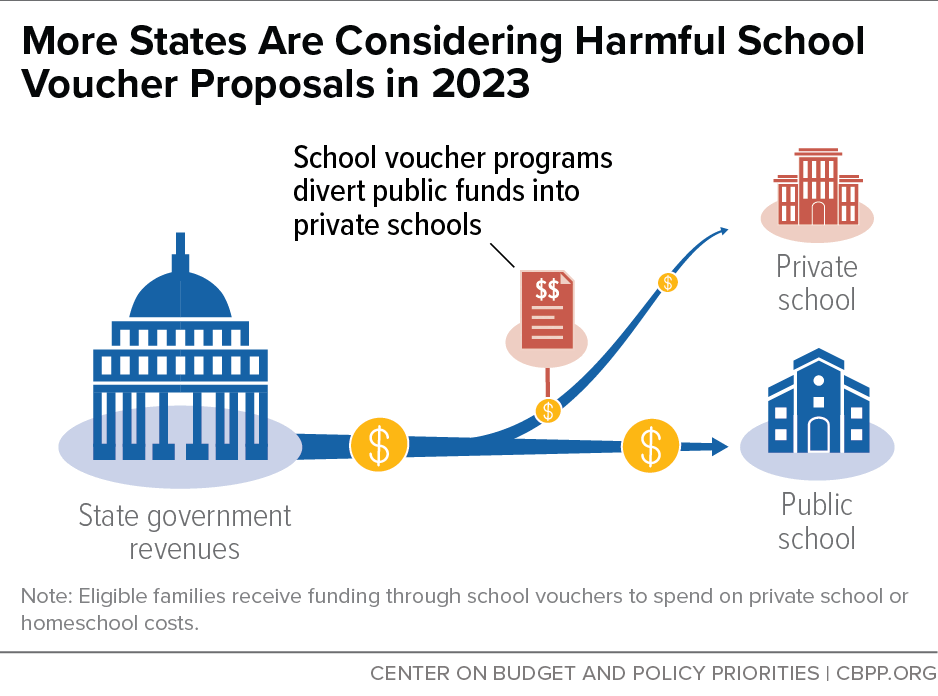
Because Texas public schools get by on a complicated system of local tax revenue and state dollars — with state money distributed on a per-student basis — private-school vouchers are a threat to already precarious districts such as Marathon’s. If local students take their vouchers and leave, those districts would lose funds. (Some voucher plans would compensate rural districts for these lost students, but only temporarily.) Despite Abbott’s and Patrick’s assurances, one way or another, state funds could be diverted to cover private and home-schooling expenses. That would leave less per-student funding for every district, large or small.

Small-town Texans, most of whom cannot even imagine voting for a Democrat, know that vouchers are a threat. That’s why their lawmakers, even the most conservative, have fought the voucher ambitions of the GOP leadership with the ferocity of yesteryear’s Marathon Mustangs. Marathon, Alpine, Fort Davis and Marfa — the little West Texas towns I know best — need every resource the state can provide, as do their counterparts across Texas. Rural lawmakers beat back Abbott and vouchers yet again during the regular session, but the governor, like a wily old boxer, keeps probing round after round for weak spots….

Alpine is 30 miles west of Marathon. Home to Sul Ross State University, the attractive little town is much larger than Marathon, but not so big that it manages to avoid lawmaker neglect. The Legislature’s inaction during the regular session was “a dereliction of duties,” Michelle Rinehart, superintendent of Alpine ISD, told the Big Bend Sentinel.

This year, Rinehart told me a few days ago, should have been our chance to boost Texas education funding — to move the state from 42nd in per-pupil spending to something like the national average. “We were expecting at least modest pay raises for teachers,” she said.

New teachers in oil-blessed Midland start at $60,500, while her new teachers start at $33,000. But instead of helping Alpine with salaries, maintenance and other basic needs, the state’s arcane and inequitable funding formulas end up taking money away. Rinehart has to finish her budget for the next school year by July 1. Unless the Legislature changes something in the special session, the deficit will grow from $300,000 to $1 million….

Rinehart has ample reason to be frustrated. Public education spending is lower now than when Abbott took office in 2015. Given a $321.3 billion budget, our lawmakers — so far, anyway — are starving one of the basic building blocks of a self-governing nation.

Abbott doesn’t listen to educators or the people in rural districts. He listens to the billionaires who fund him.

Abbott listens to the likes of oilmen Tim Dunn and the Wilks brothers, Farris and Dan, who insist that government and education should be guided by fundamentalist Christian principles.

Dunn, a lay preacher at the Midland mega-church he and his family attend, has given more than $18 million to Abbott, Patrick, all 18 GOP state senators, now-suspended Attorney General Ken Paxton, U.S. Sen. Ted Cruz and assorted ultra-conservative political action committees. He also serves on the board of the Texas Public Policy Foundation, a powerful voucher champion.

Farris Wilks, a native of Cisco, near Abilene, has given more than $11 million to GOP candidates and officeholders. He’s also a minister with the Cisco church his father founded, the Assembly of Yahweh 7th Day.

The superintendent of the Marathon public schools is Ivonne Durant. Holley interviewed her. She was upset that the state hasn’t increased teacher pay.

As superintendent of a rural school, Durant is constantly in touch with parents about their children’s well-being, in touch as only a small-school educator can be. They sit together at church, run into each other at the grocery store in Alpine. She teaches the Spanish class and tutors kids on Saturday morning. (One in particular: If that girl fails a class, the five-person junior high basketball team will have to disband.) Durant makes sure her seniors have definite plans — college, the military or a good job — before they graduate.

“I love my children,” she said. “They know, and their parents know, that everybody here cares. They know we’re going to be there for them.”

If only Greg Abbott and the Texas Legislature could say the same.