Greg Olear noticed Jared Kushner’s new role as a financier and his success at staying far, far away from his father-in-law’s trial in New York City. He also noticed that Jared had replaced Michael Cohen as Trump’s liaison with David Pecker and the National Enquirer. Naturally, he wonders why Jared is not being called to testify.
Archives for category: Accountability
The American Civil Liberties Union issued a statement to advise college and university presidents about responding to student protests.
We write in response to the recent protests that have spread across our nation’s university and college campuses, and the disturbing arrests that have followed. We understand that as leaders of your campus communities, it can be extraordinarily difficult to navigate the pressures you face from politicians, donors, and faculty and students alike. You also have legal obligations to combat discrimination and a responsibility to maintain order. But as you fashion responses to the activism of your students (and faculty and staff), it is essential that you not sacrifice principles of academic freedom and free speech that are core to the educational mission of your respected institution…The American Civil Liberties Union released a statement describing how universities should react to demonstrations on campus.
The statement begins:
Schools must not single out particular viewpoints for censorship, discipline, or disproportionate punishment
These protections extend to both students and faculty, and to speech that supports either side of the conflict. Outside the classroom, including on social media, students and professors must be free to express even the most controversial political opinions without fear of discipline or censure. Inside the classroom, speech can be and always has been subject to more restrictive rules to ensure civil dialogue and a robust learning environment. But such rules have no place in a public forum like a campus green. Preserving physical safety on campuses is paramount; but “safety” from ideas or views that one finds offensive is anathema to the very enterprise of the university.
First, university administrators must not single out particular viewpoints — however offensive they may be to some members of the community — for censorship, discipline, or disproportionate punishment. Viewpoint neutrality is essential. Harassment directed at individuals because of their race, ethnicity, or religion is not, of course, permissible. But general calls for a Palestinian state “from the river to the sea,” or defenses of Israel’s assault on Gaza, even if many listeners find these messages deeply offensive, cannot be prohibited or punished by a university that respects free speech principles.
Schools must protect students from discriminatory harassment and violence
Second, both public and private universities are bound by civil rights laws that guarantee all students equal access to education, including Title VI of the Civil Rights Act. This means that schools can, and indeed must, protect students from discriminatory harassment on the basis of race or national origin, which has been interpreted to include discrimination on the basis of “shared ancestry or ethnic characteristics,” or “citizenship or residency in a country with a dominant religion or distinct religious identity.”
So, while offensive and even racist speech is constitutionally protected, shouting an epithet at a particular student or pinning an offensive sign to their dorm room door can constitute impermissible harassment, not free speech. Antisemitic or anti-Palestinian speech targeted at individuals because of their ethnicity or national origin constitutes invidious discrimination, and cannot be tolerated. Physically intimidating students by blocking their movements or pursuing them aggressively is unprotected conduct, not protected speech. It should go without saying that violence is never an acceptable protest tactic.
Speech that is not targeted at an individual or individuals because of their ethnicity or national origin but merely expresses impassioned views about Israel or Palestine is not discrimination and should be protected. The only exception for such untargeted speech is where it is so severe or pervasive that it denies students equal access to an education — an extremely demanding standard that has almost never been met by pure speech. One can criticize Israel’s actions, even in vituperative terms, without being antisemitic. And by the same token, one can support Israel’s actions in Gaza and condemn Hamas without being anti-Muslim. Administrators must resist the tendency to equate criticism with discrimination. Speech condoning violence can be condemned, to be sure. But it cannot be the basis for punishment, without more.
Schools can announce and enforce reasonable content-neutral protest policies but they must leave ample room for students to express themselves
Third, universities can announce and enforce reasonable time, place, or manner restrictions on protest activity to ensure that essential college functions can continue. Such restrictions must be content neutral, meaning that they do not depend on the substance of what is being communicated, but rather where, when, or how it is being communicated. Protests can be limited to certain areas of campus and certain times of the day, for example. These policies must, however, leave ample room for students to speak to and to be heard by other members of the community. And the rules must not only be content neutral on their face; they must also be applied in a content-neutral manner. If a university has routinely tolerated violations of its rules, and suddenly enforces them harshly in a specific context, singling out particular views for punishment, the fact that the policy is formally neutral on its face does not make viewpoint-based enforcement permissible.
Open the link to finish reading the statement.
Eva Moskowitz runs the most successful (when measured by test scores) and the most controversial charter chain in New York State. Controversial because her schools are highly regimented, “no excuses” schools where student behavior and dress are tightly monitored. Controversial because her schools have a high attrition rate and a high teacher turnover rate. Outspoken parents complain that their children were “counseled out” or pushed out due to their behavior, their test scores, or their special needs.
Eva expected to expand to 100 schools in New York City but she constantly must fight parents and community schools who oppose her methods. So long as Michael Bloomberg was mayor and Joel was chancellor of the schools, Eva got whatever she wanted. But when they left office a decade ago, Eva had to fight off her critics without the certainty that City Hall. Backed her.
Funding has never been a problem for Success Academy. The chain is a favorite of Wall Street billionaires. Eva is said to have a salary and bonuses that are nearly $1 million. She has purchased properties and leases space to her schools.
Now, Chalkbeat reports, it appears that Eva is pondering open Success Academy schools in Florida, where charter schools are booming.
Alex Zimmerman writes:
Success Academy, New York City’s largest charter operator, is considering an expansion to Florida, a major shift in strategy for the network.
Success founder and CEO Eva Moskowitz said Wednesday she is in search of friendlier terrain for expansion.
New York has been “a rather hostile political environment” for charter schools, Moskowitz testified at a Florida State Board of Education meeting Wednesday morning. She later added: “I want to be in a place that’s high-growth, that’s high-innovation, that is welcoming to parental choice.”
The network’s decision to contemplate expanding beyond New York is a notable shift, as Success has operated schools exclusively within the five boroughs since launching in 2006.
Moskowitz previously outlined aggressive plans to expand to 100 schools locally, roughly double the number that the network currently operates. But Moskowitz and other leaders have faced strong headwinds. Charter schools have fallen out of favor with many Democrats and the sector faces a strict cap on the number of schools that are allowed to operate in the state. The legislature recently allowed 14 new charters to open in New York City, but have not signaled any plans to allow dramatically more than that.
Plus, the city’s charter networks have struggled with declining enrollment in recent years, including Success, though preliminary state figures show the network now enrolls about 21,000 students, erasing pandemic-era enrollment losses. Success is currently looking to open six new schools, according to the SUNY Charter Schools Institute, which oversees Success.
Florida officials, meanwhile, are rolling out the red carpet. The State Board of Education voted Wednesday to designate Success as a “School of Hope” operator, a program designed to attract high-performing charters to the state, offering funding for construction and other startup costs.
Enrollment in Florida’s charter sector has steadily grown in recent years, educating nearly 14% of students, or roughly 400,000 children, state data show. Charters are publicly funded, but privately operated schools.
In her testimony, Moskowitz emphasized that the network’s students are overwhelmingly low-income children of color and their test scores far outpace the city’s district schools — and even affluent suburbs. She also highlighted the network’s track record of preparing students to attend competitive colleges.
“This is exactly what we were envisioning: To have a charter school network to be able to come in and really serve those populations that are in need of this kind of academic rigor, of this performance,” State Education Commissioner Manny Diaz, Jr. said at the Wednesday hearing.
But Success has also been dogged by persistent allegations that school officials push out children who are more difficult to serve, including suspending them or dialing 911when students are experiencing behavioral problems or emotional distress. In 2015, the New York Times reported that one of its Brooklyn campuses had created a “Got to Go” list of troublesome students. Success officials said the list was a mistake and have disputedthat they systematically push children out.
It’s not clear how quickly Success might move to open schools in Florida or even if they will ultimately move forward with plans to do so. A Success Academy spokesperson did not elaborate.
Open the link to continue reading.
Governor Bill Lee of Tennessee made school vouchers his top priority but the issue died in the Legislature despite its Republican supermajority. He will bring the issue back next year. He’s hoping for universal vouchers, where every student in the state is eligible for a voucher but opponents call his plan a subsidy for the wealthy who already are attending private schools.
In eastern Tennessee, and very likely across the entire state, parents and educators heaved a huge sigh of relief.
Dustin Park is a parent of kids who go to school in Maryville. He’s opposed to the universal school voucher plan because he said it excludes students with disabilities.
“The only thing that protects kids with disabilities is that federal law,” Parks said. “A bedrock of our public schools is that they accept everybody.”
The school district he sends his children to supports his stance.
“We continue to maintain our belief that public funds should not be diverted to private entities, and taxpayers should not be required to subsidize private schools that are not held to the same standards of accountability and inclusivity as public schools,” said Mike Winstead, Director of Maryville City Schools. “If the Education Freedom Scholarship Act passed, it would have been harmful to the very students and vulnerable populations it maintained to assist.”
Dave Gorman is a teacher at Knox County Schools and also said he’s not sure lawmakers will listen to their constituents.
“We also have seen enough dirty dealings,” Gorman said. “We’ll never forget when Jason Zachary was the deciding vote to bring vouchers to a couple of cities in the state a few years ago — when it looked like it was about to die and he changed his vote.”
Knox County Schools provided the following statement about the proposal failing.
“As we have stated before, our attention has and will continue to stay focused on our students and providing them with a high-quality education. We are confident that our families will continue to choose KCS regardless of what happens at the state level.”
Several school districts across East Tennessee also said they also are pleased a school voucher plan would not pass this session…
Kelly Johnson, Director of Clinton City Schools
“Elected officials are responsible for listening to their constituents, not answering to outside special interest groups. We know Governor Lee plans to bring it back next year. It is my hope that the citizens of TN remain vigilant in celebrating the many successes of public schools.”
The billionaire funded outside special interest groups will be back next year. Parents and educators should vote to replace those who want to undermine public schools.
Dr. Julian Vasquez Heilig is a noted scholar of charter schools, with experience as a parent of a charter school student and board member of a charter school. He is Provost and Vice-President for Academic Affairs at Western Michigan University. And, he is a founding board member of the Network for public Education!
Recently, Dr. Heilig testified before the House Committee on Education and the Workforce. He explained that the research on charters shows that they are no more successful than public schools, they close frequently, they have high teacher turnover, and they promote segregation. In addition, they exacerbate the problems of the public schools by choosing the students they want and diverting resources.
Dr. Heilig called for more accountability for charters and the need for democratic oversight.
The Republican majority of the Committee called three witnesses. The Democrats were allowed only one, and they chose Dr. Heilig.
They chose well. His testimony is succinct and excellent.
I recently visited Wellesley College to attend the lecture of lawyer-scholar Patricia Williams, who spoke about book banning, censorship and critical race theory. She was brilliant. Her lecture will be posted as soon as Wellesley releases the tape. She spoke as part of the annual lecture series that I endowed.
At the end of her lecture, a student asked a question. The student said that she had sent out a notice to all the others in her dorm denouncing genocide. Now she wanted Professor Williams to advise her on how to respond to an older alumna about genocide in a manner that was respectful and would lead to further discussion.
Professor Williams responded, and I paraphrase, “If you really want to have an honest exchange, don’t use the word ‘genocide.’ It’s a conversation stopper. Genocide has a specific legal definition, and it’s not the right word to use if you really want a discussion.”
Later, I had dinner with Professor Williams and Wellesley President Paula Johnson. Dr. Johnson described what happened when Hillary Clinton, the College’s most distinguished alumna, spoke recently on campus. Students disrupted her speech and denounced her as a war criminal. When her car pulled away from the President’s house, students surrounded the car, shouting obscenities and exercising their middle finger.
Frankly, I was appalled. Colleges and universities must protect free speech, but there are limits. You can’t yell “fire” in a crowded theater. There must be other limits. The purpose of a college education is to teach critical thinking, to exemplify the value of reasoned debate, to maintain civility when there are strong disagreements, to be open to learning.
This morning, Columbia University announced that it is offering online classes because the campus is unsafe for learning, especially for Jewish students. This is outrageous. Campuses must be safe places for all students and faculty. Civility matters.
Colleges and universities should, in my opinion, establish clear rules about the speech that stifles others from speaking, about speech that diminishes freedom of discussion, about speech that threatens the physical safety of others, about speech that undermines free speech and civility. And most certainly for behavior that makes the campus unsafe for students and faculty.
Pro-Palestinian students should argue their cause without shutting down discussion and threatening Jewish students. Closing down debate, antagonizing those who disagree, creating a climate in which “academic freedom” is used to negate academic freedom is simply wrong.
There must be clear guidelines about the kind of conduct that is not permitted because it destroys the fundamental purpose of higher education, which is the freedom to teach, to learn, and to debate.
We have heard repeatedly since October 7 that expressions and behavior that are anti-Israel are not anti-Semitic. But the widespread harassment of Jewish students, even Jewish faculty, gives the lie to this claim. Such harassment is anti-Semitic.
I deplore the barbarism of October 7. I deplore the brutality of the war in Gaza and the deaths of thousands of innocent civilians. I hope that peace negotiations bring about two states and a just peace.
I deplore the surge of Jew-hatred on American campuses. Jewish students and all other students, as well as Jewish faculty and all faculty, should be able to learn and teach without fearing for their safety.
Colleges and universities must establish rules that promote and protect civility. Students who harass and endanger others cancel the purpose of higher education. They should be warned and if they persist, they should be suspended, and if they continue in their actions, expelled.
The propaganda surrounding COVID vaccines has led to parental uncertainty about other vaccines. This may explain recent measles outbreaks. For most of us, measles is a childhood disease that was conquered by scientists many years ago. But it’s returning.
This year is not yet one-third over, yet measles cases in the United States are on track to be the worst since a massive outbreak in 2019. At the same time, anti-vaccine activists are recklessly sowing doubts and encouraging vaccine hesitancy. Parents who leave their children unvaccinated are risking not only their health but also the well-being of those around them.
Measles is one of the most contagious human viruses — more so than the coronavirus — and is spread through direct or airborne contact when an infected person breathes, coughs or sneezes. The virus can hang in the air for up to two hours after an infected person has left an area. It can cause serious complications, including pneumonia, encephalitis and death, especially in unvaccinated people. According to the Centers for Disease Control and Prevention, one person infected with measles can infect 9 out of 10 unvaccinated individuals with whom they come in close contact.
But measles can be prevented with the measles, mumps and rubella vaccine; two doses are 97 percent effective. When 95 percent or more of a community is vaccinated, herd immunity protects the whole. Unfortunately, vaccination rates are falling. The global vaccine coverage rate of the first dose, at 83 percent, and second dose, at 74 percent, are well under the 95 percent level. Vaccination coverage among U.S. kindergartners has slipped from 95.2 percent during the 2019-2020 school year to 93.1 percent in the 2022-2023 school year, according to the CDC, leaving approximately 250,000 kindergartners at risk each year over the past three years.
Florida and Illinois have had a surge in measles cases. The Surgeon General of Florida, Dr. Joseph A. Ladapo, ignored standard practice and told parents to make their own decisions about whether to keep their unvaccinated child home to avoid getting the disease.
Another source of misinformation is Robert F. Kennedy Jr.’s organization:
Vaccine hesitancy is being encouraged by activists who warn of government coercion, using social media to amplify irresponsible claims. An article published March 20 on the website of Robert F. Kennedy Jr.’s Children’s Health Defense organization is headlined, “Be Very Afraid? CDC, Big Media Drum Up Fear of ‘Deadly’ Measles Outbreaks.”
The author, Alan Cassels, claims that the news media is advancing a “a fear-mongering narrative,” and adds, “Those of us born before 1970 with personal experience pretty much all agree that measles is a big ‘meh.’ We all had it ourselves and so did our brothers, sisters and school friends. We also had chicken pox and mumps and typically got a few days off school. The only side effect of those diseases was that my mom sighed heavily and called work to say she had to stay home to look after a kid with spots.”
Today, he adds, “Big media and government overhyping the nature of an illness, which history has shown us can be a precursor to some very bad public health policies such as mandatory vaccination programs and other coercive measures.”
This is just wrong. The CDC reports that, in the decade before the measles vaccine became available in 1963, the disease killed 400 to 500 people, hospitalized 48,000 and gave 1,000 people encephalitis in the United States every year — and that was just among reported cases. The elimination of measles in the United States in 2000, driven by a safe and effective vaccine, was a major public health success. Although the elimination status still holds, the U.S. situation has deteriorated. The nation has been below 95 percent two-dose coverage for three consecutive years, and 12 states and the District below 90 percent. At the same time, the rest of the world must also strive to boost childhood vaccination rates, which slid backward during the covid-19 pandemic. According to the WHO, low-income countries — with the highest risk of death from measles — continue to have the lowest vaccination rates, only 66 percent.
Thom Hartmann writes here about the nefarious role played by former Attorney General William Barr in his two different stints, first, when he worked as Attorney General for President George H.W. Bush, and later when he protected Trump from the damning findings of the Mueller Report about Russian interference in the election of 2016; Barr sat on it, summarized its conclusions inaccurately, and misled the public. Bill Barr was, Hartmann writes, “the master fixer” for “the old GOP.”
He writes:
Congressman Jim Jordan wanted revenge on behalf of Donald Trump against Manhattan DA Alvin Bragg for charging Trump with election interference in Manhattan.
He threatened Bragg with “oversight”: dragging him before his committee, threatening him with contempt of Congress; putting a rightwing target on Bragg’s back by publicizing him to draw sharpshooters from as far away as Wyoming or Idaho; and facing the possibility of going to jail if he didn’t answer Jordan’s questions right. Jordan, James Comer, and Bryan Steil — three chairmen of three different committees — wrote to Bragg:
“By July 2019 … federal prosecutors determined that no additional people would be charged alongside [Michael] Cohen. … [Y]our apparent decision to pursue criminal charges where federal authorities declined to do so requires oversight….”
They were furious that Bragg would prosecute Trump for a crime that the federal Department of Justice had already decided in 2019 and announced that they weren’t going to pursue.
But why didn’t Bill Barr’s Department of Justice proceed after they’d already put Michael Cohen in prison for a year for delivering the check to Stormy Daniels to keep her quiet at least until after the election, and then lying about it? Why didn’t they go after the guy who ordered the check written, the guy who’d had sex with Daniels, the guy whose run for the presidency was hanging in the balance?
Why didn’t the Department of Justice at least investigate (they have a policy against prosecuting a sitting president) the then-president’s role in the crime they put Cohen in prison for but was directed by, paid for, and also committed by Donald Trump?
Turns out, Geoffrey Berman — the lifelong Republican and U.S. Attorney appointed by Trump to run the prosecutor’s office at the Southern District of New York — wrote a book, Holding the Line, published in September, 2022, about his experiences during that era.
In it, he came right out and accused his boss Bill Barr of killing the federal investigation into Trump’s role of directing and covering up that conspiracy to influence the 2016 election. Had Barr not done that, Trump could have been prosecuted in January of 2021, right after he left office. And Jim Jordan couldn’t complain that Alvin Bragg was pushing a case the feds had decided wasn’t worth it.
As The Washington Post noted when the book came out:
“He [Berman] says Barr stifled campaign finance investigations emanating from the Cohen case and even floated seeking a reversal of Cohen’s conviction — just like Barr would later do with another Trump ally, Michael Flynn. (Barr also intervened in the case of another Trump ally, Roger Stone, to seek a lighter sentence than career prosecutors wanted.)”
Which is why Manhattan DA Alvin Bragg had to pick up the case, if the crime was to be exposed and prosecuted.
After all, this crime literally turned the 2016 election to Trump. Without it, polling shows and political scientists argue, Hillary Clinton would have been our president for at least four years and Trump would have retired into real estate obscurity.
But Bill Barr put an end to Berman’s investigation, according to Berman. The DOJ pretended to be investigating Trump for another few months, then quietly announced they weren’t going to continue the investigation. The news media responded with a shrug of the shoulders and America forgot that Trump had been at the center of Cohen’s crime.
In 2023, the New York Times picked up Bill Barr’s cover story and ran with it, ignoring Berman’s claims, even though he was the guy in charge of the Southern District of New York. The article essentially reported that Main Justice wouldn’t prosecute because Cohen wouldn’t testify to earlier crimes, Trump might’ve been ignorant of the law, and that the decision was made by prosecutors in New York and not by Barr.
Incomplete testimony and ignorance of the law have rarely stopped prosecutors in the past from a clear case like this one appears to be (Trump signed the check and Cohen had a recording of their conversation, after all), but the story stuck and the Times ran with it.
In contrast, Berman wrote:
“While Cohen had pleaded guilty, our office continued to pursue investigations related to other possible campaign finance violations [including by Trump]. When Barr took over in February 2019, he not only tried to kill the ongoing investigations but—incredibly—suggested that Cohen’s conviction on campaign finance charges be reversed. Barr summoned Rob Khuzami in late February to challenge the basis of Cohen’s plea as well as the reasoning behind pursuing similar campaign finance charges against other individuals [including Trump]. …
“The directive Barr gave Khuzami, which was amplified that same day by a follow-up call from O’Callaghan, was explicit: not a single investigative step could be taken, not a single document in our possession could be reviewed, until the issue was resolved. …
“About six weeks later, Khuzami returned to DC for another meeting about Cohen. He was accompanied by Audrey Strauss, Russ Capone, and Edward “Ted” Diskant, Capone’s co-chief. Barr was in the room, along with Steven Engel, the head of the Office of Legal Counsel, and others from Main Justice.”
Summarizing the story, Berman wondered out loud exactly why Bill Barr had sabotaged extending their investigation that could lead to an indictment of Trump when he left office:
“But Barr’s posture here raises obvious questions. Did he think dropping the campaign finance charges would bolster Trump’s defense against impeachment charges? Was he trying to ensure that no other Trump associates or employees would be charged with making hush-money payments and perhaps flip on the president? Was the goal to ensure that the president could not be charged after leaving office? Or was it part of an effort to undo the entire series of investigations and prosecutions over the past two years of those in the president’s orbit (Cohen, Roger Stone, and Michael Flynn)?”
In retrospect, the answer appears to be, “All of the above.”
And that wasn’t Barr’s only time subverting justice while heading the Justice Department. Berman says he also ordered John Kerry investigated for possible prosecution for violating the Logan Act (like Trump is doing now!) by engaging in foreign policy when not in office.
Barr even killed a federal investigation into Turkish bankers, after Turkish dictator Erdoğan complained to Trump.
Most people know that when the Mueller investigation was completed — documenting ten prosecutable cases of Donald Trump personally engaging in criminal obstruction of justice and witness tampering to prevent the Mueller Report investigators from getting to the bottom of his 2016 connections to Russia — Barr buried the report for weeks.
He lied about it to America and our news media for almost a full month, and then released a version so redacted it’s nearly meaningless. (Merrick Garland, Barr’s heir to the AG job, is still hiding large parts of the report from the American people, another reason President Biden should replace him.)
While shocking in its corruption, as I noted here last month, this was not Bill Barr‘s first time playing cover-up for a Republican president who’d committed crimes that could rise to the level of treason against America.
He’s the exemplar of the “old GOP” that helped Nixon cut a deal with South Vietnam to prolong the War so he could beat Humphrey in 1968; worked with Reagan in 1980 to sell weapons to Iran in exchange for holding the hostages to screw Jimmy Carter; and stole the 2000 election from Al Gore by purging 94,000 Black people from the voter rolls in Jeb Bush’s Florida.
Instead of today’s “new GOP,” exemplified by Nazi marches, alleged perverts like Matt Gaetz, and racist rhetoric against immigrants, Barr’s “old GOP” committed their crimes wearing $2000 tailored suits and manipulating the law to their advantage…and still are.
For example, back in 1992, the first time Bill Barr was U.S. Attorney General, iconic New York Times writer William Safire referred to him as “Coverup-General Barr” because of his role in burying evidence of then-President George H.W. Bush’s involvement in Reagan’s scheme to steal the 1980 election through what the media euphemistically called “Iron-Contra.”
On Christmas day of 1992, the New York Times featured a screaming all-caps headline across the top of its front page: Attorney General Bill Barr had covered up evidence of crimes by Reagan and Bush in the Iran-Contra “scandal.” (see the bottom of this article)
Earlier that week of Christmas, 1992, George H.W. Bush was on his way out of office. Bill Clinton had won the White House the month before, and in a few weeks would be sworn in as president.
But Bush Senior’s biggest concern wasn’t that he’d have to leave the White House to retire back to one of his million-dollar mansions in Connecticut, Maine, or Texas: instead, he was worried that he may face time in a federal prison after he left office, a concern nearly identical to what Richard Nixon faced when he decided to resign to avoid prosecution.
Independent Counsel Lawrence Walsh was closing in fast on Bush and Reagan, and Bush’s private records, subpoenaed by the independent counsel’s office, were the key to it all.
Walsh had been appointed independent counsel in 1986 to investigate the Iran-Contra activities of the Reagan administration and determine if crimes had been committed.
Was the criminal Iran-Contra conspiracy limited, as Reagan and Bush insisted (and Reagan said on TV), to later years in the Reagan presidency, in response to an obscure hostage-taking in Lebanon?
Or had it started in the 1980 presidential campaign against Jimmy Carter with treasonous collusion with the Iranians, as the then-president of Iran asserted? Who knew what, and when? And what was George H.W. Bush’s role in it all?
In the years since then, the President of Iran in 1980, Abolhassan Bani-Sadr, has gone on the record saying that the Reagan campaign reached out to Iran to hold the hostages in exchange for weapons.
“Ayatollah Khomeini and Ronald Reagan,” President Bani-Sadr told the Christian Science Monitor in 2013, “had organized a clandestine negotiation, later known as the ‘October Surprise,’ which prevented the attempts by myself and then-US President Jimmy Carter to free the hostages before the 1980 US presidential election took place. The fact that they were not released tipped the results of the election in favor of Reagan.”
That wouldn’t have been just an impeachable and imprisonable crime: it was every bit as much treason as when Richard Nixon blew up LBJ’s 1968 peace talks with North and South Vietnam to win that November’s election against Vice President Hubert Humphrey.
Please open the link to finish reading this fascinating article.
Indiana blogger Steve Hinnefeld writes about what happens when charter schools go shopping for an authorizer. He tells the story of a charter school that has been dropped by a series of authorizers, but picked up by a new one each time. Why would a new authorizer step in to take responsibility for a charter school that has been dropped by others? I’m not sure about how it works in Indiana, but in most states the authorizer gets a set percentage—typically 3%— of state tuition for each student. That adds up to a lot of money.
Hinnefeld writes:
Trine University came to the rescue eight years ago when Thea Bowman Leadership Academy was in danger of losing its charter and being shut down.
Now Trine has revoked the Gary, Indiana, school’s charter, citing academic and governance issues. But another private institution, Calumet College of St. Joseph, has stepped up.
“It’s funny how things have come full circle,” said Lindsay Omlor, executive director of Education One, Trine’s charter-school-authorizing office.
Today’s topic is authorizer shopping, what happens when charter schools jump from one authorizer to another to stay open or find a better deal. Thea Bowman looks to be taking the practice to a new level. It now has its third authorizer in less than a decade.
Back in 2016, the school’s original authorizer, Ball State University, declined to renew its charter, citing management and fiscal issues. The school turned first to the Indiana Charter School Board, which said no. But it found a willing partner in Trine University.
Now Trine has decided it’s done with the school. Its Education One board voted in December to revoke Thea Bowman’s charter. But school officials, perhaps expecting trouble, had already approached Calumet College. The board of CCSJ Charter Authority, the Calumet authorizing entity, approved a new charter in January.
Under a 2015 law intended to discourage authorizer-shopping, the new charter had to be approved by the State Board of Education. That happened Wednesday.
Thea Bowman is an established school that once served over 1,200 students in grades K-12. It now enrolls 840: Over 90% are Black and 75% qualify for free or reduced-price meals. Its proficiency rates on ILEARN, Indiana’s math and English/language arts test, are well below state averages. A 2022-23 review by Education One found it met standards for fiscal matters and school climate but not for academic and organizational performance.
The state board vote followed a hearing at which the executive directors of Education One and CCSJ Charter presented their findings. Two young women, both committed to school choice, charter schools and their view of high-quality authorizing, described Thea Bowman Leadership Academy in starkly different terms.
CCSJ’s Carrie Hutton took issue with Trine’s conclusion that the school was deficient in academics. Its test scores are improving, she said, and they are as good as or better than those at nearby charter schools and the Gary Community Schools district. She said the college will work with school staff to improve curriculum and add internships and college credit opportunities for students.
Her strongest point may have been that the charter school and the college are part of the same northwestern Indiana urban community. Calumet is in Hammond, next door to Gary, while Trine is in Angola, a two-hour drive to the east.
“They are our neighbors, and their graduates are our co-workers and students in our college,” Hutton said.
But Education One’s Omlor said the school has failed to meet performance targets, and governance issues have persisted. “I can confidently say that the school board lacks the capacity to govern a high-quality school that meets our standards,” she said.
She said the school has a 40% teacher turnover rate, and half its teachers are not fully licensed. She also took aim at CCSJ Charter, saying the authority “made many missteps” and failed to communicate and share information.
Open the link to see what happened.
Tom Ultican, retired teacher in California, smells a scam in the making. The science behind “the Science of Reading” movement is not very scientific, he writes. Publishers and vendors are preparing to cash in on legislative mandates that force reading teachers to use only one method to teach reading despite the lack of evidence for its efficacy. Ultican zeroes in on the role of billionaire Laurene Powell Jobs as one of the key players in promoting SofR.
He writes:
Laurene Powell Jobs controls Amplify, a kids-at-screens education enterprise. In 2011, she became one of the wealthiest women in the world when her husband, Steve, died. This former Silicon Valley housewife displays the arrogance of wealth, infecting all billionaires. She is now a “philanthropist”, in pursuit of both her concerns and biases. Her care for the environment and climate change are admiral but her anti-public school thinking is a threat to America. Her company, Amplify, sells the antithesis of good education.
I am on Amplify’s mailing list. April third’s new message said,
“What if I told you there’s a way for 95% of your students to read at or near grade level? Maybe you’ve heard the term Science of Reading before, and have wondered what it is and why it matters.”
Spokesperson, Susan Lambert, goes on to disingenuously explain how the Science of Reading (SoR) “refers to the abundance of research illustrating the best way students learn to read.”
This whopper is followed by a bigger one, stating:
“A shift to a Science of Reading-based curriculum can help give every teacher and student what they need and guarantee literacy success in your school. Tennessee school districts did just that and they are seeing an abundant amount of success from their efforts.”
A shift to SoR-based curriculum is as likely to cause harm as it is to bring literacy success. This was just a used-car salesman style claim. On the other hand, the “abundance of success” in Tennessee is an unadulterated lie. National Assessment of Education Progress (NAEP) tracks testing over time and is respected for education testing integrity. Tennessee’s NAEP data shows no success “from their efforts.” Their reading scores since 2013 have been down, not a lot but do not demonstrate an “abundance of success”.

NAEP Data Plot 2005 to 2022
Amplify’s Genesis
Larry Berger and Greg Dunn founded Wireless Generation in 2000 to create the software for lessons presented on screens. Ten years later, they sold it to Rupert Murdoch and his News Corporation for $360 million. Berger pocketed $40 million and agreed to stay on as head of curriculum. Wireless Generation was rebranded Amplify and Joel Klein was hired to run it.
Murdoch proposed buying a million I-pads to deliver classroom instruction. However, the Apple operating system was not flexible enough to run the software. The android system developed at Google met their needs. They purchased the Taiwanese-made Asus Tablets, well regarded in the market place but not designed for the rigors of school use. Another issue was that Wireless Generation had not developed curriculum but Murdoch wanted to beat Pearson and Houghton Mifflin to the digital education market place … so they forged ahead.
In 2012, the corporate plan was rolling along until the wheels came off. In Guilford County, North Carolina, the school district won a Race to the Top grant of $30 million dollars which it used to experiment with digital learning. The district’s plancalled for nearly 17,000 students in 20 middle schools to receive Amplify tablets. When a charger for one of the tablets overheated, the plan was halted. Only two months into the experiment, they found not only had a charger malfunctioned but another 175 chargers had issues and 1500 screens were kid-damaged.
This was the beginning of the end.
By August of 2015, News Corporation announced it was exiting the education business. The corporation took a $371 million dollar write-off. The next month, they announced selling Amplify to members of its staff. In the deal orchestrated by Joel Klein, who remained a board member, Larry Berger assumed leadership of the company.
Three months later, Reuters reported that the real buyer was Laurene Powell Jobs. She purchased Amplify through her LLC, the Emerson Collective. In typical Powell Jobs style, no information was available for how much of the company she would personally control.
Because Emerson Collective is an LLC, it can purchase private companies and is not required to make money details public. However, the Waverley Street Foundation, also known as the Emerson Collective Foundation, is a 501 C3 (EIN: 81-3242506) that must make money transactions public. Waverly Street received their tax exempt status November 9, 2016.
SoR A Sales Scam
The Amplify email gave me a link to two documents that were supposed to explain SoR: (Navigating the shift to evidence-based literacy instruction 6 takeaways from Amplify’s Science of Reading: The Symposium) and (Change Management Playbook Navigating and sustaining change when implementing a Science of Reading curriculum). Let’s call them Symposium and Navigating.
Navigating tells readers that it helps teachers move away from ineffective legacy practices and start making shifts to evidence-based practices. The claim that “legacy practices” are “ineffective” is not evidence-based. The other assertion that SoR is evidence-based has no peer-reviewed research backing it.
Sally Riordan is a Senior Research Fellow at the University College London. In Britain, they have many of the same issues with reading instruction. In her recent research, she noted:
“In 2023, however, researchers at the University of Warwick pointed out something that should have been obvious for some time but has been very much overlooked – that following the evidence is not resulting in the progress we might expect.
“A series of randomised controlled trials, including one looking at how to improve literacy through evidence, have suggested that schools that use methods based on research are not performing better than schools that do not.”
In Symposium, we see quotes from Kareem Weaver who co-founded Fulcrum in Oakland, California and is its executive director. Weaver also was managing director of the New School Venture Fund, where Powell Jobs served on the board. He works for mostly white billionaires to the detriment of his community. (Page 15)
Both Symposium and Navigating have the same quote, “Our friends at the Reading League say that instruction based on the Science of Reading ‘will elevate and transform every community, every nation, through the power of literacy.”’
Who is the Reading League and where did they come from?
Dr. Maria Murray is the founder and CEO of The Reading League. It seems to have been hatched at the University of Syracuse and State University of New York at Oswego by Murray and Professor Jorene Finn in 2017. That year, they took in $11,044 in contributions (EIN: 81-0820021) and in 2018, another $109,652. Then in 2019, their revenues jumped 20 times to $2,240,707!
Jorene Finn worked for Cambria Learning Group and was a LETRS facilitator at Lexia. That means the group had serious connections to the corporate SoR initiative before they began.
With Amplify’s multiple citations of The Reading League, I speculated that the source of that big money in 2019 might have been Powell Jobs. Her Waverly Street Foundation (AKA Emerson Collective Foundation) only shows one large donation of $95,000,000 in 2019. It went to the Silicon Valley Community Foundation (EIN: 20-5205488), a donor-directed dark money fund.
There is no way of following that $95 million.
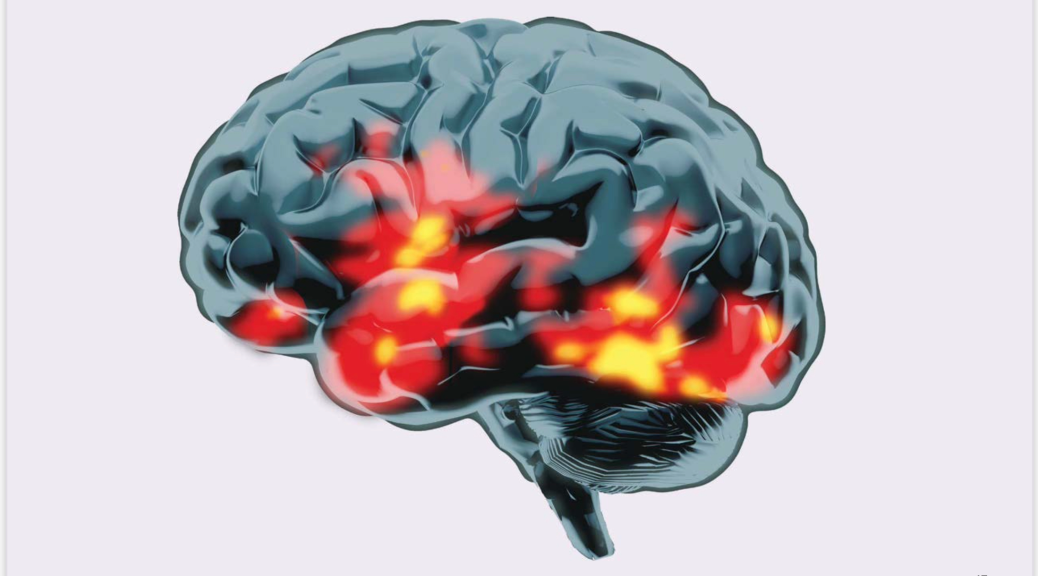
The Reading League Brain Scan Proving What?
Professor Paul Thomas of Furman University noted the League’s over-reliance on brain scans and shared:
“Many researchers in neurobiology (e.g., Elliott et al., 2020; Hickok, 2014; Lyon, 2017) have voiced alarming concerns about the validity and preciseness of brain imaging techniques such as functional magnetic resonance imaging (fMRI) to detect reliable biomarkers in processes such as reading and in the diagnosis of other mental activity….
“And Mark Seidenberg, a key neuroscientist cited by the “science of reading” movement, offers a serious wcaution about the value of brain research: “Our concern is that although reading science is highly relevant to learning in the classroom setting, it does not yet speak to what to teach, when, how, and for whom at a level that is useful for teachers.”
“Beware The Reading League because it is an advocacy movement that is too often little more than cherry-picking, oversimplification, and a thin veneer for commercial interests in the teaching of reading.”
The push to implement SoR is a new way to sell what Amplify originally called “personalized learning.”This corporate movement conned legislators, many are co-conspirators, into passing laws forcing schools and teachers to use the SoR-related programs, equipment and testing.
SoR is about economic gain for its purveyors and not science based.
When politicians and corporations control education, children and America lose.
To read an earlier post by Tom Ultican on this topic, see this.

 Diane Ravitch's blog