Archives for category: Vouchers

A reader who identifies as “Retired Teacher” sees the school choice juggernaut as a deliberate plan to destroy our common good: public schools. Thomas Jefferson proposed the first public schools. The Northwest Ordinances, written by the founding fathers, set aside a plot of land in every town for a public school.

The origin of the school choice movement was the backlash to the Brown Decision of 1954. Segregationists created publicly-funded academies (charters) for white flight and publicly-funded vouchers to escape desegregation.

What replaces public schools will not be better for students, and it will be far worse for our society.

So much reckless “choice” will make the public schools the schools of last resort for those that have nowhere else to go. Choice is a means to defund what should be our common good. How are the schools supposed to fund the neediest, most vulnerable and most expensive students when so much funding is transferred to private interests? How will public schools be able to pay to maintain the buildings, hire qualified teachers and pay for all the fixed costs like insurance, transportation and utilities?

The billionaires and religious groups behind so-called choice would like to see public schools collapse. Choice benefits the ultra-wealthy and segregationists. Choice empowers the schools that do the choosing, not the families trying to find a school for their child. If public schools become the bottom tier of choice, they will become like the insane asylums of the 19th century where the unfortunate were warehoused, ignored and abused. This dystopian outcome would be the opposite of what the founding fathers envisioned. Their vision was one of inclusion where all are welcome, a place serves the interests of the nation, communities and individuals with civil, social and individual benefits. A tiered system of schools is neither ‘thorough or efficient.’ It is a nightmare, and nothing any proponents of democracy should be supporting.

John Thompson, historian and retired teacher in Oklahoma, analyzes the behind-the-scenes infighting between extremist MAGA Republicans and traditional conservatives, who don’t use inflammatory rhetoric and prefer to know the cost of new programs before they pass them.

He writes:

Across the nation, voters are following the battles between former-President Donald Trump and Governor Ron DeSantis. There is no way to know how that conflict between extremist Republicans will play out, but I find it hard to believe it won’t damage their party’s chances in 2024. Even in Oklahoma, Trump’s unfavorable rating has grown to 47%, and conflicts between conservatives and MAGAs are becoming more public.

And as Oklahoma Republicans, such as State Superintendent Ryan Walters, Governor Kevin Stitt, and House Speaker Charles McCall, ramp up their irrational, inflammatory rhetoric, there seems to be both a growing behind-the-scenes and public responses by some traditionally conservative Republicans against the far right. This post will focus on two issues where it seems like the Republican leader of the Senate, Greg Treat is pushing back on the MAGAs.

To understand these disputes, however, a confusing aspect of the Oklahoma constitutional system must be understood. Oklahoma has two statewide education leadership positions; the Secretary of Education is appointed by the governor and confirmed by the Senate, and the Superintendent of Public Instruction, who is elected by the people.

The Oklahoman now reports on a behind-the-scenes issue that could be an important response to Walters. Walters was first appointed as Secretary of Education by Gov. Stitt, and was quickly confirmed by the Senate. Walters was then elected to the State Superintendent office, and reappointed by Stitt as Secretary of Education.

This time, however, there is no movement towards his reconfirmation to that position. The Oklahoman explains, “Walters is still waiting, and it there has been little or no work done to shepherd his nomination through the Senate, even though his previous term expired on Jan. 9.” It adds that the job is mostly to advise the governor and has “few legal responsibilities.” However, the confirmation delay “highlights the ongoing political conflict between the executive and legislative branches of Oklahoma’s government.”

Given the pushback by some influential Republicans against Walters’ bizarre rhetoric and overreach (not to mention his misuse of federal funds), the lack of movement toward confirming Walters is not good news for Walters and his rightwing allies. Whether or not Walters loses his Secretary of Education position is obviously unknown. It might just be a threat serving as a “bargaining chip” for advancing the Senate agenda, as opposed to the Walters’ and the Speaker of the Houses’ extremism. But, either way, the MAGAs’ agenda is threatened by such publicity.

Moreover, this happened as Walters, as the Tulsa World reported, emailed all legislators “images and text [that] depict gay sex and ambiguously gendered bodies. The email provides no context to the images.” The World also reported, “Some of those receiving the emails said Walters quickly tried to ‘unsend,’ or retrieve them.” Walters was invited to the Appropriations and Budget Subcommittee on Education to provide evidence for the email’s claims but he didn’t respond. Instead, as the Oklahoman reported, he sent “lawmakers a list of four books he deemed “pornographic,” four more ‘books in the marketplace to monitor’ and 190 children’s books focused on LGBTQ+ themes.” School system leaders denied Walters’ claims about four pornographic books that allegedly were in their schools. These continuing behaviors have made Walters more vulnerable.

Also during the week, Speaker Charles McCall, who apparently hopes to run for governor, doubled down on outrageous demands and claims against the Senate Republican leadership. Previously he demanded that the vote for his education funding bill, including vouchers (called tax credits), be passed without amendments, which the Senate refused to do. So when the Senate defied McCall and Gov. Stitt by putting an income cap of $250,000 on families for school choice tax credits, McCall called it “class warfare.” Sen. Treat replied, “The speaker seems to be intent on torpedoing meaningful education reform… It is unfortunate and I hope he comes to his senses.”

Then, illustrating the depth of the conflict between the Senate and House leaders, the Speaker’s office made the bizarre claim that under the Senate’s $285 million a year plan, “The Senate amendments to House Bill 2775 would only require public school districts following the state minimum salary schedule to give full teacher pay raises, neglecting over 43,000 teachers in over 400 districts.” (Oklahoma has around 45,000 teachers) Sen. Treat’s office replied “that every teacher in the state would get a pay bump based off years of service,” and that “The speaker is operating in a fantasy land.” Again, these behaviors are making the MAGAs more vulnerable.

And that leads to the second major story which seems to represent the best pushback by the Senate leadership against the behaviors of rightwing ideologues. As I explained previously,the Oklahoman’s Ben Felder reported, despite a $700 million incentive, Volkswagen chose to invest in Canada with its “strong ESG (environmental, social and governance) practices,” rather than Oklahoma where Gov. Stitt had said, “don’t expect support from us unless you reject ESG.”

I must stress that counter-attacks by conservative, pro-voucher Republicans are not an answer to continuing assaults on public education, and neither can we merely trust pro-corporate Republicans’ call for rethinking the reasons why corporations reject Oklahoma’s subsidies for investing here. But, Senate Pro Tem Treat and many or most Republican legislators must understand that such extreme rhetoric is making it harder to attract corporations that invest in Oklahoma.

Sen.Treat formed a panel to study why Volkswagen and Panasonic rejected subsidies up to $700 million, and he cited the lessons of recent history. After United Airlines rejected incentives for investing in Oklahoma City because it lacked the cultural institutions that its employees would want, in the early 1990s the city made a plan, raised taxes, and invested in social and educational institutions.

While I praise Treat’s initiative, I’ve wondered whether his predominantly Republican effort would be transparent and open-minded. I have been urging the panel members I know to listen to the leaders who succeeded in transforming Oklahoma City. Number 1 on my list has been Cliff Hudson who led the bipartisan MAPS for Kids which saved the Oklahoma City Public School System from collapsing. I have never participated in a greater, evidence-based process which truly listened to researchers, educators, students, parents, and the community. So, I was thrilled to see Hudson’s guest editorial in the Oklahoman.

Hudson explained that “many business leaders who aren’t from here” understand that “Oklahoma is committed to providing competitive financial incentives and that our tax policies are considered pro-business.” But, Hudson notes, “they also hear the hateful rhetoric that can make people feel unwelcome, either because of their gender, their religion, their skin color or their orientation.”

Hudson knows that “Oklahomans are, overall, kind, welcoming and loving.” But he rejects “the negative voices … [that make] things harder for all of us.” It “means fewer companies will want to bring their jobs here. It means the best and brightest may choose not move here — or that they grow up here and leave as soon as they can.” So, “we miss out on great executives, exciting creatives and dedicated medical professionals when we don’t make clear that everyone is valued and welcomed in Oklahoma.”

In other words, especially if Republican leaders listen to Hudson and others who transformed the Oklahoma City (and Tulsa) metropolitan areas, we can build on our strengths. But first, I believe, they must reject these hate-filled MAGAs and learn from our history, and the values we once praised as “the Oklahoma Standard.” And at some point, traditional conservatives, as is true across the nation, must explicitly condemn the rightwingers who are spreading hate, and threatening our democracy and its norms.


Governor Gregg Abbott has said repeatedly that vouchers was a high priority for him. He has traveled the state, visiting private schools, to promote them. His party controls both houses of the legislature. Voucher legislation passed in the Senate. Yesterday, the House of Representatives passed a bill barring vouchers by 86-52.

Edward McKinley of The Houston Chronicle reported:

The Texas House voted Thursday to restrict public funds from subsidizing private education, a major rebuke of Gov. Greg Abbott and the state Senate, which was expected to pass a so-called voucher program later in the day.

Although past efforts have fallen short in the House, voucher programs have received more support this year than ever before. Gov. Greg Abbott named them a priority in his State of the State address earlier this year, and he has toured the state calling for enaction. Abbott argues that parents are currently deprived of options for their children’s education, and he also says that public schools have become tools for progressive indoctrination.

The margin on Tuesday was 86 to 52. House Public Education Chair Brad Buckley, R-Killeen, attempted to prevent the chamber from voting on the measure at all, saying it was inappropriate considering that his committee plans to hold public hearings for several voucher policies next week.

“This process with this amendment turns things really in the wrong direction. It is the proverbial cart before the horse,” he said. In past sessions, Buckley has voted for the same amendment. If Buckley had been successful, it would have allowed the House to avoid any provocation of the governor or lieutenant governor.

Buckley’s effort failed by a seven-vote margin, with about a dozen Republicans joining the Democrats to stop it.

The House’s measure still needs approval from the Senate and from Abbott, and members could still decide to ultimately approve a voucher program later this session – but it proves there’s not a strong desire in the House to go on-record as supporting vouchers.

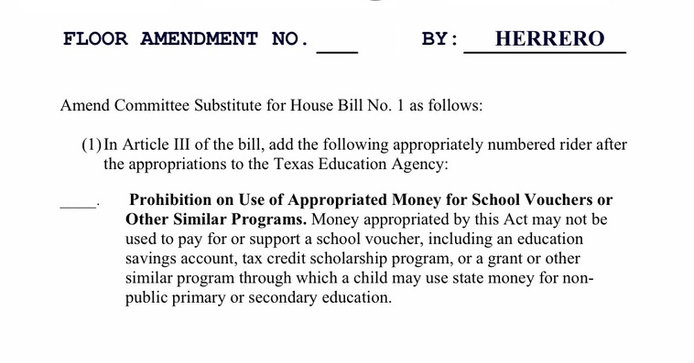
“These are public funds for public schools, as outlined and stated specifically in the Texas Constitution,” said Rep. Abel Herrero, a Robstown Democrat and the author of the amendment calling for the ban. Herrero has offered the same amendment in past sessions, where it has often won more than 100 votes.

In past years, the Herrero amendment has been opposed by the state Senate and ultimately stripped out during negotiations between the two chambers.

edward.mckinley@houstonchronicle.com

Stuart Egan teaches in North Carolina and blogs about the state’s politics. North Carolina has a Democratic Governor, Roy Cooper, but Republicans control both houses of the General Assembly. In the State Senate, they were one vote shy of a super-majority. And then—BOOM—a Democratic legislator switched parties, giving Republicans a super-majority, meaning they can override any vetoes by Governor Cooper.

Egan writes about the defector, Tricia Cotham, here and here.

Cotham was a teacher of the year. Her family was long involved in Democratic politics. She campaigned as a Democrat. She said she supported abortion rights. She said she was a strong supporter of public schools.

Yet now she has joined a party that is determined to ban abortion. That has spent the past dozen years attacking public schools, demonizing teachers, and introducing charter schools and vouchers.

Egan wrote in his open letter to Cotham:

Five previous terms in the NC General Assembly before running on a 2022 platform of pro-public education, pro-choice, and protections for all North Carolinians that got you elected in a heavily blue district and you…sold out.

And before you talk about that “well I had to go with my heart and my convictions” excuse, the very things you said you would champion on your campaign website just months ago seem not to be important any longer.

Many of us remember what you said on that campaign website. You seem to want to forget about it. In fact, just today that same website which talked about your “priorities” after five previous terms terms was gone. Erased.

Just like your integrity.

In an interview concerning the switch with abc11.com, you stated:

“The party wants to villainize anyone who has free thought, free judgement, has solutions and wants to get to work to better our state. Not just sit in a meeting and have a workshop after a workshop, but really work with individuals to get things done. Because that is what real public servants do. If you don’t do exactly what the Democrats want you to do they will try to bully you. They will try to cast you aside.”

Did you see whom you were standing with when you made your switch from those “bullies” to the NCGOP?

Ma’am, you just went to a party that is run by two people who happen to be right next to you: Sen. Phil Berger and Rep. Tim Moore. If you do not do what those two expect of you, then you don’t remain in Raleigh.

And you know that. You’ve been in the NC General Assembly long enough to know that you must “toe the line” with that party to remain in that party. You know exactly what is expected of you now.

You now become the vote that almost ensures that another 1.5 billion dollars goes to unproven school choice “reforms” that take more money away from traditional public schools. Remember your tenure as an educator in public schools? Sure you do. It was on your website before you erased it.

Tricia Cotham has betrayed her voters and her profession. She should be ashamed of herself.

Governor Gregg Abbott went all in and all out to pass vouchers, so that public money would fund religious schools, private schools, and homeschools. His proposal passed in the State Senate.

But it in trouble in the House of Representatives, where rural Republicans are standing with urban Democrats against vouchers for nonpublic schools. The House today passed the Herrero Amendment, prohibiting public funding for vouchers.

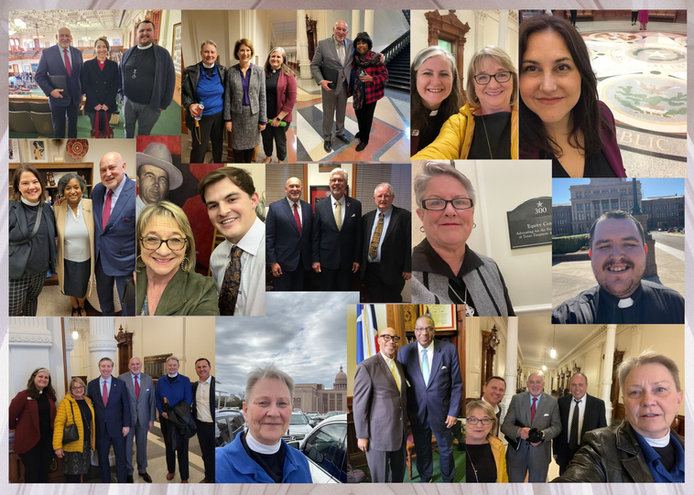
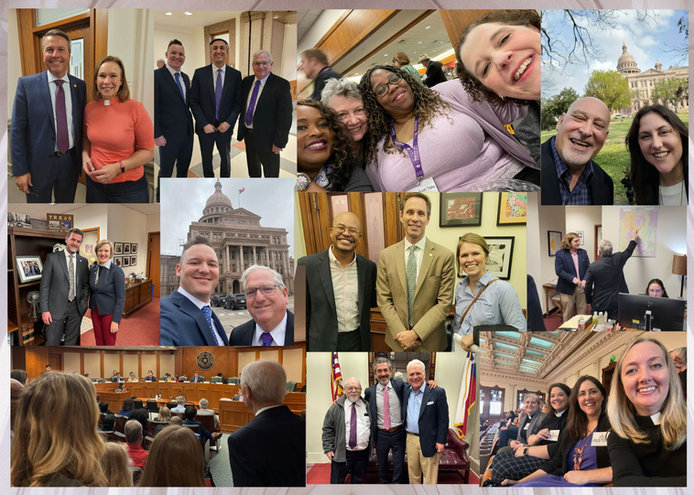
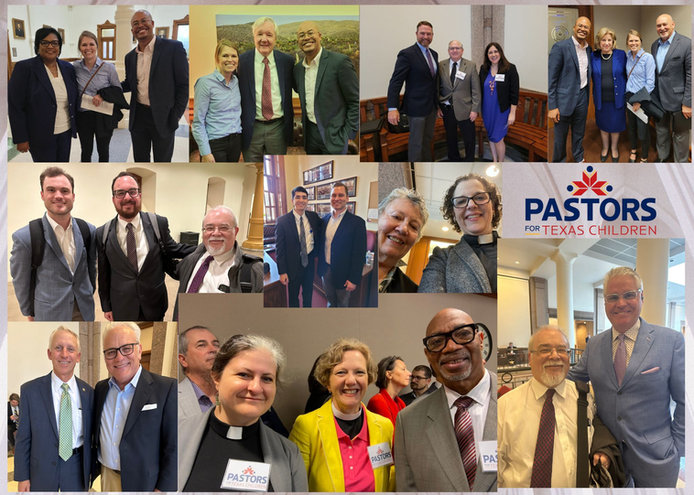
The Pastors for Texas Children have worked tirelessly to protect public funding for public schools. Five million children attend public schools. Three hundred thousand students are enrolled in private schools. they issued the following statement about today’s events:


FOR IMMEDIATE RELEASE

CONTACT: Rev. Charles Foster Johnson

210-379-1066

Johnson.cfj@gmail.com


Herrero Amendment Blocking Voucher Funding Passes Overwhelmingly


The Herrero Amendment prohibiting tax money for private school vouchers passed the Texas House of Representatives this afternoon on an 86-52 vote.

The Texas House has once again repudiated a private school voucher program, as they have many times over the past 25 years.

This rejection of vouchers is particularly powerful because Gov. Greg Abbott made the passage of a voucher policy an “emergency item” this legislative session, and personally lobbied House members on the chamber floor to advance it.

“Texans abhor private school vouchers,” said the Rev. Charles Foster Johnson, Founder and Executive Director of Pastors for Texans Children. “For public dollars to be diverted to subsidize the private education of affluent children and to pay for religious education, particularly that contrary to one’s own, is fundamentally unjust.”

“Unfortunately, Gov. Abbott has tied up the entire legislature this session, at the cost of millions of tax dollars, for in his own petty personal political agenda.”

The Texas State Constitution, in Article 7, Section 1, calls for the suitable provision for “public free schools.” There is no consideration whatsoever for public funding diverted to private schools.

Using public tax dollars, taken from our 5.4 million Texas schoolchildren, to underwrite the private education of a few, is an egregious moral violation.

We find it particularly troubling for public funding to advance and establish religious programs in private schools. This is a clear violation of the First Amendment to the United States Constitution and God’s Moral Law.

Pastors for Texas Children is grateful that the Texas House of Representatives once again stood firm for the true Texas conservative value of universal education for all Texas schoolchildren, provided and protected by the public.

+++


Pastors for Texas Children mobilizes the faith community for public education ministry and advocacy. http://www.pastorsfortexaschildren.com

PO Box 471155 – Fort Worth, Texas 76147

http://www.pastorsfortexaschildren.com

Educate Nevada Now is a pro-student, pro-public school organization funded by the Rogers Foundation.

It released its positions—support or oppose—on bills under consideration by the state legislature.

Its statement about vouchers is clear and strong:

Expanding Private School Vouchers

ENN opposes any bill that seeks to expand controversial private school vouchers. These schemes go by various names, “Choice Scholarships,” “Opportunity Scholarships” or “Education Savings Accounts.” Regardless of their name, voucher measures rely on taxpayer dollars but have little to no accountability, and they permit schools to discriminate for almost any reason (religion or lack thereof, LGBTQ status, inability to pay, student needs or outcomes). In other states that closely track student outcomes, voucher students often perform the same or worse than their public school peers. We OPPOSE any effort to expand access or spend taxpayer funds on these harmful programs because public dollars should go to public schools.

We urge you to speak up and OPPOSE:

AB 385 – (Assem. Hafen) Allocates $60 million to private school vouchers and expands eligibility.

SB 200 – (Sen. Hammond) Re-enacts a recently repealed universal voucher program, which would eventually result in every private school student eligible for taxpayer dollars, even the wealthiest.

SB 220 (Sen. Gansert, et al) Expanding funding and eligibility for private school vouchers, expanding the tax credit sources.

About Educate Nevada Now

The Rogers Foundation, a Nevada leader in support of public education, joined with local, state and national partners to launch Educate Nevada Now (ENN) in 2015. The organization is committed to school finance reform and improved educational opportunities and outcomes for all Nevada public school children, especially English language learners, gifted and talented students, students with disabilities or other special needs, and low-income students.

More information about ENN can be found at www.educatenevadanow.com

The Florida legislature passed a universal voucher plan, meaning that the state will subsidize the tuition of every student, no matter their family income, Rich or poor. The state will hand out subsidies to rich families whose children go to elite private schools. All money deducted from public schools. Short-sighted and stupid, a giveaway to families who can afford private schools.

Currently, there are more than 400,000 students enrolled in private schools. About 80,000 may already have a voucher. Now, even those attending an exclusive school will be subsidized by the state. Homeschoolers will also be subsidized by the state, at least 20,000 in the fumigation year.

Most of the schools that take vouchers are religious and most are not accredited.

Likely new cost: 320,000 students already enrolled in private schools without a voucher plus 20,000 homeschooled kids x $7,800=$2.65 billion. And that’s without a single student now in public school asking for a voucher. A realistic estimate for the annual cost of Florida’s universal voucher would be at least $3 billion a year.

The Center for Budget and Policy Priotities notes that the Florida voucher funding is designed to reduce the funding of public schools, which currently enroll about 80-85% of the state’s children:

While voucher programs are often funded as line-item appropriations in state budgets or through private donations (which over time reduces the revenues available for education and other state priorities), this Florida voucher is actually designed to take money away from the state K-12 funding formula designated for public school districts.

Scott Maxwell of the Orlando Sentinel says that Florida’s universal voucher program is likely to blow a billion-dollar hole in the state budget. As I pointed out above, $1 billion is a low estimate. That hole in the budget will be closer to $3-4 billion, when you include the students whose parents can already afford to pay tuition.

He writes:

Florida lawmakers are about to take the biggest educational gamble in American history — financed with your tax dollars.

They want to offer every child in Florida the chance to use publicly funded vouchers at private schools that have virtually no regulation and offer no guarantee that the students will get educated.

Florida’s existing network of voucher schools is so infamously unchecked that the Orlando Sentinel has found schools employing teachers that don’t have high-school diplomas themselves. Some refuse to serve children with disabilities or gay parents. Others were such financial wrecks that they shut down in the middle of the school year, stranding students.

Flaw #1:

Voucher schools in Florida are unregulated. They can hire teachers who are not certified. They can hire teachers who never finished college. Voucher schools do not take state tests. They need not disclose their graduation rate or their curriculum. They are not overseen by state officials. Some voucher schools ignore safety codes, because they are not required to comply with them. The Orlando Sentinel conducted an investigation called “Schools Without Rules,” demonstrating that voucher schools take tax money without any oversight, transparency or accountability.

Flaw #2:

Voucher schools operate in secrecy. They are not required to report anything to the state.Not test scores, graduation rates, SAT scores, or anything else. Florida is operating on the principle of “Trust But Don’t Verify.” Public schools are held to tight accountability requirements. Voucher schools, none at all. If accountability is good for public schools, why is it unnecessary for voucher schools?

Flaw #3:

Voucher schools can discriminate against any group. Unlike public schools, voucher schools can discriminate on any grounds. They don’t have to accept students with disabilities, gay students, students who don’t speak English, or students from a religion they don’t like.

Flaw #4:

Legislators think that choice is the only accountability needed. If a parent is unhappy, make a different choice. The only choice that parents do not have is to stop paying their tax dollars to fund this sector.

There is another grievous flaw:

The Florida voucher program reduces funding for the schools that the overwhelming majority of students attend. Why does this make sense?

Maxwell says there are good voucher schools, and they should have no objection to accountability, transparency, and oversight. Maxwell recommends the following fixes for the state voucher program.

All voucher-eligible schools should be required to:

  1. Publish graduation rates and nationally accepted test scores.
  2. Hire teachers who are certified or at least have a college degree.
  3. Disclose all the curriculum being taught.
  4. Ban discrimination. (If discrimination is a key tenet of a religious organization’s belief system, they should fund that discrimination with their own money. Any group that receives public dollars should serve all the public.)

Maxwell does not address the two glaring defects of the voucher program:

1. 75-80% of the students who take vouchers already attend private schools. Why is it in the interest of Florida to pay their tuition?

2. About 60% of the students who switch from a public school to a voucher school will drop out within two years. The vast majority of voucher studies conclude that students lose ground academically when they take a voucher. Shouldn’t parents be warned of the risk that they are taking by accepting a voucher?

Full accounts of fundraising and sources are not yet available, but here’s what we know so far:

NBC said a few days before the election that Paul Vallas raised $19 million, while Brandon Johnson raised “nearly $11 million.”

https://www.nbcchicago.com/investigations/high-dollar-donations-fueling-johnson-and-vallas-in-chicago-election-how-might-that-influence-the-next-mayor/3109471/?amp=1

Chalkbeat Chicago reviewed the donors. Johnson’s money came mainly from unions (CTU gave him $2.2 million) and 8,000 individual contributions. Vallas’ funding came mainly from financiers and supporters of charters, vouchers, and TFA.

https://chicago.chalkbeat.org/2023/3/31/23665374/chicago-mayors-race-campaign-donations-paul-vallas-brandon-johnson-teachers-union-betsy-devos?_amp=true

Governor Gregg Abbott has pushed very hard for vouchers to fund religious schools, homeschooling, and anything else that calls itself a school. Texas has a state constitution that requires public schools, but voucher advocates abandon the language of state constitutions when they get in the way of their goal.

We know from experience that most vouchers will be used by students already enrolled in private or religious schools. We know that the cost of funding kids already in private schools will be enormous. More than 300,000 students attend private schools in Texas. Add in home schoolers, and you are looking at an annual cost of nearly $3 billion before any public school student has asked for a voucher.

We know from research studies that most of the public school kids who take vouchers will drop out of their religious school and return to their public school far behind their peers.

No group has been more effective in fighting to preserve public schools than Pastors for Texas Children. They have mobilized rural Republicans to stand strong for their public schools, which are the hub of their community.

PTC released the following report today:

Call and Write Your Senator and Representative TODAY!

The SB 8 education savings account voucher bill will likely pass out of the Senate Education Committee today or tomorrow, then go to the Senate floor for a vote. It’s been astonishing that the bill has been stalled in the Senate for the past week! As you know, the Texas Senate, under the leadership of Lt. Gov. Dan Patrick, has long supported private school vouchers. Contact your State Senator anyway! Our job is to influence and educate them!

Vouchers stop and die in the Texas House of Representatives. They will vote on Thursday on an amendment to the budget bill preventing public money from funding private schools. Here it is:

Call and email your State Representative before Thursday and urge him or her to support the Herrero Amendment prohibiting private school voucher funding.

You can find their Austin office numbers here.

PTC pastor Rev. Julio Guarneri, the pastor of Calvary Baptist Church in McAllen, has written a powerful letter to his state senator. It gives us all a good, succinct script for our talking points as we contact our policymakers.

It’s our job before God to speak truth to power. God bless us all as we bear witness to God’s truth and justice this week!


Senator Hinojosa,

I hope you had a good weekend. I attempted to call you on the phone this morning but you were in a meeting and I know this is a busy week for you. I hope to still be able to talk to you over the phone but in the meantime, let me share with you what I am calling about.

I am the Lead Pastor at Calvary Baptist Church in McAllen. I am also currently serving as president of the Baptist General Convention of Texas (Texas Baptists), to whom the Christian Life Commission relates. And I am with Pastors for Texas Children as well.

I am writing you in regard to SB 8 (Education savings account/school voucher bill). As a Baptist, as a pastor, and as a religious leader, I am opposed to SB 8 for several reasons. My conviction is that church and state should be separate. A free church in a free state is our ideal. Thus, I do not believe tax dollars should be used to fund religious education. Public tax dollars should be used for public schools. Religious causes should be supported by donations from private individuals.

There are only two choices for religious schools who receive help from tax credits. They either receive oversight from the government, which violates the separation of church and state, or they receive the benefit without accountability, which is wrong.

Furthermore, this measure seems to mostly benefit middle to upper class families, leaving lower income families either without enough of a tax credit to afford a private school or with an underfunded public school system. We will do a disservice to Texas if we leave lower income families at an educational disadvantage.

I know you have historically opposed school vouchers and I am thankful for that. I respectfully ask you to hold your position. As a religious leader I believe it is the right thing.

Please do not hesitate to call me or email me.

May you have a blessed Holy Week and a Happy Easter!

For our Texas children and our Texas future,

Julio S. Guarneri, Ph.D.

Calvary Baptist Church

McAllen, Texas

Pastors at the Capitol

DONATE TO PTC


PO Box 471155, Fort Worth, Texas, 76147

Check out our website  

Heather Cox Richardson is a historian who writes on today’s issues with a critical lens. Here, she analyzes a very important election in Wisconsin that is key in reversing an unfairly gerrymandered state map and restoring abortion rights.

A key fight over democracy is currently taking place in Wisconsin. On April 4, voters in the state will choose a new judge for Wisconsin’s Supreme Court. That judge will determine the seven-person court’s majority, a majority that will either uphold or possibly strike down the state’s gerrymandered voting maps that are so heavily weighted toward Republicans as to make it virtually impossible for Democrats to win control of the legislature.

Political scientists judge Wisconsin to be the most gerrymandered state in the country. The state is divided pretty evenly between Democrats and Republicans, although the Democrats have won 13 of the past 16 statewide elections. But despite the state’s relatively even political split, the current district maps are so heavily tilted for Republicans that Democrats have to win the statewide vote by 12 points just to get a majority in the assembly: 50 of the 99 seats. Republicans, though, can win a majority with just 44% of the vote.

The process of changing Wisconsin into a stronghold of Republican power began in the 2010 elections, when Republicans launched Operation REDMAP to take over state legislatures before the redistricting process based on the 2010 census began. That year, the billionaire brothers Charles G. and David H. Koch pumped money into Wisconsin. Along with a strong talk radio media ecosystem, they helped to elect Governor Scott Walker to curb the power of public sector unions, which they blamed for what they considered excessive state spending.

The election of Governor Walker and a Republican legislature began the process of taking control of the state. Using granular voting data and sophisticated mapping software, the Republicans gerrymandered the state so severely that they retained control of the assembly going forward even though Democrats won significantly more votes.

As Ari Berman explained in Mother Jones, Republicans used that power to take away the bargaining rights of public sector unions in order to defund and demoralize one of the Democratic Party’s core constituencies. Berman quotes right-wing strategist Grover Norquist, who wrote that the Wisconsin policies were a national model. “If Act 10 is enacted in a dozen more states, the modern Democratic Party will cease to be a competitive power in American politics…. It’s that big a deal.” The assembly also passed at least 33 new laws during the Walker years to change election procedures and make it harder to vote.

When Democrat Tony Evers won election as governor in 2018, Democrats won all four statewide races. They also won 53% of the votes for state assembly—203,000 more votes than the Republicans did—but because of gerrymandering, the Democrats got just 36% of the seats in the legislature. The Republicans there immediately held a lame duck session and stripped powers from Evers and Democratic attorney general Josh Kaul. Then they passed new laws to restrict voting rights. The legislature went on to block Evers’s appointees and block his legislative priorities, like healthcare, schools, and roads.

Polls showed that voters opposed the lame duck session by a margin of almost 2 to 1, and by 2020, 82% of Wisconsin voters had passed referenda calling for fair district maps.

But when it came time to redistrict after the 2020 census, the Republican-dominated legislature carved up the state into an even more pro-Republican map than it had put into place before. Ultimately, the new maps gave Republicans 63 out of 99 seats in the assembly and 22 out of 23 in the state senate. They came within two assembly seats of having a supermajority that would enable them to override any vetoes by the governor, essentially nullifying him, although Evers had been reelected by 53.5% of the vote (a large margin for Wisconsin).

With gerrymandered districts virtually guaranteeing their reelection, Republicans are insulated from popular opinion. In the 2021–2022 session, they ignored the governor, refusing to confirm Evers’s appointees and going nearly 300 days without passing a single bill. They also ignored popular measures, refusing to let 98% of Democratic bills even be heard and refusing to address gun safety issues—although 81% of Wisconsinites wanted background checks for gun sales—or abortion rights, even though 83% of Wisconsin residents wanted at least some abortion rights protected after the Supreme Court’s overturning of Roe v. Wade last June put back into effect a law from 1849.

This radicalized Wisconsin assembly also mattered nationally when it became a centerpiece of Trump’s attempt to overturn the 2020 presidential election. Nearly 75% of the Republicans in it worked to cast doubt on that election. After an audit turned up “absolutely no evidence of election fraud”—according to a Wisconsin judge—they tried to take control of elections away from a bipartisan commission and turn it over to the legislature they control. Senator Ron Johnson led the effort, calling for Republicans to take control of the elections because, he said, Democrats can’t be expected to “follow the rules.” In the 2022 election, the Trump-endorsed Republican candidate for governor, Tim Michels, promised, “Republicans will never lose another election in Wisconsin after I’m elected governor.”

Their effort failed only because they fell two seats shy of the supermajority they needed.

By shaping the state maps and limiting the power of Democratic constituencies, Republicans have also taken control of the state supreme court, which sides with the Republican lawmakers’ attempts to cement their own power. Now voters have the chance to shift the makeup of that court. Doing so would make it possible that new challenges to the gerrymandered maps would succeed, returning fairness to the electoral system.

Wisconsin journalist Dan Shafer, who writes The Recombobulation Area, is following the race closely. His coverage reveals how the candidates’ framing of the election mirrors a larger debate about democracy. Theoretically, the election is nonpartisan, but Republicans paid former state supreme court justice Dan Kelly $120,000 to consult on Trump’s false elector scheme to overturn the 2020 presidential election, and he was on the payroll of the Republican National Committee until last December. In 2012 he defended the Republicans’ gerrymandered maps in court.

For her part, Milwaukee County judge Janet Protasiewicz has made it clear she opposes the gerrymandered maps. “Let’s be clear here: The maps are rigged. Absolutely positively rigged,” she said in a candidates’ forum in January. “They do not reflect the people in the state. They do not reflect accurate representation, either in the State Assembly or the State Senate. They are rigged, period. I don’t think it would sell to any reasonable person that the maps are fair.”

Shafer notes that supreme court terms are for ten years, so if the court does not shift in this election, it, along with the gerrymandered maps, will remain in place “for the foreseeable future.” The race ultimately comes down to checks and balances, he says. The court has not checked the legislature, which has entrenched one-party rule in Wisconsin.

“This isn’t to say the maps should be redrawn to instead benefit Democrats,” Shafer continues. “Far from it. It’s about fairness. Some years Democrats will win a majority, other years Republicans will win a majority. If one party isn’t doing their job, voters should be able to do something about it. It’s about crafting a system that reflects the people of Wisconsin and can be responsive to the state’s voters. We don’t have that right now. And that has to be the goal.”

Notes:

The Recombobulation Area

Wisconsin is the most gerrymandered state in the country. The race for Wisconsin Supreme Court could change that. 

The Recombobulation Area is a six-time TEN-TIME Milwaukee Press Club award-winning weekly opinion column and online publication written and published by veteran Milwaukee journalist Dan Shafer. Learn more about it here…

Read more

12 days ago · 13 likes · Dan Shafer

The Recombobulation Area

The race for Wisconsin Supreme Court kicks into gear at WisPolitics forum

The Recombobulation Area is a six-time Milwaukee Press Club award-winning weekly opinion column and online publication written and published by veteran Milwaukee journalist Dan Shafer. Learn more about it here…

Read more

3 months ago · 5 likes · 3 comments · Dan Shafer

ShareLIKECOMMENTSHARE

Read Letters from an American in the app

Listen to posts, join subscriber chats, and never miss an update from Heather Cox Richardson.

Get the iOS app
Get the Android app

© 2023 Heather Cox Richardson
548 Market Street PMB 72296, San Francisco, CA 94104 
Unsubscribe

Start writing