Archives for category: Students

Australia took the extraordinary step of banning access to social media for children under 16. This article explains their rationale and the steps the government is taking to enforce the ban.

It’s hard to imagine that the U.S. would impose such a ban. We can’t even get parents to agree to vaccinate their children, even though the safety of vaccines has been demonstrated for decades. Some parents would oppose a ban because they want to know their children can contact them in the event of a crisis or emergency. Maybe Australia will develop cell phones that permit communication only between parents and children, children and 911, controlled by parents, not the big tech companies.

Madison Burgess writes:

The world’s first social media ban begins today (December 10), and people are already flagging problems.

If you missed the news, don’t panic. It currently only affects under-16s in Australia, so if you’re elsewhere in the world, feel free to scroll to your heart’s content.

Australian Prime Minister Anthony Albanese welcomed the rule but warned the implementation would be difficult.

He told the Australian Broadcasting Corp: “This is the day when Australian families are taking back power from these big tech companies, and they’re asserting the right of kids to be kids and for parents to have greater peace of mind.

“This reform will change lives. For Australian kids… allowing them to just have their childhood. For Australian parents, enabling them to have greater peace of mind.”

CNN reported that South Korea’s crucial national test contained questions so difficult that the top official resigned. And, of course, there was no end to the parents and students who expressed their outrage about exam questions that were hopelessly obtuse. To read the exam questions, open the link.

This is the story:

Imagine this: You’re a South Korean teenager taking a notoriously grueling 8-hour college entrance exam. You’ve been prepping for this for months, perhaps years. You reach the English portion, and you see this:

If you thought that was difficult, how about this?

These were among the questions students faced in the exam – known locally as the Suneung – this November, which prompted such intense outcry that the exam body’s top official stepped down last week, according to public broadcaster KBS.

The exam body even issued a formal apology earlier this month, saying it “takes seriously the criticism that it did not meet the appropriate level of difficulty… for the English portion.”

The body “deeply apologizes for causing concern to the test takers and parents,” the statement said, adding that administrators would consult schools to “create questions within the scope of school education.”

But many angry test-takers and parents say an apology isn’t enough to make up for the damage in test scores and college applications – which are often seen as the key to a successful future in hyper-competitive South Korea.

Only about 3% of test takers earned a top score in the English portion – the lowest since a new grading system was introduced in 2018, according to the exam body.

https://def241c07e200a14b39ba79ad3d84a91.safeframe.googlesyndication.com/safeframe/1-0-45/html/container.html

“The former head of the evaluation admitted the faults, as he resigned,” wrote one online user surnamed Choi on the Suneung’s website. “Is it not common sense to come up with a measure for test takers and parents, who are the victims impacted by the fault?”

“How can an investigation saying what they will do for next year’s entrance exam comfort the test takers that are discouraged this year?”

‘Killer questions’

The Suneung has long been famed for its difficulty and the intense pressure it places on young teenagers. For many, the education rat race begins before they can even talk, with parents racing to secure coveted spots in elite preschools.

By the time students are in middle and high schools, their days often revolve around studying – going straight from regular classes to after-school cram centers known as hagwons until late at night. All this hard work, families hope, can secure them a spot at a top university, and an advantage in the similarly ruthless job market.

https://def241c07e200a14b39ba79ad3d84a91.safeframe.googlesyndication.com/safeframe/1-0-45/html/container.html

It’s not just the families – the whole country takes this exam seriously.

Passengers walk past an information board showing delayed flights at Gimpo airport in Seoul on November 13, on the day of the annual college entrance exam. Jung Yeon-Je/AFP/Getty Images

On November 13, as more than half a million students nationwide sat down for the Suneung, all flights across the country were barred from taking off or landing for half an hour to make sure there were no noisy distractions during a listening comprehension section. Financial markets opened an hour late and police were mobilized to make sure candidates could make it to their test venues on time.

But there’s a danger to such highly competitive tests: they are often viewed as both a symptom and contributor to wealth inequality, with richer students able to access more resources that could give them a leg up.

There’s also an illicit market involved. Police booked 126 people earlier this year on suspicion of selling Suneung questions to hagwons and tutors, according to Yonhap News Agency.

The heavy burden on students is frequently blamed for poor mental health in the country, which had the highest suicide rateamong OECD nations in 2020, the latest figures available.

It may influence the country’s steeply falling fertility rate, too.

Experts believe the staggering tuition expenses are a major factor behind South Koreans’ reluctance to have children – along with other burdens like long working hours, stagnant wages and sky-high housing costs.

https://def241c07e200a14b39ba79ad3d84a91.safeframe.googlesyndication.com/safeframe/1-0-45/html/container.html

The government has tried to crack down on hagwons to even the playing field, and to lower the difficulty of the entrance exam.

In 2023, it announced it would remove so-called “killer questions” from the Suneung, which sometimes included material that isn’t covered in the public school curriculum – which, the then-education minister argued, gave an unfair advantage to those who can afford private tutoring.

Clearly, however, even the questions that remain may be too much.

“I’m so angry,” wrote a commenter surnamed Jung on the exam body’s website. “What are you going to do with the kids’ lives?”

CNN’s Marianna Kim contributed to this report

The New York Times Sunday Magazine published an article titled “America’s Children Are Unwell. Are Schools Part of the Problem?” It was written by staff member Jia Lynn Yang.

I anticipated that the article would be another lament about test scores, of which there have been many recently. But it wasn’t!

Instead, Yang described the explosion of mental health issues among the nation’s children. And she attributed it largely to the unending pressure to compete for ever higher test scores. EXACTLY!

Yang knows that the changes in school are not the only cause of declining mental health. There are many more culprits, including social media and the pressures of contemporary life. And there is also the possibility that children are being misdiagnosed and overdiagnosed. I can’t help but recall a story from 1994 about an elite private school that received a private $2 million grant to screen children for learning disabilities. Overrun by experts, the program “got out of hand.” Nearly half the children were diagnosed with disabilities, and the program was cancelled.

We live in a stressful world. Children are pressured to succeed, to comply, to compete, to win the approval of their peers, to dress the “right” way, to be and do things by which they will be judged by their peers, by their parents, by the world they inhabit. Some children succeed, many don’t.

Schools these days are doing things to children that add to their stress. They have been doing harmful things to children by federal mandate since 2002.

Besieged by expectations, demands, and pressures, many children are breaking. It’s our fault.

She writes:

One of the more bewildering aspects of the already high-stress endeavor of 21st-century American parenting is that at some point your child is likely to be identified with a psychiatric diagnosis of one kind or another. Many exist in a gray zone that previous generations of parents never encountered.

A diagnosis of attention deficit hyperactivity disorder is practically a rite of passage in American boyhood, with nearly one in four 17-year-old boys bearing the diagnosis. The numbers have only gone up, and vertiginously: One million more children were diagnosed with A.D.H.D. in 2022 than in 2016.

The numbers on autism are so shocking that they are worth repeating. In the early 1980s, one in 2,500 children had an autism diagnosis. That figure is now one in 31.

Nearly 32 percent of adolescents have been diagnosed at some point with anxiety; the median age of “onset” is 6 years old. More than one in 10 adolescents have experienced a major depressive disorder, according to some estimates. New categories materialize. There is now oppositional defiant disorder, in addition to pathological demand avoidance…

The experience of school has changed rapidly in recent generations. Starting in the 1980s, a metrics-obsessed regime took over American education and profoundly altered the expectations placed on children, up and down the class ladder. In fact, it has altered the experience of childhood itself.

This era of policymaking has largely ebbed, with disappointing results. Math and reading levels are at their lowest in decades. The rules put in place by both political parties were well-meaning, but in trying to make more children successful, they also circumscribed more tightly who could be served by school at all.

“What’s happening is, instead of saying, ‘We need to fix the schools,’ the message is, ‘We need to fix the kids,’” said Peter Gray, a research professor at Boston College and the author of “Free to Learn: Why Unleashing the Instinct to Play Will Make Our Children Happier, More Self-Reliant, and Better Students for Life….”

Other books have echoed this critique. I think offhand of the book by Pasi Sahlberg and William Doyle: Let the Children Play: How More Play Will Save Our Schools and Help Children Thrive. This is how they summarize their argument:

“Play is how children explore, discover, fail, succeed, socialize, and flourish. It is a fundamental element of the human condition. It’s the key to giving schoolchildren skills they need to succeed–skills like creativity, innovation, teamwork, focus, resilience, expressiveness, empathy, concentration, and executive function. Expert organizations such as the American Academy of Pediatrics, the National Academy of Sciences, and the Centers for Disease Control agree that play and physical activity are critical foundations of childhood, academics, and future skills–yet politicians are destroying play in childhood education and replacing it with standardization, stress, and forcible physical restraint, which are damaging to learning and corrosive to society.”

There is an organization–Defending the Early Years–that fights for the rights of childhood, that tries to keep academic pressures out of the classrooms of very young children.

But who defends the children in grades 1-12? There are groups of parents in almost every state who oppose the pressures of high-stakes testing, oppose the efforts by tech companies to replace actual experiences with machines and technologies, oppose the interference of politicians to standardize teaching.

One group fights off the tech companies that use personal student data to market their products: The Parent Coalition for Studebt Privacy.

Corporate America now looks to the schools as a source of profit. The schools and students need to be protected from rapacious capitalism, which wants to privatize schools for profit and sell products that monetize instruction.

Yang describes the transformation of the school from the 1980s to the present:

School was not always so central to American childhood. In 1950, less than half of all children attended kindergarten. Only about 50 percent graduated from high school, and without much professional penalty. A person spent fewer years of their life in school, and fewer hours in the day furiously trying to learn. However bored a child might become sitting behind a desk, freedom awaited after the final bell rang, with hours after school to play without the direction of adults.

But as the country’s economy shifted from factories and farms to offices, being a student became a more serious matter. The outcome of your life could depend on it.

During an era of global competition, the country’s leaders also began to see school as a potential venue for national glory, or shame. In 1983, a commission created by Ronald Reagan’s secretary of education, Terrel H. Bell, released a dire report on the state of American schools called “A Nation at Risk.” It warned that “if an unfriendly foreign power had attempted to impose on America the mediocre educational performance that exists today, we might well have viewed it as an act of war.”

Over the next decade, Democratic and Republican governors such as Bill Clinton in Arkansas and Lamar Alexander in Tennessee began molding their states’ schools with new standards of testing and accountability. Schools were treated more like publicly traded companies, with test scores as proxies for profits. Before long, schools had public ratings, so ubiquitous they now appear on real estate listings.

The pressure kept rising. By 2001, 30 states had laws that imposed a system of punishments and rewards for schools based on their test scores. The next year, President George W. Bush’s signature education reform law, No Child Left Behind, made the effort national.

With school funding now on the line, there were unmistakable incentives for children to be diagnosed. Starting in the 1990s, students with autism or A.D.H.D. become newly eligible for added support in the classroom. Getting a child treated, potentially with medication, could help an entire classroom achieve higher scores, especially if the child’s behavior was disruptive to others. And in some parts of the country, children with disabilities were not counted toward a school’s overall marks, a carve-out that could boost scores.

The added metrics may well have compelled more children to receive the support they needed. Either way, educational policymaking yielded a change in diagnoses. In states that added new accountability standards, researchers found a clear rise in A.D.H.D. According to one analysis, the rate of A.D.H.D. diagnoses among children ages 8 to 13 in low-income homes went from 10 percent to 15 percent after the arrival of No Child Left Behind.

The impact of the law on autism diagnoses has been less documented. But there is a great deal of overlap among these disorders. Anywhere from 30 to 80 percent of children diagnosed with autism also have A.D.H.D. Experts have also pointed out that the rise in autism has largely taken place on the more subtle end of the spectrum, where psychiatrists expanded the diagnosis. Students with this profile often need educators who can be eminently flexible in their approach, a tough task when an entire classroom has to focus on narrowly mastering certain testable skills.

The demands on performance in higher grades trickled down into younger and younger ages. In 2009, the Obama administration offered greater funding to schools that adopted new national learning standards called the Common Core. These included an emphasis on reading by the end of kindergarten, even though many early childhood experts believe that not all children are developmentally ready to read at that age.

With each new wave of reforms, the tenor of kindergarten changed. Rote lessons in math and reading crept into classrooms, even though experts say young children learn best through play. Researchers discovered that in the span of about a decade, kindergarten had suddenly become more like first grade.

Preschool was not far behind, as even toddlers were expected to stay still for longer stretches of time to imbibe academic lessons. This again defied the consensus among early childhood experts. Children, parents and teachers struggle through this mismatch daily. In 2005, a study showed that preschoolers were frequently being expelled for misbehavior, and at rates more than three times that of school-age children.

“We’re not aligning the developmental needs of kids with the policies and practices that go on daily with schools,” said Denise Pope, senior lecturer at Stanford University and co-founder of Challenge Success, a nonprofit group that works with schools to improve student well-being.

The pressure to learn more led to a restructuring of the school day itself. Before the 1980s, American children usually had recess breaks throughout the day. By 2016, only eight states required daily recess in elementary schools. And when researchers studied what had become of lunchtime, they learned that children often had just 20 minutes to not only eat but stop to use the bathroom after class, walk to the cafeteria and wait in line for food.

I think about my own time in the public elementary public schools in Houston. We had recess every day. I don’t think it was a matter of state law. Educators then knew that children needed time to play. It was common sense. Today, parent groups organize to persuade legislatures to mandate recess. If they don’t, parents fear, every minute will be spent preparing for tests and taking tests.

They are right. The so-called “reforms” of the past quarter century–No Child Left Behind, high-stakes testing, competition, Race to the Top, punishing or rewarding teachers for their students’ test scores, closing schools and firing staff because of low test scores, the Common Core standards–have made test scores and standardization the heart of schooling.

In a continuing campaign to raise test scores, there are winners and losers. Typically, the winners are children from affluent families, and the losers are the children of not-affluent families. The winners are celebrated, the losers are stigmatized. The social class divide among children is hardened by these practices.

Worse, the pressure on students has caused an increase in anxiety, depression, and boredom. In response, parents seek diagnoses of autism or some other learning disorder so that their children will get more time or attention.

Some parents blame the public schools for the pressure and competition imposed on them by elected officials. They seek alternatives to the public schools, which are obsessed with standardization, testing, and accountability.

Yang points out:

This discontent helps empower the conservative effort to defund the public school system and let parents pick their own schools, with taxpayers covering the tuition. Each child who no longer seems to fit into the country’s education system — and more often than not they are boys — potentially expands the constituency for these ideas. And trust erodes further in the progressive project of a democracy built on giving everyone a free and equal education.

The Democratic Party is unable or unwilling to see the problems they helped create. The Republican Party is quite happy to see the public search for alternatives like charter schools and vouchers, and it has enabled the movement to have taxpayers foot the bill for private and religious schools.

By turning childhood into a thing that can be measured, adults have managed to impose their greatest fears of failure onto the youngest among us. Each child who strays from our standards becomes a potential medical mystery to be solved, with more tests to take, more metrics to assess. The only thing that seems to consistently evade the detectives is the world around that child — the one made by the grown-ups.

Who made that world? Both political parties. Governors. Legislatures. Think tanks. The wealthiest, who believe their financial success proves their superiority. Editorial boards.

Here is the most significant lesson that our elected officials refuse to learn. Their elaborate schemes for testing and measuring children have hurt children and undermined the joy of learning. They have raised the anxiety level of children while corrupting education itself.

Education is not what gets measured on standardized tests. Education is exploration, investigation, insight, observation, wanting to know more, learning to love learning.

Our politicians, prodded by so-called “reformers,” have managed to pollute education while demoralizing teachers and destroying public commitment to public schools.

Our public schools need to be freed from the failed ideas that hurt children. We need a rebirth of sturdy ideas that
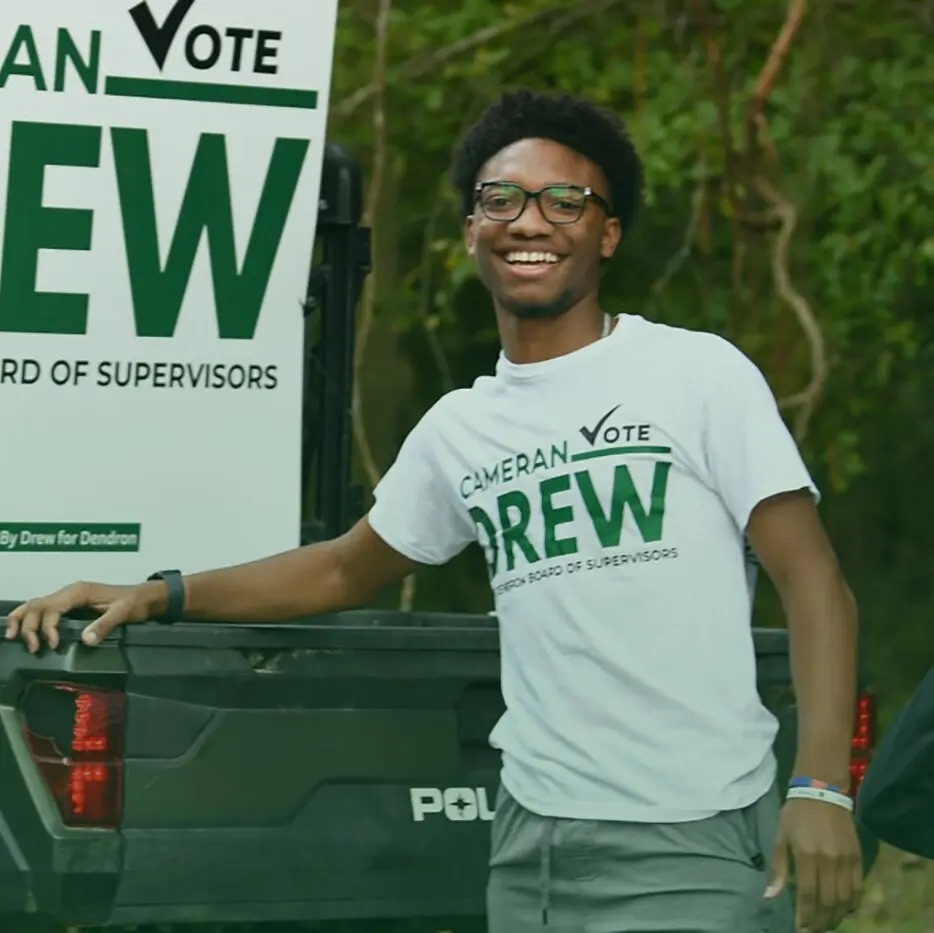
This delightful article appeared in the New York Times.

In the recent election in Virginia, 19-year-old Cameron Drew ran for a seat on the Surry County Board of Supervisors and won by a mere 10 votes. Even more interesting, the candidate he beat was his high school teacher of civics, history, and government.

Drew won 345 votes. His former teacher, Kenneth Bell, received 335.

The New York Times wrote:

The election, to represent the Dendron district, wasn’t contentious. In fact, Mr. Drew said he remained “very close” with his former teacher, fondly recalling that Mr. Bell twice took him to Richmond to shadow lawmakers. Mr. Bell, for his part, said he was “over the moon” when he found out who he would be running against.

“He’s the type of student that if teachers could have a little cloning machine in their classrooms to duplicate, he would be all over the place,” Mr. Bell said.

Surry County, with a population of about 6,500, is in a rural area of southeastern Virginia between Richmond and Norfolk. The five members of the county board serve four-year terms.

A seat opened up in July when a board member resigned, and both Mr. Bell and Mr. Drew raised their hands for an interim appointment. The board seated Mr. Bell. Mr. Drew then gathered the 125 signatures needed to get on the ballot for Tuesday’s special election.

A bald man in a pink T-shirt and glasses.
Kenneth Bell was appointed to a vacant seat on the Surry County Board of Supervisors earlier this year.Credit…Kenneth Bell

“I saw that the youth wasn’t always taken care of or just appreciated, so I was like, ‘Hey, it’s time for me to step up,’” said Mr. Drew, who is studying business administration at Virginia Peninsula Community College in Hampton, Va.

He made direct-to-camera appeals to voters on Instagram, dressed in a suit and positioning himself as someone “who’s looking to move Surry forward, while retaining our rural charm,” as he put it in one post

Mr. Bell said that, because of his affection for Mr. Drew, he didn’t campaign aggressively.

Mr. Drew reported spending $2,295 on his campaign, according to the Virginia Public Access Project, a nonpartisan group that tracks voting data. Mr. Bell spent nothing.

Mr. Bell and Mr. Drew, neither of whom ran on a party line, largely agreed on the issues and held just one joint town hall-style forum. Describing himself as a philanthropist, Mr. Drew told the audience, “It’s time to bring young minds to the table.”

The campaign centered on local issues, though some, such as affordable housing, have resonated nationally. Mr. Drew focused particularly on how to incentivize young people to stay in the area.

On election night, Mr. Drew was at a watch party for a mentor of his, Kimberly Pope Adams, who flipped a seat in the House of Delegates, helping Democrats increase their majority.

On the Virginia elections website, Mr. Drew saw that he had eked out a victory — a moment he called “surreal.” Mr. Bell called to concede. They had a pleasant five-minute conversation.

“He was like, ‘If you ever need anything from me, just let me know,’” Mr. Drew said. “He was, once again, still the supportive person he has always been.”

Mr. Bell said there was “not a sad bone in his body” that he lost.

“I have found that is not the answer people in our community want me to give,” Mr. Bell said. “I think everybody wants me to be in a depression and sad. It’s because I know Cameran and I know the quality of a person that he is. And so I can’t be sad.”

Every so often, I read a story about education that is truly annoying. The most recent one is in The Atlantic. It was written by Idrees Kahloon, a staff writer at the magazine. It is titled “America is Sliding Toward Illiteracy.” The subtitle is “Declining standards and low expectations are destroying American education.”

As a historian of American education, I have read the same story hundreds of times. In the 19th century, these warnings that children were not learning anything in school were commonplace. The cry of “crisis in the schools” appeared frequently in every decade of the 20th century. We are only 25 years into this century, and similar views appear in the popular press regularly.

Long ago, attacks on the schools were intended to produce more funding for them, or higher standards for those entering teaching..

Now they serve the purposes of those pushing privatization of public schools, those who are promoting vouchers, charters, homeschooling, and every other way of destroying public schools.

Test scores have fallen! The culprit? Smart phones! Social media! Low expectations! Low standards! Bad teachers! Bad Schools!

George W. Bush’s No Child Left Behind law of 2002 raised standards and expectations but it raised them absurdly high, to a literally unreachable goal. A rebellion formed among those who didn’t think it possible that “all students” would reach “proficiency” by 2014.

NCLB required that all students would be “proficient,” not just at grade level, by 2014. By NAEP standards, “proficient” does not mean grade level. It means “A” performance. In no other nation in the world are all students rated “proficient” on the NAEP scale. Nor has any district or state ever reached that goal.

But the Cassandras of American education have monopolized the podium for many years, wailing that we will be an impoverished third-world country if test scores don’t rise dramatically.

Think about it. The biggest explosion of doom-and-gloom was caused by the Reagan-era report called “A Nation at Risk” in 1983. It flatly predicted that our economy was imperiled by a “rising tide of mediocrity.” But what has happened since 1983? Our economy is booming, we have not been eclipsed by other nations. We continue to be a land of innovation, creativity, scientific and medical pre-eminence.

How is our nation’s success possible, given the cry for more than 40 years that our schools are hobbling our economy and compromising our future?

Instead of complaining about our schools and lambasting them nonstop, the critics should be complaining about poverty and inequality. These are the root causes of poor student outcomes.

If the critics are worried about our future, they should shout out against Trump’s orders to withhold funding for research in science and medicine. If they really wanted great schools, they would stop diverting public funds to nonpublic schools and homeschoolers–where there are low or no standards for teachers– and make sure that every student has certified, experienced teachers, small classes, and the amenities available in every school that are typically available only in wealthy suburban districts.

No, our kids are not sliding into stupidity. If you don’t agree, I dare you to take an eighth grade math test and release your scores. You will be surprised.

The greatest generation sits in our public high schools today, unless our government continues to impose moronic policies of choice and competition that have failed for the past thirty-five years.

If you read only one article about what happened to the students, teachers and schools in the aftermath of Hurricane Katrina, this is the one. Ashana Bigard is a parent of students in New Orleans. Elizabeth K. Jeffers taught in the NOLA district.

Turning New Orleans into an all-charter district may have raised test scores–although New Orleans is still a low-performing district in one of the nation’s lowest performing states–but as you will learn by reading this article, the transformation was a disaster for students, their families, their communities, and their teachers.

Please read!

This article was produced by Our Schools. Ashana Bigard is the director of Amplify Justice, an educational advocate, and author of Beyond Resilience: Katrina 20. A dedicated mother of three, she serves as an education fellow for the Progressive magazine’s Public Schools Advocate project and is a director-producer of numerous video and audio productions. Follow her on Bluesky @AshanaBigard. Elizabeth K. Jeffers, PhD, is an assistant professor at the University of New Orleans who began teaching in pre-Katrina New Orleans public schools. Her scholarship focuses on school choice and community-based inquiry. Her research has been published in Educational Evaluation and Policy Analysis, Educational Policy, the International Journal of Qualitative Studies in Education, and other scholarly journals. Follow her on Bluesky @ekjeffersphd.

To mark the 20th anniversary of Hurricane Katrina’s devastation of New Orleans, numerous articles and opinion pieces have appeared in prominent media outlets touting the supposed improvement of the city’s public school system since the storm.

Katrina’s immediate aftermath saw the state of Louisiana disempower the democratically elected school board by taking over the management of 107 out of 128 schools. This led to the termination of 7,600mainly Black and womenteachers, paraprofessionals, cafeteria workers, clerical workers, principals, and other permanent employees, and the eventual conversion of all of the city’s public schools into privately managed charters.

A Washington Post column, “‘Never Seen Before:’ How Katrina Set off an Education Revolution,” by British journalist Ian Birrell, proclaimed the transformation a “miracle.” Another opinion piece in The 74, “The Inconvenient Success of New Orleans Schools” by Ravi Gupta, the founder and former CEOof a charter school network, stated that the New Orleans school system shaped by Katrina was “a model that should theoretically appeal to both sides of America’s education debates. It delivered the academic results that reformers promised while addressing the equity and community concerns that critics raised.”

As proof of their arguments, both authors pointed to a June 2025 report, “The New Orleans Post-Katrina School Reforms: 20 Years of Lessons” by Douglas N. Harris and Jamie M. Carroll of the Education Research Alliance for New Orleans. Pulling from the data presented in that study, Birrell said the case for declaring New Orleans-style education reform a “remarkable success” is “pretty definitive,” and Gupta called this supposed success an “unequivocal conclusion.” As a longtime youth advocate and community leader and an assistant professor at the University of New Orleans, who was a public school teacher in the city, we invite you to consider whether this data alone proves that New Orleans public schools and the families they serve are better off after 20 years of “reform.”

Although Gupta warns against “[falling] into the tyranny of the anecdote when reporting on fraught education debates like those over the meaning of the New Orleans reforms,” we’d like to tell you about Rio, whose last name has been withheld for privacy reasons. Rio attended 12 different schools in New Orleans, many of which were shut down suddenly, before he finally graduated from a school that is now also closed. Rio’s story is not atypical of the human costs of the New Orleans school system, where closures are a defining feature and evidence that the disaster Katrina wrought on the schools is still happening.

Forced to traverse the fragmented charter system that has replaced the public system of neighborhood schools, New Orleans students are often traumatized by multiple school closures. Decades of researchattest to the academic, emotional, and economic harms that result from severing social connections that families, faculty, and staff have had with schools and with one another.

For instance, obtaining a job reference letter from a former teacher should be simple for students to do, but that task becomes an obstacle course for many young adults from New Orleans, like Rio. Black Man Rising, a national group providing outreach and mentorship for Black youth, had to intervene to help him obtain the letter that made the difference between him being able to financially support himself and being just another addition to the statistics of Black youth who are unemployed and incarcerated.

Rio’s story illustrates a central paradox of the New Orleans system: Black families and communities continue to be severed and displaced as a result of failed leadership at the federal, local, and state levels. While the storm may be over, the disaster continues. On the other hand, white children in New Orleans rarely experience school closures.

The near obliteration of democratic public schooling

In addition to severing families from their neighborhood schools and educators, Katrina reforms have nearly obliterated democratic participation in ways that would shock most Americans.

New York University professor Domingo Morel contends in his book Takeover: Race, Education, and American Democracy that state takeovers do not generally improve test scores or graduation rates; instead, they are about removing political power, as Black school boards have historically functioned as entryways for Black political leaders.

In a similar vein, Louisiana legislators, in the immediate aftermath of Katrina, passed Act 35 in November 2005, which expanded the state-run Recovery School District’s (RSD) jurisdiction over New Orleans public schools during an emergency session when voters were dispersed across the country and many were still searching for their loved ones. The new laws removed the parent and teacher approvals required for charter conversions.

State legislation also enabled the termination of the majority Black teaching force, gutting the teachers’ collective bargaining unit, United Teachers of New Orleans (American Federation of Teachers, Local 527), and further removing obstacles for top-down reform. Research conducted by University of Wisconsin-Madison professor Kevin L. Henry and his co-author has shown how the “charter school authorization and application process” used in post-Katrina New Orleans “reproduces white dominance.” While another study published in the journal Urban Education points to how charter schools consolidate power “in ways that limit local Black political power.”

Consider the example of Kira Orange Jones, whose case perfectly illustrates how educational democracy has been dismantled. In 2011, Jones raised $478,000for her Board of Elementary and Secondary Education campaign—much of it from out-of-state donors connected to Democrats for Education Reform and charter school advocacy groups. Her opponent raised just $19,000, creating a 25-to-1 spending disadvantage. But the campaign money was just the beginning. Jones simultaneously served as executive director of Teach For America’s (TFA) Greater New Orleans chapter while sitting on the board that approved TFA’s $1 million state contract with Louisiana. When ethics complaints were filed in 2012, the Louisiana Ethics Board overruled its own staff’s recommendation that Jones choose between her TFA position and her board seat.

While NOLA Public Schools mandates charter school governance boards to include an alumnus or a parent, legal guardian, or grandparent, who is either elected or appointed, Katrina school reforms have nearly obliterated democratic participation. Parents often don’t find out when school board meetings are happening, let alone have access to board members’ email addresses or phone numbers to voice concerns. Even local reporters who tried to obtain basic contact information for charter school board members have been stonewalled. There is no state requirement that charter school boards meet at times that are convenient for working parents to attend.

The absence of neighborhood schools is an additional obstacle for parents who rely on public transportation. And although charter schools seemingly returned to an elected school board in 2018, the public has virtually no control over individual charter schools, which maintain complete autonomy over curricula, calendars, certification requirements, contracts, and daily operations.

Shadow suspensions and ‘behavior problems’

Louisiana has long been among the states with the highest rates of student suspensions and expulsions, and Black students are more than twice as likely to be suspended compared to white students and receive longer suspensions for identical infractions, according to an analysis of 2001to 2014 figures by Education Research Alliance for New Orleans. In New Orleans, suspension and expulsion rates rose sharply after the storm but then stabilized. Nevertheless, some charter schools continued to suspend and expel high percentages of students.

But that’s just the official data. More recently, several parents have reported that their children are being sent home from school without receiving official suspension papers. Elizabeth’s field notes attest to students’ reports of one charter school network sending students to “the RC room” (restorative center) where they are forced to sit in cubicles, complete detention assignments, and write apology letters in a secluded room. This shadow suspension system allows schools to push out Black students without creating the paper trail that might trigger oversight or intervention. Children lose days or weeks of education in bureaucratic limbo, with no formal process and no recourse. And large numbers of students, often labeled as “behavior problems,” remain enrolled in alternative schools, rather than mainstream degree programs, according to state data.

Community-rooted educators replaced by managers

New Orleans teachers once lived in their communities. Most were career educators who taught generations of children, creating lasting bonds that extended far beyond the classroom.

Ashana experienced this personally at a small school called New Orleans Free School. As someone who is extremely dyslexic, she felt inadequate throughout most of her educational life until she encountered teachers like Woody, Janice, Jeanette, and Jim—two of whom, Jeanette and Jim, have since passed away. Woody still leaves encouraging comments under articles she has published, telling her he is proud of her. He, along with the others, encouraged her and insisted she could be brilliant despite her spelling difficulties. They told her she could be a writer. They emphasized that we all have different skill sets that we can develop, and that none of us is perfect, but that we can practice and grow.

This encouragement didn’t end when Ashana left Free School. The advice and support continue today. That’s what it means to have authentic relationships with your teachers. That’s what it means to be rooted in your community. Unfortunately, Ashana didn’t have the opportunity to send her children to that school to be educated by those incredible educators. The school that gave her a love of learning shut down.

The structure of charter schools severs critical bonds between schools and families. For instance, in her book Beyond Resilience: Katrina 20 Ashana recounts a teacher reaching out to her for resources to help with one of her students years before the storm. The child’s mother, who worked two jobs as a housekeeper and restaurant server, struggled to care for her seven children.

Her nine-year-old son often arrived at school dirty and disheveled because their washing machine had broken, and despite the mother’s instructions, the children didn’t wash their uniforms in the tub while she worked overnight shifts. Although the mother worked tirelessly, her extremely low reading level meant she was unaware of how to apply for assistance programs that could have helped her family. Most importantly, she probably didn’t believe she qualified for help. This teacher understood the family’s circumstances and worked to connect them with resources rather than simply reporting the situation to authorities.

This kind of close relationship between educators and families has become increasingly rare in the Katrina experiment. For instance, Ashana encountered a similar situation that ended differently. A family facing tough times was reported to the Office of Children and Family Services (OCFS) multiple times for neglect. When OCFS attempted to provide services, the mother, terrified that her children would be taken and placed in foster care as she had been, and having suffered abuse in that system, fled Orleans Parish with her children. She moved them to a motel in St. Bernard Parish, leaving everything behind. The children weren’t enrolled in school for almost a year until someone tracked them down and helped them return to the city and reintegrate into the school.

Somehow, punitive measures for Black parents and children have been equated with success—which raises the question: What exactly is the reform proponents’ definition of success, and what was the goal from the outset?

The current system has replaced community-based educators with a top-heavy administrative structure. New Orleans charter schools spend significantly more money on administration, even as teacher shortages remain high. For instance, InspireNola Charter Schools, which only manages seven schools, paid three executives a total of $667,000 for the fiscal year 2023.

Meanwhile, the constant “churning” of schools and the absence of a collective bargaining agreement have led to a larger system that dehumanizes teachers. In fact, the RSD required certified teachers who chose to return to their pre-Katrina schools to complete a “basic skills test” (akin to a literacy test).

But that was only the beginning of the disaster for New Orleans educators. One Black veteran explained to Elizabeth: “The RSD was bouncing teachers around like balls.” That is, the state takeover district issued letters labeling numerous experienced teachers as “surplus” when their schools transformed into charters. Many of these schools recruited inexperienced teachers who were expendable, accepted lower salaries, and could be programmed to adhere to the ideology of reform. The absence of collective bargaining power, arbitrary closures, and charter takeovers eventually led many career teachers to “choose” between commuting several hours a day to schools in outlying parishes and changing careers. Twenty years after the district’s purging of its unionized teachers (the United Teachers of New Orleans), only five of the city’s 90 charter schools are unionized.

In another example, Ashana recounts in her book about how a teacher whom she advocated for brought a doctor’s note to her school’s chief financial officer to document a urinary tract infection and request restroom breaks. The administrators emailed her to offer reimbursement for adult diapers. This example of denying teachers basic respect and humanity illustrates what is seen as a continual disaster. If educators are treated this way, imagine the conditions students face.

The cruel reality of ‘choice’

The current “choice” system has created impossible decisions for families. Consider the mother in New Orleans East who must choose each morning which of her two children to accompany to their bus stop, because the system doesn’t allow siblings to attend the same school. She would have to explain to her young daughter, who is clutching a bright orange whistle for safety, “Today I’m going to stand with your brother, but tomorrow it’ll be your turn.” The little girl, frightened at the prospect of standing alone, pleads with her mother, but is told, “I’m sorry, you know this is just the way it is for right now.”

This mother, with tears in her eyes as her children clung to her legs, captured the cruel reality. With this new choice system, she doesn’t get to choose to have both of her children sent to the same school. She gets to choose which one she can stand with every morning. That’s no choice at all.

Propaganda masquerading as research….

I have quoted too much already. Open the link to finish this sobering and important article.

Veteran journalist Eleanor Bader published the very first review of my new book!

It’s a great review!

The official publication date is October 20, but books are now in print and available.

My first appearance to talk about the book will be in my home town: Brooklyn, New York, on October 21 at 6 pm at the Brooklyn Heights branch of the Brooklyn Public Library.

I will have a conversation with the brilliant Leonie Haimson, leader of Class Size Matters.

I’m not traveling to promote the book, but I am doing Zooms. I will be speaking to educators in North Carolina on October 22. To learn more about it, contact Yevonne Brannon of Public Schools First NC at ybrannon@gmail.com.

Ashana Bigard is a parent activist in New Orleans. From her perspective as a parent leader and as the parent of a child with special needs, the New Orleans experiment has been a very expensive flop.

She wrote this overview for Public Voices for Public Schools:

Twenty years after Hurricane Katrina, the nation’s most radical education overhaul has produced stunning inequality alongside modest test gains

As I sit in Bricolage Academy’s office, frustrated but trying to remain pleasant, I’m having the same conversation again about my son. He’s on the autism spectrum. He is high performing, extremely quiet, and sweet. Despite his IEP, he wasn’t receiving the required services. The special education coordinator had quit in frustration, the school counselor was cut due to budget issues, and my fifth-grader was falling through the cracks.

I’m not just any parent. I’m an advocate who has worked with the CEO since the school’s creation. I have written for national magazines about our system’s problems and challenged the school’s “diversity by design” narrative. Yet here I was, fighting for basic services. If this is my experience, imagine what average parents face.

The Numbers Don’t Add Up

Twenty years after Hurricane Katrina replaced New Orleans’ traditional public schools with the nation’s first all-charter system, the grand experiment presents a troubling paradox. With half the students and double the funding, the system has achieved modest academic gains while disempowering the communities it promised to serve.

Before Katrina, New Orleans educated over 65,000 students in 126 schools. Today, just 47,667 students attend 70 schools–a 27% enrollment reduction. Yet per-pupil spending has exploded to approximately $17,000-$20,000, significantly above Louisiana’s state average.

“When you have half the students and twice the resources, you should see transformational results,” says Neil Ranu, a civil rights attorney with the Southern Poverty Law Center. “Instead, we see money flowing upward to administrators while classrooms struggle.”

The money trail is revealing. Charter CEOs earn over $200,000 annually, while average teachers make between $44,000-$55,000 if they stay long enough.

The Human Cost

The city’s teacher turnover rate of 28% for new educators doubles that of comparable cities. The displacement began when the state fired the entire education workforce after Katrina, including over 4,000 teachers with an average of 15 years of experience. The teaching force dropped from 71% Black to under 50%.

When ‘Success’ Crumbles

The system’s fragility became apparent at John F. Kennedy High School in spring 2019. On graduation day, 177 students walked across the stage. A month later, state auditors revealed nearly half were ineligible to graduate due to grade changes from F’s to D’s, improper credit recovery, and students taking unsupervised classes at home.

Antonio Travis, director of Black Man Rising, mentored several affected students. “There was shame, self-blame. Many felt they wouldn’t be successful in college.” Families canceled graduation celebrations, uncertain about the future.

The Illusion of Choice

Parents quickly learn that “choice” often means choosing between bad options, especially for children with special needs. At Benjamin Franklin High School, Louisiana’s top-ranked public school, students from minority backgrounds face significant admission barriers. The school serves 39% white students in a city where whites comprise only 10% of public enrollment.

Special Education Crisis

In 2010, ten families sued the state over charter schools admitting too few special-needs students and failing to provide proper services. The resulting federal consent decree remains in effect today, with monitors continuing to find systematic violations, including parents being excluded from meetings, services not being provided, and evaluations being denied.

Right now, Louisiana U.S. District Judge Jay Zainey is currently presiding over the dissolution of the special-needs consent decree related to New Orleans schools. Because New Orleans public schools have no oversight, and no unions to fight to ensure the law is followed, we, as parents of children with special needs, have to fight to get our stories to the judge so hopefully he will keep it in place.

Economic Verdict

For a system serving 84% Black students, the economic impact is devastating. The racial wealth gap has widened dramatically since Katrina. White households now hold 13 times the wealth of Black families–$181,000 versus $18,000 median net worth. New Orleans went from 67% Black to 57%, losing over 120,000 Black residents.

Missing Pieces

Walk through charter schools and notice what’s absent or insufficient. Arts programs have declined; fewer offer pre-kindergarten, and students average 35-minute bus commutes. Basic skills, such as cursive instruction—required by state law for signing legal documents—are often ignored. “The children only learn what’s tested,” observes one advocate. “Everything else gets cut.”

The Honest Assessment

As the 20th anniversary of Katrina approaches,New Orleans offers a sobering lesson. With unprecedented resources and freedom, the charter system produced modest academic gains alongside community economic decline and systematic exclusion of vulnerable students.

“When people ask if they should move out of the city for better education,” says one advocate, “my answer is: if you can afford to move, you should. This system is not built to support our children.”

The comment hangs like an indictment not just of a school system, but of a 20-year experiment that promised everything and delivered prosperity for some, displacement for others, and continued struggle for families who need excellent public education most.


Ashana Bigard is a fifth generation New Orleanian and lifelong resident of the Crescent City. A mother of three, Ashana is a tireless advocate for equity and social justice, especially in her work advocating for children and families in New Orleans and Louisiana. She leads the Education Justice Project of New Orleans, where she organizes and advocates for the rights of students and parents. Ashana is an adult ally advisor to United Students of New Orleans. She also serves as a Community Faculty member with Tulane University’s Center for Public Service.

This may be the most important article you will read today.

Richard Rothstein has had a distinguished career as a journalist who writes about social science, most notably, achievement gaps, housing segregation, and the impact of poverty on academic performance. He has long been a fellow at the Economic Policy Institute and before that was education editor of The New York Times.

Rothstein writes here about the origins of the belief that teachers are directly responsible for student academic performance. If students score poorly on tests, goes the theory, it’s because their teachers have low expectations for them. In the case of black students, teachers’ racism is likely to explain their low expectations. From this perspective, No Child Left Behind and Race to the Top made perfect sense. The teachers needed high expectations or needed to be fired.

Rothstein writes:

Social psychologist Robert Rosenthal died at the age of 90 last month. He was best known for his 1968 book, Pygmalion in the Classroom, co-authored by Lenore Jacobson, an elementary school principal in South San Francisco.

No book in the second half of the 20th century did more, unintentionally perhaps, to undermine support for public education, and thus diminish educational opportunities for so many children, especially Black and Hispanic children, to this day. The book and its aftermath put the onus solely on teacher performance when it came to student achievement, disregarding so many critically important socioeconomic factors—at the top of the list, residential segregation.
How did it do that?

The book described an experiment conducted in Ms. Jacobson’s school in 1965. The authors gave pupils an IQ test and then randomly divided the test takers into two groups. They falsely told teachers that results showed that students in one of the groups were poised to dramatically raise their performance in the following year, while the others would not likely demonstrate similar improvement.

At the end of that year, they tested students again and found that the first and second graders in the group that was predicted to improve did so on average, while those in the other group did not. The book, as well as academic articles that Dr. Rosenthal and Ms. Jacobson published, claimed that the experiment showed that teacher expectations had a powerful influence on student achievement, especially of young children. Pupils whose teachers were told were more likely to improve then apparently worked harder to meet their teachers’ faith in them.1

Some psychologists were skeptical, believing that the experimental design was not sufficiently rigorous to support such a revolutionary conclusion. Even the reported results were ambiguous. Teacher expectations had no similar impact on children in grades three through six. Similar experiments elsewhere did not confirm the results even for first and second graders.2

Nonetheless, the book was very influential.
In the decades after Pygmalion, other studies examined teacher expectations. They showed that teachers have greater expectations of higher achieving students but couldn’t determine whether the teacher attitudes helped to cause better pupil performance. Perhaps teachers only developed those expectations after seeing that students were higher achieving.3 Only an experimental study, like Pygmalion, could establish causality, but contemporary ethical standards would often prohibit such experiments, requiring, as they must, lying to teachers about their students’ data.

Minority children in the South San Francisco school where Rosenthal and Jacobson experimented were Mexican-origin, not African American. Yet ignoring how scanty the evidence was, education policymakers concluded from their research that the Black-white gap in test scores at all grade levels resulted from teachers of Black children not expecting their pupils to do well. And that, they reasoned, should be an easy problem to solve—holding teachers accountable for results would force them to abandon the racial stereotypes that were keeping children behind.

The accountability movement grew in intensity during the Bill Clinton administration, while in Texas, Governor George W. Bush implemented a mandatory standardized testing program whose publicized results, he thought, would force teachers to improve by shaming them for the lower scores of their poorer Black and Hispanic pupils.

In 2000, Bush was elected president; his campaign promised to demolish teachers’ “soft bigotry of low expectations.” During his first year in office, he led a bipartisan congressional majority to adopt the “No Child Left Behind Act” that required every state to conduct annual standardized testing in reading and math for pupils in the third through eighth grades. 

Shortly after the bill was signed, I met with the congressional staffer who had been primarily responsible for writing the legislation. She predicted that within two years, the publication of test scores would so embarrass teachers that they would work harder, with the result that racial differences in academic achievement would evaporate entirely.

Nothing of that sort has happened. Although test performance of both Black and white students has improved somewhat, the gap is not much different than it was two decades ago. But the public reputation of our teaching force has continued to deteriorate, as a conclusion spread that failure to equalize test results could be remedied by gimmicks like naming a school’s classrooms for the Ivy League colleges that teachers expected their students to attend.4 

Enthusiasm for charter schools escalated from a belief that operators could choose teachers with higher expectations, yet charter schools have not done any better (and in many cases worse) in closing the gap, once the sector’s ability to select students less likely to fail (and expel students who do) is taken into account.5

In 2008, I taught an education policy course for master’s degree candidates, many of whom had taught for two years in the Teach for America (TFA) program. It placed recent college graduates without teacher credentials in schools for lower-income Black and Hispanic students.

Funded heavily by private philanthropies, TFA embraced the low-expectations theory of below-average performance. Prior to their teaching assignments, TFA corps members were required to attend a summer institute whose curriculum featured a unit entitled “The Power of My Own Expectations” and required them to embrace the “mindset” of “I am totally responsible for the academic achievement of my students.”

None of my master’s degree students claimed that in their two years of teaching, their high expectations actually produced unusually high achievement. But most were so immunized against evidence and experience that they enrolled in a graduate program with the intention of creating new charter schools infused with high expectations. Only a few wondered what had gone wrong with their theory, besides having goals that still weren’t high enough.

Certainly, there are teachers with low expectations and harmful racial stereotypes, and it would be beneficial if those who can’t be trained to improve were removed from the profession. But I’ve visited many schools serving disadvantaged students. Most teachers I observed, white and Black, were dedicated, hard-working, engaged with their students, and frustrated about the social and economic challenges with which children daily came to school. I don’t claim that my observations were representative; I was more likely to be invited to visit schools that took great pride in their efforts, despite conditions they struggled to overcome.

No matter how high their expectations, teachers can’t do much about:

*their pupils’ higher rates of lead poisoning that impact cognitive ability;

*more frequent asthma—the result of living with more pollution, near industrial facilities, in less-well maintained buildings with more vermin in the environment—that may bring them to school drowsy from being awake at night, wheezing;

*neighborhoods without supermarkets that sell fresh and healthy food;

*stress intensified by being stopped and frisked by police without cause, and a discriminatory criminal justice system that disproportionately imprisons their fathers and brothers for trivial offenses;

*frequent moves due to rising rents, or landlords’ failure to keep units in habitable condition;

*absenteeism from a need to stay home to care for younger siblings while parents race from one low-wage job to another;

*poor health from living in neighborhoods with fewer primary care physicians or dentists;

*lower parental education levels that result in less academic support at home, combined with less adequate access to technology, a problem exacerbated since the pandemic;6

*and many other socioeconomic impediments to learning.7

Not every Black child suffers from these deprivations that affect their ability to take full advantage of the education that schools offer. But many do. Concentrating disadvantaged pupils in poorly resourced schools in poorly resourced and segregated neighborhoods overwhelms instructional and support staffs.

Such realities contributed to my conclusion that residential segregation, not low teacher expectations, was the most serious problem faced by U.S. education. It is what led to my recent books, The Color of Law, and its sequel (co-authored by my daughter, Leah Rothstein), Just Action; How to challenge segregation enacted under the Color of Law.

Robert Rosenthal’s Pygmalion theory set the stage for a national willingness to deny educational disparities’ true causes: the unconstitutional and unlawful public policies that imposed racial segregation upon our nation.

Footnotes:

1. Robert Rosenthal and Lenore Jacobson. 1968. Pygmalion in the Classroom: teacher expectation and pupils’ intellectual development. (New York: Holt, Rinehart, and Winston). For a technical summary by the authors, see. Rosenthal and Jacobson, “Pygmalion in the Classroom.” The Urban Review 3, September, 1968: 16-20.

2. See “Pygmalion in the Classroom.” The Urban Review 3, September, 1968, footnote on p. 19.

3. For example, see Thomas L. Good, Natasha Sterzinger, and Alyson Lavigne. 2018. “Expectation Effects: Pygmalion and the initial 20 years of research.” Educational Research and Evaluation 24 (3-5): 99-123.

4. See, for example, Richard Rothstein. 2010. “An overemphasis on teachers.” Commentary, Economic Policy Institute, October 18. 

5. Martin Carnoy, et al. 2005. The Charter School Dust-Up. (Washington, D.C.: The Economic Policy Institute).

6. In early 2020, I wrote that the pandemic would widen the achievement gap. The consequences turned out to be worse than I could have imagined. Teacher expectations had nothing to do with it. Richard Rothstein. 2020. “The Coronavirus Will Explode Achievement Gaps in Education.” Shelterforce.org, April 13.

7. Richard Rothstein. 2004. Class and Schools. Using social, economic, and educational reform to close the black–white achievement gap. (Washington, D.C.: The Economic Policy Institute).

The text of this post was originally published on January 30, 2024 on the Working Economics Blog of the Economic Policy Institute.

Our allies at Pastors for Texas Chuldren fought courageously against the passage of voucher legislation but were ultimately defeated by Governor Abbott’s plan to oust moderate Republicans from the legislature.

Funded by Pennsylvania billionaire Jeff Yass and Texas billionaires Farris Wilks and Tim Dunn, both of whom are Christian pastors and nationalists, Abbott managed to defeat the moderate Republicans who worked with Democrats to beat vouchers.

Now the Pastors have set their sights on minimizing the damage done to children by standardized testing. For many years, Texas legislators have been obsessed with test scores. They never consider the harms done by the tests to students, teachers, and the love of learning.

The Pastors did, and they issued this statement:

At Pastors for Texas Children, we believe every child is a precious gift of God, created with unique abilities and potential. Yet for decades, our public schools have been forced to rely on standardized testing as the primary measure of learning and progress. These tests were designed with good intentions, but in practice, they have done real harm to our children, our teachers, and our schools.

Standardized testing narrows the curriculum, reducing education to what can be measured on a multiple-choice exam. It discourages creativity, critical thinking, and the joy of learning. Instead of nurturing a child’s individual talents, testing forces them into a one-size-fits-all mold. For many students, especially those from vulnerable communities, these tests add unnecessary stress and stigma, often labeling children by a single score rather than recognizing their God-given worth.

Teachers, too, are burdened. Their ability to teach with passion and flexibility is restricted when their professional value is tied to test results. Entire classrooms are transformed into test-prep factories, rather than places of discovery, curiosity, and growth. Public schools—the foundation of our democracy—are weakened when accountability is reduced to a number on a page.

HB 8 purports to mitigate the damages of standardized testing and fails. The version advancing out of the Senate is even worse. There is still time to fix this bill, but the clock is ticking. Call your State Representative now and tell them to remove high stakes from these assessments and strip TEA of its authority to administer them. 

Our faith calls us to see children as whole beings, not data points. We must move toward assessments that encourage true learning, affirm student progress, and honor the dedicated work of educators. Texas children deserve classrooms that inspire and equip them, not testing regimes that drain and demean them.

We urge you to join us in advocating for an end to the overreliance on standardized testing in Texas public schools. Let us stand together for education that celebrates the fullness of every child’s potential.