We saw this coming. The charter movement, widely praised in the press, opened the door to school choice and consumerism. Now, as we see in Oklahoma, the state may soon have its first Catholic school charter. When the charter movement started, it promised that charter schools would be innovative, accountable, cost less than public schools and be transparent. As we have repeatedly seen, charter schools are not innovative, avoid accountability, demand the same or greater funding than public schools, and are not transparent.
Oklahoma shows where the charter movement is heading: charter schools are becoming a pathway to vouchers.
A Catholic charter school funded by taxpayer dollars is likely coming to Oklahoma soon, based on a recent ruling of the state’s outing attorney general, with support from the re-elected governor and off newly elected state superintendent of public education.
For decades, Baptists have fought against public funding of parochial schools of all kinds, but a recent series of rulings by the United States Supreme Court appears to have opened the door to that very reality. And Oklahoma’s strongly Republican leaders appear ready to walk through that door.
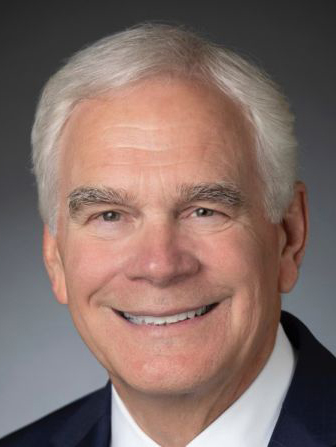
John O’Connor
On Dec. 1, Attorney General John O’Connor — who is Catholic — and Solicitor General Zach West wrote a non-binding legal opinion that says a current state law blocking religious institutions and private sectarian schools from state funding of public charter school programs is unconstitutional and should not be enforced.
Already, the Roman Catholic Archdiocese of Oklahoma City “states it is willing to adhere to every jot and tittle of state law and intends to apply for a charter,” reported Andrew Spiropoulos, the Robert S. Kerr Professor of Constitutional Law at Oklahoma City University and the Milton Friedman Distinguished Fellow at the Oklahoma Council of Public Affairs.
That means for the first time, government funding for public schools could also flow to Catholic schools and other faith-based schools.
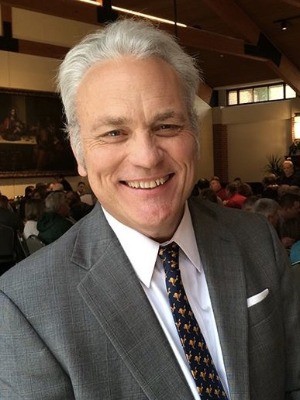
And that’s not good news to Charles Foster Johnson, who helped found the group Pastors for Oklahoma Kids.
“It’s perfectly fine for those Oklahoma charter schools to become religious schools if they no longer receive public tax dollars from the people of Oklahoma,” he said. “But the last thing the devout religious folks of Oklahoma need is for their state to entangle itself in the establishment of religion through the funding of religious schools masquerading as public charter schools. All true religion, whether in congregation or class room, is voluntary and free. It must remain unencumbered by state intrusion.”
Charles Foster Johnson
Pastors for Texas Kids has noted that Oklahoma ranks 48th in the nation for per-student spending on public education. The state’s public schools serve 703,650 students, accounting for 93% of the school-age population.
For years, charter friends and charter foes have debated whether charter schools are public schools and whether they are, like public schools, “state actors.” The lame-duck Attorney General of Oklahoma recently declared that religious schools could be charter schools. He seems to believe that privately managed charter schools are not public schools, because no one claims that religious schools are public schools. His opinion does not have the force of law, but you can see that Oklahoma is eager to give public money to religious schools.
The AG’s opinion raises many questions. If charter schools are religious schools, may they limit admission only to members of their faith? May they exclude gay students, teachers, and families? May they substitute religious books for the state textbooks? May they indoctrinate their students into their faith? If charter schools are religious schools, how do they differ from voucher schools? What state regulations apply to them, if any?
In a fifteen-page opinion issued December 1, Attorney General John O’Connor argued that in the wake of Trinity Lutheran, Espinoza, and Carson, he believed that SCOTUS would “very likely” find Oklahoma’s charter law restriction on nonsectarian or religious charters unconstitutional. Therefore, his opinion is that the state should no longer follow the law forbidding sectarian or religious charter schools.
Each of those cases elevated the free exercise clause of the First Amendment over the establishment clause. In other words, the court has repeatedly (and in a break from previous court decisions) found that the free exercise of religious beliefs outweighs any restrictions against government-sponsored religious activity.
Carson v. Makin in particular established that if the state allows for taxpayer funding of any non-public secular schools, it cannot exclude religious schools from the chance to receive taxpayer funding. While Carson involved school vouchers and private schools, observers like Kevin Welner, director of the National Education Policy Center at the University of Colorado at Boulder’s School of Education, noted that in light of these three decisions, “states will probably be forced to let churches and other religious institutions apply for charters and operate charter schools.”
While charter schools have often been considered public schools (at least part of the time), the extension of free-exercise protections, as Welner wrote after the prior decision, complicate the issue.
If courts side with a church-run charter school, finding that state attempts to restrict religiously infused teachings and practices at the school are an infringement on the church’s free-exercise rights, then the circle is complete: Charter school laws have become voucher laws.
“in just a few years, the Court has upended constitutional doctrine, shifting from a rule that permits States to decline to fund religious organizations to one that requires States in many circumstances to subsidize religious indoctrination with taxpayer dollars.”
Given the previous decisions, an attempt by charter supporters to extend religion to charter schools was probably inevitable.
Charter supporters, including Governor Kevin Sitt and State Superintendent of Public Instruction-elect Ryan Walters praised the decision. Officials of the Catholic Church in Oklahoma, the church likely to go after the taxpayer funding made available by this opinion (there are reports that they have an application for a Catholic virtual charter school ready to go), also praised the decision, as did officials of the American Federation for Children, the pro-privatization group with connections to Betsy DeVos.
The potential complications are many. If the taxpayers of Oklahoma are going to be compelled to fund religious charter schools, which religions will qualify for those dollars, and who will decide?
Oklahoma law designates charters as public schools, but how much discrimination in the name of religious exercise will the state allow? O’Connor argues that charges of discrimination can only be brought against state actors, and “actions taken by charters are unlikely to fit this bill.” So are charter schools public schools or not, and to what degree should taxpayers be forced to fund schools that exist in some sort of fuzzy grey law-free zone?
AG John O’Connor was a Trump nominee for a United States district judge in 2018; the American Bar Association rated him “not qualified,” and his nomination was withdrawn. After Oklahoma’s previous attorney general resigned in May of 2021 over “personal matters,” Governor Stitt appointed O’Connor to the office. O’Connor ran for the office this year and was defeated in the primary, making him a lame duck in the office.
An opinion such a this does not carry the weight of law, and it is possible that the matter will be tested in court. But given the foundation laid by the Supreme Court, it takes no great stretch to reach the conclusion that O’Connor did. They ripped the hole in the wall; he just walked through it.
The state Attorney General in Oklahoma just obliterated the distinction between charters and vouchers by ruling that the state law requiring charters to be non-sectarian was invalid. His decision won plaudits, not surprisingly, from far-right Governor Kevin Stitt, the state’s Catholic Conference, and the state’s American Federation for Children, which is part of Betsy DeVos’s voucher-advocating national group of the same name.
This is the breakthrough that Betsy DeVos has counted on for years: that charter schools would be the stepping stone to vouchers.
Think of all the “liberals” and “progressives” who have supported charters, abetting the eventual and inevitable public funding of religious schools: Senator Cory Booker, Senator Michael Bennett, Congressman Hakeem Jeffries, Secretary of Commerce Gina Raimondo, Arne Duncan, Bill Gates, Michael Bloomberg, Reed Hastings, former Governor Jerry Brown, the Center for American Policy (CAP), DFER, the Obama Education Department, and many more. CAP is supposedly the Democratic Party think tank, but it has resolutely supported charter schools. And now it’s on the same side as Betsy DeVos.
In a 15-page opinion released today, outgoing Oklahoma Attorney General John O’Connor advised charter school authorizers that the aspects of the Oklahoma Charter Schools Act requiring school operators to be non-religious and non-sectarian likely violate the free exercise clause of the First Amendment to the U.S. Constitution and should not be enforced.
Primarily citing three recent U.S. Supreme Court rulings regarding religious liberties in public education — Trinity Lutheran Church of Columbia, Inc. v. Comer (2017); Espinoza v. Montana Department of Revenue (2020); and Carson v. Makin (2022) — O’Connor argued that religiously affiliated private organizations should be allowed to apply to operate charter schools.
“In sum, we do not believe the U.S. Supreme Court would accept the argument that, because charter schools are considered public for various purposes, that a state should be allowed to discriminate against religiously affiliated private participants who wish to establish and operate charter schools in accordance with their faith alongside other private participants,” O’Connor wrote in the opinion which is embedded below.
Charter schools are publicly funded schools that can be governed and operated outside of traditional school districts. The schools can run by private management companies. Currently, Oklahoma statute requires operators of the state’s approximately 30 charter schools to be “non-sectarian” and “non-religious.”
Among the entities allowed to authorizer a charter school in Oklahoma is the Statewide Virtual Charter School Board. Executive director Rebecca Wilkinson originally asked the formal question that resulted in O’Connor’s office issuing an opinion on whether the board may “continue to enforce the nonsectarian requirements set forth” in Oklahoma statute.
Reached for comment Thursday, Wilkinson said she didn’t know the opinion had been released.
“I have not seen it,” Wilkinson said. “I can’t comment on it today, but when we hang up I guarantee you I will be going out to search for it.”
‘Overjoyed with the attorney general’s opinion’
Gov. Kevin Stitt, the Catholic Conference of Oklahoma and the American Federation for Children-Oklahoma celebrated the opinion.
“Attorney General John O’Connor’s opinion rightfully defends parents, education freedom, and religious liberty in Oklahoma,” Stitt said in a statement. “Ultimately, government takes a backseat to parents who get to determine the best learning environment for their child.”
The Catholic Conference of Oklahoma also praised O’Connor’s opinion. In an interview. executive director Brett Farley said the Catholic Conference has an application ready to submit to the SVCSB to operate its own Catholic virtual charter school.
How do we make sense of the last six years, and how do we figure out what we do next?
I’m wrestling with the dilemmas intertwined with the wisdom of Michelle Obama: When they go low, We go high.
To go high, we must wrestle with the irrational and anti-Semitic statements of Kanye West. We must confront the MAGA right wing propaganda while also responding to his words, “Hurt people hurt people – and I was hurt.”
I was born in the middle of the luckiest generation in history. My first memory is a metaphor for the opportunities that were bestowed on Baby Boomers, that have been in decline. I was “twaddling” across the living room to the “win-dome” when adults were watching television, and they exploded with joy. The news, I was told later, was that the polio vaccine had been released!
Our parents’ generation survived the Great Depression and World War II, they were committed to our generation having far greater opportunities. Time after time, when I walked somewhere, worked with neighbors, and played with their children, I found one mentor after another. I was repeatedly told, “Pay close attention, I’ll only show you once;” reminded that my job at school wasn’t high grades but “Learning how to learn;” and “Your job is to be ‘inner-directed’ not ‘outer-directed’” like those who were “like the Red River, ‘a mile wide and a foot deep.’”
Of course, we felt the uneasiness of neighbors watching the Sputnik satellite cross the night sky, of “duck and cover” drills at school, and the Cuban Missile crisis (which only affected me by the news alerts interrupting the World Series.)
And I was clueless about Jim Crow until we went to a restaurant during the Sit-In movement. The owner directed us to the fancy room where, that evening, prices were not higher than the big serving area, because we shouldn’t have to eat with N—–rs. We shouted to our parents, “You’re not supposed to say that word! Why did he say that word?” My dad tried to remain calm but he exploded, “there’s not a god-damned reason” and tore into the racist owner. It took the full police line to pull my dad off him.
Of course, Oklahoma was incredibly corrupt and my dad would jokingly point out concrete examples such as “the road to Nowhere” (which led to our top oligarch’s property,) the Turner Turnpike, and the photo at church of a Supreme Court Justice who was convicted of bribery in conjunction to with the turnpike and other cases. But, as I began to lobby and/or interview members of the “Greatest Generation,” I realized that that criminal behavior was far more common back then, but their handshakes had to be good. In the last few decades, I asked powerful people if corruption had declined significantly, and whether norms have also dropped. They agreed but, a decade ago, a State Auditor added a disclaimer; so many behaviors by elites that used to be felonies were now legal.
And that gets us to the intertwined forces of the last fifty years that laid the foundation for Trumpism. In the 1970s, rightwing think tanks sold the theory that corporations were only beholden to the share owners, not the stakeholders, the community, and the United States of America. Then, the Reagan administration’s Supply Side Economics quickly wiped out good-paying industrial jobs, which undermined communities, especially in places like rural Oklahoma which became Trumpland.
As the economic pie became more unequal, more hurt people hurt people. The willingness to share declined. And, eventually, hope declined, and life expectancy dropped for whites who hadn’t attended college, especially in places like eastern Oklahoma.
Rightwing spin masters convinced rural Oklahomans that Reagan “brought America back,” and immigrants and people of color “cut in line” in front of whites. I plead guilty to being slow to admit the importance of racism in fueling Trumpism. My wife and I have had an Obama bumper sticker on our car since 2008. I don’t recall any rudeness by Oklahomans in response to it. As soon as we crossed into Texas, and many other states, we’d be shouted at and given the finger.
Since my family came from “Little Dixie,” I was embarrassingly slow in admitting why counties in Southeast Oklahoma instantly turned Republican between 2006 and the 2008 presidential race. Similarly, Oklahoma passed one of the nation’s most punitive immigration laws, and I’d seen large numbers of attacks on Hispanics in our high school. But in my experience, Oklahomans also respected the work ethic and family values of immigrants. I saw our welcoming side until, surprise!, the nonstop anti-immigrant, anti-Hispanic, and anti-Muslim propaganda sunk in.
While acknowledging my excessive optimism, I believe we can build on our strengths – the values that gave so much hope to this young Baby Boomer. Given my experience as an inner-city teacher, I will draw on my students’ moral cores. But I see those experiences as metaphors for how we can “go high” when reversing a full range of interconnected economic, social, political, and civility challenges.
Starting with economics, the worship of Free Markets began with Joseph Schumpeter’s “creative destruction.” Corporate school reformers (like other true believers in the Market) adopted the same mindset, which they called “creative disruption” as the lever for transforming schools and rebuilding them through “venture philanthropy.” They became very skilled at “kicking down the barn,” and attacking teachers, hoping to quickly fire enough teachers (especially Baby Boomers) while training young teachers to obey top-down, teach-to-the-test mandates.
But, both sides of the “Teacher Wars” were bipartisan. Up until three or four years ago, I was very successful working with conservative Republicans who also didn’t trust the “Billionaires Boys Club” which dominated the Bush and Obama education policies. And many or most were angry at other big corporations.
If we could admit that neither Democrats or Republicans stood up to our neoliberal and their conservative funders, we could restart conversations about schools as a public good, not just a Free Market experiment. Then, maybe we could discuss the privatization of health care, the social safety net, and the other institutions on Gov. Stitt’s and other MAGA’s hit list.
Hopefully, Democrats and Republicans could join together in community building; the first step could be full-service community schools, which could also serve as community hubs. We could admit that both sides bought into the simplistic, false meme that teachers, alone, could drive transformative change of our highest-challenge schools.
Of course, teachers deserve more respect. But so do cafeteria ladies, bus drivers, counselors, tutors, parent liaisons, mentors, apprentices, and volunteers. And, sharing the respect and the credit with education teams will also create good will that would assist the dialogue we need.
As the MAGA Republicans ramp up the campaigns for vouchers, we will have new opportunities for bridging differences with rural areas. And, students can lead the way in explaining that accusations of spreading Critical Race Theory and Socialist propaganda are false.
In the late 1990s, during a community discussion about public health, my students asked white participants about the more humane way that Meth, as opposed to crack, was being handled. Perhaps because the students were so polite, the adults didn’t understand that the teenagers were contrasting the cruelty of the War on Drugs during the crack epidemic with the more empathetic public health response to the new, predominantly white epidemic. Afterwards, they told me that the white participants didn’t understand what they were saying, but they had hope for future conversations and, at least, the more humane response to Meth was a first step.
A decade later, Big Pharma profited by promoting Opioid addiction in the MAGA areas, significantly lowering life expectancy for under-educated whites. Rather than condemning “deplorables,” we should have recognized that “Hurt people hurt People.” Now, it won’t be easy, but perhaps we could unite, regulate, and control the corporate dominance that is spreading destruction across the world.
Finally, we must move on from the failed experiment of Creative Disruption. We should build on both, social and cognitive science, as well as what has worked for centuries. After all, teaching is an act of love. Neighborliness can be the driving force for community schools. Defending our children’s schools, as well as privatization battles ranging from public health to global warming, will require cross-generational, cross-cultural discussions. When they go low, we should go high by bringing the full diversity of our communities into schools, and bringing students out into the full diversity of our community.
Oklahoma voters re-elected Governor Stitt and elected Ryan Walters as Superintendent of Education. Both support school choice and have attacked public schools for “indoctrinating students” with left wing ideas and teaching about race and gender. Stitt defeated former State Superintendent of Education Joy Hofheimer, who briefly led in the polls. Walters’s opponent Jena Nelson is a strong advocate for public schools.
The evidence about vouchers after three decades is that they subsidize children in private schools, and they inflict enormous learning loss on low-income children. Oklahoma’s leaders and voters want to educate their children for the 19th century.
Walters received 57.29 percent of votes cast, and Nelson obtained 42.71 percent with 1,887 out of 1,984 precincts reporting, according to unofficial results. Walters defeated April Grace for the Republican candidacy in the August runoff elections.
“What you’re gonna see is a commitment to ensure that every child is empowered through parents’ options,” Walters said. “You’re gonna see a push for more transparency and accountability and you’re never again going to see a superintendent that doesn’t bring transparency to you, the taxpayers. Folks, thank you so much. We will continue to make Oklahoma great.”
Gov. Kevin Stitt appointed Walters to secretaryof eduction in 2020. He was endorsed by Sen. Ted Cruz (R-TX) and Frank Keating, chairman for the OU Board of Regents and former Oklahoma governor. Walters’ campaign focused on banning certain race and gender conversations from public school classrooms and supporting school vouchers. Walters also previously expressed he would reject federal funding for Oklahoma public schools, if elected.
“Public education saves lives,” Nelson said during her concession speech. “While I may not be your superintendent, I will continue to be an advocate for all of Oklahoma.”
I met Joy Hofmeister a few years ago, in her capacity as superintendent of public education, and I was impressed by her dedication to public schools, her intellect, and her candor. She was a Republican then, but clearly not supportive of the Republican agenda to privatize public education.
If you live in Oklahoma, please vote for Joy for governor!
Former Republican Rep. J.C. Watts (Okla.) has bucked his party to endorse Democrat Joy Hofmeister in her challenge to Oklahoma Gov. Kevin Stitt (R).
“I was a Republican then, and I’m a Republican now, and, friends, I’m voting for Joy Hofmeister,” Watts says in a new ad.
“All this scandal and corruption is just too much. Joy is a woman of faith and integrity. She’ll always put Oklahoma first. I know Joy personally, and I trust her, and you can too,” the former Oklahoma congressman said.
Hofmeister was elected Oklahoma’s superintendent of public instruction twice as a Republican but swapped parties to register as a Democrat last year before mounting her gubernatorial campaign.
“Conservatives like Congressman Watts see Stitt’s lies about me for what they are — a desperate attempt to maintain power,” Hofmeister wrote on Twitter, sharing the ad.
John Thompson, retired teacher and historian in Oklahoma, urges his fellow Oklahomans to vote for Joy Hofmeister for Governor. I heartily endorse Joy. When I visited Oklahoma a few years ago, I had the chance to speak with her at length. She is intelligent, public-spirited, and devoted to public service. I met her in her role of State Superintebdent of Schools and was deeply impressed by her understanding of the issues and to public schools. I join John in urging you to vote for Joy!
Thompson writes:
The main arguments for electing Oklahoma State Superintendent Joy Hofmeister as governor are grounded in her rescue of public education. Her record proves that Hofmeister is the best possible candidate for uniting the state and pulling ourselves out of the messes that Gov. Kevin Stitt and Trumpists created. And her current campaign, like her approach to reviving public education, illustrates Hofmeister’s ability to bring diverse people together.
In contrast, Stitt supposedly illustrated his commitment to students by rushing down school halls with a semi-automatic rifle.
When Hofmeister switched from being a moderate Republican to a Democrat, a number of young progressives said they supported Joy because she was the candidate who is best able to defeat Stitt. Fearing that young people who just believed that might be less motivated to vote, I’ve been sharing concrete examples of why Hofmeister deserves enthusiastic support; Hofmeister led the rescue of our public schools, and laid the foundation for meaningful and long-lasting school improvements. If voters remember how bleak the future of schools was in 2014, and how she successfully defended them, they will agree that Hofmeister is the proven leader for saving public education and our other public institutions from today’s rightwing assault.
I like to start by asking Gen Z and Millennials about their experiences with schools after the corporate school reformer, Janet Barresi, was elected in 2010. This was the height of the “Teacher Wars,” when schools were to be closed based on an invalid A–F grading system, and educators were to be fired based on an even worse algorithm.As documented byOklahoma City University’s Dr. Jonathan Willner,School grades were supposed to measure student learning, but they had little or nothing to do with teacher quality. They actually reflected:
The number of single-parents in the district; students on free and reduced lunch at the school; school mobility (proportion of new students each year); educational attainment in the district, and the median household income in the district. None of these have anything to do with the actions of teachers and administers. The damage became even worse when almost every teacher and students became subject even more invalid and unreliable high-stakes testing.
This was a time of education funding cuts, nonstop attacks on “Bad Teachers,” who supposedly could have transformed student learning had they wanted to, and increased segregation by economics and school choice. Hofmeister was elected in 2014, when urban schools could have easily crossed the “tipping point” if Oklahoma stuck with the mandate that required students to pass Common Core graduation tests that were written on levels that often were years above their reading levels. A key to Joy’s success was her professional team’s effort to assist in returning more of the authority for developing education policy to local districts.
Hofmeister led the fight to repeal seven inappropriate End of Instruction tests (EOI), to “reduce time testing and allow more time for rich instruction, personalized learning and multiple pathways to college and career readiness.” She also prioritized high-quality pre-K instruction and reading for comprehension by 3rd grade. Joy was successful in bringing back high school students’ access to Career Tech, mentoring, and internships. And she addressed our severe teacher shortage by helping lead the way to significant teacher pay raises, and listening to teachers about policies for making schools better.
I haven’t always agreed with Hofmeister on issues. But after listening to her, and her professional team, neither could I say I was right and she was wrong. Most of the time, a growing body of evidence now argues that her administration was right and I was wrong.
Yes, Kevin Stitt faced strong competition, but he has earned his spot as the worst governor in Oklahoma history. As COVID-19 surged, long before the vaccine was developed, Stittundermined the public health system and disrupted testing programs, as well as ridiculing masks and social distancing while posting family photographs from crowded restaurants. The governor purchased a stockpile of hydroxychloroquine, and later sought to suspend vaccine requirements for the Oklahoma National Guard. During the COVID-19 delta variant surge, Stitt signed a bill attempting to ban public schools’ masking requirements.
Stitt and his appointee, Secretary of Education Ryan Walters, have led the attacks on the so-called teaching of Critical Race Theory (CRT). Walters ramped up attacks on a teacher, Summer Boismier, for posting a QR code to the Brooklyn Library’s banned books lists. He then called on the Oklahoma State Board of Education to revoke Boismier’s certification because, “There is no place for a teacher with a liberal political agenda in the classroom.”
Stitt’s appointee is being investigated for distributing the federal, COVID-19 relief money for the Bridge the Gap program without following safeguards to prevent fraud or abuse. Stitt defended Walters, saying, “Secretary Walters is doing a great job fighting for parents’ right to be in charge of their child’s education and advocating for funding students.” Moreover, in addition to his state salary, Walters was paid around $120,000 a year by Every Kid Counts Oklahoma.
Stitt opposed Medicaid expansion in Oklahoma, and he has reversed gun safety regulations. And he has continually fought against established state rights of Oklahoma tribes, as well as rights newly established by the U.S. Supreme Court’s McGirt vs. Oklahoma decision.
Stitt also supported, and signed into law, SB 612, which makes performing an abortion a crime punishable by 10 years in prison or a $100,000 fine, with exceptions for medical emergencies but none for rape or incest. Stitt then signed into law a ban on “abortions from the stage of ‘fertilization’ and allowing private citizens to sue abortion providers who ‘knowingly’ perform or induce an abortion ‘on a pregnant woman.'”
Stitt issued an executive order that prohibited transgender individuals from changing the gender on their birth certificates. He said that “people are created by God to be male or female. There is no such thing as nonbinary sex.” Finally, Stitt signed a bill into law requiring public school students “to use locker rooms and bathrooms that match the sex listed on their birth certificate.”
So, it is understandable that some would vote for a moderate former-Republican simply because of the havoc created by the current governor and his administration. I am very confident, however, that many, many more Oklahomans now realize that a Gov. Hofmeister will succeed in the two battles that have become even more important, and dangerous, than those she first faced eight years ago. Once again, she is revealing a talent for respectful listening and teamwork. Joy is the leader we need for building a 21st century Oklahoma that represents the best of our state.
Oklahoma, like many other conservative states, passed a law to restrict teaching about racism and other controversial subjects. John Thompson, a historian and retired teacher in Oklahoma, thinks that high school students should learn about and debate historical events. He wrote this post for the blog.
After Part I of Ken Burns’ The United States and the Holocaust was shown on PBS, I wrote a review calling for the documentary and its website to be taught in high school. As the three-part series progressed, I became more stunned by the information I had never been taught. Afterwards, conversing with neighbors and strangers, and ten lawyers, the virtually unanimous response I heard was a) The United States and the Holocaust must be taught in every Oklahoma high school, and b) because of HB 1775, educators won’t dare to do so.
I also tried to communicate with ten school systems and education institutions, but received no responses. In fairness, it is unlikely that districts would take a stand before studying the legal and political issues regarding the use of Burns’ work in the classroom.
Of course, I had known that Adolf Hitler patterned his crimes against humanity after America’s eugenics movement. But I hadn’t realized how much Hitler had studied its false claims that people of color were biologically inferior, as well as borrowed lessons from the genocide of Native Americans, the Ku Klux Klan, and Jim Crow. Similarly, I had read Anne Frank’s The Diary of a Young Girl and it seems unlikely that an Oklahoma teacher would be fired for violating HB 1775 by teaching about her the way it has normally been taught. But Burns tells the long story that has not been recognized. Even though the wording of HB 1775 doesn’t seem to ban The United States and the Holocaust from high school classrooms, it is widely assumed that teaching it would be too risky.
Burns tells how the United States State Department repeatedly tightened regulations designed to prevent Jews from escaping to the United States. The Frank family, like hundreds of thousands of Jews, was murdered after years of being excluded from the U.S.
A subsequent review by Diane Ravitch of Part II, explained how a million Jews were murdered by December, 1941 when the U.S. entered the war. She concluded, I believe correctly, that “This series should be shown to high school students in every school in the U.S.” In my first review, I concentrated on why and how Oklahoma educators and supporters of public schools should unite in teaching Burns’ film, and his standards-driven lessons. Part III further convinced me that the stakes are too high to allow Burns’ work to be pushed out of high schools. We must find a way to take a stand. All I know for sure, however, is that it will require careful planning and conversations between teachers and administrators; patrons; and political and community leaders.
We must make it clear that Burns affirms that there is plenty that is great about our democracy, and we must also focus on the heroism of anti-Nazi volunteers and key governmental leaders. He appropriately praises the military and other Americans for winning World War II, and thus putting an end to the Holocaust. Burns explains the logistics and technological limitations that would have made it hard to bomb the railroads to the concentration camps. But he also discusses the extreme anti-Semitism and how, in 1938, 2/3rds of Americans wanted to keep German, Austrian, and “other political refugees” out of the U.S., thus undermining President Franklin Roosevelt’s efforts to rescue as many as possible.
This piece will focus on two narratives that Burns uses to illustrate why this complicated history must be taught. And then it summarizes his belief that today it is doubly important that students are taught uncomfortable truths about the genocide of six million Jews.
First, Burns reviews the U.S State Department’s history of racism and its opposition to admitting Jews and Southern European immigrants, as opposed to the Northern Europeans they welcomed. For instance, in1939, Secretary of State Cordell Hull, who would later be awarded the Nobel Prize, led the infamous effort to block the St. Louis, a German ocean liner trying to transport 936 Jews seeking asylum to America.
In 1940, Asst. Secretary of State Breckinridge Long “wrote that consular officers should “put every obstacle in the way [to] “postpone and postpone and postpone the granting of visas.” As it was later learned, Long tried to stop intelligence about mass murder from reaching the United States.
After the U.S. had been at war with Nazis for two years, and a grass roots effort by Americans putting their lives at risk when saving tens of thousands from genocide, the truth was clear. Treasury Secretary Henry Morgenthau, Jr. finally was able to prove to President Roosevelt that the State Department was lying, and Long had been hiding the facts and the plans for rescuing refugees through southeastern and southwestern Europe.
Long resigned and FDR created the Wartime Refugee Board (WRB). The hero of the rescues that the State Department had undermined, John Pehle, was named the WRB director. The WRB helped to save up to 200,000 Jews, but Pehle said their effort was “little and late.”
The second story was about the initiative General Dwight Eisenhower started in order to inform the world about what happened in the concentration camps. First, he required soldiers and German civilians to walk through the concentration camps and see the piles of bodies. He then asked General George Marshall to bring members of Congress and journalists to the newly liberated camps “so that they could convey the horrible truth about Nazi atrocities to the American public.” Within days, they began to bear witness to Nazi crimes in the camps.”
And that leads to the question that Burns’ website recommends, “Although the images and videos shown in the last clip are very challenging to watch, why do you think U.S. Army leaders said they needed to be shown to people in the United States and across the world?”
In the last five minutes, The United States and the Holocaust returns to the reason why Burns and his team started to make this film in 2015. This was before Charlottesville, the shootings at the Tree of Life synagogue in Pittsburgh and at the supermarket in Buffalo, and before the January 6th insurrection. But they saw a similarity to “fragility of civilized behavior” that had existed in Germany. For instance, in the late 1920’s, Berlin was perhaps “the most open and cosmopolitan city in Europe” but only four years later, the Nazis were in charge.
This propelled Burns to reveal the full range of Americans’ actions and inactions. His research showed how quickly societies can spin out of control. Burns concluded that we must learn from the past in order to better deal with today’s “fragility of democratic civilization all over the world, not just here.”
Today, supporters of HB 1775 seem to argue that discussing today’s conflicts in the context of the dark chapters of American history is politicizing classroom instruction. Burns, however, rejects the practice of keeping students in the dark about past and present threats to democracy. Cross-generational conversations about The United States and the Holocaust could be a significant step towards bringing America together.
John Thompson, historian and retired teacher in Oklahoma, reviews Dana Milbank’s new book about the crackup of the Republican Party. As I have often said, Milbank is my favorite columnist in the Washington Post.
Thompson writes:
Dana Milbank’s The Destructionists: The Twenty-Five-Year Crack-Up of the Republican Party is based on his quarter of a century of political reporting. From 1992 to the present the Republicans won the popular vote only once. There were calls for diversity in their party in order to reach more voters, but it went in the opposite direction. In the 1990s, the false and polarizing propaganda of Rush Limbaugh, G. Gordon Liddy, Sean Hannity, and Fox News took off, as Newt Gingrich became the key political driver of an ideology that would dismantle legislative norms and institutions.
This piece only has room for a brief overview of the 90s. I assume that readers will see and will be shocked by the cruelty and lies of that decade, and how they foreshadow today’s assaults on democracy.
Milbank starts with the suicide of the Clintons’ aide, Vince Foster. Rush Limbaugh, who called the 13-year-old Chelsea Clinton “the White House dog,” claimed, “Foster was murdered in an apartment owned by Hillary Clinton.”
The prime donor of Gingrich’s political training organization, the Global Organization of Parliamentarians Against Corruption (GOPAC) was Mellon Scaife. Scaife then joined with Christopher Ruddy, who would become Donald Trump’s friend and informal advisor, to found Newsmax. They said Vince Foster’s death showed that Bill Clinton “can order people done away with … God there must be 60 people who have died mysteriously.” (By the way, such words didn’t keep Oklahoma Governor Frank Keating or Congressman J.C. Watts from helping to lead GOPAC.)
Brett Kavanaugh, who assisted in Ken Starr’s investigations of Bill Clinton and helped draft the Starr Report, knew as early as 1995 that “I am satisfied that Foster was sufficiently discouraged or depressed to commit suicide.” But he spent two years investigating, thus legitimizing, what Milbank called “all of the ludicrous claims.” In Kavanaugh’s files, that were released two decades later, were 195 pages of articles by Ruddy and Limbaugh’s transcript on the case.
Milbank writes that once Gingrich became Speaker of House in 1995, he “threw the weight of the speakership behind the Foster conspiracy theory.” That year, Ruddy, Scaife and Newsmax, would spread the lies further.
(By 2016, Rep. Pete Olson said that Bill Clinton admitted to A.G. Loretta Lynch that “we killed Vince Foster.” And Trump said the charges that Foster was murdered are “very serious.” And Milbank concluded that Justice Kavanaugh was not the most ideological of the Supreme Court’s majority, but he was the most political.)
Milbank explains how rightwingers encouraged violence. After the Waco tragedy of 1993, G. Gordon Liddy said of the ATF agents, “Kill the son-of-a-bitches.” Sen. Jesse Helms said “Mr. Clinton better watch his guard if he comes down here (North Carolina). He’d better have a bodyguard.”
Moreover, even though the Fish and Wildlife Department didn’t have helicopters, Rep. Helen Chenoweth said they were “sending armed agency officials and helicopters” to enforce regulations and “if they didn’t stop, I will be their “worst nightmare.”
In 1995, the Oklahoma City bombing of the Murrah Building killed 168 people; Timothy McVeigh said his terrorist act was designed “to put a check on government abuse of power.” But some rightwingers claimed the bombing “was really a botched plot” by the FBI.
Also, Limbaugh asserted, “President Clinton’s ties to the domestic terrorism of Oklahoma City are tangible.” And Gingrich responded by defending the “genuine fears” of rural America regarding the federal government, and doubled down on repealing of the assault weapons ban.
Milbank goes into detail recounting how Gingrich “changed forever the language of politics.” Gingrich quoted Mao saying, “Politics is war without blood.” And he repeatedly made charges such as the Democrats “‘trash’ America, indict the president and give the benefit of every doubt to Marxist regimes.”
In 1977, a year before Gingrich was first elected, Milbank reports that a Gallup poll found that 40% of Americans had “a great deal” or “quite a lot” of confidence in Congress. After 15 years of his “relentless” attacks, that number was down to 18%. Gingrich then undermined congressional norms that encouraged compromise and constructive actions. During his legislative career, committee and sub-committee meetings dropped by nearly half. By 2017, they had dropped by almost 75%. The ability of Presidents to get laws passed was also undermined. Presidents’ legislative victories dropped from 73% of the agenda under Nixon. At the beginning of the Clinton term, he had a victory rate of 87% but by 2016, President Obama’s rate was 13%.
Another pivotal change occurred after the 1996 defeat of Bob Dole. Republican aide Margaret Tutwiler said, “We’re going to have to take on [board] the religious nuts.” A couple of decades later, White evangelicals were only 15% of the US population but about 40% of Trump’s voters.
And with the arrival of Karl Rove’s anti-gay “whisper campaign” against George W. Bush’s opponent, Ann Richards, personal attacks escalated dramatically. Another example of campaign lies was the attack on Sen. John McCain’s mental stability, and the claim he had “fathered an illegitimate black child.” Actually McCain had adopted a daughter from a Bangladesh orphanage.
Although I had been horrified by the behaviors of the rightwing, Milbank’s details provided me a much better understanding of how the views I’ve held allowed me to remain excessively optimistic. I used to believe that it was deindustrialization and the loss of economic opportunity (accelerated by Reagan’s job-killing Supply Side economics) that mostly fed the racism which propelled Trump into the White House. Now I’m convinced by Milbank’s evidence that it was racism – not economics – that spurred Trumpism.
Also, I had misremembered Mitch McConnell’s record in the 1990s. In 1993, McConnell joined Strom Thurmond and Jesse Helms in defending the Confederate flag on the Senate floor, saying, “My roots … run deep in the Southern part of the country.” And he stood before a huge Confederate flag at a meeting of the Sons of Confederate Veterans.
In 1997, McConnell said in a fundraising letter, “Help to protect our country from a potentially devastating nuclear attack.” And he alleged, Clinton’s White House was “sold for ILLEGAL FOREIGN CASH”
I’m assuming that readers of this blog will quickly understand how the Alt Facts spread by politicians like Gingrich are linked to today’s crises. By 2018, only 16% of Republicans trusted the media over Trump. In 2020, people who said they were “very happy” dropped to 14% compared to the previous low of 29%.
Two years later, the attempted kidnapping of Gov. Gretchen Whitmer showed how the worsening rhetoric was putting people in danger. In 2019, hate crimes increased by 30%, and over 18 months in 2020 and 2021, the FBI nearly tripled its domestic terrorism caseload. FBI director Christopher Wray said, “The violence in 2020 is unlike what we’ve seen in quite some time.” And who knows what the numbers are in the wake of Trump’s response to the subpoenaing of the Secret documents?
The 25-year rightwing siege and Trumpism has put our democracy at risk. Being from Oklahoma City, I’m increasingly worried about the chances of bloodshed. And I’m doubly concerned after reading The Destructionists.
In 1994, Vice President Al Gore explained, “The Republicans are determined to wreck Congress in order to control it – and then wreck a presidency in order to recapture it.” Now, Milbank concludes. “A quarter century after a truck bomb set by an antigovernment extremist … Republicans have lit a fuse on democracy itself.”
My friend in Oklahoma’s baby died in utero at 7 months. They forced her to carry until her body expelled it. She ended up with peritonitis, nearly bled to death and can no longer conceive. Expect this in IN too.



 Diane Ravitch's blog