Archives for category: History

When I was in college, I remember classmates going to the local art-movie house to see “Casablanca,” and laughing about how many times they had seen it. I had never seen it, but since then have seen it many times, at least a dozen times.

My partner and I recently decided to introduce our 17-year-old grandson to classic movies. The first one we chose was “Casablanca.” (The second was Orson Welles’ “Citizen Kane.”) That was a few months ago. Recently “Casablanca” was playing on Turner Classic Movies, and I was going to skip it but was immediately drawn in and watched to the end. It never grows stale. Then I saw this column by Greg Olear, who explains why the film speaks to us and remains fresh.

He writes:

Dear Reader,

The first time I saw Casablanca was in 1992, at the Key Theatre, a now-defunct arthouse cinema on Wisconsin Avenue in Georgetown, at a special theatrical release celebrating the film’s 50th anniversary. The most recent time I saw Casablanca was last night. In between, I’ve seen it probably two dozen times. On each viewing, I notice something I hadn’t seen before, walk away with something new.

Casablanca is often described as a romance—and it is. Bogart and Bergman are one of the all-time Hollywood pairings, and, “Here’s looking at you, kid,” is probably the film’s best known line. The conflict in romances derives from the insurmountability of the obstacle, on what is keeping the two lovers apart: Romeo and Juliet are the teenage kids of two families in a blood feud; Harry and Sally don’t want to risk their friendship for a romantic engagement that might not work out; Tom Hanks lives in Baltimore and Meg Ryan lives in Seattle. The obstacle in Casablanca, which I will not spoil, is realistic, tragic, and completely insurmountable. It is a riddle that cannot be solved, a problem that has no solution, like how to fix the United States while the Senate exists.

But Casablanca is not just a romance. It is a drama. It is a war film. It is a buddy movie, replete with some of the sharpest comic dialogue ever written. It is a heist picture—we don’t see the two German couriers murdered on the train, we don’t see the letters of transit stolen from them, but the rush to obtain those two documents animates one of cinema’s greatest plots. It is an exploration of how to deal with heartbreak and loss. It is a story about sacrifice and courage and redemption and standing up to tyranny. It is an allegory for a world that, when it was made in 1942, was very much still at war—and, as such, is an overtly political film. Casablanca contains multitudes.

When I first watched the movie, I was more concerned with the romantic content. I loved Rick, loved his café, loved his white tuxedo jacket and his gruff manner and how he threw the best party but always held himself at a remove. But it is impossible to watch Casablanca in 2024 and not focus on the Nazis.

The first action we see in Casablanca is a violent police crackdown. And not just any violent police crackdown. This part of North Africa is controlled by unoccupied France, the German rump state based in Vichy. A prominent Nazi is coming to town, and the local authorities are detaining all the potential rabble-rousers—the usual suspects, as it were—who might not welcome the Gestapo’s jackbooted presence in French Morocco. One fellow is menaced by the police, who shoot and kill him when he tries to resist arrest; when they search his body, they find he is carrying leaflets for Free France.

If the film were made today, this scene would have been shot on location, in Casablanca or a city that could reasonably pass as Casablanca, and the terror of the crackdown would be amplified in one of those grandiose action scenes that modern movies often open with. But the film was produced in 1942. It was shot on a soundstage in Hollywood. The danger is cloaked behind old-timey cinematic production. No matter. The opening distinctly shows brutal, Nazi-aligned cops using unnecessary force, shooting and killing an agent of the Resistance: an anti-Fascist.

Similarly, the first time we see Rick—after we meet Captain Renault, the French prefect of police, and Major Strasser, the Nazi big wheel—he is alone at a chess board in the casino part of the club. His first lines of dialogue are directed to an arrogant Nazi—an official at Deutsche Bank, no less!—whom he bars from entering the inner sanctum:

—Your cash is good at the bar.
—What? Do you know who I am?
—I do. You’re lucky the bar’s open to you.

Rick owns and manages the café, and he is a good boss. He supports his employees, reassuring Emil after the house loses 20,000 francs, and keeping everyone on the payroll when the police shut him down. But he keeps himself aloof. “I stick my neck out for no one,” he says when the police arrest Ugarte. “I’m the only cause I’m interested in,” he tells Ilsa. But this is a false front, a defense mechanism. He doesn’t want his heart broken again. He is, as Victor Laszlo astutely observes, a man trying to convince himself of something he doesn’t really believe.

At 17 and a half minutes into the movie, Ferrari, criminal overlord and owner of the Blue Parrot, remarks to Rick that “isolationism is no longer a practical policy.” That line may as well have been spoken to the entire country. Rick and Sam, his friend and piano player, are the only Americans in Casablanca, and as such, represent the United States. The staff and clientele at his club come from everywhere: Carl is an anti-Nazi German, Sascha is Russian, Emil and Yvonne are French, Abdul is Moroccan, Berger is Norwegian, and so on. In that sense, the café is a microcosm of Europe. (In real life, many of the supporting actors are European war refugees who had escaped the actual Nazis—including the astonishingly good actor who plays the Gestapo’s Major Strasser, Conrad Veidt, who fled his native country with his Jewish wife when Hitler came to power.) 

It is no accident that the action in Casablanca takes place over three days in early December, 1941—just before Pearl Harbor. Rick, like the U.S. in the late fall of 1941, preferred to remain neutral. But ultimately, like the U.S., he is drawn into the fight—and his presence ultimately helps the good guys prevail.

Perhaps the film’s most rousing scene is when the orchestra, with its brass instruments, overpowers the Germans singing patriotic songs at the piano, with a stirring rendition of “La Marseillaise,” the French national anthem. In 1992, I chalked it up to Hollywood schlock; now, I recognize the scene’s awesome power: music becomes the field of battle. Even Yvonne, last scene flirting with a handsome Nazi, is moved to tears:

But the film is not all doom and gloom. Casablanca rewards us with sharp dialogue and genuinely funny moments. When Victor Laszlo arrives at Rick’s, he orders drinks, only to have his orders upgraded and put on someone else’s tab, which annoys him; it’s a running joke that he can’t pay for his own drink. Carl’s aside with the couple practicing their English before leaving for America is comic gold. And as Captain Renault, Claude Reins drops one-liner after one-liner, in a remarkably modern performance—not least of which the famous “I’m shocked, shocked” scene.

When Rick sits down for his interrogation by the Nazis, he is asked his nationality. “I’m a drunkard,” he says dryly—and it looks like the men at the table are genuinely laughing, as if the line was ad-libbed. But Renault immediately supplies the rejoinder: “And that makes Rick a man of the world.”

We learn that what causes Rick’s moral paralysis is his heartbreak. Ilsa Lund—the wife and traveling companion of the Resistance leader Victor Laszlo, who has just arrived in town—is, improbably, the woman who broke his heart. The chances of them meeting again like this are a million to one, which Rick alludes to in yet another famous line: “Of all the gin joints in all the towns in all the world, she walks into mine.”

During their confrontation later in the film, Ilsa accuses him of, basically, nurturing a grievance: “You want to feel sorry for yourself, don’t you? With so much at stake, all you can think of is your own feelings. One woman has hurt you, and you take your revenge on the rest of the world. You’re a coward and a weakling.” She may as well be addressing Elon Musk, or any one of a thousand other alt-right Twitter incels.

But by then, Rick has already started to change. Precedents are being broken. He’s having a drink with customers now. He’s involving himself in politics more overtly. This is made clear in the scene with the Bulgarian refugee, Annina. She is, Rick observes, underage and should not be at the bar. But she seeks him out. She wants to be reassured, without explicitly saying so, that if she has sex with Captain Renault, he will honor his promise and let her and her husband leave for America. This is dark, dark stuff, concealed by the soft lighting and the beautiful actress:

Oh, monsieur, you are a man. If someone loved you very much, so that your happiness was the only thing that she wanted in the world—but she did a bad thing to make certain of it—could you forgive her?

Rick replies with a punch to the gut: “No one ever loved me that much.”

But this is not true, although he doesn’t realize it yet. Ilsa did love him that much. And he is sufficiently moved by Annina to arrange for her husband to win at roulette, securing enough money to finance their visas—much to the delight of the staff.

The first time I saw the movie, I knew what the last line was, so I had some idea of the ending, but I didn’t know anything else. Twenty minutes from the end, Rick gives Victor Laszlo the letters of transit. Renault emerges from the shadows to arrest him. And I remember thinking, “Holy shit! How the hell are they going to resolve this?” I wasn’t the only one. Even the screenwriters didn’t know, well after production began. All they did was devise the best ending of all time.

[This is a good time to stop reading, if you haven’t seen the movie, because spoilers are coming.]

We think Rick and Ilsa will take the letters of transit and leave. Ilsa thinks that, too. But that’s not what happens. Once at the airport, Rick informs Renault that Ilsa and Victor will be the ones leaving. This surprises Ilsa, Renault—and the audience. But this is Rick putting away his personal grievance for the greater good. This is him atoning for the sins of the past. This is also him entering the fray, as Laszlo tells him on the tarmac, in a line I use in the intro to my podcast: “Welcome back to the fight. This time, I know our side will win.” That line is spoken in December of 1941—for all we know, Japanese planes are bombing Pearl Harbor as Laszlo’s plane flies to Lisbon. If Rick represents America, this is America entering the war. And, remember, the movie came out in 1942! “Our side” winning was not a sure thing.

(Also: Rick told Victor that the letters of transit were not for sale at any price. At the end, he refuses to take Victor’s money—which both makes the comment about the letters not being for sale true, and also continues the running joke about Laszlo not being able to pay for his own drinks.)

The Resistance leader and his wife get on the plane. The plane taxis out to the strip. And then, the Nazi big wheel shows up! After warning him to put down the phone, Rick shoots and kills him. Renault explains how “unpleasant” this is going to be. “I’ll have to arrest you, of course.”

The plane takes off, heading for Lisbon. The couple makes it out of Casablanca. Rick wins his 10,000 franc bet with Renault. Then the police show up. And watching the movie, we prepare for Rick’s impending arrest. “Major Strasser has been shot,” Renault tells his charges. And there is a long, dramatic pause, before he delivers yet another of the film’s famous lines: “Round up the usual suspects.” With those five words, he lets Rick go free.

Renault—an unscrupulous lech who “blows with the wind,” a “poor, corrupt official” who exploits his authority by bedding desperate refugee women—has found his own way back to the light. He, too, is back in the fight. And he and Rick leave together, bound for the French garrison at Brazzaville, and adventures to come, and a continuation of what is already a beautiful friendship.

Watching the film again last night, there was something else I realized about Casablanca. No one wants to be in Morocco. Everyone wants to go to America. The word is spoken countless times: America, America, America. Rick is American but can’t go back to America, although he desperately wants to. America is the symbol of freedom, of safety, of security, of respite from the Third Reich. The entire black market of French Morocco revolves around guarantees of safe passage to America. It’s taken as a given that America is the land of the free. 

But now, somehow, 82 years after the release of Casablanca, this is no longer a given. Nazis are again on the rise—only this time, they’re not in Europe or North Africa but here, in America, among us. What would those supporting actors who fled the Third Reich have made of that? What would Rick have thought?

While helping dress his wound, Rick asks Victor if he thinks what he’s fighting for—that is, democracy, freedom, anti-fascism—is worth it. I leave you with Laszlo’s response: “You might as well question why we breathe. If we stop breathing, we’ll die. If we stop fighting our enemies, the world will die.”

The fundamental things apply, as time goes by.

Heather Cox Richardson wrote the following post on May 8 about President Biden’s recent visit to Wisconsin. She compares Biden to FDR. Under Trump, Wisconsin lost jobs. Under Biden, Wisconsin has gained jobs. That’s the heart of the Biden agenda: building a strong middle-class and creating good union jobs.

She writes:

Today, in Racine, Wisconsin, President Joe Biden announced that Microsoft is investing $3.3 billion dollars to build a new data center that will help operate one of the most powerful artificial intelligence systems in the world. It is expected to create 2,300 union construction jobs and employ 2,000 permanent workers. 

Microsoft has also partnered with Gateway Technical College to train and certify 200 students a year to fill new jobs in data and information technology. In addition, Microsoft is working with nearby high schools to train students for future jobs. 

Speaking at Gateway Technical College’s Racine campus, Biden contrasted today’s investment with that made by Trump about the same site in 2018. In that year, Trump went to Wisconsin for the “groundbreaking” of a high-tech campus he claimed would be the “eighth wonder of the world.” 

Under Republican governor Scott Walker, Wisconsin legislators approved a $3 billion subsidy and tax incentive package—ten times larger than any similar previous package in the state—to lure the Taiwan-based Foxconn electronics company. Once built, a new $10 billion campus that would focus on building large liquid-crystal display screens would bring 13,000 jobs to the area, they promised. 

Foxconn built a number of buildings, but the larger plan never materialized, even after taxpayers had been locked into contracts worth hundreds of millions of dollars for upgrading roads, sewer system, electricity, and so on. When voters elected Democrat Tony Evers as governor in 2022, he dropped the tax incentives from $3 billion to $80 million, which depended on the hiring of only 1,454 workers, reflecting the corporation’s current plans. Foxconn dropped its capital investment from $10 billion to $672.8 million.  

In November 2023, Microsoft announced it was buying some of the Foxconn properties in Wisconsin.

Today, Biden noted that rather than bringing jobs to Racine, Trump’s policies meant the city lost 1,000 manufacturing jobs during his term. Wisconsin as a whole lost 83,500. “Racine was once a manufacturing boomtown,” Biden recalled, “all the way through the 1960s, powering companies—invented and manufacturing Windex…portable vacuum cleaners, and so much more, and powered by middle-class jobs.

“And then came trickle-down economics [which] cut taxes for the very wealthy and biggest corporations…. We shipped American jobs overseas because labor was cheaper. We slashed public investment in education and innovation. And the result: We hollowed out the middle class. My predecessor and his administration doubled down on that failed trickle-down economics, along with the [trail] of broken promises.” 

“But that’s not on my watch,” Biden said. “We’re determined to turn it around.” He noted that thanks to the Democrats’ policies, in the past three years, Racine has added nearly 4,000 jobs—hitting a record low unemployment rate—and Wisconsin as a whole has gained 178,000 new jobs. 

The Bipartisan Infrastructure Law, the CHIPS and Science Act, and the Inflation Reduction Act have fueled “a historic boom in rebuilding our roads and bridges, developing and deploying clean energy, [and] revitalizing American manufacturing,” he said. That investment has attracted $866 billion in private-sector investment across the country, creating hundreds of thousands of jobs “building new semiconductor factories, electric vehicles and battery factories…here in America.” 

The Biden administration has been scrupulous about making sure that money from the funds appropriated to rebuild the nation’s infrastructure and manufacturing base has gone to Republican-dominated districts; indeed, Republican-dominated states have gotten the bulk of those investments. “President Biden promised to be the president of all Americans—whether you voted for him or not. And that’s what this agenda is delivering,” White House deputy chief of staff Natalie Quillian told Matt Egan of CNN in February. 

But there is, perhaps, a deeper national strategy behind that investment. Political philosophers studying the rise of authoritarianism note that strongmen rise by appealing to a population that has been dispossessed economically or otherwise. By bringing jobs back to those regions that have lost them over the past several decades and promising “the great comeback story all across…the entire country,” as he did today, Biden is striking at that sense of alienation.

“When folks see a new factory being built here in Wisconsin, people going to work making a really good wage in their hometowns, I hope they feel the pride that I feel,” Biden said. “Pride in their hometowns making a comeback. Pride in knowing we can get big things done in America still.” 

That approach might be gaining traction. Last Friday, when Trump warned the audience of Fox 2 Detroit television that President’s Biden’s policies would cost jobs in Michigan, local host Roop Raj provided a “reality check,” noting that Michigan gained 24,000 jobs between January 2021, when Biden took office, and May 2023.

At Gateway Technical College, Biden thanked Wisconsin governor Tony Evers and Racine mayor Cory Mason, both Democrats, as well as Microsoft president Brad Smith and AFL-CIO president Liz Schuler. 

The picture of Wisconsin state officials working with business and labor leaders, at a public college established in 1911, was an image straight from the Progressive Era, when the state was the birthplace of the so-called Wisconsin Idea. In the earliest years of the twentieth century, when the country reeled under industrial monopolies and labor strikes, Wisconsin governor Robert “Fighting Bob” La Follette and his colleagues advanced the idea that professors, lawmakers, and officials should work together to provide technical expertise to enable the state to mediate a fair relationship between workers and employers. 

In his introduction to the 1912 book explaining the Wisconsin Idea, former president Theodore Roosevelt, a Republican, explained that the Wisconsin Idea turned the ideas of reformers into a workable plan, then set out to put those ideas into practice. Roosevelt approvingly quoted economist Simon Patten, who maintained that the world had adequate resources to feed, clothe, and educate everyone, if only people cared to achieve that end. Quoting Patten, Roosevelt wrote: “The real idealist is a pragmatist and an economist. He demands measurable results and reaches them by means made available by economic efficiency. Only in this way is social progress possible.”

Reformers must be able to envision a better future, Roosevelt wrote, but they must also find a way to turn those ideals into reality. That involved careful study and hard work to develop the machinery to achieve their ends. 

Roosevelt compared people engaged in progressive reform to “that greatest of all democratic reformers, Abraham Lincoln.” Like Lincoln, he wrote, reformers “will be assailed on the one side by the reactionary, and on the other by that type of bubble reformer who is only anxious to go to extremes, and who always gets angry when he is asked what practical results he can show.” “[T]he true reformer,” Roosevelt wrote, “must study hard and work patiently.” 

“It is no easy matter actually to insure, instead of merely talking about, a measurable equality of opportunity for all men,” Roosevelt wrote. “It is no easy matter to make this Republic genuinely an industrial as well as a political democracy. It is no easy matter to secure justice for those who in the past have not received it, and at the same time to see that no injustice is meted out to others in the process. It is no easy matter to keep the balance level and make it evident that we have set our faces like flint against seeing this government turned into either government by a plutocracy, or government by a mob. It is no easy matter to give the public their proper control over corporations and big business, and yet to prevent abuse of that control.”

“All through the Union we need to learn the Wisconsin lesson,” Roosevelt wrote in 1912.

“We’re the United States of America,” President Biden said today, “And there’s nothing beyond our capacity when we work together.”

Go to the post to read her footnotes.

John Thompson, historian and retired teacher in Oklahoma, writes here about a book that is important in Oklahoma history and American history.

He writes:

When I first read Victor Luckerson’s Built from the Fire: The Epic Story of Tulsa’s Greenwood District, America’s Black Wall Street, I was stunned by his beautiful prose. Watching Luckerson on CSPAN Book T.V., I was reminded of his eloquence. And I was even more impressed by the timeliness of the story of the communities and families who built and rebuilt Greenwood after the 1921 Tulsa Massacre, and who then had to repeatedly fight to keep their community from being erased. 

This April 2, 2024, when hearing a lawsuit on reparations, the Oklahoma Supreme Court Justice Yvonne Kauger said to the litigants, “When I went to high school, … Greenwood was never mentioned,” so “I think regardless of what happens, you’re all to be commended for making sure that that will never happen again. It will be in the history books.”  We all must also commend Luckerson’s contribution to that essential story, and help pass it down to younger generations.

As Marcia Chatelain’s New York Times review of Built from the Fire explained, “The seemingly unfettered opportunity in the new state of Oklahoma drew unabashed capitalists, confidence men, industrious wives and loyal mothers to what had formerly been known as Indian Territory…” The story of diverse Black people who built Greenwood, the “Eden of the West” is just as complex.

Similarly, Suzette Malveaux’s Washington Post review started with the lie that prompted the Massacre by claiming:

Dick Rowland, a Black teenager, had sexually assaulted a white woman in an elevator. A show of force by Greenwood men to prevent Rowland from being lynched escalated into an all-out attack on Black Tulsans by white vigilantes, who in some cases had been handed arms by the police. As Luckerson recounts, “More than 1,200 houses were leveled, nearly every business was burned to the ground and an unknown number of people — estimates reach as high as 300 — were killed.”

As one white person recalled, white officers quickly deputized the crowd; he was told, “Get a gun and get busy, and try to get a n—–.”

But Malveaux also stresses the way that:

Luckerson shines a light on uncomfortable fissures between Oklahoma’s Black freedmen and Black migrants from the South; Native American enslavers and Black enslaved people; and the American Red Cross’s White “angels of mercy” and Tulsa’s mobsters. And he doesn’t shy away from telling the full story of Greenwood’s great leaders.

For instance, one of the fathers of Greenwood’s economic and cultural strength was J.H. Goodwin, a former railroad brakeman, who leveraged his position with the railroad (which was rare for a Black man at the time) and who was able to work with all types of people, but who passed down psychological burdens, as well as resilience to his family. His family invested in journalism, said one of their readers, so “you can have free speech and have privilege to act as a man without being molested.”

Goodwin’s stories, and those of other families in the book, include experiences gained and brought back from Fiske University, Chicago, Washington D.C., and elsewhere. The family became best known for the Oklahoma Eagle newspaper, which shared diverse perspectives and kept up the fight for justice. They also played leadership roles in desegregating Tulsa schools. And like so many Black Tulsans, in doing so, they drew on both “Booker T. Washington’s model of economic power and W.E.B. DuBois’s model of political power.”

Goodwin’s most influential recent descendent, Sen. Regina Goodwin, kicked off her political career in 2015 with the words, “Some women get lost in the fire and some … are built from the fire.”  

Luckerson explained that “residents of Greenwood bore the burden of living in two Americas at once, the idealized version imagined in the minds of white slaveholders in 1776, and the more brutal reality that black Tulsans and their ancestors bore witness to.” He balances tales of graft by both Black and much worse White entrepreneurs. Although W.E.B. DuBois correctly described the resulting community as “impudent and noisy,” those same businessmen “opposed economic injustice just as fiercely as they fought segregation.”

Immediately after the massacre, Tulsa officials used zoning ordinances to keep Black residents from rebuilding. The insurance claims of Black residents were rejected. New segregation laws were passed, and bankers used “red lining” to deny new loans to Blacks. Moreover, criminal courts failed to find whites guilty of assault, arson and murder. However, Luckerson also chronicled skillful but often unsuccessful legal battles by attorneys like B.C. Franklin.

Over the next decade, Black resilience got the business community back on track. The gains were first undermined by the Great Depression, and then recovered as WWII approached. The Roosevelt administration implemented successful economic stimulus programs, as well discriminatory and counter-productive efforts. The same occurred during the war when Greenwood leaders had some successes in creating economic opportunities with the help of the federal government, while other wartime and post-war investments were too discriminatory to be constructive. Efforts to rebuild Greenwood’s neighborhoods sometimes prompted violence like a KKK cross burning and the dynamiting of a Black family’s home.

Luckerson then describes the 1950s and 1960s when legal battles and grassroots organizing created successes, as well as mixed feelings. For instance, Greenwood’s local political efforts resulted in funding Black schools like Booker T. Washington high school. (Don Ross, a teenager who would become an influential state legislator, was a leader in the fight for educational opportunities.) Thurgood Marshall’s anti-segregation efforts contributed to his historic Brown v Board of Education victory. But some Greenwood residents mourned the loss of Booker T. Washington, saying it “ripped the heart out of a community that had once had the pride to succeed in all parts of life.”

There was unanimity, however, in rejecting the way that highway construction and Urban Renewal once again devastated Greenwood.

Luckerson then brings the narrative through tragedy to sometimes promising political efforts and the often successful, but sometimes divisive efforts to build a dynamic 21st century Greenwood. One of the leaders was Tiffany Crutcher, whose unarmed brother, Terence, was shot to death in the middle of the street by police officer. Moreover, Rep. Bob Ross and Rep. Regina Goodwin worked skillfully within the legislative system to fund studies of the 1921 Massacre and reparations. Sadly, white political leaders, who had sounded so supportive of such efforts, largely failed to follow through.

Fortunately, the HBO film, The Watchmen, brought the Massacre to the attention of millions of Americans. And the George Kaiser Family Foundation established the Greenwood Cultural Foundation.  Luckerson also provides an objective account of the fight over today’s reparations lawsuit. 

The Greenwood revival also led to President Joe Biden’s commemoration of the Massacre. Speaking in Greenwood, he didn’t use the word “reparations,” but he “discussed the devastating effect of urban renewal on Greenwood. ‘A highway was built right through the heart of the community … cutting off black families and businesses from jobs and opportunity.’” The President then “announced plans to increase federal contracts for minority-owned businesses and try to curb racist housing appraisals.”

Luckerson concludes with the words of B.C. Franklin, “Right is slow and tardy while wrong is aggressive.” He then adds, “For more than a century, Greenwood has been grappling with wrong in all its combative forms. Wickedness flamed white-hot in 1921, but the embers continued to burn long after.” This stretched “from relief aid being withheld during the Great Depression … [to] Urban Planning brochures featuring smiling black faces and words laden with double meaning – blight, renewal, progress.” He later makes one prediction, “Whether or not Tulsa does right by the people of Greenwood and North Tulsa, they will continue to do what they’ve always done: build.”

Given the pressure by State Superintendent Ryan Walters to censor books that he believes would wrongly make White kids feel uneasy, I understand why teachers would feel afraid to teach Lukerson’s book. But we owe it to students to make his masterpiece available to all.

Thom Hartmann writes here about the nefarious role played by former Attorney General William Barr in his two different stints, first, when he worked as Attorney General for President George H.W. Bush, and later when he protected Trump from the damning findings of the Mueller Report about Russian interference in the election of 2016; Barr sat on it, summarized its conclusions inaccurately, and misled the public. Bill Barr was, Hartmann writes, “the master fixer” for “the old GOP.”

He writes:

Congressman Jim Jordan wanted revenge on behalf of Donald Trump against Manhattan DA Alvin Bragg for charging Trump with election interference in Manhattan. 

He threatened Bragg with “oversight”: dragging him before his committee, threatening him with contempt of Congress; putting a rightwing target on Bragg’s back by publicizing him to draw sharpshooters from as far away as Wyoming or Idaho; and facing the possibility of going to jail if he didn’t answer Jordan’s questions right. Jordan, James Comer, and Bryan Steil — three chairmen of three different committees — wrote to Bragg:

“By July 2019 … federal prosecutors determined that no additional people would be charged alongside [Michael] Cohen. … [Y]our apparent decision to pursue criminal charges where federal authorities declined to do so requires oversight….”

They were furious that Bragg would prosecute Trump for a crime that the federal Department of Justice had already decided in 2019 and announced that they weren’t going to pursue. 

But why didn’t Bill Barr’s Department of Justice proceed after they’d already put Michael Cohen in prison for a year for delivering the check to Stormy Daniels to keep her quiet at least until after the election, and then lying about it? Why didn’t they go after the guy who ordered the check written, the guy who’d had sex with Daniels, the guy whose run for the presidency was hanging in the balance?

Why didn’t the Department of Justice at least investigate (they have a policy against prosecuting a sitting president) the then-president’s role in the crime they put Cohen in prison for but was directed by, paid for, and also committed by Donald Trump? 

Turns out, Geoffrey Berman — the lifelong Republican and U.S. Attorney appointed by Trump to run the prosecutor’s office at the Southern District of New York — wrote a book, Holding the Line, published in September, 2022, about his experiences during that era. 

In it, he came right out and accused his boss Bill Barr of killing the federal investigation into Trump’s role of directing and covering up that conspiracy to influence the 2016 election. Had Barr not done that, Trump could have been prosecuted in January of 2021, right after he left office. And Jim Jordan couldn’t complain that Alvin Bragg was pushing a case the feds had decided wasn’t worth it. 

As The Washington Post noted when the book came out:

“He [Berman] says Barr stifled campaign finance investigations emanating from the Cohen case and even floated seeking a reversal of Cohen’s conviction — just like Barr would later do with another Trump ally, Michael Flynn. (Barr also intervened in the case of another Trump ally, Roger Stone, to seek a lighter sentence than career prosecutors wanted.)”

Which is why Manhattan DA Alvin Bragg had to pick up the case, if the crime was to be exposed and prosecuted. 

After all, this crime literally turned the 2016 election to Trump. Without it, polling shows and political scientists argue, Hillary Clinton would have been our president for at least four years and Trump would have retired into real estate obscurity.

But Bill Barr put an end to Berman’s investigation, according to Berman. The DOJ pretended to be investigating Trump for another few months, then quietly announced they weren’t going to continue the investigation. The news media responded with a shrug of the shoulders and America forgot that Trump had been at the center of Cohen’s crime. 

In 2023, the New York Times picked up Bill Barr’s cover story and ran with it, ignoring Berman’s claims, even though he was the guy in charge of the Southern District of New York. The article essentially reported that Main Justice wouldn’t prosecute because Cohen wouldn’t testify to earlier crimes, Trump might’ve been ignorant of the law, and that the decision was made by prosecutors in New York and not by Barr. 

Incomplete testimony and ignorance of the law have rarely stopped prosecutors in the past from a clear case like this one appears to be (Trump signed the check and Cohen had a recording of their conversation, after all), but the story stuck and the Times ran with it.

In contrast, Berman wrote:

“While Cohen had pleaded guilty, our office continued to pursue investigations related to other possible campaign finance violations [including by Trump]. When Barr took over in February 2019, he not only tried to kill the ongoing investigations but—incredibly—suggested that Cohen’s conviction on campaign finance charges be reversed. Barr summoned Rob Khuzami in late February to challenge the basis of Cohen’s plea as well as the reasoning behind pursuing similar campaign finance charges against other individuals [including Trump]. …

“The directive Barr gave Khuzami, which was amplified that same day by a follow-up call from O’Callaghan, was explicit: not a single investigative step could be taken, not a single document in our possession could be reviewed, until the issue was resolved. …

“About six weeks later, Khuzami returned to DC for another meeting about Cohen. He was accompanied by Audrey Strauss, Russ Capone, and Edward “Ted” Diskant, Capone’s co-chief. Barr was in the room, along with Steven Engel, the head of the Office of Legal Counsel, and others from Main Justice.”

Summarizing the story, Berman wondered out loud exactly why Bill Barr had sabotaged extending their investigation that could lead to an indictment of Trump when he left office:

“But Barr’s posture here raises obvious questions. Did he think dropping the campaign finance charges would bolster Trump’s defense against impeachment charges? Was he trying to ensure that no other Trump associates or employees would be charged with making hush-money payments and perhaps flip on the president? Was the goal to ensure that the president could not be charged after leaving office? Or was it part of an effort to undo the entire series of investigations and prosecutions over the past two years of those in the president’s orbit (Cohen, Roger Stone, and Michael Flynn)?”

In retrospect, the answer appears to be, “All of the above.”

And that wasn’t Barr’s only time subverting justice while heading the Justice Department. Berman says he also ordered John Kerry investigated for possible prosecution for violating the Logan Act (like Trump is doing now!) by engaging in foreign policy when not in office. 

Barr even killed a federal investigation into Turkish bankers, after Turkish dictator Erdoğan complained to Trump. 

Most people know that when the Mueller investigation was completed — documenting ten prosecutable cases of Donald Trump personally engaging in criminal obstruction of justice and witness tampering to prevent the Mueller Report investigators from getting to the bottom of his 2016 connections to Russia — Barr buried the report for weeks. 

He lied about it to America and our news media for almost a full month, and then released a version so redacted it’s nearly meaningless. (Merrick Garland, Barr’s heir to the AG job, is still hiding large parts of the report from the American people, another reason President Biden should replace him.)

While shocking in its corruption, as I noted here last month, this was not Bill Barr‘s first time playing cover-up for a Republican president who’d committed crimes that could rise to the level of treason against America.

He’s the exemplar of the “old GOP” that helped Nixon cut a deal with South Vietnam to prolong the War so he could beat Humphrey in 1968; worked with Reagan in 1980 to sell weapons to Iran in exchange for holding the hostages to screw Jimmy Carter; and stole the 2000 election from Al Gore by purging 94,000 Black people from the voter rolls in Jeb Bush’s Florida.

Instead of today’s “new GOP,” exemplified by Nazi marches, alleged perverts like Matt Gaetz, and racist rhetoric against immigrants, Barr’s “old GOP” committed their crimes wearing $2000 tailored suits and manipulating the law to their advantage…and still are.

For example, back in 1992, the first time Bill Barr was U.S. Attorney General, iconic New York Times writer William Safire referred to him as “Coverup-General Barr” because of his role in burying evidence of then-President George H.W. Bush’s involvement in Reagan’s scheme to steal the 1980 election through what the media euphemistically called “Iron-Contra.”

On Christmas day of 1992, the New York Times featured a screaming all-caps headline across the top of its front page: Attorney General Bill Barr had covered up evidence of crimes by Reagan and Bush in the Iran-Contra “scandal.” (see the bottom of this article)

Earlier that week of Christmas, 1992, George H.W. Bush was on his way out of office. Bill Clinton had won the White House the month before, and in a few weeks would be sworn in as president.

But Bush Senior’s biggest concern wasn’t that he’d have to leave the White House to retire back to one of his million-dollar mansions in Connecticut, Maine, or Texas: instead, he was worried that he may face time in a federal prison after he left office, a concern nearly identical to what Richard Nixon faced when he decided to resign to avoid prosecution.

Independent Counsel Lawrence Walsh was closing in fast on Bush and Reagan, and Bush’s private records, subpoenaed by the independent counsel’s office, were the key to it all.

Walsh had been appointed independent counsel in 1986 to investigate the Iran-Contra activities of the Reagan administration and determine if crimes had been committed.

Was the criminal Iran-Contra conspiracy limited, as Reagan and Bush insisted (and Reagan said on TV), to later years in the Reagan presidency, in response to an obscure hostage-taking in Lebanon?

Or had it started in the 1980 presidential campaign against Jimmy Carter with treasonous collusion with the Iranians, as the then-president of Iran asserted? Who knew what, and when? And what was George H.W. Bush’s role in it all?

In the years since then, the President of Iran in 1980, Abolhassan Bani-Sadr, has gone on the record saying that the Reagan campaign reached out to Iran to hold the hostages in exchange for weapons.

“Ayatollah Khomeini and Ronald Reagan,” President Bani-Sadr told the Christian Science Monitor in 2013, “had organized a clandestine negotiation, later known as the ‘October Surprise,’ which prevented the attempts by myself and then-US President Jimmy Carter to free the hostages before the 1980 US presidential election took place. The fact that they were not released tipped the results of the election in favor of Reagan.”

That wouldn’t have been just an impeachable and imprisonable crime: it was every bit as much treason as when Richard Nixon blew up LBJ’s 1968 peace talks with North and South Vietnam to win that November’s election against Vice President Hubert Humphrey.

Please open the link to finish reading this fascinating article.

Please watch this episode of “The Daily Show,” which aired on April 15.

Jon Stewart is in rare form!

Trump’s description of the Battle of Gettysburg is a classic. Don’t miss it.

Julian Vasquez Heilig, Provost at Western Michigan University and founding board member of the Network for Public Education , here reflects on his personal connection to a comprehensive new review of prominent thinkers in education—of which he is one!

He begins:

The upcoming Palgrave Handbook of Educational Thinkers evokes a deep sense of connection with the lineage of educators and thinkers who have sculpted the contours of educational discourse and practice from antiquity onward. The roster of thinkers, whose work spans the spectrum of educational thought and action, represents a mosaic of visions and voices that have collectively pushed the boundaries of what education can and should be…

Then the Table of Contents:

The list of these thinkers, as featured in the handbook, reads as a roll call of transformative influence and enduring legacy:

Section I. Antiquity to 1200 
1. Peter Abélard  
2. Aristotle  
3. Buddha  
4. Cicero  
5. Confucius

6. Horace  
7. Isocrates  
8. Plato  
9. Plutarch  
10. Pythagoras 
11. Seneca  
12. Socrates  
13. St. Augustine 

14. Thucydides  
15. Virgil  
16. Hipparchia 
17. Akka Mahadevi  
18. Gargi Vachaknavi 
19. Hypatia  
20. Hildegarde of Bingen 

Section II. 1200 – 1900


1. Rodolphus Agricola  
2. Louisa May Alcott  
3. Thomas Aquinas  
4. Matthew Arnold  
5. Robert Ascham  
6. Francis Bacon  
7. Louis Braille  
8. John Calvin  
9. John Amos Comenius  
10. Gabriel Compayre  
11. Charles Darwin  
12. Eugenio Maria De Hostos  
13. Michel de Montaigne  
14. Charles Dickens  
15. Thomas Elyot  
16. Ralph Waldo Emerson  
17. Desiderius Erasmus  
18. Johann Gotlieb Fichte  
19. August Herman Francke  
20. Benjamin Franklin  
21. Valentin Friedland  
22. Fredric Froebel  
23. Nikolai Frederick Grundtvig  
24. Francois Guizot  
25. Valentin Hauy  
26. Georg Wilhelm 
27. Johann Friedrick Herbart  
28. Thomas Jefferson  
29. Immanuel Kant  
30. Arthur F. Leah  
31. John Locke  
32. Ignatius Loyola  
33. Martin Luther 34. Horace Mann  
35. Phillip Melanchthon  
36. John Stuart Mill  
37. Richard Mulcaster  
38. John Henry Newman  
39. Friedrich Nietzsche  
40. Robert Owen 

41. Johann Heinrich Pestalozzi  
42. Wolfgang Ratke  
43. Charles Rollin 
44. Jean Jacques Rousseau  
45. John Ruskin  
46. Egerton Ryerson  
47. Herbert Spencer 48. Johannes Strum  
49. Juan Luis Vives  
50. Wilhelm Von Humboldt 
51. John Wesley  
52. Mary Wollstonecraft 

Section III. 1900 – 1970 

1. Jane Addams  
2. Hannah Arendt  
3. Margaret Bancroft  
4. Alfred Binet  
5. Benjamin Bloom  
6. Harry Broudy  
7. Jerome Bruner  
8. Martin Buber  
9. Cyril Lodovic Burt  
10. Noam Chomsky  
11. Lawrence A Cremin  
12. John Dewey  
13. Donalda Dickie  
14. WEB Dubois  
15. Emile Durkheim  
16. M.K. Gandhi  
17. Antonio Gramsci  
18. Kurt Hahn  
19. Martin Heidigger  
20. Susan Isaacs  
21. Emile Jaques-Dalcroze  
22. Anna Julia Haywood Cooper 23. Bel Kaufman  
24. 22. Helen Keller  
25. Clark Kerr  
26. Melanie Klein  
27. Janusz Korczak  
28. Charlotte Mason  
29. Maria Montessori  
30. A.S. Neill  
31. Michael Oakeshott  
32. Jean Piaget 
33. Carl Rogers  
34. Bertrand Russell  
35. Edward Said  
36. Joseph Schwab  
37. BF Skinner. 
38. Rudolf Steiner  
39. Rabindranath Tagore  
40. Ralph Winifrid Tyler  
41. Lev Semyonovich Vygotsky  
42. Booker T. Washington  
43. Max Weber 

43. Simone Weil  
44. Ludwig Wittgensten  
45. Jose Ortega Y Gasset  
46. Howard Zinn 

Section IV. 1970 – Current 

1. Cami Anderson  
2. Josh Angrist  
3. Michael W. Apple 
4. James A. Banks  
5. David C. Berliner  
6. Jo Boaler  
7. Derek Curtis Bok 
8. Pierre Bordieux  
9. Geoffrey Canada  
10. Raj Chetty  
11. David Coleman  
12. David Cooperrider 
13. Linda Darling-Hammond  
14. Edward De Bono  
15. Jeff Duncan-Andrade  
16. Angela Duckworth  
17. Nell K. Duke 
18. Greg J. Duncan 

19. Carol Dweck  
20. Richard Elmore  
21. Michel Foucaut  
22. Paulo Freire  
23. Howard Gardner  
24. Henry Giroux  
25. Gene V. Glass  
26. John I. Goodlad  
27. Bryan Goodwin  
28. Maxine Greene  
29. Erin Gruewell  
30. Eric Hanushek 
31. Shaun R. Harper  
32. Clara Hemphill  
33. Frederick Hess  
34. John Holt  
35. bell hooks  
36. Ivan Illich  
37. Baruti Kafele  
38. Salman Kahn  
39. Lawrence Kohlberg  
40. Gloria Ladson-Billings 

41. Zeus Leonardo  
42. Dennis Littky  
43. Bettina Love  
44. Angela Maiers  
45. Jane Roland Martin 
46. Robert J. Marzano  
47. Deborah Meier 
48. Rich Milner  
49. Sugata Mitra  
50. Michael Grahame Moore  
51. Richard J. Murnane  
52. Nel Noddings 
53. Pedro Noguera  
54. Martha Nussbaum  
55. Julius Nyrere  
56. Gary Orfield  
57. R.S. Peters  
58. Robert C. Pianta  
59. Diane Ravitch  
60. Sean F. Reardon  
61. Joeseph Renzulli  
62. Sir Ken Robinson  
63. Pasi Sahlberg  
64. Seymour B. Sarason  
65. Lee S. Schulman 
66. Jack Pl Shonkoff 
67. Theodore Sizer  
68. Robert E. Slavin  
69. Catherine Snow

70. William G. Tierney  
71. Carol A. Tomlinson  
72. Beverly Tatum  
73. Virginia Uribe  
74. Paul Wehman  
75. Daniel Willingham  
76. Patrick J. Wolf

 77. Yong Zhao  
78. Estela Bensimon  
79. Sara Lawrence-Lightfoot  
80. Adrianna Caesar

81. Julian Vasquez Heilig

Each name on this list represents a chapter in the ongoing story of educational evolution—a story marked by challenges, innovations, and insights that have, in their own unique ways, reshaped the landscape of learning and teaching.

He then goes on to discuss his personal relationship with several of those on the list, including David Berliner, Pierre Bourdieu, Linda Darling Hammond, Shaun R. Harper, Frederick Hess, bell hooks, Gloria Ladson-Billings, Bettina love, Pedro Noguera, Gary Orfield, me, and Sean Reardon.

Julian Vasquez Heilig and me!

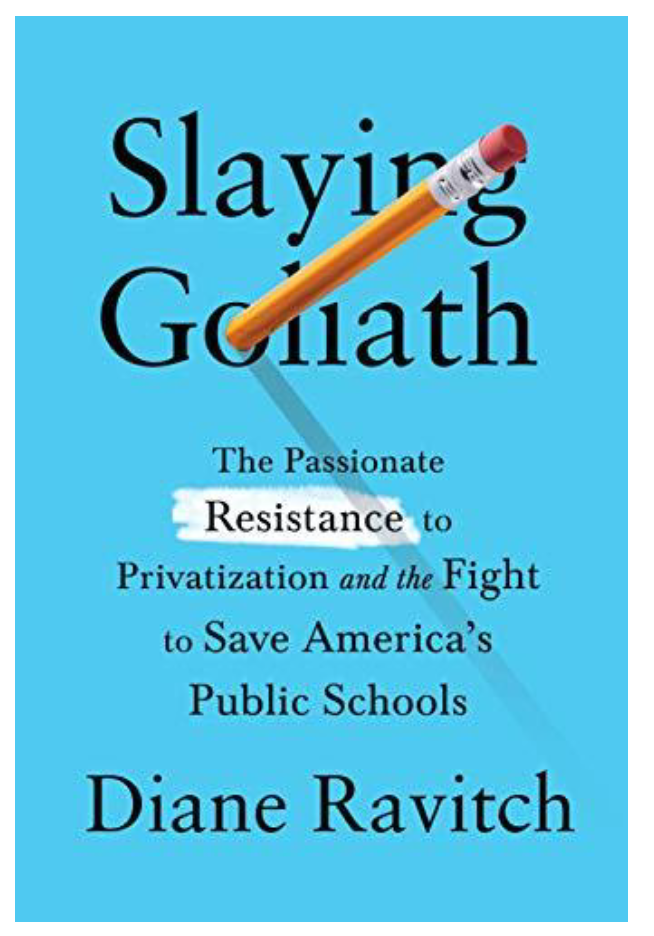
Forgive me for posting two reviews of my last book, which was published on January 20, 2020.

As I explained in the previous post, I did not see either of these reviews until long after they appeared in print. Slaying Goliath appeared just as COVID was beginning to make its mark, only a few weeks before it was recognized as a global pandemic. In writing the book, I wanted to celebrate the individuals and groups that demonstrated bravery in standing up to the powerful, richly endowed forces that were determined to privatize their public schools through charters or vouchers.

America’s public schools had educated generations of young people who created the most powerful, most culturally creative, most dynamic nation on earth. Yet there arose a cabal of billionaires and their functionaries who were determined to destroy public schools and turn them into privately-managed schools and to turn their funding over to private and religious schools.

Having worked for many years inside the conservative movement, I knew what was happening. I saw where the money was coming from, and I knew that politicians had been won over (bought) by campaign contributions.

Publishing a book at the same time as a global pandemic terrifies the world and endangers millions of people is bad timing, for sure.

But the most hurtful blow to me and the book was a mean-spirited review in The New York Times Book Review. The NYTBR is unquestionably the most important review that a book is likely to get. Its readership is huge. A bad review is a death knell. That’s the review I got. The reviewer, not an educator or education journalist, hated the book. Hated it. I found her review hard to read because she seemed to reviewing a different book.

I was completely unaware that Bob Shepherd reviewed the review. I didn’t see it until two or three years after it appeared. He wrote what I felt, but I, as the author, knew that it was very bad form to complain, and I did not.

So I happily post Bob Shepherd’s review of the review here.

I am almost four years late in discovering this review by two scholars for whom I have the greatest respect: David C. Berliner and Gene V. Glass.

I was happy to read this review because Slaying Goliath had a checkered fate. It was published in mid-January 2020. I went on a book tour, starting in Seattle. By mid-February, I made my last stop in West Virginia, where I met with teachers and celebrated the two-year anniversary of their strike, which shut down every school in the state.

As I traveled, news emerged of a dangerous “flu” that was rapidly spreading. It was COVID; by mid-March, the country was shutting down. No one wanted to read about the fight to save public schools or about its heroes. The news shifted, as it should have, to the panicked response to COVID, to the deaths of good people, to the overwhelmed hospitals and their overworked staff.

To make matters worse, the New York Times Book Review published a very negative review by someone who admired the “education reform” movement that I criticized. I thought of writing a letter to the editor but quickly dropped the idea. I wrote and rewrote my response to the review in my head, but not on paper.

Then, again by happenstance, I discovered that Bob Shepherd had reviewed the review of my book in The New York Times. He said everything that I wish I could have said but didn’t. His review was balm for my soul. Shepherd lacerated the tone and substance of the review, calling it an “uniformed, vituperative, shallow, amateurish ‘review.’” Which it was. His review of the review was so powerful that I will post it next.

Then, a few weeks ago, I found this review by Berliner and Glass.

The review begins:

Reviewed by Gene V Glass and David C. Berliner Arizona State University, United States

They wrote:

In a Post-Truth era, one must consider the source. 

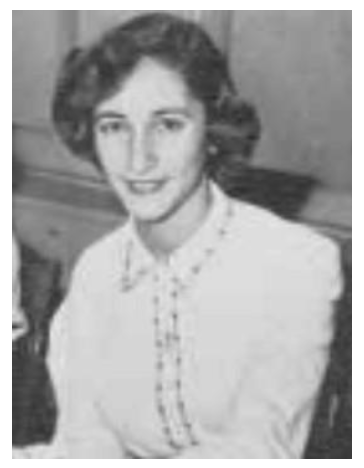
In this case, the source is Diane Rose Silvers, the third of eight children of Walter Silverstein, a high school drop-out, and Ann Katz, a high school graduate. The Silvers were a middle-class Houston family, proprietors of a liquor store, and loyal supporters of FDR.

After graduation from San Jacinto High School, she enrolled in Wellesley College in September, 1956. Working as a “copy boy”for the Washington Post, Diane met Richard Ravitch, a lawyer working in the federal government and son of a prominent New York City family. They married on June 26,1960, in Houston, two weeks after Diane’s graduation from Wellesley. The couple settled in New York City, where Richard took employment in the family construction business. He eventually served as head of the Metropolitan Transit Authority and Lieutenant Governor in the 2000s, having been appointed by Democratic Governor David Paterson.

 Diane bore three sons, two of whom survived to adulthood. Diane and Richard ended their 26-year marriage in 1986. She had not been idle. For a period starting in 1961, Diane was employed by The New Leader, a liberal, anti-communist journal. She later earned a PhD in history of education from Columbia in 1975 under the mentorship of Lawrence Cremin.

Diane was appointed to the office of Assistant Secretary of Education, in the Department of Education by George H. W. Bush and later by Bill Clinton. In 1997, Clinton appointed her to the National Assessment Governing Board (NAGB), on which she served until 2004. 

Ravitch worked “… for many years in some of the nation’s leading conservative think tanks.

Read the full pdf here.

Frank G. Splitt is a regular reader of the blog and a retired engineer of great distinction. He sent me his Amazon review of Liz Cheney’s best-selling book about the Congressional hearings conducted by the January 6 Select Committee. I have been meaning to review the book myself but put it off and am glad to print Frank’s review, as I agree with him.

I found the book to be absorbing, revealing what Congressional leaders said to one another on the day of the insurrection, as well as the inner workings of the January 6 Committee. Cheney doesn’t pull her punches. She was appalled by Trump’s disrespect for the Constitution and his egregious lying. She is contemptuous of Congressionals leaders like Kevin McCarthy who first condemned the violent attack, then turned on a dime to bend his knee to Trump.

Liz Cheney gave up her leadership role because of strong principles. Chief among these was her oath to the Constitution. She refused to betray it, and by doing so, she gave up the likelihood that she would one day be Speaker of the House. Very few Republicans were willing to follow her lead. I have immense respect for her.

Frank G. Splitt writes:

Liz Cheney wrote the book with purpose in mind: to assure that the January 6 Select Committee’s work that revealed the culpability of former president Donald Trump in the January 6.2021, attack on the U.S. Capital would not only be thoroughly documented for posterity, but would also illuminate in detail his criminal behavior backed by solid evidence via trustworthy testimony, mostly from members of his own administration.


The book is fact-based and well organized—providing the author’s first-hand beginning-to-end account of the January 6th, 2021, insurrection from outside and inside the halls of the Capital. She tells in consummate detail how, in the aftermath of the 2020 presidential election, Donald Trump ignored the rulings of dozens of courts, plotted to overturn a lawful election, and provoked a violently egregious attack on our Capitol. Cheney goes on to tell how Trump and his congressional enablers broke their oaths of office— betraying the American people and the Constitution in their attempt to prevent the counting of electoral votes and so keep Trump in office.


Liz Cheney helped organize and lead the Congressional Select Committee investigation into how it happened. In her book she tells the story of this perilous moment in our history—exposing those who helped Trump spread his stolen-election lie while forsaking her promising political career in the process.


In the end, I am disappointed not only with the gullibility of so many American citizens who buy into Trump‘s lies, but even more so with craven politicians who keep silent for fear of losing their positions in Congress. No doubt, Cheney would have been near the top of the list of courageous U. S, Senators in John Kennedy’s 1956 book Profiles in Courage.


I am also somewhat disappointed that Trump did not respond to the Select Committee’s subpoena to testify before the committee. By not appearing, Cheney was denied the opportunity to emulate Senate lawyer Joseph Welch’s admonition of lying Wisconsin Senator Joseph McCarthy at the 1953 Army-McCarthy hearing by saying: Mr. Former President, you’ve done enough. Have you no sense of decency, sir, at long last? Have you left no sense of decency?


This should be a must-read book for every American voter as Cheney’s warning concerning the likely consequences of Trump’s return to office is indeed chilling.

I recently went to see “Cabrini,” the story of America’s first saint. It’s a wonderful film, and I highly recommend it.

Mother Cabrini, as she was known, founded an order of sisters in Italy that created orphanages and homes for poor children. She longed to launch a mission to China but the Pope denied her request and told her to go to America instead, where there were large numbers of impoverished Italian immigrants.

She and several of her sisters traveled by ship to New York City in 1889 and immediately established residence in the Five Points, a congested and dirty neighborhood teeming with indigent Italian immigrants. The sisters opened a home and school for vagrant children living in squalid conditions.

Mother Cabrini was always in frail health but she had an iron will and surmounted every obstacle that blocked her desire to serve. She was a fearless feminist. The Archbishop of New York was not welcoming but she overcame his opposition. The Mayor of the city tried to close down her orphanage and frustrate her plans to grow, but she persisted.

She was ingenious. She sought out a reporter for The New York Times, brought him to see the living conditions of her district, and he wrote about her work. Children were “living worse than rats,” in sewers under the streets, he wrote. Anything to stay alive. Mother Cabrini ran a school where they learned English but sang songs in Italian. She wanted them to fit into their new homeland but not to lose touch with their ancestral home.

Let me emphasize that while the story centers on a nun with an iron will, there is no religious propagandizing. None. It’s a movie about courage, dedication, kindness, and a fierce desire to help the neediest. Mother Cabrini eventually established orphanages and hospitals around the world.

The lesson that I took away from the film was about the hard life of immigrants and the valor of those who reached out to help them survive. In the 19th and early 20th centuries, there were no government services. People came pouring in and had to make it in their own or die from hunger and disease.

Mother Cabrini’s love for the immigrants of her time stand in sharp contrast to the political rhetoric of today, when they are vilified as rapists, drug dealers, murderers, invaders. Even the children.

As I watched the film, I found myself wishing that Trump might see it. I know he never will. Its message is not religious. It’s about kindness, compassion, dedication, and selflessness. He would say that Mother Cabrini was a radical socialist, a Communist, a sucker, a fool, and not his type.

In addition to the story line, I loved the depiction of early New York City (even though the credits say the film was made in Buffalo).