Archives for category: Fraud

If you missed the 10th annual conference of the Network for Public Education, you missed some of the best presentations in our ten years of holding conferences.

You missed the brilliant Gloria Ladson-Billings, Professor Emerita and formerly the Kellner Family Distinguished Professor of Urban Education in the Department of Curriculum and Instruction at the University of Wisconsin-Madison.

Ladson-Billings gave an outstanding speech that brought an enthusiastic audience to its feet. She spoke about controversial topics with wit, charm, wisdom, and insight.

Fortunately, her presentation was videotaped. If you were there, you will enjoy watching it again. If you were not there, you have a treat in store.

Pennsylvania has long awarded generous fees to cybercharters, despite the fact that prominent cybercharter founders have been convicted of massive frauds. In this article, Lawrence Feinberg and Rob Gleason call for a change in the funding formula, which unfairly benefits the cybercharters.

Lawrence Feinberg is the director of the Keystone Center for Charter Change and a member of the Haverford School Board in Delaware County. Rob Gleason is former chairman of the Pennsylvania Republican Party and is president of the Westmont Hilltop School Board in Cambria County.

They write:

School boards in 466 of Pennsylvania’s 500 school districts have passed resolutions calling for common-sense reforms to the state’s 26-year-old charter school law, such as those included in House Bill 1422.

That’s several thousand locally elected, volunteer school directors – Republicans and Democrats – responsible for levying taxes on their neighbors in order to fund public education.

In July, the state House of Representatives, in a bipartisan vote that saw 20 GOP members join with Democrats, agreed with those school directors and voted for HB 1422, which makes comprehensive and long-overdue reforms to the way cyber charter schools are funded and governed.

Most importantly, HB 1422 establishes a statewide tuition rate of $8,000 per non-special education student and a tiered tuition rate for special education students that more accurately reflects the lower cost of providing a virtual education and that provides resources based on a student’s special education needs.

The cyber charter community has come out strong against HB 1422, alleging that the reduction in tuition rates will close schools and eliminate school choice. However, that’s simply not true and is based on a desperate desire to hang on to the status quo, in which cyber charter schools are benefiting by hundreds of millions of taxpayer dollars in profit.

Think that’s an exaggeration? In the annual audit for the 2021-22 school year, the state’s largest cyber charter school reported total revenues of $397.5 million while only incurring $275 million in expenses, for a profit of $122.5 million. Statewide, the reforms included in HB 1422 could save school districts – and taxpayers – more than $400 million.

That’s serious money for the public school districts that pay those bills and the taxpayers who have taken the brunt of the local property tax increases required to pay them.

Since its introduction, HB 1422 has been the subject of numerous attacks that paint the bill in a false light. But what the attacks fail to mention is that the bill contains a number of provisions that will help cyber charters make and save money. Under the bill:

Like any large, profitable business, the cyber charter community is looking to protect its profits.

• Cyber charters will be able to sell their courses and programs to other schools.

• School districts will be required to transport special education students who choose to attend a cyber charter school.

• Other public schools will be required to provide space for cyber charter school students to take state tests.

• Intermediate units will be required to provide ser- vices and supports to cyber charter school students who need them.

This is not a Republican or Democratic issue. This is not a school choice issue. This is simply about the most efficient and effective way to use limited resources to provide public education.

When you sit on a school board as we do and you see how much money is going to cyber charter schools, you start to take issue with those ubiquitous (and expensive) ads that say cyber charter schools are “free” when you know that you’re going to have to raise taxes on your friends and neighbors or cut programs and services to kids in your school district to pay those costs.

We hope you’ll join us in supporting HB 1422 and calling on the state Senate to act on the bill and get it to Gov. Josh Shapiro’s desk.

The governor of Ohio is trying to take control of the state school board. They are too independent for Governor Mike DeWine’s taste because they are elected, not appointed by him. As an official body, the school board sued the state to block the takeover and was represented by the state Attorney General’s office. Unfortunately, their lawyer—it was discovered—was also advising the defense counsel. Their lawyer was “Chief Counsel and Ethics Officer for the Ohio Attorney General.” He will no longer be representing the state school board.

The Ohio Capital Journal reported:

An Ohio Attorney General lawyer for state school board members in their ongoing lawsuit to stop a massive transfer of power over K-12 education from the board to the governor’s office was found by the court to be giving legal advice to the defense counsel, also a member of the Attorney General’s Office.

Chief Counsel and Ethics Officer for the Ohio Attorney General Bridget Coontz has been disqualified from participating in the lawsuit anymore after sending an email on Oct. 3 that included legal advice to the counsel for defendants, Julie Pfeiffer, the section chief at the Ohio Attorney General’s Office, according to new court documents in the Franklin County Court of Common Pleas.

“In the email, Coontz offered legal advice to Counsel Pfeiffer clearly related to this case,” Franklin County Common Please Court Judge Karen Held Phipps wrote in an order disqualifying Coontz on Monday. “Coontz offered legal advice to Counsel Pfeiffer, which was directly adverse to Plaintiffs (Christina) Collins and (Michelle) Newman, who Coontz represented in this case. … Public confidence in the outcome of this case requires that Coontz be disqualified from any further participation.”

Seven members of the Ohio State Board of Education originally filed a lawsuit against Ohio Gov. Mike DeWine on Sept. 19 in an attempt to block an overhaul of K-12 education that was included by lawmakers in the state’s two-year budget this summer. Judge Phipps issued the temporary restraining order Sept. 21. Coontz filed a motion on Sept. 27 to substitute the Attorney General as counsel for the original seven plaintiffs.

“Coontz assured the Court that there was no danger of a conflict-of-interest in this situation because the Office of the Attorney General maintained a complex screening process in order to eliminate any such conflict of interest,” Phipps wrote.

When a conflict comes up between Ohio Attorney General clients, an ethics screen is set up between the AG lawyers and is distributed to all attorneys and supervisors involved in the case, Phipps said Coontz explained to the court during an expedited briefing process…

But Coontz mistakenly sent an email to a recipient on the other side.

According to Judge Phipps, Coontz told the court the ethics screen “did not become necessary because she determined that a conflict of interest did not exist.”

“Coontz’s argument in this regard is absurd on its face,” Judge Phipps wrote. “The Court strongly disagrees that Coontz personally gets to determine when a conflict of interest has arisen. The main concern here is the appearance of impropriety, which is precisely what Coontz’s email created. … Accordingly, Coontz is hereby disqualified from any further participation in this matter.”

The lawsuit is trying to stop the Ohio Department of Education from transitioning to the Ohio Department of Education and Workforce, which would create a cabinet-level director position and put the department under the governor’s office.

The latest blow to Trump’s reputation came in a court in New York, when the judge ruled that Trump fraudulently overvalued his properties in order to get bank loans. Of course, his base won’t care.

I have a personal story that supports the judgement. Last fall, I drove with my partner to Saratoga Springs, New York, to visit a kayak maker. As we were driving up the Taconic State Parkway, we passed a sign that said “Donald J. Trump State Park.” I had never heard of such a park, so I googled and found a Wikipedia entry that explained.

Trump purchased the property in 1998 with plans to build a $10 million private golf course. Totalling $2.5 million, it was purchased in two sections: Indian Hill for $1.75 million and French Hill for $750,000.[1]The land contained significant wetlands and development faced strict environmental restrictions and permitting requirements.[2]He donated it in 2006[3][4] after he was unable to gain town approvals to develop the property.[2] At that time Trump claimed the parcel was worth $100 million.[1] He used the donation as a tax write-off.[5] The donation was praised by governor George Pataki. Trump said, “I hope that these 436 acres of property will turn into one of the most beautiful parks anywhere in the world.”[1]

The park is now abandoned. Trump paid $2.5 million for the land, which was not suitable for development. He claimed the land was worth $100 million and used that amount to reduce his taxes. Nice increase in value on land that that could not be developed.

Donald Trump’s lawyers appealed for a delay in the trial over how much money he should pay as a penalty for overvaluing his properties. The appeals court rejected his request. So the Republicans continue to have a candidate far ahead of the field who is under the cloud of multiple indictments. None of the other candidates are even close to Trump. Media reports are circulating that big-donor Republicans are begging Virginia Governor Youngkin to enter the race.

The New York Times reported:

Donald J. Trump’s civil fraud trial over accusations that he inflated the value of his properties by billions of dollars could begin as soon as Monday after a New York appeals court rejected the former president’s attempt to delay it.

The appeals court, in a terse two-page order Thursday, effectively turned aside for now a lawsuit Mr. Trump filed against the trial judge, Arthur F. Engoron. The lawsuit had sought to delay the trial, and ultimately throw out many of the accusations against the former president.

Thursday’s ruling came two days after Justice Engoron issued an order that struck a major blow to Mr. Trump, finding him liable for having committed fraud by persistently overvaluing his assets and stripping him of control over his New York properties.

Justice Engoron sided with the New York attorney general, Letitia James, who last year sued Mr. Trump, accusing him of inflating his net worth to obtain favorable loan terms from banks.

Mr. Trump is not entirely out of options in blocking the trial from moving forward. He can still appeal Justice Engoron’s Tuesday order, but it is unclear whether the appeals court would consider that.

A trial, the result of which would be decided by Justice Engoron, not a jury, would resolve other aspects of the case, most notably whether Mr. Trump and his company will face other punishments, including a financial penalty. Ms. James is seeking to recover $250 million in ill-gotten gains.

New York State Attorney General Letitia James sued Donald Trump, asserting that he overvalued his assets in order to get favorable terms. The judge ruled against him before the trial, in a major setback for Trump. He will appeal.

The New York Times reported:

A New York State Supreme Court judge issued a ruling on Tuesday that, if it stands, would have major consequences for Donald J. Trump.

The ruling came as part of the New York attorney general’s civil case against Mr. Trump. The attorney general, Letitia James, has accused the former president of fraudulently overstating the value of his assets on annual financial statements by as much as $2.2 billion a year in order to receive favorable terms on loans and benefits.

In the ruling, the judge, Arthur F. Engoron, agreed that Mr. Trump committed fraud when he sent those statements to banks and insurance firms. A trial in the case could start as soon as Monday; if Mr. Trump does not successfully have the ruling reversed before then, the proceeding will largely focus on the size of the penalty against him. Ms. James is seeking a fine of $250 million.

The financial statements are deceptive, Justice Engoron wrote, and he punctuated his order with harsh criticisms of the legal strategies deployed by Mr. Trump’s lawyers, whom he fined $7,500 each for using arguments that he had already rejected.

Mr. Trump, a Republican, has denied all wrongdoing and accused Ms. James, a Democrat, of political persecution. He noted Tuesday in a post on his social media platform, Truth Social, that Justice Engoron was also a Democrat…

Mr. Trump’s lawyers were preparing to challenge Ms. James’s accusation that he had fraudulently inflated his net worth by billions of dollars, but Justice Engoron has short-circuited that aspect of the trial. In effect, Justice Engoron ruled that no trial was necessary to determine that Mr. Trump’s financial statements were fraudulent.

In his ruling, Justice Engoron wrote that the statements that Mr. Trump had submitted to banks and insurance companies “clearly contain fraudulent valuations that defendants used in business…”

Ms. James had sought to bar Mr. Trump from doing business in New York, in part by canceling certificates that allow his properties to operate there. Justice Engoron granted that punishment, which could have enormous repercussions for the Trump Organization.

For example, Mr. Trump could lose control of several properties, including Trump Tower in Midtown Manhattan and a flagship commercial building at 40 Wall Street. His grip over his Westchester County golf club is also threatened. At one point in his order, Justice Engoron referred to the limited liability companies that he had shut down as “the canceled LLCs.”

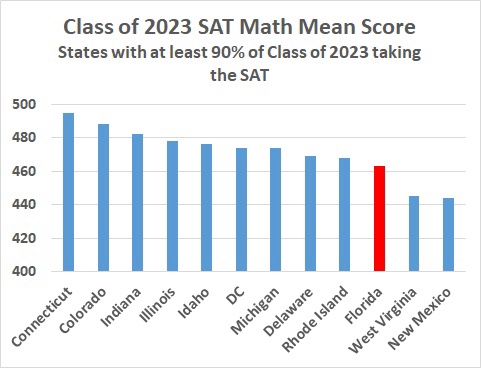
A reader who identifies as “Democracy” left a comment here about DeSantis’ war against the College Board’s Advanced Placement (AP) courses. DeSantis manufactured a culture war issue, a familiar tactic for him, but don’t defend the AP exams: They are worthless, says he or she.

Democracy wrote:

While I certainly do not agree with — and am appalled by — the Florida dictate, I hate to see the College Board’s Advanced Placement (AP) program in the bannerhead of this issue because it makes it appear that the AP program is somehow being victimized, and it helps to propagate the AP brand.

It’s important to separate the wheat from the chaff here. The Florida requirement – state law – is part of a larger effort by conservatives (Republicans) across the country to, as USA Today put it, “restrict learning and materials about controversial topics.” Or, in other words, topics that conservatives hate to talk about: racism, misogyny, equality, sedition, tolerance, democracy, reproductive rights, climate change, sex…..

The original law required a cataloging of all books in “a school library media center.” The DeSantis-controlled Florida DOE interpreted that broadly to include classrooms. The Republican legislature amended the law to say that a school library media center is

“any collection of books, ebooks, periodicals, or videos maintained and accessible on the site of a school, including in classrooms.”

As The Sarasota Herald Tribune reported in April of this year,

“The law, governing instructional materials for classes from kindergarten to 12th grade, passed last year and holds school districts responsible for the content of all materials used in a classroom, made available in a school library or included on a reading list. It requires each book in a school library to be certified by a media specialist and for a list of these materials to be available on school websites. The law took effect in January.”

This is incredibly cumbersome, especially for elementary school teachers who have large troves of books for their students. And if it reeks of conservative religious state-imposed censorship, that’s probably because it is. As ABC News (and other media) reported, “Books targeted by conservative groups were overwhelmingly written by or about people of color and LGBTQ people, according to anti-censorship researchers.”

All of this is worrisome. It’s dangerous territory.

But that does not mean that AP is the victim. Nor should it imply that AP is actually educationally beneficial for most students. As I’ve noted here previously, more colleges and universities are either refusing to accept AP test scores for credit, or they are limiting credit awarded only for a score of 5 on an AP test. The reason is that they find most students awarded credit for AP courses are just generally not well-prepared.

Dartmouth no longer gives credit for AP test scores. It found that 90 percent of those who scored a 5 on the AP psychology test failed a Dartmouth Intro to Psych exam. A 2006 MIT faculty report noted “there is ‘a growing body of research’ that students who earn top AP scores and place out of institute introductory courses end up having ‘difficulty’ when taking the next course.” Two years prior, Harvard “conducted a study that found students who are allowed to skip introductory courses because they have passed a supposedly equivalent AP course do worse in subsequent courses than students who took the introductory courses at Harvard.”

In The ToolBox Revisited (2006) Clifford Adelman scolded those who had misrepresented his original ToolBox research by citing the importance of AP “in explaining bachelor’s degree completion. Adelman said, “To put it gently, this is a misreading.” Moreover, in statistically analyzing the factors contributing to the earning of a bachelor’s degree, Adelman found that Advanced Placement did not reach the “threshold level of significance.”

College Board executives often say that if high schools implement AP courses and encourage more students to take them, then (1) more students will be motivated to go to college and (2) high school graduation rates will increase. There are educators who parrot the College Board line. Researchers Kristin Klopfenstein and Kathleen Thomas “conclude that there is no evidence to back up these claims.”

Why do students take AP? Because they’ve been told to. Because they’re “trying to look good” to colleges in the “increasingly high-stakes college admission process,” and because, increasingly, “high schools give extra weight to AP courses when calculating grade-point averages, so it can boost a student’s class rank.” It’s a depraved stupid circle that has swept up parents, guidance counselors, administrators and school boards, teachers, and the general public – not to mention public education reporters – into the misbelief that “AP is better.” It isn’t.

One student who got caught up in the AP hype cycle –– taking 3 AP courses as a junior and 5 as a senior –– and only got credit for one AP course in college, reflected on his AP experience. He said nothing about “rigor” or “trying to be educated” or the quality of instruction, but remarked “if i didn’t take AP classes, it’s likely I wouldn’t have gotten accepted into the college I’m attending next year…If your high school offers them, you pretty much need to take them if you want to get into a competitive school.”

What do students actually learn from taking these “rigorous” AP courses and tests? For many, not much. One student remarked, after taking the World History AP test, “dear jesus… I had hoped to never see ‘DBQ’ ever again, after AP world history… so much hate… so much hate.”

And another added, “I was pretty fond of the DBQ’s, actually, because you didn’t really have to know anything about the subject, you could just make it all up after reading the documents.”

Another AP student related how the “high achievers” in his school approached AP tests: “The majority of high-achieving kids in my buddies' and my AP classes couldn’t have given less of a crap. They showed up for most of the classes, sure, and they did their best to keep up with the grades because they didn’t want their GPAs to drop, but when it came time to take the tests, they drew pictures on the AP Calc, answered just ‘C’ on the AP World History, and would finish sections of the AP Chem in, like, 5 minutes. I had one buddy who took an hour-and-a-half bathroom break during World History. The cops were almost called. They thought he was missing.”

And an AP reader (grader), related this about the types of essays he saw:

“I read AP exams in the past. Most memorable was an exam book with $5 taped to the page inside and the essay just said ‘please, have mercy.’ But I also got an angry breakup letter, a drawing of some astronauts, all kinds of random stuff. I can’t really remember it all… I read so many essays in such compressed time periods that it all blurs together when I try to remember.”

The Florida law is clearly not in the interests of kids and learning. But AP ain’t necessarily all that either.

CNN reports that telephone scams now use artificial intelligence to recreate the voice of a loved one who is in desperate trouble and needs help or ransom money right away. In this example, a mother gets a call from what sounds like her daughter, who has been kidnapped, and the gruff voice of a man demanding $1 million to ransom her. It’s a scam, but sometimes it works. If you get a call like this, don’t fall for it. Call your child, call the police, record the call.

The Boston Globe reported on a scam that has become commonplace. An elderly person gets a call from someone with a youthful voice who says, “Grandma, I’m in trouble. I rented a car and ran a red light. I crashed into a car driven by a pregnant woman. I’m in jail, and I need money to make bail. Please help me.”

This happened to a 93-year-old woman in Massachusetts. She rushed to the bank, withdrew $9,500, spoke to a smooth-talking man who claimed to be a lawyer, and handed the money over to a LYFT driver.

I mention this because I received the same scam call. A young man called, claiming to be my grandson. He was in a car accident, he said. It was his fault. He needed money right away for bail. He gave me the badge number and telephone number of the arresting officer. I asked if he had called his mother. He said he couldn’t reach her. I hung up, called his mother, and she said the grandson in question was in his dorm, preparing for finals. I didn’t fall for the scam.

But this grandmother did.

Last month, a 93-year-old grandmother from Pembroke took a call from someone she thought was her granddaughter Abby. Through sobs, Abby begged for money to get out of jail.

Yes, it was a scam, and the grandmother ― who asked that her name not be used for fear of being targeted by other scammers ― fell for it.

The scammers used a somewhat elaborate ruse that included having “Abby’s lawyer” come on the phone to matter-of-factly explain the necessary steps to secure her release.

It was a cruel and wicked exploitation of a grandmother’s love and concern, perpetrated by slick con artists who have no decency.

But the grandmother and her family said they were also upset that Bank of America, from which she hurriedly withdrew $9,500 in cash, did nothing to stop her from throwing away thousands of dollars.

The family also wondered about Lyft, the ridesharing giant, which picked up the cash and delivered it to the scammers, apparently unwittingly.

The family contacted me to call attention to the roles played by two of the country’s biggest corporations and to warn other elders and their families to be on guard, they said.

When the grandmother answered the phone in her home on the morning of Feb. 25 she was stunned to hear a hysterical “Abby” pleading for help.

Here’s what happened:

“Grandma, you got to help,” the voice said. It sounded like Abby, who is in her early 20s. She grew up nearby and spent plenty of time with her grandmother.

She told “Grandma” she was accused of texting while driving and causing an accident in which the pregnant driver of the other car was hurt and taken to the hospital. “Abby” insisted it wasn’t her fault and told “Grandma” she broke her nose in the accident.

“Abby” swore her grandmother and grandfather (he’s 96) to secrecy before putting someone purporting to be her lawyer on the phone. He told her, among other things, that the money was “fully refundable.”

The grandmother hurried off alone to a Bank of America branch office in nearby Marshfield, where she regularly does her banking, feeling anxious and afraid.

At the teller’s window, she showed her driver’s license and presented a check made out to cash. Very few words were exchanged before the teller put a small stack of bills into a white envelope and slid it to the grandmother.

The grandmother was so preoccupied with her mission that she left the bank without counting the money or even looking in the envelope, she said.

Back home, she called the telephone number the phony lawyer had given her. He instructed her to find a small box into which to put the envelope.

The “lawyer” told the grandmother someone would come to her house to pick up the box and gave her the license plate number, make, and model of the car.

A few minutes later, the “lawyer,” still speaking in a reassuring voice on the phone, told her to bring the package to the driver. The driver said little before driving away with it.

About 30 minutes later, the “lawyer” called again and told the grandmother he had bad news: The pregnant woman’s baby had died and Abby was now charged with manslaughter. He needed $9,000 more to get her released.

That’s when she told her son, who happened to be visiting, what was happening. He spoke with the “lawyer,” whom he described as sounding “unbelievably calm and professional.” The “lawyer” told the son the name of the jail where Abby was supposedly being held.

The son hung up and called his niece. She answered. The jig was up.

The son called back the “lawyer.” The call went dead. (I called the same number several times but kept getting a fast busy signal.) The son gave the police the license plate number given to the grandmother. Police said the pickup was made by a Lyft driver.

The reporter for the Globe, Sean P. Murphy, was able to persuade Bank of America to refund the woman’s payout. The scammer got away with it.

Thom Hartmann writes here about how George W. Bush and Dick Cheney cynically used the attacks of 9/11 to get us into America’s longest war. They wanted to go to war. I can’t help but think that if 537 votes in Florida had gone a different way, the world would be a different place today. It was those 537 votes that made Bush the President, not Al Gore. Remember that: Every vote counts.

Hartmann writes:

America has been lied into too many wars. It’s cost us too much in money, credibility, and blood. We must remember the lies, and tell our children about them so that memory isn’t lost…

Today is 9/11, the event that first brought America together and then was cynically exploited by George W. Bush and Dick Cheney to have a war against Iraq, followed by their illegal invasion of Afghanistan just a bit more than a year earlier.

Yet the media today (so far, anyway) is curiously silent about Bush and Cheney’s lies.

Given the costs of both these wars — and the current possibility of our being drawn deeper into conflict in both Ukraine and Taiwan — it’s an important moment to discuss our history of wars, both illegal and unnecessary, and those that are arguably essential to the survival of democracy in the world.

To be clear, I support US involvement — and even an expanded US involvement — in the defense of the Ukrainian democracy against Putin’s Hitler-grabs-Poland-like attack and mass slaughter of Ukrainian civilians. Had the world mobilized to stop Hitler when he invaded Poland in 1939 there almost certainly wouldn’t have been either the Holocaust or WWII, which is why Europe is so united in this effort.

If Putin succeeds in taking Ukraine, his administration has already suggested that both Poland and Moldova are next, with the Baltic states (Latvia, Lithuania, Estonia) also on the menu. That would almost certainly lead to war in Europe.

And China is watching: a Putin victory in Ukraine will encourage Xi to try to take Taiwan. Between the two — war in both Europe and the Pacific — we could find ourselves in the middle of World War III if Putin isn’t stopped now.

That said, essentially defensive military involvement like with Ukraine or in World War II have been the exception rather than the rule in American history. We’ve been far more likely to have presidents lie us into wars for their own personal and political gain than to defend ourselves or other democracies.

For example, after 9/11 in 2001 the Taliban that then ran Afghanistan offered to arrest Bin Laden, but Bush turned them down because he wanted to be a “wartime president” to have a “successful presidency.”

The Washington Post headline weeks after 9/11 put it succinctly: “Bush Rejects Taliban Offer On Bin Laden.” With that decision not to arrest and try Bin Laden for his crime but instead to go to war, George W. Bush set the US and Afghanistan on a direct path to disaster (but simultaneously set himself up for re-election in 2004 as a “wartime president”).

To further complicate things for Bush and Cheney, the 9/11 attacks were not planned, hatched, developed, practiced, expanded, worked out, or otherwise devised in Afghanistan or by even one single citizen of Afghanistan.

That country and its leadership in 2001, in fact, had nothing whatsoever to do with 9/11, as I detailed in depth here on August 15th of last year. The actual planning and management of the operation was done out of Pakistan and Germany, mostly by Khalid Sheik Mohammed.

The Taliban were bad guys, trashing the rights of women and running a tinpot dictatorship, but they represented no threat whatsoever to America or our allies.

Almost two decades later, though, then-President Trump and Mike Pompeo gave the Taliban everything they wanted — power, legitimacy, shutting down 9 of the 10 US air bases in that country to screw incoming President Joe Biden, and the release of 5000 of Afghanistan’s worst Taliban war criminals — all over the strong objections of the democratically elected Afghan government in 2019.

Trump did this so could falsely claim, heading into the 2020 election, that he’d “negotiated peace” in Afghanistan, when in fact he’d set up the debacle that happened around President Biden’s withdrawal from that country.

”The relationship I have with the Mullah is very good,” Trump proclaimed — after ordering the mullah who then named himself President of Afghanistan — freed from prison over the furious objection of Afghan’s government, which Trump had cut out of the negotiations.

Following that betrayal of both Afghanistan and America, Trump and the GOP scrubbed the record of their embrace of the Taliban from their websites, as noted here and here.

And the conservative Boris Johnson administration in the UK came right out and said that Trump’s “rushed” deal with the Taliban — without involvement of the Afghan government or the international community — set up the difficulties Biden faced.

“The die was cast,” Defense Minister Ben Wallace told the BBC, “when the deal was done by Donald Trump, if you want my observation.”

So, Republican George W. Bush lied us into both the Afghanistan and Iraq wars, and then Donald Trump tried to lie us out of at least one of them.

But this was far from the first time a president has lied us into a war.

— Vietnam wasn’t the first time an American president and his buddies in the media lied us into a war when Defense Secretary Robert McNamara falsely claimed that an American warship had come under attack in the Gulf of Tonkin and LBJ went along with the lie.

— Neither was President William McKinley lying us into the Spanish-American war in 1898 by falsely claiming that the USS Maine had been blown up in Havana harbor (it caught fire all by itself).

— The first time we were lied into a major war by a president was probably the Mexican-American war of 1846 when President James Polk lied that we’d been invaded by Mexico. Even Abraham Lincoln, then a congressman from Illinois, called him out on that lie.

— You could also argue that when President Andrew Jackson signed the Indian Removal Act in 1830 leading to the Trail of Tears slaughter and forced relocation of the Cherokee under President Buchanan (among other atrocities) it was all based on a series of lies.

Bush’s lies that took us into Afghanistan and, a bit over a year later into Iraq, are particularly egregious, however, given his and Cheney’s reasons for those lies.

In 1999, when George W. Bush decided he was going to run for president in the 2000 election, his family hired Mickey Herskowitz to write the first draft of Bush’s autobiography, A Charge To Keep.

Although Bush had gone AWOL for about a year during the Vietnam war and was thus apparently no fan of combat, he’d concluded (from watching his father’s “little 3- day war” with Iraq) that being a “wartime president” was the most consistently surefire way to get reelected (if you did it right) and have a two-term presidency.

“I’ll tell you, he was thinking about invading Iraq in 1999,” Herskowitz told reporter Russ Baker in 2004.

“One of the things [Bush] said to me,” Herskowitz said, “is: ‘One of the keys to being seen as a great leader is to be seen as a commander-in-chief. My father had all this political capital built up when he drove the Iraqis out of (Kuwait) and he wasted it.

“[Bush] said, ‘If I have a chance to invade Iraq, if I had that much capital, I’m not going to waste it. I’m going to get everything passed I want to get passed and I’m going to have a successful presidency.’”

The attack on 9/11 gave Bush his first chance to “be seen as a commander-in-chief” when our guy Osama Bin Laden, who the Reagan/Bush administration had spent $3 billion building up in Afghanistan, engineered an attack on New York and DC.

The crime was planned in Germany and Florida and on 9/11 Bin Laden was, according to CBS News, not even in Afghanistan:

“CBS Evening News has been told that the night before the Sept. 11 terrorists attack, Osama bin Laden was in Pakistan. He was getting medical treatment with the support of the very military that days later pledged its backing for the U.S. war on terror in Afghanistan.”

When the Obama administration finally caught and killed Bin Laden, he was back in Pakistan, the home base for the Taliban.

But attacking our ally Pakistan in 2001 would have been impossible for Bush, and, besides, nearby Afghanistan was an easier target, being at that time the second-poorest country in the world with an average annual per-capita income of $700 a year. Bin Laden had run terrorist training camps there — unrelated to 9/11 — but they made a fine excuse for Bush’s first chance to “be seen as a commander-in-chief” and get some leadership cred.

Cheney, meanwhile, was in a world of trouble because of a huge bet he’d made as CEO of Halliburton in 1998. Dresser Industries was big into asbestos and about to fall into bankruptcy because of asbestos lawsuits that the company was fighting through the court system.

Cheney bet Dresser would ultimately win the suits and had Halliburton buy the company on the cheap, but a year later, in 1999, Dresser got turned down by the courts and Haliburton’s stock went into freefall, crashing 68 percent in a matter of months.

Bush had asked Cheney — who’d worked in his father’s White House as Secretary of Defense — to help him find a suitable candidate for VP.

Cheney, as his company was collapsing, recommended himself for the job. In July of 2000, Cheney walked away with $30 million from the troubled company and the year after that, as VP, Halliburton subsidiary KBR received one of the first no-bid no-ceiling (no accountability and no limit on how much they could receive) multi-billion-dollar military contracts.

Bush and Cheney both had good reason to want to invade Afghanistan in October 2001. Bush was seen as an illegitimate president at the time because his father’s corrupt appointee on the Supreme Court, Clarence Thomas, had cast the deciding vote in the Bush v Gore lawsuit that made him president; a war that gave him legitimacy and the aura of leadership.

Cheney’s company was in a crisis, and Afghanistan War no-bid contracts helped turn around Halliburton from the edge of bankruptcy into one of the world’s largest defense contractors today.

Even Trump had to get into the “let’s lie about Afghanistan” game, in his case to have bragging rights that he’d “ended the war in Afghanistan.”

In 2019, Trump went around the Afghan government (to their outrage: he even invited the Taliban to Camp David in a move that disgusted the world) to cut a so-called “peace deal” that sent thousands of newly-empowered Taliban fighters back into the field, and then drew down our troops to the point where today’s chaos in that country was absolutely predictable.

Trump’s deal was the signal to the 300,000+ Afghan army recruits we’d put together and paid that America no longer had their back and if the Taliban showed up they should just run away. Which, of course, is what happened on Trump’s watch. As Susannah George of The Washington Post noted:

“The Taliban capitalized on the uncertainty caused by the [Trump] February 2020 agreement reached in Doha, Qatar, between the militant group and the United States calling for a full American withdrawal from Afghanistan. Some Afghan forces realized they would soon no longer be able to count on American air power and other crucial battlefield support and grew receptive to the Taliban’s approaches.”

Jon Perr’s article at Daily Kos did a great summary, with the title: “Trump put 5,000 Taliban fighters back in battle and tied Biden’s hands in Afghanistan.”

Trump schemed and lied to help his own reelection efforts, and the people who worked with our military and the US-backed Afghan government paid a terrible price for it.

As President Biden told America:

“When I came to office, I inherited a deal cut by my predecessor—which he invited the Taliban to discuss at Camp David on the eve of 9/11 of 2019—that left the Taliban in the strongest position militarily since 2001 and imposed a May 1, 2021 deadline on U.S. Forces. Shortly before he left office, he also drew U.S. Forces down to a bare minimum of 2,500.

“Therefore, when I became President, I faced a choice—follow through on the deal, with a brief extension to get our Forces and our allies’ Forces out safely, or ramp up our presence and send more American troops to fight once again in another country’s civil conflict. I was the fourth President to preside over an American troop presence in Afghanistan—two Republicans, two Democrats. I would not, and will not, pass this war onto a fifth.”

America has been lied into too many wars. It’s cost us too much in money, credibility, and blood. We must remember the lies, and tell our children about them so that memory isn’t lost.

When President Ford withdrew US forces from Vietnam (I remember it well), there was barely a mention of McNamara’s and LBJ’s lies that got us into that war.

Similarly, today’s reporting on the chaos in Afghanistan and the war to seize the Iraqi oil fields almost never mention Bush’s and Cheney’s lies and ulterior motives in getting us into those wars in the first place.

George Santayana famously noted, “Those who cannot remember the past are condemned to repeat it.”

We can’t afford to let these lies go down the memory hole, like we have the other wars we were lied into that I mentioned earlier. Sadly, it’s clear now that neither Bush nor Cheney will be held accountable for their lies or for the American, Afghan, and Iraqi blood and treasure they cost.

But both should be subject to a clear and public airing of the crimes they committed in office and required — at the very least — to apologize to the thousands of American families destroyed by the loss of their soldier children, parents, and spouses, as well as to the people of both Afghanistan and Iraq.

If the media refuses to mention the Bush/Cheney lies on this anniversary of 9/11, it’s all the more important that the rest of us use this opportunity to do so. Pass it on.

Thom Hartman explains how Trump managed to devour the Republican Party, leaving nothing but an empty shell, without a platform or a philosophy. The internal collapse of the GOP started half a century ago….

He writes:

The Republican presidential debate wasn’t encouraging: Trump’s hold on the GOP appears stronger than ever. And that’s bad news for America.


In Robert Hubbell’s excellent Today’s Edition Newsletter on Substack, he made the point… that Trump’s relationship to the GOP is like that of one of those parasitic wasps that puts an egg into a caterpillar or spider and when the wasp larvae hatches it eats its host, leaving behind only a husk.


I’d take the metaphor a step farther: there’s a fungus, cordyceps, that infects ants and seizes control of their brains to alter their behavior ooto the fungus’ advantage. Another example is the toxoplasma parasite that’s often spread by cats: when mice are infected with the parasite, they no longer fear the smell of cats (and sometimes even want to play with them!), thus becoming easy prey. Scientists call it “fatal attraction.”


What Trump has done to the GOP is really quite impressive, worthy of either cordyceps or toxoplasma. And, frankly, it’s amazing that they didn’t even see it coming or try to stop him. (More on that in a moment.)


A registered Democrat and donor to the Democratic Party his entire life, Trump appropriated much of Bernie Sanders’ platform in 2016 to ingratiate himself with working class Americans.


He promised universal healthcare “cheaper than Obamacare,” taxes so high on the morbidly rich that “my friends won’t speak to me,” said he would bring America’s factories back home from overseas, and pledged to strengthen and expand Social Security and Medicare.


All, it turns out, were lies, although most in his base believe to this day that he did or nearly did all those things.


Having used Bernie’s policy positions (and a healthy dose of dog-whistle racism, essential for the Republican base) to win office in 2016, he proceeded to step into, take over, and then — like cordyceps or toxoplasma — alter top-to-bottom the behavior of the GOP.


Trump’s no idiot. He saw how the GOP was weakened, first by the Nixon scandals, then by Reagan’s neoliberalism that gutted the middle class, then by Bush and Cheney lying us into two unnecessary and illegal wars. The party was in a state of crisis when the nation elected our country’s first Black president, which gave Trump his opening.


Fifty years earlier, Nixon had injected the first “egg” of racism and white supremacy into the GOP with his “silent majority” and “war on drugs.”
The former was an explicit shout-out to white racists abandoned by the Democrats in 1964/1965 when LBJ pushed through and signed the Civil Rights and Voting Rights Acts, the latter an explicit technique to disrupt the Civil Rights and anti-war movements. Abandoning all subtlety, Nixon called it his “Southern Strategy.”


A decade later, Reagan pulled southern racists even deeper into the GOP by kicking off his 1980 election campaign with a speech about “states’ rights” to an all-white audience at an obscure Mississippi county fair near the site where three Civil Rights workers were brutally slaughtered in June, 1964. While most Americans — and all major American newspapers and TV networks — missed the significance of the event, southerners heard the whistle loud and clear.


Reagan amplified it with his “welfare queen” comments and his sympathy for white people offended by a “strapping young buck” using food stamps to “buy a T-Bone steak,” while “you were waiting in line to buy hamburger.”


With the ground laid by Nixon and Reagan, that singular event of Obama’s presidency gave Trump the lever he needed to inject the larvae of his sociopathy into the moribund GOP.


He began with his claim that Obama wasn’t even a US citizen but had been born in Kenya, as clear a reference to race as his assertion earlier this week that the Black prosecutor Fani Willis and the Black judge Tanya Chutkan are both “Riggers.”


But Trump was only able to finally take over the GOP in 2016 because a group of corrupt politicians and rightwing billionaires got there first, setting up the party’s faithful to believe absurd lies and step into alternate realities.


It started with Nixon claiming he had a “secret plan” to end the Vietnam War when, in fact, he’d reached out to the Vietnamese and scuttled an actual peace treaty that LBJ had negotiated in the summer of 1968.


When President Johnson called Republican Senator Everett Dirksen to tell him about it just days before the election, Dirksen accused Nixon of “treason.”
Reagan then convinced America’s Republican voters that if they’d just cut taxes on the morbidly rich, prosperity would “trickle down” to average middle class people because it would “unleash” the “job creators.”


His cutting the top tax bracket from 74 percent to 27 percent unleashed them, all right: it unleashed them to buy thousands of politicians at both the state and federal level; to flip more radio stations, TV stations, and newspapers hard right; to purchase yachts and mansions around the world, and even to build their own spaceships.


Reagan told Republicans if they stopped enforcing the anti-trust laws that Republicans had fought for in the 1890s and Republican presidents Teddy Roosevelt and Robert Taft had used, prices would drop and America’s small towns would prosper. Instead, the average American family pays $5,000 a year more than citizens of countries that still enforce their anti-monopoly laws and small-town America has been gutted, with literally millions of local retailers and small employers put out of business by Big Box stores.


Reagan sold Republicans (and a few Democrats) on the idea that “free trade” would lower costs for Americans and, to some extent, it did: our stores were quickly filled with cheap, disposable junk. But the price we paid was 50,000+ factories and over 16 million good-paying union jobs moving to Asia and Mexico.


Reagan promised us if we’d just follow Milton Friedman’s advice (when he was secretly being paid off by the real estate lobby) and end rent controls, cut home mortgage subsidies like those through the FHA and VA, and throw our housing markets open to unrestrained speculation and both corporate and foreign ownership, every American could live the American Dream.


Instead, foreign investors and massive hedge funds run by Wall Street billionaires are buying up America’s housing stock and turning it into rental properties, both exploding the price of houses and rents. The clear and measurable result is an epidemic of homelessness and tent cities.
Reagan promised us if we’d just end “oppressive regulations” — designed to keep our food supply safe, our drugs affordable, clean up our air and water, and protect our children from death by firearms — the “magic of the free market” would provide all those things in spades.


Instead, our food supply is filled with chemicals, microplastics, and heavily processed faux foods that have produced two generations of obesity and related metabolic disorders in children along with an explosion of cancer, birth defects, and other once-rare diseases.
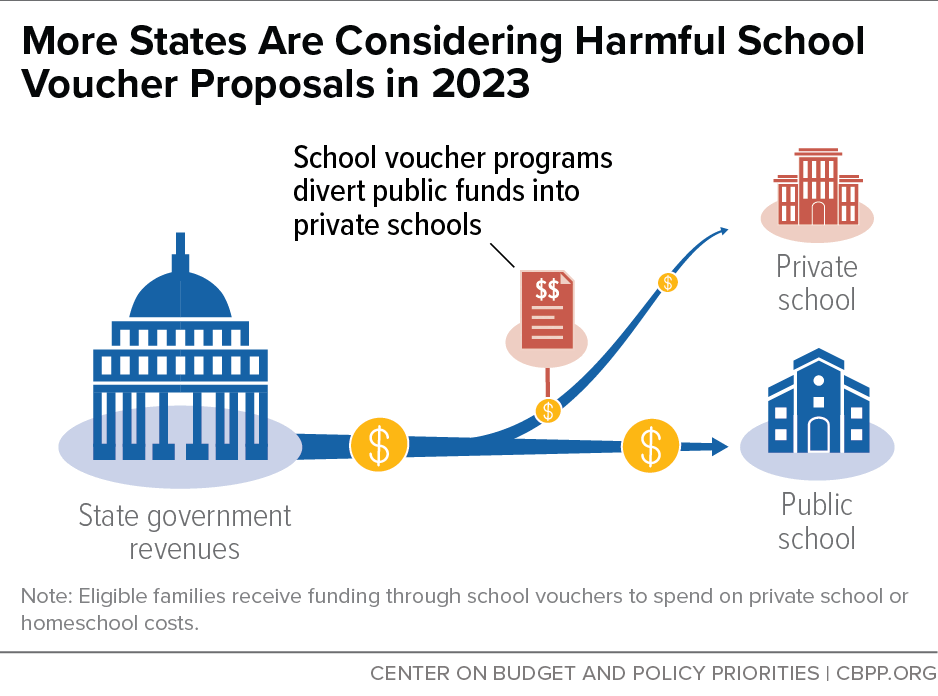
Reagan promised us if we’d just stop funding public schools and stop teaching civics and instead direct that money to private for-profit or church-run voucher and charter schools it would grow the levels of literacy, civic engagement, and healthy political dialogue.
Instead, about half of all American adults cannot read a book written at an eighth-grade level, according to the U.S. Department of Education and the National Institute of Literacy. Only 39 percent of Americans can name all three branches of government, leaving our nation vulnerable to racist white nationalists and fascists wanting to transform the democratic experiment our Founders began with our American republic.


The next Republican president, George W. Bush, nakedly lied to America about the “threat” presented by Saddam Hussein and Iraq to justify a war that cost our nation dearly in both blood and treasure, just to enrich the failing Halliburton (former CEO: Dick Cheney) and other oil companies in Bush and Cheney’s orbit.


Bush also pushed through a plan to clear-cut forests he called the “Healthy Forests Initiative,” and a plan to deregulate pollution controls he called the “Clear Skies” legislation.


By 2010, Republican voters were primed to believe pretty much anything party politicians told them. That was the year the billionaires really got busy taking control of the party’s base.


They started by funding the Tea Party, theoretically a response to President Obama’s effort to provide affordable healthcare for all Americans. Tri-cornered hats and bizarre signs saying things like “Keep Your Government Hands Off My Medicare” popped up all over America, as the billionaires’ Astroturf movement rented high-end busses to bring gullible retired boomers to staged media events across the nation.


That morphed into the “freedom agenda,” branding everything in sight with the word. From trashing queer people, to calls for more tax cuts for billionaires, intimidation of teachers and librarians, massive Red-state-by-Red-state voter purges, legalizing open carry of assault weapons, criminalizing abortion, and a campaign to end the teaching of Black History, “freedom” has spread across the GOP.


This week we even learned that the billionaire-funded Freedom Caucus in the House intends to try to crash the US economy just in time for the election (knowing Biden will get the blame) by refusing to fund the government for the 2024 fiscal year.


Republicans have taken their “freedom agenda” to such extremes that they’re actively suppressing dissent to promote it. When a group of moms of children who died or barely survived a mass shooting at the Covenant Elementary School wanted to testify before the Tennessee General Assembly, they were escorted out by state police the Republican leader, Rep. Lowell Russell, had called.


In today’s GOP, fully in the thrall of Donald Trump and his authoritarianism, dissent is not allowed. Just ask Justin Amash or Liz Cheney.


Trump has done his work, and the Republican Party is no longer a legitimate political party. Like a cat with a toxoplasma-infected mouse, he’s eaten the party whole.


It has no platform, no moral compass, and no loyalty to the Constitution or America’s historic ideals. Instead, it does whatever the billionaires who own it tell it to do (with the ability to bribe given them by five Republicans on the Supreme Court who legalized political bribery in Citizens United).


This grift, started by Richard Nixon’s treason and lies and exploited over the years by the morbidly rich, has now so completely absorbed the party that it’s hard to see it returning to the conservative-but-willing-to-compromise entity it was during the Eisenhower presidency. Hell, most Republican voters today don’t even remember Eisenhower, much less venerate him.


As the esteemed Republican activist and constitutional scholar J. Michael Luttig told CNN a few weeks ago:

“A political party is a collection and assemblage of individuals who share a set of beliefs and principles and policy views about the United States of America. Today, there is no such shared set of beliefs and values and principles or even policy views as within the Republican party for America.”

Mourning the loss of the party he was once proud to be part of, Luttig added:

“American democracy simply cannot function without two equally healthy and equally strong political parties. So today, in my view, there is no Republican Party to counter the Democratic Party in the country. And for that reason, American democracy is in grave peril.”

A return to some semblance of normalcy in theGOP is essential to restoring a normal, functioning government to our nation, as Luttig points out. Odds are, however, it’s first going to take a widespread destruction of that party — provoked by huge Democratic wins in 2024 — to come about.

And, given the bizarre spectacle we witnessed in the Republican presidential debate, that can’t come soon enough.