Archives for category: Education Industry

Historian Jack Schneider and journalist Jennifer Berkshire call out the hidden secret of vouchers: they steal from the public schools of the poor to fund the private and religious schools of the affluent. In state after state, 75-80% of the kids who use voucher money are already enrolled in nonpublic schools.

In an article in The Nation, Schneider and Berkshire write:

The assault on public education currently unfolding in state legislatures across the United States stands to annually transfer tens of billions of dollars from public treasuries to the bank accounts of upper-income families. Those dollars, which otherwise would have gone to public schools, will instead reimburse parents currently paying private school tuition. It’s a reverse Robin Hood scheme that Americans would hate if they fully understood what was going on.

That’s not the sales pitch, of course. As Betsy DeVos and her allies like to put it, their cause is “education freedom.” They want American families to have “options” beyond their local public schools. And their plan for creating those options is to push various forms of school vouchers. The money that otherwise would have gone to local schools, instead, would be given to families. Families could then take those dollars—sometimes loaded on an actual debit card—and spend them at whatever kind of school, or on whatever kind of educational product, they want.

There are many reasons to dislike this plan. Public schools are open to all, meaning that they can’t turn students away on the basis of characteristics like ability or identity. And public schools serve the public good. That’s why we fund them with our tax dollars—because we expect them to serve all of us.

Private schools, by contrast, can turn students away for nearly any reason, including that they have disabilities that make them more expensive to educate. As more states adopt programs that use taxpayer dollars to fund private schools, taxpayers are increasingly footing the bill for discrimination.

In Florida, for instance, a religious school that notified families this fall that LGBTQ students were no longer welcome and would be asked to leave immediately still receives more than $1.6 million a year in public funds through the state’s private school voucher program.

But school voucher plans are a raw deal not just for public schools and the students who attend them but also for taxpayers. Programs like the one jammed through by the Republican legislature in Iowa this week stand to immediately transfer massive amounts of cash directly from state treasuries to the families that least need it.

While proponents, like Iowa Governor Kim Reynolds, sold the plan as a way to give choices to poor and middle-class families, the program will chiefly subsidize the parents who already send their kids to private schools. The cost of that subsidy is significant—an estimated $340 million each year once the plan is fully phased in—and will be borne by the 500,000 students who attend the state’s underfunded public schools.

And it’s not just in Iowa that Republicans are pulling off this reverse Robin Hood maneuver. In Arizona, where lawmakers recently made all students eligible for school vouchers, 75 percent of the students who applied for the new subsidy never attended public school. The same dynamic is playing out in New Hampshire, where GOP legislators enacted an “education freedom” program over stiff public opposition. At Laconia Christian Academy, for instance, all but two families in the school took advantage of the program, pulling roughly half a million dollars out of the public treasury.

Please open the link and finish reading the entire article. It nails the essential outcome of vouchers, which may also be their purpose. They subsidize the students who never attended public schools at the expense of the public schools of the poor.

Governor DeSantis is unhappy with the College Board Because it had the nerve to disagree with him. He said he might find an alternative for the Board’s products, the SAT and AP courses. The Miami Herald says that the state is in discussions with a new test vendor whose was designed for Christian schools and home schools.

As Gov. Ron DeSantis and Florida Republican leaders explore alternatives to the College Board’s AP classes and tests, top state officials have been meeting with the founder of an education testing company supporters say is focused on the “great classical and Christian tradition.”

The Classic Learning Test, founded in 2015, is used primarily by private schools and home-schooling families and is rooted in the classical education model, which focuses on the “centrality of the Western tradition.”

The founder of the company, Jeremy Tate, said the test is meant to be an alternative to the College Board-administered SAT exam, which he says has become “increasingly ideological” in part because it has “censored the entire Christian-Catholic intellectual tradition” and other “thinkers in the history of Western thought.”

As DeSantis’ feud with the College Board intensified this week, Tate had several meetings in Tallahassee with Ray Rodrigues, the state university system’s chancellor, and legislators to see if the state can more broadly offer the Classic Learning Test to college-bound Florida high school students.

“We’re thrilled they like what we’re doing,” Tate said. “We’re talking to people in the administration, again, really, almost every day right now.”

Will there be another test for students who are not Christian?

Read more at: https://www.miamiherald.com/news/local/education/article272526392.html#storylink=cpy

A reader who calls him/herself “Democracy” writes a thoughtful comment on the Advanced Placement courses offered by the College Board, responding to the controversy over the College Board’s retreat from its AP African American studies course. The College Board excised content to placate rightwing critics.

Democracy writes:

Well-established myths die hard. Very hard. Scientific evidence doesn’t always sway minds. Parents and students and educators – and reporters – assume that Advanced Placement (AP) courses are inherently superior to other high school classes. The assumption is that AP are more rigorous, offer deeper conceptual knowledge and lead to better performance in college. The problem with the assumption is that it is largely perception; there is little research to support it.

Michael Hiltzik’s column ought to be one of the final nails in the coffin of the College Boards Advanced Placement courses. But it will not be. Hiltzik’s criticisms of the College Board are sound, and calling the College Board “cowards” is more than just a little bit accurate. It’s spot on. But Hiltzik perpetuates the College Board mythology.

A 2002 National Research Council study of AP courses and tests concluded that they were a “mile wide and an inch deep” and they did not comport with well-established, research-based principles of learning. The study was an intense two-year, 563-page detailed content analysis, and the main study committee was comprised of 20 members who were not only experts in their fields but also top-notch researchers who wrote also about effective teaching and learning.

The main finding of the 2004 Geiser and Santelices study was that “the best predictor of both first- and second-year college grades” is unweighted high school grade point average, and a high school grade point average “weighted with a full bonus point for AP…is invariably the worst predictor of college performance.”

Klopfenstein and Thomas (2005) found that AP students “…generally no more likely than non-AP students to return to school for a second year or to have higher first semester grades.” Moreover, they write that “close inspection of the [College Board] studies cited reveals that the existing evidence regarding the benefits of AP experience is questionable,” and “AP courses are not a necessary component of a rigorous curriculum.

College Board-funded research is more than simply suspect. The College Board continues to perpetrate the fraud that the SAT actually measures something important other than family income (for perhaps the single best read on this, see: http://www.theatlantic.com/magazine/archive/2005/11/the-best-class-money-can-buy/4307/). A favorite of mine is the College Board-produced “study” that claimed PSAT scores predicted AP test scores. A sidebar comment in the study, however, undermined its validity. The authors noted that “the students included in this study are of somewhat higher ability than…test-takers” in the population to which they generalized. Upon further scrutiny, however, that “somewhat higher ability” actually meant students in the sample were a full standard deviation above those 9th and 10th graders who took the PSAT. And even then, the basic conclusion was that students who scored well on the PSAT had about a 50-50 chance of getting a “3” on an AP test, the most common score. Holy moly!

In the ‘ToolBox Revisited’ (2006) Clifford Adelman noted that “a spate of recent reports and commentaries on the Advanced Placement program claim that the original ToolBox demonstrated the unique power of AP course work in explaining bachelor’s degree completion. To put it gently, this is a misreading.”

A 2006 MIT faculty report noted “there is ‘a growing body of research’ that students who earn top AP scores and place out of institute introductory courses end up having ‘difficulty’ when taking the next course.” Two years prior, Harvard “conducted a study that found students who are allowed to skip introductory courses because they have passed a supposedly equivalent AP course do worse in subsequent courses than students who took the introductory courses at Harvard” (Seebach, 2004). Students admit that ““You’re not trying to get educated; you’re trying to look good,” and, “the focus is on the test and not necessarily on the fundamental knowledge of the material.”

The Sadler- and Klopfenstein-edited book, “AP” A Critical Examination” (2010) lays out the research that makes clear AP has become “the juggernaut of American high school education,” but “ the research evidence on its value is minimal.”

A 2013 study from Stanford noted that “increasingly, universities seem
to be moving away from awarding credit for AP courses.” The study pointed out that “the impact of the AP program on various measures of college success was found to be negligible.” And it adds this: “definitive claims about the AP program and its impact on students and schools are difficult to substantiate.”

But you wouldn’t know that by reading any of the current articles — including that by Michael Hiltzik — about the “controversial” AP Black History course or by listening to the College Board, which derives more than half of its income from AP.

AP may work well for some students, especially those who are already “college-bound to begin with” (Klopfenstein and Thomas, 2010). As Geiser (2007) notes, “systematic differences in student motivation, academic preparation, family background and high-school quality account for much of the observed difference in college outcomes between AP and non-AP students.” The Texas, College Board-funded studies Mathews salivates over do not control well for these student characteristics (even the College Board concedes that “interest and motivation” are keys to “success in any course”).
Klopfenstein and Thomas (2010) find that when these demographic characteristics are controlled for, the claims made for AP disappear.

Do some students “benefit” from taking AP courses and tests? Sure. But, students who benefit the most are “students who are well-prepared to do college work and come from the socioeconomic groups that do the best in college are going to do well in college.”

So, why do students take AP? Because they’ve been told they have to. Because they’re “trying to look good” to colleges in the “increasingly high-stakes college admission process,” and because “high schools give extra weight to AP courses when calculating grade-point averages, so it can boost a student’s class rank.”

One student who got caught up in the AP hype cycle –– taking 3 AP courses as a junior and 5 as a senior –– and only got credit for one AP course in college, reflected on his AP experience. He said nothing about “rigor” or “trying to be educated” or the quality of instruction, but remarked “if i didn’t take AP classes, it’s likely I wouldn’t have gotten accepted into the college I’m attending next year…If your high school offers them, you pretty much need to take them if you want to get into a competitive school. Or else, the admissions board will be concerned that you didn’t take on a “rigorous course load.” AP is a scam to get money, but there’s no way around it. In my opinion, high schools should get rid of them…”

But what do students actually learn from taking these “rigorous” AP tests?

For many, not much. One student remarked, after taking the World History AP test, “dear jesus… I had hoped to never see “DBQ” ever again, after AP world history… so much hate… so much hate.” And another added, “I was pretty fond of the DBQ’s, actually, because you didn’t really have to know anything about the subject, you could just make it all up after reading the documents.” And another AP student related how the “high achievers” in his school approached AP tests:

“The majority of high-achieving kids in my buddies' and my AP classes couldn’t have given less of a crap. They showed up for most of the classes, sure, and they did their best to keep up with the grades because they didn’t want their GPAs to drop, but when it came time to take the tests, they drew pictures on the AP Calc, answered just ‘C’ on the AP World History, and would finish sections of the AP Chem in, like, 5 minutes. I had one buddy who took an hour-and-a-half bathroom break during World History. The cops were almost called. They thought he was missing.”

An AP reader (grader) noted this: “I read AP exams in the past. Most memorable was an exam book with $5 taped to the page inside and the essay just said ‘please, have mercy.’ But I also got an angry breakup letter, a drawing of some astronauts, all kinds of random stuff. I can’t really remember it all… I read so many essays in such compressed time periods that it all blurs together when I try to remember.”

Students, parents, teachers, and school leaders –– not to mention politicians and reporters –– would do well to heed the research and ignore the propaganda and lies spewed by the College Board.

Belief is a powerful thing. Sadly, people too easily believe things that are not true. And public education — not to mention American democratic governance — suffers for it.

Editor’s note: All standardized tests reflect family income. Those whose families have the highest income have the highest scores. Some rich kids score poorly. Some poor kids get high scores. They are outliers that do not change the overall trend.

Steve Hinnefeld writes on his blog School Matters that Republican legislators in Indiana want property taxes to pay for charter schools. This will mean budget cuts for public schools or higher property taxes.

Taxpayers in Indiana should be irate that their property taxes will bolster the bank accounts of for-profit charter chains like National Heritage Academies and Accel.

I remember when the idea of charter schools was first discussed in the 1980s. The promise of charter advocates (and I was one at the time) was that they would be more accountable than public schools; that they would cost less than public schools; and they would have higher test scores than public schools. In the more than three decades since the first charter schools opened, the public has learned that none of those promises came true.

Charter schools on average do not produce higher test scores than public schools, unless they choose their students with care. Many charter schools—in states like Ohio—perform far worse than public schools. They are less accountable than public schools because they have private boards that answer to no one. Their finances are usually opaque since they are not subject to the same budgetary oversight as public schools. And now we know that they do not cost less than public schools; they want the same funding as public schools, and many are subsidized by outside philanthropists. And, unlike public schools, charter schools close with high frequency and little warning. They destabilize communities. And that is why I no longer support charter schools.

Steve Hinnefeld writes:

Indiana legislators are considering a significant change in Indiana school finance that would, for the first, time, require public school districts to share local property tax revenue with charter schools.

Senate Bill 398 is set for a hearing Tuesday in the Tax and Fiscal Policy Committee. A similar bill in the House hasn’t yet been scheduled for a hearing, but probably will be. House Bill 1607 goes further than SB 398 by also requiring school districts to share referendum funding with charter schools.

SB 398, authored by Sen. Linda Rogers, R-Granger, would require school districts to share revenue from their property tax-supported operations funds with charter schools. The money would be allocated according to the number of students who live in the school district and attend charter schools.

The measures follow a public advocacy campaign that may have pushed the issue of charter school funding onto lawmakers’ agendas. The campaign, which included TV and social media ads, focused on differences in funding between Indianapolis Public Schools and charter schools.

The bill would also make districts share property taxes with nearby public school districts to which their students transfer.

Under Indiana’s current school finance system, the state provides comparable per-pupil funding to district and charter schools. But districts can also levy local property taxes to pay off debt and for their operations funds, which pay for facility construction and maintenance and for transportation. The state gives charter schools an extra $1,250 per pupil to compensate for their lack of property taxes.

A Legislative Services Agency analysis says SB 398 would shift nearly $70 million a year from school districts to charter schools after a three-year phase-in. The biggest impact would be in Indianapolis and Gary, where more students attend charters or transfer than attend district schools.

Advocates for charter schools argue their students deserve the same funding as students who attend district schools. However, charter schools aren’t subject to the same requirements as district schools and aren’t overseen by elected school boards. It’s rare in Indiana for voters to have no local election mechanism to influence how their property taxes are spent.

The campaign for more charter school funding highlighted the difference in per-pupil funding between IPS schools and Indy charter schools that aren’t affiliated with the district. The ads were “endorsed” by the Indiana Student Funding Alliance, whose website has no contact information or details about who or what it is.

According to Facebook’s ad library, the ads on the platform were paid for by the Institute for Quality Education, an Indianapolis nonprofit that advocates for charter schools and private school vouchers. The group’s political action committee, Hoosiers for Quality Education, is a major donor to Republican politicians. In 2022, it gave $22,500 to Behning’s campaign and $5,500 to Rogers’ campaign.

Open the link and finish reading.

Peter Greene wrote in the Bucks County Beacon about the lucrative real estate deals that produce profits for charter schools. He reviewed the latest report from the Network for Public Education report Chartered for Profit II.

It would be easy to assume that charter schools are in the education business, but in fact, many charter school companies appear to be in the real estate business instead.

In its new report, “Chartered for Profit II,” the Network for Public Education lays out the techniques for running a charter for profit, even if it is nominally non-profit, including the use of real estate deals.

One of the most common techniques for running a charter school for profit is to have the non-profit company run by a for-profit charter management organization.

In some states, there is no need to keep those two companies strictly separate. For example, in North Carolina, the non-profit Torchlight Academy was led by principal Cynthia McQueen. The for-profit company hired to run the school was Torchlight Academy Schools, LLC, whose CEO was Don McQueen, Cynthia’s husband. In addition, McQueen’s daughter was hired as special education director, and their son-in-law was awarded the contract for cleaning services for the school.

Those kinds of insider deals can involve real estate as well; the left hand buys a building, and then rents it to the right hand. The NPE report outlines how Glenn Way, a former Utah legislator, set up a charter school empire in Arizona. He and his wife established the American Leadership Academy chain of charter schools. At the same time, Way ran several real estate outfits, including Schoolhouse Development, that built and developed charter school properties. Way, like many other real estate businessmen in the charter school business, was able to use his real estate business to collect rent from his charter school business—all of it paid with taxpayer dollars.

“When Craig Harris of the Arizona Republic asked Way if such profiteering from taxpayer dollars intended for children should be allowed, he responded, ‘It’s [charter schooling] no different than building a Walmart, CVS, or Walgreens.’”

Notes the report:

An investigation in 2018 by the Arizona Republicfound that Way’s real estate business collected roughly $37 million in taxpayer dollars passed through his ALA charter school chain.

Florida’s Academica is yet another example. The company is owned by real estate developer Fernando Zulueta, who opened his first charter school as part of a housing development he had constructed. He expressed no burning desire to get children a great education; he just figured a school would make the housing development more attractive.

Zulueta and his brother have launched what journalist Jessica Bakeman called “an empire of charter schools.” Their headquarters are the home address of over 100 active corporations linked to various family members. Within this maze of corporations, charter facilities are sold off in ways that allow one arm of the octopus to cash in on the sale while another arm keeps earning management fees for the school.

The Academica chain is rapidly expanding in Nevada and other states.

Please open the link and read the rest of this excellent review of an important study of charter profiteering.

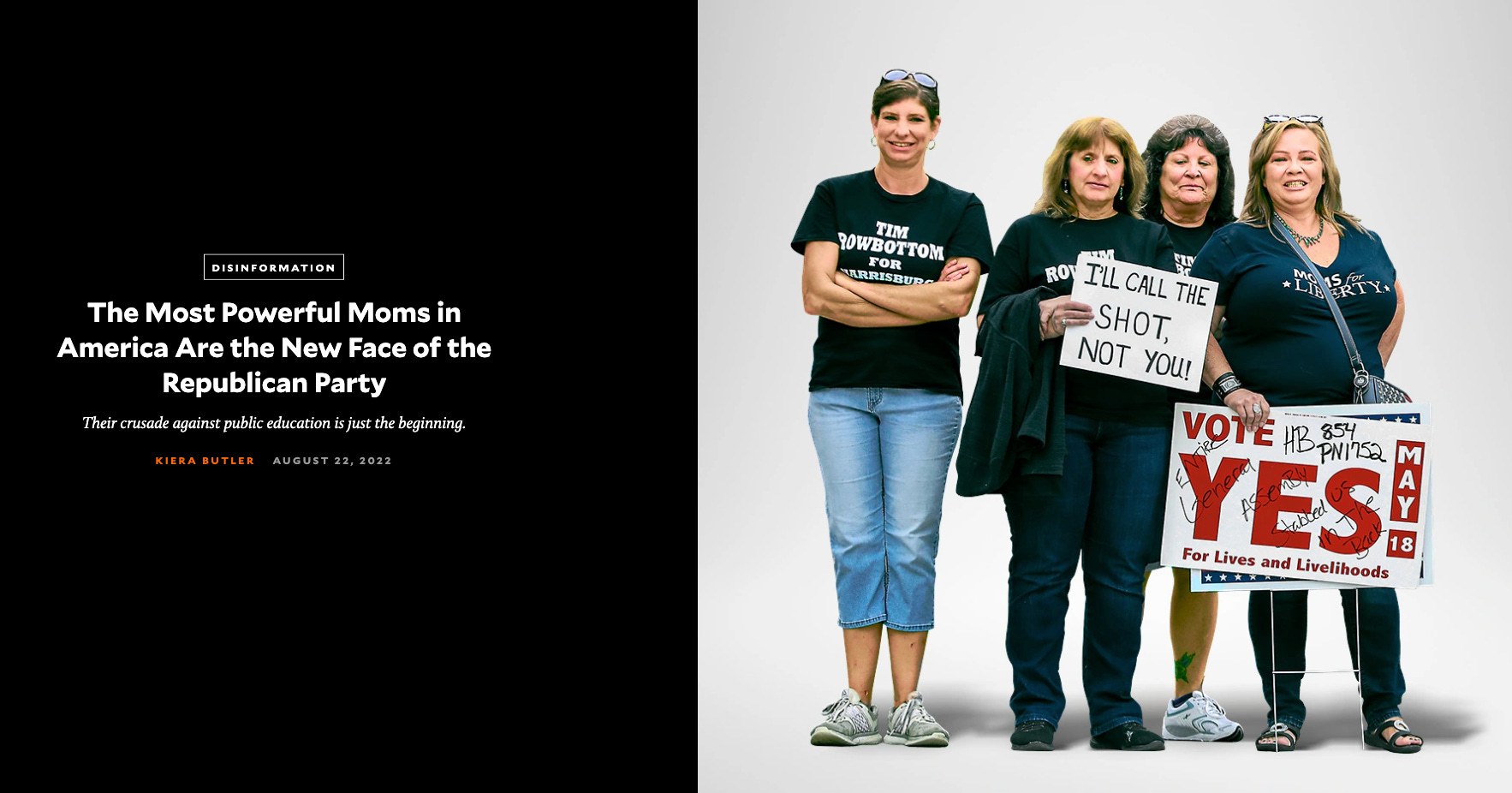
The Texas Observer published a warning to the Texas legislature: Take a close look at the Arizona voucher programs. Don’t go there. Vouchers subsidize private school students while defunding the public schools that still enroll the vast majority of the state’s students.

Like many other typical teenagers, James’ favorite periods in school are P.E. and lunch. During our phone call, he turned the tables on me, politely asking about my children and work. A 15-year-old student who was born with a tumor and has autism, James actively seeks engagement with others, especially his peers. But for two years, he learned at home in isolation. Arizona’s voucher educational savings account program, called the Empowerment Scholarship Account (ESA), granted him $40,000 of public funds to pay private school tuition. But even with that money, private school after private school denied him admission.

“They first demanded all his files, his IEPs [Individualized Education Plan for students with special needs], but before they would grant an interview, they would give some excuse why his needs could not be met there,” James’ mom Pamela Lang said. “Some gave interviews and tours, and James would get excited. But then they would decline admittance saying they could not accommodate him.”

After every single Phoenix, Arizona Catholic school and a slew of secular private schools rejected James, Lang was finally able to find a school to address his needs. But now, she fears there won’t be enough state funds in the future to afford its costly tuition.

What started in Arizona in 2011 as a $2.5 million state voucher program for students with special needs has now ballooned to a universal voucher program for all of the state’s students, public or private.

“The state said the voucher was for kids with disabilities but it was just a way in to open the door,” Lang said. “Every single year since the state got the ESA, they just kept expanding it to more and more people, and now, it’s for everybody. We’re just hoping kids with disabilities aren’t going to have nothing left for them.”

In the first quarter of this school year, Arizona already blew through $300 million, awarding 80 percent of the funds predominantly to wealthy students already enrolled in private schools. This will leave a projected $4 million debt in the state’s education budget at the end of the 2022-2023 school year, a debt that public school advocates fear will deplete public school funds further.

Critics say Arizona used vouchers for special needs students as a trojan horse for school privateers to divest, divert, and dismantle the state’s public education system, which now ranks in the bottom three among all U.S. states for per-pupil spending, teacher retention, and teacher pay.

Texas lawmakers are now poised to follow Arizona’s lead. But parents in Arizona are warning Texans to take heed. Their stories are a cautionary tale for our state, which plans during this legislative session to use special needs students to usher in multiple voucher programs.

Arizona’s voucher programs—and the Texas proposals—include both a universal education savings account and a tax-credit scholarship program, both of which would divert public education money from state coffers to enrich private schools, corporations, and wealthy families.

DIVEST

The country’s first public school education savings account started in Arizona in 2011. The ESA directly appropriates public education money and deposits it into an individual savings account or debit card for parents to use for private school tuition, tutoring, homeschooling, or therapy.

In its first year, $2.5 million of Arizona’s ESA money was directed toward students with special needs. But in subsequent years, expenditures and eligibility for the ESA program expanded to include children attending public schools that received a D or F rating, children in military families, in foster care, and on Native American reservations. Then in 2017, legislators attempted to pass universal vouchers for all students. The proposal was beaten back twice by public school advocates but passed in 2022.

Since its inception, Arizona’s ESA program has stripped more than $963 million from public school funds.

Texas House Bill 557, filed by Representative Cody Vasut, is a universal voucher program from the get-go. It would enable an unlimited number of students to receive reimbursements for up to $10,000 in private school tuition, the full per-pupil allotment in Texas. If all 309,000 private school students in Texas decided to apply for a voucher under this bill, public schools could lose $3 billion in state funding after one year alone. The impact could bankrupt a system in Texas which already ranks in the bottom 10 states in per-pupil funding.

Beth Lewis, director of Save our Schools Arizona, warns Texans that such a voucher program never gives back as much as it robs from public education.

“They sell it under the guise that the money’s following the child,” Lewis said. “But if you were already in a private school or a homeschool situation, that money’s not following you. It’s never been allocated to you. So in reality, it’s a subtraction from a student in the public school. Then, you’re never going to have an equitable system where every kid can access quality education.”

Besides the education savings account program, Arizona has a second type of voucher program that directly funnels public money to private schools—the tax credit scholarship program.

Open the link and read the rest of this important article. Vouchers are a reverse Robin Hood program: they take from everyone to pay the tuition of students already enrolled in private schools. As Professor Josh Cowennof Michigan State University has shown, kids who leave public schools to use vouchers fall behind their peers who remained in public school.

Mimi Swartz, a writer for the Texas Monthly, explored the background, the funders, and the consequences of the well-coordinated campaign to privatize public schools—by defaming them and discrediting those who run for local school board seats. She focuses on the travails of one dedicated school board member, Joanna Day in Dripping Springs, Texas, who contended with insults and threats in her life.

The following is a small part of a long article, which I encourage you to read in full:

The motivations for these attacks are myriad and sometimes opaque, but many opponents of public education share a common goal: privatizing public schools, in the same way activists have pushed, with varying results, for privatization of public utilities and the prison system. Proponents of school privatization now speak of public schools as “dropout factories” and insist that “school choice” should be available to all. They profess a deep faith in vouchers, which would allow parents to send their children not just to the public schools of their choice but to religious and other private schools, at taxpayers’ expense.

But if privatizing public education is today cloaked in talk of expanded liberty, entrepreneurial competition, and improved schools for those who need them most, its history tells a different story. In 1956, two years after the U.S. Supreme Court handed down its landmark Brown v. Board of Education decision, a group of segregationist legislators in Texas, with support from retiring governor Allan Shivers, began concocting work-arounds for parents appalled by the prospect of racial integration of public schools. One idea: state-subsidized tuition at private schools. That never came to pass, but it was Texas’s first flirtation with vouchers.

Privatization proponents have since switched up their rhetoric, pitching vouchers as an opportunity for poor urban families to save their children from underperforming neighborhood schools. That hasn’t worked out either. In various experiments across the nation, funding for vouchers hasn’t come close to covering tuition costs at high-quality private schools, and many kids, deprived of the most basic tools, haven’t been able to meet the standards for admission.

School funding in Texas is based largely on attendance—as the saying goes, the money follows the child. Considerable evidence suggests that vouchers would siphon money from underfunded public schools and subsidize well-to-do parents who can already afford private tuition. Critics frequently cite a program in Milwaukee, where four out of ten private schools created for voucher students from 1991 to 2015 failed.

“I don’t think that vouchers serve any useful purpose at all,” said Scott McClelland, a retired president of H-E-B who now chairs Good Reason Houston, an education nonprofit. Ninety-one percent of Texas students attend public schools. “There isn’t enough capacity in the private school network to make a meaningful difference in their ability to serve economically disadvantaged students in any meaningful numbers, and it will divert funding away from public schools.”

In Texas, an unusual alliance of Democratic and rural Republican leaders has for decades held firm against voucher campaigns. The latter, of course, are all too aware that private schools aren’t available for most in their communities and that public schools employ many of their constituents. But the spread of far-right politics and the disruption of public schools during the pandemic created an opening for activists to sow discontent and, worse, chaos. “If they can make the public afraid of their public school, they will be more likely to support privatizing initiatives. Then that puts us back to where we used to be with segregation of public schools,” says former Granbury school board member Chris Tackett, who, with his wife Mendi, has become an outspoken advocate for public education and a relentless investigator of the attempts to undermine it.

They have their work cut out for them. In the past, just a few right-wing legislators pushed for privatization and were routinely ignored. After all, the state constitution spelled out “the duty of the Legislature of the State to establish and make suitable provision for the support and maintenance of an efficient system of public free schools.” But as times have changed, so has the interpretation of that guarantee.

Betsy DeVos, President Donald Trump’s former Education Secretary, set up shop in Dallas with her American Federation for Children to push against “government schools” in favor of “school choice.” Political PACs such as Patriot Mobile Action, an arm of a Christian wireless provider in North Texas, continue pouring millions into school board races and book bans to promote more religious education. Patriot has joined other recently formed PACs with inspirational names such as Defend Texas Liberty and Texans for Excellent Education, all of which supposedly support better public schools but are actually part of the privatization push. But by far the most powerful opponents of public schools in the state are West Texas oil billionaires Tim Dunn and the brothers Farris and Dan Wilks. Their vast political donations have made them the de facto owners of many Republican members of the Texas Legislature through organizations such as the now dissolved Empower Texans and the more recent Defend Texas Liberty, which the trio uses to promote restrictions on reproductive rights, voter access, and same-sex marriage. Almost as influential is the Texas Public Policy Foundation, where Dunn is vice board chair.

A November 2021 TPPF fund-raising letter, sent to supporters in advance of the Eighty-eighth Legislature convening, argued that “public education is GROUND ZERO” in the fight for freedom. “The policy team and board of the Texas Public Policy Foundation (TPPF) believe it is now or never,” it read, signaling that the long-standing and robust alliance against vouchers was unusually vulnerable. “The time is ripe to set Texas children free from enforced indoctrination and Big Government cronyism in our public schools.” The letter went on to herald a $1.2 million “Set the Captives Free” campaign to lobby legislators to save Texas schoolchildren from “Marxist and sexual indoctrination” funded by “far-Left elites for decades.”

Lieutenant Governor Dan Patrick, generously backed by Dunn, the Wilks brothers, and their organizations, has long been a proponent of privatizing public education (and of starving it through reductions in property taxes). He has made vouchers a primary legislative goal of the current session. Mayes Middleton, of Wallisville, a Republican state senator and former chair of the TPPF-aligned Texas House Freedom Caucus, filed a bill to create the “Texas Parental Empowerment Program,” proposing education savings accounts that are essentially a form of vouchers. Representative Matt Shaheen, of Plano, who is a member of the Texas Freedom Caucus, has introduced a measure that would guarantee state tax credits for those who donate to school-assistance programs—such as scholarships for kids wishing to go to private schools.

Governor Greg Abbott, knowing all too well the political headwinds that vouchers have faced, has long been wary of publicly supporting them, so he has undermined public schools in other ways. While campaigning early last year, he promised to amend the Texas constitution with a “parental bill of rights,” even though most, if not all, of those rights already existed. By then, “parental rights” had become a dog whistle to animate opponents of public education. (As the Texas Tribune put it: “Gov. Greg Abbott taps into parent anger to fuel reelection campaign.”)

During the recent intensifying crisis on the border, Abbott publicly floated a challenge to the state’s constitutional obligation to give all Texas children, including undocumented ones, a publicly funded education—a step his Republican predecessor, Rick Perry, had denounced years earlier as heartless. Then last spring, Abbott made headlines with his first full-throated public endorsement of a voucher program.

So here we are, with distrust in public schools advancing as fast as the latest COVID-19 variant. The forces behind the spread of this vitriol are no mystery. Those who would destroy public schools have learned to apply three simple stratagems: destabilize, divide, and, if that doesn’t work, open the floodgates of fear

In 2009, the Atlanta Journal-Constitution scrutinized test score gains in the city’s public schools and discovered a number of schools where the gains seemed improbable. The story triggered intense scrutiny by the Georgia Bureau of Investigation. Eventually nearly three dozed educators were charged with changing answers on the standardized tests from wrong to right in hopes of winning a bonus and pleasing their superintendent Dr. Beverly Hall, who put pressure on all teachers to raise scores or be humiliated.

During Beverly Hall’s tenure, the Atlanta district was celebrated for its miraculous test score gains, and she won recognition as Superintendent of the Year. She was the poster educator supposedly proving the “success” of No Child Left Behind. What she actually proved was that NCLB created perverse incentives and ruined education.

The facade of success came tumbling down with the cheating scandal.

After the investigation, Beverly Hall was indicted, along with 34 teachers, principals, and others. All but one of those charged is black. Many pleaded guilty. Ultimately, 12 went to trial. One was declared innocent, and the other 11 were convicted of racketeering and other charges. Beverly Hall died before her case went to trial.

The case was promoted by then-Governor Sonny Perdue. Ironically, the rise in Atlanta’s test scores was used by the state of Georgia to win a $400 million Race to the Top award.

One of those who was punished for maintaining her innocence was Shani Robinson, who was a first-grade teacher. She is the co-author with journalist Anna Simonton of None of The Above: The Untold Story of the Atlanta Public Schools Cheating Scandal, Corporate Greed, and the Criminalization of Educators.

I reviewed their book on the blog. While reading her book, I became convinced that Shani was innocent. As a first-grade teacher, she was not eligible for a bonus. Her students took practice tests, and their scores did not affect the school’s rating. Yet she was convicted under the federal racketeering statute for corrupt activities intended to produce financial gain. The Racketeer Influenced and Corrupt Organizations Act (RICO), was written to prosecute gangsters, not school teachers. Her conviction was a travesty.

Investigators offered Shani and other educators a deal: Plead guilty and you can go free. Or, accuse another teacher and you can go free. She refused to do either. She maintained that she was innocent and refused to accuse anyone else. Shani was accused by a teacher who won immunity. Despite the lack of any evidence that she changed scores, she was convicted.

Two Atlanta lawyers wrote a blog post in 2020 describing the Atlanta cheating trial as a legal outage:

The Atlanta Public Schools (APS) “cheating” scandal is a textbook example of overcriminalization and prosecutorial discretion gone amok, compounded by an unjust sentence of first-time offenders to serve years in prison. It is a glaring illustration of a scorched-earth prosecutorial mindset that has sparked a movement of reform-minded prosecutors nationwide — one which has yet to be embraced in Atlanta.

Just this past week, the six remaining educators who have insisted on their innocence went before the same judge who found them guilty. Their public defender asked to be excused from the case because he thought it was a conflict of interest to represent all six defendants. The original prosecutor, Fani Willis, continues to believe the six educators should be imprisoned. Willis is now prosecuting the case of whether former President Trump interfered in Georgia’s election in 2020.

The six educators who insist they are innocent have lived in a state of suspended animation for more than a decade. They have not gone to prison, yet. They have lost their reputations, their jobs, their teaching licenses.

They hoped that Judge Baxter might use the hearing to dismiss their case. Shani asked me to write a letter supporting her. I did.

It didn’t matter. Judge Baxter decided that the defendants should get a new public defender and return for another hearing. The case has already cost millions of dollars and is the longest-running trial in the history of the state.

The judge ordered them to return to court with their new lawyers or public defenders on March 16. At that time, the entire appeals process might start again and take years to conclude.

I contacted my friend Edward Johnson in Atlanta to ask him what he thought. Ed is a systems thinker and a sharp critic of the Atlanta Public Schools‘ leadership, which is controlled by corporate reformers who make the same mistakes again and again instead of learning from them.

Ed wrote me:

Prosecuting teachers and administers was morally wrong to begin with. Continuing to prosecute any of them is doubly morally wrong. Teachers and administers were the real victims of Beverly Hall. So prosecuting them means being willfully blind to ever wanting to learn truths about anything that would help Atlanta avoid doing a Beverly Hall all over again.

I agree.

Ron DeSantis didn’t like the College Board claiming that Florida was putting political pressure on the testing company to revise the AP African American Course. He didn’t like their lame attempt to stand up to his bullying. So he let it be known in public that Florida was thinking of replacing the College Board with other vendors.

Normally, the anti-testing organizations would have cheered his stance against the tests. But he made clear that he was looking for other tests.

Tens of thousands of Florida high school students take Advanced Placement courses every year to have a competitive edge heading into college.

Now, Gov. Ron DeSantis says he wants to reevaluate the state’s relationship with the private company that administers those courses and the SAT exam.

The move comes after the College Board accused DeSantis’ administration of playing politics when it rejected an Advanced Placement African American Studies course.

“This College Board, like, nobody elected them to anything,” DeSantis said at a news conference Monday in Naples. “They are just kind of there, and they provide a service and so you can either utilize those services or not.”

While DeSantis acknowledged the College Board has long had a relationship with the state, he said “there are probably other vendors who may be able to do that job as good or maybe even a lot better.”

Florida has long had a strong connection with the College Board. The state pays for students to take Advanced Placement exams, and provides bonuses to teachers whose students perform well.

In 2021, nearly 200,000 Florida teens sat for more than 366,000 tests, for which they can earn college credit. It had the fifth-highest rate of tests taken per 1,000 students in the nation.

The College Board also administers the SAT exam, which students may use to help them complete graduation testing requirements, earn entry into universities and become eligible for Bright Futures scholarships.

If the state were to move away from the College Board, other options exist. Students seeking advanced courses leading to college credits have International Baccalaureate, Cambridge Programme and dual enrollment classes available.

They also can take the ACT exam instead of the SAT.

DeSantis has not provided details as to exactly how the College Board’s relationship with the state could be impacted but said he has started talking to House Speaker Paul Renner about the matter. “I’ve already talked to Paul, and I think the Legislature is going to look to evaluate how Florida is doing that,” DeSantis said.

“Of course, our universities can or can’t accept College Board courses for credit, maybe they’ll do others. And then also just whether our universities do the SAT versus the ACT. I think they do both but we are going to evaluate how the process goes.”

No one from the College Board was immediately available for comment.

What tests do students take if they are not Christian?

Read more at: https://www.miamiherald.com/news/local/education/article272474953.html#storylink=cpy

Carol Burris is the executive director for of the Network for Public Education. in this post, which she wrote exclusively for the blog, she reveals the details of Arkansas Governor Sarah Huckabee Sanders’ plan to defund and destroy the public schools in her state.

Burris writes:

Sarah Huckabee Sanders, the daughter of Baptist minister and former Governor Mike Huckabee, missed learning the 9th commandment that prohibits telling a lie. As press secretary to Donald Trump, her distortions of the truth resulted in the editor of Forbes warning corporations against hiring Sanders and other Trump “propagandists,” writing, “Forbes will assume that everything your company or firm talks about is a lie.”


Now she is the Governor of Arkansas. On her first day in office and in her response to Biden’s State of the Union, she parroted the old “education is the civil rights issue of our time” line that has been used to justify horrible policies from school closures to charter schools and vouchers. However, the disconnect between what she says and what she does quickly became apparent. On her first day in office, she issued an executive order prohibiting “indoctrination and critical race theory in schools” and another banning the term “Latinx” from being used in state documents. State authorities are investigating AP African American Studies at Little Rock Central High School, where the majority of students are Black.

If we need further proof that this self-proclaimed champion of Civil Rights is more aptly described as a champion of Civil Wrongs, look at her recently leaked ed reform plan.

Here are its features:


The Privatization of Public Education:

· Her voucher plan is a universal ESA—the plan now favored by the far-right. These plans have few rules and no family eligibility requirements. They have become Entitlement Spending Accounts–cash going into the pockets of private school families regardless of income. The leaked plan does not say how taxpayers will pay for it. But everyone will be eligible by 2025. It includes Voucher funding for homeschools. The only restrictions will apply to vendors, so those who enroll their children in those recently uncovered Neo-Nazi homeschools can find ways to cash in.

· Increased tax credits for contributions to an existing voucher program.

· Local School Boards can contract with an open-enrollment charter school or private company to run a school campus at risk of state takeover due to low performance—and if they do, they get a financial incentive.

· Establishment of a charter-school construction fund for new charters and expansion.

· Elimination of the cap on charters.

· Charter school applications no longer need to be reviewed and approved by the local school district board of directors.

· All students attending a public school can take courses and earn credit for classes not offered in their school. By the beginning of the 2025-2026 school year, students attending a public school that receives a letter grade of “C”, “D”, or “P” from the Arkansas School and District Accountability System may take their required courses (i.e. math, English, etc.) through the course choice program. Bet your bottom dollar that these courses will be online, with vendors like Stride K12 making a fortune.

Censoring and Controlling Curriculum

· K-3 literacy evaluation will be aligned with the “science of reading.”

· Before grade 5, teachers cannot provide classroom instruction on the following topics: sexually explicit materials, sexual reproduction, sexual intercourse, gender identity, and sexual orientation.

· School districts must implement an age-appropriate child sexual prevention program for grades K-12, allowing parents to preview materials and exempt their children from instruction. (I have no idea what a child sexual prevention program even is.)

· The Secretary of Education will review the Department of Education regulations, policies, materials, and communications to ensure they do not indoctrinate students with ideologies that conflict with the principle of equal protection under the law.

· No school employee or student must attend training on prohibited indoctrination or Critical Race Theory.


Harmful Policies for Students

· 3rd-grade retention based on deficits in reading proficiency.

· An accountability system for pre-school education that includes student data.

· Literacy testing three times a year for all students in K-3.

· Curriculum tracking in Grade 8.

· Community service requirements, which may, for some students, be challenging to meet.

· Mandated cops on campus.

· Career-ready pathways in partnership with local business and industry leaders” translate workforce training programs to track students into low-paying and middle-wage jobs.

Punitive Policies for Teachers


· Elimination of due process in dismissals.

· Base salaries will no longer increase by years of experience or for Master’s degrees.

· Bonuses based on VAM.

There are a few likable initiatives in her plan, such as paid maternity leave for teachers, but if she makes districts fund them even as she drains their funding with charter schools and voucher expansion, a good initiative will be one more financial pressure on already underfunded schools.

Sarah Huckabee Sanders’ education plan is a hodgepodge of all the awful and ineffective ideas proposed since No Child Left Behind. The fingerprints of JEB! and the Walton family are over the leaked legislation.

Despite its hodgepodge nature, one thing is clear—its ultimate intent is to destroy public education in the state by slamming a fist down on students, public schools, and their teachers while propping up a wild and largely unaccountable privatized system.