Hannah Natanson of the Washington Post wrote about the rapidly spreading censorship that is casting a pall over many classrooms. State legislatures in red states have passed scores of laws describing in vague terms what teachers are not allowed to teach, even if it is factually accurate. Imagine a teacher told he must not say that slavery was wrong. Teachers comply rather than be fired. Some quit. And people wonder why there are teacher shortages!
She writes:
Excerpts from Mary Wollstonecraft’s “A Vindication of the Rights of Woman.” Passages from Christopher Columbus’s journal describing his brutal treatment of Indigenous peoples. A data set on the New York Police Department’s use of force, analyzed by race.
These are among the items teachers have nixed from their lesson plans this school year and last, as they face pressure from parents worried about political indoctrination and administrators wary of controversy, as well as a spate of new state laws restricting education on race, gender and LGBTQ issues.
“I felt very bleak,” said Lisa Childers, an Arkansas teacher who was forced by an assistant principal, for reasons never stated, into yanking Wollstonecraft’s famous 1792 polemic from her high school English class in 2021.
The quiet censorship comes as debates over whether and how to instruct children about race, racism, U.S. history, gender identity and sexuality inflame politics and consume the nation. These fights, which have already generated at least 64 state laws reshaping what children can learn and do at school, are likely to intensify ahead of the 2024 presidential election. At the same time, an ascendant parents’ rights movement born of the pandemic is seeking — and winning — greater control over how schools select, evaluate and offer children access to both classroom lessons and library books.
In response, teachers are changing how they teach.
A study published by the Rand Corp. in January found that nearly one-quarter of a nationally representative sample of 8,000 English, math and science teachers reported revising their instructional materials to limit or eliminate discussions of race and gender. Educators most commonly blamed parents and families for the shift, according to the Rand study.
The Washington Post asked teachers across the country about how and why they are changing the materials, concepts and lessons they use in the classroom, garnering responses from dozens of educators in 20 states.
Here are six things some teachers aren’t teaching anymore.
“Slavery Is Wrong”
Greg Wickenkamp began reevaluating how he teaches eighth-grade social studies in June 2021, when a new Iowa law barred educators from teaching “that the United States of America and the state of Iowa are fundamentally or systemically racist or sexist.”
That fall, Wickenkamp repeatedly sought clarification from the Fairfield Community School District about what he could say in class, according to emails obtained by The Post. He sent detailed lists of what he was teaching and what he planned to teach and asked for formal approval, drawing little response. At the same time, Wickenkamp was fielding unhappy emails and social media posts from parents who disliked his enforcement of the district’s masking policy and his use of Reynolds and Kendi’s text. A local politicianalleged that Wickenkamp was teaching children critical race theory, an academic framework that explores systemic racism in the United States and a term that has become conservatives’ catchall for instruction on race they view as politically motivated.
Finally, on Feb. 8, 2022, at 4:05 p.m., Wickenkamp scored a Zoom meeting with Superintendent Laurie Noll. He asked the question he felt lay at the heart of critiques of his curriculum. “Knowing that I should stick to the facts, and knowing that to say ‘Slavery was wrong,’ that’s not a fact, that’s a stance,” Wickenkamp said, “is it acceptable for me to teach students that slavery was wrong?”
Noll nodded her head, affirming that saying “slavery was wrong” counts as a “stance.”
“We had people that were slaves within our state,” Noll said, according to a video of the meeting obtained by The Post. “We’re not supposed to say to [students], ‘How does that make you feel?’ We can’t — or, ‘Does that make you feel bad?’ We’re not to do that part of it.”She continued: “To say ‘Is slavery wrong?’ — I really need to delve into it to see is that part of what we can or cannot say. And I don’t know that, Greg, because I just don’t have that. So I need to know more on that side.”
As Wickenkamp raised his eyebrows and pursed his lips, she added, “I’m sorry, on that part.”Wickenkamp left the Zoom call. At the close of the year, he left the teaching profession.
Contacted for comment, Noll wrote in a statement that “the district provided support to Greg with content through a neighboring school district social studies department head.” She did not answer a question asking whether she thinks teachers should be permitted to tell children that slavery was wrong.
The Republican Party hopes to establish itself as the champion of “parental rights.” They have aligned themselves with “Moms for Liberty,” “Parents Defending Education,” and other well-funded (Koch, Walton) astroturf groups demanding book banning, censorship of courses about race and gender, and the “right” of parents to disrupt school board meetings, control the curriculum, and harass teachers.
At the worst points of the pandemic, these groups emerged to oppose masks and vaccinations. Their agenda grew from there to opposing critical race theory (even when they can’t define it), sex education, and anything that might make some children uncomfortable.
In September 2021, the National School Boards Association sent a letter to Secretary of Education Miguel Cardona and Attorney General Merrick Garland seeking help and advice for school boards that were besieged and threatened by angry, organized demonstrations, by so-called Proud Boys, and assorted malingerers.
State school board associations in red states were outraged by the NSBA letter, and some canceled their membership in the nonpartisan NSBA (I don’t know whether they have since rejoined). The national group withdrew the letter, but the fight goes on.
Congressman Jim Jordan (R-Ohio), the incendiary chair of the House Judisry Committee, has issued subpoenas to former NSBA officials as part of his investigation of “mistreatment” of parents protesting “woke” policies. I understand that he has the power to oversee government action, but I don’t understand how he can investigate the NSBA, a private organization concerned about threats of violence to its members.
WASHINGTON (AP) — House Republicans issued another series of subpoenas Monday as part of an ongoing investigation into what they contend is the mistreatment of parents who protested “woke” school board policies.
Rep. Jim Jordan, chairman of the House Judiciary Committee, demanded documents and testimony from three individuals, including the former heads of the National School Boards Association, for “requesting federal law enforcement assistance to target parents voicing concerns at local school board meetings.”
The Ohio Republican is flexing his newly appointed subpoena power to probe a September 2021 letter that the nonprofit representing U.S. school boards sent to the Biden administration. The letter warned of rising threats against school board members over coronavirus restrictions and teaching around race.
The letter to the Justice Department, signed by Chip Slaven, then the interim executive director of the NSBA, and Viola Garcia, then the president of the NSBA, outlined more than 20 instances of threats, harassment, disruption and acts of intimidation in California, Florida, Georgia, New Jersey, Ohio and other states.
Jordan, who also chairs a new subcommittee dedicated to what Republicans assert is the “weaponization” of government, has said that as a result of the letter, the Justice Department designated “a specific threat tag” for school board-related threats and opened investigations “into parents simply for speaking out on behalf of their children.” Those allegation are outlined in a GOP report released in November.
It is all part of the Republican Party’s larger effort to turn the issue of ”parents’ rights” into a rallying cry, harnessing the frustration with schools that reached a boiling point during the pandemic when educators grappled with masking requirements, closures and remote learning for children.
Jim Jordan is a fervent Trumper and a fervent election denier. He was the first chair of the House Freedom Caucus, its most rightwing members. He’s the guy who is seldom seen wearing a jacket. He can be counted on to weaponize his new power to harass his political enemies.
Feeding off the energy of a crowd that wore “Make America great again” (Maga) caps, and watched by Brazil’s far-right former president Jair Bolsonaro, Trump returned to the authoritarian language that characterised his political rise seven years ago.
“In 2016, I declared: I am your voice,” he said, speaking for just over 100 minutes from a bright blue and red stage in a cavernous ballroom at the closing speech of the CPAC event in Maryland. “Today, I add: I am your warrior. I am your justice. And for those who have been wronged and betrayed: I am your retribution,” he said.
Trump left office in disgrace after two impeachments and a failed attempt to overturn his defeat by Joe Biden in the 2020 election, culminating in a deadly riot at the US Capitol. He faces an array of criminal investigations yet announced another run for president last November at his Mar-a-Lago estate in Florida….
Perhaps stung by critics who say Trump has lost the swagger of his first campaign, Trump seemed determined to tap into supporters’ nostalgia and make the case that, together, they could rekindle the old magic. “For seven years you and I have been engaged in an epic struggle to rescue our country from the people who hate it and want to absolutely destroy it,” he said.
“We are going to finish what we started. We started something that was a miracle. We’re going to complete the mission, we’re going to see this battle through to ultimate victory. We’re going to make America great again….”
“With you at my side, we will demolish the deep state. We will expel the war mongers… We will drive out the globalists. We will cast out the communists. We will throw off the political class that hates our country … We will beat the Democrats. We will rout the fake news media. We will expose and appropriately deal with the Rinos [Republicans in name only]. We will evict Joe Biden from the White House. And we will liberate America from these villains and scoundrels once and for all,” he said.
Trump then sent a warning to the party that he has shaped in his own image in an effort to crush dissent. “We had a Republican party that was ruled by freaks, neocons, globalists, open border zealots and fools but we are never going back to the party of Paul Ryan, Karl Rove and Jeb Bush.”
In a zigzagging speech, Trump avoided references to DeSantis but repeatedly turned his fire on Biden. “This is the most dangerous time in our country’s history, and Joe Biden is leading us into oblivion,” he said.
Trump insisted that Russian’s Vladimir Putin decided to invade Ukraine because of the US’s botched withdrawal from Afghanistan in August 2021. “And you’re going to have world war three, by the way. We’re going to have world war three if something doesn’t happen fast. I am the only candidate who can make this promise: I will prevent world war three.”
He made the unlikely boast: “Before I arrive in the Oval Office, I will have the disastrous war between Russia and Ukraine ended… I know what to say.”
Trump threw red meat to the base: additional border wall construction and a massive increase in border patrols to stop the flow of illegal drugs, one day voting with paper ballots, a crackdown on trans rights and gender affirmation surgeries. He repeated his false claim that he won the 2020 election “by a lot” when in fact Biden beat him by 7m votes.
But before a cult-like crowd, Saturday’s event was a warning against Democratic complacency, an indicator that Trump is down but not out and that, just as in 2016, history could take a perilous turn. “We have no choice,” he said in a startling contrast to Biden’s pleas for unity, warning “this is the final battle.”
He concluded: “If we don’t do this, our country will be lost forever.”
Josh Cowen is the voucher lobby’s worst nightmare. He was a participant in voucher research from its beginnings. He knows the research as well as anyone in the country. He knows that vouchers have failed. And unlike many others in this tight-knit world, he declined to climb aboard the gravy train funded by billionaires. He determined to tell the truth: vouchers hurt kids.
In this article, as in many others that he has written, he explains that there is no upside to vouchers. They subsidize kids already in private school. They harm the kids who leave public schools. They defund the public schools that the vast majority of children attend.
He begins:
What if I told you there is a policy idea in education that, when implemented to its full extent, caused some of the largest academic drops ever measured in the research record?
What if I told you that 40 percent of schools funded under that policy closed their doors afterward, and that kids in those schools fled them at about a rate of 20 percent per year?
What if I told you that some the largest financial backers of that idea also put their money behind election denial and voter suppression—groups still claiming Donald Trump won the 2020 election. Would you believe what those groups told you about their ideas for improving schools?
What if I told you that idea exists, that it’s called school vouchers, and despite all of the evidence against it the idea persists and is even expanding?
Governor Ron DeSantis is doing his best to crush academic freedom and the expression of views that differ from his own. He won a sweeping re-election victory in 2022, and his party has a super-majority in both houses of the legislature. Whatever DeSantis wants, the legislature will give him.
But that’s not enough. The Democratic Party is powerless and supine, but they have the nerve to speak out against the Governor’s authoritarian policies. He can’t tolerate any nay-sayers.
Now, I can truly affirm that I have seen it all in Gov. DeSantis’ Florida.
The state’s Republican Party is no longer a fan of multiparty American democracy — and they feel no shame in saying so in public. Nor in proposing legislation to dismantle it.
When the Florida GOP’s tweet appeared on my Twitter news feed, I thought it was a joke or a parody. But what Republicans are up to this legislative season is no laughing matter.
After easily winning the gubernatorial election and obtaining a Republican super-majority in the Legislature that allows the party to act unimpeded, GOP chairman Chris M. Ziegler says he’ll take nothing less than eradicating the Democratic Party. His threat to give Democrats no seat at all at the table is very real.
Republicans are acting like the hemisphere’s evil regimes. They know it, but don’t care.
On February 25, 2023, at 11:30 a.m., the chairman of the Florida GOP, Chris Ziegler, posted a tweet @FloridaGOP in which he wrote:
from Chairman @ChrisMZiegler: “Until we get every Democrat out of office and no Democrat considers running for office, we’re going to continue to step on the gas and move forward in Florida.”
Chris Ziegler’s wife Bridget is the founder of the extremist group Moms for Liberty, which is deeply involved in protests against masks, in book banning, in fighting “critical race theory,” and in attacking gays and the teaching of Black history.
Santiago continues:
The U.S. Constitution and the system of checks and balances be damned. There was immediate pushback on Twitter.
A person identifying as @k_kojei answered Ziegler: “I disagree. We need dissenting voices. That’s what a democracy is about. The problem is not helped by a one-sided view of things. Polarization is just that, no matter who does it! There has to be dialog and balance or we remain only half represented!”
Ziegler doubled down.
“We are doing just fine not giving Democrats a seat at the table in Florida,” he said, mimicking what the planet’s dictators, who think countries are their personal fiefdoms, say about the opposition.
“I recommend other states to do the same!”
More people enter the conversation, at first, remarkably civil in tone, given the sewer speech Twitter attracts.
Some of the horrified were Republican.
“That is extreme and Totalitarian by definition. Not a good look!” tweeted a man who describes himself as a “patriot” with “a recently restored account after two years. Starting from scratch. Unapologetically Conservative American!! #MAGA”
“No, it’s DEMOCRACY!” retorts Ziegler, the kind of Florida man who lives in an alternate universe, and so dumb — or sure of his party’s power — that he accuses the Republicans who disagree with him of being “leftist.”
Finally, a ‘fighting for our republic” Floridian from the Treasure Coast brings a fitting hashtag to the conversation — #FloridaWhereFreedomDies. She posts a checklist of tactics Nazis used in their rise to power.
It’s eerily familiar, but nothing new to those of us who have visited museums in Israel and Germany. It all begins with religious, ethnic and lifestyle persecution, silencing the media and obliterating political opposition.
The Florida GOP and DeSantis’ ballyhooed platform is ticking off a whole lot of unimaginably undemocratic boxes.
TAMARA LUSH • AP
Pictured in this April 14, 2017 photo, Christian Ziegler, 33, a marketing professional from Sarasota, has become the Florida GOP chairman going into the 2024 presidential race. He made the constitutionally questionable vow to eradicate Florida’s Democratic Party and defended a one-party state. (AP Photo/Tamara Lush)
As if the new GOP chairman acting like a two-bit Third World dictator-wannabe wasn’t egregious enough, his words were quickly followed by legislative action.
Former GOP chairman, Blaise Ingoglia, 2015-2019, threw the law behind Ziegler’s words.
Now Ingoglia, a 52-year-old Spring Hills home builder — named one of Tampa Bay’s most influential politicians — filed Tuesday “The Ultimate Cancel Act,” SB 1248, creating the conditions to force the Division of Elections to declare the Democratic Party illegal in Florida.
Reading the dangerous gobbledygook contained in Ingoglia’s bill is an exercise similar to interpreting Cuba’s repressive laws, where the bureaucratic entwining of edicts achieves the goal of making the repression look reasonable to the outside world.
Ingoglia has concocted a ruse: Rule the Democratic Party racist, claiming it’s because Southern Democrats supported slavery in the 1800s, and order it dismantled the way Confederate monuments are forced to come down.
His legal maneuvering is purely a power trip. Sad to say, but it’s unnecessary. The inept Florida Democrats, the 2020 midterms showed, aren’t a serious political threat.
The GOP, however, should scare every Floridian — and, given DeSantis’ 2024 ambitions, every American. We’re just a stepping stone.
The Florida GOP is DeSantis’ party. Nothing happens behind his back. This hardened, fascist Florida is a carefully planned, if sometimes stupidly executed, plot to destroy the United States as we know it.
This isn’t unlike the Jan. 6 attack on the Capitol in 2021, only the men leading the charge are in suits instead of camouflage.
What institution will defend Floridians from tyranny when the GOP has so cleverly staged a takeover of every sector in the state?
Emboldened Florida Republicans aren’t happy with simply winning by big margins.
They want what every dictator has: total domination over what people think, whom they love, what they read. Total political control over law and policy without organized opposition to offer an alternative.
Floridians must wake up. It’s imperative.
The author Fabiola Santiago
None of this is happening without DeSantis’s knowledge and support. It sounds insane and fascist, but it is real. Ron DeSantis shows his true colors.
The Houston Chronicle is shining a bright light on some of the shadiest real estate deals that enrich charter school operators. What could be better than to get a charter, buy property, rent it to the charter at rates of their choosing, get the property made tax-exempt, and make a bundle using taxpayer dollars? In some charter schools, the superintendent owns the properties and pays himself rent.
Just over two years ago, Universal Academy, a Texas charter school with two campuses in the Dallas area, made a surprising move.
In November 2020, a nonprofit foundation formed to support the school bought a luxury horse ranch and equestrian center from former ExxonMobil Chairman Rex Tillerson. The 12-building complex features a show barn “designed with Normandy-style cathedral ceilings,” a 120,000 square foot climate-controlled riding arena and a viewing pavilion with kitchen and bathrooms.
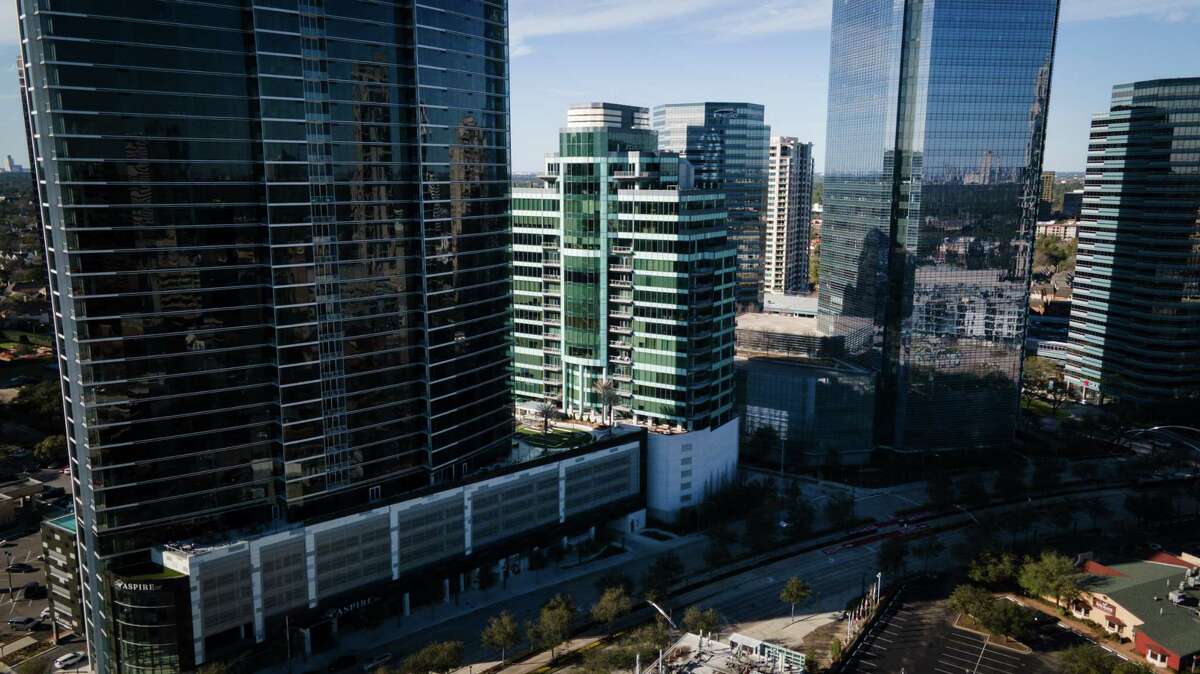
The Cosmopolitan condominium building at 1600 Post Oak Blvd where Accelerated Learning Academy purchased a 1,119-square-foot condo unit, claiming they needed the space for storage, photographed Thursday, Jan. 19, 2023, in Houston.Jon Shapley/Staff photographer
Just over two years ago, Universal Academy, a Texas charter school with two campuses in the Dallas area, made a surprising move.
In November 2020, a nonprofit foundation formed to support the school bought a luxury horse ranch and equestrian center from former ExxonMobil Chairman Rex Tillerson. The 12-building complex features a show barn “designed with Normandy-style cathedral ceilings,” a 120,000 square foot climate-controlled riding arena and a viewing pavilion with kitchen and bathrooms.
Last summer the Texas Education Agency granted Universal Academy permission to create a new elementary campus on the horse property’s manicured grounds. It will offer students riding lessons, according to a brochure, for $9,500.
School board President Janice Blackmon said Universal hopes to use the facility to start a 4H chapter and Western-style horsemanship training, among other programs that take advantage of its rural location. “We’re trying to broaden the students and connect them to their Texas roots,” she said.
Splashy purchases like the horse arena are receiving increasing public scrutiny as charter schools continue toexpand aggressively across Texas. Under state law, charter schools are public schools — just owned and managed privately, unlike traditional school districts.
An analysis by Hearst Newspapers found cases in which charter schools collected valuable real estate at great cost to taxpayers but with a tenuous connection to student learning. In others, administrators own the school facilities and have collected millions from charging rent to the same schools they run.
In Houston, the superintendent and founder of Diversity, Roots and Wings Academy, or DRAW, owns or controls four facilities used by the school, allowing him to bill millions to schools he oversees. DRAW’s most recent financial report shows signed lease agreements to pay Fernando Donatti, the superintendent, and his companies more than $6.5 million through 2031.
In an email, superintendent Donetti at DRAW said the property transactions were ethical, in the best interest of DRAW’s students and properly reported to state regulators. He said his school was “lucky” he was able to purchase the property because of challenges charters can face finding proper facilities.
Also in the Houston area, at ComQuest Academy Charter High School, the superintendent and her husband also own the company to which the school pays rent.
And Accelerated Learning Academy, a charter school based in Houston, is still trying to get a tax exemption on one of the two condominiums it bought just over a decade ago in upscale neighborhoods in Houston and Dallas. The school claims it has used the condos for storage, despite a nearby 9,600 square foot facility.
The battles between school districts and charter networks have become increasingly pitched, as they are locked in a zero-sum battle for public dollars.
Last year in Houston, about 45,000 students transferred from the ISD to charter schools, resulting in a loss to the district of a minimum of $276 million. That figure includes only the basic allotment received by the districts, excluding special education funding or other allotments.
In San Antonio, the two largest school districts are Northside ISD and North East ISD. More than 12,000 Northside students transferred to charter schools in the 2021-2022 school year, as did just under 8,000 from North East ISD. That means Northside lost at least $75 million, while North East lost $50 million, using the same basic allotment figures.
Each side cries foul about the other’s perceived advantages: charters are able to operate with less government and public scrutiny, while school districts benefit from zoning boards and can lean on a local tax base for financing.
Georgina Perez, who served on the State Board of Education from 2017 until this year, noted arrangements such as these would never be permitted at traditional school districts.
“If it can’t be done in (school districts), they probably had a good reason to disallow it,” she said. “So why can it be done with privately managed charter franchises?”
Lawmaker: ‘Sunshine’ is best cure
The largest charter network in Texas was a catalyst for the increased public scrutiny of charter school spending.
IDEA Public Schools faces state investigation for its spending habits, including purchases of luxury boxes at San Antonio Spurs games, lavish travel expenditures for executives, the acquisition of a boutique hotel in Cameron County for more than $1 million, plans to buy a $15 million private jet and other allegations of irresponsible or improper use of funds. The allegations date back to 2015 and led to the departure of top executives — including CEO and founder Tom Torkelson, who received a $900,000 severance payment.
Over the years lawmakers have steadily tightened rules for charter governance. A 2013 bill included provisions to strengthen nepotism rules; a 2021 law outlawed large severance payments. That bill was sponsored by Rep. Terry Canales, a South Texas Democrat whose district has some of the highest rates of charter school enrollment in the state.
“There’s a lot of work to be done for the people of Texas when it comes to charter schools,” Canales said. “Sunshine is the best cure for corruption. And the reality is it seems to be sanctioned corruption in charter schools.”
Considering the increased scrutiny, “It’s a myth that charter schools today are unregulated,” said Joe Hoffer, a San Antonio attorney who works on behalf of many charter schools. “Every session, more and more laws get passed.” If anything, he said, charter schools often have to jump through more regulatory hoops than local schools.
Yet acquiring property remains a gray area.
Charter schools that can’t purchase their own property typically must lease it and pay taxes. A 2021 state law authored by Rep. Barbara Gervin-Hawkins, a San Antonio Democrat who operates a charter, made such arrangements tax-free. But the Texas Supreme Court later blocked parts of the law, and it has been applied differently by counties across the state.
It’s unusual for school districts to lease their facilities; typically they are publicly owned or constructed. Local school districts are governed by nonpartisan elected boards, and when the board decides to purchase real estate, it must notify the public of the contract and voters can petition the district to block it. If a project requires bonding or new taxes, it must be put on the ballot.
At charters, by comparison, the governing board is appointed, not elected, so it does not answer to local voters. The main public scrutiny comes later, when the information about the sale must be disclosed in annual required filings with the Texas Education Agency.
The state education agency has the authority to review charter real estate transactions and sometimes does. In Dallas, Golden Rule Charter School is under state investigation for a real estate deal and possible nepotism. The school declined to release details because the investigation is pending.
But such reviews are often cursory, if they happen at all.
When charters report a real estate transaction to the education agency, Hoffer said, they typically just receive a letter back saying it has been recorded, with a clause reminding the schools that state regulators have the authority to return for an audit or demand the deal be re-done.
Critics say it isn’t enough. “The problem that a lot of us have had with charters is that they are considered public schools and they are taxpayer-funded, but they don’t have taxpayer scrutiny,” said state Rep. Donna Howard, an Austin Democrat and former trustee at Eanes ISD. “It’s a real lack of accountability.”
Some deals benefit administrators
According to its website, Horizon Montessori Public School operates four campuses in the Rio Grande Valley, one on Sugar Cane Drive in Weslaco. Until recently, records show, the property and its two commercial buildings were owned by Superintendent Alim Ansari.
Hidalgo County appraisal records showAnsari also apparently lived in a 4,800-square-foot home at the back of the 2.85-acre parcel, a portion of which was granted a homestead limitation on its taxes.
In addition to serving as Ansari’s home, records from the Texas Education Agency show that between 2015 and 2020, the superintendent leased his Weslaco property to Horizon for classroom and office space, collecting $118,000 a year in rent during the period. In 2020, Ansari-the-landlord signed a new five-year contract with his school for the property, for $168,000 annually, according to education agency records.
A home can be seen on the same piece of property as the Horizon Montessori Public School on Sugarcane Drive in Weslaco on Thursday, Jan. 19, 2023. The home belonged to the superintendent of the public charter school who leased his Weslaco property to Horizon for classroom and office space, collecting $118,000 a year in rent from 2015-2020. State and local records show Ansari sold the campus and residence last June. The buyer was a nonprofit organization called South Texas Educational Technologies, which according to its tax records conducts business as Horizon Montessori. Ansari is its chairman. State and local records show the foundation purchased the property from Ansari for $1.9 million, or more than twice the $840,000 at which Hidalgo County appraised it. Records show the foundation used a private appraiser to value the parcel.James Hord/Contributor
State and local records show Ansari sold the campus and residence last June. The buyer was a nonprofit organization called South Texas Educational Technologies, which conducts business as Horizon Montessori, according to its tax records. Ansari is its chairman.
State and local records show Ansari’s foundation purchased the property from Ansari for $1.9 million — or more than twice the $840,000 at which Hidalgo County appraised it. The foundation used a private appraiser to value the parcel.
Ansari did not respond to multiple phone and email messages. James Hayes, a CPA who sits on Horizon’s board and who also is paid $48,000 a year by the charter for accounting services, declined to comment.
Related-party arrangements are rare among modern charters, said Hoffer, the attorney who represents some of them. In some cases, he said, new schools might be forced to make such deals temporarily because they did not have the creditworthiness to borrow money to purchase facilities.
Pioneer Technology and Arts Academy, which has several campuses in the Dallas area, paid about $5 million in rent in the 2021 fiscal year to two companies, one a nonprofit and one a for-profit. Records show Superintendent Shubham Pandey has stakes in both.
Just under $3.5 million went to the nonprofit controlled by two board members of Pioneer, including Pandey. Another $1,296,418 went to Pandey’s for-profit business, PNC Partners, with more than $3 million total reported in the previous three years.
In an email, Pandey said that Pioneer’s goal all along wasto transfer the school buildings from his for-profit ownership to a nonprofit. Three campuses were taken over by the nonprofit in 2019, while three others were transferred last year. Future campuses will be owned by the nonprofit, he said, and he no longer collects rent checks from the school.
But the nonprofit did not exist when Pioneer was given its charter, and its initial application did not mention future plans to transfer assets to a nonprofit.
At ComQuest Academy Charter High School, the Houston-area charter, Superintendent Tanis Stanfield and her husband, Glenn, said they don’t earn a profit from the rent it pays their company, Peachwood Station LLC
Peachwood collected $91,000 in rent in 2021. Documents also say the company provided an additional $117,000-worth of rent for free.
Tanis Stanfield said the couple followed the law and provided the needed space at a steep discount to the school she ran. “State charter funding for facilities was not available for the campus acquisition,” the superintendent wrote in an email.
School-owned condos?
In 2017, the Chronicle reported on Accelerated Learning Academy’s purchase of a 1,119-square-foot condo unit in the 22-story Cosmopolitan, a glassy high rise near Memorial Park, for $427,000. The school then bought a 1,340-square-foot condo in downtown Dallas’s Metropolitan Club the same year, appraisal records show.
The school claimed both of the residential units were needed for storage space. The Dallas Appraisal District accepted that explanation, though the school already had a 9,600-square-foot, nearly empty campus in nearby Lancaster, and granted the condo a full property tax exemption. Records show Accelerated sold the condo in 2021.
The Cosmopolitan condominium building at 1600 Post Oak Blvd where Accelerated Learning Academy purchased a 1,119-square-foot condo unit, claiming they needed the space for storage, photographed Thursday, Jan. 19, 2023, in Houston.Jon Shapley/Staff photographer
Harris County appraisal officials have been more skeptical about the school’s use of the unit for educational purposes: “Personally, I cannot imagine that the state of Texas would allow the use of state funds to purchase this property,” the agency’s exemptions coordinator wrote in 2013, noting the Cosmopolitan’s deed restrictions prohibited condos from being used for businesses.
Accelerated has continued to seek a tax exemption. The appraisal district’s 2018 field inspection showed some plastic totes scattered throughout the unit.
“Very nice condo with granite and hardwoods,” the inspector noted. The exemption was again denied because the property did “not meet the tests prescribed by the tax code.” Records show Accelerated paid about $9,000 in property taxes on the unit last year.
Another example is the A.W. Brown Leadership Academy, which has two campuses in the Dallas area that serve about 1,000 students. Property records show it owns eight properties, several worth millions that have sat unused — even as taxpayer money has gone to repay the loans used to buy them.
Records show A.W. Brown’s real estate holdings include nearly 50,000 of commercial office space purchased with bonds in 2017. Appraised at more than $4 million, the property has been tax-free since 2018 and is vacant. Taxpayers pay for the bonds. A.W. Brown spokesman Charles Roberts said the school is still deciding how to use it.
The charter also owns a 3,400-square-foot house with an in-ground pool on 6 acres in Duncanville, identified as an office and valued at $630,000, plus 99 acres next to it, valued at more than $4 million by the appraisal district. Those were purchased more than a decade ago from professional basketball player Larry Demetric Johnson, records show.
The school has paid no taxes on either since 2014, according to appraisal records. In the fall of 2022, the school announced its plan to turn the more-than 100 acres of land into a community garden and farm for students “to learn more about agriculture and entrepreneurship,” said Roberts, the school spokesman.
In response to questions from Hearst, Roberts said the charter would be starting “an internal audit of facility purchases.” He declined to comment further.
The following is a small part of a long article, which I encourage you to read in full:
The motivations for these attacks are myriad and sometimes opaque, but many opponents of public education share a common goal: privatizing public schools, in the same way activists have pushed, with varying results, for privatization of public utilities and the prison system. Proponents of school privatization now speak of public schools as “dropout factories” and insist that “school choice” should be available to all. They profess a deep faith in vouchers, which would allow parents to send their children not just to the public schools of their choice but to religious and other private schools, at taxpayers’ expense.
But if privatizing public education is today cloaked in talk of expanded liberty, entrepreneurial competition, and improved schools for those who need them most, its history tells a different story. In 1956, two years after the U.S. Supreme Court handed down its landmark Brown v. Board of Education decision, a group of segregationist legislators in Texas, with support from retiring governor Allan Shivers, began concocting work-arounds for parents appalled by the prospect of racial integration of public schools. One idea: state-subsidized tuition at private schools. That never came to pass, but it was Texas’s first flirtation with vouchers.
Privatization proponents have since switched up their rhetoric, pitching vouchers as an opportunity for poor urban families to save their children from underperforming neighborhood schools. That hasn’t worked out either. In various experiments across the nation, funding for vouchers hasn’t come close to covering tuition costs at high-quality private schools, and many kids, deprived of the most basic tools, haven’t been able to meet the standards for admission.
School funding in Texas is based largely on attendance—as the saying goes, the money follows the child. Considerable evidence suggests that vouchers would siphon money from underfunded public schools and subsidize well-to-do parents who can already afford private tuition. Critics frequently cite a program in Milwaukee, where four out of ten private schools created for voucher students from 1991 to 2015 failed.
“I don’t think that vouchers serve any useful purpose at all,” said Scott McClelland, a retired president of H-E-B who now chairs Good Reason Houston, an education nonprofit. Ninety-one percent of Texas students attend public schools. “There isn’t enough capacity in the private school network to make a meaningful difference in their ability to serve economically disadvantaged students in any meaningful numbers, and it will divert funding away from public schools.”
In Texas, an unusual alliance of Democratic and rural Republican leaders has for decades held firm against voucher campaigns. The latter, of course, are all too aware that private schools aren’t available for most in their communities and that public schools employ many of their constituents. But the spread of far-right politics and the disruption of public schools during the pandemic created an opening for activists to sow discontent and, worse, chaos. “If they can make the public afraid of their public school, they will be more likely to support privatizing initiatives. Then that puts us back to where we used to be with segregation of public schools,” says former Granbury school board member Chris Tackett, who, with his wife Mendi, has become an outspoken advocate for public education and a relentless investigator of the attempts to undermine it.
They have their work cut out for them. In the past, just a few right-wing legislators pushed for privatization and were routinely ignored. After all, the state constitution spelled out “the duty of the Legislature of the State to establish and make suitable provision for the support and maintenance of an efficient system of public free schools.” But as times have changed, so has the interpretation of that guarantee.
Betsy DeVos, President Donald Trump’s former Education Secretary, set up shop in Dallas with her American Federation for Children to push against “government schools” in favor of “school choice.” Political PACs such as Patriot Mobile Action, an arm of a Christian wireless provider in North Texas, continue pouring millions into school board races and book bans to promote more religious education. Patriot has joined other recently formed PACs with inspirational names such as Defend Texas Liberty and Texans for Excellent Education, all of which supposedly support better public schools but are actually part of the privatization push. But by far the most powerful opponents of public schools in the state are West Texas oil billionaires Tim Dunn and the brothers Farris and Dan Wilks. Their vast political donations have made them the de facto owners of many Republican members of the Texas Legislature through organizations such as the now dissolved Empower Texans and the more recent Defend Texas Liberty, which the trio uses to promote restrictions on reproductive rights, voter access, and same-sex marriage. Almost as influential is the Texas Public Policy Foundation, where Dunn is vice board chair.
A November 2021 TPPF fund-raising letter, sent to supporters in advance of the Eighty-eighth Legislature convening, argued that “public education is GROUND ZERO” in the fight for freedom. “The policy team and board of the Texas Public Policy Foundation (TPPF) believe it is now or never,” it read, signaling that the long-standing and robust alliance against vouchers was unusually vulnerable. “The time is ripe to set Texas children free from enforced indoctrination and Big Government cronyism in our public schools.” The letter went on to herald a $1.2 million “Set the Captives Free” campaign to lobby legislators to save Texas schoolchildren from “Marxist and sexual indoctrination” funded by “far-Left elites for decades.”
Lieutenant Governor Dan Patrick, generously backed by Dunn, the Wilks brothers, and their organizations, has long been a proponent of privatizing public education (and of starving it through reductions in property taxes). He has made vouchers a primary legislative goal of the current session. Mayes Middleton, of Wallisville, a Republican state senator and former chair of the TPPF-aligned Texas House Freedom Caucus, filed a bill to create the “Texas Parental Empowerment Program,” proposing education savings accounts that are essentially a form of vouchers. Representative Matt Shaheen, of Plano, who is a member of the Texas Freedom Caucus, has introduced a measure that would guarantee state tax credits for those who donate to school-assistance programs—such as scholarships for kids wishing to go to private schools.
Governor Greg Abbott, knowing all too well the political headwinds that vouchers have faced, has long been wary of publicly supporting them, so he has undermined public schools in other ways. While campaigning early last year, he promised to amend the Texas constitution with a “parental bill of rights,” even though most, if not all, of those rights already existed. By then, “parental rights” had become a dog whistle to animate opponents of public education. (As the Texas Tribune put it: “Gov. Greg Abbott taps into parent anger to fuel reelection campaign.”)
During the recent intensifying crisis on the border, Abbott publicly floated a challenge to the state’s constitutional obligation to give all Texas children, including undocumented ones, a publicly funded education—a step his Republican predecessor, Rick Perry, had denounced years earlier as heartless. Then last spring, Abbott made headlines with his first full-throated public endorsement of a voucher program.
So here we are, with distrust in public schools advancing as fast as the latest COVID-19 variant. The forces behind the spread of this vitriol are no mystery. Those who would destroy public schools have learned to apply three simple stratagems: destabilize, divide, and, if that doesn’t work, open the floodgates of fear
In 2009, the Atlanta Journal-Constitution scrutinized test score gains in the city’s public schools and discovered a number of schools where the gains seemed improbable. The story triggered intense scrutiny by the Georgia Bureau of Investigation. Eventually nearly three dozed educators were charged with changing answers on the standardized tests from wrong to right in hopes of winning a bonus and pleasing their superintendent Dr. Beverly Hall, who put pressure on all teachers to raise scores or be humiliated.
During Beverly Hall’s tenure, the Atlanta district was celebrated for its miraculous test score gains, and she won recognition as Superintendent of the Year. She was the poster educator supposedly proving the “success” of No Child Left Behind. What she actually proved was that NCLB created perverse incentives and ruined education.
The facade of success came tumbling down with the cheating scandal.
After the investigation, Beverly Hall was indicted, along with 34 teachers, principals, and others. All but one of those charged is black. Many pleaded guilty. Ultimately, 12 went to trial. One was declared innocent, and the other 11 were convicted of racketeering and other charges. Beverly Hall died before her case went to trial.
The case was promoted by then-Governor Sonny Perdue. Ironically, the rise in Atlanta’s test scores was used by the state of Georgia to win a $400 million Race to the Top award.
One of those who was punished for maintaining her innocence was Shani Robinson, who was a first-grade teacher. She is the co-author with journalist Anna Simonton of None of The Above: The Untold Story of the Atlanta Public Schools Cheating Scandal, Corporate Greed, and the Criminalization of Educators.
I reviewed their book on the blog. While reading her book, I became convinced that Shani was innocent. As a first-grade teacher, she was not eligible for a bonus. Her students took practice tests, and their scores did not affect the school’s rating. Yet she was convicted under the federal racketeering statute for corrupt activities intended to produce financial gain. The Racketeer Influenced and Corrupt Organizations Act (RICO), was written to prosecute gangsters, not school teachers. Her conviction was a travesty.
Investigators offered Shani and other educators a deal: Plead guilty and you can go free. Or, accuse another teacher and you can go free. She refused to do either. She maintained that she was innocent and refused to accuse anyone else. Shani was accused by a teacher who won immunity. Despite the lack of any evidence that she changed scores, she was convicted.
The Atlanta Public Schools (APS) “cheating” scandal is a textbook example of overcriminalization and prosecutorial discretion gone amok, compounded by an unjust sentence of first-time offenders to serve years in prison. It is a glaring illustration of a scorched-earth prosecutorial mindset that has sparked a movement of reform-minded prosecutors nationwide — one which has yet to be embraced in Atlanta.
Just this past week, the six remaining educators who have insisted on their innocence went before the same judge who found them guilty. Their public defender asked to be excused from the case because he thought it was a conflict of interest to represent all six defendants. The original prosecutor, Fani Willis, continues to believe the six educators should be imprisoned. Willis is now prosecuting the case of whether former President Trump interfered in Georgia’s election in 2020.
The six educators who insist they are innocent have lived in a state of suspended animation for more than a decade. They have not gone to prison, yet. They have lost their reputations, their jobs, their teaching licenses.
They hoped that Judge Baxter might use the hearing to dismiss their case. Shani asked me to write a letter supporting her. I did.
It didn’t matter. Judge Baxter decided that the defendants should get a new public defender and return for another hearing. The case has already cost millions of dollars and is the longest-running trial in the history of the state.
The judge ordered them to return to court with their new lawyers or public defenders on March 16. At that time, the entire appeals process might start again and take years to conclude.
I contacted my friend Edward Johnson in Atlanta to ask him what he thought. Ed is a systems thinker and a sharp critic of the Atlanta Public Schools‘ leadership, which is controlled by corporate reformers who make the same mistakes again and again instead of learning from them.
Ed wrote me:
Prosecuting teachers and administers was morally wrong to begin with. Continuing to prosecute any of them is doubly morally wrong. Teachers and administers were the real victims of Beverly Hall. So prosecuting them means being willfully blind to ever wanting to learn truths about anything that would help Atlanta avoid doing a Beverly Hall all over again.
Carol Burris is the executive director for of the Network for Public Education. in this post, which she wrote exclusively for the blog, she reveals the details of Arkansas Governor Sarah Huckabee Sanders’ plan to defund and destroy the public schools in her state.
Burris writes:
Sarah Huckabee Sanders, the daughter of Baptist minister and former Governor Mike Huckabee, missed learning the 9th commandment that prohibits telling a lie. As press secretary to Donald Trump, her distortions of the truth resulted in the editor of Forbes warning corporations against hiring Sanders and other Trump “propagandists,” writing, “Forbes will assume that everything your company or firm talks about is a lie.”
Now she is the Governor of Arkansas. On her first day in office and in her response to Biden’s State of the Union, she parroted the old “education is the civil rights issue of our time” line that has been used to justify horrible policies from school closures to charter schools and vouchers. However, the disconnect between what she says and what she does quickly became apparent. On her first day in office, she issued an executive order prohibiting “indoctrination and critical race theory in schools” and another banning the term “Latinx” from being used in state documents. State authorities are investigating AP African American Studies at Little Rock Central High School, where the majority of students are Black.
If we need further proof that this self-proclaimed champion of Civil Rights is more aptly described as a champion of Civil Wrongs, look at her recently leaked ed reform plan.
Here are its features:
The Privatization of Public Education:
· Her voucher plan is a universal ESA—the plan now favored by the far-right. These plans have few rules and no family eligibility requirements. They have become Entitlement Spending Accounts–cash going into the pockets of private school families regardless of income. The leaked plan does not say how taxpayers will pay for it. But everyone will be eligible by 2025. It includes Voucher funding for homeschools. The only restrictions will apply to vendors, so those who enroll their children in those recently uncovered Neo-Nazi homeschools can find ways to cash in.
· Increased tax credits for contributions to an existing voucher program.
· Local School Boards can contract with an open-enrollment charter school or private company to run a school campus at risk of state takeover due to low performance—and if they do, they get a financial incentive.
· Establishment of a charter-school construction fund for new charters and expansion.
· Elimination of the cap on charters.
· Charter school applications no longer need to be reviewed and approved by the local school district board of directors.
· All students attending a public school can take courses and earn credit for classes not offered in their school. By the beginning of the 2025-2026 school year, students attending a public school that receives a letter grade of “C”, “D”, or “P” from the Arkansas School and District Accountability System may take their required courses (i.e. math, English, etc.) through the course choice program. Bet your bottom dollar that these courses will be online, with vendors like Stride K12 making a fortune.
Censoring and Controlling Curriculum
· K-3 literacy evaluation will be aligned with the “science of reading.”
· Before grade 5, teachers cannot provide classroom instruction on the following topics: sexually explicit materials, sexual reproduction, sexual intercourse, gender identity, and sexual orientation.
· School districts must implement an age-appropriate child sexual prevention program for grades K-12, allowing parents to preview materials and exempt their children from instruction. (I have no idea what a child sexual prevention program even is.)
· The Secretary of Education will review the Department of Education regulations, policies, materials, and communications to ensure they do not indoctrinate students with ideologies that conflict with the principle of equal protection under the law.
· No school employee or student must attend training on prohibited indoctrination or Critical Race Theory.
Harmful Policies for Students
· 3rd-grade retention based on deficits in reading proficiency.
· An accountability system for pre-school education that includes student data.
· Literacy testing three times a year for all students in K-3.
· Curriculum tracking in Grade 8.
· Community service requirements, which may, for some students, be challenging to meet.
· Mandated cops on campus.
· Career-ready pathways in partnership with local business and industry leaders” translate workforce training programs to track students into low-paying and middle-wage jobs.
Punitive Policies for Teachers
· Elimination of due process in dismissals.
· Base salaries will no longer increase by years of experience or for Master’s degrees.
· Bonuses based on VAM.
There are a few likable initiatives in her plan, such as paid maternity leave for teachers, but if she makes districts fund them even as she drains their funding with charter schools and voucher expansion, a good initiative will be one more financial pressure on already underfunded schools.
Sarah Huckabee Sanders’ education plan is a hodgepodge of all the awful and ineffective ideas proposed since No Child Left Behind. The fingerprints of JEB! and the Walton family are over the leaked legislation.
Despite its hodgepodge nature, one thing is clear—its ultimate intent is to destroy public education in the state by slamming a fist down on students, public schools, and their teachers while propping up a wild and largely unaccountable privatized system.
Carol Burris, executive director of the Betwork for Public Education, writes in The Progressive that it should be illegal to run a charter school for profit, just as it is illegal to run a public school for profit. Since the charter school lobby claims that charter schools are “public schools,” they should insist on banning for-profit charters.
Please open the link. This is an important article.
Burris writes:
From insider deals to real estate flips, the problems with charter schools run by for-profit corporations can’t be ignored. And growth in this sector is accelerating as operators use lax regulations and complicated corporate schemes to harvest public dollars from publicly-funded charter schools.
Those are the findings of a new report, Chartered for Profit II: Pandemic Profiteering, from the Network for Public Education (NPE), the organization I lead. We determined that for-profit corporations operate nearly 17 percent of all charter schools. And because many are online schools with high enrollments, one in five charter school students attended a for-profit run charter during the 2021-2022 school year.
In some states, the percentage of students in for-profit-run schools is staggering. More than 50 percent of all Florida charter school students are in schools run by for-profit companies; in Ohio, the percentage tops 60 percent. In Michigan, a startling 72 percent of all of the state’s charter school students attend a school run by one of forty-five corporations.
And this is not in the best interest of children. Students of charters run for profit graduate at lower rates and have more adverse academic outcomes as the number of charter services managed by for-profit operators increases. That conclusion, by the way, comes from a report published by the pro-charter Thomas B. Fordham Institute, an Ohio charter school sponsor.
Students of charters run for profit graduate at lower rates and have more adverse academic outcomes.
Some of these schools are part of large national chains. Four of the five largest for-profit chains now run their schools with sweeps contracts, meaning that 90 percent or more of the public dollars coming into the school are “swept” into for-profit-controlled bank accounts. The largest, Academica, which runs a private online international school that gives out American high school diplomas, manages 205 charter schools in nine states. Thirteen for-profit chains run twenty or more schools or campuses. Nearly half of all 110 for-profit operators in the United States run only one or two schools. These micro-education management organizations exist solely to shield financial transactions and owner profits from the public.
The charter industry downplays the prevalence of charter schools being run for profit because the mission of for-profit companies is to maximize profits, which puts the focus on financial gain, not students.





 Diane Ravitch's blog