In the summer of 2009, Amy Rose and Alice Ferguson, two mothers living on Greville Road in Bristol, a midsize city in southwest England, found themselves in a strange predicament: They saw entirely too much of their kids. “We were going, like, Why are they here?” Rose told me. “Why aren’t they outside?” The friends decided to run an experiment. They applied to shut their quarter-mile road to traffic for two hours after school on a June afternoon—not for a party or an event but just to let the children who lived there play. Intentionally, they didn’t prepare games or activities, Rose told me, as it would have defeated the purpose of the inquiry: “With time, space, and permission, what happens?”
The results were breathtaking. The dozens of kids who showed up had no problem finding things to do. One little girl cycled up and down the street “3,000 times,” Rose recalled. “She was totally blissed out.” Suddenly, the modern approach to children’s play, in which parents shuttle their kids to playgrounds or other structured activities, seemed both needlessly extravagant and wholly insufficient. Kids didn’t need special equipment or lessons; they just needed to be less reliant on their time-strapped parents to get outside.
The experiment also produced some unexpected results. As children poured into the street, some ran into classmates, only just then realizing that they were neighbors. Soon it became clear to everyone present that far more children were living on Greville Road than anyone had known. That session, and the many more it prompted, also became the means by which adult residents got to know one another, which led to another revelation for Ferguson and Rose: In numerous ways, a world built for cars has made life so much harder for adults.
The dominance of cars has turned children’s play into work for parents, who are left coordinating and supervising their children’s time and ferrying kids to playgrounds and play dates. But it has also deprived adults of something more profound. Over the years, as Rose and Ferguson have expanded their experiment to other parts of the United Kingdom, neighborhoods across the country have discovered that allowing kids to play out in the open has helped residents reclaim something they didn’t know they were missing: the ability to connect with the people living closest to them.
Modern folks tend to think that streets serve largely mobile purposes—getting cars from one place to another in swift, orderly fashion. But “prior to the automobile, streets had a ton of stationary functions,” Marcel Moran, a faculty fellow at New York University’s Center for Urban Science and Progress, told me. Streets were where people sold wares and socialized. And particularly after the United States and Europe began to industrialize, streets were the primary location for the rising number of urban-dwelling children to play, according to Jon Winder, a historian and the author of Designed for Play: Children’s Playgrounds and the Politics of Urban Space, 1840–2010. This remained the case in the U.K. and the U.S. even after playgrounds became widespread in the early 20th century. Only when cars hit the streets in larger numbers did things begin to change. Society, Winder told me, began prioritizing “the movement and storage of motor vehicles over children and their playful behavior…”
Rose and Ferguson’s project on Greville Road is of course not the first or only effort to reclaim the streets for children. In the U.K., play streets emerged roughly a century ago as a sort of compromise in the process of booting kids off the street. But after peaking in the 1960s, they largely dwindled out, to be revived only in the late 2000s. New York has had a play-streets program since 1914, and Philadelphia for more than half a century—and recently, the idea has been taken up in other U.S. cities. Chicago launched a play-streets program in 2012, followed by Los Angeles in 2015; an initiative in Portland, Oregon, hosted its first events in 2023.
In the U.K., Rose, Ferguson, and their friend Ingrid Skeels expanded their experiment in 2011 by founding Playing Out, an organization that has helped residents on more than 1,000 streets in dozens of cities across the country set up their own play sessions. These typically last for two hours and occur weekly, biweekly, or monthly.
Open the link to read the rest of the article. It’s an inspiring idea that is great for children and parents alike. Plus, it introduces neighbors to each other.
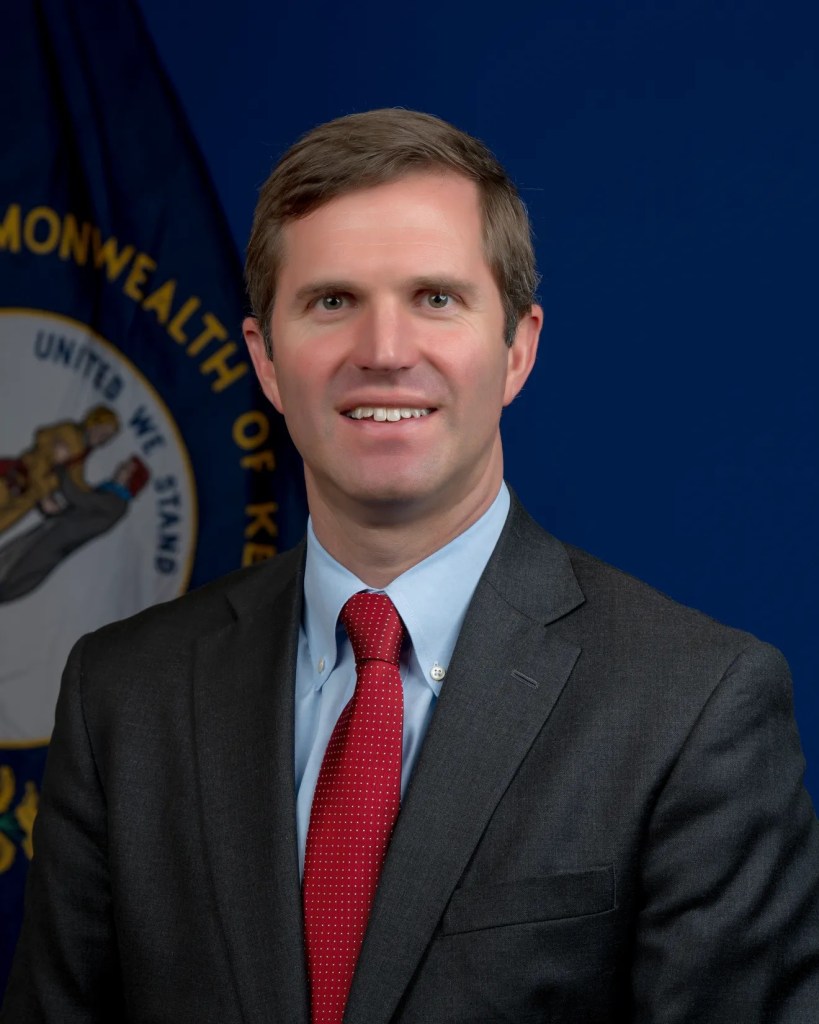
Back in February, long before President Biden stepped back and Vice-President Kamala Harris became the Democratic nominee for President, two red-state Governors spoke out against vouchers. Both are Democrats who understand the importance of public schools for their communities. They are Governor Roy Cooper of North Carolina, whose gerrymandered legislature has a Republican supermajority, and Governor Andy Beshear of Kentucky, whose legislature is controlled by Republicans. When Beshear ran, he picked a teacher as Lieutenant Governor.
In North Carolina and Kentucky, public schools are the center of our communities. We’re proud public school graduates ourselves – and we know the critical role our schools play in teaching our students, strengthening our workforces and growing our economies.
In Kentucky, we’ve seen significant improvement in elementary school reading, even with setbacks from the pandemic like many states experienced. In North Carolina last year, public school students completed a record 325,000 workforce credentials in areas like information technology and construction. The bottom line? Our public schools are critical to our success and an overwhelming number of parents are choosing them for their children.
That’s why we’re so alarmed that legislators want to loot our public schools to fund their private school voucher scheme. These vouchers, instituted in the 1950s and 1960s by Southern governors to thwart mandatory school desegregation, are rising again thanks to a coordinated plan by lobbyists, private schools and right-wing legislators.
Voucher programs chip away at the public education our kids deserve
This is their strategy: Start the programs modestly, offering vouchers only to low-income families or children with disabilities. But then expand the giveaway by taking money from public schools and allowing the wealthiest among us who already have children in private schools to pick up a government check.
In North Carolina, the Republican legislature passed a voucher program with no income limit, no accountability and no requirement that children can’t already go to a private school. This radical plan will cost the state $4 billion over the next 10 years, money that could be going to fully fund our public schools. In Kentucky, legislators are trying to amend our constitution to enshrine their efforts to take taxpayer money from public schools and use it for private schools.
Both of our constitutions guarantee our children a right to public education. But both legislatures are trying to chip away at that right, leaving North Carolina and Kentucky ranked near the bottom in per-pupil spending and teacher pay.
Public schools are crucial to our local economies. In North Carolina, public schools are a top-five employer in all 100 counties. In many rural counties, there are no private schools for kids to go to – meaning that those taxpayer dollars are torn out of the county and put right into the pockets of wealthier people in more populated areas.
Private schools get taxpayer dollars with no real accountability
As governors, we’ve proposed fully funding our public schools, teacher pay raises to treat our educators like the professionals they are and expanded early childhood education. We know that strong public schools mean strong communities. Families in Kentucky and North Carolina know that too. In North Carolina, nearly 8 in 10 children go to public schools.
Our public schools serve all children. They provide transportation and meals and educate students with disabilities. And they’re accountable to taxpayers with public assessments showing how students and schools are doing and where they need to improve.
But private schools that get this taxpayer money have little to no accountability. They aren’t even required to hire licensed teachers, provide meals, transportation or services for disabled students. They don’t even have to tell the taxpayers what they teach or how their students perform. North Carolina’s voucher system has been described as “the least regulated private school voucher program in the country.”
Studies of student performance under school voucher programs not only showed that they don’t help them, but that they could actually have harmful effects. Results from a 2016 study of Louisiana’s voucher program found “strong and consistent evidence that students using an LSP scholarship performed significantly worse in math after using their scholarship to attend private schools.” In Indiana, results also showed “significant losses” in math. A third study of a voucher program in Ohio reported that “students who use vouchers to attend private schools have fared worse academically compared to their closely matched peers attending public schools.”
We aren’t against private schools. But we are against taxpayer money going to private schools at the expense of public schools.
The future of our nation goes to class in public schools, and all Americans must be on guard for lobbyists and extremist politicians bringing similar plans to their states. Our segregationist predecessors were on the wrong side of history, and we don’t need to go back.
We are going to keep standing up for our public school students to ensure that they have the funding they need, and that teachers are paid like the professionals they are. It’s what’s best for our children, our economy and our future.
Roy Cooper is the governor of North Carolina. Andy Beshear is the governor of Kentucky.
The propaganda surrounding COVID vaccines has led to parental uncertainty about other vaccines. This may explain recent measles outbreaks. For most of us, measles is a childhood disease that was conquered by scientists many years ago. But it’s returning.
This year is not yet one-third over, yet measles cases in the United States are on track to be the worst since a massive outbreak in 2019. At the same time, anti-vaccine activists are recklessly sowing doubts and encouraging vaccine hesitancy. Parents who leave their children unvaccinated are risking not only their health but also the well-being of those around them.
Measles is one of the most contagious human viruses — more so than the coronavirus — and is spread through direct or airborne contact when an infected person breathes, coughs or sneezes. The virus can hang in the air for up to two hours after an infected person has left an area. It can cause serious complications, including pneumonia, encephalitis and death, especially in unvaccinated people. According to the Centers for Disease Control and Prevention, one person infected with measles can infect 9 out of 10 unvaccinated individuals with whom they come in close contact.
But measles can be prevented with the measles, mumps and rubella vaccine; two doses are 97 percent effective. When 95 percent or more of a community is vaccinated, herd immunity protects the whole. Unfortunately, vaccination rates are falling. The global vaccine coverage rate of the first dose, at 83 percent, and second dose, at 74 percent, are well under the 95 percent level. Vaccination coverage among U.S. kindergartners has slipped from 95.2 percent during the 2019-2020 school year to 93.1 percent in the 2022-2023 school year, according to the CDC, leaving approximately 250,000 kindergartners at risk each year over the past three years.
Florida and Illinois have had a surge in measles cases. The Surgeon General of Florida, Dr. Joseph A. Ladapo, ignored standard practice and told parents to make their own decisions about whether to keep their unvaccinated child home to avoid getting the disease.
Another source of misinformation is Robert F. Kennedy Jr.’s organization:
Vaccine hesitancy is being encouraged by activists who warn of government coercion, using social media to amplify irresponsible claims. An article published March 20 on the website of Robert F. Kennedy Jr.’s Children’s Health Defense organization is headlined, “Be Very Afraid? CDC, Big Media Drum Up Fear of ‘Deadly’ Measles Outbreaks.”
The author, Alan Cassels, claims that the news media is advancing a “a fear-mongering narrative,” and adds, “Those of us born before 1970 with personal experience pretty much all agree that measles is a big ‘meh.’ We all had it ourselves and so did our brothers, sisters and school friends. We also had chicken pox and mumps and typically got a few days off school. The only side effect of those diseases was that my mom sighed heavily and called work to say she had to stay home to look after a kid with spots.”
Today, he adds, “Big media and government overhyping the nature of an illness, which history has shown us can be a precursor to some very bad public health policies such as mandatory vaccination programs and other coercive measures.”
This is just wrong. The CDC reports that, in the decade before the measles vaccine became available in 1963, the disease killed 400 to 500 people, hospitalized 48,000 and gave 1,000 people encephalitis in the United States every year — and that was just among reported cases. The elimination of measles in the United States in 2000, driven by a safe and effective vaccine, was a major public health success. Although the elimination status still holds, the U.S. situation has deteriorated. The nation has been below 95 percent two-dose coverage for three consecutive years, and 12 states and the District below 90 percent. At the same time, the rest of the world must also strive to boost childhood vaccination rates, which slid backward during the covid-19 pandemic. According to the WHO, low-income countries — with the highest risk of death from measles — continue to have the lowest vaccination rates, only 66 percent.
New Hampshire reporter Garry Rayno says that the state legislature has its priorities upside down. Writing at IndepthNH.org, Rayno describes a Republican state government led by “moderate” Governor Chris Sununu that’s determined to destroy public schools while expanding vouchers eventually to cover all students’ private school tuition, including the children of the richest residents. Sununu appointed a homeschooling parent, Frank Edelblut, as the State Commissioner of Education. Edelblut is hostile to public schools and eager to divert funding from them.
The Republican legislature refused to renew a program to feed hungry children. As Rayno notes, they are “pro-life,” but don’t care much about living children.
Rayno writes:
From the new proposed rules for education minimum standards to alternative education opportunities, the state legislature and the executive branch appear to have their priorities upside down.
Call it culture wars, call it the war on public education or whatever you want, but much more attention is being paid to about 3 or 4 percent of the state’s school-age students — mostly in private and religious schools or home-schooled — while about 24 percent of public school students with food insecurity do not receive the same attention.
While there is ample evidence a hungry student is not a student fully focused on his or her studies, and is less likely to succeed academically than those who aren’t hungry when they come to school, the House last week by the slimmest of margins, said the food insecure kids could go hungry in this, one of the wealthiest per-capita states in the country.
House Bill 1212 supporters were willing to trim the cost by reducing the income cap from 350 percent of the federal poverty level to 250 percent or about $17 million annually from the Education Trust Fund instead of $50 million.
But that failed to induce enough Republican support to take the bill off the table where a near party line vote had put it, effectively killing it for this year.
The Republican majority also did not want to spend $150,000 of federal pandemic money to hire a coordinator to help about 1,500 homeless students who do not qualify for state homeless services because they do not live with their parents.
Many of the 1,500 students are in the LGBTQIA+ community.
Many of the same people who did not want to spend state or federal money to feed the hungry and help the homeless children and youths favor greater restrictions on abortions or are “pro-life.”
What they are saying with their votes, is we want you to have babies whether you want them or not or whether you can afford them or not, but once they are born, you’re responsible for taking care of them with no help from us.
Pro-life may not be the best term for anti-abortion proponents who voted not to feed the hungry children nor help find them a place to live…
Yet this week two public hearings will be held on bills to expand the eligibility for the Education Freedom Account program now in its third year, and every year well over its budgeted appropriation.
The bill would increase the income cap for the program from 350 percent of the federal poverty level to 500 percent which is $156,000 for a family of four and $102,000 for a parent and child household based on federal 2024 figures.
The current rate would limit family income to $109,200 for a family of four and $71,540 for a family of two.
The cost of the program since its inception has steadily increased from $8.1 million the first year, to $15 million the second and $25 million for the current school year.
The bill barely passed the House and the House Finance Committee chair waived fiscal review of the increase although many more students would be eligible — well above 50 percent of the families in New Hampshire and greatly increasing the cost, but bill proponents did not want to give Democrats another shot at killing the bill.
The money for the program comes from the Education Trust Fund which also provides the adequacy grants to public schools and the larger grants to charter schools, along with special education, building aid and other educational activities…
The bill will increase the income threshold from 350 percent to 400 percent with the threshold for a family of two $81,760 and a family of four at $124,800.
Reaching Higher Education estimates this increase will bring the cost for next school year to $53.4 million.
That is about a quarter of the current surplus in the Education Trust Fund.
The ultimate goal for supporters of the EFA program is universal eligibility or having no income cap so every family in the state would be eligible which would cost $90 million to $100 million if all the students in private or religious schools and homeschool programs sought and received some grants.
About 10 states have universal or near universal voucher programs, but the two states that have attracted the most attention because of their impact on state budgets have been Arizona and Ohio and both have gone well over estimated costs as they have here in New Hampshire.
The program is bankrupting Arizona and the Democratic governor is trying to limit its reach, but the Republican-controlled legislature has refused to go along.
Ohio faces a lawsuit over its program claiming it is hurting public schools while the vast majority of the new participants are students already in private or religious schools or homeschooling programs.
Sound familiar.
As one Texas state senator said when Gov. Greg Abbott was pushing for school vouchers, “it is nothing but a subsidy for the wealthy.”
And there are the new rules for the state’s minimum standards for public schools.
Two public hearings were held in the past two weeks and the proposed rules were universally trashed by almost everyone testifying causing state Board of Education chair Drew Cline to chastise those focusing on the rules presented to the board in February while a newer, updated version will come before the board soon, although that updated proposal is not available to the public.
The rules are aimed at clarifying and adding details to the state’s competency-based education model, but they also have been criticized for lowering the existing minimum standards, removing limits on class size, making many standards optional and not mandatory, and no longer requiring certified teachers and professionals.
Other concerns were the proposal would do away with local control, a hallmark for public education in the state, and move toward privatizing education and away from what one person called the great equalizer “public education.”
Education Commissioner Frank Edelblut proposed bills in the last few sessions that would have eliminated many current standards to focus only on the core areas of English, math and science, but without much success with the legislature.
Many saw the plan as a way to lower the state’s share of the cost of education and to make public school alternatives more attractive to students and parents.
Say what you will about Edelblut and his opinions about public education, he is tenacious.
The state is at a crossroads that will determine what public education will be for the next decade and on whether or not the state is willing to take care of its most vulnerable so they can fully participate in that education.
The end of the 2024 session and ultimately the next election should provide a vision of the future for New Hampshire and its children.
Alexandra Petri is a humorist for The Washington Post. She wrote today about the crazy decision by the Alabama Supreme Court that a frozen embryo (a fertilized egg) is a child. Destroying the frozen embryo is murder.
She begins:
Having kids is nothing like they tell you it will be! How tiny they are, and how you can hardly see them without a microscope. How you can’t hold them, not even once. How they don’t have anything that could be regarded, even optimistically, as a laugh, or a face. Isn’t being a parent the best? Isn’t it laughably cruel that the Alabama Supreme Court says that this is already a child? That this cluster of hopeful cells that you have been dreaming could become a baby is actually a person already? You would be laughing, if you could stop crying.
What an appallingly cruel thing to say to people already going through so much to have a child, people who were prepared to endure the grueling in vitro fertilization process of treatments and injections and embryo development before their pregnancy could even begin. What a ridiculous thing to say to anyone with a modicum of sense.
Don’t believe the evidence of your senses. Embryos are children.Flour is cake. These acorns are an old-growth forest. This half-baked insulting nonsense of a ruling is justice.
You know what they always say about people: They are invisible to the naked eye and can be stored conveniently in vials in a hospital freezer. They are discernible only to God and the Alabama judiciary. You don’t need to feed them, ever. They don’t need books. They don’t need clean water or fresh air or sunshine — in fact, they couldn’t survive a minute outside the glass dish.
How did the Alabama judges know? God told them.
Trump came out against the Alabama decision, and most Republicans are rapidly backtracking. They say they want motmre children to be born, and IVF is good. Now that Trump has given his blessing to IVF, watch the Republicans pivot. only poor Nikki Haley is left out in the cold, because her snap reaction was to praise the decision.
This story from Oklahoma went viral. It is a powerful counterpoint to the nonstop negativity that deformers spew to the media about public schools. It is also a rebuke to the nonsense that Oklahoma legislators spout about the state’s public schools.
It is a story of caring, concern and dedication to the students. It stands in sharp contrast to the charter schools built on the “no-excuses” model of iron discipline and conformity. What can charter schools learn from public schools like Bizby North Intermediate?
If only Oklahoma’s Governor, its State Superintendent, and its legislators cared as much about the state’s children as its dedicated educators!
BIXBY, Okla. (KFOR) – Out at a school in Bixby, Oklahoma is a principal whose hug was caught on camera and passed around online last week spreading what’s said to be some much-needed positivity.
“We do this all the time and tomorrow my team will do it all over again,” said Bixby North Intermediate Principal Libby VanDolah.
She was captured on camera taking care of one of her many students.
VanDolah said that while speaking with other members of her staff she noticed a student with their face in their hands sitting on the ground.
“At first I thought they were tying their shoes but then when I looked again they were still on the ground,” said VanDolah. “I don’t even know if I even finished what I was saying, I just walked off because I knew this student was needing some assistance.”
VanDolah got down on the ground and that’s when she noticed the student was crying.
“My team went into action. I got down and hugged that student, and my counselor went and got that student breakfast,” said VanDolah. “We sat there and hugged and it was a few minutes before we were ready to move. It was just a moment.”
That hug was captured on camera and posted online by Jessica Jernegan, Bixby Public Schools Director of Community Engagement. And that’s what the picture did, it engaged the Oklahoma community.
“That picture encapsulates what public school is about,” said VanDolah. “We meet the kids where they are and we give them what they need. All educators do it. It happened to me yesterday (Thursday) but it could have been my assistant principal or it could have been someone in another district.”
The student had walked into school without a backpack or a coat and was stressed VanDolah said.
The post by Jernegan was shared by Representatives, online influencers, and by many teachers. Jernegan posted:
“Not one question from the principal about being tardy or where’s your backpack or where are you supposed to be?!
A moment. A hug. And breakfast.
In case you’re still with me on this post and wondering if all the rhetoric you’re hearing about public schools is true…let this be a small but very real and tangible reminder that it is most definitely not.
We’re just over here meeting kids where they are and giving them what they need.”Jessica Jernegan, Bixby Public Schools
“I think the reason why it went so viral is that people are hungry for positive things, especially centered around education,” said VanDolah. “We do it every day because we care so deeply about our kids. Yes, I have the honor of being 475 different moms. I think the reason so many people connect with it is because they have an educator in their life that they’ve seen this happen with.”
The student had walked into school without a backpack or a coat and was stressed VanDolah said.
The post by Jernegan was shared by Representatives, online influencers, and by many teachers. Jernegan posted:
“Not one question from the principal about being tardy or where’s your backpack or where are you supposed to be?!
A moment. A hug. And breakfast.
In case you’re still with me on this post and wondering if all the rhetoric you’re hearing about public schools is true…let this be a small but very real and tangible reminder that it is most definitely not.
We’re just over here meeting kids where they are and giving them what they need.”Jessica Jernegan, Bixby Public Schools
“I think the reason why it went so viral is that people are hungry for positive things, especially centered around education,” said VanDolah. “We do it every day because we care so deeply about our kids. Yes, I have the honor of being 475 different moms. I think the reason so many people connect with it is because they have an educator in their life that they’ve seen this happen with.”
Nancy Bailey is a retired educator who has seen the damage wrought by No Child Left Behind, Race to the Top, and the nonsensical grandchild called Every Student Succeeds Act. We can say now with hindsight that many children were left behind, we did not make it to the Top, and every student is not succeeding.
Nancy knows that the greatest casualty of these ruinous federal laws and programs are young children. Instead of playing, instead of socializing, instead of living their best lives as children, they are being prepared to take tests. This is nuts!
Nancy explains in this post (originally from 2021 but nothing has changed) why the status quo is harmful to small children and how it should change. I should mention that Nancy and I wrote a book together—although we have never met!
EdSpeak and Doubletalk: A Glossary to Decipher Hypocrisy and Save Public Schooling https://a.co/d/bXKYsZG
Here’s Nancy on what kindergarten should be:
Let’s remember what kindergarten used to be, a happy entryway to school. Children attended half a day. They played, painted pictures, dressed up, pretended to cook using play kitchens, took naps on their little rugs, learned how to take turns, and played some more. They listened to stories, proudly told their own stories, described something unique about themselves during show-and-tell, mastered the ABCs, counted to 10, printed their names, and tied their shoes. They had plenty of recess and got excited over simple chores like watering the plants or passing out snacks. They had art and music and performed in plays that brought families together to generate pride and joy in their children and the public school.
Then, NCLB changed kindergarten in 2002. The Chicago Tribune described this rethinking well, which I’ve broken down.
In some schools, kindergarten is growing more and more academically focused–particularly on early reading.
The pressure to perform academically is trickling down from above, many experts say, because of new state and federal academic standards.
. . . in one Florida classroom some children “cried or put their heads on their desks in exhaustion” after standardized achievement tests.
One Chicago public school kindergarten teacher quit in part because of what she considered unrealistic demands of administrators who expected kindergartners to sit all day at desks, go without recess and learn to read by year’s end. The teacher wanted to create centers for science, art and dramatic play but was forbidden.
In some places, kindergarten, once a gentle bridge to real school where play and learning easily intermingled, is becoming an academic pressure-cooker for kids, complete with half an hour of homework every night.
Some parents are alarmed enough that they’re “redshirting” their children, holding them back from kindergarten for a year so they will be more mature.
So how will they rethink early childhood again? Instead of kindergarten being the new first grade will it become the new third or fourth grade, with more standards piled onto the backs of 5-year-olds?
What happens to the children who are developing normally and can’t meet the standards, or children who have disabilities and need more time? Will they be labeled as failing, sorted into the can’t do kids who get bombarded with online remedial programs?
The harder they make early learning for young children, the more likely parents will seek more humane alternative placements that treat children like children.
It’s time to start caring more about the children and less about driving outcomes or results that don’t make sense.
I am sharing the best standards for children of all time, written by now-retired teacher extraordinaire, Sarah Puglisi.
Here’s a sample. Please go to the link and read all 100 of them. Then bring back kindergarten!
Today, we honor Dr. King by paying attention to the well-being of children and the protection of working people. He strongly believed in unions. When he was murdered in Memphis, he was there to support the Black men who were sanitation workers in their fight for a living wage and their demand for a union.
Since his death, powerful politicians have rolled back collective bargaining in many industries and have sought to eviscerate unions altogether. Now these same red states that ban unions are abandoning their child labor laws. These laws were passed over the last century to protect children, to limit the age at which they are allowed to work, to keep them in school so that they could be educated, to prevent them from working in hazardous industries.
Republicans in many red states are looking at children as a source of low-wage workers. Many industries need workers—especially since some states don’t want migrant workers—and they care whether they are 14 or 15.
Our regular readers Christine Langhoff wrote Cc this comment about Indiana, where employers are eager to hire child labor.
On Monday, the opening day of Indiana’s legislative session, Republican Rep. Joanna King filed a bill that would allow kids as young as 14 to effectively drop out of school following 8th grade and go to work full-time on a farm. If the teenager “has been excused from compulsory school attendance after completing grade 8” and obtains their parents’ permission, they can work up to 40 hours a week all year round, including during school hours.
One of the big under-covered stories of 2023 was the rolling back of child labor laws.
The major restrictions on child labor were part of the Fair Labor Standards Act of 1938, and from there the states passed their own versions of protections for children. Many of these laws distinguish between agricultural labor and other sorts, in part so that junior could work on the family farm without getting Ma and Pa fined or arrested. But the idea was that maybe putting children in harm’s way or depriving them of the chance to get an education was a Bad Thing and maybe as a nation we should knock it off.
We didn’t get those laws easily. Lots of folks thought that child labor was double plus good. Opponents of the laws denied the existence of a problem, argued that work was good for the young ‘uns. “I am really tired of seeing so many big children ten years old playing in the streets,” was a real thing that a real “prominent lady citizen” said in opposition to child labor laws. And of course the ever-popular complaint– “How can we stay in business and remain profitable if you pass these rules?”
Camella Teoli went to work in a Lawrence, MA mill at the age of 11. Early on in her career, a machine used to twist cotton into thread caught her hair and ripped off part of her scalp. At the age of 14, she was standing in front of Congress in March 1912. The conditions in the mill were famously horrific; low wages and a life expectancy of 39.6 years, with one third of workers dying before age 25. If your workforce is going to die off in their twenties, of course you need to start them young.
Teoli was in front of Congress in March because in January, a new law had reduced the legal hours for women and children from 56 to 54 per week. The pissed off mill owners responded by speeding up the machines; so harder work, less pay. That kicked off the Great Lawrence Textile Strike, in which adults and children walked off the job.
The strike got ugly. Workers sent their children out of town, both for safety and as a publicity move, and the city officials decided to counter the bad publicity by deploying police and soldiers at the railroad station to keep children from getting in trains out of town, ultimately physically attacking the group of children. And Congress called a hearing, and Camella Teori, a 14 year old Italian immigrant testifying before First Lady Helen Taft, who invited Camella and other child laborers to lunch at the White House and contributed to the strike fund. Teoli became a national sensation, the face of our labor problem.
Massachusetts passed some child labor laws that were aimed not so much at the inhumane conditions of the work, but at the fact that child workers were being deprived of any chance for education. But the states (particularly the southern ones) dragged their feet hard, because for a huge part of US history, lots of people have been okay–even more than okay–with child labor, as long as it’s Those People’s Children.
Teoli went back to work in the mill. She was never promoted. She never told her own children about her role in labor history, even as her daughter had learned to help her arrange her hair to cover a large bald spot.
So here we are again
My point? The desire to use young bodies as part of the industrial machinery of our country is not particularly new, nor has it always been obvious that children should not be required to work in dangerous conditions or to the detriment of their own education.
In 2023, around a dozen states rolled their child labor protections back.
Some, like Arkansas, teamed up the gutting of child labor protections with laws set to kneecap public schools. Iowa removed protections that kept young workers out of more physically dangerous jobs while expanding the hours they could be asked to work. Missouri similarly shotfor increasing working hours for teens. Minnesota said yes to teens working in heavy construction.
Many off these rollbacks have especially troubling features. Arkansas removed the requirement for age verification. Many of the states have eliminated the requirement for a work permit. The work permit is dismissed as a piece of troublesome paperwork, but it is also the checkpoint at which the school or some other responsible adult can say, “I’m not sure this is such a great idea for this particular teen.”
In some cases like Arkansas, the permits had a requirement for parents to sign off, but now Arkansas doesn’t care to give parents a voice in this particular decision. Ohio’s Senator Bill Reineke expressed a similar concern over child labor, arguing that kids who really want to work shouldn’t be hampered because “they can’t get their parents to cooperate with them.” Parents–they only matter sometimes.
Please open the link and finish the rest of this excellent article.
Federal law bars anyone under 18 from roofing because it’s so dangerous. But across the U.S., migrant children do this work anyway.
They call themselves “ruferitos” on social media. In videos like these, they talk about being underage and pose on rooftops and ladders, often without the required safety gear.
One slip could be fatal.
The New York Times spoke with more than 100 child roofers in nearly two dozen states, including some who began at elementary-school age. They wake before dawn to be driven to distant job sites, sometimes crossing state lines. They carry heavy bundles of shingles that leave their arms shaking. They work through heat waves on black-tar rooftops that scorch their hands.
The rise of child roofers comes as young people are crossing the southern border alone in record numbers. Nearly 400,000 children have come to the United States since 2021 without their parents, and a majority have ended up working, The New York Times has reported in a series of articles this year.
The most common job for these children is under-the-table work in roofing and construction, according to teachers, social workers, labor organizers and federal investigators. Roofing is plentiful and pays better than many of the other jobs these children can get.
In New Orleans, Juan Nasario said he had been replacing roofs during 12-hour shifts nearly every day since he arrived from Guatemala four years ago, when he was 10. He would like to go to school or at least join a soccer team, but he needs to pay rent to his older cousin.
In Dallas, Diego Osbaldo Hernández started roofing at 15, after coming to the United States from Mexico last year to live with an older friend…
Children working on construction sites are six times as likely to be killed as minors doing other work, according to the National Institute for Occupational Safety and Health. Roofing is particularly risky; it is the most dangerous job for minors other than agricultural work, studies show.
Labor organizers and social workers say they are seeing more migrant children suffer serious injuries on roofing crews in recent years.
A 16-year-old fell off a roof in Arkansas and shattered his back. A 15-year-old in Florida was burned all over after he slipped from a roof and onto a vat of hot tar. A child in Illinois stepped through a skylight and fractured his spine….
Juan Ortiz, 15, was installing metal roofing at a plant in Alabama in 2019 when this patch of insulation gave way and he fell onto a concrete floor.
After his death, the federal Occupational Safety and Health Administration found that the employer had “nine laborers on the crew, but only six harnesses.”
Retired teacher Nancy Bailey has a way of putting school issues into perspective. In this post, she explains what recess is, why it’s important, what it is not, and why parents should beware of the programmed substitutes that are offered up instead of real recess. The war against play began with the Reagan-era report “A Nation at Risk,” then went into high gear with the passage of George W. Bush’s “No Child Left Behind” law and was reinforced by NCLB’s wicked stepchildren: Race to the Top and the Every Student Succeeds Act. What everything since 2001 stressed was the importance of test scores, not children’s health and well-being. Play in the era from 2001-2023 was a waste of time that would be better spent practicing for the next test.
Bailey wrote:
The lack of breaks for children and the misrepresentation of what constitutes recess continues to flourish.
School reformers try unsuccessfully to replace recess. But recess is not Playworks, Phys.Ed., meditation, or Brain Breaks controlled by adults who tell children what to do, denying them the ability to learn academic and social skills that recess provides when children are free to learn.
Recess is unstructured play. It’s supervised (supervision is critical) but not controlled by adults. It’s one of the easiest and inexpensive ways to help children flourish in school, and studies have highlighted its importance.
Removing recess from the school day involved one of the terrible school reforms in the ’90s connected to high-stakes standardized tests, with the bizarre belief (see A Nation at Risk) that children need more classwork without breaks.
After a while, adults realized the severe health problems that could arise if children don’t have breaks. Still, now they focus on physical activity and need to understand the significance of the critical social interactions children learn during recess.
In some places like Florida, parents have had to fight for a recess mandate, where they are always at risk of losing even 20 minutes of recess. Fortunately, the legislature allowed 20 minutes for now!
Recess involves unstructured play. As Mr. Rogers said, Play is often talked about as if it were a relief from serious learning. But for children, play is serious learning. Play is the work of childhood.
Conflict resolution and working out difficulties are critical parts of recess and another critical variable involving what children learn with unstructured play.
Playworks
The Pulse’s reporter Grant Hill, a Philadelphia NPR/PBS station, recently reviewed recess and its role in conflict resolution, especially after COVID-19. In Getting Better at Resolving Conflict, the recess discussions are at the end, and Hill covers recess’s importance. I get a short spot criticizing Playworks. The CEO misinterprets what recess involves and seems not to understand the impact of controlling what children do. This is not actual recess.
Playworks is a nonprofit run by volunteers from Americorps. It cashes in with donations from various outside corporations, people who likely confuse actual recess with an organized version of what is like Phys. Ed.
If charitable organizations were looking to assist with play and actual recess, they’d seek out poor schools with lousy playgrounds and fund those or find a way to offer children actual recess.
It’s also insulting to hear volunteers in a nonprofit getting donations and tax dollars say one of their purposes is to show teachers the importance of play. If Americorps volunteers want to work with children, they might consider becoming teachers.
Playworks is not alone in skewing the meaning of recess. Recess has been replaced with other inadequate substitutes like Phys. Ed., meditation, and Brain Breaks. Some classes have children sitting on bouncy balls, thinking that nonstop balancing keeps them on their toes!
Please open the link to learn about other efforts to supplant recess.
The Washington Post identifies a serious problem with home schooling: No one is monitoring the well-being of children. In public schools, teachers and staff are designated reporters of children’s physical health; if they see signs of abuse, they are legally bound to report it to authorities. In home schooling, child abuse may be hidden. Read this horrifying story and bear in mind that some states are paying parents to keep their children home instead of sending them to school.
His family had searched, taping hand-drawn “missing” posters to telephone poles and driving the streets calling out the 11-year-olds name. So had many of his neighbors, their flashlights sweeping over the sidewalks as the winter darkness settled on the Sierra Nevada foothills.
The police were searching, too, and nowthey had returned to the place where Roman had gone missing earlier that day: his family’s rented home in Placerville, Calif. Roman’s stepmother, Lindsay Piper, hesitated when officers showed up at her door the night of Jan. 11, 2020, asking to comb the house again. But she had told them that Roman liked to hide in odd places — even the clothes dryer — and agreed to let them in.
Brock Garvin, Roman’s 15-year-old stepbrother, was sitting in the dimly lit basement when police came downstairs shortly after 10:30 p.m. He ignored them, he said later, watching “Supernatural” on television as three officers began inspecting the black-and-yellow Home Depot storage bins stacked along the back wall.
Brock had no idea what had happened to Roman. But he did know something the police did not: Much of what his mother had said to them that day was a lie.
When she reported Roman’s disappearance, Piper told the police she was home schooling the eight kids in her household. This was technically true. It was also a ruse.
Most schoolshave teachers, principals, guidance counselors — professionals trained to recognize the unexplained bruises or erratic behaviors that may point to an abusive parent. Home education was an easy way to avoid the scrutiny of such people. That was the case for Piper, whose children were learning less from her about math and history than they were about violence, cruelty and neglect.
Left to their own devices while she lay in bed watching TV crime procedurals, and her husband, Jordan, worked long hours as a utility lineman, their days and nights passed in a penumbral blur of video games, microwave dinners and fistfights. Almost nothing resembling education took place,her sons said. But there was a shared project in which she diligently led her children: the torture of their stepbrother, Roman.
Roman had been a loving, extroverted 7-year-old who obsessed over dinosaurs when Piper came into his life, a mama’s boy perpetually in search of a mother as Jordan, his father, cycled from one broken relationship to the next.
On the day he was reported missing, he was a sixth-graderwho weighed only 42 pounds. He had been locked in closets, whipped with extension cords and bound with zip ties, according to police reports and interviews with family members who witnessed his treatment. Unwilling to give him even short breaks from his isolation, Piper kept him in diapers.
The Washington Post reconstructed Piper’s torment of her stepson from hundreds of pages of previously undisclosed law enforcement records, as well as interviews with two of her four biological children, other relatives, friends of the family, neighbors and police officers.
Piper, 41, who is in prison, did not respond to two letters requesting comment for this story. Her former public defender did not return calls or emails. Jordan Piper, 38, also in prison, declined a request to comment through his attorney.
Little research exists on the links between home schooling and child abuse. The few studies conducted in recent years have not shown that home-schooled children are at significantly greater risk of mistreatment than those who attend public, private or charter schools.
But the research also suggests that when abuse does occur in home-school families, it can escalate into especially severe forms — and that some parents exploit lax home education laws to avoid contact with social service agencies.
In 2014, a group of pediatricians published a study of more than two dozen tortured children treated at medical centers in Virginia, Texas, Wisconsin, Utah and Washington. Among the 17 victims old enough to attend school, eight were home-schooled.
After a home-schooling mother killed her autistic teenager, government analysts in Connecticut gathered data from six school districts over three years. Their report, released in 2018 by the state’s Office of the Child Advocate, found that 138 of the 380 students withdrawn from public schools for home education during that period lived in households with at least one prior complaint of suspected abuse or neglect.
Child-welfare advocates have long pushed fora minimal level of oversight for home-schooled students — calls that have grown more urgent as home schooling has exploded, becoming the country’s fastest growing form of education.But home-school parents, arguing that serious episodes of abuse are rare, have fiercely resisted. And nowhere have their efforts been more successful than in the state where Roman and his siblings spent most of their lives: Michigan.
Michigan is one of 11 states in which parents are not even required to tell anyone they are home schooling, let alone demonstrate they are teaching their children anything. Its lack of regulation, the result of a 1993 state Supreme Court decision still celebrated by home-school advocates, has repeatedly concealed the actions of abusive parents like Piper.
“She told people we were home-schooled, but we weren’t,” Carson Garvin, one of Roman’s stepbrothers, now 16, later wrote in a victim impact statement. “Now I can see it wasn’t for us that she made this decision. It was to protect herself from the school counselors and staff. I believe that if we had went to school that someone would have had a feeling that something was off and that she would have been reported at some point.”
Despite what Piper told the police, Roman had never really liked hiding. The truth was that he had been hidden. And home schooling is what allowed her to hide him.
As Brock Garvin sat in the basement watching TV on the night of Roman’s disappearance, listening to the police officers banter as they opened the Tough Storage Tote bins, he was in a fog. He had been up all night playing “Dark Souls” on his Xbox, and was upset that he hadn’t been allowed to sleep for most of the day, as he usually did.
He was also jarred by the entrance of unknown grown-ups into the house. The family had moved to California from Michigan just a few months earlier. Long isolated, they were now strangers to everyone around them.
But Brock wasn’t worried about Roman. If his stepbrother had run away, whatever he found could hardly be worse than what he had escaped.
Then the lid on one last bin snapped open, and the officers’ laughter stopped.
Even in his benumbed state Brock felt something strange pass through the room, as if the air pressure had suddenly dropped. It was quiet for a moment, then the police began pulling on latex gloves.
‘I’ll behave’
Romanloved beingalive. It was a strange thing to say about an infant, but that was Jennifer Morasco’s first impression of the sunny 5-month-old boy who would become her stepson when she married Jordan Piper in 2010.
“He’d be teething, but he wouldn’t cry,” recalled Morasco, now 41. “He was just so happy to be in existence, and loved being around people and doing stuff with everyone.”
Roman’s mother, Rochelle Lopez, was a soldier who deployed to Iraq when he was 14 months old. After returning, she struggled with heart problems, anxiety and addiction to pain medication, according to police records. Lopez, who died in 2021 at age 34, fought with Jordan in court for years over custody of Roman.
But none of that seemed to weigh on the boy that Morasco largely raised until he was about 4 years old. Morasco still remembers the lyrics to “Life is a Highway,” a song from Roman’s favorite movie, “Cars,” that he sang over and over. Another favorite was “Rainbow Connection,” the banjo-accompanied Muppet ode to life’s unfulfilled promises.
“He thought he was Kermit the Frog, essentially,” Morasco said.
Even after Morasco left Jordan Piper, she kept in touch with Roman, calling every year on his birthday. But in 2016, Jordan wasn’t picking up his phone, so she tried sending a Facebook message to Roman’s new stepmom, asking her to tell him “he is loved all the way to the moon and back.”
Lindsay Piper reacted harshly, warning Morasco not to contact her again and boasting that Roman “has excelled in ways I can’t begin to explain.”
Piper herself had barely graduated high school, according to her sister, Chanel Campbell. Her interest was never in academics; it was in babies. It wasn’t an unusual fixation for a young girl, but there was something off-kilter about the intensity that Lindsay brought to her aspirations of motherhood, her sister said.
“She carried a baby doll around with her until she was, like, 12,” said Campbell, who was raised with her sister in and around Flint. “She just had this fascination with baby dolls and dressing them up and changing them and putting them in diapers.” This treatment extended to the family’s miniature schnauzer, which Lindsay forced into footed pajamas.
By the time she married Jordan Piper, Lindsay had four children of her own. Their father, Marcus Garvin, was an infantryman in the Army and Army National Guard. He returned from his service in Iraq to years of marital turmoil with Lindsay, who eventually gained full custody of their children. After marrying Jordan, she became the parent of a fifth: her stepson, Roman.
In Piper’s frequent Facebook posts, they were a happily blended family, all beaming smiles and matching flannel shirts. But Campbell knew this image was no more real than the dolls her sister had once carried around. At family gatherings, Piper’s children tended to run wild, and she responded in disturbing ways: pinching them, or biting them on their forearms. When Campbell protested, she said, her sister would storm off.
Reached by phone, Piper’s mother, the guardian of Carson’s twin brother, initially said she would consider speaking to The Post but did not respond to subsequent calls or text messages. Piper’s eldest daughter, now 21, did not respond to repeated requests for comment.
Shortly after her marriage to Jordan, Piper started to complain about her boys’ experience at their elementary school.
“She said, ‘I’m just going to home-school them. I’m tired of the teachers singling them out. I’m tired of everyone picking on them,’” Campbell recalled. “I thought to myself, ‘You’re definitely right. We’ve got a problem here. But home schooling isn’t going to be the answer to it.’”
Between late 2016 and the summer of 2017, Piper withdrew the children from school, Brock and Carson said. With the exception of a few brief interludes when they were sent back for days or weeks, they would not regularly attend school again for the next five years.
At first, they sporadically logged on to an online learning program, Brock and Carson recalled. Then any pretense of education was dropped.
Piper spent the day watching “Criminal Minds” and “Law & Order,” her sons said, and in the evenings, when Jordan returned from work, the couple would sit around drinking Jack Daniels.
By this time, the family had moved to Gaines, a tiny town amid soybean fields about 20 miles southwest of Flint. At midday, the sound of children at recess echoed past their house from the elementary school three blocks away. But for Piper’s kids, the high-pitched laughter and shouting might as well have come from another planet.
“My world got very, very small,” recalled Brock, who was then 12. “I wouldn’t see the sun or moon. I would just be in my room 24/7.” He at least had his Xbox; Carson had his twin brother. Roman had nothing and nobody, because the things thatmade him human were methodically stripped away.
It happened slowly, his stepbrothers said. Early on, when the boys scuffled, Piper blamed Roman, the one to whom she had not given birth, punishing him with lengthy timeouts. Then she began locking the door to his room. Then she began covering his window with a blanket.
“He would sit in the dark on his bed all day. And she would have us, like, scratch on the walls and make creepy noises so he’d think there’s demons trying to kill him,” said Brock, who expressed deep regret about participating. “He’d sit there and scream, like, ‘Stop it, please’ or ‘I’ll behave’ … that was his life.”
Soon there was no disciplinary pretext for the harm inflicted on Roman, Carson and Brock said. It was simply what the family did. Piper ordered her sons to join in when she whipped him with phone charger cords. Roman began trying to escape, so she tied him down. She took away his clothes. Most of her kids were overweight, but Roman was put on something worse than a starvation diet.
“She would feed him oatmeal with huge amounts of salt in it,” Carson said. “He puked it up, so he wouldn’t have to keep eating it. And she would make him eat his puke.”
Campbell suspected there was something badly wrong inside her sister’s house. She said that after seeing bruises on Roman’s face at a Christmas get-together in 2016, she called child protective services.
She made two follow-up calls, she said, but could never determine whether any action was taken. Police later said they found no records of CPS investigations into Piper’s treatment of Roman. A spokesman for the Michigan Department of Health and Human Services — which oversees such investigations — declined to comment, citing the confidentiality of child-welfare cases.
Roman kept appearing in Piper’s Facebook photos, increasingly wraithlike beside his grinning siblings.
“He was just lifeless, just sad. You could just see it in his face, aside from the puffy eyes and the bruising on his forehead,” Campbell said. “The love had been sucked out of him.”
It seemed unimaginable that a child could fall so completely through the safety net because a parent like Piper decided to home-school. But in Michigan, it had happened before.
‘A shield for child abuse’
About two years before Roman was withdrawn from school, an eviction crew entered Mitchelle Blair’s Detroit apartment on March 24, 2015. The 35-year-old mother of four wasn’t home, so they began removing her furniture. But their work came to an abrupt halt when they opened a deep freezer in the living room: inside were the bodies of two children.
Stoni Blair and Stephen Berry — estimated to have been ages 13 and 9 when their mother killed them — had been pulled out of Detroit public schools with their siblings two years earlier. During Blair’s conviction and sentencing to life in prison for first-degree murder, it emerged that she had burned her children with scalding water and beaten them with wooden planks.
She also claimed to be home-schooling them.
Stephanie Chang, then a freshman Democratic state representative whose district included the site of the murders, was horrified by the case. She was also alarmed by what she perceived as a yawning gap in the state’s child protection system.
It wasn’t just Stoni and Stephen. Seven years earlier, there had been Calista Springer, a home-schooled 16-year-old who died in a house fire in Centreville, Mich., unable to free herself from a choke chain her parents used to tie her to her bed. Marsha and Anthony Springer were convicted of torture and child abuse and sentenced to lengthy prison sentences.
Chang understood such cases didn’t represent most children’s home-schooling experiences. But she also believed abusive parents were taking advantage of Michigan’s absence of any notification or monitoring requirements for home educators, with devastating consequences.
“There are so many amazing home-school parents who I have so much respect for. But when people use home schooling as a shield for child abuse, that’s not acceptable,” said Chang, now a state senator. “That lack of a notification requirement creates an environment where parents can basically just do whatever they want.”
It is a concern that extends beyond Michigan, and that pediatricians share with politicians….
A month after Mitchelle Blair’s children were discovered dead in Detroit, Chang introduced a bill requiring that parents notify their local school district of a decision to home-school and that home-schooled children meet at least twice a year with a mandated child abuse reporter, such as a teacher, doctor or psychologist.
“It’s such a common-sense thing, in my view,” Chang said.
The state board of education in Michigan endorsed the legislation. But the possibility of any oversight infuriated home-schoolers, and they organized to defeat Chang’s modest proposal.
The story goes on to explain that Roman died of salt poisoning. He was 11, but weighed the same as a six-year-old.
When the older boys were returned to their biological father in Michigan, who had not seen them for years, he insisted on sending them to public school.
His parents were arrested and jailed in California for second degree murder. The mother has been sentenced to a term of 15 years to life. Roman’s father awaits sentencing.
In the face of such horrifying stories, it is incomprehensible that state officials do not pass laws to regulate home schooling: first, to check in the health of the children, and second, to determine whether they are learning anything. A parent with several children, like the one in this story, could collect almost $60,000 a year from the state in Florida or in other states where vouchers go to unregulated home schooling parents.




 Diane Ravitch's blog