Archives for category: Bigotry

John Merrow was the education correspondent for the PBS Newshour for many years. He writes here about the insane insults hurled at our nation’s teachers by MAGA.

Merrow writes:

The US has nearly 3.6 million K-12 teachers, and another 1.5 million college teachers. One-third of 5.1 million is 1.7 million. Who knew that we have 1,700,000 terrorists in our classrooms!

I certainly had no idea things were that bad, and I’m kicking myself for not knowing. After all, I spent more than 67 years in American classrooms, as a student, a teacher, a parent, and a reporter. I must have interviewed and maybe even socialized with thousands of these terrorists, and I didn’t have a clue.

My 4th grade teacher yelled a lot and banged desks (and some ears too), so I supposed she “terrorized” us, but I don’t think that’s what the accuser had in mind.

I can think of one other possible example of ‘terrorism’ in the classroom: My 10th grade English teacher, Mr. McKinley, would deliberately make mistakes when he wrote stuff on the blackboard and then erupt in (faux) fury if we failed to catch his flubs. Somehow, I don’t think that’s what the accuser had in mind.

Are you questioning the accuracy of the accusation? OK, it came from President Donald Trump’s buddy Steve Bannon, who opened his mouth while in Arizona to pay tribute to Charlie Kirk, the assassinated leader of Turning Point. The podcast host was saying to Bannon that Kirk’s ideas about marrying early and having lots of children were actually not popular with young people, which prompted Bannon to blame teachers for brain-washing their students. Here’s what he said:

“…..those kids — look, from kindergarten all the way up, they are essentially, you know, a third of the teachers are terrorists that are trying to form them.”

Predictably, the right-wing podcaster didn’t challenge Bannon’s wild accusation or even ask him what he meant by ‘terrorist,’ so I’m going to go out on a limb and suggest that Bannon meant that teachers were teaching values that Bannon disapproves of, like tolerance and cooperation. I have seen lots of teachers work hard to inculcate such values, and, if that’s ‘terrorism,’ I approve.

Mocking Bannon is a woefully insufficient response, however, because his blatant teacher-bashing is part of the right wing’s persistent, harsh, and (unfortunately) often successful campaign to bring down public education.

And Bannon’s not even a field general in this war. He’s clearly outranked by Oklahoma’s State Superintendent of Education Ryan Walters, who in January reacted to violence at the Mardi Gras in New Orleans. You may recall that, early on New Year’s Day an army veteran carrying an ISIS flag drove his pickup truck down Bourbon Street and killed 14 people and injured dozens more before the police killed him. It was labeled a possible terrorist incident, prompting Mr. Walters to go off: “We also have to take a look at how are these terrorists coming from people that live in America. …. You have schools that are teaching kids to hate their country, that this country is evil. You have the teachers’ unions pushing this on our kid (sic).”

Mocking the hyperbole of school critics like Walters and Bannon is ineffective, because culture warriors are immune to humor. Instead, they are seriously opposed to just about everything that some of us believe is in the public interest, such as public education, public transportation, public libraries, public parks, public health, and so on. They recognize that public education is a cornerstone of our democracy, and they are going after it, with sledgehammers and other implements of destruction, including lies and absurd accusations from the likes of Bannon and Walters.

(They are anti-public-everything, acronym APE. Don’t be an APE!)

Early in September, the New York Times reporter Dana Goldstein did a deep dive into the impact of vouchers, education savings accounts, tax credit scholarships, and other programs that divert funds from public schools to non-public schools. The entire article is well worth your time.

The number of students whose parents are using these programs has doubled since 2019, nearly all in Republican-led states. Five years ago, only about 20,000 students had education savings accounts (ESA), which allow deducting any ‘educational’ expense from one’s taxes; today, more than 500,000 families have ESA’s.

In the past, eligibility for most of these programs was means-tested because the stated goal was to help low income families. That’s changed, and in the new programs, any family can take advantage, regardless of income.

This ain’t cheap. Indiana’s program, for example, is costing more than $600 million dollars a year, dollars that might have gone to public education.

Joining the 14 states with voucher-type programs is your federal government, because the “Big Beautiful Bill” passed by Congress earlier this year includes a $5,000 voucher.

Do these voucher programs work? The evidence is mixed, at best.

Are they popular with voters? Here the answer is crystal clear: NO! In the 17 opportunities that voters have had to weigh in on vouchers since 1970, they’ve said NO, including three votes in Republican-led states in 2024.

For a critical view of what’s going on, read David Osborne’s analysis here.

If you support public education, begin by thanking teachers. Take a minute to picture the teachers who had changed your lives for the better…and then to ask yourselves if you ever said ‘Thank you’ to those women and men. If it’s too late to connect directly with them, you might write something about them and share it with others.

That’s only the first step. Consider attending school board meetings, perhaps even running for election to your local school board. You might join the parent-teacher organization, or volunteer as a tutor. You might contribute supplies, or help with school fund-raising efforts. Let your elected officials at all levels know that you support public education. If you’re a public school parent, move beyond ‘involvement’ to ‘engagement,’ by getting to know your children’s teachers.

(I’ve written about this in more detail in “Addicted to Reform: A 12-Step Program to Rescue Public Education,” which is available at most public libraries, some bookstores, and Amazon. It’s reviewed positively here and negatively here.)

It’s not pie-in-the-sky idealism to believe that a strong public education system is the road to equality and citizenship, or that the real safeguard of democracy is education. Those insights came from FDR and Martin Luther King, Jr., among others.

Please make certain that you are registered to vote, and that your friends and neighbors are as well. This attack on public education is serious, folks. Don’t take our democracy for granted.

In a bipartisan vote, Congress passed a resolution to honor Charlie Kirk on October 14 as a National Day of Remembrance for him.

At a time when Republicans are canonizing Charlie Kirk, it’s useful to remember what he stood for, what he believed, what he advocated.

Here are some video clips of Charlie Kirk in his own words:

The Guardian.

Ta-Nehisi Coates, himself a controversial figure among some whites for his frank writings about racism, wrote an article in Vanity Fair about Charlie’s oft-expressed views.

Charlie was an unrepentant white supremacist. He was a male chauvinist who believed that a woman’s place was in the home, raising children and deferring to the authority of her husband. He was a proud and unrepentant bigot. He should not have been murdered. Political violence is poison to a democracy, which should rely on persuasion, not repression, censorship, or violence.

Coates reminds us that if Charlie’s views prevailed, we would abandon the rights of everyone who was not a straight white Christian male. That’s a majority of us.

Coates wrote:

Before he was killed last week, Charlie Kirk left a helpful compendium of words—ones that would greatly aid those who sought to understand his legacy and import. It is somewhat difficult to match these words with the manner in which Kirk is presently being memorialized in mainstream discourse. New York Times columnist Ezra Klein dubbed Kirk “one of the era’s most effective practitioners of persuasion” and a man who “was practicing politics in exactly the right way.” California governor Gavin Newsom hailed Kirk’s “passion and commitment to debate,” advising us to continue Kirk’s work by engaging “with each other, across ideology, through spirited discourse.” Atlantic writer Sally Jenkinssaluted Kirk, claiming he “argued with civility” and asserting that his death was “a significant loss for those who believe engagement can help bridge disagreements.”

The mentions of “debate” and “engagement” are references to Kirk’s campus tours, during which he visited various colleges to take on whoever come may. That this aspect of Kirk’s work would be so attractive to writers and politicians is understandable. There is, after all, a pervasive worry, among the political class, that college students, ensconced in their own bubbles, could use a bit of shock therapy from a man unconcerned with preferred pronouns, trigger warnings, and the humanity of Palestinians. But it also shows how the political class’s obsession with universities blinds it to everything else. And the everything-else of Kirk’s politics amounted to little more than a loathing of those whose mere existence provoked his ire.

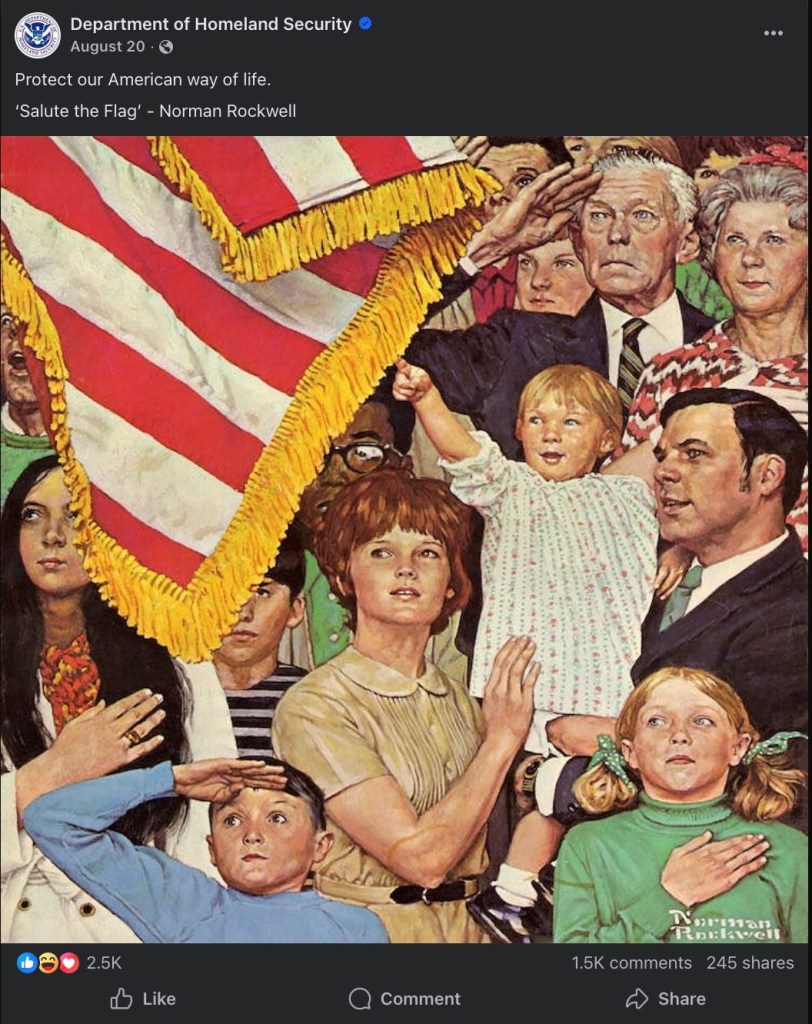
It is not just, for instance, that Kirk held disagreeable views—that he was pro-life, that he believed in public executions, or that he rejected the separation of church and state. It’s that Kirk reveled in open bigotry. Indeed, claims of Kirk’s “civility” are tough to square with his penchant for demeaning members of the LGBTQ+ community as “freaks” and referring to trans peoplewith the slur “tranny.” Faced with the prospect of a Kamala Harris presidency, Kirk told his audience that the threat had to be averted because Harris wanted to “kidnap your child via the trans agenda.” Garden-variety transphobia is sadly unremarkable. But Kirk was a master of folding seemingly discordant bigotries into each other, as when he defined “the American way of life” as marriage, home ownership, and child-rearing free of “the lesbian, gay, transgender garbage in their school,” adding that he did not want kids to “have to hear the Muslim call to prayer five times a day.” The American way of life was “Christendom,” Kirk claimed, and Islam—“the sword the left is using to slit the throat of America”—was antithetical to that. Large “dedicated” Islamic areas were “a threat to America,” Kirk asserted, and New York mayoral candidate Zohran Mamdani was a “Mohammedan,” with Kirk supposing that anyone trying to see “Mohammedism take over the West” would love to have New York—a “prior Anglo center”—“under Mohammedan rule.”

Kirk habitually railed against “Black crime,” claiming that “prowling Blacks go around for fun to go target white people.” He repeated the rape accusations against Yusef Salaam, a member of the exonerated Central Park Five who is now a New York City councilman, calling him a “disgusting pig” who had gotten away with “gang rape.” Whatever distaste Kirk held for Blacks was multiplied when he turned to those from Haiti. Haiti was, by Kirk’s lights, a country “infested with demonic voodoo,” whose migrants were “raping your women and hunting you down at night.” These Haitians, as well as undocumented immigrants from other countries, were “having a field day,” per Kirk, and “coming for your daughter next.” The only hope was Donald Trump, who had to prevail, lest Haitians “become your masters.”

The point of this so-called mastery was as familiar as it was conspiratorial—“great replacement.” There was an “anti-white agenda,” Kirk howled. One that sought to “make the country more like the Third World.” The southern border was “the dumping ground of the planet,” he claimed, and a magnet for “the rapists, the thugs, the murderers, fighting-age males.” “They’re coming from across the world, from China, from Russia, from Middle Eastern countries,” he said, “and they’re coming in and they’re coming in and they’re coming in and they’re coming in…”

You can probably imagine where this line of thinking eventually went.

“Jewish donors,” Kirk claimed, were “the number one funding mechanism of radical open-border, neoliberal, quasi-Marxist policies, cultural institutions, and nonprofits.” Indeed, “the philosophical foundation of anti-whiteness has been largely financed by Jewish donors in the country.”

Kirk’s bigotry was not personal, but extended to the institution he founded, Turning Point USA. Crystal Clanton, the group’s former national field director, once texted a fellow Turning Point employee, “I HATE BLACK PEOPLE. Like fuck them all … I hate blacks. End of story.” One of the group’s advisers, Rip McIntosh, once published a newsletter featuring an essay from a pseudonymous writer that said Blacks had “become socially incompatible with other races” and that Black culture was an “un-fixable and crime-ridden mess.” In 2022, after three Black football players were killed at another collegeMeg Miller, president of Turning Point’s chapter at the University of Missouri, joked (“joked”) in a social media message, “If they would have killed 4 more n-ggers we would have had the whole week off.”

Kirk subscribed to some of the most disreputable and harmful beliefs that this country has ever known. But it is still chilling to think that those beliefs would be silenced by a gunshot. The tragedy is personal—Kirk was robbed of his life, and his children and family will forever live with the knowledge that a visual record of that robbery is just an internet search away. And the tragedy is national. Political violence ends conversation and invites war; its rejection is paramount to a functioning democracy and a free society. “Political violence is a virus,” Klein noted. This assertion is true. It is also at odds with Kirk’s own words. It’s not that Kirk merely, as Klein put it, “defended the Second Amendment”—it’s that Kirk endorsed hurting people to advance his preferred policy outcomes…

Mere weeks before his death, Kirk reveled in Trump’s deployment of federal troops to DC. “Shock and awe. Force,” he wrote. “We’re taking our country back from these cockroaches.” And in 2023, Kirk told his audience that then president Joe Biden was a “corrupt tyrant” who should be “put in prison and/or given the death penalty for his crimes against America.”

What are we to make of a man who called for the execution of the American president, and then was executed himself? What are we to make of an NFL that, on one hand, encourages us to “End Racism,” and, on the other, urges us to commemorate an unreconstructed white supremacist? And what of the writers, the thinkers, and the pundits who cannot separate the great crime of Kirk’s death from the malignancy of his public life? Can they truly be so ignorant to the words of a man they have so rushed to memorialize? I don’t know. But the most telling detail in Klein’s column was that, for all his praise, there was not a single word in the piece from Kirk himself.

Scott Maxwell is my favorite opinion writer at The Orlando Sentinel. He always makes sense, in a state led by a Governor and Leguslature that make no sense at all.

In this column, he asks a straightforward question: Why is there no accountability for school vouchers? Why are taxpayers shelling out money for substandard schools? Why is money diverted from public schools to pay for schools where the curriculum is based on the Bible, not facts?

Maxwell writes:

Florida recently joined about a dozen states in passing new rules that say participants in the Supplemental Nutrition Assistance Program, formerly known as food stamps, can’t use their vouchers on junk food.

I think that makes sense to most people. This program, after all, is supposed to provide “nutrition” to people in need, most of whom are children, elderly or people with disabilities.
Basically, if taxpayers are providing $330 a month for basic food needs, that money shouldn’t be used on Red Bull and Oreos.

So now let’s take that a step further.

Taxpayer money also shouldn’t be used to send students to the junk-food equivalent of school — places that hire “teachers” without degrees, use factually flawed curriculum or that hand out A’s to every kid, regardless of what they actually learn, just to make their parents feel better.

Just like with food stamps, taxpayers have a right to know that the money they’re providing for schools is actually funding a quality education.

Yet in Florida that is not the case. Here, the voucher-school system is the Wild West with a lack of accountability and scary things funded with your tax dollars.

The Orlando Sentinel has documented this mess for years through its “Schools without Rules” investigation that found taxpayer-funded voucher schools where:


• “Teachers” lacked degrees or any kind of basic teaching certification
• Finances were so disastrous that schools actually shut down in the middle of the school year, stranding families and students
• Science classes taught students that dinosaurs roamed the earth alongside man, and history lessons claimed slavery and segregation weren’t really all that bad

• Administrators refused to admit students with disabilities or who had gay parents
• Parents filed complaints that included “Cleaning lady substituting for teacher,” “They don’t provide lunch and they don’t even have a place to eat” and “I don’t see any evidence of academics”

I don’t care how pro-school choice you are, tax dollars shouldn’t fund that kind of nonsense.

Some of these fly-by-night schools set up in strip malls seem to thrive because they tell parents what they want to hear — that their kids who were struggling in public schools magically became straight-A students at voucher schools with little to no standards or legitimate measures of success.

Well, that’s the educational equivalent of junk food. And taxpayers wouldn’t fund that kind of nonsense if the state enacted basic accountability measures.

Namely, all voucher-eligible schools should be required to:

• Publish graduation rates and nationally accepted test scores
• Hire teachers who are certified or at least have a college degree
• Disclose all the curriculum being taught
• Ban discrimination

Most good schools already do this. Think about it: what kind of reputable school wouldn’t agree to hire qualified teachers? Or wouldn’t want the public to see what kind of test scores their students produce?

If you want to send your kid to a school that’s unwilling to clear those ground-level hurdles, you shouldn’t expect taxpayers to fund it.
Similarly, if you want to run a school that refuses to serve kids in wheelchairs or who are gay, you shouldn’t fund your discrimination with money that belongs to the people against whom you’re discriminating.

In Florida, some of the worst voucher schools are faith-based. But so are some of the best. Parents and taxpayers deserve to see the difference — the test scores that show whether students are actually learning.

Many faith-based schools embrace science and history. But some try to replace proven facts with their own beliefs or opinions, using “biology” books that claim evolution data is false and “history” books that try to put sunny spins on slavery and segregation.

The people who defend — and profit off — Florida’s unregulated voucher system usually cite “freedom” and “parental rights” as a justification for unfettered choice. But you know good and well that virtually every other taxpayer-funded system has sensible guardrails.

You can’t take Medicaid money to a witch doctor or a psychic “healer.” And just like we don’t give parents the “choice” to use SNAP vouchers to buy their kids Snicker bars, they don’t deserve the “freedom” to take money meant to provide a quality education to a school that can prove it’s providing one.


Basic transparency and accountability measures are needed for any program to be effective. So whenever you hear anyone protesting them, you have to wonder what it is they don’t want you to see.

This may be the most important article you will read today.

Richard Rothstein has had a distinguished career as a journalist who writes about social science, most notably, achievement gaps, housing segregation, and the impact of poverty on academic performance. He has long been a fellow at the Economic Policy Institute and before that was education editor of The New York Times.

Rothstein writes here about the origins of the belief that teachers are directly responsible for student academic performance. If students score poorly on tests, goes the theory, it’s because their teachers have low expectations for them. In the case of black students, teachers’ racism is likely to explain their low expectations. From this perspective, No Child Left Behind and Race to the Top made perfect sense. The teachers needed high expectations or needed to be fired.

Rothstein writes:

Social psychologist Robert Rosenthal died at the age of 90 last month. He was best known for his 1968 book, Pygmalion in the Classroom, co-authored by Lenore Jacobson, an elementary school principal in South San Francisco.

No book in the second half of the 20th century did more, unintentionally perhaps, to undermine support for public education, and thus diminish educational opportunities for so many children, especially Black and Hispanic children, to this day. The book and its aftermath put the onus solely on teacher performance when it came to student achievement, disregarding so many critically important socioeconomic factors—at the top of the list, residential segregation.
How did it do that?

The book described an experiment conducted in Ms. Jacobson’s school in 1965. The authors gave pupils an IQ test and then randomly divided the test takers into two groups. They falsely told teachers that results showed that students in one of the groups were poised to dramatically raise their performance in the following year, while the others would not likely demonstrate similar improvement.

At the end of that year, they tested students again and found that the first and second graders in the group that was predicted to improve did so on average, while those in the other group did not. The book, as well as academic articles that Dr. Rosenthal and Ms. Jacobson published, claimed that the experiment showed that teacher expectations had a powerful influence on student achievement, especially of young children. Pupils whose teachers were told were more likely to improve then apparently worked harder to meet their teachers’ faith in them.1

Some psychologists were skeptical, believing that the experimental design was not sufficiently rigorous to support such a revolutionary conclusion. Even the reported results were ambiguous. Teacher expectations had no similar impact on children in grades three through six. Similar experiments elsewhere did not confirm the results even for first and second graders.2

Nonetheless, the book was very influential.
In the decades after Pygmalion, other studies examined teacher expectations. They showed that teachers have greater expectations of higher achieving students but couldn’t determine whether the teacher attitudes helped to cause better pupil performance. Perhaps teachers only developed those expectations after seeing that students were higher achieving.3 Only an experimental study, like Pygmalion, could establish causality, but contemporary ethical standards would often prohibit such experiments, requiring, as they must, lying to teachers about their students’ data.

Minority children in the South San Francisco school where Rosenthal and Jacobson experimented were Mexican-origin, not African American. Yet ignoring how scanty the evidence was, education policymakers concluded from their research that the Black-white gap in test scores at all grade levels resulted from teachers of Black children not expecting their pupils to do well. And that, they reasoned, should be an easy problem to solve—holding teachers accountable for results would force them to abandon the racial stereotypes that were keeping children behind.

The accountability movement grew in intensity during the Bill Clinton administration, while in Texas, Governor George W. Bush implemented a mandatory standardized testing program whose publicized results, he thought, would force teachers to improve by shaming them for the lower scores of their poorer Black and Hispanic pupils.

In 2000, Bush was elected president; his campaign promised to demolish teachers’ “soft bigotry of low expectations.” During his first year in office, he led a bipartisan congressional majority to adopt the “No Child Left Behind Act” that required every state to conduct annual standardized testing in reading and math for pupils in the third through eighth grades. 

Shortly after the bill was signed, I met with the congressional staffer who had been primarily responsible for writing the legislation. She predicted that within two years, the publication of test scores would so embarrass teachers that they would work harder, with the result that racial differences in academic achievement would evaporate entirely.

Nothing of that sort has happened. Although test performance of both Black and white students has improved somewhat, the gap is not much different than it was two decades ago. But the public reputation of our teaching force has continued to deteriorate, as a conclusion spread that failure to equalize test results could be remedied by gimmicks like naming a school’s classrooms for the Ivy League colleges that teachers expected their students to attend.4 

Enthusiasm for charter schools escalated from a belief that operators could choose teachers with higher expectations, yet charter schools have not done any better (and in many cases worse) in closing the gap, once the sector’s ability to select students less likely to fail (and expel students who do) is taken into account.5

In 2008, I taught an education policy course for master’s degree candidates, many of whom had taught for two years in the Teach for America (TFA) program. It placed recent college graduates without teacher credentials in schools for lower-income Black and Hispanic students.

Funded heavily by private philanthropies, TFA embraced the low-expectations theory of below-average performance. Prior to their teaching assignments, TFA corps members were required to attend a summer institute whose curriculum featured a unit entitled “The Power of My Own Expectations” and required them to embrace the “mindset” of “I am totally responsible for the academic achievement of my students.”

None of my master’s degree students claimed that in their two years of teaching, their high expectations actually produced unusually high achievement. But most were so immunized against evidence and experience that they enrolled in a graduate program with the intention of creating new charter schools infused with high expectations. Only a few wondered what had gone wrong with their theory, besides having goals that still weren’t high enough.

Certainly, there are teachers with low expectations and harmful racial stereotypes, and it would be beneficial if those who can’t be trained to improve were removed from the profession. But I’ve visited many schools serving disadvantaged students. Most teachers I observed, white and Black, were dedicated, hard-working, engaged with their students, and frustrated about the social and economic challenges with which children daily came to school. I don’t claim that my observations were representative; I was more likely to be invited to visit schools that took great pride in their efforts, despite conditions they struggled to overcome.

No matter how high their expectations, teachers can’t do much about:

*their pupils’ higher rates of lead poisoning that impact cognitive ability;

*more frequent asthma—the result of living with more pollution, near industrial facilities, in less-well maintained buildings with more vermin in the environment—that may bring them to school drowsy from being awake at night, wheezing;

*neighborhoods without supermarkets that sell fresh and healthy food;

*stress intensified by being stopped and frisked by police without cause, and a discriminatory criminal justice system that disproportionately imprisons their fathers and brothers for trivial offenses;

*frequent moves due to rising rents, or landlords’ failure to keep units in habitable condition;

*absenteeism from a need to stay home to care for younger siblings while parents race from one low-wage job to another;

*poor health from living in neighborhoods with fewer primary care physicians or dentists;

*lower parental education levels that result in less academic support at home, combined with less adequate access to technology, a problem exacerbated since the pandemic;6

*and many other socioeconomic impediments to learning.7

Not every Black child suffers from these deprivations that affect their ability to take full advantage of the education that schools offer. But many do. Concentrating disadvantaged pupils in poorly resourced schools in poorly resourced and segregated neighborhoods overwhelms instructional and support staffs.

Such realities contributed to my conclusion that residential segregation, not low teacher expectations, was the most serious problem faced by U.S. education. It is what led to my recent books, The Color of Law, and its sequel (co-authored by my daughter, Leah Rothstein), Just Action; How to challenge segregation enacted under the Color of Law.

Robert Rosenthal’s Pygmalion theory set the stage for a national willingness to deny educational disparities’ true causes: the unconstitutional and unlawful public policies that imposed racial segregation upon our nation.

Footnotes:

1. Robert Rosenthal and Lenore Jacobson. 1968. Pygmalion in the Classroom: teacher expectation and pupils’ intellectual development. (New York: Holt, Rinehart, and Winston). For a technical summary by the authors, see. Rosenthal and Jacobson, “Pygmalion in the Classroom.” The Urban Review 3, September, 1968: 16-20.

2. See “Pygmalion in the Classroom.” The Urban Review 3, September, 1968, footnote on p. 19.

3. For example, see Thomas L. Good, Natasha Sterzinger, and Alyson Lavigne. 2018. “Expectation Effects: Pygmalion and the initial 20 years of research.” Educational Research and Evaluation 24 (3-5): 99-123.

4. See, for example, Richard Rothstein. 2010. “An overemphasis on teachers.” Commentary, Economic Policy Institute, October 18. 

5. Martin Carnoy, et al. 2005. The Charter School Dust-Up. (Washington, D.C.: The Economic Policy Institute).

6. In early 2020, I wrote that the pandemic would widen the achievement gap. The consequences turned out to be worse than I could have imagined. Teacher expectations had nothing to do with it. Richard Rothstein. 2020. “The Coronavirus Will Explode Achievement Gaps in Education.” Shelterforce.org, April 13.

7. Richard Rothstein. 2004. Class and Schools. Using social, economic, and educational reform to close the black–white achievement gap. (Washington, D.C.: The Economic Policy Institute).

The text of this post was originally published on January 30, 2024 on the Working Economics Blog of the Economic Policy Institute.

Jamelle Bouie is one of the best, most interesting opinion writers for The New York Times. As a subscriber to that newspaper, I signed up for Bouie’s newsletter, which is where these thoughts of his appeared.

Jamelle Bouie writes:

Virtually every person of note in American politics has, rightfully, condemned the horrific killing of Charlie Kirk and expressed their deep concerns about the growing incidence of political violence in the United States. Wherever we stand politically, we all agree that he should still be alive.

There has been less agreement about Kirk’s life and work. Death tends to soften our tendency to judge. And sudden, violent death — especially one as gruesome and shocking as this one — can push us toward hagiography, especially in the immediate wake of the killing.

So it goes for Kirk.

“Charlie inspired millions,” President Trump said in an Oval Office speech on Wednesday. “He championed his ideas with courage, logic, humor and grace.”

“The best way to honor Charlie’s memory,” Gov. Gavin Newsom of California declared, “is to continue his work: engage with each other, across ideology, through spirited discourse.”

Kirk’s approach, wrote the editors of Politico’s Playbook, “was to persuade, to use charm and charisma and provocation and the power of argument to convince people of the righteousness of his cause.”

There is no doubt that Kirk was influential, no doubt that he had millions of devoted fans. But it is difficult to square this idealized portrait of Kirk as model citizen with the man as he was.

Kirk’s eulogists have praised him for his commitment to discourse, dialogue and good-faith discussion. Few if any of them have seen fit to mention the fact that Kirk’s first act on the national stage was to create a McCarthyite watchlist of college and university professors, lecturers and academics. Kirk urged visitors to the website to report those who “discriminate against conservative students and advance leftist propaganda in the classroom.”

The list, which still exists, is a catalog of speech acts in and outside the classroom. The surest way to find yourself on the watchlist as an academic is to disagree, publicly, with conservative ideology, or even acknowledge ideas and concepts that are verboten among the far right. And the obvious intent of the list is made clear at the end of each entry, where Kirk and his allies urge readers to contact the schools and institutions in question. Targets of the watchlist attest to harassment and threats of violence.

The Professor Watchlist is a straightforward intimidation campaign, and you can draw a line directly from Kirk’s work attacking academics to the Trump administration’s all-out war on American higher education, an assault on the right to speak freely and dissent.

To speak of Kirk as a champion of reasoned discussion is also to ignore his frequent calls for the state suppression of his political opponents.

“‘Investigate first, define the crimes later’ should be the order of the day,” Kirk declared in an editorial demanding the legal intimidation of anyone associated with the political left. “And for even the most minor of offenses, the rule should be: no charity, no goodwill, no mercy.”

Speaking last year in support of Trump’s plan for mass deportation, Kirk warned that the incoming president would not tolerate dissent or resistance. “Playtime is over. And if a Democrat gets in our way, well, then Matt Gaetz very well might go arrest you,” he said.

It is also important to mention that Kirk was a powerful voice in support of Trump’s effort to “stop the steal” after the 2020 presidential election. His organization, Turning Point USA, went as far as to bus participants to Washington for the rally that devolved into the Jan. 6 riot attack on the Capitol.

And then there is Kirk’s vision for America, which wasn’t one of peace and pluralism but white nationalism and the denigration of Americans deemed unworthy of and unfit for equal citizenship.

On his podcast, Kirk called on authorities to create a “citizen force” on the border to protect “white demographics” from “the invasion of the country.” He embraced the rhetoric of white pride and warned of “a great replacement” of rural white Americans.

“The great replacement strategy, which is well underway every single day in our southern border, is a strategy to replace white rural America with something different,” he said last year. “You believe in God, country, family, faith, and freedom, and they won’t stop until you and your children and your children’s children are eliminated.”

Kirk also targeted Black Americans for contempt. “Prowling Blacks go around for fun to go target white people — that’s a fact,” he said in 2023. Kirk was preoccupied with the idea of “Black crime,” and on the last episode of his show before he was killed, he devoted a segment to “the ever-increasing amount of Black crime,” telling his audience, falsely, that “one in 22 Black men will be a murderer in their lifetime” and that “by age of 23, half of all Black males have been arrested and not enough of them have been arrested.”

Kirk told his listeners that Justice Ketanji Brown Jackson of the Supreme Court “is what your country looks like on critical race theory,” that former Vice President Kamala Harris was “the jive speaking spokesperson of equity,” and that the Rev. Dr. Martin Luther King Jr. “was awful.”

“I have a very, very radical view on this, but I can defend it, and I’ve thought about it,” Kirk said at a 2023 event. “We made a huge mistake when we passed the Civil Rights Act in the 1960s.”

This is just a snippet of Kirk’s rhetoric and his advocacy. He also believed that there was no place for transgender people in American society — “We must ban trans-affirming care — the entire country,” he said in 2024 — and has denounced L.G.B.T. identities as a “social contagion.”

It is sometimes considered gauche, in the world of American political commentary, to give words the weight of their meaning. As this thinking goes, there might be real belief, somewhere, in the provocations of our pundits, but much of it is just performance, and it doesn’t seem fair to condemn someone for the skill of putting on a good show.

But Kirk was not just putting on a show. He was a dedicated proponent of a specific political program. He was a champion for an authoritarian politics that backed the repression of opponents and made light of violence against them. And you can see Kirk’s influence everywhere in the Trump administration, from its efforts to strip legal recognition from transgender Americans to its anti-diversity purge of the federal government.

We can mourn Kirk. We can send prayers to his friends and family. We can take stock of the gravity of this event. We can — and should — do all of this and more without pretending he was something, as a public figure, that he was not.

The assassination of Charlie Kirk was vile, disgusting, and abhorrent. The perpetrator has apparently been identified and will be held accountable, as he should be.

Charlie was a bright star in the orbit of Donald Trump, and his many fans and admirers are raising him up on a pedestal because of his tragic death. A Florida member of Congress has proposed erecting a statue to him in the halls of Congress. Trump is awarding him the nation’s highest civilian honor, the Presidential Medal of Freedom.

Senator Jim Banks spoke to Indiana Republicans after Charlie’s death and urged them to use redistricting to eliminate every Democratic Congressman because “they” killed Charlie. Of course, we now know, as Senator Banks did, that Charlie was not killed by Democrats or a cabal of left wing fanatics, but by a young white Utah man who was raised in a staunchly Republican home. At this writing, we do not know why he killed Charlie. We don’t know his views about politics, whether he objected to Charlie’s views from the left or from the far-far right.

Although his death has been mourned by people of all political views, it’s important to acknowledge what Charlie advocated and what he opposed.

The New York Times published a summary of some of his views. For example:

He opposed gay rights and transgender rights.

He opposed gun control and argued that more people should have guns. A few deaths every year, he said, was a small price to pay to preserve the Second Amendment.

He opposed the civil rights movement and belittled Dr. Martin Luther King Jr. as an “awful” man. In 2021, he referred to George Floyd as a “scumbag.”

He opposed affirmative action. He called Justice Ketanji Brown Harris “a diversity hire.”

He opposed gender equality.

He published a list of academics called ProfessorWatch. They are/were people who teach about “gender ideology” and racial justice. On social media, professors whose names were on Charlie’s list said they were threatened, doxxed, suspended, harassed, even fired. So while he is supposedly a champion of free speech, he encouraged suppression of free speech by professors on his Watchlist.

Charlie, the Times reported, “rejected the idea that climate change posed an existential threat to humanity, describing it as ‘complete gibberish, nonsense and balderdash’ in December 2024 to members of Turning Point UK, the British offshoot of Turning Point USA.”

In another source, Charlie stated his absolute opposition to abortion. Charlie compared abortion to the Holocaust. When a questioner asked what he would do if his daughter was raped and became pregnant at the age of 10, he said the baby should be born.

A reader of this blog who is called Quickwrit posted the following comment about Charlie’s ideology:

Kirk’s view of women clearly stated in a comment he addressed to Taylor Swift on her announcement of her engagement to Travis Kelce:

“Reject feminism. Submit to your husband, Taylor. You’re not in charge.” — The Charlie Kirk Show, August 26, 2025

Kirk comments on Civil Rights and race:

“We made a huge mistake when we passed the civil rights act in the 1960s” — at America Fest, December 2023.

“If I see a Black pilot, I’m going to be like, boy, I hope he’s qualified.” — The Charlie Kirk Show, January 23, 2024

“Happening all the time in urban America, prowling Blacks go around for fun to target white people, that’s a fact. It’s happening more and more.” – The Charlie Kirk Show, May 19, 2023

“If I’m dealing with somebody in customer service who’s a moronic Black woman, I wonder is she there because of her excellence, or is she there because of affirmative action?” – The Charlie Kirk Show, January 3, 2024

“Michelle Obama and [U.S. Representative] Sheila Jackson Lee and [U.S. Supreme Court Justice] Ketanji Brown Jackson…You do not have the brain processing power to otherwise be taken really seriously. You had to go steal a white person’s slot to be taken somewhat seriously.” — The Charlie Kirk Show, July 13, 2023

“The American Democrat party hates this country. They wanna see it collapse. They love it when America becomes less white.” — The Charlie Kirk Show, March 20, 2024

“Islam is not compatible with western civilization.” — The Charlie Kirk Show, June 24, 2025

“Islam is the sword the left is using to slit the throat of America.” — Charlie Kirk post on X September 8, 2025

“There is no separation of church and state. It’s a fabrication, it’s a fiction, it’s not in the constitution. It’s made up by secular humanists.” — The Charlie Kirk Show, July 6, 2022. (But in fact, in the First Amendment, the Constitution clearly forbids religion in government, and Founding Father James Madison, who our nation honors with the title “Father of the Constitution” made it clear why he and the other Founding Fathers who wrote the Constitution very deliberately left out any mention of God, let alone of Jesus, in the Constitution; here is what The Father of our Constitution declared: “The religion of every man must be left to the conviction and conscience of every man. [Government] MUST NOT PREFER ONE RELIGION OVER ANOTHER OR PROMOTE ANY RELIGION OVER NONBELIEF.”

Here are video clips of some of these comments.

The New Yorker wrote about the outpouring of grief for Charlie at Texas A&M, where he had spoken to a large audience about his evangelical Christian views.

Kirk’s evangelicalism inflected both the tone and content of his message. He was open to talk with anyone, but steadfast in his confidence that his path was the correct one. “If you do not have a religious basis, specifically a Christian one, for your society, something else is going to replace it,” he said at the Texas A. & M. event. He and his followers were locked in a battle with an enemy that was not just ideologically opposed but unwell, possibly evil. Democratic leaders, Kirk said, were “maggots, vermin, and swine”; transgender identity was a “middle finger to God.”

Charlie had every right to express his views and advocate for them. His murder was an abomination and a stain on our nation. Unlike Charlie, I support gun control. I don’t believe that the Second Amendment gives everyone a right to carry arms at will.

I disagreed with Charlie Kirk on every issue. I would have urged him to eliminate ProfessorWatch, which endangers professors who did not agree with him; it suppressed their free speech rights.

As Americans, our freedom of speech is protected by the First Amendment. We are entitled to believe what we want. No one should ever be murdered because of their views.

Michelle H. Davis writes a blog called “Lone Star Left,” where she chronicles the usually corrupt politics of Texas. In this post, she eviscerates Governor Abbott, who loves to brag about the economic success of his state. She calls him out for ignoring the people who are nott part of the state’s prosperity.

She writes:

Today, our feckless leader gave a State-of-the-State Address at the Baylor Club in Waco. Now, if you didn’t know, the Baylor Club is a prestigious private social club nestled within McLane Stadium, offering floor-to-ceiling panoramic views of the stadium, downtown Waco, and the Brazos River.

While many Texans are choosing between groceries and insulin, Abbott delivers big promises from an elite club perched over McLane Stadium. That should tell you all you need to know. 

It was about an hour long, so I watched it for you. Below, I’ve broken down everything he said and what he conveniently left out. 

He began the speech by bragging about having dinner with Governor Glenn Youngkin and then told him that Texas’ budget for building roads was $146 billion. He claimed Youngkin dropped his spoon, saying it was bigger than Virginia’s entire budget. He went on to say that Texas had the “largest road building fund in America.” 

It’s only partly true. According to TXDOT’s 10-year plan, we have allocated about $101.6 billion for projects and $45 billion for maintenance. But this road-building bonanza feels stupid without high-speed trains. Seriously, what are we doing? 

Trains would alleviate traffic, carbon emissions, congestion, and get us from Dallas to Houston in just 90 minutes. It’s faster and greener than driving, but we’re investing all our money in roads? 

Modern marvel, or not, no one likes this shit: 

But Republicans do it all for the fossil fuel industry. 

In related news, ConocoPhillips, headquartered in Houston, plans to lay off 25% of its global workforce

Then, he stoked the bigwigs in Waco for a little bit. 

Abbott discussed Waco’s significant economic success, noting its high job numbers and record-low unemployment. 

The unemployment rate in Waco in July was 4.1. In DFW, it was 4.0. In the Austin area, it was 3.5. So, really, it’s comparable to Texas. 

What he failed to mention at this invite-only event was that the poverty rate in Waco is about 24.3%, nearly double the state’s average. Or that in some neighborhoods in Waco, it’s as high as 38%. Meanwhile, 57% of Black children in Waco live below the poverty line.

And that’s the optics, right there. While Abbott spoke from his panoramic perch, over half of Waco’s Black children struggle to make ends meet. This is the story of what Texas has become under Republican control. 

It wouldn’t be a boastful Abbott speech if he didn’t brag about Texas’ economy. 

He always does this. 

Texas is the #1 state for doing business.

Texas is the #1 state for economic projects.

Texas is the #1 state for economic development.

Texas is the #1 state for exports.

Texas has a GDP $2.7 trillion.

But he never talks about how we’re the worst for basic health. Or how we have the most uninsured adults in America. Texas sits 43rd for overall child well-being. And 22% of Texas kids are hungry. In fact, over 5 million Texans don’t know where their next meal is coming from. He also forgot to mention that there’s a housing insecurity crisis, and that Texas cities rank the worst for air quality.

They wine and dine behind glass walls and chandeliers, as Abbott brags to the wealthy. The Baylor Club is a fortress of privilege where the powerful toast each other on gold plates, high above the city streets. 

Down below, children go to bed hungry, their bellies gnawing at them while Abbott gloats about GDP. Senior citizens, the same ones who built this state with their hands and backs, are being taxed out of their homes, cast onto the streets, the newest members of the unsheltered community.

How could you hear that and not burn with anger?…

Then, Abbott told the biggest, most monstrous lie of them all. 

I had to clip this 30-second video for you to see it. Otherwise, you might not believe a whopper this big. 

Abbott claimed that since the 2021 storm (Uri), they have bolstered the Texas electric grid, and it has remained perfect. He went on to say that since 2021, no Texan has lost power due to a deficiency in the grid. 

This is flat-out false. This is such a fucking stupid lie, do I even need to fact-check it? 

Ask the 2.3 million CenterPoint customers in Houston who lost power for over a week after Hurricane Beryl in July 2024. Or the nearly 1 million Texans left in the dark by the Houston derecho just two months earlier in May 2024. Families sweltered in the heat, elderly neighbors died waiting for oxygen refills, and Abbott wants to call that a “perfect” grid?

What he’s really doing is splitting hairs. ERCOT didn’t order rolling blackouts in those disasters. The distribution system collapsed. In other words, the wires and poles failed instead of the generators. But tell that to the family sitting in the dark with spoiled food and no air conditioning. To everyday Texans, it doesn’t matter whether it’s ERCOT or CenterPoint. The lights are off, the fridge is warm, and the Governor is lying.

This isn’t a story of resilience. It’s a story of deregulation, neglect, and profit over people.

Abbott claimed the Legislature made a “generational investment” in water. 

Also, bullshit. We talked about this in June: Did the 89th Legislature Address Texas’ Water Problems?

Voters will decide in November whether or not we make that investment, which will not be nearly enough money to cover the extent of Texas’ water problems, but it’s a start. 

Abbott claimed that they prioritized small businesses with the new “DOGE law.” A spin if there ever was one. It’s a new bureaucratic agency added to the Governor’s office, which will look for “ways to make regulations more effective, streamline the regulatory process, reduce department costs, and increase public access to regulatory information.”

If you followed along with Lone Star Left during the weeks where we watched the Texas budget hearings, you may remember that every Texas agency is running on outdated computer systems (if they aren’t still using paper), they are all understaffed, they are in buildings that are falling apart, and most government employees aren’t even making a livable wage. 

Republicans have already run every inch of this state into the ground, and the idea that they are going to use a new government agency to run it into the ground even further is ludicrous. 

Running our state agencies in such an inefficient, broken-down way doesn’t save money. It raises costs. Outdated systems, paper records, and skeleton crews result in Texans waiting longer for services, errors piling up, and agencies paying more in overtime and contract work to keep the lights on.

Republicans are really bad at governing. 

The human toll is brutal. Employment turnover in some state agencies runs as high as 50%. Think about that, half the workforce gone, year after year. When you’re constantly training new people instead of keeping experienced staff, services collapse. And nowhere is this clearer than in our Health and Human Services agencies.

These are the people who process Medicaid applications, SNAP benefits, and health services for children and seniors. Understaffed offices and burned-out employees mean months-long backlogs. Families in crisis are told to wait for food assistance. Elderly Texans often lack home health care due to a shortage of caseworkers. Disabled children get lost in the system while Abbott’s donors laugh from the Baylor Club balcony.

This is intentional sabotage. Republicans have hollowed out the very agencies that keep Texans alive. Then they use the dysfunction as an excuse to privatize more, deregulate more, and funnel more contracts to their cronies. The suffering of everyday Texans is the plan.

Governor Abbott said the Texas Legislature fully funded public schools. 

The basic allotment (the base per-student funding) sat at $6,160 from 2019 through 2024. 2025’s package adds $8.5B with strings and only a modest BA bump debated (far short of inflation, per district leaders). Many districts still report deficits and cuts. “Fully funded” is another flat-out lie.

But when your audience is a bunch of wealthy CEOs who paid $2,000 a plate to get in to hear you speak, lies like that don’t matter. Surely all of those CEOs are sending their kids to private school, on the taxpayer’s dime, with the shiny new vouchers Mr. Let-Them-Eat-Cake got for all his wealthy donors. 

I don’t know about you, but I’m ready to vote this motherfucker out. 

Every year he lies a little bigger, every year he sells us out a little deeper, and every year the gap between those sipping cocktails at the Baylor Club and those wondering how to feed their kids grows wider.

The truth is, the wealth inequality in Texas right now is more drastic than the wealth inequality in France shortly before their revolution. You know what happened then.

And I’ll leave you with this, from Jean-Jacques Rousseau: 

“When the people shall have nothing more to eat, they will eat the rich.”

So let’s be ready. Let’s be angry. And let’s be organized. Because November 2026 is coming, and it’s time to flip this state.

Mercedes Schneider reviews Kristen Buras’ new book about a Black high school that was closed against the wishes of the community it served. The book is What We Stand to Lose: Black Teachers, the Culture They Created, and the Closure of a New Orleans School (2025, Beacon Press). Buras describes a school whose teachers went beyond the call of duty to help their students. If you care about education, if you care about social justice, you should read this book. I did not post the review in full, so please open the link to finish reading.

Mercedes Schneider writes:

I was born in 1967 in Chalmette, Louisiana (St. Bernard Parish), a suburb of New Orleans so close to the city that is is the actual site of the 1815 Battle of New Orleans.

I did not know that my father moved to Chalmette in the mid-1950s as part of the “white flight” from New Orleans. 

I did not know why the St. Bernard-Orleans Parish line was so starkly white on the St. Bernard side and black on the Orleans side.

I did not know that the black teachers at my all-white elementary and middle schools were part of an effort for local officials to dodge federal mandates to racially integrate the schools (as in integrating the student body).

(I do remember seeing what I think was one black student in the special education, self-contained classroom of my elementary school– such an unusual, remarkable event that it puzzled my young mind to see him as a student assistant in the cafeteria, and the moment remains clearly in my memory to this day.)

I did not know that when I moved to a more rural section of St. Bernard Parish as I started high school that the African-American residents “down the road” knew full well of the dangers of trying to reside in certain sections of the parish (namely, Chalmette and Arabi).

I did not know that the school-superintendent uncle of one of my favorite teachers tried circa 1961 to create an “annex school” near the Arabi-New Orleans city line in order to enable white parents in the city to avoid racial integration by using school vouchers from New Orleans to enroll their children in an all-white public school just across the parish line.

I did not know that the proliferation of parochial schools in New Orleans was fueled by white flight from the New Orleans public schools.

I did not know that the reason I attended an all-girls public middle- and high school was for local officials to try to sham-integrate the St. Bernard public schools but to keep “those black boys away from our white girls.”

There’s a lot that I did not know and did not begin to learn until I was in my twenties and started asking questions.

But there were a lot of lessons that many white adults in my life tried to instill in me, lessons that indeed needed some serious questioning:

“You know property values will drop if the blacks start moving into a neighborhood.”

“It is better for a white woman to have a physically-abusive white boyfriend or husband than a black one, even if he does treat her well.”

“Interracial marriage is cause for a family disowning a child.”

“The city is a wreck because blacks are lazy and destroy everything.”

As I began reading about New Orleans officials’ cross-generational efforts to obliterate the black middle class in New Orleans (by, for example, by destroying multiple black owned businesses in order to build both the Desire housing project in 1956 and construct Interstate 10 in 1966), I felt like I had been lied to for decades– and my views as a white child and young adult repeatedly manipulated in order to purposely cement in me a sense of white superiority that no amount of personal maturity would ever shake.

Nevertheless, I am happy to say that such twisted, misplaced superiority is indeed and forever shaken in me and shown to be the mammoth lie that it is– the very lie that happens to fuel the white saviors who would impose themselves on black communities– including the center of the community:

The community school.

The community should be the final word on its schools, and when it is, those schools are successful, even in the face of racially-imposed hardship and intentional, multi-generational deprivation of basic resources, including physical space, current textbooks, and even ready supplies of toilet paper. 

Such is the story of George Washington Carver High School in New Orleans– a school created as part of a school complex and housing project and build in New Orleans, Louisiana, to intentionally be a segregated school despite its opening post-Brown vs. Board of Education.

In her book, What We Stand to Lose: Black Teachers, the Culture They Created, and the Closure of a New Orleans School (2025, Beacon Press), Dr. Kristen Buras offers to readers a detailed history and daily life of G. W. Carver High School in New Orleans, from its inception to its white-savior closure in 2005, post-Katrina, when the state of Louisiana refused to grant the returning Carver community a charter to operate their own school. Buras details what no pro-charter, education reformer discussed at any length as regards traditionally-black New Orleans public schools: the repeated, intentional, multi-generational, systematic fiscal neglect of both the schools and the black community in New Orleans.

In contrast, Buras not only discusses these issues; she brings them to life through her numerous interviews with Carver faculty and staff, a life that begins even before Carver High School opened its doors in the 1958-59 school year.

Right out of the gate, the community served by Carver High School– families residing in the Desire Housing Project– had to face the reality that the project homes were poorly constructed and were starting to fall apart due to a lack of concrete foundations on swampland, no less.

Indeed, the location of what was known as the “Carver Complex” was originally a Maroon colony for escaped African slaves in a backswamp area that 1973 Carver graduate describes as “really not made for residential living.”

Separate was not equal, but to the Carver community, it was theirs, and in the midst of profound racism, the faculty and staff at Carver High devoted themselves to their students and the students’ families, who also happened to be their neighbors.

What speaks loudly to the teacher commitment to Carver High students, as Buras notes, is their multi-decade commitment. Despite being chronically underfunded and under-maintained across its almost-fifty years pre-Katrina, Carver High School had a very low teacher turnover.

In What We Stand to Lose, readers are introduced to the precise and disciplined teachings of music teacher Yvonne Busch, who was known for offering free music lessons during summer break. Former student Leonard Smith produced a documentary about Busch, who retired in 1983 after a 32-years at Carver. We learn of the 38-year career of social studies teacher, Lenora Condoll, who wanted so much for her students to experience the larger world that she organized fundraisers to take her students on Close-Up trips to Washington, DC, and who, on a practical note, showed students that they could make a dressy wardrobe out of a few basic items, including her “black, cashmere skirt.” We meet Enos Hicks, head coach of track and football and athletic director once Carver High opened. By that time, Hicks had been teaching for twenty years already. When Hicks’ students saw “his bag of medals” for track and field, they believed that they, too, could excel and receive their own medals.

These are real teachers whose legacy is undeniable among Carver alumni. They inspired their students to hold their heads high in self-respect despite the cultural pressures and dangers to be pressed into a Whites Only mold of “forever less-than.”

Carver High School was at most 30 minutes from my own high school. I had no idea such quality against the odds was so nearby.

To continue reading the review, open the link.

The Boston Globe reported a startling story. Michael Velchik, the lawyer leading the charge against Harvard University for alleged “anti-semitism,” wrote a paper from Hitler’s perspective when he was an undergraduate at Harvard.

Hilary Burns and Tal Koran wrote:

The cornerstone of the Trump administration’s justification for cracking down on Harvard University is that the Ivy League school has allegedly allowed antisemitism to fester on campus.

“The choice was made, let’s not give federal taxpayer dollars to institutions that exhibit a wanton indifference to antisemitism,” the lawyer defending the government’s case said in federal court in July.

Inside the war on Harvard

Yet that lawyer, Michael Velchik, when he was a senior at Harvard 14 years ago, submitted a paper for a Latin class written from the perspective of Adolf Hitler, according to three people studying in the department with knowledge of the incident. The assignment was to write from the perspective of a controversial figure, but Velchik’s choice of Hitler so unnerved the instructor that he was asked to redo the assignment.

And in an email to a peer about 18 months later, as he was preparing to enter law school, Velchik wrote that he‘d enjoyed Hitler’s autobiography and political manifesto, “Mein Kampf,” more than any other book he’d read recently during a year of travels, according to a copy of the correspondence obtained by The Boston Globe. He did not mention Hitler’s perpetration of the Holocaust, in which 6 million Jews were murdered. 

Velchik — who holds two degrees from Harvard, one from the college and one from the law school — was the sole lawyer arguing the case for the White House in July. The portrait that emerges from interviews with students who knew him at Harvard, colleagues, and friends, as well as from emails he sent to a peer in his early 20s, is of a young man who is extremely intelligent, at times provocative, and unapologetically confident in his intellectual prowess.

To finish the story, open the link.

Forget the economy. Forget inflation. Forget the wars in Ukraine and Gaza. What really animates the sick and sorry Trump administration is medical care for transgender youth. Now, there is an issue that involves the peace and prosperity of the nation–NOT!

My view: it’s none of my business. Issues like abortion and trans rights should be decided among patients, families, and doctors. Not by politicians. Not by me.

The Justice Department is harassing providers of care for young people who are transgender and demanding their personal data.

The Washington Post reported:

The Justice Department is demanding that hospitals turn over a wide range of sensitive information related to medical care for young transgender patients, including billing documents, communication with drug manufacturers and data such as patient dates of birth, Social Security numbers and addresses, according to a copy of a subpoena made public in a court filing this week.

The June subpoena to Children’s Hospital of Philadelphia requests emails, Zoom recordings, “every writing or record of whatever type” doctors have made, voicemails and text messages on encrypted platforms dating to January 2020 — before hormone therapy, puberty blockers and gender transition surgery had been banned anywhere in the United States.

About half of states have since passed laws prohibiting all or most gender treatment of minors. The Supreme Court ruled in June that a Tennessee ban did not violate the Constitution.

Attorney General Pam Bondi said last month that the Justice Department had issued more than 20 subpoenas seeking to hold “medical professionals and organizations that mutilated children in the service of a warped ideology” accountable. It is highly unusual for the nation’s chief law enforcement officer to announce such legal activity. Bondi did not identify who received the subpoenas, what information the government sought or what potential law violations it is investigating.

According to seven people familiar with the subpoenas, speaking on the condition of anonymity because they feared retribution, the subpoenas targeted care for patients younger than 19 and went to providers in states that still allow gender care for minors, as well as states where it has been banned. The subpoena, as well as public statements by Bondi’s chief of staff, indicate the federal government is attempting to build cases against medical providers that allege they may have violated civil and criminal statutes while providing care that was legal in their states.

Jacob T. Elberg, a former federal prosecutor specializing in health care fraud, said Bondi’s statement suggests the government “is using its investigative powers to target medical providers based on a disagreement about medical treatment rather than violations of the law.”

Elberg, now a law professor at the Center for Health & Pharmaceutical Law at Seton Hall University, said that the subpoena itself is not wildly broad for a health-care-fraud case. But he noted that under a federal privacy law, the Justice Department must show that any information it demands on patient identities is relevant to a legitimate law enforcement probe.