Archives for category: Accountability

Josh Cowen, professor of education policy at Michigan State University, summarizes the latest research on vouchers for the Brown Center Chalkboard, a publication of the Brookings Institution.

He finds several salient points:

  • In 2023 alone, seven states passed new school voucher programs and nine expanded existing plans—highlighting a push that is largely coming from red states.
  • The last decade of achievement studies have shown negative voucher impacts, with more mixed or inconclusive results on attainment.
  • Data from traditional voucher programs has indicated that the larger the program, the worse the results tend to be.
  • Most students who use vouchers never attended public schools.
  • Many private schools raise their tuition to take advantage of voucher funding.
  • Many pop-up schools of dubious quality are created to receive voucher money.

Please open the link and read the rest of the article.

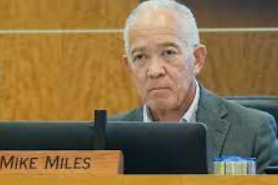
Mercedes Schneider summarizes the checkered career of Mike Miles, who was put in charge of the Houston Independent School District by State Commissioner Mike Morath, who was appointed by hard-right Republican Governor Greg Abbott. Abbott wants to punish Houston for not voting for him. What better punishment than to install Mike Miles as superintendent?

Schneider writes:

In June 2023, the Houston Independent School District (HISD) became the latest major school district to experience a top-down, ed-reform tactic that largely ignores community investment and fail to deliver on promised academic gains: the state takeover of a school district.

On June 01, 2023, the Texas Education Agency (TEA) appointed Mike Miles as the new HISD superintendent.

Miles is the golden-child product of market-based, ed-reform leadership. As reported in his LinkedIn bio, Miles holds no college degrees in teaching (engineering; slavic languages and literature; international affairs and policy). He has never been a classroom teacher, never a site-based administrator, yet he was a district superintendent in Colorado for six years (2006-11) and superintendent of Dallas ISD for three.

Though he does not mention it in his LinkedIn bio, Miles was a member of the Class of 2011 at the Broad Superintendents Academy A 2011 EdWeek article on Broad superintendents includes the criticism that they “use corporate-management techniques to consolidate power, weaken teachers’ job protections, cut parents out of decisionmaking, and introduce unproven reform measures.”

Indeed.

In 2015, Miles abruptly resigned from Dallas ISD amid being, as WFAA.com states, “at the center of controversy since he took the position nearly three years ago,” which apparently included questions about misdirecting funding intended for at-risk students and the subsequent exit of the Dallas ISD budget director. (Also calling Miles “a lightening rod for controversy,” WFAA.com offers this timeline of Miles’ unsettling tenure in Dallas.)

Despite all of his Dallas ISD controversy, TEA– which is no stranger to stepping into its own controversy— chose to hire Miles to lead its newly-state-snatched HISD.

Following his Dallas ISD exit, in 2016, he founded a charter school chain, Third Future Schools, which has locations in Colorado, Texas, and Louisiana. For two years (2017-19), Miles was a senior associate in an education consulting firm, FourPoint Education Partners.

And according to his LinkedIn bio, Miles is/was on a number of ed-reform organization boards, including Teach for America (TFA) Colorado (2017-20); National Council on Teacher Quality (NCTQ) (2013-present), and Chiefs for Change (2015-present).

Please open the link to finish reading the post.

Nancy Bailey, retired teacher, has been blogging for ten years. She reflects on the continuing efforts to destroy public education, based on a false narrative, hubris, and in some cases, the profit motive.

Nancy and I co-authored a book that serves as a glossary about fads and “reforms.”

She begins her new article:

School reform continues to privatize and destroy public schools. August marks ten years since I began blogging. Within that time I have written two books and co-authored a third with Diane Ravitch. I’m proud of all this writing but Losing America’s Schools: The Fight to Reclaim Public Education is the book title that especially stands out today.

Many Americans still don’t understand or value their ownership of public schools, and how they’re losing one of the country’s great democraticinstitutions. Instead of working together to build up local schools, to iron out difficulties, they’re willing to end them.

Thank you for reading my blog, commenting, and for those of you who have written posts. I am amazed at the wonderful educators, parents, students, and policymakers I have met. I have appreciated debate.

Here are some of the main education issues still of concern.

The Arts

School arts programs help children thrive. Those with mental health challenges benefit. Students might find art jobs. Sadly, many poor public schools ditched the arts. Some schools might get Arts Partnerships or entrepreneurships (Hansen, 2019). These programs aren’t always consistent. Public schools must offer well-rounded and fully resourced K-12 arts programs.

Assessment

Assessment is important for teachers to understand students. But high-stakes standardized tests push a narrow, one-size-fits-all agenda used to drive parents to private schools which, on the other extreme, have little accountability. Tests have been harmful to students.

Class Size

Children deserve manageable class sizes, especially for K-3rd grade (STAR Study), and for inclusion andschool safety.

Common Core State Standards

Controversy originally surrounded Common Core State Standards, promoted by the Bill and Melinda Gates Foundation in 2010, but Common Core continues to drive profiteering, especially in online programs.

Stan Karp of Rethinking Schoolssaid CCSS are:

A massively well-financed campaign of billionaires and politically powerful advocacy organizations that seeks to replace our current system of public education which, for all its many flaws, is probably the most democratic institution we have and one that has done far more to address inequality, offers hope, and provide opportunity than the country’s financial, economic, political, and media institutions with a market-based, non-unionized, privately managed system.

Corporations and Politicians

Corporations and politicians continue to work to end public schools and drive teachers out, transferring tax dollars to nonprofit and for-profit entities.

Nancy covers many more topics that have been harmful to public education.

Open the link and read her article in its entirety.

John Thompson, retired teacher and historian in Ohlahoma, keeps us up to date on the battle between Tulsa Public Schools and Ryan Walters, Oklahoma’s far-right MAGA Secretary of Education.

He writes:

Who won the latest battle between Oklahoma Superintendent of Public Instruction Ryan Walters and the Tulsa Public Schools (TPS)?

Walters had promised to fire TPS Superintendent Deborah Gist, and drive “Diversity, Equity, and Inclusion” (DEI) out of the classes, as well as mandating his ideology-driven curriculums. Then, Walters said at a Moms for Liberty event, “Tulsa Public Schools is getting money from the Chinese communist government,” He said, “They funneled it through a nonprofit — I mean, money-laundered it through a nonprofit in Texas.”

But Walters’ assault on the TPS accelerated further when Walters said he “had been in regular communication with Houston [HISD] about their school takeover.” And according to HTUL news, he has said “there’s currently a standards team and textbook committee to gather information on possible vendors like Hillsdale College and PragerU.” It thus became clear to Tulsans that the survival of their schools (and Oklahoma schools in general?) was at stake.

Walters’ promised to reveal his plan during the Oklahoma State Board of Education (OSDE) meeting on August 24. So, TPS board member, Jennettie Marshall, warned “during the board’s 90-minute discussion of the district’s accreditation status. ‘We are under attack. If you’re not keeping up with Houston, … if we continue the course we’re on, that’s where we’re headed. That shouldn’t be.’”

The day before the OSDE meeting, Deborah Gist resigned in the hope that Walters wouldn’t take over the state’s largest school system. And at the meeting, the World also explained that Walters “praised the local school board for ‘rooting out a cancer in the district that caused so many problems,’ referring to the Tulsa school board’s formal agreement approved Wednesday evening to part ways with Tulsa Superintendent Deborah Gist.” But “he also vowed to give the local Tulsa school board ‘a very short rope,’ saying he would return and ask for additional authority from the state Board of Education if he does not see adequate progress made within a few months.”

In response, the TPS Board Chairperson, Stacey Woolley, criticized Walters’ misstatements about the system’s student outcomes. She also said, “Antics and rhetoric must stop. We had two bomb threats at schools in the city of Tulsa because of rhetoric.” she said. “I do look forward to going forward and continuing the work and accelerating that work.”

Similarly, “Rep. Regina Goodwin, D-Tulsa, told the state board Walters has been ‘fostering an atmosphere of intimidation’” and protested, “When you talk about Black and brown children in Tulsa, Oklahoma, there are issues that go on in larger cities that have to be addressed. You don’t just say ‘You better perform better in three or four months!’ What kind of plan is that?”

Almost certainly, pushbacks by TPS supporters, and private communications, produced this outcome. It is too soon to know which side won the battle. Or, should I say lost less?

Unless Walters is correct and the TPS is secretly plotting with China to bring our democracy down, or violence erupts, I believe that the most important aspect of the battle could be the way that educators and journalists (especially at the Tulsa World) issued fact-based rebuttals to the extremists. Then, the Schusterman and the Kaiser foundations publicly opposed Walters’ takeover threats. Mayor G.T. Bynum finally came out against the takeover. And on the day of the OSDE meeting, Booker T. Washington H.S. students walked out.

The resistance even reached the point where the World editorialized, “conservative lawmakers must speak up.” And also, Gov. Kevin Stitt distanced himself from Walters who he appointed and then repeatedly supported. The World reported that Stitt said he “believes the State Board of Education will not overreact when considering accreditation for Tulsa Public Schools.” Stitt now says, “I don’t know what takeover is, what they are talking about. I believe in local control. I think the local board needs to address that.”

Secondly, the battle wasn’t over Deborah Gist. It was about the future of public education, and defending our democracy.

Thirdly, the former-teacher Rep. John Waldron (D) explained what we now know, “A far-right media source spread a doctored video suggesting a librarian was spreading a ‘woke agenda,’“ causing a Tulsa Union elementary school and the librarian to receive a bomb threat. (By the way, Waldron noted that the librarian’s actual agenda was promoting “reading and kindness.”)

Then, Walters reposted it, leading to two more bomb threats. NPR’s Beth Wallis reported that the first threat included, “I’m not going to stand as you bastards continue to indoctrinate and prey on our children.” And it also warned the librarian, “We know where you live.” Walters’ response was, “Woke ideology is real and I am here to stop it.” Another threat said:

“We placed a bomb at [the librarian’s elementary school address] and inside the Residence of [the librarian]. You will stop pushing this woke ideology or we will bomb every school in the union district.”

At the time that Wallis published the story, Walters had not removed his “repost of the altered video.”

Perhaps we will someday learn the behind the scenes discussions that prompted Walters to pull back from his most extreme threats. Who knows, perhaps this mayhem will prompt Republicans who are appalled by Walters to come out in support of public education and against the dangerous politics of hate. However, Rep. Mark McBride, R-Moore, the chair of the Oklahoma House subcommittee on education funding who has frequently challenged Walters, complained to the Oklahoman that “he was unable to sit in the conference room during the board meeting, despite requesting a seat along with multiple other lawmakers for several weeks.”

Finally, the other issues pushed by Walters at the OSDE meeting are a recipe for dysfunction and chaos. As Nondoc’s Bennett Brinkman reported, the board unanimously approved Walters’ demand for a “a report of ‘foreign government contributions to Oklahoma schools,’” and “a report regarding district policies and informal guidance for ‘student pronouns in Oklahoma schools.’” 

Moreover, Walters’ mandates, such as teacher training in the science of reading, can’t be rushed into place. As Linda-Darling Hammond explains, school improvement can only “move at the speed of trust.” Moreover, will teachers be expected to focus on phonics, or will the TPS be allowed to bring back the science and history instruction that is required to build the background knowledge that is needed for reading for comprehension? 

Sadly, we’re likely to learn more fake news over the next few months about what Walters sees as student outcomes, and a passing grade for high-challenge schools. Across the nation, we have seen the disastrous effects of rushed, test-driven instruction that was forced on high-poverty schools. Also, I sure hope we don’t see violence. But, even though Walters warned the TPS, “Do not test me,” I expect that the defenders of schools in Tulsa and elsewhere will continue to push back diplomatically but firmly. For better or for worse, we’re likely to see in the next few months what the TPS will face.

I am reposting this because the first version was incomplete.

Glenn Kessler of the Washington Post frequently fact checks claims by politicians. He was very busy during the Trump administration. He identified more than 30,000 outright lies by #45. He awards “Pinocchios” to lies. Four Pinocchios’” is for the worst lies.

This is his fact check of the first GOP debate.

Fox News aired the first GOP debate of the 2024 election cycle from Milwaukee on Wednesday night, featuring eight candidates. Not every candidate uttered facts that are easily fact-checked, but following is a list of 10 suspicious claims. As is our practice, we do not award Pinocchios when we do a roundup of facts in debates. These claims are examined in the order in which they were uttered.

“We all need to understand Joe Biden’s Bidenomics has led to the loss of $10,000 of spending power for the average family.”

— Sen. Tim Scott (S.C.)

This seems wildly overstated. In April we had checked a claim by House Speaker Kevin McCarthy (R-Calif.) that families have lost the equivalent of $7,400 worth of income. We tracked down the source of that statisticE.J. Antoni, a research fellow in regional economics with the Heritage Foundation’s Center for Data Analysis. As of last week, he’d revised his estimate down to $6,800.

But, more to the point, economists we contacted were dubious about the math, which relied on a change in purchasing power and a change in borrowing power. The change in borrowing power relied on mortgage rates — and not every family is looking for a new home. As for Antoni’s reliance on average weekly wages, this measure does not follow the same workers across time, and consequently the economists said it was an imperfect basis for families’ income changing over time.

Several economists pointed to another metric — real disposable personal income per capita— as a better gauge. That figure is produced by the Bureau of Economic Analysis at the Commerce Department.

Per capita income, after inflation, was $46,790 in December 2020 and $46,795 in June 2023 — an increase of $5. That’s basically flat — but a far cry from a $10,000 decline.

“A 15-week ban is an idea whose time has come — it’s supported by 70 percent of the American people.”
— Former vice president Mike Pence


Recent polling does not back up Pence’s claim of such support for banning all abortions after 15 weeks of pregnancy, when people are directly asked about it, though in general, polls have shown majority opposition to second-trimester abortions.
A Washington Post-ABC News poll last year found that 36 percent supported and 57 percent opposed a law that would make abortions legal only in the first 15 weeks of pregnancy.


Last month, a Marquette Law School poll found that 47 percent of those surveyed favored a ban after 15 weeks, compared with 53 percent who said they would oppose it.


Also last month, an AP-NORC poll found that about half of Americans say abortions should be permitted at the 15-week mark.


A Fox News poll in April found that 54 percent supported such a ban, while 42 percent opposed it. But that is still well short of 70 percent.


“We’re better than what the Democrats are selling. We are not going to allow abortion all the way up till birth, and we will hold them accountable for their extremism.”
— Florida Gov. Ron DeSantis


This is a common Republican talking point — that Democrats support nationwide abortion-on-demand up until the moment of birth. The implication is that late-term abortions are common — and that they are routinely accepted by Democrats.

The reality, according to federal and state data, is that abortions past the point of viability are extremely rare. When they do happen, they often involve painful, emotional and even moral decisions.


About two-thirds of abortions occur at eight weeks of pregnancy or earlier, and nearly 90 percent take place in the first 12 weeks, or within most definitions of the first trimester, according to estimates by the Guttmacher Institute, which favors abortion rights. About 5.5 percent of abortions take place after 15 weeks, with just 1.3 percent at 21 weeks or longer.


Increasingly, there is a period when premature births and late abortions begin to overlap. The CDC recorded almost 22,000 births between 20 and 27 weeks. Babies born before 25 weeks are considered extremely preterm, with vital organs such as heart, lungs and brain very immature. But the survival rate has climbed to 30 percent for 22-week babies and 55 percent for 23-week babies, according to a 2022 study.


Some states record whether a fetus was born alive during an abortion and whether efforts were made to save it. Seven were born alive in Florida in 2022, nine in Arizona in 2020, one in Texas in 2021 and five in Minnesota in 2021. A CDC study of 143 cases between 2003 and 2014 found that most died within hours, with only 4.2 percent surviving for more than 24 hours.


“Crime is at a 50-year low in Florida.”
— DeSantis


This statement is based on incomplete data, according to the Marshall Project, an online journalism organization that focuses on criminal justice issues.

“About half of the agencies that police more than 40% of the state’s population are missing from figures the Florida Department of Law Enforcement (FDLE) used for a statewide estimation,” the news organization said.

Participation in national data collection is even lower, with less than eight percent of Florida’s police departments included in an FBI federal database. Many of the largest, such as the Miami Police Department, the Pinellas County Sheriff’s Office and the St. Petersburg Police Department, are missing from the national numbers.

It is impossible, then, to compare Florida’s crime rate with that of other states. And in any case, the crime rate in Florida has been steadily declining for three decades.


“We have a crime wave in this country.”
— Entrepreneur Vivek Ramaswamy

This is a bit out of date. Crime spiked during the pandemic, and though rates are still higher than before the pandemic, homicides are dropping in dozens of major cities, including New York, Chicago, Philadelphia and Baltimore. Examining homicides in 30 cities that make homicide data readily available, an analysis by the Council on Criminal Justice found that the number of killings in the first half of 2023 fell by 9.4 percent compared with the first half of 2022.

Moreover, gun assaults (-5.6 percent), robberies (-3.6 percent), nonresidential burglaries (-5 percent), larcenies (-4.1 percent), residential burglaries (-3.8 percent) and aggravated assaults (-2.5 percent) fell in the first six months of this year compared with the same period last year. However, car thefts continued to increase.

FBI data shows that the nationwide violent crime rate peaked in 1991 with 758.2 crimes per 100,000 people; in 2020, the rate was 398.5. The nationwide homicide rate reached a high in 1991, at 9.8 per 100,000 population. By 2019, it had dropped to 5.1.


“Not only weaponization in the Department of Justice against political opponents, but also look at the parents who show up at school board meetings. They’re called, under this DOJ, domestic terrorists.”
— Scott


This is a frequent GOP talking point but it’s false. Attorney General Merrick Garland has never equated parents to terrorists, and in fact he told Congress he “can’t imagine” a circumstance under which that would happen.


This all started with a Sept. 29, 2021, letter from the National School Boards Association (NSBA) that asked President Biden for federal resources to help monitor “threats of violence and acts of intimidation” against public school board members and other school officials. Five days later, Garland issued a memo addressed to FBI Director Christopher A. Wray and federal prosecutors. He called for action within 30 days to “facilitate the discussion of strategies for addressing threats” against school administrators, board members, teachers and staff.


Garland’s memo never mentioned domestic terrorism, but the NSBA letter that prompted it included a line that asserted “these heinous actions could be the equivalent to a form of domestic terrorism and hate crimes.” There was enough blowback to that language that on Oct. 22, the NSBA apologized for the letter, saying “there was no justification for some of the language included.” A new executive director for the association was installed, the letter was deleted from the NSBA website, and the association announced in February that it had launched an independent review of how the letter was created.

Nevertheless, the Justice Department never equated parents to domestic terrorists.
When questioned by Republicans in congressional hearings, Garland and other top Justice officials have insisted that they do not think concerned parents are terrorists. “I can’t imagine any circumstance in which the Patriot Act would be used in the circumstances of parents complaining about their children, nor can I imagine a circumstance where they would be labeled as domestic terrorism,” Garland told the House Judiciary Committee.


“The Biden administration wanted to put 87,000 people in the IRS instead of giving the money we need to our own Border Patrol.”
— North Dakota Gov. Doug Burgum


“Let’s fire the 87,000 IRS agents and hire or double the number of Border Patrol agents.”
— Scott


This 87,000 figure is a common GOP talking point but it is wildly exaggerated to speak of “agents” as Scott did. When Congress passed a bill to provide the IRS with an additional $80 billion in funding over 10 years, that money was to be used in part to hire 86,852 full-time employees in the next decade. But many of those employees would not be enforcement “agents” but people hired to improve information technology and customer service. Treasury officials say that because of attrition, after 10 years of increasing spending, the size of the agency will have grown only 25 to 30 percent when the hiring burst is completed.

The administration’s strategic plan for the IRS, released in April, estimated that an additional 1,543 full-time employees would be hired for enforcement in 2023, or about 15 percent of newly hired staff. That would grow to 7,239 in 2024, or 37 percent of new staff.

Biden administration officials have pledged that enforcement efforts to collect unpaid taxes will concentrate on those earning more than $400,000.

“We secured the southern border and reduced illegal immigration by 90 percent.”
— Pence


Ninety percent is a cherry-picked number, apparently comparing May 2019, the highest month for border apprehensions during the Trump administration, with April 2020, when apprehensions plunged because of lockdowns at the start of the covid pandemic. Another complicating factor is that U.S. Customs and Border Protection changed the way it counted apprehensions during the pandemic, making apples-to-apples comparisons difficult because the numbers were inflated by people who were expelled for health policy reasons, not just enforcement actions. But generally, annual apprehensions increased during the Trump administration.


“We eliminated critical race theory from our K through 12 schools.”
— DeSantis


Critical race theory refers to an academic framework centered on the idea that racism is systemic, and not just demonstrated by individual people with prejudices. It is generally taught in higher education, such as law or graduate school, not at lower grade levels. So this is a bit of an empty boast. Educators, school officials and several Florida public school districts told PolitiFact that critical race theory wasn’t taught in Florida’s elementary, middle or high schools.
PolitiFact rated DeSantis’s claim as “mostly false,” saying that at most the state under DeSantis “rejected prospective teaching materials in recent years that it claimed was related to CRT. But questions remain about its rationale in several cases.”

“I did not grow up in money.”
— Ramaswamy


Earlier in the debate, Ramaswamy had said, “My parents came to this country with no money 40 years ago.” But then he went further later in the evening with the line “I did not grow up in money.” His parents did well enough, however, that in his book “Nation of Victims,” Ramaswamy wrote that by the time he was in sixth grade, he had a “comfortably middle-class family with two incomes.” His father worked for General Electric, which had a cost-cutting boss at the time, and he wrote that the fear of a layoff was ever present, so his father “tried to make himself indispensable” by becoming a patent attorney for the firm.


By the time he was 18, Ramaswamy had a stock portfolio significant enough that he earned $453 in dividends in 2002, according to his tax return. By his sophomore year in college, when he made about $3,500 in wage income, he earned $11,712 from dividends alone.
A fascinating discussion was recently published, involving Richard Delgado, Aja Martinez, and Victor Ray, all of whom have written about critical race theory.

Richard Delgado coordinated the conversation.

It begins:

Three authors of books out on Critical Race Theory—Richard Delgado, Aja Martinez, and Victor Ray—discuss the cultural and legal landscape in a post-2020 world. From receiving hate mail, to fielding calls to ban teaching CRT in schools, these authors’ experiences and research offers insight into current debates around teaching race in America.

Lit Hub: You have all recently published books about Critical Race Theory. Right around the time your books came out, white nationalists responded to calls by the previous president and others to destroy the movement. Have you experienced personal backlash from anti-Crit forces on the right?

Richard Delgado: In the early years of the movement, the late eighties and early nineties, I received very little. And that which I did receive was relatively polite and scholarly, as with an article in Stanford Law Review that charged me and other race-crits with undermining rationality and the search for truth and replacing them with stories and personal reflections.

Around the time that the fourth edition of Jean’s and my book went under production, we started receiving a lot of hate mail, most of it from people who had apparently not read the book in any of its editions but knew what they thought about it because Fox News told them so. Some of the hate mail was vicious and personal. One anonymous emailer informed Jean that she was a traitor to the white race for sleeping with me.

Aja Martinez: Similar to Richard, when I was a graduate student starting out with my work as a CRT scholar with a dissertation on CRT’s storytelling methodology, counterstory, the majority of the backlash I received was from liberal academics who said one of two things: 1) “why are you studying race and racism? Obama is President”; or 2) “CRT and counterstory isn’t real/rigorous research.” That’s pretty much the steady resistance and backlash I received for the most of my career.

Everything changed in 2020. My book, Counterstory: The Rhetoric and Writing of Critical Race Theory was published in May 2020; in September, President Trump issued his “Executive order on Combating Race and Sex Stereotyping.” This ban effectively shined a national (and even international—I was asked to speak on this topic with Lithuanian Public Radio!) spotlight on CRT and in many ways placed targets on those of us who are identifiable culprits responsible for supposedly pushing CRT’s “different vision of America.” That vision (also supposedly) teaches Americans to hate America.

Please read this interesting conversation among three scholars who dared to challenge conventional wisdom and found their work at the center of a national maelstrom.

This article was written by Margaret McMullan, an author and former professor of creative writing. She lives in Pass Christian, Mississippi. It appeared in the Washington Post. She recalls when she invited Supreme Court Justice Sonia Sotomayer to speak at the Mississippi Book Festival, no expenses paid. It was a long shot.

She wrote:

One rainy day in April 2019, my phone buzzed and the caller ID lit up with “Supreme Court.” I stared at the two words for a moment. Was I in trouble?

Then I remembered.

A few months earlier, I’d sent Supreme Court Justice Sonia Sotomayor a letter inviting her to speak at the Mississippi Book Festival, which runs every August. Our offer was the same as it had been for other authors: a $250 stipend, a ride to and from the airport and a large, appreciative audience. In addition, we would purchase 1,500 copies of Sotomayor’s books to give to students. Could the justice please travel to Jackson, Miss., to talk to kids for two days? In the hottest time of the year?

Sotomayor’s “Turning Pages,” aimed at children ages 4 to 8, had come out in 2018. In her 2013 memoir suitable for young adults, “My Beloved World,” Sotomayor wrote about reading and the importance of education in her life, as well as her challenges with diabetes. I was sure that both books would resonate with Mississippi students. During our call, Le said the offer was interesting; the justice had never been to Mississippi. I outlined the potential impact Sotomayor would have on students, noting our state’s high poverty rate and its problem with childhood diabetes.

Le said she would get back to me.

And she did, with a few more questions — details about flight connections, book-signing and so on. I said we would be happy to upgrade her flight. Nope, the publisher was handling her flight. I said we’d be happy to upgrade her hotel room. Nope, the justice was fine with a Marriott, plus her security detail was familiar with the layout.
So far, so good.

Subsequent emails and phone conversations were similar. No, Le said, the justice did not need us to provide lunch or dinner. No, she could not accept the $250 stipend.

Did Le urge me to buy more books? No. She did ask whether we wanted any of the copies of “My Beloved World” to be in Spanish. In fact, we did, and I hadn’t thought to order them.

When Sotomayor came to Jackson, we had her speaking in the sanctuary at Galloway Memorial United Methodist Church, the church where Eudora Welty once worshiped. Backstage, Sotomayor smiled when she saw my clipboard of questions. She helped me with my tote bag full of books. She then clapped her hands together and said something like, “Okay. Here’s what we’re going to do.”

In addition to our planned onstage interview, she said, she wanted the freedom to go off-script. “They’re children,” I recall her saying. “I want to be sure I get to their questions.”

“Perfect,” I said.

So the justice took a seat in one of the side pews and watched as Dav Pilkey, the author and illustrator of “Captain Underpants,” entertained a delighted audience of about a thousand students, drawing cartoons as he spoke. Then, it was our turn on the stage. I asked my clipboard questions and Sotomayor answered. Afterward, she got up and spoke from the heart, walking up and down the aisles.

In answer to the students’ questions, she told them about growing up in Puerto Rico, eating mangoes off the tree, going away to college for the first time and working in a male-dominated court system.
She talked to these kids. She asked them their names, what they liked in school, what they wanted to do with their lives. She hugged them and posed for pictures with them. After she finished, she signed their books and took more pictures.

“My success came about because I read,” she told them.

The following morning, we did it all over again for another packed sanctuary, with Sotomayor telling even more personal stories about her life and talking about a civics program she and Justice Neil M. Gorsuch work on. She also gave us homework: Go out and make friends with someone who doesn’t look like you.

My only regret is that we ran out of books. I wish we had ordered more.

There very well might be a culture of poor ethical conduct in the Supreme Court, but there is no moral equivalency between justices accepting rides on private jets to vacation with friends who had cases before the court and Sotomayor talking about her books and her life to a crowd of mesmerized young readers.

The standard royalty rate for authors is less than 10 percent of the sales price. I don’t know anything about Sotomayor’s deal with her publishers, but 10 percent would make her cut of the 1,500 books our foundation purchased approximately $2,250 — for which she had to fly to Mississippi and give two presentations. During the hottest month of the year.

Was that a bribe? You be the judge.

West Virginia is one of the poorest states in the nation, yet it has a billionaire governor (Jim Justice) and a billionaire senator (Joe Manchin), who pretend to serve their constituents by doing nothing for them. It is a deep red state. The legislature authorized charter schools and vouchers; the governor promised to veto both but he didn’t. Manchin continually blocks Biden programs that would help his constituents (like the Child Tax Credit) but protects the coal industry.

West Virginia University recently announced deep cuts to its programs and faculty, and students are angry.

Inside Higher Education reported:

MORGANTOWN, W.Va.—West Virginia University’s proposal to eliminate nearly a 10th of its majors and 169 full-time faculty positions from its flagship campus led hundreds of students to protest Monday, as a student union’s organizing power added volume to the online employee protestations and national media coverage that’s been buffeting the institution for more than a week.

Pressure on the administration to reverse its recommended cuts is growing as the WVU Board of Governors’ Sept. 15 vote on the proposals nears. The suggested cuts—not the first in recent years at West Virginia—were discussed around the end of the spring and through the summer, but WVU’s big reveal of how extensive the proposed layoffs and degree reductions would be didn’t come until Aug. 11.

“Stop the Cuts!” was students’ first chant outside the Mountainlair student union Monday, followed by “Hey hey, ho ho, Gordon Gee has got to go!”

Multiple chants, signs and a flame-bedecked “Fire Gee” banner that students held in front of the entrance to the Stewart Hall administration building all targeted Gee, the university’s two-time president whose current run has lasted nearly a decade. Chants and signs said, “Stop the Gee-llotine!” while other signs said, “Gee can take home 800K but we can’t take Spanish?” and “Cut Gee’s Pay, Not Our Programs!…”

WVU has proposed axing, among other degree offerings, its Ed.D. in higher education administration; Ph.D. in higher education; master of public administration; Ph.D. and master’s in math; bachelor’s in environmental and community planning; bachelor degree in recreation, parks and tourism resources; doctor of musical arts in composition; master of music in composition; and master’s in jazz pedagogy, acting and creative writing.

The university’s enrollment has declined 10 percent since 2015, far worse than the national average. In April, WVU leaders, projecting a further 5,000-student plunge over the next decade, said they needed to slash $75 million from the budget.

The university has pointed to low enrollments in certain programs to justify cuts, including a lightning rod proposal to eliminate the entirety of the department of world languages, literatures and linguistics. But Lisa Di Bartolomeo, a teaching professor of Russian studies at West Virginia, has retorted that WVU isn’t counting all students who are double majoring in languages.

“Cost-to-deliver is one of the metrics considered in the preliminary recommendations,” Kaull wrote in an email. “The data reflect students’ primary majors as they are the best reflection of the cost-to-deliver. Dual majors and minors don’t generate revenue like primary majors. Further, the cost and effort of supporting students (e.g., advising) is typically carried by the primary major.” 

WVU’s Aug. 11 news release announcing the proposed cuts said it was “exploring alternative methods of delivery” for languages, “such as a partnership with an online language app.” A sign on Monday called the university “Duolingo U,” complete with the green bird mascot of that phone app.

“We’re pissed,” Sadler said. “We’re losing languages; we’re losing departments; we’re losing faculty and friends.”

Gee told Inside Higher Ed Friday, “What we’re doing is that we’re really looking at the numbers and we realize that our students have spoken to us. And our students have said that offering languages the way that we are is just not something that they want.” 

Asked about the calls to reduce his salary, which were happening online before Monday’s protest, Gee said he contributes about 15 percent of his salary every year to student scholarships. 

John Fox, who just started his master’s degree in creative writing, one of the programs to be cut under the proposal, carried water bottles for the protesters. He’s from Morgantown.

“We’re losing out on the culture of West Virginia,” he said, “like a voice to the culture of West Virginia.”

In true Broadie style, Houston Superintendent Mike Miles removed two elementary principals only days before the start of school. He started his job of “reforming” the Houston public schools in June, so he obviously did not observe either of them. This is disruption to the max. Teachers and parents learned about this abrupt action through an automated phone call.

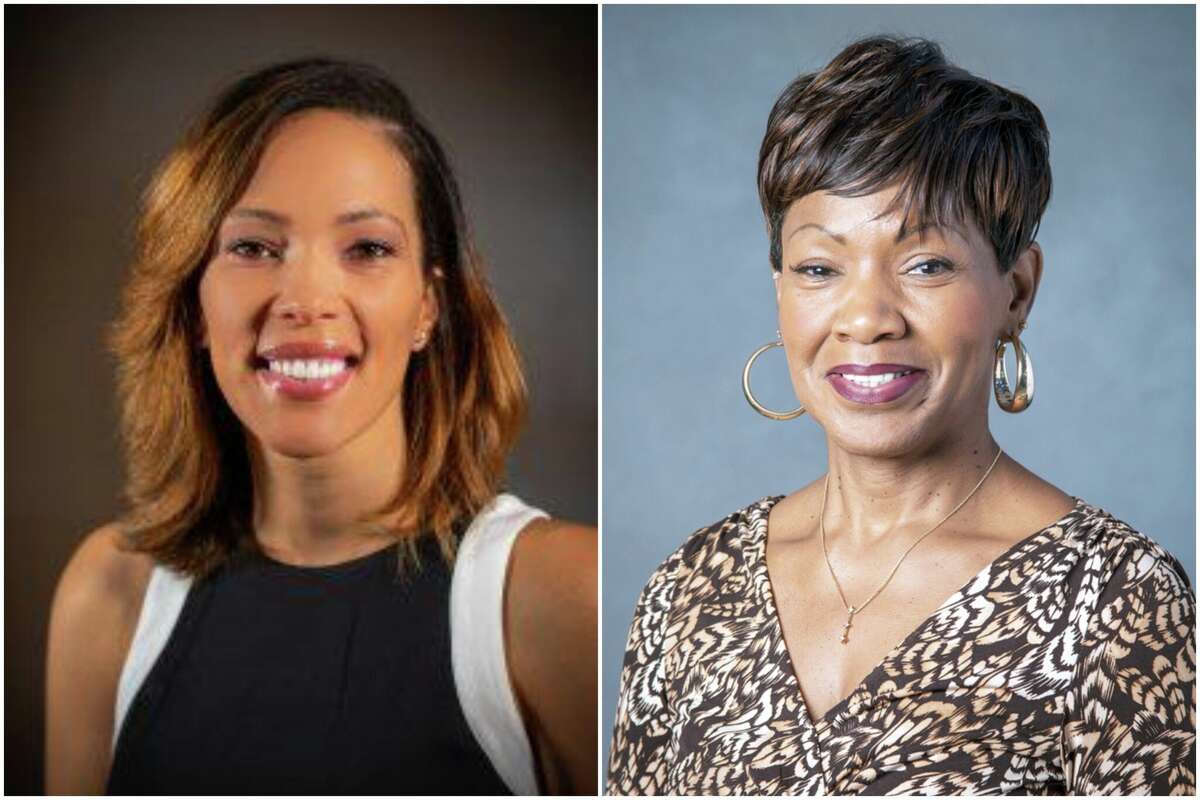
Erin Trent (left), principal at Stevens Elementary School, and Linda Bellard, principal at Garcia Elementary School, were both removed from their positions Aug. 23, 2023. 

Erin Trent (left), principal at Stevens Elementary School, and Linda Bellard, principal at Garcia Elementary School, were both removed from their positions Aug. 23, 2023. Houston ISD

Parents and teachers at Stevens say they were “blindsided” by the announcement, which was made via an automated phone call.

“This unexpected and impersonal communication from the district caused immediate anxiety, confusion and fear, not just for me personally but among hundreds of parents,” said Adam Chaney, the parliamentarian for Stevens’ Parent Teacher Community Organization.

“Our community deserves clarification immediately. We are two days away from ‘Meet the Teacher,’ the whole campus is going to be present, and then Monday morning is the start of school,” Chaney said. “It’s become increasingly difficult to avoid interpreting this chaotic situation through the lens of this controversial takeover.”

HISD officials declined to comment further or provide a reason for the reassignments, saying that the district cannot comment on ongoing personnel matters. The call Stevens parents received Wednesday acknowledged that “the change may feel abrupt,” but that it had “become clear that this change is necessary to ensure Stevens Elementary students start the year off well with access to high-quality instruction on day one that meets their needs and supports increased academic outcomes on the campus…”

Trent’s abrupt removal has led members of the Stevens community to speculate that she was reassigned because she did not opt in to Superintendent Mike Miles’ New Education System earlier this summer.

One teacher, who asked to remain anonymous for fear of retaliation, said Trent resisted pushes from the HISD central office to become an NES-aligned school, which would have seen many of Miles’ most sweeping and controversial reforms implemented at Stevens.

Miles also disbanded the HISD team of autism specialists who served schools throughout the district.

Charlie Sykes is a leading Never Trumper who writes at “The Bulwark.” This is part of his take on last night’s debate. I like to read The Bulwark because I think of its writers as the sane remnant of the GOP.

Donald Trump’s fourth perp walk, Rudy’s mugshot, and another assassination by Vladimir Putin.

But let’s talk about last night, shall we?

The Fox News hosts began the presidential debate by asking candidates to react to a country song, ended with a question about UFOs, and struggled mightily to avoid mentioning the orange elephant not in the room.

Along the way, millions of Republicans were introduced to the Tracy Flick of post-Trump right wing politics.

Vivek Ramaswamy, who seems to have won the Elon Musk primary, was the night’s break-out star. “Ramaswamy Seizes Spotlight,” The New York Times declared, describing the first GOP debate as “The Ramaswamy show.”

My colleague Mona Charen spoke for many of us when she said last night that “I guess if I react with visceral disgust to Vivek, it’s probably a sign that the base loves him.”

Well, exactly.

Vivek is a facile, clownish, shallow, shameless, pandering demagogue, but he is exactly what GOP voters crave these days. So, he will likely get a bump in the polls, at least in the short-run.

Last night, Vivek was Trumpier than Trump. He touched all the erogenous zones of the MAGAverse with a fluency and zeal unmatched by anyone on the stage, from his anti-Ukraine memes to his fawning praise of the absent God King.

Trump himself loved it, posting a video clip of Vivek declaring him “the BEST president of the 21st century, and thanking him: “This answer gave Vivek Ramaswamy a big WIN in the debate because of a thing called TRUTH. Thank you Vivek!”

For most of the night, Vivek seemed to dominate the debate.

Until he was utterly and thoroughly gutted by Nikki Haley.

**

Nikki

Last year, I wrote about “The Unbearable Lightness of Nikki,” but last night, the former South Carolina governor impressively overperformed. On issue after issue — spending, abortion, Ukraine, and Trump’s electability — she was serious, sober, and substantive. If Vivek won the MAGA primary debate; Haley, arguably, won the Normie/Donor debate — and she’s likely to get a serious second look.

On spending:

“The truth is that Biden didn’t do this to us. Our Republicans did this to us too. When they passed that $2.2 trillion Covid stimulus bill, they left us with 90 million people on Medicaid, 42 million people on food stamps,” argued Haley. “You have Ron DeSantis, you’ve got Tim Scott, you’ve got Mike Pence, they all voted to raise the debt and Donald Trump added 8 trillion to our debt and our kids are never gonna forgive us for this.”

**

On Trump:

“It is time for a new generational conservative leader. We have to look at the fact that three-quarters of Americans don’t want a rematch between Trump and Biden. And we have to face the fact that Trump is the most disliked politician in America. We can’t win a general election that way.”

**

Vivisecting Vivek

The highlight of her performance was her merciless critique of Vivek’s global surrender tour. “He wants to stop funding for Israel. He wants to stop funding for Ukraine,” Haley said. “You are choosing a murderer.”

“Ukraine is the first line of defense for us. And the problem that Vivek doesn’t understand is he wants to hand Ukraine to Russia,” Haley declared. “He wants to let China eat Taiwan. He wants to go and stop funding Israel. You don’t do that to friends. What you do instead is you have the backs of your friends.”

“You have no foreign policy experience and it shows!”

Until that moment, Vivek owned the hall in Milwaukee. But as Nikki turned on him, the change in mood was palpable. My colleague Sonny Bunch:

**