Archives for the year of: 2023

Steffen E. Polko is a retired professor of education at TCU in Texas. He wrote the following commentary for the Fort Worth Star-Telegram. Vouchers, he says, will doom community rituals, like Friday night football. Dividing students up by religion and other grounds will divide our communities and our country even more than at present.

He writes:

There appears to be some confusion regarding rural Texans’ opposition to school choice and vouchers. I think I may know why.

Gov. Greg Abbott’s espoused principal reason for promoting vouchers is to protect Texas children from the “woke” propaganda being disseminated by public school teachers. Let me assure the governor that teachers in upstanding, God-fearing communities such as Mineral Wells and Hico are not subjecting their students to “woke” ideology. In these communities, “woke” still means not asleep. This is not something that’s broken in small-town Texas, so it doesn’t need fixing.

Now, onto the most important reason. Vouchers pose a threat to high school football and could turn out Friday Night Lights. An education savings account program will reduce funding levels for public schools as students leave. The first thing to be hit will be athletic budgets.

Proponents note that there are few private school options in rural Texas. So, where will these students go? There are no options yet, but this will change with vouchers. Many churches face declining attendance and financial difficulty. If $8,000 per year vouchers are available a minister with 20 or more school-age children in the congregation will find it rational and financially prudent to start a school.

Let’s say I have 40 such children. If the state sends me $320,000 per year and I can keep expenses at $160,000, I will net $160,000 for my church. How do I keep my expenses so low? The key is technology. High-quality learning systems produced by nationally recognized educational providers such as Pearson are readily available over the Internet. The cost of learning management systems currently averages around $5 per student per month.

The state will require me to have two “teachers” for 40 students. No problem; this can be anyone in my congregation with a college degree and some time on their hands. Getting alternative certification from the state is relatively easy. My teachers need not be education experts because the learning management system does the heavy lifting. It provides instruction and creates and grades the homework and tests. The latest systems even use artificial intelligence to answer student questions.

The only job for the “teachers” would be to manage classroom behavior and help students use the software. A student leaving the public schools will probably get a fairly good Christian education. The public school will lose funding for athletic programs and perhaps a potential star quarterback. Ouch! For-profit schools will emerge employing a similar model. Using a hybrid instructional model and current costs, I calculate that a 200-student high school would bring cashflow of about $800,000 a year. Start 10 of

those and you have a nice chain of businesses. Could this be the real driving force behind vouchers? To recruit students, such schools could promise to teach artificial intelligence and the Python programming language to prepare students for a promising future in technology — or use some other clever hook. Texas has about 8,000 schools. The Texas Education Agency employs 1,000 people and spends around $2 billion per year to monitor the schools and hold them accountable.

I predict that vouchers will increase the number of schools in Texas four-fold. Will the Legislature increase funding by a factor of four to monitor this many schools? I think not. It will be a long time before state officials figure out if for-profit schools are delivering on their promise, and the owners will be very rich before they do. Good luck getting them and their money back from Barbados. Not only would church and for-profit schools poach rural athletes, but specialized voucher- and donor-funded sports academies could emerge. Let’s say someone starts a Dallas Football Academy. It could use an entrance exam similar to the NFL combine to assure it got the best athletes. The best coaches, fitness trainers, and other staff would be recruited.

These schools would have a direct connection to universities to give their athletes the best shot at a top-level scholarship. Such schools would dominate small-town teams and end the reign of, for example, the Aledo Bearcats. The state championship game would probably feature the Dallas and Houston football academies.

Rural Texas is our best bet to keep the state from making a huge mistake that is little more than a political stunt to get votes. Small communities have nothing to gain from vouchers and a lot to potentially lose, as does the rest of the state.

Steffen E. Palko is a retired associate professor of education at TCU. He lives in Fort Worth.

Read more at: https://www.star-telegram.com/opinion/opn-columns-blogs/other-voices/article277689198.html#storylink=cpy

Michael Hiltzik, columnist for the Los Angeles Times, finds a pattern in the Republican attacks on the schools and universities. Their hostility to teaching Black history, their encouragement of book banning, their strategic defunding of higher education, their treatment of teaching about race, gender, and climate change as “indoctrination”—together point to a goal: the dumbing down of American young people.

Republicans say they want to get rid of “indoctrination” but they are busily erasing free inquiry and critical thinking. What do they actually want? Indoctrination.

He reminds us of the immortal words of former President Donald J. Trump: “I love the uneducated.” Republicans do not want students to think critically about racism or the past. They do not want them to reflect on anything that makes them “uncomfortable.” They want to shield them from “divisive concerns.” They want them to imbibe a candy-coated version of the past, not wrestle with hard truths.

He writes:

For reasons that may not be too hard to understand, Republicans and conservatives seem to be intent on turning their K-12 schools, colleges and universities into plantations for raising a crop of ignorant and unthinking students.

Donald Trump set forth the principle during his 2016 primary campaign, when he declared, “I love the poorly educated.”

In recent months, the right-wing attack on public education has intensified. The epicenter of the movement is Florida under Republican Gov. Ron DeSantis, where the faculty and course offerings of one of America’s leading liberal arts colleges, New College, have been eviscerated purportedly to wipe out what DeSantis calls “ideological indoctrination.”

The state’s K-12 schools have been authorized to supplement their curricula with animated cartoons developed by the far-right Prager University Foundation that flagrantly distort climate science and America’s racial history, the better to promote fossil fuels, undermine the use of renewable energy and paint a lily-white picture of America’s past.

Then there’s West Virginia, which is proposing to shut down nearly 10% of its academic offerings, including all its foreign language programs. The supposed reason is a huge budget deficit, the harvest of a systematic cutback in state funding.

In Texas, the State Library and Archives Commission is quitting the American Library Assn., after a complaint by a Republican state legislator accusing the association of pushing “socialism and Marxist ideology.”

In Arkansas, state education officials told schools that they may not award credit for the Advanced Placement course in African American history. (Several school districts said they’d offer students the course anyway.) This is the course that Florida forced the College Board to water down earlier this year by alleging, falsely, that it promoted “critical race theory.”

I must interject here that I’m of two minds about this effort. On the one hand, an ignorant young electorate can’t be good for the republic; on the other, filling the workforce with graduates incapable of critical thinking and weighed down by a distorted conception of the real world will reduce competition for my kids and grandkids for jobs that require knowledge and brains.

Let’s examine some of these cases in greater depth.

Prager University, or PragerU, isn’t an accredited institution of higher learning. It’s a dispenser of right-wing charlatanism founded by Dennis Prager, a right-wing radio host. The material approved for use in the schools includes a series of five- to 10-minute animated videos featuring the fictional Leo and Layla, school-age siblings who travel back in time to meet historical figures.

One encounter is with Frederick Douglass, the Black abolitionist. The goal of the video is to depict “Black lives matter” demonstrations as unrestrained and violent — “Why are they burning a car?” Leo asks while viewing a televised news report. The animated Douglass speaks up for change achieved through “patience and compromise.”

This depiction of Douglass leaves experts in his life and times aghast. Douglass consistently railed against such counsel. Of the Compromise of 1850, which brought California into the union but strengthened the Fugitive Slave Act — arguably the most detested federal law in American history — he stated that it illustrated how “slavery has shot its leprous distillment through the life blood of the nation.” In 1861, he thundered that “all compromises now are but as new wine to old bottles, new cloth to old garments. To attempt them as a means of peace between freedom and slavery, is as to attempt to reverse irreversible law.”

Patience? The video depicts Douglass quoting from an 1852 speech to a Rochester anti-slavery society in which he said “great streams are not easily turned from channels, worn deep in the course of ages.”

But it doesn’t include lines from later in the speech, reproaching his audience for prematurely celebrating the progress of abolition: “Your celebration is a sham; your boasted liberty, an unholy license; your national greatness, swelling vanity; … all your religious parade and solemnity, … mere bombast, fraud, deception, impiety, and hypocrisy — a thin veil to cover up crimes which would disgrace a nation of savages.”

Another video in the series parrots the fossil fuel industry’s talking points against wind and solar power: Standing over the corpse of a bird supposedly slain by flying into a wind turbine, the schoolkids’ interlocutor states, “Like many people … you’ve been misled about renewable energy, and their impact on the environment…. Windmills kill so many birds, it’s hard to track how many…. Wind farms and solar farms disrupt huge amounts of natural habitat.”

Acid rain, pollution, global warming — those consequences of fossil fuel energy aren’t mentioned. The video ends with a pitch for nuclear power, never mind the unsolved question of what to do with its radioactive waste products.

PragerU’s sedulous attack on renewables perhaps shouldn’t be much a surprise: Among its big donors is the Wilks family, which derives its fortune from fracking and which approved “future payment” of $6.25 million to PragerU in 2013.

As for New College, its travails under the DeSantis regime have been documented by my colleague Jenny Jarvie, among many others.

In a nutshell, the Sarasota institution possessed a well-deserved reputation as one of the nation’s outstanding havens for talented, independent-minded students. Then came DeSantis. He summarily replaced its board of trustees with a clutch of right-wing stooges including Christopher Rufo, known for having concocted the panic over critical race theory out of thin air and then marketed it as a useful culture war weapon to unscrupulous conservative politicians, including DeSantis.

Rufo and his fellows fired the university president and installed a sub-replacement-level GOP timeserver, Richard Corcoran, in her place. Faculty and students have fled. Students who stayed behind and were in the process of assembling their course schedules for the coming year are discovering at the last minute that the courses are no longer offered because their teachers have been fired or quit.

Instead of ambitious scholars committed to open inquiry, Corcoran has recruited athletes to fill out the student body, even though the college has no athletic fields for many of them to play on. According to USA Today, New College now has 70 baseball players, nearly twice as many as the University of Florida’s Division I NCAA team.

More to the point, the average SAT and ACT scores and high-school grade point averages have fallen from the pre-Corcoran level, while most of the school’s merit-based scholarships have gone to athletes. New College, in other words, has transitioned from a top liberal arts institution into a school that places muscle-bound underachievers on a pedestal. DeSantis calls this “succeeding in its mission to eliminate indoctrination and re-focus higher education on its classical mission.”

Finally, West Virginia University. Under its president, Gordon Gee — who previously worked his dubious magic at Brown Universityand Ohio State University, among other places — the school built lavish facilities despite declining enrollments. The construction program at the land grant university contributed to a $45-million deficit for the coming year, with expectations that it would rise to $75 million by 2028.

But the main problem was one shared by many other public universities — the erosion of public funding. As the West Virginia Center on Budget and Policy points out, “if West Virginia lawmakers had simply kept higher education funding at the same levels as a decade ago, West Virginia University would have an estimated additional $37.6 million in state funding for [fiscal year] 2024, closing the majority of this year’s budget gap.”

The decision on which programs to shutter at WVU points to a shift in how public university trustees see the purpose of their schools, trying to align them more with economic goals set by local industries rather than the goal of providing a well-rounded education to a state’s students. Trustees in some states, including North Carolina and Texas, have injected themselves into academic decisions traditionally left to administrators, often for partisan political reasons.

When it comes to interference in educational policies by conservatives, such as what’s happened in Florida, Texas and Arkansas, there’s no justification for taking these measures at face value — that is, as efforts to remove “indoctrination” from the schools. The truth is that the right-wing effort serves the purposes of white supremacists and advocates of anti-LGBTQ+ discrimination — they’re moving to inject indoctrination that conforms more to their own ideologies.

Take the attack on critical race theory, or at least the version retailed by Rufo and his ilk. “The right has reduced CRT to an incendiary dog whistle,” the Black scholar Robin D.G. Kelley of UCLA has observed, by caricaturing a four-decade-long scholarly effort to analyze “why antidiscrimination law not only fails to remedy structural racism but further entrenches racial inequality” into “a racist plot to teach white children to hate themselves, their country, and their ‘race.’”

(The inclusion of Kelley’s work in the AP African American Studies course was cited as a “concern” by Florida officials in their rationale for rejecting the course; Kelley’s work was suppressed by the College Board in its effort to make the course more acceptable to the state Department of Education.)

These attacks are couched in the vocabulary of “parents’ rights” and student freedom, but they don’t serve the students at all, nor do they advance the rights of parents interested in a good, comprehensive education for their children, as opposed to one dictated by the most narrow-minded ideologues in their state.

Where will it end? Florida’s ham-fisted educational policies won’t produce graduates with the intellectual equipment to succeed in legitimate universities, much less in the world at large. The only university many will be qualified to attend will be Prager U, and that won’t be good for anyone.

President Biden has repeatedly tried to reduce the debt that college students incurred and that remains a financial burden for years after they finish college. Republicans have adamantly opposed any effort to relieve millions of students of their college debt, which some have been paying off for decades.

I can’t help but remember my visit to Finland, where I learned that all education, at every level, is tuition-free. How is this possible, I asked. I was told that education is a human right, and no one should pay for a human right. From an economic point of view, the entire nation benefits when more people get a college education. Yet over the past few decades, state governments have reduced their support of public higher education, shifting the burden to individual students.

Heather Cox Richardson wrote about the political dimensions of the student debt issue:

Rising costs of college and cuts to government support for education mean that more than 45 million people across the country owe more than $1.6 trillion in federal loans, an amount equal to the size of the Australian economy. That debt absorbs money people at the lower end of the economic scale would otherwise invest in homes, consumer goods, and so on, and the Biden administration has made it a priority to relieve some of that debt.


When she was the California attorney general, Vice President Kamala Harris took on predatory for-profit colleges and won $1 billion for defrauded veterans and students, and when he ran for office, Biden promised to forgive federal student debt for those earning less than $125,000.


Since the Supreme Court on June 30, 2023, rejected the administration’s plan to forgive more than $400 billion in student debt borrowed through government programs, the administration has turned to other approaches.


In April it began to fix the administrative errors that had kept borrowers from receiving relief through income-driven repayment plans and the Public Service Loan Forgiveness program under which they borrowed the money. Those plans were always intended to offer a way to eliminate student debt, but the Government Accountability Office in 2022 found that poor record keeping meant that that promise had not been honored. On July 14 the administration announced that fixes to those programs would relieve more than 800,000 borrowers of more than $39 billion in student debt.

At the time, Biden did not mince words. “Republican lawmakers—who had no problem with the government forgiving millions of dollars of their own business loans—have tried everything they can to stop me from providing relief to hardworking Americans. Some are even objecting to the actions we announced today, which follows through on relief borrowers were promised, but never given, even when they had been making payments for decades. The hypocrisy is stunning, and the disregard for working and middle-class families is outrageous.”


Since then, the administration has provided relief to others caught in the system as well, including relief of $45.7 billion for 662,000 public service workers, $10.5 billion for 491,000 borrowers with a total and permanent disability, and $22 billion for nearly 1.3 million borrowers who were cheated by their schools, saw their schools close, or are covered by a related court settlement.


Today the administration released the Saving on a Valuable Education (SAVE) plan, a new repayment plan to bring order and relief to federal student borrowers. It is an income-driven repayment plan that is based on a borrower’s income and family size rather than their loan balance, prevents the balance from growing because of unpaid interest, and forgives the remaining balance after a number of years. “The benefits of the SAVE plan will be particularly critical for low- and middle-income borrowers, community college students, and borrowers who work in public service,” the White House said.


Relieving student debt helps those at the lower end of the economy, which will boost economic growth, but there is also a political payoff in these efforts for the administration. As Democratic strategist and pollster Celinda Lake and documentary filmmaker Mac Heller pointed out in the Washington Post in July, in the eight years between the 2016 and 2024 elections, 32 million Americans have become eligible to vote. In the same eight years, as many as 20 million older voters have died.


Lake and Heller note that younger Americans are focused on issues, rather than individuals, and skew progressive (prompting some Republicans to talk about raising the voting age to 25). Fulfilling a campaign promise that overwhelmingly benefits those under 50—parents as well as students—is good politics, blending in with the members of Gen Z (the generation born between the mid to late 1990s and early 2010s) forming political PACs of their own and running for office.

I am reposting this because the first version was incomplete.

Glenn Kessler of the Washington Post frequently fact checks claims by politicians. He was very busy during the Trump administration. He identified more than 30,000 outright lies by #45. He awards “Pinocchios” to lies. Four Pinocchios’” is for the worst lies.

This is his fact check of the first GOP debate.

Fox News aired the first GOP debate of the 2024 election cycle from Milwaukee on Wednesday night, featuring eight candidates. Not every candidate uttered facts that are easily fact-checked, but following is a list of 10 suspicious claims. As is our practice, we do not award Pinocchios when we do a roundup of facts in debates. These claims are examined in the order in which they were uttered.

“We all need to understand Joe Biden’s Bidenomics has led to the loss of $10,000 of spending power for the average family.”

— Sen. Tim Scott (S.C.)

This seems wildly overstated. In April we had checked a claim by House Speaker Kevin McCarthy (R-Calif.) that families have lost the equivalent of $7,400 worth of income. We tracked down the source of that statisticE.J. Antoni, a research fellow in regional economics with the Heritage Foundation’s Center for Data Analysis. As of last week, he’d revised his estimate down to $6,800.

But, more to the point, economists we contacted were dubious about the math, which relied on a change in purchasing power and a change in borrowing power. The change in borrowing power relied on mortgage rates — and not every family is looking for a new home. As for Antoni’s reliance on average weekly wages, this measure does not follow the same workers across time, and consequently the economists said it was an imperfect basis for families’ income changing over time.

Several economists pointed to another metric — real disposable personal income per capita— as a better gauge. That figure is produced by the Bureau of Economic Analysis at the Commerce Department.

Per capita income, after inflation, was $46,790 in December 2020 and $46,795 in June 2023 — an increase of $5. That’s basically flat — but a far cry from a $10,000 decline.

“A 15-week ban is an idea whose time has come — it’s supported by 70 percent of the American people.”
— Former vice president Mike Pence


Recent polling does not back up Pence’s claim of such support for banning all abortions after 15 weeks of pregnancy, when people are directly asked about it, though in general, polls have shown majority opposition to second-trimester abortions.
A Washington Post-ABC News poll last year found that 36 percent supported and 57 percent opposed a law that would make abortions legal only in the first 15 weeks of pregnancy.


Last month, a Marquette Law School poll found that 47 percent of those surveyed favored a ban after 15 weeks, compared with 53 percent who said they would oppose it.


Also last month, an AP-NORC poll found that about half of Americans say abortions should be permitted at the 15-week mark.


A Fox News poll in April found that 54 percent supported such a ban, while 42 percent opposed it. But that is still well short of 70 percent.


“We’re better than what the Democrats are selling. We are not going to allow abortion all the way up till birth, and we will hold them accountable for their extremism.”
— Florida Gov. Ron DeSantis


This is a common Republican talking point — that Democrats support nationwide abortion-on-demand up until the moment of birth. The implication is that late-term abortions are common — and that they are routinely accepted by Democrats.

The reality, according to federal and state data, is that abortions past the point of viability are extremely rare. When they do happen, they often involve painful, emotional and even moral decisions.


About two-thirds of abortions occur at eight weeks of pregnancy or earlier, and nearly 90 percent take place in the first 12 weeks, or within most definitions of the first trimester, according to estimates by the Guttmacher Institute, which favors abortion rights. About 5.5 percent of abortions take place after 15 weeks, with just 1.3 percent at 21 weeks or longer.


Increasingly, there is a period when premature births and late abortions begin to overlap. The CDC recorded almost 22,000 births between 20 and 27 weeks. Babies born before 25 weeks are considered extremely preterm, with vital organs such as heart, lungs and brain very immature. But the survival rate has climbed to 30 percent for 22-week babies and 55 percent for 23-week babies, according to a 2022 study.


Some states record whether a fetus was born alive during an abortion and whether efforts were made to save it. Seven were born alive in Florida in 2022, nine in Arizona in 2020, one in Texas in 2021 and five in Minnesota in 2021. A CDC study of 143 cases between 2003 and 2014 found that most died within hours, with only 4.2 percent surviving for more than 24 hours.


“Crime is at a 50-year low in Florida.”
— DeSantis


This statement is based on incomplete data, according to the Marshall Project, an online journalism organization that focuses on criminal justice issues.

“About half of the agencies that police more than 40% of the state’s population are missing from figures the Florida Department of Law Enforcement (FDLE) used for a statewide estimation,” the news organization said.

Participation in national data collection is even lower, with less than eight percent of Florida’s police departments included in an FBI federal database. Many of the largest, such as the Miami Police Department, the Pinellas County Sheriff’s Office and the St. Petersburg Police Department, are missing from the national numbers.

It is impossible, then, to compare Florida’s crime rate with that of other states. And in any case, the crime rate in Florida has been steadily declining for three decades.


“We have a crime wave in this country.”
— Entrepreneur Vivek Ramaswamy

This is a bit out of date. Crime spiked during the pandemic, and though rates are still higher than before the pandemic, homicides are dropping in dozens of major cities, including New York, Chicago, Philadelphia and Baltimore. Examining homicides in 30 cities that make homicide data readily available, an analysis by the Council on Criminal Justice found that the number of killings in the first half of 2023 fell by 9.4 percent compared with the first half of 2022.

Moreover, gun assaults (-5.6 percent), robberies (-3.6 percent), nonresidential burglaries (-5 percent), larcenies (-4.1 percent), residential burglaries (-3.8 percent) and aggravated assaults (-2.5 percent) fell in the first six months of this year compared with the same period last year. However, car thefts continued to increase.

FBI data shows that the nationwide violent crime rate peaked in 1991 with 758.2 crimes per 100,000 people; in 2020, the rate was 398.5. The nationwide homicide rate reached a high in 1991, at 9.8 per 100,000 population. By 2019, it had dropped to 5.1.


“Not only weaponization in the Department of Justice against political opponents, but also look at the parents who show up at school board meetings. They’re called, under this DOJ, domestic terrorists.”
— Scott


This is a frequent GOP talking point but it’s false. Attorney General Merrick Garland has never equated parents to terrorists, and in fact he told Congress he “can’t imagine” a circumstance under which that would happen.


This all started with a Sept. 29, 2021, letter from the National School Boards Association (NSBA) that asked President Biden for federal resources to help monitor “threats of violence and acts of intimidation” against public school board members and other school officials. Five days later, Garland issued a memo addressed to FBI Director Christopher A. Wray and federal prosecutors. He called for action within 30 days to “facilitate the discussion of strategies for addressing threats” against school administrators, board members, teachers and staff.


Garland’s memo never mentioned domestic terrorism, but the NSBA letter that prompted it included a line that asserted “these heinous actions could be the equivalent to a form of domestic terrorism and hate crimes.” There was enough blowback to that language that on Oct. 22, the NSBA apologized for the letter, saying “there was no justification for some of the language included.” A new executive director for the association was installed, the letter was deleted from the NSBA website, and the association announced in February that it had launched an independent review of how the letter was created.

Nevertheless, the Justice Department never equated parents to domestic terrorists.
When questioned by Republicans in congressional hearings, Garland and other top Justice officials have insisted that they do not think concerned parents are terrorists. “I can’t imagine any circumstance in which the Patriot Act would be used in the circumstances of parents complaining about their children, nor can I imagine a circumstance where they would be labeled as domestic terrorism,” Garland told the House Judiciary Committee.


“The Biden administration wanted to put 87,000 people in the IRS instead of giving the money we need to our own Border Patrol.”
— North Dakota Gov. Doug Burgum


“Let’s fire the 87,000 IRS agents and hire or double the number of Border Patrol agents.”
— Scott


This 87,000 figure is a common GOP talking point but it is wildly exaggerated to speak of “agents” as Scott did. When Congress passed a bill to provide the IRS with an additional $80 billion in funding over 10 years, that money was to be used in part to hire 86,852 full-time employees in the next decade. But many of those employees would not be enforcement “agents” but people hired to improve information technology and customer service. Treasury officials say that because of attrition, after 10 years of increasing spending, the size of the agency will have grown only 25 to 30 percent when the hiring burst is completed.

The administration’s strategic plan for the IRS, released in April, estimated that an additional 1,543 full-time employees would be hired for enforcement in 2023, or about 15 percent of newly hired staff. That would grow to 7,239 in 2024, or 37 percent of new staff.

Biden administration officials have pledged that enforcement efforts to collect unpaid taxes will concentrate on those earning more than $400,000.

“We secured the southern border and reduced illegal immigration by 90 percent.”
— Pence


Ninety percent is a cherry-picked number, apparently comparing May 2019, the highest month for border apprehensions during the Trump administration, with April 2020, when apprehensions plunged because of lockdowns at the start of the covid pandemic. Another complicating factor is that U.S. Customs and Border Protection changed the way it counted apprehensions during the pandemic, making apples-to-apples comparisons difficult because the numbers were inflated by people who were expelled for health policy reasons, not just enforcement actions. But generally, annual apprehensions increased during the Trump administration.


“We eliminated critical race theory from our K through 12 schools.”
— DeSantis


Critical race theory refers to an academic framework centered on the idea that racism is systemic, and not just demonstrated by individual people with prejudices. It is generally taught in higher education, such as law or graduate school, not at lower grade levels. So this is a bit of an empty boast. Educators, school officials and several Florida public school districts told PolitiFact that critical race theory wasn’t taught in Florida’s elementary, middle or high schools.
PolitiFact rated DeSantis’s claim as “mostly false,” saying that at most the state under DeSantis “rejected prospective teaching materials in recent years that it claimed was related to CRT. But questions remain about its rationale in several cases.”

“I did not grow up in money.”
— Ramaswamy


Earlier in the debate, Ramaswamy had said, “My parents came to this country with no money 40 years ago.” But then he went further later in the evening with the line “I did not grow up in money.” His parents did well enough, however, that in his book “Nation of Victims,” Ramaswamy wrote that by the time he was in sixth grade, he had a “comfortably middle-class family with two incomes.” His father worked for General Electric, which had a cost-cutting boss at the time, and he wrote that the fear of a layoff was ever present, so his father “tried to make himself indispensable” by becoming a patent attorney for the firm.


By the time he was 18, Ramaswamy had a stock portfolio significant enough that he earned $453 in dividends in 2002, according to his tax return. By his sophomore year in college, when he made about $3,500 in wage income, he earned $11,712 from dividends alone.
Glenn Kessler, the Washington Post fact checker dug into Vivek Ramaswamy s claim that more people died from climate change policies than from climate change.

He wrote:

The climate change agenda is a hoax … The reality is more people are dying of bad climate change policies than they are of actual climate change.”
— Vivek Ramaswamy, during the first GOP presidential primary debate, Aug. 23

We did an instant fact check of Wednesday’s presidential debate but decided to set aside this puzzling statement until we did more research.
Many have interpreted Ramaswamy’s comment that the “climate change agenda is a hoax” as a flat statement that climate change is a hoax. But that doesn’t seem accurate, because a moment later he referred to deaths from “actual climate change.” Instead, he appeared to be suggesting that policies used to stem climate change don’t deliver what they promise and thus are a hoax.


Ramaswamy, a business entrepreneur, is a fan of fossil fuels — in his closing statement he asserted that “fossil fuels are a requirement for human prosperity” — and many green energy projects, such as electric cars, seek to reduce reliance on fossil fuels. So that might be part of the reason for his skepticism.


At The Fact Checker, we’re interested in numbers; in discussing climate change, Ramaswamy offered a big one. He asserted that more people were dying of bad climate policies than climate change itself. What’s that about?


The Facts


When we called Kristie L. Ebi, a professor at the Center for Health and the Global Environment at the University of Washington, she was at a loss: “I would ask his staff — what climate policies?” She noted that President Biden’s Inflation Reduction Act is the first major U.S. green energy program passed into law and that “it is just starting.”m

Ebi paused. “I don’t understand.”


Neither did we. But Ramaswamy’s staff did not answer our queries on this statement — though it responded to another one. That’s often suspicious. It usually means the staff doesn’t have data to back up the boss’s claim. Despite diligent searching, we could not find any study that accounted for such deaths.


In other words, we’re missing half of Ramaswamy’s equation — deaths from climate change policies. But there are plenty of estimates on deaths from climate change around the world. Of course, these are all estimates, and so depend on a variety of assumptions. But they were produced by credible organizations.


The World Health Organization in 2014 concluded that between 2030 and 2050, an additional 250,000 deaths a year would take place because of climate change, mostly through hunger, communicable diseases, malaria and dengue fever — all fostered by longer rainy seasons. In 2030, there would be 38,000 deaths due to heat exposure in elderly people, 48,000 due to diarrhea, 60,000 due to malaria and 95,000 due to childhood undernutrition. Mitigation efforts between 2030 and 2050 would reduce deaths from undernutrition and diarrhea, the WHO said, but heat deaths would soar to 100,000 a year.


Ebi said the report is considered authoritative, but many experts now believe the potential deaths were significantly underestimated by WHO, perhaps even by half.


That’s the future. Looking backward, the World Meteorological Organization in May concluded that extreme weather, climate and water-related events caused 11,000 reported disasters between 1970 and 2021, resulting in just over 2 million deaths. Nine out of 10 deaths took place in developing countries. Economic losses amounted to $4.3 trillion.

Whether all of these deaths are the result of climate change could be subject to dispute. Many of the highest death tolls from extreme weather took place decades ago; better weather forecasting and improved disaster response have helped reduce death tolls. The highest death tolls listed by WMO are 300,000 from a 1983 drought in Ethiopia and 300,000 from a 1970 storm in Bangladesh. Among those on the top-10 list, the most recent was an estimate of nearly 56,000 dead in Russia from extreme temperatures in 2010.


Extreme heat is one of the most visible manifestations of climate change. The WHO reported in November that at least 15,000 people had died of heat in 2022, including nearly 4,000 deaths in Spain, more than 1,000 in Portugal, more than 3,200 in Britain and about 4,500 deaths in Germany. Europe is the fastest-warming region in the world, with average temperatures spiking since 1961.


In the United States, the Centers for Disease Control and Prevention shows a steady increase in deaths from high temperatures since 2014, when 407 were recorded, to 2022, when 1,714 were recorded. The figures jump around a bit — in 1999, 2006, and 2011 there were more than 1,000 heat-related fatalities — but the trend has been clear for the past six years.


Again, not every heat-related death can be attributed to climate change. A well-regarded study published in 2021 in the journal Nature Climate Change found that, on average, 37 percent of heat deaths in warm seasons could be attributed to climate change.

We should note that on social media earlier this month, Ramaswamy posted that “the climate disaster death rate has declined by 98% over the last century, even as carbon emissions have risen,” attributing that decline to fossil fuels. Not only is that different from what he said in the debate, but experts say better weather forecasting and warning systems are largely responsible.
Harvard-led research published in 2021 determined that the burning of fossil fuel was responsible for 1 out of 5 deaths worldwide. That adds up to more than 8 million people a year — a population the size of New York City.


The Pinocchio Test


No matter how you slice it, credible research has concluded that thousands of people a year die because of the effects of climate change. We can’t find data that suggests green energy policies actually kill even more people — and Ramaswamy’s campaign did not provide any source for his claim. He earns Four Pinocchios.

A fascinating discussion was recently published, involving Richard Delgado, Aja Martinez, and Victor Ray, all of whom have written about critical race theory.

Richard Delgado coordinated the conversation.

It begins:

Three authors of books out on Critical Race Theory—Richard Delgado, Aja Martinez, and Victor Ray—discuss the cultural and legal landscape in a post-2020 world. From receiving hate mail, to fielding calls to ban teaching CRT in schools, these authors’ experiences and research offers insight into current debates around teaching race in America.

Lit Hub: You have all recently published books about Critical Race Theory. Right around the time your books came out, white nationalists responded to calls by the previous president and others to destroy the movement. Have you experienced personal backlash from anti-Crit forces on the right?

Richard Delgado: In the early years of the movement, the late eighties and early nineties, I received very little. And that which I did receive was relatively polite and scholarly, as with an article in Stanford Law Review that charged me and other race-crits with undermining rationality and the search for truth and replacing them with stories and personal reflections.

Around the time that the fourth edition of Jean’s and my book went under production, we started receiving a lot of hate mail, most of it from people who had apparently not read the book in any of its editions but knew what they thought about it because Fox News told them so. Some of the hate mail was vicious and personal. One anonymous emailer informed Jean that she was a traitor to the white race for sleeping with me.

Aja Martinez: Similar to Richard, when I was a graduate student starting out with my work as a CRT scholar with a dissertation on CRT’s storytelling methodology, counterstory, the majority of the backlash I received was from liberal academics who said one of two things: 1) “why are you studying race and racism? Obama is President”; or 2) “CRT and counterstory isn’t real/rigorous research.” That’s pretty much the steady resistance and backlash I received for the most of my career.

Everything changed in 2020. My book, Counterstory: The Rhetoric and Writing of Critical Race Theory was published in May 2020; in September, President Trump issued his “Executive order on Combating Race and Sex Stereotyping.” This ban effectively shined a national (and even international—I was asked to speak on this topic with Lithuanian Public Radio!) spotlight on CRT and in many ways placed targets on those of us who are identifiable culprits responsible for supposedly pushing CRT’s “different vision of America.” That vision (also supposedly) teaches Americans to hate America.

Please read this interesting conversation among three scholars who dared to challenge conventional wisdom and found their work at the center of a national maelstrom.

This article was written by Margaret McMullan, an author and former professor of creative writing. She lives in Pass Christian, Mississippi. It appeared in the Washington Post. She recalls when she invited Supreme Court Justice Sonia Sotomayer to speak at the Mississippi Book Festival, no expenses paid. It was a long shot.

She wrote:

One rainy day in April 2019, my phone buzzed and the caller ID lit up with “Supreme Court.” I stared at the two words for a moment. Was I in trouble?

Then I remembered.

A few months earlier, I’d sent Supreme Court Justice Sonia Sotomayor a letter inviting her to speak at the Mississippi Book Festival, which runs every August. Our offer was the same as it had been for other authors: a $250 stipend, a ride to and from the airport and a large, appreciative audience. In addition, we would purchase 1,500 copies of Sotomayor’s books to give to students. Could the justice please travel to Jackson, Miss., to talk to kids for two days? In the hottest time of the year?

Sotomayor’s “Turning Pages,” aimed at children ages 4 to 8, had come out in 2018. In her 2013 memoir suitable for young adults, “My Beloved World,” Sotomayor wrote about reading and the importance of education in her life, as well as her challenges with diabetes. I was sure that both books would resonate with Mississippi students. During our call, Le said the offer was interesting; the justice had never been to Mississippi. I outlined the potential impact Sotomayor would have on students, noting our state’s high poverty rate and its problem with childhood diabetes.

Le said she would get back to me.

And she did, with a few more questions — details about flight connections, book-signing and so on. I said we would be happy to upgrade her flight. Nope, the publisher was handling her flight. I said we’d be happy to upgrade her hotel room. Nope, the justice was fine with a Marriott, plus her security detail was familiar with the layout.
So far, so good.

Subsequent emails and phone conversations were similar. No, Le said, the justice did not need us to provide lunch or dinner. No, she could not accept the $250 stipend.

Did Le urge me to buy more books? No. She did ask whether we wanted any of the copies of “My Beloved World” to be in Spanish. In fact, we did, and I hadn’t thought to order them.

When Sotomayor came to Jackson, we had her speaking in the sanctuary at Galloway Memorial United Methodist Church, the church where Eudora Welty once worshiped. Backstage, Sotomayor smiled when she saw my clipboard of questions. She helped me with my tote bag full of books. She then clapped her hands together and said something like, “Okay. Here’s what we’re going to do.”

In addition to our planned onstage interview, she said, she wanted the freedom to go off-script. “They’re children,” I recall her saying. “I want to be sure I get to their questions.”

“Perfect,” I said.

So the justice took a seat in one of the side pews and watched as Dav Pilkey, the author and illustrator of “Captain Underpants,” entertained a delighted audience of about a thousand students, drawing cartoons as he spoke. Then, it was our turn on the stage. I asked my clipboard questions and Sotomayor answered. Afterward, she got up and spoke from the heart, walking up and down the aisles.

In answer to the students’ questions, she told them about growing up in Puerto Rico, eating mangoes off the tree, going away to college for the first time and working in a male-dominated court system.
She talked to these kids. She asked them their names, what they liked in school, what they wanted to do with their lives. She hugged them and posed for pictures with them. After she finished, she signed their books and took more pictures.

“My success came about because I read,” she told them.

The following morning, we did it all over again for another packed sanctuary, with Sotomayor telling even more personal stories about her life and talking about a civics program she and Justice Neil M. Gorsuch work on. She also gave us homework: Go out and make friends with someone who doesn’t look like you.

My only regret is that we ran out of books. I wish we had ordered more.

There very well might be a culture of poor ethical conduct in the Supreme Court, but there is no moral equivalency between justices accepting rides on private jets to vacation with friends who had cases before the court and Sotomayor talking about her books and her life to a crowd of mesmerized young readers.

The standard royalty rate for authors is less than 10 percent of the sales price. I don’t know anything about Sotomayor’s deal with her publishers, but 10 percent would make her cut of the 1,500 books our foundation purchased approximately $2,250 — for which she had to fly to Mississippi and give two presentations. During the hottest month of the year.

Was that a bribe? You be the judge.

West Virginia is one of the poorest states in the nation, yet it has a billionaire governor (Jim Justice) and a billionaire senator (Joe Manchin), who pretend to serve their constituents by doing nothing for them. It is a deep red state. The legislature authorized charter schools and vouchers; the governor promised to veto both but he didn’t. Manchin continually blocks Biden programs that would help his constituents (like the Child Tax Credit) but protects the coal industry.

West Virginia University recently announced deep cuts to its programs and faculty, and students are angry.

Inside Higher Education reported:

MORGANTOWN, W.Va.—West Virginia University’s proposal to eliminate nearly a 10th of its majors and 169 full-time faculty positions from its flagship campus led hundreds of students to protest Monday, as a student union’s organizing power added volume to the online employee protestations and national media coverage that’s been buffeting the institution for more than a week.

Pressure on the administration to reverse its recommended cuts is growing as the WVU Board of Governors’ Sept. 15 vote on the proposals nears. The suggested cuts—not the first in recent years at West Virginia—were discussed around the end of the spring and through the summer, but WVU’s big reveal of how extensive the proposed layoffs and degree reductions would be didn’t come until Aug. 11.

“Stop the Cuts!” was students’ first chant outside the Mountainlair student union Monday, followed by “Hey hey, ho ho, Gordon Gee has got to go!”

Multiple chants, signs and a flame-bedecked “Fire Gee” banner that students held in front of the entrance to the Stewart Hall administration building all targeted Gee, the university’s two-time president whose current run has lasted nearly a decade. Chants and signs said, “Stop the Gee-llotine!” while other signs said, “Gee can take home 800K but we can’t take Spanish?” and “Cut Gee’s Pay, Not Our Programs!…”

WVU has proposed axing, among other degree offerings, its Ed.D. in higher education administration; Ph.D. in higher education; master of public administration; Ph.D. and master’s in math; bachelor’s in environmental and community planning; bachelor degree in recreation, parks and tourism resources; doctor of musical arts in composition; master of music in composition; and master’s in jazz pedagogy, acting and creative writing.

The university’s enrollment has declined 10 percent since 2015, far worse than the national average. In April, WVU leaders, projecting a further 5,000-student plunge over the next decade, said they needed to slash $75 million from the budget.

The university has pointed to low enrollments in certain programs to justify cuts, including a lightning rod proposal to eliminate the entirety of the department of world languages, literatures and linguistics. But Lisa Di Bartolomeo, a teaching professor of Russian studies at West Virginia, has retorted that WVU isn’t counting all students who are double majoring in languages.

“Cost-to-deliver is one of the metrics considered in the preliminary recommendations,” Kaull wrote in an email. “The data reflect students’ primary majors as they are the best reflection of the cost-to-deliver. Dual majors and minors don’t generate revenue like primary majors. Further, the cost and effort of supporting students (e.g., advising) is typically carried by the primary major.” 

WVU’s Aug. 11 news release announcing the proposed cuts said it was “exploring alternative methods of delivery” for languages, “such as a partnership with an online language app.” A sign on Monday called the university “Duolingo U,” complete with the green bird mascot of that phone app.

“We’re pissed,” Sadler said. “We’re losing languages; we’re losing departments; we’re losing faculty and friends.”

Gee told Inside Higher Ed Friday, “What we’re doing is that we’re really looking at the numbers and we realize that our students have spoken to us. And our students have said that offering languages the way that we are is just not something that they want.” 

Asked about the calls to reduce his salary, which were happening online before Monday’s protest, Gee said he contributes about 15 percent of his salary every year to student scholarships. 

John Fox, who just started his master’s degree in creative writing, one of the programs to be cut under the proposal, carried water bottles for the protesters. He’s from Morgantown.

“We’re losing out on the culture of West Virginia,” he said, “like a voice to the culture of West Virginia.”

In true Broadie style, Houston Superintendent Mike Miles removed two elementary principals only days before the start of school. He started his job of “reforming” the Houston public schools in June, so he obviously did not observe either of them. This is disruption to the max. Teachers and parents learned about this abrupt action through an automated phone call.

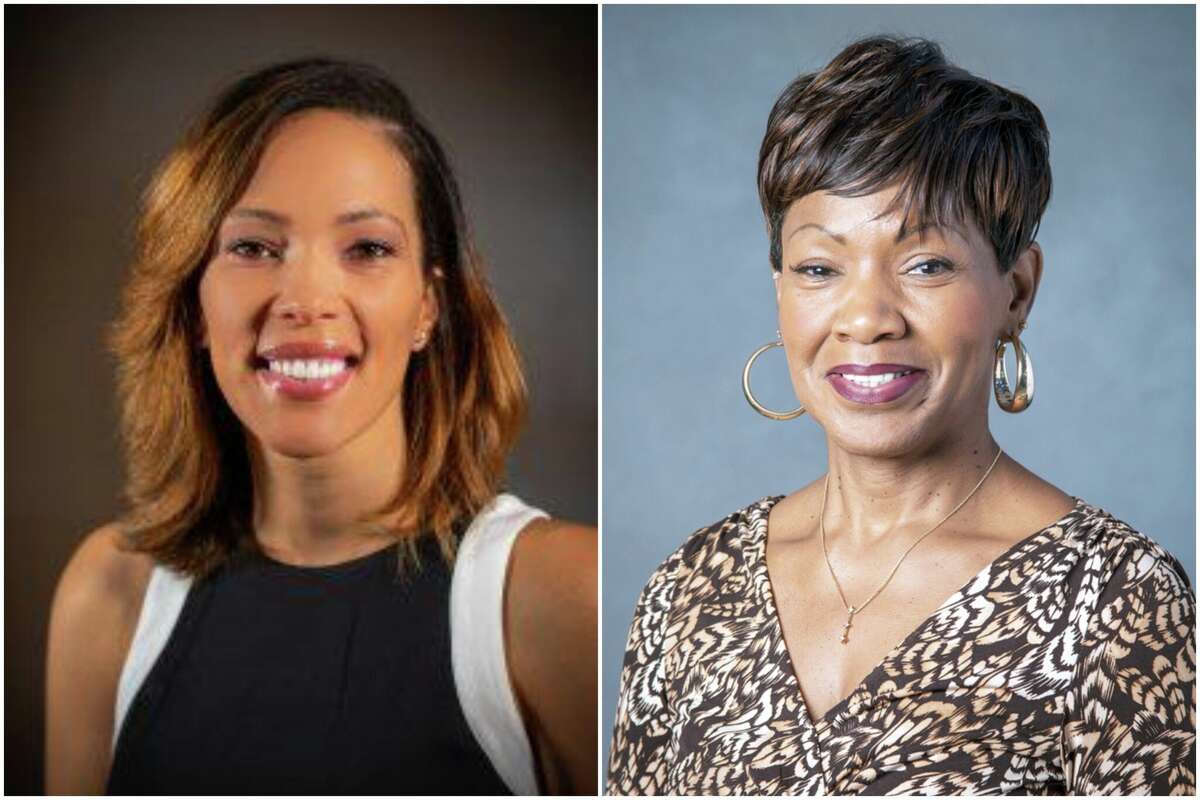
Erin Trent (left), principal at Stevens Elementary School, and Linda Bellard, principal at Garcia Elementary School, were both removed from their positions Aug. 23, 2023. 

Erin Trent (left), principal at Stevens Elementary School, and Linda Bellard, principal at Garcia Elementary School, were both removed from their positions Aug. 23, 2023. Houston ISD

Parents and teachers at Stevens say they were “blindsided” by the announcement, which was made via an automated phone call.

“This unexpected and impersonal communication from the district caused immediate anxiety, confusion and fear, not just for me personally but among hundreds of parents,” said Adam Chaney, the parliamentarian for Stevens’ Parent Teacher Community Organization.

“Our community deserves clarification immediately. We are two days away from ‘Meet the Teacher,’ the whole campus is going to be present, and then Monday morning is the start of school,” Chaney said. “It’s become increasingly difficult to avoid interpreting this chaotic situation through the lens of this controversial takeover.”

HISD officials declined to comment further or provide a reason for the reassignments, saying that the district cannot comment on ongoing personnel matters. The call Stevens parents received Wednesday acknowledged that “the change may feel abrupt,” but that it had “become clear that this change is necessary to ensure Stevens Elementary students start the year off well with access to high-quality instruction on day one that meets their needs and supports increased academic outcomes on the campus…”

Trent’s abrupt removal has led members of the Stevens community to speculate that she was reassigned because she did not opt in to Superintendent Mike Miles’ New Education System earlier this summer.

One teacher, who asked to remain anonymous for fear of retaliation, said Trent resisted pushes from the HISD central office to become an NES-aligned school, which would have seen many of Miles’ most sweeping and controversial reforms implemented at Stevens.

Miles also disbanded the HISD team of autism specialists who served schools throughout the district.

Linda Darling-Hammond is a prominent professor at Stanford and president of The Learning Policy Institute. She has been a public school teacher, a researcher, and president of the California State Board of Education. In this essay, she explains why the community school model may be the best path forward for school reform.

She writes:

“Kasserian ingera”—the traditional greeting of Masai warriors—asks: “And how are the children?” It is still a greeting among the Masai, acknowledging the high value they place on their children’s well-being. The traditional answer, “All the children are well,” means that the safety and welfare of the young are protected by their communities.

Unfortunately, in the United States, we know that all of our children are not well. Indeed, by any measure, children and youth in the United States are struggling. The aftermath of the pandemic has brought with it an epidemic of mental health issues, from anxiety and depression to suicidal ideation. A Centers for Disease Control and Prevention report from 2022 found that 44% of adolescents said they felt sad or hopeless most of the time during the spring of 2021, and 20% seriously considered suicide. During that time, 29% had an adult in their household lose a job and 24% went hungry; 55% said they were exposed to harsh verbal or physical treatment at home.

Many report continuing to feel disconnected from school. Among high school students from 95 districts surveyed by Youth Truth in 2021–22, a minority (40%) reported feeling like part of their school community or enjoying coming to school, and just 39% reported having an adult at school they could talk with when they feel “upset, stressed, or having problems.” (See figure below.) These proportions are even lower for students of color, LGBTQ+ students, and students in large schools.

It is in this context that a diverse and growing chorus of educators, students, families, and policymakers are calling for a reimagining of our schools. They are highlighting the need to center relationships, belonging, and community; to create structures and practices to support relevant and engaging learning; and to organize resources, supports, and opportunities in ways that mitigate the pernicious effects of structural racism and decades of disinvestment in low-income communities of color.

As Learning Policy Institute Senior Fellow in Residence Jeannie Oakes noted recently, “We need to have schools really change the way they operate to compensate for deficiencies, not in the kids, but in our social safety net.”

Responding to the uniquely challenging moment we’re in, many districts and states are making big bets on community schools—both to address the tattered social safety net Oakes refers to, as well as to provide a catalyst for the deeper cultural and practice changes needed to better serve students and adults alike.

These initiatives are underway in large urban districts like Albuquerque, Baltimore, Chicago, Los Angeles, New York City, and Oakland, as well as in smaller rural communities in California, Kentucky, New Mexico, New York, and Vermont. A number of states have also established funding and supports for community schools. Maryland established the Concentration of Poverty grant program to provide annual community school personnel grants to eligible schools, along with additional per-pupil grant funding for each eligible student. New York created a community schools set-aside in its school funding formula for high-need districts and funded three regional technical assistance centers for community schools. California, for its part, has leveraged multiyear budget surpluses in 2021 and 2022 to make a historic $4.1 billion investment in planning, implementation, and coordination grants—as well as technical assistance—for the state-funded California Community Schools Partnership Program. This investment is intended to provide sufficient resources for every high-poverty school in California to become a community school within the next 5 to 7 years.

Community schools are a place-based strategy deeply rooted in their local context—the needs, assets, hopes, and dreams of students, families, educators, and community partners. They leverage a complex web of partnerships and relationships, like those at Mendez High School in East Los Angeles, to support and engage students and families. By integrating access to services—from medical care to housing and other supports—and making them available to students and families on school campuses, community schools provide a much-needed alternative to the fragmented and bureaucratic social services gauntlet that families in need are typically required to navigate. As we have seen time and again during the COVID-19 pandemic, these services and supports—provided in the context of trusting and caring relationships—can be life changing and can mean the difference between academic success and struggling students and families.

At Mendez, because of the infrastructure created through its community schools approach, the school and its partners were able to provide vital services to students and families as soon as schools shut down in 2020. A mobile clinic that already served the school began COVID-19 testing for the community; mental health providers already in place conducted regular mental health check-ins with students via devices or at a safe physical distance. Other partners created care packages with food, toilet paper, electronic benefit transfer cards, and other essentials, and teachers organized to provide Wi-Fi hot spots to families before the district had the capacity to do so.

But to achieve the transformation our students need and the times demand, community schools must be about much more than providing an efficient structure for integrated student supports (or wraparound services, as they are sometimes called). Transformation requires that we also address the structural barriers to student well-being and academic success that are encompassed by the other foundational elements of community schools: a culture of belonging, safety, and care; community-connected classroom instruction; expanded and enriched learning opportunities; empowered student and family engagement; and collaborative leadership. Foundational to all of this is a grounding in whole childeducation.

When implemented well, community schools are guided by principles for equitable whole child practices that are grounded in the science of learning and development. This whole child framework is at the center of the community schools initiative in California, where the State Board of Education has thus far approved $1.5 billion in planning and implementation grants from a larger initiative that is intended to reach one third of the state’s schools in high-need communities.

The key elements of a whole child framework should be foundational to our vision of transformational community schools:

  • Structures and practices to foster positive developmental relationships and ensure that students are known and supported. Examples include looping in the elementary grades, where a teacher stays with the class for more than one year, and utilizing advisory systems in middle and high school, which create small family units that offer personal attention, space for sharing needs and feelings, and family connections that support each student.
  • Supportive and caring school communities where students feel a strong sense of belonging and are safe to bring their full selves, without fear of being bullied by peers or stereotyped or negatively judged by students or adults at school.
  • Culturally affirming social and emotional learning that is infused throughout the school day and includes skill-building, as well as educative and restorative approaches to classroom management and discipline, so that children and young people learn responsibility for themselves and their community.
  • Rich learning experiences that support inquiry, motivation, competence, self-efficacy, and self-directed learning.
  • Integrated student supports that remove academic and non-academic barriers to learning by providing health and social services as needed, tutoring and other academic supports, and a focus on children’s individual talents and needs.

Move at the “Speed of Trust”

Just as we need to rethink how students are engaged and supported in schools, we also need to reimagine adult interactions—among families and educators, as well as among school staff. That means treating families as trusted partners in their students’ well-being and academic success and intentionally supporting their capacity building and leadership development.

As importantly, it also means investing in educators and school staff, so they have the necessary tools, agency, and support—including support for their mental health and emotional well-being—to shift practices in ways that expand the capacities of students and adults alike. This includes enabling new teachers’ success with strong induction and mentoring, while providing leadership opportunities for more experienced teachers. It means providing the collaboration time essential to advancing meaningful and engaging instruction and supporting teacher-led professional development. And, just as with students and families, it means nurturing trust and collaborative leadership among staff and with school and district leaders.

Open the link to read the rest of this article and to see the graphs.