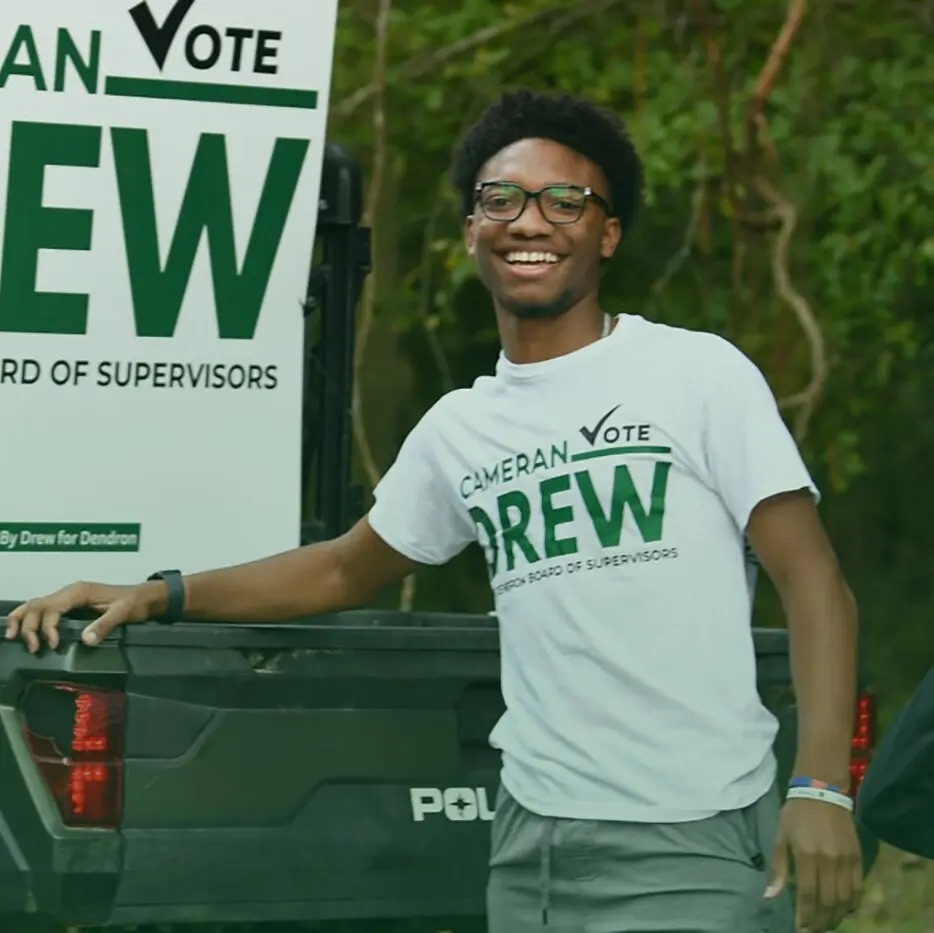
Arnold and Carol Hillman spent their careers as educators in Pennsylvania. When they retired, they decided to live in a retirement community in South Carolina. But while other retirees were playing golf or relaxing at the pool, they decided to get involved in rural schools. They wanted to be helpful. After nine years in South Carolina, they decided to move closer to their children, so they moved to Massachusetts. I invited them to write about their experiences in South Carolina. And Arnold wrote this account, edited by Carol.

We have always been compulsive people. On a cold winter’s day in February of 2015, we decided to move to a senior community (Sun City) in Bluffton, South Carolina. We did have some friends there who encouraged us to join them. So, on July 31st of that year, we moved there— lock, stock and barrel.

It wasn’t more than a week or two, after disposing of our many boxes, that we decided to go to a local school board meeting. We lived in an especially wealthy area of SC. The reason for its wealth were the many grey heads that retired to SC because of the meager taxes that one had to pay. 

We were very surprised at the board meeting. There were issues that were foreign to us. Although much of the meeting revolved around educational issues, the tone of the meeting was not to our liking. For one thing, they never mentioned the students or education. The superintendent acted as if he was the school district attorney. He was later fired because of ethics violations. An elderly member of the board spoke about books that he did not like and made no sense. The meeting seemed disorganized from our perspective. We came away from the meeting with the idea of finding out more about education in South Carolina.

Since we were familiar with the superintendent’s organization in Pennsylvania, we discovered that the then Superintendent of Education in South Carolina was the former executive director of the SC organization of superintendents. We called her, Molly Spearman, and invoked our PA connection and got to speak with her. 

We said that we had been advocates for rural schools and communities for many years and would like to see if we could be of some assistance to them here in South Carolina. She told us of five rural school districts around the area in which we lived and suggested that we give them a call.

We called all five and only one returned our call. Dr. Vashti Washington, Superintendent of the Jasper County School District, one of the poorest districts in the state, said that she would be happy to see us and work out some things that we could do in the district.

We eventually began a program called “Roso” – Reach one Save one. It was already in the works at the Ridgeland Hardeeville High School. The assistant principal, L.R. Dinkins, had been looking for someone to help him get it started, and we were the ones.

The program involved mentoring 10 young men and 10 young women and having them mentor fifth graders who were having trouble in school. The program lasted from 2015-2021. It ended when Covid began. However, the students that we worked with are still in touch with us and many have been successful in their lives. Others have not had that kind of success.

During the time we were working at Ridgeland Hardeeville, we decided that we would try to visit as many rural school districts as we could. We wound up visiting 21 districts out of about 35 (consolidation has made that 30 rural districts).

We were astonished at what we saw in each of those districts. What we saw was the equivalent of shoveling against the tide. Administrators and teachers do their best without the proper resources. 

In some districts the buildings were dilapidated. One in particular startled us when we saw sewage seeping into the hallways. Fortunately, that school was closed and replaced by a new building.

Many school districts lacked teachers of science, math, and special education. Many rural districts recruited foreign teachers to fill vacancies, but these teachers often had difficulty communicating in English. Those who stayed for more than a year became more fluent in English and more successful as teachers. Nonetheless, rural districts often lacked the courses available in economically advantaged districts.

Most rural districts lacked student services. Guidance counselors and psychologists were in short supply, as were career counselors and STEM counselors.

Like many other rural areas across the country, Internet connections are not readily available in rural South Carolina. Thus many schools were unable to produce online coursework for their students during the pandemic.

Some of the outcomes were spectacular, but in the end the children did not get all that they needed for success in life.

As we have learned during our time in South Carolina, and over the past year, the children in the rural areas of South Carolina must climb mountains to gain the same kind of success that their brothers and sisters have in the well-resourced school districts.

Some statistics will show the differences. At the beginning of the 2024-25 school year there were 1,043 open positions for educators in South Carolina. Most of these vacancies were in rural school districts. From January 2020 till now, of the 75 school districts in SC, only 21 school districts have retained their school superintendents. Of those 72% that have left, many of them are from rural school districts.

South Carolina’s legislature and administration have succeeded in raising teachers’ salaries. However, their priorities have not addressed the problems with resources for rural schools. The new Superintendent of education is a right-wing conservative, with a former Heritage Foundation background and a less than stellar resume in education. She has instigated a program in cooperation with Prager University that will provide school districts with videos that rewrite American history to minimize the underside of the past..

The legislature and the administration have viewed budget surpluses as a means of getting votes from their constituents. Although state taxes are low, they have consistently rebated taxes to taxpayers. In the 2022 legislative session they rebated almost one billion dollars. This was done when school districts and other parts of the state could have used those funds to improve the number of children and other needy folks.

South Carolina does not fare well in comparison with other states in the nation when it comes to education. Looking at 4 differing rating agencies, SC ranks 44th, 43rd, 41st and 41st. You may not agree that these are the most accurate numbers, but a number of agencies use many variables to come to these conclusions.

And how is South Carolina doing in comparison to other states and the nation on national tests such as the ACTs? According to the South Carolina Department of Education and their statistics, the average of all states using an ACT composite is 19.4. South Carolina’s composite score is 18.4. The ACT is widely used in Southern and Mid-Western states. There are 24 states that use it primarily and of the 24, two states switched to the SATs, but still use the ACTs. Many of the rural school districts are far below the 18.4 mean.

To counter some of these negative things about South Carolina education, Carol and I, along with several rural school superintendents, created an organization called SCORS (South Carolina Organization of Rural Schools). Its purpose was to alert South Carolinians to the plight of rural schools and communities. We did research, wrotearticles, and even interviewed gubernatorial candidates. Most of what we did may have helped a small bit, but not enough to move either the legislature or the administration.

It will take many years and the rise of a new generation before anything changes in South Carolina. We still are in contact with many of the young people whom we mentored. 

Most of the students that we mentored came from very economically depressed backgrounds. Their parents sometimes worked two or three jobs. The students also worked to supplement family incomes. They were wonderful youngsters who would have had many more opportunities if they lived in different states.

We called the groups that we mentored Jasper Gentlemen (they all lived in Jasper County). The young ladies were named Diamonds and Pearls. As you suspect, I worked with the young men and Carol the young ladies. There were about 25 students in all. We took them to colleges in South Carolina and even sent some of them up to Howard University in Washington on bus trips set up by a friend who was the head of the Howard alumni association of South Carolina. Of all the students we mentored, none of them dropped out of high school. They all graduated.

I believe only about 30% of them went on to college. Many of the parents wanted the youngsters to stay home and did not want them to leave the area. Money was the biggest problem. The cost of college, even the state schools, was too much for the family to fund. Even with Pell grants and other scholarships it was just too much.

We did offer them some scholarships that we funded personally. Some of the students dropped out after their freshman year. We even had some athletes who got partial scholarships that did not last. Some of the South Carolina colleges, both public and private, had terrible 4-year graduation rates. One of them, a state school, had a 4-year graduation rate of 14.5%.

The “Corridor of Shame” refers to the rural school districts in South Carolina along route 95. It was part of a short documentary about education in South Carolina by Pat Conroy, whose book is about his teaching in Daufuskie Island. Most of the school districts in that area were predominantly African American.

It is difficult to describe the pervasive racism in South Carolina. It is not hidden. It is all on the surface. As members of the NAACP, Carol and I saw it everywhere–from gerrymandering of voting districts to the daily treatment of the African-American community. The neglect of human capital in South Carolina is astounding. Those in charge do not see education as an important economic development tool. Nor do they consider the tragic waste of human potential that is the result of neglecting education.

Here is an example of the blatant racism we saw. A good friend of ours–a person with a doctorate who teaches at a university—would always ask us to call to make restaurant reservations. She also asked that we call stores to get information about products. The rude treatment she received at car dealerships and local stores was beyond our comprehension. Of course, she is Black.

The children had to climb huge barriers compared to most students in the United States to get to college. It is a wonder to Carol and me that any of them were able to do it. We are so proud of some of them who not only got through school but went on to get master’s degrees. We are still not sure if we made a difference, but we tried. 

We are proud of our mentees. Some have climbed over the barriers to achieve success. Jeremiah comes from a wonderful family with few resources. He is the first of his siblings to go to college. He is a phenomenal football player and an even better student. He hopes to play in the NFL in a few years. He graduated from Hampton University and is studying for his master’s degree in logistics at Alabama State. He has one year of football eligibility. To complete his college degree, he took 21 credits in his final semester and was saddened when he got one B+ instead of all As.

Irvin was the valedictorian in his senior year at Ridgeland Hardeeville High School. He was also the drum major in the band, among many extracurricular activities. He went to Embry-Riddle Aeronautical University in Daytona, Florida. He applied for a job at Boeing. It took a year and some to get his security clearance. While he was waiting, he worked in construction. He now works at Boeing in Virginia on things he cannot tell me about.

Rashamel is closer to us than any of the other students. We have known him for 10 years. He is not only a fine student but a wonderful basketballl player. When he was in high school, he wrote for the local newspaper. They seem to have been written by a professional. His post-high school years were confounded by advice he got from his coaches to go to a community college in Rochester, New York. The school was set up for basketball. Since Rashamel was not an inner-city African American, his coach had no clue about how to approach him. He was placed in remedial courses. He got As and A+s. However, since these courses were non-credited, he was behind 15 credits when he left. He spent two years at South Carolina State, an HBCU, and did well academically. He did not enjoy playing there. He finally left and had a great year at Pfeiffer University in North Carolina. He is now taking his master’s degree in sports psychology and working two jobs in Augusta, Georgia.

Lakiasa entered the service because she did not know what she wanted to do in college. She enlisted in the Army where she was trained to help military personnel deal with financial problems. In the Army, she realized that she had grown up very poor. Her Army experience taught her how to handle money. In the three years that she has been in the Army, she has purchased her first car and is the only one in her family who has bought a house. Because she likes to help people, she has made plans to study and become a radiology technician.

Lataye went to a leadership camp between her sophomore and junior year in high school, sponsored by Clemson University. It was the first time she had seen a waterfall, went swimming in a lake, and sat around a campfire singing songs. As a result of that experience, she was determined to go to college. She was studying to be a teacher when she was invited to be a volunteer in the college’s lab school, where she taught math to fifth graders and followed them through their eighth grade year. She made the honor society’s

Geovana was her family’s interpreter. She was expected to go to college. She thought seriously about becoming an attorney. She now wants to be a peduatrician. She is working in a dermatologist’s office for the summer. She will spend a post-college year working while studying for the MCATS.

In the Fall of 2023, I was afflicted with chronic kidney disease. It came to a point where I was about to have dialysis. The only good hospital in the state was in Charleston. They invented a procedure that allowed me to get back to normal.

However, our children insisted that we move closer to them. We went up to Massachusetts to look around for a place that was close to our daughter. We found a continuous care community and moved in on October 23, 2024. We have been there ever since.

As I said, we are still in contact with many of the students we mentored and try and help out any way that we can. We are also in contact with a number of families. Many of them are still not doing well. We hope that the future holds more positive results for them. We miss them all.


Heather Cox Richardson makes two important points in this post:

  1. Trump’s poll numbers have gone down on his deportation policy (the public wants him to deport criminals, not honest, hard-working non-citizens) and on his tariff policy.
  2. Trump has thrown red meat to his base (stripping Rosie O’Donnell’s citizenship, telling Coke to change to cane sugar, demanding that two sports teams return to their original names, which were offensive to Native Americans), but his distractions have not worked.

I wonder: How can we survive another 3 and one-half years of this craziness?

No matter what Trump does or says, he will stil be President. The Republicans who control the House and Senate will not impeach him, no matter what. His Cabinet of lapdogs will not invoke the 25th Amendment to remove him. The best we can hope for is a Democratic sweep of both houses of Congress in 2026 so Trump is not allowed to get away with lying and grifting and destroying the global economy.

Richardson writes:

On Friday, G. Elliott Morris of Strength in Numbers reported that “polls show Trump’s position plummeting.” On Friday morning, the average job approval rating for Trump was 42.6% with 53.5% disapproving.


Those numbers break down by policy like this: Gallup polls show that only 35% of Americans approve of Trump’s immigration policy with 62% opposed. A new poll out from CBS News/ YouGov today shows that support for Trump’s deportations has dropped ten points from the start of his term, from 59% to 49%. Fifty-eight percent of Americans oppose the administration’s use of detention facilities. The numbers in a CNN/SSRS poll released today are even more negative for the administration: 59% of Americans oppose deporting undocumented immigrants without a criminal record while only 23% support such deportations, and 57% are opposed to building new detention facilities while only 26% support such a plan.


American approval of Immigration and Customs Enforcement (ICE) is unlikely to rise as news spreads that last Monday, the government gave ICE unprecedented access to the records of nearly 80 million people on Medicaid, allegedly to enable ICE to find undocumented immigrants. Kimberly Kindy and Amanda Seitz of the Associated Press reported that the Centers for Medicare and Medicaid Services signed an agreement with the Department of Homeland Security that enables ICE to access Medicaid recipients’ name, ethnicity and race, birthdate, home address, and social security number.

Undocumented immigrants are not eligible for Medicaid, although they may use it in an emergency to cover lifesaving services in a hospital emergency room. The release of personal information from Medicaid lists is unprecedented. Senator Adam Schiff (D-CA) warned: “The massive transfer of the personal data of millions of Medicaid recipients should alarm every American…. It will harm families across the nation and only cause more citizens to forego lifesaving access to health care.”


Trump’s tariffs are not popular. An Associated Press–NORC poll on Thursday found that 49% of Americans thought Trump’s policies have made them worse off while only 27% think his policies have helped.


And then there are the Epstein files.


A YouGov poll from Tuesday showed that 79% of Americans think the government should release all the documents it has about the Epstein case while only 4% think it should not. Those numbers included 85% of Democrats, but also 76% of Independents and 75% of Republicans. And that was BEFORE the publication of the Wall Street Journal article detailing the lewd and suggestive birthday letter Trump apparently contributed to Epstein’s fiftieth birthday album.


As Morris notes, Trump is underwater on all the issues of his presidency, but he is most dramatically underwater over Epstein.


You don’t need polls to see that Trump, at least, is panicking. He is throwing red meat to his base in what appears to be an attempt to regain control of the narrative. After his July 12 threat to strip comedian and talk show host Rosie O’Donnell of her citizenship (she was born in New York, and he does not have that power), he has kept up a stream of social media posts that seem designed to distract his wavering followers from the news around them.


On Wednesday, Trump announced on social media: “I have been speaking to Coca-Cola about using REAL Cane Sugar in Coke in the United States, and they have agreed to do so. I’d like to thank all of those in authority at Coca-Cola. This will be a very good move by them—You’ll see. It’s just better!”


But Coca-Cola had apparently not gotten the memo. It uses cane sugar in a number of foreign markets but has used high-fructose corn syrup in U.S. products since 1985. On its website, it wrote: “We appreciate President Trump’s enthusiasm for our iconic Coca‑Cola brand. More details on new innovative offerings within our Coca‑Cola product range will be shared soon.”


Social media users posted memes of Coke bottles emblazoned with the words “Trump is on the List” and, in small letters below, “Now with cane sugar.”


On Thursday, after observers had noted both the president’s swollen ankles and what appeared to be makeup covering up something on his hand, the White House announced that Trump has been diagnosed with chronic venous insufficiency, a condition that his physician described as a “benign” and common condition in which veins don’t move blood back to the heart efficiently.


Trump has never offered any information about his health, and his doctors have presented accounts of his physical exams that are hard to believe, making observers receive this announcement at this moment with skepticism. “Chronic venous insufficiency is a condition where the veins in the legs have difficulty drawing attention from the fact that the Epstein Files still haven’t been released,” one social media meme read.


Today, Trump posted on social media: “The Washington ‘Whatever’s’ should IMMEDIATELY change their name back to the Washington Redskins Football Team. There is a big clamoring for this. Likewise, the Cleveland Indians, one of the six original baseball teams, with a storied past. Our great Indian people, in massive numbers, want this to happen. Their heritage and prestige is systematically being taken away from them. Times are different now than they were three or four years ago. We are a Country of passion and common sense. OWNERS, GET IT DONE!!!”


Hours later, he posted that his post “has totally blown up, but only in a very positive way.” Then he threatened to block the deal to move the Commanders back to Washington, D.C., from a Maryland suburb unless they “change the name back to the original ‘Washington Redskins.’”
At the turn of the last century, those worried that industrialization was destroying masculinity encouraged sports to give men an arena for manly combat. Sports teams dominated by Euro-Americans often took names that invoked Indigenous Americans because those names seemed to them to harness the idea of “savagery” in the safe space of a playing field. By the end of the twentieth century, the majority of Americans had come to recognize the racism inherent in those names, and colleges started to retire Native American team names and mascots. In 2020 the Washington football team retired its former name, becoming the Commanders two years later. At about the same time, the Cleveland baseball team became the Cleveland Guardians in honor of the four pairs of art deco statues installed on the city’s Hope Memorial Bridge in 1932.


Trump’s attempt to control the narrative didn’t work. “The thing about the Redskins and Indians is that Donald Trump is on the Epstein list,” one social media user wrote. The post was representative of reactions to Trump’s post.


Today marked the end of the first six months of Trump’s second term, and he marked it with a flurry of social media posts praising his performance as “6 months of winning,” and attacking those he sees as his opponents. He again went after the Wall Street Journal, which ran the story about Epstein’s birthday album. He complained the paper had run a “typically untruthful story” when it said Treasury Secretary Scott Bessent had had to explain to Trump that firing Fed chair Jerome Powell would be bad for markets. Trump took exception to the idea he did not understand the interplay of the Fed and markets, despite his repeated threats against Powell.


“Nobody had to explain that to me,” he wrote. “I know better than anybody what’s good for the Market, and what’s good for the U.S.A. if it weren’t for me, the Market wouldn’t be at Record Highs right now, it probably would have CRASHED! So, get your information CORRECT. People don’t explain to me, I explain to them!”

Tonight, Trump’s social media posts seemed to project his own fears on Democrats he perceives as enemies. He once again claimed Senator Schiff, who managed one of the impeachment cases against Trump when he was a representative, had falsified loan documents in 2011 and should go to prison. In 2023, a judge determined that the Trump Organization had falsified loan documents. Trump posted: “Adam Schiff is a THIEF! He should be prosecuted, just like they tried to prosecute me, and everyone else—the only difference is, WE WERE TOTALLY INNOCENT, IT WAS ALL A GIANT HOAX!”


On Late Night with Stephen Colbert last night, Schiff said: “Donald, piss off…. But Donald, before you piss off, would you release the Epstein files?”
Trump also posted an image of intelligence agents and politicians in prison garb as if in mug shots, and reposted both an image of what appears to be lawmakers in handcuffs and an AI-generated video showing former president Barack Obama being arrested by FBI agents and then being held in a jail cell.


Meidas Touch posted: “The crazy thing about Donald Trump posting an AI video of Obama getting arrested is that Trump once had someone organize a party for him and invite a bunch of ‘young women’ and it turned out Jeffrey Epstein was his only other guest.” Alan Feuer and Matthew Goldstein broke the story of that party in Saturday’s New York Times.

Todd Blanche was Donald Trump’s personal lawyer in his criminal trial in New York City. Blanche is now Deputy Attorney General of the United States, the second highest position in the Department of Justice. Blanche is also the Acting Librarian of Congress, holding the job after Trump fired the Librarian of Congress for engaging in DEI.

According to news reports, Blanche will meet with Ghislaine Maxwell at her prison in Tallahassee to discuss her knowledge of Jeffrey Epstein’s pedophile activities. Maxwell was Epstein’s closest associate. His underage victims testified that she helped him and participated in the sexual abuse.

Maxwell was convicted of sex trafficking minors and other related counts. She is serving a sentence of 20 years in prison. She did not testify at her trial. Her lawyers appealed her conviction. Her appeal was denied by the Second Circuit Court of Appeals in September 2024. She is currently appealing to the U.S. Supreme Court to have her conviction overturned.

My bet: Todd Blanche will offer her a Presidential pardon in return for her statement that Trump was never involved in any Epstein-related pedophile activities. They were just very good friends.

Do you think he would offer her freedom in exchange for her statement?

Do you think she would take the offer?

Epstein and Maxwell
Epstein and Maxwell
Good friends

I recently subscribed to 404 Media, which offers fascinating content about technology, like this post by Samantha Cole about the collaboration between the White House and PragerU. The post shows different AI-generated videos of the Founding Fathers, speaking and animated. There is a hackneyed phrase about “bringing history to life.” Now you can see it happen, even though it’s fake and politically slanted.

Does it bear repeating that PragerU is not a university by any definition? Or that its founder Dennis Prager was a rightwing talk-show host before he started hawking his whitewashed history videos? Or that some red states have adopted his videos for classroom instruction even though Prager is not a historian and has no credentials to teach history?

Samantha Cole:

Conservative content mill PragerU is partnering with the White House to make AI-generated videos of founding fathers and Revolutionary War-era randos.

PragerU is a nonprofit organization with a mission “to promote American values through the creative use of digital media, technology and edu-tainment,” according to its website. It’s been criticized for advancing climate denial and slavery apologism, frequently publishes videos critical of “wokeness” and “DEI,” and is very concerned about “the death of the West.” It has also been increasingly integrated into school curricula around the country.

PragerU held a launch event for the series, “Road to Liberty,” on June 25. Secretary Linda McMahon took some time away from dismantling the Department of Education to speak at the event. In person at the White House, visitors can tour a display of notable Revolutionary War people and places, and scan a QR code on displays that take them to PragerU’s AI-generated videos of people from that time period speaking. 

Each of the videos highlights a different person who was alive during the signing of the Declaration of Independence, from former presidents to relatively minor players in the fight for independence. The videos are clearly AI-generated, with the sepia-toned peoples’ mouths moving almost independently from the rest of their faces in some of them. In one, an AI-generated John Adams says “facts do not care about our feelings,” a phrase commonly attributed to conservative commentator and PragerU contributor Ben Shapiro. 

At the end of the videos, there’s a logo for the White House with the text “brought to you by PragerU,” and a disclaimer: “The White House is grateful for the partnership with PragerU and the U.S. Department of Education in the production of this museum. This partnership does not constitute or imply U.S. Government or U.S. Department of Education endorsement of PragerU.”

Professor of history Seth Cotlar spotted the videos in a thread on Bluesky….

I asked Cotlar, as someone who specializes in American history and the rise of the far-right, what stood out to him about these videos. I thought it was odd, I said, that they chose to include people like politician and disgraced minister Lyman Hall and obscure poet Francis Hopkinson alongside more well-known figures like John Adams or Thomas Jefferson. 

“You’re right to note that it’s a pretty odd collection of figures they’ve chosen,” Cotlar said. “My guess is that this is part of the broader right wing populist push to frame themselves as the grassroots ‘true Americans,’ and they’re including all of these lesser known figures with the hopes that their viewers will be like ‘oh wow, look at all of these revolutionary freedom fighters like me who were just kinda ordinary guys like me but who still changed history.’” 

He also said it’s noteworthy that the “Road to Liberty” lineup so far is almost entirely white men, including the random dudes like Hall and Hopkinson. “The lack of any pretense to inclusion is pretty notable. Even conservative glosses on the Revolution from the pre-Trump era would have included things like the Rhode Island Regiment or Lemuel Haynes or Phyllis Wheatley. Needless to say, they absolutely do not include Deborah Sampson,” Cotlar said. All of the people in the “coming soon” section on PragerU’s website are also white men. 

AI slop has become the aesthetic of the right, with authoritarians around the world embracing ugly, lazy, mass-produced content like PragerU’s founding father puppets. Here in the U.S., we have President Donald Trump hawking it on his social media accounts, including AI-generated images of himself as the Pope and “Trump Gaza,” an AI video and song depicting the West Bank as a vacation paradise where Trump parties alongside his former bestie Elon Musk. As Republicans used the response to Hurricane Helene to blame migrants, Amy Kremer, founder of Women for Trump, posted an AI image of a child caught in a flood hugging a puppy and then said she didn’t care that it wasn’t real: “Y’all, I don’t know where this photo came from and honestly, it doesn’t matter,” she wrote on X. Mike Lee shared the same image. AI slop makes for quick and easy engagement farming, and now it’s being produced in direct partnership with the White House.

I’m not sure what app or program PragerU is using to make these videos. I thought, at first, that they might be using one of the many basic lipsyncing or “make this old photo come alive” mobile apps on the market now. But the videos look better, or at least more heavily produced, than most of those apps are capable of. Just to make sure they haven’t somehow advanced wildly in the last few months since I checked one out, I tried one of them, Revive, and uploaded an image of John Adams to see if it would return anything close to what PragerU’s putting out. It did not. 

The PragerU videos aren’t this bad, but they also aren’t as good as what would come out of Veo 3, the newest AI video generator, which generates highly realistic videos complete with sound and speech, from text prompts. I gave Veo a painting of John Adams and told it what to say; PragerU probably isn’t using this generator, because the result is much more realistic than what’s in the “Road to Liberty” series, even when I use a screenshot from one of their videos.

JOHN ADAMS IN VEO 3 USING A PAINTING AS A PROMPT.

On the off chance the culprit is Midjourney—although the series’ style and the way the subjects’ mouths move almost independently of the rest of their faces don’t match what I’ve seen of Midjourney’s videos—I tried that one, too. I just gave Midjourney the same Adams portrait and a prompt for it to animate him praising the United States and it returned a raving lunatic, silently screaming. 

Striking out so far, I emailed Hany Farid, a professor at UC Berkeley and Chief Science Officer of synthetic media detection company GetReal, and asked if he had any leads. He said it looked similar to what comes out of AI video creation platform HeyGen, which creates AI talking heads and generates speech for them using ElevenLabs. I tried this on screenshots of the avatars in PragerU’s Martha Washington and John Adams videos to see if the puppet-mouth-style matched up, and they were pretty close.

0:00

/0:011×

HEYGEN JOHN ADAMS

HEYGEN MARTHA WASHINGTON

PragerU’s videos are still more heavily produced than what I could make using the free version of HeyGen; it’s possible they used a combination of these to make the videos, plus some old-fashioned video editing and animation to create the final products. PragerU reported almost $70 million in income last year, they can afford the effort. 

“While the PragerU stuff is distinctly terrible, it’s not like our culture has commemorated the Revolution with high-minded sophistication,” Cotlar told me. “I was 8 during the bicentennial and while I definitely learned some stuff about the founding era, most of what I absorbed was pretty schlocky.” He mentioned the “Bicentennial minutes” that were broadcast in 1975 and 76, sponsored by Shell, and which TV critic John J. O’Connor called “so insubstantial as to be almost meaningless.” The series won an Emmy.

In the last two years, several states, beginning with Florida, have approved PragerU content to be taught in public school classrooms. In Oklahoma, teachers relocating from states with “progressive education policies” will have to undergo an assessment in partnership with PragerU to determine if they’re allowed to teach. “If you want to teach here, you’d better know the Constitution, respect what makes America great, and understand basic biology,” State Superintendent Ryan Walters said in a press release. “We’re raising a generation of patriots, not activists, and I’ll fight tooth and nail to keep leftist propaganda out of our classrooms….”

Open the link to continue reading.

ABOUT THE AUTHOR

Sam Cole is writing from the far reaches of the internet, about sexuality, the adult industry, online culture, and AI. She’s the author of How Sex Changed the Internet and the Internet Changed Sex.

Samantha Cole

404 Media is a new independent media company founded by technology journalists Jason Koebler, Emanuel Maiberg, Samantha Cole, and Joseph Cox.

© 2025 404 MEDIA. PUBLISHED WITH GHOST.

Governor Kelly Ayotte stunned some of her fellow Republicans by vetoing bills that are part of the rightwing assault on public schools. Among the bills she vetoed was one that allowed any parent to get a book banned because that parent considered it offensive.

She also vetoed an anti-trans bill, as well as other rightwing obsessions.

She highlights the split between the rightwingers in the GOP who want to control the lives of everyone and the conservatives who want to let people make their own decisions. Sibce New Hampshire has a significant number of libertarians, Ayotte’s decisions must have pleased them.

Trump (or more likely, his puppetmaster Russell Vought, Director of the Office of Budget and Management [OMB]) pulled the wool over the eyes of the Republicans who control Congress.

Trump insisted that he would rein in the budget; he brought in Elon Musk and his Kiddie Corps, to shut down vital functions of the federal government and pare the federal workforce. But Trump’s newly enacted budget adds at least 3 trillions to the deficit.

But first a word about Russell Vought. He was the primary author and editor of Project 2025, which is a blueprint for Trump’s second term. He worked at the far-right Heritage Foundation before the election. Now as director of OMB, he holds the most consequential job in the federal government. OMB decides which programs are priorities and which are not, which need more funding and which do not.

To understand the Trump administration’s policies and goals, read Project 2025. During the campaign, Trump pretended to know nothing about Project 2025. He lied.

John Thompson, historian and retired teacher in Oklahoma, writes here about the real human costs of this evil plan.

He writes:

Even though my primary focus is on public education, I have been concentrating on President Trump’s so-called “Big, Beautiful Bill,” which is estimated to increase the federal deficit by $3.3 trillion, or more. 

My biggest concerns, however, were budget cuts that will likely result in the world-wide loss of untold millions of lives. For instance, even before Trump dramatically increased the subsidies for fossil fuel production, and undercut non-fossil fuel production, it was estimated that by 2049 global warming would cost the global economy $38 trillion per year, and that over 2 billion years of healthy lives would be lost by 2050.

Moreover, Robert F. Kennedy’s attacks on medical science and vaccines could result in pandemics that cost millions of lives. In fact, Kennedy’s attacks on Gavi vaccines would undermine a public health process which would likely save an estimated 8 million lives across the world by 2030.     

And it is estimated that the USAID programs Trump cut “have saved over 90 million lives over the past two decades.” It is now estimated that by 2030 those cuts could cost the lives of 14 million people.

Since the Trump plan passed through Congress, I’ve been catching up on the interconnected ways that it undermines education.

As Chalkbeat reported, this bill:

Slashes spending on Medicaid, which provides health insurance to some 37 million children and is a critical revenue source for schools. It also limits eligibility for the Supplemental Nutrition Assistance Program, or SNAP, which provides food assistance to over 13 million children and makes kids automatically eligible for free meals at school.

Its revised tax credit will hurt an additional two million children. 

Moreover, the cuts will hurt the funding of hospitals and other medical service providers.

And anti-immigration raids will increase chronic absenteeism rates, and “have significant effects on children’s physical and mental health, as well as on broader school climate.”

And that brings me back to the damage done to Oklahoma students. As the Oklahoma Voice reports:

The Trump administration is indefinitely withholding more than $70 million in federal education programs meant for Oklahoma students and educators, including money for teacher development, English learners, after-care programs and migrant children.

Every day I hear about the results caused by threats to the $15.68 million that were authorized, but not delivered for before- and after-school programs, and the “$6.43 million dedicated for the 13% of Oklahoma students learning English as their non-native language.” 

In the Oklahoma City Public Schools, for instance, “47% of students are learning English as their second language. The district expected $1.1 million in federal revenue from Title III, which supports English learners.”

Finally, I recently attended the OK Justice Circle’s Breaking Bread with the Hispanic Community where educators and service providers described the cruelty that Hispanic students were facing. For instance, as a panelist was leaving for the conference, a student told her that she is studying the Holocaust. The student was worried about the tragedies that immigrants like her were experiencing, and how awful they could become.

The educator further explained that a big majority of her students are Hispanic. Due in large part to the current deportation campaign, at times, absenteeism has surged to 30% to 40%. And many students come to school every day with their birth certificates in the backpack in case they have to face raids by the United States Immigration and Customs Enforcement (ICE).

The panelists explained how deportations of family members have produced a surge in the wide, interconnected, and painful crises that undermine student learning.

One of the services that schools can provide is referring students and families to nonprofit and public institutions. In an especially revealing set of discussions, educators described their “do-s and don’t-s” when sharing immigration information with patrons. 

But those statements are based on trust in the law and procedures that ICE agents are required to follow.  Today, it was agreed, it is hard to trust the immigration process.

As I struggled to reach the best possible emotional balance when evaluating the brutality imposed on children, families, and people across the world, I received a message from the Oklahoma Appleseed Center for Law and Justice. It’s Executive Director, Colleen McCarty, expressed the frustration that I continually hear:

Congress passed the so-called “Big Beautiful Bill”—a piece of legislation wrapped in soundbites and flag pins—that will strip thousands of Oklahomans of life-saving healthcare. It will supercharge Immigration and Customs Enforcement, giving new power and resources to deport millions of people, tear families apart, and criminalize human existence based on borders and skin color

But she is committed to “stand in one courtroom fighting for freedom,” even though she leaves “to find the government systematically dismantling it on the largest scale imaginable.” 

We also must continue to fight both legal and political battles in defense of our democracy.

Blogger Dean Obeidallah raises a very important question: why didn’t Pam Bondi prosecute her state’s most notorious child sex predator when she was Attorney General of Florida? Who was she protecting?

He wrote on his Substack blog:

Donald Trump is so panicked by what is contained in the Trump-Epstein files that he’s now slamming his own followers demanding its release, calling them “stupid” and “weaklings.” Whine as he may, Trump has lost control of the narrative given a new poll released Wednesday which found nearly 70% of Americans believe the Trump regime has engaged in a cover up of the Epstein files–including 59% of Trump supporters. At the very least it appears that Trump knew Jeffrey Epstein was involved in sex ring where children were raped yet did nothing to stop that evil. But Trump’s actions could be worse than that.

However, lost in the discussion is that Trump’s current Attorney General Pam Bondi was Florida’s Attorney General from 2011 to 2019 in the very state that was ground zero for Epstein raping and trafficking children. Why didn’t she investigate and prosecute Epstein for these heinous crimes committed in Florida?!

Taking a quick step back, Epstein received in 2008 the “deal of a lifetime” from local Florida prosecutors and George W. Bush’s Department of Justice. At the time, Bush’s DOJ had identified 36 underage girls who were victims of Epstein. But they offered the well-connected Epstein a deal to plead guilty to just two prostitution charges in state court. He was then sentenced to 18 months in jail–which he served in a private wing of the Palm Beach County jail where he was allowed daily work release. In addition, Bush’s DOJ agreed not to prosecute him for federal crimes. Worse, Epstein’s victims were not even told of the deal in advance so they could object.

After Epstein’s release from jail in 2009, Epstein returned to his lavish lifestyle and was able to “continue his abuse of minors”—a point made in a 2020 report by Trump’s own DOJ after Epstein died in the custody of the Trump administration. So again, why didn’t Bondi investigate Epstein for his crimes while she was AG from 2011 to 2019?!

Open the link to finish reading.

Ellie Leonard’s blog is called “The Panicked, Unpaid Writer.” This post is remarkable because it includes the drawing that, according to the Wall Street Journal, was sent by Trump to his friend Jeffrey Epstein on the occasion of his 50th birthday.

Trump denies that he wrote the note. He is suing Rupert Murdoch and The Wall Street Journal for $10 billion for publishing the story, which he says is fake. This open break between Trump and Murdoch may have interesting consequences, since Murdoch s FOX News is Trump’s biggest cheering section.

Ellie Leonard writes:

Long before we knew the story of Jeffrey Epstein, a young Ghislaine Maxwell was coming of age in the 53-bedroom home of her father, Robert Maxwell, a British media proprietor and politician. He named his luxury yacht after the little girl, the “Lady Ghislaine,” but spent most of his time buying and selling businesses like MacMillan and Pergamon Press, and flying back and forth to Headington Hill in Oxford on his helicopter. Ghislaine would later say that she had a “difficult, traumatic childhood with an overbearing, narcissistic, and demanding father…(that) made [her] vulnerable to Epstein.” But despite being a billionaire, Robert Maxwell had a lot of debt, (having “plundered hundreds of millions of pounds from his companies’ pension funds) and in 1991 his body was discovered floating in the Atlantic Ocean. The newspapers said he had apparently fallen overboard from the “Lady Ghislaine,” but Ghislaine never believed the stories.

“One thing I am sure about is that he did not commit suicide. I think he was murdered.” – Ghislaine Maxwell, Hello! Magazine1997

She would meet Jeffrey Epstein for the first time just a few months later. And despite the bad taste her father left, she found common ground with the young millionaire financier.

Final arguments at Maxwell trial | US News | Sky News

It is unclear how long Maxwell dated Epstein, though there is evidence to indicate it was from about 1992 to 1997. However, due to the nature of Epstein’s “extracurricular” activities and business dealings, those lines may be blurred. In a 2003 Vanity Fair article Epstein claimed that Maxwell was his “best friend,” indicating that, at least on paper, they were no longer together. But he stated that although she wasn’t on his payroll, she “organized much of [his] life,” and that when a relationship is over, the girlfriend “moves up, not down,” to friendship status.

Open the link to keep reading and to view the drawing at the center of Trump’s $20 billion lawsuit against Murdoch.

Secretary of Education Linda McMahon has frozen $8.6 billion that Congress appropriated for students this summer. The Administration is supposed to spend the money that Congress authorized and appropriated, not withhold it.

Write Secretary McMahon NOW.

The Network for Public Education urges you to take action!

Open the link and fill out the form to lodge your protest.

#RELEASEFUNDS4SCHOOLS

Just weeks before the school year begins, Secretary of Education Linda McMahon is refusing to release $8.6 billion in federal funds that Congress approved for public schools.

This is more than a funding freeze—it’s a test run for permanent cuts. And unless we act now, our schools will pay the price. Send your letter to Linda McMahon.

2. Email Congress. Even if you’ve written before, send another message.

3. Call the U.S. Department of Education: 1-800-647-8733. Press 5 to report a violation of law regarding the lack of disbursement of approved federal funds by the U.S. Department of Education.  You can leave a message. 

#ReleaseFunds4Schools

TAKE ACTION

FIRST NAME *

LAST NAME *

EMAIL *

STREET ADDRESS *

CITY *

ZIP/POSTAL CODE *

Not in US?

  • Opt in to email updates from Network for Public Education 

Network for Public Education

P.O. Box 227
New York, New York 10156

info@networkforpubliceducation.org
(646) 678-4477

We are a 501 (c)(3). Please make a tax deductible donation to the Network for Public Education.

EIN 35-2532243

Open the link and add your name!!