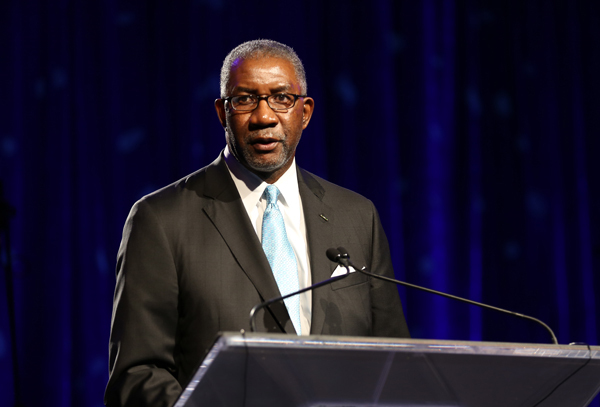
Historian Heather Cox Richardson summarized Secretary of State Anthony Blinken‘s address to the U.N. Security Council Ministerial Meeting on Ukraine Sovereignty and Russian Accountability. We must never forget that Ukraine is a sovereign nation, and it is irrelevant that it belonged to Russia in the past or during the repressive era of the Soviet Union. Ukraine belongs to the people of Ukraine. I have highlighted sections of his speech that touched me. Open the link to read the footnotes.

She wrote:

“One year and one week ago—on February 17th, 2022—I warned this council that Russia was planning to invade Ukraine,” Secretary of State Antony Blinken told the United Nations Security Council Ministerial Meeting on Ukraine Sovereignty and Russian Accountability today.

“I said that Russia would manufacture a pretext, and then use missiles, tanks, soldiers, cyber attacks to strike pre-identified targets, including Kyiv,” Blinken continued, “with the aim of toppling Ukraine’s democratically elected government. Russia’s representative—the same representative who will speak today—called these, and I quote, ‘groundless accusations.’

“Seven days later, on February 24th, 2022, Russia launched its full-scale invasion.”

When Putin’s initial attack failed to give him control of Ukraine, Blinken continued, “he called snap referenda in four occupied parts of Ukraine, deported Ukrainians, bussed in Russians, held sham votes at gunpoint, and then manipulated the results to claim near unanimous support for joining the Russian Federation.”

“Over the last year,” Blinken said, “Russia has killed tens of thousands of Ukrainian men, women, and children; uprooted more than 13 million people from their homes; destroyed more than half of the country’s energy grid; bombed more than 700 hospitals, 2,600 schools; and abducted at least 6,000 Ukrainian children—some as young as four months old—and relocated them to Russia.

“And yet, the spirit of the Ukrainians remains unbroken; if anything, it’s stronger than ever.”

Blinken’s remarkable speech told the history of Russia’s 2022 invasion of Ukraine, then highlighted that the world community has come together to stand behind Ukraine and the principles of the United Nations Charter that make all countries safer and more secure: “No seizing land by force. No erasing another country’s borders. No targeting civilians in war. No wars of aggression.”

He noted that the war had caused hardship around the globe, but the “vast majority” of states in the United Nations have condemned Russia’s violations of the U.N. Charter, including 141 who voted for a resolution along those lines just yesterday.

When Putin tried to use hunger as a weapon to end sanctions, more than 100 countries stepped up to bring down world grain prices; when Putin tried to use energy as a weapon, the rest of the world redirected national gas supplies so that the countries he was targeting could keep their people warm, and Europe worked hard to end its dependence on Russian energy.

Blinken said that if we do not defend the basic principles of the U.N. Charter, “we invite a world in which might makes right, the strong dominate the weak. That’s the world this body was created to end.”

While everyone—especially Ukraine—wants peace, he said, that peace must be durable, not simply an excuse to let Russia rest, rearm, and relaunch the war. As Ukraine president Volodymyr Zelensky has outlined, any peace must honor Ukraine’s territorial sovereignty. Putin has rejected this condition out of the box, saying that Ukraine must accept his “annexation” of Ukraine’s territories.

Blinken reminded his listeners that not everything in the world has two sides. “In this war, there is an aggressor and there is a victim,” he said. “If Russia stops fighting and leaves Ukraine, the war ends. If Ukraine stops fighting, Ukraine ends. The fact remains: One man—Vladimir Putin—started this war; one man can end it.”

When Russia and its defenders say the ongoing war is diverting resources from others in need, Blinken said, “look at Moscow’s actions” and look at the numbers. Last year, the U.S. contributed $13.5 billion in food aid and funded more than 40% of the World Food Program’s budget. Russia pays less than 1% of that budget.

Blinken went on: “Based on the latest UN figures, the United States donates over nine times as much as Russia to UN peacekeeping. We donate 390 times as much as Russia to UNICEF. We give nearly a thousand times as much as Russia to the UN Refugee Agency.”

Blinken reminded his listeners that the atrocities we are seeing Russians commit in Ukraine are not normal. “Bucha is not normal,” he said. “Mariupol is not normal. Irpin is not normal. Bombing schools and hospitals and apartment buildings to rubble is not normal. Stealing Ukrainian children from their families and giving them to people in Russia is not normal.

“We must not let President Putin’s callous indifference to human life become our own.”

Today, the leaders of the international Group of Seven, known as the G7, met virtually with Zelensky. The G7 includes Canada, France, Germany, Italy, Japan, the United Kingdom and the United States, as well as the European Union.

The statement they issued echoed Blinken’s speech, then went on to pledge to continue food and humanitarian aid as countries suffer from the war, and to continue to design sanctions to make sure those countries continue to have access to food and fertilizers. The G7 leaders expressed “profound sympathy” for those affected by the “horrifying earthquakes in Türkiye and Syria” and pledged continued support.

“Above all,” they said, “our solidarity will never waver in standing with Ukraine, in supporting countries and people in need, and in upholding the international order based on the rule of law.”

The Biden administration today announced $2 billion in military aid to Ukraine, including drones, communications equipment, HIMARS rockets, and 155-millimeter artillery ammunition, while the G7 has increased its 2023 support for Ukraine to $39 billion, and both Germany and Sweden committed to sending more Leopard 2 tanks.

The deputy chair of Russia’s security council, former president Dmitry Medvedev, said today that Russia planned to “push the borders of threats to our country as far as possible, even if these are the borders of Poland.” Poland is a member of the North Atlantic Treaty Organization (NATO), meaning an attack on it would be an attack on the rest of NATO, including the United States.

At a press conference in Kyiv today, Zelensky said: “Victory will be inevitable. I am certain there will be victory.”

“We have everything for it. We have the motivation, certainty, the friends, the diplomacy. You have all come together for this. If we all do our important homework, victory will be inevitable.”

No major media outlet did more to spread the lie that Trump won the 2020 election than FOX NEWS. It gave a platform to election deniers, including those who baselessly claimed that Dominion Voting Systems rigged the vote to favor Biden. Dominion is suing FOX and some of the leading exponents of this view. The case will be heard in April.

We now know, after publication of the depositions, that no one at FOX believed Trump’s lies. They agreed to spread them to protect their ratings. We will be watching to see if FOX is held accountable for allowing liars to undermine our democracy.

George Will wrote about the case. He does not defend FOX.

Five days after the 2020 presidential election, Sidney Powell, the fabulist lawyer, appeared on Maria Bartiromo’s Fox News show to say there has been “a massive and coordinated” effort to “delegitimize and destroy” Trump votes and “manufacture” Biden votes. Bartiromo asked her to elaborate. Powell obliged, talking about Dominion voting machines “flipping votes in the computer system or adding votes that did not exist.”


Four days later, Rudy Giuliani said on Fox Business’s Lou Dobbs program that the Dominion company’s owner was created “to fix elections” — to perform election fraud with sinister software. Dobbs: “It’s stunning.” And: “Rudy, we’re glad you’re on the case.”

On Dec. 10, 2020, Powell said on Dobbs’s program that a “controller module” in Dominion machines allows people to “manipulate the vote,” enabling “Dominion executives” to “sell elections to the highest bidder.” Dobbs lamented this “broadly coordinated effort” to defeat Trump.On Jan. 26, 2021, Mike Lindell, the pillow salesman and substantial advertiser on Fox News, said on Tucker Carlson’s program: “I have the evidence … I dare Dominion to sue me because then it will get out faster … they don’t want to talk about it.” Carlson: “No they don’t.”

Yes, they do. Come April, in the Superior Court of Delaware, the Dominion voting machine company will argue that it has suffered substantial injuries (it is seeking $1.6 billion in damages) because of defamatory statements about the 2020 presidential election that were made, repeatedly, on Fox News.

That the statements were false was obvious. That they were lies — known to be false by those who made them — cannot be reasonably doubted.

Among the difficult questions, however, are: What did Fox News know and when did it know it? (The Wall Street Journal, which like Fox News ultimately answers to Rupert Murdoch, was dismissive of the election fraud claims.) How did Fox News on-air personnel behave when the lies were spoken on the air? Did behavior by people purporting to be journalists constitute complicity in the lying?Dominion’s 139-page complaint alleges numerous examples, such as those above, of Fox News broadcasters being credulous when eliciting preposterous allegations from Donald Trump’s most unhinged devotees. The complaint says Fox “made,” “published,” “ratified,” “endorsed,” “adopted,” “amplified,” “promoted” and gave “a platform to” the lies. But those eight activities have different implications in litigation about defamatory journalism.

Dominion’s complaint argues that Fox News “gave life to” an election fraud story casting Dominion as “the villain.” Trump, enraged by Fox declaring Joe Biden the winner of Arizona and the presidency, successfully urged viewers to abandon Fox. To “lure viewers back” Fox News “endorsed, repeated, and broadcast” many “verifiably false yet devastating lies” about Dominion machines using “software and algorithms” to produce or erase votes, thereby assuring Biden’s victory. “Fox,” Dominion argues, “gave these fictions a prominence they otherwise would never have achieved.” It did this “because the lies were good for Fox’s business.”

Fox could argue, plausibly if uncomfortably, that some of its performers are entertainers lacking aptitudes, motives or incentives for making journalistic judgments about meretricious statements uttered on their programs. And that what might look like “reckless disregard” for the truth (a component of defamation) was merely indifference to it.

Was Fox malicious? Actual malice involves “knowledge that [a statement] was false” or “reckless disregard of whether it was false or not.” Fox could argue that its focus on Dominion was just show business — that Fox News performers were not preoccupied with accuracy. So, slovenly interviewing by Fox hosts pandering to fickle viewers could be presented as a defense against liability for defamation.

Dominion’s complaint alleges that repeated Fox appearances by Powell and Giuliani “gave Fox’s stamp of approval” to lies about Dominion. But the more Fox fanned the flames, the more it could say it was merely giving a platform to newsworthy arsonists.

In his essay “When Are Lies Constitutionally Protected?” UCLA law professor Eugene Volokh says the Supreme Court has upheld punishment for, inter alia, lies constituting defamation, libel, perjury, false statements to government investigators and fraudulent charitable fundraising. Dominion must establish legally cognizable harm from lies not merely reported by, but aggressively disseminated by, a media entity that prospered by encouraging the liars.

That some Fox News personalities (Jeanine Pirro: “Sidney Powell, good luck on your mission”) behaved abominably is indisputable, as is the fact that Dominion was severely injured. The Delaware court’s challenge will be to deliver justice for Dominion without having a chilling effect on journalism. Not that this profession was clearly involved in Fox’s role in the nation’s post-election embarrassment.

In his deposition for the lawsuit, FOX entertainer Sean Hannity allegedly testified that he never believed “for a second” that Trump won, even though he hosted numerous guests who said he did. Rupert Mt Murdoch, Tucker Carlson, and other FOX on-air personalities admitted that they peddled lies.

I haven’t been to the Metropolitan Opera in years, due to the pandemic. In the past, I went once or twice a year. It’s a great treat.

In early January, Mary and I took our 16-year-old grandson to see Aida. He had never seen an opera. What a thrill for him and us.

The role of Aida was performed by Michelle Bradley. She is a newcomer but is already a huge star on the international opera circuit. She is African American. She was born in Versailles, Kentucky, a town of 10,000 or fewer people. She graduated from Woodford County High School, then graduated from Kentucky State University, then studied vocal performance at Bowling Green State University.

The town of Versailles, small as it is, used to have three high schools. One of them was for Blacks only, even though the town’s Black population is tiny, about 6%. After the Brown decision, the three merged, and the Woodford County High School opened in 1963.

The publication of the San Francisco Opera interviewed the phenomenal new star:

At school, she was the girl with the crooked teeth, the one the other kids teased and taunted. To spare herself the bullying, she kept her mouth shut.

Michelle Bradley

“I didn’t talk at all until I got home,” soprano Michelle Bradley explains. “I was getting picked on a lot at school. And so I just stopped talking. Until I could get braces, I just didn’t talk in public.”

But in the afternoons, before her parents returned from work, Bradley would retreat into her sanctuary: her bedroom’s walk-in closet. There, with the door closed, Bradley would sing, without fear that anyone would hear her or judge her.

One day, though, her singing would no longer be a secret. One day, it would grace stages around the world, making her one of today’s most buzzed-about up-and-coming opera stars.

Growing up in Versailles, Kentucky, Bradley remembers her mother received free CDs in the mail, with songs from Aretha Franklin, Diana Ross, and The Clark Sisters, a gospel group from Detroit. Bradley loved them all. But there was one singer who inspired her the most: superstar Whitney Houston.

“She was my idol. That’s who I was trying to be as a little girl,” Bradley says.

In those early years, she would tally the ways she and Houston were alike—they shared a birth month, a Zodiac sign—just to feel a little closer to the superstar. And when the movie The Bodyguard came out, with Houston in the starring role, Bradley watched it over and over.

But trying to sing big, powerful ballads like Houston did in a closet made discretion difficult. Bradley had three brothers, two older and one younger. And like many a pesky sibling, Bradley’s younger brother was all too eager to spill the beans on his sister’s secret hobby.

“Mom, Dad, Tammy likes to sing in the closet! Tammy likes to sing in the closet,” she remembers him shouting, using the name she’s called at home.

Even with her parents, Bradley only spoke when spoken to. She was shy. Her parents could hardly believe she had a secret pastime singing. They called her into the living room and asked her to perform something. Naturally, Bradley chose a Houston song: “I Love the Lord” from The Preacher’s Wife.

“After that, my parents had me up singing at church services and everything else,” Bradley says. “It just started from there.”

Bradley had shown musical talent even from a young age. At Kmart, while her mother did the shopping, an 8-year-old Bradley would park herself in the aisle with all the musical equipment: “That was back when they had all the keyboards sitting out and had them all plugged up. Ooh, that was fun!”

She had no problem finding the keys to play the theme songs for kids’ shows like Sesame Street and Fraggle Rock. “I really don’t know how I did it,” Bradley says. “I loved my little cartoons, and so I would hear that and then I could sing it or play it. I just needed to hear it, and I had it.”

Neither of Bradley’s parents had studied music, but both loved to sing. They had met during the civil rights movement in the 1960s, two of the first Black students to integrate their Kentucky high school. Bradley’s father passed her mother a note that read, “I want to be your man.” They sang together in church choirs ever since they started dating.

It was with their help that Bradley started to overcome her shyness. Her father, a police officer, was a deacon at Polk Memorial Baptist Church. Her mother continued to sing in the church choir. Bradley started by learning to play services with the church pianist. By high school, she could carry a whole service.

And when, at age 14 or 15, she started singing in public, Bradley’s parents were always there, cheering her on. “Honestly, that’s who I would focus on when I was singing. I would look at them if I got nervous. So that helped me a lot. They helped me a lot.”

Soon, Bradley had the confidence to sing at school pep rallies and Christmas parties. “When I started doing that, when I started singing at school, people stopped picking on me. I was going from, ‘Hey, a crooked-tooth girl’ to ‘Hey, can you come sing for us?’”

It was the start of something great. Bradley would go on to graduate from the Metropolitan Opera’s prestigious Lindemann Young Artist Development Program. Her voice won her awards galore—from the Leonie Rysanek Award to the grand prize at the Marilyn Horne Song Competition—and she toured Europe, performing in great opera houses from Berlin to Vienna to Paris and beyond.

Now, she’s taking the U.S. by storm. This past fall, she starred as the heroine Liù in the Metropolitan Opera’s Turandot, and in March, she makes her debut with the Lyric Opera of Chicago as the title character in Tosca. Then, she joins San Francisco Opera for its Centennial Season, making her inaugural appearance in the company’s Dialogues of the Carmelites.

Bradley frequently visits Houston, because that’s where her voice teacher, Lois Alba, lives. When the pandemic closed down everything, including opera, she stayed with her family in Versailles for eight or nine months. She practiced at Kentucky State and the local church.

During that time, she got requests to sing virtually. She found that the best acoustics in the house was in the bathroom. So she would get dressed up in her regalia and sing at an angle that didn’t show the toilet.

When she was in high school, she thought she might one day be a music teacher or choir director. But in her freshman year at Kentucky State, her voice teacher, AndrewSmith, told her she had the voice to sing opera and encouraged her. She “just fell in love with it.” He showed her Turandot on a VHS, the first opera ever for her and she was immediately transfixed. Mr. Smith also gave her a CD of Leontyne Price, and Michelle was star struck.

It was like when I was a little girl listening to Whitney Houston, except this was an opera singer. I heard that voice and I don’t know what inside me said, “That’s me. I can do that.” But hearing one of the greatest voices of our time, I said, “I can do that too.” I still, to this day, don’t know where that came from. Or maybe I do know where it came from. But that was really my first thought: that I can do this. I can sound like that. It’s like I found a home.

From Versailles, Kentucky, to the Metropolitan Opera!

What a remarkable story, and what a wonderful voice!

The Network for Public Education posts regular features from the perspective of parents about their public schools. Some stories have a happy theme, some don’t. This post was written by Matt Gawkowski, a parent in Colorado who was very happy with the local public school. Then a slate of extremists took control of the local school board and created disruption. Matt became an activist. He had to.

I Never Thought I’d Become a Public School Activist. Then Extremists Took Over the School Board.

Matt Gawlowski

Like so many school districts across the country right now, rural Woodland Park, Colorado is being torn apart by politics. School board meetings are contentious, students are afraid and teachers are threatening to leave. Our community is fracturing.

It hasn’t always been this way. While Woodland Park is a politically conservative place, the schools have always felt isolated from politics. The political affiliation of parents, teachers and school board members didn’t matter because everyone worked together and took pride in the local schools. I was one such proud parent.

When I was asked to join the School Accountability Committee at my daughter’s school many years ago, I jumped at the chance. As a data nerd, I came away feeling deeply impressed by the school’s fiscal responsibility. When I sat in on a presentation by the superintendent at the time about the district budget, the fiscal conservative side of me was similarly dazzled. This was a school district that had its act together, I recall thinking.

Then in the fall of 2021, a group of four candidates who’d promoted themselves as ‘the conservative choice’ were elected to the school board. They quickly moved to transform the district, starting with the adoption of a sharply adversarial tone. In an email, one board member described teachers and their union as ‘the enemy.’ The founder of our local Christian bible college, an uncredited evangelical school that set up shop here several years ago, bragged about taking over the school board and announced that he’d sent a spy into the district to identify “homosexual books.”

And that was just the start. The new board approved a controversial charter school, one that the previous board had rejected, in part because enrollment in our rural district is declining. The rushed process not only violated open meeting laws but saddled the district with enormous consulting and legal fees. The board also terminated the previous superintendent’s contract, once again at great expense to the district, then chose controversial former school board member Ken Witt to serve as interim. Witt briefly served on the school board in Jefferson County but was recalled by voters after he accused the AP US history course of being insufficiently patriotic.

During a raucous meeting, the board voted to hire Witt over widespread opposition from students, parents, teachers and community members. The last member of the original school board, and the lone voice of reason in meetings, resigned. Students led two walkouts to protest and began showing up at board meetings to voice their opposition. The board blamed a teacher for the students’ actions and put her on administrative leave.

We fear that much worse is still to come. Radical curriculum reform (the board recently adopted the conservative American Birthright civics program, even after the state rejected it as too extreme), merit pay for teachers, and an effort to transform Woodland Park into an all-charter district will likely be on the agenda. Already, dozens of teachers have indicated that they’ll be leaving at the end of the school year. I am not opposed to honest, well-planned efforts to improve our district. But this board’s politically motivated actions have created massive disruption in the schools and the community.

My front row view of the battles taking place in my daughter’s school district has turned me into something I never thought I’d become: an activist. I certainly never thought I’d see the day when I’d be called a “hard left union lap dog wanna be thug,” as one director of the school board recently referred to me. In fact, I’m neutral on unions. A former registered Republican who once purchased a book by Rush Limbaugh I like low taxes, balanced budgets, and limited government. The truth is that I’d much rather just go back to being a dad and an introverted engineer, not the guy who is now an expert on submitting open records requests, and is a prominent voice in a Facebook group of similarly minded parents and community members.

I love our public schools and look at the country they have helped mold with pride. When I saw that the teachers and students in our local schools needed parents like me to speak up when they couldn’t, I had no choice but to step up. I hope that my story will inspire folks in communities where similar battles are raging to do the same.


Matt Gawlowski is a longtime parent in the Woodland Park RE-2 school district in Colorado. When not working as a mechanical engineer, you’ll find him outside trail running, backpacking, or skiing, depending on the season. You can follow him on Twitter and Instagram at @EspressoMatt or at http://supportwpschools.com

Governor Kathy Hochul wants to lift the cap on charter schools in New York City, but, Chalkbeat reports, the big charter chains are losing enrollment.

When Gov. Kathy Hochul unveiled a proposal to abolish the cap on the number of charter schools that can open in New York City, she said the policy is a matter of common sense, noting that children of color have experienced waitlists to enroll.

“I don’t think we should be telling them they don’t have a choice,” Hochul said in an interview on NY1 earlier this month.

The city’s charter sector has long been defined by its explosive growth and lengthy waitlists while enrollment has sagged among the city’s district schools. But preliminary state enrollment data suggests that demand for charter schools may be cooling — including among the city’s largest networks — complicating arguments for lifting the charter cap.

The city’s charter sector grew slightly this school year, by 0.42%, compared with a 2% decline among traditional public schools. But that masks important variations among charters: About 45% of them enrolled fewer students this year, according to a Chalkbeat analysis of state data. (The official statistics sometimes group multiple campuses under the same charter school.) About 60% of traditional public schools enrolled fewer students.

Meanwhile, the city’s most established networks enrolled fewer students this year than they did last year, including Success Academy (down 7.7%), Uncommon Schools (6.5%), KIPP (5%), and Achievement First (3.9%).

The governor’s proposal would abolish the local cap on the number of charter schools and release so-called “zombie” charters — essentially making New York City operators eligible for just over 100 new charter schools, which are privately managed and publicly funded.

But experts said there are trade offs of opening new schools in an environment where school leaders are struggling to fill all their seats. Since public dollars follow students, more schools vying for the same or shrinking pool of children would lead to smaller budgets or could even prompt closures, possibly affecting existing charters and district schools alike.

“The charter sector has grown substantially over time,” said Aaron Pallas, a professor at Columbia University’s Teachers College. “But opening new schools at a time when you’re seeing these signs of contraction strikes me as something that requires a fair amount of thought.”

Pallas pointed to evidence that competition from nearby charter schools boosts student learning among district schools, an argument in favor of lifting the cap. But he also worries that the new charters, which educate over 14% of the city’s public school students, may not be viable long term or could threaten other schools by drawing funding away from them. “I don’t think it’s good for kids for there to be that kind of instability,” he said.

DeSantis is rolling out one hard-right proposal after another to make news and price he is meaner and badder than Trump. Undocumented people come here to work, and he wants to be certain that no one will hire them, not even to pick crops, clean hotel rooms or do the dishes in restaurants.

Gov. Ron DeSantis on Thursday revived a push to adopt more stringent hiring protocols to prevent the employment of undocumented workers, acknowledging that a state law he championed during his first term in office has been ineffective.

Florida law currently requires all government employers and their contractors to use a federal electronic system, known as E-Verify, to check the immigration status of new hires.

DeSantis, however, says the mandate should be expanded to include all private employers in the state, saying the current law was a “compromise” reached by the Legislature following pushback from Florida’s agriculture, tourism and construction industries.

“We ended up with a compromise version that was inadequate,” DeSantis said at a press conference in Jacksonville. Now, DeSantis wants the Republican-led Legislature to help him deliver on the promise he made to voters when he first ran for governor in 2018.

After overwhelming Republican victories in 2022, DeSantis argued, the “political context” is working in his favor this time around.

“Now, we have super majorities in the Legislature,” DeSantis said. “We have, I think, a strong mandate to be able to implement the policies that we ran on and these are policies that I’ve been for since the day I became governor over four years ago.”

The E-Verify proposal is part of a larger immigration package that DeSantis is building ahead of a possible run for the Republican nomination for president in 2024, and that he is expected to use to attack President Joe Biden’s immigration policy to reach conservative voters not just in Florida, but on a national level.

To further bolster his immigration platform, DeSantis wants, among other things, to ban out-of-state tuition waivers at colleges and universities for undocumented students and prohibit local governments from issuing identification cards to migrants.

Read more at: https://www.miamiherald.com/news/politics-government/state-politics/article272581361.html#storylink=cpy

George Scialabba wrote this essay in Commonweal. It is worth your while to read it and think about it. It might help explain why so many red states are unwilling to fund public schools and prefer to spend public money subsidizing the tuition of children already attending private schools, transferring public funds to private and religious schools.

Unless we have reached the end point of humankind’s moral development, it is pretty certain that the average educated human of the twenty-third century will look back at the average educated human of the twenty-first century and ask incredulously about a considerable number of our most cherished moral and political axioms, “How could they have believed that?” We do it every time a movie like Twelve Years a Slave or a novel like The Handmaid’s Tale or a play like Angels in America or a work of history like Bury My Heart at Wounded Knee or of journalism like Michael Harrington’s The Other America prompts us to ask, “How could decent, intelligent people have believed they were entitled to treat other human beings like that?”

So let’s interrogate some of our beliefs about political morality with the eyes of our descendants. Two four-letter words lie at the heart of contemporary America’s public morality: “free” and “fair.” “It’s a free country” is every American’s boast; “I only want a fair shake” is every American’s plea. I doubt I need to remind many Commonweal readers of the more flagrant forms of unfairness in our national life—that one American child in five lives below or near the poverty line; that somewhere between 80 and 90 percent of our economy’s productivity gains since 1980 have gone to the top 10 percent of the income distribution; that the top twenty-five hedge-fund managers earn more than all the nation’s kindergarten teachers combined; that 100,000 Americans will die for lack of health care over the next ten years in order to give a large tax cut to Americans with incomes above a half-million dollars; and so on and so on, down the long and shameful catalog. You all read the newspapers. Our twenty-third-century descendants may ask—they will ask—how we could have tolerated such unfairness; but they won’t ask how we could have believed such inequalities to be fair, because we don’t, most of us, believe them to be fair. Let’s instead consider a different question: whether our present-day ideals of fairness and freedom, even if we lived up to them, would satisfy our descendants.

The average CEO now earns around three hundred times as much as his or her average employee. Many people are dismayed at the contrast with the good old days of the Eisenhower administration, when CEOs earned only thirty times as much as their average employees and paid a far higher tax rate, and yet the country didn’t exactly seem to be going to the dogs. But let’s put aside our reaction to this striking change and ask more generally whether and why some people ought to earn more than others.

The usual answer, I suppose, is that people deserve whatever they get through the operation of supply and demand. The competitive marketplace quantifies the value that one’s efforts have for others. Some people (like doctors) employ vital skills; some people (like baseball players) give exceptional enjoyment; some people (like corporate executives) assume extra responsibilities; some people (like investors) forego luxury consumption. All such people are rewarded in proportion to the satisfaction they furnish others, as measured by others’ willingness to pay, directly or indirectly, for those satisfactions. No payment, no service. As Adam Smith wrote: “It is not from the benevolence of the butcher, the brewer, or the baker that we expect our dinner, but from their regard to their own interest.”

Of course, it’s not that simple. Consider those doctors, baseball players, and executives I used as examples of economic agents who exchange services for money. In fact, they—like you, like me—live with only one foot in a market economy and the other in a gift economy. Any doctor or scientist or athlete or nurse or teacher or carpenter worth her salt feels at least occasionally that she is making a gift of her best efforts; and as with all such gifts, the chief reward is internal: the pleasures of giving and of exercising one’s faculties at their highest pitch.

Nowadays, the gift economy leads a precarious existence, appearing mostly in commencement-day addresses in which graduates are exhorted to follow their dreams, while most of the poor things are worrying frantically about how to pay their debts. The family is a gift economy, and so is culture, including both the arts and the sciences, as well as the shrinking public and nonprofit spheres. Ever since that most fateful of innovations, industrial mass production, has become virtually universal, the market economy has progressively squeezed out the gift economy. In a mature capitalist society, competition grows in both extent and intensity—that is, both between and within economic units. Creativity and generosity are not forbidden but they are no longer self-justifying; they are, on the contrary, subordinated, like all activity in the non-public sphere, to the goal of increasing shareholder value. In the private economy, you can do whatever you like—create beauty, pursue truth, help others—as long as what you like to do makes someone a profit.

I said earlier that people in a market economy are rewarded in proportion to others’ willingness to pay. That willingness to pay is the measure of value in a market economy; and so, to say that a person deserves what she earns is to say that there is at least a rough correspondence between the value of what she produces and the value of what she receives. As Milton Friedman, the high priest of American capitalism, put it: “The ethical principle [underlying] the distribution of income in a free-market society is, ‘To each according to what he and the instruments he owns produces.’”

This notion of desert rests on the assumption that two distinctions can be made rigorously: first, that one person’s input—to any output or outcome at all—can be sharply distinguished from all other inputs; second, that merit can be distinguished from luck—that is, that diligence, good judgment, talent, and other productive qualities and character traits are not fully attributable to biological endowment, early environment, education, and other contingent and therefore morally arbitrary sources. I don’t believe those distinctions hold up.

Let’s take that CEO, and let’s assume we know somehow that she produces thirty or three hundred times as much as her average employee. Causation is a transitive relation, and production is a kind of causation. If A is a cause of B, and B is a cause of C, then A is a cause of C. If A contributes to the production of B, and B contributes to the production of C, then A has contributed to the production of C. Now, who has contributed to the production of our CEO and, therefore, to the production of whatever she produces? Clearly, her parents, spouse, teachers, fellow students, predecessors, colleagues, rivals, and friends, along with all their parents, spouses, teachers, fellow students, predecessors, colleagues, rivals, and friends, along with all those who created the physical, organizational, and cultural resources employed in the production of whatever our CEO produces, along with all their parents, spouses, teachers, fellow students, predecessors, colleagues, rivals, and friends, and, it goes without saying, all their parents, spouses, teachers, and so on through what is, if one wants to insist on the point, an infinite chain of causes.

I do want to insist on the point. Einstein famously wrote: “I have all along been standing on the shoulders of giants.” So has our CEO. Exceptional contributions, whether to art, science, or the Gross National Product, are prepared for by the whole previous development of the field. People who make brilliant, courageous, and illuminating mistakes, which may be indispensable to the ultimate success of a rich and famous artist, scientist, or entrepreneur, are not, in a competitive market system, retrospectively and proportionately rewarded for their contributions, even though Friedman’s definition of justice would seem to require it.

My point is that all production is social production. The productive assets of every age are the joint product of all preceding ages, and all those born into the present are legitimately joint heirs of those assets. And the same arguments for joint rather than individual inheritance of wealth created in the past apply to the distribution of income in the present. If this seems counterintuitive, it is perhaps because there persists a deep and ancient distinction between luck and merit, according to which we deserve praise and reward for our good actions, though not for our good fortune. But what if our good actions are the results of our good fortune?

Philosophy assimilates scientific discoveries slowly. As a result, it is always riddled with archaic concepts and images, survivals from an earlier scientific epoch. One such survival, it seems to me, is the concept of merit. It has always been partly recognized (it is, indeed, implicit in the word “gifted”) that talents and aptitudes come under the heading of luck rather than merit. But the inescapable implication of modern genetics, neurobiology, and psychiatry is that character, no less than talent, is inherited or else formed by very early experiences. Diligence, decisiveness, initiative, coolness under pressure—all these entrepreneurial virtues—are, no less than intellectual or manual abilities, part of one’s natural endowment. And from a strictly moral point of view, no one deserves a reward for being born luckier than someone else. I imagine the twenty-third century will ask: “Why did you make talent and character the measure of an individual’s desert rather than of her obligations? How could you have overlooked what is to us the obvious and elementary principle of fairness: from each according to her abilities, to each according to her need?…”

If we could speak with our nineteenth-century counterparts, we might ask questions like: “Why did you believe it legitimate for one person to own another? Why did women seem to you incapable of self-determination? Why did you consider that political authority could be inherited, for example by monarchs or aristocrats?” If they defended their morality against ours, we might learn a good deal by trying to rebut them and vindicate our own moral intuitions.

Similarly, we should try to imagine which of our current beliefs might seem benighted to our twenty-third century descendants. I suspect they will want to ask us questions like: “Why did you base desert on performance, which can’t be measured and is in any case a function of one’s endowments? After all, no one deserves her endowments. Why did you make that strangely artificial distinction between the political and the economic? It looks as though your only purpose was to prevent economic democracy. Why did you define freedom so narrowly, as the absence of constraints on one person’s right to employ her capital but not on another person’s right to realize her capacities? Why did you assume that contracts between parties with radically unequal resources could be free?”

You should read it all and ask yourself: Why do we tolerate such radical inequalities?

Moriah Balongit of The Washington Post wrote an excellent and deeply sad story about a poor rural district in Mississippi that can’t find permanent teachers for essential subjects. The district is 98% black. It has a young and energetic principal. But it doesn’t have enough teachers. This dire situation—and the dramatic reduction of students in teacher-preparation programs can be traced in large part to the sustained attack on teachers conducted by the Bill & Melinda Gates Foundation, the Broad Foundation, and rightwing think tanks.

Starting in 2010 with the propaganda film “Waiting for ‘Superman,’” the American public was bombarded by negative screeds about teachers, blaming them for low test scores and for the ills of society. The Billionaire Boys and Girls club heaped scorn on public schools and their teachers. They promoted bogus research claiming that teachers could be evaluated by the test scores of their students. Instead of clamoring for higher teacher pay and more resources for the neediest schools, they poured millions into Teach for America, which sent a few thousand inexperienced, ill-trained, idealistic college graduates into needy districts, committed to stay for only two years. They poured even more millions into charter schools, as did the U.S. Department of Education.

Now districts like the one described in this article suffer the consequences of the Billionaires’ war on teachers. Why weren’t the super-rich fighting for the kids in districts like Rosedale instead of promoting diversions?

The article has many helpful links. They didn’t transfer over when I copied it. I hope you can open it.

These young people are being cheated out of a good education. They don’t need charter schools, vouchers or TFA. They need the money to hire and retain well-prepared, experienced teachers.

ROSEDALE, Miss. — It’s near the end of the day at West Bolivar High School, and Jordan Mosley is stuck. The 15-year-old sophomore stares at her laptop and restarts the video.

Her teacher that day is a stranger — a nameless long-haired man on the screen. He explains two-column geometry proofs and how students could use the software to complete them. “Prove if the length of AB is equal to the length of EF,” the man says.

But there is no one to ask for help in this classroom, where students stare sleepily at laptops amid the din of a portable air conditioner. There is only a teacher’s assistant who can print out additional worksheets if they run into trouble. So Jordan, a top student, decides to wait until she can see Ms. Butler, the high school’s popular math teacher — and its only one.

The virtual session is not a concession to pandemic learning or a stopgap for a teacher who is sick. It is how sophomores are expected to learn geometry this year after the district could not find a teacher. In the Mississippi Delta, where schools have historically been shortchanged, teaching candidates — especially those who know math — are hard to come by.

The nature and the severity of the teacher crisis differ radically from state to state, district to district and even school to school. Some districts have only recently started experiencing teacher shortages, but in many Southern states, the problem has been long-standing and only gotten worse. It doesn’t help either that the state has shortchanged districts like West Bolivar Consolidated by millions of dollars, failing to fund a program that would send more money to poor districts.

Researchers have found that schools that serve high percentages of minority students and students in poverty have more difficulty finding and retaining qualified educators than Whiter, more affluent schools. The West Bolivar Consolidated School District is 98 percent Black, and 100 percent of children qualify for free or reduced-price meals.

Across the country, states and school districts desperate for candidates have resorted to shortening school weeks to make the job more appealing, eliminating requirements and, in nearby Oklahoma, permitting school districts to hire people without any college education.
In the West Bolivar Consolidated School District, keeping schools staffed is a high-wire balancing act that relies on long-term substitutes, virtual classes and hiring educators to teach subjects they have no training in. Throughout the fall, Superintendent Will Smith said, the district had bent so many rules to hire educators that it risked losing accreditation.

“It’s not fair,” he said, “but what else do we have?…”

Like a lot of communities in the region, the county is rich in culture, history and community pride but economically poor, having lost population when manufacturing jobs left and agriculture became more automated. Those who remain send their children to deteriorating schools that their districts struggle to run because of a dwindling tax base and a state legislature reluctant to fund schools at the per-student rate the law is supposed to guarantee.

It’s how three small-town school districts with rival sports teams merged to become one — West Bolivar Consolidated — in 2014, at the behest of state lawmakers.

When public schools were compelled to integrate here, White students moved to private schools that came to be known as segregation academies — institutions that still stand today and serve a largely White student body. The desegregation fight in the county is hardly history: In 2016, a federal judge ordered two high schools in Cleveland, the county’s largest city, to consolidate into one to better integrate the student body. But at the schools that make up the West Bolivar district, there is nothing to integrate. White students left in the 1970s after courts told schools to open their doors to children of any race.

What’s happening in West Bolivar is common across Mississippi. Researchers trying to understand the teacher shortage could find sufficient data for only 37 states, and among those, Mississippi’s was the worst. For every 10,000 students there, 69 teacher positions are unfilled or filled by someone without traditional credentials. That’s 159 times the ratio in Missouri, according to their working paper, published by Brown University’s Annenberg Institute for School Reform.

It has been difficult to attract teachers to the district, and many of the people who work at the school grew up in the region. Smith, the enthusiastic 36-year-old who took the reins of the district last June, hopes to create an energy and a buzz that will draw people to this part of the state.

One tactic he used to excite people in his previous job, as principal of Utica Elementary Middle School near Jackson, made him a local celebrity: His school’s Facebook page featured videos of him surprising teachers with monthly awards. That reputation followed him to West Bolivar, and teachers in neighboring districts, according to Smith, tried to get out of their contracts to go work for him. He recruited his assistant superintendent from another Delta school system. He also had his own tricks for recruiting, starting his searches in January and locking staff down by February.
Still, six weeks into the school year, he had several teacher vacancies. One of the jobs he was hiring for? Middle-school math teacher.

On a day in late September, seventh-graders got to their seats in a math classroom overseen for the day by a teacher’s assistant at West Bolivar High, where a motivational poster declared: “I can keep going when things are tough.”

Their teacher, 42-year-old Camellia Jenkins, was 18 miles away in a classroom full of seventh-graders at the McEvans School in Shaw, Miss. Jenkins toggled back and forth, teaching two different lessons simultaneously because the McEvans students were behind in the curriculum. Piped into the classroom on laptop speakers, she was difficult to hear over the rumble of the air conditioning.

“The assignment you all are doing at West Bolivar, how are you all doing?” Jenkins asked. Later in the lesson, she asked: “What happens to the 3x now?”
“I have no clue,” a student in the back muttered.
These students, in a sense, are lucky. Two other educators — one who teaches Spanish, and another who teaches high school science — also split their time between the two campuses. But in September there were no teacher assistants available to set up a virtual class and supervise students. So when their teachers were not in the building, students worked on assignments independently. (The district has since lined up teaching assistants, so students learn from their teachers over Zoom half the time.)

Shana Bolden, the high school science teacher, said she worries about the students who are left to teach themselves. Those who are not reading on grade level, for example, will struggle to understand a science lesson.

And a lack of funding means neither school has a science lab, so students who want to study science in college may be woefully underprepared. Bolden said she doesn’t think her brightest students are being sufficiently challenged.

Quintarion Hays, 15, is one of them. With his straight A’s, he aspires to work in cybersecurity or computer engineering — and to be the first in his family to finish college. This year, though, only half of his six classes have full-time teachers. He’s in Spanish and chemistry, where he sees teachers only every other day. Then there’s the geometry class, with no teacher.

For his part, Hays said he actually likes the schedule. It allows him a little bit of a break when his teachers travel to other campuses. And he does not struggle to keep up with the work.
“I’m self-motivated,” Hays said. “I’ve had a 4.0 so far, my whole high school career.”

At the recent homecoming parade, Etoshia Robinson, 28, and her 14-year-old daughter, Sariyah Drake, watched as the queen, wearing a six-inch-high tiara, rode by wearing a dress with blinding red sequins. Robinson graduated from Shaw High School, which has since been shuttered, and remembers having veteran teachers who had been in the district so long that they taught multiple generations of students.

Her daughter’s experience has been different. Just this year, Sariyah enrolled in a band class and had hoped to play trumpet, but the teacher was transferred to West Bolivar High after three days of school.

“The kids were looking forward,” Robinson said. “They hadn’t had a band teacher in years. They were excited.”

You don’t need a teaching credential to know children learn better from an in-person instructor than a computer program. Nafatic Butler, West Bolivar High’s beloved math teacher, spelled out some of the reasons: A computer program is a one-size-fits-all approach, not taking into account that some students may learn differently from others. A computer program can’t detect when a student is struggling because they need to review concepts they learned earlier.

And a computer program cannot see when a student is down, stressed or in need of something other than help with math. A computer program cannot be a confidante or a role model or a mentor.

“If they have [math] questions, I’m there,” Butler said. “If they need me, I’m there. If they need to talk, I’m there.”


Next year, though, Butler won’t be there. She’s planning to move to Texas, where she anticipates she won’t have any trouble getting a job — or a raise.

The importance of teachers cannot be underestimated. Research suggests that they matter more to a child’s learning than any other school-based factor, including the condition of the school building or the principal. Teachers not only affect academic achievement, they can also influence the likelihood a child will graduate from high school and how much they’ll learn over the course of their lives, researchers found. For children whose teachers are underqualified, inexperienced or nonexistent, the stakes are high.

West Bolivar Consolidated has been plagued by high turnover, and many of the teachers it hires are new and lack the training for the classes they’re supposed to teach. Measured on state assessments against other school districts with more resources and fewer vacancies, it came out near the bottom, receiving a D for its dismal test scores.

Mississippi’s teacher shortage is long-standing, dating back to at least 1998, when state legislators passed a law that offered college scholarships for teachers-in-training in exchange for a commitment to teach in a community with a shortage. It has tried a number of initiatives to recruit teachers, including residencies where the state pays the tuition of a prospective teacher and a stipend for them to do long-term student teaching.

Still, it has proved difficult to keep teachers in Mississippi because the pay has been historically low compared with that of other states. Two years ago, Mississippi came in dead last in average teacher pay, according to a National Education Association report, at a little less than $47,000 a year.

Last year, for the first time, the state’s Department of Education surveyed districts to learn just how many teachers were needed. It found that schools had more than 3,000 positions that were either vacant or filled by uncertified instructors. Not long after, the state gave teachers a historic pay increase, boosting salaries by an average of $5,140.

Nationally, experts trace the current teacher shortage to the 2008 Great Recession, when the nation’s public education system lost more than 120,000 teachers. When the economy rebounded and schools started hiring again, they found that many of those who had left were reluctant to return. There have been other factors, too: The number of people entering teacher training programs dropped by about one-third between 2008 and 2019.

One Monday in mid-September, Smith got an email that a U.S. Postal Service employee had applied through the school’s website. The woman had not taught on her own before, but she had a combination of qualities that no one else did: credentials to teach math, and a desire to work in this out-of-the-way school district.

“When you get that email, you’re jumping,” Smith said. “You have to quickly call the candidate and have a talk before they get hired by somebody else.”

He offered her a job over the phone, pending approval of the school board. Then he called an in-person emergency board meeting, and members quickly signed off. Within a week, the woman was in front of students at West Bolivar Middle.

By late December, though, the picture still looked bleak. A woman who had come back part time to teach art at McEvans had decided not to return for the second semester. Smith’s plan to move a long-term substitute to the same school to restore the music class was also derailed when the man called to say he planned to stop subbing at the end of the semester. And Smith had given up on trying to find teachers for Spanish, chemistry or geometry for the current school year.

Still, there was little he could do for students in classes now. It was hardly fair for the students, who would face state exams just like their peers in districts that had in-person teachers five days a week, instead of a patchwork of instructors who often left midyear, he said.

A month later, the district’s luck shifted: He hired five teachers — two for high school science, and three for elementary school — for the upcoming school year.


“At the end of the day, you’re still expected to produce the results,” Smith said. “None of the excuses are going to matter.”

Liz Meitl is a public school teacher in Kansas. She usually testifies against vouchers and other forms of privatization, but she suddenly realized what she could do if the Kansas legislature passes a voucher bill. She would open a completely unregulated school to do what the rightwingers fear most!

She wrote in The Kansas Reflector:


Liz Meitl

Liz Meitl testifies Feb. 6, 2023, before the House K-12 Education Budget Committee regarding legislation that would create vouchers for unregulated, unaccreddited private schools. GOP education proposals could allow for schools to turn into indoctrination mills, Meitl writes. (Kansas Reflector screen capture from Kansas Legislature YouTube channel)

Two years ago I wrote an opinion piece for the Kansas Reflector in which I argued that the Legislature should be celebrating Kansas public schools, rather than trying to tear them apart through voucher plans.

In the two years since, the fight has been ongoing, with no break in the Legislature’s efforts to destroy public education. This year’s session has brought us a tidal wave of proposed legislation that would divert hundreds of millions of dollars from public schools to private schools.

The legislation has shifted, though. Now it’s not just for low-income students, or for already established private schools.

The new legislation allows any kid to access the funds, and it allows anybody to set up a school. And so I have had an entirely serious change of heart. I am in no way taking a ridiculous idea to its logical extreme, so just put that out of your mind right now.

Let me explain.

Bills in the House and Senate that would allow families to use state money to send their kids to private schools — specifically House Bill 2218 — represent an enormous opportunity for Kansas educators. This legislation will allow Kansas to be a beacon to the rest of the country. Just as the world watched on Aug. 2nd as Kansans defeated the anti-choice agenda, the world can now watch as our liberal, woke educators are freed from the bonds of bureaucratic oversight and local, state and federal regulations.

Other educators, like me, will jump at the chance to open our own micro-schools and enact our own curricular agendas. We will be able to recruit the students we want to teach. We will no longer be asked to serve all students equitably, but instead we can create small, insular communities of learners, focused on the topics we feel are most valuable.

This is an enormous opportunity for all Kansas teachers who are tired of being subject to democratically elected school boards’ rules and out-of-touch federal lawmakers’ regulations.

When I think about opening my own school, I can’t help but be thrilled at the potential freedom. I will have the opportunity to teach English classes rooted in critical race theory. I know many legislators think we teach CRT now, but really there is so much oversight and collaboration that I am hamstrung and forced to teach lessons based on “pedagogical research” and “student data.”

This legislation will allow me to teach what many of the conservatives assumed I most want to teach: a leftist agenda focused on my Marxist, atheist ideology.

I can create a social studies class anchored in the history of white people as oppressors and colonizers. I can develop a rich, interdisciplinary course of study in which we study the benefits of recreational marijuana and psilocybin, and we can take scientific field trips to grow houses and dispensaries. My math classes will focus on the benefits of a socialist economy, and I will do my best to cultivate highly educated, intrinsically motivated radicals.

Further, work with my students will be based on a feelings-first curriculum. Their social and emotional well-being will drive instruction. I recognize legislators’ intent, that parents need to choose educational environments, so I will invite parents to provide tokens of comfort from home and I will use them to decorate our classroom.

Without the burden of state-mandated assessments weighing me down, and free from any governmental oversight, I will have the bandwidth to focus on supporting students’ identities. That will be especially rewarding for me and my LGBTQIA students.

In addition to the curricular and practical freedoms offered, this legislation creates an enormous financial opportunity. I know, without a doubt, that I can recruit 21 students to attend my little school. I have a big basement, and the materials will come from my own head (and heart), so I will have almost no overhead.

This means that I will make somewhere around $100,000 annually, based on current base state aid per student. This is substantially more than I earn now, and I will be responsible for many fewer students. It is clearly a financial windfall for any motivated adult.

In conclusion, these bills are a giant win for Kansas educators and youths. I can’t believe I didn’t see it before.

The total lack of oversight and regulation, combined with the financial incentives, create an almost irresistible opportunity for those of us with an agenda for our state’s future. Teachers’ dedication to Kansas’s public schools and serving every student will certainly mean almost nothing when we consider the possibilities offered via this legislation.

#############

Liz Meitl is a public school teacher in USD 500, and her two children attend Kansas public schools. Through its opinion section, Kansas Reflector works to amplify the voices of people who are affected by public policies or excluded from public debate. Find information, including how to submit your own commentary, here.

As many as one million Russians have fled their country in protest against Putin’s unprovoked invasion of Ukraine. The exiles include intellectuals, journalists, and high-tech workers, as well as draft-age men who refused to go to war for Putin’s territorial ambitions. This weekend, exiles plan to demonstrate against the war in 44 countries.

Russian opposition groups in more than 100 cities in 44 countries around the world — from Berlin to Seoul to Los Angeles — plan to mark the anniversary of the Kremlin’s full-scale invasion of Ukraine on Friday with three days of demonstrations outside of Russian diplomatic missions or on public squares.

The organizers are calling the protests a test of whether their historically fractious groups, which operate outside of Russia, can work in a coordinated manner to oppose the Kremlin. The groups are hoping to achieve “an unprecedented level of cooperation within the diaspora,” said one coordinator, Inna Berezkina, of the Moscow School for Civic Education, which is now operating out of the Baltics.

The initial idea was to hold the protests on Friday, but that changed after some Ukrainian groups objected because they felt the anniversary should be a day to commemorate the toll of the war in their country. Individual Ukrainian diaspora groups around the world are also planning protests.

So the Russian coordinators decided to shift many of their events to Saturday, thinking that separate demonstrations would also highlight the fact that there is Russian opposition to the war.

“This is about solidarity and grief on the one hand, but also about the visibility of Russian protests,” said Ms. Berezkina. It is impossible to predict turnout, she noted, but all independent Russian media have been plugging the demonstrations on their broadcasts.

Demonstrations are scheduled for the Brandenburg Gate in Berlin on Friday afternoon, as well as outside the United Nations in New York, plus another 14 American cities over the weekend, as well as in virtually every major European capital.

Most opposition leaders have fled the country in the face of heavy repression since the invasion a year ago when the Kremlin criminalized opposing the war.

Any thoughts that demonstrations inside the country might be part of the protests were dashed with the arrest earlier in February of a Russian activist who brazenly sought a permit to hold a public protest against the war on Moscow’s Lubyanka Square, outside the headquarters of the Federal Security Service, the main security police.